Technetium 99m Generator and
Safe use of
Radiopharmaceuticals
Thumba Raj Baruwal
B.Sc. MIT 2nd Year
Roll No. :162
Radioactivity
• Radioactivity is the process by which unstable atomic nuclei lose
energy by emitting radiation.
• This phenomenon occurs naturally in certain elements and can also
be induced artificially.
• The emitted radiation can be in the form of particles or
electromagnetic waves, and the process results in the transformation
of the original nucleus into a different nucleus or a different energy
state.
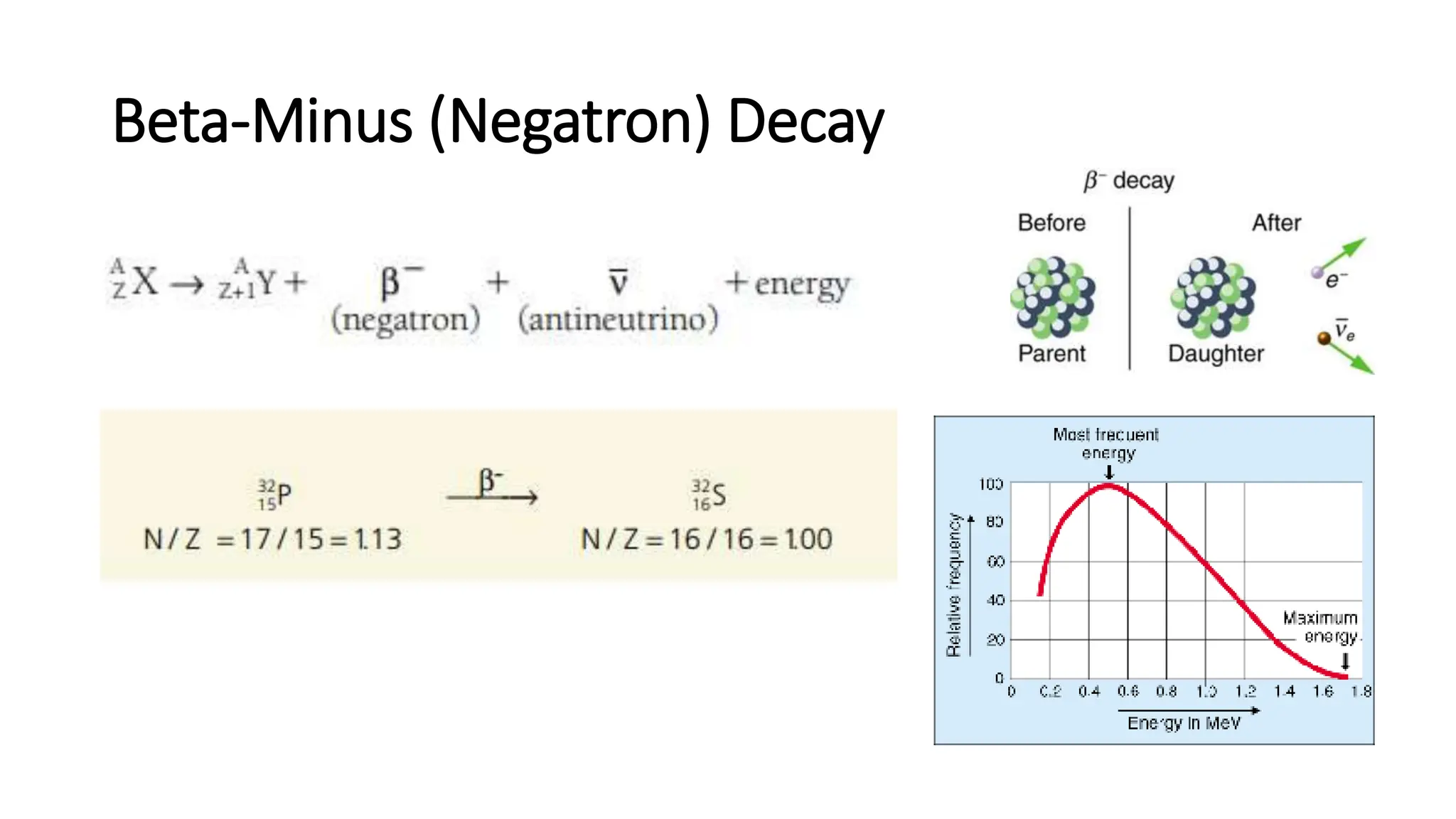
Beta-Minus (Negatron) Decay
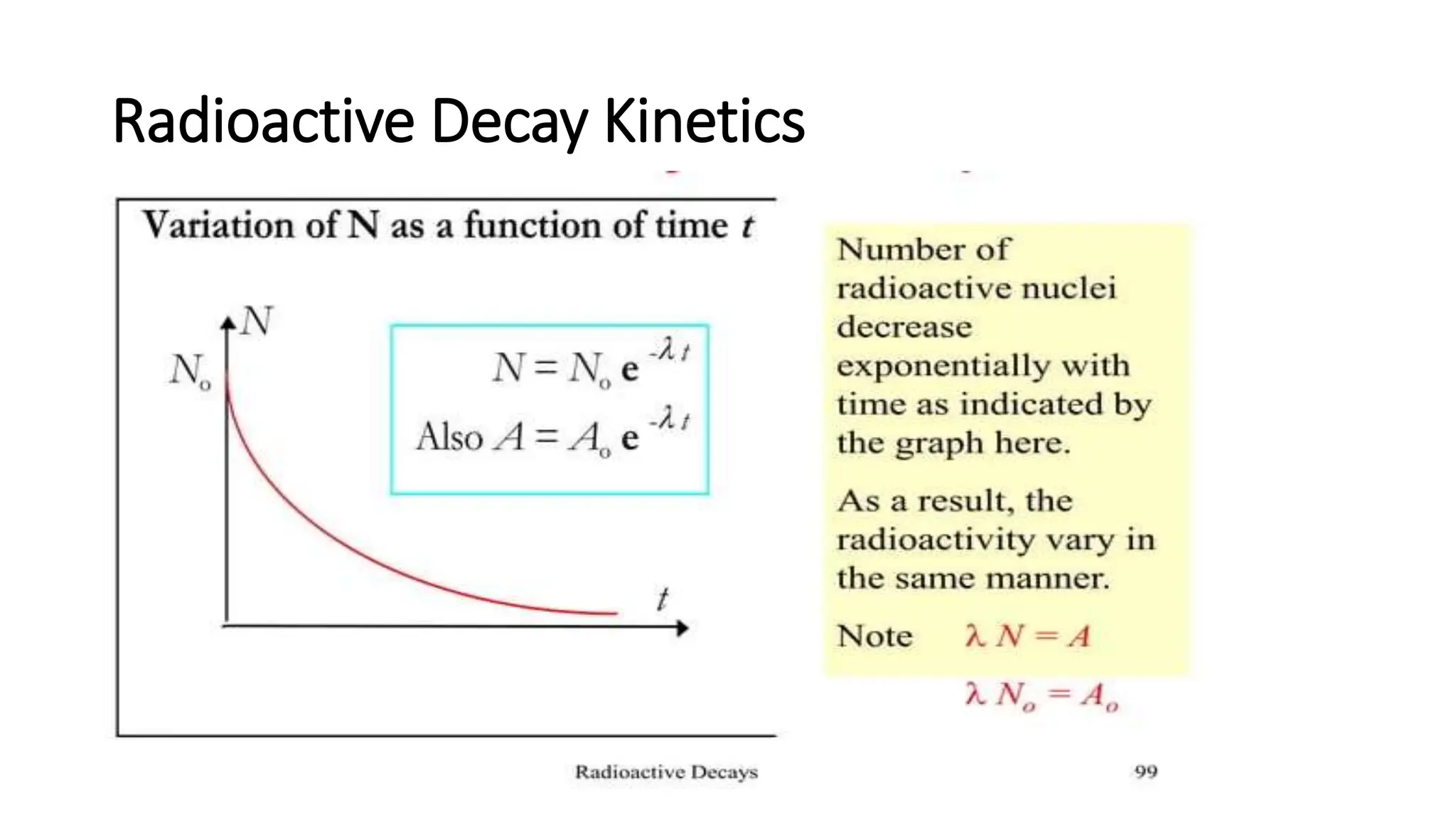
Radioactive Decay Kinetics
Artificial Radioactivity
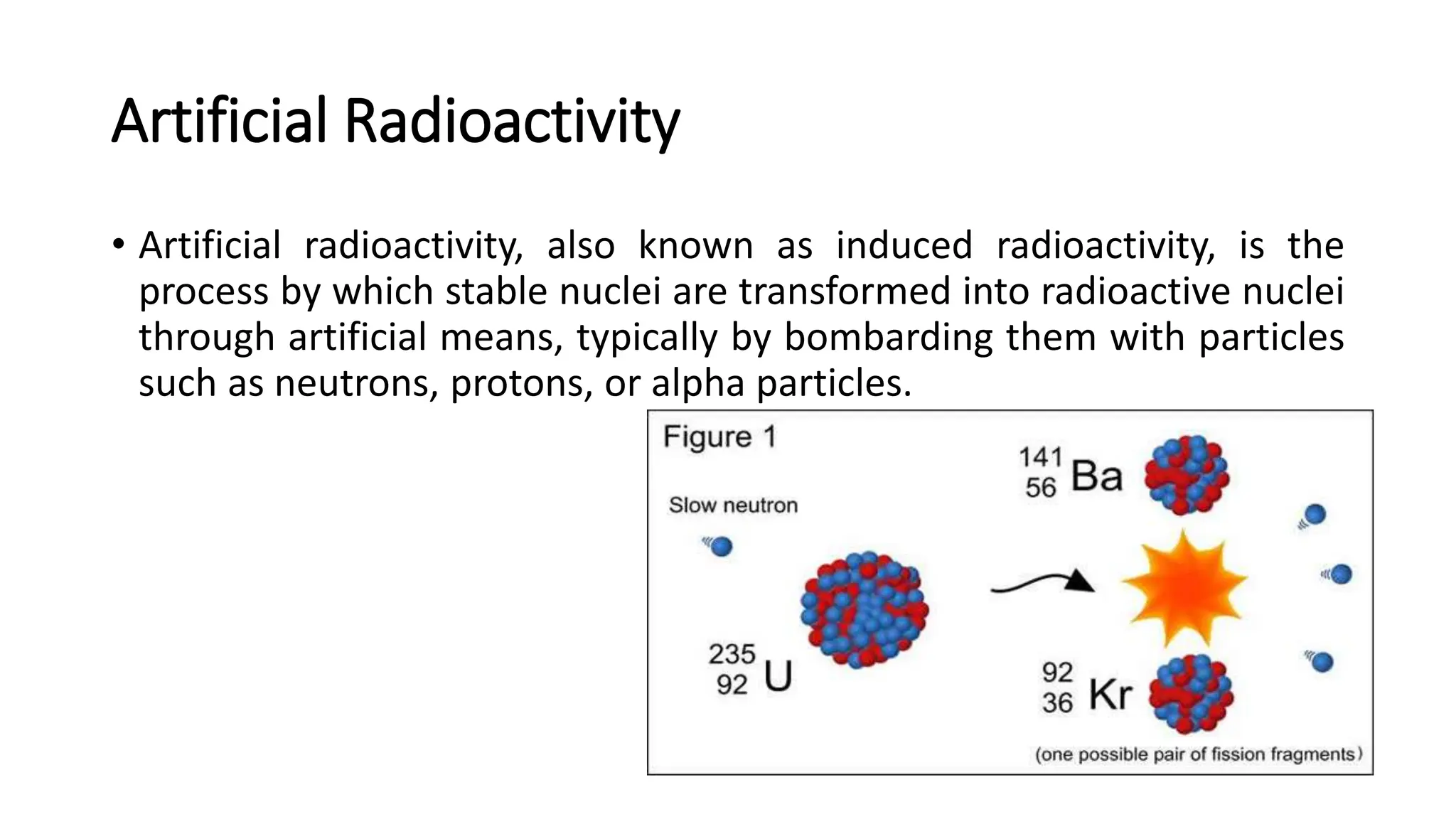
• Artificial radioactivity, also known as induced radioactivity, is the
process by which stable nuclei are transformed into radioactive nuclei
through artificial means, typically by bombarding them with particles
such as neutrons, protons, or alpha particles.
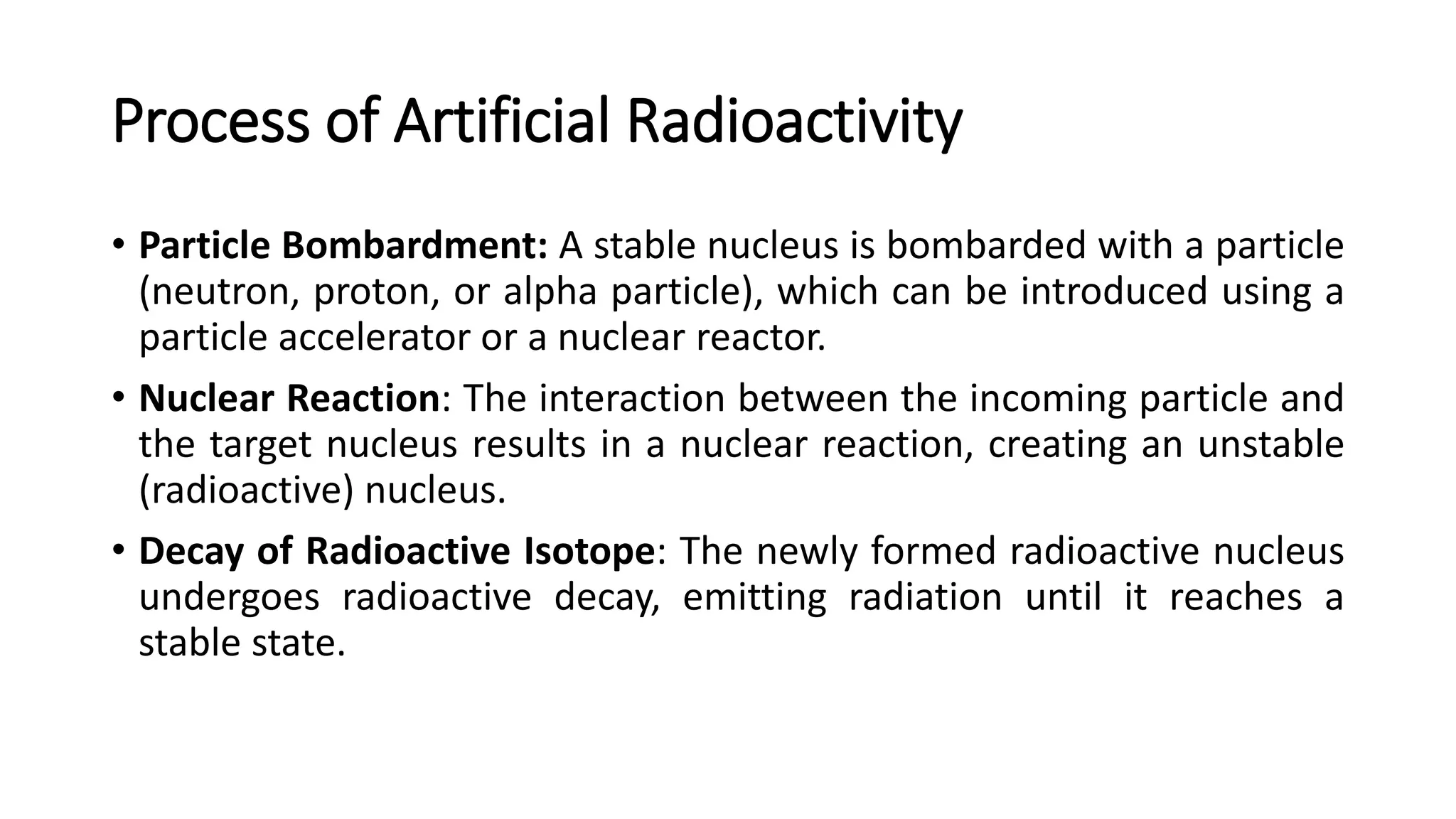
Process of Artificial Radioactivity
• Particle Bombardment: A stable nucleus is bombarded with a particle
(neutron, proton, or alpha particle), which can be introduced using a
particle accelerator or a nuclear reactor.
• Nuclear Reaction: The interaction between the incoming particle and
the target nucleus results in a nuclear reaction, creating an unstable
(radioactive) nucleus.
• Decay of Radioactive Isotope: The newly formed radioactive nucleus
undergoes radioactive decay, emitting radiation until it reaches a
stable state.
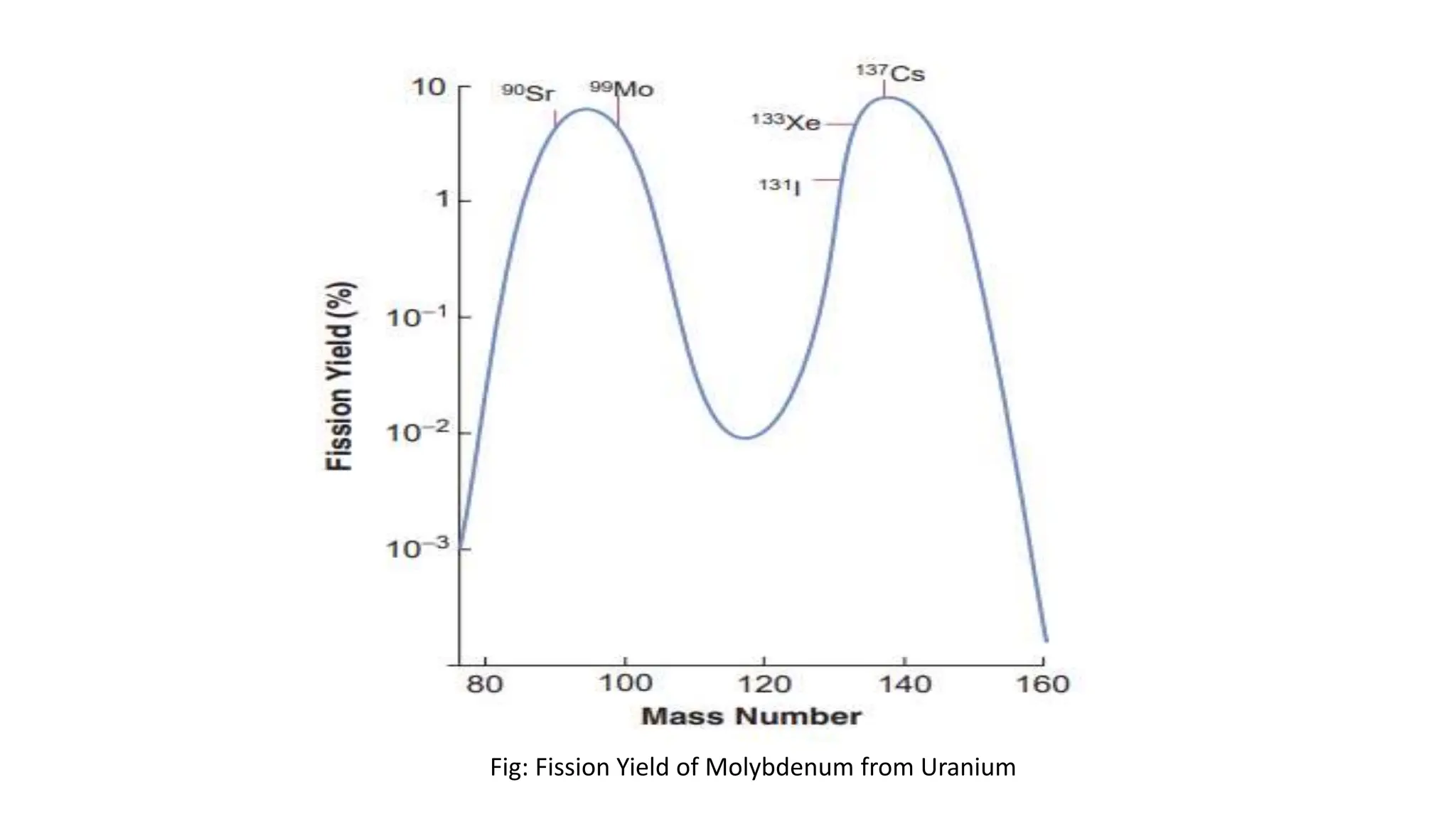
Fig: Fission Yield of Molybdenum from Uranium
Molybdenum 99 Separation
• For 99Mo separation, the irradiated uranium target is dissolved in
nitric acid and the solution is adsorbed on an alumina Al2O3 column.
• Molybdenum is then eluted with ammonium hydroxide.
• Ammonium molybdate is finally eluted with dilute HCl and ultimately
used for the 99Mo-99mTc generator.
• Its most common contaminants are 131I and 103Ru.
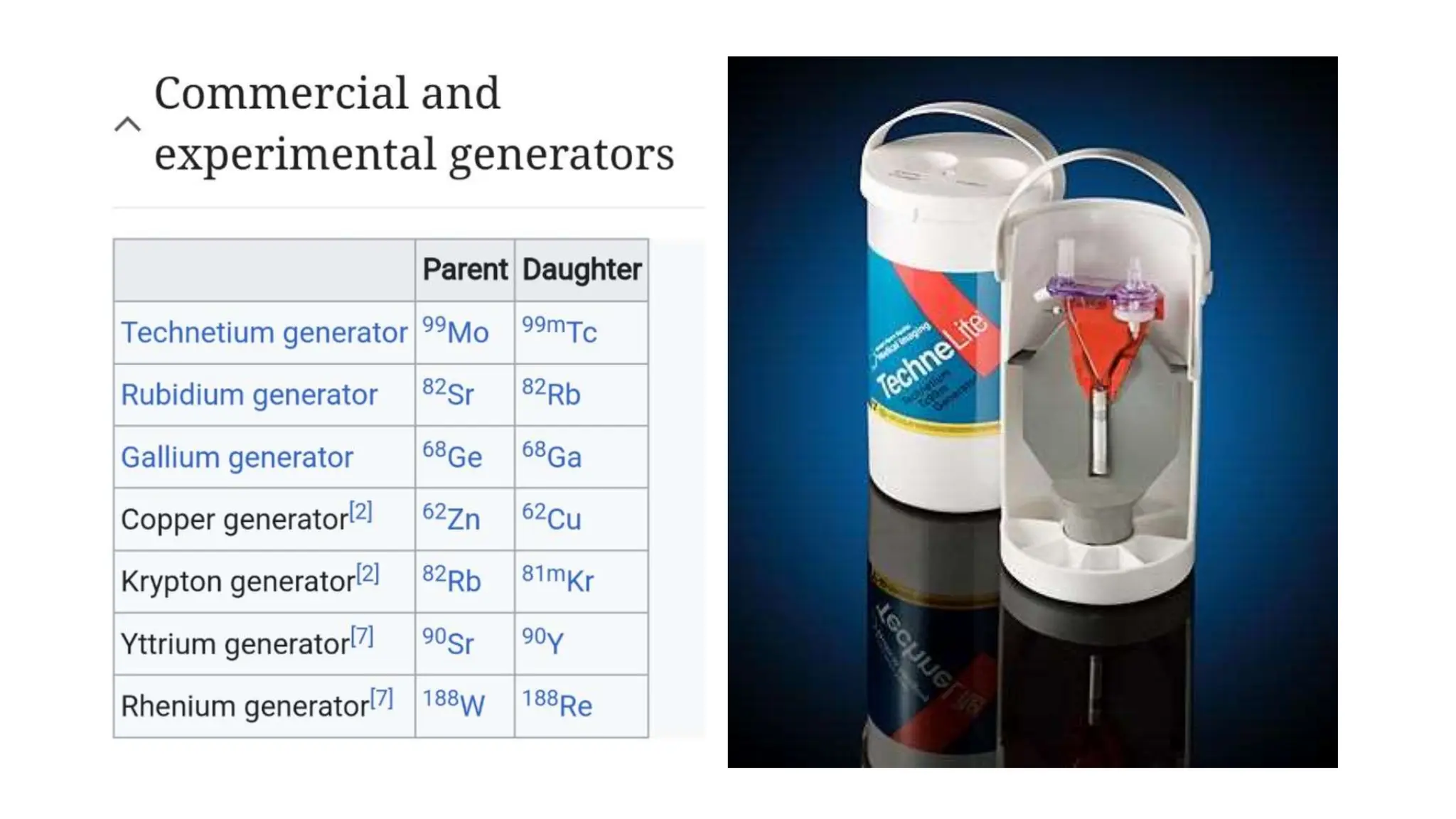
Radionuclide Generators
• Radionuclide generators are devices used to produce short-lived
radioactive isotopes from longer-lived parent isotopes, essential in
various fields like medicine, industry, and research.
• These generators allow for the on-demand, site-specific production of
isotopes, enhancing convenience and safety by reducing the need to
handle highly radioactive materials directly.
• The continuous decay of the parent isotope within the generator
ensures a steady supply of the daughter isotope, making these devices
highly valuable in clinical and industrial settings.
• Radionuclide generators also contribute to cost efficiency by
minimizing the need for frequent shipments of radioactive materials,
thus optimizing resource utilization and operational logistics.
Chemistry of Technetium
• Technetium is a transition metal of silvery gray color belonging to
group VIIB (Mn, Tc, and Re) and has the atomic number 43.
• No stable isotope of technetium exists in nature.
• The electronic structure of the technetium atom is 1s2
2s22p63s23p63d104s24p64d6 5s1.
• Technetium can exist in eight oxidation states, from -1 to +7.
• The +7and +4 states are most stable and exist in oxides, sulfides,
halides, and pertechnetates.
Introduction to Tc99m
• Technetium 99m fulfills earlier criteria of ideal radionuclide and
accounts for over 70% of nuclear imaging procedures.
• Technetium-99m when used as radioactive tracer can be detected in
the body by medical equipment such as gamma cameras.
• It is well suited to its role because it emits readily detectable 140kev
gamma rays and a half life of 6 hrs.
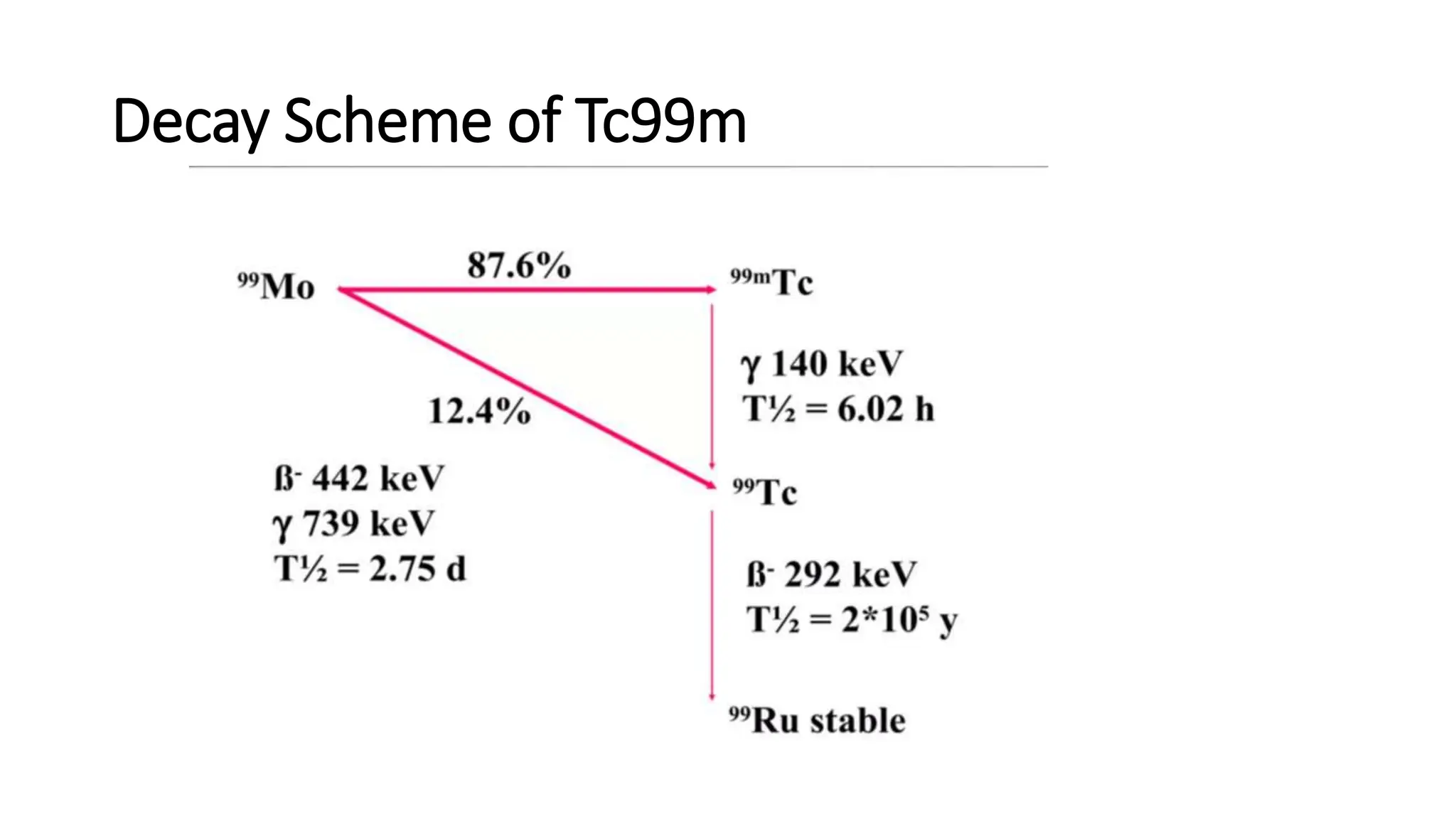
Decay Scheme of Tc99m
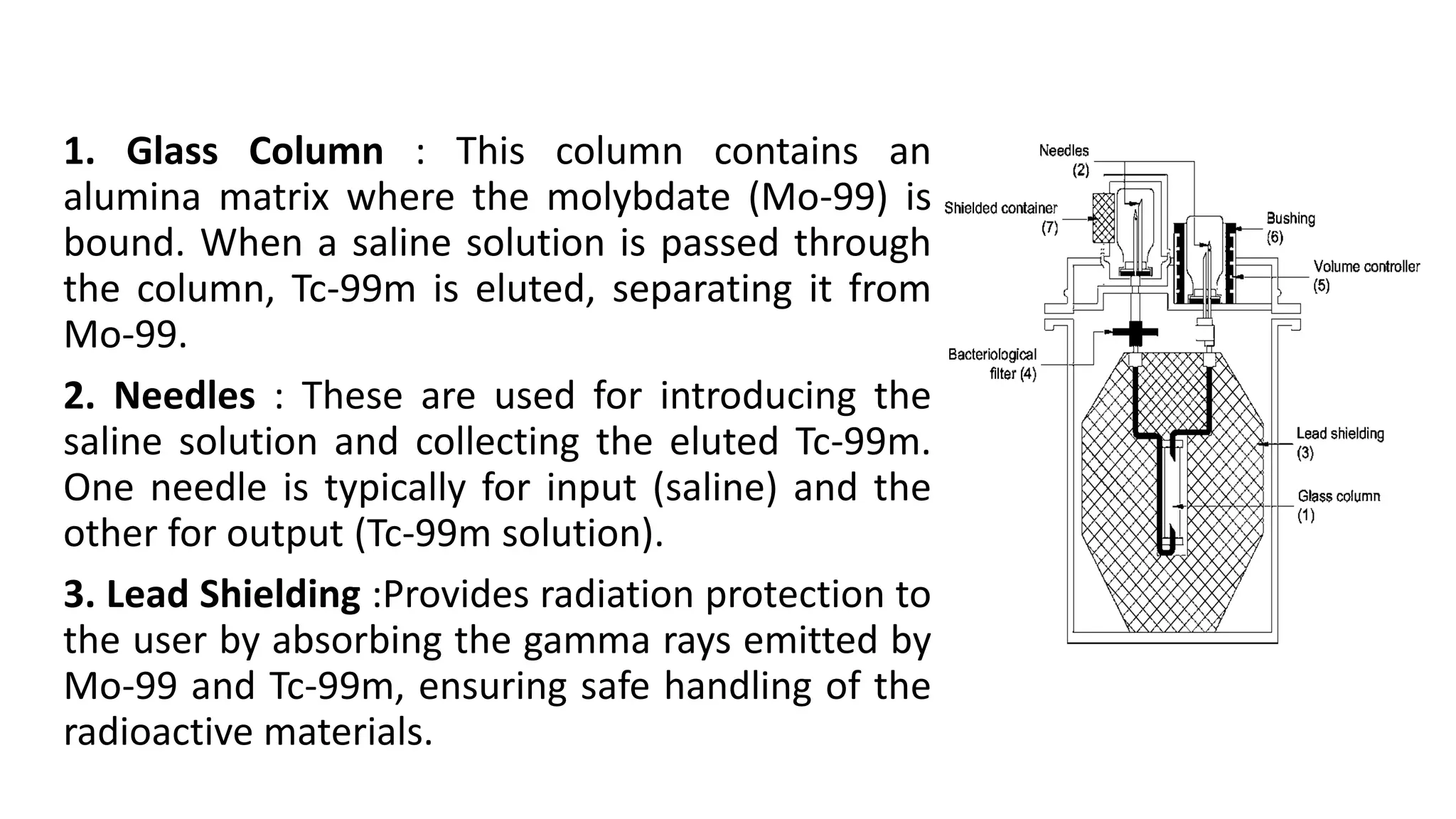
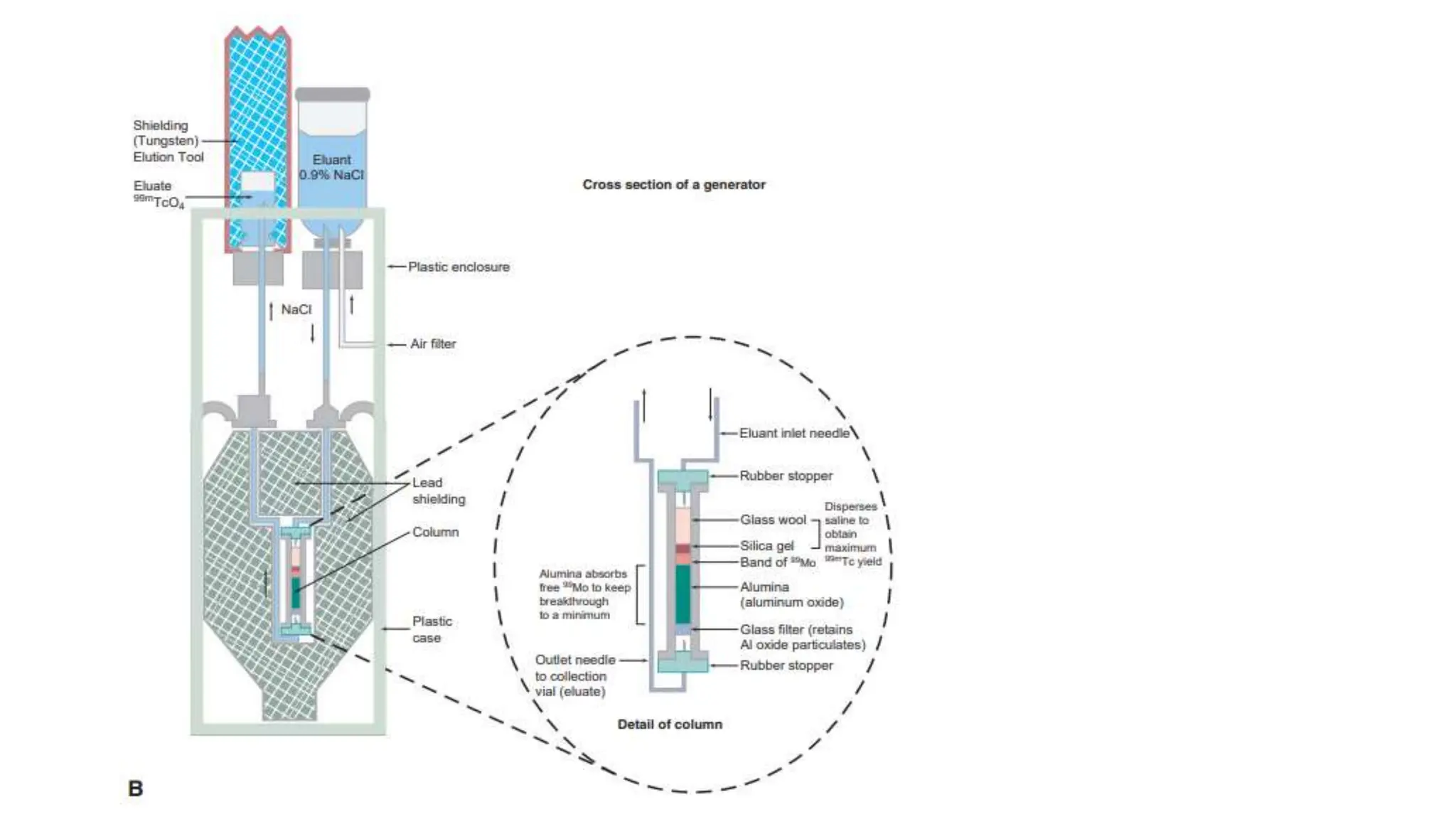
1. Glass Column : This column contains an
alumina matrix where the molybdate (Mo-99) is
bound. When a saline solution is passed through
the column, Tc-99m is eluted, separating it from
Mo-99.
2. Needles : These are used for introducing the
saline solution and collecting the eluted Tc-99m.
One needle is typically for input (saline) and the
other for output (Tc-99m solution).
3. Lead Shielding :Provides radiation protection to
the user by absorbing the gamma rays emitted by
Mo-99 and Tc-99m, ensuring safe handling of the
radioactive materials.
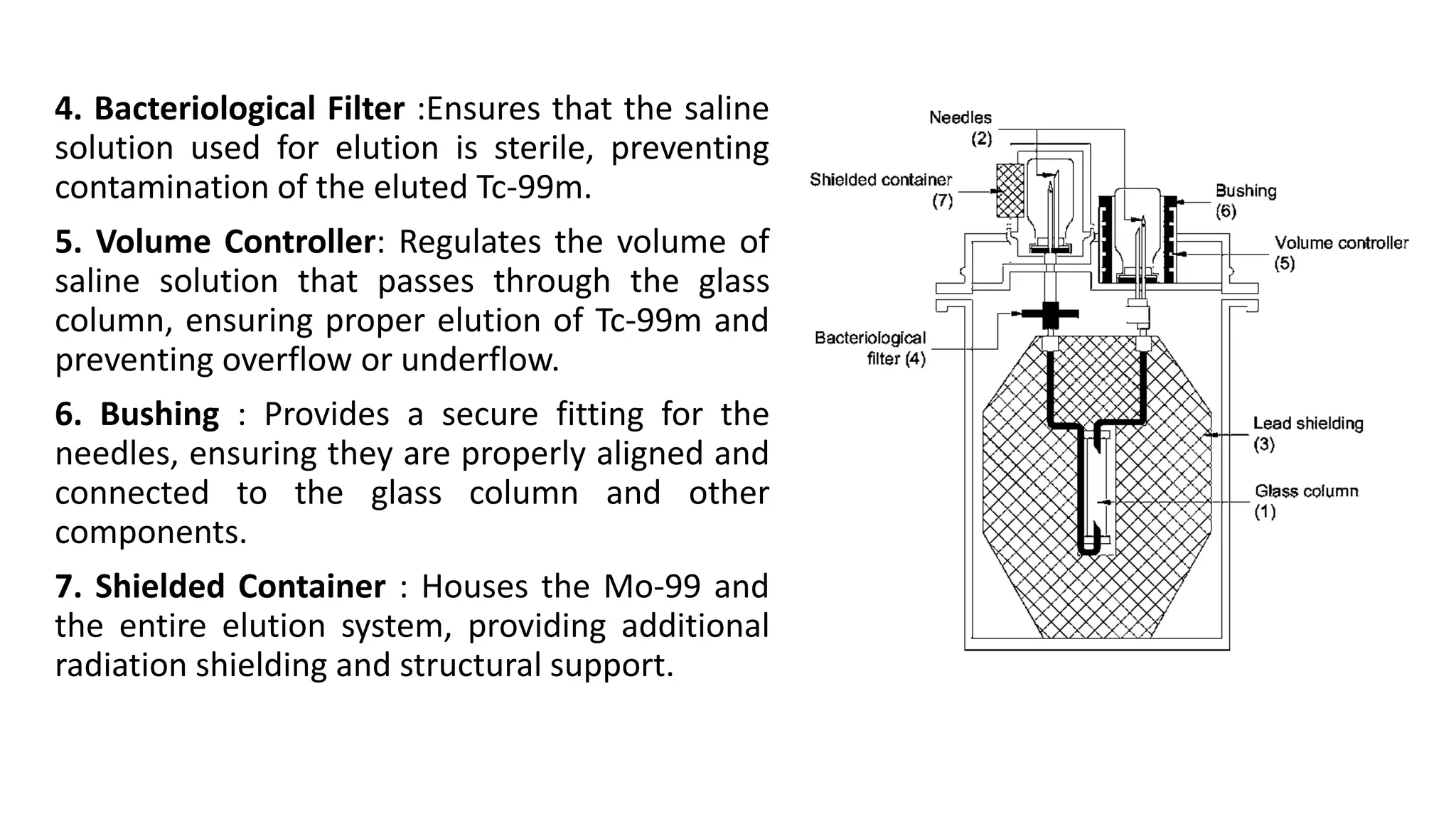
4. Bacteriological Filter :Ensures that the saline
solution used for elution is sterile, preventing
contamination of the eluted Tc-99m.
5. Volume Controller: Regulates the volume of
saline solution that passes through the glass
column, ensuring proper elution of Tc-99m and
preventing overflow or underflow.
6. Bushing : Provides a secure fitting for the
needles, ensuring they are properly aligned and
connected to the glass column and other
components.
7. Shielded Container : Houses the Mo-99 and
the entire elution system, providing additional
radiation shielding and structural support.
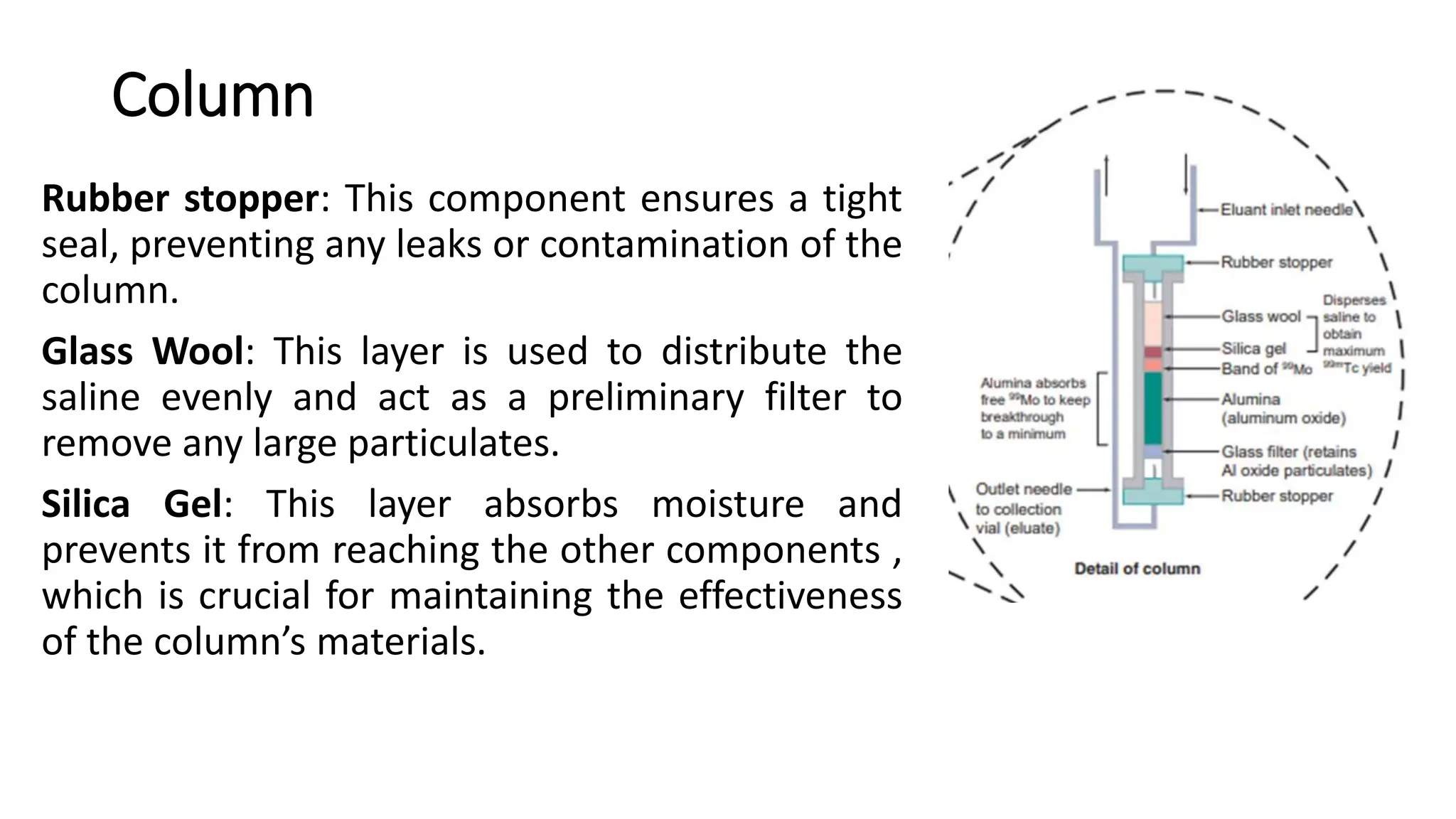
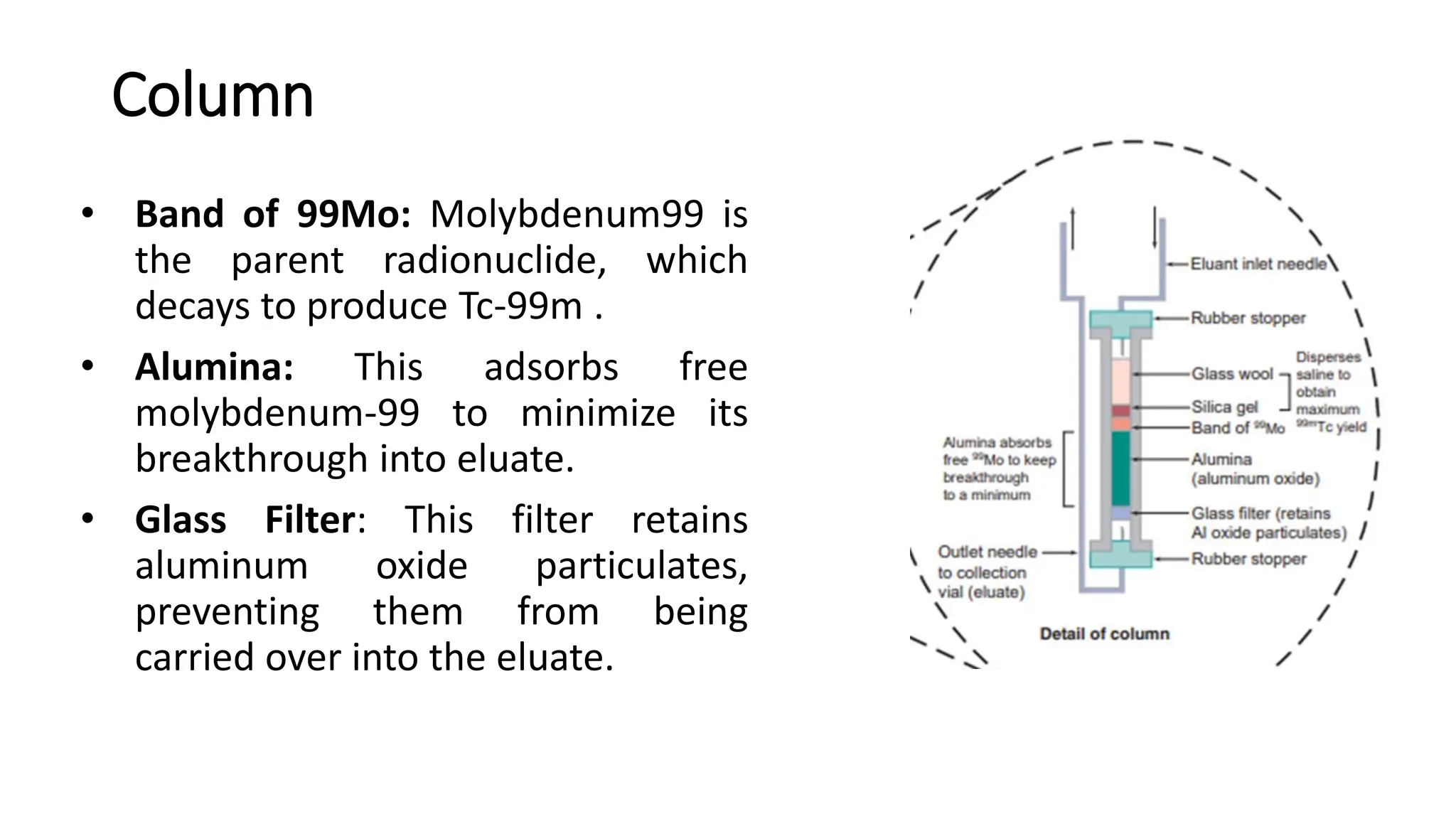
Column
Rubber stopper: This component ensures a tight
seal, preventing any leaks or contamination of the
column.
Glass Wool: This layer is used to distribute the
saline evenly and act as a preliminary filter to
remove any large particulates.
Silica Gel: This layer absorbs moisture and
prevents it from reaching the other components ,
which is crucial for maintaining the effectiveness
of the column’s materials.
Column
• Band of 99Mo: Molybdenum99 is
the parent radionuclide, which
decays to produce Tc-99m .
• Alumina: This adsorbs free
molybdenum-99 to minimize its
breakthrough into eluate.
• Glass Filter: This filter retains
aluminum oxide particulates,
preventing them from being
carried over into the eluate.
Working of Tc-99m Generator
• In a molybdenum-99/technetium-99m radionuclide generator, Mo-99
(produced by nuclear fission of U-235 to yield a high-specific-activity,
carrier-free parent) is loaded in the form of ammonium molybdenate
(NH4+)(MoO4 -), onto a porous column containing 5 to 10 g of an
alumina (Al2O3) resin.
• The ammonium molybdenate becomes attached to the surface of the
alumina molecules ,a process called adsorption.
• The porous nature of the alumina provides a large surface area for
adsorption of the parent.
Working of Technetium-99m Generator
• The Tc-99m is much less tightly bound than the Mo-99. The daughter
is removed (eluted) by the flow of isotonic 0.9%saline (eluant)
through the column.
• When the saline solution is passed through the column, the chloride
ions easily exchange with the TcO4- but not the MoO4- ions,
producing sodium pertechnetate, Na+(99mTcO4-).
• Technetium-99m pertechnetate (99mTcO4-) is produced in a sterile,
pyrogen-free form with high specific activity and a pH (~5.5) that is
ideally suited for radiopharmaceutical preparations.
Working Technetium-99m Generator
• Commercially moly generators have a large reservoir of oxygenated
saline (the eluant) connected by tubing to one end of the column and
a vacuum extraction vial to the other.
• On insertion of the vacuum collection vial (contained in a shielded
elution tool), saline is drawn through the column and the eluate is
collected during elution which takes about 1 to 2 min.
• Sterility is achieved by a Millipore filter connected to the end of the
column, by the use of a bacteriostatic agent in the eluant, or by
autoclave sterilization of the loaded column by the manufacturer.
Working of Technetium-99m Generator
• Moly generators are typically delivered with approximately 37 to 740
GBq (1 to 20 Ci) of Mo-99, depending on the workload of the
department.
• The larger activity generators are typically used by commercial radio
pharmacies supplying radiopharmaceuticals to multiple nuclear
medicine departments.
The Activity of daughter depends on
• The activity of the parent.
• The rate of formation of the daughter, which is equal to the rate of
decay of the parent.
• The decay rate of the daughter.
• The time since the last elution.
• The elution efficiency (typically 80% to 90%).
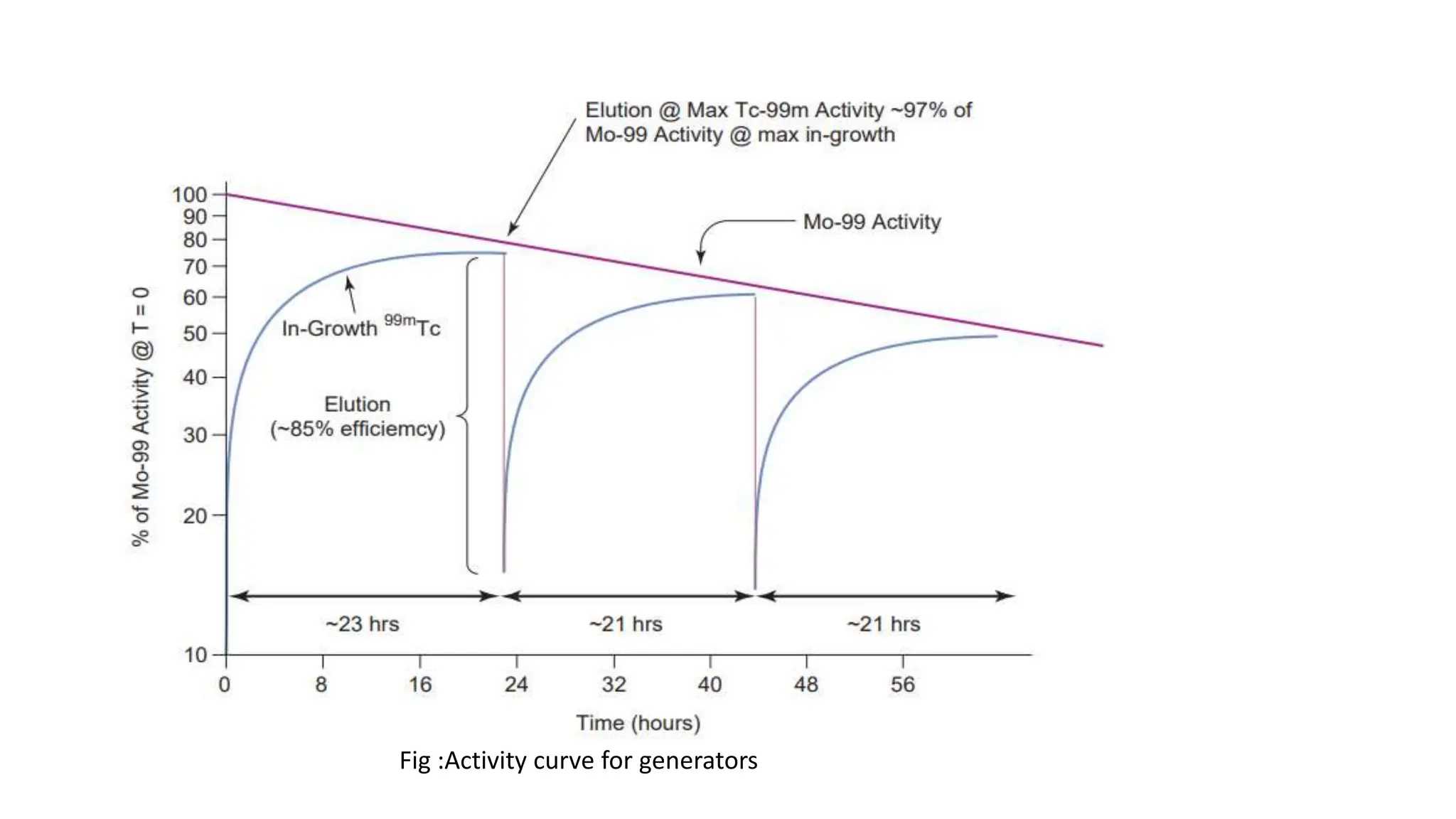
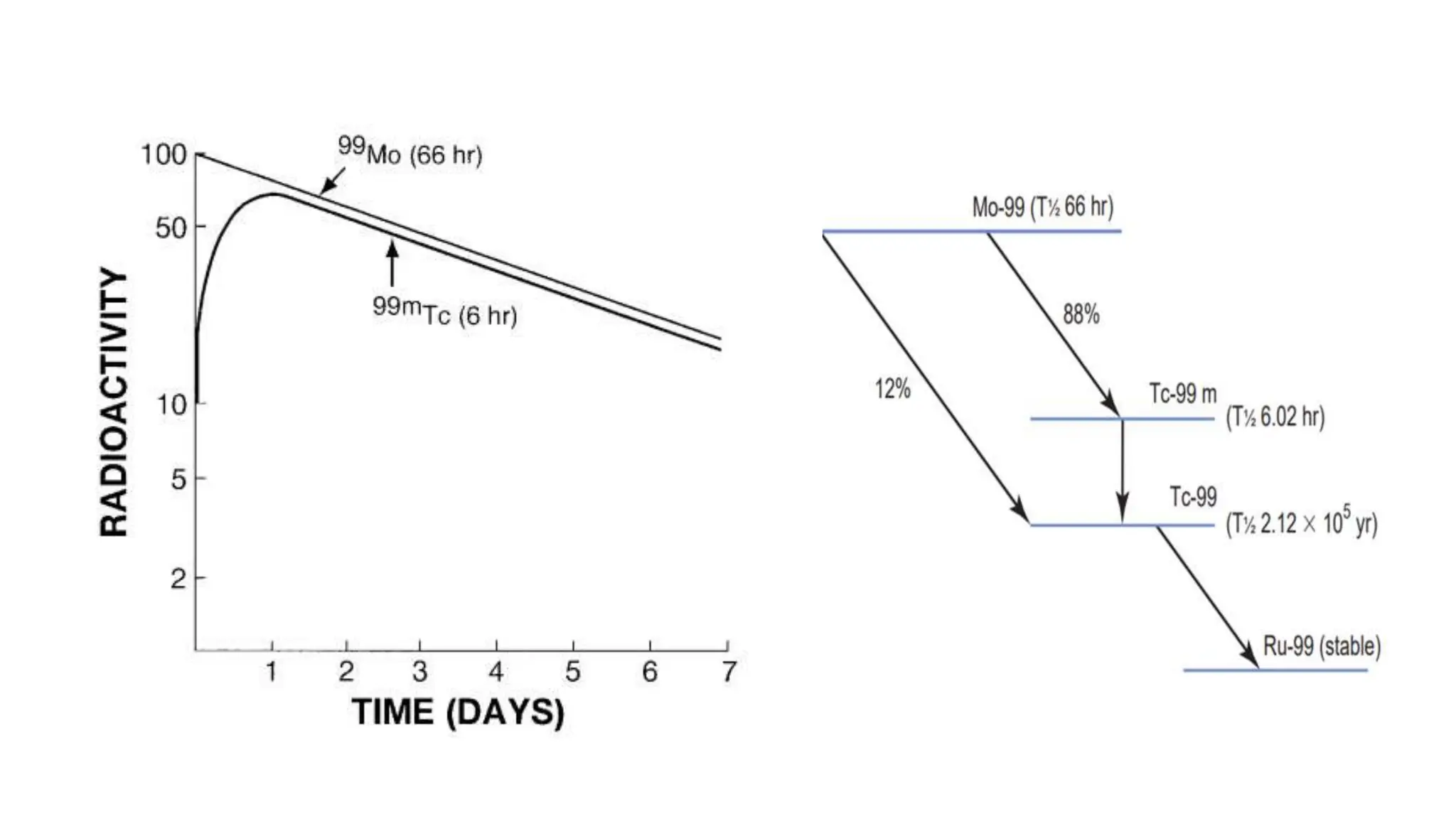
Fig :Activity curve for generators
Transient Equilibrium
• Between elutions, the daughter (Tc-99m) builds up or grows in as the
parent (Mo99) continues to decay.
• After approximately 23 h, the Tc-99m activity reaches a maximum, at
which time the production rate and the decay rate are equal and the
parent and daughter are said to be in transient equilibrium.
• Once transient equilibrium has been achieved, the daughter activity
decreases, with an apparent half-life equal to the half-life of the
parent.
• Transient equilibrium occurs when the half-life of the parent is
greater than that of the daughter by a factor of approximately 10
Liquid Column Generator
• 99mTc is extracted with methyl ethyl ketone (MEK) from a mixture of
20% NaOH solution of pH (10–12) and 99Mo.
• After extraction, the organic phase is evaporated and the 99mTcO4-
is dissolved in isotonic saline for clinical use.
• The basic principle involves placing the 20% NaOH solution of 99Mo
in a glass column and then letting MEK flow through the column from
the bottom. MEK will extract 99mTcO4- leaving 99Mo in the aqueous
solution.
• The advantage of this generator is that the cost of 99mTc is low. But
the disadvantage is that it needs a lot of manipulation in the overall
method.
Solid Column Generator
• Moly generator is constructed with alumina (Al2O3) loaded in a
plastic or glass column.
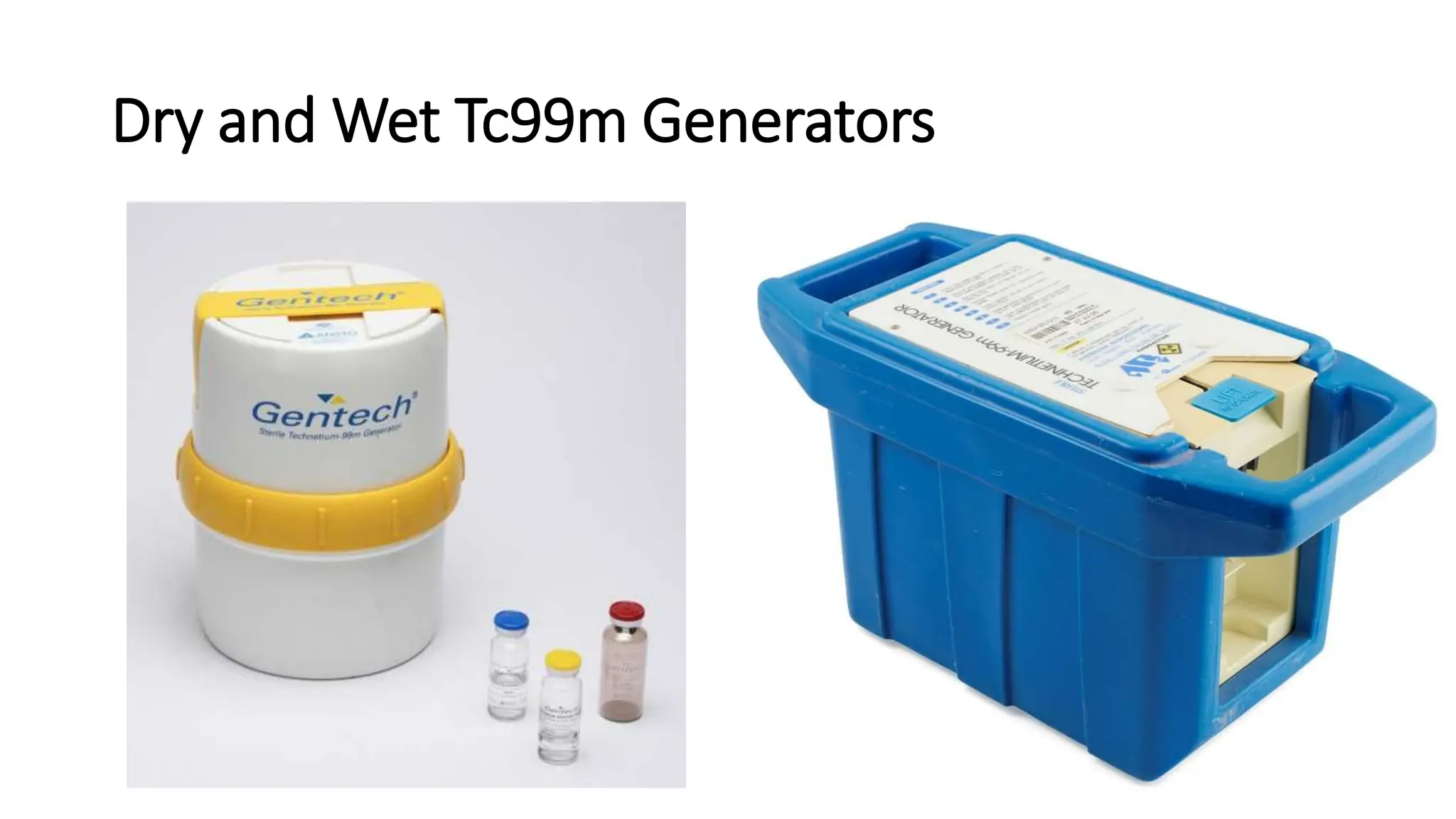
• There are two types of Moly generators, wet column generators and
dry column generators, supplied by different commercial firms.
• In a dry column generator after routine elution the leftover saline in
the column is drawn out by using an evacuated vial without adding
any more saline.
• The suggestion for a dry column generator came from the fact that
radiation can cause radiolysis of water in a wet generator resulting in
the formation of hydrogen peroxide (H2O2)and per hydroxyl free
radical.
Dry and Wet Tc99m Generators
99Mo Breakthrough
• This is 99Mo contamination in the 99mTc-eluate and originates from
the small quantity of 99Mo that may be eluted with 99mTc.
• The 99Mo contamination is measured by detecting 740-keV and 780-
keV photon
• The eluate vial is shielded in a lead pot (about 6 mm thick) to stop all
140-keV photons from 99mTc and to count only 740-keV and 780-keV
photons from 99Mo .
• US pharmacopeia limit 0.15 micro Ci 99Mo/mCi (0.15 kBq/MBq)
99mTc per administered dosage at the time of administration.
Aluminum Breakthrough
• The aluminum contamination originates from the alumina bed of the
generator.
• The presence of aluminum in the 99mTc-eluate interferes with the
preparation of 99mTc-sulfur colloid.
• Aluminum may causes RBC agglutination.
• USP limit is 10 micro gram Al/ml 99mTc for fission-produced 99Mo.
• The presence of aluminum can be detected by the colorimetric
method using aurin tricarboxylic acid or methyl orange, and can be
quantitated by comparison with a standard solution of aluminum.
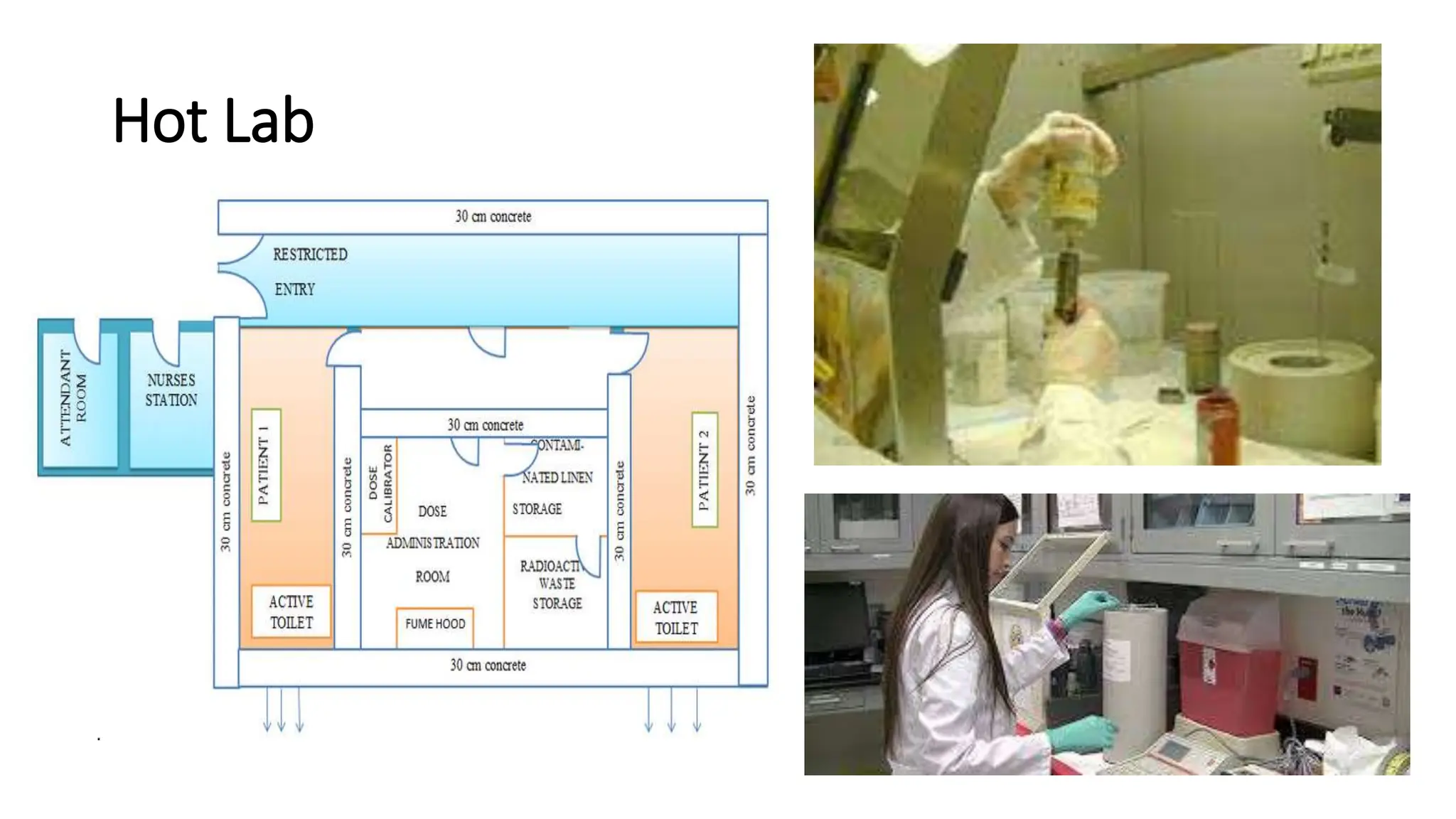
Hot Lab
• Hot labs, also known as radio pharmacy laboratories, are specialized
facilities designed for the preparation, handling, and dispensing of
radiopharmaceuticals. Whose salient features include:
Lead-lined workstations and fume hoods for shielding and containment .
Radiation monitoring tools like Geiger counters and dosimeters, with
strict safety protocols .
Clean rooms and laminar flow hoods for ensuring sterility.
Specialized equipment like synthesis modules and dose calibrators for
precise preparation .
Radioactive waste containers and decay storage for safe waste
management
Hot Lab
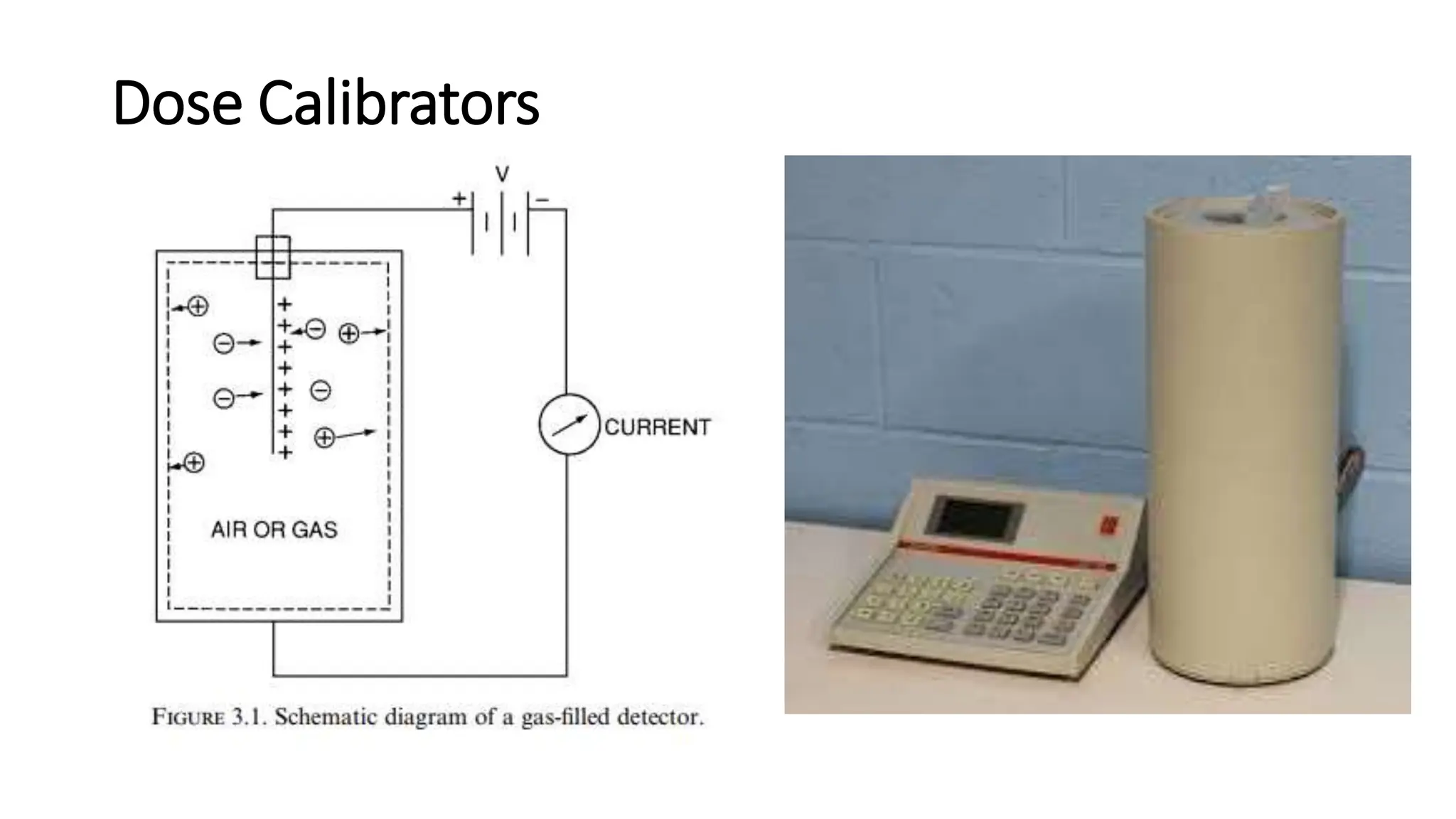
Dose Calibrators
• The dose calibrator is one of the most essential instruments in
nuclear medicine for measuring the activity of radionuclides for
formulating and dispensing radiopharmaceuticals.
• It is a cylindrically shaped, sealed chamber with a central well and is
filled with argon and traces of halogen at high pressure. Its operating
voltage is about 150 V.
• Current produced by 1 mCi (37 MBq) 99mTc is different from that by 1
mCi (37 MBq) 131I. Isotope selectors are the feedback resistors to
compensate for differences in ionization (current) produced by
different radionuclides so the equal activities produce the same
reading.
Dose Calibrators
• In most dose calibrators, the isotope selectors for commonly used
radionuclides are push-button types, whereas those for other
radionuclides are set by a continuous dial.
• The settings of isotope selectors are basically the calibration factors
for different radionuclides, which are determined by measuring the
current produced by one millicurie of each radionuclide.
• The unknown activity of a radionuclide is then measured by its
current divided by the calibration factor for that radionuclide, which is
displayed in the appropriate unit on the dose calibrator.
Dose Calibrators
• For measurement of the activity of a radionuclide, one first sets the
calibration factor for the radionuclide using the appropriate push
button or dial setting.
• Then the sample in a syringe, vial, or any other appropriate container
is placed inside the chamber well of the dose calibrator.
• The reading of activity is displayed on the digital meter of the dose
calibrator.
Dose Calibrators
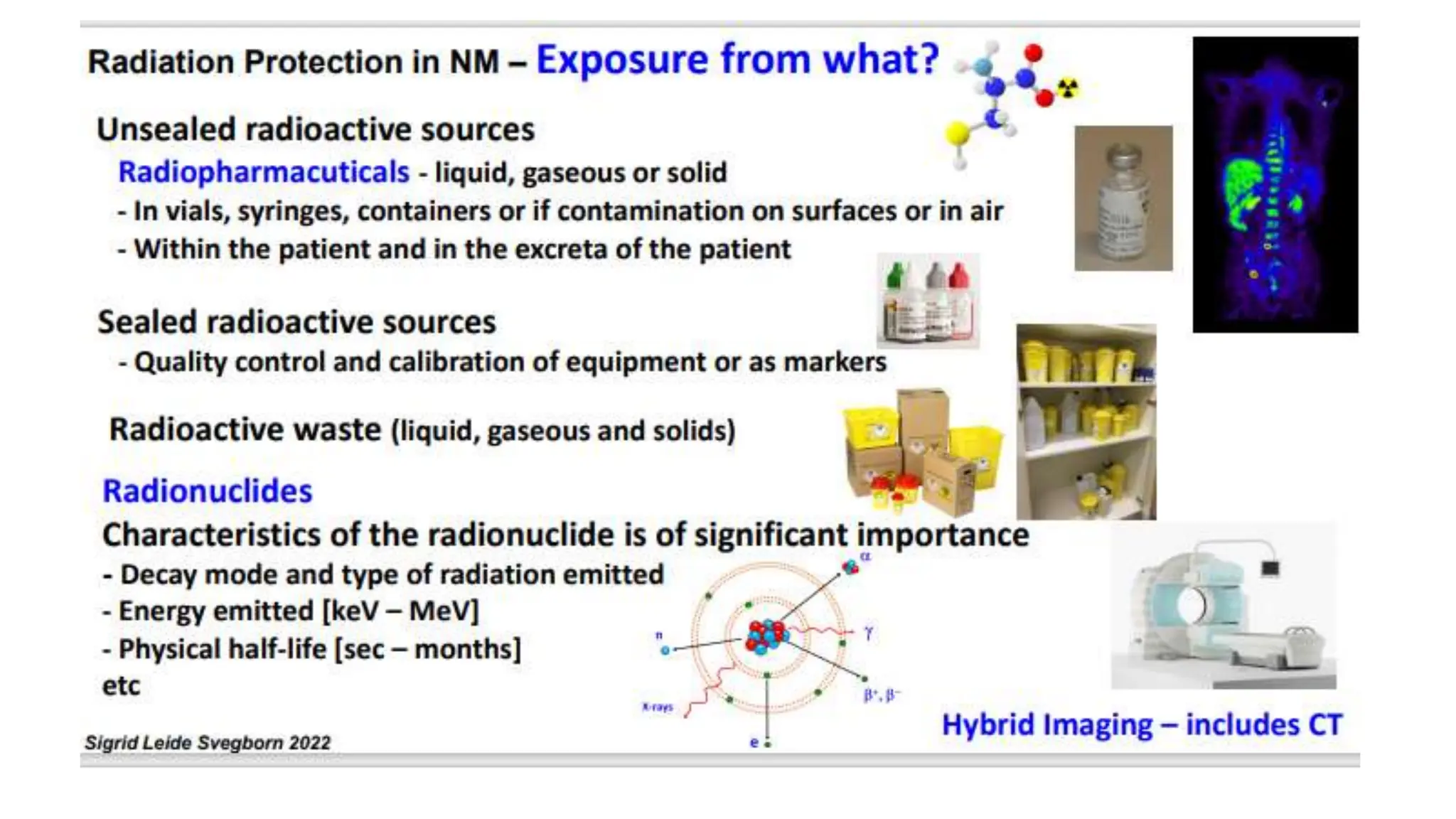
Safe handling and use of radiopharmaceuticals
• Radiopharmaceuticals are radiation emitting substances used in
medicine for radiotherapy and imaging diagnosis.
• The main motto is to establish procedures to minimize the exposure
to personnel preparing and administering radiopharmaceuticals , and
to ensure safety for the general public.
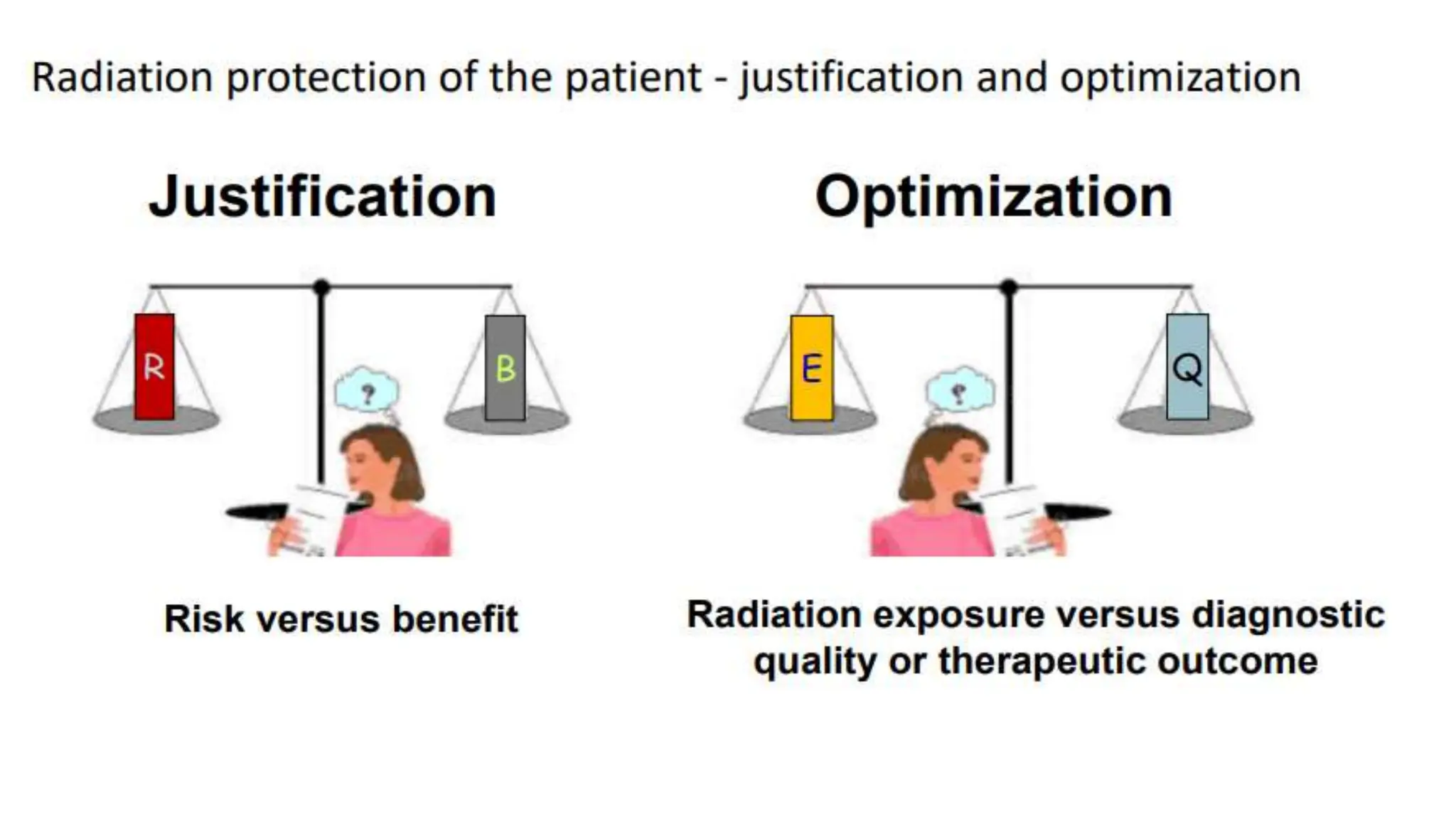
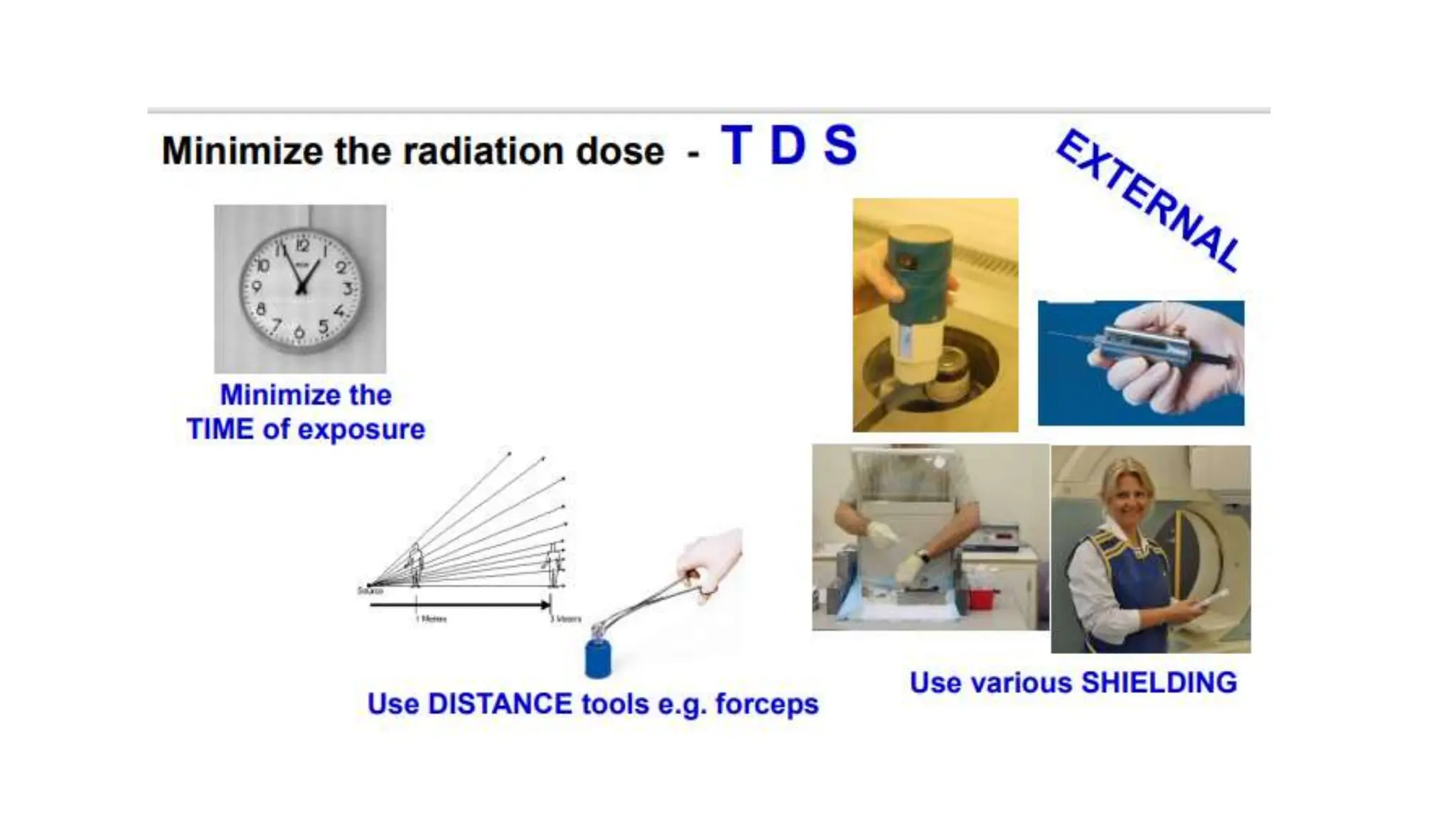
• ALARA , principle should be followed by specialist to carefully select
the amount of radiopharmaceutical that would provide an accurate
test with least amount of radiation exposure to patient.
• The introduction of DRL can probably help the optimization of
radiation protection in nuclear medicine.
Exposure of whom ?
• Medical Exposure : Patients (adults, adolescents, children, infants)
Carers and comforters ,Volunteers in medical and biomedical research
Workers, and student.
• Special Groups : Unborn children of pregnant women ,Breastfed
newborns and infants , other professionals at the hospital, language
interpreters, taxi drivers, individuals in the society .
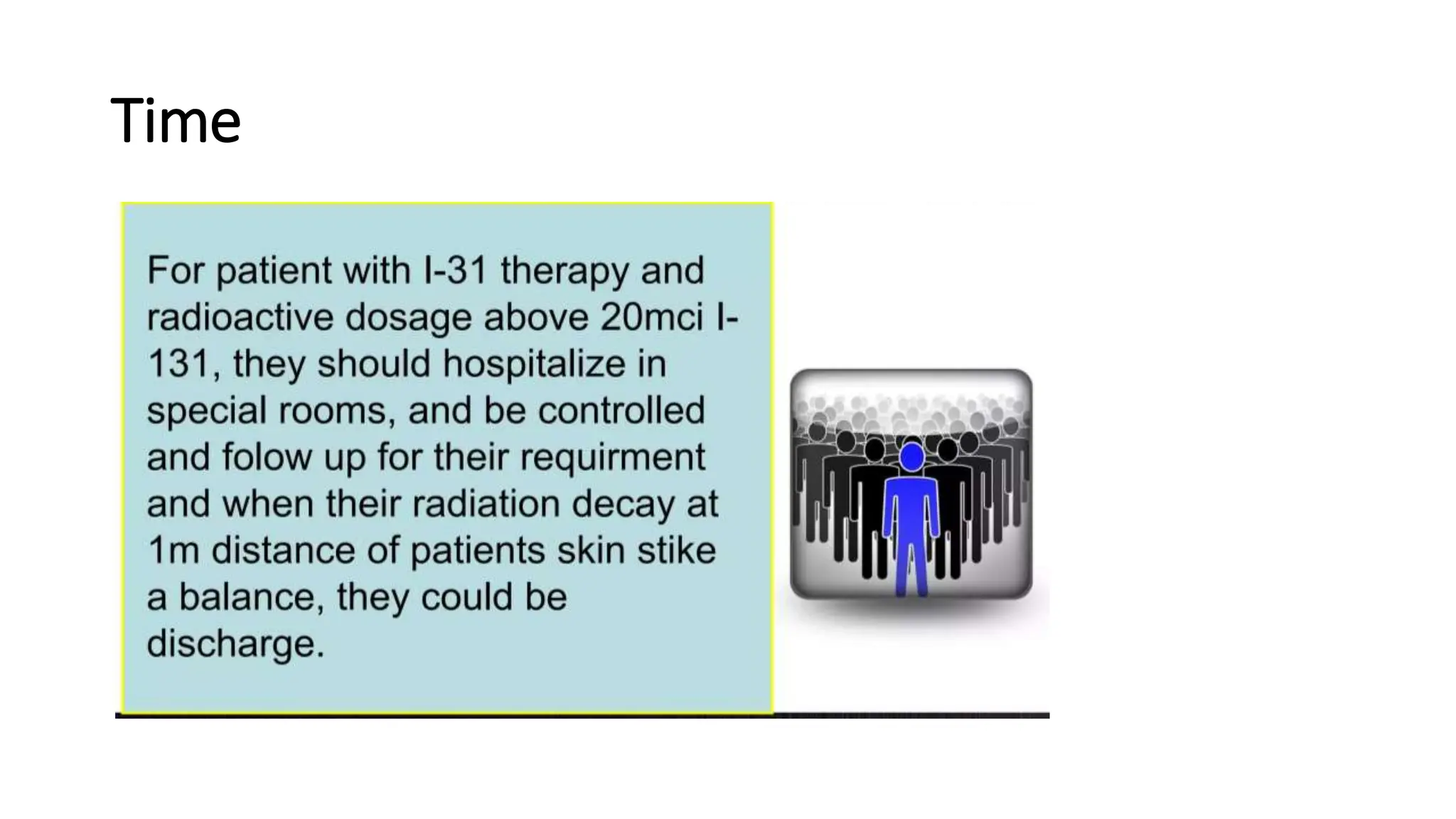
Time
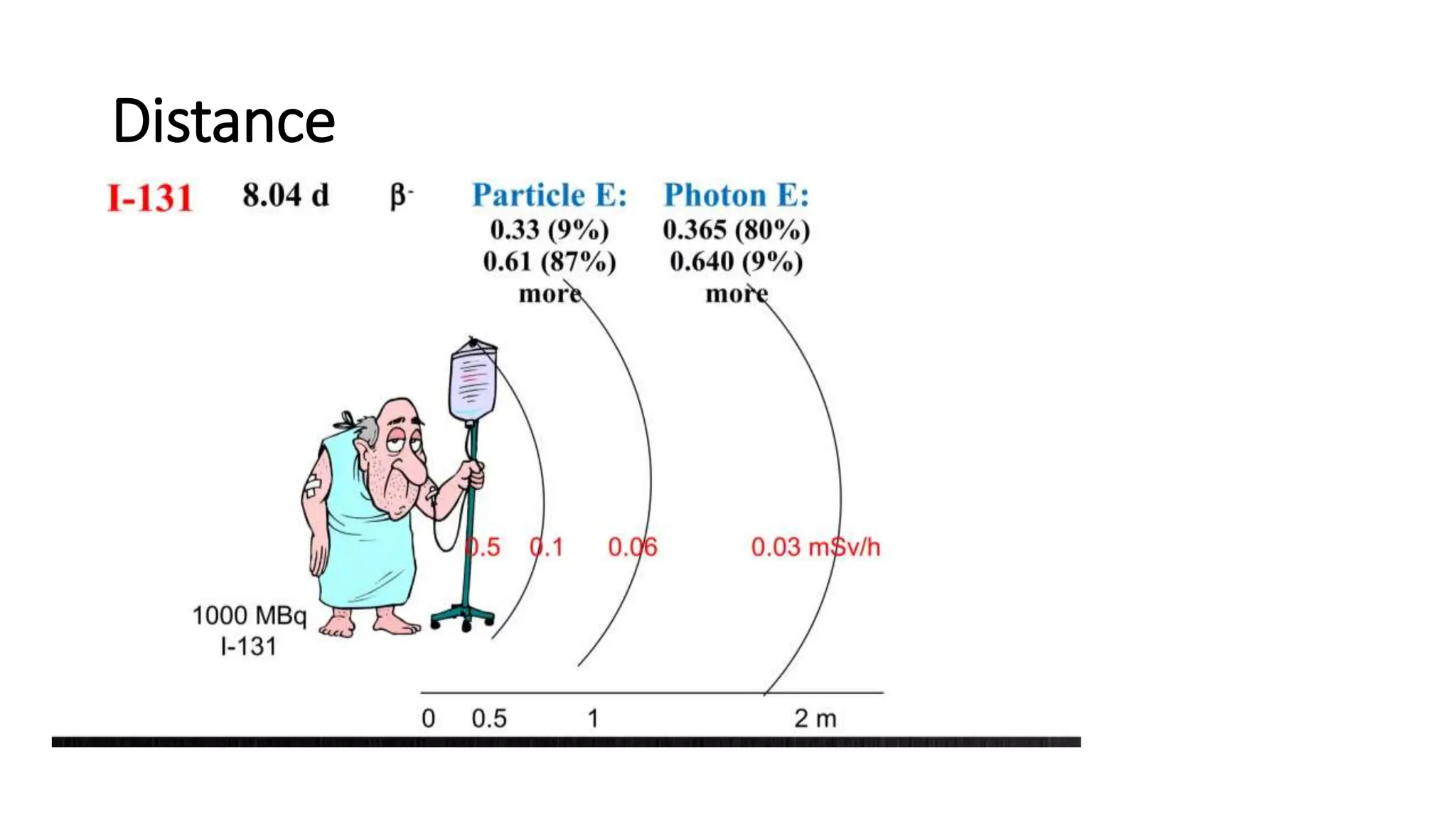
Distance
Application of Dose Limits
• Occupational dose limit for whole body Effective Dose is 20mSv per
year , averaged over defined periods of 5 years.
• Effective dose for pubic dose limit is 1mSv in a year.
• Diagnostic Reference Level : DRL provides guidance to healthcare
providers on the appropriate use of radiation in medical imaging so
that the benefits of the procedure outweigh the potential risks to the
patient.
Product preparation
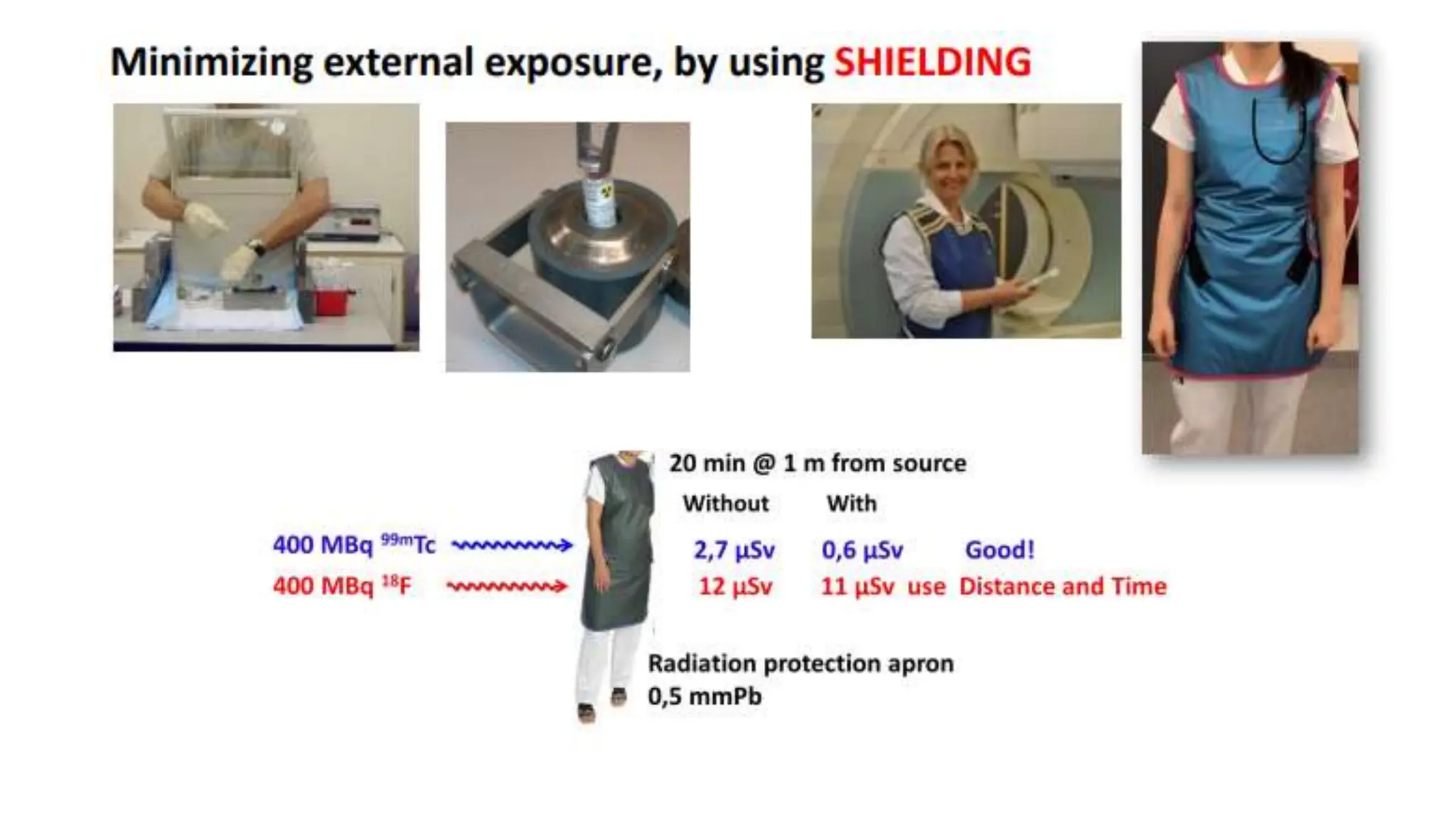
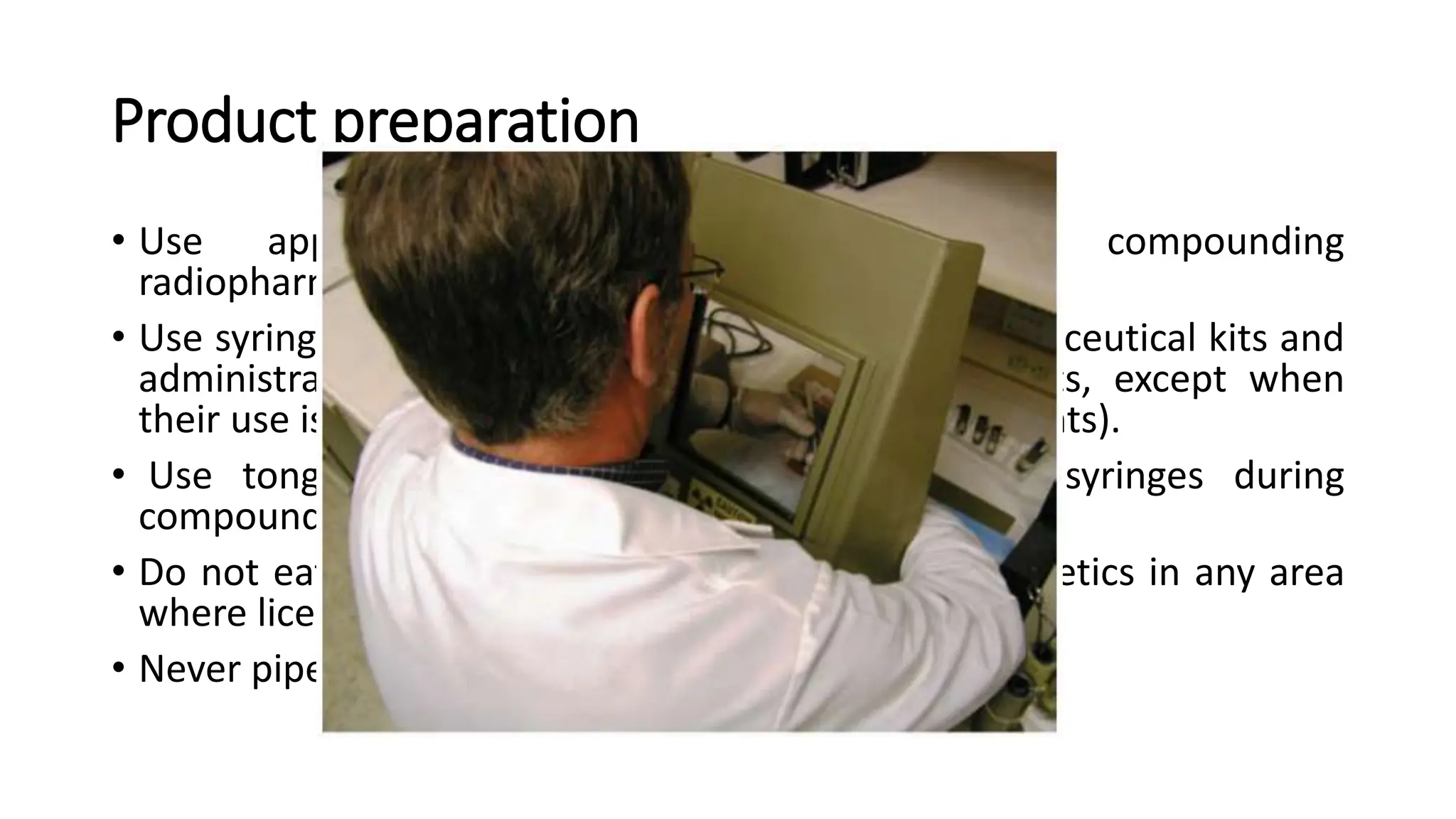
• Use appropriate kit vial shields when compounding
radiopharmaceuticals.
• Use syringe shields for reconstitution of radiopharmaceutical kits and
administration of radiopharmaceuticals to patients, except when
their use is contraindicated (e.g., recessed veins, infants).
• Use tongs, when possible, when manipulating syringes during
compounding or assaying .
• Do not eat, store food, drink, smoke, or apply cosmetics in any area
where licensed materials is stored or used.
• Never pipette by mouth.
Product labelling
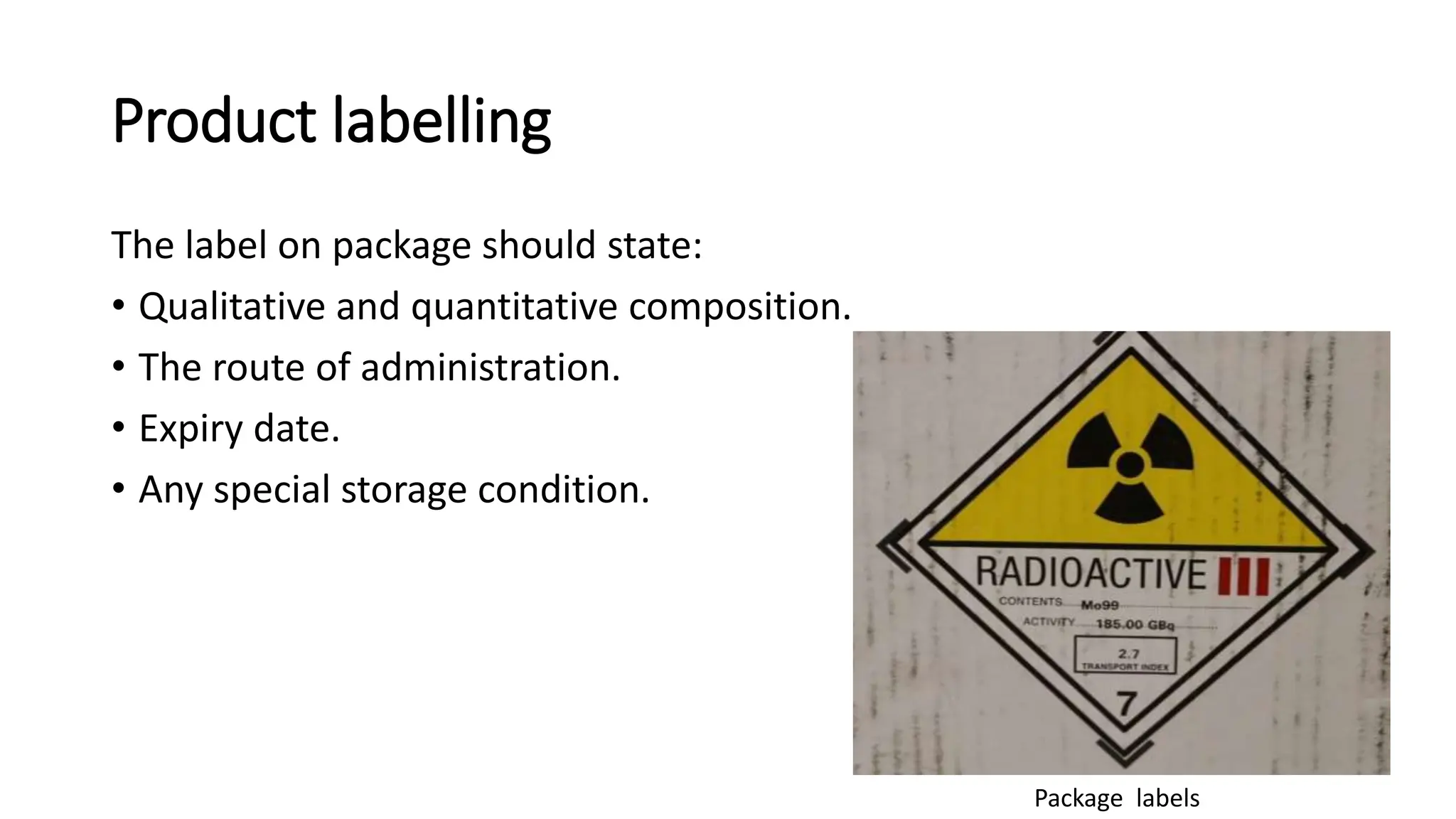
The label on package should state:
• Qualitative and quantitative composition.
• The route of administration.
• Expiry date.
• Any special storage condition.
Package labels
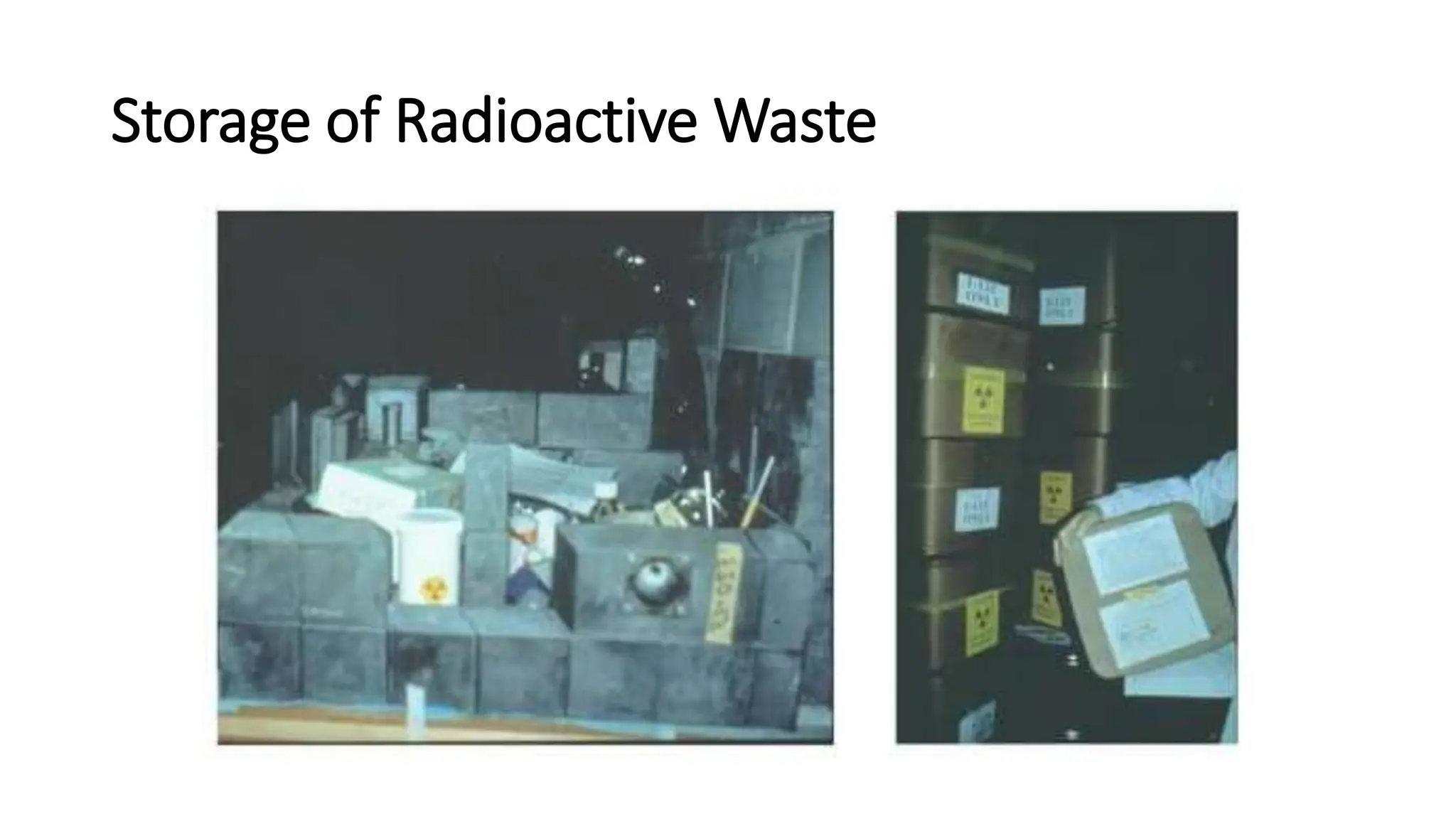
Storage of Radioactive Waste
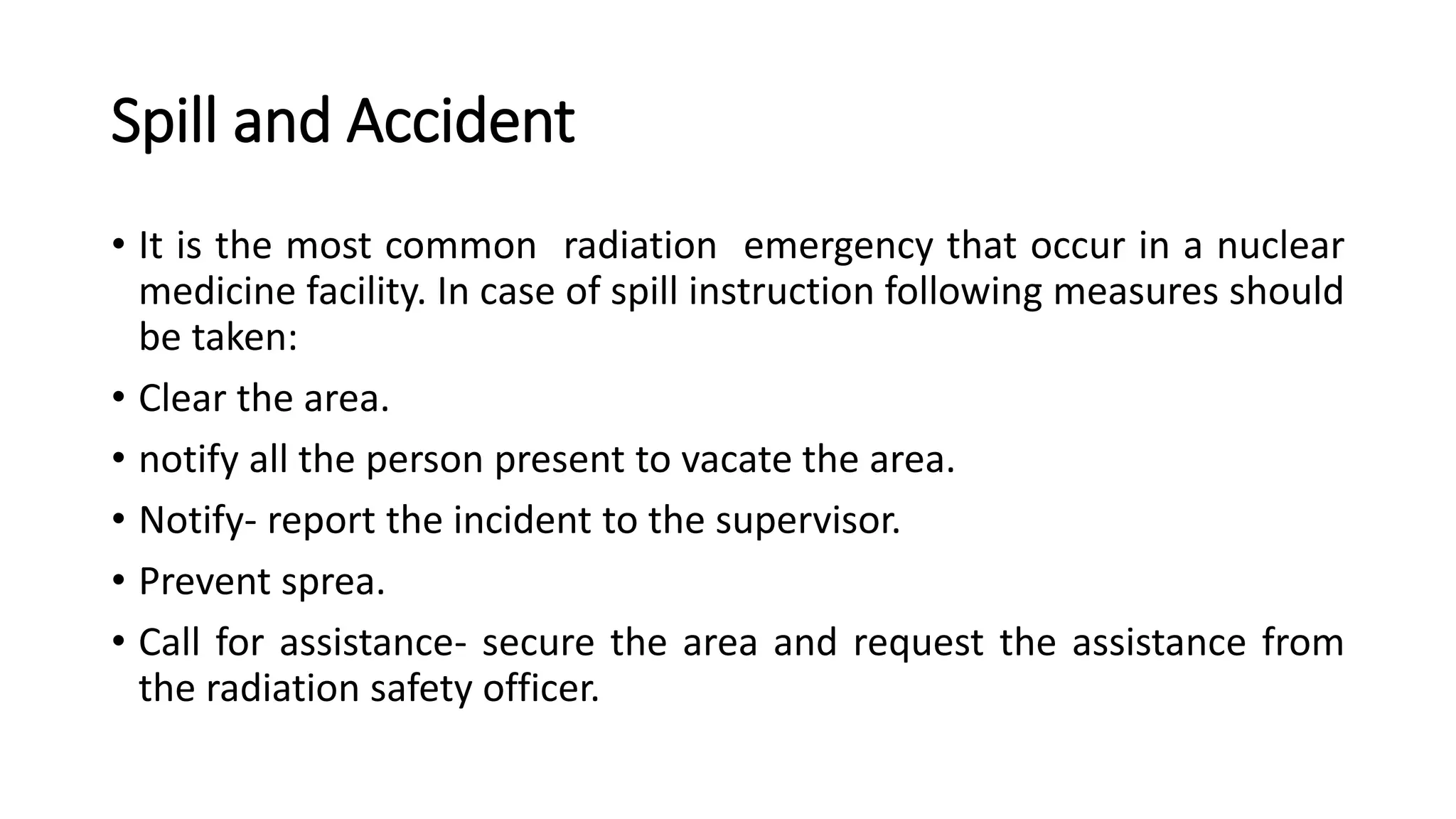
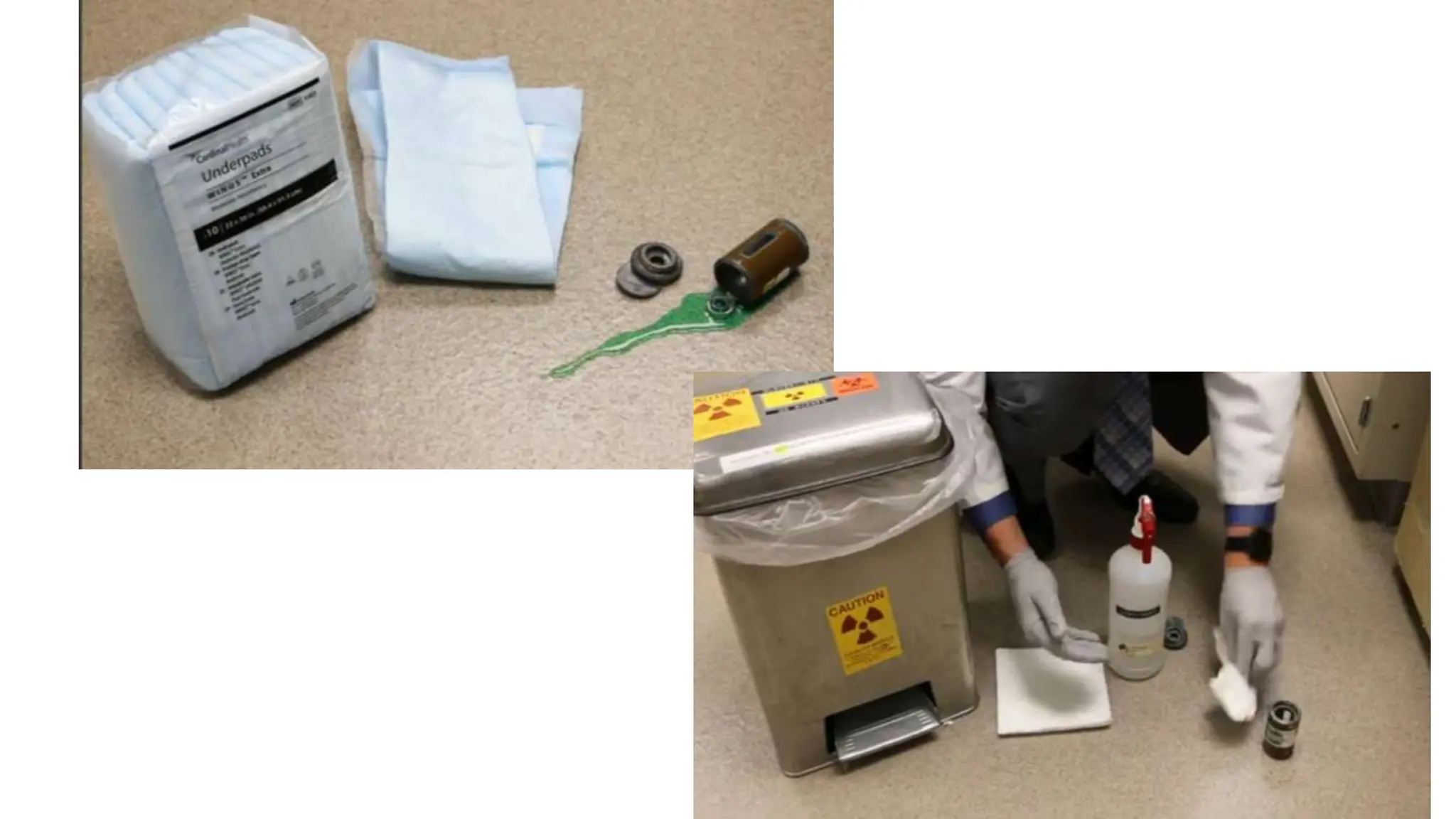
Spill and Accident
• It is the most common radiation emergency that occur in a nuclear
medicine facility. In case of spill instruction following measures should
be taken:
• Clear the area.
• notify all the person present to vacate the area.
• Notify- report the incident to the supervisor.
• Prevent sprea.
• Call for assistance- secure the area and request the assistance from
the radiation safety officer.
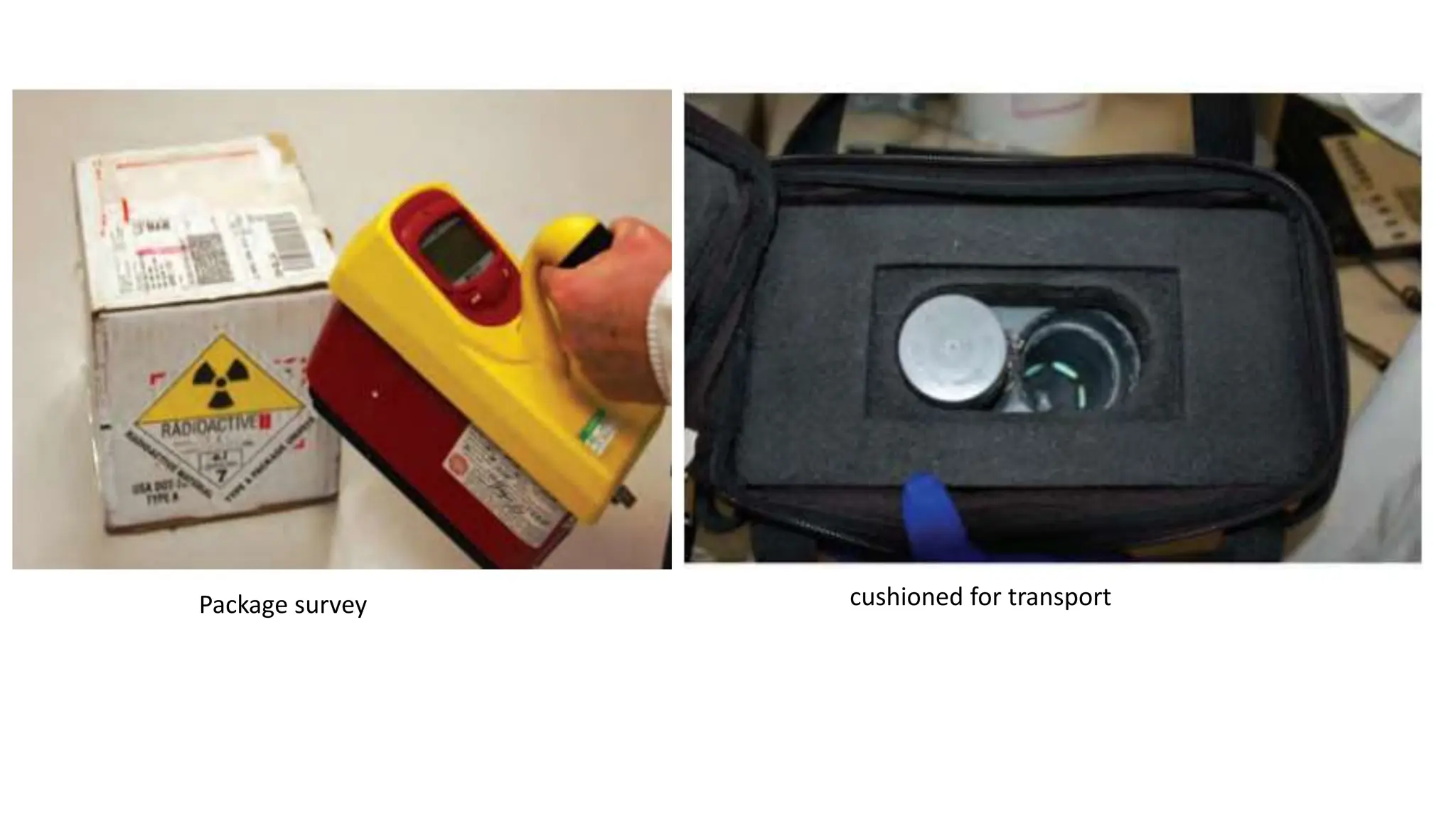
cushioned for transport
Package survey
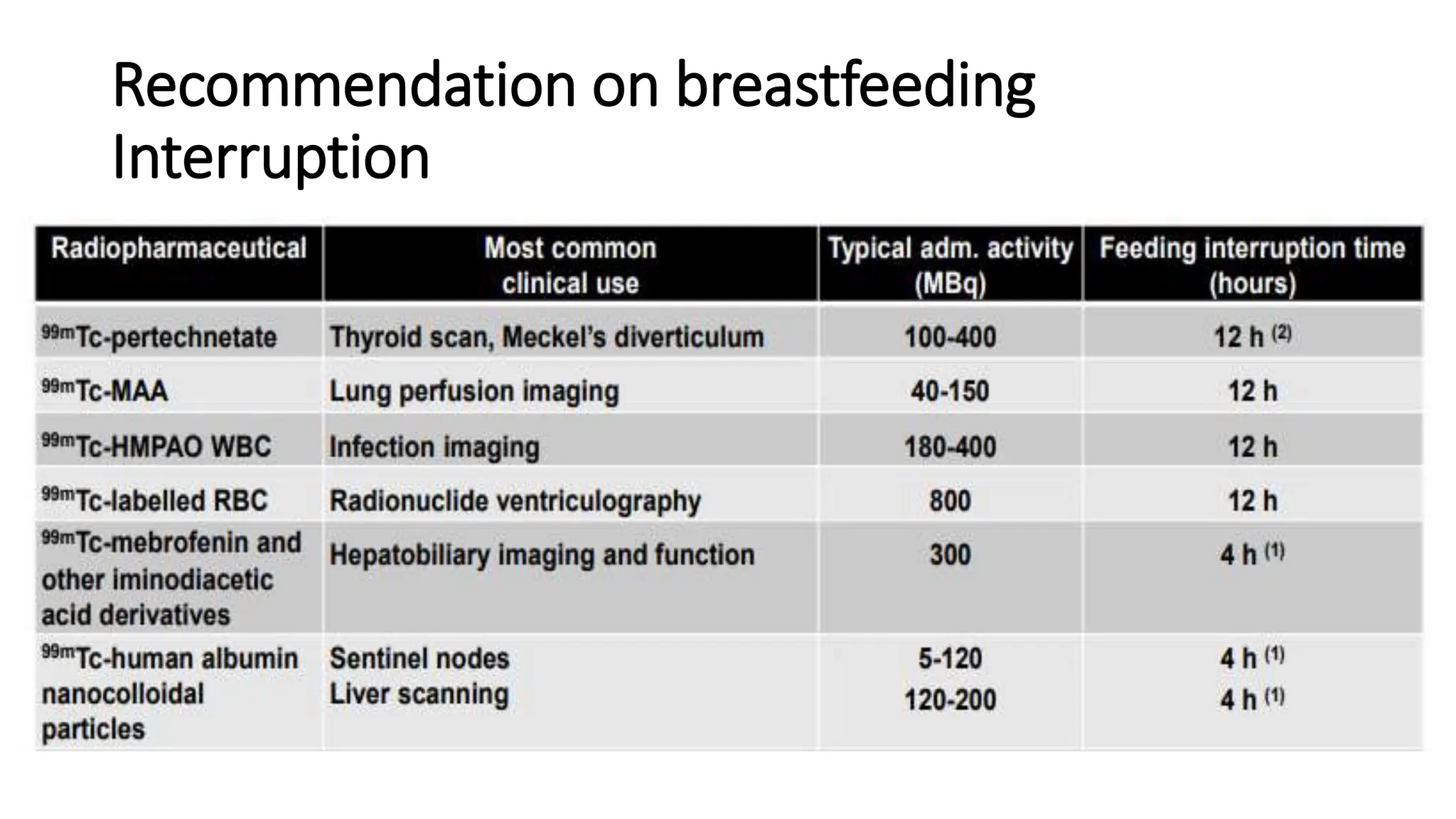
Recommendation on breastfeeding
Interruption
References
• The Essential Physics of Medical Imaging 3rd Edition.
• Fundamentals of Nuclear Pharmacy ,5th Edition.
• Chat GPT.
THANK YOU.

Technetium Generator and safe use of radiopharmaceuticals by T.R.B.

  • 1.
    Technetium 99m Generatorand Safe use of Radiopharmaceuticals Thumba Raj Baruwal B.Sc. MIT 2nd Year Roll No. :162
  • 2.
    Radioactivity • Radioactivity isthe process by which unstable atomic nuclei lose energy by emitting radiation. • This phenomenon occurs naturally in certain elements and can also be induced artificially. • The emitted radiation can be in the form of particles or electromagnetic waves, and the process results in the transformation of the original nucleus into a different nucleus or a different energy state.
  • 3.
  • 4.
  • 5.
    Artificial Radioactivity • Artificialradioactivity, also known as induced radioactivity, is the process by which stable nuclei are transformed into radioactive nuclei through artificial means, typically by bombarding them with particles such as neutrons, protons, or alpha particles.
  • 6.
    Process of ArtificialRadioactivity • Particle Bombardment: A stable nucleus is bombarded with a particle (neutron, proton, or alpha particle), which can be introduced using a particle accelerator or a nuclear reactor. • Nuclear Reaction: The interaction between the incoming particle and the target nucleus results in a nuclear reaction, creating an unstable (radioactive) nucleus. • Decay of Radioactive Isotope: The newly formed radioactive nucleus undergoes radioactive decay, emitting radiation until it reaches a stable state.
  • 7.
    Fig: Fission Yieldof Molybdenum from Uranium
  • 8.
    Molybdenum 99 Separation •For 99Mo separation, the irradiated uranium target is dissolved in nitric acid and the solution is adsorbed on an alumina Al2O3 column. • Molybdenum is then eluted with ammonium hydroxide. • Ammonium molybdate is finally eluted with dilute HCl and ultimately used for the 99Mo-99mTc generator. • Its most common contaminants are 131I and 103Ru.
  • 9.
    Radionuclide Generators • Radionuclidegenerators are devices used to produce short-lived radioactive isotopes from longer-lived parent isotopes, essential in various fields like medicine, industry, and research. • These generators allow for the on-demand, site-specific production of isotopes, enhancing convenience and safety by reducing the need to handle highly radioactive materials directly. • The continuous decay of the parent isotope within the generator ensures a steady supply of the daughter isotope, making these devices highly valuable in clinical and industrial settings. • Radionuclide generators also contribute to cost efficiency by minimizing the need for frequent shipments of radioactive materials, thus optimizing resource utilization and operational logistics.
  • 11.
    Chemistry of Technetium •Technetium is a transition metal of silvery gray color belonging to group VIIB (Mn, Tc, and Re) and has the atomic number 43. • No stable isotope of technetium exists in nature. • The electronic structure of the technetium atom is 1s2 2s22p63s23p63d104s24p64d6 5s1. • Technetium can exist in eight oxidation states, from -1 to +7. • The +7and +4 states are most stable and exist in oxides, sulfides, halides, and pertechnetates.
  • 12.
    Introduction to Tc99m •Technetium 99m fulfills earlier criteria of ideal radionuclide and accounts for over 70% of nuclear imaging procedures. • Technetium-99m when used as radioactive tracer can be detected in the body by medical equipment such as gamma cameras. • It is well suited to its role because it emits readily detectable 140kev gamma rays and a half life of 6 hrs.
  • 13.
  • 14.
    1. Glass Column: This column contains an alumina matrix where the molybdate (Mo-99) is bound. When a saline solution is passed through the column, Tc-99m is eluted, separating it from Mo-99. 2. Needles : These are used for introducing the saline solution and collecting the eluted Tc-99m. One needle is typically for input (saline) and the other for output (Tc-99m solution). 3. Lead Shielding :Provides radiation protection to the user by absorbing the gamma rays emitted by Mo-99 and Tc-99m, ensuring safe handling of the radioactive materials.
  • 15.
    4. Bacteriological Filter:Ensures that the saline solution used for elution is sterile, preventing contamination of the eluted Tc-99m. 5. Volume Controller: Regulates the volume of saline solution that passes through the glass column, ensuring proper elution of Tc-99m and preventing overflow or underflow. 6. Bushing : Provides a secure fitting for the needles, ensuring they are properly aligned and connected to the glass column and other components. 7. Shielded Container : Houses the Mo-99 and the entire elution system, providing additional radiation shielding and structural support.
  • 16.
    Column Rubber stopper: Thiscomponent ensures a tight seal, preventing any leaks or contamination of the column. Glass Wool: This layer is used to distribute the saline evenly and act as a preliminary filter to remove any large particulates. Silica Gel: This layer absorbs moisture and prevents it from reaching the other components , which is crucial for maintaining the effectiveness of the column’s materials.

  • 17.
    Column • Band of99Mo: Molybdenum99 is the parent radionuclide, which decays to produce Tc-99m . • Alumina: This adsorbs free molybdenum-99 to minimize its breakthrough into eluate. • Glass Filter: This filter retains aluminum oxide particulates, preventing them from being carried over into the eluate.
  • 19.
    Working of Tc-99mGenerator • In a molybdenum-99/technetium-99m radionuclide generator, Mo-99 (produced by nuclear fission of U-235 to yield a high-specific-activity, carrier-free parent) is loaded in the form of ammonium molybdenate (NH4+)(MoO4 -), onto a porous column containing 5 to 10 g of an alumina (Al2O3) resin. • The ammonium molybdenate becomes attached to the surface of the alumina molecules ,a process called adsorption. • The porous nature of the alumina provides a large surface area for adsorption of the parent.
  • 20.
    Working of Technetium-99mGenerator • The Tc-99m is much less tightly bound than the Mo-99. The daughter is removed (eluted) by the flow of isotonic 0.9%saline (eluant) through the column. • When the saline solution is passed through the column, the chloride ions easily exchange with the TcO4- but not the MoO4- ions, producing sodium pertechnetate, Na+(99mTcO4-). • Technetium-99m pertechnetate (99mTcO4-) is produced in a sterile, pyrogen-free form with high specific activity and a pH (~5.5) that is ideally suited for radiopharmaceutical preparations.
  • 21.
    Working Technetium-99m Generator •Commercially moly generators have a large reservoir of oxygenated saline (the eluant) connected by tubing to one end of the column and a vacuum extraction vial to the other. • On insertion of the vacuum collection vial (contained in a shielded elution tool), saline is drawn through the column and the eluate is collected during elution which takes about 1 to 2 min. • Sterility is achieved by a Millipore filter connected to the end of the column, by the use of a bacteriostatic agent in the eluant, or by autoclave sterilization of the loaded column by the manufacturer.
  • 22.
    Working of Technetium-99mGenerator • Moly generators are typically delivered with approximately 37 to 740 GBq (1 to 20 Ci) of Mo-99, depending on the workload of the department. • The larger activity generators are typically used by commercial radio pharmacies supplying radiopharmaceuticals to multiple nuclear medicine departments.
  • 23.
    The Activity ofdaughter depends on • The activity of the parent. • The rate of formation of the daughter, which is equal to the rate of decay of the parent. • The decay rate of the daughter. • The time since the last elution. • The elution efficiency (typically 80% to 90%).
  • 24.
    Fig :Activity curvefor generators
  • 25.
    Transient Equilibrium • Betweenelutions, the daughter (Tc-99m) builds up or grows in as the parent (Mo99) continues to decay. • After approximately 23 h, the Tc-99m activity reaches a maximum, at which time the production rate and the decay rate are equal and the parent and daughter are said to be in transient equilibrium. • Once transient equilibrium has been achieved, the daughter activity decreases, with an apparent half-life equal to the half-life of the parent. • Transient equilibrium occurs when the half-life of the parent is greater than that of the daughter by a factor of approximately 10
  • 27.
    Liquid Column Generator •99mTc is extracted with methyl ethyl ketone (MEK) from a mixture of 20% NaOH solution of pH (10–12) and 99Mo. • After extraction, the organic phase is evaporated and the 99mTcO4- is dissolved in isotonic saline for clinical use. • The basic principle involves placing the 20% NaOH solution of 99Mo in a glass column and then letting MEK flow through the column from the bottom. MEK will extract 99mTcO4- leaving 99Mo in the aqueous solution. • The advantage of this generator is that the cost of 99mTc is low. But the disadvantage is that it needs a lot of manipulation in the overall method.
  • 28.
    Solid Column Generator •Moly generator is constructed with alumina (Al2O3) loaded in a plastic or glass column. • There are two types of Moly generators, wet column generators and dry column generators, supplied by different commercial firms. • In a dry column generator after routine elution the leftover saline in the column is drawn out by using an evacuated vial without adding any more saline. • The suggestion for a dry column generator came from the fact that radiation can cause radiolysis of water in a wet generator resulting in the formation of hydrogen peroxide (H2O2)and per hydroxyl free radical.
  • 29.
    Dry and WetTc99m Generators
  • 30.
    99Mo Breakthrough • Thisis 99Mo contamination in the 99mTc-eluate and originates from the small quantity of 99Mo that may be eluted with 99mTc. • The 99Mo contamination is measured by detecting 740-keV and 780- keV photon • The eluate vial is shielded in a lead pot (about 6 mm thick) to stop all 140-keV photons from 99mTc and to count only 740-keV and 780-keV photons from 99Mo . • US pharmacopeia limit 0.15 micro Ci 99Mo/mCi (0.15 kBq/MBq) 99mTc per administered dosage at the time of administration.
  • 31.
    Aluminum Breakthrough • Thealuminum contamination originates from the alumina bed of the generator. • The presence of aluminum in the 99mTc-eluate interferes with the preparation of 99mTc-sulfur colloid. • Aluminum may causes RBC agglutination. • USP limit is 10 micro gram Al/ml 99mTc for fission-produced 99Mo. • The presence of aluminum can be detected by the colorimetric method using aurin tricarboxylic acid or methyl orange, and can be quantitated by comparison with a standard solution of aluminum.
  • 32.
    Hot Lab • Hotlabs, also known as radio pharmacy laboratories, are specialized facilities designed for the preparation, handling, and dispensing of radiopharmaceuticals. Whose salient features include: Lead-lined workstations and fume hoods for shielding and containment . Radiation monitoring tools like Geiger counters and dosimeters, with strict safety protocols . Clean rooms and laminar flow hoods for ensuring sterility. Specialized equipment like synthesis modules and dose calibrators for precise preparation . Radioactive waste containers and decay storage for safe waste management
  • 33.
  • 34.
    Dose Calibrators • Thedose calibrator is one of the most essential instruments in nuclear medicine for measuring the activity of radionuclides for formulating and dispensing radiopharmaceuticals. • It is a cylindrically shaped, sealed chamber with a central well and is filled with argon and traces of halogen at high pressure. Its operating voltage is about 150 V. • Current produced by 1 mCi (37 MBq) 99mTc is different from that by 1 mCi (37 MBq) 131I. Isotope selectors are the feedback resistors to compensate for differences in ionization (current) produced by different radionuclides so the equal activities produce the same reading.
  • 35.
    Dose Calibrators • Inmost dose calibrators, the isotope selectors for commonly used radionuclides are push-button types, whereas those for other radionuclides are set by a continuous dial. • The settings of isotope selectors are basically the calibration factors for different radionuclides, which are determined by measuring the current produced by one millicurie of each radionuclide. • The unknown activity of a radionuclide is then measured by its current divided by the calibration factor for that radionuclide, which is displayed in the appropriate unit on the dose calibrator.
  • 36.
    Dose Calibrators • Formeasurement of the activity of a radionuclide, one first sets the calibration factor for the radionuclide using the appropriate push button or dial setting. • Then the sample in a syringe, vial, or any other appropriate container is placed inside the chamber well of the dose calibrator. • The reading of activity is displayed on the digital meter of the dose calibrator.
  • 37.
  • 38.
    Safe handling anduse of radiopharmaceuticals • Radiopharmaceuticals are radiation emitting substances used in medicine for radiotherapy and imaging diagnosis. • The main motto is to establish procedures to minimize the exposure to personnel preparing and administering radiopharmaceuticals , and to ensure safety for the general public. • ALARA , principle should be followed by specialist to carefully select the amount of radiopharmaceutical that would provide an accurate test with least amount of radiation exposure to patient. • The introduction of DRL can probably help the optimization of radiation protection in nuclear medicine.
  • 39.
    Exposure of whom? • Medical Exposure : Patients (adults, adolescents, children, infants) Carers and comforters ,Volunteers in medical and biomedical research Workers, and student. • Special Groups : Unborn children of pregnant women ,Breastfed newborns and infants , other professionals at the hospital, language interpreters, taxi drivers, individuals in the society .
  • 43.
  • 44.
  • 46.
    Application of DoseLimits • Occupational dose limit for whole body Effective Dose is 20mSv per year , averaged over defined periods of 5 years. • Effective dose for pubic dose limit is 1mSv in a year. • Diagnostic Reference Level : DRL provides guidance to healthcare providers on the appropriate use of radiation in medical imaging so that the benefits of the procedure outweigh the potential risks to the patient.
  • 47.
    Product preparation • Useappropriate kit vial shields when compounding radiopharmaceuticals. • Use syringe shields for reconstitution of radiopharmaceutical kits and administration of radiopharmaceuticals to patients, except when their use is contraindicated (e.g., recessed veins, infants). • Use tongs, when possible, when manipulating syringes during compounding or assaying . • Do not eat, store food, drink, smoke, or apply cosmetics in any area where licensed materials is stored or used. • Never pipette by mouth.
  • 48.
    Product labelling The labelon package should state: • Qualitative and quantitative composition. • The route of administration. • Expiry date. • Any special storage condition. Package labels
  • 50.
  • 51.
    Spill and Accident •It is the most common radiation emergency that occur in a nuclear medicine facility. In case of spill instruction following measures should be taken: • Clear the area. • notify all the person present to vacate the area. • Notify- report the incident to the supervisor. • Prevent sprea. • Call for assistance- secure the area and request the assistance from the radiation safety officer.
  • 53.
  • 54.
  • 55.
    References • The EssentialPhysics of Medical Imaging 3rd Edition. • Fundamentals of Nuclear Pharmacy ,5th Edition. • Chat GPT.
  • 56.