Assignment
E-Library
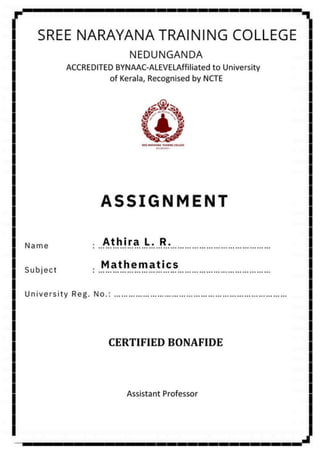
Submitted by,
Athira L. R.
Mathematics
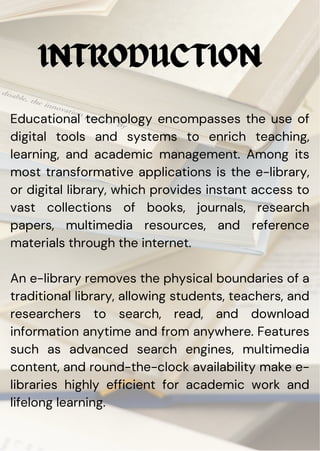
Educational technology encompasses the use of
digital tools and systems to enrich teaching,
learning, and academic management. Among its
most transformative applications is the e-library,
or digital library, which provides instant access to
vast collections of books, journals, research
papers, multimedia resources, and reference
materials through the internet.
An e-library removes the physical boundaries of a
traditional library, allowing students, teachers, and
researchers to search, read, and download
information anytime and from anywhere. Features
such as advanced search engines, multimedia
content, and round-the-clock availability make e-
libraries highly efficient for academic work and
lifelong learning.
INTRODUCTION
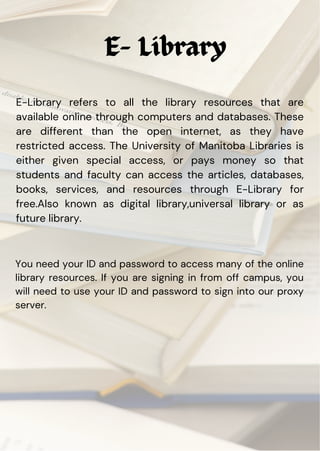
E- Library
E-Library refers to all the library resources that are
available online through computers and databases. These
are different than the open internet, as they have
restricted access. The University of Manitoba Libraries is
either given special access, or pays money so that
students and faculty can access the articles, databases,
books, services, and resources through E-Library for
free.Also known as digital library,universal library or as
future library.
You need your ID and password to access many of the online
library resources. If you are signing in from off campus, you
will need to use your ID and password to sign into our proxy
server.
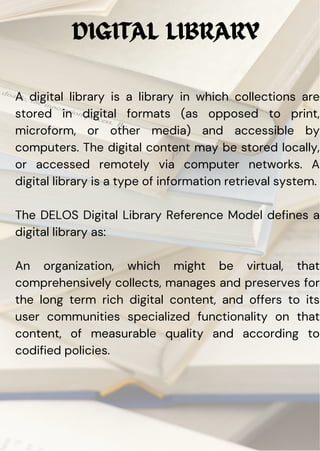
DIGITAL LIBRARY
A digital library is a library in which collections are
stored in digital formats (as opposed to print,
microform, or other media) and accessible by
computers. The digital content may be stored locally,
or accessed remotely via computer networks. A
digital library is a type of information retrieval system.
The DELOS Digital Library Reference Model defines a
digital library as:
An organization, which might be virtual, that
comprehensively collects, manages and preserves for
the long term rich digital content, and offers to its
user communities specialized functionality on that
content, of measurable quality and according to
codified policies.
The first use of the term digital library in print may have
been in a 1988 report to the Corporation for National
Research Initiatives. The term digital libraries was first
popularized by the NSF/DARPA/NASA Digital Libraries
Initiative in 1994. These draw heavily on As We May
Think by Vannevar Bush in 1945, which set out a vision
not in terms of technology, but user experience. The
term virtual library was initially used interchangeably
with digital library, but is now primarily used for libraries
that are virtual in other senses (such as libraries which
aggregate distributed content).
A distinction is often made between content that was
created in a digital format, known as born-digital, and
information that has been converted from a physical
medium, e.g., paper, by digitizing. The term hybrid
library is sometimes used for libraries that have both
physical collections and digital collections. For example,
American Memory is a digital library within the Library
of Congress. Some important digital libraries also serve
as long-term archives, for example, the ePrint arXiv, and
the Internet Archive.
1. No physical boundary
2. Round the clock availability
3. Multiple Access
4. IInformation Retrieval
5. Preservation and Conservation
6. Space
7. Added value
8.Easily accessible
ADVANTAGES
CHALLENGES
1. Digital divide
2. Information overload
3.Reliability and authenticity
4. Reading fatigue
5. HHealth hazards
6. Data degradation
7. Vulnerability to cyber crime
8. Lack of standardization
CONCLUSION
E-libraries represent a significant step
forward in the integration of educational
technology. They not only provide unlimited
access to high-quality resources but also
encourage independent study, collaborative
research, and continuous learning. By overcoming
geographical and time barriers, e-libraries
democratize education and support the
development of digitally skilled learners and
educators. As technology continues to evolve, the
role of e-libraries will remain central in shaping a
more connected, resource-rich, and innovative
educational environment.

Tech Assignment e library_20250915_125402_0000.pdf

  • 1.
  • 3.
    Educational technology encompassesthe use of digital tools and systems to enrich teaching, learning, and academic management. Among its most transformative applications is the e-library, or digital library, which provides instant access to vast collections of books, journals, research papers, multimedia resources, and reference materials through the internet. An e-library removes the physical boundaries of a traditional library, allowing students, teachers, and researchers to search, read, and download information anytime and from anywhere. Features such as advanced search engines, multimedia content, and round-the-clock availability make e- libraries highly efficient for academic work and lifelong learning. INTRODUCTION
  • 4.
    E- Library E-Library refersto all the library resources that are available online through computers and databases. These are different than the open internet, as they have restricted access. The University of Manitoba Libraries is either given special access, or pays money so that students and faculty can access the articles, databases, books, services, and resources through E-Library for free.Also known as digital library,universal library or as future library. You need your ID and password to access many of the online library resources. If you are signing in from off campus, you will need to use your ID and password to sign into our proxy server.
  • 5.
    DIGITAL LIBRARY A digitallibrary is a library in which collections are stored in digital formats (as opposed to print, microform, or other media) and accessible by computers. The digital content may be stored locally, or accessed remotely via computer networks. A digital library is a type of information retrieval system. The DELOS Digital Library Reference Model defines a digital library as: An organization, which might be virtual, that comprehensively collects, manages and preserves for the long term rich digital content, and offers to its user communities specialized functionality on that content, of measurable quality and according to codified policies.
  • 6.
    The first useof the term digital library in print may have been in a 1988 report to the Corporation for National Research Initiatives. The term digital libraries was first popularized by the NSF/DARPA/NASA Digital Libraries Initiative in 1994. These draw heavily on As We May Think by Vannevar Bush in 1945, which set out a vision not in terms of technology, but user experience. The term virtual library was initially used interchangeably with digital library, but is now primarily used for libraries that are virtual in other senses (such as libraries which aggregate distributed content). A distinction is often made between content that was created in a digital format, known as born-digital, and information that has been converted from a physical medium, e.g., paper, by digitizing. The term hybrid library is sometimes used for libraries that have both physical collections and digital collections. For example, American Memory is a digital library within the Library of Congress. Some important digital libraries also serve as long-term archives, for example, the ePrint arXiv, and the Internet Archive.
  • 7.
    1. No physicalboundary 2. Round the clock availability 3. Multiple Access 4. IInformation Retrieval 5. Preservation and Conservation 6. Space 7. Added value 8.Easily accessible ADVANTAGES
  • 8.
    CHALLENGES 1. Digital divide 2.Information overload 3.Reliability and authenticity 4. Reading fatigue 5. HHealth hazards 6. Data degradation 7. Vulnerability to cyber crime 8. Lack of standardization
  • 9.
    CONCLUSION E-libraries represent asignificant step forward in the integration of educational technology. They not only provide unlimited access to high-quality resources but also encourage independent study, collaborative research, and continuous learning. By overcoming geographical and time barriers, e-libraries democratize education and support the development of digitally skilled learners and educators. As technology continues to evolve, the role of e-libraries will remain central in shaping a more connected, resource-rich, and innovative educational environment.