Digital libraries and e-Learning
Presented to Senior Managers e-Learning &
Team-Building Workshop at North Coast
Beach Hotel, Mombasa on 1st
to 3rd
March
2014
By Dr. George Gitau Njoroge
Introduction
• World changing environment - requires learning institutions
to “provide relevant academic programmes of high
quality that are based on innovative educational
processes and the application of appropriate
technologies”
• Move towards student centred - emphasis on creative and
innovative learning prepares students for the world of
work and life-long learning.
• Distance learning - increased accessibility to tertiary
education by using ICT to link learners to remote resources
for independent learning and instructional purposes.
Libraries and e-learning
• They provide access to relevant
information for learning, teaching and
research through application of ICT’S.
• supports digital scholarship, and e-
learning.
• integrates its resources and services in
support of learning, teaching, research,
and outreach.
Source: Google images
• Working definition:
“organizations that provide the resources, including the specialized
staff, to select, structure, offer intellectual access to, interpret,
distribute, preserve the integrity of, and ensure the persistence over
time of collections of digital works so that they are readily and
economically available for use by a defined community or set of
communities.”
• A series of activities that brings together collections, services, and
people in support of the full life cycle of creation, dissemination, use,
and preservation of data, information, and knowledge.
• Describes teaching and learning resources or experiences
that are, in some way, delivered electronically.
• “Denotes ICT enhanced learning by delivering learning
contents and activities via internet, intranet/extranet,
audio/video, satellite broadcast, interactive TV, and CD-
ROM”
• Blended traditional face-to-face teaching and learning
that is combined with using communications technologies to
enhance student focused and directed learning and
teaching processes
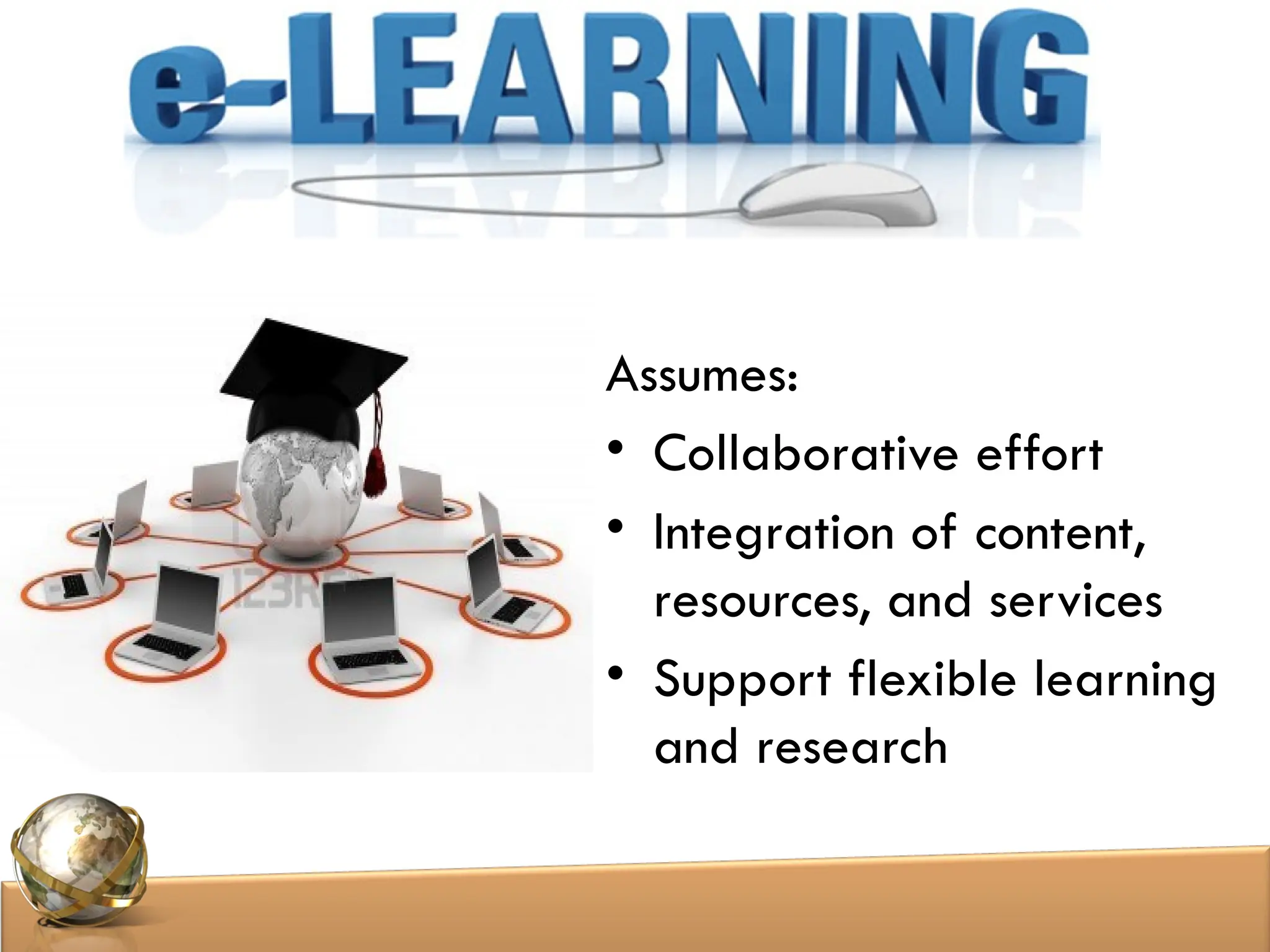
Assumes:
• Collaborative effort
• Integration of content,
resources, and services
• Support flexible learning
and research
Our understanding of E-Learning
• Knowledge is constructive information.
• Learning is more effective if the “learner” is provided with
strong incentive to take responsibility for self-learning.
• Learner's motivation is a strong determinant of the
outcomes of the success of the online learning.
• Encouragement of instructors, faculty and the like to
incorporate ICT into their classrooms is a success indicator
of online learning.
• Learning is unique to the individual and requires
reflections.
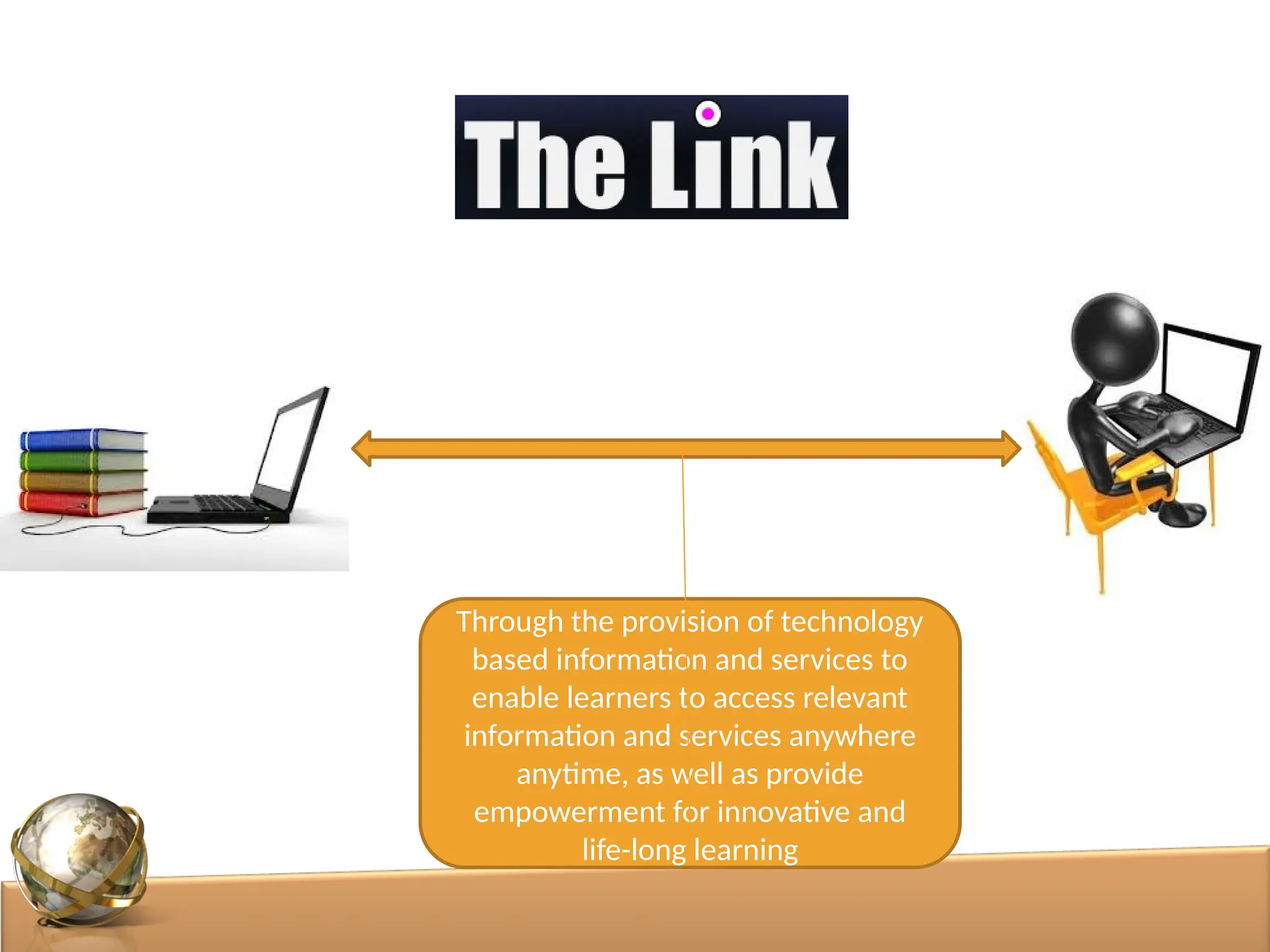
Through the provision of technology
based information and services to
enable learners to access relevant
information and services anywhere
anytime, as well as provide
empowerment for innovative and
life-long learning
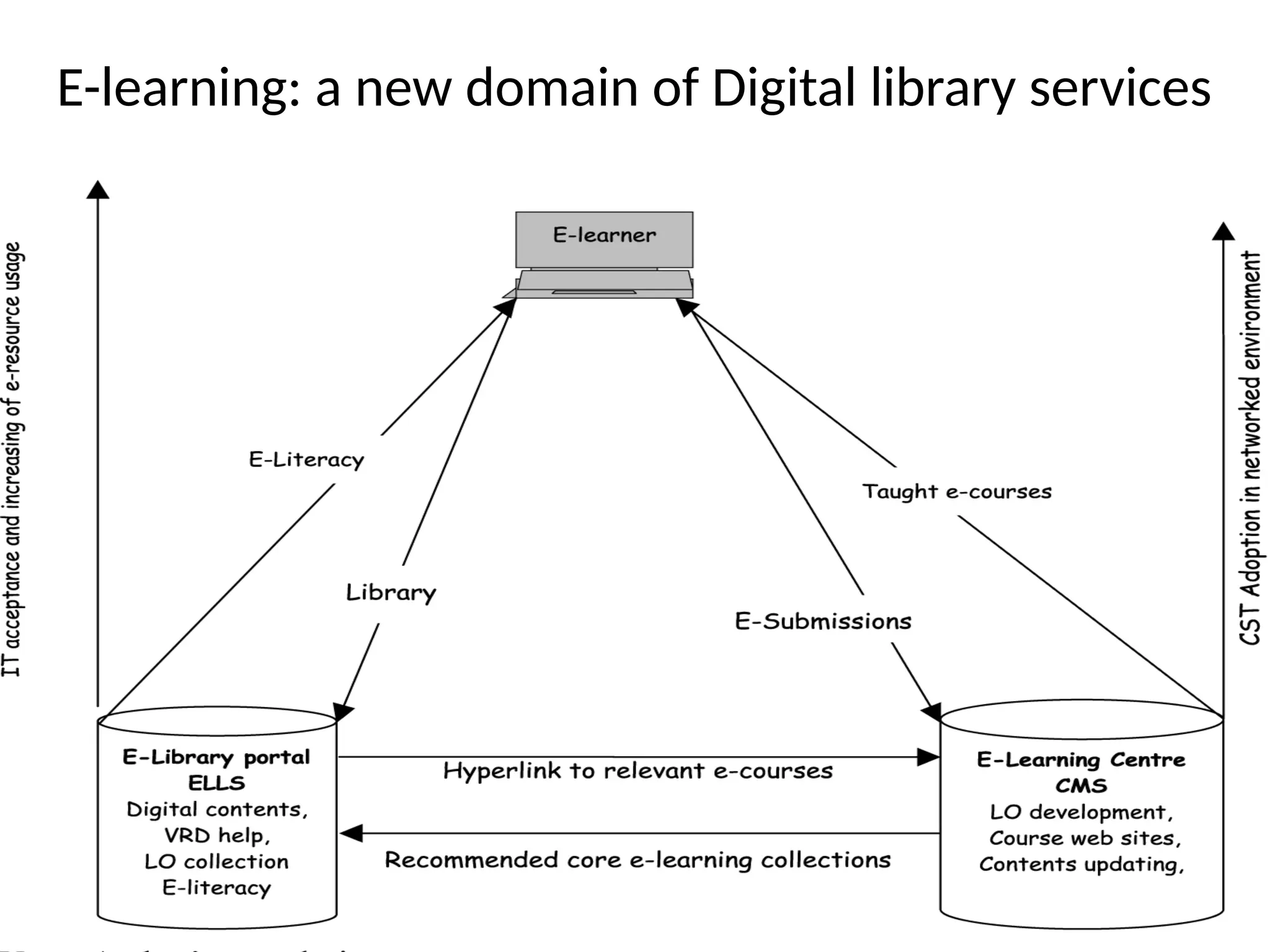
E-learning: a new domain of Digital library services
Functional roles of the Digital-library:
• Hyperlink the e-courses with the library e-reference resources such as e-
books, e-journals and web-based open-access resources;
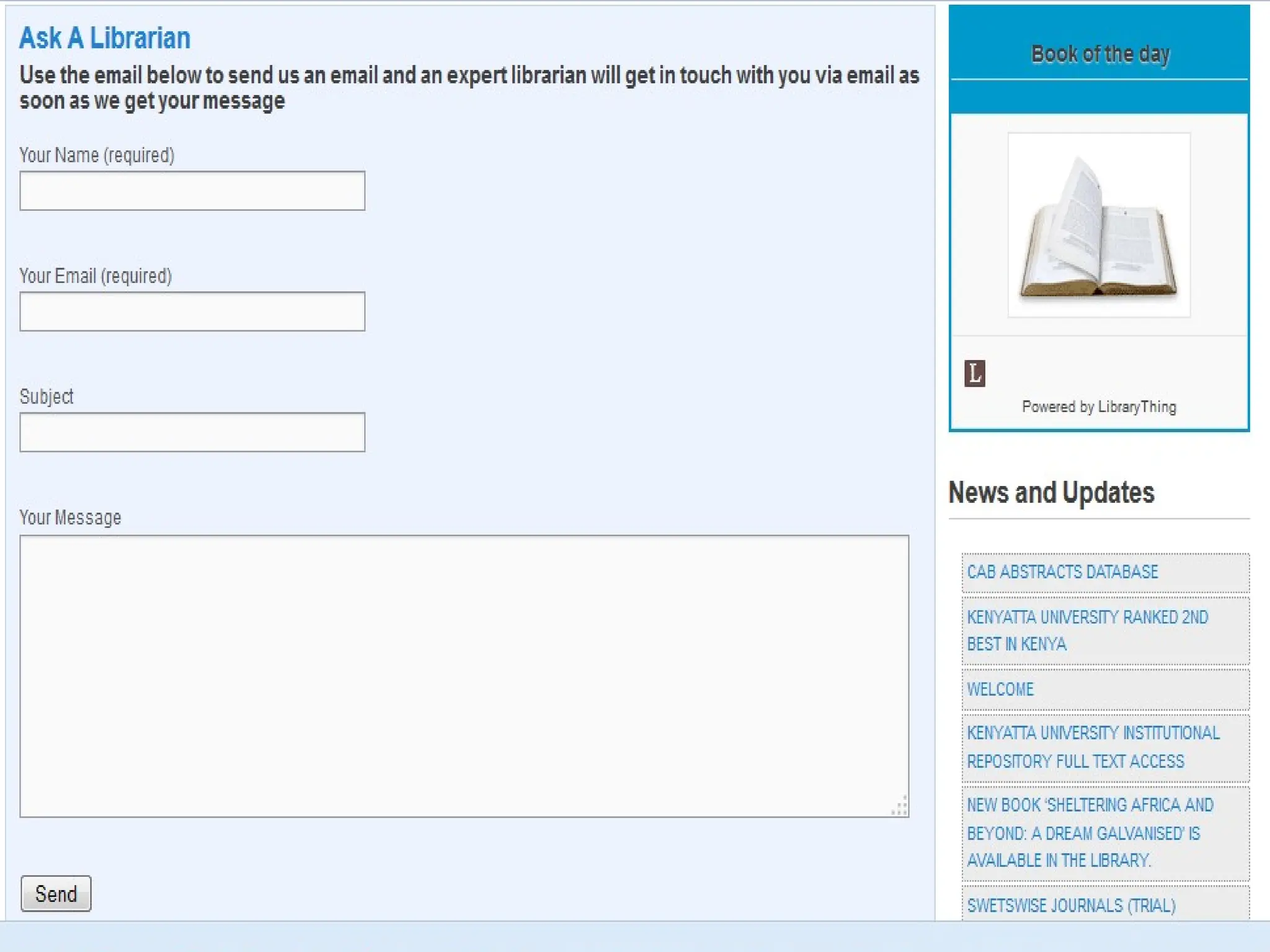
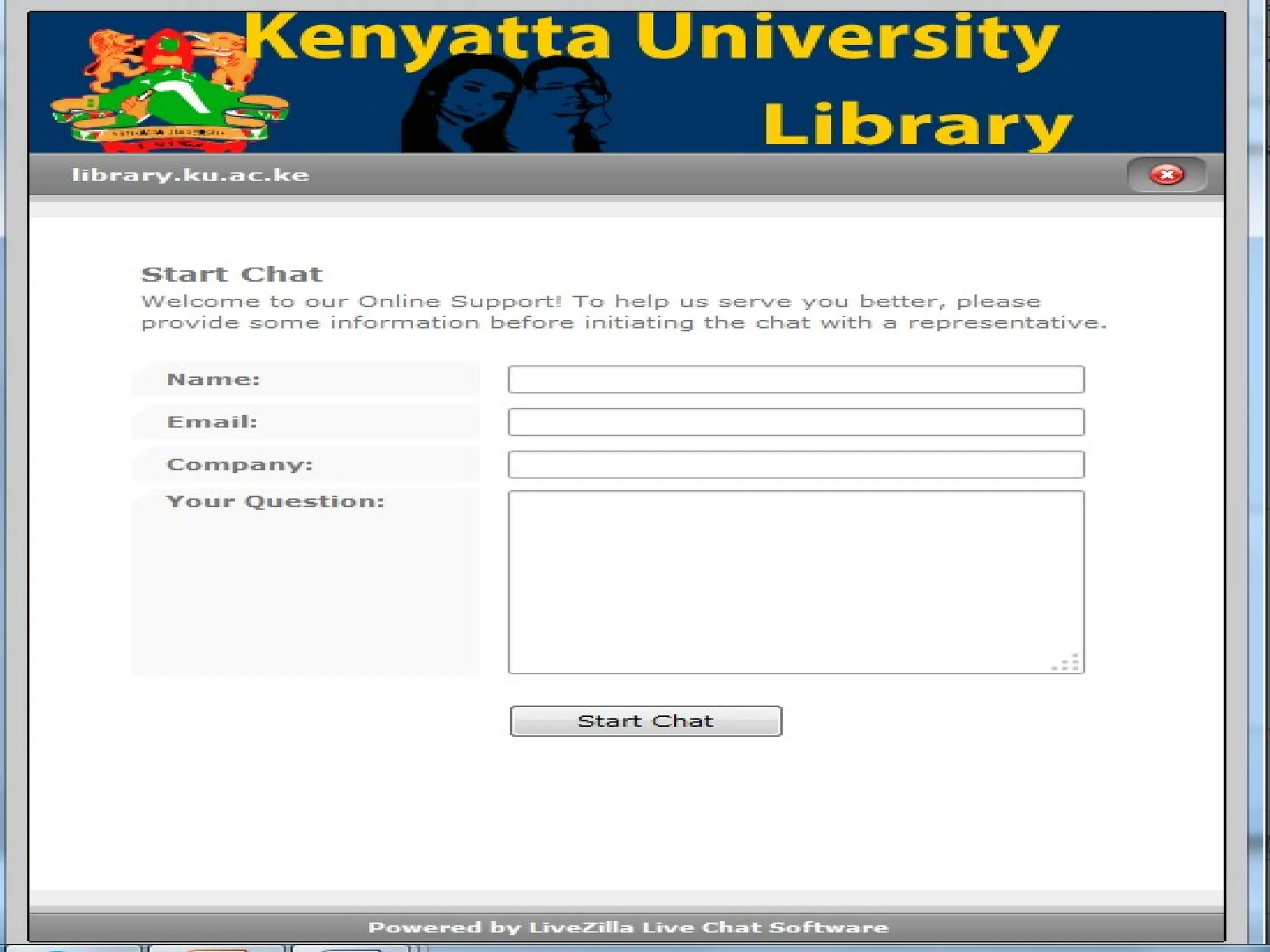
• Set up virtual reference desk (VRD) help and e-mail enquiry service to
answer the information needs of the e-learners (i.e. e-learning liaison
librarian);
• Develop a special integrated web portal for course-related learning
objects (LO) that retrieve from the library digital collections (e.g. e-journals,
textual databases, open access, etc.) with efficient browsing and research
abilities;
• Acquire core e-collections;
• Providing e-literacy sessions to help e-learners in scholarly use of the web
and distributed e-resources (e-learning information search skills);
• Promote library e-services to the virtual e-learning community; and
• Prompt document delivery and outreach services via electronic transmission.
Functional roles of the e-learning
institution:
• Development of innovative web-based e-courses
using multimedia effects and simulation;
• Integration of a variety of recommended core e-
learning reference readings with the digital
resources;
• Digitization of textbooks and other learning
resources to create usable learning objects; and
• Possible permanent updating of digital course
contents.
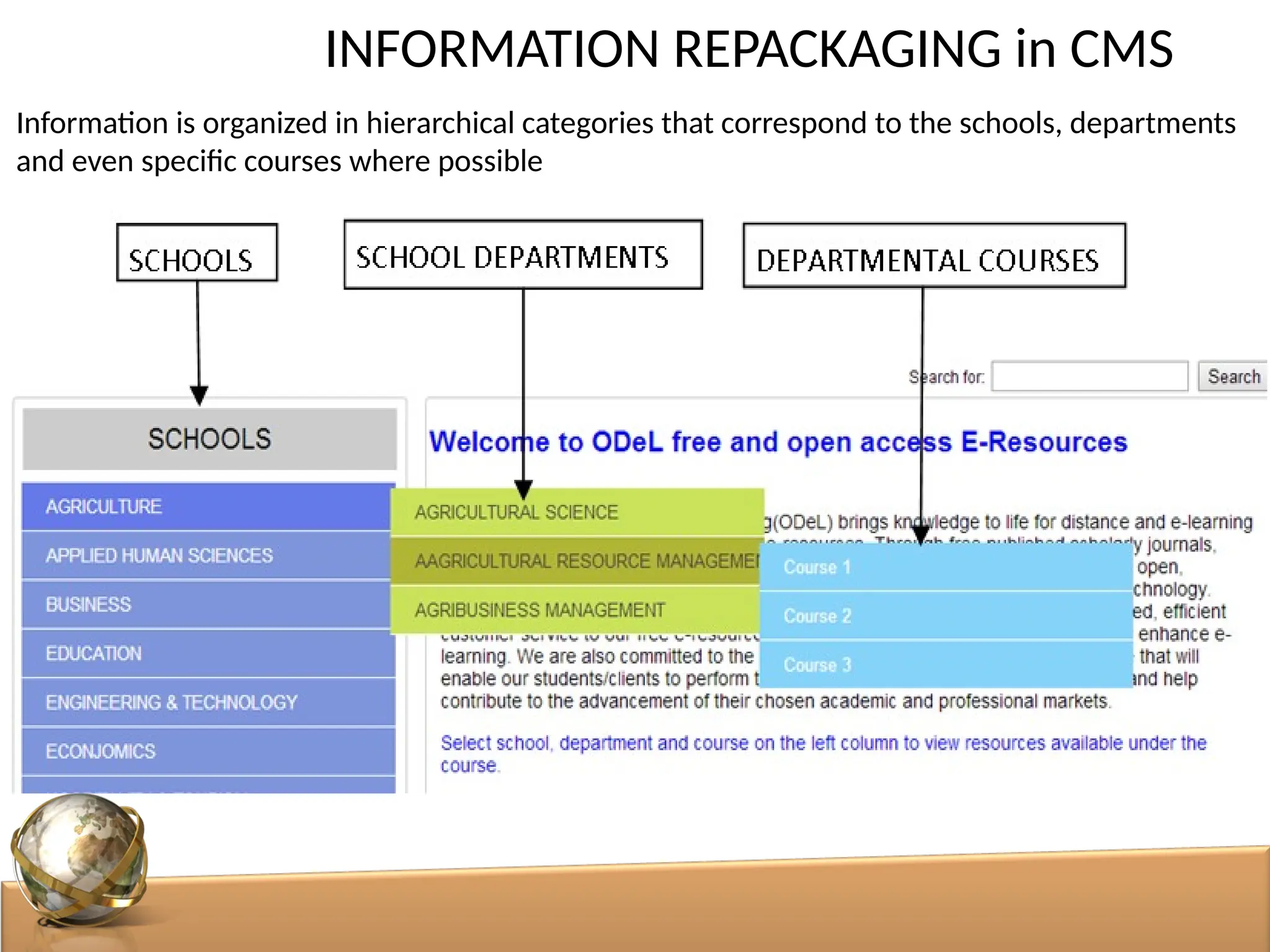
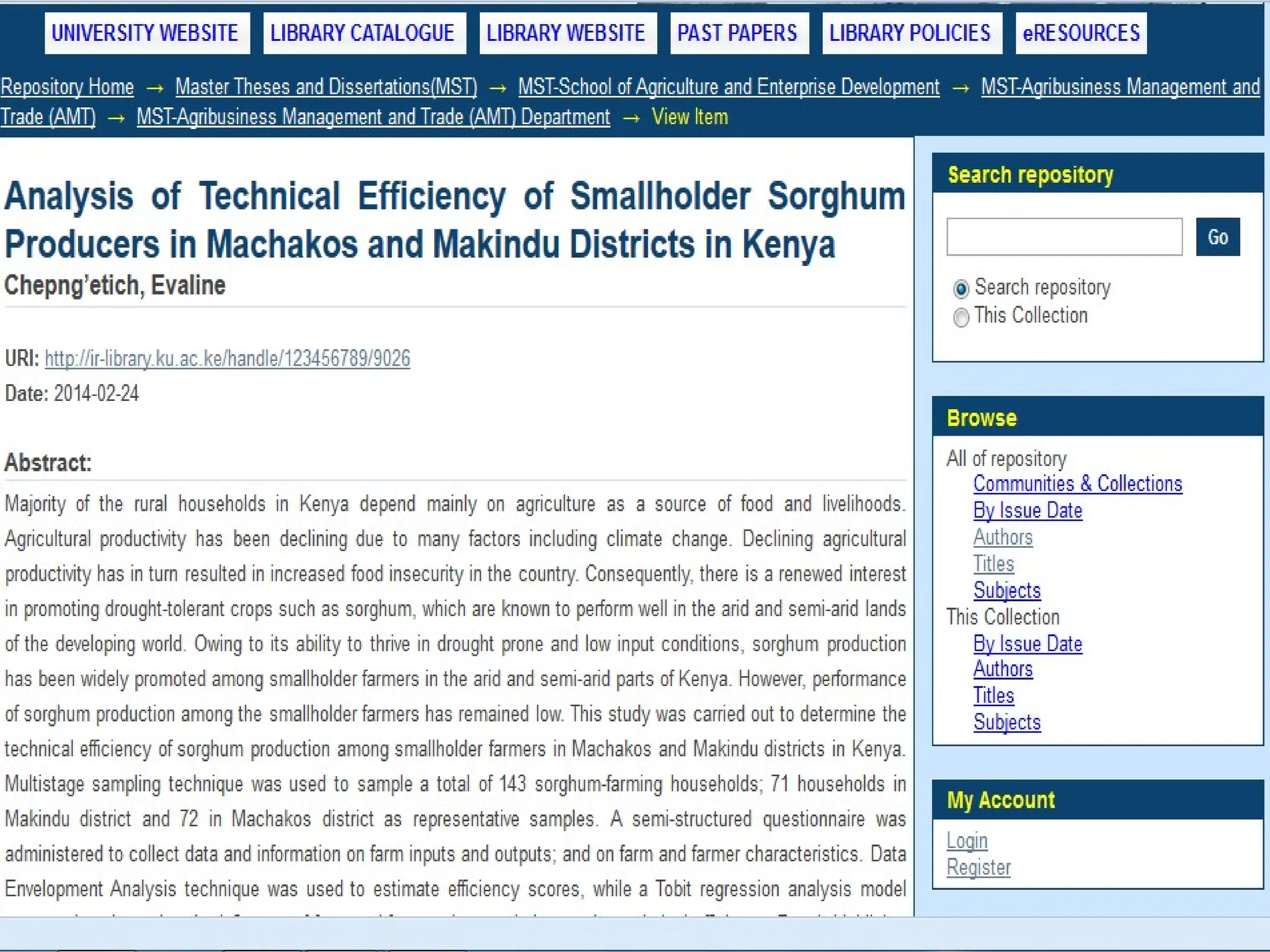
INFORMATION REPACKAGING in CMS
Information is organized in hierarchical categories that correspond to the schools, departments
and even specific courses where possible
Cognitive aspects of e-learning and
Digital library experience
• Personalized content delivery and learning
process
• Personal library experience through ‘your
library’ portal
• Library’s (virtual and physical) space as
‘information common’ and repository of e-
learning objects for enhanced learning
experience
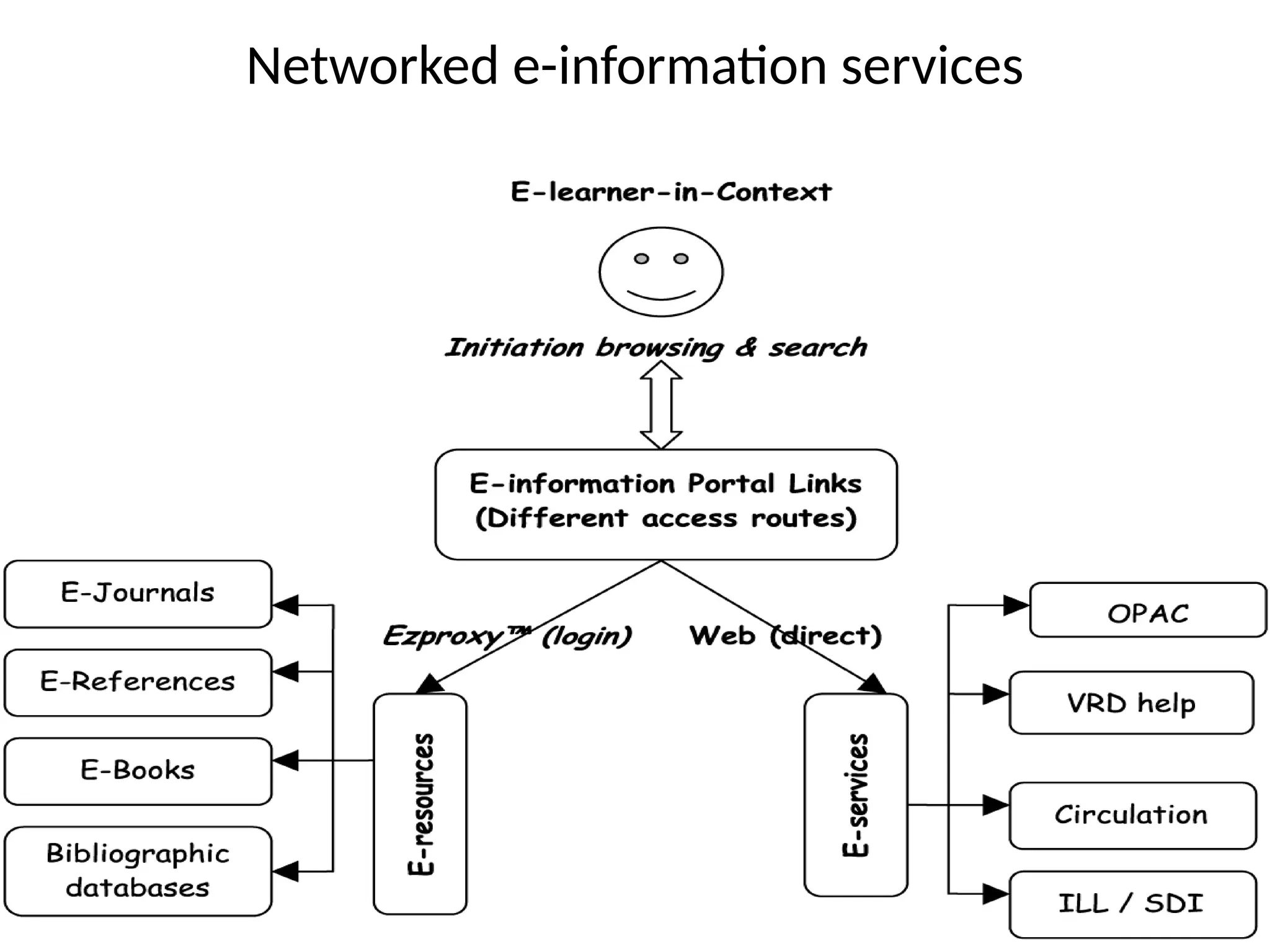
Networked e-information services
Library services in an e-learning
environment?
• Allows aggregation of e-contents - Library services must
be accessible from within this environment and permit the
creation of ‘virtual shelves’, library resources discovery,
bibliographic management tools and context-sensitive full
text access.
• Allow customization of preferences for library services
• Integrate access points to commercial databases
• Provide access to virtual reference service
• Create and integrate library learning objects (eg tutorials
for users)
• Provide digital rights management and preservation of e-
learning asset repository
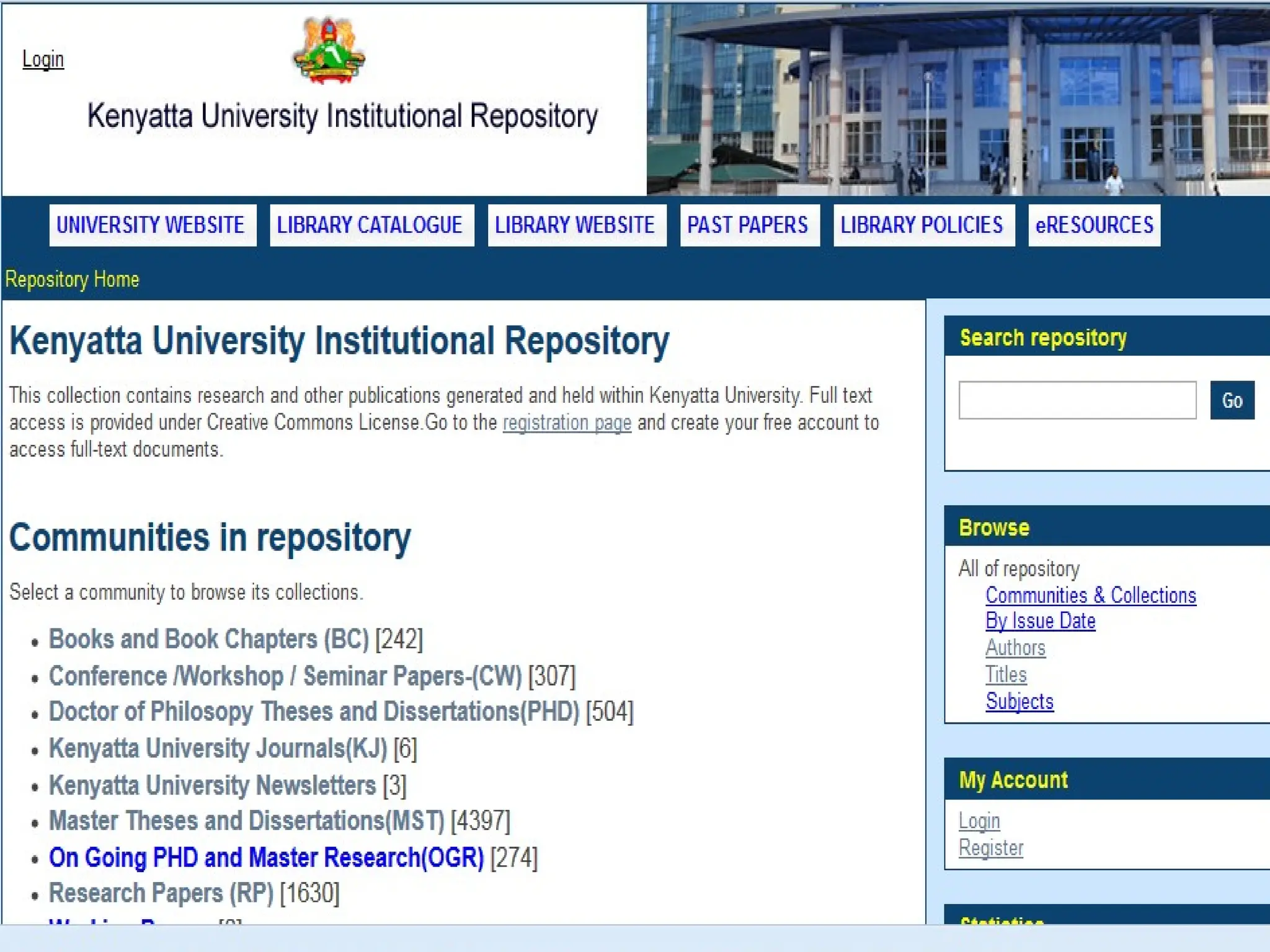
KU Library Initiative to support E-
learning
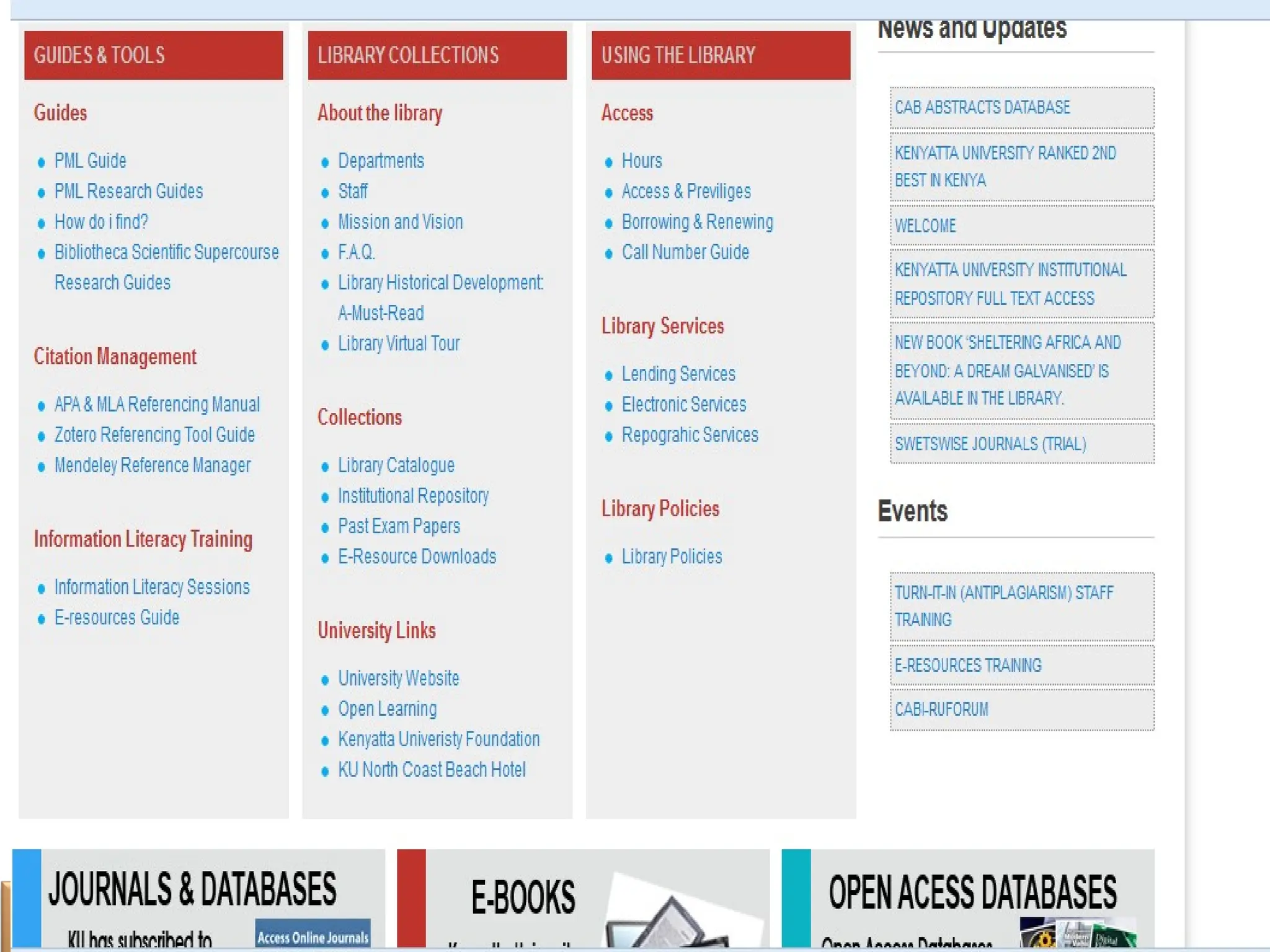
• Establishment of learning commons - “IT help desk,
reference desk, learning support services, research
help, information literacy and subject specialists”.
• Library’s automation and digitization of materials.
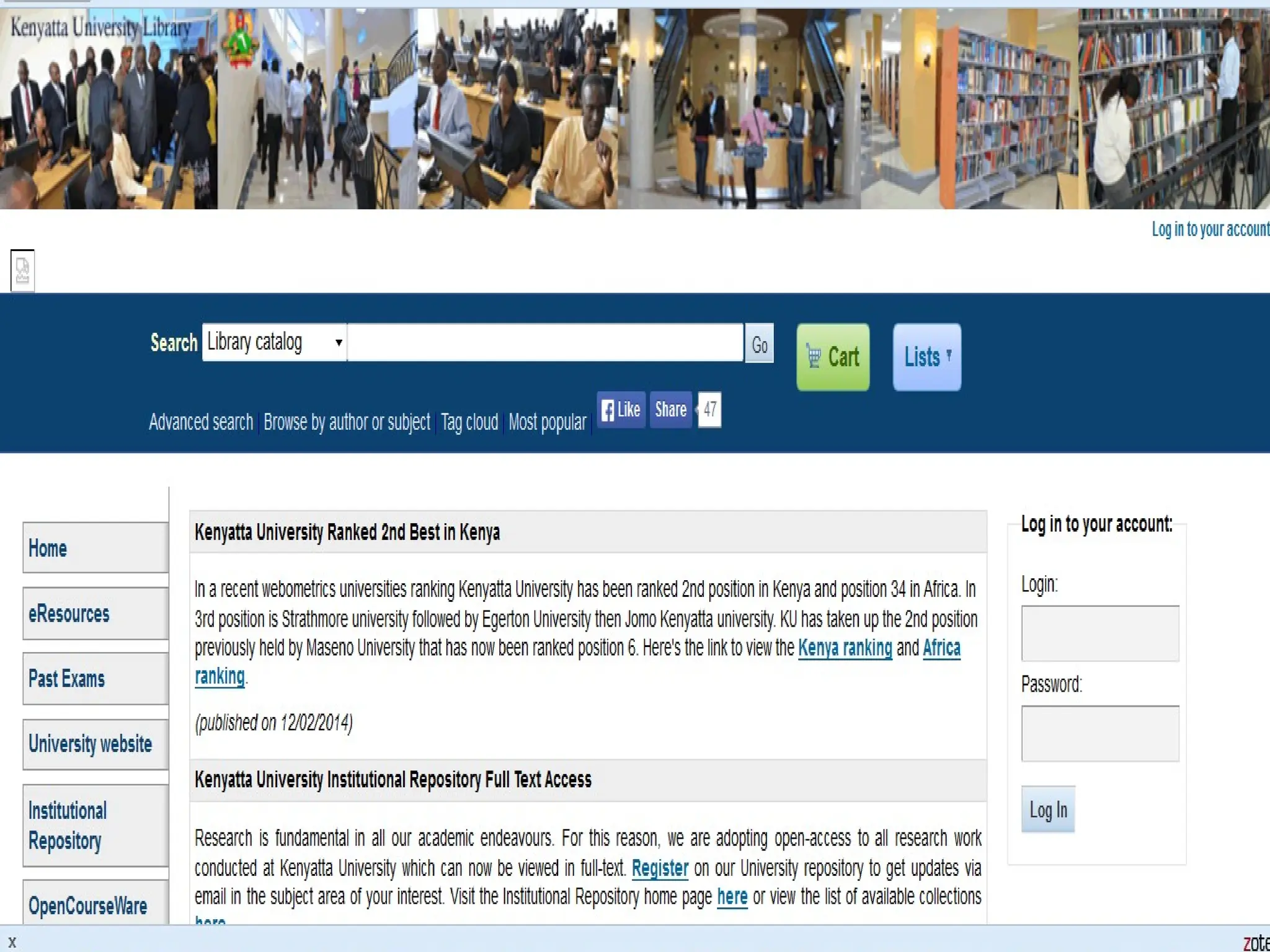
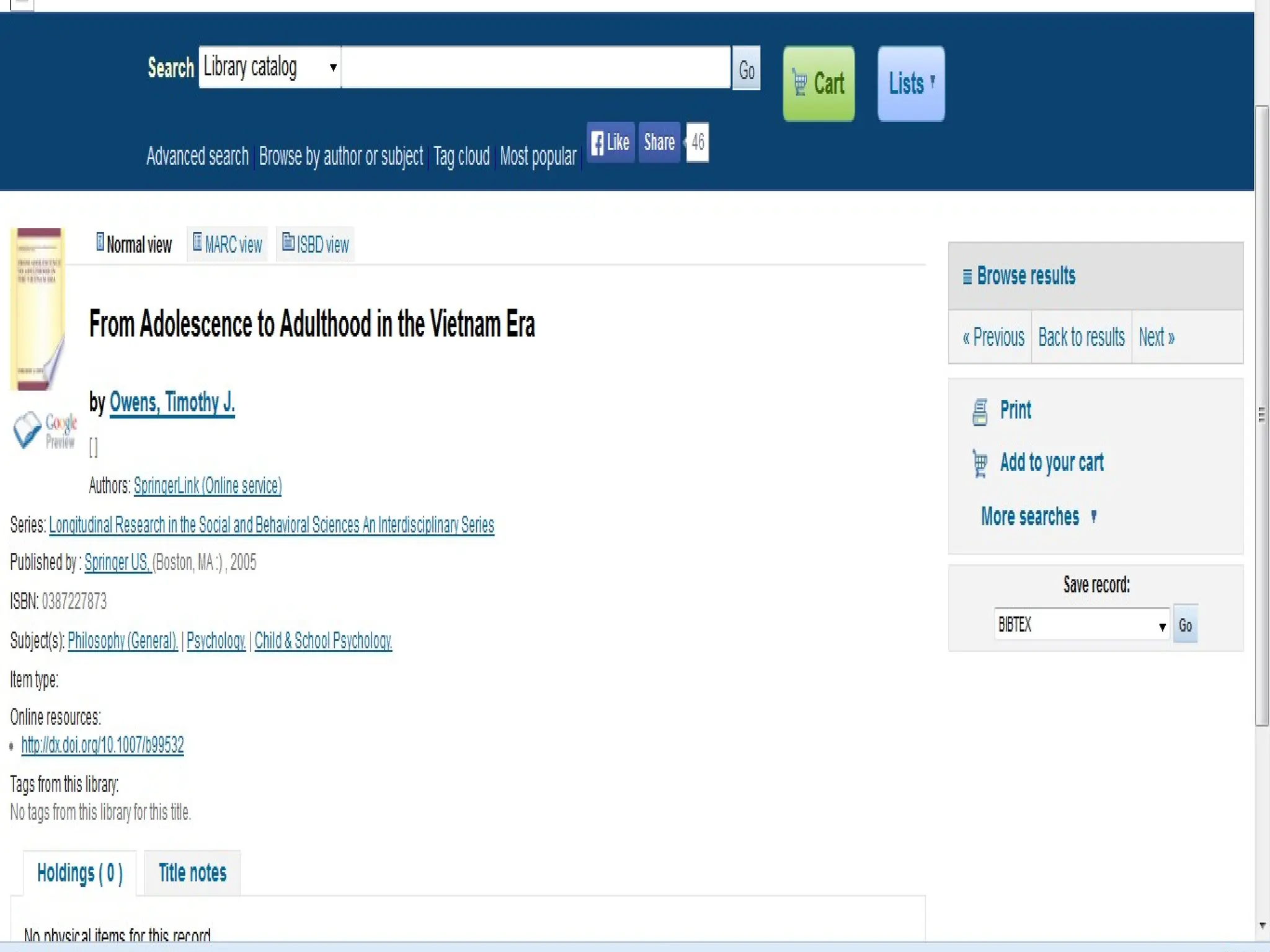
• E-books in the catalogue
• Computer workstations.
• Wireless access points in all the floors of the library
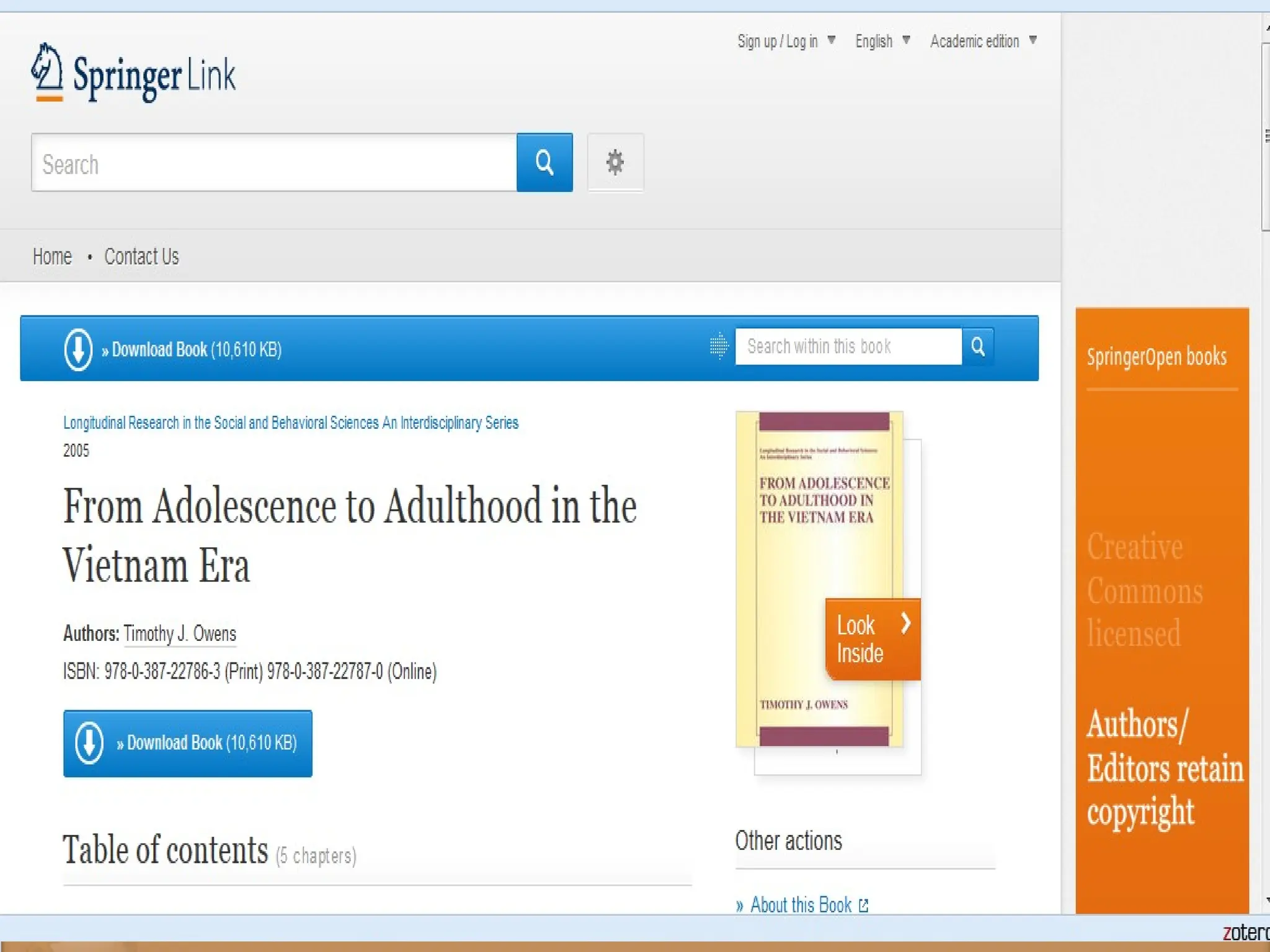
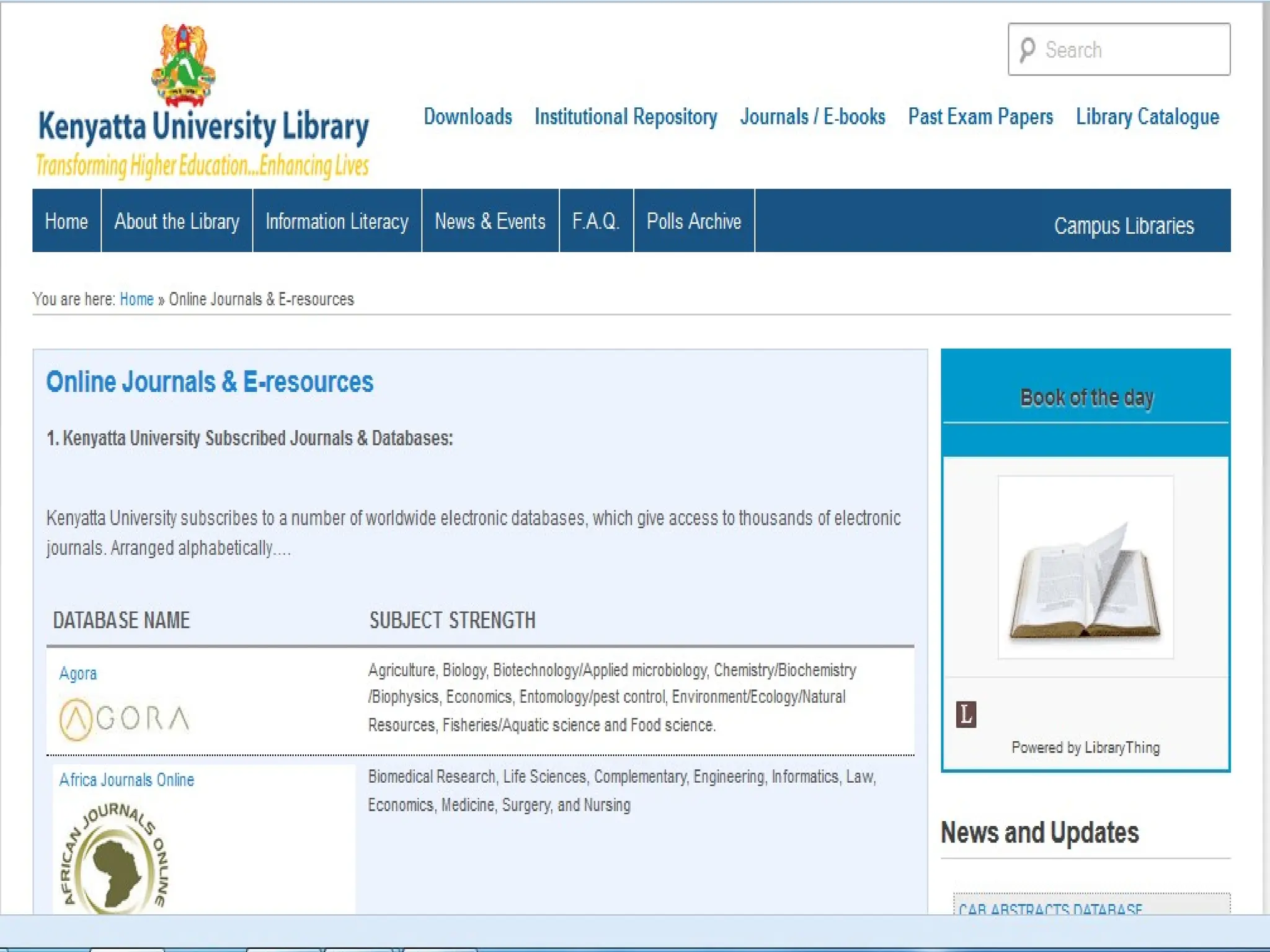
• Access to print and electronic resources- Links in
library catalogue.
Challenges
• Lack of collaborative environment which allows for integration
of resources and services for the benefit of the learner.
• No formalized or institutionalized collaboration, thus resulting
in inconsistent partnership in service convergence.
• Faculty and Support Units work independent of each other in
delivering content and providing support resources and
services.
• Copyright clearance for learning objects.
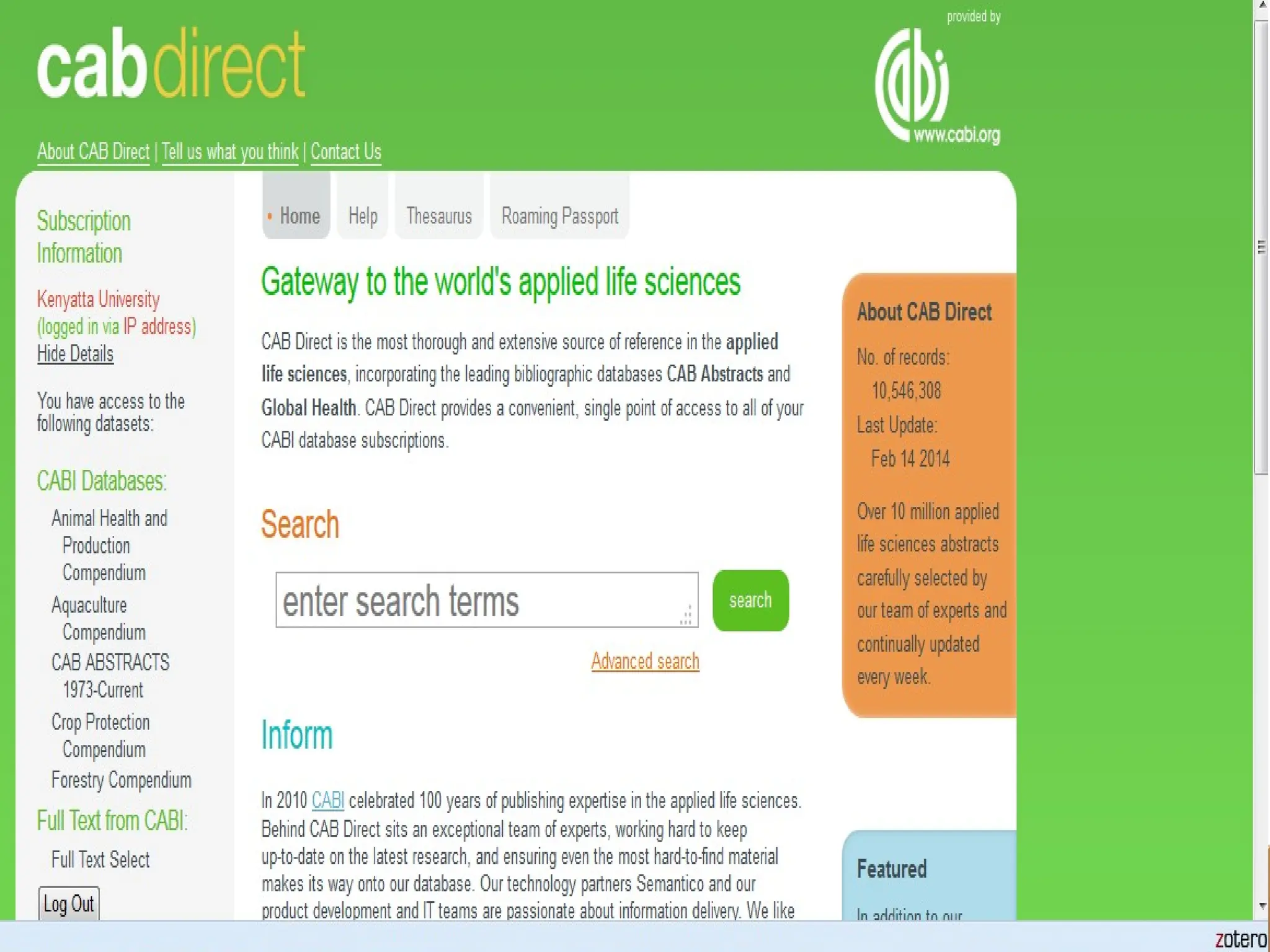
• Providing access to online journals and electronic databases to
those outside campus and in remote locations.
Conclusions
• In the 21st century, digital libraries will have a
tremendous positive impact on education, as sharing
of learning resources increases, supporting not only
distance education but also on-campus and
independent discovery-based learning.
• High-quality resources of all types will be contributed
by diverse sets of authors directly into digital
libraries, including use of open archives, leading to a
vast increase in use of rich multimedia works.
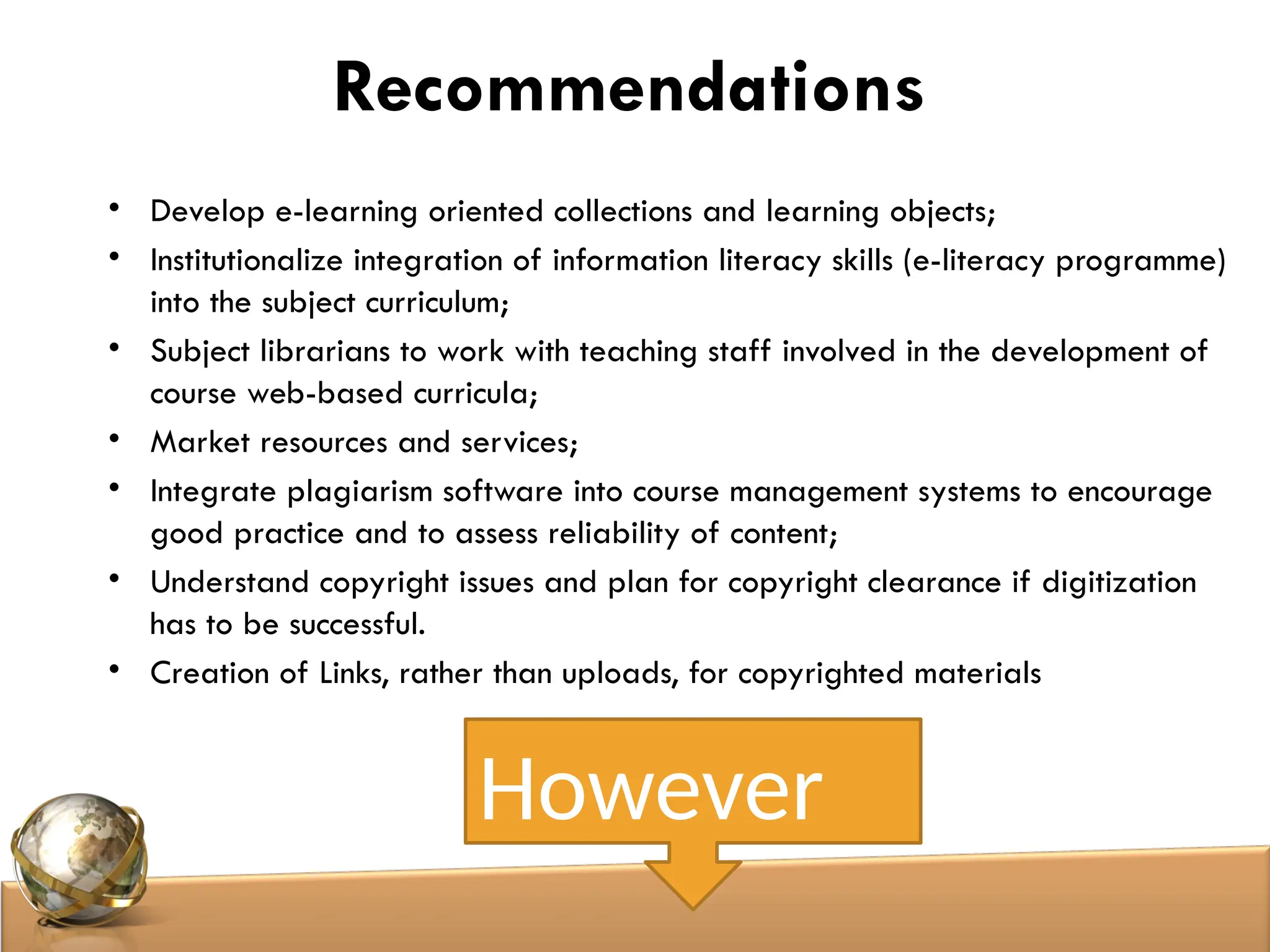
New Kinds of Learning Resources
• Cutting-edge technologies; to provide
access to print and electronic resources and
services.
• However more remains to be done as
emerging technologies provide great
opportunities for the Library to integrate
its resources and services into learning,
teaching and research.
Recommendations
• Develop e-learning oriented collections and learning objects;
• Institutionalize integration of information literacy skills (e-literacy programme)
into the subject curriculum;
• Subject librarians to work with teaching staff involved in the development of
course web-based curricula;
• Market resources and services;
• Integrate plagiarism software into course management systems to encourage
good practice and to assess reliability of content;
• Understand copyright issues and plan for copyright clearance if digitization
has to be successful.
• Creation of Links, rather than uploads, for copyrighted materials
However
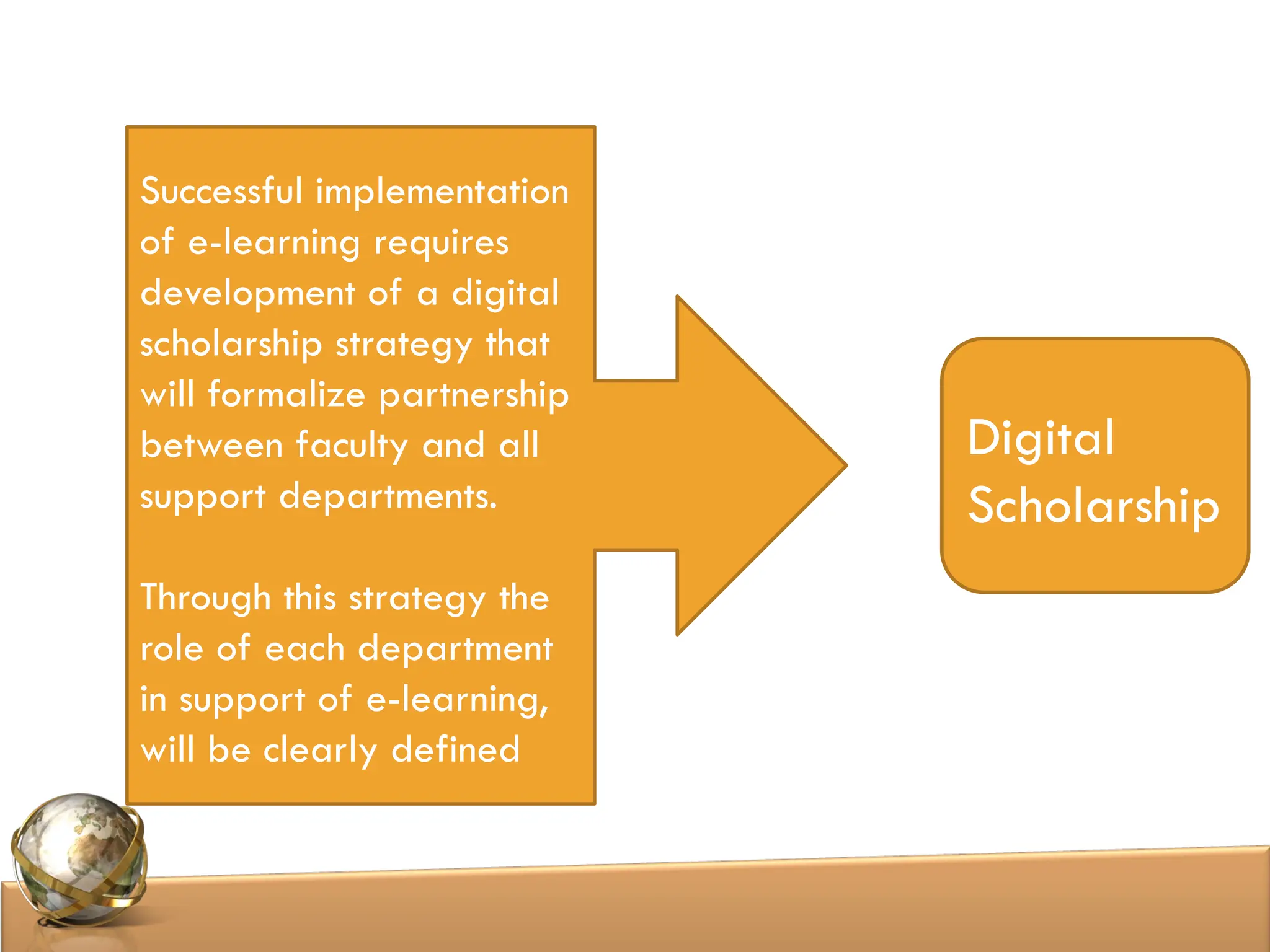
Successful implementation
of e-learning requires
development of a digital
scholarship strategy that
will formalize partnership
between faculty and all
support departments.
Through this strategy the
role of each department
in support of e-learning,
will be clearly defined
Digital
Scholarship
Source: Google images
References
1. Nfila, R. B. ( ) Academic Libraries Support for E-learning: Initiatives and
Opportunities: the case of University of Botswana Library.
2. Ahmed, T., (2007). "Networked e-information services to support the e-
learning process at UAE University", Electronic Library, The, Vol. 25 Iss: 3,
pp.349 – 362
3. Saeed, R. S. (2006). How digital libraries can support e-learning. The
Electronic Library Vol. 24 No. 3, 2006 pp. 389-401
4. Mei-Yu Wang (2003 ). The strategic role of digital libraries: issues in e-
learning environments. Library review vol. 52 no. 3 pp. 11-116
5. Norasieh A., Philippa, G. (2010).Exploring the use of digital library
services in a blended learning environment: a Malaysian higher
education perspective. Proceedings of ICERI2010 Conference 15th-17th
November 2010, Madrid, Spain.

Digital Libraries and E- Learning 12647418.ppt

  • 1.
    Digital libraries ande-Learning Presented to Senior Managers e-Learning & Team-Building Workshop at North Coast Beach Hotel, Mombasa on 1st to 3rd March 2014 By Dr. George Gitau Njoroge
  • 2.
    Introduction • World changingenvironment - requires learning institutions to “provide relevant academic programmes of high quality that are based on innovative educational processes and the application of appropriate technologies” • Move towards student centred - emphasis on creative and innovative learning prepares students for the world of work and life-long learning. • Distance learning - increased accessibility to tertiary education by using ICT to link learners to remote resources for independent learning and instructional purposes.
  • 3.
    Libraries and e-learning •They provide access to relevant information for learning, teaching and research through application of ICT’S. • supports digital scholarship, and e- learning. • integrates its resources and services in support of learning, teaching, research, and outreach.
  • 4.
  • 5.
    • Working definition: “organizationsthat provide the resources, including the specialized staff, to select, structure, offer intellectual access to, interpret, distribute, preserve the integrity of, and ensure the persistence over time of collections of digital works so that they are readily and economically available for use by a defined community or set of communities.” • A series of activities that brings together collections, services, and people in support of the full life cycle of creation, dissemination, use, and preservation of data, information, and knowledge.
  • 7.
    • Describes teachingand learning resources or experiences that are, in some way, delivered electronically. • “Denotes ICT enhanced learning by delivering learning contents and activities via internet, intranet/extranet, audio/video, satellite broadcast, interactive TV, and CD- ROM” • Blended traditional face-to-face teaching and learning that is combined with using communications technologies to enhance student focused and directed learning and teaching processes
  • 8.
    Assumes: • Collaborative effort •Integration of content, resources, and services • Support flexible learning and research
  • 9.
    Our understanding ofE-Learning • Knowledge is constructive information. • Learning is more effective if the “learner” is provided with strong incentive to take responsibility for self-learning. • Learner's motivation is a strong determinant of the outcomes of the success of the online learning. • Encouragement of instructors, faculty and the like to incorporate ICT into their classrooms is a success indicator of online learning. • Learning is unique to the individual and requires reflections.
  • 10.
    Through the provisionof technology based information and services to enable learners to access relevant information and services anywhere anytime, as well as provide empowerment for innovative and life-long learning
  • 11.
    E-learning: a newdomain of Digital library services
  • 12.
    Functional roles ofthe Digital-library: • Hyperlink the e-courses with the library e-reference resources such as e- books, e-journals and web-based open-access resources; • Set up virtual reference desk (VRD) help and e-mail enquiry service to answer the information needs of the e-learners (i.e. e-learning liaison librarian); • Develop a special integrated web portal for course-related learning objects (LO) that retrieve from the library digital collections (e.g. e-journals, textual databases, open access, etc.) with efficient browsing and research abilities; • Acquire core e-collections; • Providing e-literacy sessions to help e-learners in scholarly use of the web and distributed e-resources (e-learning information search skills); • Promote library e-services to the virtual e-learning community; and • Prompt document delivery and outreach services via electronic transmission.
  • 13.
    Functional roles ofthe e-learning institution: • Development of innovative web-based e-courses using multimedia effects and simulation; • Integration of a variety of recommended core e- learning reference readings with the digital resources; • Digitization of textbooks and other learning resources to create usable learning objects; and • Possible permanent updating of digital course contents.
  • 14.
    INFORMATION REPACKAGING inCMS Information is organized in hierarchical categories that correspond to the schools, departments and even specific courses where possible
  • 15.
    Cognitive aspects ofe-learning and Digital library experience • Personalized content delivery and learning process • Personal library experience through ‘your library’ portal • Library’s (virtual and physical) space as ‘information common’ and repository of e- learning objects for enhanced learning experience
  • 16.
  • 17.
    Library services inan e-learning environment? • Allows aggregation of e-contents - Library services must be accessible from within this environment and permit the creation of ‘virtual shelves’, library resources discovery, bibliographic management tools and context-sensitive full text access. • Allow customization of preferences for library services • Integrate access points to commercial databases • Provide access to virtual reference service • Create and integrate library learning objects (eg tutorials for users) • Provide digital rights management and preservation of e- learning asset repository
  • 18.
    KU Library Initiativeto support E- learning • Establishment of learning commons - “IT help desk, reference desk, learning support services, research help, information literacy and subject specialists”. • Library’s automation and digitization of materials. • E-books in the catalogue • Computer workstations. • Wireless access points in all the floors of the library • Access to print and electronic resources- Links in library catalogue.
  • 29.
    Challenges • Lack ofcollaborative environment which allows for integration of resources and services for the benefit of the learner. • No formalized or institutionalized collaboration, thus resulting in inconsistent partnership in service convergence. • Faculty and Support Units work independent of each other in delivering content and providing support resources and services. • Copyright clearance for learning objects. • Providing access to online journals and electronic databases to those outside campus and in remote locations.
  • 30.
    Conclusions • In the21st century, digital libraries will have a tremendous positive impact on education, as sharing of learning resources increases, supporting not only distance education but also on-campus and independent discovery-based learning. • High-quality resources of all types will be contributed by diverse sets of authors directly into digital libraries, including use of open archives, leading to a vast increase in use of rich multimedia works.
  • 31.
    New Kinds ofLearning Resources • Cutting-edge technologies; to provide access to print and electronic resources and services. • However more remains to be done as emerging technologies provide great opportunities for the Library to integrate its resources and services into learning, teaching and research.
  • 32.
    Recommendations • Develop e-learningoriented collections and learning objects; • Institutionalize integration of information literacy skills (e-literacy programme) into the subject curriculum; • Subject librarians to work with teaching staff involved in the development of course web-based curricula; • Market resources and services; • Integrate plagiarism software into course management systems to encourage good practice and to assess reliability of content; • Understand copyright issues and plan for copyright clearance if digitization has to be successful. • Creation of Links, rather than uploads, for copyrighted materials However
  • 33.
    Successful implementation of e-learningrequires development of a digital scholarship strategy that will formalize partnership between faculty and all support departments. Through this strategy the role of each department in support of e-learning, will be clearly defined Digital Scholarship
  • 34.
  • 35.
    References 1. Nfila, R.B. ( ) Academic Libraries Support for E-learning: Initiatives and Opportunities: the case of University of Botswana Library. 2. Ahmed, T., (2007). "Networked e-information services to support the e- learning process at UAE University", Electronic Library, The, Vol. 25 Iss: 3, pp.349 – 362 3. Saeed, R. S. (2006). How digital libraries can support e-learning. The Electronic Library Vol. 24 No. 3, 2006 pp. 389-401 4. Mei-Yu Wang (2003 ). The strategic role of digital libraries: issues in e- learning environments. Library review vol. 52 no. 3 pp. 11-116 5. Norasieh A., Philippa, G. (2010).Exploring the use of digital library services in a blended learning environment: a Malaysian higher education perspective. Proceedings of ICERI2010 Conference 15th-17th November 2010, Madrid, Spain.
Editor's Notes

  • #1 Dr. George Gitau Njoroge
  • #6 The range of electronic resources include online catalogues, databases, multimedia, online journals, digital repositories, electronic books, electronic archives, and online/electronic services
  • #10 “Encompasses research, learning and teaching in the digital environment” where students have access to courses offered online with instruction and course materials, instructors notes, course topics, and discussion forums all of which are accessible online.
  • #11 CMS – Course Management Software VRD – Virtual Reference Desk LO – Learning Objects ELLs - E-Learning Library Services
  • #14 This feature is in-built on the major Course Management Systems The information provider uploads or provides links  that are useful for students undertaking the specific course or related course for those that overlap under each category. Resources uploaded under each course are listed on a page by clicking on the course title and displayed with pagination links for a big database.
  • #15 Bringing ICT into education
  • #16 VRD – Virtual Reference Desk SDI – Selective Dissemination of Information
  • #29 Ezproxy - a software utility that enables library patrons at home or elsewhere to remotely access licensed web content commonly referred to as e-resources or online journals/databases that the library has subscribed to without necessarily having to be within the institution. Technically, it is a remote user authentication utility