Team
Buildin
g
What is
a Team?
A team is a group of people who
are mutually dependent on one
another to achieve a common
goal.
Tantra Totem
Make your tribe and
make a Tantra Totem
and a war cry for
your own team.
Objectives for this
MeetSetting clear goals
Defining individual roles
Communicating clearly and openly
Making effective decisions
Balancing participation
Valuing diversity
Managing conflict
Creating a positive atmosphere
Developing cooperative relationships
Utilizing participative leadership
Breakout
Let us divide ourselves in groups and
get ready for action!
Advantages of having a
happy team
 More input leads to better ideas and decisions.
 Higher quality output.
 Involvement of everyone in the process.
 Shared information means increased learning.
 Increased understanding of other people’s
perspectives.
 Increase opportunity to draw on other people’s
strengths.
 Ability to compensate for individual weaknesses.
Anything extra that you can think of?
Steps Towards Team
Building
Setting Clear
Goals•To build an effective team, it
is important to make sure that
the everyone in the team
works towards a “Common
Goal”.
•It is a leader’s responsibility to
link the individual goals of each
team member with the common
goal to ensure motivation and
desire to achieve it.
Defining individual
roles•Everyone in the team must know
their roles and responsibilities and
there should be no confusion
regarding them as this could lead to
unnecessary friction amongst team
members.
•Every team member should
know that there role in the team
is crucial and is valued by their
boss. They should be able to
respect the role of everyone in the
team.
Clear allocation of work reduces the possibilities of intra
team conflict.
Communicating clearly
and openly
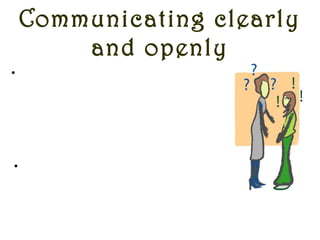
•Putting the information across clearly
and with the right words and tone
ensures trust and confidence in team
thus encouraging every team member
also to be honest and clear about their
views.
•A leader who communicates clearly
wins the trust of the team and thus is
the focal point of a strong and closely
bonded team.
Making effective
decisions
•Decision making involves choosing
between alternatives, prioritizing and
choosing the most feasible alternative.
Taking everyone’s views and
incorporating them in the decision
made increases its acceptability and
thus makes the process of change
easier.
•The decisions taken should help the
team in their development and should
be a clear image of their usefulness
for guests, employees and the hotel.
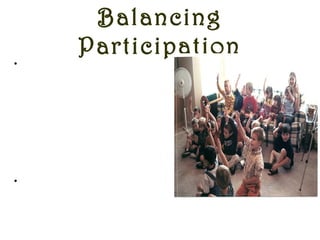
Balancing
Participation
•There should be an equal
participation of everyone in the
team in every task taken and
every decision made. The
energy of enthusiastic members
should be routed in the right
directions and the shy members
should be encouraged and
motivated to speak up and
participate more.
•A leader makes his presence felt
best by being encouraging
towards everyone’s participation
from the team.
Valuing Diversity
•The individuality of each team
member should be respected.
There shouldn’t be any
discrimination based on age,
gender, personality traits, race,
color etc. The individual
charecterisitcs of each are an
asset to the team and strengthen
it.
•A leader should be capable
of making every team
member respect the other
and the diversity in team and
should lead by example.
Managing Conflict
•Conflicts are a part of every group
dynamics but the skill lies in
handling them skillfully and reducing
the intragroup friction to minimal.
•A leader should ensure that the
conflicts are handled with a good
balance of assertiveness and
sensitivity and should be totally
prejudice free.
Creating Positive
Atmosphere
•A leader should guide
his/her people towards a
guest centric approach and
keeping customers happy.
•If due appreciation is given
to every applaud that the
team member brings and the
team is happy, a positive
atmosphere is automatically
created.
Developing cooperative
relationships
•A team that is dependent on
each other for the completion of
their goals and realises the
importance of that dependence,
churns out maximum output and
stays happy together
•A leader should bring
professional harmony and
mutual dependence in the team
to make the team bond stronger
and more productive
Utilizing Participative
leadership
•Delegation of responsibility helps
in developing the team’s leadership
skills and the sense of responsibility
•It is a great motivating factor
too which leads members of
team to own the task and thus
work towards it with greater
enthusiasm
Breakout
Let us divide ourselves in groups and
get ready for action!
Did we understand…
Setting clear goals
Defining individual roles
Communicating clearly and openly
Making effective decisions
Balancing participation
Valuing diversity
Managing conflict
Creating a positive atmosphere
Developing cooperative relationships
Utilizing participative leadership
Team building

Team building

  • 1.
  • 2.
    What is a Team? Ateam is a group of people who are mutually dependent on one another to achieve a common goal.
  • 3.
    Tantra Totem Make yourtribe and make a Tantra Totem and a war cry for your own team.
  • 4.
    Objectives for this MeetSettingclear goals Defining individual roles Communicating clearly and openly Making effective decisions Balancing participation Valuing diversity Managing conflict Creating a positive atmosphere Developing cooperative relationships Utilizing participative leadership
  • 5.
    Breakout Let us divideourselves in groups and get ready for action!
  • 6.
    Advantages of havinga happy team  More input leads to better ideas and decisions.  Higher quality output.  Involvement of everyone in the process.  Shared information means increased learning.  Increased understanding of other people’s perspectives.  Increase opportunity to draw on other people’s strengths.  Ability to compensate for individual weaknesses. Anything extra that you can think of?
  • 7.
  • 8.
    Setting Clear Goals•To buildan effective team, it is important to make sure that the everyone in the team works towards a “Common Goal”. •It is a leader’s responsibility to link the individual goals of each team member with the common goal to ensure motivation and desire to achieve it.
  • 9.
    Defining individual roles•Everyone inthe team must know their roles and responsibilities and there should be no confusion regarding them as this could lead to unnecessary friction amongst team members. •Every team member should know that there role in the team is crucial and is valued by their boss. They should be able to respect the role of everyone in the team. Clear allocation of work reduces the possibilities of intra team conflict.
  • 10.
    Communicating clearly and openly •Puttingthe information across clearly and with the right words and tone ensures trust and confidence in team thus encouraging every team member also to be honest and clear about their views. •A leader who communicates clearly wins the trust of the team and thus is the focal point of a strong and closely bonded team.
  • 11.
    Making effective decisions •Decision makinginvolves choosing between alternatives, prioritizing and choosing the most feasible alternative. Taking everyone’s views and incorporating them in the decision made increases its acceptability and thus makes the process of change easier. •The decisions taken should help the team in their development and should be a clear image of their usefulness for guests, employees and the hotel.
  • 12.
    Balancing Participation •There should bean equal participation of everyone in the team in every task taken and every decision made. The energy of enthusiastic members should be routed in the right directions and the shy members should be encouraged and motivated to speak up and participate more. •A leader makes his presence felt best by being encouraging towards everyone’s participation from the team.
  • 13.
    Valuing Diversity •The individualityof each team member should be respected. There shouldn’t be any discrimination based on age, gender, personality traits, race, color etc. The individual charecterisitcs of each are an asset to the team and strengthen it. •A leader should be capable of making every team member respect the other and the diversity in team and should lead by example.
  • 14.
    Managing Conflict •Conflicts area part of every group dynamics but the skill lies in handling them skillfully and reducing the intragroup friction to minimal. •A leader should ensure that the conflicts are handled with a good balance of assertiveness and sensitivity and should be totally prejudice free.
  • 15.
    Creating Positive Atmosphere •A leadershould guide his/her people towards a guest centric approach and keeping customers happy. •If due appreciation is given to every applaud that the team member brings and the team is happy, a positive atmosphere is automatically created.
  • 16.
    Developing cooperative relationships •A teamthat is dependent on each other for the completion of their goals and realises the importance of that dependence, churns out maximum output and stays happy together •A leader should bring professional harmony and mutual dependence in the team to make the team bond stronger and more productive
  • 17.
    Utilizing Participative leadership •Delegation ofresponsibility helps in developing the team’s leadership skills and the sense of responsibility •It is a great motivating factor too which leads members of team to own the task and thus work towards it with greater enthusiasm
  • 18.
    Breakout Let us divideourselves in groups and get ready for action!
  • 19.
    Did we understand… Settingclear goals Defining individual roles Communicating clearly and openly Making effective decisions Balancing participation Valuing diversity Managing conflict Creating a positive atmosphere Developing cooperative relationships Utilizing participative leadership

Editor's Notes

  • #6 Gropu to be divided in teams and given chart paper pieces. They will be asked to make a face and every participant will make different part of the face. Then it will be brought together and integrated. The purpose is to show that if not working in a team its impossible to achieve a goal.