 October, 2015
 Teaching and Learning: Hand in Hand
Organize content & ideas
Better able to learn &
internalize with use of more
than 1 modality
Material presented through
visual & spatial modalities
Facilitate comprehension
of new information
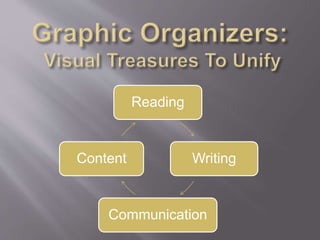
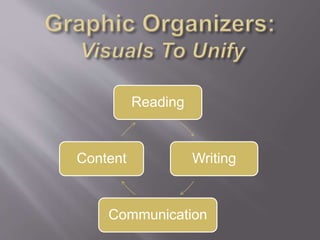
Reading
Writing
Communication
Content
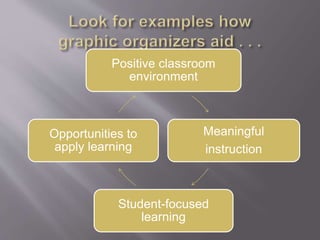
Positive classroom
environment
Meaningful
instruction
Student-focused
learning
Opportunities to
apply learning
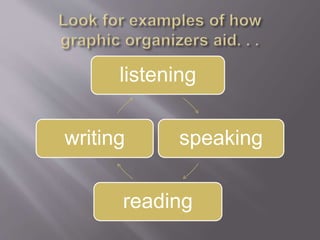
listening
speaking
reading
writing
Ron Stein
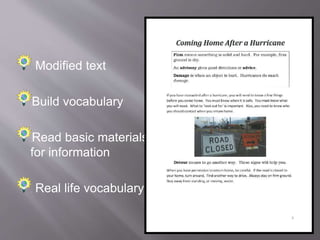
Modified text
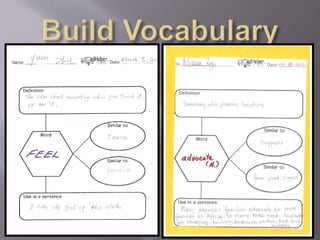
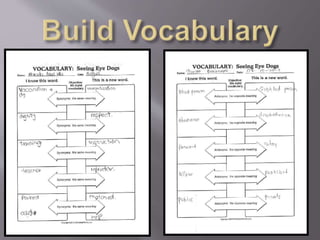
Build vocabulary
Read basic materials
for information
Real life vocabulary
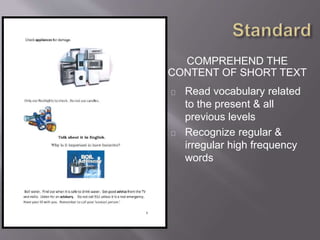
COMPREHEND THE
CONTENT OF SHORT TEXT
 Read vocabulary related
to the present & all
previous levels
 Recognize regular &
irregular high
frequency words
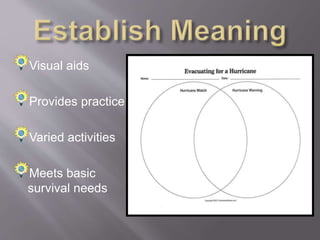
Visual aids
Provides practice
Varied activities
Meets basic
survival needs
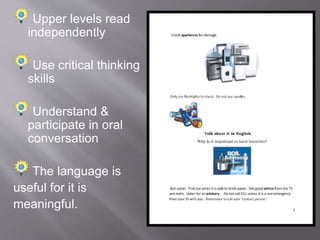
Upper levels read
independently
Use critical thinking
skills
Understand &
participate in oral
conversation
The language is
useful for it is
meaningful.
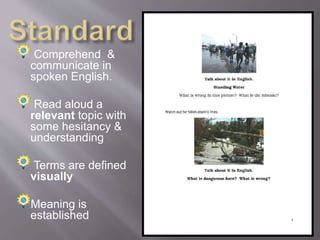
Comprehend &
communicate in
spoken English.
Read aloud a
relevant topic with
some hesitancy &
understanding
Terms are defined
visually
Meaning is
established
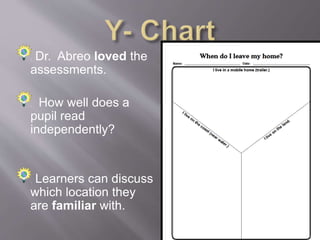
Dr. Abreo loved the
assessments.
How well does a
pupil read
independently?
Learners can discuss
which location they
are familiar with.
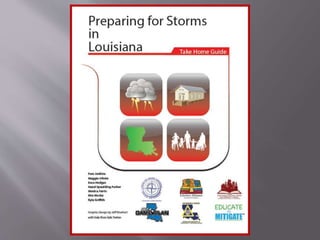
 “As a direct result of OpNola’s input,
and Knox and Ron's lesson plans, UNO
Chart created a take home guide for
students and expanded the
facilitator's guide.”
 --Dr. Christina Abreo
 OpNOLA
“Maggie Oliver worked tirelessly on this
project and has kept the
powers-that-be focused on making the
content accessible to English
language learners. She's done a great
job.”
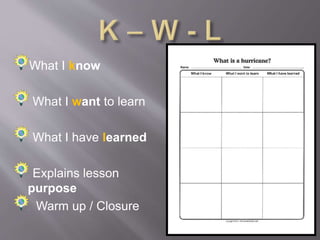
What I know
What I want to learn
What I have learned
Explains lesson
purpose
Warm up / Closure
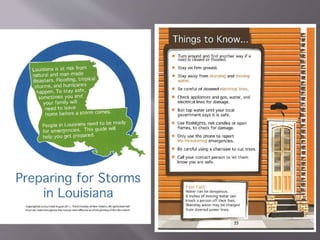
 What is a Hurricane?
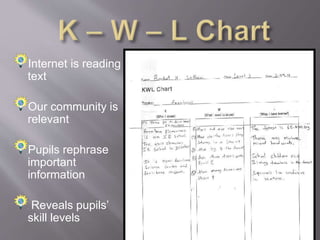
Internet is
reading text
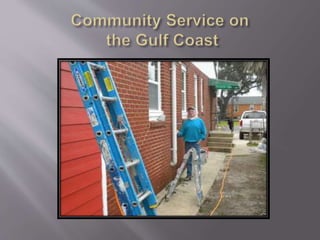
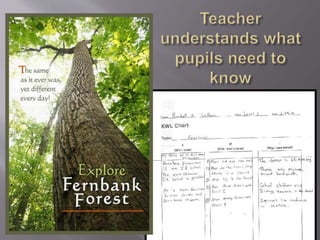
Our community is
relevant
Pupils rephrase
important
information
Reveals pupils’
skill levels
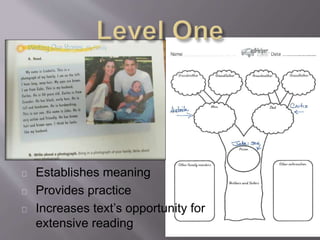
 Establishes meaning
 Provides practice
 Increases text’s opportunity for
extensive reading
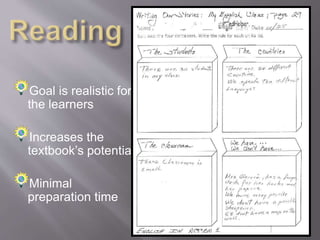
Goal is realistic for
the learners
Increases the
textbook’s
potential
Minimal
preparation time
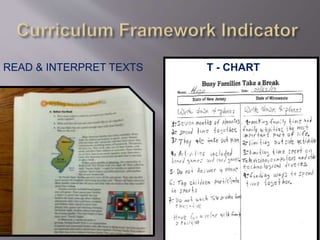
READ & INTERPRET TEXTS T - CHART
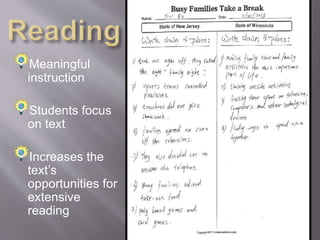
Meaningful
instruction
Students focus
on text
Increases the
text’s
opportunities for
extensive
reading
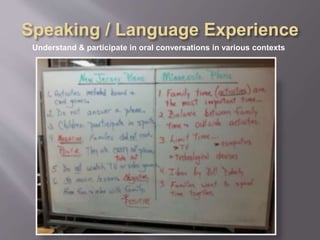
Understand & participate in oral conversations in various contexts
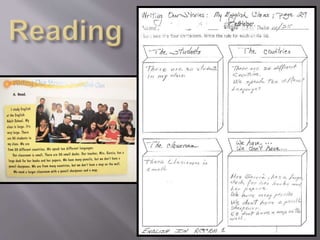
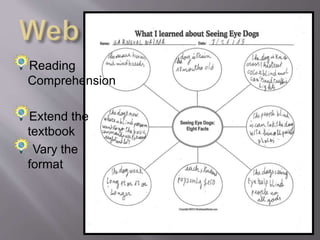
Reading
Comprehension
Extend the
textbook
Vary the
format
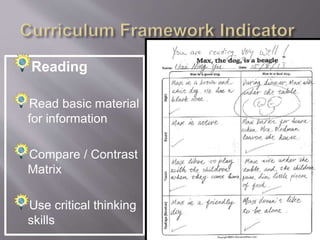
Reading
Read basic material
for information
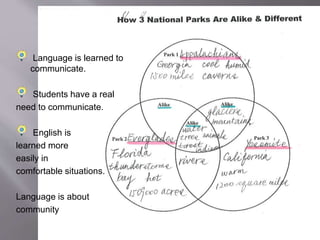
Compare /
Contrast Matrix
Use critical thinking
skills
Reading
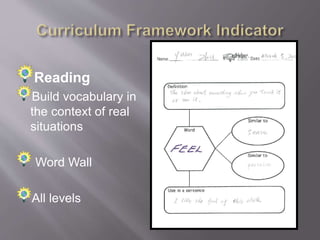
Build vocabulary in
the context of real
situations
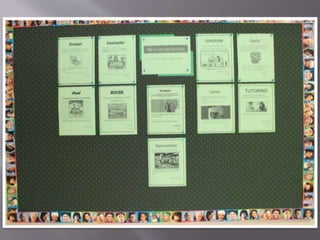
Word Wall
All levels
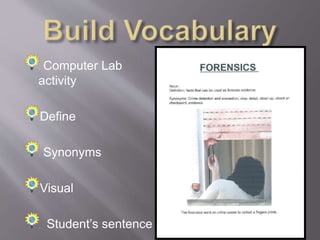
Computer Lab
activity
Define
Synonyms
Visual
Student’s sentence
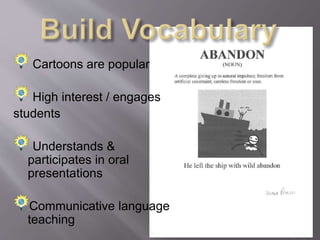
Cartoons are popular
High interest / engages
students
Understands &
participates in oral
presentations
Communicative language
teaching
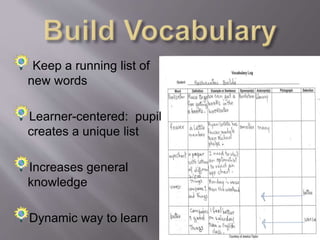
Keep a running list of
new words
Learner-centered: pupil
creates a unique list
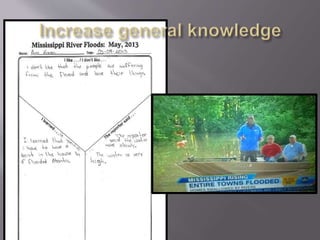
Increases general
knowledge
Dynamic way to learn
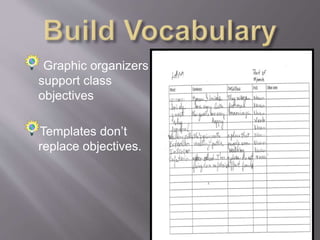
Graphic organizers
support class
objectives
Templates don’t
replace objectives.
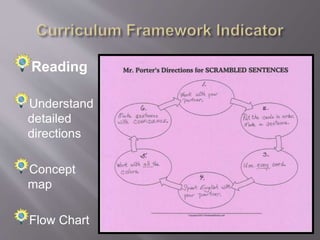
Reading
Understand
detailed
directions
Concept
map
Flow Chart
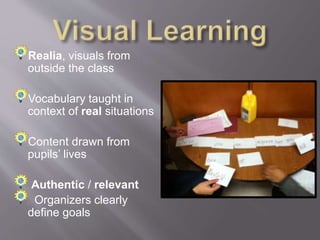
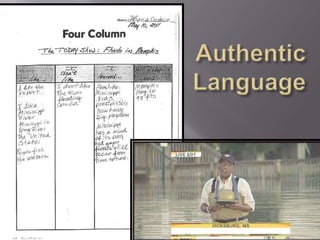
Realia, visuals from
outside the class
Vocabulary taught in
context of real situations
Content drawn from
pupils’ lives
Authentic / relevant
Organizers clearly
define goals
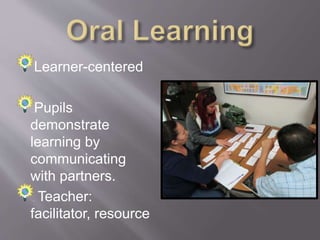
Learner-centered
Pupils
demonstrate
learning by
communicating
with partners.
Teacher:
facilitator, resource
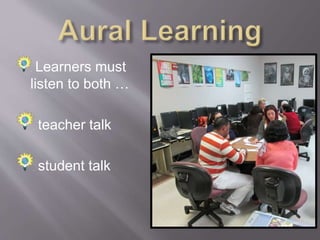
Learners must
listen to both …
teacher talk
student talk
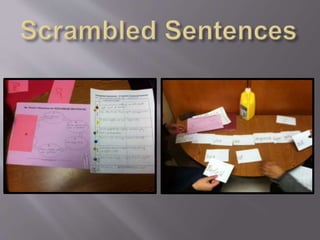
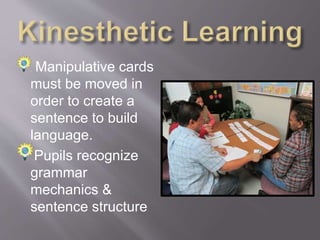
Manipulative
cards must be
moved in order to
create a sentence to
build language.
Pupils recognize
grammar
mechanics &
sentence structure
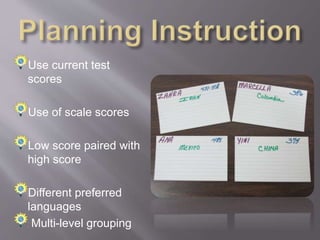
Use current test scores
Use of scale scores
Low score paired with
high score
Different preferred
languages
Multi-level grouping
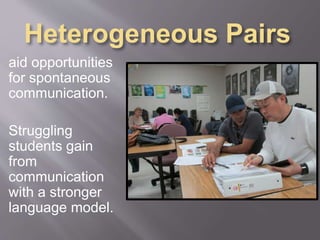
Heterogeneous Pairs
aid opportunities
for spontaneous
communication.
Struggling
students gain
from
communication
with a stronger
language model.
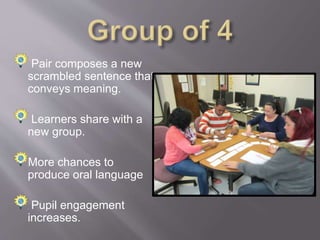
Pair composes a new
scrambled sentence that
conveys meaning.
Learners share with a
new group.
More chances to
produce oral language
Pupil engagement
increases.
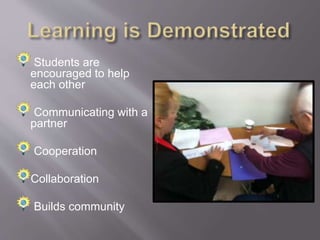
Students are
encouraged to help
each other
Communicating with a
partner
Cooperation
Collaboration
Builds community
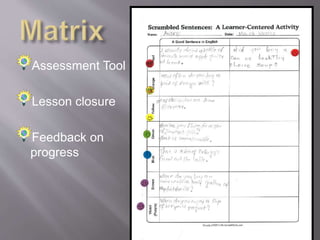
Assessment Tool
Lesson closure
Feedback on
progress
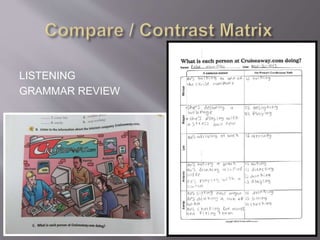
LISTENING
GRAMMAR REVIEW
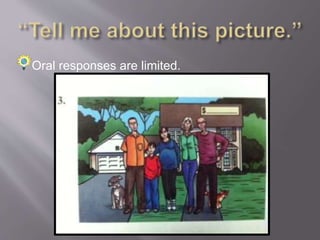
Oral responses are limited.
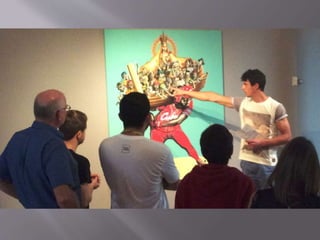
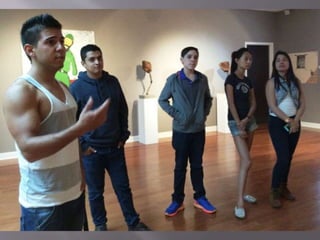
Pupils will respond.
Teacher is less in the
spotlight.
Encourages purposeful
student interaction
Instructional activity &
materials that meets
learner needs
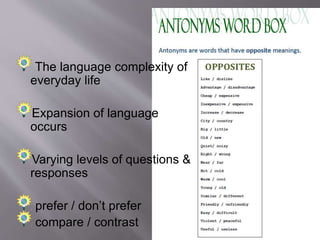
The language complexity of
everyday life
Expansion of language
occurs
Varying levels of questions
& responses
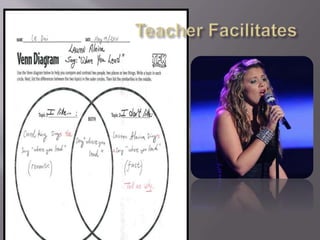
prefer / don’t prefer
compare / contrast
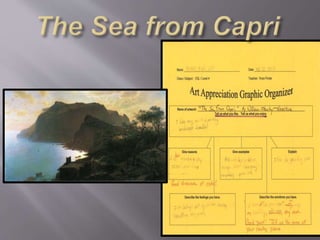
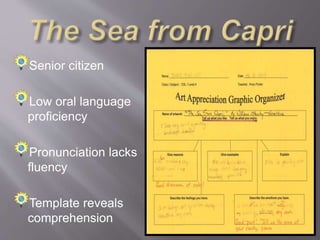
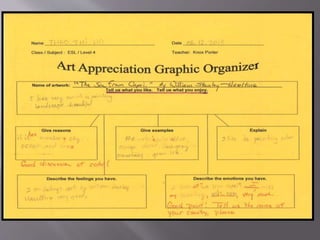
Senior citizen
Low oral language
proficiency
Pronunciation lacks
fluency
Template reveals
comprehension
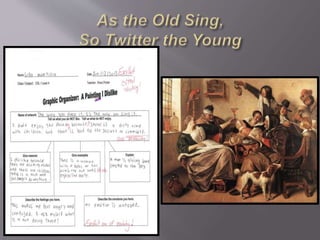
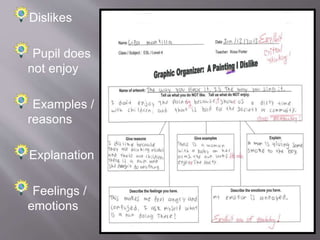
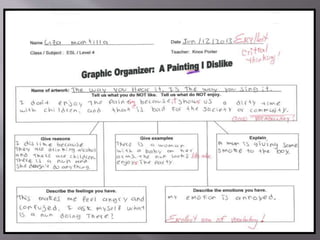
Dislikes
Pupil does
not enjoy
Examples /
reasons
Explanation
Feelings /
emotions
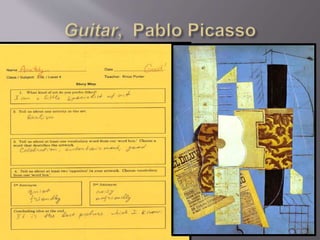
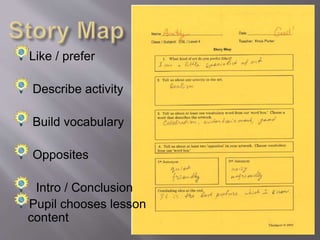
Like / prefer
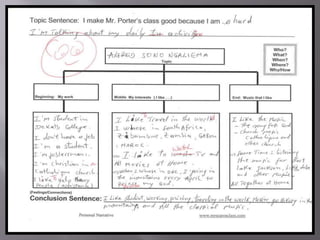
Describe activity
Build vocabulary
Opposites
Intro / Conclusion
Pupil chooses lesson
content
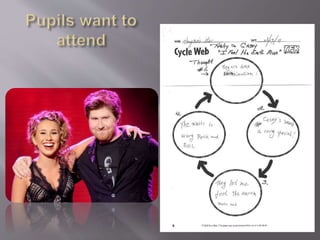
Printed lyrics are the
reading text
Culture of the USA
Children /
grandchildren may
understand this
Uses a variety of
teaching modalities
& resources
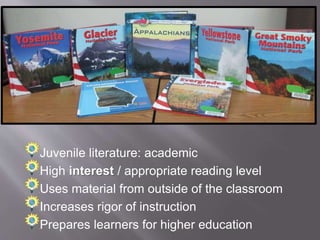
Juvenile literature: academic
High interest / appropriate reading level
Uses material from outside of the classroom
Increases rigor of instruction
Prepares learners for higher education
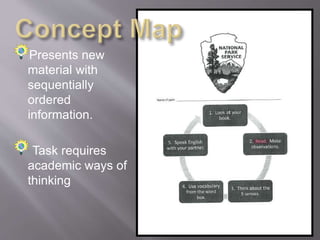
Presents new
material with
sequentially
ordered
information.
Task requires
academic ways of
thinking
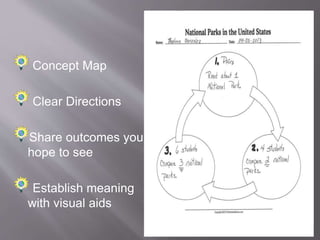
Concept Map
Clear Directions
Share outcomes you
hope to see
Establish meaning
with visual aids
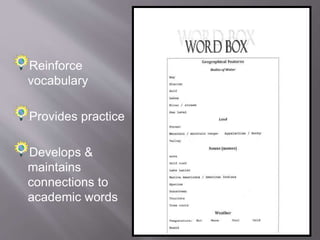
Reinforce
vocabulary
Provides practice
Develops &
maintains
connections to
academic words
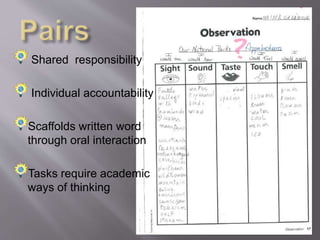
Shared responsibility
Individual
accountability
Scaffolds written word
through oral interaction
Tasks require academic
ways of thinking
Observation
"And then Kino's brain cleared
from its red concentration and he
knew the sound--the keening,
moaning, rising hysterical cry
from the little cave in the side of
the stone mountain, the cry of
death.“
- John Steinbeck, The Pearl,
Chapter 6
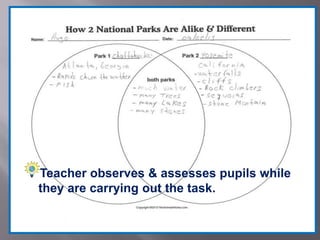
Teacher observes & assesses pupils while
they are carrying out the task.
Language is learned to
communicate.
Students have a real
need to communicate.
English is
learned more
easily in
comfortable situations.
Language is about
community
collaborate
participate in the
learning process
are problem solvers
develop language skills
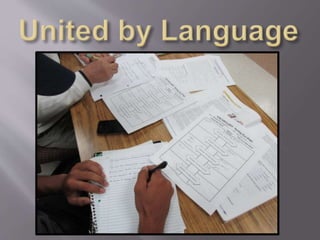
are united in language
C.2
Student should be able to…
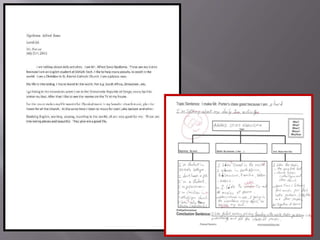
Use templates or basic formats in writing
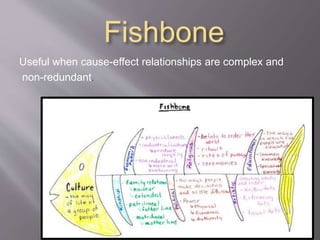
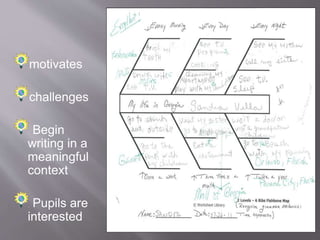
Fishbone
Useful when cause-effect relationships are complex and
non-redundant.
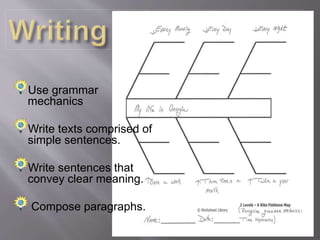
Use grammar
mechanics
Write texts comprised of
simple sentences.
Write sentences that
convey clear meaning.
Compose paragraphs.
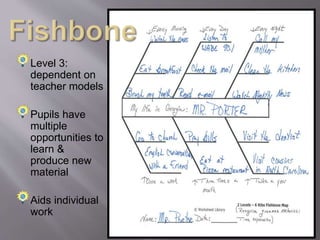
Level 3:
dependent on
teacher models
Pupils have
multiple
opportunities
to learn &
produce new
material
Aids
individual
work
motivates
challenges
Begin
writing in a
meaningful
context
Pupils are
interested
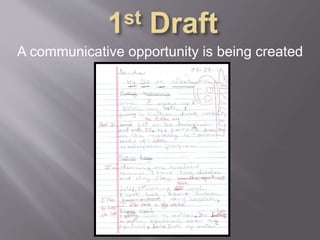
A communicative opportunity is being created
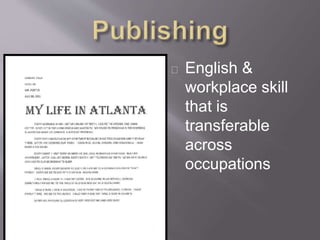
 English &
workplace skill
that is
transferable
across
occupations
1
B
M
T
J
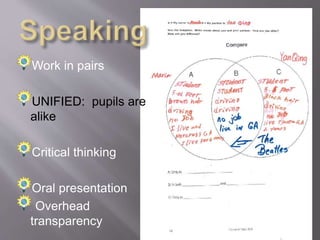
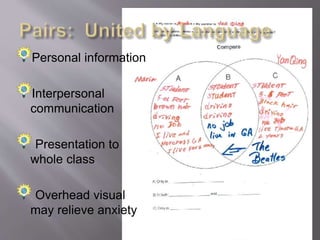
Work in pairs
UNIFIED: pupils are
alike
Critical thinking
Oral presentation
Overhead
transparency
Personal information
Interpersonal
communication
Presentation to
whole class
Overhead visual
may relieve anxiety
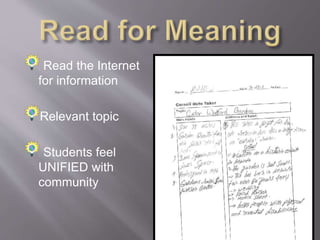
Read the Internet
for information
Relevant topic
Students feel
UNIFIED with
community
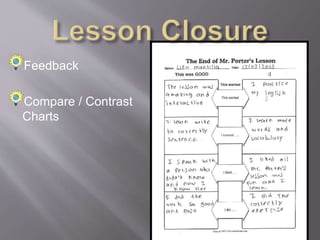
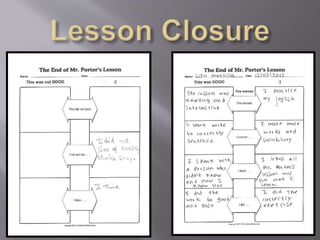
Feedback
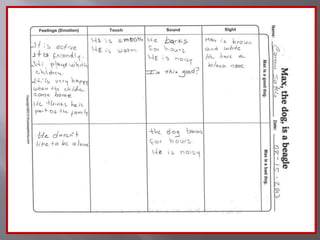
Compare / Contrast
Charts
Illustrated content tends to
remain longer in pupils’ minds
Pupils generate mental
images to go along with info
Combines spoken words
with text & diagrams
Help pupils think in
multiple directions
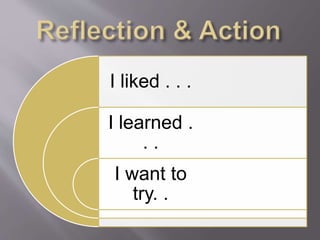
I liked . . .
I learned . .
.
I want to
try. .
 Graphic Organizers:  Visuals to Enhance Learning
 Graphic Organizers:  Visuals to Enhance Learning
 Graphic Organizers:  Visuals to Enhance Learning
 Graphic Organizers:  Visuals to Enhance Learning
 Graphic Organizers:  Visuals to Enhance Learning
 Graphic Organizers:  Visuals to Enhance Learning
 Graphic Organizers:  Visuals to Enhance Learning
 Graphic Organizers:  Visuals to Enhance Learning
 Graphic Organizers:  Visuals to Enhance Learning

Graphic Organizers: Visuals to Enhance Learning