Teaching in TVET
in Hard Times
Presentation held at
Institute of Education and Research
University of the Punjab, Pakistan
Nov. 20th, 2013

by
Uwe Wieckenberg
Teachers in TVET
What is the mission and task of teachers in TVET ?
 To prepare students for the world of work
Teachers in TVET
What is the mission and task of teachers in TVET ?
 To prepare students for the world of work
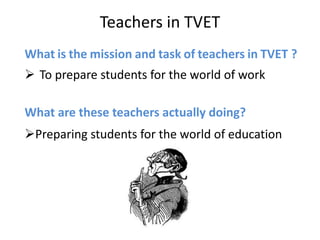
What are these teachers actually doing?
Preparing students for the world of education
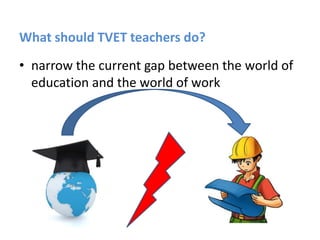
What should TVET teachers do?
• narrow the current gap between the world of
education and the world of work
But how can we do this ???
Ability to perform

Professional
competence

Social
competence

Methodological
competence

Generic
skills

Self
competence
Key Qualifications/
Generic Skills

Methodological
competence

Social competence

• Ability to communicate adequately
• Ability to cooperate
with others
• Conflict ability
• …

•
•
•
•
•
•
•

Analysis ability
Creativity
Learning readiness
Think in connections
Abstract thinking
Rhetoric
…

Self competence
•
•
•
•
•
•
•
•

Readiness to perform
Commitment
Motivation
Flexibility
Perseverance
Reliability
Emotional intelligence
…
Key Qualifications/
Generic Skills

Social
competence

• People
related skills
• Community skills

Methodological
competence

• Conceptual/
thinking skills
• Business skills

U N ES CO c l a s s i f i c a t i o n

Self
competence

• Basic/
fundamental skills
• Personal skills
Old competencies?
New competencies?
Old setting of teaching?
New setting of learning?
• We need a shift in paradigm!

 from teaching to learning
Some facts about TVET in Germany:
The „Dual System“
1. Practice-relevant and theory-based training
2. Standardised course content and examinations across the
whole of Germany
3. Continuous updating of the training in response to
technical advances and changing business practices
4. Collaboration between employers and trade unions
5. Co-ordination of practical and educational components
6. “inter-company” training to supplement the instruction
7. Training the instructors
8. Professional associations (chambers) monitor the training

Working + learning
Some facts about TVET in Germany
• First steps towards the „Dual System“
of (non-academic) vocational training:
1870
• Vocational Training Act:
1969
• TVET training rate:
60% of young people join the Dual System
(59,4% male; 40,6% female)
• No. of trainees: 1.571.457 (in 2010)
• Average age of trainees: 20,0 years (in 2010)
International Trends
•
•
•
•
•
•

Dissolution of phases in life
Life long learning
Modularization
Individualisation
Recognition of prior (informal) learning
Blended Learning
Needed strategies
• Facilitate the access to TVET
• Enhance quality and relevance of TVET
• use a holistic approach
(knowledge + skills + attitudes)
• Emphasize teacher training (pre-service)
• Improve the reputation of TVET
• …
… now ist your turn
as new teacher generation!
Thank you very much!
Uwe Wieckenberg

Teaching in TVET

  • 1.
    Teaching in TVET inHard Times Presentation held at Institute of Education and Research University of the Punjab, Pakistan Nov. 20th, 2013 by Uwe Wieckenberg
  • 2.
    Teachers in TVET Whatis the mission and task of teachers in TVET ?  To prepare students for the world of work
  • 3.
    Teachers in TVET Whatis the mission and task of teachers in TVET ?  To prepare students for the world of work What are these teachers actually doing? Preparing students for the world of education
  • 4.
    What should TVETteachers do? • narrow the current gap between the world of education and the world of work
  • 5.
    But how canwe do this ???
  • 6.
  • 7.
    Key Qualifications/ Generic Skills Methodological competence Socialcompetence • Ability to communicate adequately • Ability to cooperate with others • Conflict ability • … • • • • • • • Analysis ability Creativity Learning readiness Think in connections Abstract thinking Rhetoric … Self competence • • • • • • • • Readiness to perform Commitment Motivation Flexibility Perseverance Reliability Emotional intelligence …
  • 8.
    Key Qualifications/ Generic Skills Social competence •People related skills • Community skills Methodological competence • Conceptual/ thinking skills • Business skills U N ES CO c l a s s i f i c a t i o n Self competence • Basic/ fundamental skills • Personal skills
  • 9.
  • 10.
  • 11.
    Old setting ofteaching?
  • 12.
    New setting oflearning?
  • 13.
    • We needa shift in paradigm!  from teaching to learning
  • 14.
    Some facts aboutTVET in Germany: The „Dual System“ 1. Practice-relevant and theory-based training 2. Standardised course content and examinations across the whole of Germany 3. Continuous updating of the training in response to technical advances and changing business practices 4. Collaboration between employers and trade unions 5. Co-ordination of practical and educational components 6. “inter-company” training to supplement the instruction 7. Training the instructors 8. Professional associations (chambers) monitor the training Working + learning
  • 15.
    Some facts aboutTVET in Germany • First steps towards the „Dual System“ of (non-academic) vocational training: 1870 • Vocational Training Act: 1969 • TVET training rate: 60% of young people join the Dual System (59,4% male; 40,6% female) • No. of trainees: 1.571.457 (in 2010) • Average age of trainees: 20,0 years (in 2010)
  • 16.
    International Trends • • • • • • Dissolution ofphases in life Life long learning Modularization Individualisation Recognition of prior (informal) learning Blended Learning
  • 17.
    Needed strategies • Facilitatethe access to TVET • Enhance quality and relevance of TVET • use a holistic approach (knowledge + skills + attitudes) • Emphasize teacher training (pre-service) • Improve the reputation of TVET • …
  • 18.
    … now istyour turn as new teacher generation!
  • 19.
    Thank you verymuch! Uwe Wieckenberg