Sources: ncbi.nlm.nih.gov/pmc | blog.calmclassroom.com/how-bad-is-teacher-burnout | forbes.com/sites/forbescoachescouncil/2022/02/23/stress-is-pushing-many-
teachers-out-of-the-profession | medium.com/@ileanahilton/self-care-101-for-educators-and-anyone | edutopia.org/discussion/7-self-care-strategies-teachers
mghclaycenter.org/stress/9-self-care-tips-for-teachers
Studies Show…
felt that burnout is a
serious problem in the
teaching profession.
of new teachers
leave within their first
five years on the job.
of teaching positions
were unfilled at the
beginning of the
2022 school year.
Teacher
Self-Care 101
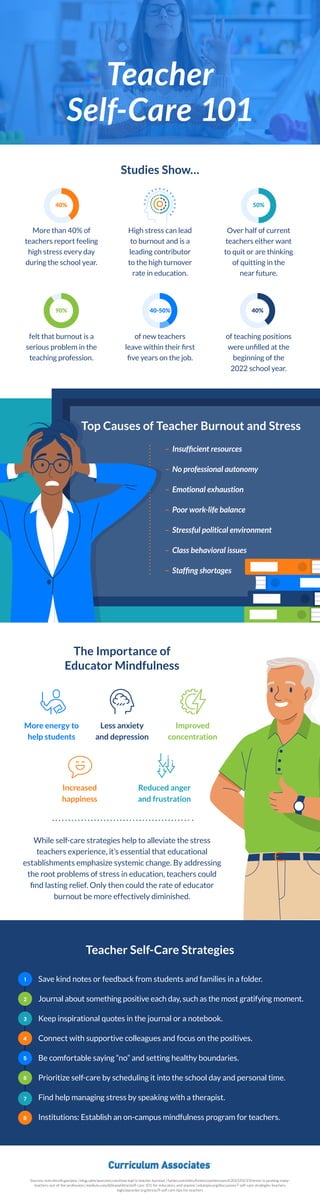
More than 40% of
teachers report feeling
high stress every day
during the school year.

High stress can lead
to burnout and is a
leading contributor
to the high turnover
rate in education.
Over half of current
teachers either want
to quit or are thinking
of quitting in the
near future.
40%
90% 40%
40-50%
50%
Top Causes of Teacher Burnout and Stress
– Insufficient resources
– No professional autonomy
– Emotional exhaustion
– Poor work-life balance
– Stressful political environment
– Class behavioral issues
– Staffing shortages
More energy to
help students
Less anxiety
and depression
Improved
concentration
The Importance of
Educator Mindfulness
Increased
happiness
Reduced anger
and frustration
While self-care strategies help to alleviate the stress
teachers experience, it’s essential that educational
establishments emphasize systemic change. By addressing
the root problems of stress in education, teachers could
find lasting relief. Only then could the rate of educator
burnout be more effectively diminished.
Teacher Self-Care Strategies
1 Save kind notes or feedback from students and families in a folder.
2 Journal about something positive each day, such as the most gratifying moment.
3 Keep inspirational quotes in the journal or a notebook.
4 Connect with supportive colleagues and focus on the positives.
5 Be comfortable saying “no” and setting healthy boundaries.
6 Prioritize self-care by scheduling it into the school day and personal time.
7 Find help managing stress by speaking with a therapist.
8 Institutions: Establish an on-campus mindfulness program for teachers.

Teacher Self-Care 101

  • 1.
    Sources: ncbi.nlm.nih.gov/pmc |blog.calmclassroom.com/how-bad-is-teacher-burnout | forbes.com/sites/forbescoachescouncil/2022/02/23/stress-is-pushing-many- teachers-out-of-the-profession | medium.com/@ileanahilton/self-care-101-for-educators-and-anyone | edutopia.org/discussion/7-self-care-strategies-teachers mghclaycenter.org/stress/9-self-care-tips-for-teachers Studies Show… felt that burnout is a serious problem in the teaching profession. of new teachers leave within their first five years on the job. of teaching positions were unfilled at the beginning of the 2022 school year. Teacher Self-Care 101 More than 40% of teachers report feeling high stress every day during the school year. High stress can lead to burnout and is a leading contributor to the high turnover rate in education. Over half of current teachers either want to quit or are thinking of quitting in the near future. 40% 90% 40% 40-50% 50% Top Causes of Teacher Burnout and Stress – Insufficient resources – No professional autonomy – Emotional exhaustion – Poor work-life balance – Stressful political environment – Class behavioral issues – Staffing shortages More energy to help students Less anxiety and depression Improved concentration The Importance of Educator Mindfulness Increased happiness Reduced anger and frustration While self-care strategies help to alleviate the stress teachers experience, it’s essential that educational establishments emphasize systemic change. By addressing the root problems of stress in education, teachers could find lasting relief. Only then could the rate of educator burnout be more effectively diminished. Teacher Self-Care Strategies 1 Save kind notes or feedback from students and families in a folder. 2 Journal about something positive each day, such as the most gratifying moment. 3 Keep inspirational quotes in the journal or a notebook. 4 Connect with supportive colleagues and focus on the positives. 5 Be comfortable saying “no” and setting healthy boundaries. 6 Prioritize self-care by scheduling it into the school day and personal time. 7 Find help managing stress by speaking with a therapist. 8 Institutions: Establish an on-campus mindfulness program for teachers.