Teacher Well-Being:
Current Knowledge, Future Innovation
Mark T. Greenberg Ph.D.
Bennett Chair of Prevention Science –
Pennsylvania State University
What I Will Discuss
• Trends in Teacher Satisfaction, Burnout, Attrition
• Why These Trends Are Occurring?
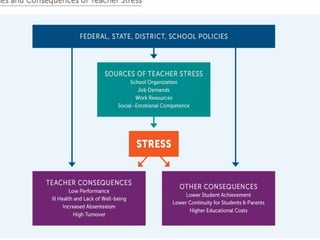
• Sources of Teacher Stress
• Impacts of Teacher Stress
• Promising Approaches and the Need for Innovation
• Our Agenda and Process for Today
Teacher Satisfaction Has Plummeted
MetLife Survey of the American
Teacher
“. . . teacher satisfaction has decreased by 15 points
since the MetLife Survey of the American Teacher
measured job satisfaction two years ago, now reaching
the lowest level of job satisfaction seen in the survey
series in more than two decades” (2012, p. 3).
AFT Survey (2015)
• Non-representative survey of 30,000 US Teachers
• 70% found their jobs stressful
I am Enthusiastic About Teaching
Start of my career
Strongly Agree ]Somewhat Agree
Currently
Strongly Agree Somewhat Agree
Somewhat Disagree Strongly Disagree
Teacher Attrition
Teacher Attrition
• What are the true rates??
• This varies dramatically by location, disadvantage
and other contextual conditions
• Nationwide – likely in the range of 7%/year in the
first 5 years of teaching (30-40% leave)
• Higher Attrition in situations of:
– Low pay (under 40K)
– Charter schools
• (Cano – Over 5 years, 80% of Charter teachers vs. 36% of
Public School teachers 5 years in Texas)
What are the Causes and
Consequences of Teacher Stress
and Well-Being?
Four Main Sources of
Teacher Stress & Burnout
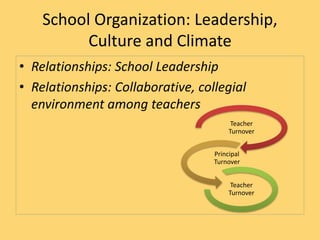
School Organization: Leadership,
Culture and Climate
• Relationships: School Leadership
• Relationships: Collaborative, collegial
environment among teachers
Teacher
Turnover
Principal
Turnover
Teacher
Turnover
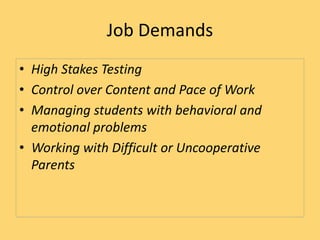
Job Demands
• High Stakes Testing
• Control over Content and Pace of Work
• Managing students with behavioral and
emotional problems
• Working with Difficult or Uncooperative
Parents
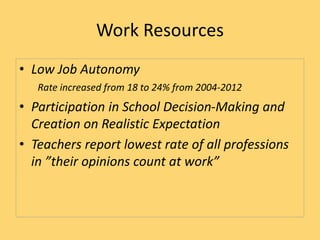
Work Resources
• Low Job Autonomy
Rate increased from 18 to 24% from 2004-2012
• Participation in School Decision-Making and
Creation on Realistic Expectation
• Teachers report lowest rate of all professions
in ”their opinions count at work”
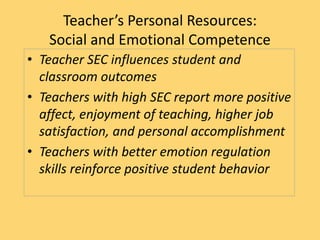
Teacher’s Personal Resources:
Social and Emotional Competence
• Teacher SEC influences student and
classroom outcomes
• Teachers with high SEC report more positive
affect, enjoyment of teaching, higher job
satisfaction, and personal accomplishment
• Teachers with better emotion regulation
skills reinforce positive student behavior
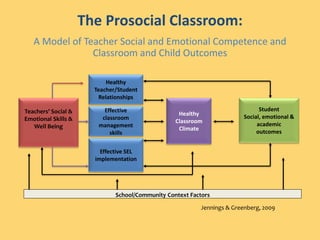
The Prosocial Classroom:
A Model of Teacher Social and Emotional Competence and
Classroom and Child Outcomes
Healthy
Teacher/Student
Relationships
Healthy
Classroom
Climate
Effective SEL
implementation
Teachers’ Social &
Emotional Skills &
Well Being
Student
Social, emotional &
academic
outcomes
Effective
classroom
management
skills
School/Community Context Factors
Jennings & Greenberg, 2009
What Are the Consequences of
Teacher Stress/Burnout on
Students?
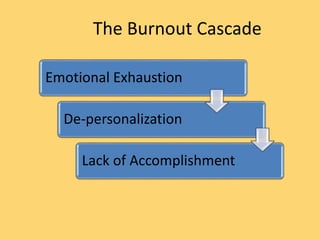
The Burnout Cascade
Emotional Exhaustion
De-personalization
Lack of Accomplishment
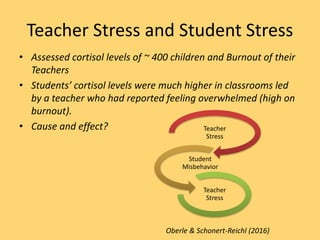
Teacher Stress and Student Stress
• Assessed cortisol levels of ~ 400 children and Burnout of their
Teachers
• Students’ cortisol levels were much higher in classrooms led
by a teacher who had reported feeling overwhelmed (high on
burnout).
• Cause and effect? Teacher
Stress
Student
Misbehavior
Teacher
Stress
Oberle & Schonert-Reichl (2016)
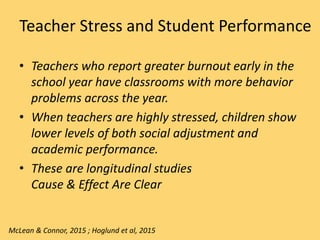
Teacher Stress and Student Performance
• Teachers who report greater burnout early in the
school year have classrooms with more behavior
problems across the year.
• When teachers are highly stressed, children show
lower levels of both social adjustment and
academic performance.
• These are longitudinal studies
Cause & Effect Are Clear
McLean & Connor, 2015 ; Hoglund et al, 2015
Teacher Stress and Teacher Health
• Teachers ability to manage stress (at the
physiological level as assessed by cortisol)
deteriorates across the school year.
• Elementary school teachers who have greater
stress and show more symptoms of depression
create classroom environments that are less
conducive to learning
Effects of Teacher Turnover
• Higher teacher turnover had a significant
negative effect on both math and language
arts achievement. Turnover was particularly
harmful to lower-performing students.
• Creates chaos and lack of continuity for
school, students, and families –
• Contributes to neighborhood destabilization
• Estimated Cost is 7.3 Billion Dollars/Year
Ronfeldt, M., Loeb, S., & Wyckoff, 2013
What Factors Lead Teachers to Leave
Schools or Teaching as a Profession
• Occupational support from principals
• Interpersonal trust, communication, and
collaboration with colleagues
• High stakes testing
• Lack of job autonomy (which has declined)
What Factors Lead to Teacher to Stay
• Principals who effectively lead
• High-Quality, comprehensive mentoring
support
• Engagement in School-Based Decision-Making
• Quality, well-supported Professional Learning
Communities?
Both Children and Adults need Emotion
Regulation skills
Teachers and Adults need to create Healthy
Norms and a Safe Environment
Schools need to adopt practices that create
shared communities of caring and shared
leadership
This can include high quality SEL skills,
mindfulness skills, expressing caring and
gratitude, etc.
This requires Principal Leadership
Issues in Creating a Caring
School
Promising Approaches for Prevention:
Where is their evidence?
Individual- Organizational Interventions
• Quality Mentoring/Induction Programs (Ellen Moir)
• Mindfulness Stress Reduction Programs (Tish Jennings)
• Workplace Wellness Programs – only two examples
– reduced health problems and showed positive cost-benefit
– Incentivized – lower co-pay and deductibles for participation
• Using Quality Social and Emotional Learning Programs?
Organizational Change Interventions (Teresa and Scott McIntyre)
• Total Worker Health?
• Professional Learning Communities?
• Principal Leadership Development?
Goal and Process Today
1. Place a Focus on the Needs of Teachers as a Central
Problem in Education Policy Related to:
Student Success/Achievement
Teachers Own Well-Being
Costs
2. Hear from Experts on What Are Potential
Solutions and Challenges
3. Consider Innovations That Can Be Research-Tested To
Create Usable Solutions to Decrease This “Crisis”
Process/Agenda
Short Talks to lay out issues
Followed by Panels
Panelists will add their thoughts
Will take questions/thoughts from the group
Table time to Contribute, Digest and Integrate
Closing Thoughts by Tony Bryk and Tim Shriver

stress2.pptx

  • 1.
    Teacher Well-Being: Current Knowledge,Future Innovation Mark T. Greenberg Ph.D. Bennett Chair of Prevention Science – Pennsylvania State University
  • 2.
    What I WillDiscuss • Trends in Teacher Satisfaction, Burnout, Attrition • Why These Trends Are Occurring? • Sources of Teacher Stress • Impacts of Teacher Stress • Promising Approaches and the Need for Innovation • Our Agenda and Process for Today
  • 3.
  • 4.
    MetLife Survey ofthe American Teacher “. . . teacher satisfaction has decreased by 15 points since the MetLife Survey of the American Teacher measured job satisfaction two years ago, now reaching the lowest level of job satisfaction seen in the survey series in more than two decades” (2012, p. 3).
  • 5.
    AFT Survey (2015) •Non-representative survey of 30,000 US Teachers • 70% found their jobs stressful I am Enthusiastic About Teaching Start of my career Strongly Agree ]Somewhat Agree Currently Strongly Agree Somewhat Agree Somewhat Disagree Strongly Disagree
  • 6.
  • 7.
    Teacher Attrition • Whatare the true rates?? • This varies dramatically by location, disadvantage and other contextual conditions • Nationwide – likely in the range of 7%/year in the first 5 years of teaching (30-40% leave) • Higher Attrition in situations of: – Low pay (under 40K) – Charter schools • (Cano – Over 5 years, 80% of Charter teachers vs. 36% of Public School teachers 5 years in Texas)
  • 8.
    What are theCauses and Consequences of Teacher Stress and Well-Being?
  • 10.
    Four Main Sourcesof Teacher Stress & Burnout
  • 11.
    School Organization: Leadership, Cultureand Climate • Relationships: School Leadership • Relationships: Collaborative, collegial environment among teachers Teacher Turnover Principal Turnover Teacher Turnover
  • 12.
    Job Demands • HighStakes Testing • Control over Content and Pace of Work • Managing students with behavioral and emotional problems • Working with Difficult or Uncooperative Parents
  • 13.
    Work Resources • LowJob Autonomy Rate increased from 18 to 24% from 2004-2012 • Participation in School Decision-Making and Creation on Realistic Expectation • Teachers report lowest rate of all professions in ”their opinions count at work”
  • 14.
    Teacher’s Personal Resources: Socialand Emotional Competence • Teacher SEC influences student and classroom outcomes • Teachers with high SEC report more positive affect, enjoyment of teaching, higher job satisfaction, and personal accomplishment • Teachers with better emotion regulation skills reinforce positive student behavior
  • 15.
    The Prosocial Classroom: AModel of Teacher Social and Emotional Competence and Classroom and Child Outcomes Healthy Teacher/Student Relationships Healthy Classroom Climate Effective SEL implementation Teachers’ Social & Emotional Skills & Well Being Student Social, emotional & academic outcomes Effective classroom management skills School/Community Context Factors Jennings & Greenberg, 2009
  • 16.
    What Are theConsequences of Teacher Stress/Burnout on Students?
  • 17.
    The Burnout Cascade EmotionalExhaustion De-personalization Lack of Accomplishment
  • 18.
    Teacher Stress andStudent Stress • Assessed cortisol levels of ~ 400 children and Burnout of their Teachers • Students’ cortisol levels were much higher in classrooms led by a teacher who had reported feeling overwhelmed (high on burnout). • Cause and effect? Teacher Stress Student Misbehavior Teacher Stress Oberle & Schonert-Reichl (2016)
  • 19.
    Teacher Stress andStudent Performance • Teachers who report greater burnout early in the school year have classrooms with more behavior problems across the year. • When teachers are highly stressed, children show lower levels of both social adjustment and academic performance. • These are longitudinal studies Cause & Effect Are Clear McLean & Connor, 2015 ; Hoglund et al, 2015
  • 20.
    Teacher Stress andTeacher Health • Teachers ability to manage stress (at the physiological level as assessed by cortisol) deteriorates across the school year. • Elementary school teachers who have greater stress and show more symptoms of depression create classroom environments that are less conducive to learning
  • 21.
    Effects of TeacherTurnover • Higher teacher turnover had a significant negative effect on both math and language arts achievement. Turnover was particularly harmful to lower-performing students. • Creates chaos and lack of continuity for school, students, and families – • Contributes to neighborhood destabilization • Estimated Cost is 7.3 Billion Dollars/Year Ronfeldt, M., Loeb, S., & Wyckoff, 2013
  • 22.
    What Factors LeadTeachers to Leave Schools or Teaching as a Profession • Occupational support from principals • Interpersonal trust, communication, and collaboration with colleagues • High stakes testing • Lack of job autonomy (which has declined)
  • 23.
    What Factors Leadto Teacher to Stay • Principals who effectively lead • High-Quality, comprehensive mentoring support • Engagement in School-Based Decision-Making • Quality, well-supported Professional Learning Communities?
  • 24.
    Both Children andAdults need Emotion Regulation skills Teachers and Adults need to create Healthy Norms and a Safe Environment Schools need to adopt practices that create shared communities of caring and shared leadership This can include high quality SEL skills, mindfulness skills, expressing caring and gratitude, etc. This requires Principal Leadership Issues in Creating a Caring School
  • 25.
    Promising Approaches forPrevention: Where is their evidence? Individual- Organizational Interventions • Quality Mentoring/Induction Programs (Ellen Moir) • Mindfulness Stress Reduction Programs (Tish Jennings) • Workplace Wellness Programs – only two examples – reduced health problems and showed positive cost-benefit – Incentivized – lower co-pay and deductibles for participation • Using Quality Social and Emotional Learning Programs? Organizational Change Interventions (Teresa and Scott McIntyre) • Total Worker Health? • Professional Learning Communities? • Principal Leadership Development?
  • 26.
    Goal and ProcessToday 1. Place a Focus on the Needs of Teachers as a Central Problem in Education Policy Related to: Student Success/Achievement Teachers Own Well-Being Costs 2. Hear from Experts on What Are Potential Solutions and Challenges 3. Consider Innovations That Can Be Research-Tested To Create Usable Solutions to Decrease This “Crisis”
  • 27.
    Process/Agenda Short Talks tolay out issues Followed by Panels Panelists will add their thoughts Will take questions/thoughts from the group Table time to Contribute, Digest and Integrate Closing Thoughts by Tony Bryk and Tim Shriver