MINISTRY OF HEALTH
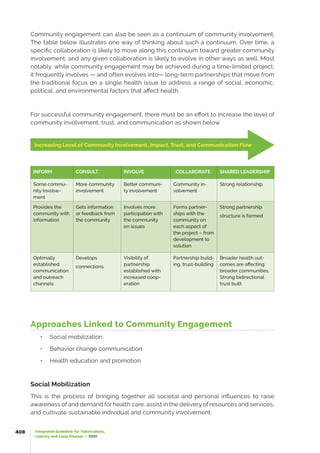
REPUBLIC OF KENYA
INTEGRATED GUIDELINE FOR
TUBERCULOSIS, LEPROSY AND
LUNG DISEASE
2021
MINISTRY OF HEALTH
REPUBLIC OF KENYA
INTEGRATED GUIDELINE FOR
TUBERCULOSIS, LEPROSY AND
LUNG DISEASE
2021
Integrated Guideline for Tuberculosis,
Leprosy and Lung Disease | 2021
ii
Any part of this document may be freely reviewed, quoted, reproduced or translated in full or in
part, provided the source is acknowledged. It may not be sold or used for commercial purposes.
Published by:
Ministry of Health
Afya House, Cathedral Road
PO Box 30016 Nairobi 00100
http:/
/www.health.go.ke
Integrated Guideline for Tuberculosis,
Leprosy and Lung Disease | 2021
iii
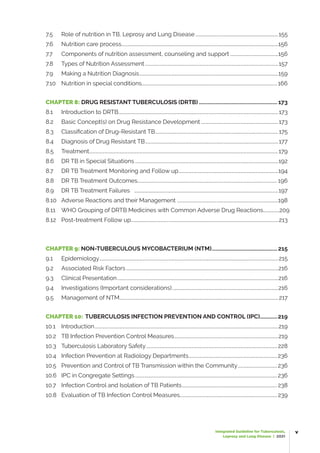
Table of Contents
List of Abbreviations...................................................................................................................................................................ix
Foreword ..........................................................................................................................................................................................xiii
Acknowledgement....................................................................................................................................................................xiv
CHAPTER 1: INTRODUCTION TO THE INTEGRATED GUIDELINE FOR TUBERCULOSIS,
LEPROSY AND LUNG DISEASE..........................................................................................1
1.2 Introduction...........................................................................................................................................................................1
1.1.2 Tuberculosis..........................................................................................................................................................2
1.1.2 Leprosy.....................................................................................................................................................................2
1.1.3 Lung Health...........................................................................................................................................................2
1.2 Strategic Focus..................................................................................................................................................................3
1.3 Diagnosis and Case Finding....................................................................................................................................3
1.4 Integrated Care Provision .........................................................................................................................................3
1.5 Nutrition Status Assessment...................................................................................................................................4
1.6 Advocacy & Communication .................................................................................................................................4
1.7 Recording & Reporting................................................................................................................................................4
1.8 Scope of the guidelines..............................................................................................................................................4
1.9 Target audience ...............................................................................................................................................................5
CHAPTER 2: APPROACHES TO FINDING PEOPLE WITH TUBERCULOSIS................................7
2.1. Introduction..........................................................................................................................................................................7
2.2. Setting......................................................................................................................................................................................8
2.3. Facility Based Active Case Finding (FB-ACF)..............................................................................................8
2.4. Contact Management................................................................................................................................................16
2.5. Community Outreaches............................................................................................................................................21
CHAPTER 3: MANAGEMENT OF DRUG SUSCEPTIBLE TUBERCULOSIS (DSTB) IN ADULTS. 25
3.1 Introduction....................................................................................................................................................................... 25
3.2 Classification of Tuberculosis...............................................................................................................................26
3.3 Diagnosis of Tuberculosis....................................................................................................................................... 27
3.4 Baseline Work Up for Newly Diagnosed Tuberculosis......................................................................31
3.5 Role of Chest x-ray (CXR) in Tuberculosis Screening and Diagnosis......................................31
3.6 Diagnosis of Extrapulmonary TB.......................................................................................................................36
3.7 Treatment of Drug Susceptible Tuberculosis..........................................................................................39
3.8 Special Considerations in the Management of TB..............................................................................44
3.9 TB Treatment Outcome Definitions.................................................................................................................45
3.10 Complications of Pulmonary Tuberculosis................................................................................................45
3.11 Treatment Preparation, Initiation and Follow Up.................................................................................. 47
Integrated Guideline for Tuberculosis,
Leprosy and Lung Disease | 2021
iv
3.12 Treatment Response Follow-up for Bacteriologically Confirmed TB...................................49
3.13 Treatment Interruption...............................................................................................................................................51
3.14 Common Adverse Effects of First Line Anti-Tuberculous Drugs..............................................53
3.15 Dietary Considerations for Persons on First Line Anti-TB Medicines....................................55
CHAPTER 4: TUBERCULOSIS IN CHILDREN ..................................................................................... 57
4.1 Introduction.......................................................................................................................................................................58
4.2 Diagnosis of TB in children....................................................................................................................................59
4.3 Treatment of Drug Sensitive Tuberculosis in Children..................................................................... 73
4.5 TB and HIV Co-infection in Children..............................................................................................................84
4.6 Prevention of TB in Children.................................................................................................................................89
4.7 Child Nutrition and TB...............................................................................................................................................92
4.8 TB in Special Circumstances in Childhood...............................................................................................96
CHAPTER 5: LABORATORY DIAGNOSIS OF TB..................................................................................99
5.1 Introduction.......................................................................................................................................................................99
5.2 Laboratory Diagnosis of TB................................................................................................................................100
5.3 Specimen Collection................................................................................................................................................101
5.4 Laboratory Request form......................................................................................................................................104
5.5 Transport and Packaging......................................................................................................................................105
5.6 Laboratory Testing.....................................................................................................................................................107
5.7 Test Turnaround Time...............................................................................................................................................112
5.8 External Quality Assessment.............................................................................................................................118
5.9 Laboratory Infection Prevention Control...................................................................................................118
CHAPTER 6: TUBERCULOSIS IN SPECIAL CONDITIONS............................................................. 119
6.1 Introduction.....................................................................................................................................................................120
6.2 TB and HIV Co-Infection........................................................................................................................................120
6.3 TB and Diabetes Mellitus......................................................................................................................................135
6.4 TB in Mental Health and Substance-Dependence...........................................................................145
6.5 TB and Liver Disease................................................................................................................................................147
6.6 TB and Kidney Disease...........................................................................................................................................148
6.7 TB in Pregnancy and Lactation........................................................................................................................150
CHAPTER 7: NUTRITION ASSESSMENT, COUNSELING AND SUPPORT IN TB...................151
7.1 Introduction......................................................................................................................................................................151
7.2 Components of a Healthy Diet.........................................................................................................................153
7.3 Relationship between Nutrition TB, Leprosy and Lung Disease............................................154
7.4 Interaction between TB and Malnutrition.................................................................................................154
Integrated Guideline for Tuberculosis,
Leprosy and Lung Disease | 2021
v
7.5 Role of nutrition in TB, Leprosy and Lung Disease...........................................................................155
7.6 Nutrition care process.............................................................................................................................................156
7.7 Components of nutrition assessment, counseling and support............................................156
7.8 Types of Nutrition Assessment........................................................................................................................157
7.9 Making a Nutrition Diagnosis.............................................................................................................................159
7.10 Nutrition in special conditions.......................................................................................................................... 166
CHAPTER 8: DRUG RESISTANT TUBERCULOSIS (DRTB)............................................................ 173
8.1 Introduction to DRTB................................................................................................................................................173
8.2 Basic Concept(s) on Drug Resistance Development......................................................................173
8.3 Classification of Drug-Resistant TB...............................................................................................................175
8.4 Diagnosis of Drug Resistant TB........................................................................................................................177
8.5 Treatment..........................................................................................................................................................................179
8.6 DR TB in Special Situations.................................................................................................................................192
8.7 DR TB Treatment Monitoring and Follow up..........................................................................................194
8.8 DR TB Treatment Outcomes.............................................................................................................................. 196
8.9 DR TB Treatment Failures …………………………….......................................................................................................197
8.10 Adverse Reactions and their Management ……………………........................................................................198
8.11 WHO Grouping of DRTB Medicines with Common Adverse Drug Reactions………………209
8.12 Post-treatment Follow up………………………………….....................................................................................................213
CHAPTER 9: NON-TUBERCULOUS MYCOBACTERIUM (NTM)..................................................215
9.1 Epidemiology.................................................................................................................................................................215
9.2 Associated Risk Factors.........................................................................................................................................216
9.3 Clinical Presentation.................................................................................................................................................216
9.4 Investigations (Important considerations)................................................................................................216
9.5 Management of NTM...............................................................................................................................................217
CHAPTER 10: TUBERCULOSIS INFECTION PREVENTION AND CONTROL (IPC)..............219
10.1 Introduction.....................................................................................................................................................................219
10.2 TB Infection Prevention Control Measures..............................................................................................219
10.3 Tuberculosis Laboratory Safety...................................................................................................................... 228
10.4 Infection Prevention at Radiology Departments................................................................................236
10.5 Prevention and Control of TB Transmission within the Community....................................236
10.6 IPC in Congregate Settings................................................................................................................................236
10.7 Infection Control and Isolation of TB Patients......................................................................................238
10.8 Evaluation of TB Infection Control Measures........................................................................................239
Integrated Guideline for Tuberculosis,
Leprosy and Lung Disease | 2021
vi
CHAPTER 11: MANAGEMENT OF LATENT TB INFECTIONS.......................................................241
11.1 Introduction.....................................................................................................................................................................242
11.2 Targeted Populations for TPT............................................................................................................................243
11.3 Risk factors for Latent TB Infections............................................................................................................ 244
11.4 How to rule out active TB.................................................................................................................................... 244
11.5 Diagnosis and Testing of Latent TB Infections....................................................................................246
11.6 TB Preventive Therapy Options......................................................................................................................246
11.7 TPT Outcomes..............................................................................................................................................................251
11.8 Follow up after Completion of TPT...............................................................................................................251
11.9 TPT Adherence.............................................................................................................................................................252
11.10 Monitoring and Evaluation.................................................................................................................................. 254
CHAPTER 12: DIFFERENTIATED APPROACH TO TB CONTROL................................................257
12.1 Introduction.....................................................................................................................................................................257
12.2 Problem statement ..................................................................................................................................................257
12.3 Justification.....................................................................................................................................................................258
12.4 Objectives of differentiated care in Tuberculosis Management............................................259
12.5 Modules in Differentiated Care........................................................................................................................259
12.6 Differentiated Care Approaches for TB Key Populations.............................................................264
CHAPTER 13: CHRONIC LUNG DISEASES..........................................................................................273
Introduction...................................................................................................................................................................................273
13.1 Asthma................................................................................................................................................................................274
13.2 Chronic Obstructive Pulmonary Disease (COPD)..............................................................................285
13.3 Post-Tuberculosis Lung Disease (PTLD)..................................................................................................290
13.4 Interstitial Lung Diseases (ILDs).......................................................................................................................301
13.5 Lung Cancer..................................................................................................................................................................303
CHAPTER 14: LEPROSY..............................................................................................................................305
14.1 Introduction....................................................................................................................................................................305
14.2 Background....................................................................................................................................................................306
14.4 Pathophysiology.........................................................................................................................................................307
14.5 Clinical Presentation of Disease.....................................................................................................................305
14.6 Diagnosis of Leprosy...............................................................................................................................................309
14.7 Laboratory Diagnosis of Leprosy....................................................................................................................313
14.8 Differential Diagnosis................................................................................................................................................314
14.9 Immunology of Leprosy.........................................................................................................................................315
14.10 Classification of Leprosy........................................................................................................................................317
14.11 Disability Grading........................................................................................................................................................318
14.12 Leprosy Management.............................................................................................................................................318
Integrated Guideline for Tuberculosis,
Leprosy and Lung Disease | 2021
vii
14.13 How to Conduct a Voluntary Muscle Testing and Sensitisation Test (VMT/ST).........320
14.14 Management of Leprosy Complications...................................................................................................323
14.15 The Eye in Leprosy....................................................................................................................................................325
14.16 Foot Care in Leprosy................................................................................................................................................327
14.17 Common Deformities & Disabilities.............................................................................................................328
14.18 Health Education to Patients on Leprosy................................................................................................328
14.19 Special Cases and their Treatment...............................................................................................................329
14.20 Leprosy Relapse.........................................................................................................................................................329
14.21 Rehabilitation.................................................................................................................................................................331
14.22 Leprosy Active Case Finding..............................................................................................................................332
14.23 Monitoring and Evaluation...................................................................................................................................332
CHAPTER 15: PHARMACOVIGILANCE.................................................................................................335
Definitions of terms................................................................................................................................................................ 335
CHAPTER 16: COMMODITY MANAGEMENT.....................................................................................359
16.1 Forecasting and Quantification.......................................................................................................................360
16.2 Quantification Methods used in TB Commodities............................................................................360
16.4 Stock Keeping Records.........................................................................................................................................362
16.5 Patient Pack and Supply Box Management..........................................................................................362
CHAPTER 17: PATIENT SUPPORT, HUMAN RIGHTS AND SOCIAL PROTECTION.............363
17.1 Introduction....................................................................................................................................................................363
17.2 Universal Health Coverage in TB, Leprosy & Lung Health.........................................................364
17.3 Social Protection.........................................................................................................................................................367
17.4 Human Rights and TB, Leprosy & Lung Disease................................................................................372
CHAPTER 18: ADVOCACY AND COMMUNICATION.......................................................................387
18.1 Advocacy..............................................................................................................................................................................387
18.2 Communication..............................................................................................................................................................389
CHAPTER 19: ENGAGING COMMUNITIES, PATIENTS, AND NON-STATE ACTORS (NSA)
IN TB, LEPROSY, AND LUNG HEALTH CARE SERVICES...................................404
CHAPTER 20: MONITORING & EVALUATION....................................................................................425
20.1 Introduction.................................................................................................................................................................... 425
20.2 Recording and Reporting..................................................................................................................................... 425
20.3 Data Management.....................................................................................................................................................427
20.4 Archiving & Confidentiality..................................................................................................................................428
20.5 Roles and Responsibilities..................................................................................................................................429
Integrated Guideline for Tuberculosis,
Leprosy and Lung Disease | 2021
viii
ANNEXES ......................................................................................................................................441
Annex 1: List of Contributors.........................................................................................................................................441
Annex 2: TB Diagnostic Algorithm (Adults)....................................................................................................... 443
Annex 3: TB Diagnostic Algorithm (Children)...................................................................................................444
Annex 4: CAGE and CAGE AID Scoring Introduction and Scoring Sheet
(Alcohol Abuse)................................................................................................................................................445
Annex 5: CAGE-AID Alcohol Abuse Screening Questionnaire............................................................446
Annex 6: CRAFFT Screening Tool for Adolescent Substance Abuse............................................ 447
Annex 7: CRAFFT Screening Tool: Scoring and Interpretation...........................................................448
Annex 8: PHQ-9 Questionnaire...................................................................................................................................449
Annex 9: PHQ-9 Patient Depression Scoring tool........................................................................................450
Annex 10: Immune Reconstitution Inflammatory Syndrome (IRIS).....................................................451
Annex 11: Nutrition Interventions and Considerations................................................................................ 454
Annex 12: TB Infection Control Assessment Tool............................................................................................456
Annex 13 Approach to Differentiated Care for TB..........................................................................................459
Annex 14: Adherence Counselling Checklist for TB.......................................................................................461
Annex 15: Yellow Forms (ADR Reporting Forms)............................................................................................462
Annex 16: Pink Form (Poor Quality Medicine Reporting Form).............................................................463
Annex 17: White Form (Patient Alert card)...........................................................................................................464
Annex 18: Criteria for Issue of Patient Alert Card.............................................................................................465
Annex 19: WHO DRTB Medicine Grouping..........................................................................................................466
REFERENCES.................................................................................................................................471
Integrated Guideline for Tuberculosis,
Leprosy and Lung Disease | 2021
ix
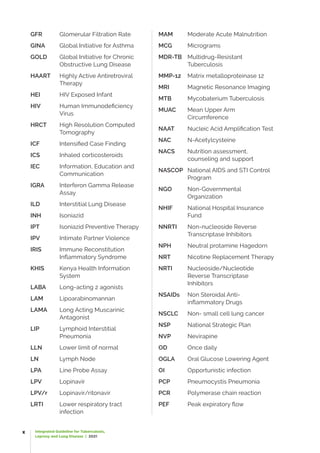
List ofAbbreviations
AATD Alpha-1- antitrypsin
ABC Abacavir
ABPA Allergic Bronchopulmonary
Aspergillosis
ACCE Advocacy Communication and
Community Engagement
ACE 1 Angiotensin Converting
Enzyme
ADRs Adverse drug reactions
ADR Adverse Drug Reaction
ADSM Active TB drug safety,
monitoring and management
AE Adverse events
AFB Acid Fast Bacilli
AHR Airway hyper-responsiveness
AIDS Acquired immunodeficiency
syndrome
AKD Acute Kidney Disease
AKI Acute Kidney Injury
AP Antero-posterior view (on
chest X-ray)
ARI Acute Respiratory Infections
ART Antiretroviral Therapy
ARV Antiretroviral drug(s)
ATV Atazanavir
ATV/r Atazanavir/ritonavir
BCG Bacillus Calmette-Guerin
BD Twice daily
BMI Body mass index
BNP Brain natriuretic Peptide
CCC Comprehensive Care Centre
CHV Community Health Volunteer
CHW Community Health Worker
CKD Chronic Kidney Disease
COPD Chronic Obstructive Pulmonary
Disease
CoK Constitution of Kenya
CPT Co-trimoxazole Preventive
Therapy
CSF Cerebrospinal Fluid
CT Computerized Tomography
Scan
CTLC County TB and Leprosy
Coordinator
CTX Cotrimoxazole
CXR Chest X-Ray
DALYs Disability-adjusted life years
DBS Dried Blood Spot
DM Diabetes Mellitus
DNA Deoxyribonucleic Acid
DOT Directly Observed Therapy
DRT Drug Resistance Testing
DR-TB Drug Resistant Tuberculosis
DST Drug Susceptibility Testing
DS-TB Drug Sensitive Tuberculosis
DTG Dolutegravir
EFV Efavirenz
ENT Ear Nose and Throat
EPTB Extrapulmonary Tuberculosis
ESR Erythrocyte Sedimentation Rate
FBS Fasting Blood Sugar
FDC Fixed-dose Combination
FEV Forced Expiratory Volume
FNA Fine needle Aspiration
FVC Forced Vital Capacity
GBV Gender Based Violence
GERD Gastroesophageal reflux
disease
Integrated Guideline for Tuberculosis,
Leprosy and Lung Disease | 2021
x
GFR Glomerular Filtration Rate
GINA Global Initiative for Asthma
GOLD Global Initiative for Chronic
Obstructive Lung Disease
HAART Highly Active Antiretroviral
Therapy
HEI HIV Exposed Infant
HIV Human Immunodeficiency
Virus
HRCT High Resolution Computed
Tomography
ICF Intensified Case Finding
ICS Inhaled corticosteroids
IEC Information, Education and
Communication
IGRA Interferon Gamma Release
Assay
ILD Interstitial Lung Disease
INH Isoniazid
IPT Isoniazid Preventive Therapy
IPV Intimate Partner Violence
IRIS Immune Reconstitution
Inflammatory Syndrome
KHIS Kenya Health Information
System
LABA Long-acting β2 agonists
LAM Lipoarabinomannan
LAMA Long Acting Muscarinic
Antagonist
LIP Lymphoid Interstitial
Pneumonia
LLN Lower limit of normal
LN Lymph Node
LPA Line Probe Assay
LPV Lopinavir
LPV/r Lopinavir/ritonavir
LRTI Lower respiratory tract
infection
MAM Moderate Acute Malnutrition
MCG Micrograms
MDR-TB Multidrug-Resistant
Tuberculosis
MMP-12 Matrix metalloproteinase 12
MRI Magnetic Resonance Imaging
MTB Mycobaterium Tuberculosis
MUAC Mean Upper Arm
Circumference
NAAT Nucleic Acid Amplification Test
NAC N-Acetylcysteine
NACS Nutrition assessment,
counseling and support
NASCOP National AIDS and STI Control
Program
NGO Non-Governmental
Organization
NHIF National Hospital Insurance
Fund
NNRTI Non-nucleoside Reverse
Transcriptase Inhibitors
NPH Neutral protamine Hagedorn
NRT Nicotine Replacement Therapy
NRTI Nucleoside/Nucleotide
Reverse Transcriptase
Inhibitors
NSAIDs Non Steroidal Anti-
inflammatory Drugs
NSCLC Non- small cell lung cancer
NSP National Strategic Plan
NVP Nevirapine
OD Once daily
OGLA Oral Glucose Lowering Agent
OI Opportunistic infection
PCP Pneumocystis Pneumonia
PCR Polymerase chain reaction
PEF Peak expiratory flow
Integrated Guideline for Tuberculosis,
Leprosy and Lung Disease | 2021
xi
PHQ-9 Patient Health Questionnaire 9
PI Protease Inhibitors
PLHIV People Living With HIV
PMDI Pressurised Metered Dose
Inhalers
PNS Post nasal space
PPB Pharmacy and poison board
PTLD Post TB Lung Disease
PV Pharmacovigilance
QF-GIT QuantiFERON-TB Gold In-Tube
Assay
RAL Raltegravir
RIF Rifampicin
RMNCH Reproductive Maternal and
Child Health
RSV Respiratory Syncytial Virus
RTIs Respiratory tract infections
RTV Ritonavir
RUTF Ready to use therapeutic feeds
SABA Short acting beta agonist
SAEs Severe adverse events
SAM Severe Acute Malnutrition
SCLC Small cell lung cancer
SCTLC Sub County TB and Leprosy
Coordinator
SFP Supplementary feeding
program
SHS Second Hand Smoke
SLE Systemic Lupus
Erythematosus
SOP Standard Operating Procedure
TB Tuberculosis
TDF Tenofovir Disoproxil Fumarate
TPT Tuberculosis Preventive
Therapy
TST Tuberculin Skin Test
UHC Universal Health Coverage
UNAIDS Joint United Nations
Programme on HIV and AIDS
VL Viral load
WHO World Health Organization
XDR-TB Extensively Drug-Resistant
Tuberculosis
3TC Lamivudine
Integrated Guideline for Tuberculosis,
Leprosy and Lung Disease | 2021
xii
Integrated Guideline for Tuberculosis,
Leprosy and Lung Disease | 2021
xiii
Foreword
TheDivisionofNationalTuberculosis,LeprosyandLungDiseaseProgram
(DNTLD-Program) is mandated to develop policies and guidelines
for the management of Tuberculosis (TB), Leprosy and Lung Health in
the country. Tuberculosis is a major driver of morbidity and mortality in
Kenya affecting all age groups. The burden is greatest among people
in the economically productive age group; 25 to 44 years. The country
misses over 40% of all TB cases. Kenya is in the post elimination phase
of Leprosy however; the Coast and Western regions still report Leprosy
cases every year. Major gaps still exist in the detection and management
of TB, Leprosy and other lung disease. This guideline seeks to address
these gaps by providing evidence-based approaches in the prevention
and management of these diseases.
This guideline is a revision of the 2017 Integrated TB, Leprosy and Lung
disease guideline. The key thematic areas covered are: Diagnosis and
treatment of TB, drug resistant TB and TB in special conditions, nutrition,
infection prevention and control, lung health, leprosy, pharmacovigilance
and commodity management, community engagement, communication
and advocacy. In addition, the 2021 guideline has incorporated novel
thematic areas that will improve the quality of care for patients, these
include: Active case finding strategies, Latent TB Infection, Human Rights
approaches and differentiated care.
The guideline has taken into consideration a patient centered approach
towards the management of TB, Leprosy and Lung Disease. It outlines
at risk populations for TB and provides evidence-based strategies
towards finding the missing people with TB, fronts the use of newer and
more sensitive TB diagnostic techniques, incorporates use of the newer
shorter-term regimen for treatment of Latent TB infection and provides
for individualized care of DR TB patients. With the high burden of TB in the
country, the guideline provides for contact management for all contacts
of pulmonary bacteriologically confirmed TB patients to ensure they are
evaluated and provided with the appropriate treatment.
The goal of this guideline is to provide guidance to the health care workers
at all levels on the prevention, diagnosis and management of TB, Leprosy
and Lung Disease. It further acts as a reference document for medical
students, tutors/lecturers, researchers and the entire community on
matters pertaining to TB, Leprosy and Lung Disease.
The mission of the DNTLD program is to accelerate the reduction of TB,
Leprosy and lung disease burden through provision of people centered,
universally accessibly, acceptable and affordable quality services in
Kenya. All efforts should be geared towards attainment of the national
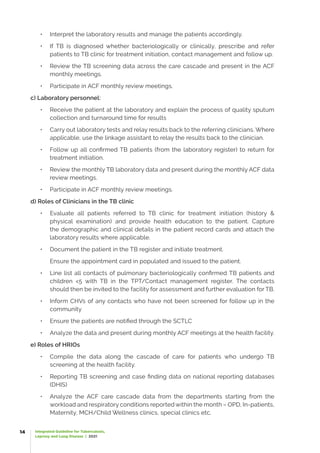
targets as provided in the national strategic plan 2019-2023 and the global
move towards ending TB.
It is my sincere hope that all health care workers will find the integrated
guideline useful for successful implementation of Tuberculosis, Leprosy
and lung disease control activities.
Dr. Patrick Amoth
Ag. Director General,
Ministry of Health
Integrated Guideline for Tuberculosis,
Leprosy and Lung Disease | 2021
xiv
Acknowledgement
The Ministry of Health and the Division of National Tuberculosis, Leprosy
and Lung Disease Program (DNTLD-P) sincerely appreciate the
invaluable efforts of all the individuals and organizations that contributed
to the review of the Integrated Tuberculosis, Leprosy and Lung Disease
guideline. The review of this guideline involved extensive deliberations with
various stakeholders through consultative meetings and review of existing
evidence.
We acknowledge the support from the office of the Cabinet Secretary, the
Principal Secretary, Head of Directorate of Medical Services/Preventive and
Promotive Health and Head Department of National Strategic Public Health
Programs..
We are grateful to the following institutions and persons without whose
technicaland financialinput this undertakingwould not have been successful:
Centre for Health Solutions- through the USAID funded TB Accelerated
Response and Care II, KCCB Komesha TB, Clinton Health Access Initiative,
World Health Organization, Amref Health Africa in Kenya, Respiratory
Society of Kenya, Centers for Disease Control, Global Fund, Kenya Medical
Training College, KELIN, Kenyatta National Hospital, DNTLD-P and County
Government staff, including health care workers.
We also appreciate all those who might have contributed in one way or the
other but have not been specifically mentioned. Your efforts are recognized
and appreciated.
Special gratitude also goes to the peer reviewers who participated in the
finalization of the guideline.
Dr. Elizabeth Onyango
Head, Division of National Tuberculosis,
Leprosy and Lung Diseases Program
Integrated Guideline for Tuberculosis,
Leprosy and Lung Disease | 2021
1
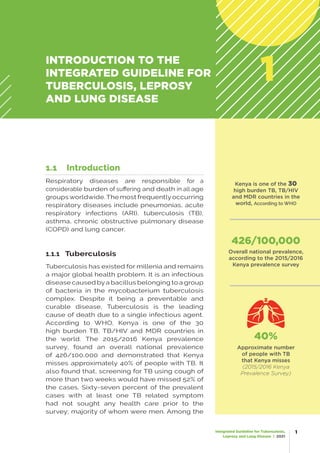
1.1 Introduction
Respiratory diseases are responsible for a
considerable burden of suffering and death in all age
groupsworldwide.The most frequentlyoccurring
respiratory diseases include pneumonias, acute
respiratory infections (ARI), tuberculosis (TB),
asthma, chronic obstructive pulmonary disease
(COPD) and lung cancer.
1.1.1 Tuberculosis
Tuberculosis has existed for millenia and remains
a major global health problem. It is an infectious
disease caused by a bacillus belonging to a group
of bacteria in the mycobacterium tuberculosis
complex. Despite it being a preventable and
curable disease, Tuberculosis is the leading
cause of death due to a single infectious agent.
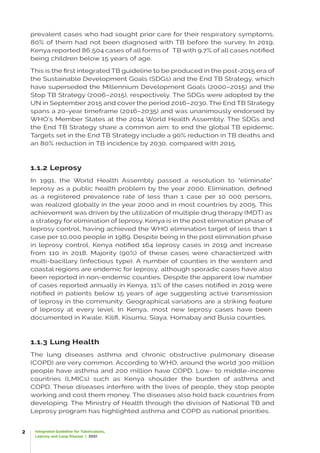
According to WHO, Kenya is one of the 30
high burden TB, TB/HIV and MDR countries in
the world. The 2015/2016 Kenya prevalence
survey, found an overall national prevalence
of 426/100,000 and demonstrated that Kenya
misses approximately 40% of people with TB. It
also found that, screening for TB using cough of
more than two weeks would have missed 52% of
the cases. Sixty-seven percent of the prevalent
cases with at least one TB related symptom
had not sought any health care prior to the
survey; majority of whom were men. Among the
INTRODUCTION TO THE
INTEGRATED GUIDELINE FOR
TUBERCULOSIS, LEPROSY
AND LUNG DISEASE
1
Kenya is one of the 30
high burden TB, TB/HIV
and MDR countries in the
world, According to WHO
Overall national prevalence,
according to the 2015/2016
Kenya prevalence survey
426/100,000
40%
Approximate number
of people with TB
that Kenya misses
(2015/2016 Kenya
Prevalence Survey)
Integrated Guideline for Tuberculosis,
Leprosy and Lung Disease | 2021
2
prevalent cases who had sought prior care for their respiratory symptoms,
80% of them had not been diagnosed with TB before the survey. In 2019,
Kenya reported 86,504 cases of all forms of TB with 9.7% of all cases notified
being children below 15 years of age.
This is the first integrated TB guideline to be produced in the post-2015 era of
the Sustainable Development Goals (SDGs) and the End TB Strategy, which
have superseded the Millennium Development Goals (2000–2015) and the
Stop TB Strategy (2006–2015), respectively. The SDGs were adopted by the
UN in September 2015 and cover the period 2016–2030. The End TB Strategy
spans a 20-year timeframe (2016–2035) and was unanimously endorsed by
WHO’s Member States at the 2014 World Health Assembly. The SDGs and
the End TB Strategy share a common aim: to end the global TB epidemic.
Targets set in the End TB Strategy include a 90% reduction in TB deaths and
an 80% reduction in TB incidence by 2030, compared with 2015.
1.1.2 Leprosy
In 1991, the World Health Assembly passed a resolution to “eliminate”
leprosy as a public health problem by the year 2000. Elimination, defined
as a registered prevalence rate of less than 1 case per 10 000 persons,
was realized globally in the year 2000 and in most countries by 2005. This
achievement was driven by the utilization of multiple drug therapy (MDT) as
a strategy for elimination of leprosy. Kenya is in the post elimination phase of
leprosy control, having achieved the WHO elimination target of less than 1
case per 10,000 people in 1989. Despite being in the post elimination phase
in leprosy control, Kenya notified 164 leprosy cases in 2019 and increase
from 110 in 2018. Majority (90%) of these cases were characterized with
multi-bacillary (infectious type). A number of counties in the western and
coastal regions are endemic for leprosy, although sporadic cases have also
been reported in non-endemic counties. Despite the apparent low number
of cases reported annually in Kenya, 11% of the cases notified in 2019 were
notified in patients below 15 years of age suggesting active transmission
of leprosy in the community. Geographical variations are a striking feature
of leprosy at every level. In Kenya, most new leprosy cases have been
documented in Kwale, Kilifi, Kisumu, Siaya, Homabay and Busia counties.
1.1.3 Lung Health
The lung diseases asthma and chronic obstructive pulmonary disease
(COPD) are very common. According to WHO, around the world 300 million
people have asthma and 200 million have COPD. Low- to middle-income
countries (LMICs) such as Kenya shoulder the burden of asthma and
COPD. These diseases interfere with the lives of people, they stop people
working and cost them money. The diseases also hold back countries from
developing. The Ministry of Health through the division of National TB and
Leprosy program has highlighted asthma and COPD as national priorities.
Integrated Guideline for Tuberculosis,
Leprosy and Lung Disease | 2021
3
1.2 Strategic Focus
The National Tuberculosis, Leprosy and Lung Program (NLTD-P) strategic
focus is to reduce the burden of lung disease and render Kenya free of TB
and leprosy by finding the missing people with TB / Leprosy and providing
timely and quality diagnosis, treatment and prevention to all high-risk
populations. The NTLD-P is mandated to develop policies, build capacity
and provide technical assistance to the devolved county system in Kenya.
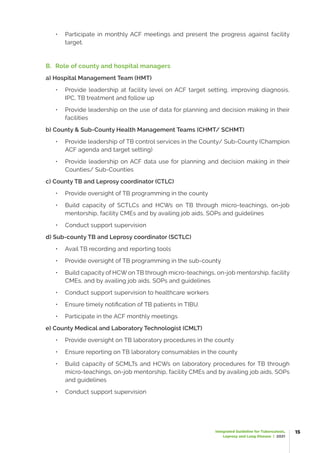
The program implements interventions within the framework of the National
Strategic Plan for Tuberculosis, 2019-2023.
1.3 Diagnosis and Case Finding
The program is strengthening the surveillance system to ensure early
testing and diagnosis through adoption of a new integrated diagnostic
algorithm that incorporates chest x-ray for screening for TB, expansion of
WHO recommended molecular GeneXpert and Line Probe Assays tests,
as well as TB LAM and QuantiFERON Gamma. Additionally, facility based
active case finding through systematic screening of all patients presenting
to the health facilities, regardless of the presenting complaints, has been
prioritized and is being implemented nationally to identify people with TB.
Other case finding strategies include targeted community outreaches,
contact tracing and screening and implementation of strategic innovative
initiatives.
The patient pathway analysis conducted in 2017 demonstrated that 42%
of the population preferred to seek initial care at the private facilities (15%,
informal; 27% formal). Therefore, robust engagement with the private sector
in TB prevention, care and control has been prioritized to ensure all private
sector players have been engaged in the fight against the epidemic. This
has realized a contribution of 15% to the total cases notified in 2019.
1.4 Integrated Care Provision
Further, integration of TB services at service delivery points in other
program areas has also been instrumental in providing holistic TB
prevention, care and control services. TB/HIV collaborative interventions
are being implemented with intensified TB screening, HIV Testing among
TB patients, prompt ART initiation among TB/HIV co-infected patients and
TB preventive therapy among others. In 2019, the HIV testing rates of TB
patients was 98% with a co-infection rate of 26% and ART uptake of 96%.
The treatment success rate for the 2018 cohort was 84% against a target
of 90%. Other integration areas include; TB and diabetes, reproductive,
maternal and neonatal and child health (RMNCH) where screening and
diagnosis for TB is being implemented.
Integrated Guideline for Tuberculosis,
Leprosy and Lung Disease | 2021
4
1.5 Nutrition Status Assessment
Nutritional status is an important determinant of resistance to infection.
Malnutrition increases the risk of developing TB and the vice versa. This
predisposes the population to a higher risk of unfavorable outcome. In 2017,
the NTLD-P conducted a TB Catastrophic Cost survey that found between
27.1% and 53.7%of TB affected households experienced food insecurity.
Nutritional status assessment, intervention and monitoring is a crucial
component of TB care and management. In 2019, 45% of the diagnosed
drug susceptible and 54% of drug resistant TB were undernourished at the
time of diagnosis.
1.6 Advocacy & Communication
The current advocacy and communication strategies identify the need to
create an enabling environment for prevention of lung diseases. Advocacy
will target those in positions of authority to influence human, financial and
material resources to strengthen the fight against TB, Leprosy and other
lung diseases. Additionally, community advocacy takes advantage of
community-level structures such as community health volunteers to create
public demand for TB, leprosy and lung disease services. In this regard,
health care providers are crucial channels of advocacy and communication
while at the same time being targeted with messages to counter the
risks arising from occupational hazards.
1.7 Recording & Reporting
Case recording and reporting of TB, leprosy and other lung disease is an
important process for monitoring and evaluating disease control activities
at the health facility, county and national levels. Accurate, complete and
timely data collection is an overarching guiding principle for the program.
Every health care provider who treats TB, leprosy and other lung disease has
the professional responsibility to record and report all cases treated using
standardized tools provided by the program. The national TB program is
responsible for providing standardized recording and reporting tools which
should be used at all service delivery points. This in turn is aggregated at
national level to establish how well the NTLD-P is closer to achieving the
currently set programmatic performance indicators.
Integrated Guideline for Tuberculosis,
Leprosy and Lung Disease | 2021
5
1.8 Scope of the guidelines
The objective of these consolidated guidelines is to provide a public health
approach and clinical guidance to the management of TB, leprosy and lung
diseases. It aims at providing guidance and building capacity among health
care workers (HCWs) on the provision of quality and universally acceptable
services in diagnosis, treatment, prevention and rehabilitation of patients
with these conditions. Additionally, it aims at providing guidance on linking
community activities for TB and leprosy with the work of NTLD-P so that
efforts of the health systems are extended and reach as many people
as possible, and create demand for quality services. Towards this, it also
calls for enhanced collaboration and coordination between the health
care workers, communities, state and non-state actors, in order to realize
universal coverage and comprehensive care in TB, leprosy & lung health
services.
These guidelines are organized into the following sections: Case Finding
strategies for TB,
TB in adults, TB in children, Laboratory diagnosis of TB, TB in Special
conditions, Nutrition in TB, Drug Resistance TB, Non-tuberculous
Mycobacteria, IPC, LTBI, Differentiated care of TB, Lung Health, Leprosy,
Pharmacovigilance, ADSM, Commodity Management, Patient support,
Human rights and Social protection, Communication and Advocacy,
Community engagement, M&E
1.9 Target audience
The guidelines are targeted to all HCWs of various cadres who manage TB,
Leprosy and Lung disease. They will also be used as part of the curriculum
to those undergoing pre-service clinical training. They will assist the county
managers who are tasked with the planning and resource allocation to
ensure the needs of the patients are catered for. They will also assist policy
makers and other line ministries in the national government working in
areas of health, social services, prison services or immigration in decision
making related to tuberculosis, leprosy and lung disease. The guidelines
will be a reference for all partners and organizations that are involved in
the management of these patients.
Integrated Guideline for Tuberculosis,
Leprosy and Lung Disease | 2021
6
Integrated Guideline for Tuberculosis,
Leprosy and Lung Disease | 2021
7
2.1. Introduction
TB program is mandated to ensure provision of quality
care for TB patients and enhance preventive strategies in
the country. Of utmost priority is to mop out cases from
the community to minimize the likelihood of continuous
transmission in the population. Finding people with TB
requires synergistic efforts from key stakeholders and
can either be passive or active.
2.1.1 Passive case-finding
Requires that affected individuals are aware of their
symptoms, have access to health facilities, and are
evaluated by health workers or volunteers who recognize
the symptoms of TB and who have access to a reliable
laboratory.
2.1.1 Active TB Case Finding
Is the systematic identification of presumptive TB cases
from a predetermined target group/population by doing
symptomatic screening, detailed history taking, physical
examinations and further laboratory and/or radiological
investigations to diagnose TB.
2.1.3 Presumptive TB case
• This refers to a patient who presents with symptoms
and/or signs suggestive of TB (previously known as
a TB suspect).
APPROACHES TO
FINDING PEOPLE WITH
TUBERCULOSIS
2
Integration of ACF
indicators in mainstream
MOH tools
Screening for TB (Under
5 and over 5) MOH 204A
and MOH 204B
Reporting on MOH 711
Strengthening contact
management process
Line listing contacts
of pulmonary
bacteriologically
confirmed cases
and invitation for TB
screening
Yield of diagnosed TB
cases from contacts and
under 5 initiated on TPT
Guidance on conducting
facility outreaches.
Integrated Guideline for Tuberculosis,
Leprosy and Lung Disease | 2021
8
• The determination of a true presumptive TB case should only be made by a clinician
after detailed history taking and clinical examination to rule out other causes of
respiratory illness.
2.2. Setting
TB case finding can be conducted at the health facilities and at the community level.
These include:
1. Public and private health facilities including pharmacies, laboratories and
individual clinics
2. Community
a. Congregate settings e.g. prisons, schools, barracks, drug dens, refugee
camps, places of worship and medical camps
b. Workplaces
Approaches to TB case finding
Facility Based Active Case Finding (FB-ACF) involves screening for TB among all persons
visiting a health facility at all service delivery points regardless of the presenting signs and
symptoms.
Contact management involves systematic investigation of people who are in close contact
with patients with infectious TB disease (index cases) and also reverse contact tracing for
children under 5 years. After investigation, contacts found to have TB disease should be treated
for TB according the National TB Treatment guidelines. Contacts without TB disease should be
assessed for eligibility to TB Preventive Therapy (Refer to chapter 11 on LTBI).
Community outreach interventions including:
• Targeting congregate settings e.g., prisons, schools, drug dens, barracks, refugee camps,
places of worship; workplaces, informal settlements, targeting the elderly among others.
• Other innovative approaches such as self-screening with linkage to health facilities
2.3. Facility Based Active Case Finding (FB-ACF)
2.3.1. Advocacy
Ownership by the management team is the cornerstone for successful execution of FB-
ACF at a health facility. Hospital managers should spearhead FB-ACF by ensuring that;
• All the frontline Health Care Workers have undergone sensitization on FB-ACF
(this should be done in liaison with the TB coordinators)
●• Appointment of an ACF focal person; he/she should be a clinician working at the
Outpatient Department (OPD)
Integrated Guideline for Tuberculosis,
Leprosy and Lung Disease | 2021
9
• In liaison with the ACF focal person, each service delivery point (SDP) should
calculate its targets based on their workload
• During facility monthly meetings, ACF should be discussed and each SDP
presents their progress against targets, highlight the best practices and identifies
key challenges/gaps/areas of improvement.
• Continuous quality improvement should be undertaken.
2.3.2. Patient Flow
TB screening should be administered to all patients presenting to the health facility
regardless of presenting signs and symptoms. Proper understanding of the patient flow
which is unique to each health facility provides a head start in ACF implementation. Back
and forth of patients through the same departments should be avoided by ensuring that
the patient is attended to holistically to reduce time taken at the health facility.
2.3.3. TB screening and Care Cascade
All patients should undergo the following;
1. Vital signs should be taken (fever as a key sign will be elicited at this point)
2. The triage personnel conducts TB symptomatic screening, the cardinal signs and
symptoms of TB are:
• Cough of any duration
• Unintended weight loss
• Drenching night sweats
• Hotness of body
• Chest Pain
• BMI less than 18.5 of z-score ≤ -2
For children, in addition to the above, the following should be considered;
• History of frequent respiratory tract infections
• Failure to Thrive
• Reduced Playfulness
• Lethargy and irritability
• History of contact with a known TB case
3. All coughers should be fast tracked for assessment by a clinician.
4. The clinician performs detailed history taking and physical examination to
determine the true presumptive TB cases to be sent for investigation for TB.
Presumptive TB cases should be documented in the presumptive TB register and
a sputum request form generated (all fields should be properly filled for prompt
relay of results).
Integrated Guideline for Tuberculosis,
Leprosy and Lung Disease | 2021
10
5. Presumptive TB cases should be sent to the laboratory/designated area for
collection of samples after which the patient is advised on how to collect their
results, then exited through normal facility procedures. In some facilities, clinicians
can be sensitized on procedure for sample collection and a designated cough
area identified, this will minimize on workload sent to the laboratory
6. Patients who are confirmed TB positive from the laboratory should be traced
(phone tracing and where necessary home tracing), initiated on treatment and
followed up. Those who receive a negative laboratory result should be followed
up closely, should symptoms persist; further investigations can to be done to
help confer a clinical diagnosis.
In the current TB diagnostic algorithm (Annex 2 & 3), chest X-ray can be used as a diagnostic
tool for children. In settings where chest X-ray is readily available, it can be used as a
screening tool and only those who are suggestive of TB should be referred for sample
collection.
2.3.4. Linkage
Proper linkage at every step of patient’s care is important to minimize leakages in the
ACF cascade. Depending on the facility policy and human resources available, CHWs/
CHVs/peer educators should link presumptive TB cases from the clinician to the
laboratory and further to the chest clinic for those initiating TB treatment. Linkage also
entails active phone and home tracing for those who with positive TB results to initiate
treatment.
2.3.5. Recording and Reporting
Timely documentation is a key tentacle in the implementation of FB-ACF and as such
the following recording and reporting tools are required:
●• ACF screening tool - this outlines the cardinal signs and symptoms for TB and is
used for symptomatic screening for TB
●●• OPD Register (MOH 204A & B) contains a column where the status of TB screening
should be documented; this column provides information for all patients screened
for TB at the health facility.
●●• Presumptive TB register - this is a register containing demographic and clinical
information for identified presumptive TB cases; should be filled at the clinician
desk
●●• Sputum Request Form - Upon successful identification of a presumptive TB case,
the sputum request form should be duly filled by the clinician. The request form
should be updated with details of the referring clinician to ensure seamless relay
of results.
Integrated Guideline for Tuberculosis,
Leprosy and Lung Disease | 2021
11
●●• TB laboratory register – Upon receipt of the TB lab request form, the laboratory
officershould confirm the details and registerthe patients in the laboratoryregister.
The referring department/peripheral health facility should be documented. The
presumptive TB case is then provided with a falcon tube and instructed on how
to collect a quality sample.
●●• ACF Departmental Summary Tool - this is the monthly summary of the ACF
workload per Service Delivery Point, it provides a total of the number of patients
offered TB screening and their movement across the entire care cascade. It
should be filled at the end of the month by the departmental in-charge and
obtains information from the OPD register, tally sheets, presumptive TB register,
laboratory register and TB treatment register.
●●• ACF Facility Summary Tool - this is the monthly summary of the ACF workload at
the facility, it documents the number of patients offered TB screening and their
movement across the entire care cascade. It collates information from the ACF
departmental summary tool and should be filled at the end of the month by the
records department at the facility.
●●• MOH 711 - Select indicators from the ACF facility summary tool should be
populated in MOH 711
●●• KHIS – Select indicators populated in MOH 711 should be uploaded into KHIS
The following should take place for successful implementation of ACF
• Orientation of health facility management team and health facility staff on quality
improvement in TB case detection
• Formation of a TB coordinating team by the health facility management. (This can be
integrated with other teams e.g. HIV coordinating team)
• Appointment of a health facility ACF TB focal person who should monitor ACF
implementation per SDP and intervene promptly in case of any hitches
• Inclusion of TB case detection as a permanent agenda in the health facility clinical
meetings by the health facility management
• TB coordinating team & ACF focal person to support each SDP to calculate their TB case
detection targets based on their workload
• As a routine activity that should be entrenched in the health facility procedures; daily
health education sessions with TB as an agenda, should be conducted to patients to
create awareness
• Use ofpresumptiveTB registers in allservice deliverypoints in the health facility.Aseparate
presumptive TB register should be kept for outreaches. All clients who screen positive
for TB symptoms and subsequently undergo detailed assessment by a clinician and are
determined to be true presumptive TB cases, should be recorded in the presumptive TB
register.
• Introduction of Pediatric TB screening tool & presumptive register in various children-
specific service delivery points including NMCH clinics, Nutrition clinic, Pediatric OPD
clinic and all Pediatric wards. Accelerated TB case detection among children who are a
high risk cohort for severe TB.
• AllSDPs/UnitsorclinicsshouldreportonTBcasefindingindicatorsmonthly–performance
on FB-ACF, contact investigation and community outreach interventions.
Integrated Guideline for Tuberculosis,
Leprosy and Lung Disease | 2021
12
• Health facilities should evaluate FB-ACF performance every month and take measures to
resolve any pending challenges. This activity should be led by the Facility in charge, ACF
committee and ACF focal person. Discussions should be documented and form a basis for
continuous quality improvement.
●• Supportive supervision and mentorship to unit/clinic staff should be conducted regularly.
2.3.6. Target Setting
Targets provide a premise upon which performance can be assessed and lays a basis for
continuous quality improvement. Targets vary depending on the catchment population
and facility workload. Each health facility and subsequently service delivery point,
should set their targets monthly in liaison with the ACF Focal person.
Based on their workload, the following guiding principles should be used;
●• 15-30% of all patients seen at the health facility have respiratory infection
●• 60-80% of the patients presenting with respiratory infections are presumptive TB
cases and should be investigated to rule out TB
●• At least 10% of presumptive TB patients should be TB cases (Bacteriologically
confirmed and clinically diagnosed)
●• 10-15% of TB cases should be children under 15 years of age.
2.3.7. Monitoring
Monitoring is both internal and external and should be done continuously to flag out
underperformance early and plan for corrective action. Internally, during the facility
monthly meetings, performance/progress against targets per SDP should be reviewed,
best practices and challenges highlighted, to encourage cross-learning.
Periodic county and sub county supervisions should incorporate key indicators on FB-
ACF to assess the progress on TB case finding. This should provide an opportunity for
continuous mentorship and sensitization.
2.3.8. Continuous Quality Improvement
In FB-ACF, each facility should strive to get better by learning through the process. This
can be attained by ensuring efficiency in screening, enhancing a high index of suspicion
among Health Care Workers and closing leaks in the care cascade hence minimizing on
numbers needed to screen to get a confirmed TB case.
Continuous quality improvement should be undertaken as per the steps below;
• Establish a Quality Improvement team
• Define the problem by clearly establishing the actual versus desired performance
of a key indicator
Integrated Guideline for Tuberculosis,
Leprosy and Lung Disease | 2021
13
●• Agree upon opportunity for improvement and determine methodology to be
used
• Monitor and evaluate the entire process
●• Repeat this process until desired performance/standards are attained
Note:
• Target setting is based on the workload of the facility and may vary across the year.
• Proportion of clients with respiratory conditions among the OPD attendance vary from
one location to another, based on morbidity pattern in the geographical area.
• The clinician assessment (history taking and physical examination) is key in determining
the quality of care to the patients as well as establishing the true presumptive TB cases to
be investigated.
• Monthly review of data through each step in the patient care cascade is key in deter-
mining leakages. The review should involve health care workers; linkage assistants, re-
cords officers, clinicians, departmental heads, ACF TB focal person, TB/HIV coordinator,
laboratory technician, pharmacist, CHEW and facility in-charge. Where applicable, the
Sub County team should be in attendance (Sub County TB and Leprosy Coordinator/Sub
County clinical officer/Sub County Public Health Officer/Sub County Medical Laboratory
Coordinator).
2.3.9. Roles and responsibilities
A. Role of front-line health care workers
a) Triaging personnel (HCWs/CHVs/cough monitors/records person)
●• Initial symptomatic TB screening and referral to the clinician.
●• Link clients to the clinician, laboratory and treatment
●• Follow up confirmed TB patients who fail to return for treatment initiation (by
CHVs).
●• Contact tracing and referral of people with signs and symptoms of TB from
community
b) Clinicians at all Service Delivery Points
• Clinical evaluation through conducting detailed history taking and physical
examination to determine true presumptive TB cases. Provide health education
to the presumptive TB cases to understand why investigations are required to
rule out TB.
●• Document on the presumptive TB register, complete the TB laboratory request
form and send presumptive TB cases for GeneXpert/ smear microscopy (CXR as
appropriate)
●• Populate in the presumptive TB register the laboratory results once received.
Integrated Guideline for Tuberculosis,
Leprosy and Lung Disease | 2021
14
●• Interpret the laboratory results and manage the patients accordingly.
●• If TB is diagnosed whether bacteriologically or clinically, prescribe and refer
patients to TB clinic for treatment initiation, contact management and follow up.
●• Review the TB screening data across the care cascade and present in the ACF
monthly meetings.
●• Participate in ACF monthly review meetings.
c) Laboratory personnel:
●• Receive the patient at the laboratory and explain the process of quality sputum
collection and turnaround time for results
●• Carry out laboratory tests and relay results back to the referring clinicians. Where
applicable, use the linkage assistant to relay the results back to the clinician.
●• Follow up all confirmed TB patients (from the laboratory register) to return for
treatment initiation.
• Review the monthly TB laboratory data and present during the monthly ACF data
review meetings.
●• Participate in ACF monthly review meetings.
d) Roles of Clinicians in the TB clinic
●•	●Evaluate all patients referred to TB clinic for treatment initiation (history &
physical examination) and provide health education to the patient. Capture
the demographic and clinical details in the patient record cards and attach the
laboratory results where applicable.
●• Document the patient in the TB register and initiate treatment.
●	 Ensure the appointment card in populated and issued to the patient.
●• Line list all contacts of pulmonary bacteriologically confirmed TB patients and
children <5 with TB in the TPT/Contact management register. The contacts
should then be invited to the facility for assessment and further evaluation for TB.
●• Inform CHVs of any contacts who have not been screened for follow up in the
community
●●• Ensure the patients are notified through the SCTLC
●• Analyze the data and present during monthly ACF meetings at the health facility.
e) Roles of HRIOs
●• Compile the data along the cascade of care for patients who undergo TB
screening at the health facility.
●• Reporting TB screening and case finding data on national reporting databases
(DHIS)
●• Analyze the ACF care cascade data from the departments starting from the
workload and respiratory conditions reported within the month – OPD, In-patients,
Maternity, MCH/Child Wellness clinics, special clinics etc.
Integrated Guideline for Tuberculosis,
Leprosy and Lung Disease | 2021
15
●• Participate in monthly ACF meetings and present the progress against facility
target.
B. Role of county and hospital managers
a) Hospital Management Team (HMT)
●• Provide leadership at facility level on ACF target setting, improving diagnosis,
IPC, TB treatment and follow up
●• Provide leadership on the use of data for planning and decision making in their
facilities
b) County & Sub-County Health Management Teams (CHMT/ SCHMT)
●• Provide leadership of TB control services in the County/ Sub-County (Champion
ACF agenda and target setting)
●• Provide leadership on ACF data use for planning and decision making in their
Counties/ Sub-Counties
c) County TB and Leprosy coordinator (CTLC)
●• Provide oversight of TB programming in the county
●• Build capacity of SCTLCs and HCWs on TB through micro-teachings, on-job
mentorship, facility CMEs and by availing job aids, SOPs and guidelines
●●• Conduct support supervision
d) Sub-county TB and Leprosy coordinator (SCTLC)
●●• Avail TB recording and reporting tools
●●• Provide oversight of TB programming in the sub-county
●●• Build capacity of HCW on TB through micro-teachings, on-job mentorship, facility
CMEs, and by availing job aids, SOPs and guidelines
●●• Conduct support supervision to healthcare workers
●●• Ensure timely notification of TB patients in TIBU.
●●• Participate in the ACF monthly meetings
e) County Medical and Laboratory Technologist (CMLT)
●●• Provide oversight on TB laboratory procedures in the county
●●• Ensure reporting on TB laboratory consumables in the county
●●• Build capacity of SCMLTs and HCWs on laboratory procedures for TB through
micro-teachings, on-job mentorship, facility CMEs and by availing job aids, SOPs
and guidelines
●●• Conduct support supervision
Integrated Guideline for Tuberculosis,
Leprosy and Lung Disease | 2021
16
f) Sub-county Medical and Laboratory Technologist (SCMLT)
• Provide oversight on TB laboratory procedures in the sub county
●●• Ensure reporting on TB laboratory consumables in the sub county
●●• Build capacity of HCWs on laboratory procedures for TB through micro-teachings,
on-job mentorship, facility CMEs and by availing job aids, SOPs and guidelines
●●• Conduct support supervision
C. Role of community members and other players
Community health workers/ volunteers and other community players e.g. Civil Society
Organizations
●●• Sensitize communities on TB
●●• Screen community members for TB including contacts who are not able to go to
the health facilities
●●• Refer and link community members who require further evaluation to health
facilities
●●• Liaise with health facilities to trace and return TB treatment interrupters back to
treatment
2.4 Contact Management
During enrolment to TB treatment, health care workers should line list contacts of all
pulmonary bacteriologically confirmed TB patients (index case) and children under 5
with TB (reverse contact tracing). The contacts can be drawn from the household, social
and work places. All listed contacts should be screened for TB at the health facility or in
the community i.e. households, schools and workplaces. Contacts who are presumptive
TB cases should be managed in line with the TB diagnostic algorithm (Annex 2 & 3). Index
cases should be advised to bring their contacts to the health facility for TB screening.
2.4.1. Definitions for Contact Investigation
a) Index case/ Index patient
The initially identified case of new or recurrent TB in a person of any age in a specific
household or other comparable setting in which others may have been exposed.
Priorityshould be given to index patientswho have anyofthe following characteristics:
●●• Has bacteriologically confirmed pulmonary TB
●●• Is a child <5 years with TB (to find the source of infection)
●●• DRTB cases (proven or suspected)
Note: If resources are available, contact investigation may be conducted for index
patients of lower priority such as those with clinically diagnosed pulmonary TB
Integrated Guideline for Tuberculosis,
Leprosy and Lung Disease | 2021
17
b) Contact
Any person who has been exposed to an index case. There are two types of contacts:
i) Household contact
A person who shared the same enclosed living space for one or more nights or for
frequent or extended periods during the day with the index case during the 3 months
before commencement of the current treatment episode
Note: Definitions of ‘household’ vary considerably and must be adapted to the local context.
Within households, there is a gradation of exposure, ranging from sharing the same bed as
the index case to living in the same compound but not in the same enclosed space.
ii) Close contact
A person who is not in the household but shared an enclosed space, such as a social
gathering place, workplace or facility, for extended periods during the day with the index
case during the 3 months before commencement of the current treatment episode.
2.4.2. Contact Investigation
A systematic process intended to identify previously undiagnosed cases of TB among
the contacts of an index case.
Contact investigation consists of two components:
2.4.2.1. Contact Identification and Prioritization
A systematic process to identify contacts with or at increased risk for development of
TB. This includes:
●●• An interview with the index case to obtain the names and ages of contacts
●●• Line listing of all contacts in the contact management register
●●• An assessment of contacts’ risk for having or developing TB, based on the
presence of TB signs and symptoms, to determine those for whom clinical
evaluation is indicated.
2.4.2.2.Clinical Evaluation
A systematic process for the diagnosis or exclusion of active TB among contacts who
have signs and symptoms of TB. Clinical evaluation should be done in accordance with
the TB diagnostic algorithm (Annex 2 & 3).
Priority should be given to the following contacts:
●●• People of all ages with signs and symptoms suggestive of TB
●●• Children <5 years of age
●●• People with known or suspected immunocompromising conditions
(especially PLHIV)
●●• Contacts of index cases with DRTB (proven or suspected)
Integrated Guideline for Tuberculosis,
Leprosy and Lung Disease | 2021
18
2.4.3. Reverse Contact Tracing
A source case investigation (also known as a ‘reverse contact investigation’) is a type of
contact investigation done to identify the source case of someone recently diagnosed
with active TB disease. Source case investigations are recommended when children
less than 5 years old are diagnosed with active TB disease and in the event of pleural TB
(primary TB) in a younger person.
Source case investigations focus on identifying and screening those most likely to have
TB disease among the people that spent the most time with the index case.
For index cases that are children, source cases are most likely to be found among
adolescents or adults from:
●●• Within the household (persons living in the home, frequent visitors, babysitters)
●●• School
●●• Daycare
●●• Carpools or school buses
●●• Playgroups
●●• Places of recent travel
2.4.4. TB Screening and Care Cascade
Screening of contacts should be addressed based on whether the contact was invited
(contact invitation) or traced (contact tracing).
2.4.4.1. Contact Invitation
Contact invitation is when the index patients brings his/her contacts to the hospital for
TB screening. All invited contacts should undergo the following;
1. Vital signs should be taken (fever as a key sign will be elicited at this point)
2. TB symptomatic screening, the cardinal signs and symptoms of TB are:
• Cough of any duration
• Unintended weight loss
• Drenching night sweats
• Hotness of body
• Chest Pain
• BMI less than 18.5 of z-score ≤ -2
For children, in addition to the above, the following should be considered;
●●• History of frequent respiratory tract infections
●●• Failure to Thrive
●●• Reduced Playfulness
Integrated Guideline for Tuberculosis,
Leprosy and Lung Disease | 2021
19
●●• Lethargy and irritability
●●• History of contact with a known TB case
3. The clinician performs detailed history taking and physical examination to determine
true presumptive TB cases who are then documented in the presumptive TB register
and generates a sputum request form.
4. Presumptive TB cases should be sent to the laboratory/designated area for
collection of samples after which the patient is advised on how to collect their
results, then exited through normal facility procedures. In some facilities, clinicians
can be sensitized on procedure for sample collection and a designated cough area
identified, this will minimize on workload sent to the laboratory
5. Patients who are confirmed TB positive from the laboratory should be traced and
initiated on treatment; while those who receive negative laboratory confirmation
should be followed up closely and in the event that symptoms persist, further
investigations need to be done to confer a clinical diagnosis.
6. Contacts who screen negative for all the symptoms and are eligible for preventive
therapy, should be initiated on TPT (refer to Chapter 11 on LTBI), otherwise they
are discharged in line with hospital policies and advised to come for follow up TB
screening every six months.
2.4.4.2. Contact Tracing
Contact tracing is initiated when an index case fails to bring his/her contacts to the
hospital for TB screening. The CHV/CHW is then given a list of all the listed contacts to
trace from the community.
All traced contacts should undergo the following;
1. Vital signs should be taken (fever as a key sign will be elicited at this point)
2. TB symptomatic screening, the cardinal signs and symptoms of TB are:
• Cough of any duration
• Unintended weight loss
• Drenching night sweats
• Hotness of body
• Chest Pain
• BMI less than 18.5 of z-score ≤ -2
For children, in addition to the above, the following should be considered;
●●• History of frequent respiratory tract infections
●●• Failure to Thrive
●●• Reduced Playfulness
●●• Lethargy and irritability
●●• History of contact with a known TB case
Integrated Guideline for Tuberculosis,
Leprosy and Lung Disease | 2021
20
3. The clinician performs detailed history taking and physical examination to determine
true presumptive TB cases who are then documented in the presumptive TB register
and generates a sputum request form.
4. Presumptive TB cases should be sent to the laboratory/designated area for
collection of samples after which the patient is advised on how to collect their
results, then exited through normal facility procedures. In some facilities, clinicians
can be sensitized on procedure for sample collection and a designated cough area
identified, this will minimize on workload sent to the laboratory
5. Patients who are confirmed TB positive from the laboratory should be traced and
initiated on treatment; while those who receive negative laboratory confirmation
should be followed up closely and in the event that symptoms persist, further
investigations need to be done to confer a clinical diagnosis.
6. Contacts who screen negative for all the symptoms and are eligible for preventive
therapy, should be initiated on TPT (refer to Chapter 11 on LTBI), otherwise they
are discharged in line with hospital policies and advised to come for follow up TB
screening every six months.
2.4.5. Recording and Reporting
Adequate contact management helps to curtail the TB transmission process and as
such monitoring the yield of contact investigation can only be attained through proper
documentation in the following tools:
●• TPT/Contact management register - during enrolment of an index case, the HCW
should line list all their household and close contacts (household, work, social).
Further, these contacts should be invited for TB screening and their screening
status documented in the same register.
●• Contact tracing log - for those patients who are traced in the community; both
phone and home tracing should be documented
2.4.5.1 Contact Investigation Data Flow
Identify index cases during initiation to TB Treatment
⇩
Line listing contacts of the index cases in TPT/Contact Management register
⇩
Contact invitation and screening for TB by health care worker
⇩
Health care worker at the clinic forwards to the CHVthe list of contacts that did not come following
contact invitation
⇩
Integrated Guideline for Tuberculosis,
Leprosy and Lung Disease | 2021
21
CHVs use the TB screening/community contact tracing form to screen contacts of the index
cases and refer those contacts with TB symptoms to the health facility. All contacts <5, PLHIV and
contacts of MDR and XDR TB patients should be referred using the Community Referral form
MOH 100.
CHV returns the forms to the health facility. Each form represents an index patient and their
contacts
⇩
The health care worker verifies the forms, updates the contact management/TPT register and
begins investigations for those who are presumptive TB cases as guided in the TB diagnostic
algorithm (Annex 1 & 2).
*All household and close contacts should be counseled and tested for HIV
2.4.5.2. Monitoring
Monitoring should be both internal and external and should be done continuously in
order to detect underperformance early and plan for corrective action. Internally, during
the monthly meetings, performance/progress against targets should be reviewed.
Periodic county and sub county supervisions should incorporate key indicators on
contact management to assess the progress on case finding and TPT uptake. This should
provide an opportunity for continuous mentorship and sensitization.
2.5. Community Outreaches
2.5.1. Advocacy and Social Mobilization
CHWs/CHVs/peer educators, opinion leaders, local administration, religious leaders
and local policy/political leaders should be sensitized on their role in TB control efforts
in the community. Community outreach interventions should be guided by disease
burden, health seeking behaviour and/or linkage to availability of TB services.
A multi-sectoral approach through engagement of key stakeholders to reach their
populations e.g. education (schools, colleges,) transport (matatu industry, association
of long distance truck drivers), should be used. These interventions should include
appropriate linkage to health facilities for further management.
2.5.2. Client Flow
• Initial screening should be done using TB signs and symptoms
- Cough of any duration
- Unintended weight loss
- Drenching night sweats
- Hotness of body
- Chest Pain
- BMI less than 18.5 of z-score ≤ -2
Integrated Guideline for Tuberculosis,
Leprosy and Lung Disease | 2021
22
• Clients who screen symptom positive should be offered chest X-Ray. It is only
those clients with radiographs interpreted as “Abnormal Suggestive of TB” who
should provide samples for laboratory diagnosis.
• After TB screening and determination of a true presumptive TB case, the
client should produce a sputum sample for TB screening and other necessary
tests.
• Those who are confirmed with TB should be linked to the nearest TB treatment
site and/or CHV of their community unit.
• The outreach team should always comprise of clinicians who will determine
the true presumptive TB cases and assess the need of initiating severely ill
patients on TB treatment during an outreach activity, however, they should
ensure adequate linkage mechanisms for follow up visits.
• Clients with negative laboratory results should be evaluated further, treated
for the other lung diseases and closely monitored for possibility of a clinical
diagnosis should the symptoms recur.
During targeted outreaches, chest X-ray should be used as a screening tool. It is only those
with radiographs “Abnormal Suggestive of TB” who should be eligible to provide samples
for laboratory diagnosis.
• Contacts of those who are confirmed with TB should also be screened.
• Contacts who are asymptomatic should be assessed for TPT eligibility.
For those eligible; TPT should be initiated, the rest should be discharged
according to the hospital policy and advised to come for follow up screening
every six months.
Considerations for case finding among special populations
●• Health care workers: Screen biannually using the TB screening questions. A contact
management / TPT register should be introduced at all health facilities to capture data
on health care workers screening (Name, department, cadre, screened for TB - yes/no,
presumptive -yes/no). Furthermanagement should be documented in the presumptive
register. This will also include students for practicals, interns and volunteers working in
health institutions.
●• Residential institutions (Prisoners and prison staff, People residing in shelters and
other congregate settings such as the military): Screen at entry and every six months.
Continuous surveillance should be conducted routinely in the prisons.
●• Detainees (in police cells) and remandees: There is a need to ensure that detainees
and remandees are screened and investigated as appropriate. Ensure comprehensive
contact information is provided to support linkage with the health facilities for those
who are presumptive.
Integrated Guideline for Tuberculosis,
Leprosy and Lung Disease | 2021
23
●• Students in learning institutions: The medical examination at entry requires a chest
x-ray done. Ensure the chest x-ray is interpreted and reported. A GeneXpert test to be
requested for any abnormal chest x-ray report. School clinics should liaise with nearby
health facilities for reporting and linkage to diagnostic facilities.
●• Community: Geographical areas with a high prevalence and subpopulations with poor
access (poor populations, urban slums, remote areas, refugees, homeless)
●• Hospital outpatient and inpatient departments, and primary health-care centres:
People previously treated for TB, People with an untreated fibrotic lesion, People living
with HIV and people attending HIV testing, People with diabetes mellitus, People with
chronic respiratory disease and smokers, Undernourished People with gastrectomy or
jejuno-ileal bypass, People with an alcohol or drug-use disorder, People with chronic
renal failure, People on immunocompromising treatments, Elderly people, People in
mental health clinics or institutions
●• Immigration and refugee services: Immigrants from settings with a high prevalence of
TB, People in refugee camps
●• Workplaces: Miners or others who are exposed to silica, Other workplaces with a high
prevalence of TB
2.5.3. Community Outreach Data Flow
Health care workers screen community members and fill the community TB screening form
⇩
Health careworkers list presumptiveTB cases in a designated presumptive registerforoutreaches
which should be kept at the TB clinic
⇩
People presumed to have TB are linked to the health facility and managed according to the TB
diagnostic algorithm (Annex 1 & 2)
⇩
Discharge from the health facility should be through the CHVs/CHWs in their respective
community units for adequate follow up
Quality Assurance
The following are steps to ensure quality in TB case finding
●• Training of health care workers in TB, including in TB case finding
●• Provision of guidelines, job aids and SOPs to healthcare workers
●• Ensuring clinician review for all patients screened by non-clinicians and labelled as
presumptive
●• Use of and adherence to standard MOH tools for recording and reporting and diagnostic
algorithm (Annex 1 & 2)
Integrated Guideline for Tuberculosis,
Leprosy and Lung Disease | 2021
24
●• Following up patients along the entire cascade of care to minimize leakages and ensure
those with TB receive prompt treatment and the rest get appropriate care.
●• Correct and complete documentation and timely reporting
●• Regular data review
●●• Mentorship and supervision by facility, sub-county and county leadership teams
Integrated Guideline for Tuberculosis,
Leprosy and Lung Disease | 2021
25
3.1 Introduction
3.1.1 Definition
Tuberculosis (TB) is an airborne chronic infectious
disease caused by Mycobacterium tuberculosis. It usually
infects the lungs, but it can infect any part of the body
such as the kidney, spine, and brain except the nails, hair
and teeth. If not treated properly, TB disease can be fatal.
3.1.2 Aetiology
TB disease is caused by a pathogenic bacteria called
Mycobacterium tuberculosis (M. tuberculosis) from the
family Mycobacteriaceae. M. tuberculosis is one of the
very closely related M. tuberculosis complex species
which include M. bovis, M. africanum, M. microti, M. caprae,
M. pinnipedii, M. canetti and M. mungi. Most, but not all,
of these species have been found to cause disease in
humans.
The majority of TB cases are caused by M. tuberculosis.
M. tuberculosis organisms are also called tubercle bacilli.
In rare situations Non-tuberculous Mycobacteria (NTM)
may cause a disease similar to typical TB infection with
M. tuberculosis.
MANAGEMENT OF
DRUG SUSCEPTIBLE
TUBERCULOSIS (DSTB)
IN ADULTS
3
1. Chest x-ray has a role in TB
screening and diagnosis
2. New diagnostic techniques
have been introduced,
including Gene Xpert Ultra
and TB-LAM
3. Algorithm for TB diagnosis
has been revised and
includes TB screening and
guidance on interpretation
of results and follow up of
persons with TB
4. Dosage of anti-TB medicines
is weight based and now
accommodates dosing for
those > 70kg
5. In Kenya, DSTB is treated
using four medicines in
fixed dose combination
formulation
KEY HIGHLIGHTS:
Integrated Guideline for Tuberculosis,
Leprosy and Lung Disease | 2021
26
3.2 Classification of Tuberculosis
3.2.1 TB Case Definitions
The following are case definitions used to classify TB cases initially:
a) A presumptive TB case: one who presents with symptoms or signs suggestive of TB
b) Bacteriologically confirmed TB case: one from whom a biological specimen is
positive by smear microscopy, culture or WHO-approved rapid diagnostics (WRD)
such as GeneXpert MTB/RIF. All such cases should be notified regardless of whether
TB treatment was started or not.
c) A clinically diagnosed TB case; A clinically diagnosed TB case is one who does
not fulfill the criteria for bacteriological confirmation but has been diagnosed with
active TB by a clinician or other medical practitioner who has decided to give the
patient a full course of TB treatment. This definition includes cases diagnosed
on the basis of X-ray abnormalities or suggestive histology and extra-pulmonary
cases without laboratory confirmation. Clinically diagnosed cases subsequently
found to be bacteriologically positive (before or after starting treatment) should
be reclassified as bacteriologically confirmed. All such cases should be notified
regardless of whether TB treatment was started or not.
All bacteriologically confirmed or clinically diagnosed cases of TB are also classified
according to the following:
1. Anatomical site of disease
2. History of previous treatment
3. HIV status
4. Drug resistance
This classification is summarized in the table below:
Table 3.1: Classification of TB
1. Classification based on anatomical sites
Pulmonary TB (PTB) Any bacteriologically confirmed or clinically diagnosed case of TB involv-
ing the lung parenchyma or the tracheobronchial tree. This exclude pleural
effusion
Extra pulmonary TB
(EPTB)
Any bacteriologically confirmed or clinically diagnosed case of TB involv-
ing organs other than the lung parenchyma, e.g. pleura, lymph nodes, ab-
domen, genitourinary tract, skin, joints and bones, meninges.
2. Classification based on history of previous TB treatment (patient registration group)
New patients Patient who has never been treated for TB or has taken anti-TB drugs for
less than 1 month.
Integrated Guideline for Tuberculosis,
Leprosy and Lung Disease | 2021
27
Previously treated
patients
Patient who has received 1 month or more of anti-TB drugs in the past.
They are further classified by the outcome of their most recent course of
treatment as follows:
a) Relapse patients; previously treated forTB, declared cured or treatment
completed at the end of their most recent course of treatment, and are
now diagnosed with a recurrent episode of TB (either a true relapse or a
new episode of TB caused by reinfection).
b) Treatment after failure patients; previously treated for TB and whose
treatment failed at the end of their most recent course of treatment.
c) Treatment after loss to follow-up patients; previously treated for TB,
and declared lost to follow-up at the end of their most recent course
of treatment. (These were previously known as return after default pa-
tients).
Patients with
unknown previous
TB treatment history
Manage as a previously treated patient
3. Classification based on HIV status
HIV-positive TB
patient
Any bacteriologically confirmed or clinically diagnosed case of TB who has
a positive result from HIV testing conducted at the time of TB diagnosis or
other documented evidence of enrolment in HIV care, such as enrolment
in the pre-ART register or in the ART register once ART has been started.
HIV-negative TB
patient
Any bacteriologically confirmed or clinically diagnosed case of TB who has
a negative result from HIV testing conducted at the time of TB diagnosis.
Any HIV-negative TB patient subsequently found to be HIV-positive should
be reclassified accordingly.
HIV status unknown
TB patient
Any bacteriologically confirmed or clinically diagnosed case of TB who has
no result of HIV testing and no other documented evidence of enrolment
in HIV care. If the patient’s HIV status is subsequently determined, he or she
should be reclassified accordingly.
4. Classification based on drug resistance (refer to DR TB chapter)
Drug Susceptible TB Any bacteriologically confirmed case of TB with no evidence of resistance
to any of the first line anti-TB medicines
Drug Resistant TB Any bacteriologically confirmed case of TB with confirmed resistance to any
of the first line medicines. It also includes cases with confirmed resistance
to second line anti-TB medicine.
3.3 Diagnosis of Tuberculosis
Active TB case finding is key in diagnosis of TB in adults and adolescents. This involves
screening all persons visiting health facilities using key screening questions which
include presence of:
1. Cough (of any duration)
2. Hotn;ess of body/ body temperature > 37.50
C
3. Drenching night sweats
4. Unintended weight loss/ BMI less than 18.5
5. Chest pain
Integrated Guideline for Tuberculosis,
Leprosy and Lung Disease | 2021
28
Persons who screen positive for any of the signs and symptoms listed above should
undergo a thorough clinical evaluation before classification as a presumptive TB case.
Presumptive TB cases should undergo diagnostic evaluation as per the TB screening
and diagnostic algorithm for adults and adolescents >10years shown below:
Figure 3.1: TB Screening and Diagnostic Algorithm for Adults/ Children > 10years
GeneXpert is the recommended initial test for TB diagnosis. However, where a facility has no GeneXpert, smear microscopy
SHOULD BE USED as another sample is collected & referred for GeneXpert.
TB LAM should be used where indicated among PLHIV as per guidelines. TB LAM SHOULD nOT be used as an alternative to GeneXpert testing.
If No to all the signs and symptoms above
• Evaluate and manage for other conditions
• Consider TB preventive therapy (TPT) as per LTBI guidelines
• Obtain a sample1
for GeneXpert
• TB LAM should be considered for
eligible PLHIV2
o Positive TB LAM test – Initiate
DS TB treatment. Review once
GeneXpert results received
o NB: A negative TB LAM test does
not rule out TB
• If not available, collect and refer sample for GeneXpert
• TB LAM should be considered for eligible PLHIV2
o Positive TB LAM test – Initiate DS TB treatment.
Evaluate once GeneXpert results received
o NB: A negative TB LAM test does not rule out TB
• If yes, collect 2 samples; one for smear microscopy and an additional sample for GeneXpert
• If smear microscopy is positive, start DS TB treatment and review the patient once
GeneXpert results are received
• TB LAM should be considered for eligible PLHIV2
o Positive TB LAM test – Initiate DS TB treatment. Evaluate once GeneXpert results
received
o NB: A negative TB LAM test does not rule out TB.
MTB Detected,
Rifampicin resistance indeterminate (TI)
Invalid/Error
Based on DST results, DR
TB clinical team to adjust
regimen as necessary.
Revised treatment based on DST results
Follow up as per guidelines.
• Follow up as per DR TB treatment
guidelines
• Mandatory clinical review meetings for
Patients
• Monthly smears and cultures are
mandatory during the treatment duration.
Follow up:
1. Clinical improvement assessment
2. Smear microscopy at months 2/3,5,6
3. If drug resistance is detected, treat for
DR TB as per guidelines.
1. Treat as DS TB
2. Immediately
collect another
sample and
repeat GeneXpert
(Ultra) test
3. Collect a sample
for FL & SL LPA,
culture and 1st
and 2nd
line DST
4. Revise regimen
based on DST
results.
MTB
detected
Trace4
• If already on TB treatment (smear positive,
TB LAM positive), continue until other
diagnostic test results received and
reviewed even if MTB Not Detected
• NTM is likely if smear microscopy was
positive, and MTB not detected on
GeneXpert
- Send a sample for culture for definitive
diagnosis of NTM
- Continue with TB treatment until culture
results received and reviewed
• Evaluate for other respiratory illnesses e.g.
asthma, pneumonias, COPD, bronchiectasis
and cancer as other possible conditions
• Obtain a CXR and review with CXR3
report
and treat for TB as applicable.
• Consider EPTB
• Refer for further evaluation when a definitive
diagnosis is yet to be found
• Consider repeat GeneXpert.
Patients at
low risk for
DR TB groups
1. Start DS TB
treatment.
If Yes, to any of the signs and symptoms above the patient requires a clinical review
1
Samples for GeneXpert - sputum, CSF, Pleural aspirate, Peritoneal fluid, synovial
fluid, Gastric Aspirate, Nasopharyngeal aspirate, FNA, Lymph node biopsy,
Pus, stool
2
Indications for use of TB-LAM, as an adjunct test to GeneXpert:
• PLHIV with advanced disease (WHO stage 3 or 4 or CD4 count ≤200 cells/
mm3
(or ≤25% for children ≤5years old) with presumed TB
• PLHIV that have any danger signs of severe illness: respiratory rate >30
breaths per minute, temperature >39°C, heart rate >120 beats per minute,
unable to walk unaided
• Currently admitted to hospital
3
All CHEST X-rays should be reported and the reports reviewed by the clinician
for definitive management. Refer to the CXR algorithm for TB diagnosis
4
MTB detected Trace – Results from sample with few bacilli (paucibacillary TB).
Rifampicin resistance status.
Take a comprehensive history and a thorough examination. Decide on classification as a presumptive TB case cases
1. Cough of any duration
2. Hotness of body
3. Drenching night sweats
4. Unintended weight loss
5. Chest pain
6. BMI less than 18.5 or Z score ≤ -2
Does the client have any of the following signs & symptoms?
YES
YES
YES
NO
NO
NO
NO
YES
Is the client/patient a presumptive TB case?
Is the GeneXpert service available on site?
Is smear microscopy available on site?
Is a sample available for TB testing?
YES NO
• Consider a CXR3
• Consider clinical
diagnosis of TB
DR TB DS TB
1. Collect a sample for FL & SL LPA,
culture and 1st
and 2nd
line DST
2. Conduct baseline work up for DR TB
treatment
3. Comprehensive review by a DR TB
clinical review team
4. Start DR TB treatment as per
guidelines.
MTB Detected
Rifampicin Resistance Detected (RR)
MTB Detected
Rifampicin Resistance not Detected (TS)
Patients at high risk for DR
TB groups
1. Collect a sample for FL &
SL LPA, culture and 1st and
2nd line DST
2. Start DS TB treatment
while awaiting DST results.
MTB Not Detected (N)
Gene Xpert Results
DR TB risk classification among patients
High risk for DR TB*
1. All previously treated TB patients: treatment
failures, relapses, treatment after loss to
follow up
2. Contacts of Drug Resistant TB patients
3. TB patients with a positive smear result at
month 2 or month 5 of TB treatment
4. Patient who develops TB symptoms while on IPT
or has had previous IPT exposure
5. Healthcare Workers with TB symptoms
6. Prisoners with TB symptoms
7. Refugees with TB symptoms
Low risk for DR TB
All presumptive TB cases who are NOT in the high
risk group
*ALL the high risk patients MUST be prioritized to
receive DST - Genexpert, FL and SL LPA, culture
and FL and SL DST.
DS TB follow up and DR TB surveillance
POSITIVE SMEAR
RESULT AT
Action
Month 2/3 • Evaluate for adherence, and other causes of delayed conversion
• Request for all the following drug susceptibility tests (DST); GeneXpert, FL LPA and SL LPA. Culture and FL and SL DST
• Continue with RHZE for one more month, or longer if DST results not received by then
• Adjust treatment regimen based on DST results
• Repeat smear microscopy at end of month 3. If smear positive continue with RHZE and review DST results and inform
the SCTLC immediately
• Do not proceed to the continuation phase (RH) without a DST result confirming susceptibility to RH (rifampicin and
isoniazid)
Month 5 or
month 6
• Declare treatment failure and stop anti-TB treatment
• Review by the sub county and county TB clinical review teams
• Evaluate for adherence, other causes of delayed conversion and treatment failure
• Request for GeneXpert, FL LPA and SL LPA. Culture and FL and SL DST
• Review DST results and re-initiate treatment based on DST results and other clinical findings
DR TB follow up and DR TB surveillance
Smear positive or
culture positive
at month 3 or
later
• Evaluate for adherence, and other causes of delayed conversion
• Request for the following drug susceptibility tests (DST) (GeneXpert, Culture and First Line (FL) and SL DST, FL LPA and
SL LPA) depending on the initial resistance pattern
o Review by the sub county and county clinical review teams
 Evaluate for adherence, other causes of reversion and treatment failure
 Review the DST results
o Declare failure if at the end of the extended intensive phase (refer to DR TB guidelines)
o Send a case summary to the national clinical team after review by the county clinical team
• Do not proceed to the continuation phase (depending on treatment regimen) without a DST result
Smear positive
smears and/or
cultures during
continuation
phase
• Declare treatment failure
o Review by the sub county and county clinical review teams
 Evaluate for adherence, other causes of reversion and treatment failure
 Review the DST results
• Send a case summary to the national clinical team after review by the county clinical team
HIV Testing, using the HTS algorithm 1, is recommended during TB
screening and diagnosis.
Screening for diabetes is recommended among all adult patients with
TB disease
Footnotes
Key
CXR Chest X-ray
DR TB Drug Resistant TB
DS TB Drug Susceptible TB
DST Drug Susceptibility Testing
EPTB Extra pulmonary TB
FL First line
LPA Line Probe Assay
MTB Mycobacteria Tuberculosis
NTM Non-Tuberculous Mycobacteria
TST Tuberculin skin test
SL Second line
1. Collect another
sample and repeat
GeneXpert test.
2. Treat as per the
repeat result.
TB SCREENING AND DIAGNOSTIC ALGORITHM
FOR CHILDREN ≥10yrs AND ADULTS
MOH/DnTLDP/TBSDXALG/01
September 2020
Integrated Guideline for Tuberculosis,
Leprosy and Lung Disease | 2021
29
To make a diagnosis of Tuberculosis disease, the following steps should be followed:
A) History Taking
TB diagnosis begins with taking a thorough medical history. TB should be ruled out in
any person presenting with any of the signs and symptoms of TB, and history of contact
with a TB patient. The aim of history taking is to rule out other differential diagnoses of
TB disease which are shown below:
Table 3.2: Differential Diagnosis of Pulmonary Tuberculosis
Disease Presentation Distinguishing From PTB
Chronic Obstructive
Pulmonary Disease (chronic
bronchitis /emphysema)
Exertional dyspnea,
chronic cough and sputum
production
Lung function tests (spirometry),
imaging
Heart failure Exertional dyspnea, chronic
cough, orthopnea, edema
Imaging (CXR, echocardiogram)
shows cardiomegaly, ECG,
laboratory tests
Bronchiectasis Chronic cough, daily
mucopurulent sputum
production
Lung function tests (spirometry),
CT scan imaging
Lung abscess Fever, cough and sputum
production
Culture results, imaging usually
shows infiltrates with a cavity
Lymphoma Rapidly growing mass with
fever, night sweats and
weight loss
CXR CT
Histopathology
Lung cancer Cough, hemoptysis, chest
pain and dyspnea
Histopathology
Sarcoidosis Chronic cough, dyspnea,
chest pain
Histopathologic detection of
noncaseating granulomas
Fungal pneumonia e.g.
Aspergillus, Histoplasma
Fever, chest pain, shortness
of breath, cough, and/or
hemoptysis
Exposure history and culture
results
B) Physical Examination
Physical signs of TB on respiratory examination may include tachypnea, bronchial breath
sounds, dullness on percussion, reduced air entry, fever > 37.50
C, wasting, haemoptysis
and pallor.
If the patient does not have any of the signs/ symptoms above or is not found to be a
presumptive TB case on further clinical review, evaluate the patient for TB preventive
therapy (refer to Chapter 11: Latent TB infection management)
Integrated Guideline for Tuberculosis,
Leprosy and Lung Disease | 2021
30
C) Investigations for Diagnosis of PTB
GeneXpert MTb/ Rif is the preferred first test of choice for TB diagnosis and detection
of rifampicin resistance. All persons with Presumptive TB should undergo microbiologic
testing to confirm the diagnosis. Key considerations in the choice of TB diagnostic test
to be used include:
• When GeneXpert testing is available on site, a sputum sample should be collected
and sent for GeneXpert testing.
• When only smear microscopy is available on site, 2 sputum samples should
be collected, one for smear microscopy, and the other to be transported to the
nearest GeneXpert testing laboratory. If smear microscopy is positive, the patients
should be started on DS TB treatment and reviewed once GeneXpert results are
received. A negative smear microscopy result does not rule out TB.
• If both GeneXpert and smear microscopy are not available on site, a sputum
sample should be referred to the nearest GeneXpert testing laboratory.
• TB LAM should be considered for eligible PLHIV as per the diagnostic algorithm.
If positive, initiate DS TB treatment and review once GeneXpert results are
received. A negative TB LAM result does not rule out TB.
• All adult patients newly diagnosed with TB should undergo HIV testing as per the
HTS algorithm and Diabetes testing as per the Kenya Diabetes guidelines.
Table 3.3: Tuberculosis Investigations
Investigation Target Purpose
1.GeneXpert and
GeneXpert ultra
Preferred test of choice for all
presumptive TB cases
For diagnosis of TB and detection RR TB
2.Smear
microscopy
(Fluorescent and
Light microscopy)
All presumptive Pulmonary
TB where GeneXpert is not
available
All DSTB patients for treatment
follow up.
Detect TB disease.
Monitoring of bacteriologically
confirmed TB patients on treatment at
months 2/3, 5 and 6
3. Chest X-ray Preferred for all presumptive
pulmonary and some
extra pulmonary TB where
accessible and affordable
A screening tool to identify those at high
risk of TB disease.
Supports TB diagnosis especially in
children and when sputum for AFB/
GeneXpert is negative or not applicable
4. Histology All presumptive EPTB Tissue diagnosis in suspected EPTB e.g.
TB adenitis
Other supportive tests
Tuberculin skin test
and IGRA
For detection of TB infection Used in detection of latent TB infection
Integrated Guideline for Tuberculosis,
Leprosy and Lung Disease | 2021
31
Lateral flow urine
lipoarabinomannan
assay (LF-LAM)
HIV infected patients with
severe illness or advanced
disease
All hospitalized PLHA
For diagnosis of TB as an add-on test to
GeneXpert/ GeneXpert ultra
It is an add-on test to GeneXpert testing
to increase diagnostic yield of TB testing
in severely immunocompromised PLHA.
All attempts must be made to make a bacteriological diagnosis of PTB in adults.
3.4 Baseline Work Up for Newly Diagnosed Tuberculosis
Adult patients newly diagnosed with TB should receive the following care once they are
received at the TB clinic:
1. Detailed clinical evaluation including history of previous treatment and co-morbid
conditions
2. Patient education, counselling (including adherence counselling, substance
abuse counselling and mental health assessment)
3. Nutritional assessment, diagnosis and management
4. Where accessible, a baseline chest X-ray should be done for persons with
pulmonary TB
5. Line listing of all contacts, contact invitation/ tracing and management.
6. Initiation of treatment and follow up during treatment
3.5 Role of Chest X-ray (CXR) in Tuberculosis Screening
and Diagnosis
1. Screening tool for tuberculosis in those at risk (used to stratify for risk of TB and to
assess for asymptomatic active disease) or during targeted outreaches to screen
those eligible for testing.
2. As an aid in diagnosis of active Pulmonary TB and some EPTB (pleural, pericardial,
nodal, spine).
3. Used to differentiate latent TB vs active TB based on the radiographic findings.
4. To characterize radiographic abnormalities so as to exclude other differential for
appropriate referral and management.
5. Useful in the follow up treatment response based on clinical status (for patients
who are not improving in the first month of treatment or patients who get worse
after initially improving clinicaly.
6. Detection of complications of active TB disease and post TB sequelae.
7. Baseline CXR examination to support comparative evaluation during treatment
and follow up of patients.
Integrated Guideline for Tuberculosis,
Leprosy and Lung Disease | 2021
32
Where accessible, pulmonary TB patients should have a CXR at the beginning of
treatment and at the end of treatment at 6 months
All patients with chest X-ray features suggestive of TB at baseline should have
sputum specimens submitted for microbiological examination. It is a major
omission to diagnose pulmonary TB on the basis of a chest X-ray ONLY.
The algorithm below should be used in the diagnosis of TB.
Figure 3.2: Chest X-ray Algorithm for TB diagnosis
3.5.1 Recommended Radiographic Views and Utility
Standard Views
View Indication
Postero-anterior (PA) Standard View for All adults
Antero-posterior (AP) For patients unable to stand including the very sick, elderly and
children
Additional Views (to be recommended by the radiologist)
Lateral As an aid to PA and AP view to evaluate the mediastinum, hilar
regions, the posterior lung and spine
Lordotic To evaluate subtle changes in the lung to provide better
visualization.
Integrated Guideline for Tuberculosis,
Leprosy and Lung Disease | 2021
33
Apical To evaluate subtle changes in the Apical segments of the upper
lobes to provide better visualization
Lateral decubitus To rule out small pleural fluid in the presence of blunting of the
costophrenic angles
3.5.2 Image Reporting
Chest X-rays should be reviewed by a clinician for definitive management and referral as
appropriate. Abnormal chest x-rays should be reported by a radiologist for confirmation
of the diagnosis.
3.5.3 Radiographic Findings in Pulmonary Tuberculosis
Tuberculosis disease exhibits a varied range of radiographic patterns in the lung
depending on the patient immunological status, exposure whether recent or past and
duration of infection. It can be primary or post primary, typical or atypical.
Type of TB Possible radiographic findings
Primary TB Lymphadenopathy, consolidation, pleural effusion Milliary nodules
Post primary TB Consolidation and/or focal infiltration mainly involving the apical or posterior
segments of the upper lobes and superior segments of the lower lobes,
cavitation, nodules or fibrosis
In HIV infected persons, with intact immunity, the radiographic picture is often typical. In
advanced HIV with severe immunosuppression, the radiographic picture is more often
atypical with lower or mid-zone shadows and the presence of hilar or mediastinal lymph
node enlargement or pleural effusions being relatively common.
The radiographic findings could also be normal especially in advanced HIV
immunosuppression. Table 3.4 outlines some common chest x-ray findings suggestive
of pulmonary TB.
Integrated Guideline for Tuberculosis,
Leprosy and Lung Disease | 2021
34
Table 3.4: Examples of Pulmonary Tuberculosis Radiographic Findings (Figures
sourced from Chest X-rays made easy: Christopher Clarke; 2020)
Radiograph
Findings Right apical consolidation, cavitation
and fibrotic changes with elevation of the minor
fissure.
Left lingula segment consolidation and
cavitation. Intracavitary aspergillosis is also
a possibility. Right mid zone parenchymal
infiltrates and nodules are also demonstrated
Right sided fibrosis with marked volume loss/
retraction of the upper lobe. Right apical thick
irregular pleural capping. Left upper lobe
nodular lesions and a cavitary lesion.
Integrated Guideline for Tuberculosis,
Leprosy and Lung Disease | 2021
35
Right upper lobe consolidation, cavitary lesions
and fibrosis.
Diffuse parenchymal infiltrates and nodular
lesions. Right pleural effusion. Cardiomegaly
Right pleural effusion. Parenchymal infiltrates.
Cardiac patient.
Integrated Guideline for Tuberculosis,
Leprosy and Lung Disease | 2021
36
Miliary TB • Miliary TB with Miliary lesions on chest
X-ray.
3.6 Diagnosis of Extrapulmonary TB
TB can affect all body tissues except the hair, nails and the teeth (enamel). The diagnosis
of extra-pulmonary TB largely depends on the health worker index of suspicion as well
as the ability of the health worker to conduct appropriate investigations to rule out other
differential diagnoses. The tabe below is a summary of some of the common forms of
EPTB and the diagnostic approaches to confirm TB diagnosis.
Table 3.6: Common Forms of Extrapulmonary TB and Diagnostic Approach
Form of Extra
Pulmonary TB
Signs and Symptoms Diagnosis
Pleural TB with Pleural
Effusion
Tuberculous pleural effusion
usually presents with:
• Local chest symptoms
that include chest pain,
Shortness of breath.
• Cough and systemic
symptoms including
fever and night sweats.
• “stony” dullness on
percussion
• Reduced breath
sounds on the side of
the effusion.
• Chest x-ray is often required
to confirm the presence of the
effusion. When effusion is small a
supplemental lateral decubitus view
or ultrasound on the suspected side
of effusion may be performed.
• It is also advisable, if the expertise
exists, to always perform a
diagnostic pleural aspiration at
the minimum to distinguish pus
(empyema) from “usual” effusion.
Aspirated fluid should be sent to
the laboratory for cytology and
microbiological tests including
GeneXpert and TB Culture.
• A pleural biopsy is rarely required in
young patients below the age of 40
years.
• Older patients and especially those
with a significant smoking history may
have other diagnoses and in these
patients it is advisable to perform
a pleural biopsy using an Abrahm’s
needle.
Integrated Guideline for Tuberculosis,
Leprosy and Lung Disease | 2021
37
Tuberculous
Peritonitis and
Ascites
Tuberculous Peritonitis and
Ascites usually presents
with:
• abdominal pain and
swelling
• disturbance of bowel
motion i.e., constipation
or diarrhea
• fever.
• Ultrasonography may show matted
loops of bowel with free fluid.
• Peritoneal biopsy rarely done: many
of these end up with a surgical
biopsies during laparotomy.
Tuberculous Meningitis This disease is often very
difficult to diagnose and
requires a very high index
of clinical suspicion. This
disease presents with:
1. Prodromal phase -
mild headache, fever,
malaise
2. Meningitic phase
- headache,
vomiting, confusion,
meningismus
3. Paralytic phase -
stupor, coma, seizures,
hemiparesis
The diagnosis of tuberculous meningitis
is made by:
• Examination of cerebrospinal fluid
(CSF) obtained following a lumbar
puncture:
• CSF stain positive for
mycobacterium or CSF GeneXpert
positive.
• CT Scan of the brain which shows
basal meningitis, tuberculomas and
development of hydrocephalus.
Tuberculous Pericarditis Tuberculous pericarditis
is increasingly becoming
common in the HIV era and it
may present with a variety of
symptoms including:
• Shortness of breath (the
most common symptom).
• Chest pain.
• Cough.
• Leg swelling.
• Fever.
• Usually has a high pulse
rate (tachycardia).
• May have a low blood
pressure, impalpable apex
beat, quiet heart sounds
and signs of heart failure
like a large liver, ascites
and leg edema.
• A chest x-ray is always
required and usually
shows a large globular
heart.
• Where feasible patients
suspected to have a
pericardial effusion
should be referred
to a heart specialist
for confirmation of
the diagnosis using
echocardiography.
• A pericardial tap for
diagnostic purpose
is rarely required but
may be life saving
if there are signs of
cardiac compression
(tamponade). This
procedure must be
done by experienced
health care workers
(cardiologists) only.
Integrated Guideline for Tuberculosis,
Leprosy and Lung Disease | 2021
38
TB adenitis • Tuberculous adenitis is one
of the common types of
extra-pulmonary TB
• Usually unilateral
• Most common site is the
cervical area
• Painless swelling –initially
discrete then matted
• Fistula and sinus formation
• Node aspirate
• Node biopsy for both
histology and culture
TB encephalitis including
Tuberculoma
The clinical presentation is
similar to that of other space
occupying brain lesions and
includes:
• Headaches.
• Vomiting.
• Convulsions.
• Limb weakness.
• Cranial nerve palsies.
• Brain CT scans are useful
in demonstrating lesions
such as tuberculomas or
cerebral infarcts.
• MRI with contrast
and spectroscopy is
superior in the diagnosis
of encephalitis,
tuberculoma and spinal
TB .
• Often it is difficult to
confirm the diagnosis
of brain TB and most
patients are treated on
an empiric basis.
TB of the skin • Lupus vulgaris: Persistent
and progressive form of
cutaneous TB. It occurs
as small sharply defined
reddish-brown lesions with
a gelatinous consistency
(called apple jelly nodules).
• Untreated, lesions persist
for years, leading to
disfigurement
• Scrofuloderma: Skin lesions
result from direct extension
of underlying TB infection of
lymph nodes, bone or joints.
• Often associated with TB
of the lungs. Firm, painless
lesions that eventually
ulcerate with a granular
base. May heal even
without treatment but this
takes years and leaves
unsightly scars.
• The diagnosis is usually
made or confirmed by
a skin biopsy. Typical
tubercles are caseating
epithelioid granulomas
that contain acid-
fast bacilli. These are
detected by tissue
staining, culture and
polymerase chain
reaction (PCR)
Integrated Guideline for Tuberculosis,
Leprosy and Lung Disease | 2021
39
TB of the bones and Joints • TB can affect any bones or
joints, primarily the large
bones/ joints e.g hip (see
pic on the left) and spine
• The spine is affected in
many instances with a
characteristic ‘gibbus’
deformity of the spine.
• Diagnosis may
be confirmed by
bone biopsy for
culture. However,
in most instances,
the characteristic
radiographic findings
with bone destruction
while soft tissues are
spared.
NOTE: When patients present with symptoms of TB disease and the health care worker is
not able to make a diagnosis or when there are signs of severe disease, a rapid referral to
the next appropriate level is highly recommended.
3.7 Treatment of Drug Susceptible Tuberculosis
Treatment of Tuberculosis benefits both the individual patient and the community as a
whole. Any health provider undertaking to treat a patient for Tuberculosis is assuming
an important public health function that includes not only prescribing an appropriate
treatment regimen but also ensuring adherence to the regimen until treatment is
completed.
3.7.1 Goals of TB Treatment
The overall goals of TB therapy include:
1) Cure patients and therefore prevent suffering.
2) Prevent transmission of the infection.
3) Prevent death.
4) Prevent long-term complications or sequelae of TB.
5) Prevent relapse of the disease.
6) Prevent the development of drug resistant TB.
Integrated Guideline for Tuberculosis,
Leprosy and Lung Disease | 2021
40
3.7.2 Principles of TB treatment
The principles of TB treatment include the following:
1) Never use single drugs - this increases the likelihood of selection of naturally
occurring resistant mutants to M. tuberculosis
2) Always use drugs in combinations - using Fixed Dose Combinations (FDCs) to
avoid selection of naturally occurring resistant mutants to M. tuberculosis
3) Drug dosage is based on weight - to achieve therapeutic drug levels in the body
and prevent medication side effects
4) Drug intake should be directly observed for all patients - to ensure adherence,
prevent emergence of drug resistance, assess for medication side effects and to
follow clinical response closely
5) Ensure the entire treatment is taken as recommended.
3.7.3 First line Anti-Tuberculosis Drugs
Anti-TB drugs should have one of the following properties:
A. Bactericidal - the ability to kill the rapidly dividing, metabolically active bacilli
found in the walls of cavities and in the sputum of patients with microscopy smear-
positive pulmonary tuberculosis. Drugs with high early bactericidal activity such
as Isoniazid will make the patient non-infectious as early as possible.
B. Sterilization - the ability to kill the persisting, dormant or intermittently active
bacilli, responsible for relapses. Drugs with rapid sterilization ability such as
Rifampicin and Pyrazinamide will lead to the shortening of treatment.
There are four drugs used in the first line treatment of TB and they include:
●• Rifampicin
•●	 Isoniazid
●• Pyrazinamide
●• Ethambutol
These drugs are given in two phases of treatment:
1. Intensive phase - lasts two months and usually consists of four drugs. Aim is to
achieve a rapid killing of actively dividing bacteria, resulting in the reduction of
bacillary load, negativization of sputum (within two weeks) and eradication of
clinical symptoms.
2. Continuation phase - lasts four months to ten months and usually consists of two
drugs. Aim is to kill any remaining or dormant bacilli and preventing subsequent
relapse
Integrated Guideline for Tuberculosis,
Leprosy and Lung Disease | 2021
41
The four drugs have differing grading of activity against M. tuberculosis as shown below.
Table 3.7: Grading of Activity of Anti-Tuberculosis Drugs
Activity Prevention of
Resistance
Early Bactericidal
Activity
Sterilising Activity
High
Low
Isoniazid
Rifampicin
Ethambutol
Pyrazinamide
Isoniazid
Ethambutol
Rifampicin
Pyrazinamide
Rifampicin
Pyrazinamide
Isoniazid
Ethambutol
The four first line anti TB drugs have specific individual properties that are useful in
treating the different TB bacilli populations present in any patients. These are summarized
in the table below.
Table 3.8: Properties of Individual TB drugs
Drug Mechanism of action Target bacilli Media Compartment
it works in
Isoniazid (H) Bactericidal action with
highest potency. Has
highest early bactericidal
activity and kills > 90%
bacilli in the first few days of
treatment.
Rapid and
intermediate
growing bacilli
Alkaline
and acid
media.
Intracellular
and
extracellular
Rifampicin (R) Bactericidal action with
high potency. Most effective
sterilizing agent.
All
populations
including
dormant
bacilli.
Alkaline
and acid
media.
Intracellular
and
extracellular
Pyrazinamide
(Z)
Bactericidal with a low
potency. Highly potent
sterilizing action and highly
effective during the first 2
months of treatment.
Slowly
multiplying
bacilli
Acid
medium
Intracellular
bacilli only
(macrophages)
Ethambutol
(E)
Bacteriostatic. Low potency.
Minimizes the emergence of
possible initial resistance to
Isoniazid.
All bacterial
populations.
Alkaline
and acid
media.
Intracellular
and
extracellular
Integrated Guideline for Tuberculosis,
Leprosy and Lung Disease | 2021
42
Tuberculosis treatment involves the use of multiple drugs taken in combination. These
are often combined into Fixed Dose Combinations (FDC) tablets which contain two or
more medicines within the same tablet or capsule.
Advantages of using FDCs include:
1) Reduced risk of resistance developing to the drugs in the event of missed doses.
2) Reduction of pill burden.
3) Fewer medication errors.
4) Fewer prescription errors.
5) Easier for treatment supporter to monitor treatment via DOT
Disadvantages of using FDCs include:
1) Reduced bioavailability of some drugs.
2) Flexibility in obtaining an optimal dose of some agents.
3) Difficulty in ascertaining cause of adverse drug effect when using FDCs
3.7.4 Direct Observation of Therapy
The WHO in 1993 recommended the Directly Observed Therapy Short-course (DOTS)
strategy to treat TB.
DOTs helps patients to improve adherence to treatment and treatment completion,
thus achieving cure and preventing the development of drug resistance. Depending
on the local conditions, DOT may be undertaken at a health facility, in the workplace,
in the community or at home. DOT should be provided by a treatment supporter who
is acceptable and accountable to the patient and is trained and supervised by a health
worker.
3.7.5 Adult TB First Line Treatment Regimens
First line anti-TB treatment regimens for use in adult patients are shown in the table
below.
Table 3.9: First Line Anti-tuberculous regimen for Adult Patients
TB type Intensive phase Continuation phase
All forms of TB except TB Meningitis and
osteoarticular TB.
2 RHZE 4 RH
TB Meningitis and osteo-articular TB 2 RHZE 10 RH
Integrated Guideline for Tuberculosis,
Leprosy and Lung Disease | 2021
43
The following table shows weight-based dosage for first line FDC anti-TB treatment
regimens.
Table 3.10: FDC treatment dosage for adults
FDC Dosages Formulation 30-39kg 40-54 kg 55 - 69 kg Over 70 Kg
Rifampicin 150 mg +
Isoniazid 75 mg +
Pyrazinamide 400
mg + Ethambutol
275 mg
4-FDC tablet RHZE 2 3 4 5
Rifampicin 150 mg +
Isoniazid 75mg
2-FDC tablet RH 2 3 4 5
NOTE:
1) Monthly monitoring of weight should be done and recorded in the patients
TB record card and doses adjusted accordingly.
2) No trial of therapy should be done to minimize the emergence of drug
resistance.
3) For children or adolescents above 30kg do not give RH 60/60 but treat as
adults
4) All patients taking anti-TBs should also receive daily pyridoxine as shown
in the table below to reduce the risk of developing peripheral neuropathy.
However, lack of pyridoxine should not stop TB therapy.
Table 3.11: Dosages for Pyridoxine
Weight (kg) Dose of pyridoxine (available in both 25mg and 50mg tablets)
1-13.9 kg 12.5mg
14-25 kg 25mg
>25 kg 50mg
Integrated Guideline for Tuberculosis,
Leprosy and Lung Disease | 2021
44
3.8 Special Considerations in the Management of TB
a) Hospitalization:
Patients with TB may require hospitalization in certain circumstances as outlined below:
1) Severe forms of PTB and EPTB (e.g. TB meningitis and pleural effusion)
2) Severe malnutrition
3) Severe pneumonia
4) Other comorbidities e.g. severe anemia, severe diarrhea, etc
5) Court ordered patients to ensure adherence
6) Severe adverse reactions such as hepatotoxicity, severe cutaneous reactions
b) Steroid Therapy:
Corticosteroids have been proven in clinical trials to improve the morbidity and mortality
outcomes in patients with the following conditions:
1) TB meningitis
2) TB pericarditis
3) TB Immune Reconstitution Inflammatory Syndrome in PLHIV
For TB meningitis, dexamethasone in the dose of 0.4 mg/kg/day is recommended in
adults (>14 years) in conjugation with antitubercular drugs. The dose should be reduced
over 6–8 weeks. In other conditions, Prednisolone is the preferred corticosteroid used.
The following table summarizes the dose of Prednisolone for adults and children which
are given in a tapering dosage over 7 weeks.
Table 3.12: Dosage of prednisone for adults and children
DOSAGE Weeks 1-4 Weeks 5-6 Week 7
Adult and
Children>30kg
1mg/kg (max 60mg) 0.5mg/kg 0.25mg/kg
Children < 30kg 1-2mg/kg (max 60mg) 0.5-1mg/kg 0.25-0.5 mg/kg
Integrated Guideline for Tuberculosis,
Leprosy and Lung Disease | 2021
45
3.9 TB Treatment Outcome Definitions
Upon treatment, persons with drug susceptible TB should be assigned a treatment
outcome from the following list.
Table 3.13: Treatment Outcomes for Drug Susceptible TB Patients
Outcome Definition
Cured A pulmonary TB patient with bacteriologically confirmed TB at the beginning
of treatment who was smear or culture negative in the last month of treatment
and on at least one previous occasion.
Treatment
completed
A TB patient who completed treatment without evidence of failure BUT with
no record to show that sputum smear or culture results in the last month of
treatment and on at least one previous occasion were negative, either because
tests were not done or because results are unavailable.
Treatment
success
The sum of cured and treatment completed. This is calculated based on
bacteriologically confirmed cases.
Treatment
failed
A TB patient whose sputum smear or culture is positive at month 5 or later
during treatment.
Died A TB patient who dies for any reason before starting or during the course of
treatment.
Moved to Cat.
4 (MT4)
A patient who is confirmed to have Drug resistant TB while on first line TB
treatment regimen.
Lost to
follow-up
A TB patient who did not start treatment or whose treatment was interrupted
for 2 consecutive months or more.
Not
evaluated
A TB patient for whom no treatment outcome is assigned. This includes cases
“transferred out” to another treatment unit as well as cases for whom the
treatment outcome is unknown to the reporting unit.
3.10 Complications of Pulmonary Tuberculosis
If TB is not diagnosed early and treated accordingly, a number of complications may
occur. Some of the possible complications are summarized in the table below:
Table 3.13: Common Complications of Pulmonary Tuberculosis
Disease Presentation Management
Spontaneous Pneumothorax
Presence of air in the pleural
cavity resulting in impairment
of oxygenation and ventilation.
It is a medical emergency and
results from rupture of a TB
cavity adjacent to the pleura.
Acute onset of shortness of
breath
Chest pain
The patient should be admitted
to hospital for appropriate
management.
Chest tube with underwater
seal drainage should be
performed.
Integrated Guideline for Tuberculosis,
Leprosy and Lung Disease | 2021
46
Disease Presentation Management
It may be associated with
formation of pus in the pleural
space (empyema) leading to a
pyopneumothorax.
Give anti-TB therapy
Bronchiectasis
Chronic lung disease often
secondary to an infectious
process that results in the
abnormal and permanent
distortion of one or more of the
conducting bronchi or airways.
Extrinsic compression of a
bronchus by enlarged nodes
may cause bronchial dilation
distal to the obstruction.
Progressive destruction and
fibrosis of lung parenchyma
may lead to localized bronchial
dilation.
Cough
Copious amounts of sputum
which is mainly greenish,
blood stained and foul
smelling
Hemoptysis
Chest physiotherapy mainstay
with postural drainage and
other manoeuvers to improve
drainage of respiratory
secretions
Infective exacerbations require
antibiotics. Broad spectrum
antibiotics like amoxicillin-
clavulanate, metronidazole
or clindamycin for anaerobic
infection. Antipseudomonal
antibiotics like ciprofloxacin,
3rd generation cephalosporin
(Ceftazidime) should be
used when colonization with
Pseudomonas is suspected.
Lung Fibrosis
Sequelae of extensive
tuberculous disease with
long-term lung tissue injury.
Replacement of normal lung
parenchyma with collagenous
tissue results in changes in the
lung, such as thickening and
stiffening of the lung walls.
Shortness of breath,
particularly with exertion
Chronic dry cough
Fatigue
Chest pain
Loss of appetite
Long term oxygen therapy in
severe terminal cases
Need referral to chest
physicians
Lung transplantation in some
cases
Lung Abscess
Necrosis of the pulmonary
parenchyma caused by
microbial infection. Seen in
extensive lung damage after
tuberculosis.
Fever, productive cough
with putrid or sour-tasting
sputum
Night sweats, weight loss,
and anemia
Chest pain and hemoptysis
Empiric antibiotics given, aided
by Gram stain and culture of
sputum
Broad cover for strict
anaerobes and facultatively
anaerobic species with any
combination of a beta-lactam–
beta-lactamase inhibitor eg
ampicillin-sulbactam
Massive Hemoptysis
Usually seen in cavitary disease
and sources include the
pulmonary artery, bronchial
arteries, intercostal arteries,
and other vessels supplying
the lung. Tuberculous vascular
lesions include pulmonary
Coughing up massive
amounts of blood and
considered to be life-
threatening when there has
been approximately 150 mL
of blood expectorated in a
24-hour period
Ensure ABCs followed ie
adequate oxygenation and
ventilation, secure the airway
with endotracheal tube,
position the patient in lateral
decubitus with bleeding side
down, give fluids or blood, and
Integrated Guideline for Tuberculosis,
Leprosy and Lung Disease | 2021
47
Disease Presentation Management
or bronchial arteritis and
thrombosis, bronchial artery
dilatation, and Rasmussen
aneurysm.
(or 100ml/hour) or
associated with airway
obstruction, significantly
hypoxemia or hypotension
give sylate to control bleeding.
Refer for bronchoscopy by
chest physician
Chronic pulmonary
aspergillosis
Result of colonization of
tuberculous cavities or
bronchiectatic lesions with the
fungus Aspergilus.
Weight loss, chronic
productive cough and
recurrent or persistent
hemoptysis in patient
previously treated for PTB
Fatigue
Shortness of breath
Chest pain
Confirmed by high levels of
serum specific Immunoglobulin
G against Aspergillus
Surgical resection is only
effective treatment
3.11 Treatment Preparation, Initiation and Follow Up
3.11.1 Patient Education and Counselling
Adherence to TB treatment is essential in preventing emergence of resistance and
to increase the chance of cure. This guideline provides practical steps to be used
by healthcare workers to provide patient education/ counselling to patients on TB
treatment.
Counselling explores and assesses psychological and emotional issues that could be
pre-existing, drug induced and/or emerging in the course of the treatment due to social
pressures. The approach needs to be patient-centred and geared towards helping
patients find their own solutions to daily life problems that may impact negatively on
adherence.
Counselling/Education will aim to achieve the following:
a) Inform and educate patients and their caregivers on TB.
b) Increase patient understanding of TB disease and treatment to enhance
adherence.
c) Empower the patient to take responsibility for their treatment.
d) Identify psychological issues arising from treatment or disease presence and
provide psychological support
e) Create a harmonised patient education for enhanced holistic care.
f) Improve patient/health care worker relationship
This relies on the quality of the therapeutic relationship established between the
educator, the clinic team and the patient.
Integrated Guideline for Tuberculosis,
Leprosy and Lung Disease | 2021
48
3.11.2 Patient Counselling and Education Before Treatment
TB patients MUST be provided with counselling and education sessions before
initiation of treatment and subsequently provided during follow-up visits. The
counselling will be provided by the health care workers at the TB treatment centre.
The process of counselling and education will follow the steps below:
1. Create rapport and assure confidentiality.
2. Use of simple and appropriate language that the patient can understand.
3. Listen to feedback from the patient and address any questions.
4. Clarify information.
5. Explore barriers to treatment adherence.
6. Provide information on TB treatment and adherence.
7. Provide information about treatment services which include duration of treatment,
possible side effects, importance of DOT, follow up visits
8. Roles and responsibilities for the patients, family, patient supporters and health
care worker
3.11.3 Patient Counselling and Education During Treatment
The counselling/ education sessions will aim to develop a TB treatment plan in line with
a patient-centred approach. The plan will include a schedule of clinic visits for treatment
follow up and counselling/education sessions. The frequency of the visits will be weekly
during intensive phase and two weekly in the continuation phase.
However, the frequency of visits for counselling/education may be increased during any
phase of treatment if issues that would affect adherence are identified. The following
will be conducted during the follow up counselling and education sessions as further
described in Table 3.14:
• Adherence assessment, supportive education
●• Psychosocial review and support
●• Side effect monitoring
Table 3.14: Counselling and Education Schedule for Tuberculosis patients
Phase Session Content
Baseline First contact with patient
(Provide a session at the time
of giving results)
●• Establish rapport and assuring
confidentiality
●●• Educate patients on TB treatment and
prevention; transmission, common drugs
side effects
●●• Educate on importance of referral of
contacts for TB screening
Integrated Guideline for Tuberculosis,
Leprosy and Lung Disease | 2021
49
Phase Session Content
●●• Clarify information and myths
●●• Explore barriers to treatment adherence
●●• Provide information on TB treatment and
adherence
●●• Roles and responsibilities for the patients,
family, patient supporter and health care
worker
Intensive phase At every visit (weekly)
If major issues are identified,
arrange for frequent
adherence sessions
●• Adherence assessment and support
●• Supportive education
●• Psychosocial review and support
●• Side effects monitoring
Continuation
phase and
follow-up
Every two weeks, until
completion of treatment
●• Adherence assessment, support and
education
●• Side effects monitoring
●• Emotional validation, reassurance
3.12 Treatment Response Follow-up for bacteriologically
confirmed TB
All patients should be regularly monitored to assess their response to therapy. Regular
monitoring of patients also facilitates treatment completion and allows the identification
and management of adverse drug reactions. All patients, their treatment supporters
and health workers should be instructed to report the persistence or reappearance
of symptoms of TB (including weight loss), symptoms of adverse drug reactions, or
treatment interruptions.
Response to treatment in pulmonary bacteriologically confirmed TB patients is
monitored by sputum smear examination as shown in the table below. Clinical visits
for the patient should be booked weekly during the intensive phase and twice weekly
during the continuation phase of anti-tuberculous therapy.
Table 3.15: Treatment Response Assessment for Smear positive or GeneXpert
Positive Patients
Months of
treatment
Specimen Test Result Comment/action
2 or 3 Sputum Microscopy Negative Transit to continuation phase
Positive •●	 For patients who remain positive at 2 or
3 months: Evaluate for adherence, and
other causes of delayed conversion and
continue RHZE for 1 more months.
Integrated Guideline for Tuberculosis,
Leprosy and Lung Disease | 2021
50
Months of
treatment
Specimen Test Result Comment/action
• Request for all the following drug
susceptibility tests (DST); GeneXpert,
FL* LPA and SL** LPA, Culture, FL DST
and SL DST.
●• If DST results is received by then adjust
treatment regimen based on DST results
accordingly
5 Sputum Microscopy Negative Continue treatment until end of month
Positive ●●• For patients who remain positive at 5 or
6 months - declare treatment failure
and stop anti-TB treatment
●●• Patient must be reviewed by the sub
county and county TB clinical review
teams (PMDT teams)
●●• Evaluate for adherence, other causes
of delayed sputum conversion and
treatment failure
●●• Request for GeneXpert, FL LPA and SL
LPA, Culture, FL DST and SL DST
●●• Review DST results and re-initiate
treatment based on DST results and
other clinical findings
6 Sputum Microscopy Negative
with one
previous
sputum
negative
Declare patients cured and enrol for the
post TB lung disease care follow up clinic
* FL - First Line
**SL - Second Line
3.12.1 Causes of Delayed Sputum Conversion
Smear status at the end of the intensive phase is a poor predictor of which new patients
willrelapse. However, detection ofa positive sputum smearremains important as a trigger
for the patient assessment as well as for additional drug susceptibility tests as outlined
in Table 3.15. The proportion of smear-positive patients with sputum smear conversion
at the end of the intensive phase is also an indicator of TB programme performance.
Causes of delayed sputum conversion are summarized below in Table 3.16.
Integrated Guideline for Tuberculosis,
Leprosy and Lung Disease | 2021
51
Table 3.16: Causes of Delayed Sputum Conversion
Patient Factors Bacillary Factors Drugs
Factors
HCW and Health system
factors
Extensive
cavitations
High pre-treatment bacillary
loads - smears 2+ to 3+
Poor quality Delayed diagnosis
Poor adherence Resistance - first line
treatment failure with positive
culture
Expired
drugs
Inadequate knowledge
among HCWs
Under dosage Dead / Non-viable bacilli with
negative culture - possible
even up to 4th
to 5th
month of
treatment due to bactericidal
action of Rifampicin and
Isoniazid
Poor storage Unavailability of guidelines
Malabsorption Non tuberculous
mycobacteria
Lab error
HIV Poor supervision of intensive
phase
Chronic diarrhea
Diabetes mellitus
Older age > 50
years
Smokers
Males
Delayed
consultation
High pre-treatment bacillary
loads - smears 2+ to 3+
Poor health seeking
behavior in the community
3.13 Treatment Interruption
If a patient misses an arranged appointment to receive treatment, the TB clinic should
ensure that the patient is contacted within a day after missing treatment during the initial
phase, and within a week during the continuation phase. The patient can be traced using
the locating information previously obtained on enrolment.
It is important to find out the cause of the patient’s absence so that appropriate action
can be taken and treatment can continue.
Steps to take for treatment interruption include:
1. Actively trace patients back from locator information in register
(phone call, home visit)
Integrated Guideline for Tuberculosis,
Leprosy and Lung Disease | 2021
52
2. Establish the causes for interruption of treatment
3. Address the problem or concerns of the patients
4. Educate and counsel the patients
5. Collect sputum for GenXpert
NOTE:
When a patient refuses to continue treatment, every effort should be made to
convince the patient to continue. When all measures fail and patients insist on
stopping treatment, the patient should sign a refusal form so that other options
are considered such as legal action since TB is a communicable disease of public
health concern.
The following table shows the management of treatment interruption once the patient
returns.
Table 3.17: Management of Treatment Interruption in Tuberculosis Treatment
Treatment
Phase
Length of
interruption
Action to be taken
Intensive
Phase
Less than 2
weeks
1. Perform adherence counselling to address causes of treatment
interruption
2. Continue treatment at the point it was stopped and add the
missed doses to the intensive phase.
More than 2
weeks
1. Perform adherence counselling to address causes of treatment
interruption
2. Request for smear microscopy
- If positive, restart treatment and give the full course of anti-TB
treatment
- If negative, continue treatment and add the missed doses to
the intensive phase
3. Perform DST (GeneXpert, Culture, LPA DST) upon return for all.
If treatment is interrupted for more than 2 months
1. Assign outcome as Lost to Follow-Up
2. Upon return, register the patient as Treatment after Loss to
Follow-up (TLF)
3. Re-start anti-TB treatment
Continuation
Phase
Less than a
month
1. Perform adherence counselling to address causes of treatment
interruption
2. Continue treatment at the point it was stopped and add the
missed doses to the continuation phase.
Integrated Guideline for Tuberculosis,
Leprosy and Lung Disease | 2021
53
More than a
month
1. Perform adherence counselling to address causes of treatment
interruption
2. Request for smear microscopy
- If negative, continue treatment and add the missed doses to
the continuation phase.
- If positive, declare treatment failure and re-start anti-TB
treatment
3. Perform DST (GeneXpert, Culture, LPA DST) for all treatment
interrupters
If treatment is interrupted for more than 2 months
1. Assign outcome as Lost to Follow-Up
2. Register the patient as Treatment after Loss to Follow-up (TLF)
and Perform DST as above
3. Restart anti-TB treatment
3.14 Common Adverse Effects of First Line Anti-
Tuberculous Drugs
Most TB patients complete their treatment without any significant adverse drug effects.
However, a few patients do experience adverse effects. It is therefore important that
patients be clinically monitored during treatment so that adverse effects can be detected
promptly and managed properly. Routine laboratory monitoring is not necessary.
Health personnel can monitor adverse drug effects by educating patients how to
recognize the symptoms of common effects, urging them to report if they develop such
symptoms, and by asking about symptoms when patients come to collect drugs.
The following is the approach to the management of the most common adverse effects
to first line anti-TB medicines.
a) Adverse Effect: Acute Hepatotoxicity
Causative agent: (in decreasing order of likelihood): Pyrazinamide, Rifampicin, Isoniazid
Grade 1: Mild Grade 2: Moderate Grade 3: Severe Grade 4: Life
threatening
ALT (SGPT) 1.25 – 2.5 x ULN 2.6 – 5.0 x ULN 5.1 – 10.0 x ULN > 10.0 x ULN
AST (SGOT) 1.25 – 2.5 x ULN 2.6 – 5.0 x ULN 5.1 – 10.0 x ULN > 10.0 x ULN
ACTION
Continue treatment
regimen. Patients
should be followed
until resolution (re-
turn to baseline) or
stabilization of AST/
ALT elevation.
Continue treat-
ment regimen.
Patients should
be followed until
resolution (return
to baseline) or sta-
bilization of AST/
ALT elevation.
Stop all drugs,
including anti-TB
drugs; measure
LFTs weekly.
Treatment may
be reintroduced
after toxicity is
resolved.
Stop all drugs,
including anti-TB
drugs; measure
LFTs weekly.
Treatment may
be reintroduced
after toxicity is
resolved.
Integrated Guideline for Tuberculosis,
Leprosy and Lung Disease | 2021
54
Suggested management strategy
Reintroduce anti-TB drugs once liver enzymes return to normal level. Anti-TB drugs
should be reintroduced in a serial fashion by adding a new medicine every three to four
days. The least hepatotoxic drugs while monitoring liver function tests after each new
exposure. (E, H,R,Z).
Consider suspending the most likely offending drug permanently if it is not
essential to the regimen. This is often the case for pyrazinamide if it is less likely
to be effective by clinical history.
b) Adverse Effect: Peripheral Neuropathy
Causative agent: Isoniazid
Grade 1: Mild Grade 2:
Moderate
Grade 3: Severe Grade 4: Life-
threatening
Neurosensory
alteration
(including
paraesthesia
and painful
neuropathy)
Asymptomatic
with sensory
alteration on
exam or minimal
paraesthesia
causing no
or minimal
interference with
usual social and
functional activities
Sensory alteration
or paraesthesia
causing greater
than minimal
interference with
usual social
and functional
activities
Sensory alteration
or paraesthesia
causing inability
to perform
usual social
and functional
activities
Disabling sensory
alteration or
paraesthesia
causing inability to
perform basic self-
care functions
Action
Monitor. If
symptoms
improve after 2
weeks, consider
restarting these
drugs. Consider
restarting Lzd at
a lower dose.
Stop Cs and
Lzd (high dose
H). If symptoms
resolve after 2
weeks, consider
restarting
cycloserine.
Do not
reintroduce Lzd.
Stop Cs and Lzd.
If symptoms
improve after 2
weeks consider
restarting
cycloserine.
Do not
reintroduce Lzd.
Stop Cs and Lzd.
If symptoms
improve after 2
weeks consider
restarting
cycloserine.
Do not
reintroduce Lzd.
Symptomatic relief for peripheral neuropathy:
●• Non-steroidal anti-inflammatory drugs or acetaminophen helps alleviate
symptoms.
●• Tricyclic antidepressants have also been used successfully. Start amitriptyline
25 mg at bedtime. The dose should be increased to a maximum of 150 mg daily
for refractory symptoms.
●• Carbamazepine is effective in relieving pain and other symptoms of peripheral
neuropathy.
Integrated Guideline for Tuberculosis,
Leprosy and Lung Disease | 2021
55
c) Adverse Effect: Optic Neuritis
Causative agent: Ethambutol
Grade 1 Mild Grade 2
Moderate
Grade 3 severe Grade 4 life-
threatening
Visual changes
(from baseline)
Visual changes
causing minimal
or no interference
with usual social
and functional
activities
Visual changes
causing greater
than minimal
interference with
usual social
and functional
activities
Visual changes
causing inability
to perform
usual social
and functional
activities
Disabling visual
loss
Action Stop LZD
immediately if
there are any
suspicion of optic
neuritis. Do not
restart.
Stop LZD
immediately if
there are any
suspicion of optic
neuritis. Do not
restart.
Stop LZD
immediately if
there are any
suspicion of optic
neuritis. Do not
restart.
Stop LZD
immediately if
there are any
suspicion of optic
neuritis. Do not
restart.
Suggested management strategy
●• Do not restart the suspected causative drug (Linezolid or Ethambutol)
●• Refer patients to an ophthalmologist for further evaluation and management.
●• Optic neuritis generally improves following cessation of offending drug, if it can
be stopped early enough.
3.15 Dietary Considerations for Persons on First Line
Anti-TB Medicines
Drug Name Dietary Restriction Possible side effect
Rifampicin To be taken 1 hr before or
2 hrs after food.1 hr before
Antacids. Avoid Alcohol
Nausea, Vomiting, Appetite loss
Isoniazid Taken 1 hr before or 2 hrs
after food. Give 50mg of
Pyridoxine daily. Avoid
alcohol
Hepatotoxicity, Cutaneous
hypersensitivity, Peripheral
Neuropathy
Ethambutol May be taken with food.
Avoid Alcohol
Anthralgia,Retrobulbar neuritis.
Pyrazinamide May be taken with food Hepatotoxicity, Anthralgia, Nausea,
Vomiting
Integrated Guideline for Tuberculosis,
Leprosy and Lung Disease | 2021
56
Integrated Guideline for Tuberculosis,
Leprosy and Lung Disease | 2021
57
TUBERCULOSIS IN
CHILDREN 4
Background
• 1.2 million children became ill with TB in 2019
• Children represent 10-15% of all TB cases and this could
be higher in high burden countries
• TB in young children is often disseminated and rapidly
progressive
Signs and Symptoms of TB  
The most common symptoms associated with TB include
the following:
• Cough
• Fever and/or night sweats
• Weight loss or Poor weight (Failure to thrive)
• Lethargy/ reduced play/ less active
Diagnosis of TB in children
• The diagnosis of TB in children relies on a good history
and a careful physical examination
• It is critical to establish a history of contact with an
adolescent or adult with confirmed or presumptive TB
within the last two years
• The diagnosis of TB can be made with confidence in the
majority of children using clinical assessment/algorithm
for diagnosing TB in children.
KEY HIGHLIGHTS:
• Treatment with anti-TB drugs
as part of diagnosis (trial-of-
therapy) is not recommended
An attempt should be made
towards obtaining a sample for
GeneXpert testing, however, a
negative Xpert MTB/RIF test
result doesn’t indicate the
child has no TB; further clinical
evaluation is needed to make a
clinical diagnosis of TB in such
children
Treatment of TB in children
• Use child-friendly
formulations
• All children on TB treatment
MUST be on pyridoxine
• Dosing for children must be
weight-based and regularly
adjusted to weight.
Integrated Guideline for Tuberculosis,
Leprosy and Lung Disease | 2021
58
4.1 Introduction
4.1.1 Epidemiology of TB in Children
In 2019, 1.2 million children below the age of 15 years became ill with tuberculosis
(WHO). Children represent 10-15% of all TB cases and this could be higher in high burden
countries. Children below 5 years are more vulnerable to developing TB disease. They
have paucibacillary disease and often present with non-specific symptoms. Child
contacts with household exposure are 17 times more likely to be infected with TB than
non-contacts.
In 2018 children accounted for 10.4% (10,051) of total TB cases notified in Kenya. About
half of these were below 5 years. Approximately 21% of patients 5-14 years were co-
infected with HIV. About 65% of children seeking care with symptoms are missed.
Health workers need to have a high index of suspicion to improve the diagnosis of TB
in children.
In the context of this guideline, a child refers to a person aged 0 to 14 years. This may
differ from the definition of children in other contexts.
4.1.2 Risk of Latent TB Infection Progressing to TB disease
Children with latent TB infection can progress to active TB disease. Risk factors for this
progression include:
• HIV infection
• Age especially those under the age of two years
• Recent infection with M. tuberculosis (within the last two years)
• History of previously poorly treated TB
• Immunosuppressive therapy
• Other immune suppressive conditions e.g. diabetes, silicosis, malignancies
Progression of the primary complex may lead to enlargement of hilar and mediastinal
nodes with resultant bronchial collapse. Progressive primary TB disease may develop
when the primary focus cavitates and organisms spread through contiguous bronchi.
Lympho-haematogenous dissemination, especially in children, may lead to milliary TB
when caseous material reaches the bloodstream from a primary focus or a caseating
metastatic focus in the wall of a pulmonary vein. TB meningitis may result from
hematogenous dissemination.
The bacilli may remain dormant in the lungs for several months or years. A positive
tuberculin skin test (TST) or Interferon Gamma Release Assay (IGRA) where available
would be the only evidence of infection.
Integrated Guideline for Tuberculosis,
Leprosy and Lung Disease | 2021
59
TB in young children is often disseminated and rapidly progressive
4.2 Diagnosis of TB in children
The diagnosis of TB in children relies on a good history, a careful physical examination
as well as relevant investigations. All efforts should be made to get a specimen for
bacteriological confirmation of TB in children. In cases where it is not possible to obtain
a specimen in a timely way, this should not be a barrier to making the diagnosis, a
clinical diagnosis can be made using the pediatric diagnostic algorithm.
A trial treatment with anti-TB drugs is not recommended as a method of diagnosing
TB in children. Most children with TB have Pulmonary TB. However, approximately 30
– 40% of children with TB have TB in organs outside of the chest – also called extra-
pulmonary TB.
4.2.1 Diagnosis of Pulmonary TB
History
The key elements of history are:
a) History of contact with an adolescent or adult with confirmed or presumptive
TB within the last two years
Close contact is defined as a person who has confirmed or presumptive TB living in the
same household or in frequent contact with the child (e.g. caretakers, school staff)
If no index case is identified, always ask about anyone in the household/dormitory/
classroom/school transport with chronic cough- if present request assessment of that
person for possible TB.
Most children who develop TB, do so within two years of exposure.
b) History of symptoms suggestive of TB
The most common symptoms associated with TB include the following:
• Cough
• Fever and/or night sweats
• Weight loss/Poor weight gain (Failure to thrive)
• Lethargy/ reduced play/ less active
The diagnosis of TB in children relies on a careful history and physical examination
Integrated Guideline for Tuberculosis,
Leprosy and Lung Disease | 2021
60
Physical examination
a) General examination
Examine the child and check for:
• Temperature > 37.5 (fever)
• Weight (to confirm poor weight gain, weight loss)
• Respiratory rate (fast breathing).
b) Examination of the Respiratory System
In the early stages of pulmonary TB, the respiratory exam may show few abnormal signs.
As the disease progresses respiratory signs become more obvious as follows:
• Cough
• Increased respiratory rate (fast breathing)
• Respiratory distress e.g. laboured breathing, chest in-drawing (this shows
severe disease)
• Percussion note - dull when lobar consolidation is present (normal resonance
may be found in many children with PTB).
Auscultation may be normal in early disease and abnormal in more advanced disease
(crackles, bronchial breathing).
The classic symptoms of PTB are cough, fever, poor weight gain, and lethargy/
reduced playfulness
The following is a summary of the algorithm for the diagnosis of TB in children
Table 4.1: Algorithm for the diagnosis of pulmonary TB in children
History of
Presenting
illness
For all children presenting to a health facility ask for the following suggestive
symptoms:
(Cough, fever, poor weight gain, lethargy or reduced playfulness)
Suspect TB if a child has two or more of these suggestive symptoms
Ask for history of contact with adult/adolescent with chronic cough or TB
within the last 2 years
Physical
Examination
Examine the child and check for:
• Temperature >37.5 (fever)
• Weight (to confirm poor weight gain, weight loss) - check growth
monitoring curve
• Respiratory rate (fast breathing)
• Respiratory system examination - any abnormal findings#
Examine other systems for abnormal signs suggestive of extra-pulmonary TB+
Integrated Guideline for Tuberculosis,
Leprosy and Lung Disease | 2021
61
Investigations Obtain specimen* for Xpert MTB/RIF (and culture when
indicated**)
Do a chest X-ray (where available)
Do a Mantoux test*** (where available)
Do an HIV test
Do other tests to diagnose extra-pulmonary TB where suspected+
Diagnosis Bacteriologically
confirmed TB:
Diagnose if specimen
is positive for MTB
Clinically diagnosed TB:
Child has two or more of the following suggestive
symptoms:
• Persistent cough, fever, poor weight gain,
lethargy PLUS two or more of the following:
• Positive contact, abnormal respiratory signs,
abnormal CXR, positive Mantoux
Note: If the child has clinical signs suggestive of
EPTB, refer to EPTB diagnostic table+
Treatment Treat for TB as follows:
• All children with bacteriologically confirmed TB
• All children with a clinical diagnosis of TB
NB: In children who do not have an Xpert result, or their Xpert result is
negative, but they have clinical signs and symptoms suggestive of TB they
should be treated for TB. All forms of TB (Except TB meningitis, bone, and
joint TB): Treat for 6 months (2 RHZE / 4 RH)
TB meningitis, bone, and joint TB: Treat for 12 months (2 RHZE/ 10 RH)
*Specimen may include expectorated sputum (child > 5 years), induced sputum,
nasopharyngeal aspirate, gastric aspirate, and stool. Attempt to obtain specimen in every
child
**Do culture and DST for the following children:
1. Rifampicin resistance detected by the Xpert test
2. Refugees and children in contact with anyone who has Drug-Resistant TB
3. Those not responding to TB treatment
4. Those with Indeterminate Xpert results
*** This may include IGRA in facilities where it is available
# Use IMCI guidelines to classify severity of disease
+Refer to Table 4.3 on diagnosis of Extra-pulmonary TB
Integrated Guideline for Tuberculosis,
Leprosy and Lung Disease | 2021
62
The diagnosis of TB can be made with confidence in the majority of children using
clinical assessment
A negative Xpert MTB/RIF test result does not rule out TB.
Some children may present with an atypical clinical presentation of pulmonary TB.
Some of the atypical presentations include,
a) Acute severe pneumonia
●• Presents with fast breathing and chest in-drawing
●• Occurs especially in infants and HIV-infected children
In this case, presume Pulmonary TB if the child does not respond to antibiotics. For
a child who is HIV infected, rule out other HIV-related lung diseases e.g. PCP before
considering TB treatment
b) Wheeze
Asymmetrical and persistent wheeze can be caused by airway compression due to
enlarged tuberculous hilar lymph nodes. Presume PTB when wheeze is asymmetrical,
persistent, and non-responsive to bronchodilator therapy.
PTB can also present acutely as bronchopneumonia in children with tachypnea
(fast breathing), respiratory distress, and crackles.
Normal respiratory clinical findings do not rule out PTB.
Differential Diagnosis for Child with Chronic Cough/Respiratory Symptoms
Other conditions to consider in a child with chronic cough/chronic respiratory symptoms
who does not fulfill the classical clinical picture of PTB include those in the table below:
Table 4.2: Differential diagnosis for chronic cough/respiratory symptoms
Differential diagnosis Clinical Presentation
Asthma Recurrent wheeze/cough – responds to bronchodilators
Usually associated with other allergies such as eczema, rhinitis.
Upper airway
conditions
Allergic rhinitis
Adenoid hypertrophy
Recurrent/persistent runny nose and /or nasal blockage and snoring
Seasonal pattern Triggers
Integrated Guideline for Tuberculosis,
Leprosy and Lung Disease | 2021
63
Foreign Body
Inhalation
Usually, sudden onset in previously well child May have history of
choking
Persistent cough
One-sided respiratory signs–inspiratory stridor, wheeze
Gastroesophageal
reflux disease
Recurrent cough/wheeze Onset in early infancy
+/- Hoarse voice
Bronchiectasis Severe persistent c o u g h, much sputum (ofteninfected green or
yellow in color) Finger clubbing
CXR shows a reticular or honey-comb pattern
Congenital Heart
Disease
Easily fatigability, breathlessness, Onset early infancy
Acquired heart
disease
Older children, palpitations, easy fatigability, dyspnea on exertion
+/- edema
Congenital
respiratory disorders
Onset early infancy Commonly premature baby
Noisy breathing during inspiration not responding to bronchodilators
4.2.2 Diagnosis of Extra Pulmonary Tuberculosis (EPTB)
Approximately 30-40% of children with TB have TB in organs outside of the chest – also
called extra-pulmonary TB. Younger children and children with HIV disease are more
likely to have EPTB than older children and adults.
EPTB disease is TB outside the lung parenchyma. It can be:
• Intra-thoracic (inside the chest, but outside of the lung tissue) – pleural
effusion, intra-thoracic lymphadenopathy (mediastinal, paratracheal, or hilar
lymphadenopathy)
• Extra-thoracic (outside the chest) – peripheral lymph nodes, abdomen,
genitourinary tract, skin, joints and bones, meninges.
The most common site for EPTB is the lymph nodes (hilar or cervical), followed by
TB meningitis. Frequently, a child will have a combination of both pulmonary and
extrapulmonary TB, with infection starting in the lungs and disseminating to other parts
of the body.
History
For children suspected to have EPTB, two elements of history are important:
• History contact with an adolescent or adult with confirmed or presumptive TB
within the last two years
• History of symptoms suggestive of EPTB
Integrated Guideline for Tuberculosis,
Leprosy and Lung Disease | 2021
64
Children with EPTB may have the classic symptoms suggestive of TB:
• Fever and/or night sweats
• Poor weight gain or weight loss
• Lethargy, less active, reduced play
• Cough
In addition, they may have symptoms specific to the site of EPTB for example:
• Swollen neck lymph nodes may be discharging caseous material
• Symptoms of meningitis – progressive unrelenting headache, irritability,
confusion, focal neurologic weakness, convulsions, reduced consciousness
• Symptoms of hilar lymphadenopathy compressing the airways – Wheeze, rapid
breathing, and worsening breathlessness (may or may not have cough)
Table 4.3: Some of the sites EPTB may affect their presentation and investigations
Site of EPTB History Clinical signs Investigation
Cervical
Lymphadenitis
(TB adenitis)
• Progressive swelling
in the neck
●• Usually on one side,
but may occur on
both sides
●• Several swellings
that are not painful
with or without thick
yellow discharge
●• May or may not have
cough
●• Enlarged cervical LN
>2cm diameter Not hot
or tender+/-
●• Discharging sinus
(caseous discharge)
●• Most common in the
neck area
●• Tachypnea
●• +/- respiratory distress
●• Normal percussion note
1. Fine needle
aspiration when
possible
2. Mantoux
Hilar
lymphadenopathy
●• Noisy breathing
(parent may
describe as a
wheeze)
●• Fast breathing,
progressive
breathlessness
●• Breath sounds may be
louder on one side of the
chest than on the other
●• Wheeze/rhonchi which
are often asymmetric,
low pitched, with
poor response to
bronchodilators
1. CXR
2. Mantoux
Pleural TB ●• Chest pain on the
affected side
●• Progressive
breathlessness
●• May or may not have
cough
●• Dullness on percussion
●• Reduced breath sounds
on the affected side
1. CXR
2. Pleural tap
3. Mantoux test
Integrated Guideline for Tuberculosis,
Leprosy and Lung Disease | 2021
65
TB meningitis ●• Unremitting
headache
progressing to
Irritability/abnormal
behavior
●• Lethargic/
reduced level of
consciousness
with or without
Convulsions
●• Irritability/abnormal
behavior
●• Lethargic/reduced level
of consciousness, with
or without convulsions
●• Neck stiffness
●• Bulging fontanel
●• Cranial nerve palsies
1. Lumbar puncture
to obtain CSF
2. Infants-cranial
ultrasound
3. Older child do CT
scan head
4. Mantoux test
Miliary TB ●• Non-specific
●• Lethargic
●• With or without
cough
●• Fever
●• Wasting
●• With or without
respiratory signs
●• With or without
hepatosplenomegaly
1. CXR
2. Mantoux test
Abdominal TB ●• Painless abdominal
swelling
●• With or without GIT
disturbances
●• Ascites
●• With or without
hepatosplenomegaly
1. Ascitic tap
2. Abdominal
ultrasound
3. Mantoux test
Spinal TB ●• Painless deformity of
the spine
●• May have lower limb
weakness/paralysis
●• Gibbus deformity
●• X-ray shows anterior
vertebral collapse
1. Lateral X-ray
spine
2. Mantoux test
Pericardial TB ●• Cardiac failure:
Cough, difficulty in
breathing, swelling
of legs and/or
abdomen
●• Apex beat difficult to
palpate
●• Muffled heart sounds
1. CXR
2. Echocardiogram
3. Mantoux test
TB bone and joint
(excluding spine)
●• Painless swelling
end of long bones
with limitation of
movement
●	 Painless unilateral
joint swelling
●• Effusion of large joints
(usually knee or hip)
●• Limitation of movement
in long bones
1. X-ray
2. CT scan
3. MRI
The most common form of extra-pulmonary TB in children is lymphadenopathy.
This can be cervical or hilar
Site of EPTB History Clinical signs Investigation
Integrated Guideline for Tuberculosis,
Leprosy and Lung Disease | 2021
66
Investigations
Having taken a comprehensive history and conducted a thorough physical examination,
a Mantoux test/IGRA may be done where applicable to determine exposure. A chest
x-ray should also be done where accessible to aid diagnosis. Samples should be
collected for GeneXpert testing (where applicable). Sputum induction and gastric
lavage are encouraged for younger children who cannot produce sputum.
Table 4.4: Laboratory Tests, Targets, and Purpose
Laboratory test Target Purpose
Immunologic Tests
Tuberculin skin
test
• Children • Useful test to detect TB exposure in
children and support presumptive
clinical diagnosis in situations where
there is no obvious close TB contact
to the child
Interferon-
gamma release
assay (IGRA)
• Children • Similar role to TST but more
expensive
Radiological investigations
X-ray
• Chest X-ray for all infants,
children, and adolescents
with presumptive TB
• X-rays of the affected bone,
joint, spine as appropriate
• Diagnosis of TB and EPTB in all
children where x-ray services are
available.
• For children obtain Anteroposterior
and lateral CXR views
Ultrasound
• Abdominal ultrasound
Chest ultrasound
• Diagnosis of abdominal TB
Detection of pleural effusion
CT Scan or MRI
• Head CT, Chest CT as
needed
• MRI of the abdomen, head,
chest, or spine
• as needed
• Evaluation of severe or complicated
cases
Bacteriological Investigations
MTB/RIF
GeneXpert
• The first-line test for all
presumptive or suspected
TB in Infants, children, and
adolescents
• Surveillance for Drug-
Resistant TB among
children previously treated
for TB, child contacts of
DRTB patients, refugees,
prisoners, children not
improving on first-line TB
treatment
• For diagnosis of TB
• To determine rifampicin
susceptibility
• Done for child specimens of
sputum, CSF, Gastric aspirate,
Pleural fluid, pericardial fluid, Ascitic
fluid, stool
Integrated Guideline for Tuberculosis,
Leprosy and Lung Disease | 2021
67
Smear
microscopy
(Fluorescent
and Light
microscopy)
• Infants, children, and
adolescents with
presumptive Pulmonary TB
• Only used in situations where Xpert
is not accessible
• Monitoring smear-positive and/or
GeneXpert positive TB patients on
treatment at months 2, 5 and 6
Whenever possible try to make a bacteriological diagnosis of TB in infants and older children by
obtaining specimens and sending them for Gene Xpert (preferred first-line test), AFB microscopy,
or TB culture.
Immunologic Tests
Tuberculin Skin Test (Mantoux test)
A positive Mantoux test is evidence that one is infected with M. Tuberculosis, but
doesn’t necessarily indicate disease. Correct technique of administering, reading, and
interpretation of a Mantoux test is very important. (Refer to appropriate SOP)
Mantoux is positive if induration is:
• ≥10mm in a well-nourished, HIV negative child
• ≥5mm in a malnourished, or HIV infected child
A negative Mantoux does not rule out TB (especially in the HIV positive or malnourished
child).
Interferon-Gamma Release Assays (IGRAs)
Haematological tests that can aid in diagnosing Mycobacterium tuberculosis infection
e.g. QuantiFERON®
-TB Gold In-Tube test (QFT-GIT) and T-SPOT®.TB test (T-Spot). It is
an antibody-antigen test that - like the Mantoux test - measures the presence of an
immune response to TB bacilli. There is limited data on its use in:
• Children younger than 5 years of age
• Persons recently exposed to M. tuberculosis
• Immunosuppressed persons and
• Serial testing.
Integrated Guideline for Tuberculosis,
Leprosy and Lung Disease | 2021
68
NOTE:
●• Correct technique of administering, reading, and interpretation of the
Mantoux test is very important (Refer to appropriate SOP)
●• A negative Mantoux does not rule out TB (especially in the HIV positive or
malnourished child)
●• Mantoux test may be negative despite the child having TB especially in
severe disseminated TB, malnutrition, and HIV disease
A child in close contact with a smear-positive household member should be
considered TB infected and TST/IGRA may not be necessary
Chest Radiograph (Chest X-ray)
The chest radiograph (chest x-ray) is an important investigation for the diagnosis of
TB in children. A clinical diagnosis of PTB may be made by combining suggestive
history, physical examination findings, and an abnormal CXR. Primary TB tends to be
predominantly enclosed in hilar lymph nodes and therefore the bacilli are absent in
sputum. In this case, the CXR provides important support for making a clinical diagnosis
of PTB in children.
For children with history and physical signs suggestive of TB, it is important
to do a chest x-ray.
An abnormal CXR provides additional evidence to support the clinical
diagnosis of PTB in children.
The radiological features that may be suggestive of PTB include:
• Enlarged hilar or subcarinal lymph nodes (check for these on AP and lateral views
of the chest x-ray)
• Lung opacification – especially if focal (segmental or lobar opacification common,
but in infants may be patchy opacification in many lobes as seen in broncho-
pneumonia)
• Diffuse micronodular infiltrates throughout both lungs (milliary pattern)
• Older children and adolescents – upper lobe opacification with or without cavities.
Integrated Guideline for Tuberculosis,
Leprosy and Lung Disease | 2021
69
Other radiological features may be suggestive of EPTB:
a) In the thoracic cavity, e.g. Pleural effusion (usually one-sided)
b) Other sites in the body e.g. bone and joint disease, spinal TB
The images below show some of the radiological changes that may occur with PTB.
Figure 4.1 Pictures suggestive of Pulmonary TB
a) Right perihilar lymph node enlargement
With opacity in the right mid-zone
b) Left upper lobe opacification with narrowing
and shift of left main bronchus
c) Miliary TB: Typical bilateral diffuse micro nodular pattern.
Integrated Guideline for Tuberculosis,
Leprosy and Lung Disease | 2021
70
Figure 4.1 Pictures suggestive of Pulmonary TB
d-1) In suspected hilar and paratracheal lymph
(node) gland enlargement, the diagnosis can be
made with more certainty when a lateral chest
radiograph is examined as well. This should not be
confused with mediastinal widening due to a large
thymus (see figure 4.1-e)
d-2) Massive hilar lymph gland enlargement
visible on the lateral chest radiograph. The
arrow indicates the hilar lymph glands
e) Common cause for a widened mediastinum in a young child is a large thymus which causes the
sail sign on the chest radiograph (see arrowheads)
Integrated Guideline for Tuberculosis,
Leprosy and Lung Disease | 2021
71
Radiological features that may suggest extrapulmonaryTB vary according to the affected
site. Examples include these below:
Figure 4.2 X-rays suggestive of extrapulmonary TB
a-c) Spinal TB: collapse of thoracic vertebra causing angulation in a 6-year old boy
d) Lateral CXR showing enlarged
hilar lymph nodes (“doughnut
sign”)
e) TB pleural effusion: large
left-sided effusion. Pleural
tap to differentiate from
emphysema
f) Pericardial TB:enlarged
cardiac shadow. Echo-
cardiogram to differenti-
ate fromother causes of
cardiacfailure
Other Tests for TB diagnosis
1. Radiologic tests include:
• CT scan – In complicated intracranial TB (tuberculoma, hydrocephalus,
comatose child)
• Ultrasound – useful for abdominal TB and pleural effusion
2. Laboratory tests: These are mainly used in research settings
• Nucleic acid amplification tests (NAAT)
3. Nonspecific tests like ESR and C- reactive protein tests suggest the presence of
inflammation if increased.
Integrated Guideline for Tuberculosis,
Leprosy and Lung Disease | 2021
72
4. Biochemical tests – Elevated protein and low glucose levels in cerebrospinal
fluid (CSF), pleural aspirates, or ascitic aspirates suggest an exudate.
GeneXpert MTB/Rif/Ultra: Where accessible, this is the preferred test for diagnosis
of TB among children. The GeneXpert test can be performed for Sputum, gastric/
nasopharyngeal aspirate, bronchial secretion specimens, CSF, ascitic fluid, pleural fluid,
and stool. Specimens from children who cannot expectorate can be obtained through a
gastric aspirate or sputum induction (Refer to appropriate SOP).
A negative Xpert MTB/RIF test result however doesn’t indicate the child has
no TB; further clinical evaluation is needed to make a clinical diagnosis of TB
in such children.
Other tests may be used together with those above to further support a diagnosis of TB.
These are shown in the table below:
Table 4.5: Adjunct test for use in selected situations
Laboratory
Test
Target Purpose
Line Probe
Assay (LPA)
Children who are:
• MTB positive rifampicin sensitive, and
are at high risk for DRTB
• MTB positive rifampicin-resistant,
regardless of DRTB risk profile
To determine if Isoniazid
resistance is present
Culture and
DST
Children who are:
• Eligible for LPA should also have a
culture and DST requested
• Children with clinically suspected TB
whose Xpert is negative
• Children who are on treatment for TB
who are failing to respond to therapy
To diagnose TB
To determine the drug sensitivity
pattern
To diagnose infections with non-
tuberculous mycobacteria
Histology All presumptive extra-pulmonary TB where
FNA is indeterminate
Tissue diagnosis in suspected
EPTB e.g. TB adenitis
HIV test
Making a diagnosis of HIV infection has obvious implications for the management of
TB and HIV. All children with suspected TB should be tested for HIV.
Integrated Guideline for Tuberculosis,
Leprosy and Lung Disease | 2021
73
4.3 Treatment of Drug Sensitive Tuberculosis in Children
Treatment outcomes in all children are generally good provided treatment is started as
soon as a diagnosis is made. However, response to treatment in HIV positive children
may be slow. Children generally tolerate anti-TB medicine better than adults and
their dosages are calculated according to weight (not age). Weight is important for
monitoring treatment response.
The goals of anti- TB treatment in children are to:
• Cure the child of TB
• Prevent death from TB
• Prevent complications arising from TB disease
• Prevent TB relapse/recurrence by eliminating the dormant bacilli
• Prevent the development of drug resistance by using a combination of drugs
• Reduce TB transmission to others
4.3.1 Standard Operating Procedures for Treatment
• Treatment should start as soon as diagnosis is made (bacteriological confirmation
or clinical diagnosis).
• Classify the patient based on the site of TB disease before starting treatment
(Pulmonary TB or extrapulmonary TB).
• Identify a treatment supporter (Caregiver) for all ages including older children.
• Adherence to the full course of treatment should be emphasized and reinforced
• Breastfeeding infants and children should continue while receiving TB treatment.
• Treatment outcomes in children are generally good even in the HIV infected
provided treatment is started promptly. However, response to treatment in HIV
co-infected children may be slow.
• Children generally tolerate anti-TB drugs better than adults.
• Weight is important for monitoring treatment response therefore must be taken
and recorded at every visit.
• Record theTB diagnostic category, treatment regimen, and date anti-TB treatment
was started on the road-to-health book as well as on TB record card and facility
TB register.
• Calculate drug dosages at every visit according to the child’s current weight
(note that children gain weight while receiving anti-TB treatment). Doses should
be adjusted according to weight. In case of weight increase then the dose
should be increased according to the weight band and reduced accordingly
when weight decreases. In instances of weight loss evaluate the child further
to establish the cause and manage accordingly.
Integrated Guideline for Tuberculosis,
Leprosy and Lung Disease | 2021
74
• Once treatment is started it must be completed; “trial of TB treatment” should
never be used as a diagnostic tool.
4.3.2 Recommended Treatment Regimen
Dosages for paediatric TB treatment (child-friendly formulations)
• During the intensive phase, give paediatric FDC of RHZ dispersible tablets plus E
tablets.
• During the continuation phase, give paediatric FDC of RH dispersible tablets.
The table below shows the current recommended TB treatment regimen in children
Table 4.6: WHO Recommended TB Treatment Regimen for Children
TB disease category Recommended regimen
Intensive phase C o n t i n u a t i o n
phase
All forms of TB EXCEPT TB meningitis, bone and
joint TB (osteoarticular TB)
2 RHZE* 4 RH
TB meningitis and Osteoarticular TB 2 RHZE 10 RH
Drug-resistant TB Refer to a DR TB specialist and inform CTLC
*H=Isoniazid, R= Rifampicin, Z=Pyrazinamide, E= Ethambutol
Table 4.7: Dosage of individual first-line anti-TB drugs according to body weight
Drug Recommendations Average
dose in mg/kg
Range in mg/kg Maximum Dose
Isoniazid 10 7–15 300mg
Rifampicin 15 10–20 600mg
Pyrazinamide 35 30–40 2.0g
Ethambutol 20 15–25 1.0g
The first 3 drugs (Isoniazid, Rifampicin, and Pyrazinamide) have been combined
into paediatric child-friendly fixed-dose combinations (FDCs) which are dispersible
in liquid, have a pleasant taste, and are therefore easier for children to take. The
improved paediatric TB FDCs provide the correct dosing ratio of Rifampicin: Isoniazid:
Pyrazinamide as follows:
Rifampicin 75mg: isoniazid 50mg: pyrazinamide 150mg (RHZ 75:50:150) tablet
Rifampicin 75mg: isoniazid 50mg (RH 75:50) tablet
Integrated Guideline for Tuberculosis,
Leprosy and Lung Disease | 2021
75
Ethambutol is available as a single drug paediatric tablet of 100mg (E 100). Young age
influences drug metabolism: a particular dose of a drug in mg/kg when given to a
young child (under 5 years) may not reach the same level in the blood as when given to
an older child or adult. Higher mg/kg dosages are therefore required in young children
to achieve bactericidal levels.
Ethambutol can be safely used in all children at the recommended dosage of
20mg/kg
Table 4.8: Dosages for a child weighing up to 3.9 kg
Weight
band (Kg)
Number of tablets
Intensive Phase Continuation Phase
RHZ
(75/50/
150mg)
E (100mg) How to reconstitute
the medicines
RH
(75/
50mg)
How to reconstitute
the medicines
Less than
2 Kg
¼ ¼
Dissolve one (1) tablet
of RHZ
in 20 ml of safe
drinking water.
Once fully dissolved,
add the completely
crushed one (1) tablet
of Ethambutol and
give 5ml (1/4) of this
solution measured
with a syringe.
¼
Dissolve one (1) tablet
of RH in 20 ml of safe
drinking water.
Once fully
dissolved, give
5ml (1/4) of this
solution measured
with a
syringe.
2 – 2.9 ½ ½
Dissolve one (1) tablet
of RHZ
in 20ml of safe
drinking water.
Once fully dissolved,
add the completely
crushed one (1) tablet
of Ethambutol and
give10ml (1/2)
of this solution
measured with a
Syringe.
½
Dissolve one (1) tablet
of RH in 20 ml of safe
drinking water.
Once fully
dissolved, give
10ml (1/2) of this
solution measured
with a
Syringe.
Integrated Guideline for Tuberculosis,
Leprosy and Lung Disease | 2021
76
3 – 3.9 ¾ ¾
Dissolve one (1) tablet
of RHZ
in 20 ml of safe
drinking water.
Once fully dissolved,
add the completely
crushed one (1) tablet
of Ethambutol and
give 15ml (3/4) of this
solution measured
with a syringe.
¾
Dissolve one (1) tablet
of RH in 20 ml of safe
drinking water.
Once fully
dissolved, give
15ml (3/4) of this
solution measured
with a
syringe.
Ethambutol is not dispersible. Crush it completely before adding it to the prepared
solution of RHZ during the intensive phase.
After giving the child their dose for that day, discard the rest of the solution.
Prepare a fresh solution every day.
Table 4.9: Dosages for a child weighing 4-25 kg
Weight
band
(Kg)
Number of tablets
Intensive Phase Continuation Phase
RHZ
(75/50
/150mg)
E
(100mg)
How to reconstitute
the medicines
RH
(75/
50mg)
How to
reconstitute the
medicines
4 - 7.9 1 1 Dissolve the tablet(s)
of RHZ in 20 ml of
safe drinking water.
Once fully
dissolved, add
the completely
crushed tablet(s)
of Ethambutol
and give ALL this
solution to the
child.
1
Dissolve the
tablet(s) of RH in 20
ml of safe drinking
water.
Once fully dissolved
give ALL this
solution to the child.
8 - 11.9 2 2 2
12 - 15.9 3 3 3
16 - 24.9 4 4 4
25 kg and
above
Use adult dosages and preparations
Weight
band (Kg)
Number of tablets
Intensive Phase Continuation Phase
RHZ
(75/50/
150mg)
E (100mg) How to reconstitute
the medicines
RH
(75/
50mg)
How to reconstitute
the medicines
Integrated Guideline for Tuberculosis,
Leprosy and Lung Disease | 2021
77
Table 4.10: Dosages for a child weighing 25kgs and above
(adult formulation dosage table)
Weight band (Kg)
Number of tablets
Intensive Phase Continuation Phase
RHZE (150/75/400/275mg) RH(150/75mg)
25 – 39.9 2 2
40 – 54.9 3 3
55kg and above 4 4
Use of Ethambutol in children
The risk of toxicity is negligible when Ethambutol is used at recommended dosages of
20(15-25) mg/kg/day.
The risk of toxicity is related to the dose and duration of therapy. The main potential side
effect is optic neuritis that can lead to blindness. However, data on the risk of toxicity in
children has been extensively reviewed and there is now a lot of clinical experience of
its use in young children.
Pyridoxine supplementation for children on TB treatment
Isoniazid is associated with a potential adverse effect of peripheral neuropathy. Children
who are malnourished or who have borderline to low levels of pyridoxine (vitamin B6)
are most at risk of developing this adverse reaction to INH.
ALL children who are on an Isoniazid-containing regimen should be given
pyridoxine throughout treatment, to prevent/minimize the risk of Isoniazid
toxicity.
The recommended doses of pyridoxine are given in the table below:
Table 4.11: Pyridoxine (vitamin B6) dosing for children on TB treatment
Weight band
(Kgs)
Dose in mg Number of 25mg tablets Number of 50mg tablets
Less than 5 6.25 mg Half a tablet 3 TIMES PER
WEEK
Not suitable for the young infant
5.0 – 7.9 12.5 mg Half a tablet daily Half of 50mg tablet 3 TIMES PER
WEEK
Integrated Guideline for Tuberculosis,
Leprosy and Lung Disease | 2021
78
8.0 – 14.9 25 mg One tablet daily Half of 50mg tablet daily
15 kg and above 50 mg Two tablets daily One 50mg tablet daily
All children on TB treatment MUST be on pyridoxine throughout their
treatment, to prevent/minimize the risk of Isoniazid toxicity
Other important observations to note include:
• Report all children receiving anti-TB treatment to the National TB Program
• Side effects may occur but are not common. The most important side effect is
hepatotoxicity
4.3.3 Additional Management Decisions
a) Hospitalization
The following categories of children with TB should be treated as in-patients:
●• Severe forms of PTB and EPTB (e.g. Spinal TB) for further investigation and initial
management.
●●• TB meningitis.
●●• Severe malnutrition for nutritional rehabilitation.
●●• Signs of severe pneumonia (i.e. chest in-drawing).
●●• Other comorbidities e.g. severe anaemia
●●• Social or logistic reasons to ensure adherence.
●●• Severe adverse reactions such as hepatotoxicity.
b) Steroid Therapy
Steroid therapy should be given in the following situations:
●●• TB meningitis and other forms of intracranial TB
●●• PTB with respiratory distress
●●• PTB with airway obstruction by hilar lymph nodes (asymmetrical wheeze)
●●• Severe Milliary TB
●●• Pericardial effusion
Weight band
(Kgs)
Dose in mg Number of 25mg tablets Number of 50mg tablets
Integrated Guideline for Tuberculosis,
Leprosy and Lung Disease | 2021
79
Give prednisone at 2mg/kg once daily for 4 weeks, and then taper down over
2 weeks (1mg/kg for 7 days, then 0.5mg/kg for 7 days)
c) Referral of children with TB should be considered if:
●• The child has severe disease
●• Diagnosis is uncertain
●• Need for HIV-related care to commence ART
●• Failure to respond to treatment despite good adherence
4.3.4 When to Stop TB treatment
Treatment should stop when:
1. There is an adverse drug reaction
2. The child develops DR-TB while on DS-TB treatment
3. The child’s condition deteriorates
4.3.5 Follow-up of a Child on Anti-TB Therapy
This is a critical component for effective TB treatment. Patients should visit the health
facility weekly during the intensive phase and every two weeks during the continuation
phase. During the visit, the child should be assessed as shown below:
Table 4.12: Follow-up assessment
Month Baseline 1 2 3 4 5 6 7 8 9 10 11 12
Clinical review
for both PTB
and EPTB
(symptom as-
sessment, drug
toxicity, and
adherence)
Every
week
Every two weeks
Weight (dose
adjustment)
Every
week
Every two weeks
Height/Weight
for Height
Z-score/BMI
for age
Integrated Guideline for Tuberculosis,
Leprosy and Lung Disease | 2021
80
Xpert MTB/
RIF (Done for
diagnosis. May
repeat at any
other point if
drug resistance
is suspected)
Smear for follow
up in bacteriolog-
ically confirmed
TB
Culture and DST
(if not improving/
suspected resis-
tance)
See algorithm
Viral load (for HIV
infected)
CXR Repeat if not responding to treatment at any point
4.3.6 Poor Response to Treatment
Most children with TB will start to show signs of improvement within a month of anti-TB
treatment. Weight gain is a sensitive indicator of good response to treatment. Children
not responding to TB treatment after one month should be reassessed for causes of
the poor response and possible drug resistance.
Potential causes of poor response to treatment include:
●• Poor adherence is the commonest cause of poor response to treatment. If
uncertain, a child can have a healthcare worker DOT at the health facility.
●●• HIV infection.
●●• Wrong diagnosis.
●●• Other concurrent chronic lung diseases
●●• Under-dosage of drugs
●●• Resistant form of TB
●●• Complications e.g. neurological complications, bronchiectasis, etc.
Consider treatment failure if a child is receiving anti-TB treatment and:
a) If smear-positive at baseline and remains so up to 5 months
b) There is no symptom resolution or symptoms are getting worse. In this case,
always confirm that adherence is good. If uncertain, a child can have a health
care worker DOT at the health facility.
c) There is continued loss of weight.
Month Baseline 1 2 3 4 5 6 7 8 9 10 11 12
Integrated Guideline for Tuberculosis,
Leprosy and Lung Disease | 2021
81
Refer children with suspected treatment failure for further assessment.
Most children with TB will start to show signs of improvement within 4 – 8 weeks
of anti-TB treatment. Weight gain is a sensitive indicator of good response to
treatment. Children not responding to TB treatment after one month should be
reassessed for causes of the poor response and possible drug resistance. TB
treatment should however not be stopped.
4.3.7 Ways to Improve Adherence
●• Explain and emphasize to care-givers and children why they must take the full
course of treatment even if they are feeling better.
•●	 Note risk factors for poor adherence and address them accordingly. These
include distance/ transport; being an orphan (especially if the mother has died)
or primary care-giver is unwell; and adolescents.
●• Ensure education and adherence support especially for TB/HIV co-infected
patients.
Treatment Interruptions
To be managed as per the treatment interruptions guidelines in the adult TB chapter 3.
4.3.8 Adverse Drug Reactions of Anti TB Drugs in Children
Adverse events caused by anti-TB drugs are much less common in children than in adults.
Anti-TB drugs in children are generally well-tolerated and safe. Side effects occur and
are managed similar to the adults; refer to chapter for the management of common ADRs.
INH may cause symptomatic pyridoxine deficiency; particularly in severely malnourished
children and HIV-infected children on highly active antiretroviral therapy (HAART). It
manifests as tingling, numbness, and weakness. A child may also present with reduced
playfulness. Supplemental pyridoxine is recommended for all children on TB treatment
or Isoniazid.
4.4 DR TB in Children
Diagnosis of DR-TB in children
In children, DR-TB is mainly the result of the transmission of DR-TB bacilli from an
infected adult source. It should be highly suspected in a child with a history of exposure
to a known DR-TB case or a person with a chronic cough.
Integrated Guideline for Tuberculosis,
Leprosy and Lung Disease | 2021
82
DR-TB should be suspected when:
1. There is contact with known DR-TB
2. There is contact with suspected DR-TB, i.e. source case had treatment failure or
was previously treated
3. A child with TB is not responding to first-line therapy despite adherence
4. A child previously treated for TB presents with recurrence of disease.
When DR-TB is suspected, every effort should be made to confirm the diagnosis by
obtaining specimens for culture and drug susceptibility testing (DST). Rapid DST of
Isoniazid and Rifampicin or Rifampicin alone is recommended over conventional testing
or no testing at the time of diagnosis. Children without bacteriological confirmation but
are highly suspected to have drug-resistant TB should be initiated on DR TB treatment.
4.4.1 Treatment of DR-TB in Children
Treatment of DR-TB in children should be guided by the DST results. In children for
whom DST results are not available, the DST pattern may be assumed to be similar to
that of the contact.
Children with active TB who are household contacts of a confirmed MDR-TB or
XDR-TB patient should be considered to have DR-TB, even if smear and culture
are negative. These children should be offered empirical treatment based on the
contact`s DST pattern.
Drugs used for the treatment of children with MDR-TB
●• The regimen used to treat childhood drug-resistant TB may be different from that
used in adults. Pediatric friendly formulations are recommended where available.
●●• The benefit of fluoroquinolones far outweighs the risk and should be part of every
DR-TB regimen.
●●• Bedaquiline is recommended for use in children above 6 years of age. Bedaquiline
can be dissolved in water without altering the bioavailability; which makes it easier
for use in young children until the paediatric friendly formulation becomes available.
●●• Delamanid is recommended for use above 3 years of age but it could be considered
in children <3 years once safety and dosing data is available. There is no current
recommendation for its routine use in this age group. Delamanid should not be
crushed or dissolved as this will alter the drug’s bioavailability.
●●• Both bedaquiline and delamanid should be used for six months of treatment,
though there are no known safety concerns with using these drugs for longer than
six months. Some children may benefit from using these drugs for the full duration
of their therapy.
Integrated Guideline for Tuberculosis,
Leprosy and Lung Disease | 2021
83
There is limited data on the use of bedaquiline and delamanid in combination—
although existing data suggest the combination of the two medications does not
increase adverse events. In children with fluoroquinolone resistance or in whom
there are limited treatment options, extension and combination of bedaquiline
and/or delamanid could be considered on a patient-by-patient basis with
careful monitoring.
• Empiric treatment for DR-TB should be initiated promptly, using an appropriate
regimen based on the resistance pattern of the source case.
●• Drug dosages should be based on body weight and the higher end of the
recommended range5
.
Recommended regimen for treatment of DR-TB in children
Treatment is provided for 18 months: 6 months of intensive phase and 12 months of the
continuation phase
Table 4.13: Recommended regimen for treatment of DR-TB in children
PAEDIATRIC MDR/RR TB (<6 YRS AND < 25KG) STANDARD PAEDIATRIC INJECTABLE FREE
REGIMEN)
Use at least 4 New Medicines or with proven susceptibility
●• Intensive phase: 6 Lzd/Mfx/Cfz/Cs
●• Continuation phase: 12 Mfx/Cfz/Cs
Note: for children ≥6 years or ≥25kg use adult regimen. Refer to MDR-TB management in
section 8
PRE - XDR PAEDIATRICS - Fluoroquinolone Resistance
• Intensive phase: 6 Bdq**/*Dlm/Lzd/Cfz/Cs/Z
• Continuation phase: 14 Dlm/Cfz/Cs/Z
*Delamanid should only be prescribed in children under 3 years after consultation with the
National Clinical team
**Bedaquiline use in Paediatrics requires dissolution in water
BDQ=Bedaquiline, CFZ=Clofazimine, CS=Cycloserine, DLM= Delamanid, LZD=Linezolid,
MFX=Moxifloxacin, Z=Pyrazinamide
Integrated Guideline for Tuberculosis,
Leprosy and Lung Disease | 2021
84
Follow up of children on DR-TB treatment
• Weights and Z-score should be measured monthly and dose adjustments made
as the child’s weight changes.
●• In culture-negative children with DR-TB, clinical criteria can be used to determine
response to therapy and the duration of the intensive and continuation phases.
●• The DR-TB clinical teams should review and follow the progress of all paediatric
cases.
Refer to chapter 8 for monitoring schedule for patients with DR-TB and for management
of common side effects of second-line treatment.
4.5 TB and HIV Co-infection in Children
Most paediatric HIV infection occurs prenatally through vertical transmission. HIV
disease progresses rapidly in children with ~50% of them developing severe immune-
suppression and dying before 2 years of age if they do not access antiretroviral therapy. In
this setting, when these children are infected with TB, TB progresses even more rapidly
to severe disease with high mortality. These children are at high risk of TB infection as
they live in households where a parent is also likely to have HIV disease and have a
higher probability of developing active TB. Similarly, TB co-infection itself causes a more
rapid progression of HIV disease.
HIV-infected children may have multiple and concurrent opportunistic lung infections
that clinically present like TB, thus making the diagnosis of TB in an HIV-infected
child more difficult. The ARVs and anti-TB drugs have potentially significant drug-drug
interactions as well as overlapping toxicities that pose additional challenges in treating
co-infections. Therefore, a comprehensive approach to the management of both TB and
HIV is critical.
4.5.1 Diagnosis of TB in HIV
The approach to diagnosis of TB in HIV-infected children is similar to HIV uninfected
children. History of contact with TB is extremely important in pointing to the possibility
of TB disease in a younger, HIV infected child.
Symptom-basedTB screening using the Intensified Case Finding tool(Referto appropriate
SOP) MUST be performed for all children living with HIV at every clinic visit to rule out
active TB; patients who screen positive (presumptive TB cases) must be evaluated
according to the algorithm for TB diagnosis. Patients who screen negative should be
initiated on Isoniazid Preventive Therapy (IPT) according to the guidelines.
Together with TB symptoms, a positive Mantoux test is suggestive of TB disease. A
positive Mantoux test without symptoms or features suggestive of TB should not be used
to diagnose TB in children (see algorithm for TB diagnosis in children). Any child with a
positive Xpert MTB/RIF test result should be started on anti TB treatment. A negative
Xpert MTB/RIF test result however doesn’t indicate the child has no TB; further
clinical evaluation is needed to make a clinical diagnosis of TB in such children.
Integrated Guideline for Tuberculosis,
Leprosy and Lung Disease | 2021
85
4.5.2 Diagnosis of HIV in TB
HIV testing should be voluntary and conducted ethically in an environment where the
five Cs - Consent, Confidentiality, Counseling, Correct results, and Connection (linkage)
- can be assured.
For all children and adolescents with TB under the age of 15 years, conduct HIV testing
and counselling (with parental consent). Adolescents 15 years and above can give
consent for HIV testing and counselling. Infants should be tested according to the
available guidelines for HIV diagnosis in infants aged <18 months. A positive HIV antibody
test in a child younger than 18 months of age confirms HIV exposure.
All HIV Exposed Infants (HEI) should be tested with DNA PCR within 6 weeks of age or 1st
contact thereafter, and if negative then another DNA PCR at 6 months, and if negative
then another DNA PCR at 12 months. This replaces previous guidelines to perform
antibody testing for infants at 9 months.
An antibody test should be performed for all HEI at 18 months, and 6 weeks after
complete cessation of breastfeeding.
4.5.3 Differential Diagnosis in HIV Infected Child with Chronic
Respiratory symptoms
The diagnosis of PTB can be particularly challenging in an HIV-infected child because
of clinical and radiological overlap with other HIV-related lung diseases. The respiratory
system is a common site for many opportunistic infections in HIV infected children. Often
there is co-infection as well, which further complicates the diagnosis, other possible
causes of chronic lung disease in HIV infected children are shown in the table below:
Table 4.14: Differential diagnosis of chronic respiratory symptoms in HIV infected
children
Differential Diagnosis Clinical features
Recurrent pneumonia Recurrent episodes of cough, fever, and fast breathing that usually
respond to antibiotics
Lymphoid Interstitial
Pneumonitis
Slow onset cough associated with generalized symmetrical
lymphadenopathy, finger clubbing, parotid enlargement. Nutritional
status variable, mild hypoxia
CXR: diffuse reticulonodular pattern and bilateral perihilar
adenopathy
Pneumocystis jirovecii
Pneumonia
A common cause of acute severe pneumonia, severe hypoxia
especially in infants.
CXR: diffuse interstitial infiltration and hyperinflation
Tuberculosis Persistent respiratory symptoms not responding to antibiotics.
Often poor nutritional status. Positive TB contact especially in
younger children
CXR: focal abnormalities and perihilar adenopathy
Integrated Guideline for Tuberculosis,
Leprosy and Lung Disease | 2021
86
Bronchiectasis Cough, productive of purulent sputum, halitosis, finger clubbing, seen
in older children.
CXR: honeycombing usually of lower lobes
Complicates recurrent bacterial pneumonia, LIP, or TB
Mixed infection Common problem: LIP, bacterial pneumonia, Consider TB when there is
poor response to first-line empiric management
Kaposi’s Sarcoma Uncommon Characteristic lesions on skin or palate
4.5.4 Treatment of TB in HIV in Children
All Children and adolescents living with HIV (CALHIV) qualify for ART irrespective of
WHO Clinical Stage, CD4 count, age, gender, pregnancy status or co-infection status,
etc. Any child with active tuberculosis should begin TB treatment immediately, and
begin ART as soon as the TB treatment is tolerated; i.e. no nausea or vomiting and no
on-going or evolving adverse drug events, usually 2 to 8 weeks of TB therapy.
Once a diagnosis of TB is made in an HIV infected child, TB treatment should be
initiated as a matter of urgency, regardless of whether the child is on ART or not.
The principles of treatment of tuberculosis in HIV-infected children are similar to those
in HIV-negative children, and the same regimens should be used as those used in HIV
negative children. However, response to TB treatment may be slow in children living
with HIV.
All children with TB/HIV should receive Cotrimoxazole prophylaxis as well as
antiretroviral therapy. Nutritional support is often needed for children with TB/HIV.
Recommended ART Regimen for TB HIV Co-infection in Children Living with
HIV (CALHIV)
The preferred ART Regimens for children with TB/HIV Co-infection are as shown in the
Table 4.15:
Differential Diagnosis Clinical features
Integrated Guideline for Tuberculosis,
Leprosy and Lung Disease | 2021
87
Table 4.15: Recommended ART Regimen for TB HIV Co-infection in Children Living
with HIV (CALHIV)
Age Scenario Recommendation
<20kgs
a
ABC/3TC/LPV/r Super Boost LPV/r
c
20kgs-35kgs ABC/3TC/DTG RAL at x2 standard weight-
based BD dosing until 2 weeks
after completion of Anti-TBs
>35kg TDF/3TC/DTG DTG
b
x2 standard dose BD
dosing
a. For children who cannot tolerate
LPV/r + RTV (usually because of GI
side-effects), the alternative regimen
is RAL (double-dose) if ≥ 2 years old,
if < 2 years old use a triple-NRTI
regimen of ABC + 3TC + AZT for
the duration of TB treatment, then
return to ABC + 3TC + LPV/r upon
completion of TB.
b. For children >35kgs HIV-TB co-
infected to use DTG x2 standard dose
BD dosing. Those who cannot tolerate
DTG, the alternative is RAL at X2
standard weight-based BD dosing
c. For patients on these regimens who
become viremic consult Regional or
National HIV Clinical Support Center
(ulizanascop@gmail.com) or call Uliza
Toll-free Hotline 0800 72 48 48
3TC=Lamivudine, ABC=Abacavir, AZT=Zidovudine, DTG=Dolutegravir, LPV/r=Lopinavir/ritonavir,
RTV=Ritonavir, TDF=Tenofovir
Always weigh the child and adjust the TB and ARV dosing accordingly
Refer to national guidelines on Anti-retroviral therapy for Paediatric ARV dosing
Triple nucleoside ART should NOT be used in TB/HIV co-infected patients who
have previously failed ART
4.5.5 Cotrimoxazole Preventive Therapy (CPT)
Cotrimoxazole has been shown to reduce mortality among children infected with HIV.
All TB/HIV co-infected children should be offered CPT and it should be started as soon
as possible. The duration of treatment is usually life-long with once-daily dosing.
Integrated Guideline for Tuberculosis,
Leprosy and Lung Disease | 2021
88
The children should be monitored for side effects, which include skin rashes and
gastrointestinal disturbances. Severe adverse reactions are uncommon and usually
include extensive exfoliative rash, Steven-Johnson syndrome, or severe anemia/
pancytopenia. CPT should be discontinued if a child develops severe adverse reactions.
The recommended dosage of Cotrimoxazole for children is shown below.
Table 4.16: Recommended dosages for Cotrimoxazole Preventive Therapy
Weight
in Kg
Child Sus-
pension
(200mg/40mg
per 5ml)
Child Tablet
(100mg/20mg)
Single strength
adult tablet
(400mg/80mg)
Double strength adult tab-
let (800mg/160mg)
<5 2.5ml One tablet ¼ tablet -
5-15 5ml Two tablets ½ tablet -
15-30 10ml Four tablets One tablet ½ tablet
>30 - - Two tablets One tablet
When Dapsone (as a substitute for CPT) is being used as PCP prophylaxis, it is only
recommended for patients in WHO stage 4. It is given at 2mg / kg once daily (maximum
dose 100mg). It is supplied in 25mg and 50mg tablets
4.5.6 Immune Reconstitution Inflammatory Syndrome (IRIS)
IRIS is a paradoxical deterioration after initial improvement following ART treatment
initiation. It is seen during the initial weeks of TB treatment with initial worsening of
symptoms due to immune reconstitution. IRIS is commonly seen in severely immuno-
compromised TB/HIV co-infected children after initiating ARV treatment.
IRIS is managed by continuing anti-TB therapy and giving non-steroidal anti-
inflammatory drugs until severe symptoms subside. Refer to the National HIV Guidelines
for the management of IRIS.
Prednisone is given at 2mg/kg once daily for 4 weeks, and then taper down over
2 weeks (1mg/kg for 7days, then 0.5mg/kg for 7 days then stop).
4.5.7 Prevention of TB in HIV Infected Children
All HIV-infected children need to be screened for TB. All HIV-infected children exposed
to sputum smear-positive TB case should be evaluated for TB and treated if diagnosed
with TB disease. Those without TB disease should be offered TB preventive therapy
according to the LTBI guidelines in section 11. In children living with HIV who are less than
12 months of age, only those who have contact with a TB case, and who are evaluated
for TB should receive TB preventive therapy (TPT) if the evaluation shows no TB disease.
Integrated Guideline for Tuberculosis,
Leprosy and Lung Disease | 2021
89
Deliberate efforts should be made to expand the prevention of mother to child
transmission. This is because minimizing HIV infection in children will reduce their risks
of developing TB. Always examine the placenta for tubercles because their presence
may implicate vertical TB transmission.
BCG vaccine is to be given to all newborn babies except those with symptoms of severe
HIV infection. It is also not given to children who started TPT before its administration.
In these children, complete the TPT course and wait 2 weeks after TPT completion to
give BCG.
4.6 Prevention of TB in children
4.6.1 Screening for Child Contacts of Known TB Cases
Young children living in close contact with an index case of smear-positive pulmonary
TB are at a high risk of TB infection and disease.
• The risk of infection is greatest if:
• The contact is close and prolonged
• The child is malnourished children
• The child is under 5 years
• The child is HIV infected.
Disease usually develops within 2 years of infection. In infants, the time lag can be as
short as a few weeks. TB preventive therapy for children exposed to TB who have not yet
developed disease will greatly reduce the likelihood of developing TB.
Contact screening refers to the evaluation for TB of all children who are close
contacts of bacteriologically confirmed PTB cases
Reverse contact screening refers to the evaluation of all possible source cases
of a child diagnosed with TB disease.
The main purpose of child contact screening is to:
1. Identify symptomatic children (i.e. children of any age with undiagnosed TB
disease) and treat them for TB.
2. Provide TB Preventive Therapy (TPT) for the high-risk children who have no signs
or symptoms of TB disease.
Integrated Guideline for Tuberculosis,
Leprosy and Lung Disease | 2021
90
4.6.1.1 Process of Contact Investigation (CI)
When CI is initiated the index case should be interviewed as soon as possible after the
diagnosis (generally within one week) to elicit the names of household members and
other close contacts. The focus should be on household members, where the yield is
potentially highest, but workplace and social contacts should not be ignored.
If the human resources are available, the person conducting the CI should visit the home
of the index patient to ensure that all contacts are interviewed and referred for evaluation
when indicated. This is usually done by the community volunteer or at times the health
care worker. The visit will give a more accurate view of the actual circumstances of the
exposure and provide an opportunity for identification of needed social support, and for
education regarding tuberculosis and infection control measures that may be taken.
If a child presents with active tuberculosis, it is important to conduct what is often
referred to as “reverse contact tracing.” Most sick children contracted tuberculosis from
an adult with the disease with whom they have had close contact. With reverse contact
tracing, attempts are made to identify the adult who is the source of the infection.
Data on CI should be collected in the recommended contact tracing tools availed by the
National TB program.
Contact screening is done using a symptom screen using the set of questions as listed
in the ICF tool. These include:
1. Cough
2. Fever and/or night sweats
3. Weight loss or Poor weight gain (Failure to thrive)
4. Lethargy/reduced play/less active
5. Extrapulmonary signs and symptoms e.g. enlarged cervical LN.
A child or contact that has any of the signs and symptoms of TB should be referred to
the nearest health facility to have a full evaluation for TB.
Contacts found to have TB disease are initiated on the full course of treatment while
those without TB are counselled to identify signs and symptoms and advised when to
return. All child contacts are initiated on TPT once TB disease has been ruled out.
4.6.2 TB Preventive Therapy (TPT) in Children
TPT should be given to the following categories of children:
1. Children < 5 years of age who are contacts of bacteriologically confirmed TB
patients
2. Childrenover5years’whoarehouseholdcontactsofapersonwithbacteriologically
confirmed TB patients
3. All HIV positive children above one year.
Integrated Guideline for Tuberculosis,
Leprosy and Lung Disease | 2021
91
4. Children below one year living with HIV and are household contacts of
bacteriologically confirmed TB patient
Refer to LTBI section 11 for diagnosis, testing, and management of latent TB infection
Important to Note:
●• Follow up of a child on TPT is done monthly. If TB disease develops in the course
of TPT management, stop TPT, and treat for TB.
●• All children on TPT should receive pyridoxine
●• TPT should NOT be given to children exposed to an adult with proven MDR/
XDR TB. The children should instead be followed up for signs of active TB
disease and managed appropriately
4.6.3 BCG Vaccination
BCG is a live attenuated vaccine derived from Mycobacterium bovis. It offers protection
against the more severe types of TB such as Milliary TB and TB meningitis, which are
common in young children.
A child who has not had routine neonatal BCG immunization and has symptoms of
advanced HIV disease (WHO stage 3 or 4) should not be given BCG because of the risk
of disseminated BCG disease. In children with suspected TB infection or disease, the
BCG vaccination should be deferred till 2 weeks after completion of TPT/TB treatment
because the anti-TB medicines will denature the vaccine.
4.6.3.1 Disseminated BCG Disease
A small number of children (1–2%) may develop complications following BCG vaccination.
These commonly include:
• Local abscesses at the injection site
●• Secondary bacterial infections
●• Suppurative adenitis in the regional axillary lymph node
●• Local keloid formation.
•●	 Disseminated BCG disease. If axillary node enlargement is on the same side as
BCG in an HIV- positive infant, consider BCG disease and refer.
Most reactions will resolve spontaneously over a few months and do not require specific
treatment. Children who develop disseminated BCG disease should be investigated for
immunodeficiency and treated for TB using the first-line regimen: 2RHZE then 4RH. The
child should always be reviewed by a specialist.
Integrated Guideline for Tuberculosis,
Leprosy and Lung Disease | 2021
92
4.7 Child Nutrition and TB
Malnutrition is an important public health issue particularly for children under five years
of age who have a significantly higher risk of mortality and morbidity than well-nourished
children. The national figure for acute malnutrition of children under five years old is
estimated at 6%.
Children can have a combination of both acute and chronic. Acute malnutrition is
categorized into Moderate Acute Malnutrition (MAM) and Severe Acute Malnutrition
(SAM), determined by the patient’s degree of wasting. All cases of bi-lateral oedema are
categorized as SAM.
Chronic malnutrition is determined by a patient’s degree of stunting, i.e. when a child has
not reached his or her expected height for a given age. To treat a patient with chronic
malnutrition requires a long-term focus that considers household food security in the
long run; home care practices (feeding and hygiene practices); and issues related to
public health.
SAM is further classified into two categories: Marasmus and Kwashiorkor. Patients
may present with a combination of the two known as Marasmic-Kwashiorkor. Patients
diagnosed with Marasmic-Kwashiorkor are extremely malnourished and at great risk
of death.
Admission criteria for acute malnutrition are determined by a child’s weight and height,
by calculating weight-for-height as a “z-score” (using WHO Child Growth Standard,
2006), and the presence of oedema. All patients with bilateral oedema are considered
to have severe acute malnutrition. See table 4.17 for anthropometric criteria.
One of the key indicators for clinical monitoring in children being treated for TB is
improvement in nutrition status. There are several ways to monitor the nutrition status
of undergoing TB treatment. All children should have a baseline weight, height, and
MUAC. The MUAC will be an indicator of acute malnutrition and if recent will call for the
appropriate interventions. The weight is then assessed at every visit and appropriate
drug adjustments are made in case of weight gain.
For children 0-59 months of age their age, weight, and height/length is taken and Z–
Scores are recorded as per the reference charts. For children 5-19 years, their age,
weight, and height are used to assess the BMI for age.
4.7.1 Nutritional Assessment, Counselling and Support (NACS)
process
All children diagnosed with TB should receive a nutritional assessment, counselling,
and support, tailored to the individual needs of the patients, including:
• Nutrition assessment and diagnosis
- Anthropometric
- Biochemical investigations
- Physical and clinical examination
Integrated Guideline for Tuberculosis,
Leprosy and Lung Disease | 2021
93
- Dietary (24 hr recall for food type/frequency and household food security)
- Environmental and psychosocial
- Functional (ability to care for self, bedridden, etc.)
• Counselling& education
- Benefits of maintaining good nutritional status to a TB patient
- On infant and child nutrition (ICN)
- Identifying locally available foods they can access given their context, food
safety, and food preparation
- Helping the client to plan meals and snacks with a variety of foods to meet
their energy, high protein, and nutrient needs and treatment plans
- Identifying any constraints the client may face and find ways to minimize them
- Helping the client to understand the potentialside effects and food interactions
of the medicines they are taking, and help the client identify ways to manage
these side effects
- Exploring with the client the cause(s) of poor appetite and appropriate
responses (type of food, disease, pain, depression, anxiety, or side effects of
medications)
- Counseling on high levels of sanitation and food hygiene
• Support
- Nutrition care plan
- Therapeutic and supplementary foods (food by prescription, therapeutic
feeds, fortified blended flour)
- Complementary foods for children ≥6 months
- Micronutrient supplements
- Point-of-use water purification to prevent water-borne disease
- Food security and linkage to community
Upon assessment, anthropometric criteria are used to classify the nutrition status of
the child as shown in the Table 4.17:
Integrated Guideline for Tuberculosis,
Leprosy and Lung Disease | 2021
94
Table 4.17: Anthropometric criteria to identify severe, moderate, and at-risk
categories of acute malnutrition for children and adolescents
Indicator Severe Acute
Malnutrition (SAM)
Moderate Acute
Malnutrition (MAM)
At-Risk of Acute
Malnutrition
Infants less than 6 months
W/L W/L < - 3 Z-Score
Static weight or losing
weight at home
Static weight or losing
weight at home
-2 to <-1 Z -Score
Oedema Oedema Present Oedema Absent Oedema Absent
Other signs Too weak to suckle
or feed Poor feeding Poor feeding
Children 6 months to 10 years
W/H Z-Scores < -3 Z-Score
Between -3 to < -2
ZScore
Between -2 to <-1
Z-Score
MUAC (6 - 59
months only)
<11.5cm
11.5 to 12.4cm 12.5-13.4cm
Oedema Oedema Present Oedema Absent Oedema Absent
Adolescent (10 years to 18 years)
MUAC < 16cm N/A N/A
Oedema Oedema Present Oedema Absent Oedema Absent
Anthropometric criteria based onWHO Child Growth Standards (2006) Mid-UpperArm Circumference
(MUAC) is often the screening tool used to determine malnutrition for children in the community
under five years old. A very low MUAC (<11.5cm for children under five years) is considered a high
mortality risk and is criteria for admission with severe acute malnutrition. Table 4.18 outlines MUAC
criteria for children under-five years.
Table 4.18: MUAC criteria to identify malnutrition of children less than 5 years in the
community
Severely Malnourished Moderately Malnourished At-Risk of malnutrition
Less than 11.5cm 11.5cm to 12.4cm 12.5cm to 13.4cm
Classifying nutrition status using weight for age
In selected situations, one may not be able to get an accurate height. This may happen in:
• Children who are very sick, disabled, have neurologic abnormalities, or very irritable
• Instances where the instruments to measure height are not available
Integrated Guideline for Tuberculosis,
Leprosy and Lung Disease | 2021
95
In such circumstances, one may use weight for age assessment in children up to 14
years. Use the weight for age WHO charts to assess the nutrition status of the child.
To determine the nutrition intervention to be given to the child, the triage criteria is as
shown in the table below:
Table 4.19: Triage to determine treatment of malnutrition
ASK:
Has there been any weight loss in the previous month?
Does the patient have an appetite?
Does the patient have any medical condition that will
impair nutritional status?
Is the breast-feeding child suckling well?
LOOK AND FEEL FOR: Visible signs of wasting
CHECK:
MUAC
Weight
Height/length
Bilateral-edema
DETERMINE: Level of malnutrition using W/H reference charts (or W/A)
LOOK AT SHAPE OF GROWTH
CURVE:
Has the child lost weight?
Is the growth curve flattening?
4.7.2 Nutrition Care Process
Once nutrition assessment has been done and a diagnosis made, the child then needs
to have interventions to address their specific nutrition needs. These interventions
include nutrition counselling, food supplementation, and food by prescription as
summarized in table 4.19 below:
Table 4.20: Steps in the nutrition care process
Nutrition care
process
Classification of undernutrition
Severe Moderate / mild
Nutrition
Assessment
1. Look for signs of severe wasting
• loss of muscle mass
• severe visible wasting
2. Check for the presence of bilateral
pitting edema
• any grade
3. Measure the MUAC
4. Take weight
5. Check for medical complications
6. Conduct an appetite test
1. Take weight
2. Measure the MUAC
3. Assess dietary intake
4. Check for medical complications
5. Assess the social economic status
6. Check for bilateral pitting oedema
7. Check for clinical signs of
malnutrition
Integrated Guideline for Tuberculosis,
Leprosy and Lung Disease | 2021
96
Nutrition
Diagnosis
• Signs of severe visible wasting
• Bilateral pitting Oedema (+, ++, +++)
Nutrition
intervention
• Nutrition and infant feeding
counselling
• Provide 200 Kcal/Kg/day RUTF
279gms per day of RUTF i.e., (21
sachets per wk)
• 200- 300 grams per day FBF every 2
weeks or monthly
• One bottle (150 ml) of SWS*per
month
• Inpatient stabilization care to treat
underlying illnesses
• Nutrition and infant feeding
counselling
• Provide 200- 300 grams per day of
FBF (for mild malnutrition)
• Provide 200 Kcal/Kg/day RUTF
279gms per day of RUTF i.e., (21
sachets per wk for moderate
malnutrition)
• One bottle (150 ml) SWS* per
month
• Routine basic treatment e.g.
VitaminA, deworming, iron-folic
supplementation.
Nutrition
monitoring and
evaluation
• Check weight weekly
• Conduct appetite test weekly
• Carry out other nutrition assessments
• Give education and counselling as
required.
• Little or no edema for 10 days and
passed appetite test-continue on
FBF
• Check weight monthly and height
every three months
• Carry out nutrition assessment
monthly
• Give education and counselling as
required
4.8 TB in Special Circumstances in Childhood
4.8.1 Management of a Baby Born to a Mother with PTB
CongenitalTB is TB acquired in-utero through haematogenous spread via the umbilical
vessels, or at the time of delivery through aspiration or ingestion of infected amniotic
fluid or cervicovaginal secretions. Congenital TB usually presents in the first 3 weeks
of life and mortality is high.
Neonatal TB is TB acquired after birth through exposure to an infectious case of
TB - usually the mother but sometimes another close contact. It is often difficult to
distinguish between congenital and neonatal TB but management is the same for
both. Transmission of TB within newborn units, paediatric wards, and maternity wards
does occur in overcrowded health facilities, hence the need to implement infection
prevention control measures (including the use of surgical masks) whenever one case
of TB has been identified within this setup. This is to reduce transmission to newborns
who are extremely vulnerable to TB.
Nutrition care
process
Classification of undernutrition
Severe Moderate / mild
Integrated Guideline for Tuberculosis,
Leprosy and Lung Disease | 2021
97
The TB-exposed neonate is highly vulnerable and may rapidly progress to symptomatic
and severeTB disease. Symptoms and clinicalsigns ofneonatalTB are usuallynonspecific
and examples are shown in the table below:
Table 4.21: Signs and Symptoms of Neonatal TB
Symptoms Clinical signs
Lethargy Respiratory distress
Fever Non-resolving ‘pneumonia’ or respiratory infection
Poor feeding Hepatosplenomegaly
Low birth weight Lymphadenopathy
Poor weight gain Abdominal distension
Clinical picture of ‘neonatal sepsis’
The diagnosis of TB should be included in the differential diagnosis of a child with
neonatal sepsis, poor response to antimicrobial therapy, congenital infections, and
atypical pneumonia. The most important clue to the diagnosis of neonatal TB is a
maternal history of TB or any contact with a person with a chronic cough.
Clinical evaluation of the infant in the setting of suspected congenital TB should include
TST and interferon-gamma release assay (IGRA), HIV testing, chest radiograph, lumbar
puncture, cultures (blood and respiratory specimens), and evaluation of the placenta
with histologic examination (including acid-fast bacilli [AFB] staining culture). The TST in
newborns is usually negative, but an IGRA test may be positive in some cases.
4.8.2 Management of the Asymptomatic Neonate Exposed to
Maternal TB
If a neonate is born to a mother with TB or is exposed to a close contact with TB, TB
Preventive Therapy (TPT) should be given for 6 months once TB disease has been ruled
out. BCG can be given 2 weeks after completion of TPT. It is not necessary to separate
the neonate from the mother. However, the mother should be educated on infection
prevention control measures.
Breastfeeding is not contraindicated for a child whose mother has TB
Neonates born to mothers with MDR-TB or XDR-TB should however be referred for TB
screening and management. TPT should not be given. Infection control measures such
as the mother wearing a mask are required to reduce the likelihood of mother to child
transmission of DR TB.
Integrated Guideline for Tuberculosis,
Leprosy and Lung Disease | 2021
98
4.8.3 Management of the Neonate with TB Disease
If a neonate who is exposed to a mother or another contact with TB is found to
have symptoms suggestive of TB, treatment with anti-TBs should be initiated even
while awaiting bacteriological confirmation as TB progresses rapidly in neonates.
Drug dosages must be tailor-made based on the neonate’s weight. Breastfeeding is
encouraged.
4.8.4 TB Among Children in Congregate Settings
Children may contract TB in congregate settings outside the household. These
congregate settings include childcare (daycare) centers, orphanages, prisons (juvenile
prisons), (day and boarding), and refugee camps. This is due to several factors including
overcrowding, poor hand hygiene, poor cough etiquette, poor ventilation, and general
poor TB infection control measures in place.
Once a child has been diagnosed with TB within the congregate setup, all efforts
must be made to screen all contacts of the diagnosed child, while conducting reverse
contact tracing to identify the index case. All presumptive TB cases must be evaluated
according to the algorithm for TB diagnosis and those diagnosed with TB initiated on
treatment. Where feasible, older children with bacteriologically confirmed TB within
these congregate settings should be separated or isolated from others until they are
considered at low risk for transmission (after sputum conversion).
Congregate settings are an important component of the country’s TB surveillance
activities and should be assessed for TB infection control. Such assessments should
be followed by the screening of all presumptive TB cases and development of infection
prevention and control plans to support administrative, environmental, and respiratory
measures.
Integrated Guideline for Tuberculosis,
Leprosy and Lung Disease | 2021
99
5.1 Introduction
Identification of MTBC and the subsequent isolation of
resistant strains is key in Tuberculosis (TB) management.
Tuberculosis (TB) diagnostic laboratories play a critical
part by providing clinicians with invaluable confirmation
of diagnosis, guiding the care of patients and follow
up of those with confirmed pulmonary disease. The
networking of laboratories offering TB diagnostics
requires a tiered network of laboratories diagnostic
tools and establishment of sample referral mechanisms
which is crucial in increasing access. All this should be
tied up with quality assurance for effective laboratory
management. There are a number of currently available
WHO-recommended diagnostic techniques for
detection of drug susceptible TB and drug resistant TB
that are suitable for complimentary use at the different
levels of the tiered network of TB laboratories. Among
TB patients on treatment with poor response (clinical and
bacteriologic i.e. smear and/or culture conversion), DST
is required for identification of possible resistance. Smear
microscopy is key for follow-up of patients with confirmed
pulmonary DS TB. In patient with DR TB, monthly smear
microscopy and culture are mandatory during follow up.
LABORATORY
DIAGNOSIS OF TB 5
GeneXpert MTB/RIF Assay/
Xpert MTB/RIF Ultra is the
initial test for TB diagnosis
in Kenya while microscopy
should be used for follow up
smears.
Stool sample can be used
for pediatric MTB diagnosis
using GeneXpert MTB/RIF
Assay/ Xpert MTB/RIF Ultra.
Interferon Gamma Release
Assay (IGRA) may be used
for diagnosis of latent TB
infection.
TB LAM is a complementary
test for TB diagnosis in PLHIV.
KEY HIGHLIGHTS:
Integrated Guideline for Tuberculosis,
Leprosy and Lung Disease | 2021
100
5.2 Laboratory Diagnosis of TB
Laboratory methods for identification of TB and anti-microbial resistance are broadly
classified into:
a) Microscopy
•●	 Light-emitting diode (LED) fluorescent microscopy
• Conventional light microscopy
b) Molecular and new technologies
• Xpert MTB/RIF assay
• Xpert MTB/RIF ultra
•●	 Line Probe Assay
●- 1st
and 2nd
line
- Identification of MOTTs/NTMs
• Sequencing
• BD Max- MDR -TB
• Truenat.
c) Phenotypic culture for detection and identification of TB
●	 Commercial liquid culture systems
●	 Culture on solid media
d) Drug susceptibility testing
●	 DST first line-anti TB-agents
●	 DST second-line anti-TB agents
e) Rapid identification tests
• TB LAM Urine test for PLHIV
f) Immuno diagnostic tests used for Latent TB
●• Interferon Gamma Release Assay (IGRA)
Both the DNTLD Program and the National TB Reference Laboratory (NTRL) coordinate
diagnostic services, while the National laboratory technical working group (TWG) guides
in implementation of TB laboratory services.
Integrated Guideline for Tuberculosis,
Leprosy and Lung Disease | 2021
101
In the Public sector NTRL and KEMRI CDC Kisian carry out both culture and DST and
additional facilities i.e. Malindi Sub County Hospital, Kitale County Referral and Machakos
Level V Hospital have been established to carry out molecular testing for TB. All these
facilities are supervised by NTRL for purposes of maintaining quality.
5.3 Specimen Collection
Sample types
Table 5.1: Types of Specimen for every test method and the Handling Procedures
Test Specimen Type Type of container Specimen
volume
Transport
/storage
conditions
Microscopy Sputum, CSF, Aspirates,
Biopsies, Pus/ swabs
A wide-mouthed,
unbreakable,
leak-proof
container
3-5ml 2 – 80
C
MTB Rif Assay
(Gene Xpert)
Sputum, CSF, Gastric
aspirate, Nasopharyngeal
aspirate, Pleural fluid,
Pericardial fluid, Ascitic
fluid, FNA, Lymph node
biopsy, Stool, skin snips,
pus aspirate, bone tissue.
50 ml falcon
tubes
2-3ml 2 – 80
C
TB culture /
DST
IGRA
(QuantiFERON)
Assay
Sputum, CSF, Aspirates,
Biopsies, pleural effusions,
urine, Laryngeal swab,
gastric aspirates, pus
swabs
Blood
50ml falcon
tubes, 28ml
sterile universal
bottles
Whole blood
collected in EDTA
tubes
Bronchial
secretion
(2–5ml), BAL
(20–40 ml) Pleural
effusions (20–50
ml) CSF-(3ml)
Urine(200ml)
4-6mls
2 – 80
C
2 – 80
C
LPA Sputum, CSF, Aspirates,
Biopsies, pleural effusions,
laryngeal swabs, gastric
aspirate pus swabs
50ml falcon
tubes 28ml sterile
universal bottles
Bronchial
secretion (2–5ml),
BAL (20–40 ml)
Pleural effusions
(20–50 ml)
CSF-(3ml) Urine
(200ml)
2 – 80
C
Integrated Guideline for Tuberculosis,
Leprosy and Lung Disease | 2021
102
NOTE:
Sample Referral to the Decentralized LPA Labs
• Two samples will be collected from the patient
• One sample will be tested in the decentralized lab for 1st and 2nd line LPA-DST
• The second sample will be sent for phenotypic DST to the reference lab
NB: The second sample should be sent by the LPA lab for accountability and follow up of
the report.
Types of samples
1. Sputum
For good quality specimens to be obtained, patients must be instructed on how to
produce sputum (Refer to sputum collection job aid). Label each specimen
with the patient’s name as it appears on the laboratory request form (Refer to
laboratory request form).
Sputum collection procedure
NOTE:
• The best specimen comes from the lungs.
• Saliva or nasal secretions are unsatisfactory.
• Specimens should not contain food or other particles because the test may not work
properly.
Instructing patients to collect sputum specimen
Patients should be instructed to take the following steps to produce the best specimen:
1. Sputumcollection/expectorationshouldbedoneinanopenspace/Coughcorner/
sputum collection booth
2. Wash your mouth with clean water to remove food and other particles
3. Inhale deeply 2–3 times and breathe out strongly each time
4. Cough deeply from your chest to produce sputum
5. Placetheopenedcontainerclosetoyourmouthtocollectthespecimen;donotget
sputum on the outside of the container
6. Close the container tightly
7. Submit to the laboratory as soon as possible.
8. Do not use the request form to wrap the specimen
9. Wash your hands after collecting the sample.
Integrated Guideline for Tuberculosis,
Leprosy and Lung Disease | 2021
103
Instructions for HCWs who collect patient samples for evaluation
1. Fill in the sputum examination forms ensuring that all the fields are correctly
filled.
2. Instruct the patient to collect sputum samples in a well ventilated area or a
designated cough corner preferably outdoors (not in the facility lavatories).
3. Label the sputum containers on the side (not on the lid) after sputum collection.
4. Give patients clear instructions on when to return for their results.
Results should ideally be available within 24 hours after the sample is submitted.
2. Specimen other than sputum (SOTS)
• Laryngeal Swab
Laryngeal swabs may be useful in children and patients who cannot produce sputum
or may swallow it.
❖• Collect laryngeal swabs in the early morning, before patients eat or drink
anything.
❖• Use a sterile absorbent cotton swab for collection.
❖• Transport each specimen in a container with a few drops of sterile 0.9%
saline solution in order to keep the swab wet.
• Other respiratory specimens
Trans bronchial and other biopsies taken under sterile conditions should be kept wet
during transportation by adding a few drops of sterile 0.9% saline to the tissue.
NOTE:
Specimens are sometimes sent in formalin. It may therefore be advisable to
remind the physician of the expected collection conditions, the day before
surgery.
●• Gastric Aspirate
Gastric aspirates often contain MOTT and are therefore rarely used for adults; they are
indicated for children, however, who are not likely to produce sputum.
An early morning specimen is highly recommended especially when the patient has an
empty stomach.
After specimen collection, add 100 mg of sodium bicarbonate to the gastric aspirate
to neutralize it and transport immediately to the laboratory or store at 2-8 ºC (Refer to
PMDT Guideline).
Integrated Guideline for Tuberculosis,
Leprosy and Lung Disease | 2021
104
3 Other Extra-pulmonary specimen
The laboratory may receive a variety of specimens for diagnosis of extra-pulmonary TB
– body fluids, tissues, urine etc. All these samples should be sent for GeneXpert, and
culture and DST. These specimens may be broadly divided into two groups which are
processed in different ways:
●
Specimens collected from sterile sites
These include spinal fluid, pericardial, synovial and ascitic fluid, blood, bone marrow etc.
which are usually free from contaminating flora.
• All liquid specimens should be collected in sterile glass containers without
using any preservative.
• Specimens can be inoculated directly into liquid vials and transported to the
laboratory for culture.
• Specimens must be transported to the laboratory immediately; they should
be processed as soon as possible or kept at 2–8 ºC.
●	
Specimens collected from non-sterile sites
• A urine specimen should consist of a single, early-morning, midstream
sample.
• Skin tissues, pus swabs and pus aspirates
• Stool samples from children for GeneXpert from immunocompromised
patients may be used mainly to detect MOTT (Microscopy and Culture).
NOTE:
All extrapulmonary samples should be considered for culture and DST.
5.4 Laboratory Request form
The laboratory request form must be clearly and completely filled with all the
necessary patient details (Reference Sample request form).
NOTE: Additions in the request form
• Index case details
●• DR TB contacts
●• Referral lab
●• Person referring the sample
●• Stool as a sample for paediatric TB testing
Integrated Guideline for Tuberculosis,
Leprosy and Lung Disease | 2021
105
5.5 Transport and Packaging
The basic packaging system for local surface transport of all specimens consists of
triple packaging systems while ensuring that the Biohazard labels are attached on the
outer shipping package as per IATA regulations.
Basic triple packaging system consists of three layers as follows;
1. Primary receptacle. A labelled primary watertight, leak-proof receptacle
containing the specimen. The receptacle is wrapped in enough absorbent
material to absorb all fluid in case of breakage.
2. Secondary receptacle. A second durable, watertight, leak-proof receptacle
to enclose and protect the primary receptacle(s). Several wrapped primary
receptacles may be placed in one secondary receptacle. Sufficient additional
absorbent material must be used to cushion multiple primary receptacles.
Outer shipping package. The secondary receptacle is placed in an outer shipping
package which protects it and its contents from outside influences such as physical
damage and water while in transit.
NOTE:
All samples should be transported in cold chain (cool box, ice packs and if
possible with thermometers to monitor the temperature from packaging to
reception of the sample).
Figure 1: Packing and shipping infectious materials
Integrated Guideline for Tuberculosis,
Leprosy and Lung Disease | 2021
106
a) Transport conditions
Specimens collected should be transported to the laboratory as soon as possible.
If a delay of a few days cannot be avoided, keep specimens cool (refrigerated
2-8°c) up to a week in cold conditions will not significantly affect the positivity rate
of smear microscopy; however, the additional growth of contaminants will result in
an increased contamination rate on culture media.
b) Sample Acceptance/ Rejection Criteria
Quality specimen is a key to quality results hence, samples should be accepted when;
• Collected in a leak proof container
●• The volume is adequate (3-5ml)
• Duly completed request form
●• Specimen packed appropriately (triple packaging)
●• Accurately labelled for identification (Patient’s name, IP/OP/TB No, facility name,
date).
Samples are rejected when;
• The request form is not received with the specimen or it’s not correctly filled.
• There is a mismatch of information details on the request form with details on the
specimen container.
●• Container used is not appropriate
●• Specimen unlabelled.
●• Specimen container is broken.
●• Specimen leaked.
●• Specimen volume is not sufficient.
• Specimen not appropriately packed (triple packaging).
NOTE:
• Contact the clinician or relevant person before rejecting any sample.
• Rejected samples and request forms should still be assigned a laboratory number for
record purposes.
• The reason for sample rejection should be indicated on the request form and in the
register, then dispatched and notification done to the referring facility.
Integrated Guideline for Tuberculosis,
Leprosy and Lung Disease | 2021
107
5.6 Laboratory Testing
5.6.1 GeneXpert (Xpert MTB/RIF Assay/ Xpert MTB/RIF Ultra)
The development of the Xpert MTB/RIF assay (Cepheid USA) was a major step forward
for improving the diagnosis of TB and detection of rifampicin resistance globally
(WHO). GeneXpert is the recommended initial test for TB diagnosis and the detection
of rifampicin resistant TB in Kenya. The Xpert® MTB/RIF assay is a cartridge-based,
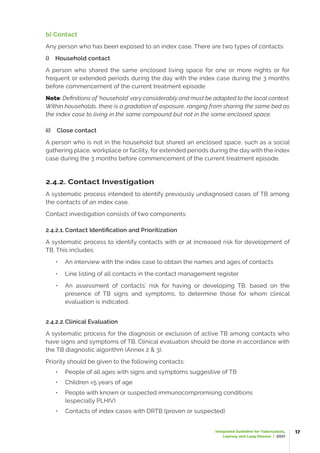
automated diagnostic test that can simultaneously identify Mycobacterium tuberculosis
complex bacteria (MTBC) and resistance to rifampicin (RIF) in less than two hours, using
the GeneXpert® platform with high degree of specificity. However, the Xpert MTB/RIF
sensitivity is suboptimal, particularly in smear-negative and HIV-associated TB patients.
The Xpert MTB/RIF Ultra was developed by Cepheid as the next-generation assay to
overcome these limitations. It uses the same GeneXpert® as the Xpert MTB/RIF.
Patients diagnosed with TB using the GeneXpert platform should be followed up using
smear microscopy. In situations where GeneXpert is not available, smear microscopy
may be used for initial TB diagnosis and concurrently, a sample specimen sent for
GeneXpert test. (Refer to TB screening and diagnostic Algorithm).
Table 5.2: the strengths and limitations of GeneXpert (Xpert MTB/RIF Assay) and
GeneXpert MTB/RIF ULTRA Assay
Strengths Limitations
●• High sensitivity
●• Identifies rifampicin resistance
●• Reliable
●• TAT shorter compared to culture
●• TAT is further improved by use of
gene Xpert Detection limit of as few
as 131 colony forming units/mls of
MTB compared with approximately
10,000 colony-forming units/mL with
conventional smear microscopy
●• Requires a stable electricity supply
●• The shelf life of the cartridges is only 18
months
●• The instrument needs to be recalibrated
annually
●• The cost of the test cartridges
●• Requires temperature monitoring is critical
●• Requiring centralised laboratories with
specialised facilities
●• Requires skilled personnel
5.6.2 Microscopy
Sputum smear microscopy is the oldest method for diagnosis of pulmonary
tuberculosis. Microscopy has low sensitivity and 10,000 bacilli/ml sputum sample. A
spot and a morning sputum sample is collected from presumptive PTB cases for TB
diagnosis in sites that do not have GeneXpert machines. A second sample should be
sent for GeneXpert testing. Patients diagnosed with TB should be followed up with
smear microscopy done at the 2nd
, 5th,
and 6th
months. Specimen other than sputum
(sots), are collected from presumptive EPTB cases for diagnosis according to the
NTLDP guidelines.
Integrated Guideline for Tuberculosis,
Leprosy and Lung Disease | 2021
108
Table 5.3: The strengths and limitations of microscopy
Conventional light microscopy Light emitting diode (LED) Fluorescent
Microscopy
●• Ziehl-Neelsen staining technique.
● • Turnaround time of 24hours.
● • Has a sensitivity of approximately
55% and a specificity of
approximately 99%.
● • Auramine staining technique.
●• Turnaround time of 24hours.
• ●It has a sensitivity of approximately 72%
and a specificity of approximately 81%.
Strengths of microscopy
technique
Limitations of smear microscopy
●• Short turnaround time (<1 hr)
●• Low cost
●• It is widely available
• Low/moderate sensitivity compared to
culture or GeneXpert
●• Does not differentiate live or dead
mycobacteria
● • Does not differentiate mycobacterium
species
● • Requires skilled personnel
NOTE:
• Microscopy for follow up of patients should be done at the peripheral laboratories
• For individuals with minimal pulmonary involvement and/ or scanty sputum production,
induced sputum, gastric lavage or bronchoscopy can increase test sensitivity
• Sputum processing, such as liquefaction or concentration by centrifugation, and the use
of fluorescence microscopy can also increase the sensitivity of smear microscopy.
5.6.3 Line Probe Assay
Line Probe Assay (LPA) is a rapid technique based on polymerase chain reaction
(PCR) that is used to detect Mycobacterium tuberculosis complex (MTBC) and drug
susceptibility to first line and second line drugs.
• First line LPA (FL LPA) (GenoType MTBDRplus V2) – provides DST on rifampicin,
isoniazid
●• First line LPA (FL LPA) (GenoType MTBDRplus V2)- DST to Fluoroquinolones and
the second line injectable.
It is also useful for speciation of mycobacteria other than tuberculosis (MOTTs) also
known as Non-tuberculous mycobacteria (NTMs) (GLI, 2018).
MTB detection Sensitivity 81.5% Specificity 87.5% Rifampicin resistance detection
Sensitivity 97.7%, Specificity 91.8%, INH resistance detection Sensitivity 95.4%,
Specificity 89%.
Integrated Guideline for Tuberculosis,
Leprosy and Lung Disease | 2021
109
Table 5.4: The strengths and limitations of LPA
LPA strengths Limitations
●• LPA produces results in just 24-48 hours, a vast
improvement over the 3 months or longer with
conventional methods (culture).
●• It allows quick triage of confirmed rifampicin resistant
or MDR-TB patients into either the shorter MDR-TB
regimen or the conventional longer regimen.
●• Hain LPA can be used to diagnose both pulmonary and
Extra-pulmonary tuberculosis.
•●	 LPA has a high sensitivity of 98% and a specificity of
100% for direct samples
●• Hain LPA has drug susceptibility testing for both
Rifampicin and Isoniazid
●• Short turnaround time of 5 hours for MDR-TB detection
as compared to cultures which takes weeks
●• Hain LPA can detect mixed infections especially in
samples having NTM and MTBC
●• MTBDRplus can query presence of an Non-tuberculous
mycobacteria and also does not show false negative
●• Tests can be run on less than 2ml specimen volume.
●• The same extracted DNA may be used for further
testing with Hain LPA
●• GenoType MTBDRsl endorsed by WHO as a rule in test
for XDR-TB
•●	 GenoType MTBDRplus can track mono-resistance to
rifampicin and/or Isoniazid
•●	 Genotype MTBDRplus captures infection due to MTB
complex and can differentiate the MTBC complex
species i.e. M. africanum, M.bovis subspp bovis, M.bovis
subspp caprae, M. Bovis BCG, M.microti, M. canettii, M.
pinnipedii
●• Hain line probe assay can be used to diagnose
Tuberculosis from both direct specimens and culture
including contaminated cultures
●• Hain LPA has full automation allowing high throughput
for high volume laboratories
●• Hain LPA is environmentally friendly as there is no
biohazard waste to dispose after running the test
●• MTBDRplus ver.2.0 has a higher sensitivity for smear
– ve samples (Sensitivity of 79.8% for smear negative -
Valerie Crudu et al JCM 2012)
●• It requires adequate and
appropriate laboratory
infrastructure and equipment
(biosafety level II and III
laboratory).
●• It requires adequate and
skilled laboratory staff
●• Cannot be used as a point of
care test.
Integrated Guideline for Tuberculosis,
Leprosy and Lung Disease | 2021
110
5.6.4 Culture and Drug Susceptibility Testing for TB
a) Phenotypic Culture
Culture is the gold standard for TB diagnosis and can detect as few as 10-100 viable
bacteria/ml. We have two types of culture methods.
●• Liquid culture - Mycobacterium Growth Indicator Tubes (MGIT)
• Solid culture - Lowenstein-Jensen (LJ).
These are used for the detection and recovery of mycobacteria. All types of clinical
specimens, pulmonary as well as extra pulmonary can be processed for primary isolation.
Table 5.5: The strengths and limitations of phenotypic culture
Solid Culture Liquid Culture
• Longer TAT of up to 60 days
• Low risk of Contamination
• Manual technique
• Shorter TAT of 42 days
• Higher risk of Contamination
• Automated technique
• +10% more sensitive compared with solid culture
Strengths of culture techniques Limitations of culture techniques
• Requires as few as 10 bacilli/ml to
detect TB
• Provides a definitive diagnosis of TB
• Allows drug susceptibility testing and
DR surveillance
• Slow growth of MTB thus delayed turn-around-
time
• Requires huge infrastructural capacity to set up
• Require trained laboratory technicians to
perform the procedure.
5.6.5 Drug susceptibility testing
It is a laboratory technique that determines whether or not TB bacteria will grow in the
presence ofTB drugs. If bacterialgrowth is observed, it shows resistance,while No growth
shows susceptibility to drugs used. The demand for reliable drug-susceptibility testing
(DST) increases with the expansion of antituberculosis drug-resistance surveillance, and
with the need for an appropriate treatment of drug-resistant tuberculosis.
Indications
At the very least, the following patients should have DST for first line drugs
●• Previously treated patients;
●• Persons who develop active TB after exposure to a patient with documented
DR-TB;
•●	 Patients who remain smear-positive at month two and five of therapy;
Integrated Guideline for Tuberculosis,
Leprosy and Lung Disease | 2021
111
The following groups are targeted for DST for second-line drugs:
•●	 Patients with a DST showing a resistance to at least rifampicin, isoniazid or both
rifampicin and isoniazid at baseline
●• Patients who remain culture positive on or after Month 3 DR TB.
●• Persons who develop active TB after exposure to a patient with documented
DR-TB. (MSF medical guideline 2017).
5.6.6 Interferon gamma release assay-IGRA
The Interferon Gamma Release Assay (IGRA) is a blood test used to detect Latent TB
infection. It works by measuring the body’s immune response to the TB bacteria. It is
used to test for Latent TB infection. (Refer to IGRAs job Aid).
Table 5.6: The strengths and limitations of IGRA
Benefits of IGRA Limitations of IGRA
●• Only a single patient visit required.
●• Ex vivo tests.
●• No booster effect.
●• Independent of BCG vaccination.
●• Costly.
●• More laboratory resources required
●• Complicated process of lymphocyte
separation.
5.6.7 TB LAM
TB-LAM is a rapid point-of-care urine dipstick test based that can be performed at the
bedside for detection of mycobacterial lipoarabinomannan (LAM) antigen in urine (TB)
(WHO, 2018). LAM antigen, is a lipopolysaccharide present in mycobacterial cell walls,
released from metabolically active or degenerating bacterial cells and appears to be
present only in people with active TB disease (Refer to TB LAM Job Aid).
Indications of TB LAM
●●• PLHIV with advanced disease (WHO stage 3 or 4 or CD4 count ≤ 200 cells/ mm3
or ≤ 25% for children ≤ 5 years old) with presumed TB.
●• PLHIV that have any danger signs of severe illness; respiratory rate > 30 breaths
per minute, temperature > 390
c, heart rate >120 beats per minute, unable to walk
unaided.
●●• Currently admitted to hospital
●• A useful tool for detecting sputum smear negative patients.
●●• Diagnose both pulmonary and extra pulmonary TB from one convenient urine
sample.
NOTE: TB LAM is a bedside test for TB as an additional test for GeneXpert.
Integrated Guideline for Tuberculosis,
Leprosy and Lung Disease | 2021
112
5.6.8 Other new molecular methods to be rolled out
a) Truenat MTB
The Truenat MTB, MTB plus and MTB-RIF diagnostic assays (Molbio diagnostic, Goa,
India) were developed in India, and may potentially be used as the same health system
level as Xpert/MTB/RIF. Of the above-mentioned assays, MTB and MTB plus are used
as initial diagnostic tests for TB while MTB-RIF Dx is used as a reflex tests to detect
rifampicin resistance for those with positive results of initial Truenat test. The assay use
automated, battery-operated devices to extract, amplify and confirm the presence of
genomic DNA loci for TB infection diagnosis by use of real-time micro-PCR. Results for
the test can available under 1 hours’ time. This test is among the new diagnostic tools
the country is planning to adopt under the guidance of National diagnostic committee.
b) BD Max ™
c) Genome Sequencer
5.7 Test turnaround time
Table 5.7: Expected turnaround times (TAT) for the various laboratory techniques/
assays.
Test menu Lab TAT Comments
AFB Microscopy 24hrs All specimens (sputum & SOTS)
TB LAM 30 - 40 min Urine sample
GeneXpert 48hrs All specimens except blood
TB culture-
Solid culture
8 weeks
2-8weeks
Culture Negative
Culture Positives
TB culture-
Liquid Culture
6weeks
5-28days
Culture Negative
Culture Positives
TB drug susceptibility testing
- RHE
- PZA
7-14 days
7- 21 days
MGIT DST
Molecular DST –FL-LPA
Molecular DST-SL-LPA
MTB speciation
7 working days
7 working days
7 working days
Smear Positives
All samples
All samples
Gene sequencing
(batched)
2-14 days All samples
Integrated Guideline for Tuberculosis,
Leprosy and Lung Disease | 2021
113
Table 5.8: Interpretation of laboratory results
Method Expected results Interpretation Management/ Recom-
mendation
Microscopy Positive (0-9), (1+,
2+, 3+)
MTB bacilli seen. Start Anti TB treatment
(2HREZ/4HR)
Send another fresh sam-
ple for CDST if GXP is not
available on site.
Negative This shows the TB bacilli
has not been seen howev-
er it does not rule out the
absence of Tuberculosis
infection / disease.
Note: Correlate with clinical
symptomatology and other
relevant history.
Seek for second senior opin-
ion from SCTLC or CTLC.
A GeneXpert test is
indicated. Use XPERT
networking hub/courier
model.
Gene Xpert MTB detected,
-Rifampicin Resis-
tance not detected
(TS)
This shows that the patient
has TB that is sensitive to
Rifampicin
Collect fresh samples
for Culture DST. Initi-
ate patient on CAT1
(2HREZ/4HR) treatment.
MTB detected
Rifampicin Resis-
tance detected
This shows that the patient
has rifampicin resistance TB
Collect fresh samples for
Culture DST1&2 & 2nd Line
LPA.
Initiate patient on DR TB
(RR / MDR) treatment.
MTB detected Ri-
fampicin Resistance
indeterminate (TI)
Patient has TB but the bacte-
rial load is very low to de-
termine resistance patterns.
Send another sample
Collect fresh samples for
the repeat GeneXpert test
and treat according to the
second GeneXpert results.
MTB not detected This shows MTB has not
been detected, however it
does not rule out absence of
Tuberculosis,
Correlate with clinical
symptomatology and oth-
er relevant history.
Seek for second senior
opinion from SCTLC or
CTLC.
NOTE: For any invalid or error gene Xpert test outcome, collect another sample and repeat
test.
XPERT MTB/
RIF ULTRA
MTB detected trace
(TT)
MTB Detected (Trace), RIF
Resistance Indeterminate
NOTE: Trace results interpretation;
1) HIV, Children and EPTB specimen-consider as true positive results for clinical decisions
2) HIV negative with trace call results positive, collect another sample and use the second result for clinical decision
(Clinical/Radiological information can also be used)
3) For any repeat test its advisable to collect two specimen (one for GeneXpert Ultra and the other for LPA
Integrated Guideline for Tuberculosis,
Leprosy and Lung Disease | 2021
114
FL LPA (MTB-
DRPlus)
MTBC detected
●• rpoB & KatG and
inhA-mutation de-
tected
The bacteria is resistant to
both rifampicin (rpoB) & Iso-
niazid (KatG and inhA) drugs.
Rifampicin and Isonia-
zid (Including high dose
isoniazid) should not be
used
MTBC detected
●• rpoB & KatG and
inhA - Mutation not
detected
The bacteria is susceptible
to both rifampicin (rpoB) and
isoniazid (KatG and inhA)
drugs.
Rifampicin and Isoniazid
(Including high dose iso-
niazid) can be used
MTBC detected
●• rpoB - Mutation
detected
●• KatG and inhA
-Mutation not de-
tected
The bacteria is resistant to
rifampicin (rpoB), but sus-
ceptible to Isoniazid (KatG
and inhA)
Rifampicin should not be
used
MTBC detected
●• rpoB- Mutation
not detected
●• KatG and inhA-
Mutation detected
The bacteria is susceptible to
rifampicin (rpoB), but resis-
tant to Isoniazid (KatG and
inhA).
Isoniazid should not be
used (refer to the table
above for Isoniazid resis-
tance regimen)
iii. No MTBC detect-
ed
MTB complex is absent Evaluate patient for other
conditions
SLLPA (MTB-
DRsl )
●• gyrA/gyrB-Muta-
tion not detected
The bacteria is susceptible to
both fluoroquinolones (gyrA/
gyrB) Lfx and Mfx respec-
tively
Fluoroquinolones can be
used
●• gyrA/gyrB-Muta-
tion detected
The bacteria is resistant to
both fluoroquinolones (gyrA/
gyrB) Lfx and Mfx respec-
tively
Fluoroquinolones cannot
be used (refer to the
table above for regimen
design)
●	
• rrs/eis
a) Mutation detected
b) Mutation not
detected
Aminoglycosides(rrs/eis)
Capreomycin, Amikacin, Ka-
namycin, Viomycin)
The bacteria are resistant to
all or any of the specific drug
The bacteria is susceptible to
all the drugs
Avoid the use of injectable
drugs in general (refer to
the table above on regi-
men design)
Culture (Sol-
id & Liquid)
Growth/Positive The patient has mycobacte-
ria (MTB or MOTT)
Continue current
treatment
No growth/
Negative
Absence or non-viable
mycobacteria(MTB or MOTT)
Method Expected results Interpretation Management/ Recom-
mendation
Integrated Guideline for Tuberculosis,
Leprosy and Lung Disease | 2021
115
First Line
DST
Susceptible/Sensi-
tive, (RHZE)
The bacteria is sensitive to all
first line drugs
Treat with 1st line anti TB
medicines (2HREZ/4HR)
Resistance to RH The patient is an MDR TB Treat as RR / MDR TB
Resistance to H,Z,E The patient is poly resistant Refer to DR TB Treatment
guide for regimen compo-
sition
Resistance to R
ONLY
The patient is Mono Rifampi-
cin resistant (RR)
Refer to DR TB treatment
guide for regimen compo-
sition
Resistance to H
ONLY
The patient is Mono isoniazid
resistant
Refer DR TB treatment
guide for regimen compo-
sition
Second line
DST
Susceptible/Sen-
sitive
Bdq,Dlm,Lzd,-
Clz,Cs,Lfx/Mfx,C-
m,Amk,Kan,
The bacteria is sensitive to all
second line drugs
Refer DR TB treatment
guide for regimen compo-
sition
Resistance to Ami-
noglycosides (Cm,
Amk, Kan)
Resistance to any of the Ami-
noglycosides is a Pre XDR
Refer to DR TB treatment
guide and regimen com-
position
Resistance to
Fluoroquinolones
(Lfx,Mfx)
Resistance to any of the Flu-
oroquinolones is a Pre XDR
Refer to DR TB treatment
guide and regimen com-
position
Resistance to
Fluoroquinolones
(Lfx,Mfx) and Amino-
glycosides(Cm,Am-
k,Kan)
Resistance to both fluoro-
quinolones and Aminoglyco-
sides is an XDR
Refer to DR TB treatment
guide and regimen com-
position
Resistance to Bdq/
Dlm/Lzd,Clz,Cs
Resistance to specific drugs
NOTE:
• Heteroresistant outcome means the patient harbors both drug-susceptible and drug-
resistant bacteria.
• Indeterminate for a specific drug or group of drugs means that the assay should be
repeated before reporting the results. If the same result is obtained upon re-testing,
request for another sample.
• Patients may have a positive smear with negative cultures that may be caused by the
presence of dead bacilli and hence does not necessarily indicate treatment failure.
DISCUSS such cases with the DR TB clinical management team.
• In patients with repeated negative culture and smear results and no corresponding
clinical and radiological improvement, then consider other diseases other than MDR-TB.
• Children with high clinical suspicion of TB should be treated for TB even if Xpert is
negative.
Method Expected results Interpretation Management/ Recom-
mendation
Integrated Guideline for Tuberculosis,
Leprosy and Lung Disease | 2021
116
Table 5.9: Managing Discordant Results
Test Discordant
pattern/
reports
Explanation Recommendation
Smear
microscopy VS
GeneXpert
Smear
microscopy
Negative
GeneXpert MTBC
detected
RS (Rif.
Sensitive)
GeneXpert sensitivity
and specificity is
superior to smear
microscopy.
Collect fresh samples
for Culture DST.
Initiate patient on
CAT1 (2HREZ/4HR)
treatment.
RR (Rif.
Resistant)
GeneXpert superior
sensitivity and
specificity to smear
microscopy.
Collect fresh samples
for Phenotypic Culture
and DST 1st
and 2nd
Line
and LPA 1st
and 2nd
line.
GeneXpert looks
for Mycobacterial
DNA in the rpob loci
responsible for Rif.
Resistance.
Initiate patient on
DR TB (RR / MDR)
treatment.
TI (Rif.
Resistant
Indetermi-
nate)
Poor sample quality.
Emphasize on good
quality samples. Low
bacillary load.
Collect fresh samples
for the repeat
GeneXpert test and
treat according to the
second GeneXpert
results.
I(Invalid) Poor sample quality.
Emphasize on good
quality samples.
Collect fresh sample
for GeneXpert test and
treat according to the
second GeneXpert
results
2.GeneXpert
vs Smear
microscopy (if
no GXP on site)
GeneXpert MTBC not
detected
Repeat both tests on
fresh samples.
Rare occurrence. Could
be a lab error.
Smear
microscopy
Positive
Integrated Guideline for Tuberculosis,
Leprosy and Lung Disease | 2021
117
3.GeneXpert
VS Culture and
DST
GeneXpert MTBC
Detected,
Rif
Resistant.
GeneXpert may pick
silent mutations in
the rpob genome that
would be missed by
phenotypic testing.
Start on RR/MDR TB
treatment regimen.
Adjust regimen
according to SLLPA
results.
Obtain fresh sample for
Genome sequencing.
Culture and
DST
MTBC
Pos Rif
Sensitive
Continue DR TB
treatment.
4. Xpert vs LPA GeneXpert RIF
resistance
detected
The methods look
at the same region
but detect resistance
using slightly different
probes.
Xpert detects
mutations in codons
531,516 and 526 which
are not detected by
LPA
Start the patient on DR
TB treatment.
LPA RIF
sensitive
Xpert RIF
resistance
not
detected
The methods look
at the same region
but detect resistance
using slightly different
probes.
Start the patient on DR
TB treatment.
LPA RIF
resistance
detected
Xpert No MTBC
detected
in a symp-
tomatic
patient.
Repeat test on a
fresh sample. Send
another sample for
phenotypic testing
(CDST) Genome
sequencing is
recommended.
The second GXP test
result to guide the Sub
county clinical team’s
decision.
LPA Hetero-
resistance
detected
(HR)
Treat the patient for DR
TB.
Test Discordant
pattern/ reports
Explanation Recommendation
Integrated Guideline for Tuberculosis,
Leprosy and Lung Disease | 2021
118
5.GXP,LPA
and Culture
discordance
Molecular
(Xpert and
LPA)
Molecular
no MTBC
detected
Culture is our gold
standard
The sub county clinical
team to review the
patient and decide on
next action based on
the patient’s condition.
Culture Growth
reported
Subject the culture
isolate to LPA
Treat as per LPA result.
Molecular
(Xpert and
LPA)
MTBC
detected
Order another sample
for phenotypic CDST
Treat as per molecular
results.
Culture culture
negative
Non-viable cells Continue treatment as
above
6.LPA
Indeterminate
results
A clinical team (Sub county) to review the patient and decide on way forward.
NOTE:
• Culture/DST should not be used to confirm / reject GeneXpert results
• Every diagnostic test has a risk of providing a false result
• Remember that non-test causes of false results are very common
• A laboratory test result is only part of the clinical decision making process
• Treat the patient’s worst case scenario not the test result!
5.8 External Quality Assessment
External quality assessment (EQA)/proficiency testing program (PT) refers to a system
in which laboratory results are scrutinized objectively by an outside agency in order to
get a general impression of the standard of laboratory practice and to achieve inter-
laboratory comparability. There are different ways of doing EQA i.e. on-site evaluation
(supervisory visits), panel testing (PT) and blinded checking. A laboratory can adopt one
or more of the stated EQA approaches for every laboratory test performed. This is in line
with the clinical laboratory improvement Act CLIA requirement. This helps the laboratory
identify errors which are not detected by the internal quality program (IQA) as well as
comparing its performance with other laboratories participating in the same. (Refer to
EQA SOP).
5.9 Laboratory Infection Prevention Control
Specimen processing in the laboratory must observe at minimum the key standards
of biosafety. (Refer to Chapter 10).
Test Discordant
pattern/ reports
Explanation Recommendation
Integrated Guideline for Tuberculosis,
Leprosy and Lung Disease | 2021
119
TUBERCULOSIS IN
SPECIAL CONDITIONS 6
1. Intensified TB Case Finding among PLHIV
• Symptom-based TB screening using
the ICF tool MUST be performed for all
PLHIV at every clinic visit to rule out
active TB
2. TB diagnosis in PLHIV – TB LAM algorithm
for patients with advanced HIV disease
3. HIV Testing in TB patients – updated HIV
Testing algorithm
4. Standard package of care for PLHIV
5. Provision of Antiretroviral Therapy (ART)
for TB/HIV Co-Infected Patients
• Timing of ART- patients for TB/HIV co-
infected patients
• Updated Preferred ART Regimens for
TB/HIVCo-infectionforPatientsNewly
Initiating 1st Line ART, Patients who
Develop TB while Virally Suppressed
on 1st Line ART and Patients who
Develop TB while Failing 1st Line ART
6. Diagnosis of Diabetes and Pre-Diabetes
• Thresholds and cut-off points for
diabetes and pre-diabetes
7. Bi-directional screening and diagnosis of
Diabetes Mellitus and TB
• Screening and diagnosis of diabetes in
people with TB
• Screening and diagnosis of TB in
people with diabetes
8. TB and Mental Health / Substance
Dependence
• AllTB co-infected should receive basic
screening for depression using the
PHQ-9 tool (Annex 6.3a & 6.3b) before
initiating TB treatment, and regularly
during follow-up, and whenever there
is a clinical suspicion of depression.
• All adult and adolescent TB patients
should be screened for alcohol,
tobacco and substance dependence
before initiating TB treatment and
regularly during follow-up using
CAGE–AID for adults (Annex 6.1a &
6.1b) and CRAFFTtools foradolescents
(Annex 6.2a & 6.2b) respectively.
9. TB in Pregnancy and Lactation – liver
function tests indicated at baseline and
follow-up.
Integrated Guideline for Tuberculosis,
Leprosy and Lung Disease | 2021
120
6.1 Introduction
Tuberculosis incidence, risk, progression and treatment may be altered in particular
patient populations such as those with comorbidities (HIV, diabetes, renal disease and
hepatic disease), mental illness, substance dependence and pregnant women. This
chapter provides information on the unique drug-disease interactions and drug-drug
interactions affect the diagnosis and management of tuberculosis in these specific
groups of patients.
6.2 TB and HIV CO-Infection
6.2.1 Background
TB is the leading preventable cause of morbidity and mortality among people living with
HIV. The burden of TB is so closely linked to the HIV epidemic that prevention of HIV
must become a priority for TB programs. Patients presenting with signs and symptoms
of any of the two diseases should be actively screened for the other and managed
appropriately.
The co-infected patients face a dual burden of pills, stigma and discrimination as well
as nutritional needs thus providing quality of care is essential. HIV infected individuals
are more likely to suffer acute opportunistic infections and develop drug reactions. This
therefore calls for close monitoring during management.
6.2.2 TB and HIV Interaction
Interaction of HIV with TB
• Increased lifetime risk of TB from 5-10% to 50%
• Increased rate of progression of new TB infections to disease
• Increased risk of recurrence of previously treated TB
• Increased risk of death from TB
• Increased risk of adverse reactions to anti-TB drugs
• Increased stigma to the two diseases
• HIV testing is recommended for all presumed and confirmed TB cases
• All TB patients who are HIV positive should receive the Standard package of
care for PLHIV
• Symptom-based TB screening using the ICF tool MUST be performed for all
PLHIV at every clinic visit
• All PLHIV should be assessed for TB Preventive Therapy (TPT) if screened
negative for TB.
KEY HIGHLIGHTS:
Integrated Guideline for Tuberculosis,
Leprosy and Lung Disease | 2021
121
Interaction of TB with HIV
• Rapid progression of HIV disease
• TB is the leading cause of HIV-related morbidity
• TB is a leading cause of mortality among PLHIV (one-third of all AIDS related deaths are
due to TB)
• Increasing TB cases among PLHIV increases the risk of TB transmission in the community
regardless of their HIV status.
6.2.3 Intensified TB Case Finding Among PLHIV
TB screening and prevention services should be offered to ALL PLHIV at every clinical
visit and to all household contacts of active TB patients. Symptom-based TB screening
using the ICF tool MUST be performed for all PLHIV at every clinic visit to rule out
active TB. Those who screen positive (presumptive TB cases) must complete definitive
diagnostic pathways (*refer to table) and patients who screen negative should be
evaluated for isoniazid preventive therapy (IPT).
The presentation of TB in HIV infection may be unusual, and may include extra-
pulmonary and disseminated forms. However, patients with advanced disease may be
symptom-free and have no chronic cough.
The following tables summarize the Pediatric and Adult ICF tools used in TB screening:
Table 6.1: Pediatric Intensified Case Finding Screening Tool (0-14 years of age)
Screening Questions Y/N
1. Cough of any duration (Y/N)
2. Fever (Y/N)
3. Failure to thrive or poor weight gain (Y/N) (based on z-score/BMI)
4. Lethargy, less playful than usual (Y/N)
5. Contact with a TB case (Y/N)
If “Yes” to any of the above questions, suspect TB, examine the child and use the pediatric TB diagnostic
algorithm to evaluate for active disease. Rule out underlying conditions, refer if necessary
If “No” to all questions, initiate workup for IPT and repeat screening on subsequent visits
Table 6.2: Adolescent and Adult Intensified Case Finding Screening Tool
(≥ 15 years of age)
Screening Questions Y/N
1. Cough of any duration (Y/N)
2. Fever (Y/N)
3. Noticeable weight loss (Y/N) (based on BMI)
4. Night sweats (Y/N)
Integrated Guideline for Tuberculosis,
Leprosy and Lung Disease | 2021
122
If “Yes” to any question, take a detailed history, examine the patient and do sputum examination if coughing
(sputum for GeneXpert and smear, Figure 8.2), and urine TB-LAM if meets criteria (Figure 8.3). Exclude un-
derlying illnesses
If “No” to all questions, initiate workup for IPT and repeat screening on subsequent visits
Note:Draining lymph nodes are often due to TB.
6.2.4 TB Diagnosis in PLHIV
Gene expert RIF/MTB assay is a rapid molecular technique for detection of
Mycobacterium Tuberculosis and Rifampicin resistance. It is the recommended first TB
diagnostic test amongst PLHIV. Other tools for diagnosis of TB in PLHIV include imaging
(X-rays and CT scans) and histology.
Since persons with advanced HIV disease may have disseminated disease which may
be missed on GeneXpert testing, it is recommended that PLHIV are tested using lateral
flow lipoarabinomannan (LF-LAM) point-of-care urine antigen test. The indications and
use of TB-LAM are as per the algorithm in Figure 6.1:
Figure 6.1: TB LAM algorithm
Integrated Guideline for Tuberculosis,
Leprosy and Lung Disease | 2021
123
6.2.5 HIV Testing in TB Patients
HIV counseling and testing should be carried out in all presumptive cases as part of the
investigations for TB. A diagnosis of HIV infection at the earliest opportunity possible
has several benefits including providing standard package of care for HIV positive. HIV
testing for TB patients should preferably be done in the Chest clinic. If HIV testing is
done in other areas apart from the chest clinic, measures such as escorted referrals
should be put in place to ensure that TB patients are not lost during referral and that
they do not queue for long while waiting to be attended.
The HIV testing package includes:
• A pre-test session
• HIV test (see Figure 6.2: HIV testing algorithm) assessment for other health-related
conditions or needs (while HIV tests are running),
• A post-test session, including assisted partner notification services (aPNS) and child
testing
• Referral and linkage to other appropriate health services (as part of the post-test
session).
Figure 6.2: HIV testing algorithm
Integrated Guideline for Tuberculosis,
Leprosy and Lung Disease | 2021
124
Those who test HIV negative:
• Should be informed about couple discordance and be encouraged to refer their
partners for testing
• Should receive behavior change counseling so as to avoid acquisition of HIV
infection
• Should be informed that the negative test does not rule out HIV infection and
should be encouraged to receive a retest after 12 weeks
Those who test HIV positive:
• Should be initiated on an appropriate regimen based on drug susceptibility and
other classification. Refer to Treatment of Tuberculosis in adults and children.
6.2.6 Standard Package of Care for PLHIV (9 COMPONENTS)
1. Antiretroviral Therapy
• All PLHIV are eligible for ART irrespective of CD4 cell count or percentage, WHO clinical
stage, age, pregnancy status, or comorbidities
• ART should be initiated as soon as the patient is ready to start, preferably within two
weeks from time of HIV diagnosis (except for patients with cryptococcal meningitis (5
weeks), or TB meningitis (8 weeks)
2. Positive Health, Dignity, and Prevention, GBV/IPV & Health Education and
Counselling
• All patients should be counselled and supported for disclosure of HIV status; partner/
family testing and engagement; condom use; family planning; sexually transmitted
infections screening; and treatment adherence services.
• All females aged 15-49 years and emancipated minors accessing HIV care services
should be screened for Intimate Partner Violence (IPV) as part of the standard
package of care.
• All PLHIV should be provided with HIV education and counselling.
3. Screening for and Prevention of Specific Opportunistic Infections
• All PLHIV should receive lifelong Cotrimoxazole preventive therapy (CPT) unless
they have allergy to sulfur-based drugs or develop toxicity from CPT.
• During pregnancy, CPT should be initiated irrespective of the gestational age and
should continue throughout pregnancy, breastfeeding, and thereafter for life with
doses as indicated in Table 6.3:
Integrated Guideline for Tuberculosis,
Leprosy and Lung Disease | 2021
125
Table 6.3: Daily Dose of Cotrimoxazole Preventive Therapy
Weight (kg) If using oral sus-
pension (240mg per
5ml)
If using single
strength tablet
480
If using double
strength tablet
960 mg
1 – 4 2.5 ml ¼ SS tab --
5 – 8 5 ml ½ SS tab ¼ DS tab
9 – 16 10 ml 1 SS tab ½ DS tab
17 – 30 15 ml 2 SS tabs 1 DS tab
> 30
20 ml
2 SS tabs 1 DS tab
Adult (any weight) 2 SS tabs 1 DS tab
Note: If Creatinine Clearance (CrCl) 15-30 ml/min then use 50% of normal recommended
dose; if CrCl < 15 ml/min, then Cotrimoxazole should be avoided.
When Dapsone (as a substitute for CPT) is being used as PCP prophylaxis, it is only
recommended for patients in WHO Stage 4 and/or absolute CD4 count ≤ 200 cells/
mm3 (or CD4% ≤ 25% for children ≤ 5 years old), and should be discontinued once a
patient achieves viral suppression and a sustained CD4 count of > 200 cell/mm3 (or >
25% for children ≤ 5 years old) for at least 6 months.
Dapsone Dosage:
• Available as 25 mg and 100 mg tabs
●• Children: 2mg/kg once daily (maximum dose: 100 mg) OR 4 mg/kg once weekly
(maximum dose: 200 mg)
●• Adults: 100 mg once daily.
All PLHIV should be screened for TB at every visit using the Intensified Case Finding
(ICF) tool and assessed for TB Preventive Therapy (TPT) if screened negative for TB
(Refer to Chapter 11 on LTBI management)
All adolescent and adult PLHIV with a baseline CD4 count of ≤ 200 cells/mm3 should
be screened for cryptococcal meningitis using the serum Cryptococcal Antigen (CrAg)
test and managed as per the ART guidelines. This should preferably be a reflex test
performed by the laboratory as soon as the low CD4 count is noted
Integrated Guideline for Tuberculosis,
Leprosy and Lung Disease | 2021
126
4. Reproductive Health Services
• All PLHIV should be screened for STI at every clinic visit
• Pregnancy status should be determined for all women of reproductive age at every
visit and their contraception need determined and met
• All HIV positive women between the ages of 18 - 65 years should be screened for
cervical cancer
5. Screening for and Management of Non-Communicable Diseases
• `All PLHIV should be screened for hypertension, diabetes mellitus, dyslipidemia, and
renal disease
• `Lifestyle modifications are always the first line of prevention and management for
hypertension, diabetes mellitus, and dyslipidemia.
6. Mental Health Screening and Management
• All PLHIV should receive basic screening for depression using the PHQ-9 tool before
initiating ART, and annually thereafter, and whenever there is a clinical suspicion
• All adults and adolescents should be screened for alcohol and drug use before
initiating ART and regularly during follow-up using CAGE-AID and CRAFFT tools
• All caregivers should also receive baseline and follow-up screening for depression
and alcohol/drug use using a PHQ-9 questionnaire.
7. Nutrition Services
• All PLHIV should receive nutritional assessment, counselling, and support tailored to
the individual needs of the patients
• All infants irrespective of HIV status should be exclusively breastfed for the first 6
months of life, with timely introduction of appropriate complementary foods after 6
months, and continued breastfeeding up to 24 months or beyond.
For more information on Nutrition in TB refer to Chapter 7.
8. Prevention of Other Infections
• PLHIV (including children) should receive vaccinations as recommended by the
National Vaccines and Immunization Programme
9. TB Contact management among co-infected PLHIV
Integrated Guideline for Tuberculosis,
Leprosy and Lung Disease | 2021
127
For all bacteriologically confirmed TB/HIV cases, ensure:
• Contact management (Invitation/ Tracing and screening of all contacts)
• TB Preventive Therapy (IPT) for all eligible PLHIV contacts is offered. This includes
children living with HIV under the age of 5 with contact to bacteriologically confirmed
TB cases (Refer to LTBI Chapter 11 Section for TB preventive therapy)
6.2.7 Provision of Antiretroviral Therapy for TB/HIV Co-
Infected Patients
Timing of ART for TB/HIV co-infected patients:
a) For all newly diagnosed TB patients not yet on ART
●• Start TB treatment immediately
●●• Initiate ART as soon as anti-TB medications are tolerated, preferably within 2
weeks. For TB meningitis consider delaying ART for up to 8 weeks.
●• Monitor closely for IRIS.
b) For all newly diagnosed TB patients who are already on ART
●●• Start TB treatment immediately
●●• Continue ART, making any required adjustments to the ART regimen based on
drug-drug interactions. Always assess for ART failure in patients who develop TB
after being on ART for ≥ 6 months
●●• Monitor closely for IRIS.
Patients being treated concurrently for TB and HIV require close monitoring for toxicity.
MDR TB and HIV co-infection should be managed in settings where close toxicity
monitoring and follow up by experienced clinicians is possible. Patients on TDF and
aminoglycosides are at high risk for renal toxicity and require close monitoring.
The following tables summarize the preferred ART regimens for TB/HIV co-infection in:
a) Patients newly initiating 1st
line ART
b) Patients who develop TB while virally suppressed on 1st
line ART
c) Patients who develop TB while failing 1st
line ART
d) Recommended Ritonavir Dosing for Super-Boosting LPV/r in Children Taking
Rifampicin.
Integrated Guideline for Tuberculosis,
Leprosy and Lung Disease | 2021
128
NOTE:
There are updated guidelines for children and adolescents living with HIV on preferred ART
regimens as shown in the tables below.
Table 6.4: Preferred ART Regimens for TB/HIV Co-infection for Patients Newly
Initiating 1st
Line ART
Age Scenario Recommendation
Birth – 4 weeks AZT + 3TC + RAL1
Start anti-TB treatment immediately; start ART after 4
weeks of age, once tolerating anti-TB drugs.
4 weeks - <20kgs ABC/3TC/LPV/r Super Boost LPV/ra
20kgs-35kgs ABC/3TC/DTGb
Give ABC/3TC+DTG (morning) + DTG 50mg (evening)
during TB treatment and for additional 2 weeks after
TB treatment is completed, then revert back to AB-
C/3TC+DTGb
>35kg TDF/3TC/DTG DTGb
x2 standard dose BD dosing until 2 weeks after
TB treatment is completed, then revert back on OD
dosing
1,a
For children who cannot tolerate LPV/r + RTV (usually because of GI side-effects), the alternative regimen
is double dose RAL or (DTG once appropriate formulations available) if ≥ 2 years old, if < 2 years old use
triple-NRTI regimen of ABC + 3TC + AZT for the duration of TB treatment, then return to ABC + 3TC + LPV/r
upon completion of TB treatment.
b
For children >30kgs and HIV-TB co-infected, use double DTG standard dose and administer BD. Those who
cannot tolerate DTG, the alternative is RAL at X2 standard weight-based BD dosing
For patients on these regimens who become viremic consult Regional or National HIV Clinical TWG
(ulizanascop@gmail.com) or call Uliza Toll-free Hotline 0800 72 48 48.
Table 6.5: Preferred ART Regimens for Patients who Develop TB while Virally
Suppressed on 1st Line ART1,2,3
Current
Regimen
Age Recommended substitution
PI/r-based < 20kgs
(above 4
weeks old)
Super-boost LPV/r with additional RTV4
After completion of TB treatment revert to the recommended
first line regimen (ABC + 3TC + LPV/r)
≥20 kgs Switch from PI/r to DTG and continue this regimen even after
completing TB treatment (give DTG 50 mg BD for duration of
rifampicin-containing TB treatment, then reduce to DTG 50
mg once daily 2 weeks after TB treatment is completed). For
women and adolescent girls of childbearing potential continue
counselling on avoiding pregnancy before use of DTG
EFV-based Any age Continue the same regimen for the duration of TB treatment.
Consider for regimen optimization after completing TB treatment
Integrated Guideline for Tuberculosis,
Leprosy and Lung Disease | 2021
129
RAL-based All ages Give double the standard dose of RAL until 2 weeks after
completion of rifampicin-based TB treatment, then reduce to
standard weight-based dosing
DTG-based
20kgs – 35kgs
DTG at x2 standard weight-based BD dosing until 2 weeks after completion of Anti TBs. return to
DTG OD 2 weeks after completion of anti TBs
>35kgs Give TDF/3TC/DTG FDC am + DTG 50mg pm for duration of
rifampicin-containing TB treatment and for an additional 2 weeks
after TB treatment is completed, then revert to TDF/3TC/DTG
FDC OD
1.
All patients who develop TB after being on ART for ≥ 6 months should be assessed for HIV
treatment failure
2.
For patients on 2nd line ART, subsequent regimens, or nonstandard drugs who require
regimen change because of TB treatment, consult the Regional or National HIV Clinical TWG
(Uliza Toll-free Hotline 0800-724848; ulizanascop@gmail.com)
3.
NRTIs in the patient’s current regimen do not require any adjustments with anti-TB treatment
4.
For children on rifampicin based anti-TB regimens, LPV/r should be “super-boosted” by
adding additional ritonavir suspension to manage the drug interaction between LPV/r and
rifampicin. Two weeks after TB treatment is completed the dosage of LPV/r should return to
standard dosing. For children ≥ 2 year who cannot tolerate LPV/r + RTV (usually because of GI
side-effects), the alternative regimen is RAL (or DTG once appropriate formulations available)
at x2 standard weight-based BD dosing until 2 weeks after TB treatment then continue with
RAL (or DTG) standard weight-based BD dosing.
5.
Guidelines recommend LPV/r for children < 3 years, however some children < 3 years maybe
on NVP due to LPV/r toxicity, consult the Regional or National HIV Clinical TWG (Uliza Toll-
free Hotline 0800 72 48 48; ulizanascop@gmail.com)
NOTE:
a) Studies of RAL in the treatment of pediatric TB are ongoing. Initial data from older
cohorts suggest that a double dose of RAL is safe and effective in the treatment of HIV
in children receiving TB therapy containing rifampicin. However, there is no data on the
treatment of TB in children under 2 years of age using RAL. Given the highly variable
pharmacokinetics in this age group, caution is advised and routine VL monitoring must
be followed
b) DTG formulations such as 5 mg and 10 mg may become available within the country and
will be the preferred option for TB/HIV patients rather than RAL
Current
Regimen
Age Recommended substitution
Integrated Guideline for Tuberculosis,
Leprosy and Lung Disease | 2021
130
Table 6.6: Recommended ART Regimens for Patients who Develop TB while Failing
1st
Line ART
Age/Scenario First-line ART Second-line ART
<20kgs
PI/r-based 1st
line
Start anti-TB immediately. Super-boost the LPV/r 2
while following the viral load monitoring algorithm
(2018 ART guidelines Figure 6.5), including assessing
for and addressing reasons for treatment failure.
Once treatment failure is confirmed and patient is
ready to switch to 2nd
line, switch to DST-based 2nd
line2
ABC (or AZT) + 3TC
+ EFV
Start anti-TB immediately
If <3 years, switch to AZT + ABC + 3TC while follow-
ing the viral load monitoring algorithm, including
assessing for and addressing reasons for treatment
failure
If > 3 yrs and on EFV, continue current regimen
while following the viral load monitoring algorithm,
including assessing for and addressing reasons for
treatment failure
Once treatment failure is confirmed and patient
ready to switch to 2nd line, switch to AZT + 3TC +
LPV/r (with super-boosted LPV/r2
until 2 weeks after
completion of TB)
20 - 35kgs
ABC (or AZT) + 3TC
+ DTG (or EFV)
Start anti-TB immediately
Continue current regimen (if on DTG, then use
double dose until 2 weeks after TB treatment com-
pleted) while following the viral load monitoring
algorithm, including assessing for and addressing
reasons for treatment failure
Once treatment failure is confirmed and patient
ready to switch to 2nd
line, switch to AZT + 3TC +
LPV/r (with super-boosted LPV/r2
until 2 weeks
after completion of TB treatment). If patient was on
AZT-containing 1st
line then switch to ABC in 2nd
line
PI/r-based 1st
line
Start anti-TB immediately
Super-boost the LPV/r2
while following the viral load
monitoring algorithm (2018 ART guidelines Figure
6.5), including assessing for and addressing reasons
for treatment failure
Once treatment failure is confirmed and patient is
ready to switch to 2nd
line, switch to DRT-based 2nd
line
Integrated Guideline for Tuberculosis,
Leprosy and Lung Disease | 2021
131
≥ 15 years (or
≥ 35 kg body
weight)
TDF (or ABC or
AZT) + 3TC + DTG
Start anti-TB immediately
Add DTG 50 mg pm to their current regimen while
following the viral load monitoring algorithm (2018
ART guidelines Figure 6.5), including assessing for
and addressing reasons for treatment failure
Once treatment failure is confirmed and patient
ready to switch to 2nd line, switch to AZT + 3TC +
ATV/r (if on TDF or ABC in 1st line) and change to
rifabutin-based anti-TB treatment. If patient was on
AZT-containing 1st
line then switch to TDF in 2nd
line
TDF (or ABC or
AZT) + 3TC + EFV
(or NVP)
Start anti-TB immediately
Continue current regimen (if on NVP, switch to EFV)
while following the viral load monitoring algorithm
(Figure 6.5), including assessing for and addressing
reasons for treatment failure
Once treatment failure is confirmed and patient
ready to switch to 2nd
line, switch to AZT + 3TC +
ATV/r (if on TDF or ABC in 1st line) and change to
rifabutin-based anti-TB treatment1
. If patient was on
AZT-containing 1st
line then switch to TDF in 2nd line
PI/r-based 1st line
Start rifabutin-based anti-TB therapy immediately or
consult if rifabutin unavailable1
Continue current regimen while following the viral
load monitoring algorithm (Figure 6.5), including
assessing for and addressing reasons for treatment
failure Once treatment failure is confirmed and pa-
tient is ready to switch to 2nd
line,
Switch to DRT-based 2nd
line
Pregnant or
Breastfeeding
Consult the Regional or National HIV Clinical TWG urgently (Uliza Toll-free
Hotline 0800 72 48 48; ulizanascop@gmail.com)
HIV/HBV Co-
infection
Always maintain TDF in second-line instead of switching to a different NRTI
and instead of adding an additional NRTI
1.
For patients on 2nd
line ART, subsequent regimens, or nonstandard drugs who require regimen change
because of TB treatment, consult the Regional or National HIV Clinical TWG (Uliza Toll-free Hotline 0800
72 48 48; ulizanascop@gmail.com)
2.
Use “super-boosted” LPV/r by adding additional ritonavir suspension to manage the drug interaction
between LPV/r and rifampicin (see Table 6.7 for dosing recommendations). Two weeks after TB
treatment is completed the child should go back to standard LPV/r dosing. For children ≥ 2 years who
cannot tolerate LPV/r + RTV (usually because of GI side-effects), the alternative regimen is RAL (or DTG
once appropriate formulations available) at x2 standard weight-based BD dosing until 2 weeks after TB
treatment then continue with RAL (or DTG) standard weight-based BD dosing.
Age/Scenario First-line ART Second-line ART
Integrated Guideline for Tuberculosis,
Leprosy and Lung Disease | 2021
132
Rifampicin causes drug-drug interactions by cytochrome (CYP) p450 induction and
reduces LPV/r exposure by approximately 90% when used at the normal 4:1 ratio.
Ritonavir is an ideal pharmacologic enhancer because it inhibits cytochrome CYP3A4
in the intestines and in the liver, thus increasing LPV/r maximal plasma concentration
and half-life. This effect is magnified when LPV/r is super-boosted with Ritonavir for a 1:1
ratio, thus allowing for use of Rifampicin based TB treatment in children. In adults, the
drug interaction due to Rifampicin is avoided by using Rifabutin instead or using DTG
twice daily dosing instead of Protease Inhibitor (PI) based ART.
The table below shows the dosing of Ritonavir for super-boosting LPV/r in children who
need TB treatment while on PI based ART:
Table 6.7: Ritonavir Dosing for Super-Boosting LPV/r in Children Taking Rifampicin
Weight
Range
(kg)
Standard Dosing of Lopinavir/ritonavir (LPV/r) (Twice Daily) Additional dosing
of ritonavir for
children taking
rifampicin (Twice
Daily)
LPV/r
80/20 mg/ml
solution
LPV/r
40/10mg
pellets
(number
of pellets)
LPV/r
100/25mg
tablets
LPV/r
200/50mg
tablets
Ritonavir liquid
(80mg/ml, in
90 ml bottle).
Ritonavir dose
is adjusted to
nearest mark
for the ease of
measurement
3 - 5.9 1 ml BD 2 BD Not
recommended
Not
recommended
1 ml BD
6 - 9.9 1.5 ml BD 3 BD Not
recommended
Not
recommended
1 ml BD
10 - 13.9 2 ml BD 4 BD 2 a.m.
1 p.m.
Not
recommended
1.5 ml BD
14 - 19.9 2.5 ml BD 5 BD 2 BD 1 BD 2 ml BD
20 - 24.9 3 ml BD 6 BD 2 BD 1 BD 2.5 ml BD
25 - 29.9 Not
recommended
7 BD 3 BD 2 am
1 pm
4 ml am
2 ml pm
30-34.9 Not
recommended
8 BD 3 BD 2 am
1 pm
4 ml am
2 ml pm
≥35 Not
recommended
10 BD 4 BD 2 BD 4 ml BD
Integrated Guideline for Tuberculosis,
Leprosy and Lung Disease | 2021
133
6.2.8 Appointment Management
Schedule follow up for stable versus unstable TB patients:
1. For Stable patients:
• In the intensive phase: Clinic appointments every 2 weeks (Twice a month)
• In the continuation phase: Clinic appointments every 4 weeks (monthly)
2. For unstable patients, more frequent appointments should be booked for closer
monitoring.
		
6.2.9 Adherence Preparation, Monitoring & Support
Following a TB diagnosis, patients should be supported using an individualized
patient management plan that includes establishing appropriate adherence support
interventions. This is essential for the patient’s well-being and good health outcomes.
To prevent non adherence and default from treatment the following measures are
essential:
1. Structural interventions including:
• Assessment of client readiness to initiate and continue with treatment
• Assessment for risk factors for non-adherence eg alcohol abuse
• Appropriate treatment delivery settings eg Differentiates Care
• Linkage to community based services and social support programmes
• Outline a return to care package
• Adherence monitoring through patient self-reporting and pill counts
2. TB health education and literacy package:
• Health talks and treatment literacy
• One on one patient education sessions
3. Identification of treatment supporter/DOTs supporter
4. Address stigma and discrimination issues
• Conduct stigma assessment and support using an individualized TB
treatment plan. Stigma may arise from the patient themselves, family
members, the community, and other patients
5. Defaulter prevention and tracking
• Use of appointment management system
• SMS reminders
• Handling treatment interruptions
Integrated Guideline for Tuberculosis,
Leprosy and Lung Disease | 2021
134
6.2.10 Establishing TB/HIV Collaborative Activities
Foreffective implementation ofTB/HIVcollaborative activities, there should be adequate
coordination at county, sub county and facility level. The county and sub county TB/HIV
coordinating committees need to constantly conduct supportive supervision to identify
strengths and weaknesses and motivate staff.
Referrals within the health facility, to and from the community should also be
strengthened and made easy for the patients.
Collaborative TB/HIV activities which need to be implemented in facility settings are
summarized in the table below:
Table 6.8: Collaborative TB/HIV Activities
Objective/ Activity
A. To enhance TB/HIV collaboration (5 I’s)
• Intensified TB case finding
• TB Preventive Therapy
• TB infection control in healthcare settings
• TB/HIV service Integration
• Immediate ART initiation
B. To decrease the burden of TB in PLHIV
• Enhance early diagnosis through ICF
• Facilitate immediate TB treatment
• Synchronization of appointments
• Strengthen inter/intra facility referrals
C. To decrease the burden of HIV in TB patients
1. HIV testing and counselling for confirmed and presumed cases
2. HIV combination prevention
3. Cotrimoxazole preventive therapy
4. HIV/AIDS care and support
5. Antiretroviral therapy to TB/HIV co-infected patients
Integrated Guideline for Tuberculosis,
Leprosy and Lung Disease | 2021
135
6.3 TB and Diabetes Mellitus
●
6.3.1 Introduction
Diabetes mellitus is a serious and usually life-long condition characterized by
hyperglycemia, as a result of defects in insulin secretion, insulin action or both. Insulin is
secreted as a hormone from the endocrine pancreas to regulate the level of glucose in
the body. The prevalence of diabetes is markedly increasing in every country, including
sub-Saharan Africa.
Diabetes is classified into the following general categories:
1. Type 1 diabetes – due to autoimmune pancreatic β-cell destruction, usually
leading to absolute insulin deficiency and accounts for 5 – 10% of diabetes
2. Type 2 diabetes – due to a progressive loss of adequate pancreatic β-cell insulin
secretion in the background of insulin resistance; accounts for over 90% of
diabetes
3. Specific causes of diabetes such as:
• monogenic diabetes syndromes – maturity onset diabetes of the young
• diseases of the exocrine pancreas – cystic fibrosis, chronic pancreatitis
• endocrine diseases – Cushing’s syndrome, acromegaly
• drug-induced diabetes – systemic glucocorticoids, antipsychotics
4. Gestational diabetes – diagnosed in the second or third trimester
• All adult TB patients should be screened for diabetes at TB treatment initiation
●• Patients with diabetes should be screened for TB at every clinic visit using TPT/ICF
symptom questionnaire
●• Gene Xpert MTB/RIF is the preferred diagnostic test for TB in diabetes
●• Treatment of TB in patients with diabetes is similar to that in patients without
diabetes
●• TB treatment is at chest/TB clinic while comprehensive diabetes management
should be in diabetes clinic.
●• However, patient education on lifestyle modification and basic monitoring of
treatment for diabetes be also carried out in chest/TB clinic
●• Insulin is the drug of choice where blood sugar control is not attained, severe TB,
renal disease or liver disease
●• Closely monitor treatment response, adherence and adverse reactions to TB and
diabetes
KEY HIGHLIGHTS:
Integrated Guideline for Tuberculosis,
Leprosy and Lung Disease | 2021
136
Diabetes can result into many serious complications including microvascular and
macrovascular complications. Globally, 15% of tuberculosis cases are estimated to be
attributable to diabetes. Among diabetic patients, the risk of TB increases. Diabetes
increases the risk of developing active tuberculosis 2 to 3-fold and is associated with
worse tuberculosis treatment outcomes. Diabetes may also potentiate the adverse
effects of some anti-TB drugs, especially renal dysfunction and peripheral neuropathy.
On the other hand, tuberculosis disease, can lead to stress-induced hyperglycemia and
unmask diabetes in susceptible individuals. Some anti-TB drugs like Isoniazid also have
hyperglycemic effects. Additional ways that the two diseases interact are as shown in
the table below.
Table 6.9: Interactions between Diabetes Mellitus and Tuberculosis
Effect of Diabetes Mellitus on TB Effect of TB on Diabetes Mellitus
On incidence and prevalence
- increases risk of TB 2-3 times
- increases risk of MDR-TB
- TB may unmask diabetes
- TB increases glucose intol-
erance and hyperglycemia
- TB impairs glycemic control
On clinical presentation
- TB may present atypically
- TB may progress faster
- TB may present with more chest and systemic symp-
toms
- TB may present with more frequents and higher grade
smear/culture positivity
On response to TB treatment
- prolonged smear/ culture positivity
- higher risk of adverse drug reactions eg hepatitis, renal
toxicity, GIT effects
On TB treatment outcome
- increased risk of death
- increased risk of treatment failure
- increased risk of loss to follow-up
- increased risk of relapse
On post-TB complications
- extensive TB disease, late presentation & delayed diagnosis/treatment initiation may increase
risk of post-TB complications like chronic obstructive and chronic restrictive lung disease
Integrated Guideline for Tuberculosis,
Leprosy and Lung Disease | 2021
137
6.3.2 Risk factors for diabetes mellitus
Table 6.10: Risk Factors for Diabetes Mellitus
Non-modifiable risk factors for DM Modifiable risk factors for DM
Age (increasing age >40 years)
Gender (higher in males)
Family history of diabetes
Genetic markers
Ethnicity (higher in Africans and Asians)
Previous gestational diabetes
Overweight/obesity
Physical inactivity
Dietary factors (red meat, sugary beverages)
Alcohol consumption and tobacco use
Hypertension
Prenatal/early life influences (prematurity)
6.3.3 Symptoms of diabetes
Figure 6.3: Symptoms of Diabetes
The Classic Symptoms of DM are:
Polyuria– need to urinate frequently Polydipsia – increased thirst
and fluid intake Tiredness and fatigue
Unexpected weight loss
Other key symptoms of DM include:
Blurred vision Increased appetite/ Extreme
hunger
Slow healing of wounds
Integrated Guideline for Tuberculosis,
Leprosy and Lung Disease | 2021
138
6.3.4 Diagnosis of Diabetes Mellitus and pre-Diabetes
Diabetes is a chronic progressive disease and its diagnosis is not always straightforward.
The threshold or cut-off values for diagnosis are largely based on the levels at which
the risk of complications increase. Diabetes may thus be identified anywhere along the
spectrum of clinical scenarios.
The WHO recommends the following four tests for the diagnosis of diabetes and pre-
diabetes:
1. Oral glucose tolerance test (OGTT)
2. Fasting blood glucose (FBG)
3. Glycosylated haemoglobin (HbA1c)
4. Random blood glucose in the presence of signs and symptoms of DM
The table below gives the cut-off points for diagnosis of diabetes and pre-diabetes:
Table 6.11: Thresholds and cut-off points for diabetes and pre-diabetes
Diagnostic Test Normal
Values
Pre-diabetes Diabetes
Fasting blood glucose
(FPG)
>3.5 to <5.5
mmol/L
5.6 to 6.9 mmol/L >7.0 mmol/L
Two-hour blood glucose
(2-h PG) during oral
glucose tolerance test
(OGTT) using 75gm
glucose in water
<7.8 mmol/L 7.8 to 11.1 mmol/L >11.1 mmol/L
Glycated haemoglobin
A1c (HbA1c)
<42 mmol/L
(<6.0%)
42-47 mmol/L
(6.0-6.4%)
>47 mmol/L
(>6.4%)
Random blood glucose >3.5 to 7.8
mmol/L
7.8 to 11.0 mmol/L >11.1 mmol/l if classic
symptoms of diabetes or
hyperglycaemic crisis are
present.
Values are based on plasma glucose (venous) samples.
The diagnosis of DM is made using these thresholds and cut-off points based on whether
the person investigated is symptomatic (for example, polyuria, polydipsia, unexplained
weight loss) or asymptomatic.
Integrated Guideline for Tuberculosis,
Leprosy and Lung Disease | 2021
139
NOTE:
1. “Fasting” is defined as no caloric intake for at least eight hours.
2. “OGTT” The test should be performed as described by World Health Organization (WHO),
using a glucose load containing the equivalent of 75 g anhydrous glucose dissolved in
250 ml water ingested over five minutes.
3. “Random” (casual) is defined as any time of day, without regard to time of last meal.
The classic symptoms of hyperglycaemia include polyuria, polydipsia and weight loss.
“Hyperglycaemic crisis” refers to diabetic ketoacidosis or hyperosmolar nonketotic
hyperglycaemia.
4. Lifestyle modifications include weight management, adequate physical exercise and
low carbohydrate, low fat, high fibre diet.
6.3.5 Bi-directional screening and diagnosis of Diabetes
Mellitus and TB
All confirmed/ diagnosed TB patients should be screened for diabetes at the time of
diagnosis or registration for TB.
Additionally, all people diagnosed with Diabetes Mellitus should be screened for
Tuberculosis at each clinic appointment.
The following two algorithms are used in bi-directional screening.
Figure 6.4: Screening and diagnosis of diabetes in people with TB
Integrated Guideline for Tuberculosis,
Leprosy and Lung Disease | 2021
140
Figure 6.5: Screening and diagnosis of TB in people with diabetes
**TB preventive therapy is not recommended for patients with diabetes.
6.3.6 Management of Diabetes Mellitus and TB
The management of diabetes is aimed at reducing short- and long-term complications
related to the disease. The management of diabetes consists of lifestyle modification i.e.
diet, weight loss, physical activity, smoking cessation, avoiding alcohol, administration
of glucose lowering agents, instituting measures to reduce risk of cardiovascular and
related complications, and management of existing complications like diabetic foot,
neurological and eye problems.
In patients with both diabetes and TB, the priority is to treat TB disease while at the same
time controlling the blood glucose levels. In such patients, TB should be treated at the
chest/TB clinic while diabetes should be treated in conjunction with diabetes specialists.
However, the chest clinicians should be able to give patient education geared towards
lifestyle modification, ensure that the patient is adherent to the glucose lowering
medications, and be aware of the patient’s blood glucose levels. The comprehensive
management of diabetes should be left with the diabetes specialists. To minimize
transmission of TB it is important to minimize visits to the diabetes clinics especially in
the first 2 weeks to 2 months of TB treatment for bacteriologically-confirmed patients.
Treatment of drug sensitive and drug resistant TB is similar in persons with or without
diabetes. Rifampicin may cause new-onset hyperglycemia or worsen glycemic control
in existing diabetes. Insulin is the preferred treatment in early stages of TB treatment,
in severe TB and in renal or liver impairment. Note that insulin requirements might
increase while on Rifampicin. Later the patients can be switched to Oral Glycemic
Integrated Guideline for Tuberculosis,
Leprosy and Lung Disease | 2021
141
Agents (OGLAs) with caution once the disease has settled. Metformin is preferred as
the OGLA for patients with TB since it is not metabolized by cytochrome P450 enzymes
compared to other OGLAs which have drug-drug interactions with rifampicin (due to
induction of cytochrome P450 enzymes) that limit their use e.g. sulfonylureas.
Optimalglycemic controlmight improve outcomes of tuberculosis treatment and prevent
many of the complications associated with diabetes. However, tuberculosis often leads
to decreases in appetite, bodyweight, and physical activity, all of which might affect
glucose homoeostasis. TB treatment can have opposite but unpredictable effects by
decreasing inflammation, and increasing appetite, body weight, and physical activity as
shown in the figure below.
Figure 6.6: Factors affecting glycemic control for patients with diabetes during TB
treatment
6.3.7 Comprehensive Diabetes management
The goals of management of DM include controlling blood glucose as well as reducing
short-term and long-term complications such as cardiovascular disease, eye problems
and foot amputations. Personalized pragmatic glycemic targets might be needed that
account for various factors, such as severity and prognosis of a patient’s TB disease,
risk of adverse events such as hypoglycemia, duration of diabetes, comorbidities, age,
patient capabilities and treatment preferences, and available resources. Increased
vigilance is needed in monitoring treatment response to both the anti-TB and diabetes
treatment by doing the routine sputum follow-ups, blood glucose levels, renal function,
monitoring adherence, adverse events and other complications.
Integrated Guideline for Tuberculosis,
Leprosy and Lung Disease | 2021
142
Poorly controlled Type 1 diabetes increases the risk of stunted growth and diabetes
complications, including diabetic ketoacidosis. Comprehensive management of Type 1
diabetes includes the following:
1. Insulin treatment – required for all type 1 diabetes patients
2. Blood glucose monitoring
3. HBA1c monitoring
4. Nutritional management and physical activity
5. Diabetes education
6. Psychosocial support
Insulin comes in two broad categories as shown below:
1. Human insulin – short acting (regular or soluble), intermediate (Neutral protamine
Hagedorn insulin, Humulin N, Insulatard), and pre-mix short-acting (regular) and
intermediate-acting (NPH) insulins usually in the combination 70/30 (Mixtard,
Humulin) or 50/50 (Humulin 50/50)
2. Analogue insulin – rapid acting (Humalog, Novo rapid, Apidra), long acting
(Levemir, Lantus) and pre-mix (Humalog 75/25, NoVo mix 70/30)
The following figure summarizes the mode of action and administration of the various
types of insulin currently available.
Figure 6.7: Types of Insulin, mode of action and administration of Insulin
Integrated Guideline for Tuberculosis,
Leprosy and Lung Disease | 2021
143
Comprehensive management of Type 2 diabetes includes the following:
1. Treatment of hyperglycemia and hypoglycemia
2. Treatment of hypertension and dyslipidemia
3. Prevention and treatment of micro-vascular complications (retinopathy,
neuropathy, nephropathy, sexual dysfunction and diabetic foot)
4. Prevention and treatment of macro-vascular complications (coronary artery
disease, cerebrovascular disease and peripheral vascular disease)
Lifestyle changes and nutritional management complement pharmacological treatment
of hyperglycemia in diabetic patients. Oral pharmacotherapy is indicated for patients with
Type 2 diabetes when an individual’s glycemic targets are not met by the combination
of dietary modifications and physical activity/exercise. The choice of Oral Glucose
Lowering Agents (OGLAs) should depend on the patient’s characteristics, lifestyle,
degree of glycemic control, cardiovascular and renal risks, access to drugs, economic
status and agreement between the doctor and the person living with diabetes.
Table 6.12 below summarizes the characteristics of the OGLAs which are frequently
used in controlling glycaemia in diabetes care. The list is not exhaustive but includes
agents that are most commonly used in Kenya.
Table 6.12: Oral glucose lowering agents, Side Effects and Contraindications
Drug Major Side Effect Contraindication / Precautions
A. Sulphonylureas – stimulate the pancreas to release insulin (regardless of time and glucose
levels
Glibenclamide Hypoglycemia, weight gain, skin
rashes
Caution in liver and renal disease
Gliclazide MR Hypoglycemia, weight gain, skin
rashes
Pregnancy, caution in liver disease
Glimepiride Hypoglycemia, weight gain, skin
rashes
Pregnancy, caution in liver and renal
disease
Glipizide Hypoglycemia, weight gain, skin
rashes
Pregnancy, caution in liver and renal
disease
B. Biguanides – cause reduction glucose production in liver and peripheral insulin resistance
Metformin Nausea, diarrhea, abdominal
bloating
Renal failure (GFR <30 ml/min), heart
failure stage 3 or 4 and liver failure
C. Thiazolidinediones – improve insulin sensitivity in muscle, adipose tissue and liver, reduce
glucose output from liver and change fat distribution by decreasing visceral fat and increasing
peripheral fat
Pioglitazone Liver impairment, fluid retention
weight gain, dilutional anemia,
osteoporosis
Heart failure, liver failure; pregnancy
and bone fractures
Integrated Guideline for Tuberculosis,
Leprosy and Lung Disease | 2021
144
D. Meglitinides – stimulate the pancreas to release more insulin
Repaglinide Hypoglycemia
Caution in liver disease (metabolized
primarily in the liver)
E. Alpha glucosidase inhibitors – slow digestion of complex sugars (sucrose and starch) by and
therefore delay glucose absorption, leading to slow post-meal rise in blood glucose
Acarbose Flatulence, diarrhea, abdominal
pain
Renal failure (GFR <25 ml/min)
F. Dipeptidyl-peptidase-4 inhibitors – increase incretin hormones causing increased insulin
release and decreased glucagon secretion from the pancreas (leading to reduced hepatic
glucose production)
Sitagliptin Headaches, skin reactions,
pancreatitis
Allergic reaction, pancreatitis
Vildagliptin Headaches, skin reactions,
pancreatitis
Allergic reaction, pancreatitis
Saxagliptin Headaches, skin reactions,
pancreatitis
Allergic reaction, pancreatitis,
caution in heart failure
Linagliptin Headaches, skin reactions,
pancreatitis
Allergic reaction, pancreatitis
G. Sodium-glucose co-transporter-2 inhibitors – suppress renal glucose reabsorption resulting
in increased urinary glucose excretion
Dapagliflozin Genital and urinary tract
infections
Dose adjustment in renal disease
Empagliflozin Genital and urinary tract
infections
Dose adjustment in renal disease
H. Glucagon-like peptide-1 receptor agonists - increase insulin secretion while inhibiting
glucagon release and delays gastric emptying with subsequent decreased food intake
Liraglutide Nausea, vomiting Medullary thyroid carcinoma
Exenatide Nausea, vomiting Medullary thyroid carcinoma
In initiating treatment for people living with type 2 diabetes, the use of HbA1c test is
important. Table 6.7 provides a guide for initiating therapy using the HbA1c levels.
As patients with diabetes are at increased risk of TB disease, the general principles
of Infection Prevention and Control of TB transmission should be applied in diabetes
clinics. These include administrative, environmental and personal protection measures.
6.3.7 Recording and reporting for diabetes mellitus and tb
Screening for and diagnosis of diabetes in patients with TB should be recorded in the
primary tools for managing patients with TB including TB patient record card (TB5),
treatment register (TB4), patient appointment cards and TIBU. Screening for and
Drug Major Side Effect Contraindication / Precautions
Integrated Guideline for Tuberculosis,
Leprosy and Lung Disease | 2021
145
diagnosis of TB in patients with diabetes should be recorded in patient files/charts and
registers used in diabetic outpatient clinics.
Figure 6.7: Medical management of Type 2 Diabetes Based on HbA1c levels
6.4 TB in mental health and substance dependence
The risk of active TB is substantially elevated in persons who consume more than 40 g
alcohol per day; most likely due to depressed immune system. Alcohol is also injurious
to the liver in various ways including:
1. Alcohol-associated fatty liver (steatosis) – via reduced oxidation of hepatic fatty
acids and increased lipogenesis
2. Alcohol-associated steatohepatitis – via impaired cell mediated immunity with;
persistent hepatic inflammation causing loss of hepatic regeneration capacity
and progressive fibrosis
Integrated Guideline for Tuberculosis,
Leprosy and Lung Disease | 2021
146
Anti-TB drugs may also lead to drug induced liver injury. Alcohol use and abuse increase
oxidative stress, while the combination of alcohol and anti-TB drugs may lead to a
higher risk of hepatic reactions. It is advisable therefore, to encourage patients on anti-
TB treatment to avoid alcohol use entirely or at least during treatment.
Cigarette smoking is the leading preventable cause of mortality. Tobacco smoking
should be strongly discouraged in TB patients since it is injurious to body organs in
various ways:
• Smoking tobacco has been associated with several cancers in various sites such
as lung, bladder, colorectal, liver, kidney, head and neck
• Tobacco smoking can cause cardiovascular disease and death due to coronary
vasoconstriction, increased hypercoagulability, dyslipidemia, and endothelial
dysfunction
• Cigarette smoking is the most important risk factor for COPD and is implicated as
well in interstitial lung diseases and pulmonary fibrosis
• Cigarette smoking confers a relative risk of about 1.5 to 2 for the development of
TB while also is a risk factor for TB relapse and mortality.
• Smoking increases risk of developing type 2 DM, osteoporosis in women, delayed
wound healing and peptic ulcer disease
Patients with TB may suffer from mental disorders such as depression, anxiety disorders
and post-traumatic stress disorder. This may be compounded by the fact that TB and
mental illnesses have similar underlying factors such as poverty, malnutrition and
stress. Persons with mental illnesses and substance use disorders are more likely to
be exposed to TB, develop active TB, delay seeking care, miss doses and default from
treatment. There is also a greater risk for advanced disease, drug resistance, treatment
failure, death, and community transmission (prolonged infectiousness). Incidence of
mental and substance abuse disorders in TB patients may occur due to various reasons:
• As a result of the diagnosis – linked to stigma
• As a result of TB medications
• Exacerbation of current diagnosed mental health concerns
• As a new presentation of undiagnosed mental health concerns
Patients receiving TB treatment should be encouraged to abstain from alcohol and/
or other substances. Strict DOT should be implemented for patients with substance
dependence at high risk of abandoning treatment. Adherence support should be
established to avoid treatment interruption as much as possible to avoid development
of drug resistant TB.
Further recommendations for mental health and substance dependence screening in
TB patients include:
• All TB co-infected should receive basic screening for depression using the
PHQ-9 tool (Annex 6.3a and b) before initiating TB treatment, and regularly
during follow-up, and whenever there is a clinical suspicion of depression.
Integrated Guideline for Tuberculosis,
Leprosy and Lung Disease | 2021
147
• All adult and adolescent TB patients should be screened for alcohol, tobacco
and substance dependence before initiating TB treatment and regularly
during follow-up using CAGE–AID for adults (Annex 6.1a and b) and CRAFFT
tools for adolescents (Annex 6.2a and b) respectively.
• All caregivers for children and adolescents should also receive baseline and
follow-up screening for depression and alcohol/drug use using the above
mentioned tools.
6.5 TB and liver disease
Patients with history of liver disease can receive anti-TB drug regimens provided there
is no clinical evidence of severe chronic liver disease, hepatitis virus carriage (especially
Hepatitis C), recent history of acute hepatitis or excessive alcohol consumption.
Hepatotoxicity following use of anti-TBs however, may be more common in these
patients and close monitoring of liver enzymes is advised.
Pyrazinamide is the most hepatotoxic anti-TB agent, while rifampicin is least likely to
cause hepatocellular damage, although it is associated with cholestatic jaundice with
elevations in serum bilirubin and alkaline phosphatase concentrations. There is also
overlap in the pattern of liver injury caused by rifampin, isoniazid, and pyrazinamide; all
three may be associated with elevations in serum transaminase concentrations. Patients
should be counseled to avoid use of alcohol and drugs associated with hepatotoxicity
(such as Paracetamol).
Patients should be educated about the signs and symptoms of hepatic toxicity; these
include anorexia, nausea, vomiting, dark urine, icterus, rash, pruritus, fatigue, fever,
abdominal discomfort (particularly right upper quadrant discomfort), easy bruising or
bleeding, and arthralgias. All symptomatic patients should be evaluated clinically and
have liver function tests performed.
In patients with unstable or advanced liver disease, liver function tests should be
conducted at treatment initiation to determine a baseline and determine severity. Clinical
judgement is necessary where a patient with TB has a concurrent acute hepatitis that is
unrelated to TB or anti-TB treatment. In some cases, anti-TB treatment may be deferred
until the acute hepatitis has resolved. In other cases where TB treatment is needed
during acute hepatitis, use a combination of four non-hepatotoxic drugs. Patients must
continue follow-up by a specialist during TB treatment.
An asymptomatic increase in aspartate transaminase concentration occurs in
approximately 20% of patients treated with the standard four-drug regimen; in most
patients, asymptomatic aminotransferase elevations resolve spontaneously over days
to weeks. Generally, majority of patients on TB treatment do not develop hepatotoxicity
and it is not necessary to monitor liver function unless there is a clinical reason (such as
history of prior liver disease or injury).
Risk factors for drug-induced liver injury include underlying liver disease (particularly
hepatitis C) and co-administration of antiretroviral therapy for patients with HIV infection,
especially with use of NNRTIs such as NVP.
Integrated Guideline for Tuberculosis,
Leprosy and Lung Disease | 2021
148
The approach to management of hepatotoxicity associated with antituberculous
drugs should be guided by liver function test results and the agent(s) most suspected
of causing such results. In general, all hepatotoxic drugs should be discontinued if
the serum bilirubin is ≥51 µmol/L or serum transaminases are more than five times
the upper limit of normal. Once liver function tests return to baseline (or fall to less
than twice normal), potentially hepatotoxic drugs can be restarted one at a time with
careful monitoring between resumption of each agent. Close expert consultation with a
physician or hepatic specialist or the National Program is advised if possible.
For further information on detection and management of hepatitis induced by anti-TB
drugs, review Chapter 15 on Pharmacovigilance (section on adverse events associated
with Anti-TB drugs).
6.6 TB and kidney disease
The term kidney disease reflects the entirety of acute kidney diseases and disorders
and chronic kidney disease and can be defined further based on duration ie Acute
kidney disease (duration ≤3 months) or Chronic kidney disease (duration >3 months).
The risk of TB among patients with chronic renal disease risk is 6.9 to 52.5 times that
of individuals without renal disease. Uremia causes reduced cellular immunity. Other
factors that may diminish immunity in the setting of renal failure include malnutrition,
vitamin D deficiency, and hyperparathyroidism.
Urogenital tuberculosis (TB) is the third most common form of extrapulmonary TB (after
lymph node involvement and tuberculous pleural effusion). Complications of renal and
urologic TB can lead to chronic kidney disease, especially in the setting of bilateral renal
involvement and/or in the setting of interstitial nephritis or glomerulonephritis. Acute
kidney disease can be further defined as follows:
• Acute kidney disease (AKD) – Acute Kidney Injury (AKI), or GFR <60 mL/min per
1.73 m2
, or markers of kidney damage for ≤3 months, or decrease in GFR by ≥35%
or increase in serum creatinine by >50% for ≤3 months
• Acute kidney injury (AKI) – (subcategory of AKD) oliguria for >6 hours, rise in
serum creatinine >0.3 mg/dL in 2 days or by >50% in 1 week
Chronic kidney disease (CKD) is defined as GFR <60 mL/min per 1.73 m2
or markers of
kidney damage for >3 months. CKD can be further classified on basis of Glomerular
Filtration Rate as shown in the Figure 6.8 with the treatment options outlined.
Integrated Guideline for Tuberculosis,
Leprosy and Lung Disease | 2021
149
Figure 6.8: Stages of Chronic Kidney Disease and Recommended Action Plan
Patients with CKD Stage 5 undergoing chronic dialysis are 6–52.5 times more likely
to develop TB than the general population, mainly because of the impaired cellular
immunity. Protein malnutrition, zinc and pyridoxine deficiency, and defects in leukocyte
function following exposure to dialysis membranes increase the susceptibility of dialysis
patients to TB.
Extra-pulmonary TB in patients on dialysis is more frequent (reported to be between
50% and 100%) with the most common forms of presentation being lymphadenitis,
gastrointestinal, bone, genitourinary, peritonitis, pleural effusion, pericardial effusion,
miliary TB, and pyrexia of unknown origin (PUO). TB in dialysis has a poor prognosis and
high mortality mainly due to delay in diagnosis and adverse effects of anti-TB drugs.
Therefore, a high index of suspicion for early TB diagnosis and treatment is required in
patients on dialysis.
Patients with renal failure or severe renal insufficiency can receive the standard anti-TB
regimens. Isoniazid and Rifampicin are eliminated by biliary excretion, so no change in
dosing is necessary. There is significant renal excretion of ethambutol and metabolites
of pyrazinamide, and doses should therefore be adjusted. Three times per week
administration of these two drugs at the following doses is recommended: pyrazinamide
(25 mg/kg), and ethambutol (15 mg/kg). While receiving isoniazid, patients with severe
renal insufficiency or failure should also be given pyridoxine in order to prevent peripheral
neuropathy.
Treatment of TB in dialysis is difficult and challenging. There is a high incidence of side
effects from anti-TB drugs, especially neuropsychiatric, hepatic, and gastrointestinal.
For patients on hemodialysis, administration of Ethambutol and Pyrazinamide should
be done immediately after hemodialysis to facilitate directly observed therapy and
minimize premature removal of the drugs.
Generally, it is not necessary to monitor renal or liver function, or blood counts unless
there are clinical reasons to do so (e.g. a history of prior renal disease or injury or co-
morbid diseases that may affect the kidney such as HIV or hypertension). The patient
Integrated Guideline for Tuberculosis,
Leprosy and Lung Disease | 2021
150
should be reviewed by the renal specialist regularly in the renal unit while undergoing
TB follow-up at the TB clinic. The patient undergoing dialysis should use appropriate
IPC methods while in the dialysis unit.
Patients with renal insufficiency may have additional clinical conditions (such as diabetes
with associated gastroparesis) that may affect the absorption of antituberculous drugs
or may be taking other medications that interact with antituberculous drugs. Therefore,
careful clinical and pharmacological assessment is required.
6.7 TB in pregnancy and lactation
6.7.1 TB and pregnancy
Pregnancy has not been shown definitively to influence the pathogenesis of TB or the
likelihood of progression from latent infection to active disease, nor has it been shown
to affect the response to treatment. TB in pregnancy however, can present insidiously,
since symptoms of malaise and fatigue may be attributed to pregnancy rather than
disease. In addition, during pregnancy it can be difficult to recognize weight loss.
Pregnant women with active TB disease should be treated as soon as the diagnosis of
TB has been made with the standard 6-month regimen of 2RHZE/4RH. These anti-TBs
are not dangerous in pregnancy and are compatible with breastfeeding. Active TB in
pregnancy is associated with adverse maternal and fetal outcomes; untreated active TB
represents a greater hazard to the mother and fetus than anti-TB therapy.
Pregnancy and the early postpartum period may confer increased risk for isoniazid-
induced hepatotoxicity. Therefore, pregnant women and postpartum women within
three months of delivery should have baseline liver function testing prior to initiation of
treatment for active TB and monthly testing in follow-up. Additional evaluation includes
testing for HIV and hepatitis B and C.
Adherence to anti-TBs will cure tuberculosis, and prevent spreading tuberculosis to
the unborn child as well as the household. Identification and treatment of maternal
TB is the best way of preventing TB in the newborn. There is no significant increase in
malformations for infants born to infected mothers and there is also no indication for
therapeutic abortion.
6.7.2 TB and lactation
Breast feeding should be continued during anti-TB therapy as the excretion of these
drugs through breast milk is minimal and does not affect neonates and infants. These
trace amounts of anti-TB in breast milk are however not enough to treat or prevent TB in
the neonate, and children born to mothers with TB must therefore be evaluated for TB
as well.
Integrated Guideline for Tuberculosis,
Leprosy and Lung Disease | 2021
151
7.1: Introduction
Evidence has shown important links between improved treatment outcomes and good
nutrition. Adequate nutrition is necessary to maintain the immune system and optimize
response to medical treatment and sustain healthy levels of physical activity. Good
nutrition also supports optimal quality of life for people with TB. Nutrition interventions
also help to optimize the benefits of anti TB as well as increase compliance with treatment
regimens, both of which are essential for curing and preventing transmission of TB
7.1.1: Definition of terms
Term Definition
Nutrition Nutrition refers to the sum of all processes involved in taking in of
nutrients, their assimilation and use for proper body functioning and
maintenance of health. The successive stages include; ingestion,
digestion, absorption, assimilation and excretion.
Malnutrition Malnutrition refers to deficiencies, excesses or imbalances in a
person’s intake of energy and/or nutrients. The term malnutrition
covers 2 broad groups of conditions. One is ‘undernutrition’—
which includes stunting (low height for age), wasting (low weight
for height), underweight (low weight for age) and micronutrient
deficiencies or insufficiencies (a lack of important vitamins and
minerals). The other is overweight, obesity and diet-related non
communicable diseases (such as heart disease, stroke, diabetes,
and cancer).
Nutrients These are molecules in food that all organisms need to make
energy, grow, develop and reproduce.
Categories of nutrients
1. Macronutrients
Carbohydrates
Protein
Lipids
7
NUTRITION ASSESSMENT,
COUNSELING AND
SUPPORT IN TB
Integrated Guideline for Tuberculosis,
Leprosy and Lung Disease | 2021
152
2. Micronutrients Vitamins A, B, C, D, E, K
Minerals- Iron, zinc, selenium, calcium
3. Others Fiber /Roughage
Water: At least 8 glasses or 2 litres per day
Table 7.1: Composition of Food; Different foods provide various nutrients that have
different functions in the body
Nutrient Function Food sources
Protein - Body-building
- Aiding in immune function
Controlling foods
biochemical reactions
Animal foods: Meat, fish, milk & dairy
products, eggs
Plant foods: Legumes (beans, lentils),nuts
(groundnuts, peanuts) , soybean products
(meat, bean, milk)
Carbohydrates - Source of energy Cereal grains and their products: maize,
millet, wheat, sorghum, rice, Roots and
Tubers: Potatoes, cassava, yam, sweet
potatoes, plantain (cooking bananas)
Lipids (Fats/oils) - Energy reserve
- Protection of vital organs
- Thermal insulation
Visible fats (solid at room temperature)
Visible oils (liquids at room temperatures)
Invisible fats/oils: nuts, animal foods,
avocado
Vitamins - Reducing infection by
supporting in the immune
system
- Aiding in metabolism
Fruits: mango, oranges, pawpaw,
pineapple, passion, melon
Vegetables: sukuma wiki, cabbages,
spinach, lettuce, carrots, broccoli
Minerals - Responsible for building
structures like bones and
teeth
-Support various chemical
reactions
Vegetables, meats and meat products,
milk and milk products
Integrated Guideline for Tuberculosis,
Leprosy and Lung Disease | 2021
153
TEN FOOD GROUPS
1. Grains, white roots and tubers, and plantains
2. Pulses (beans, peas and lentils)
3. Nuts and seeds
4. Dairy
5. Meat, poultry and fish
6. Eggs
7. Dark green leafy vegetables
8. Other vitamin A-rich fruits and vegetables
9. Other vegetables
10. Other fruits
7.2 Components of a Healthy Diet
When planning a meal, it is important to consider the following basic principles. The
food groups below will help you achieve good feeding practices
Figure 7.1: Food Pyramid Guide (Source: Diabetes Educator, 2010)
Integrated Guideline for Tuberculosis,
Leprosy and Lung Disease | 2021
154
7.3 Relationship between Nutrition TB, Leprosy and
Lung Disease
Pulmonary diseases with nutrition implications include TB, COPD, Asthma, Pneumonia,
bronchitis, among others. Poor nutrition status in lung disease has been related to
adverse effects that may contribute to complications and increased mortality. Patients
with low body weight have greater gas trapping, lower diffusing capacity and less
exercise capacity. The presence of malnutrition and weight loss is associated with poor
prognosis. In lung disease, resting energy expenditure (REE) is 15-20% above the normal
values for adults and 25-50% for infants. The increased energy required for breathing
accounts for the difference.
7.4 Interaction between TB and Malnutrition
TB affects the metabolism ofimportant nutrients such as protein and some micronutrients.
Malnutrition on the other hand limits cell mediated immunity and increases susceptibility
to infection. Nutritional deficiencies are associated with impaired immune functions;
This affects cell mediated immunity by reducing the expression of gamma interferon,
tumor necrosis alpha and other myco-bactericidal substances that are important for
containing and restricting TB. This leads to nutritional stress and weight loss, thus
weakening immune system causing body’s inability to fight infections. Nutritional status
is one of the most important determinants of resistance to infection. It is well known that
there is a close association between TB and malnutrition as malnutrition increases the
risk of developing TB and the vice versa
Figure 7.2: Interaction between TB and Malnutrition
Source: TB Nutrition guidelines, 2012
Integrated Guideline for Tuberculosis,
Leprosy and Lung Disease | 2021
155
Malnutrition markedly increases mortality among both TB and HIV/AIDS patients and
should be treated concurrently with treatment of the infections.
Active TB often leads to malnutrition. TB patients frequently suffer from a loss of weight
and appetite and consequently present a low body mass index and skin fold thickness.
Nutritional derangements include;
i) There’s a 13% increase in basal metabolic rate (BMR) change with every 1-degree
Celsius rise in body temperature
ii) The adipose and glycogen stores normally decrease due to increase in energy
expenditure
iii) Loss of body fluids - sweating and urination during the acute phase hence
electrolyte loss
iv) Loss of body weight due to increased catabolism
v) Reduced appetite and ability to take food (anorexia, Cachexia and generalized
weakness
vi) Reduced ability of body to absorb nutrients
vii) Increased nutritional needs through metabolic changes
viii) Micronutrient deficiencies like zinc, vitamins A, C and D and iron
7.5 Role of nutrition in Tb, Leprosy and Lung Disease
Optimal Nutrition enhances:
• Growth, development, replacement and repair of cells and tissues
• Helps chemical processes such as digestion, metabolism, assimilation and
excretion
• Restores and protects the integrity of the immune system
• Prevent wasting and other forms of malnutrition micronutrient included
• Delay HIV progression
• Improve drug efficacy
• Optimize cellular activity and tissue/organ function by providing sufficient
amounts that meets daily body requirements
Integrated Guideline for Tuberculosis,
Leprosy and Lung Disease | 2021
156
7.6 Nutrition care process
There are four steps of nutrition care process
• Nutrition assessment
• Nutrition diagnosis
• Interventions
• Monitoring and evaluation
Nutrition assessment counseling and support (NACS)
Figure 3:
Source: Kabarak University- Kenya 2019
KEY HIGHLIGHT
•    All TB patients should receive nutritional assessment, counselling and support  at
baseline and monthly tailored to individual needs
7.7 Components of nutrition assessment, counseling
and support
7.7.1: Nutrition assessment and diagnosis
Proper nutrition assessment (measurement and classification) is a prerequisite for
provision of good nutritional care. NACS aims to establish routine nutrition assessment as
an integralcomponent offacilityand community-based screening, care, and support.This
can be interpreted by obtaining information from dietary, biochemical, anthropometric
and clinical studies which are made up of surveys, surveillance or screening.
Integrated Guideline for Tuberculosis,
Leprosy and Lung Disease | 2021
157
7.7.2 Aims of Nutrition assessment
i. Identify medical complications that affect nutritional status
ii. Track growth and weight trends
iii. Detect diet habits that make it difficult to improve health or that increase the risk of
disease
iv. Inform nutrition messages and counseling
v. Establish a framework for an individual nutrition care plan, which specifies nutrition
goals and interventions, feasible changes in behavior, and practices to meet those
goals
7.8: Types of Nutrition Assessment
1. Anthropometric assessment
2. Biochemical assessment
3. Clinical assessment
4. Dietary assessment
5. Environmental assessment
6. Psychosocial assessment
7. Functional assessment
7.8.1 Anthropometric assessment
Anthropometric screening is carried out through serial measurements of weight, height,
mid upper arm circumference (MUAC) and skin fold thickness (SFT). The values obtained
are used to show changes in body mass and dimensions (refer to the SOPs)
7.8.2 Biochemical
These are chemical assays/ Lab assessments/analysis in most cases done on body
fluids and have nutrition implications e.g. Hemoglobin, sugar levels, Liver function, CD4,
Thyroid function, calcium levels, creatinine, kidney functions.
7.8.3 Clinical assessment
This involves physical observation/ judgement Signs of nutrient deficiencies like visible
Wasting, hair changes, oedema, skin changes
Integrated Guideline for Tuberculosis,
Leprosy and Lung Disease | 2021
158
Table 7.2: Clinical Assessment for Nutrition Deficiencies
Body part or
system
Signs/Symptoms Possible deficiency
Hair Lackluster, Thinness, sparseness, dryness, dys-
pigentation, easy pluckability, texture change
Proteins, protein-energy,
Zinc, copper biotin.
Face Paleness, Moon face (swollen), Greasy scaling
around nostrils (nasolabial)
Riboflavin, Niacin,
Pyridoxine, Iron
Eyes Pale white eyes and eyelid lining (pale conjunc-
tivae), Redness and fissuring of eyelid corners
dullness and dryness (corneal or conjunctival
xerosis), redness, lesions of conjunctivae (Bi-
tot’s spots)
Iron, folate, vitamin A, C, B2
B6
and B12
Mouth Angular redness, lesions or scars at the corners
of the mouth (stomatitis), swelling and redness
of lips and mouth (cheilosis)
Riboflavin Niacin
pyridoxine iron
Tongue Smoothness, slickness (filiform papillary atro-
phy), beefiness, redness, pain (glossitis), swol-
len, magenta color
Niacin, pyridoxine, ribofla-
vin, vitamin B12
folate, iron
Gums Swelling, sponginess, bleeding, receding Vitamin C
Skin Dryness, scaling, lightening of skin color often
centrally on the face (diffuse pigmentation),
rough, gooseflesh skin (follicular hyperker-
atosis), small skin hemorrhages (petechiae),
excessive bruising, hyper pigented patches that
may peel off, leaving superficial ulcers or hypo
pigented skin (flaky paint dermatosis), oedema,
delayed wound healing.
Vitamin A, C and K, Zinc,
essential fatty acids, protein,
Niacin.
Nails Spoon-shape (kiolonychia), pale, brittle, ridged. Iron
Glands Enlarged thyroid or parotid Protein, iodine
Musculoskele-
tal system
Bowlegs knock knees, enlarged joints, hemor-
rhages, muscle and fat wasting.
Protein-energy, Vitamin D
and C, Calcium
Neurological
system
Mental confusion, irritability, psychomotor
changes, motor weakness, sensory loss
Thiamin, Riboflavin and
Vitamin B12
Integrated Guideline for Tuberculosis,
Leprosy and Lung Disease | 2021
159
7.8.4 Dietary assessment
24-hour recall, food diary, food frequency and diet history
7.8.5 Environmental and psychosocial assessment
The environmental and psychosocial assessment will identify factors that might be
supporting or weakening TB management. Assessment of a client’s living environment
should accompany the nutritional management. This includes assessment of:
• Personal hygiene and sanitation
• Housing environment
• Food handling practices that affect susceptibility to infection
• The client’s perception of self and their ability to function in the community that
contributes to nutrition outcome.
1. Strategies to improve sanitation and hygiene
• Always wash and rinse fresh fruits and vegetables or clean with mild disinfectants,
and thoroughly rinse in clean running water
• Practice good hygiene, especially hand washing with soap and water at all critical
times (for example, before preparing food, before eating, before feeding a baby,
after visiting the toilet, after changing the baby’s diapers).
• Store food appropriately to prevent contamination by bacteria and moulds.
• Avoid eating any food that may seem spoilt, for instance mouldy food or stale
leftovers, even if they are reheated.
7.8.6 Functional
Functionality of body parts assess the energy levels- (ability to prepare or consume
meals and mobility) lethargy and disability.
7.9 Making a Nutrition Diagnosis
This is the identification of an existing nutrition problem which may be acute or chronic
in nature and varies as the patient/client/group’s response changes.
At the nutrition diagnosis step documentation required includes; Anthropometric cut off
points (z score/BMI for Age/ Classification of Malnutrition.
Changes can be expressed as a percentage of weight loss or gain;
Integrated Guideline for Tuberculosis,
Leprosy and Lung Disease | 2021
160
Rapid weight loss is associated with
hospitalization risks
5% of usual body weight over a 2 to 3 months
period warrants a carefully executed diagnostic
evaluation to determine any correctable or
treatable confounding conditions.
Associated with Mortality More than a 10% decrease in body weight over 2
to 3 months requires follow up
7.9.1 Nutrition Diagnosis
Nutrition Diagnosis is the second step of the Nutrition Care Process, and is the
identification and labeling that describes an actual occurrence, risk of, or potential for
developing a nutritional problem that dietetics professionals are responsible for treating
independently. At the end of the assessment step, data are clustered, analyzed, and
synthesized. This will Reveal a nutrition diagnostic category from which to formulate a
specific nutrition diagnostic Statement. A nutrition diagnosis changes as the patient/
client/group’s response changes.
7.9.2 Nutrition Diagnosis Component
Nutrition Diagnosis has 3 distinct components:
i. Problem (P) (Diagnostic Label
ii. Etiology (E) – this is the cause and/or Contributing Risk Factor(s)
iii. Signs/Symptoms (S) – these are the Defining Characteristics
7.9.3 Nutrition Diagnostic Statement
A nutrition diagnostic statement is written in a PES format that states the Problem (P),
the Etiology (E), and the Signs & Symptoms (S). However, if the problem is either a risk
(potential) or wellness problem, the nutrition diagnostic statement may have only two
elements, Problem (P), and the Etiology (E), since Signs & Symptoms (S) will not yet be
exhibited in the patient.
Integrated Guideline for Tuberculosis,
Leprosy and Lung Disease | 2021
161
Table 7.3: Assessment Diagnosis and Classification of Malnutrition
CLASSIFICATION OF NUTRITIONAL STATUS AND MANAGEMENT
CHILDREN 6-59 MONTHS
Weight/ Height
Level
Classification Management
80% or >-1z score or
MUAC >=12.5
Normal i) Nutrition counseling on weight main-
tenance
ii) Vitamin A supplementation as per
WHO recommendation
iii) Monthly nutrition assessments
<80% or <-2z score or
MUAC <12.5CM
Moderate acute malnu-
trition
i) Nutrition counselling on weight in-
crease
ii) Monthly nutrition assessments
iii) Nutrition supplementation( Vitamin
A, Fortified blended foods like fast
food, Ready To Use Supplementary
Food
<70% 0R -3 Z score or
MUAC <11.5
Sever acute malnutrition
without medical compli-
cation ( passes appetite
test, alertness, care giver
willing to manage SAM
at home
i. Nutrition counseling on weight in-
crease
ii. Weekly nutrition assessment
iii. Therapeutic feeds (Ready To Use
Therapeutic Foods either bar or
Paste) per kg Bwt
<70% or -3 z score with
oedema +++ or MUAC
<11.5
Severe acute malnutri-
tion with medical com-
plication( fail appetite
test, intractable vomit-
ing, anorexia, high fever,
convulsions, no alert-
ness, lethargy, lower RTI,
severe anemia or dehy-
dration, hypoglycaemia
and hypothermia)
Manage in inpatient set up as per IMAM
guidelines
Integrated Guideline for Tuberculosis,
Leprosy and Lung Disease | 2021
162
Table 7.4: BMI FOR AGE 5- 17 YEARS
BMI FOR AGE CLASSIFICATION MANAGEMENT
80% or >-1z score
or MUAC 5-9years
>=14.5cm
10-14years >=18.5
15-17years >=19.5
Normal Nutrition counseling on weight
maintenance
Vitamin A supplementation as per
WHO recommendation
Monthly nutrition assessments
<80% or <-2z score or
MUAC
5-9years>=13.5 to
<14.5cm
10-14years>=16 to<
18.5cm
15-17years>=17.5 to
<19.5
Moderate acute malnutrition Nutrition counseling on weight gain
Monthly nutrition assessments
Nutrition supplementation (Vitamin A,
fortified blended flours, Ready To Use
Supplementary Food
<70% 0R -3 Z score or
MUAC
5-9years>=13.5cm
10-14years<16cm
15-17years17.5cm
Severe acute malnutrition
without medical
complication
(passes appetite test,
alertness, caregiver willing
to manage SAM at home
Nutrition counseling on weight gain
Weekly nutrition assessment
Therapeutic feeds (Ready To Use
Therapeutic Foods either bar or
Paste)
Hydrolysed feed for DRTB
<70% or -3 z score
with oedema
+++ or MUAC
5-9years<13.5cm
10-14years<16cm
15-17years17.5cm
Severe acute malnutrition
with medical complication
Fail appetite test( fail
appetite test, intractable
vomiting, anorexia,high
fever, convulsions, no
alertness, lethargy, lower
RTI, severe anemia or
dehydration, hypoglycaemia
and hypothermia)
Manage in inpatient set up as per
IMAM guidelines
Integrated Guideline for Tuberculosis,
Leprosy and Lung Disease | 2021
163
Table 7.5 : BMI for Adults 18 Years and Above
BMI FOR AGE CLASSIFICATION MANAGEMENT
BMI >30 Obese • Nutrition counselling on weight
reduction and physical exercise
• Vitamin A supplementation
• Monthly nutrition assessment
BMI>25cm-29.9 Overweight • Nutrition counselling on weight
reduction and physical exercise
• Vitamin A supplementation
• Monthly nutrition assessment
BMI >=18.5-24.9
or
Pregnant and
postpartum
up to 6months
MUAC= >23CM
Normal • Nutrition counselling on weight
maintenance
• Vitamin A supplementation as per
WHO recommendation
• Monthly nutrition assessments
BMI<18.5 or
MUAC <23cm
Moderate acute malnutrition • Nutrition counselling on weight
increase
• Monthly nutrition assessments
• Nutrition supplementation( Vitamin A,
Fortified blended foods like foundation
plus, Read To Use Supplementary
Food
BMI<16.5 CM or
MUAC <19CM
Severe acute malnutrition
without medical complication
• Nutrition counselling on weight
• Weekly nutrition assessment
• Therapeutic feeds (Ready to Use
Therapeutic Foods either bar or Paste)
• Hydrolysed feed for DRTB
BMI < 16.5CM
with bilateral
pitting oedema
+++ or MUAC
<16CM
Severe acute malnutrition
with medical complication(
fail appetite test, intractable
vomiting, anorexia,high fever,
convulsions, no alertness,
lethargy, lower RTI, severe
anemia or dehydration,
hypoglycaemia and
hypothermia)
• Manage in inpatient set up as per
IMAM guidelines
For pregnant
and postpartum
mother
MUAC >23 <23 <19 CLASS Normal MAM SAM
CLASS Normal MAM SAM MANAGEMENT • NC
and
• IFAS
• RUTF and
advantage plus
• IFAS
Integrated Guideline for Tuberculosis,
Leprosy and Lung Disease | 2021
164
Figure 7.3: Cycle of Nutrition Interventions
Pathways through which food assistance can contribute to treatment success. Adapted from
de Pee S, Grede N. Food and nutrition assistance in TB programming: rationale and practice.
Symposium ‘Action on the social determinants of tuberculosis: are social protection interventions
2012. http:/
/tbsymposium.lshtm.ac.uk/files/2012/02/Nils-Grede.pdf Accessed May 2016
This describes activities to be carried out once malnutrition is identified where the
nutritionist or nutrition service provider;
• Selects the suitable intervention for the patient
• Plans with the patient on how to implement it
• Implementing appropriate actions to meet /client/groups’ nutrition needs.
NOTE
The selection of nutrition interventions is driven by the nutrition diagnosis and provides the
basis upon which outcomes are measured and evaluated.
7.10 Nutrition Counseling
Upon assessing the clients and making a nutrition diagnosis. This should be an interactive
process where a nutrition service provider uses information from nutrition assessments
to prioritize actions to improve nutritional status. Nutrition education and counseling
Integrated Guideline for Tuberculosis,
Leprosy and Lung Disease | 2021
165
enlightens the patients on their status and requirements. Counseling helps identify
client preferences, barriers to behavior change, and possible solutions to overcome
those barriers. With this information, the client and care provider jointly plan a feasible
course of action to support healthy practices. The care provider may use job Aids to
select appropriate messages and guide counseling sessions. Group education on key
nutrition topics can be provided in health facility waiting rooms or for community groups
using various print and audiovisual media.
7.10.1 Nutrition Support
Nutrition support includes:
• Therapeutic and supplementary foods to treat clinical malnutrition.
• Micronutrient supplements to prevent vitamin and mineral deficiencies
• Point-of-use water purification products to prevent water-borne disease
Vitamins and Minerals
The body should be provided with liberal amounts of vitamins and minerals. In TB,
conversion of beta carotene to retinol is affected in the intestinal mucosa (Decrease). The
client should be supplemented with Vitamin A (every six months or as per the National
Vitamin A supplementation schedule) and encouraged to eat vitamin A rich foods.
Patients on Isoniazid should ideally be supplemented with 10mg of pyridoxine B6 daily
or 25mg once neuropathy is experienced since the drug inhibits its absorption. Additional
amounts of vitamin C is recommended in the diet to facilitate healing of lesions. Other
antioxidants Vitamin E, zinc and selenium neutralize free radicals and prevent the
production of peroxides from lipids. Consider iron folic acid supplementation depending
on the hemoglobin level.
Water
Drink at least 8 glasses or more of safe water per day. This helps in preventing dehydration
and flushing out toxins. (2litres)
Fiber
Low fiber diet is recommended as the patient nutrient intake is impaired. High fiber is
likely to Keep the patient feeling full but of few calories.
i) Diet should be based on locally available foods
ii) Maintain a balanced diet with diversity
iii) The cost ofthe advised food should be affordable not catastrophic to the household
iv) Foods should be rich in all the essential Nutrients, carbohydrates proteins vitamins
and minerals
Integrated Guideline for Tuberculosis,
Leprosy and Lung Disease | 2021
166
v) The food should be appetizing and easy to ingest and digest
vi) Warm food often provides more appetite than cold food.
vii) Patients should eat enough food to maintain adequate nutrition.
viii) Avoid intoxicants and other harmful substances e.g. alcohol, cigarettes
7.11 Nutrition in special conditions
7.11.1 Nutrition Management of TB in Pregnant and Lactating
Women
Healthy well-nourished woman should gain between 10 kg and 14 kg during pregnancy,
to increase the likelihood of delivering a full-term infant weighing at least 3.3 kg. To
support increased nutrient needs during pregnancy and lactation, women are advised
to consume an additional amount of foods (WHO, TB, 2013). TB and HIV/AIDS could
affect pregnancy outcome if the increased dietary needs are not met.
Weight gain Recommendations for Pregnancy
Pre pregnancy BMI Weight in Kgs.
BMI < 19.8 12.5 – 18.0
BMI 19.8 – 26.0 11.5 – 16.0
BMI > 26.0 – 29.0 7.0 – 11-5
Source: Food and Nutrition Board -1999
Table 7.6: Recommended Energy and Protein Requirements for Women during
Pregnancy and Lactation in TB
PREGNANCY Extra energy
for women
with TB and
or HIV
Energy requirements Protein
requirements
Total nutrient
requirements
36-40 kcal/
kg/day
0.8-1.0g/kg/day 20-30%
First trimester 0-12 wks +150 kcal/day +0.7g/kg 20-30%
Second trimester 13-27
wks
+300 Kcal/day +3.3g/kg/day 20-30%
3rd
trimester 28-40 wks +300 kcal/day 5.8g/kg/day 20-30%
Integrated Guideline for Tuberculosis,
Leprosy and Lung Disease | 2021
167
LACTATION
Total nutrient
requirements
+500 kcal/day +20g/day 20-30%
Source: WHO, 2009
All pregnant women need routine supplementation of iron and folic acid, minerals
involved in building the skeleton- calcium, magnesium and phosphorus are
in great demand, consumption of proteins of high biological value (animal
products) whenever possible helps to achieve this.
7.11.2 Nutritional Management of Children
a) Infant and young child feeding in the context of TB
In the past, infants were sometimes separated from their mothers, at least until their
mothers became noninfectious. Separation made breastfeeding and care by the natural
mother impossible and put infants at risk of infection and malnutrition caused by artificial
feeding. These measures are no longer recommended.
Current recommendations for TB infected mothers are on the following principles:
• The best way to prevent infection in infants of infected mothers is timely and
properly administered chemotherapy for the mother
• Exclusive breastfeeding for 6 completed months
• Introduction ofadequate complementaryfood and continuation ofbreastfeeding
up to 2 years or beyond
• Provide TB Preventive Therapy (TPT) for high risk children who have no sign or
symptoms of TB disease (Refer to LTBI).
b) Infant and Young Child Nutrition (IYCN) in the context of TB/HIV
Breastfeeding is an unequalled way of providing ideal food for the healthy growth
and development of infants. WHO recommends breastfeeding with appropriate use of
anti- retroviral drugs for the mother and baby is the best option for overall well-being
and survival of HIV exposed children. All HIV positive pregnant women shall be put on
HAART and the child will be put on prophylaxis for 12 weeks.
c) Breastfeeding in Drug Resistance -TB
A breastfeeding mother with DR-TB should receive a full course of anti-TB treatment,
as timely and effective treatment is the best way to prevent transmission to her baby.
The mother and her baby should not be completely separated. However, if the mother
is sputum smear- positive, the cooperation of a family member should be sought to
primarily care for the infant until the mother becomes sputum smear-negative.
In cases where the mother has converted to smear negative the mother and infant
may spend time together, in a well-ventilated area or outdoors. The mother should
Integrated Guideline for Tuberculosis,
Leprosy and Lung Disease | 2021
168
wear a surgical cloth mask during breastfeeding. Replacement feeding should only be
considered in special conditions. (DR-TB guidelines Kenya 2014, Egypt, TB 2007)
NOTE
Breastfeeding should be given on demand and mothers supported to exclusively
breastfeed for 6months with a continuation to 24months. Babies staying away from their
mothers should be fed on Expressed breast milk.
d) Dietary needs of children
The rapid growth periods of infancy and childhood can only be maintained if a child’s
nutrient intake is optimal. Children with acute and chronic pulmonary disease need
high energy and proteins because of the increased basal metabolic rate, catabolism
and growth. The fact that children have limited stomach capacity and appetite makes
it particularly challenging to meet the nutrient requirements. It is therefore necessary
to modify and plan the diet carefully to ensure adequate intake of food. Pulmonary
disease often adversely affects nutritional intake due to poor appetite, mal-absorption,
exposing patients to malnutrition
Recommendations
• Six smaller meals per day are indicated instead of three.
• The meals should be appetizing in appearance, taste and provide enough
energy and protein
• Household ingredients such as sugar, vegetable oil, peanut butter, eggs and
non-fat dry milk powder can be used in porridge, soups, or milk based-drinks
to increase the protein and energy content without adding to the bulk of the
meal.
• At least 500ml to 750ml of milk or yoghurt should be consumed daily to ensure
adequate intakes of vitamin D and calcium
• At least five to six servings of fruit and vegetables should be eaten per day. Pure
fruit juice can be used to decrease the bulk of the diet. Approximately half a
glass of fruit juice is equal to one serving of fruit.
•The best dietary sources of vitamin B6 (pyridoxine) are yeast, wheat germ, pork,
liver, whole grain cereals, legumes, potatoes, bananas and oatmeal
7.11.3 Substance use and abuse and Tuberculosis
Smoking has been shown to lower the level of vitamin C and B-carotene in plasma
and decrease the bioavailability of selenium (6). Smoking, alcohol use and abuse
increases oxidative stress. Oxidative stress is an imbalance between the production of
free radicals and the ability of the body to counteract or detoxify their harmful effects
through neutralization by antioxidants. Oxidative stress leads to many pathophysiological
Integrated Guideline for Tuberculosis,
Leprosy and Lung Disease | 2021
169
conditions in the body. Therefore, foods rich in antioxidants (Vitamin A, C, E and selenium)
are recommended. Refer to table on local sources of vitamins
Macronutrient requirements
Anti-TB treatment may not be fully effective if other frequent conditions such as
malnutrition are not properly addressed. The extraordinarily high pill burden that MDR-
TBHIV patients may face also merits attention. These treatments could amount to more
than 30 pills a day. There is currently no evidence to suggest that the proportion of
dietary energy from macronutrients (e.g. protein, carbohydrate and fat) is different for
people with active TB than for those without TB. It is generally recommended that all
people consume approximately,15–30% of energy as protein, 25–35% as fat and 45–65%
as carbohydrate (9). However, special advice regarding fat intake might be required for
individuals undergoing antiretroviral therapy or experiencing persistent diarrhea (10).
Therefore, in TB HIV Co-infection;
• Increased energy intake of about 20% to 30% is recommended for adults during
periods of symptomatic disease or opportunistic infection (e.g. in TB HIV
Co- infection), to maintain body weight. In children energy intakes need to be
increased by 50% to 100% over normal requirements experiencing weight loss.
Additionally, referral to a nutritionist/dietician should be done in cases that require
specialized nutrition management or in patient care
Micronutrients requirements in TB HIV Co-infection
• To ensure micronutrient intake at RDA levels, HIV-infected adults and children
are encouraged to consume healthy diets.
• Nevertheless, dietary intake of micronutrients at RDA levels may not be sufficient
to correct nutritional deficiencies in HIV-infected individuals.
TheKenyaNationalTechnicalGuidelinesforMicronutrientDeficiencyControlrecommends
Vitamin A supplementation for tuberculosis among other conditions of public health
concern (MOH, 2008). There is evidence that some micronutrient supplements, e.g.
vitamin A, zinc and iron, can produce adverse outcomes in HIV-infected populations. It
is reasonable to support the current WHO recommendations to promote and support
adequate dietary intake of micronutrients at RDA levels whenever possible.
Adequate micronutrient intake is best achieved through an adequate diet. However,
in settings where these intakes and status cannot be achieved, multiple micronutrient
supplements may be needed within the recommended RDA
Integrated Guideline for Tuberculosis,
Leprosy and Lung Disease | 2021
170
In established under nutrition, enteral nutritional and parenteral nutrition supplements
are recommended. Intradialytic parenteral nutrition (IDPN) or intraperitoneal amino
acids may be considered for selected cases if tube feeding is declined or clinically
inappropriate (Foundation, 2004) (straton, 2005)) (Refer to in-patient management).
For adults with CKD (Stages Three to Five), the dose and timing of phosphate binders
should be individually adjusted to the phosphate content of meals and snacks to achieve
desired serum levels (Ikizler TA, 1996)
Other considerations:
●• Nutrition assessments-biochemical assessment should be reviewed on every
visit to check urea, creatinine, sodium and potassium
●• Referrals-any known cases of patients with kidney disease should be referred to
a facility with a nephrology team and equipment.
7.11.4 Nutrition Management in TB and Diabetes
Goals of nutrition therapy
• Attain and maintain blood glucose levels as close to normal as possible
• Prevent hypo- and hyperglycemia (Oral hypoglycemic may require the patient to
increase the dosage.)
• Attain optimum blood lipids and blood pressure control and reduce the risk of
macro vascular disease
• Assess energy intake to achieve optimum body weight (this can mean taking
action to either increase or decrease body weight)
• Promote physical, social and psychological well being
• Prevent, delay or minimize the onset of chronic degenerative complications e.g.
hypertension and renal diseases
• Achieve and maintain optimal metabolic and physiologic outcomes
• Provide relief from symptoms
• Individualize meal plan according to a person’s lifestyle and based on usual
dietary intake.
Strategies for Effective Management
TB patients initiated on TB treatment with diabetes comorbidity experience delayed
recovery of body mass and hemoglobin, which are important for the functional recovery
from disease. TB treatment leads to decreasing blood glucose levels 6 suggesting that
integrated management of tuberculosis in people with high blood glucose could lead
to better diabetes control.
Integrated Guideline for Tuberculosis,
Leprosy and Lung Disease | 2021
171
Management
• Pyridoxine (Vitamin B6) is recommended during treatment of TB in patients with
DM
• Review of DM treatment as a result of TB disease – TB like any other infection
leads to impaired glucose control - Adjust dose of Oral Glucose Lowering Agents
(OGLA). Some patients might have to switch to insulin during the duration of TB
disease.
• Close monitoring of blood glucose levels and appropriate adjustments done on
the doses of OGLAS needed for adequate DM management
• Individualized dietary modification is one of the cornerstones of diabetes
management, and it is based on the principle of healthy eating in the context of
social, cultural and psychological influences of food choices. Dietary modification
and physical activity are core in the management of newly diagnosed people
with diabetes and have to be maintained.
Nutrition status monitoring and management needs to be done to ensure optimum
management of the co-morbidities. This monitoring is especially important for
patients whose nutritional indicators are approaching severe under-nutrition
7.11.5: Nutritional management of patients with other
comorbidities
These physiological disorders either result from altered metabolism or affected
metabolism. They include but are not limited to: - diabetes mellitus, hyper/
hypothyroidism, hypertension, cardiovascular disorders. Comorbidity with TB/HIV
further complicates their nutritional management. The table below highlights some of
the conditions and gives nutritional recommendations that need to be considered in the
overall management.
Food drug interaction
Table 7.7: Side Effects Related to TB Drugs and Food Intake and Recommendations to
Minimize (Refer to PV)
Integrated Guideline for Tuberculosis,
Leprosy and Lung Disease | 2021
172
Integrated Guideline for Tuberculosis,
Leprosy and Lung Disease | 2021
173
8.1. Introduction to DRTB
Drug resistant tuberculosis (DR TB) remains a major
public health concern globally. The Global Surveillance
data 2018 estimated 558,000 cases with MDR/RR TB
and death rate of 240 000 cases and a treatment success
rate (TSR) of 56%.
Kenya is among the highly burdened countries with TB,
MDR TB and TB-HIV with an estimate of 1.3% among new
TB cases and 4.4% of previously treated TB cases. In
2019, 692 DRTB cases were notified, an increase from 577
notified in 2018 attributed to improved DRTB surveillance
that continues to expand through increased molecular
access to molecular diagnostic testing. In 2019, 60% of
the new cases and 79% of the previously treated cases
received a Drug Susceptibility Test (DST) with Gene
Expert, Culture and Line probe Assay.
8.2. Basic Concept(s) on Drug
Resistance Development
The cause of Drug-resistance TB is due to Mycobacteria’s
genetic machineryto mutate at a certain rate and stillkeep
on growing, enabling them to survive otherwise effective
anti TB drugs. There are three principal pathways of drug
resistance development as outlined in the Table 8.1:
DRUG RESISTANT
TUBERCULOSIS (DRTB) 8
Injectable free regimen
(IFR): This is a fully oral
regimen recommended
for MDR/RR and Pre-
XDR (resistant to SLIs) TB
patients including adults,
children and pregnant
women.
New WHO Classification for
second line drugs used in
the treatment for DRTB
Treatment of DRTB
in special conditions
(children, HIV, pregnancy
and lactation, DM,
Psychiatric and mental
disorders, drug and
substance abuse, DRTB
contacts and renal disease)
Use of PHQ-9 and CAGE 9
forms for the assessment
of psychiatric and mental
disorders in TB
Post treatment follow up
for DRTB patients
Integrated Guideline for Tuberculosis,
Leprosy and Lung Disease | 2021
174
Table 8.1: Pathways of Drug-Resistant TB development
1.Natural Resistance
- Occurs when all live species
reach a certain number of
divisions
-They undergo random genomic
mutations giving rise to
organisms with certain altered
functions
2.Primary Resistance
-A patient is infected
with a resistant strain
of the bacilli.
3.Acquired Drug Resistance
-Due to inadequate therapies
leading to selection of mutant
resistant strains-it’s an expression
of poor treatment
8.2.1: Factors associated with Drug-Resistant TB
Development
There are several factors associated with DRTB development. These can be classified
in to three, namely:
1. Health care-related factors
2. Drugs –related factors
3. Patient related factors
The table below describes each in details.
Table 8.2. Factors associated with Drug-Resistant TB Development
Healthcare factors
• Non-compliance to
guidelines
• Inadequate training
• Poor treatment monitoring
• Poorly organized or
funded TB control
programs
Drugs related factors
• Inadequate supplies
• Poor quality
• Poor storage conditions
• Wrong dose or combinations
• Poor regulation of medicines
• Unavailability of certain
medicines
Patient-related factors
• Poor adherence or
poor DOT
• Lack of information
• Lack of
transportation
• Adverse effects
• Social barriers
• Malabsorption
Integrated Guideline for Tuberculosis,
Leprosy and Lung Disease | 2021
175
8.3: Classification of Drug-Resistant TB
Classification of DRTB is as described in the tables below:
1. Classification based on the Resistance patterns after drug susceptibility
testing.
Table 8.3: Classification based on the Resistance pattern:
Resistance pattern Definition
Presumptive drug-
resistant TB case
These are Individuals with a higher risk of getting drug resistant TB than
the general population. They include: smear-positive previously treated
patients such as relapse, return after default (RAD) and failure; new
smear-positive pulmonary TB patients whose sputum remains smear-
positive at month 2; symptomatic close contacts of the known MDR-TB
patient, refugees, prisoners, health care workers with symptoms of TB, DR
TB contacts.
Monoresistance Resistance to one first-line anti-TB medicine only.
Poly-drug
resistance (PDR)
Resistance to more than one first-line anti-TB medicine (other than both
Isoniazid and Rifampicin)
Multi-drug
resistance (MDR)
Resistance to at least both Isoniazid and Rifampicin
Rifampicin
resistance(RR)
Resistance to Rifampicin detected using phenotypic or genotypic
methods, with or without other anti-TB drugs. It includes any resistance
to Rifampicin, whether mono resistance, multidrug resistance, Poly-drug
resistance or extensive drug resistance.
Isoniazid resistance Refers to Mycobacterium tuberculosis strains with resistance to isoniazid
and susceptibility to rifampicin confirmed in vitro
Pre-XDR Resistance to Isoniazid and Rifampicin and either a fluoroquinolone or a
second-line injectable agent but not both.
Extensive drug
resistance (XDR)
Resistance to any Fluoroquinolone and at least one of three second-line
injectable drugs (Capreomycin, Kanamycin and Amikacin), in addition to
multidrug resistance.
2. Classification based on the registration group:
Table 8.4:  Classification based on the registration of DR TB patients
Registration group Definition
New (N) Patients who have never received anti-tuberculosis treatment, or
who have received anti-tuberculosis treatment for less than one
month. (Note: patients who had DST at the start or within one month
of a WHO regimen and are then switched to a second-line regimen
because of resistance are placed in this group, even if they received
more than one month of Category I treatment).
Integrated Guideline for Tuberculosis,
Leprosy and Lung Disease | 2021
176
Relapse (R) Patients previously treated for tuberculosis that has been declared
cured or treatment completed and then diagnosed with MDR-TB.
Return after loss to follow-
up
Patients who return to treatment with confirmed MDR-TB after
interruption of treatment for two months or more.
After the failure of First-
Line Treatment (FFT)
Patients who return after having failed the first treatment i.e smear-
positive at earliest, month 5
After the failure of
Retreatment (FRT).
Patients who return after having failed the re-treatment.
3. Classification based on the anatomical pathological site of the lesion either
within or outside the lung parenchyma as described in the table below.
Table 8.5: Classification based on the Anatomical site
Classification Definition
Pulmonary Drug
resistant TB
Any bacteriologically confirmed or clinically diagnosed case of TB
involving the lung parenchyma or the tracheobronchial tree. This exclude
pleural effusion
-Milliary TB is classified as PTB because the lesions are in the lungs.
-Tuberculous intrathoracic lymphadenopathy (mediastinal and/or hilar)
or tuberculous pleural effusion, without radiographic abnormalities in the
lungs, constitutes a case of extra pulmonary TB.
-A patient with both pulmonary and extra pulmonary TB should be
classified as a case of PTB
Extra pulmonary
Drug Resistant TB
Any bacteriologically confirmed or clinically diagnosed case of TB
involving organs other than the lung parenchyma, e.g. pleura, lymph
nodes, abdomen, genitourinary tract, skin, joints and bones, meninges.
4. Classification based on the status of HIV infection: all TB diagnosed patients
should have an HIV test done and documented.
Table 8.6: Classification based on HIV status
HIV Positive
TB patient
Any bacteriologically confirmed or clinically diagnosed case of TB who has a
positive result from HIV testing conducted at the time of TB diagnosis or other
documented evidence of enrolment in HIV care, such as enrolment in the pre-
ART register or in the ART register once ART has been started
HIV negative
patient
Any bacteriologically confirmed or clinically diagnosed case of TB who has a
negative result from HIV testing conducted at the time of TB diagnosis. Any
HIV-negative TB patient subsequently found to be HIV-positive should be re-
classified accordingly
Registration group Definition
Integrated Guideline for Tuberculosis,
Leprosy and Lung Disease | 2021
177
HIV status
unknown TB
patient
Any bacteriologically confirmed or clinically diagnosed case of TB who has no
result of HIV testing and no other documented evidence of enrolment in HIV
care. If the patient’s HIV status is subsequently determined, he or she should be
reclassified accordingly
8.4: Diagnosis of Drug Resistant TB
The approach to diagnosis begins byidentifying the high DRTB suspects orthe individuals
at high risk of developing DRTB and obtaining relevant samples for Mycobacteriological
testing.
People at high risk for DR TB include:
1. DR TB contacts with symptoms of TB. Includes children with TB symptoms who
are contacts of DR TB source persons.
2. Failures on Drug susceptible TB treatment (smear positive at month 2 and 5)
3. Patients who develop TB while on IPT
4. Health care workers with TB symptoms.
5. Refugees with TB symptoms
6. Prisoners with TB symptoms
7. All previously treated patients. They include, failures, relapses, return after loss to
follow ups.
The definitive diagnosis of drug-resistant TB requires the detection of Mycobacterium
tuberculosis bacteria and determination of resistance to anti-TB drugs using the methods
outlined below:
a) Genotypic:
These include:
• Gene Xpert
It’s an instrument used to rapidly diagnose Mycobacterium Tuberculosis and
determination of Rifampicin resistance.
It is preferred as the first test for TB diagnosis and identification of Rifampicin Resistance
for all presumptive TB cases. It has a sensitivity of 96% and specificity of 98%.
Its limitations and strengths are outlined in the Table 8.7.
Integrated Guideline for Tuberculosis,
Leprosy and Lung Disease | 2021
178
Table 8.7: Strengths and limitations for Gene Xpert testing
Strengths
• ●Increased sensitivity
●• Detection of Rifampicin-re-
sistance pattern
• ●Reduced turnaround time
●• Requires minimal skills and
infrastructure
Limitations
●• It is NOT recommended for patient monitoring treatment (it
detects both live and dead bacilli)
●• It may result in discordance with phenotypic DST results.
(GeneXpert covers 95% of the gene region)
●• Limited ability to detect Mixtures of susceptible and resistant
TB
• Line Probe Assay(LPA)
The techniques share the same fundamental principles as GeneXpert. They are both
PCR based.
This technique is used to detect Mycobacterium Tuberculosis Complex (MTC) as
well as drug sensitivity to 1st
line drugs (Rifampicin and Isoniazid) and 2nd
line drugs
(Fluoroquinolones and 2nd
line injectable drugs).
The strengths and limitations for Line Probe assay is outlined in the table below.
Table 8.8: Strengths and limitations for Line Probe Assay
Strengths
●• LPA produces results in just 24-48 hours.
• ●It allows quick triage of confirmed rifampicin-resistant
or MDR-TB patients into either the shorter MDR-TB
regimen or the conventional longer regimen
Limitations
●• It requires adequate and
appropriate laboratory
infrastructure and equipment.
• ●It requires adequate and skilled
laboratory staff
b) Phenotypic:
1. Culture
It is the gold standard for TB diagnosis and can detect as few as 10-100 live bacteria/ml.
Examples:
1. Liquid Culture-Mycobacterium Growth Indicator Tube (MGIT)
2. Solid Culture-Lowenstein-Jensen (LJ)
Culture and drug susceptibility testing is indicated for all bacteriological diagnosed TB
cases.
Integrated Guideline for Tuberculosis,
Leprosy and Lung Disease | 2021
179
Strengths
●• Requires as few as 10 bacilli/ml to detect TB
• ●Allows drug susceptibility testing and DR
surveillance
Limitations
●• The slow growth of MTB thus delayed turn-
around-time
●• Requires huge infrastructural capacity to
set up
2. Drug Susceptibility Testing (DST)
A laboratory method that determines whether bacteria will grow in the presence of TB
drugs. If bacterial growth is observed, that indicates resistance, while no growth indicates
susceptibility to TB drugs used.
Indications for DST
First Line DST
• Previously treated patients;
• Persons who develop active TB after
exposure to a patient with documented
DR-TB
• Patients who remain smear-positive at
month two and five of therapy
Second Line DST
●• Patients with a DST showing resistance to at
least rifampicin, isoniazid or both rifampicin and
isoniazid at baseline
• ●Patients who remain culture-positive on or after
Month 3 DR TB.
●• Persons who develop active TB after exposure to
a patient with documented DR-TB
8.5: Treatment
Treatment and care for DRTB has been decentralized in Kenya’s 47 counties and 300
sub-counties. The implementation of the programmatic management of drug resistant
TB (PMDT) began in 2006 with injectable agents as core medicines in the treatment
regimens and has rapidly evolved ever since based on WHO guidelines.
In 2018, the World Health Organization (WHO) recommended the use of injectable free
regimens (IFR) for the treatment of drug-resistant TB following new evidence that the
new molecules (Bedaquiline and Delamanid) and repurposed drugs (Linezolid and
Clofazimine) were safer and more efficacious compared to the injectable medicines, and
Kenya transitioned on 1st
January 2020 following a rapid communication on the same.
8.5.1 Principles and rationale for DR TB treatment
The treatment of DRTB is based on the following principles and rationale:
• Drug combinations should be used for TB/DR TB treatment. This prevents the
appearance of resistance as it avoids the selection of naturally occurring resistant
mutants.
Integrated Guideline for Tuberculosis,
Leprosy and Lung Disease | 2021
180
• Intentional or inadvertent monotherapies should NEVER be used for it may result in
the high possibility to select naturally occurring mutants to the single drugs used.
It is important to note that anti TB medicines do not select the resistant mutants, as
they do not cause mutations.
• The regimen composition should have drugs with Sterilizing and Bactericidal
effects.
• Treatment should be long enough to permit action against all bacillary populations.
8.5.2 Treatment objectives:
They include:
1. To rapidly reduce the patient’s risk of death, symptomatology and their
infectiousness
2. To cure without relapses
3. To avoid selection of resistance by using an adequate number of drugs for each
treatment phase.
8.5.3 Classification of anti TB drugs used in the management
of DR-TB
The 2019 WHO classification of anti-TB drugs used in the management of DR-TB is
based on their efficacy and experience for use as described in the table below.
Table 8.9: Grouping Medicines for use in the treatment of drug-resistant TB
Group Medicine Abbreviation
Group A
Include all three medicines
(Unless the cannot be used)
Levofloxacin or
Moxifloxacin
Lfx
Mfx
Bedaquiline Bdq
Linezolid Lzd
Group B
Add both medicines
(Unless they cannot be used)
Clofazimine Cfz
Cycloserine or
Terizidone
Cs
Trd
Integrated Guideline for Tuberculosis,
Leprosy and Lung Disease | 2021
181
Group C
Add to complete the regimen and when medicines
from Group A and B cannot be used
Ethambutol E
Delamanid Dlm
Pyrazinamide Z
Imipenem/Cilastatin or
Meropenem
Imp/Cln
Mpn
Amikacin or
(Streptomycin)
Am (s)
Ethionamide or
Prothionamide
Eto
Pto
p-amino salicylic acid PAS
NOTE
• This new classification is intended to guide the design of longer individualized regimens;
however, majority of DRTB patients will be on standardized regimens.
●• Medicines in Group A and C are shown in decreasing order of usual preference for use
(most preferred comes first)
●• Always use Carbapenems e.g. Imipenem/Cilastatin together with Clavulanate
●• Group C drugs should only be added to complete the regimen and when medicines from
Group A and B cannot be used.
8.5.4 Treatment regimens by resistant patterns
The Injectable free treatment regimen:
It is the recommended regimen for MDR/RR and Pre-XDR (resistant to SLIs) TB patients
including adults, children and pregnant women. The Drugs used in these regimens are
administered orally.
This regimen has two phases:
1. Intensive phase: 6 months
The end of intensive phase is defined by a negative culture at the end of the 3rd
month
and three consecutive negative smears taken 30 days apart after month 3. This phase
may be extended in consultation with the National PMDT to 7 and/or 8 months in any
of the following situations
a) Slow clinical response to treatment after clinical evaluation, characterized by:
i. Ongoing /worsening TB (pulmonary) symptoms (cough, fever, drenching night
sweats and weight loss/poor weight gain)
ii. Worsening radiological features i.e. cavities, infiltrates, opacities
Integrated Guideline for Tuberculosis,
Leprosy and Lung Disease | 2021
182
b) Delayed smear or culture conversion
c) Cases where baseline SL LPA results are indeterminate/FLQ susceptibility is not
confirmed.
A negative culture at month 4 and negative smears at the end of month 7and/or 8 month
marks the END of the extended intensive phase and should not be extended further.
2. Continuation phase: 12 months
The continuation phase starts from month 7 as determined by culture/smear results or
at the end of the extended intensive phase where applicable. The continuation phase
is 12 – 14 months depending on the DST pattern. Reversion of sputum cultures (from
negative to positive) indicates treatment failure. In case of reversion, a multi-disciplinary
team should urgently review the patient and the national clinical team informed as soon
as possible.
The following should be reported to the National Clinical Team;
●• Any person with DRTB who is not eligible for the standardized regimens due to previous
history of DRTB treatment
●• Any person with DRTB requiring modification of regimen in the continuation phase e.g. use
of both Bedaquiline, Delamanid and linezolid in the continuation phase
●• Any person with DRTB who has any contraindication or toxicity to one of the five core drugs
in the intensive phase thus requiring an individualized regimen
●• Any person with DRTB who has Hb<8g/dl, neutrophils <0.75x10⁹
/L or platelets <50 x109
/L
during treatment while on linezolid
The table below describes the treatment of DRTB according to the resistant patterns
Table 8.10: Kenya DR-TB treatment regimens according to resistant patterns
Pattern of Drug Resistance Regimen Duration
MDR/ RR TB Intensive phase: 6 Bdq/Cfz/Lfx/Cs/Lzd
Continuation phase: 12 Cfz/Lfx/Cs
18 months
Pediatric MDR / RR TB (<6yrs and
<25kg)
Intensive phase: 6 Mfx/Cfz/Cs/Lzd
Continuation phase: 12 Mfx/Cfz/Cs
18 months
Pre-XDR - Injectable resistant Intensive phase: 6 Bdq/Cfz/Lfx/Cs/Lzd
Continuation phase: 12 Cfz/Lfx/Cs/
18 months
Pre-XDR - Fluoroquinolones
Resistant
Intensive phase: 6Bdq/Dlm/Lzd/Cfz/Cs/
Continuation phase: 14 Dlm/Cfz/Cs
20 months
Integrated Guideline for Tuberculosis,
Leprosy and Lung Disease | 2021
183
Pre - XDR Pediatrics’* - Fluoro-
quinolone Resistance
Intensive Phase:
6 Bdq**/*Dlm/Lzd/Cfz/Cs
Continuation phase: 14 Dlm/Cfz/Cs/Z
20 months
ISONIAZID mono resistance 6 RZE/Lfx
(with pyridoxine)
6 months
Bedaquiline Intolerance
(In cases of Severe Adverse
Events or hypersensitivity)
Intensive Phase: 6 Dlm/Lzd/Lfx/Cfz/Cs
Continuation phase: 12 Lfx/Cfz/Cs
18 months
Poly-drug resistance (PDR TB)
(HE/HEZ +-S)
9 RZE/Lfx
(with pyridoxine)
9 Months
Pyrazinamide mono-resistance(Z)
Or
Pyrazinamide and Ethambutol (EZ)
without INH resistance
Or
Ethambutol Mono-resistance(E)
2 RHZE
4 RH
(with pyridoxine)
6 months
Extensively Drug-resistance (XDR) Individualized regimen 18-24
months
Any case excluded from any of
the regimens above
Individualized regimen 18-24
months
*Delamanid should only be prescribed in children under 3 years after consultation with the National Clinical
team
**Bedaquiline use in Paediatrics requires dissolution in water
The construction of individualized regimens should be in consultation with the National clinical review team
8.5.6: Dosing schedules for DRTB treatment
Table 8.11 describes the dosing schedules for DRTB treatment in adults and adolescent
patients.
Pattern of Drug Resistance Regimen Duration
Integrated Guideline for Tuberculosis,
Leprosy and Lung Disease | 2021
184
Table 8.11: Adult & Adolescent dosing schedules
Drugs Weight Class
Average daily dosing 33-50kg 51-70kg >70kg
Isoniazid (H) (100,300 MG) 10-20 mg/kg daily 200 - 300 mg
daily
300mg
daily or
300mg
Rifampicin ® ( 150, 300m
mg)
10-20 mg/kg daily 450-600 mg 600 mg 600 mg
Ethambutol (E) (100, 400
mg)
25 mg/kg daily 800-1200 mg 1200-1600
mg
1600-2000
mg
Pyrazinamide (Z) (500 mg) 30-40 mg/kg daily 1000-1750 mg 1750-2000
mg
2000-2500
mg
*Kanamycin Km (1G vial) 15-20mg/kg daily 500-750 mg 1000 mg 1000 mg
Amikacin (AM) (1G vial) 15-20mg/kg daily 500-750 mg 1000 mg 1000 mg
Capreomycin (CM) (1G vial) 15-20mg/kg daily 500-750 mg 1000 mg 1000 mg
Ofloxacin (Ofx)
(200,300,400mg)
The usual adult dose for
MDR-TB is 800 mg
800 mg 800 mg 800-1000 mg
Levofloxacin (LFX) (250,500
mg)
The usual adult dose for
MDR-TB is 750 mg
750 mg 750 mg 750-1000 mg
**Moxifloxacin (Mfx) The usual adult dose for
MDR-TB is 400 mg
400 mg 400 mg 400 mg
Gatifloxacin (Gfx) (400 mg) The usual adult dose for
MDR-TB is 400 mg
400 mg 400 mg 400 mg
Ethionamide (Eto) (250 MG) .15-20 mg/kg daily 500 mg 750 mg 750-1000 mg
Prothionamide (Pto) (250
MG)
15-20 mg/kg daily 500 mg 750 mg 750-1000 mg
Cycloserine (Cs) (250 MG) 15-20 mg/kg daily 500 mg 750 mg 750-1000 mg
Terizidone (Trd) (300 MG) 15-20 mg/kg daily 500 mg 750 mg 750-1000 mg
PAS 4gm sachets 150mg/kg daily 8gm 8gm 8-12gm
Clofazimine 100mg 100 mg
Bedaquiline 400mg daily for 2 weeks followed by 200mg three times/week (Monday,
Wednesday and Friday) for 22 weeks
Delamanid 100mg twice daily for 24
weeks
100mg twice daily
Linezolid Reduce to 300mg if
severe ADR
300mg daily 600mg daily
Pyridoxine (50mg) For every 250 mg of Cycloserine, give 50 mg of Pyridoxine. Maximum
dose of 200 mg
*Kanamycin may be dosed three times per week (TIW) for months 5-6 week of the shortened DRTB regimen
and for the full duration of intensive phase in longer individualized DR TB regimens including Pre-XDR and
XDR TB.
**If a higher dose of Moxifloxacin 800mg is not tolerated reduce to 400mg
Integrated Guideline for Tuberculosis,
Leprosy and Lung Disease | 2021
185
Table 8.12: Paediatric Dosing schedule
Drug name Daily paediatric dose in mg/kg (maximum dose in mg)
Amoxicillin-Clavulanate 80 mg/kg (4000 mg amoxicillin and 500 mg Clavulanate):
only to be given with Meropenem
Clofazimine 2 – 3 mg/kg
Delamanid 50 mg twice daily for 20 to 34 kg, for 6 months 100 mg twice
daily for > 35 kg, for 6 months
Ethambutol 15 – 20 mg/kg (1000 mg) twice a day
Isoniazid 15 – 20 mg/kg
Levofloxacin 15 – 20 mg/kg (1000 mg)
Linezolid 10 mg/kg/dose twice daily
Meropenem 20 – 40 mg/kg (6000 mg)
Moxifloxacin 7.5 – 10 mg/kg (800 mg)
PAS 200 – 300 mg/kg
Pyrazinamide 30 – 40 mg/kg
Terizidone 10 -20 mg/kg (1000 mg) twice a day
8.5.7 Treatment Delivery models in Kenya:
There models of DRTB care and treatment and the criteria for selecting each care
models is dependent on the following factors:
1. Clinical status and the general condition of the patient
2. The geographical location / terrain and ease for accessibility
3. The distance between the patient’s home and the nearest health facility
4. Mental status of the patient
5. Patient’s preference
6. Social dynamics surrounding the patient.
Integrated Guideline for Tuberculosis,
Leprosy and Lung Disease | 2021
186
Below is a detailed description on the criteria for selecting a DRTB treatment / care
model
Isolation
Preferred for
- Severely ill patients
- Patients with poor
adherence
- Refugees, street families
and the homeless
- Mobile populations
- Patients with Total Drug
resistance
- Patients with mental illness
without family support
Facility-based(ambulatory)
Preferred when
- Patient chooses to receive care
in the health facility
- Access to a health facility with
access to transport
- Stable General condition of the
patient.
Community-based
Preferred for
- Patient choice to receive
care while in the community
- Confirmed treatment
supporter
- Transport challenges to
access a health facility
- Stable general condition.
8.5.8: DR TB Clinical teams’ composition and their roles
Clinical teams will be established at the County and Sub-County levels and they will be
responsible for managing DR TB patients in those regions.
The team is composed of the following:
1. County TB coordinator,
2. The clinician (Physician/MO),
3. Sub-county TB coordinator,
4. Pharmacist, DOT Nurse,
5. Social worker,
6. Public health officer,
7. Lab technologist,
8. Nutritionist,
9. Community Health Extension Worker.
Roles:
Overall responsibility of managing DR TB in their regions
• Recommend initiation of DR TB treatment
• Carry out follow up of DR TB patients on treatment
• Reviewing all laboratory results including DST and culture of DR TB suspects and
patients on treatment
Integrated Guideline for Tuberculosis,
Leprosy and Lung Disease | 2021
187
• Reviewing complex cases as need arises e.g. adverse drug effects, co-morbidities
and recommending appropriate interventions
• Ensuring adequate and consistent commodity supply in their regions and Coordinate
referrals of DR TB patients to and from their counties
8.5.9 Patient workup
After the diagnosis of DRTB, pre-treatment preparation, evaluation, investigations
and procedures should be done before initiating treatment. This is aimed at boosting
compliance and adherence to the already complex DRTB treatment and prevent
negative outcomes.
1. Pretreatment evaluation
• Confirm diagnosis of DR TB
Note: DR-TB is a laboratory diagnosis (except in child contacts of DR TB who are
unable to expectorate) hence every effort should be made to obtain a specimen
and conduct (drug susceptibility testing) DST.
• Inform the patient of the diagnosis
• Educate and counsel the patient on DR TB, its treatment, need for adherence and
DR TB models of care.
• Obtain a thorough history and perform a physical examination
• Obtain an informed treatment consent for treatment
• Conduct a home visit and contact screening
• Baseline ECG, Visual acuity testing, Neuropathy screening
• Baseline lab tests
• Establish a PMDT team to guide clinical management/ follow-up
NOTE:
Efforts should be geared towards meeting all the above conditions before treatment
initiation. However, failure to meet the above conditions should not be a reason to delay
treatment initiation.
2. History taking
What history should be taken from DR TB patients?
• Demographic Data/ Patient bio data
• TB History on: Date of previous diagnosis, type of TB start and end dates of
treatment, history of HIV co-infection, Microscopy, culture and DST results,
Adverse effects & complications
Integrated Guideline for Tuberculosis,
Leprosy and Lung Disease | 2021
188
• Past Medical and social History with focus on: LMP & method of contraception,
Prior comorbidities, history of medication, Alcohol, drug & tobacco use, drug
allergies
• DR TB Contacts: Identify contacts, line list in the contact management register,
screen using Chest X-ray and symptoms screening and test all presumptive DR
TB using GeneXpert. Conduct home visits to screen contacts and assess TB IPC
measures
3. Physical Examination
On examination, the clinicians should elicit the following
1. Vital signs: Blood pressure, Temperature, Pulse, respiration and Oxygen Saturation
(SpO2
)
2. Anthropometric measurements: BMI and Z-scores
3. General and Systemic examination
• All body systems should be examined, not just the respiratory system
• Visual acuity tests (Ishihara charts and Snellen’s charts) and neuropathy screening
should be done for all patients.
4. Review of systems for the suggestion of advanced disease
• Fever
• Extra pulmonary signs e.g. CNS signs, effusions
• Respiratory distress
• Cachexia (extreme weight loss)
4. Laboratory, radiological and clinical investigations
i. Radiological
• Chest X Ray (Chest CT for patients with access)
• Any other radiological test as necessary for extra-pulmonary DR TB e.g. Head CT
scan for patients with CNS signs
ii. Bacteriological Investigations
• Sputum for Smear microscopy
• Culture / DST and LPA for first and second Line drugs
iii. Laboratory investigations Lancet request forms.pdf
• HIV test for all patients
• Biochemistry: Urea, Creatinine, Electrolytes, ALT/AST/Bilirubin, Serum Albumin,
RBS (FBS/HbA1c may be done if accessible)
Integrated Guideline for Tuberculosis,
Leprosy and Lung Disease | 2021
189
• TSH
• Haemogram
• For women of childbearing age do a pregnancy test
iv. ECG
v. Audiometry (hearing test) if injectable drugs are to be used.
4. Patient Education and Counselling
Counselling for DRTB patients is important. It is aimed at identifying underlying
psychosocial issues that would affect treatment delivery. The table below is a detailed
description of counselling sessions and the content covered in the course of treatment.
Table 8.13: DRTB counseling sessions
Phase Session Content
At Baseline First contact with the
patient
(Provide a session
at the time of giving
results)
●• Establish rapport and assuring confidentiality
• ●Introduction to DR TB and clinical team
●• Educate patients on TB treatment and prevention;
transmission, common drugs side effects
• ●Patients assessment - social and mental (refer de-
tails in the tools)
●• Family planning and contraception including test-
ing-HIV and Pregnancy.
●• Roles and responsibilities for the patients, family,
patient supporter and health care worker
●• The signing of the consent form
Intensive
phase
At week 2 ●• Adherence, supportive education
●• Mental health assessment - Patient Health Question-
naire 9 (PHQ 9)
●• Psychosocial review and support
● • Side effect monitoring
If major issues are iden-
tified, intensify adher-
ence session (every 2
weekly)
●• Adherence, supportive education
●• Mental health assessment
●• Psychosocial review and support
●• Side effect monitoring
• Flag file for clinical team awareness
Integrated Guideline for Tuberculosis,
Leprosy and Lung Disease | 2021
190
If NO major issue iden-
tified, see the patient
on monthly basis
●• Adherence, supportive education
●• Mental health assessment
●• Psychosocial review and support
●• Side effect monitoring
Continua-
tion phase:
follow-up
Once a month, until
completion of treat-
ment
●●• Adherence: support and education
●●• Mental health assessment
●●• Side effects monitoring
●●• Preparation for reintegration to community
●• ●Emotional validation, reassurance about regaining
functionality (at work, sexual life etc.)
●• Family planning and contraception
NOTE:
1. Patients may have a positive smear with a negative culture. That may be caused
by the presence of dead bacilli and hence does not necessarily indicate treatment
failure.
Action: DISCUSS such cases with the Sub-county and County DR TB Clinical teams.
2. In patients with repeated negative culture and smear results with no corresponding
clinical and radiological improvement.
Action: County or Sub County clinical team to evaluate for other conditions.
3. Children with high clinical suspicion of TB should be treated for TB (empirically with
the same regimen as the source contact) even if the result is negative.
The Patient Health Questionnaire -9 (PHQ-9)
The PHQ-9 is a multipurpose instrument for screening, diagnosing, monitoring and
measuring the severity of depression.
This easy to use patient questionnaire is a self-administered version of the PRIME-MD
diagnostic instrument for common mental disorders.
It is not a screening tool for depression but it is used to monitor the severity of depression
and response to treatment. However, it can be used to make a tentative diagnosis of
depression in at-risk populations.
The PHQ-9 score is obtained by adding scores for each question (total points).
Phase Session Content
Integrated Guideline for Tuberculosis,
Leprosy and Lung Disease | 2021
191
An image of the PHQ-9 form and interpretation is shown below.
Integrated Guideline for Tuberculosis,
Leprosy and Lung Disease | 2021
192
Interpretation
Provisional Diagnosis and Proposed Treatment Actions
PHQ-9 Score Depression Severity Proposed Treatment Actions
0 – 4 None-minimal None
5 – 9 Mild Watchful waiting; repeat PHQ-9 at follow-up
10 – 14 Moderate
Treatment plan, considering counseling, follow-up
and/or pharmacotherapy
15 – 19 Moderately Severe
Active treatment with pharmacotherapy and/or
psychotherapy
20 – 27 Severe
Immediate initiation of pharmacotherapy and, if
severe impairment or poor response to therapy,
expedited referral to a mental health specialist for
psychotherapy and/or collaborative management
• Total scores of 5, 10, 15, and 20 represent cut points for mild, moderate, moderately
severe and severe depression, respectively.
• Note: Question 9 is a single screening question on suicide risk. A patient who answers
yes to question 9 needs further assessment for suicide risk by an individual who is
competent to assess this risk.
8.6: DR TB in Special Situations
Drug-resistant TB may coexist with a number of medical problems and thereby present
clinical challenges in the management of both diseases.
Sub-County TB Coordinators must be informed about these cases and further guidance
sought from the National PMDT COE. Reference should be made to 2020 National PMDT
Guidelines for detailed management of each case.
The table belowis a summarized guide on the management ofDRTB in specialconditions.
Table 8.13: Treatment for DR TB in Special Conditions
Special population Comments / recommendations
HIV - Bdq cannot be used with EFV containing regimen (EFV reduces Bdq
levels in the blood). Optimize ART regimen with Dolutegravir (DTG).
- Monitor for other potential additives/overlapping toxicities for ART
and Anti TB’s.
- Avoid Lzd if Hb<8 with pancytopenia
- Give preference to TB treatment in TB and HIV Co-infection. Initiate
ART treatment within 2-8 weeks.
- Monitor for IRIS (Immune Reconstitution Inflammatory Syndrome) and
manage according to ART guidelines.
Integrated Guideline for Tuberculosis,
Leprosy and Lung Disease | 2021
193
Children - Moxifloxacin is preferred for use in pediatric DR TB regimens over
levofloxacin because of its superior bactericidal and sterilizing activity
and is well tolerated in most instances.
- Children who are contacts of DR TB should be treated as the Index
case (the person who is likely to have infected the child)
- Treatment should be initiated even without Lab confirmation
(Empirically using the DST of the index case)
- Use of Quinolones is permitted as benefits outweigh the risks.
- The duration of treatment is the same as for adults.
- Dosing should be weight based
Pregnancy and
Lactation
- Pregnancy is not a contraindication for treatment of active drug-
resistant TB
- Consider drug safety profiles. Avoid class D drugs (aminoglycosides).
- Lactation is permitted. However, limit time of contact with the child to
prevent the spread of infection.
- Nausea and vomiting may be additive, observe and monitor for
severity and manage accordingly.
- Linezolid, Bedaquiline, Clofazimine and Delamanid can be used
safely.
Diabetes Mellitus - Monitor blood sugars closely (glycemic controls).
- Educate patients on diet, treatment compliance, and lifestyle
modification.
- Monitor for renal insufficiency, neuropathy and screen for visual
impairment
- Refer to DM care clinics.
Renal disease - Monitor and correct electrolyte impairment (ref. to table on electrolyte
replacement-side effects)
- Refer for specialized care
Liver disorders - Monitor closely for liver function tests
- Closely monitor for potential hepatotoxic drugs (pyrazinamide,
isoniazid, fluoroquinolones, Bedaquiline)
-Refer for specialized care.
Psychiatric /
mental disorders
- Screen for depression and mental illness using the PHQ9 form.
- Cycloserine deserves close monitoring as it may worsen the
symptoms (use adequate effective dosages).
- Refer for specialized care.
Drug and
substance
dependence
- Screen using CAGE 9
- May require admission and specialized inpatient care (isolation
house/ward).
Special population Comments / recommendations
Integrated Guideline for Tuberculosis,
Leprosy and Lung Disease | 2021
194
DR TB contacts -Trace, screen and investigate using CXR and GXP testing for those who
are symptomatic.
-Those diagnosed with active disease should be treated as the index
case (inform County and Sub-County clinical teams).
-Offer IPC messages
-Invitation and symptom screening in the course of treatment for index
cases every 3 months.
8.7 DR TB Treatment Monitoring and Follow up
Treatment monitoring and ensuring the delivery of quality healthcare is critical in DR TB
management given the myriad of challenges associated with it.
Rationale
Patients on DR-TB treatment need to be monitored for treatment response or failure
and safety, using reasonable schedules of relevant clinical, radiological and laboratory
testing. Response to treatment and toxicity is monitored through regular history taking,
physical examination, chest radiography, special tests such as audiometry, visual acuity
tests, electrocardiography and laboratory monitoring.
Table 8.14: The role of health care givers in the delivery of quality of care
Cadre Role in monitoring and recommended frequency
Clinician - Review patients every day if hospitalized and at least every week
if managed as an outpatient.
- Conducts patient counseling, screening for substance abuse,
ADR screening, monitor patient weight, height and BMI/ Z score
at baseline and monthly thereafter until completion of treatment
- Supervises daily intake of medication and signals any concerns
to the clinician.
Multidisciplinary clinical
review team (CRT)
- Physically reviews all DR TB patients within the sub-county at
least once a month, and updates the clinical review checklist in
the patient logbook
- Document guidance to the clinician and DOTs provider on patient
management for the next month in the patient logbook
Special population Comments / recommendations
Integrated Guideline for Tuberculosis,
Leprosy and Lung Disease | 2021
195
8.7.1: Treatment monitoring and quality of care
Treatment monitoring refers to a systematic process of tracking patients through the
whole continuum of care.
This process is aimed at ensuring adherence to treatment and management of adverse
events with an aim of improving treatment outcomes.
Below is a description of monitoring schedule with parameters monitored and the
frequency.
Table 8.15: Laboratory and other parameters monitored during DR TB treatment
Parameters
Monitored
Frequency
Sputum smear and
cultures
- Done at baseline and repeated every month until the end of treatment.
- Microscopy is used for monitoring response to treatment while Culture is
used to determine response and define cure.
Audiometry - Done monthly if on an injectable drug. If any abnormality is detected,
stop the injectable and refer for audio care. Repeat audiometry 3 and 6
months thereafter.
1st
Line DST - At baseline. This should also be done anytime there is a positive culture
in a previously culture negative case.
2nd
Line DST - Done for all patients at baseline, month 3 and if a previously culture
negative patient turns positive.
CXR - At baseline and at the end of treatment
Full Haemogram - At baseline, month 1 to 6 and monthly for every month the patient is on
Linezolid
Serum Creatinine - Done at baseline and monthly if on an injectable drug. Otherwise repeat
only if the baseline creatinine was abnormal or if clinically indicated
Serum potassium,
Magnesium
- Done at baseline and monthly if on an injectable drug. Otherwise repeat
if vomiting, diarrhea, if QTcF is prolonged or if clinically indicated
TSH - For patients on Prothionamide / PAS. Done at baseline and at month 2 if
any abnormality was detected at baseline.
- If hypothyroidism is present monitor monthly until treatment completion.
Serum Albumin - Done at baseline for patients on Bedaquiline & Delamanid. Repeat as
necessary
LFTs (AST, ALT,
Bilirubin)
- Done at baseline. Repeat if patient is vomiting, abdominal pain, jaundice
or any evidence of liver injury
Integrated Guideline for Tuberculosis,
Leprosy and Lung Disease | 2021
196
HIV screening - At baseline. Repeat at month 3, 6, 12 and 18 if negative
CD4 - At baseline. Repeat at month 6 and 12 if baseline CD4 was <200
Viral Load - Done at 6 months then yearly.
Review of
Contraception
- All women of childbearing age should be encouraged to use long-term
contraception. This should be reviewed monthly.
Pregnancy test - At baseline for women of child bearing age; repeat if indicated.
RBS - At baseline, repeat if clinically indicated
NOTE:
Patients with mono and poly drug resistance to other drugs EXCEPT Rifampicin should
have gene Xpert done at month 2 and 3.
The Use of GeneXpert at month 2 and 3 is to detect Rifampicin Resistance and not for
monitoring response to treatment or follow up.
8.8. DR TB Treatment Outcomes
8.8.1: Definitions of Treatment Outcomes for Drug-Resistant
Patients
Cured DRTB patient who completes treatment with three or more consecutive negative
cultures taken at least 30 days apart after the intensive phase
Treatment
completed
DRTB patient who has completed Treatment as recommended without evidence
of failure BUT no record that three or more Consecutive cultures taken at least
30 days apart are negative after the intensive phase
Death A patient who dies from any cause while on DR-TB treatment.
Loss to
Follow-Ups
A patient who interrupts DR-TB treatment for two or more consecutive Months
Parameters
Monitored
Frequency
Integrated Guideline for Tuberculosis,
Leprosy and Lung Disease | 2021
197
Treatment
failure
Treatment terminated or need for permanent regimen change of at Least two
anti-TB drugs because of:
• Lack of conversion by end of the intensive phase; or
• Bacteriological reversion in the continuation phase after conversion to negative
• Evidence of additional acquired resistance to fluoroquinolones or Second-line
injectable drugs; or
• Adverse drug reactions
Transfer out A patient who has been transferred to a reporting unit in another County and for
whom the treatment outcome is unknown
Not
evaluated
A patient for whom no treatment outcome is assigned. (This includes cases
“transferred out” to another treatment unit and whose treatment outcome is
unknown).
Treatment
success
The sum of Cured and Treatment completed
Treatment failed or lack of conversion by the end of the intensive phase implies that the
patient did not convert within the maximum duration of the intensive phase. If no maximum
duration is defined, an 8-month cut-off is proposed. For regimens without a clear distinction
between intensive and continuation phases, a cut-off eight months after the start of treatment
is suggested to determine when the criteria for Cured, Treatment completed and Treatment
failed start to apply the terms ‘conversion’ and ‘reversion’ of culture as used here are defined as
follows:
Conversion (to negative): Culture is considered to have converted to negative when two
consecutive cultures, taken at least 30 days apart, are found to be negative. In such a case, the
specimen collection date of the first negative Culture is used as the date of conversion.
Reversion (to positive): Culture is considered to have reverted to positive when, after an initial
conversion, two consecutive cultures, taken at least 30 days apart, are found to be positive.
For purposes of defining Treatment failure, reversion is considered only when it occurs in the
continuation phase.
8.9. DR TB Treatment failures
While treating MDR TB, some unfavorable outcomes are anticipated, including treatment
failures and the presence of extensively drug resistant TB (XDR TB). Suspect treatment
failure (except when there are Adverse drug reactions) when any of the following is
present:
• Patient’s clinical condition deteriorates - weight loss and respiratory insufficiency
despite being on treatment.
• Persistently positive cultures or smears past 6 months of treatment
• Progressive, extensive and bilateral lung damage confirmed on X-Ray with no
option for surgery.
• Reversion to culture or smear positive after they have been negative
Integrated Guideline for Tuberculosis,
Leprosy and Lung Disease | 2021
198
When this happens, the following steps are recommended:
• Review the treatment card and assess adherence to determine if the patient is
receiving all the right drugs and doses.
• Review all DST reports to determine the adequacy of the regimen and consider
an alternative regimen where possible.
• Repeat 1st
and 2nd
line DST to look for resistance amplification.
• A clinical management meeting should be convened urgently to discuss the
patient.
• Look for other illnesses that may decrease absorption of medication (like chronic
diarrhoea)
8.10: Adverse reactions and their management
Introduction
TB program systematically monitor patient safety to prevent and manage adverse
drug reactions (ADRs), as well as improve health-related quality of life and treatment
outcomes for patients who have TB. National tuberculosis programmes is actively
pursuing drug safety monitoring and management to better preparedness to introduce
new tuberculosis (TB) drugs and novel regimens.
Pharmacovigilance definition
The science and activities related to detection, assessment, understanding and
prevention of adverse effects or any other possible medicine related problems. The
Pharmacovigilance of importance in PMDT is active Drug safety monitoring for serious
adverse drugs reactions.
Active TB Drug Safety Monitoring and Management (aDSM)
Active TB drug safety monitoring and management (aDSM) is defined as an active
and systematic clinical and laboratory assessment of patients while on treatment (ref).
aDSM applies to patients on treatment with: (i) new anti-TB drugs; (ii) novel MDR-TB
regimens; or (iii) extensively drug-resistant TB (XDR-TB) regimens, in order to detect,
manage and report suspected or confirmed drug toxicities. The recording and reporting
of aDSM primarily targets common side effects and adverse drug reactions (ADRs)
as a core requirement. Core components of aDSM include clinical monitoring, clinical
management, recording and reporting.
Integrated Guideline for Tuberculosis,
Leprosy and Lung Disease | 2021
199
Detection of ADRs and Adverse events
ADRs and adverse events can affect both physiological and pathological pathways
making them difficult to distinguish. The step-wise approach below is recommended for
assessing ADRs;
a) Ensure the correct medication and dosing is prescribed to the patient
b) Verify that the onset of the suspected ADR was after the drug was taken, not
before and discuss carefully the observation made by the patient;
c) Determine the time interval between the beginning of drug treatment and the
onset of the event;
d) Evaluate the suspected ADR after discontinuing the drugs or reducing the dose
and monitor the patient’s status. If appropriate, restart the drug treatment and
monitor recurrence of any adverse events.
e) Analyse the alternative causes (other than the drug) that could on their own have
caused the reaction;
f) Report any suspected ADR to the person nominated for ADR reporting in the
hospital or directly to the National PV Centre (PPB).
Laboratory Monitoring to support Identification of ADRs Early
Regular laboratory tests for patient taking DR TB treatment is recommend in detecting
and averting ADRS before clinical presentation. Detecting abnormalities in select clinical
surrogate markers in a timely manner is an important step in identifying potential drug
safety issues with the patient.
Risk Factors for ADRs
When evaluating and determining the ADR it is important to consider some Risk factors
that could be associated with the patient.
●• Advanced age
●• Malnutrition
●• Pregnancy and lactation
●• Alcoholism
●• Liver failure
●• Chronic renal failure
●• HIV infection
●• Disseminated and advanced TB
●• Allergy/Atopy
●• Anaemia
Integrated Guideline for Tuberculosis,
Leprosy and Lung Disease | 2021
200
●• Diabetes mellitus
●• Family history adverse drug reactions
●• Patient receiving intermittent treatment
Patients receiving medication for other disorders, in addition to anti-tuberculosis drugs
Management of Adverse Drug reactions
Management of ADRs include reassuring the patient, drug removal or replacement, dose
adjustment, symptomatic management and in some cases discontinuation of treatment
depending on clinical presentation and the severity of the ADR. Proper management
of ADRs is important as it may affect DR patient’s adherence to their medicines, which
in turn affects resistance. Hence, designing DRTB regimens should consider adverse
reactions and the possibility of defaulting.
Principles in the Management of Adverse Drug Reactions
•●	 Early identification and treat immediately & adequately
●•●	 Rule out other causes
●•●	 Consider additive or potentiating SE with concomitant therapy
●•●	 Consider drug-drug interaction
●•●	 For minor and moderate reactions: Symptomatic management (recommended
algorithms, OTCs and ancillary medications)
●•●	 For moderately severe reactions: Reduce dosage/ frequency of the suspected
drug.
●•●	 Severe reactions: Patient hospitalized and managed. If a reduced dose does
not help to resolve stop and replace or immediate stoppage of all treatment or
removal of a drug from the regime
Recording and Reporting of ADRs and Adverse events
All ADRs, adverse event and side effect need to be reported. DRTB side effects, adverse
events and ADRs should be recorded in the primary source of data, which is the DRTB
patient logbook. The main source of ADR data at the facility is patient logbook.
ADR reporting tools include aDSM/ADR reporting tool and PPB ADR reporting form (yellow
form) (annexed Table 8.2).
Integrated Guideline for Tuberculosis,
Leprosy and Lung Disease | 2021
201
Grading for ADRs
When reporting ADRS should be graded as below
Classification Definition
Mild The adverse drug reaction does not interfere in a significant manner with
the patient’s normal functioning.
Moderate The adverse drug reaction produces some impairment in the patient’s
functioning but is not hazardous to the health of the patient.
Severe: The adverse drug reaction produces significant impairment or
incapacitation of functioning.
Life-threatening: The adverse drug reaction causes extreme impairment of functioning,
requiring hospitalization and if left untreated could result in the death of the
patient.
Adverse drug reaction related to DR TB drugs
a) Peripheral Neuropathy
Causes of neuropathy: Cs, Lzd, H,
Grading peripheral neuropathy
Grade 1: Mild Grade 2:
Moderate
Grade 3: Severe Grade 4: Life-
threatening
Neurosensory
alteration (in-
cluding paraes-
thesia and painful
neuropathy)
Asymptomatic with
sensory alteration
on exam or mini-
mal paraesthesia
causing no or min-
imal interference
with usual social
and functional
activities
Sensory alteration
or paraesthesia
causing greater
than minimal inter-
ference with usual
social and func-
tional activities
Sensory alteration
or paraesthesia
causing inability
to perform usual
social and func-
tional activities
Disabling sen-
sory alteration
or paraesthesia
causing inability
to perform basic
self-care func-
tions
Action
Monitor. If symp-
toms improve
after 2 weeks,
consider restarting
these drugs.
Consider restart-
ing Lzd at a lower
dose.
Stop Cs and Lzd
(high dose H). If
symptoms resolve
after 2 weeks,
consider restart-
ing cycloserine.
Do not reintro-
duce Lzd.
Stop Cs and Lzd.
If symptoms
improve after 2
weeks consider
restarting cy-
closerine.
Do not reintro-
duce Lzd.
Stop Cs and
Lzd. If symp-
toms improve
after 2 weeks
consider re-
starting cy-
closerine.
Do not reintro-
duce Lzd.
Integrated Guideline for Tuberculosis,
Leprosy and Lung Disease | 2021
202
Symptomatic relief for peripheral neuropathy:
•●	 Non-steroidal anti-inflammatory drugs or acetaminophen helps alleviate
symptoms.
●• Tricyclic antidepressants have also been used successfully. Start amitriptyline 25
mg at bedtime. The dose should be increased to a maximum of 150 mg daily for
refractory symptoms.
●• Carbamazepine is effective in relieving pain and other symptoms of peripheral
neuropathy.
b) Myelosuppression
Possible anti-TB drug causes: Lzd, Cfz,
Grading Myelosuppression
Grade 1: Mild Grade 2:
Moderate
Grade 3: Severe Grade 4: Life
threatening
Absolute
neutrophil count
1000 – 1300/
mm3
750 – 999/ mm3
500 – 749/mm3
< 500/ mm3
Haemoglobin*1
10.5 - 9.5 g/dL 9.4 - 8.0 g/dL 7.9 - 6.5 g/dL < 6.5 g/dl
Platelets
decreased
100.000-
124.999/mm3
50.000-99.999/
mm3
25.000-49.000/
mm3
<25.000/mm3
WBC decreased 2.000-2.500/
mm3
1.500-1.999/mm3
1.000-1.499/mm3
<1.000/mm3
Action
Monitor
carefully,
and consider
reduction of
dose of Lzd
(300mg daily
or 600 mg
thrice weekly)
Monitor carefully,
and consider
reduction of dose
of Lzd to 300mg
daily;
In case of Grade 2
neutropenia, stop
Lzd immediately.
Restart at
reduced dose
once toxicity has
decreased to
Grade 1.
Stop Lzd
immediately.
Restart at
reduced dose
once toxicity
has decreased
to Grade 1.
Stop Lzd
immediately.
Consider
haemotransfusion
or erythropoietin.
Restart at reduced
dose once toxicity
has decreased to
Grade 1.
1
Hemoglobin should be interoperated with baseline hemoglobin value
Integrated Guideline for Tuberculosis,
Leprosy and Lung Disease | 2021
203
c) Prolonged QTcF Interval
Possible anti-TB drug causes: Bdq, Mfx, Lfx, Cfz
Possible other causes:
• Many other drugs can cause QT prolongation; erythromycin, clarithromycin,
quinidine, ketoconazole, fluconazole, antipsychotics haloperidol, chlorpromazine,
risperidone, methadone and anti-nausea drugs that include ondansetron/
granisetron, domperidone,
●• Genetic causes such as long QT syndrome; hypothyroidism.
Figure 8.16: Normal vs Prolonged Q-T intervals2
Note: The QT interval is measured from the beginning of Q-wave to the end of the T wave. Its
duration varies depending on the heart rate. Its measurement must be corrected according
to the heart rate. It is recommended to use the Fredericia method to calculate the QTcF
(Pharmacy.umaryland.edu)
QTcF Prolongation (ms) Gender cut-offs3
QTc Prolongation (ms) Normal Borderline Abnormal
Men ≤ 430 431- 450 >450
Women ≤ 450 451-470 >470
2
https:/
/my.clevelandclinic.org/health/diseases/17183-long-q-t-syndrome-lqts
3
Cite this: QTc Prolongation and Risk of Sudden Cardiac Death: Is the Debate Over? - Medscape - Feb 03, 2006.
Integrated Guideline for Tuberculosis,
Leprosy and Lung Disease | 2021
204
Grading of prolonged QT interval
Grade 1: Mild Grade 2:
Moderate
Grade 3: Severe Grade 4:
Life-threatening
Prolongation of
QTcF
Asymptomatic,
QTcF 450 – 480
ms
OR Increase in-
terval < 0.03 sec
above baseline
Asymptomatic,
QTcF 481 – 500
ms
OR Increase in
interval 0.03–
0.05 sec above
baseline
Asymptomatic,
QTcF >= 501 ms
without signs/
symptoms of seri-
ous arrhythmia
OR Increase in
interval ≥ 0.06 sec
above baseline
QTcF >= 501ms or >
60 ms change from
baseline and one of
the following: Tor-
sade de pointes or
polymorphic ventric-
ular tachycardia or
signs/symptoms of
serious arrhythmia
Action
Monitor more
closely; at least
weekly ECG
until QTcF has
returned to
grade 1 or less.
Monitor more
closely; at least
weekly ECG
until QTcF has
returned to
grade 1 or less.
Stop the sus-
pected causative
drug. Hospitalize
and replete elec-
trolytes as neces-
sary.
Stop the suspect-
ed causative drug.
Hospitalize and
replete electrolytes
as necessary.
Suggested Management strategy
Checking and replenishing serum electrolytes
●• Serum potassium (K+), ionized calcium (ionized Ca++), and magnesium (Mg++),
should be obtained in the event a prolonged QT interval is detected.
●• The cause of abnormal electrolytes should be corrected
•●	 Whenever a low potassium is detected it should trigger urgent management with
replacement and frequent repeat potassium testing (often daily or multiple times
a day) to correct the levels of potassium.
●• If potassium is found low, always check magnesium and ionized calcium and
compensate as needed. (If unable to check, consider oral empiric replacement
doses of magnesium and calcium).
Integrated Guideline for Tuberculosis,
Leprosy and Lung Disease | 2021
205
d) Optic Neuritis
Possible anti-TB drug causes: Lzd, E
Grading of optic neuritis
Grade 1 Mild Grade 2:
Moderate
Grade 3: Severe Grade 4
life-threatening
Visual changes
(from baseline)
Visual changes
causing minimal
or no interference
with usual social
and functional
activities
Visual changes
causing greater
than minimal inter-
ference with usual
social and func-
tional activities
Visual changes
causing inability to
perform usual so-
cial and functional
activities
Disabling visual
loss
Action Stop LZD imme-
diately if there are
any suspicion of
optic neuritis. Do
not restart.
Stop LZD imme-
diately if there are
any suspicion of
optic neuritis. Do
not restart.
Stop LZD imme-
diately if there are
any suspicion of
optic neuritis. Do
not restart.
Stop LZD imme-
diately if there are
any suspicion of
optic neuritis. Do
not restart.
Suggested management strategy
●• Do not restart the suspected causative drug (Linezolid or Ethambutol)
●• Refer patients to an ophthalmologist for further evaluation and management.
●• Optic neuritis generally improves following cessation of offending drug, if it can
be stopped early enough.
e) Hepatitis
Possible anti-TB drug causes: H, R, Z, Bdq,
Grading of Hepatitis
Grade 1: Mild Grade 2: Moderate Grade 3: Severe Grade 4: Life
threatening
ALT (SGPT) 1.25 – 2.5 x ULN 2.6 – 5.0 x ULN 5.1 – 10.0 x ULN > 10.0 x ULN
AST (SGOT) 1.25 – 2.5 x ULN 2.6 – 5.0 x ULN 5.1 – 10.0 x ULN > 10.0 x ULN
ACTION
Continue treatment
regimen. Patients
should be followed
until resolution (re-
turn to baseline) or
stabilization of AST/
ALT elevation.
Continue treat-
ment regimen.
Patients should
be followed until
resolution (return
to baseline) or sta-
bilization of AST/
ALT elevation.
Stop all drugs,
including anti-TB
drugs; measure
LFTs weekly.
Treatment may
be reintroduced
after toxicity is
resolved.
Stop all drugs,
including anti-TB
drugs; measure
LFTs weekly.
Treatment may
be reintroduced
after toxicity is
resolved.
Integrated Guideline for Tuberculosis,
Leprosy and Lung Disease | 2021
206
Suggested management strategy
Reintroduce anti-TB drugs once liver enzymes return to normal level. Anti-TB drugs
should be reintroduced in a serial fashion by adding a new medicine every three to four
days. The least hepatotoxic drugs while monitoring liver function tests after each new
exposure.
Consider suspending the most likely offending drug permanently if it is not essential to
the regimen. This is often the case for pyrazinamide if it is less likely to be effective by
clinical history.
f) Hearing Impairment
Possible anti TB drugs causing hearing impairment: Km, Am, Cm.
Grading Hearing impairment4
Grade 0: None Grade1: Slight Grade 2: Mod-
erate
Grade 3:
Severe
Grade 4: Pro-
found
Decibel
(dB) range
25 dB or less 26-40 dB Child- 31-60 *dB
Adult- 41-60* dB
61-80 dB >80 dB
Severity No/ Slight
problems
Hears Whis-
pers
Hears/ repeats
words in nor-
mal voice at 1
meter
Hears/ repeats
words in raised
voice at 1 meter
Hears words
shouted into
better ear
cannot hear/
understand
shouted voice
*The grades/severity of hearing loss is also categorised differently for different age groups (see annex).
Suggested management strategy:
Perform a monthly assessment of hearing loss and balance. Audiometry is helpful in
detecting early high-frequency hearing loss that the patient may not even be aware of.
If the patient is experiencing hearing loss, stop the injectable and replace it with a non-
ototoxic drug. Even when non-ototoxic drugs are not available, stopping the injectable
can be considered based on the patient’s desire to maintain hearing. If moderate or
severevertigo, tinnitus (ringing in the ears) orvestibular disturbances arise,with orwithout
significant hearing loss, consider decreasing frequency or stopping the injectable agent.
4
https:/
/www.mtaa.org.au/hearing-background
Integrated Guideline for Tuberculosis,
Leprosy and Lung Disease | 2021
207
g) Acute Kidney Injury/Failure
Possible anti-TB drug causes
Aminoglycosides (Km, Am, Cm)
Grading Acute kidney injury/Failure
Grade 1: Mild Grade 2: Mod-
erate
Grade 3: Severe Grade 4: Life
threatening
Acute Kidney
Injury/ Chronic
Kidney Disease
GFR= 60-89 mL/
min
GFR= 45-49 mL/
min
GFR= 30-44 mL/
min
GFR= 15-29 mL/
min and <15 mL/
min
Action
Consider stopping
injectable until
creatinine has re-
turned to baseline.
Consider restart-
ing the injectable
at lower frequen-
cy (e.g. MWF).
Stop injectable
until creatinine
has returned to
baseline.
Consider re-
starting the in-
jectable at low-
er frequency OR
substitute with
a non-nephro-
toxic drug
Stop injectable
until creatinine
has returned to
baseline.
Consider restart-
ing the inject-
able at lower
frequency OR
substitute with a
non-nephrotoxic
drug
Stop injectable
until creatinine
has returned to
baseline.
Consider restart-
ing the injectable
at lower frequency
OR substitute with
a non-nephrotoxic
drug
* The best measure of kidney function is Glomerular Filtration Rate (GFR).
Suggested management strategy:
Monitor serum creatinine and electrolytes frequently in patients receiving injectable.
Patients with pre-existing kidney disease, diabetes, or HIV are at high risk of injectable
nephrotoxicity and may be monitored more frequently.
Repeat electrolytes if necessary:
Injectable nephrotoxicity may be associated with injectable-induced electrolyte
wasting. For example, it is possible to see elevated creatinine and severe hypokalaemia/
hypomagnesemia at the same time. The aetiology of this phenomenon is unclear, but
it may occur more often in HIV co-infected patients. Discontinue the suspected drug
(usually the injectable). If the acute renal failure is severe, then stop all drugs. Follow
serum creatinine and electrolytes closely until the creatinine has returned to baseline
or has stabilized. Consider strict weight-based dosing of the injectable if the patient’s
weight is less than 50 kg. Suspend the injectable permanently if the nephrotoxicity recurs
despite intermittent dosing, and add additional anti-TB drugs to reinforce the regimen.
Integrated Guideline for Tuberculosis,
Leprosy and Lung Disease | 2021
208
h) Hypokalaemia
Possible anti-TB drug causes: Cm, Km, Am
Normal values of potassium level and quantity of KCL required
Potassium level Normal value (3.5-5.0 Meq/L) Quantity of KCl
3.7 or more None
3.4-3.6 40 meq
3.0-3.3 60 meq
2.7-2.9 80 meq
2.4-2.6 80 -120 meq
2.0-2.3 60 meq IV and 80 meq PO
<2.0 60 meq IV and 100 meq PO
Grading Hypokalaemia
Grade 1: Mild Grade 2:
Moderate
Grade 3: Severe Grade 4: Life
threatening
Hypokalaemia 3.4 - 3.0mmol/L 2.9 – 2.5 mmol/L 2.4 - 2.0 mmol/L or
intensive replace-
ment therapy or
hospitalization
required
< 2.0 mmol/L or
abnormal potas-
sium with paresis,
ileus or life-threat-
ening arrhythmia
Action
Continue in-
jectable.
Start oral
potassium
replacement
therapy.
Check serum
magnesium
and replace if
necessary
Continue inject-
able.
Start aggressive
oral potassium
replacement
therapy.
Replace magne-
sium as neces-
sary.
Consider stopping
the injectable
temporarily.
Start IV potassium
replacement ther-
apy in addition to
oral.
Replace magne-
sium and other
electrolytes as
necessary.
Stop injectable
temporarily.
Start IV potassi-
um replacement
therapy in addition
to oral.
Replace magne-
sium and other
electrolytes as
necessary.
Integrated Guideline for Tuberculosis,
Leprosy and Lung Disease | 2021
209
8.11. WHO Grouping of DRTB medicines with common
adverse drug reactions
Group A - WHO 2018 grouping of medicines for longer MDR-TB Regimens
Drug Activity against
TB, Mechanism
of action, and
metabolism
Common Adverse
Drug Reactions
Contraindications and special
consideration
Group A - WHO 2018 grouping of medicines for longer MDR-TB Regimens
Levofloxacin
(Lfx)
Bactericidal:
has strong anti-
TB activity.
Cross-resistance
with other
fluoroquinolones
but may not be
complete. Data
suggests greater
activity than
ciprofloxacin or
Ofloxacin. Inhibits
DNA gyrase
Nausea and bloating.
Headache, dizziness,
insomnia or
tremulousness.
Rare tendon rupture,
arthralgia (can
usually be treated
symptomatically).
Moderate QTcF
prolongation,
hypoglycaemia
Fluoroquinolones intolerance,
prolonged QTcF, pregnancy (relative
contraindication).
Moxifloxacin
(Mfx)
Bactericidal:
inhibits DNA gyrase;
cross-resistance
with other
fluoroquinolones,
but may be more
active based on in
vitro data
Nausea and
diarrhoea.
Headache and
dizziness.
Rare tendon rupture;
arthralgia. Rare
hepatotoxicity. QTc
Prolongation, hypo/
hyperglycaemia
Fluoroquinolones intolerance,
prolonged QTc
Bedaquiline
(Bdq)
Bactericidal:
Inhibits ATP
synthesis.
Mainly eliminated in
faeces.
Nausea, vomiting,
abdominal pain, loss
of appetite, joint pain,
headache.
QT prolongation,
hyperuricemia,
phospholipidosis,
elevated
aminotransferases.
Do not use or discontinue
Bedaquiline:
Clinically significant ventricular
arrhythmia.
A QTcF interval of >500 ms
Severe liver disease.
Abnormal electrolytes.
Use with caution in the following
situations:
Use with other QT prolonging drugs
(see drug interactions)
A history of torsade de pointes
A history of congenital long QT
syndrome
A history of hypothyroidism and
Brady arrhythmias
A history of uncompensated heart
failure
Serum calcium, magnesium or
potassium levels below the lower
limits of normal
Integrated Guideline for Tuberculosis,
Leprosy and Lung Disease | 2021
210
Linezolid (Lzd) Has in vitro
bactericidal
activity –
increasing clinical
experience7;
inhibits protein
synthesis
Myelosuppression
Diarrhoea and nausea.
Optic and peripheral
neuropathy
Lactic acidosis –
patients who develop
recurrent nausea or
vomiting.
Hypersensitivity to Oxazolidinones
Symptoms of neuropathy (pain,
numbness, tingling or weakness in
the extremities
Group B - WHO 2018 grouping of medicines for longer MDR-TB Regimens
Clofazimine
(Cfz)
In vitro activity
against M.
tuberculosis without
much in vivo data.
Generally reserved
for cases with
few other options.
Tissue half-life
estimated to be
around 70 days
Discoloration of skin,
conjunctiva, cornea
and body fluids.
Dry skin, pruritus,
rash, ichthyosis,
and xerosis.
Gastrointestinal
intolerance.
Photosensitivity.
Allergy to Clofazimine
Electrolytes should be monitored and
replaced if vomiting is severe
In the case of Gastritis, dosing on
antacids should be carefully times (>
2 hours apart) so as not to interfere
with the absorption of anti-TB drugs
Cycloserine
(Cs)
Bacteriostatic:
inhibits cell wall
synthesis
CNS toxicity:
including seizure,
depression, psychosis
and suicidal ideation
Other side effects
include peripheral
neuropathy and skin
changes.
Relative contraindications include
seizure disorder, psychotic disease or
alcohol abuse
Initiate anticonvulsant therapy
(e.g. valproic acid, phenytoin,
phenobarbitone) to address the side
effects associated with CNS toxicity
Increase pyridoxine to 300mg daily
Lower the dose of the suspected
agent or discontinue or replace the
suspected agent if this can be done
without compromising the regimen
For psychotic symptoms, initiate
antipsychotic drugs and halt
administration of Cs for 1-4 weeks
while symptoms of psychosis are
brought under control. Lower the
dose if this can be done without
compromising the regimen
Group C - WHO 2018 grouping of medicines for longer MDR-TB Regimens
Imipenem-
cilastatin
Given that imi-
penem is rapidly
degraded by renal
proximal tubule
dipeptidases, it
is used in com-
bination with the
dipeptidases
inhibitor, cilastatin.
(Conversely, mero-
penem a similar
drug as imipenem
is stable to renal
dipeptidases and
requires no cilas-
tatin). Cilastatin is
partially metabo-
lized renally.
Common: Diarrhoea,
nausea, or vomiting.
Less common:
Seizure (noted with
CNS infection),
palpitations,
pseudomembranous
colitis.
Carbapenems intolerance; meningitis
(use meropenem rather than
imipenem).
Integrated Guideline for Tuberculosis,
Leprosy and Lung Disease | 2021
211
Meropenem In vitro activity
– very limited
clinical experience
(meropenem is
stable to renal
dipeptidases
and requires no
cilastatin).
Diarrhoea, nausea
or vomiting. Seizure
(noted with CNS
infection), but
rare compared to
imipenem. Rarely
elevated LFTs,
hematologic toxicity,
hypersensitivity
Carbapenems intolerance
*Delamanid
(Dlm)
Inhibition of the
synthesis of the
mycobacterial cell
wall components,
methoxy-mycolic
and keto-mycolic
acid.
Delamanid
disappears from
plasma with a t1/2
of 30-38 hours.
Delamanid is not
excreted in urine.
Nausea, vomiting, and
dizziness.
QT prolongation
Do not use or discontinue
Delamanid
•●	 Clinically significant ventricular
arrhythmia.
●•●	 A QTcF interval of > 500 ms
(confirmed by repeat ECG).
●•●	 Severe liver disease.
●•●	 Serum Albumin less than 2.8.
●•●	 Abnormal electrolytes.
Use with caution in the following
situations (with more frequent ECG
monitoring and evaluation of risk
versus benefit):
●•●	 Use with other QT prolonging
drugs (see drug interactions).
●•●	 A history of torsade de pointes.
●•●	 A history of congenital long QT
syndrome.
●•●	 A history of hypothyroidism and
Brady arrhythmias.
●•●	 A history of uncompensated
heart failure.
●•●	 Serum calcium, magnesium,
or potassium levels below the
lower limits of normal.
Use with caution in patients
sensitive to lactose
Ethambutol
(Emb)
Bacteriostatic:
inhibitor of cell
wall synthesis;
bactericidal only
at the high end of
the dosing range.
At doses used over
long periods of
time, Ethambutol
protects
against further
development of
resistance
Retro bulbar neuritis
(dose-related –
exacerbated during
renal failure).
Pre-existing optic neuritis;
Visual changes on Ethambutol
Integrated Guideline for Tuberculosis,
Leprosy and Lung Disease | 2021
212
Pyrazinamide
(Pza)
Bactericidal for
semi-dormant
M. tuberculosis.
Mechanism unclear
Gout (hyperuricemia)
and arthralgia.
Hepatotoxicity.
Rash.
Photosensitivity.
Gastrointestinal upset
Allergy to pyrazinamide; severe gout
Amikacin (Am) Bactericidal:
Inhibits protein
synthesis.
Excreted primarily
unchanged through
the kidney.
Nephrotoxicity,
Ototoxicity
Relative contraindication in
pregnancy and
Hypersensitivity to aminoglycosides
Caution with renal, hepatic, vestibular
or auditory impairment.
Prothionamide
(Pto)
Weakly
bactericidal:
blocks mycolic acid
synthesis
Gastrointestinal upset
and anorexia: Metallic
taste. Hepatotoxicity.
Endocrine effects:
Gynaecomastia, hair
loss, acne, impotence,
menstrual irregularity,
and reversible
hypothyroidism
Side effects may be exaggerated in
patients also taking Cycloserine
For hypothyroidism, initiate
L-thyroxine therapy (50-100 mcg/
day). If there is no possibility of
switching, monitor TSH for thyroxine.
Kanamycin
(Km)
Bactericidal: has
strong anti-TB
activity. Cross-
resistance with
Amikacin and some
data suggesting
cross-resistance
with Capreomycin;
inhibits protein
synthesis
Nephrotoxicity:
Ototoxicity (hearing
loss) and vestibular
toxicity: Increases with
advanced age and
prolonged use
Pregnancy (congenital deafness seen
with streptomycin and
Kanamycin use in pregnancy);
hypersensitivity to aminoglycosides;
caution with renal, vestibular or
auditory impairment; patients with
intestinal obstructions.
Para-amino
salicylic acid
(PAS)
Bacteriostatic. Gastrointestinal
distress
Rare hepatotoxicity
and coagulopathy
Reversible
hypothyroidism
Pregnancy (relative).
Others
Isoniazid (Inh) Bactericidal:
Especially for
rapidly dividing
cells. Affects
mycolic acid (cell
wall) synthesis.
Inclusion of
isoniazid in the
regimen of patients
with strain W
MDR-TB was also
associated with
improved outcomes
Hepatitis (age-
related). Peripheral
neuropathy.
Hypersensitivity
reactions.
Other reactions,
including optic
neuritis, arthralgia,
CNS changes, drug-
induced lupus,
diarrhoea, and
cramping with liquid
product
Patients with high-level isoniazid
resistance who have failed an
isoniazid-containing regimen should
not receive isoniazid. History of
allergic reaction to isoniazid
Integrated Guideline for Tuberculosis,
Leprosy and Lung Disease | 2021
213
Rifampicin
(Rif)
Bactericidal:
inhibits protein
synthesis;
cross-
resistance
with other
Rifamycins
Orange staining of
body fluids Rash
and pruritus
Gastrointestinal
upsets, flu-like
syndrome
Hepatotoxicity.
Haematological
abnormalities
(thrombocytopenia,
haemolytic
anaemia).
Rifamycins allergy; due to drug
interactions, may be contraindicated
with concurrent use of certain drugs
Rifapentine
(Rpt)
Bactericidal:
same
mechanism
of action as
Rifampin,
inhibits RNA
polymerase.
100% cross-
resistant with
Rifampin.
Red–orange
staining of body
fluids Rash and
pruritus
Hypersensitivity
reaction
Hepatotoxicity
Haematological
abnormalities
History of hypersensitivity to any
of the Rifamycins (i.e. Rifampin or
Rifabutin)
8.12. Post treatment Follow up
Integrated Guideline for Tuberculosis,
Leprosy and Lung Disease | 2021
214
Integrated Guideline for Tuberculosis,
Leprosy and Lung Disease | 2021
215
9.1. Epidemiology
These are free-living organisms found in air, water and soil from where they cause
infection. Zoonotic spread can occur from domestic and wild animals. There is no
person-to-person spread documented with paucity of data in most of the world since it
is not a notifiable disease. The prevalence of NTM is rising, as that of M. tuberculosis is
going down; possible causes include:
•●	 Improvements in diagnostics: better clinical recognition of the disease.
•●	 Development and wider use of diagnostic support tools (such as CT scan, new
laboratory methods)
•●	 Better characterization of mycobacteria, along with greater disease awareness
●• The worldwide HIV epidemic and the increase in number of immunocompromised
hosts
•●	 The increase in chronic lung diseases
NTM can cause pulmonary disease (NTM-PD) in vulnerable persons and can
contaminate clinical samples due to harmless colonization. Over 150 NTM species have
been described while over 60 species cause human disease, the majority of which are
resistant to most anti-tuberculous drugs. NTM-PD can be classified based on culture
speed:
1. Rapidly growing NTM - M. abscessus
2. Slowly growing NTM - M. avium complex, M. kansasii, M. xenopi, M. malmoense
NON-TUBERCULOUS
MYCOBACTERIUM
(NTM)
9
Integrated Guideline for Tuberculosis,
Leprosy and Lung Disease | 2021
216
9.2. Associated risk factors
Risk factors for developing NTM-PD include the following:
•●	 Immune deficiency
●• Smoking
●• Patients poorly responding to first and second line Anti Tuberculous Therapy
•●	 Previously treated TB patients
●• Presence of underlying lung disease
9.3. Clinical presentation
Symptoms of NTM-PD (Pulmonary Disease) are very similar to PTB and are impossible
to distinguish clinically, thus the basis for performing culture:
●• Chronic cough - dry, productive or hemoptysis
•●	 Fever
●• Night sweats
●• Weight loss and wasting
9.4. Investigations (Important considerations)
●• Sputum smear exam and Mantoux test may be positive in both MTB and NTM
infection.
●• GeneXpert will detect MTB BUT WILL NOT detect NTM. (In patients with positive
AFB sputum smear and a negative GeneXpert result for MTB, consider NTM and
culture).
●• Chest X-ray and other imaging may also not distinguish between MTB and NTM
infection.
•●	 Culture is the gold standard for detection and differentiation of MTB from NTM.
Every attempt should be made to obtain a sample for culture when NTM is
suspected.
Integrated Guideline for Tuberculosis,
Leprosy and Lung Disease | 2021
217
9.5. Management of NTM
The decision to start treatment should be influenced by the severity of NTM-pulmonary
disease, the risk of progressive NTM-pulmonary disease, the presence of comorbidity
and the goals of treatment. Decision to treat remains individualized with DNTLD/P
consultation and individuals may require a period of longitudinal assessment (symptoms,
radiological change and mycobacterial culture results) to inform NTM treatment
decisions.
To determine the clinical relevance of NTM positive cultures, it is essential to distinguish
transient or persistent colonization (which is usually not treated) from true infection
or disease. Use of the ATS / IDSA 2007 definition of NTM-pulmonary disease is
recommended to define disease as shown in the table below.
Table 9.1: Definition of NTM-Pulmonary disease
Clinical and microbiological criteria for diagnosing non-tuberculous mycobacterial lung
disease
Clinical (both
required)
1. Pulmonary symptoms, nodular or cavitary opacities on chest radiograph,
or an HRCT scan that shows multifocal bronchiectasis with multiple small
nodules.
and
2. Appropriate exclusion of other diagnoses
Microbiolog-
ical
1. Positive culture results from at least two separate expectorated sputum
samples. (If the results from the initial sputum samples are nondiagnostic,
consider repeat sputum AFB smears and cultures.)
or
2. Positive culture results from at least one bronchial wash or lavage.
or
3. Transbronchial or other lung biopsy with mycobacterial histopathologic
features (granulomatous inflammation or AFB) and positive culture for
NTM or biopsy showing mycobacterial histopathologic features (granulo-
matous inflammation or AFB) and one or more sputum or bronchial wash-
ings that are culture positive for NTM.
4. Expert consultation should be obtained when NTM are recovered that are
either infrequently encountered or that usually represent environmental
contamination.
5. Patients suspected of having NTM lung disease but who do not meet the
diagnostic criteria should be followed until the diagnosis is firmly estab-
lished or excluded.
6. Making the diagnosis of NTM lung disease does not, per se, necessitate
the institution of therapy, which is a decision based on potential risks and
benefits of therapy for individual patients.
Management of NTM-PD depends on the type of NTM cultured as shown in
Table 9.2.
Integrated Guideline for Tuberculosis,
Leprosy and Lung Disease | 2021
218
Table 9.2: Management of NTM-PD
Mycobacteria
species
Drugs used for treatment Treatment duration
Mycobacterium
avium complex
• Nodular/bronchiectatic disease: Clarithromycin
1gm/Azithromycin 500mg, Rifampin 600 mg
and Ethambutol 15-25mg/kg, thrice weekly or
daily (severe disease), +/-Amikacin in the first 3
months
• In HIV co-infection: Substitute rifampicin with
Rifabutin, daily clarithromycin or azithromycin
with ethambutol. Add streptomycin/amikacin if
no response
• Prophylaxis for all with low CD4 count less than
50: Clarithromycin 1g daily or azithromycin 1g
weekly OR a fluoroquinolone if macrolide resis-
tant MAC
• For Clarithromycin resistant disease: Rifamp-
in 600mg, Ethambutol 15-25mg/kg,Isoniazid
300mg/Moxifloxacin 400mg daily +/-Amikacin
in the first 3 months
Treat until culture
negative on therapy
for 1 year.
Treat until CD4 above
100 in HIV co-infection
M. fortuitum • Any 2 of the following drugs: Amikacin, fluoro-
quinolones, sulfonamides, imipenem, linezolid,
cefoxitin or clarithromycin
• Debridement of cutaneous, lung or other foci of
infection and removal of implants
6-12 months, until cul-
tures are negative
M. abscessus • Extremely difficult to eradicate - Multidrug reg-
imens (that include clarithromycin 1g/ day and
intermittent courses of 2 or more drugs of the
following drugs: amikacin, imipenem, cefoxitin,
tigecycline, fluoroquinolones, doxycycline or
linezolid) is recommended may cause symptom-
atic improvement and disease regression.
• Surgical resection of localized disease combined
with multidrug clarithromycin-based therapy
offers the best chance for cure of this disease.
4-8 weeks of IV drugs
then 6-12 months of
per oral (P.O) regimen
Treat until sputum is
culture negative
M. kansasii • Drug susceptible strains- RHZE (use conven-
tional anti-TB doses)
• Rifampicin resistant isolates-use any 2 of clar-
ithromycin(1st
option) or a fluoroquinolone (if
macrolide resistance noted), sulfamethoxazole
or streptomycin and ethambutol
Treat until sputum
cultures negative for
more than 6 months
M. szulgai • Responds to treatment
• Combinations of rifampicin, ethambutol and clari-
thromycin
Treaty until cultures
are negative
M. malmoense • Not very responsive to treatment
• Clarithromycin, rifampicin and ethambutol had
better response and less mortality
At least 2 years
Integrated Guideline for Tuberculosis,
Leprosy and Lung Disease | 2021
219
TUBERCULOSIS
INFECTION PREVENTION
AND CONTROL (IPC)
10
10.1 Introduction
Infection prevention and control is a critical
component of End TB strategy and primarily focuses
on decreasing the risk of TB transmission. TB Infection
prevention and control (TB IPC) in the health care
settings is therefore an important step forward in the
efforts to prevent transmission of TB. Good TB IPC
practices which include administrative, environmental
and respiratory controls can make health care safer,
by protecting patients, clients, HCWs and community
from Tuberculosis.
Additionally, IPC becomes more important in control
against transmission of TB, drug resistant TB (DR-TB)
and other infectious respiratory conditions like Covid-19
10.2 TB Infection prevention
control measures
10.2.1 Levels of TB infection control
measures
The TB infection control should be based on a three-
level hierarchy of control measures and include:
I. Administrative (managerial) control measures
II. Environmental control measures
III. Personal protective equipment (respiratory
protection).
Levels of TB infection control
measures include:
I. Administrative (managerial)
control measures
II. Environmental control measures
III. Personal protective equipment
(respiratory protection).
❖ Administrative control measures
• Patient’s triage
• Controlled flow of movement
within the facility
• Triaging of hospitalized
patients
Environmental Control Measures
 Natural ventilation
 Mechanical ventilation
❖ Personal protective Equipment
(respiratory protection)
• Refers to items specifically
used to protect the health
care provider, the patient and
the community from exposure
• They go hand in hand
with administrative and
environmental measures
KEY HIGHLIGHTS:
Integrated Guideline for Tuberculosis,
Leprosy and Lung Disease | 2021
220
Administrative control measures are the most important among the three levels.
Environmental control measures and personal protective equipment (respiratory
protection) will not work in the absence of solid administrative control measures. Each
level operates at a different point in the TB infection control process.
The levels of operation include;
First priority; Administrative control measures reduce health care workers and patient
exposure to infectious droplet nuclei
Second priority; Environmental control measures reduce the concentration of infectious
droplet nuclei
Third priority; Personal protective equipment (respiratory protection) protects HCWs,
patients and family members in areas where the concentration of droplet nuclei cannot
be adequately reduced by administrative and environmental control measures.
10.2.2 Administrative (Managerial and Policy) Control
Measures
Administrative measures are defined as the managerial or work practices (e.g., early
diagnosis, prompt isolation or separation of potential TB patients, prompt initiation of
anti-tuberculosis treatment and minimize aerosol-generating procedures) to significantly
reduce the risk of TB transmission by preventing the generation of droplet nuclei or
reducing exposure to droplet nuclei. They include:
A.Patients triage
Upon entry into the health facility, a member of the medical staff should identify patients
with a cough as soon as possible. All patients with cough should receive tissues or face
masks, and they should be advised on cough etiquette.
B.Controlled flow of movement within the facility
Inside the TB department, circulation of patients and attendants should be controlled
Figure 10.1: Direction of natural ventilation/ correct working setup
Integrated Guideline for Tuberculosis,
Leprosy and Lung Disease | 2021
221
Encourage patients/attendants to spend as much time as possible outdoors if weather
permits or in areas that are open.
In addition,
• Have visible signage on entry doors to TB wards that caution visitors as they
enter.
 • Limit visitation duration, particularly for contagious patients.
 • Encourage visits outside the building, especially for contagious patients.
• Have visiting areas well identified with signage.
• 	 Before any visit, the nurse should provide information on transmission risk,
including the usage of respirators if caregivers need to go in high risk areas,
such as smear-positive, drug- resistant TB (DR-TB), re-treatment smear-positive
inpatient units and areas or clinics where diagnosis of TB is being undertaken.
 • Restrict entry for persons most at risk of infection including young children, the
elderly and the immunocompromised.
 • Avoid contact with known index cases or restrict movement of potentially
infectious TB patients to areas where they may infect other patients, and vice
versa. Equally patients without TB should not be permitted in areas where they
are unnecessarily exposed to TB.
C.Triaging of hospitalized patients
TB care is primarily an ambulatory care and patients should preferably be treated as
outpatients. Hospitalization should be limited to critically unwell patients. Wards
attending to TB patients must be separated from the other wards in the health facility.
Ideally, within the TB department, patients should be placed in single rooms. If this is not
possible, cohort isolation must be implemented and different sections should be labelled
according to the degree of contagiousness (smear/culture status) and risk of resistance.
NOTE:
All TB inpatient facilities should have an isolation room. If none exists, a very high
priority is to establish one. (Refer to the TB isolation policy).
Bacteriologically confirmed TB patients and suspected DR-TB patients, including
chronic cases and re- treatment cases that are likely to have DR-TB should have single
isolation rooms. It is particularly important not to mix DR TB patients with other patients.
Where possible, presumptive TB cases should not be hospitalized for diagnosis. If
hospitalization is necessary, these patients need isolation rooms.
Integrated Guideline for Tuberculosis,
Leprosy and Lung Disease | 2021
222
Components to good work practice (and administrative) controls
There are four key components to good work practice (and administrative) controls.
These include:
a. TB Infection, prevention and control assessment
b. Development of an infection control plan
c. Patient management
d. Infrastructure management i.e. clinics, laboratory and pharmacy.
a) TB Infection, prevention and control assessment
At facility and community levels, the tuberculosis infection prevention and control
assessment entails an initial and ongoing evaluation of the risk of TB transmission.
This is done using TB Infection control assessment tool Annex 6.1: TB Infection control
assessment tool
The infection control assessment should cover the following topics:
• Review of the statistical reports on TB in the community and facility
• Identification of the most-at-risk settings within the facility and prioritize them for
initial efforts to improve TB infection control
• Identification of categories of HCWs that need to be included in a TB screening
program
• Identification of mechanisms to prompt recognition and reporting of presumptive
TB episodes of transmission in the facility and community
b) TB Infection, prevention and control plan
All relevant stakeholders should be involved in the development and review of the TB
IPC plan.
This plan should be implemented and monitored according to its recommendations.
The plan should include:
• Description of the incidence or TB and TB/HIV in the facility
• Assessment of HCW training needs and training plan
• Administrative policies with regard to triage and screening, referral and
diagnosis, separation and isolation
• Using and maintaining environmental controls
• Policy on the training and use of respiratory protection
• Area-specific infection control recommendations
• Description of roles and responsibilities for implementation and monitoring
the infection control plan
•	 Time-line and budget.
Integrated Guideline for Tuberculosis,
Leprosy and Lung Disease | 2021
223
Composition of IPC Committee (County, Sub county and Facility Level)
IPC team should include expertise in:
•●	 Administration
•●	 Infection Prevention Control
●• Clinical
●• Epidemiology
•●	 Laboratory
• Medical engineering		
●• Occupational health
IPC team should be responsible for all aspects of the facility TB IPC plan development,
implementation and review
c) Steps for patient management to prevent transmission of TB in
community, workplace and health care settings
Table 10.1: Steps for patient management
Step Action Description
1. Screen Early identification of presumptive TB patients or confirmed
TB patients.
This can be achieved by assigning a health worker to screen
patients for TB immediately when they arrive at the facility.
2. Educate Instruct all patients with chronic cough on cough hygiene i.e.
covering the mouth and nose when coughing or sneezing,
where possible use face masks or tissues to assist them in
covering their mouths.
Educate on safe sputum disposal methods
3. Separate Presumptive TB clients and TB patients must be separated
from other patients in a well-ventilated waiting area
4. Investigate for TB or
refer
TB diagnostic tests should be done onsite or, if not available
onsite, the facility should have an established link with a TB
diagnostic and treatment site to which presumptive patients
or samples can be referred.
5. Treatment Confirm the diagnosis of TB disease within 2 hours for
sputum smear microscopy and Gene Xpert results and 2-6
weeks for culture.
Patients diagnosed with TB should be started on anti-TB
treatment as soon as possible
Integrated Guideline for Tuberculosis,
Leprosy and Lung Disease | 2021
224
6. Discharge Plan For inpatient and outpatient settings, coordinate a discharge
plan with the patient for continuity of care
10.2.3. Environmental Control Measures
These are measures that are used to reduce the concentration of droplet nuclei in the
air. Such measures include maximizing natural ventilation and controlling the direction
of airflow. Opening windows and doors is the most practiced form of environmental
control.
There are two types of environmental controls: -
A. Natural ventilation
Simple natural ventilation may be optimized by maximizing the size of the opening of
windows and doors and locating them on opposing walls.
*Where possible, the use of natural ventilation should be maximized before considering
other ventilation systems.
B. Mechanical Ventilation
Well-designed, maintained and operated fans (mixed-mode ventilation) can help
to obtain adequate dilution when natural ventilation alone cannot provide sufficient
ventilation rates.
In some settings, mechanical ventilation (with or without climate control) will be needed.
This may be the case, for example, where natural or mixed-mode ventilation systems
cannot be implemented effectively, or where such systems are inadequate given local
conditions (e.g. building structure, climate, regulations, culture, cost and outdoor air
quality).
The following are the five main principles of environmental control measures
• Facility design
• Dilution (e.g. Ventilation systems)
• Filtration (e.g. HEPA filters)
• Purification (e.g. UVGI Systems)
• Disinfection (e.g. chemical, thermal)
Integrated Guideline for Tuberculosis,
Leprosy and Lung Disease | 2021
225
Facility Design
The design should take into consideration
1. Patient flow pattern
• Minimizes congregate situations
•	 Provide areas for triaging of potentially infectious patients
• Provide isolation rooms for infectious patients
• Minimize cross infection
2. Maximize natural ventilation
• Direction of wind flow
• Placement and sizes of doors, windows and corridors
• Health care staff should be mindful of the direction of airflow to ensure the patient
is closest to the exhaust fans and the staff are closest to the clean air source. This
arrangement should be done every morning.
• Promotes air-flow patterns from the least infected (health care worker) to the
most infected (patients)
• Maximize natural draught through chimney affects ventilation grills, open
verandas
3. Maximize availability of sunlight as a natural deterrent to growth of MTB colonies
C. Dilution
This is the simplest, extremely effective, and least expensive technique. It involves
removal and dilution of infectious air by maximizing natural ventilation
D. Filtration
It’s a method that involves removing infectious particles and brings back filtered air. This
involves the use of HEPA cleaner (High Efficiency Particulate Air cleaner).
• In-duct application
• In conjunction with Room air cleaner (mobile or fixed)
E. Purification
It involves the use of Ultraviolet Germicidal Irradiation (UVGI) to inactivate M. tuberculosis
organisms
Integrated Guideline for Tuberculosis,
Leprosy and Lung Disease | 2021
226
F. Disinfection
This involves the process of eliminating many or all pathogenic microorganisms, except
bacterial spores, on inanimate objects.
It includes,
• Chemical disinfection for general equipment and surfaces
• Thermal disinfection e.g. steam sterilization or autoclaving
If there are inadequate or insufficient administrative control measures, environmental
control measures will not eliminate the risk.
10.2.4. Personal protective Equipment (respiratory
protection)
This refers to items specifically used to protect the health care provider, the patient and
the community from exposure to body substances or from droplet or airborne organisms
in the line of duty providing or seeking services.
They include; gloves, aprons, gowns, caps, surgical masks, respirators and protective
eyewear.
Respiratoryprotection is an important aspect for protecting HCWs againstTB nosocomial
infection. It goes hand in hand with administrative and environmental measures.
This measure is important in high risk areas such as DR-TB treatment facilities, centers
handling presumptive TB and DR specimens, surgical centers handling bronchoscopy
and autopsy, sputum induction and other aerosol –generating procedures plus people
handling disposal waste from the laboratory and wards.
Table 10.2: Type of recommended protective equipment and recommended use
Type of PPE Recommended use Primary protects
Gloves When there is a reasonable chance of hands
coming in contact with blood or other body
fluids, mucous membranes, or non- intact skin
Before performing invasive medical
procedures, for example, when performing
sputum induction
Before handling contaminated waste items or
touching contaminated surfaces
Service providers
Integrated Guideline for Tuberculosis,
Leprosy and Lung Disease | 2021
227
Caps, gowns or
aprons
• When performing invasive procedures
during which tissue beneath the skin is
exposed
• When attending to patients with infectious
disease
• When handling contaminated waste
Service providers,
patients
N-95 masks ●• When handling patients with airborne or
droplet infections
Service providers,
visitors and caregivers
Surgical/ Procedural
masks
●• When performing invasive procedures
●• When handling medical waste
Patients, service
providers
Goggles or glasses ●Situations in which splashing of blood, body
fluids, secretions, or excretions are likely
Service providers,
and laboratory staff
Closed boots or
shoes
●Situations in which sharp instruments or in
which spillage or infectious agents are likely
Service providers and
patients
Use of surgical or procedure masks for patients
●• Surgical masks are used by the patients to prevent transmission of droplets
during exhalation - coughing, sneezing, talking or singing.
●• However, it is still paramount to educate the patient on cough etiquette practices
such as covering the mouth using tissues or clothes, not spitting on the floor and
proper disposal of soiled tissues.
•●	 Patient and HCW education regarding the importance and appropriate use of
wearing surgical masks should accompany their distribution.
N 95 for health care workers
N 95 are a special type of respirators that provide 94-95% filtration efficiency against
0.3-0.4 micrometer particles.
They should be closely fitted to the face to prevent leakage around the edges. If the
respirator is not worn correctly, infectious droplet nuclei can easily enter a person’s
airways, potentially resulting in infection.
●• The N95 masks can be re-used repeatedly if they are properly stored.
●• Respirators should be stored in a clean dry location devoid of humidity, dirt and
filter damage.
•●	 Plastic bags should never be used since they retain humidity.
Integrated Guideline for Tuberculosis,
Leprosy and Lung Disease | 2021
228
Protection in high risk areas
●• Respirators should be worn by all personnel entering high risk areas such as
bronchoscopy rooms, sputum induction rooms, MDR-TB isolation wards, people
handling specimens in the laboratory, MDR-TB Clinic.
•●	 The use of powered air- purifying respirator (PAPR) is also recommended where
high risk procedures are performed, for they are cost-effective and are re-usable
and does not require fit testing.
10.3. Tuberculosis Laboratory Safety
Laboratory facilities are designated as:
• Basic – Biosafety Level 1(Smear microscopy for AFB, Gene Xpert)
• Basic –Biosafety Level 2 (Smear microscopy for AFB, Gene Xpert, LPA)
• Containment – Biosafety Level 3 (Smear microscopy for AFB, Gene Xpert, LPA,
culture and phenotypic DST)
• Maximum containment – Biosafety Level 4(Marburg virus, Corona Virus, Ebola
virus etc).
Biosafety level designations are based on a composite of the design features,
construction, containment facilities, equipment, practices and operational procedures
required for working with agents from the various risk groups.
10.3.1 Risk level and laboratory areas
The entry area should be reserved for ‘clean’ activities. ‘Dirty’ activities should be furthest
away from the entry.
• Sputum microscopy is a low-risk activity; Biosafety Cabinets are not mandatory
for performing direct sputum-smear microscopy.
• The most important factor in the prevention of laboratory TB acquired infection
is good technique on the part of the individual health care provider. Specialized
equipment may aid good laboratory practice but does NOT replace it.
• Respirators and surgical masks are not the same. Surgical masks provide no
effective respiratory protection from aerosols and must not be used.
KEY HIGHLIGHTS:
Integrated Guideline for Tuberculosis,
Leprosy and Lung Disease | 2021
229
Low-risk activities include:
• Administration, hand-washing station, microscopy, Gene Xpert, consumables
and reagent storage, staining.
Moderate-risk activities include:
• Culture processing and media inoculation.
High-risk activities include:
• Handling positive cultures, identification of MTB, DST, preparing DNA Extracts
from positive cultures.
Table 10.3: Risk levels and assessments of risk in TB laboratories
RISK LEVEL LABORATORY ACTIVITIES ASSESSMENT OF RISK SAFETY
EQUIPMENT
Low risk Direct sputum
microscopy; preparation
of specimens for the
Xpert MTB/RIF assay
Low risk of generating
infectious aerosols
from specimens;
low concentration of
infectious particles
Handwashing/Eye
wash station
Moderate risk Processing and
concentration of
specimens for inoculation
on primary culture media;
direct molecular testing
on processed sputum by
a line probe assay
Moderate risk of
generating infectious
aerosols from specimens;
low concentration of
infectious particles
Handwashing/Eye
wash station
Biosafety
cabinet(BSC)
Autoclave
High risk Culture manipulation for
identification, phenotypic
DST, or a line probe assay
on cultures
High risk of generating
infectious aerosols
from cultures; high
concentration of
infectious particles
Handwashing/Eye
wash station
Biosafety
cabinet(BSC)
Autoclave
Biosafety level 3 lab
Risk assessment for TB laboratories
Decisions about which are the most appropriate biosafety measures for a specific
laboratory should be undertaken using an approach based on risk assessment that
considers the different types of procedures performed by the laboratory.
The risk-assessment approach for a TB laboratory considers:
• The workload (No. slides examined microscopically per day)
• The bacterial load of materials (such as sputum specimens and cultures), and the
viability of TB bacilli
Integrated Guideline for Tuberculosis,
Leprosy and Lung Disease | 2021
230
•	 Possible route of transmission for TB
•	 Whether the material handled and the manipulations required for each procedure
are likely to generate infectious aerosols
• The number of maneuvers for each technique that may potentially generate
aerosols
• The workload of the laboratory and individual staff members
• The location of the laboratory
• The epidemiology of the disease and the patient population served by the
laboratory
• The level of experience and the competence of the laboratory’s technicians
• The health of the laboratory’s workers (especially HIV-positive technicians)
10.3.2 Personal protective equipment in the laboratory
Masks: One of the greatest false beliefs is that a standard surgical mask will protect the
wearer from becoming infected with TB. These masks are made from porous material
that will not trap TB bacilli, and have an extremely poor fit creating large gaps between
the face and mask.
Surgical masks provide no respiratory protection from aerosols and must not be used in
a laboratory setting.
Respirators: Respirators must filter >95% of infectious particles greater than 0.2μm in
size. N95 and FFP2 respirators meet the requirements and are lightweight, disposable
devices that cover the nose and mouth.
Both FFP2 and N95 respirators may be ‘valved’ or ‘unvalved’
• ‘Valved’ respirators allow expired air to move easily from the lungs to the environment
but closes when breathing in occurs
• ‘Unvalved’ respirators do not have a valve.
Respirators are not usually required for work in a TB culture laboratory. However, they
must be worn when setting up DST.
They can be reused provided that they are properly worn, stored and cared for.
RESPIRATORS ARE NOT A SUBSTITUTE FOR A PROPERLY MAINTAINED AND FUNCTIONING
BIOLOGICAL SAFETY CABINET
Integrated Guideline for Tuberculosis,
Leprosy and Lung Disease | 2021
231
If respirators are used, staff must be
• Instructed in correct use
• Taught how to care for a respirator.
Gloves: Disposable gloves only are to be worn in a TB laboratory.
DO NOT RE-WEAR USED GLOVES
Several pairs of gloves will be used each day; a sufficient supply must be readily available.
Gloves must be worn for all procedures that involve contact with specimens or laboratory
items used in handling specimens or cultures.
Allergic reactions such as skin rash (dermatitis) and hypersensitivity reactions may occur
in staff wearing latex gloves (powdered and non-powdered). Alternative glove materials
include vinyl and nitrile which rarely cause allergic reactions.
DO NOTTAKE GLOVES OUTSIDE OFTHE LABORATORY
Wearing and removing gloves:
Different sizes of gloves must be available (small, medium, large). Poorly fitting gloves
reduce the dexterity of the fingers and increase the risk of glove contamination and
accidents.
• Too small and they are easy to tear
• Too large and fine motor skills are lost
Used gloves must be discarded into a laboratory infectious waste bin.
Once gloves are removed, wash your hands immediately.
Laboratory Coats and Gowns: Laboratory Coats must be worn at all times when working
in the laboratory and various sizes should be provided.
They should be tied at the back, not the front, and be made from water-resistant materials
to avoid liquids soaking into the gown.
LABORATORYCOATS MUST NOT BEWORN OR CLEANED OUTSIDE THE LABORATORY
• Reusable gowns must be autoclaved (121°C for 15 minutes) before being taken
away for cleaning
• For re-usable gowns, there should be at least three gowns available per staff
member
– In-use
– Being cleaned
– Ready for use
Integrated Guideline for Tuberculosis,
Leprosy and Lung Disease | 2021
232
• Gowns should be changed weekly or after an obvious spill occurs
• Gowns must be available in small, medium, and large sizes
Coats
Laboratory coats are open at the front and may have short or long sleeves.
NEVER CARRYLABORATORYCOATS HOME.
10.3.3 Safety precaution in sputum smears preparation
• The major risk of TB infection in the laboratory is associated with inhalation of
aerosols generated by laboratory processes. Minimizing their production is the
most effective means of staying safe.
•	 Sputum microscopy is a low-risk activity; Biosafety Cabinets are not mandatory
for performing direct sputum-smear microscopy.
• With good microbiological technique, direct sputum-smear microscopy entails a
low risk of generating infectious aerosols, and such procedures may therefore be
performed on an open bench, provided that adequate ventilation can be assured
• Where good laboratory practices are used, risk of infection to laboratory
technicians is very low during smear preparation.
• A higher risk of infection exist when collecting sputum specimens from patients.
•	 Aerosols may be produced in the TB laboratorywhen handling leaking specimens,
opening sample containers, and preparing smears. When care and appropriate
techniques are used, handling sputum presents a minimal risk of acquiring
infection to a technician.
• For laboratory staff, the greatest risk of infection involves sputum collection.
People with presumptive TB may cough and in doing so, spread TB bacilli in tiny
droplets in the air which may infect others when they are inhaled. Precautions
must be taken to minimize this exposure.
• The laboratory technician is at considerably more risk when sputum is processed
for culture and drug susceptibility testing. These procedures require shaking and
centrifugation
• Consequently, special equipment such as biological safety cabinets, which are
costly to purchase and maintain, are required. However, this equipment is not
justified in the AFB smear microscopy laboratory.
Proper collection of sputum: If a coughing patient comes into the laboratory, ask them
to cover their mouth.
Integrated Guideline for Tuberculosis,
Leprosy and Lung Disease | 2021
233
!
CAUTION!
NEVER COLLECT SPUTUM SPECIMENS IN LABORATORIES, TOILETS,WAITING ROOMS,
RECEPTION ROOMS, OR ANYOTHER ENCLOSED SPACE.
Wherever possible, collect specimens outside where air movement will rapidly dilute
infectious droplets and UV rays from the sun will rapidly inactivate TB bacilli.
Sputum collection areas
Designated sputum collection areas should be clearly marked and wherever possible,
outside in open air where bacilli will naturally be dispersed by wind rather than in a
closed room where the concentration of bacilli will be high.
Designated sputum collection booths can be established with instructions on steps in
collecting a good sputum sample posted on the wall.
Laboratory arrangement: The TB laboratory should be a well-ventilated area which is
dedicated to microbiology with restricted access. The air movement should consider
the following;
•	 Directional airflow that helps reduce risk. It is created using a negative pressure
gradient.
•	 Air should move from the entry, where low risk activities take place, to the end of
the laboratory where the highest risk activities occur.
Establish airflow in working areas that will direct potentially infectious particles away
from personnel. Air must be exhausted into a remote area. An extraction fan can be
useful to vent air from a smear preparation area with poor ventilation that is closed off
due to extreme climatic conditions.
Integrated Guideline for Tuberculosis,
Leprosy and Lung Disease | 2021
234
Appropriate Disinfectants: Phenolic agents (5% phenolin water or a phenolic disinfectant
product diluted as per label) are excellent disinfectants for cleaning up sputum spills
and for decontaminating equipment and single use items prior to disposal. Fresh
household bleach (5% sodium hypochlorite) diluted 1:10 with water can also be used as
a general disinfectant. Bleach solution works well for cleaning up blood spills; however,
it is somewhat less effective than phenolic agents against TB. It is important that bleach
dilutions be made fresh since it loses potency with time. 70% alcohol is a good agent for
cleaning bench tops.
Safe disposal of infectious waste
After smears have been processed, place all infected materials including closed sputum
containers in a biohazard bag (polyethylene, if available). Discard applicator sticks
used for smearing immediately after use. Since all sputum specimens are considered
potentially infectious, treat all materials in the procedure as contaminated.
Discard specimens by one of the following methods:
•●	 Incineration
•●	 Burying
•●	 Autoclaving
To protect the surrounding population, the laboratory must dispose of waste safely.
Incineration is usually the most practical way for safe destruction of laboratory waste.
If incineration cannot be arranged, discard the waste in a deep pit of at least 1.5-meter
depth. If an autoclave is available, place infected materials inside and follow procedures
for safe and adequate sterilization.
Ventilated Cabinets
Ventilated Cabinets include Laboratory Fume Hoods and Biological Safety Cabinets.
The details of these devices follow.
1. Laboratory Fume Hoods
The least expensive ventilated cabinet for laboratories is the Laboratory Fume Hood.
This type of environmental control is designed for the purpose of worker protection (no
protection of the environment or the product [specimen/ culture]). These devices, like
Biological Safety Cabinets, are designed to minimize worker exposures by controlling
emissions of airborne contaminants (including aerosols) through the following:
• The full or partial enclosure of a potential contaminant source
• The use of airflow velocities to capture and remove airborne contaminants near
their point of generation.
• The use of air pressure relationships that define the direction of airflow into the
cabinet
Integrated Guideline for Tuberculosis,
Leprosy and Lung Disease | 2021
235
2. Biological Safety Cabinets (BSC)
BSCs are categorized as Class I, Class II, or Class III.
Class I
Class I BSCs draw unfiltered room air through the front opening, passing it over the work
surface, and expelling it through an exhaust duct and through a HEPA filter.
Class I BSCs protect the worker but do not protect the work area against contamination
because unfiltered room air is drawn into the cabinet and over the work surface.
Class II
Class 2 BSCs draw around 70% of purified air from the HEPA filter above the work area
and around 30% air through the front grille.
Class II provides protection for the user, environment and the work area. There are four
types of BSC Class II: A1, A2, B1 and B2. The most suitable for all TB work is the type A2.
Class III
Also known as glove boxes, generally they are installed only in maximum containment
laboratories.
Do not use class III BSCs in TB laboratories..
One of the most persistent myths held by laboratory staff the world over is that a
BSC provides complete protection from the infectious material it contains. THIS IS
NOT TRUE!!!
! GOOD SAFE WORKING PRACTICE IS YOUR BEST PROTECTION
Poor technique when using a BSC will expose you to potential infection.
•   A BSC can maintain the level of sterility you create, it cannot produce it by itself
•   Your actions must always complement the operation of the BSC
•   You prevent cross-contamination by using safe working practice.
Certification of BSCs
To check its performance a BSC must be certified at least annually.
A qualified engineer must assess the BSC using an accepted national or international
standard. The engineer will decontaminate the BSC before inspection.
It is the responsibility of the laboratory manager to organize certification and to advise
staff that the BSC may be safely used.
Integrated Guideline for Tuberculosis,
Leprosy and Lung Disease | 2021
236
It is the responsibility of the county management to support annual certification of
biosafety cabinets
BSC certification is required
• Before first use of a newly-installed BSC
• Annually
• When a BSC is moved within the laboratory
• Whenever a HEPA filter is replaced
• Whenever components within the plenum are replaced
Once certification is done, it must be displayed on the BSC.
10.4. Infection prevention at radiology departments
Appropriate placement of patients with TB in an isolation room reduces the risk of
infection and disease to HCWs.
The patient should be explained and instructed to wear a surgical mask at all times
while being wheeled to the radiology department.
10.5. Prevention and control of TB transmission within
the community
Increase awareness on reducing transmission of TB in the community by creating
community awareness, early identification of Presumptive TB and referral for follow-up
in the health care setting.
Identified TB cases should be taught on cough etiquette and cough hygiene. Create
Community awareness on the importance of adherence to TB treatment.
10.6. IPC in congregate settings
There are special settings in the community that are of high risk and call for special
attention as far as TB infection, prevention and control is concerned. TB is spread more
readilyin congregate settings and this is because of longerduration of potentialexposure,
crowded environment, poor ventilation, and limited access to health care services.
Integrated Guideline for Tuberculosis,
Leprosy and Lung Disease | 2021
237
These include:
❖• Prisons and remand cells
❖• Informal settlements (slums)
•❖	 Refugee and internally displaced persons (IDP) camps
❖• learning institutions (schools, colleges)
❖• Security forces training camps (military, General Service Unit (GSU), Police,
National Youth Service (NYS) etc
Correctional facilities (Prisons and Remands)
All inmates on admission should be screened for TB.
The prison and remand cell should follow and implement TB infection control guidelines.
There is need foractive advocacyand sensitization ofrelevant ministries and departments
for the implementation of TB infection control guidelines in the prisons.
Informal settlements (slums)
To reduce TB transmission in the informal settlement, there is need to have adequate
sensitization and advocacy on proper ventilation on the existing structures/ housing
and practice of cough etiquette. The implementation of community TB infection control
guidelines should be emphasized. Screening, contact tracing and treatment interrupter
tracking should be highly emphasized in such settings
Learning institutions and security forces training camps
Learning institutions should embrace TB infection control guidelines. TB infection control
should be incorporated in the school health program. Learning institutions should
adopt and own TB environmental measures and Ultraviolet Germicidal Irradiation (UVGI)
among others.
Public services transport
●• Matatus, buses and trains
•●	 Air transport
TB infection control guidelines should be implemented in public transport sectors.
There should be adequate ventilation by opening windows on both sides of the vehicles
or applying mechanized ventilation. Airline services should implement TB Infection
control guidelines.
Integrated Guideline for Tuberculosis,
Leprosy and Lung Disease | 2021
238
10.7. Infection control and isolation of TB patients
People affected by TB can be subjected to arbitrary and harmful measures such as
involuntary treatment, detention, isolation and incarceration.
According to WHO: “Involuntary isolation, except in narrowly defined circumstances
(see below for exceptional circumstances and specific conditions that must be met),
is unethical and infringes an individual’s rights to liberty of movement, freedom of
association, and to be free from arbitrary detention. It is unethical to isolate persons with
TB if the person is not contagious or if isolation holds no clear public health benefit to
the community.’’
WHO further specifies exceptional circumstances when involuntary isolation can be
considered as the last resort for an individual who is:
i) Known to be contagious, refuses effective treatment, and all reasonable measures
to ensure adherence have been attempted and proven unsuccessful
ii) Known to be contagious, has agreed to ambulatory treatment, but lacks the
capacity to institute infection control in the home, and refuses care at medical
facilities
iii) Highly likely to be contagious (based on laboratory evidence) but refuses to
undergo assessment of his/her infectious status, while every effort is made to
work with the person with TB to establish a treatment plan that meets his needs.
And ALL of the following nine conditions must be met in order to justify any involuntary
isolation:
1. Isolation is necessary to prevent the spread of TB
2. Evidence that isolation is likely to be effective in this case
3. Person with TB refuses to remain in isolation despite being adequately informed
of the risks, the meaning of being isolated and the reasons for isolation
4. A person with TB’s refusal puts others at risk
5. All less restrictive measures have been attempted prior to forcing isolation
6. All other rights and freedoms (such as basic civil liberties) besides that of
movement are protected
7. Due process and all relevant appeal mechanisms are in place
8. Person with TB has, at least, basic needs met
9. The isolation time given is the minimum necessary to achieve its goals
Integrated Guideline for Tuberculosis,
Leprosy and Lung Disease | 2021
239
10.8. Evaluation of TB infection control measures
Evaluation of TB infection control measures is done by reviewing the medical records
of a sample of TB patients seen in the facility. The evaluation of outcome measures can
then be used to identify the areas where improvement may be needed. The process of
developing and implementing the TB infection control plan is not static, but is a process
that should be continually monitored and adapted, with ongoing education integrated
at all steps.
Monitoring and Evaluation key areas
Periodic supervision of the measures outlined in the IPC plan.
1. Surveillance of active TB rates among HCWs in the health facility
2. Review medical records of a sample of TB patients seen in the facility to evaluate
the following outcome measures;
•	 Time interval from admission to suspicion of TB
• Time interval from suspicion of TB to ordering sputum for AFB smears
• Time interval from ordering to the collection of sputum
• Time interval from the examination of the smear to the reporting of results
• Time interval from the return of laboratory results to the initiation of treatment.
Integrated Guideline for Tuberculosis,
Leprosy and Lung Disease | 2021
240
Integrated Guideline for Tuberculosis,
Leprosy and Lung Disease | 2021
241
Definition of terms
Adolescent: A person aged 10–19 years
Adult: A person over 19 years of age
Bacteriologically confirmed TB: TB diagnosed in a biological specimen by smear
microscopy, culture or a WHO-approved molecular test such as Xpert MTB/RIF®
Child: A person under 15 years of age
Contact: Any person who was exposed to a person with tuberculosis
Contact investigation: A systematic process for identifying previously undiagnosed
people with TB disease and TB infection among the contacts of an index TB patient
and/or other comparable settings where transmission occurs. Contact investigation
consists of identification, clinical evaluation and/or testing and provision of appropriate
anti-TB therapy (for confirmed TB cases) or TB preventive treatment (for those without
TB disease).
Close contact: a person who is not in the household but shared an enclosed space,
such as a social gathering place, workplace or facility, for extended periods during the
day with the index case during the 3 months before commencement of the current TB
treatment episode.
High TB transmission setting: setting with a high frequency of individuals with
undetected or undiagnosed TB disease, or where infectious TB patients are present and
there is a high risk of TB transmission. TB patients are most infectious when they are
untreated or inadequately treated. Transmission will be increased by aerosol-generating
procedures and by the presence of susceptible individuals.
Household contact: A person who shared the same enclosed living space as the index
case for one or more nights or for frequent or extended daytime periods during the 3
months before the start of current treatment
MANAGEMENT OF
LATENT TB INFECTIONS 11
Integrated Guideline for Tuberculosis,
Leprosy and Lung Disease | 2021
242
Index case (index patient) of TB: The initially identified person of any age with new or
recurrent TB in a specific household or other comparable setting in which others may
have been exposed. An index case is the person on whom a contact investigation is
centered but is not necessarily the source case.
Infant: A child under 1 year (12 months) of age
Latenttuberculosisinfection(LTBI):Astateofpersistentimmuneresponsetostimulation
by M. tuberculosis antigens with no evidence of clinically manifest TB disease. There is
no gold standard test for direct identification of M. tuberculosis infection in humans.
Most infected people have no signs or symptoms of TB but are at risk for TB disease.
This is also at times referred to as TB infection (TBI).
People who use drugs: refers to people who engage in the harmful or hazardous use of
psychoactive substances, which could impact negatively on the user’s health, social life,
resources and legal situation.
Programmatic management of tuberculosis preventive treatment (PMTPT): All
coordinated activities by public and private health caregivers and the community aimed
at scaling up TB preventive treatment to people who need it.
At risk group: any group of people in which the prevalence or incidence of TB is
significantly higher than in the general population.
SystematicscreeningforactiveTB:systematicidentificationofpeoplewithpresumedTB
disease, in a predetermined target group, using tests, examinations or other procedures
that can be applied rapidly. Among those screened positive, the diagnosis needs to
be established by one or several diagnostic tests and additional clinical assessments,
which together have high accuracy.
TB preventive treatment (TPT): Treatment offered to individuals who are considered at
risk of developing TB disease, in order to reduce that risk. Also referred to as treatment
of TB infection or LTBI treatment.
Tuberculosis (TB): The disease that occurs in someone infected with M. tuberculosis.
It is characterized by signs or symptoms of TB disease, or both, and is distinct from
tuberculosis infection, which occurs without signs or symptoms of TB. In this document,
it is commonly referred to as “active” TB or TB “disease” in order to distinguish it from
LTBI or TBI.
Underweight: Among adults this usually refers to a body mass index <18.5 and among
children < 10 years to a weight-for-age < –2 z-scores.
Introduction
Latent TB infection (LTBI) is a state of persistent immune response to stimulation by
M. tuberculosis antigens with no evidence of clinically manifestation of active TB. It is
estimated that approximately one-quarter of the world’s population (about 1.3 billion
people) have LTBI and 5-10% of these are at risk of progression to active TB disease over
the course of their lives, most of them within the first 5 years after initial infection.
When a person inhales the air that contains droplets with M. tuberculosis bacilli, most of
Integrated Guideline for Tuberculosis,
Leprosy and Lung Disease | 2021
243
the larger droplets become lodged in the upper respiratory tract (the nose and throat).
However, smaller droplet nuclei may reach the small air sacs of the lung (the alveoli),
where infection may begin. In the alveoli, some of the tubercle bacilli are killed, but a
few multiply in the alveoli and enter the bloodstream and spread throughout the body.
Bacilli may reach any part of the body. Within 2 to 8 weeks, however, the body’s immune
system usually intervenes, halting multiplication and preventing further spread. The
immune system is the system of cells and tissues in the body that protects the body
from foreign substances. At this point, the person has latent TB infection (LTBI).
The risk of progression to active TB disease after infection depends on several factors,
the most important being immunological status such as HIV, severe malnutrition,
patients on immunosuppressive therapy etc. Provision of TB Preventive Therapy (TPT)
has proven itself an effective intervention to avert the development of active TB disease,
with efficacy ranging from 60% to 90%.
The World Health Organization’s (WHO) 2015 End TB Strategy recognized that people
with LTBI are important as they are the “seedbeds” (reservoirs) of active TB disease thus
offering TPT will end up lowering the burden of TB.
Table 11.1: Difference between Latent TB Infection and Active TB Disease
Targeted populations for TPT
The following are the targeted populations to be initiated on Tb preventive therapy in
Kenya. These populations are vulnerable due to prolonged exposure, compromised
immunity, closed confinement and progression to active TB disease.
a. People Living with HIV
Integrated Guideline for Tuberculosis,
Leprosy and Lung Disease | 2021
244
b. All household contacts of a person with Bacteriologically confirmed pulmonary
TB patients (children, adolescents and adults)
c. Prisoners and Prison staff
d. Health care workers and support staff working in health care settings
e. Others population at risk.
i. Patients on immunosuppressant’s.
ii. Patients on dialysis
iii. Patients preparing for an organ or haematological transplant
iv. Patients with silicosis
NB- The country is not yet recommending TPT for contacts of multidrug-resistant (MDR)
or extensively drug-resistant TB.
Risk factors for Latent TB infections
●• High prevalence of TB disease in population
•●	 Smear positivity of cases in population (infectivity of cases)
●• Type of TB disease
●• Proximity and duration with the infectious cases
•●	 Environmental factors e.g poor ventilation, overcrowding
●• Immunocompromised patients (HIV, patient on dialysis, diabetic, organ transplant
patients, Patient using immunosuppressive drugs)
How to rule out active TB
Rule out active TB using the following screening questions before initiating TB preventive
therapy:
•● Cough of any duration
●• Weight loss/ loss of appetite
●• Night sweats
●• Fever
For children also assess for;
• Failure to thrive
• Reduced playfulness/lethargy
• History of contact with a TB patient
NB; Any one presenting with any of the above symptoms should be investigated further
to rule out TB disease before initiating TPT.
Algorithm for use before initiating TB Preventive Therapy in the at risk population
Integrated Guideline for Tuberculosis,
Leprosy and Lung Disease | 2021
245
Figure 11.1: Algorithm for Tuberculosis Preventive Therapy (TPT) in individuals at risk
Algorithm for Tuberculosis Preventive Therapy (TPT) in individuals at riska
TPT Treatment Options
Age category HIV status Treatment Options Frequencyd
<15 years
HIV negative 3RH (Rifampicin/Isoniazid) Daily for 3 months
HIV positive 6H (Isoniazid) Daily for 6 months
≥15 years Regardless of HIV status 3HP (Isoniazid/Rifapentine) Once weekly for 3 months
If 3HP or 3RH is contraindicated or In Pregnancy 6H Daily for 6 months
Pyridoxine is given with all of the above options
Any of the following present?
Adults Childrenb
• Cough of any duration
• Fever
• Night sweat
• Weight loss
• Cough
• Fever
• Reduce playfulness
• Failure to thrive/ poor weight gain
• •
Any symptom present
Evaluate for TB
(Refer to TB diagnostic algorithm)
Symptoms absent
Evaluate for Contraindication for TPTc
Active TB present Active TB absent
Treat for TB
(Refer to TB treatment protocols) No contraindication Contraindication
Provide TPT Defer TPT
(Re-evaluate at follow-up visits)
At follow-up
• Assess for Adherence
• Assess for active TB disease
• Assess for Adverse Drug Reactions
LTBI testing by TST or IGRA is not a requirement for initiating TPT in PLHIV and child household contacts aged <5 years. However, it
may be provided prior to TPT to the rest of the at-risk population if available and does not delay or hinder access to TPT.
Note:
a. Individuals at risk are: PLHIV, household contacts of bacteriologically confirmed pulmonary TB, healthcare workers, prisoners, patients on
dialysis, on cancer treatment, undergoing organ or haematological transplant and those with silicosis
b. Child – a person under the age of 10 years
c. Contra-indications for TPT include active hepatitis (acute or chronic), symptoms of peripheral neuropathy and chronic alcohol abuse
d. Refer to dosing charts for appropriate dose
Integrated Guideline for Tuberculosis,
Leprosy and Lung Disease | 2021
246
Diagnosis and testing of latent TB infections
A diagnosis of latent TB infection is made if a person’s medical evaluation does not
indicate TB disease. TB disease is first ruled out through medical history, physical
examination, chest x-ray, and other laboratory tests.
Testing and diagnosis of Latent TB infections is essential to ensure that we detect the
right persons to benefit from TPT thus reducing wastage of resources.
The diagnostic options for Latent TB infections are as follows;
●• Tuberculin skin test (TST)
●• Interferon-gamma release assays (IGRA)
PLHIVs and children less than five years exposed to bacteriologically confirmed TB
patients do not need TST/IGRA before initiating treatment for LTBI
NOTE:
LTBI testing using TST or IGRA, or even assessment with chest radiography is not
mandatory and should not be a hindrance for initiating TPT.
TB Preventive Therapy Options
Provision of TB preventive treatment has proven to be an effective intervention to avert
the development of active TB disease.
Initiation of TPT
Patient Preparation
Before initiation of TPT, all eligible persons should be subjected to symptom-based
screening to rule out active TB and to prevent emergence of antimicrobial resistance
(AMR). Persons screening negative for TB and are eligible, should be initiated on
appropriate TPT regimen to reduce the risk of progression from LTBI to active TB disease.
Other key considerations will include assessment of:
• Signs and symptoms of liver disease such as yellowness of eyes/jaundice,
tenderness of the abdomen
• Other comorbidities like diabetes mellitus and associated neuropathy
(persistent numbness and burning sensation in the feet and hands).
• Active substance or alcohol use / abuse
• Nutritional assessment (BMI, z score)
Where available; baseline LFT s are recommended for all eligible for TPT. Note that lack
of LFT results should not delay the initiation of TPT in asymptomatic patients
If the patient does not have any abnormality based on the assessment above, conduct
patient education and assess for adherence using the criteria on the backside of the
ICF/ TPT card.
Integrated Guideline for Tuberculosis,
Leprosy and Lung Disease | 2021
247
Recommended Treatment Options
There are 3 regimens that can be used as TPT listed below
• Rifapentine/Isoniazid
• Rifampicin/Isoniazid
• Isoniazid
Table 11..2: Recommended regimens for TPT and their indications.
TPT Regimen Indications Further considerations
Rifapentine and isoniazid
(3HP)
Once Weekly for three
months
(12 doses)
●• Adult PLHIVs excluding
patients on PI-based ARV
regimens
●• All household contacts of
Bacteriologically confirmed
pulmonary TB patients, who
are aged ≥15 years
●• Health care workers
●	 Prisoners and staff in prison
settings
●• Other adult population at risk
(e.g., patients undergoing
chemotherapy, patients on
dialysis, patients undergoing
transplant, patients with
silicosis)
• There is currently insufficient
data to support the use of
RPT and INH in pregnancy
• Rifapentine can decrease
levels of hormonal
contraception
• INH should not be given to
persons with known pre-
existing liver damage to
avoid an additive effect on
liver dysfunction
• INH can cause peripheral
neuropathy. Vitamin B6
helps prevent peripheral
neuropathy
Rifampicin plus Isoniazid
(3RH)
Daily for 3 Months
(84 doses)
●• HIV negative children aged
<15 years who are contacts of
Bacteriologically confirmed
pulmonary TB patients
Isoniazid (6H)
Daily for 6 months
(168 doses)
●• Adult PLHIV on PI-based ARV
regimens
●• All CLHIV aged below 15 years
●	 Any patient with intolerance
or contraindication to 3HP or
3RH
●• Pregnant women
Note: All TPT regimens should be offered with pyridoxine. Full patient dose should be available for
the entire treatment period before initiating treatment in all regimen.
Integrated Guideline for Tuberculosis,
Leprosy and Lung Disease | 2021
248
DOSING SCHEDULE FOR TPT REGIMENS
A. Daily INH for 6 months (6H)
Weight (kg) Dose (mg) Number of 100mg INH
tablets
Number
of 300mg
(Adult)
tablet
<5 50 ½ tablet -
5.1-9.9 100 1 tablet -
10-13.9 150 1 ½ tablet or ½ tablet
14-19.9 200 2 tablets -
20-24.9 250 2 ½ tablet -
≥25 300 3 tablets or 1 tablet
Adult 300 3 tablets or 1 tablet
Note: Syrup INH (50mg/5ml) is available for younger children
B1. Daily RH for 3 months (3RH) for children <25kgs
Weight (kg) Number of
tablets (RH
75/50mg)
How to reconstitute the medicine
Less than 2 ¼ Dissolve one (1) tablet of RH in 20 ml of safe drinking water. Once fully
dissolved, give 5ml (1/4) of this solution measured with a syringe.
2 – 2.9 ½ Dissolve one (1) tablet of RH in 20 ml of safe drinking water. Once fully
dissolved, give 10ml (1/2) of this solution measured with a syringe.
3 – 3.9 ¾ Dissolve one (1) tablet of RH in 20 ml of safe drinking water. Once fully
dissolved, give 15ml (3/4) of this solution measured with a syringe.
After giving the child their dose for that day, discard the rest of the solution. Prepare a fresh solution every
day.
4-7.9 1 Dissolve the tablet(s) of RH in 20mls of safe drinking water.
Once fully dissolved, give ALL this solution to the child
8-11.9 2
12-15.9 3
16-24.9 4
B2. Daily RH for 3 months (3RH) for children ≥25kgs (To use Adult formulation)
Weight (kg) Number of tablets (RH 150/75 mg)
25-39.9 2
40-54.9 3
55kg and above 4
C. Weekly 3HP (3HP) (For adults and adolescents ≥15 years)
3HP products No of Tablets
Rifapentine 150mg tabs 6
Isoniazid 300 mg tabs 3
Rifapentine 300mg+Isoniazid 300mg (FDC) 3
Integrated Guideline for Tuberculosis,
Leprosy and Lung Disease | 2021
249
D. Dosage of Pyridoxine (Vitamin B6)
Weight (kgs) Dosage in mg Number of 25mg
tablets
Number
of 50mg
tablets
<5 6.25 mg ½ Tablet 3 times a week,
alternate days
-
5.0-7.9 12.5 mg Half a tablet -
8.0-14.9 25 mg One tablet Half of
50mg
tablet
15kg and above 50 mg Two tablets One
50mg
tablet
Adults 50 mg Two tablets One
50mg
tablet
Follow Up of Patients on TB Preventive Therapy (TPT)
Patients on TPT should be followed up on a monthly basis and clinic harmonized with
any other routine clinic schedule. During each clinic visit, conduct the following;
• Conduct symptom based TB screening at every clinic visit for patients on TPT
and update TB status
• Assess and reinforce adherence of the patients at every visit to ascertain
compliance and completion of doses
• If a patient tests positive for TB while on TPT, stop TPT and initiate TB treatment
Assess for any adverse drug reactions at each visit and intervene appropriately
Management of Drug toxicities
(i) Peripheral neuropathy
May be potentiated by other neurotoxic drugs, alcoholism, metabolic disease (diabetes),
malnutrition and infections
Rarely severe enough to require drug withdrawal
Preventable with low dose supplemental pyridoxine (Table 4)
Treated with high dose pyridoxine (25-50mg/day)
Reliefofsymptoms- Give anyoftheseAnalgesics,Tricyclic antidepressants (amitriptyline,
nortriptyline) Anticonvulsants (carbamazepine, phenytoin)
Integrated Guideline for Tuberculosis,
Leprosy and Lung Disease | 2021
250
(ii) Drug induced hepatitis
Elevation of liver enzymes may occur in the first weeks of treatment.
Serum liver enzyme levels do not need to be monitored routinely, as asymptomatic
mild elevation of serum liver enzymes (less than five times the normal values) is not an
indication to stop treatment
All clients with gastrointestinal symptoms (nausea and vomiting, liver tenderness,
hepatomegaly or jaundice) should have their liver function assessed
Grading and management of Hepatitis
Grade 1: Mild Grade 2: Moderate Grade 3: Severe Grade 4: Life
threatening
ALT (SGPT) 1.25 – 2.5 x ULN 2.6 – 5.0 x ULN 5.1 – 10.0 x ULN > 10.0 x ULN
AST (SGOT) 1.25 – 2.5 x ULN 2.6 – 5.0 x ULN 5.1 – 10.0 x ULN > 10.0 x ULN
ACTION
Continue treatment
regimen;
Patients should
be followed until
resolution (return
to baseline) or
stabilization of AST/
ALT elevation.
Continue
treatment regimen;
Patients should
be followed until
resolution (return
to baseline) or
stabilization of
AST/ALT elevation.
Stop all drugs,
including TPT
drugs;
Measure LFTs
weekly;
Treatment may
be reintroduced
after toxicity is
resolved.
Stop all drugs,
including TPT drugs;
Measure LFTs
weekly. Treatment
may be reintroduced
after toxicity is
resolved
Advise patient to return immediately if they develop complaints relating to ADRs as
captured above
Assess for patient adherence to medication and emphasize on the importance of
adherence during clinic visits.
Screen for active TB during each clinic visit using symptom based on TPT card/ tool.
Update the TPT record cards and the TPT register at every visit and document the
outcome on completion of therapy
Contraindications for TPT
(i) Active TB disease
(ii) Signs and symptoms of hepatitis (Jaundice, elevated liver enzymes)
(iii) Symptoms of peripheral neuropathy. In adults and older children; persistent
numbness, tingling or burning sensation, in limbs. In younger children; regression in
motor milestones, refusal to crawl, walk or run.
Integrated Guideline for Tuberculosis,
Leprosy and Lung Disease | 2021
251
Note: If the client has any of the above contraindications, defer TPT and manage
underlying cause.
Defer TPT in cases of the following scenarios;
Contraindications, abnormal Chest X Ray, Active substance abuse, History of poor
adherence.
Defer and manage the underlying condition and re-evaluate for TPT in the next visit.
Note: History of TB and current pregnancy is not a contraindication for starting TB
preventive treatment.
Managing interruptions for TPT
Scenario Action
1. For a client initiated on TPT and
discontinues for any reason within
the first 4 weeks
2. For a client on TPT for more than
28 days and subsequently misses
TPT doses for more than 2 weeks
●• Conduct adherence counselling
●●• Address reasons for interruptions
●●• Screen for active TB and if asymptomatic
restart TPT
●●• Ensure they have completed a full course of
treatment
●●• For the weekly doses, take the missed dose as
soon as they remember
3. For a client on TPT for more than
28 days and subsequently misses
TPT doses for less than 2 weeks
(<28 days)
●●• Conduct adherence counselling
●●• Address reasons for TPT interruption
●●• Screen for active TB and if asymptomatic
continue with TPT and compensate for the
duration doses were missed
●●• Ensure they have completed a full course as
per the national guidelines
4. For a client with maximum two
TPT interruptions
●●• Do not re-initiate on TPT
TPT Outcomes
Treatment Completed: An individual who has taken a full course of LTBI treatment in
line with the guidelines
Treatment not completed: An individual who did not take a full course of LTBI treatment.
Failure to complete treatment could be due to:
a) Lost to follow up – An individual whose LTBI treatment was interrupted for more
than one month
Integrated Guideline for Tuberculosis,
Leprosy and Lung Disease | 2021
252
b) Discontinued –An individual whose LTBI treatment was discontinued due to;
ADR - Adverse drug reactions
TB - Develop active TB disease in the course of treatment
c) Died - An individual who died in the course of LTBI treatment
Follow up after completion of TPT
• Conduct symptom-based TB screening at every clinic visit for patients who
have completed TPT at 6 and 12month (from TPT completion) and TB status
for every patient in the TPT register
• If a patient screens positive after completing TPT, manage according to
national TB guidelines.
TPT Adherence
Adherence
Adherence refers to the degree to which a client follows an agreed course of treatment
as recommended by a healthcare provider.
Optimizing adherence
Once clients have been initiated on TPT, health care workers need to monitor patient
progress and provide information on
●• the usefulness of TPT
●• importance of completing treatment
●• any anticipated side effects and toxicities
Barriers to treatment adherence can arise from the following factors.
•● Client
●• Social influence
● • Health system
●• Medication
•● Clinical
What are some of the key interventions in reducing the non-adherence to treatment?
•●	 Ensure the patient has adequate information regarding TPT
●• Ensure a good treatment plan between the client and the facility
●• Ensure any side effects are detected early and managed
●• Adapt available social support mechanisms
• Utilization of Innovative health communication, use of digital health platform
Integrated Guideline for Tuberculosis,
Leprosy and Lung Disease | 2021
253
What should the national and county level do to Improve TPT adherence
Policy makers Health care workers Clients
Health systems:
strengthen health systems
to ensure availability and
accessibility of diagnostic
services for LTBI
treatment and care
Empowerment:
a). Build the capacity of
the health care workers to
understand LTBI, diagnosis,
regimens, efficacy, possible side
effects and the risks
b). Train healthcare workers on
Human Rights and stigma and
discrimination reduction
Develop health Education
package for clients on LTBI:
Importance of taking the
treatment and completing
Anti-Stigma campaigns
Train on myths and
misconceptions of LTBI
Develop, print and
disseminate policies /
guidelines
Avail both hard and soft
copies (websites)
Develop health Education
package on LTBI: treatment for
clients on diagnosis, regimens,
efficacy, benefits, possible side
effects and the risks and on
Importance of taking the
treatment and completing
Anti-Stigma campaigns
Train on myths and
misconceptions of LTBI
Educate the clients on the use
of technology to facilitate /
promote adherence
Initiate mini groups on
treatment adherence
Develop Reminders messages
for patients
Make a calendar or pill box for
the client
Advocate for Increase
budgetary / resources
allocation to facilitate
engage of more health
workers in service delivery
Ensure availability of guidelines,
algorithm from the national
levels at the county, Sub- County
levels and facility level
Involve patient in treatment
plan: Patients centered
interventions: One to one
Education/Counseling offering
the available options
Provide mentorship,
counselling and on the
job training on the health
care workers
Use of alarm, SMS
Family members support
as reminders for treatment
adherence
Agree on verbal consents for
treatment
Develop, print and
distribute IEC /
promotional materials
Develop social media
materials for mass
campaign
Promote Community support
groups at the health facilities to
offer psycho social support
Implement rights based
approach LTBI treatment
and care
Improve health cares
system to ensure access
and affordability
Integrated Guideline for Tuberculosis,
Leprosy and Lung Disease | 2021
254
Roles of health care workers and clients to improve TPT adherence
Health care Providers Client
Educate patients/clients on LTBI: treatment
education for clients (diagnosis, regimens, efficacy,
benefits, possible side effects and the risks)
on the importance of taking the treatment and
completing
Anti-Stigma campaigns
Train on myths and misconceptions of LTBI
patient/client should ask and agree with
the health provider on treatment plan
Sensitize the public on demand for LTBI treatment
and care
Report any side effect or reaction to the
health care provider
Use of alarm, SMS, Family members support as
reminders for treatment adherence
Follow the treatment plan and take
medication as instructed by health care
provider
Promote Community support groups at the
health facilities to offer psycho social support
Participate in patient support mini group
Counselling Demand for one to one counselling session
with the health care provider
Have high index of suspicion to rule out Active TB Request for TB screening
Order for a repeat X ray if the patient develop
signs /symptoms suggestive of TB disease
Carry out periodic assessment of treatment
adherence
Participate in periodic adherence
assessment
Provide Post treatment follow up Report any abnormal condition, signs and
symptoms to the health care provider
Carry out continuous education to clients on TPT
Document and keep the records of TST and IGRA
results and other medical records for the clients
on treatment and after treatment
Keep records of all documents on testing
and treatment provided by the health care
provider
Monitoring and Evaluation
Monitoring is the routine tracking of service and program performance. It is a continuous
process intended to provide information on the extent to which a program is achieving its
intended targets within specified time frames. It involves actual recording and reporting
processes using standard tools (as described below and annexed in these guidelines).
Integrated Guideline for Tuberculosis,
Leprosy and Lung Disease | 2021
255
Recording and Reporting Tools
Recording tools
All facilities should have the following tools either in paper or electronic form:
1. TPT/ Contact management register
2. TPT Appointment card
3. TPT/ICF Patient record card
4. Daily activity drugs register (DADR)
5. Facility consumption data report and request form (FCDRR).
Reporting tools
1. KHIS- MOH 731, FMAPS (729B)
2. TIBU (Case finding form and Cohort analysis form)
The TPT/ Contact management register
This register is used to capture all clients put on TPT regardless of their HIV status. It also
serves as the contact management register thus capturing the details of the index case
whenever appropriate. Depending on the setting at the facility, it is advisable to place
this register in all relevant service delivery points. Health care workers handling this
register are advised to go through the instructions on how to fill this register
TPT appointment card
This card is issued to the client upon initiation of TPT. It contains the client’s demographic
details, a brief on the clinical information and the clinic schedule. The client should be
advised to present this card every time they are visiting a health facility for review and/
or drugs collection.
TPT/ ICF Patient record card
This card serves as the client’s file as it contains all details of the patient from the time
TPT is initiated to its completion. All clinical details related to the client while on TPT
should be well captured.
Daily activity drug register
This register captures drugs transactions and regimens dispensed to clients on a
specified clinic date.
Facility consumption data report and request form
This is a monthly data capturing tool that summarizes consumption, reporting and
ordering of commodities for the health facility.
Integrated Guideline for Tuberculosis,
Leprosy and Lung Disease | 2021
256
Reporting tools
Data from the CCC shall be reported on the MOH 731 tool and entered on KHIS on
monthly basis while that from all other clinics shall be entered in TIBU by the sub-county
TB and Leprosy coordinator on a monthly basis. FMAPs(729B) summarizes patients on
TPT regimen among PLHIV.
NOTE:
Every health care provider involved in TB treatment or prevention has a professional
responsibility to record and report people treated for TB (latent or active TB)
TB is a notifiable disease under the Public Health Act Cap 242, and therefore all those
treated (by the public or private sector) must be notified to the MOH.
Integrated Guideline for Tuberculosis,
Leprosy and Lung Disease | 2021
257
12.1 Introduction
TB patient needs are not homogeneous, it is therefore
important to design interventions for TB control that
are patient-specific and speak to the individual patient
needs. The End-TB strategy recommends integrated,
patient centered care with bold policies and supportive
health systems. Differentiated care for TB is an innovative
way of organizing patient care that includes all services
aimed at identifying, diagnosing, treating and supporting
people in need of TB services. This is also sometimes
called tiered care, patient-centered care or patient-
tailored care. This approach provides individualized
care based on the patient needs that enhances client
experience, by co-creating solutions with the patient.
12.2 Problem statement
Tuberculosis (TB) is a chronic infectious disease caused
by various species of the Mycobacterium genus. If
untreated, an infected patient can infect an average
of 10-15 persons in a year. Globally, an estimated 10.0
million (range, 9.0–11.1 million) people fell ill with TB in
2019. There were an estimated 251 000 deaths among
HIV positive people. TB affects people of both sexes in
all age groups but the highest burden is in men (aged 15
years and over), who accounted for 65% of all TB cases
in 2018. By comparison, women accounted for 25% and
children (under 15 years of age) for 9.7%.
DIFFERENTIATED
APPROACH TO TB
CONTROL
12
❖ Differentiated care aims to
provide patient-centred
TB care and prevention
services while improving
efficiencies in the health
system
❖ All persons receiving TB
services should be profiled
at baseline and at each visit
to determine eligibility for
differentiated care
❖ Patients receiving care
under the differentiated
approach must adhere
to the TB monitoring and
follow up schedules to
ensure quality of care.
❖ Options for TB services for
Key populations have been
organized around their
needs, and the capacity
of the health system to
provide client centered
services.
KEY HIGHLIGHTS:
Integrated Guideline for Tuberculosis,
Leprosy and Lung Disease | 2021
258
In 2019, there were an estimated 147,000 new TB cases in Kenya. A total number of
86 385 TB cases were notified in the year (59% case detection rate) with a Treatment
success rate (TSR) for drug susceptible TB patients of 84% among the 2017 cohort. This
was mostly attributed to death rate of 6.3% and loss to follow-up rate of 5.4%.
Interruption of treatment has been a major obstacle to treatment adherence, and is an
important challenge in TB control. Inability to complete the prescribed 6-month regimen
is an important cause of treatment failure, relapse, acquired drug resistance and on-
going transmission of infection. Treatment interruption is a precursor to loss to follow up
which therefore provides an opportunity for early intervention in the course of treatment
to prevent treatment interruption.
Risk factors for treatment interruption include:
•●	 Long transportation time to health facilities
●• Male gender
●• Patients with low level of information about TB, inadequate education and
counselling on TB
●• Poor quality of communication between patients and health workers,
●• Long distances to treatment centres,
●• Inadequate knowledge of TB treatment duration and possible adverse effects of
anti-TB medication.
12.3 Justification
The rate of treatment interruption was highest during the initial two months (the intensive
phase of treatment). Enhanced patient pre-treatment counseling and education about
TB is key in the reduction of loss to follow up and deaths due to inadequate quality of
TB care. (Adherence study, Kimuu)
Differentiated service delivery, also known as differentiated care, is a client-centered
approach that simplifies and adapts TB services to reflect the preferences and
expectations of various groups of people diagnosed with TB while reducing unnecessary
burdens on the health system. By providing differentiated service delivery, the health
system can reallocate resources to those most in need. (Differentiated Care Toolkit,
Global Fund)
Differentiated service delivery aims to enhance the quality of the client experience.
It puts the client at the centre of service delivery. It also ensures the health system
functions in both a medically accountable and efficient manner.
Integrated Guideline for Tuberculosis,
Leprosy and Lung Disease | 2021
259
12.4 Objectives of differentiated care in Tuberculosis
management
Differentiated care aims to:
●• Enhance the quality of the patient experience.
•●	 Put the patient at the Centre of service delivery.
●• Ensure that the health system functions efficiently.
Under a differentiated approach, patients are profiled based on;
•●	 Clinical status i.e. stable/ unstable based on disease severity, comorbid
conditions e.g. HIV, Diabetes, malnutrition, sputum conversion, nutritional status
and adherence to treatment.
•●	 Psychosocial and socioeconomic status-employment status, presence of social
support, homeless and street families
•●	 Patient demographics - Men, the elderly, adolescents, young children, refugees,
mobile populations, vulnerable groups such as PWIDs, alcoholics, health
care workers, people in congregate settings and contacts of bacteriologically
confirmed pulmonary TB.
12.5 Modules in Differentiated Care
There are three modules in provision of differentiated care:
●• Differentiated screening and testing for TB
•●	 Differentiated TB treatment and care
●• Differentiated drug delivery for TB.
1. Differentiated screening & testing for TB
Differentiated screening and testing approaches are based on the preferences of
targeted groups, the cost of service delivery, and the expected testing efficiency.
Available options include Active TB case finding in health facilities, targeted screening
for TB in at risk groups in hotspots and integrated community screening and testing
Typical population groups that may benefit from integrated TB screening and testing
include:
•●	 HIV clients who are potentially co-infected with TB: integration of TB screening
and testing with HIV testing
●• Infants and children: Targeted TB screening and testing during immunization
Integrated Guideline for Tuberculosis,
Leprosy and Lung Disease | 2021
260
●• Pregnant women, new mothers and infants: Screening and testing for TB during
ANC visits, Child welfare clinics and mother and child health outreaches
•●	 Rural communities living in remote areas: Screening and testing for TB alongside
other primary care services
●• Injecting drug users: integrating TB screening and testing with methadone
assisted therapy (MAT) clinics, drop-in centers(DiCES), and harm reduction
outreach services
●• Men: offering TB screening and testing in workplaces, during community health
campaigns, in locations such as social places or bars where men are more likely
to attend.
●• Health care workers: Bi-annual screening and testing for TB for all health care
workers integrated in world TB day and World AIDS day celebration activities.
●• Adolescent: Targeted TB screening and testing in learning institutions, Integrating
TB screening and testing in youth friendly clinics and programs
●• Contacts of bacteriologically confirmed pulmonaryTB: Community based contact
screening and testing
• The elderly: Integration of TB screening and testing with existing social support
mechanisms e.g. The older person’s cash transfer
2. Differentiated treatment & care
12.5.1 Introduction
Differentiated treatment and care approaches are most applicable to facilities that have
a high volume of patients and provide all health services. The approaches increase
cost-efficiency by optimizing staff workload. They further improve health outcomes
for patients through higher adherence to treatment and retention in care through the
combined effects of targeted counseling, peer support, reduced waiting times and
reduced congestion at the facility.
Design of approaches should start from what is known about patient perspectives on
existing arrangements for services and the proposed new models of service delivery.
Community and patient engagement is vital to bring meaningful improvements in
services.
To identify options for differentiated treatment and care, the following questions will be
considered;
a) What needs do TB patients require regarding treatment and care?
This will involve evaluation of the patients’:
●• Demographics - Men, the elderly, adolescents/ young children
●• Vulnerability - PWID, Health care workers, alcoholism, refugees
•●	 Health conditions - co morbid conditions e.g HIV, Diabetes, Pregnancy etc
Integrated Guideline for Tuberculosis,
Leprosy and Lung Disease | 2021
261
b) What barriers do patients and health care workers face?
Patient-related barriers
●• Access to health services - Physical constraints such as disability, inflexible
hospital working hours, long hospital waiting time.
●• Poor organization of health services e.g. overcrowding in waiting bays, lack of
confidentiality, long waiting times, frequent hospital appointments and stigma by
community members
●• Patient specific needs e.g boarding school attending adolescents, university
students, employee working hours
Health care worker - related barriers
●• Inadequate capacity to offer quality TB services e.g inadequate training, lack of
relevant equipment, lack of job aids and tools.
●• Inadequate clinic space for TB service provision
●• Lack of consumption of data for decision making
c) What are the available opportunities in TB treatment and care?
Opportunities for task shifting- TB services can be administered by various
cadres in health care service provision such as- doctors, clinical officers, nurses
and community health workers.
Opportunities for capacity building of health care workers through formal
training, ECHO.
Opportunities for integration of TB treatment with service delivery points e.g.
Comprehensive care clinic, Maternal and child health services, nutrition services,
inpatient services, learning institutions and other areas such as workplaces
d) Is the facility serving large numbers of patients?
What are the issues experienced in high volume facilities?
•●	 For patients- longer waiting time, delay in service provision in the various service
delivery points, increased risk of infection transmission, inadequate contact with
health workers during consultation.
●• For health care workers- High potential for burn out due to high workload, are at
high risk of contracting infection, compromised quality of care.
Integrated Guideline for Tuberculosis,
Leprosy and Lung Disease | 2021
262
12.5.2 What are some of the options available in
differentiated treatment and care?
a. Having differentiated appointment schedules
Health facilities can dedicate specific clinic days with flexible appointment schedules
and opening hours to specific patient groups based on their clinical, demographic and
psychosocial needs.
b. Having differentiated clinical management plans
Health facilities require specific management plans for specific patient groups e.g.
children and adolescents, drug resistant TB patients, TB/HIV co-infected patients, TB/
DM patients and so forth.
c. Design of differentiated patient flow
Health facilities can designate specific pathways for specific groups of patients e.g.
smear positive versus smear negative and stable patients versus unstable patients.
12.5.3 Differentiated TB drug delivery
Differentiated drug delivery includes dispensing drugs to patients as well as ensuring
continuous, reliable and quality supplies of drugs and other commodities for treatment
and care.
Differentiated drug delivery approaches offer specific and cost-effective opportunities to
innovate. They can differ to match the needs and preferences of specific patient groups.
The following questions will guide the identification of opportunities in differentiated
drug delivery
a) What is the profile of patients in my facility?
All TB patients should be evaluated for eligibility to receive differentiated care. Profiling,
however, should continue during every clinic visit as a patient’s status may change
during treatment. Profiling is conducted using several parameters that identify a patient
as either stable or unstable. These Include;
1. History of Previous TB treatment
2. Clinical Presentation
3. Presence of comorbidities
4. Pregnancy
5. Adherence status
6. Demographic groups
7. Gender
8. Drug Resistance Pattern
Integrated Guideline for Tuberculosis,
Leprosy and Lung Disease | 2021
263
b) What barriers are patients and health service providers facing in drug delivery?
i. Patient barriers
•●	 Physical barriers to access for drug refills (distance to the facility, difficult travel
conditions, poor availability of drugs);
●• Time and cost constraints (e.g. remote location, constraining work hours, travel
cost, loss of income while accessing health services, long waiting times);
●• Stigma from community, family or service provider during drug refill visits (e.g.
lack of privacy, confidentiality or respect);
●• Lack of treatment support from peers, community or family.
ii. Health service provider barriers
●• High volume of clients at the facility, leading to congestion and lengthy waiting
times for clinical appointments and at the pharmacy;
●• Lack of human resources for pharmacy management and dispensing
c) What are the opportunities to adjust the current service-delivery model?
Health facilities should develop service delivery models that best address patient needs
and constraints, while working around the constraints of service providers, potentially
offering several combination options to clients.
Any service delivery model is a combination of three factors, each of which has potential
for adjustment:
●• Who provides the service – e.g. doctors, clinical officers nurses and community
health workers
●• Where the service is provided – at various points in the health centers (regional
and district hospitals, health centers, dispensaries, etc) vs. distribution points in
communities or at home;
●• How often the service is provided – Facilities can vary the frequency of visits,
type of service provider, or service location to improve patient satisfaction. These
should improve case holding in care and better outcomes are observed.
12.5.4 Available options for differentiated drug delivery
1. Appointment spacing
Appointment spacing is an approach that can be applied based on whether the
patient is stable, distance to facility, number of patients served by the facility.
For stable patients’ appointment should be spaced 2 weekly in the intensive phase
and monthly in the continuation phase.
Integrated Guideline for Tuberculosis,
Leprosy and Lung Disease | 2021
264
2. Fast-tracking drug refills
Facilities can adapt the patient’ pathways, based on the purpose of their visit and
eligibility to skip a few steps of the process. For example, stable TB patients with
good adherence record could be “fast-tracked” and access the pharmacy directly
for refills. Alternatively, to fast track drug refills, pre-packed drugs can be done for
stable patients.
3. Decentralized drug delivery in communities
For stable and adherent patients living in remote areas where distances to facilities
are far, drugs should be given to patients for a longer duration for example one month
in the continuation phase or to community health volunteers who act as treatment
supporter for mobile populations. Appropriate and proper adherence counselling
and patient education is required to mitigate loss from care and treatment as well
as identification of indicators of poor treatment outcomes such as adverse drug
reactions. Linkage to their nearest health facility is also required should the patient
require any support.
12.6 Differentiated Care Approaches for TB Key
Populations
The Kenya National TB Strategic Plan 2019-2023 identifies key patient groups for TB
control. These groups were identified following a rigorous review process of current
epidemiological data in the country. Additionally, the needs of these groups are unique
and depend on the local context. As such, differentiated approaches should take these
into consideration during the design and implementation stages.
1. Men
Screening and testing
●• Offer integrated, out of facility TB screening and testing in workplaces, social
places e.g. entertainment spots.
•●	 Active case finding for TB in health facilities must engage men to ensure linkage
to testing
Treatment and care
All effort must be made to engage with the patient to determine which model of care
works best to ensure their adherence, based on the patient’s profile. These solutions
include;
●• Clinic visits can be made without the need to miss work engagements
●• Longer appointments -2 weekly in intensive and monthly in the continuation.
●• Calling the facility in case of any concern rather than physically visiting a health
facility.
●• Integration of required services to provide a one-stop shop experience.
Integrated Guideline for Tuberculosis,
Leprosy and Lung Disease | 2021
265
Drug delivery model
Restructure patient flow to ensure minimum time spent within health facilities for all
stable patients
●• Where clinic visits interfere with work timings, consider drug collection outside
clinic timings where necessary.
●• Fast-track drug refills for stable, adherent patients
•●	 Consider pre-packing patient medicines, prior to the clinic date
•●	 Consider longer refill dates for stable patients Community volunteers can support
in delivering drug refills within the community where feasible
2. Adolescents and youth (10-24 year olds)
Adolescents and youth are a special patient group with specific physical needs that
require addressing, notwithstanding evolving emotional and physical changes.
Majority of adolescents and youth in Kenya attend boarding schools and institutions
of learning, while many others though in day schools, may be uncomfortable to attend
the same clinics as adults due to stigma. Additionally, institutions of learning are mostly
overcrowded and have a higher risk of TB infection transmission.
Screening and testing
Out of facility TB screening and testing for adolescents and youth should be integrated
into the school health programs, institutions of learning and other social settings that
adolescents and the youth frequent. These include;
•●	 Schools and institutions of learning, particularly where a TB patient has been
identified in an institution.
●• Church groups,
●• Sports and holiday camps
•●	 Sports activities.
Treatment and care
All health facilities should attempt to provide youth-friendly services where adolescents
and the youth can feel comfortable, and well supported towards treatment adherence.
An environment where adolescents can ask questions regarding their care and other
issues affecting them must be created. This support can be provided through;
•●	 Peer support groups at facility level
●• Adolescent or youth peer educators at facility level who counsel, and provide
health education
●• Youth specific clinic days where only adolescents and the youth are attended to
particularly in large health facilities.
Integrated Guideline for Tuberculosis,
Leprosy and Lung Disease | 2021
266
•●	 Thorough evaluation of identification of contacts to ensure contact invitation and
management is conducted to reduce the risk of transmission
Drug delivery model
While the majority of adolescents and the youth attend institutions of learning such as
boarding and high schools, technical institutions and colleges, all effort must be made
to ensure there is no interruption of these key activities due to the disease or clinic
attendance. Suggestions for drug models for this group include;
●• Aligning clinic visits and drug refills to holidays
●• Where necessary engaging school nurses and institutional clinics as DOT
providers
3. Infants and Children below 10 years
Children below 10 years of age have unique needs and are considered unstable
patients. However, specific interventions can be tailor-made to facilitate case finding
and management of TB in this patient group as shown below:
Screening and testing
•●	 Facility Targeted TB screening during scheduled immunization and nutritional
review clinics.
•●	 Targeted screening in boarding schools and enhanced linkage to the school
health program.
Treatment and care
•●	 Integrated TB treatment at Maternal and Child health services/nutrition services
where applicable.
●• Havespecificclinicdaysforinfantsandchildren,wheredifferentiatedmanagement
plans and reviews can be done for the age group.
Drug delivery model
●	 Childrenandinfantsareconsideredunstablepatientsandshouldfollowtheweekly
scheduled appointments in the intensive phase and the fortnightly appointment
in the continuation phase for drug sensitive TB while for Drug resistant TB should
be directly observed therapy.
4. People who inject drugs
People who inject drugs are recognized as a high risk group for TB transmission and
non-adherence to treatment.
Integrated Guideline for Tuberculosis,
Leprosy and Lung Disease | 2021
267
Screening and testing
•●	 All attempts must be made to screen people who inject drugs for TB within their
natural and congregate settings which include Methadone Assisted Therapy
(MAT) clinics and Drop in centers (DiCES).
●• TB screening should be integrated into all services given to people who inject
drugs.
Treatment and care
•●	 People who inject drugs are considered unstable patients and their clinic
schedule should be daily.
•●	 Differentiated management plan which include nutritional support, psycho-
social counselling and any other specific support required by the PWID should
be integrated.
Drug delivery model
●	 Drug delivery for people who inject drugs should be as directly observed therapy
and should be integrated into the methadone administration schedule or as they
come for their daily support at the Drop in centres.
5. Health workers
Healthcare workers (HCWs) have a two- to three-fold increased risk of developing TB
compared with the general population due to frequent and prolonged exposure to
undiagnosed persons with TB or DRTB in the workplace. It is also estimated that in some
sub-Saharan countries the rate of HIV in HCWs is approximate to the rate in the general
population, placing these HCWs at an even greater risk of developing TB. In many low-
resourced settings, there are limited infection control measures in place to protect HCWs
in the workplace. HCWS should know their HIV status and be provided ART and IPT to
prevent TB, and all HCWs should be screened regularly for TB and adhere to infection
prevention and control measures.
Screening and testing
•●	 Due to the high risk of developing TB, health workers need to be screened for TB
at least twice a year. Integration of health worker screening into existing national
celebrations e.g as a build up to World TB day celebrations and World AIDS day
celebrations. (Refer to SoP on health worker screening)
●• Routine screening and testing for TB should be done any time a health worker
has any symptoms.
●• All HCWs with presumptive TB must be tested using GeneXpert, which will also
give information on drug susceptibility to rifampicin.
Integrated Guideline for Tuberculosis,
Leprosy and Lung Disease | 2021
268
Treatment and care
●• Where possible, health facilities should dedicate specific clinic days for health
workers with TB, with flexible appointment schedules and opening hours to suit
their needs.
•●	 Health facilities require specific management plans for health workers. This may
involve operationalization of staff clinics with integrated management of health
worker related issues be they mental health, physical health and substance
abuse.
Drug delivery model
•●	 Drug refills for all stable HCWs seeking treatment should be fast tracked to
reduce time spent seeking care. In addition, the patient pathway followed by
this category of patient may be modified to have drug refills done directly at
the pharmacy or other dispensing point without necessarily passing through the
clinical areas. This will reduce infection transmission as well as enhance client
experience.
•●	 Appointments for drug refills for health workers may also be spaced to reduce
frequency of clinic visits.
6. Rural communities
Persons living in rural communities face unique challenges in accessing TB care due
to long distances to health facilities, inadequate access to TB services and financial
challenges hence requiring cost cutting measures to ensure treatment access. The
following are key considerations and options for this populations.
Screening and testing options
•●	 Targeted screening during market days
•●	 Integration of TB screening with other outreach services.
●• Any other context-specific option as per their location
Treatment and care
●• Forstable patients in ruralcommunities, appointment schedules maybe extended
to have longer intervals between clinical visits.
Drug delivery model
•●	 Engagement of community health volunteers (CHVs) to deliver medicines to
stable patients in rural communities.
●• Drug doses may be given in higher quantities to facilitate longer appointment
schedules
Integrated Guideline for Tuberculosis,
Leprosy and Lung Disease | 2021
269
7. People living in urban informal settlements
The National TB Prevalence Survey reported a higher burden of TB in urban (760 per
100,000 population) compared to rural settings (453 per 100,000 population), this is
consistent with routine TB data which shows higher notification rates in the major cities.
To ensure that these persons receive appropriate TB care services, the following options
may be explored
Screening and testing
Out of facility Targeted TB screening which includes;
●• Periodic door to door TB Screening
●• Integration of TB screening with other outreach services
●• Screening for TB within hot-spots in informal settlements.
●• Strengthened contact management through community health workers.
Treatment and care
People who live in the urban informal settlement should also be assessed based on
demographics (e.g men), comorbidities and vulnerability such as PWID.
Based on this they can have:
•●	 Differentiated clinic Schedules-Flexible appointments schedules, longer spacing
of appointments for stable patients (2 weeks in the intensive and a month in the
continuation phase).
●• Differentiated management plan- Each category of patients group should have
a tailored management plan which caters for all the needs of the group such as
specific clinics for children, men, patients with comorbidities and adolescents.
Drug delivery model
•●	 Variable clinic appointment spacing for stable patients based on their needs
●• Fast tracking drug refills for stable patients to reduce time spent in the health
facilities. Drugs can be pre-packed in advance.
•●	 Use of community health workers for drug delivery and as treatment supporters
where applicable.
8. People in congregate settings
TB in congregate settings is an area of focus to reach key groups in schools, work places,
prisons, refugee camps
Integrated Guideline for Tuberculosis,
Leprosy and Lung Disease | 2021
270
Screening and testing
•●	 Regular symptom screening in large workplaces/ industries, schools, universities
and other educational institutions.
●	 Integration of TB in the workplace occupational health systems
●	 Regular screening of prisoners using the PF-10 form
●	 Linkage with the formal health system for sample transport and results relay
●	 Close management of contacts in collaboration with the TB program through
County and Sub-County TB coordinators
Treatment and care
Based on patients’ assessments and needs, they can have the following
●	 Scheduled appointments -Students who are in schools, universities and workers
their timings vary and need scheduled appointments based on availability.
●	 Workers in corporate settings should ideally receive care in an ethical and
acceptable setting, ideally, within the workplace occupational health set-up
●	 Flexible appointment timing to prevent loss of man-hours at work and schools
●	 Differentiated management plan to suit the adolescent and young adult group-
to have specific clinics for youth which are youth friendly and cater for their needs
holistically.
Drug delivery model
Based on patients’ assessment and needs, they can have differentiated drug model
below;
●	 Appointment spacing- have longer appointments for stable patients.
●	 Fast -track refilling of drugs for stable patients, pre-pack drugs in advance.
●	 Decentralization of drug delivery to schools, universities and workplace where
we have health providers/ minder that can provide direct observation therapy.
9. Mobile populations (nomadic communities)
Screening and testing
●	 Targeted community screening at identified kraals in collaboration with kraal
leadership
●	 Integrate TB screening within outreach services in the
●	 Contact tracing
Treatment and care
●	 Appointment spacing-longer appointment times for stable patients
Integrated Guideline for Tuberculosis,
Leprosy and Lung Disease | 2021
271
●	 Strengthening establishment of TB isolation facilities (‘manyattas’) in arid areas
for those willing to stay for the duration of treatment-ideal
Drug delivery model
●	 Fast tracking during clinic visits for those receiveing care in formal health
institutions
●	 Community decentralized model- Use of community volunteers for drug delivery
and as treatment supporter where applicable
10. Street Families
Screening and Testing
●	 Targeted screening in ‘bases’ where the families stay.
Treatment and Care
●	 Using the head of ‘bases’ for street families as DOT supporters and for follow up.
●	 Nutritional support at the facility for patients
●	 They should follow the standard treatment appointment schedule by the program
since they fall in the category of unstable patients
Drug Delivery Model
●	 Pre-packing of drugs and fast tracking for those with no issues.
Integrated Guideline for Tuberculosis,
Leprosy and Lung Disease | 2021
272
Integrated Guideline for Tuberculosis,
Leprosy and Lung Disease | 2021
273
Introduction
Respiratory diseases account for more than 10% of all disability-adjusted life years
(DALYs) and make up five of the thirty most common causes of death. In Kenya,
respiratory diseases account for at least 25% of the outpatient morbidity and are among
the five highest causes of mortality. Respiratory diseases are an important cause of
morbidity and mortality. The most frequently occurring respiratory diseases that result
in significant morbidity and mortality are pneumonia, acute respiratory infections (ARI),
TB, asthma, chronic obstructive pulmonary disease (COPD) and lung cancer.
In recent decades, their incidence has continued to rise which can be attributed to a
rapid increase in a number of risk factors such as tobacco smoking habits in developing
countries, HIV epidemic, urbanization, industrialization, atmospheric pollution, and the
deterioration of socioeconomic conditions.
This chapter focuses on the following Chronic Lung Diseases:
1. Asthma
2. Chronic Obstructive Pulmonary Disease
3. Post Tuberculosis Lung Disease
a. Lung scarring (fibrosis)
b. Bronchiectasis
c. Chronic Obstructive Pulmonary Disease (COPD)
d. Lung abscess
e. Aspergillus-related lung disease
f. Spontaneous Pneumothorax
4. Interstitial lung diseases
5. Lung cancer
CHRONIC LUNG
DISEASES 13
Integrated Guideline for Tuberculosis,
Leprosy and Lung Disease | 2021
274
Table 13.1: Causes of chronic cough
Causes of chronic cough
●• Upper airway:
•○	 Upper airway cough syndrome (formerly
postnasal drip)
•○	 Chronic allergic rhinitis
●• Lower respiratory tract causes:
•○	 Infections-Tuberculosis, Bronchiectasis
○• Inflammatory-Asthma, Chronic Obstructive
Pulmonary Disease (COPD)
○• Autoimmune- Sarcoidosis, Interstitial Lung
diseases
●• Carcinomas-Lung cancer
●• Pneumoconiosis
●• Cardiac causes: Left heart failure
● Others:
○• Gastroesophageal reflux
(GERD)
•○	 Side effects of certain
medicines e.g. ACE inhibitors
e.g. Enalapril
13.1 Asthma
Definition
The Global Initiative for Asthma (GINA) defines asthma as a chronic inflammatory
disease of the airways in which many cells and cellular elements play a role. The chronic
airway inflammation is associated with airway hyper responsiveness (AHR) that leads to
recurrent episodes of wheezing, shortness of breath, chest tightness and coughing
particularly at night or in the early morning. These episodes are usually associated with
widespread but variable airways obstruction within the lung that is often reversible
either spontaneously or with treatment.
The key components of this definition include:
●• The presence of airway inflammation
●• Airway hyper responsiveness which implies that the airways will narrow easily
and too much in response to various stimuli
•●	 Recurrent episodes of symptoms of wheezing, breathlessness, chest tightness
and coughing
●• Reversible airways obstruction that is demonstrable by changes in lung function
(Forced Expiratory Volume in 1 second and Peak Expiratory Flow) in response to
a broncho-dilating agent such as salbutamol.
Integrated Guideline for Tuberculosis,
Leprosy and Lung Disease | 2021
275
Figure 13.1 Summary of Airway Pathophysiologic Process in Asthma
Burden
Globally an estimated 339 million people suffer from asthma with an associated mortality
of 383,000 annually. From the International Study of Asthma and Allergic Disease in
Childhood (ISAAC), Kenya has an estimated prevalence of 10% of the population with
asthma, approximately 4 million people. The prevalence of wheeze in the past 12 months
among 13- 14 year olds was 18% and 13.8 % in Nairobi and Eldoret respectively in the
year 2000 up from17.1% and 10.4 % in 1995. The prevalence of asthma in older children
between the ages of 12-14 years may be increasing.
Risk factors
Asthma is a heterogeneous disease and there are several phenotypes based on
●• Whether allergic or not
●• Control (poor control, controlled and brittle)
●• Time of onset (childhood or late in adulthood)
●• Occupational
●• Trigger(s)
Integrated Guideline for Tuberculosis,
Leprosy and Lung Disease | 2021
276
Figure 13.2: Risk factors for Asthma
Clinical Presentation of asthma
A history of respiratory symptoms such as wheeze, shortness of breath, chest tightness
and cough that vary over time and in intensity, and variable expiratory airflow limitation. This
is most likely asthma but Lung function test (spirometry) where available should be done.
Table 13.2 Typical and atypical presentation of asthma
Typical presentation Atypical presentation
❖• Frequent episodes of cough, chest tightness,
breathlessness and wheezing that vary in
duration and severity
❖• Symptoms occur mainly at night and wake up
patient, usually in the early hours of the morning
❖• Symptoms disappear spontaneously or after
bronchodilator use
❖• Persistent breathlessness can occur in the most
severe form of asthma, due to progression from
reversible to irreversible airflow limitation
❖• Severe progression is rare and linked to
irreversible airway remodeling
❖• Several risk and trigger factors usually present
❖• Mainly in children
❖• Recurrent attacks of cough,
particularly in the evening and/or
at night, which do not respond to
symptomatic treatment
❖• Chest tightness with wheezing that
occurs only after exercise
❖• Clinical pattern similar to an acute
respiratory infection but frequently
recurs during a short period
Integrated Guideline for Tuberculosis,
Leprosy and Lung Disease | 2021
277
Diagnosis of asthma
Listen to the patient (the clinical history is the most important in the diagnosis of asthma)
•●	 Is there recurrent or episodic wheeze, cough, chest tightness or shortness of
breath?
●• Are the symptoms particularly troublesome at night or early morning?
●• Are the symptoms triggered by factors such as dust, cold exposure, strong smells
or exercise?
●• Is there a consistent response to asthma-specific treatment?
•●	 Is there a family history of allergy/atopy i.e allergic conjunctivitis, allergic rhinitis,
asthma, eczema and food (protein) allergy?
Obtain a Lung Function Test to assess airway hyper-responsiveness (measure FVC, FEV1
and PEF) by Spirometry, where available. Peak expiratory flow meter (PEFM) is cheaper
and should be used where there’s no spirometer.
• Is there airflow limitation (FEV1
/FVC less than 85 or diurnal variation in PEF)? FEV1
/
FVC < 85% in children and 75% in adults is indicative of obstructive airway disease.
• Is there a bronchodilator response (FEV1
or PEF improvement by greater than
12.5% (or 200mls), or 20% respectably, 30 minutes after inhalation of a short acting
bronchodilator)?
• Measure PEF variability (wide swings in the PEF between morning and evening or
when at work and off work)
• Does the FEV1
drop below 20% with only small doses of inhaled bronchoconstrictors
such as Methacholine, Histamine or with exercise?
Diagnosis of asthma in children
The general principles for the diagnosis of asthma apply to children. Many preschool
children have frequent wheezing and most (over 50%) of those treated as asthma will not
have typical symptoms later on in life. Children with recurrent wheeze should be given
a trial of anti-asthmatic medication. Children with the following features are most likely
to be asthmatic:
•●	 Frequent episodes of chronic cough, chest tightness, breathlessness and wheeze
particularly experienced at night, early morning, or in response to exercise,
common allergens, emotions, laughter or occur in the absence of ‘common cold’
if they respond to asthma treatment.
●• Wheeze in between viral infection
●• A strong family history of asthma or allergic disease is also supportive of the
diagnosis of asthma in very young children.
Integrated Guideline for Tuberculosis,
Leprosy and Lung Disease | 2021
278
Figure 13.3: Diagnostic flow-chart for asthma in clinical practice
Classification of asthma
The classification is based on severity of disease thus; Intermittent, mild persistent,
moderate persistent and severe persistent asthma.
Table 13.3: Classification of asthma
Classification Symptoms Nocturnal
symptoms
PEF or FEV
Intermittent < 1 time week
Asymptomatic and normal
PEF between attacks
≤ 2 times a month > 80% predicted
Variability < 20%
Mild persistent > 1 time a week, but < 1
time a day
> 2 times a month > 80% predicted
Variability < 20%-30%
Moderate
persistent
asthma
Daily Attacks affect activity > 1 time week 60-80% predicted
Variability > 30%
Severe
persistent
asthma
Continuous Limited
physical activity
Frequent > 60% predicted
Variability > 30%
Integrated Guideline for Tuberculosis,
Leprosy and Lung Disease | 2021
279
Management of asthma
The aim of management is to achieve asthma control and to return patients to productive lives.
Goals of asthma care/management are to:
❖• Achieve and maintain control of symptoms
❖• Prevent asthma exacerbations
❖• Maintain lung function as close to normal as possible
❖• Maintain normal level of activity including exercise
❖• Avoid adverse effects of asthma medications
❖• Prevent development of irreversible airflow limitation
❖• Maintain normal growth velocity in children
❖• Prevent asthma mortality
Table 13.4: Asthma Medications are classified into two broad groups:
Relievers They reverse broncho-constriction and relieve its symptoms. They include
rapid and short acting, rapid and long acting bronchodilators.
Short acting bronchodilators: Salbutamol
Controllers They are taken daily to keep asthma under control through their anti –
inflammatory effects
Long Acting β2
Agonists (LABA) have anti-inflammatory effects, are used in
combination with inhaled corticosteroids for the long term control of asthma,
they also inhibit mast cell mediator release, plasma exudation and reduce
sensory nerve activation.
Beclomethasone Dipropionate
Budesonide
Ciclesonide
Fluticasone Propionate
Management of acute asthma
Acute asthma is classified as:
• Mild asthma attack,
• Moderate asthma attack and
• Severe asthma attack.
Integrated Guideline for Tuberculosis,
Leprosy and Lung Disease | 2021
280
Integrated Guideline for Tuberculosis,
Leprosy and Lung Disease | 2021
281
Management of chronic asthma
Routine care for asthma patients
Asthma is a chronic illness and therefore the clinical team and patients need to develop
a long term plan for the patient management. The Patient – Health Provider Partnership
include:
1. Personalized Education: Ensure the following is included in the patient education-
a. Basic information about the Disease
b. Medication including Relievers and Preventers
c. Potential side effects of medicines
d. Training on the medicine inhaler technique
e. Recognition of worsening asthma and actions to be taken
2. Self-monitoring of asthma control
a. Regular review to assess control and adjust treatment as may be necessary
b. Identification and avoidance of symptom trigger factors (indoor and outdoor
pollutants)
3. A written asthma management plan
4. Regular assessment of patients for their symptom control.
Integrated Guideline for Tuberculosis,
Leprosy and Lung Disease | 2021
282
Table 13.5: Assessment of asthma symptom control
In the past 4 weeks, has the patient had; Yes No
Daytime symptoms of asthma (cough, wheeze, shortness of breath
more than twice/week etc)?
Any night waking due to asthma?
Reliever needed more than twice/week?
Any activity limitation due to asthma?
Score: Well controlled - None of these, Partially controlled - 1-2
of these, Uncontrolled - 3-4 of these
Medication for chronic care
LongActing β2
Agonists (LABA) have anti-inflammatoryeffects and are used in combination
with inhaled corticosteroids (ICS) for the long-term control of asthma. They also inhibit
mast cell mediator release, plasma exudation and reduce sensory nerve activation. Anti-
inflammatory therapy (ICS) forms the backbone of asthma control.
All asthma patients should be on inhaled corticosteroids. Bronchodilators should not
be used without combining with ICS, since asthma is an inflammatory disease. Frequent
use of SABA can lead to excess deaths due to side effects and failure to address the
inflammatory aspect.
Inhaler Devices
•●	 Pressurized Metered Dose Inhalers (pMDIs)
•●	 Breath Actuated MDIs
●• Dry Powder Inhalers
●• Soft Mist Inhalers
●• Nebulizers or wet aerosols
●• Volume Spacers with or without face masks to be used with pMDIs
Management of poor responders
•●	 The first step is to exclude alternative diagnose
●• The second is to consider and exclude comorbidities
●• The third Assess adherence to medication
●• The fourth step involves identifying the pattern of inflammation and response to
treatment. Innovative biological therapies can be used.
Integrated Guideline for Tuberculosis,
Leprosy and Lung Disease | 2021
283
Table 13.6: Other medications used in asthma management
Anticholinergics They are used for the treatment, especially in the acute care setting.
Ipratropium bromide is usually combined with a short acting B2
agonist
Leukotriene Modifiers They are used as add on therapy in patients who fail to achieve control.
Used with low dose inhaled corticosteroids or as alternatives to low
dose inhaled corticosteroids and in aspirin induced asthma (AIA).
It is useful in the presence of allergic rhinitis and asthma to relieve
both nasal and chest symptoms
Systemic
Corticosteroids
They are recommended for patients with moderate to severe acute
exacerbations of asthma. In some patients with steroid dependent
asthma the lowest possible dose of should be used
The cromones, Anti
IGE
Refer to the National asthma Guidelines
Table 13.7: Differential diagnosis of asthma
Non asthma causes of cough and or wheeze in
children
•●	 Chronic rhino- sinusitis
●• Recurrent viral respiratory tract infections
●• Foreign body aspiration
●• Gastro –esophageal reflux
●• Tuberculosis
●• Congenital heart disease
●• Cystic fibrosis
●• Bronchopulmonary dysplasia
●• Congenital malformations with narrowing of
the airways
●• Primary ciliary dyskinesia syndrome
●• Immune deficiency
●●• Bronchiectasis
Non asthma causes of cough and or wheeze
in adults
●●• Tuberculosis
●●• Chronic bronchitis and COPD
●●• Bronchiectasis
●●• Heart disease
●●• Airway obstruction e.g. lung cancer,
tracheal stenosis etc
Table 13.8: Approaches To Identifying Asthma Differentials
Diagnosis Evaluation
Upper Airway Disease
•●	 Adeno-tonsillar hypertrophy
●•●	 Rhino-sinusitis
●•●	 Post Nasal Drip
●•●	 Clinical ENT Examination
●•●	 Sinus X-ray
●•●	 CT Paranasal Sinuses
●•●	 ENT Specialist Referral
Integrated Guideline for Tuberculosis,
Leprosy and Lung Disease | 2021
284
Congenital Structural Bronchial Disease
●•●	 Tracheo- bronchomalacia
•●	 Cartilage Rings
●•●	 Cysts
●•●	 Webs
●•●	 Bronchoscopy
●•●	 CT Scan Chest
Bronchial/ Tracheal Obstruction
●•●	 Vascular Rings/ Slings
●•●	 Enlarged Cardiac Chamber
●•●	 Lymph Node Enlargement from TB or Lymphoma
●•●	 CXR
●•●	 CT Scan Chest
●•●	 Echocardiogram
●•●	 Mediastinoscopy
Endobronchial Disease
●	 Foreign Body /Tumor
●•●	 Chest X-ray
●•●	 Bronchoscopy
Esophageal / Swallowing Problems
•●	 Reflux
●•●	 Uncoordinated Swallowing
●•●	 Laryngeal Cleft
●•●	 Tracheo-esophageal Fistula
●•●	 Upper GI Studies/Barium Swallow
●•●	 Upper Endoscopy
●•●	 PH Probe
●•●	 Milk Scan
Pulmonary Suppuration
●•●	 Cystic Fibrosis
●•●	 Primary Ciliary Dyskinesia
●•●	 Severe Immunodeficiency Syndromes
●•●	 Agammaglobulinemia
•●	 Sweat/Genetic testing
●•●	 Lung/Sinus Biopsy/Molecular
Genetic Testing
●•●	 Complete Blood Count
●•●	 Immunoglobulin Levels
●•●	 Complement Levels
Miscellaneous
●•●	 Post Viral Wheeze
●•●	 Acute Bronchiolitis.
●•●	 Laryngo-Tracheobronchitis
●•●	 Characteristic Viral Syndrome
●•●	 Antigen Tests for RSV
●•●	 Viral Cultures
●•●	 PCR
●•●	 CXR
Chronic obstructive pulmonary disease ●•●	 Spirometry
Congestive heart failure ●•●	 Echocardiogram
●•●	 Serum BNP
Pulmonary embolism ●•●	 Chest X-ray
●•●	 Lower limb doppler ultrasound
●•●	 CT pulmonary angiogram
●•●	 Echocardiogram
●•●	 Perfusion/ventilation scans
Tumors ●•●	 Contrast enhanced CT scan chest
Pulmonary eosinophilia ●•●	 Sputum eosinophilia
●•●	 Elevated eosinophil counts in full
haemogram.
Diagnosis Evaluation
Integrated Guideline for Tuberculosis,
Leprosy and Lung Disease | 2021
285
ACE Inhibitor induced cough ●	 Medication review and
discontinuation of ACE
inhibitors
Vocal cord dysfunction ●	 Bronchoscopy
Laryngeal dysfunction ●	 Laryngoscopy
13.2 Chronic Obstructive Pulmonary Disease (COPD)
Chronic Obstructive Airway Disease is a term used to describe progressive lung disease
that makes it hard to breathe. It includes chronic bronchitis and emphysema. It is
characterized by persistent airflow limitation that is usually progressive and associated
with an enhanced chronic inflammatory response in the airways and the lung to noxious
particles or gases.
RISK FACTORS
•●	 Age and Sex: Elderly >40 years and Female > Male
●• Environmental factors:
-○	 Active tobacco smoking
○- Secondary tobacco smoking
○- Indoor air pollution - bio fuels and coal
○	 Outdoor air pollution-also contributors to the lungs’ total burden of inhaled parti-
cles
●• Occupation exposure:
-○	 Organic and inorganic dust
-○	 Chemical agents and fumes
•●	 Genetic factors-
-○	 Severe hereditary deficiency of alpha-1 antitrypsin (AATD), the gene encoding
matrix metalloproteinase-12 (MMP-12) and glutathione S-transferase have also
been related to decline in lung function or risk of COPD
•●	 Lung growth and development – any factor that affects lung growth during gestation and
childhood (low birth weight, respiratory infections, etc.) has the potential to increase an
individual’s risk of developing COPD
•●	 Socio-economic status -poverty is consistently associated with airflow obstruction and
lower socio-economic status is associated with an increased risk of developing COPD.
•●	 Asthma and airway hyper-reactivity - asthma may be a risk factor for the development of
airflow limitation and COPD
•●	 Infections-
- History of severe childhood respiratory infection has been associated with re-
duced lung function and increased respiratory symptoms in adulthood
-○	 Post Tuberculosis lung damage
-○	 Chronic bronchitis - may increase the frequency of total and severe exacerbations
Diagnosis Evaluation
Integrated Guideline for Tuberculosis,
Leprosy and Lung Disease | 2021
286
Diagnosis of COPD
Consider COPD in a patient with:
●• Dyspnea that is progressive, persistent and worsens with exercise
●• Chronic cough which may be intermittent and productive or not productive
●• Chronic sputum production
●• Wheezing
●• History of exposure to risk factors which may include tobacco smoking, smoke from home
cooking and heating bio fuels, occupational dusts and chemicals
•●	 Patient with above symptoms and previously treated for Tuberculosis
●• Age of 40 years and above
•●	 Family history of COPD
Lung function testing: Spirometry
• Spirometry is the Gold standard for clinical diagnosis and monitoring COPD
• Post bronchodilator FEV1/FVC less than 70% confirms the presence of persistent
airflowlimitation
• To diagnose, manage and follow up COPD patients one should have access to
Spirometryfacilities
Distinguishing asthma and COPD: a Practical approach to diagnosis of COPD
A patient with a chronic cough may have more than one disease. In case of a chronic
cough, first exclude TB, lung cancer, chronic bronchitis, heart failure and post infectious
cough. Then consider asthma or chronic obstructive pulmonary disease (COPD) which
both present with cough, difficulty in breathing, tight chest and wheezing
Table 13.9: If the cause of wheezing is not known, distinguish COPD and asthma as
follows
ASTHMA
• Onset before 20 years of age
• Associated hay fever, eczema, allergies
• Intermittent symptoms, with normal breath-
ing in between
• Symptoms worse at night, early morning,
with cold or stress
• Personal or family history of asthma
Asthma likely
Confirm diagnosis - Give routine asthma care
COPD
•●	 Onset after 40 years of age
●•●	 Symptoms are persistent and worsen slowly
over time
●•●	 Cough with sputum starts long before difficult
breathing
●•●	 Client is or was a heavy smoker and/or had
TB
●•●	 Previous diagnosis of COPD
COPD likely
•●	 Confirm diagnosis - Give routine COPD care
Integrated Guideline for Tuberculosis,
Leprosy and Lung Disease | 2021
287
Table 13.10 Other Differentials of COPD
Diagnosis Suggestive features
Congestive heart
failure
Chest X-ray shows a dilated heart, pulmonary edema
Pulmonary function test indicate volume restriction, not airflow limitation.
Bronchiectasis Large volume of purulent sputum
Commonly associated with bacterial infection
Chest X-ray/CT scan shows bronchial dilatation, bronchial wall thickening
Tuberculosis Onset all ages
Chest X-ray shows lung infiltrates
Microbiological confirmation
High local prevalence of tuberculosis
Obliterative
bronchiolitis
Onset at a younger age, non-smokers
May have a history of rheumatoid arthritis or acute fume exposure
Seen after lung or bone marrow transplantation
CT on expiration shows hypodense areas
Diffuse
panbronchiolitis
Predominantly seen in patients of Asian descent
Most patients are male and non-smokers
Chest X-ray and HRCT show diffuse small centrilobular nodular opacities
and hyperinflation
Management of COPD
Goals of COPD management
• To relieve symptoms
• Prevent disease progression
• Prevent and treat complications and exacerbations
• Reduce risk of death
Assess COPD severity and the extent of exacerbation. The assessment is aimed
at determining disease severity, its impact on patient’s general health status, risk of
exacerbations and death (Suggested further reading: GOLD guidelines on COPD).
Integrated Guideline for Tuberculosis,
Leprosy and Lung Disease | 2021
288
Table 13.11 Classification of severity of COPD based on Post bronchodilator FEV1
(in
patients with FEV1
/FVC <0.70)
GOLD 1 Mild COPD FEV1
≥ 80% predicted
GOLD 2 Moderate COPD 50% ≤ FEV1
<79% predicted
GOLD 3 Severe COPD 30% ≤ FEV1
< 49% predicted
GOLD 4 Very Severe COPD FEV1
< 30% predicted
Assess risk for exacerbations
Exacerbation of COPD is an acute event characterized by a worsening of the patient’s
respiratory symptoms that is beyond normal day-to-day variations and leads to a change
in medication. The best predictor of frequent exacerbations (2 or more per year) is a
history of previous treated events.
Management of COPD includes:
1. Smoking cessation: This has the greatest impact in reducing the disease progression.
This can be done through:
a) Patient counseling
b) Nicotine replacement therapy e.g. nicotine patches, nicotine gums, sublingual
tablets etc.
c) Institution of smoking prevention and tobacco control strategies (Refer to National
Tobacco Control policies)
2. Prevention of occupational exposure
3. Reduction of exposure to indoor pollutants e.g. bio fuels in poorly ventilated houses
4. Physical exercise
5. Pharmacotherapy – the drugs used in the management of COPD are aimed at reducing
symptoms, frequency and severity of exacerbations and improving health status. They
include:
i. Inhaled bronchodilators
ii. Inhaled corticosteroids
iii. Combined inhaled corticosteroid/ bronchodilator therapy is more effective than
individual components. Antibiotics are not recommended except for treatment
of suspected bacterial infections.
iv. Mucolytic agents for patients with viscous sputum
v. Oxygentherapy-Longtermadministrationofoxygenfor>15hoursperdayhasbeen
shown to increase survival in patients with severe COPD
vi. Palliative care/ hospice care is important for patients with advanced COPD which
is marked with deteriorating health status, increasing symptoms, frequent acute
exacerbations with frequent hospitalizations and associated comorbidities e.g.
cardiovascular diseases, malignancies and progressive respiratory failure
Integrated Guideline for Tuberculosis,
Leprosy and Lung Disease | 2021
289
Figure 13.4 Guide for the management of COPD based on severity of the disease
Key: LAMA - Long Acting Muscarinic Antagonist, LABA - Long Acting Beta Antagonist, ICS - Inhaled
Corticosteroids, PDE4i-Phosphodiesterase 4 inhibitors, NAC - N-Acetylcysteine
Routine COPD care
The aim of COPD care is to stop further deterioration of lung function and to recognize
and treat acute exacerbations early. COPD patients need to be reviewed regularly. At
each visit provide the following care:
• Smoking cessation: This is the mainstay of care. Smoking cessation drastically reduces
the progression of disease. People are more likely to stop smoking if advised by a
health professional
• Assess severity of COPD and treat according to severity
• Ensure optimal delivery of drugs by educating patients on correct use of inhalers.
Check adherence to treatment and inhaler/spacer technique.
Treatment of acute exacerbations
Lower respiratory tract infections (LRTI) occur commonly in patients with COPD. In
patients previously treated for Tuberculosis, repeat TB tests only if other TB symptoms
develop. If patient’s sputum increases or changes in color to yellow/green, treat for LRTI:
• Give doxycycline 100mg 12 hourly for 10 days or amoxicillin 500mg 8 hourly for
10 days.
Integrated Guideline for Tuberculosis,
Leprosy and Lung Disease | 2021
290
• Give short course oral prednisone 40mg daily for 7 days if patient has severe
COPD
• High dose (800pg) inhaled corticosteroids are effective in patients with severe
COPD with more than 2 infective exacerbations per year
• Give influenza vaccine yearly and pneumococcal vaccine 5 yearly
• Identify and manage complications. Treat fluid retention with a low dose diuretic.
• Encourage patient to exercise daily e.g. walking, gardening, household chores,
using stairs instead of lifts etc.
• Review patients every 3-6 months if stable.
13.3 Post-Tuberculosis Lung Disease (PTLD)
The World Health Organization (WHO) estimates that 1.7 billion people are infected
with M. tuberculosis globally and approximately 54 million people survived Tuberculosis
(TB) between 2000 and 2017 alone. Kenya for instance notified 96,478 patients with TB
in 2018 and successfully treated 84% of them. There is increasing evidence of long-
term respiratory complications following TB in a proportion of these patients affecting
their quality of life. For many persons with tuberculosis, a microbiological cure is the
beginning, not the end of their illness.
Post TB Lung Disease (PTLD) is defined as chronic respiratory abnormality with or without
symptoms attributable, at least in part, to previous pulmonary TB.
There is evidence that over 60% of patients still have symptoms after completion
of TB treatment, over 80% have radiological sequalae, over 30% have spirometric
function test abnormalities and over 40% have bronchiectasis (Meghji J, et al 2020
[https:/
/thorax.bmj.com/content/75/3/269]).
Patients with PTLD may present with persistence of symptoms or decline in lung function
despite successful completion of treatment or cure.
Patients presenting with respiratory complaints and have recently completed
TB treatment (and who may be erroneously considered as TB relapse) should
be thoroughly evaluated for post-TB lung disease and/ or other forms of lung
conditions.
Integrated Guideline for Tuberculosis,
Leprosy and Lung Disease | 2021
291
Post TB lung disease may present as the following:
1. Lung scarring (fibrosis)
2. Bronchiectasis
3. Chronic Obstructive Pulmonary Disease (COPD)
4. Lung abscess
5. Aspergillus-related lung disease
6. Spontaneous Pneumothorax
Clinical Presentation of PTLD
This is dependent on the type of lung impairment and presentation is varied. The key
presentation of PTLD is persistence of clinical symptoms or occurrence of new symptoms
e.g. cough, chest pains, breathlessness or decline in lung function despite successful
completion of PTB treatment.
Assessment for Post TB Lung Disease
Assessment of post TB Lung disease should begin with a baseline assessment at the
initiation of PTB treatment followed by regular assessment during and after successful
completion of PTB treatment.
Schedule of assessment:
After successful completion of treatment at Month 12, 18 and 24
Integrated Guideline for Tuberculosis,
Leprosy and Lung Disease | 2021
292
Other radiological investigations as indicated:
Lung parenchyma diseases (Interstitial diseases) - High Resolution CT Scan
Cardiac involvement - Cardiac CT scan
Mediastinum, chest wall involvement - Chest CT Scan
Integrated Guideline for Tuberculosis,
Leprosy and Lung Disease | 2021
293
Table 13.12 Diagnosis - Possible Post TB Lung Disease clinical pattern
Compartment Clinical Pattern Definitions
Airways Tuberculosis associated
obstructive lung disease
Airway obstruction (FEV1
/FVC ratio < 0.7 or <LLN)
though primarily related small airway disease
Bronchiectasis CT definition - evidence of airway dilatation; more
than diameter of adjacent vessel, or non-tapering.
OR CXR definition-evidence of ring and tramlines
Parenchyma Cavitations A gas-filled space either within an area of
pulmonary consolidations, or surrounded by a thin
wall
Parenchymal destruction Extensive destruction of lung tissue, with a gas-
filled space occupying the volume of >1 lobe
Fibrotic change Areas of parenchymal scarring, with associated
volume loss
Aspergillus related lung
disease
Evidence of aspergilloma on imaging or chronic
pulmonary aspergillosis on imaging and blood
testing
Pleural Chronic pleural disease
Evidence of pleural
thickening on CXR or CT
imaging
Pulmonary
vasculature
Pulmonary hypertension Elevated pulmonary arterial pressures as
estimated using doppler echocardiography or
measured at right heart catheterization
Other Other Other pathology not meeting the criteria above.
Adapted from the 1st
symposium on post TB lung disease on July 2019
Management of Post TB Lung Disease conditions:
The management is dependent on the diagnosis.
1. Lung scarring (fibrosis)
Definition - Thickening, scarring or stiffness of lung tissue making it less efficient in the
ability to get oxygen into the bloodstream. There is normally associated volume loss.
Develops as a consequence of lung healing, e.g. from TB.
The stiffness causes difficulty in lung expansion leading to shortness of breath. This
could be a sequelae of extensive tuberculous disease.
Clinical presentation:
Symptoms-Thesymptomsdependontheextentoffibrosis.Patientsmaybeasymptomatic
or experience dry cough. In severe cases- shortness of breath on exertion, decreased
exercise tolerance, finger clubbing
Integrated Guideline for Tuberculosis,
Leprosy and Lung Disease | 2021
294
Clinical examination
Diagnosis:
Radiological appearance
Commonly occurs at the apices and upper lobes, with fibronodular opacities and associated
loss of lung volume. Elevation of the adjoining fissure or hilum may be associated.
Scaring appearing beyond 6 months can help distinguish active TB from healed TB.
Management:
• There is no cure and management is to relieve symptoms and reduce further
lung scarring.
• In severe terminal cases, long-term oxygen therapy may be required.
• These patients should be referred for review and specialised care by a physician.
2. Bronchiectasis
Definition: This is a chronic lung disease often secondary to an infectious process that
results in the abnormal and permanent distortion and widening of airways leading to
build-up of excess mucus. Mechanisms for pathogenesis of bronchiectasis are infection,
airway obstruction and peribronchial fibrosis.
Clinical presentation:
Symptoms:
●• Cough and daily mucopurulent sputum production, often lasting months to years
(classic)
●• Blood-streaked sputum or hemoptysis from airway damage associated with
acute infection
●• Dyspnea, pleuritic chest pain, wheezing, fever, weakness, fatigue, and weight
loss
●• Rarely, episodic hemoptysis with little to no sputum production (i.e., dry
bronchiectasis)
Clinical examination
Diagnosis:
The diagnosis of bronchiectasis involves the following:
• A compatible history of chronic respiratory symptoms (e.g., daily cough and
purulent sputum production)
• Tests recommended for aetiological testing in adults:
1) Differential blood count
2) Serum immunoglobulins (total IgG, IgA and IgM)
Integrated Guideline for Tuberculosis,
Leprosy and Lung Disease | 2021
295
3) Testing for allergic bronchopulmonary aspergillosis (ABPA)
4) Sputum culture for bacterial infection
5) Mycobacterial culture for NTM
Additional tests may be appropriate in response to specific clinical features, or in patients
with severe or rapidly progressive disease.
Radiological appearance:
Imaging plays a pivotal role in the diagnosis of bronchiectasis.
High-resolution computed tomography (HRCT) is the cornerstone in the radiological
diagnosis of clinically suspicious cases and the most sensitive and specific non-invasive
method for diagnosing bronchiectasis. Additionally, the pattern of disease on HRCT may
enable one to limit the differential to a single/few specific causative entities.
Figure 13.5: HRCT Chest (a) axial and (b) coronal images showing cystic and varicose
bronchiectatic changes with retraction due to fibrosis
(a) HRCT axial chest			 (b) HRCT Coronal Chest
The CXR: This has a role largely in surveillance for intercurrent infection, progressive
lobar collapse or suspected development of cavitary disease in patients with known
bronchiectasis.
The affected individuals are often normal or show nonspecific findings. The key changes
to look forinclude parallelline opacities (tramtrack appearance), tubularopacities (mucus
plugging) and ring opacities (dilated end on bronchi). others are Lobar atelectasis and
compensatory hyperinflation.
Management
Treatment is mainly aimed at reducing exacerbations. These are associated with
increased airways, systemic inflammation and progressive lung damage.
Integrated Guideline for Tuberculosis,
Leprosy and Lung Disease | 2021
296
In addition, more severe and more frequent exacerbations are associated with worse
quality of life, daily symptoms, lung function decline, and mortality.
The cycle below shows the different cycles that a patient goes through.
Figure 13.6: Treatments for bronchiectasis according to the vicious cycle concept of
bronchiectasis
• Chest physiotherapist: This includes postural drainage and other maneuvers
aimed at improving drainage of respiratory secretions.
• Antibiotics: Infective exacerbations will require antibiotics. Broad-spectrum
antibiotics like amoxicillin-clavulanate, metronidazole or clindamycin for
anaerobic infection.
Antipseudomonal antibiotic like ciprofloxacin, 3rd generation cephalosporin (e.g.,
ceftazidime) should be used when colonization with Pseudomonas is suspected.
• If haemoptysis is severe and life threatening, patients should be admitted to
hospital
for more specialized treatment
NB: Once a diagnosis is made, REFER to a chest physician for further specialized care
3. Chronic Obstructive Pulmonary Disease (COPD)
Definition:COPDischaracterizedbypersistentairflowlimitationthatisusuallyprogressive
and associated with an enhanced chronic inflammatory response in the airways and the
lung to noxious particles or gases.
TB disease can result into a COPD-like airway disease, at times called TB-associated
COPD.
Integrated Guideline for Tuberculosis,
Leprosy and Lung Disease | 2021
297
Clinical Presentation:
Usually it presents with cough, difficulty in breathing, tight chest and wheezing. A
substantial number of TB patients develop post-tubercular airway disease or TB-
associated COPD.
Consider COPD in a patient with;
●• Dyspnea that is progressive, persistent and worsens with exercise
●• Chronic cough which maybe intermittent and productive or not productive
●• Chronic sputum production
●• Wheezing
●• History of exposure to risk factors which may include tobacco smoking, smoke
from home cooking and heating bio fuels, occupational
●• Dusts and chemicals
●• Patient with above symptoms and previously treated for Tuberculosis
●• Age of 40 years and above
●• Family history of COPD
Diagnosis:
Spirometry is the Gold standard for clinical diagnosis and monitoring COPD. Post
bronchodilator FEV1
/FVC less than 70% confirms the presence of persistent airflow
limitation.
Management:
For detailed management refer to COPD section
4. Lung abscess
Definition: A lung abscess is a bacterial infection that occurs in the lung tissue. The
infection causes tissue death, and pus collects in that space. A lung abscess can be
challenging to treat, and it can be life threatening. Often seen in a patient with extensive
damage to the lungs after tuberculosis.
Clinical presentation:
Symptoms: The most noticeable symptom of a lung abscess is a productive cough. The
contents that are coughed up may be bloody or pus-like, with a foul odour, fever of 38
degrees celsius or higher, chest pain, shortness of breath, sweating or night sweats,
weight loss, fatigue.
Clinical examination
Dullness on percussion and decreased or absent breath sounds with an intermittent
pleural friction rub (grating or rubbing sound) on auscultation, crackles may present.
Integrated Guideline for Tuberculosis,
Leprosy and Lung Disease | 2021
298
Diagnosis:
Rule out TB and other infections by conducting sputum or pus analysis, CXR and/or CT.
Full blood count and/or a blood culture will support establishing the causative agent.
Management of abscess
• Antibiotic treatment is given. The choice of antibiotic is aided by the results of a pus
culture-sensitivity test.
• Surgical intervention may also be necessary.
NB: Once a diagnosis is made, REFER to a chest physician for further specialized care
5. Aspergillus-related lung disease
Definition: This results from colonization of tuberculous cavities or bronchiectatic lesions
with the fungus Aspergillus.
Three distinctive patterns of aspergillus-related lung disease are recognized:
- Saprophytic infestation of airways, cavities and necrotic tissue
- Allergic disease including extrinsic allergic alveolitis, asthma, allergic
bronchopulmonary aspergillosis, bronchocentric granulomatosis and
- Chronic eosinophilic pneumonia.
They manifest depending on the underlying lung pathology and host immune status
into the following 5 types.
Figure 13.7: Classification of Aspergillosis
Clinical presentation:
Signs and Symptoms: These vary depending on the severity and type of illness one develops.
Three distinct types are known with specific signs and symptoms.
Integrated Guideline for Tuberculosis,
Leprosy and Lung Disease | 2021
299
Table 13.13: Signs and Symptoms of Aspergillosis
Type of illness Signs / symptoms Predisposing condition
Allergic reaction
(allergic
bronchopulmonary
aspergillosis)
●• Fever
●• A cough that may bring up blood
or plugs of mucus
●• Worsening asthma
Develops in asthma or cystic
fibrosis
Aspergilloma ●• Normal initially
●• A cough that often brings up
blood (haemoptysis)
●• Wheezing
●• Shortness of breath
●• Unintentional weight loss
●• Fatigue
Emphysema, tuberculosis or
advanced sarcoidosis,
Invasive aspergillosis
(Most severe form and
fatal)
Signs and symptoms depend on
which organs are affected, Generally:
• Fever and chills
• A cough that brings up blood
(haemoptysis)
• Shortness of breath
• Chest or joint pain
• Headaches or eye symptoms
• Skin lesions
In people whose immune systems
are weakened as a result of
cancer chemotherapy, bone
marrow transplantation or a
disease of the immune system to
the brain, heart, kidneys or skin
Table 13.14 Diagnosis of Aspergillosis
Diagnostic spectrum
Allergic bronchopulmonary aspergillosis
(ABPA)
Invasive aspergillosis
(Chronic necrotizing
Aspergillus pneumonia)
Aspergilloma
Laboratory testing
Major:
Blood: CBC for Eosinophilia.
-Skin test - positive result for A. fumigatus
-Marked elevation of the serum
immunoglobulin E (IgE) level to greater than
1000 IU/dL
- Aspergillus Precipitin test: positive
results for Aspergillus precipitins (primarily
immunoglobulin G [IgG], but also
immunoglobulin A [IgA] and immunoglobulin
M [IgM])
Demonstration of the
organism in sputum
Integrated Guideline for Tuberculosis,
Leprosy and Lung Disease | 2021
300
-Minor criteria - positive Aspergillus
radioallergosorbent assay test results
Sputum culture for Aspergillus in sputum and
Culture / sensitivity
Imaging
Chest radiography
-Fleeting pulmonary infiltrates
- Mucoid impaction
-central bronchiectasis
- Lobulated infiltrate, which has been likened
to a cluster of grapes or a hand in a mitten
HRCT
Mucus filled bronchi
Areas of atelectasis
Chest radiography
-Variable features with
variable, solitary or
multiple nodules
- Cavitary lesions
- Alveolar infiltrates that
are localized or bilateral
- Diffuse infiltrates as
disease progresses
HRCT
-Characteristic halo sign
(i.e., an area of ground-
glass infiltrate surrounding
nodular densities)
-
Later disease may
show a crescent of air
surrounding nodules,
indicative of cavitation.
-Because Aspergillus is
angioinvasive, infiltrates
may be wedge-shaped,
-Pleural-based, and
cavitary, which is
consistent with pulmonary
infarction
Chest radiography
-A mass in a
preexisting cavity,
-Usually in an upper
lobe
- manifested by
a crescent of air
partially outlining a
solid mass.
- Movement of mass
with position
HRCT
- Better definition of
the mass within a
cavity
- May demonstrate
multiple
aspergillomas in
areas of extensive
cavitary disease
(supine and
prone CTs to be
considered)
• HighlevelsofspecificimmunoglobulinGagainstAspergillusinblood(Confirmatory
test)
Management
• The only effective treatment is surgical removal of the aspergilloma. In addition to
surgical removal: Oral itraconazole may provide partial or complete resolution of
aspergillomas in 60% of patients.
• Antifungal medicine can be used for invasive pulmonary aspergillosis
e.g., Amphotericin B and voriconazole.
Integrated Guideline for Tuberculosis,
Leprosy and Lung Disease | 2021
301
6. Spontaneous Pneumothorax
Definition: It is the presence of air in the pleural cavity resulting in impairment of
oxygenation and
ventilation. It is a medical emergency and results from rupture of a TB cavity adjacent to
the pleura. It may be associated with formation of pus in the pleural space (empyema)
leading to a pyopneumothorax.
Clinical presentation:
Symptoms:
• Acute onset shortness of breath
• Chest pain.
Diagnosis:
Pneumothorax is generally diagnosed using a chest X-ray. In some cases, a computerized
tomography (CT) scan may be needed to provide more-detailed images
Management:
•●	 The patient should be admitted to hospital for appropriate management.
●• Underwater seal drainage
NB: Once a diagnosis is made, REFER to a chest physician for further specialized care
13.4 Interstitial Lung Diseases (ILDs)
Interstitial Lung diseases (ILDs) also referred to as diffuse parenchymal lung diseases are
a group of chronic conditions that generally present with the symptom of breathlessness.
They lead to lung tissue damage and ultimately fibrosis or tissue scarring with loss of
lung tissue elasticity. The lung loses its ability to supply oxygen to the bloodstream and
as the scarring progresses, one loses the ability to breath. ILDs can coexist with other
lung diseases.
Pathophysiology
The underlying pathology in the conditions is inflammation with or without fibrosis of
the alveolar walls which cause impaired gas exchange. The ILDs usually have a gradual
onset but can also present acutely.
Causes of ILDs
The ILDs are classified into those of known cause (about 35%) and those whose causes
are unknown (about 65%).
Integrated Guideline for Tuberculosis,
Leprosy and Lung Disease | 2021
302
For those with known causes, some known causes include:
•●	 Environmental factors which include exposure to air pollutants. These include
long-term exposure to asbestos, allergens e.g. from birds causes hypersensitivity
pneumonitis/ extrinsic allergic alveolitis
●• Autoimmunity - one’s own immune system attacks their body. This causes
diseases with generalized effects in the body which include the lungs. Some of
these include Dermatomyositis, Rheumatoid Arthritis, Polymyositis, Systemic
Sclerosis/ Scleroderma, Systemic Lupus Erythematosus (SLE). Chest symptoms
may be the first signs/symptoms of these autoimmune diseases long before
other organ symptom manifestations.
●• Drug reactions - some drugs have been reported to cause ILDs in a small group
of people who take them over a long period of time. Some include; nitrofurantoin,
amiadorone
●• Sarcoidosis
●• Genetics
Some of the common ILDs include:
1. Those of known causes;
a. Pneumoconiosis (e.g. asbestosis, silicosis)
b. Post-infectious ILD
c. Iatrogenic ILD caused by drugs and/or radiation
d. Extrinsic allergic alveolitis (hypersensitivity pneumonitis)
e. ILD in Rheumatoid arthritis
f. ILD in SLE
2. Those of idiopathic causes;
a. Sarcoidosis
b. Idiopathic Interstitial Pneumonias e.g. non-specific interstitial pneumonia,
acute interstitial pneumonia, desquamative interstitial pneumonia, respiratory
bronchiolitis.
Signs and symptoms
The symptoms of ILDs appear gradually and they may not be apparent until the disease
is fully established. The progression varies from person to person and the disease affects
people differently. They vary from moderate to severe and may include the following;
• Shortness of breath especially on exertion
• Chronic dry or hacking cough
• Weight loss
Integrated Guideline for Tuberculosis,
Leprosy and Lung Disease | 2021
303
• Finger and toe clubbing
• Unusual tiredness that persists for long
• Decreased exercise tolerance
• Cyanosis in severe cases
• Characteristic inspiratory ‘velcro’ crackles of the lung bases on auscultation due to
fibrosis.
Diagnostic test
• Chest X Ray and Chest CT scan which show signs of scarring/fibrosis, interstitial lung
markings, loss of lung volume.
• Lung function tests- Spirometry to assess for lung restriction.
• Blood test depending on suspected cause. e.g. autoimmune antibodies screen for
connective tissue disease.
• Lung biopsy – bronchoscopy.
Management of ILDs
Corticosteroids such as prednisone are be used with supportive oxygen therapy and
pulmonary rehabilitation
13.5 Lung Cancer
Cancer of the lungs is an important differential diagnosis in patients with chronic
respiratory symptoms. Cancers in the lungs can be either primary or secondary. The
most common primary lung cancer is Non-small cell type (NSCLC) accounting for 80%
of all cases.
Predisposing factors include:
●• Smoking - both active and passive is responsible for up to 80 – 90% of cases
●• Asbestos exposure
●• Family history of lung cancer
●• Chronic lung diseases
●• Prior history of lung cancer
Integrated Guideline for Tuberculosis,
Leprosy and Lung Disease | 2021
304
Diagnosis
Clinical presentation
Lung cancer does not usually cause symptoms in its early stages. Most patients will
present with clinical signs on first visit, but a minority (20%) may be diagnosed incidentally.
Symptoms may be directly related to local effects (tumour itself or pressure effects) of
the cancer or to endocrine or metastatic effects.
Clinical symptoms of lung cancer
• Chronic cough with or without haemoptysis
• Changes in a smoker’s cough
• Chest pain
• Wheezing
• Shortness of breath
• Hoarseness of voice
• Unexplained weight loss
• Fatigue
• Dysphagia
Radiology diagnosis
a) Chest radiography - This is the initial imaging evaluation. Suggestive features may
include a pulmonary nodule, atypical region of consolidation with an alveolar
pattern, cavitating lung mass, pleural effusion and pleural nodules, enlarged lymph
nodes. Most will show features of mass or enlarged lymph nodes. Others include
multiple nodes with cavitation due to necrosis of centrally located malignant tissue,
mediastinal mass, features of consolidation
b) CT scan - This provides more definitive radiological criteria for a neoplastic lung
lesion as well as staging of disease.
c) Others: MRI, Positron Emission Tomography (PET).
Tissue diagnosis
- Biopsy (obtained through bronchoscopy, mediastinoscopy, open biopsy etc)
- Fine Needle Aspirate cytology
- Sputum or thoracocentesis specimens can also be obtained for cytology
Management of Lung cancer
Early detection is key in cancer management and reduction in mortality.
The aim of management is to: Cure patients in early stages, reduce disease progression,
relieve symptoms and palliative care for advanced disease
The management of lung cancer is multidisciplinary. For detailed management plan for
Lung cancer, refer to the National guidelines for cancer management in Kenya.
Integrated Guideline for Tuberculosis,
Leprosy and Lung Disease | 2021
305
14.1 Introduction
14.1.1 Definition of
Leprosy
Leprosy is an infectious disease
caused by Mycobacterium leprae,
an acid-fast, rod-shaped bacillus.
The disease mainly affects the
skin, the peripheral nerves,
mucosa of the upper respiratory
tract, and the eyes. Leprosy is
curable and treatment in the early
stages can prevent disability.
14.1.2 Incubation
period
The incubation period from
infection to clinical manifestations
is variable, it is shorter for Pauci
bacillary (PB) disease (in the
order of 2–5 years) than for Multi-
bacillary (MB), in the order of
5–10 years and sometimes much
longer.
LEPROSY
14
Introduction:
Leprosy is an infectious bacterial disease caused by
Mycobacterium Leprae. It is an Acid-fast-rod shaped
bacillus. It is classified into two:
1. Pauci-bacillary leprosy (PB):
• Patients with 1 to 5 hypo pigmented patches
• Skin slit smears negative
2. Multibacillary leprosy (MB)
• Have more than 6 patches Skin smear often positive
Incubation period for Pauci-bacillary is between 2-5
years and Multi-bacillary between 5-10years. It is a
slow multiplying bacillus.
Cardinal signs for Leprosy
• Hypopigmented/reddish skin patch/ lesion with
loss of sensation
• Enlarged one of more peripheral nerve
• Presence of acid-fast bacilli in a slit-skin smear.
Treatment with Multi drug Therapy (MDT)-New
update
Treatment of leprosy include use of 3 drugs regimen
in all Leprosy patients.
• Monthly Rifampicin for 6 months in PB and 12
months in MB patients
• Daily Clofazimine for 6 months in PB and 12 months
in MB patients
• Daily Dapsone for 6 months in PB and 12 months
in MB patients
NOTE: Rehabilitation of patients with leprosy should form a key
component in management and special consideration
should be taken when the Eye is involved.
KEY HIGHLIGHTS:
Integrated Guideline for Tuberculosis,
Leprosy and Lung Disease | 2021
306
14.1.3 Source of Infection
The main source of infection is usually untreated Multi bacillary leprosy patients who
are discharging bacilli via droplets from nose, mouth, during close and frequent contact.
14.2 Background
Epidemiology and History of Leprosy
Leprosy is one of the oldest documented diseases in the world. It is mentioned in the
Bible, Koran and other religious books. However, the description in these books may
include other dermatological conditions with similar manifestations.
Globally 208,619 cases of leprosy were reported in 2018 from 127 countries with the
majority of leprosy patients being found in South East Asia, Americas and Africa. In
the same year, Kenya reported 110 cases (80% were Multibacillary cases), of the cases
notified 57% were male and only 2.7% were in the age group of 0-14 years indicating that
we could be missing cases in this age group. In the last 3 years Kenya has reported an
increased trend in leprosy cases among children under 15 years which is an indicator of
ongoing transmission in the community.
Kenya has had an upward trend of cases from 97 in 2016, 94 in 2017,110 in 2018 to 154
cases in 2019. Currently the majority of leprosy cases are reported in the following
counties in Kenya: Kilifi, Kwale, Homabay, Kisumu, Siaya and Busia. Despite efforts to
control leprosy cases, Kenya is still in the post elimination phase (point preference below
1/10,000 population).
Population Affected
Leprosy affects persons in all age groups and both sexes. In Kenya the age group mainly
affected is those above 65 years old contributing to about 25% of the total cases. Factors
related to low socioeconomic status increase the risk of developing the disease.
Integrated Guideline for Tuberculosis,
Leprosy and Lung Disease | 2021
307
14.3 Mode of transmission and risk factors
Transmission of leprosy is poorly understood, the exact route of transmission for leprosy
is still uncertain at the present time. However, the inside lining of the nose and the mouth
is thought to be the main route through which the leprosy bacteria enter the human
body –the main portal of entry. When an untreated leprosy patient coughs or sneezes,
the droplets of mucus containing the Mycobacterium leprae (M.leprae) bacteria are
expelled into the air and can be inhaled by a susceptible person. Leprosy has a reservoir
in armadillos and a few other animals.
Up to 95% of patients exposed to M. leprae will not develop the disease, suggesting that
host immunity plays an important role in disease progression and control.
Infection follows prolonged contact with an infectious leprosy patient. Closeness of
contact is related to the dose of infection, which in turn is related to the occurrence
of disease. Contacts of MB cases are 5-10 times, and contacts of PB cases 2-3 times,
more likely to contract clinical leprosy than individuals in endemic communities with no
known contact with recognized cases.
14.4 Pathophysiology
The bacilli enter the body through the respiratory system by inhalation from an infected
individual. It invades the coolers areas ofthe bodywhich are the skin, mucous membranes
and the peripheral nerves.
It has low pathogenicity where about 5% of infected people will develop signs and
symptoms of the disease. After entering the body, the bacilli migrate towards the neural
tissue and enter the Schwann cells. The bacteria can also be found in macrophages,
muscle cells and endothelial cells of blood vessels.
After entering the Schwann cells /macrophage the progress depends on the immune
status of the infected individual. The bacilli are slow in replication i.e. it takes about 12-14
days for one bacterium to divide into two within the cells. After replication it continues to
affect more cells and up to this stage a person remains free from signs and symptoms
of leprosy.
As the bacilli multiply, bacterial load increases in the body and infection is recognized by
the immunological system while the lymphocytes and histiocytes (macrophages) invade
the infected tissue. The bacteria do not produce any toxin, but induces inflammatory
reactions that lead to injury of the nerve and consequent disability. Damage can occur
to one or more of the three components of the peripheral nerve with different sequelae:
• Sensory fibres: loss of sensation
• Motor fibres: weakness or paralysis in innervated muscles
• Autonomic fibres: dryness and hypo-pigmentation of the innervated skin
Integrated Guideline for Tuberculosis,
Leprosy and Lung Disease | 2021
308
At this stage clinical manifestation may appear as involvement of nerves with impairment
of sensation and or hypopigmented skin patch. If it is not diagnosed and treated in
the early stages, further progress of the diseases is determined by the strength of the
patient’s immune response.
14.5 Clinical presentation of disease
The case definition for Leprosy is a person with clinical signs of leprosy who requires
chemotherapy (MDT).
Leprosy should be suspected in people with any of the following symptoms or signs:
• Pale/hypopigmented or reddish patches on the skin (the most common sign of
leprosy)
• Loss, or decrease sensation in the skin patch
• Numbness or tingling of the hands or feet
• Weakness of the hands, feet or eyelids
• Painful or tender nerves
• Swellings or lumps in the face or earlobes
• Painless wounds or burns on the hands or feet
Although the majority of leprosy patients have straightforward skin lesions which are
easy to see, experienced health care workers know that there is a great variety in the
skin lesions of leprosy. Some skin lesions are very diffuse and difficult to distinguish from
normal skin: in these cases, the other symptoms and signs become important.
Hypopigmented/reddish patch with loss of sensation
Integrated Guideline for Tuberculosis,
Leprosy and Lung Disease | 2021
309
14.6 Diagnosis of Leprosy
Diagnosis of leprosy requires a high index of suspicion. A proper clinical history and
physical examination are critical in making a diagnosis of leprosy. It is diagnosed clinically
by finding at least ONE of the following cardinal signs by WHO classification:
(1) Definite loss of sensation in a pale (hypo pigmented) or reddish skin patch;
(2) Thickened or enlarged peripheral nerve, with loss of sensation and/or
weakness
of the muscles supplied by that nerve;
(3) Presence of acid-fast bacilli in a slit-skin smear.
Physical examination
This should be conducted in a room with good lighting. A thorough review of the systems
should be done however the following systems should specifically be reviewed.
1. Skin
Look for hypo pigmented skin patches with loss of sensation using cotton wool to
conduct a light touch. Examine for nodules, look for dryness cracks and hair loss on the
patches and the eye brows lashes. Examine for muscle wasting. Ask the patient about
skin discoloration and duration of its presence, presence and duration of nodules.
2. Nervous and Musculoskeletal system
Systematically examine the peripheral nerves for nerve enlargement tenderness and
loss of function (autonomic, sensory and motor). Assess for weakness of muscles of
hands, feet and eyes as well as loss of sensation in these parts and unnoticed injuries in
the hands, feet and eyes
The following peripheral nerves are usually affected with different consequences and
must be examined.
Figure 14.6.1 (Sites where peripheral nerves can be palpated)
Integrated Guideline for Tuberculosis,
Leprosy and Lung Disease | 2021
310
a. Facial Nerve
Facial nerve damage leads to facial palsy (weakness in the muscles of the face). Facial
palsy in leprosy it involve upper part of face due to selective involvement of zygomatic
branch of facial nerve by leprosy lesion.
When the orbital branch is affected the patient will present with difficulty in closing the
eyes (lagophthalmos (rabbit-like eyes).
Lagopthalmos
b. Trigeminal Nerve
Damage to the trigeminal nerve leads to loss of the blink reflex resulting dryness and
exposure keratitis. While examining the patient, observe for blinking.
The damage causes loss of sensation of the cornea leading to frequent injuries of the
cornea by foreign objects. This may result in infection, healing with fibrosis, opacity
formation and blindness. The eyes should always be examined for injuries.
Integrated Guideline for Tuberculosis,
Leprosy and Lung Disease | 2021
311
c. Great Auricular Nerve
The nerve usually runs across the neck. In leprosy the nerve enlarges and a firm rod-
like structure may be seen and felt under the skin. There is usually no obvious loss
of function. The enlargement of this nerve is almost confirmation of the presence of
leprosy.
d. Ulnar nerve
The nerve runs in the olecranon groove in the medial aspect of the elbow joint. When
damaged it leads to dryness in the hypothenar eminence, the fifth finger and the
medial aspect of the forth (ring finger), it also leads to loss of sensation in the same area.
There is also wasting of the hypothenar eminence and clawing of the fourth and the
fifth fingers. The ulnar nerve also supplies the intrinsic muscles of the hand. Therefore,
damage results in ridging of the hand due to muscle wasting.
Palpation of ulnar nerve
e. Median Nerve
This nerve runs deep under the flexor retinaculum sheath in the wrist and therefore
difficult to palpate. When inflamed it is possible to elicit tenderness when one presses
over the anterior aspect of the wrist joint. Damage of the median nerve manifests as
dryness, cracking and loss of sensation in the thenar eminence, the thumb, the 2nd
, 3rd
Integrated Guideline for Tuberculosis,
Leprosy and Lung Disease | 2021
312
and the lateral aspect of the 4th
finger. There is also wasting of the thenar eminence and
ridging of the dorsum of hand as seen in ulnar nerve damage. Wasting of the thenar
eminence leads to loss abduction resulting in ape thumb and clawing of the thumb 2nd
and 3rd
fingers.
f. Radial Cutaneous Nerve
There is no obvious loss of function but the nerve is useful in confirming the diagnosis
of leprosy when enlarged. This nerve can be palpated on the lateral aspect of the distal
end of the radius proximal to the wrist.
g. Common Peroneal Nerve (lateral popliteal)
The common peroneal nerve can be felt just below the head of fibula below the
knee arising from the popliteal fossa. This nerve is responsible for dorsiflexion and
eversion of the foot. When damaged it leads to plantar flexion and inversion of the
foot (foot drop). Observe the patients for evidence of foot drop while walking.
h. Posterior Tibia Nerve
Posterior tibia nerve is palpated below the medial malleolus. It is responsible for
autonomic sensory and motor functions of the foot. Damage leads to dryness and cracks
in the sole of the foot, loss of sensation wasting of the sole foot pad leading to the loss
of the foot arch (flat foot) resulting in plantar ulcers (mechanical ulcers).
Integrated Guideline for Tuberculosis,
Leprosy and Lung Disease | 2021
313
14.7 Laboratory Diagnosis of Leprosy
The diagnosis of leprosy is mainly clinical, however Leprosy can also be diagnosed in
the lab (not a mandatory test), where in doubt.
These following diagnostic methods are used in leprosy diagnosis:
1. Bacteriological
2. Histological
3. Molecular methods
1. Bacteriological
a. Slit skin smears
Smears can be taken from any area of the body that manifest leprosy like a patch a
nodule area of anaesthesia or infiltration. In practice smears are commonly taken from
ear lobes, one elbow, and a contralateral knee.
Slit skin smear Procedure is as follows:
NB- use gloves and ensure aseptic procedure.
Integrated Guideline for Tuberculosis,
Leprosy and Lung Disease | 2021
314
b. Nasal swabs
A special forceps is inserted into the nose to open it up and cotton swab used to scrap
materials from the nasal wall. The smears are then prepared on a microscope slide for
staining. This is not recommended due to the presence of normal mycobacterial flora in
the nose.
2. Histology
Skin or nerve biopsies can be taken for histological examination using various histological
techniques like, ZN, FITES, etc.
3. Molecular techniques
Molecular techniques can be used to detect genetic materials of M.leprae for example
PCR.
14.8 Differential Diagnosis
14.8.1 Differential Diagnosis related to the skin
Some of the skin manifestations that may be confused with leprosy include; hypo pigmented
non-raised (macules) and raised lesion (plaques).
• Non-raised Hypo Pigmented Lesions (Macules)
1. Birthmarks (Nevus
Achromicus)
Well defined white patches that are persistent from birth and
increase in size with growth of the body. Hairs on the patches are also
depigmented.
2.Vitiligo or
Leucoderma
While in true leprosy there is only a partial loss of pigment of the skin, in
this condition, there is a total loss of pigment (skin is white), although in
the early stages of leukoderma, the patches are hypo pigmented and
can be confused with indeterminate leprosy. There is no sensory deficit
in the patches.
3.Tinea Versicolor The neck and trunk are the prime sites. Generally, the lesions are
multiple and have no loss of sensation. Fungi can be seen under the
microscope.
4.Pityriasis Rosea Lessons manifest as small oval patches on the trunk. The scaly lesions
can be confused with leprosy but there is no loss of sensation.
• Raised Hypo pigmented Lesions: (Papules / Plaques/ Nodules)
1. Seborrheic
Dermatitis
The lesions are yellow in colour and show coarse parakeratosis scaly
lesions which are common on the chest and back and they may coalesce
into larger polycyclic patches healing in the centre. Itching is usually mild.
2.Tinea Corporis These lesions, generally known as “Ringworm”, are usually present in the
groin and waist area. Unlike a leprosy patch, they are always itchy and
fungal elements can be seen under the microscope. There is no loss of
sensation.
Integrated Guideline for Tuberculosis,
Leprosy and Lung Disease | 2021
315
3.Psoriasis Silvery white patches of psoriasis have no sensory loss.
4.Kaposi’s sarcoma Kaposi’s sarcoma lesions are often found on the foot or leg. The lesions
are shiny, violaceous and nodular. Sensation is preserved.
5.Multiple
Neurofibromatosis
Characterized by growth of non-cancerous tumours in the nervous
system. The commonest tumours are acoustic neuromas. The most
Common signs include hearing loss, ringing in the ears (tinnitus) and
problems with balancing. Some people may develop cataracts.
6.Diabetic ulcers This can often be confused with ulcers following neglected leprosy
14.8.2 Differential Diagnoses relating to nerves
1. Vitamin B deficiency This may be seen in undernourished children and alcoholics. Loss of
sensation in the lower limbs can sometimes be experienced by those
suffering from Vitamin B12, resulting in lesions in the posterior column of
the spinal cord.
2. Toxic Neuritis Patients working in paint factories or other heavy metal industries
dealing with lead, arsenic etc. may develop a leprosy-like anaesthesia
and paralysis. Careful recording of case histories is essential.
3.Syphilitic Neuritis This is another disease affecting the posterior column of the spinal cord,
resulting in lesions that lead to sensory loss. A careful case history needs
to be taken a V.D.R.L. test made.
4.Traumatic Neuritis A careful recording of case history may reveal physical injury to the nerve,
perhaps through an accident.
5.Diabetes Mellitus Many patients with ulcerated feet have been wrongly diagnosed as
having leprosy because peripheral neuritis in diabetes can result in loss
of sensation, particularly in the lower extremities which often produces
trophic or plantar ulcers. A careful physical examination will reveal
glycosuria and hyperglycaemia.
6.Bell’s Palsy This condition results from Facial Nerve involvement causing facial
paralysis and lagophthalmos.
14.9 Immunology of Leprosy
Not all leprosy infections result into development of leprosy disease. The occurrence is
dependent on one’s immunity. There are two types of immunity;
1. Humoral Immunity” or Antibody Mediated Immunity and
2. Cell-Mediated Immunity” (CMI).
Humoral immunity
In humoral Immunity, certain chemicals (antibodies) are generated by the body when it
is invaded by antigens. In certain types of infection, antibodies are effective in cleansing
the system of the toxins liberated by the invading organism. However, while humoral
Immunity is very effective in fighting many forms of infection, it has little effect against
Integrated Guideline for Tuberculosis,
Leprosy and Lung Disease | 2021
316
M.leprae and can in fact cause much suffering through mediation of type 2 leprosy
reaction.
Cell-Mediated Immunity (CMI)
Some of the invading foreign bodies and their antigens stimulate the production of
certain special defence cells, at the same time establishing an inflammatory reaction.
Cell-mediated immunity is essential for the body’s defences against such diseases
as tuberculosis, and leprosy. Where the antigens accumulate, immune cells mainly
lymphocytes collect at the site. In the case of leprosy, these are mainly the peripheral
(cooler) nerves and, more particularly, the nerve’s Schwann cell. Leprae has an affinity
for the cooler areas of the body and this characteristic has a bearing on the types of
deformities that result from the invasion of M.leprae.
The smaller lymphocytes have no phagocytic property therefore cannot ingest/digest
the M. leprae, like the macrophages. The role of the lymphocytes is to secrete certain
chemicals which attract the larger macrophages to the site of antigen build-up and
assist the macrophages to engulf and digest the M.leprae. Cell-Mediated-Immunity
(CMI) is the protective immunity that the body needs against leprosy. Majority of humans
have this type of immunity however to varying degrees.
At one end of the “Immunological Spectrum” leprosy patients with a well-established
CMI have the form of the disease known as “Tuberculoid” leprosy, but they may have
little Humoral immunity. At the other end of the Immunological Spectrum, Lepromatous
leprosy is a complete opposite with a well-established Humoral Immunity but no CMI.
The latter is the infectious form of leprosy, the multi bacillary leprosy.
Immunological spectrum and classification of leprosy
Although immunity, in most cases, helps the body’s defence against the invasion of
bacteria and their antigens, there are occasions when the body reacts violently to the M.
leprae antigens. This is called the “Leprae Reaction”. Reactions in leprosy are of several
types: “Type 1” and “Type 2”
Immunological Response and Deformity
Although tuberculoid leprosy patients, with strong CMI, may have few bacilli in their
bodies that they cannot be detected by ordinary microscopy, they may suffer severe
nerve damage due to the massive lymphocytic response, causing the nerves to swell 5
or more times the normal size.
On the other hand, Lepromatous, infectious patients, whose bodies may be teeming
with millions of M.leprae, may suffer relatively little nerve damage (in the early stages),
because the lack of CMI means that there is no strong build-up of defence cells around
the nerves. Leprosy is a very enigmatic disease. Although it can look to be a highly
contagious disease, in actual fact, of all the communicable diseases, Leprosy (the
tuberculoid type) is the least contagious.
Integrated Guideline for Tuberculosis,
Leprosy and Lung Disease | 2021
317
14.10 Classification of Leprosy
There are two main classifications of leprosy disease based on two criteria;
1. The number of lesions as recommended by WHO
2. Immunological and clinical features as per the Ridley Joplin classification
WHO classifies leprosy into two groups for epidemiological and treatment reasons.
Pauci-bacillary leprosy:
- Patients with 1 to 5 hypo pigmented patches
- Skin smears negative
Multibacillary leprosy (MB)
- Have more than 6 patches Skin smear often positive
- Patients with MB leprosy may present with plaques, macules, papules and or
nodules with skin infiltration. Patients with neural leprosy are classified and treated
as MB leprosy
Table 14.10.1 Differences between PB and MB Leprosy
Paucibacillary (PB) Multibacillary (MB)
Previously called Tuberculoid Leprosy Lepromatous Leprosy
Severity Mild Can be extreme
(Without treatment, the patient will
die)
Unique Signs and
Symptoms
Significantly milder with skin
lesions and peripheral nerve
enlargement as the only usual
signs, possibility of spontaneous
recovery
Lion-like face due to inflammation
(leonine facies), as well as nasal
cartilage damage causing saddle-
nose deformity, blindness due
to scarring of the eye can
result, infertility may result in men
Distribution of lesions Asymmetrical Symmetrical
Occurs When Infected person is able to mount
a robust, cell-mediated immune
response to the bacterium
Infected person unable to mount
a cell-mediated immune response
to the bacterium
Defined by World
Health Organization as
1-5 patches associated with
leprosy
>5 patches associated with leprosy
Is the person Infectious? No Possibly; bacterium is found in
high concentrations in respiratory
secretions and organs, but it is not
clear how it is spread to another
person
Integrated Guideline for Tuberculosis,
Leprosy and Lung Disease | 2021
318
Prospects for Recovery Good Cure from disease possible,
however, underlying disease
complications (such as limb
damage due to infection) may
not be reversible or require
reconstructive surgery
14.11 Disability Grading
Leprosy is graded by assessing the feet, hands and the eyes as follows;
14.11.1 Hands and feet
Grade 0: no anaesthesia, no visible deformity or damage.
Grade 1: anaesthesia present, but no visible deformity or damage.
Grade 2: visible deformity or damage present.
14.11.2 The eye
Grade 0: No eye problem due to leprosy; no evidence of visual loss.
Grade 1: Eye problems due to leprosy present, but vision not severely affected as a
result of these (vision: 6/60 or better; can count fingers at 6 m).
Grade 2: Severe visual impairment (vision: worse than 6/60; inability to count fingers at
6 m) also includes lagophthalmos, iridocyclitis and corneal opacities.
14.12 Leprosy Management
14.12.1 Chemotherapy
There are 3 first line drugs used in leprosy management; Rifampicin, Clofazimine and
Dapsone.
Figure 14.12.1 (2018 WHO Leprosy Treatment Guidelines.)
Age Group Drug Dosage and frequency
Duration
MB PB
Adult
Rifampicin 600 mg Once a month
12 months 6 months
Clofazimine
300 mg once a month and 50
mg daily
Dapsone 100 mg daily
Children
(10-14 years)
Rifampicin 450 mg Once a month
12 months 6 months
Clofazimine
150 mg once a month, 50 mg
on alternate days
Dapsone 50 mg daily
Integrated Guideline for Tuberculosis,
Leprosy and Lung Disease | 2021
319
Children <10
years old or
<40 kg
Rifampicin 10 mg/kg once a month
12 months 6 months
Clofazimine
100 mg once a month, 50 mg
twice weekly
Dapsone 2 mg/kg daily
Note; The treatment for children with body weight below 40 kg requires single formulation
medication since no MDT combination blister packs are available for children between 20 and
40 kg, It would be possible to follow the instructions of the operational manual, Global leprosy
strategy 2016-2020 on how to partly use (MB-child) blister packs for treatment (60)
14.12.2 Common Drug Side Effects and Management
1. Dapsone
• Slighting itching (Dapsone syndrome)
Reassure patients and treat symptomatically with an antihistamine.
• Anaemia
Investigate for other causes of anaemia, and manage appropriately/ refer to a medical
officer or TB/Leprosy coordinator for further management.
• Exfoliative dermatitis
The skin is itchy, and later peels off. The patient is usually very ill. Stop drugs immediately
and refer the patient to a medical officer or SCTLC or nearest hospital.
• Fixed drug reaction
Stop drugs, the eruption will slowly clear after stopping.
2. Clofazimine (Laprene)
• Gastrointestinal disturbances nausea, vomiting, abdominal pains. Give drugs after
a meal.
• Red skin/eyes
The patient has no complaints at all apart from the cosmetic effect. This is a harmless
condition, reassure the patient and continue treatment
• Hyperpigmentation/darkening of the skin
3. Rifampicin
• Red urine
Harmless, no action needed. Reassure the patient and continue treatment.
• Symptoms as for severe flu
Treat symptomatically and reduce the dosage to half until the symptoms have
disappeared
Integrated Guideline for Tuberculosis,
Leprosy and Lung Disease | 2021
320
• Jaundice
Stop all drugs immediately and refer patient to a medical officer or SCTLC
• Anaemia
Investigate for other causes of anaemia, manage appropriately/ refer to medical officer
or SCTLC for further management.
14.13 How to Conduct a Voluntary Muscle Testing and
Sensitisation Test (VMT/ST)
14.13.1 Sensation in hands and feet
Check the sensation in the palms of the hands and the soles of the feet, using a ballpoint
pen:
• Explain the test to the patient
• Ask them to close or cover their eyes
• Touch the skin very lightly with the ballpoint
• Ask the patient to point to the place you touched
• Test a minimum of four points on each hand and foot
• Note any areas where the pen is not felt.
NB: In the palm of the hand, the side with the little finger is supplied by the ulnar nerve. The
part with the thumb, index and middle fingers is supplied by the median nerve. The sole of the
foot is supplied by the posterior tibial nerve.
Integrated Guideline for Tuberculosis,
Leprosy and Lung Disease | 2021
321
14.13.2 Check for Muscle Weakness
Examination of hands and feet for muscle weakness
1. Thumb up (tests the median nerve)
• Ask the person to put out their hand, palm up
• Support their hand in your hand
• Ask them to point the thumb towards their own nose
• Test the strength of the thumb to stay in that position.
Integrated Guideline for Tuberculosis,
Leprosy and Lung Disease | 2021
322
2. Wrist back’ test of radial nerve function
Below figure shows the test for radial nerve function. Again, you are testing for how
much resistance there is to pressure you apply, this time to the individual’s raised hand,
while you support the wrist.
3. Little finger out (tests the ulnar nerve)
• Ask the person to put out their hand, palm up
• Support their hand in your hand
• Ask them to move the little finger out
• Test the strength of the little finger to stay in that position
4. Foot up’ test of peroneal nerve function
The movement of the foot is due to muscles activated by the peroneal nerve and the
test for muscle power in this case is shown below. You apply pressure to the top of the
raised foot by trying to push it down. Can the person still lift up the foot against your
pressure?
Integrated Guideline for Tuberculosis,
Leprosy and Lung Disease | 2021
323
By testing the strength of the voluntary muscles (which means the muscles we can
move at will, e.g. in our arms and legs), you can find out if the person’s nerve function
is normal, or has been weakened or paralyzed by leprosy. The findings are recorded as
follows:
• Paralyzed (P): the muscle has lost all strength and cannot produce any movement;
• Weak (W): there is some movement, but muscle strength is reduced;
• Strong (S): the muscle strength is normal.
14.14 Management of Leprosy Complications
14.14.1 Leprosy Reactions
This results from an exaggerated immune response to body tissues due to the invasion
by M. leprae. Leprosy reactions are classified into two categories:
• Type 1 leprosy reaction
• Type 2 leprosy reaction.
Integrated Guideline for Tuberculosis,
Leprosy and Lung Disease | 2021
324
Figure 14.14.1: Management of Leprosy reactions
Type Category Occurrence Management
Type 1 reactions Mild type 1
reactions,
On skin only; there
may be mild fever
and slight swelling
(edema) of the limbs.
Baseline VMT/ST-(explain how
to do this), paracetamol 2 tablets
TDS for 1 week and review after 1 If
there is deterioration to moderate
or severe, treat as recommended
Moderate type 1
reactions
A number of skin
patches are involved,
some of the nerves
are enlarged and
tender but no
evidence of loss of
function.
Paracetamol, 2 tabs TDS for 2
weeks and Chloroquine 2 TDS for 2
weeks. Clinical review the patient,
do VMT/ST. If there is deterioration
to severe, treat as recommended
Severe type 1
reactions
Most of all the skin
patches are affected,
A number of nerves
are enlarged, tender,
with evidence of loss
of nerve function
Admit and start long course
Prednisolone, do 2 weekly VMT/
ST as you monitor.Start with 40mg
OD for 2 weeks,30mg OD for 2
weeks,20mg OD for 6 weeks
Type 2 reaction Mild type 2
reactions
Patient has transient
ENL nodules; there is
no nerve or systemic
involvement.
Treat as outpatient with
paracetamol 1 gm 8 hourly for 7
days, review and actappropriately
Moderate type 2
reactions
Have generalized
ENL with mild fever.
Treat with paracetamol at 1
gm 8hourly for 2 weeks as an
outpatient, review every week and
act appropriately.
Severe type 2
reactions
generalized ENL, high
fever (30-40oc) and
systemic involvement
of organs.
Put patient on short course
prednisolone: Start at 60mg OD for
3 days then, 40mg OD for 3 days
then, 30mg OD for 3 days then, 20
mg OD for 3 days then, 15 mg OD
for 3 days then,10 mg OD for 3
days then, 5 mg OD for 3 days
Chronic
(recurrent) type 2
reactions
Treatment requires reinitiating the
short course steroids together with
Clofazimine at a dose of 100mg
8hourly for 1 month then 100mg
BD for a month then 100mg OD
for 1 month. Thalidomide may be
given instead of Clofazimine for a
duration of 4 months
Note for severe type 1 reaction; If there is no response or no changes in the VMT/ST. The
treatment has failed, Wean the patient off Prednisolone by reducing to 15mg OD for 2 weeks,
10mg OD for 2 weeks and 5mg OD for 2 weeks, Assess for reconstructive surgery, rehabilitation
and health education on the care of the eyes, hands and feet, At 20mg OD 6 weeks, and after 6
weeks of prednisolone, VMT/ST still shows improvement in nerve function, Continue with 20mg
Prednisolone daily and 2 weekly VMT/ST until you get 3 readings of VMT/ST that are similar,
Reduce Prednisolone to 15mg OD for 2 weeks, 10mg OD for 2 weeks and 5mg OD for 2 weeks.
Integrated Guideline for Tuberculosis,
Leprosy and Lung Disease | 2021
325
14.14.2 Differential diagnosis of leprosy reaction
• Drug reactions:
Not common; usually accompanied by itching, which is not a typical feature of leprosy
reactions
• Other causes of inflammation:
Signs on the skin not correspond with leprosy patches, mostly flat lesions with
hyperpigmentation.
• Local sepsis:
Will generally be localized to just one part of the body and the cause may be obvious
e.g. wound or insect bite.
14.14.3. Factors predisposing to leprosy reaction
1. Ant leprosy treatment: improved immunity & Ag-Ab complexes.
2. Inter current infection: disrupt immunological balance between bacilli and host.
3. Physiological factors:
- Stressful conditions due to stigma.
- Pregnancy.
- Puberty in males due to hormonal changes.
14.15 The Eye in Leprosy
The eye is affected in leprosy in 2 main ways:
1. Direct bacillary invasion
2. Leprosy reactions.
Direct bacillary invasion leads to a leproma, and exposure keratitis. Bacillary invasion of
the cornea, leads to vascularization of the cornea resulting in opacities and blindness.
14.15.1 Examining the eyes and eyelids
Testing for corneal sensation
Cornea is very sensitive to being touched in a healthy person, who will blink if something
touches it. Corneal sensitivity is lost in a person with leprosy. Observe the person’s blink
when talking to him/her. If the blink is normal, corneal sensation will be normal and
there is no need for the test. If there is no blink, the eye is at risk.
Integrated Guideline for Tuberculosis,
Leprosy and Lung Disease | 2021
326
14.15.2 Management: initiation of MDT
• Type 1 reaction in the eye
Type 1 reactions: facial nerve damage leads to inability to close the eye (lagophthalmos).
This results in exposure keratitis which leads to opacities & blindness. It exposes the eye
injuries by foreign objects, infections, fibrosis and blindness.
If the eyes are not active the muscle of orbicularis oculi atrophy leading to Entropion
Damage to the trigeminal nerve is associated with loss of blink reflex leading to exposure
keratitis and blindness as discussed above.
There is also loss of corneal sensation which leads to unnoticed injury of the cornea and
secondary bacterial infection and ultimately blindness.
Deposition of Ag-Ab complexes into the ciliary body leads to acute inflammation
(Iridocyclitis).
Iridocyclitis leads to increased intraocular pressure (Glaucoma) which can lead to
damage of the retina and blindness.
Glaucoma comes as result of anterior and posterior synechiae.
Signs and symptoms of Iridocyclitis
1. Perilimbal redness of the cornea
2. Pain in the eye
3. Blurred vision
4. Photophobia
5. Constricted pupil with poor reaction to light
6. In recurrent attacks of type 2 reaction the patient may develop premature
cataract.
Integrated Guideline for Tuberculosis,
Leprosy and Lung Disease | 2021
327
Management of Iridocyclitis
• Iridocyclitis: Initial care: Instil atropine eye drops into the eye, Pad the eye, Refer
a patient for admission and further management.
• Inpatient care: A patient should receive an ophthalmologist review where
available.
• Atropine sulphate drops relaxes the iris muscle making them shorter thus
reducing the risk of attachment.
14.16 Foot Care in Leprosy
• Regular check-up of sensation of the foot
• Regular soaking of the foot and applying petroleum jelly on the foot
• Surgically remove any dead tissues from the wound
• Avoid walking bare-footed
• Use of MCR sandals- this footwear has a tough outer sole, should not rub against
toes. Where unavailable advise them to get appropriate footwear which has an
outer sole of 15-18mm thick and soft inner sole 18-22mm.
• Use normal fitting shoes
• Encourage bed rest and elevate foot in the acute phase
• Remove slough or other draining procedures.
14.16.1 Causes of deformities in leprosy include:
• M. leprae invasion: poor impulse transmission
• Loss of sensation: unnoticed injuries
• Dryness: cracking, wounds, and infection
• Paralysis: wasting, disuse, poor posture or improper handling of objects.
• Mechanical injuries: from working tools, wrong footwear and general injuries.
Integrated Guideline for Tuberculosis,
Leprosy and Lung Disease | 2021
328
14.17 Common Deformities & Disabilities
1. Madarosis- loss of eyebrows and eyelashes
2. Lagophthalmus- leads to inability to close and open the eye voluntarily.
3. Collapsed nose (saddle nose)- leads to poor breathing in and out
4. Wrist drop – inability to extend the wrist
5. Ape thumb- leads to no thumb opposition and abduction
6. Claw hand – inability to flex the proximal metacarpophalangeal joint of the 4th
and 5th
fingers and inability to extend the distal metacarpophalangeal joints of
these fingers
7. Foot drop – inability to dorsiflexion and evert the foot
8. Claw toes – leads to injuries to the metatarsal heads and toes
9. Plantar ulcers.
14.18 Health Education to Patients on Leprosy
1. To take the drugs after a meal or in the evening just before going to bed if he feels
nausea after ingesting them
2. To inform the staff at the clinic if they intend to travel or move to another area
3. Tablets given are to be taken daily at the same time.
4. Drugs to be collected from the clinic every four weeks
5. Leprosy reactions can still develop after M.D.T. the reaction should not be treated
with a new course of MDT but other drugs will be used to treat them
6. Skin discoloration due to clofazimine
7. Urine discoloration due to rifampicin
8. When to report to the clinic as soon as he notices; -
• Sudden weakness of muscles
•	 One or both of his eyes are red and painful.
• Pain in one of his limbs
• The appearance of red, swollen tender nodules in the skin.
• And as soon as patches have started to become red and swollen again.
Integrated Guideline for Tuberculosis,
Leprosy and Lung Disease | 2021
329
14.19 Special Cases and their Treatment
1. Treatment during pregnancy and breast-feeding
The standard MDT regimens are safe, both for the mother and the child and therefore
should be continued during pregnancy and breast-feeding.
2. Treatment for patients also infected with HIV
Patients infected with HIV usually respond equally well to leprosy treatment as those
without HIV infection.
3. Treatment for patients with Leprosy and TB
Patients suffering from both TB and leprosy require standard TB treatment in addition
to the standard MDT. Hence, skip the monthly dose of rifampicin in the leprosy MDT
regimen. Once the TB treatment is completed, the patient should continue his/her MDT.
4. Leprosy and Malnutrition
(For further information, refer to the nutrition section in main document)
• Do Nutritional assessment
• Manage as per nutritional interventions
• Vitamin A- at the start and at completion of leprosy treatment
• Pyridoxine- Given to those with peripheral neuropathy throughout the treatment
period
• Give food supplements if the BMI is <18.5manage as per the nutrition intervention
schedule.
• BMI of >18.5 provide nutritional counselling to the client.
14.20 Leprosy Relapse
A patient should be diagnosed as a “relapse” if he/she has previously completed a
full course of MDT and returns 2 years later with signs of active leprosy (of the same
classification as the original classification) requiring chemotherapy. Relapses after a
complete course of MDT are very rare. A patient who has MB disease after being treated
as a PB case is a misclassification and has to start MB treatment.
One or more of the following signs are indications of a relapse:
• Active skin lesions: appearance of new skin lesions. Increased erythema (redness)
in previously existing lesions.
Integrated Guideline for Tuberculosis,
Leprosy and Lung Disease | 2021
330
• New nerve lesions: enlargement and/or tenderness of one or more nerves which
were previously normal.
NB: Leprosy relapse should not be confused with leprosy reaction. In relapse PCR and
slit skin smears will be positive while in reaction they will be negative.
Figure 14.20.1: Drug resistance leprosy
Area of the
recommendation
Recommendation
Treatment of drug-
resistant leprosy
Leprosy patients with rifampicin resistance may be treated using at least
two of the following second-line drugs: clarithromycin, minocycline or a
quinolone (ofloxacin, levofloxacin or moxifloxacin), plus clofazimine daily
for 6 months, followed by clofazimine plus one of the second-line drugs
daily for an additional 18 months.
Leprosy patients with resistance to both rifampicin and ofloxacin may
be treated with the following drugs: clarithromycin, minocycline and
clofazimine for 6 months followed by clarithromycin or minocycline plus
clofazimine for an additional 18 months.
Prevention
Chemoprophylaxis
for contacts of
patients with leprosy
Single-dose rifampicin (SDR) may be used as leprosy preventive
treatment for contacts of leprosy patients (adults and children aged 2
years and above), after excluding leprosy and tuberculosis (TB) disease,
and in the absence of other contraindications.
This intervention shall be implemented only by programmes that can
ensure:
(i) adequate management of contacts, and
(ii) consent of the index case to disclose his/her disease.
14.21 Rehabilitation
1. Physical
This involves physical exercises, sometimes in line with pre- and post-operation
management of leprosy. It also includes vocational training and fabrication of adaptive aids.
Patients are encouraged to participate in recreational activities such as reading and
indoor games.
2. Economic empowerment
- Leprosy patients are encouraged to form groups and start income generating
activities.
- Those with vocational skills are supported to establish or start trades that will
make them self-reliant.
- Link them with disability programs at the County level
Integrated Guideline for Tuberculosis,
Leprosy and Lung Disease | 2021
331
3. Spiritual
- It helps in reducing stigma
- Encourage them to join their religious bodies of their choice
4. Surgical
This involves surgical procedures to correct the deformities:
• Madarosis: Hair grafting
• Lagophthalmos: Tarsorrhaphy &Temporalis muscle tendon transfer (TMT)
• Nasal collapse: Postnasal inlay graft
• Wrist drop: Wrist arthrodesis
• Ape thumb: Opponens plasty
• Claw hand: Extensor to flexor 4 tail graft, Sublimis muscle transfer.
• Foot drop: Tibialis posterior muscle transfer (TPT).
• Plantar ulcers: Trans-metatarsal head resection,
• Skin grafting,
• Sequestrectomy,
• Amputation,
• Orthopaedic appliances
• Footwear: normal tyre sandal with micro-cellular rubber (MCR). Refer patients
with footwear needs to the rehabilitative department.
14.21.1 Prevention of Leprosy
a) Chemo-prophylaxis- for close contacts is offered in high burden countries.
b) BCG- vaccination has a documented and substantial effect in preventing leprosy
and is therefore considered as an important tool for leprosy control
c) Health education
d) Early diagnosis, Prompt and adequate treatment.
Integrated Guideline for Tuberculosis,
Leprosy and Lung Disease | 2021
332
14.22 Leprosy Active Case Finding
The following intervention can be used to increase active case finding for leprosy:
1. Training and sensitization of health care workers on leprosy diagnosis and care
2. Build the capacity of communities to suspect leprosy and refer suspected cases
through Community health volunteers hence reducing stigma.
3. Counties to conduct polyskin clinics in the affected counties to identify the
missing leprosy cases- invite all persons with dermatological conditions to
come for medical check up
4. Actively conduct contact tracing for all leprosy patients diagnosed.
14.22.1 The role of community and community health
volunteers in Leprosy care
1. Suspect and refer leprosy patients to the health facilities
2. Offer treatment support to leprosy patients
3. Support the leprosy patients to be integrated in the community
4. Assist in defaulter tracing/ retrieval
5. Support the leprosy patients in rehabilitation and wound care
6. Participate in health education meetings
7. Resource mobilization
8. Mobilise the community members to attend the poly skin clinic camps
14.23 Monitoring and Evaluation
Key indicators for monitoring progress
1. Case notification rate- Total Number of leprosy cases notified divided by the
population per 100,000 in a given period.
2. Proportion of leprosy cases with grade 2 Disability detected
3. Proportion of children below 15 years detected
4. Proportion of children below 15 years with grade 2 Disability detected
5. Proportion of MB cases among the new cases notified.
Integrated Guideline for Tuberculosis,
Leprosy and Lung Disease | 2021
333
Treatment outcome indicators
1. Proportion of leprosy cases released from treatment- Number of leprosy cases
who have been released from treatment divided by the total number of leprosy
initiated on treatment
2. Proportion of leprosy patients lost to follow up- Number of leprosy cases lost to
follow up divided by the total number of leprosy cases detected.
3. Proportion of leprosy patients who have died.
Integrated Guideline for Tuberculosis,
Leprosy and Lung Disease | 2021
334
Integrated Guideline for Tuberculosis,
Leprosy and Lung Disease | 2021
335
Definitions of terms
Pharmacovigilance
The science and activities related to enhancing the
quality, safety and rational the use of medicines
thereby improving patient care and public health.
It involves the activities related to the detection,
assessment, understanding, prevention and
management of adverse effects or any other possible
patient to medicine related problems.
Table 15.1: Pharmacovigilance definition of terms
Term Definition
Adverse event
(AE)
Any untoward medical occurrence that may present in a TB patient while
undergoing treatment with a pharmaceutical product, but which does not
necessarily have a causal relationship with this treatment.
Adverse drug
reaction (ADR)
A response to medicine that is noxious and unintended, including lack of
efficacy and which occurs at any dosage and can also result from overdose,
misuse or abuse of a medicine.
Causality
assessment
The evaluation of the likelihood that a TB medicine was the causative
agent of an observed adverse reaction.
Serious adverse
event (SAE)
An AE which either leads to death or a life-threatening experience; to
hospitalization or prolongation of hospitalization; to persistent or significant
disability; or to a congenital anomaly. SAEs that do not immediately result
in one of these outcomes, but which require an intervention to prevent it
from happening are included. SAEs may require a drastic intervention, such
as termination of the drug suspected of having caused the event.
PHARMACOVIGILANCE
15
Striving for early detection
of any adverse reactions and
interactions.
Identification of risk factors and
possible mechanisms underlying
adverse reactions.
Estimation of quantitative
aspects of benefit/risk analysis
and dissemination of information
needed to improve drug
prescribing and regulation.
OBJECTIVES:
Integrated Guideline for Tuberculosis,
Leprosy and Lung Disease | 2021
336
AE of special
interest
AE documented to have occurred during clinical trials and for which the
monitoring program is specifically sensitized to report regardless of its
seriousness, severity or causal relationship to the TB treatment
AE of clinical
significance
AE that is either serious (SAE) or of special interest that leads to a
discontinuation or change in the treatment, or judged as otherwise
clinically significant by the clinician
Signal Reported information on a possible causal relationship between an
adverse event and a TB medicine, the relationship being unknown or
incompletely documented previously or representing a new aspect of a
known association
Why Pharmacovigilance is Importance
Different brands of medicines may differ in the way they are produced and the ingredients
that are used. Once marketed, the medicines are used by patients who have many
different diseases or are using several other drugs and who have different diets which
may affect the way in which they react to a medicine.
In order to prevent unnecessary suffering by patients and to decrease the financial
loss sustained by the patient due to the inappropriate or unsafe use of medicines, it is
essential that a monitoring system for the safety of medicines is supported by doctors,
pharmacists, nurses and other health professionals in the country. The Pharmacy and
poison board (PPB) are committed to improving drug safety through adverse drug
reaction monitoring. Through PPB pharmacovigilance programme and national TB and
Leprosy disease program (NTLD) adverse reactions should be reported daily.
Allpatient ortheirnext ofkin, health careworkers, including doctors, dentists, pharmacists,
nurses and other health professionals are requested to report all suspected adverse
reactions to drugs especially when the reaction is unusual, potentially serious or clinically
significant. It is vital to report an adverse drug reaction to the pharmacy and poison board
Pharmacovigilance programme even if you do not have all the facts or are uncertain that
the medicine is responsible for causing the reaction
Benefits of Pharmacovigilance
The objectives of PV are;
• To improve patient care & safety in relation to medicines & all medical & para-
medical interventions
• To improve public health & safety in relation to the use of medicines
• To contribute to the assessment of benefit, harm, effectiveness and risks of
medicines
Term Definition
Integrated Guideline for Tuberculosis,
Leprosy and Lung Disease | 2021
337
• To promote understanding, clinical training & effective communication to health
professionals & the public.
Pharmacovigilance will cover the following components
The major components are;
• Data collection and analysis
• Interventions / management report
• Reporting
• causality assessment.
Data collection and analysis
What to collect is vital into understanding the cause of adverse reactions and addressing
the issues well. When a patient presents themselves at a facility, healthcare worker
should have time to record the following;
1. Take a proper history and do a proper examination
• A full drug and medical history should be done
• Can this adverse be explained by other causes e.g. patient’s underlying
disease,otherdrug/s,over-the-countermedicinesortraditionalmedicines;
toxins or foods
• It is essential that the patient is thoroughly investigated to decide what the
actual cause of any new medical problem is. A drug-related cause should
be considered, especially when other causes do not explain the patient’s
condition
2. Establish time to understand the onset of drug reactions
• Some reactions occur immediately after being given a medicine while
other reactions take time to develop
• The time from the start of therapy to the time of onset of the suspected
reaction must be logical.
3. Do a thorough physical examination with appropriate laboratory investigations
• Few drugs produce distinctive physical signs
• Exceptions include fixed drug eruptions, steroid-induced dermal atrophy,
acute extrapyramidal reactions
• Lab tests are especially important if the drug is considered essential in
improving patient care or of the lab test results will improve management
of the patient
• Try to describe the reaction as clearly as possible and where possible
provide an accurate diagnosis
Integrated Guideline for Tuberculosis,
Leprosy and Lung Disease | 2021
338
4. Effect of de-challenge and re-challenge should be determined. (when necessary)
De-challenge = withdraw of drug
• Resolution of suspected ADR when the drug is withdrawn is a strong,
although not conclusive indication of drug-induced disease.
• In cases where a withdrawal reaction is experienced, a de-challenge is
when the drug is again given to the patient.
• “Positive” de-challenge = improvement of reaction when de-challenge
occurs
Re-challenge = reintroducing the drug after a de-challenge.
• This is only justifiable when the benefit of re-introducing the drug to the
patient outweighs the risk of recurrence of the reaction. This is rare. In
some cases, the reaction may be more severe on repeat exposure.
5. Check the known pharmacology of the Medicine.
• Is the reaction known to occur with the drug as stated in the package
insert or other reference?
• If the reaction is not documented in the package insert, it does not mean
that the reaction cannot occur with that medicine.
6. Evaluate the suspected ADR after discontinuing the drugs or reducing the dose
and monitor the patient’s status. If appropriate, restart the drug treatment and
monitor recurrence of any adverse events.
Patient counselling
Medicine plays an important role in medical care. Effectiveness of treatment depends
on both the efficiency of medication and patient adherence to the therapeutic regimen.
Patient needs to be informed about potential ADRs and management strategies should
any occur and advice to report any side effect immediately. Patient need to understand
that sometime people not all can get ADRs when taking medicine and that ADRs vary
from person to person. Most ADRs occur within the first few weeks of starting medication
and then improve after a few weeks or months.
What do you do if you notice any side effects?
• If you develop any ADR return to the clinic immediately and discuss with your
healthcare worker.
• If the side effects are mild then you can continue taking your medicines without
missing any doses, and then discuss it with the clinician at your next appointment.
• If the side effects are bothering you too much then return to the clinic immediately,
even if you do not have a scheduled appointment, to discuss what to do next; you
can also call the clinic if you are not able to make it yourself immediately.
Integrated Guideline for Tuberculosis,
Leprosy and Lung Disease | 2021
339
Reporting
Facilities are expected to report all ADRs, and side effects to pharmacist, CTLCs and
SCTLCs for submission to PPB using the yellow forms through their website or email
and to NTLDP for entry in TIBU (Chart on data and information flow). The adverse events
and ADRs for DRTB to be recorded in the DRTB patient logbook and reported through
aDSM/ADR reporting tool (in TIBU) and PPB ADR reporting form (yellow form) (annex 1)
• Report all ADRs to PPB via the PPB website (http:/
/www.pv.pharmacyboardkenya.org/)
or via email pv@pharmacyboardkenya.org
 Where the website is not available;
- Fill out in the yellow form
- Submit a hardcopy to the sub-county Pharmacist
Methods of reporting in pharmacovigilance
a) Spontaneous reporting is the most common form of PV is spontaneous which
involves a health-care worker - or even the patient - reporting a drug-related reaction.
The effectiveness of this depends on the patient volunteering this information to health-
care workers’ competence to recognize an event, and their motivation to report it.
b) Targeted spontaneous reporting uses a methodology that monitors and records all
or a specific set of safety concerns in a defined population of treated patients, e.g. drug
resistant TB patients on treatment.
c) Active PV is a more systematic and proactive form of safety surveillance. In active PV,
events are elicited as part of patient monitoring using a set of questions and an array of
laboratory/clinical tests at defined periods of time, before, during and after treatment.
Cohort event monitoring (CEM) is one of the standard methods of active PV which is used
to monitor adverse events in patients who receive a particular medication or treatment
regimen. Patients are followed up prospectively in groups and all adverse events are
registered during treatment and usually for a given time after its end. The CEM method
is the form of active PV which has been best defined and used in different settings, both
well-resourced and low income. Beyond its role as part of a risk management plan, CEM
can provide useful insights into the patterns of utilization and the adoption of a new drug
in clinical practice (e.g. acceptability by clinicians and patients).
Information and data flow
The data received willbe entered and analyzed at the NationalPharmacovigilance Centre
at the PPB, supported by the Expert Safety Review Panel (ESRP). 9. The Pharmacy and
Poisons Board will review the reports received from all sources and advise on or take
the appropriate action. 10. Feedback to all levels of the system will be the responsibility
of PPB.
Integrated Guideline for Tuberculosis,
Leprosy and Lung Disease | 2021
340
Figure15.2: The ADR information and reporting flow chart
ADRs reporting tools: Annex 1,2,3
• Yellow form (PV 1) - form to capture all suspected adverse drug reactions
• White card (PV 4) – Patient Alert card for life threatening drug reactions
• Pink form (PV 6) - form for reporting poor quality medicinal products
Causality assessment
In order to assess the likelihood that the suspected adverse reaction is due to the
medicine, the WHO has provided a list of causality assessment criteria for deciding on
the contribution of the medicine towards the adverse event. These criteria are defined
as follows:
Certain: Clearly caused by the exposure. There is clear evidence to suggest a causal
relationship and other possible contributing factors can be ruled out.
Assessment criteria;
• Clinical event, lab test abnormality with plausible time relationship to drug intake
• Cannot be explained by concurrent disease or other drugs /chemicals
Integrated Guideline for Tuberculosis,
Leprosy and Lung Disease | 2021
341
• Response to withdrawal- plausible
• Event must be definitive pharmacologically / immunologically
• Positive rechallenges (if performed).
Probable/ Likely: Likely to be related to the exposure. There is evidence to suggest a
likely causal relationship and the influence of other factors is unlikely.
Assessment criteria;
• Clinical event, lab test abnormality with reasonable time relationship to drug
intake
• Unlikely to be attributed to disease, drugs / chemicals
• Clinically reasonable response to withdrawal (dechallenge)
• Rechallenge not required.
Possible: May be related to the exposure. There is some evidence to suggest a causal
relationship (because the event occurs within a reasonable time after administration of the
trial medication). However, the influence of other factors may have contributed to the event
(e.g. the patient’s clinical condition, other concomitant treatments).
Assessment criteria;
• Clinical event lab test abnormality with reasonable time relationship to drug
intake
• Could also be explained by disease or other drugs or chemicals
• Information on drug withdrawal may be lacking or unclear.
Unlikely: Doubtfully related to the exposure. There is little evidence to suggest there is a
causal relationship (the event did not occur within a reasonable time after administration
of the study regimen). There is another reasonable explanation for the event (e.g. the
patient’s clinical condition, other concomitant treatment).
Assessment criteria;
• Clinical event, lab test with improbable time relationship to drug intake
• Other drugs, chemicals or underlying disease provide plausible explanations.
Condition/ unclassifiable: There is insufficient information about the ADRs to allow for
an assessment of causality
Assessment criteria;
• Event or laboratory test abnormality
• More data for proper assessment needed, or
• Additional data under examination.
Integrated Guideline for Tuberculosis,
Leprosy and Lung Disease | 2021
342
Unassessable / unclassified: There is insufficient information about the ADRs to allow
for an assessment of causality and more is expected.
Assessment criteria;
• More data is essential for proper assessment or additional data are under
examination.
In most cases there is some level of uncertainty as to whether the drug is directly
responsible for the reaction. Many of the questions above may remain unanswered or
may be contradictory, however this should not dissuade you, from reporting the reaction
to the {Pharmacy and poisons board and NTP}. Awell-documented report which includes
information about all the above-mentioned questions can provide us with the first signal
of a previously unknown problem.
Roles and Responsibilities
The entire system of pharmacovigilance works with the support of each healthcare
provider, the regulatory bodies, the pharmaceutical industry, other stakeholders and
the public at large. Hence, each of these has an important role to play and responsibility
to bear:
Patient / Public
Patients to report any unacceptable, unexpected or suspected adverse effect of
medicine dispensed to them.
Health Care Worker
Patient awareness of possible serious reactions, and development of a culture to report
reactions to clinics, will be essential for any pharmacovigilance system. Health facility
staff provides an essential link in the detection of ADRs at the periphery of the healthcare
system. The healthcare worker’s roles in the PV system are:
• Patient education
• Detection and appropriate clinical management
• Reporting
• Documentation- to maintain accurate documents
• Investigation, where necessary
• Patient feedback.
Hospital pharmacist
• Receive reports from the healthcare workers in the hospital and send them to the
sub county pharmacist.
• Review the patients` ADR prognosis and interventions.
• Develop a pharmaceutical care plan for the patient (PCP).
• Generate a drugs utilisation review report.
Integrated Guideline for Tuberculosis,
Leprosy and Lung Disease | 2021
343
• Manage the Hospital pharmacovigilance budget.
• Chair the hospital pharmacovigilance committee.
• Member of the clinical view meetings in the Hospital/Facility.
Clinical pharmacist specialist
• Initiate immediate short-term interventions of the ADRs.
• Review the patients` ADR prognosis and interventions.
• Develop a pharmaceutical care plan for the patient (PCP).
• Conduct therapeutics drugs monitoring reports (TDM).
• Manage the MTM clinic and TDM budget.
• Coordinate facility medicines based operational research and clinical trials.
• Chair the drugs utilisation review reports.
• Training of the healthcare staff.
• Member of the clinical review meetings in the hospital.
Sub County Pharmacist
• Receive reports from health centres and send ADR reports from district to PPB on
a monthly / weekly basis or on an ad hoc basis in an emergency.
• Initiate immediate short-term interventions of the ADRs.
• Coordinate the sub county reviews of the patients` ADR prognosis and
interventions.
• Coordinate the pharmaceutical care plans for the patient (PCP) reviews for the
sub county. Coordinate the therapeutics drugs monitoring reports (TDM) reviews
in the sub county.
• Facilitate investigations for causality assessment, initiated by PPB, where
necessary.
• Training of healthcare staff in facilities.
• Member of the clinical review meetings for TB in the sub county.
County Pharmacist /Pharmacovigilance pharmacist specialist
The pharmacovigilance important roles of the county pharmacist (assisted by Pv
pharmacy specialist/clinical Pharmacist) are:
• Coordinate all activities of pharmacovigilance in the county
• Training of healthcare staff in the county.
• Facilitate investigations for causality assessment, initiated by PPB, where
necessary.
Integrated Guideline for Tuberculosis,
Leprosy and Lung Disease | 2021
344
• Manage and coordinate the Pharmacovigilance implementation and coordination
budget in the county.
• Chair the county Pharmacovigilance committees.
• Chair the county commodities security meetings.
• Coordinate the County reviews of the patients` ADR prognosis and interventions.
• Coordinate the pharmaceutical care plans for the patient (PCP) reviews for the
county. Coordinate the therapeutics drugs monitoring reports (TDM) reviews in
the county.
• Coordinate MTM clinic activities in the county.
• Provide policy and regulatory interphase between the county and the program
and PPB respectively.
• Member of the county clinical review meetings in TB.
Clinical Review Team
The clinical review team plays a central role in monitoring DR TB patients for ADRs. The
team ideally will consist of clinicians, pharmacists, nutritionists as well as the head nurse
or matron of the facility. Detailed follow-up of suspected drug reactions would be used
to define causality. The clinician who sees the patient reports any suspected ADRs to the
PPB and National TB Program and contributes to public education on drug safety.
Pharmacy & Poisons Board (PPB)
The PPB will take responsibility for any regulatory action with respect to the implicated
medicinal product/s. These actions will be officially communicated to the drug
manufacturers, who have liability for the drug. The PPB will:
• Receive reports from health workers and other sources
• Develop and maintain ADR database
• Detect ADR signals and take necessary action on received reports
• Support the clinical review team to investigate relevant ADR reports
• Send ADR reports to Uppsala Monitoring Centre
• Provide feedback to the users on reported ADRs through quarterly newsletters
• Establish and provide secretariat for the Expert Safety Review Panel
• Advocacy, Training and Education
• Provide support to whole system
• Communication / IEC Implement appropriate.
Integrated Guideline for Tuberculosis,
Leprosy and Lung Disease | 2021
345
Managing Adverse Effects of Anti-Tuberculous Drugs 1st line medicine
Table 15.2: Anti TB Drugs adverse effects
Adverse Effect Drug(s) Probably
Responsible
Management
Minor Continue anti-TB drugs, check drug doses
Gastrointestinal
(Nausea, vomiting,
anorexia)
R, H, Z, RPT Rule out other causes
Conduct liver function tests to rule out drug-
induced hepatic dysfunction
Give drugs with small meals or just before bedtime
and advise patient to swallow pills slowly with
small sips of water.
If symptoms persist or worsen, consider the side-
effect to be major and refer to clinician urgently
(Joint Pain) Arthralgia Z Aspirin, non-steroidal anti-inflammatory drug or
paracetamol
Mild itching rash H, RPT Treat with antihistamine
Prednisone may be added at 40mg/day and
tapered gradually as the rash clears
A topical cream may be added
Peripheral
neuropathy
H Pyridoxine 100 - 200 mg daily
Orange/red urine,
tears, etc.
R Reassurance. Patients should be told when starting
treatment that this is normal.
Major Stop responsible drug(s) and refer to clinician
urgently
(Flushing reaction)
Skin rash with or
without itching
E > Z > R > H Reassure patients and inform about avoiding
tyramine and histamine-containing foods (e.g. tuna,
cheese red wine) while receiving Isoniazid
If flushing is bothersome to the patient, an
antihistamine may be administered to treat the
reaction
If persist, stop anti-TB drugs; give symptomatic
treatment and wait for resolution of symptoms
before rechallenge
Hepatitis Z > H > R >RPT
(R can also cause
asymptomatic
jaundice)
Stop anti-TB drugs, wait for resolution of symptoms
and liver function tests before rechallenge
Visual impairment
(optic neuritis)
E Stop E and exclude other causes
Shock, purpura,
acute renal failure
R Stop R
Hypersensitivity H, RPT if severe reaction e.g. thrombocytopenia,
hypotension, discontinue treatment until the
reaction resolves. Refer to hospital
Integrated Guideline for Tuberculosis,
Leprosy and Lung Disease | 2021
346
Recommended approaches to improving Pharmacovigilance
Monitoring for suspected drug-related problems should be part of normal patient
care. At every encounter, the responsible health-care professional should screen for
any suspected ADRs. During patient investigation the possibility of a medicine-related
problem should always be considered
• All health-care professionals involved in patient care should be sensitized to the
need to ask about and investigate adverse effects at every encounter
• The forms and route for transmission of information are the same as those used in
spontaneous reporting, but the forms should be supported by specific guidance
(case definitions and written procedures) on when to complete them and details
on standardized reporting of drug names and ADRs
• The reporting may primarily target serious ADRs, rather than the notification of any
suspected reaction. TSR can be adapted to the safety question at hand. If the total
burden of drug-related problems in the exposed population is of interest, health
professionals can be instructed to report any suspected drug-related problem.
If, however, the frequency of a specific problem suspected to be associated with
the therapy given is the important question, e.g. vision disorders, a case definition
for reporting can be given in the instructions to health-care professionals
• The reporting would last the whole length of a TB treatment episode
• Unlike CEM, there are no baseline measurements nor is there any active follow-
up of the members of the cohort and thus fewer resources would be required
• The number of TB patients in the treatment “cohort” who have been investigated
would represent a denominator for calculation of simple frequencies of ADRs.
• The routine patient record should include the question “Suspected adverse drug
reaction? YES or NO” ensuring that the possibility has always been considered.
The extent to which this information is recorded will also indicate whether ADR
monitoring has become a part of normal practice. If safety monitoring of each
patient is truly part of best practice and recording of whether the patient has
experienced a suspected problem or not is complete, the calculated reaction
frequencies may be close estimates of true incidence rates
Table 15.3: Indicators to monitor in Pharmacovigilance
Indicator Indicator definition Frequency
Source of
data
Frequency of ADRs associated
with target treatment
Numerator: Number of ADRs
attributed to target treatment
among patient on aDSM
Denominator: Number of TB
cases included in aDSM during at
a given period
Quarterly TIBU/PPB
Integrated Guideline for Tuberculosis,
Leprosy and Lung Disease | 2021
347
The proportion of MDR-TB and
or RR patients with reported
adverse drug event
Numerator: Number of MDR-TB
cases with one or more serious
adverse events.
Denominator: Total number of
MDR-TB cases reported in each
period.
Quarterly TIBU/PPB
ACTIVE DRUG SAFETY MONITORING AND MANAGEMENT (aDSM)
KEY HIGHLIGHTS
• aDSM complements the efforts and capacity of the existing pharmacovigilance systems
present, to address gaps in safeguarding patient safety and help increase knowledge on
treatment regimens.
• aDSM is an essential component on the management of both drug sensitive and drug
resistant TB done in a patient centered care approach to achieve the most desired able
therapeutic benefits based on benefit/risk analysis to the patient.
aDSM is defined as active and systematic clinical and laboratory assessment of patients
while on treatment for XDR-TB, or with new TB drugs or novel MDR-TB regimens to
detect, manage and report suspected or confirmed drug toxicities. The recording and
reporting activities of aDSM primarily target the serious adverse events (SAEs) as a
basic requirement. The appropriate and timely management of ADRs is an integral
component of aDSM and patient care
aDSM components
1. Clinical monitoring
• active and systematic clinical and laboratory assessment during treatment to
detect drug toxicity and AE
2. Management of AEs in a timely manner (Access to ancillary drugs)
3. Systematic and standardized recording and reporting of AEs
• Data collection to include safety data
• SAEs and AEs of special interest to be reported to the Ppb and TB program for
causality assessment
• Regular meetings between TB program and regulatory authorities.
Levels of aDSM monitoring
There are three levels of aDSM monitoring that may be used in depending on the human
resource capacity, namely:
1. Core package: requires monitoring and reporting of all SAEs
Integrated Guideline for Tuberculosis,
Leprosy and Lung Disease | 2021
348
2. Intermediate package: includes SAEs and AEs of special interest
3. Advanced package: includes all AEs of clinical significance
ADR risk factors
• Advanced age
• Diabetes mellitus
• Malnutrition
• Anemia
• Pregnancy and lactating mothers
• other medications
• Alcoholism
• Liver failure
• Chronic renal failure
• HIV infection.
Table 15.4: Classification of the severity of the adverse side effects
Severity Definition
Mild The adverse event does not interfere in a significant manner with the patient’s
normal functioning.
Moderate The adverse event produces some impairment in the patient’s functioning but is
not hazardous to the health of the patient.
Severe The adverse event produces significant impairment or incapacitation of
functioning.
Life-
threatening
The adverse event causes extreme impairment of functioning, requiring
hospitalization and if left untreated could result in the death of the patient.
ADRs of clinical significance
ADRs of clinical significance includes Serious Adverse Drug Reaction (SADRs) defined
as any untoward medical occurrence that is either (i) serious, (ii) of special interest, (iii)
leads to discontinuation or change in the treatment or (iv) otherwise judged as clinically
significant. It includes, at any dose:
• Results in death, hospitalization, significant disability/incapacity, life-threatening;
congenital anomaly or a birth defect,
• AEs of interest in relation to seriousness, severity or causal relationship to the
DRTB treatment, pertaining to the following medical conditions: Peripheral
Integrated Guideline for Tuberculosis,
Leprosy and Lung Disease | 2021
349
neuropathy, Myelosuppression, Prolonged QTcF interval, Optic nerve disorder
(optic neuritis), Hepatitis, Hearing impaired, Acute kidney injury, Hypokalemia and
Hypothyroidism.
Figure 15.2: Serious adverse reactions
Detection of ADRs and Adverse events
ADRs and adverse events can affect both physiological and pathological pathways
making them difficult to distinguish. The step-wise approach below is recommended for
assessing ADRs;
a) Ensure the correct medication and dosing is prescribed to the patient
b) Verify that the onset of the suspected ADR was after the drug was taken, not
before and discuss carefully the observation made by the patient;
c) Determine the time interval between the beginning of drug treatment and the
onset of the event;
d) Evaluate the suspected ADR after discontinuing the drugs or reducing the dose
and monitor the patient’s status. If appropriate, restart the drug treatment and
monitor recurrence of any adverse events.
e) Analyse the alternative causes (other than the drug) that could on their own have
caused the reaction
f) Report any suspected ADR to the person nominated for ADR reporting in the
hospital or directly to the National PV Centre which is PPB.
Integrated Guideline for Tuberculosis,
Leprosy and Lung Disease | 2021
350
Principles of management
• Early identification and treat immediately & adequately
• Rule out other causes
• Consider additive or potentiating SE with concomitant therapy
• Consider drug-drug interaction
• For minor and moderate reactions: Symptomatic management (recommended
algorithms, OTCs and ancillary medications)
• For moderately severe reactions: Reduce dosage/ frequency of the suspected
drug.
• Severe reactions: Patient hospitalized and managed. If a reduced dose does
not help to resolve stop and replace or immediate stoppage of all treatment or
removal of a drug from the regimen.
Clinical grading and management of adverse reaction of DRTB treatments
1. Peripheral Neuropathy
Possible anti-TB drug that causes neuropathy: Cs, Lzd, H,
Table 15.5: Grading peripheral neuropathy
Grade 1: Mild Grade 2:
Moderate
Grade 3: Severe Grade 4: Life-
threatening
Neurosensory
alteration (in-
cluding paraes-
thesia and painful
neuropathy)
Asymptomatic with
sensory alteration
on exam or mini-
mal paraesthesia
causing no or min-
imal interference
with usual social
and functional
activities
Sensory alter-
ation or paraes-
thesia causing
greater than min-
imal interference
with usual social
and functional
activities
Sensory alter-
ation or paraes-
thesia causing
inability to per-
form usual social
and functional
activities
Disabling sensory
alteration or par-
aesthesia causing
inability to perform
basic self-care
functions
Action
Monitor. If symp-
toms improve
after 2 weeks,
consider restarting
these drugs.
Consider restart-
ing Lzd at a lower
dose.
Stop Cs and
Lzd (high dose
H). If symptoms
resolve after 2
weeks, consider
restarting Cy-
closerine.
Do not reintro-
duce Lzd.
Stop Cs and Lzd.
If symptoms
improve after
2 weeks con-
sider restarting
Cycloserine.
Do not reintro-
duce Lzd.
Stop Cs and Lzd.
If symptoms
improve after 2
weeks consider
restarting
Cycloserine.
Do not reintro-
duce Lzd.
Integrated Guideline for Tuberculosis,
Leprosy and Lung Disease | 2021
351
Symptomatic relief for peripheral neuropathy:
•●	 Non-steroidal anti-inflammatory drugs or acetaminophen helps alleviate
symptoms.
●• Tricyclic antidepressants have also been used successfully. Start amitriptyline
25 mg at bedtime. The dose should be increased to a maximum of 150 mg daily
for refractory symptoms.
●• Carbamazepine is effective in relieving pain and other symptoms of peripheral
neuropathy.
2. Myelosuppression
3. Possible anti-TB drug causes: Lzd, Cfz,
NOTE:
If possible, the co-administration of amitriptyline and Lzd should be avoided due to poten-
tial risk of serotonergic syndrome. Symptoms of serotonergic syndrome include high body
temperature, agitation, increased reflexes, tremor, sweating, dilated pupils, and diarrhoea.
Table 15.6: Grading Myelosuppression
Grade 1: Mild Grade 2:
Moderate
Grade 3: Severe Grade 4: Life
threatening
Absolute neutro-
phil count
1000 – 1300/
mm3
750 – 999/ mm3
500 – 749/mm3
< 500/ mm3
Haemoglobin*6
10.5 - 9.5 g/dL 9.4 - 8.0 g/dL 7.9 - 6.5 g/dL < 6.5 g/dl
Platelets de-
creased
100.000-
124.999/mm3
50.000-99.999/
mm3
25.000-49.000/mm3
<25.000/mm3
WBC decreased 2.000-2.500/
mm3
1.500-1.999/mm3
1.000-1.499/mm3
<1.000/mm3
Action
Monitor careful-
ly, and consider
reduction of
dose of Lzd
(300mg daily or
600 mg thrice
weekly)
Monitor carefully,
and consider re-
duction of dose
of Lzd to 300mg
daily;
In case of Grade
2 neutropenia,
stop Lzd imme-
diately. Restart
at reduced dose
once toxicity has
decreased to
Grade 1.
Stop Lzd imme-
diately. Restart
at reduced dose
once toxicity has
decreased to
Grade 1.
Stop Lzd
immediately.
Consider hae-
motransfusion
or erythropoi-
etin. Restart at
reduced dose
once toxicity
has decreased
to Grade 1.
5
Hemoglobin should be interoperated with baseline hemoglobin value
Integrated Guideline for Tuberculosis,
Leprosy and Lung Disease | 2021
352
Prolonged QTcF Interval
Possible anti-TB drug causes: Bdq, Mfx, Lfx, Cfz
Possible other causes:
●• Many other drugs can cause QT prolongation; erythromycin, clarithromycin,
quinidine, ketoconazole, fluconazole, antipsychotics haloperidol, chlorpromazine,
risperidone, methadone and anti-nausea drugs that include ondansetron/
granisetron, domperidone,
●	 Genetic causes such as long QT syndrome; hypothyroidism.
Figure 15.3: Normal vs Prolonged Q-T intervals6
Note: The QT interval is measured from the beginning of Q-wave to the end of the T wave. Its
duration varies depending on the heart rate. Its measurement must be corrected according
to the heart rate. It is recommended to use the Fredericia method to calculate the QTcF
(Pharmacy.umaryland.edu)
Table 15.7: QTcF Prolongation (ms) Gender cut-offs
QTc Prolongation (ms) Normal Borderline Abnormal
Men ≤ 430 431- 450 >450
Women ≤ 450 451-470 >470
Integrated Guideline for Tuberculosis,
Leprosy and Lung Disease | 2021
353
Table 15.8: Grading of prolonged QT interval
Grade 1: Mild Grade 2: Mod-
erate
Grade 3: Severe Grade 4: Life-threat-
ening
Prolongation of
QTcF
Asymptomatic,
QTcF 450 – 480 ms
OR Increase
interval < 0.03 sec
above baseline
Asymptomatic,
QTcF 481 – 500
ms
OR Increase in
interval 0.03–
0.05 sec above
baseline
Asymptomatic,
QTcF >= 501 ms
without signs/
symptoms of seri-
ous arrhythmia
OR Increase in
interval ≥ 0.06 sec
above baseline
QTcF >= 501ms or >
60 ms change from
baseline and one of
the following: Torsade
de pointes or poly-
morphic ventricular
tachycardia or signs/
symptoms of serious
arrhythmia
Action
Monitor more
closely; at least
weekly ECG
until QTcF has
returned to grade
1 or less.
Monitor more
closely; at least
weekly ECG
until QTcF has
returned to
grade 1 or less.
Stop the sus-
pected causative
drug. Hospitalize
and replete elec-
trolytes as neces-
sary.
Stop the suspect-
ed causative drug.
Hospitalize and
replete electrolytes
as necessary.
Suggested Management strategy
1. Checking and eplenishing serum electrolytes
•●	 Serum potassium (K+), ionized calcium (ionized Ca++), and magnesium (Mg++),
should be obtained in the event a prolonged QT interval is detected.
●• The cause of abnormal electrolytes should be corrected
●• Whenever a low potassium is detected it should trigger urgent management with
replacement and frequent repeat potassium testing (often daily or multiple times
a day) to correct the levels of potassium.
●• If potassium is found low, always check magnesium and ionized calcium and
compensate as needed. (If unable to check, consider oral empiric replacement
doses of magnesium and calcium).
4. Optic Neuritis
Possible anti-TB drug causes: Lzd, E
Table 15.9: Grading of optic neuritis
Grade 1 Mild Grade 2
Moderate
Grade 3 severe Grade 4 life-
threatening
Visual changes
(from baseline)
Visual changes
causing minimal
or no interference
with usual social
and functional
activities
Visual changes
causing greater
than minimal
interference with
usual social
and functional
activities
Visual changes
causing inability
to perform
usual social
and functional
activities
Disabling visual
loss
Integrated Guideline for Tuberculosis,
Leprosy and Lung Disease | 2021
354
Action Stop LZD
immediately if
there are any
suspicion of
optic neuritis. Do
not restart.
Stop LZD
immediately if
there are any
suspicion of optic
neuritis. Do not
restart.
Stop LZD
immediately if
there are any
suspicion of optic
neuritis. Do not
restart.
Stop LZD
immediately if
there are any
suspicion of
optic neuritis. Do
not restart.
Suggested management strategy
●• Do not restart the suspected causative drug (Linezolid or Ethambutol)
●• Refer patients to an ophthalmologist for further evaluation and management.
●• Optic neuritis generally improves following cessation of offending drug, if it can
be stopped early enough.
5. Hepatitis
Possible anti-TB drug causes: H, R, Z, Bdq,
Table 15.10: Grading of Hepatitis
Grade 1: Mild Grade 2: Moderate Grade 3: Severe Grade 4: Life
threatening
ALT (SGPT) 1.25 – 2.5 x ULN 2.6 – 5.0 x ULN 5.1 – 10.0 x ULN > 10.0 x ULN
AST (SGOT) 1.25 – 2.5 x ULN 2.6 – 5.0 x ULN 5.1 – 10.0 x ULN > 10.0 x ULN
ACTION
Continue treatment
regimen. Patients
should be followed
until resolution (re-
turn to baseline) or
stabilization of AST/
ALT elevation.
Continue treat-
ment regimen.
Patients should
be followed until
resolution (return
to baseline) or sta-
bilization of AST/
ALT elevation.
Stop all drugs,
including anti-TB
drugs; measure
LFTs weekly.
Treatment may
be reintroduced
after toxicity is
resolved.
Stop all drugs,
including anti-TB
drugs; measure
LFTs weekly.
Treatment may
be reintroduced
after toxicity is
resolved.
Suggested management strategy
Reintroduce anti-TB drugs once liver enzymes return to normal level. Anti-TB drugs
should be reintroduced in a serial fashion by adding a new medicine every three to four
days. The least hepatotoxic drugs while monitoring liver function tests after each new
exposure.
Consider suspending the most likely offending drug permanently if it is not essential to
the regimen. This is often the case for pyrazinamide if it is less likely to be effective by
clinical history.
Integrated Guideline for Tuberculosis,
Leprosy and Lung Disease | 2021
355
6. Hearing Impairment
Possible anti TB drugs causing hearing impairment: Km, Am, Cm.
Table 15.11: Grading Hearing impairment
Grade 0:
None
Grade1: Slight Grade 2:
Moderate
Grade 3:
Severe
Grade 4:
Profound
Decibel (dB)
range
25 dB or less 26-40 dB Child- 31-60 *dB
Adult- 41-60* dB
61-80 dB >80 dB
Severity No/ Slight
problems
Hears
Whispers
Hears/ repeats
words in normal
voice at 1 meter
Hears/ repeats
words in raised
voice at 1 meter
Hears words
shouted into
better ear
cannot hear/
understand
shouted voice
*The grades/severity of hearing loss is also categorized differently for different age groups
(see annex).
Suggested management strategy:
Perform a monthly assessment of hearing loss and balance. Audiometry is helpful in
detecting early high-frequency hearing loss that the patient may not even be aware of.
If the patient is experiencing hearing loss, stop the injectable and replace it with a non-
ototoxic drug. Even when non-ototoxic drugs are not available, stopping the injectable
can be considered based on the patient’s desire to maintain hearing. If moderate or
severevertigo, tinnitus (ringing in the ears) orvestibular disturbances arise,with orwithout
significant hearing loss, consider decreasing frequency or stopping the injectable agent.
7. Acute Kidney Injury/Failure
Possible anti-TB drug causes: Aminoglycosides (Km, Am, Cm)
Table 15.12: Grading Acute kidney injury/Failure
Grade 1: Mild Grade 2:
Moderate
Grade 3: Severe Grade 4: Life
threatening
Acute Kidney
Injury/ Chronic
Kidney Disease
GFR= 60-89 mL/
min
GFR= 45-49 mL/
min
GFR= 30-44 mL/
min
GFR= 15-29 mL/
min and <15 mL/
min
Action
Consider stopping
injectable until
creatinine has
returned to
baseline.
Consider
restarting the
injectable at
lower frequency
(e.g. MWF).
Stop injectable
until creatinine
has returned to
baseline.
Consider
restarting the
injectable at
lower frequency
OR substitute
with a non-
nephrotoxic drug
Stop injectable
until creatinine
has returned to
baseline.
Consider
restarting the
injectable at
lower frequency
OR substitute
with a non-
nephrotoxic drug
Stop injectable
until creatinine
has returned to
baseline.
Consider
restarting the
injectable at
lower frequency
OR substitute
with a non-
nephrotoxic drug
* The best measure of kidney function is Glomerular Filtration Rate (GFR).
Integrated Guideline for Tuberculosis,
Leprosy and Lung Disease | 2021
356
Suggested management strategy:
Monitor serum creatinine and electrolytes frequently in patients receiving injectable.
Patients with pre-existing kidney disease, diabetes, or HIV are at high risk of injectable
nephrotoxicity and may be monitored more frequently.
Repeat electrolytes if necessary:
Injectable nephrotoxicity may be associated with injectable-induced electrolyte
wasting. For example, it is possible to see elevated creatinine and severe hypokalaemia/
hypomagnesemia at the same time. The aetiology of this phenomenon is unclear, but
it may occur more often in HIV co-infected patients. Discontinue the suspected drug
(usually the injectable). If the acute renal failure is severe, then stop all drugs. Follow
serum creatinine and electrolytes closely until the creatinine has returned to baseline
or has stabilized. Consider strict weight-based dosing of the injectable if the patient’s
weight is less than 50 kg. Suspend the injectable permanently if the nephrotoxicity recurs
despite intermittent dosing, and add additional anti-TB drugs to reinforce the regimen.
9. Hypokalemia
Possible anti-TB drug causes: Cm, Km, Am
Table 15.13: Normal values of potassium level and quantity of KCL required
Potassium level Normal value (3.5-5.0 Meq/L) Quantity of KCl
3.7 or more None
3.4-3.6 40 meq
3.0-3.3 60 meq
2.7-2.9 80 meq
2.4-2.6 80 -120 meq
2.0-2.3 60 meq IV and 80 meq PO
<2.0 60 meq IV and 100 meq PO
Table 15.14: Grading Hypokalaemia
Grade 1: Mild Grade 2:
Moderate
Grade 3: Severe Grade 4: Life
threatening
Hypokalaemia 3.4 - 3.0mmol/L 2.9 – 2.5
mmol/L
2.4 - 2.0 mmol/L
or intensive
replacement
therapy or
hospitalization
required
< 2.0 mmol/L or
abnormal potassium
with paresis, ileus
or life-threatening
arrhythmia
Integrated Guideline for Tuberculosis,
Leprosy and Lung Disease | 2021
357
Action
Continue
injectable.
Start oral
potassium
replacement
therapy.
Check serum
magnesium
and replace if
necessary
Continue
injectable.
Start
aggressive
oral
potassium
replacement
therapy.
Replace
magnesium
as necessary.
Consider stopping
the injectable
temporarily.
Start IV potassium
replacement
therapy in
addition to oral.
Replace
magnesium and
other electrolytes
as necessary.
Stop injectable
temporarily.
Start IV potassium
replacement therapy
in addition to oral.
Replace magnesium
and other electrolytes
as necessary.
Table 15.15: Side Effects Related to TB Drugs and Food Intake Recommendations
Drug name
Food
recommendation
Avoid Possible side effects
Rifampicin
To be taken I hr
before or 2 after food.
I hr before antacids
Alcohol Nausea, vomiting, appetite loss
Isoniazid
Taken 1 hr before or 2
hrs after food. Give B6
Supplement daily
Alcohol
Hepatotoxicity, Cutaneous,
hypersensitivity, Peripheral Neuropathy
Ethambutol
To be taken with food
A
Avoid
alcohol
Arthralgia, Retro bulbar neuritis.
Pyrazinamide
May be taken with
food
Hepatotoxicity, Arthralgia, Nausea,
Vomiting
Ofloxacin
Take with or after
meals (Supplement
with Vit B6)
Alcohol Abdominal discomforts, nausea
Kanamycin (Km)
Can be taken without
regard to food
Ototoxicity: hearing damage, vestibular,
disturbance, Nephrotoxicity: deranged
renal function test
Capreomycin
Increase fluid intake,
take with foods
high in potassium
(bananas, avocados)
Ototoxicity: hearing damage, vestibular,
disturbance, Nephrotoxicity: deranged
renal function test
Paraaminosalicylic
acid (PAS)
Take with or
immediately after
food. Increase fluid
intake
Alcohol
Gastrointestinal reactions Dizziness,
Headache, Depression, Memory loss
Cycloserine
Supplement with
vitamin B6
Alcohol
Dizziness, Headache, Depression,
Memory loss
Prothionamide
Take with or after
meals (Supplement
with Vit.
Avoid
Alcohol
Abdominal Discomfort, Nausea,
Vomiting
Integrated Guideline for Tuberculosis,
Leprosy and Lung Disease | 2021
358
Bedaquline
Take with or after
meals (Supplement
with Vit B6).
Avoid
Alcohol
Prolonged QT, Hepatotoxicity, Nausea,
vomiting, arthralgia, headache,
itchiness,
Linezolid
Avoid foods rich in
tyramine (fermented
meat product, pickles)
avoid
alcohol
Myelosuppression, Lactic acidosis,
optic and peripheral neuropathy, skin
reaction
Delanamide
Absorption increased
after a standard meal
Serious Heart rhythm changes Nausea,
Vomiting, Dizziness, Insomnia, Upper
abdominal pain
Anxiety, paraesthesia
Selected Serious Drug Interactions
Drug to drug interactions (DDIs) has recently received concern and increasingly
reported attention. With new interventions, large number of drugs are manufactured
and introduced into the market space every year, new interactions between medications
needs to be monitored and reported. Some common drugs have specific drug-drug
interactions that may require dose adjustment or substitution of the ARV or the other
interacting drugs
Table 15.16: An overview of selected serious drug interactions
Antiretroviral Bedaquline Delanamide Rifapentine
Efavirenz Do not co-administer-
Reduces BDQ by 50%
No interaction No interaction
Nevirapine No dose adjustment.
No dose adjustment
Not expected Interacts
Rilpivirine Not expected Not expected N/A
Lopinavir/Ritonavir Increase BDQ
exposure: may lead to
toxicity?
Increase DLM
exposure: clinical
relevance
Interacts
Atazanavir/ritonavir/
Raltegravir & Dolutegravir
Darunavir/ritonavir
No interaction
expected
Not studied, no
interaction expected
Interacts with
all except
Dolutegravir
Raltegravir
Dolutegravir
No interaction
expected
Not studied, no
interaction expected
No interaction
Integrated Guideline for Tuberculosis,
Leprosy and Lung Disease | 2021
359
The rational use of medicines, pharmaceutical and non-pharmaceutical including
nutrition commodities, requires that patients receive medicines appropriate to their
clinical needs, in doses that meet their own individual requirements, for an adequate
period of time, and at the lowest cost to them and the community.
Commodity management is a key component of rational drug use. It is the process of
developing a systematic approach to the entire usage cycle for a group of items. It
is used in ensuring that the Right product, of the Right quality, in Right quantities is
delivered at the Right time, at the Right place, to the Right customer.
Figure 16.1: Commodity logistics
COMMODITY
MANAGEMENT 16
Integrated Guideline for Tuberculosis,
Leprosy and Lung Disease | 2021
360
Figure 16.2: Commodity management cycle
16.1 Forecasting and Quantification
This is the process of estimating the quantities of medicines and other commodities
including nutritional support that is required for a specific period of time in order to
ensure uninterrupted supply of commodities. Accurate forecasting and quantification
guarantees commodity security that alleviates shortages and stock-outs affecting
service delivery. Quantification methods include consumption based and morbidity-
based method.
16.2 Quantification methods used in TB commodities
16.2.1 Consumption method
The consumption-based method uses historical data on the actual medicines dispensed
to patients to calculate the quantity of medicines that will be needed in the future. When
using the consumption method for quantification, out of stock periods must be adjusted
in the calculation
16.2.2 Morbidity method
The morbidity-based method uses data about diseases and the frequency of their
occurrence in the population (incidence or prevalence) or the frequency of their
presentation for treatment.
Integrated Guideline for Tuberculosis,
Leprosy and Lung Disease | 2021
361
This method forecasts the quantity of drugs needed for the treatment of specific
diseases, based on projections of the incidence of those diseases.
16.2.3 Flow of Logistics
TB commodities are ordered anytime for DRTB patients with drugs delivered in 48hours
by courier. The Facility consumption data report and request (FCDRR) tool is used for
commodity reporting and requesting. Please refer to flowchart below
Figure 16.3: shows the logistic management information and commodity flow.
16.3 Reasons for accounting for TB commodities
It is essential for all TB commodities to be utilized prudently as effective management
of commodities enables;
• Accurately determination of needs
• Prevention of stock outs
• Prevention of expiries
• Minimization of wastage
• Prevention of pilferage
• Sustainable funding
Integrated Guideline for Tuberculosis,
Leprosy and Lung Disease | 2021
362
16.4 Stock keeping records
• Delivery Notes- A document that accompanies a shipment of goods, and provides
a list of the products and their quantities
• Bin cards – This is store’s record card of quantities of a particular commodity that
records the quantities received, issued and balances the stocks of the commodity.
• S11/S12 – S11 is a form used to order a commodity from the store to pharmacy or
dispensing room. S12 is a form used to order a commodity from the warehouse to
the health facility store.
• Daily activity registers e.g. AL register and Tally sheets -
• SORF, Health facility monthly summaries-
16.5 Patient pack and supply box management
• Patient Pack
A patient pack is the one every newly diagnosed DS-TB adult patient is allocated.
This pack contains the drugs the patient will use for the entire duration of TB
treatment. This pack should be titrated to ensure that it has the correct amount
of drugs that is equal to the duration that the patient will be on treatment. The
titration is done based on the patient weight at diagnosis and during the course
of treatment. If there are excess drugs following titration, these should be put
into the supply box. If there is a deficit in the patient pack following titration,
the short fall is picked from the supply box. The adult patient pack contains 168
tablets of RHZE and 336 tablets of RH.
• Supply Box
The supply box is the one that contains TB drugs that are either an excess from
the patient pack or to be used to fill the deficit in the patient pack. The supply box
can be used to provide drugs for patients on transit or to create a patient pack
in-case of drug shortages.
For purposes of tracking, one has to input the figures of drugs coming into and
leaving the supply box in the DAR for TB drugs.
Integrated Guideline for Tuberculosis,
Leprosy and Lung Disease | 2021
363
17.1 Introduction
The WHO End TB Strategy sets the required
interventions to end the global TB epidemic by
2035. Pillar one of the strategy adopts a patient-
centered approach that recognizes the individual
who is sick as the direct beneficiary of TB care and
strategies must be designed with this individual’s
rights and welfare in mind. The strategy, under Pillar
2 on Bold policies and supportive systems, places
emphasis on ending TB through addressing social
determinants of TB, including poverty alleviation
policies and social protection programs and putting
Universal Health Coverage policies in place. The
National Strategic Plan for TB, Leprosy and Lung
Disease (2019-2023) advocates for a more patient-
centred focus. Patient support includes support
from community and family members, health care
workers and from the health care system through
information, referral linkages, supplies of patient
commodities (nutritional commodities, medicines
and equipment).
PATIENT SUPPORT,
HUMAN RIGHTS AND
SOCIAL PROTECTION
17
1. Universal Health Coverage in TB,
Leprosy and Lung Health
2. Social protection through
universal health coverage,
nutrition and human rights
3. Key social support
recommendations
4. Human Rights and TB, Leprosy
and lung disease
a. A rights-based approach to TB
b. Gender related barriers to TB
services
c. The Constitution of Kenya and
protection of human rights
d. Human Rights and Unequal
Access to TB Care and
Treatment
e. Criminalization of TB Status:
Involuntary Treatment,
Isolation, Detention and
Incarceration
f. Patients’ charter for
tuberculosis care
g. Guiding principles for
implementing TB control
activities at the workplace.
Integrated Guideline for Tuberculosis,
Leprosy and Lung Disease | 2021
364
17.2 Universal Health Coverage in TB, Leprosy & Lung
Health
Universal Health Coverage (UHC) is defined as ensuring that all people have access
to the needed health services of sufficient quality while also ensuring that the use of
these services does not expose them to financial hardships. The Government of Kenya
is committed to attaining UHC by 2021 through expansion of the population covered
with essential health services, strengthening and broadening the primary health care
system, increasing health resource base and leveraging on information technology.
Together with other United Nations member states, Kenya is working toward worldwide
universal health coverage by the year 2030.
17.2.1 Strategies towards Implementing UHC
1. Strengthening health systems in Kenya: Pooling of funds from NHIF in order to
spread the financial risks of illness across a population.
2. Availability, accessibility and capacity building of health workers to deliver quality
people-centered integrated care.
3. Investing in primary health care which has been known to be the most cost
effective way to accessing essential healthcare.
4. Good governance, sound systems of procurement and supply of medicines,
health technologies, well-functioning health information systems and other
critical elements.
The health sector has identified the following UHC objectives:
1. Progressively increase the number of Kenyans accessing essential health services
2. Progressively expand the scope of the health benefit package that will be
accessible to all Kenyans
❖• Universal Health Coverage has been piloted in 4 counties; Isiolo, Kisumu, Nyeri
and Machakos.
❖• The Government of Kenya is committed to attaining UHC by 2021 through
expansion of the population covered with essential health services,
strengthening and broadening the primary health care system, increasing
health resource base and leveraging on information technology.
•❖ A survey conducted by the National TB program in 2017 found that 26.5%
of TB affected households, including 86.4% of DR-TB affected households
experienced catastrophic cost.
KEY HIGHLIGHTS:
Integrated Guideline for Tuberculosis,
Leprosy and Lung Disease | 2021
365
3. Increase the number of Kenyans covered under prepaid mechanisms (such as
health insurance, subsidies, direct government funding) to access health services
4. Increase the availability of quality essential interventions
5. Protect Kenyans from catastrophic health expenditures, and in particular the poor
and vulnerable groups
6. Enhance equity and efficiency in allocating and using resources
7. Provision and maintenance of adequate health resources that will be appropriate
for the delivery of health services
8. Strengthen leadership and governance within the health sector
17.2.2 UHC and primary health care
Primary health care is an approach to health and wellbeing centered on the needs and
circumstances of individuals, families and communities. It addresses comprehensive
and interrelated physical, mental and social health and wellbeing. Primary health care
is the most efficient and cost effective way to achieve universal health coverage around
the world.
17.2.2.1 Key components to address at primary health care delivery
level:
i) Ensuring TB, Leprosy and other lung disease patients’ health problems are
addressed through comprehensive promotive, protective, preventive, curative,
rehabilitative,andpalliativecarethroughoutthelifecourse,strategicallyprioritizing
key system functions aimed at individuals and families and the population as the
central elements of integrated service delivery across all levels of care;
ii) Systematically addressing the broader determinants of health (including social,
economic, environmental, as well as people’s characteristics and behaviours)
through evidence-informed public policies and actions across all sectors; and
iii) Empowering individuals, families, and communities to optimize their health, as
advocates for policies that promote and protect the health and wellbeing, as
co-developers of health and social services through their participation, and as
self-carers and care-givers to others.
17.2.3 Role of counties in UHC
17.2.3.1 Planning for UHC
1. Ensure TB, leprosy and lung health are prioritized in the county integrated
development plan as part of county health systems strengthening to align to
UHC.
2. Develop roadmaps and annual work plans which incorporate TB, leprosy and lung
disease for UHC implementation for their respective counties. This should take
Integrated Guideline for Tuberculosis,
Leprosy and Lung Disease | 2021
366
into account the planning horizon with regards to human resources and physical
infrastructure.
3. Put in place well defined quarterly implementation plan for TB, leprosy and lung
disease.
4. Plan for and carry out annual and quarterly TB, leprosy and lung disease quarterly
review meetings and Rapid Response Initiative (RRI) reviews.
5. Develop learning platforms through collecting data and information on TB,
leprosy and lung disease for assessing the changes and impacts from the
implementation.
6. Review and strengthen the county referral systems for the TB, leprosy and Lung
disease program to reduce influx to the higher-level facilities.
7. Put in place a clear guide and enforce the gatekeeping mechanism on TB, leprosy
and lung disease patients’ rights on referral processes to avoid high influx in Level
4 facilities as per the referral strategy.
8. Set up M&E units for TB, leprosy and lung disease within the Counties; put in
place strong expertise on M&E for the implementation of plans, for example
through RRIs, as well as collecting data/information for assessing the changes
and impacts from the implementation.
17.2.3.2 Communication for UHC
1. Create public awareness on the importance of taking care of one’s health
especially on patients who have developed signs and symptoms for TB, leprosy
and lung disease.
2. Create public demand to access quality and affordable TB, leprosy and lung
health services.
3. Create public awareness on their right to health and the responsibility for their
own health including the importance of paying for national health insurance.
4. Develop SOPs on and train health sector officials and health providers on how to
respond to public and media concerns and/or allegations. Public communication
at the time of crisis should be done in a timely and transparent manner with
empathy.
5. Improve communication skills while providing TB, leprosy and lung disease
services
6. Communicate with all actors in a manner that they understand their rights,
responsibilities and opportunities to maximize the benefits of UHC.
7. Strengthen public understanding of and demand for UHC by communicating
what achieving this goal would mean for individuals and communities; create
opportunities for citizens and communities to hold their leaders accountable.
8. Set up a structured system for TB, leprosy and lung disease patients channeling
their complaints, and receiving feedback on time.
Integrated Guideline for Tuberculosis,
Leprosy and Lung Disease | 2021
367
9. Provide learning initiatives such as training and exchange visits to help counties
bridge communications gaps and reinforce UHC reform objectives.
10. Initiate messages and communicate through: billboards; radio; stories and
information on mass media (radio, newspaper, TV, etc.); and pamphlets for mass
distribution.
17.2.3.3 Expansion of the population covered by prepaid mechanisms
(subsidies, direct funding, insurance)
1. Provide TB and leprosy services at no cost to all the populations in L1 to L5 with
a view to ensuring financial protection.
2. Strengthen advocacy, communication and social mobilization on the uptake of
health insurance for TB, leprosy and lung health services.
3. Encourage enrolment of households into a health insurance scheme with focus
on offering subsidies to the poor and the vulnerable.
4. Institutionalize the biannual household registration including social mapping by
CHVs as prescribed in the Community Health Strategy.
5. Implement a standard incentive package for CHVs
17.2.3.4 Monitoring and evaluation
1. Collect and report TB, leprosy and lung disease statistics on DHIS and other
national reporting platforms
2. Regularly update county-specific dashboards to show progress
3. Document and share best practices in TB, leprosy and lung disease for mutual
learning and replication
4. Continuously assess readiness and monitor improvement in preparedness to
deliver TB, leprosy and lung health services.
17.3 Social Protection
17.3.1 Background
The International Labor Organization describes social protection as “nationally defined
sets of basic social security guarantees which secure protection aimed at preventing or
alleviating poverty, vulnerability and social exclusion”. This definition covers protection
against:
• General poverty and social exclusion
• Lack of affordable access to health care
• Lack of labor market protections
• Lack of work-related income.
Integrated Guideline for Tuberculosis,
Leprosy and Lung Disease | 2021
368
In 2017, Kenya’s Division of National TB Leprosy and Lung disease Program (DNTLD-P)
conducted a nationally-representative, health-facility based survey to assess the
magnitude and main drivers of costs incurred by TB patients in Kenya. The survey found
that 26.5% of TB affected households, including 86.4% of DR-TB affected households,
experienced catastrophic costs. The median total cost borne by patients seeking
diagnosis and treatment per TB episode was Kshs 26,041.49. Median total cost of Kshs
25,874.00 and Kshs 145,109.53 was incurred as a result of an episode DS-TB and DR-TB
respectively. Direct non- medical costs due to nutrition and food supplements accounted
for 68.5% of expenses (Ksh 17,739.71).
These costs have been identified as barriers to accessing the full scope of TB services.
To get by, 27.8% of TB patients used negative coping mechanisms like taking a loan, use
of savings and sale of assets to meet the expenses. This financial hardship resulting
from direct and indirect costs when accessing health care for TB may adversely affect
living standards and the capacity of households to pay for basic needs. Further, the
Kenya TB Patient Costs Survey, demonstrated the negative consequences faced by
TB patients including 63 percent lost jobs, nine percent of the household’s children
disrupted school and 36 percent faced social exclusion. These negative consequences
make TB patients less likely to present for care, complete testing, initiate and adhere
to treatment, leading to increased transmission of the disease, morbidity and mortality.
With the findings, the DNTLD-P developed a ‘Kenya Social Protection Policy for
Tuberculosis and Leprosy Patients 2018’. The overall goal of the policy is to “Reduce the
proportion of affected families who face catastrophic costs due to TB and leprosy” The
policy recognizes that social protection needs to be an integral part of TB and leprosy
prevention and care to achieve this target. It also proposes a comprehensive integrated
social protection floor for people with TB and Leprosy that includes: cash transfers, food
assistance, health insurance and advocacy of social security legal frameworks that cover
both formal and informal workers.
The Ministry of Health through DNTLD-P, began enrolling all DR-TB patients to the
National Hospital Insurance Fund (NHIF) scheme in 2017. A total of 310 newly diagnosed
DR-TB patients, including mono resistant TB patients, benefitted from NHIF social
•❖ Social protection is a set of interventions whose objective is to reduce social
and economic risk and vulnerability, and to alleviate extreme poverty and
deprivation.
•❖ Social protection consists of policies and programs designed to reduce poverty
and vulnerability by promoting efficient labour markets, diminishing people’s
exposure to risks, and enhancing their capacity to manage economic and social
risks, such as unemployment, exclusion, sickness, disability and old age.
•❖ A survey conducted by the National TB program in 2017 found that 26.5%
of TB affected households, including 86.4% of DR-TB affected households
experienced catastrophic cost
KEY HIGHLIGHTS:
Integrated Guideline for Tuberculosis,
Leprosy and Lung Disease | 2021
369
support in 2019. Additionally, 766 DOT supporters were supported to offer community
DOT while 1,160 patients received monthly cash transfers of Ksh. 6,000 in the same year.
17.3.2 Social protection through universal health coverage,
nutrition and human rights
TB treatment is inextricably involved in a host of psychological, social, and economic
problems, these guidelines were developed to help providers establish and enhance
social support services in a TB clinic. The purpose of the guidelines is to help the worker
establish social services, develop a therapeutic alliance with clients, create an intake
form to identify barriers to TB, leprosy and lung disease treatment and formulate goals
to reduce those barriers and to increase client functioning, counsel and help clients
achieve their goals, form support groups, and lead or participate in case management.
Patient support under UHC, nutrition, gender and human rights are therefore aspects
that are cross cutting to ensure a comprehensive approach in the delivery of TB, leprosy
and lung health interventions. The approach should ensure efficiencies and effectiveness
in health programming. It therefore demands and calls for a multidisciplinary and multi-
sectoral collaboration in implementing the interventions.
Social protection for TB and leprosy patients is one way of demystifying the common
belief that these diseases are “poverty disease”. It plays a major role in restoring dignity
of individuals, households and communities and alleviates poverty, vulnerability and
social exclusion for both TB patients and their households.
17.3.2.1 Social Protection: What should a health care worker do?
All TB, leprosy and lung disease patients should be eligible for UHC, Social protection,
nutrition, gender and human rights services. In providing appropriate services, consider
eligibility criteria for the patients to be enrolled for the available support.
Psychosocial support - ongoing counselling for patients (refer to Chapter 18: Advocacy
and Communication for detailed guideline) and households, identification and reporting
of adverse drug effects, TB treatment literacy, Monitoring and reporting of TB human
rights violations
Mental health - assess patients’ wellbeing and refer for psychological support, link to
social support groups/ structures in the community for adherence counselling, Assess
harmful alcohol and drug use and link for appropriate rehabilitation.
Integrated Guideline for Tuberculosis,
Leprosy and Lung Disease | 2021
370
Table 171: Key Social Support recommendations of the Guidelines
Patient needs
identification
Refer to social protection support
based on identification criteria
existing
Link patient to social support services
Nutrition
Support
Refer to existing nutritional support
system:
• Supplementary (For Moderate
Acute Malnutrition)
• Therapeutic feeding (For Severe
Acute Malnutrition)
• Food insecurity support
(For Households with food
insecurity)
Link for Supplementary/ therapeutic
support at facility level
• Link and refer for food security &
sustenance community systems/
programs e.g. Income Generating
Activities, Food basket
• Follow up patients for progress and
advise accordingly in every facility
visit or review
Patient
psycho-Social
well being
Psychological support -: Assess
patient for Mental health status (use
appropriate tools)
• Adherence support for patient
and family
• Evaluate for Adverse drug
reactions (Psychosis)
• Assess and follow up on
Patient/family treatment literacy
• Refer to appropriate support groups &
DOTS support
• Consider differentiated care for
patient
• Refer for expert advice and follow
up through a multidisciplinary team
(MDT)
• Link to patient/family support group
• Follow up patients for progress and
advise accordingly in every facility
visit or review
Patient
psycho-Social
well being
Social Support: Assess patient for
social challenges
• Harmful drug use and alcohol
abuse
• Access to social utilities e.g.
proper sanitation such as clean
water, proper housing, etc.
• Cultural and religious factors
• Refer and link for rehabilitation
services ensure patient consent and
sign on patient consent form
• Link to appropriate patient support
groups
• Engage different stakeholders (Multi-
sectoral approach)
• Support counselling to patient and
caregiver/family
• Follow up patients for progress and
advise accordingly in every facility
visit or review
Integrated Guideline for Tuberculosis,
Leprosy and Lung Disease | 2021
371
Patient
support
for Cost
of access
to health
services
• Medical cover for appropriate
health services
• Cash transfers
• Patient benefit package e.g.
Waiver, UHC, etc.
• Advise on individual patient
contributions to health insurances
or medical schemes for medical
services especially for DS TB, leprosy
and lung health services
• Immediate linkage of DR TB patients,
or caregiver in the case of a minor,
to the Sub County/County level TB
Coordinators for enrollment in the
cash transfer program
• Link patient to UHC benefit package
where available
• Follow up patients for progress and
advice accordingly in every facility
visit or review
Assess for
human rights
& gender
issues
• Address family support for
patient’s wellbeing
• Address gender related
challenges
• Address Stigma and
discrimination related
circumstances, e.g. loss of
opportunities - job, school,
community and health services
• Supply and access to
appropriate commodities for the
highest attainable standards of
health (accessible, acceptable,
affordable and of good quality)
• Consider rights of Health care
worker
• Sensitize patient and family on patient
charter and facility service charter
• Refer for differentiated care on
gender related interventions
• Consider MDT approach such
as expert groups which include
Patients e.g. TB, Leprosy, Lung health
Champions
• Ensure confidentiality and service
delivery in dignity for patients
• In cases of human rights violations,
link to available pro bono services for
legal advice e.g. KELIN, CREW, HIV
and AIDS tribunal, FIDA, etc.
• Refer to the SOPs on Gender &
Human rights
• Meaningfully engage stakeholders
(TB Champions and advocates,
CHMTs) in ensuring efficiencies in
commodity supply at all levels of
healthcare cascade for advocacy
purposes
• Educate and sensitize HCWs on their
rights, roles & responsibilities in TB
and related diseases
• Follow up patient for progress and
advise accordingly in subsequent
facility visit/ reviews
Reference material: https:/
/www.google.com/url?q=https:/
/
www.who.int/genomics/public/patientsupport/
en/&sa=D&ust=1581489211589000&usg=AFQjCNF9BQsjfDtgbp6ZVz4j56uPXHN8Uw
Source: Utafiti Sera on Social Protection (2016)
Integrated Guideline for Tuberculosis,
Leprosy and Lung Disease | 2021
372
17.4 Human Rights and TB, Leprosy & Lung Disease
17.4.1 Background
Kenya is listed among the 30 high burden countries with a triple burden of TB, TB/HIV
and MDR-TB. Due to the infectious nature of TB, measures to prevent, manage, and
treat the disease have led to undesirable violations of human rights of TB patients. A
good example was the practice of arrest and detention in prisons of persons suspected
of having defaulted on their TB medication in Kenya. This necessitates the need for
advocacy to integrate a human rights based approach to TB prevention, management,
and treatment.
17.4.1.1 The Constitution of Kenya and protection of human rights
The Constitution of Kenya (CoK) has an expansive and progressive Bill of Rights that
sets the stage for the promotion and protection of the rights of all persons, including
persons with TB. Article 19 (1) provides that the Bill of Rights is an integral part of Kenya’s
democratic state and is the framework for social, economic and cultural policies. Article 10
of the CoK is particularly important to the TB response as it provides guidance in relation
to formulation and implementation of laws, policies, and strategies on TB prevention
and management. TB strategies in Kenya must be formulated and implemented in a
manner that respects the national values, especially through ensuring the participation
of TB affected communities. The most prominent provision of the CoK in the TB response
is Article 43 that guarantees the right to the highest attainable standard of health. The
State is under an obligation to take legislative, policy and other measures, including the
setting of standards, to achieve the progressive realization of the right to health. By virtue
of Article 2 (6) of the CoK, international instruments that Kenya has ratified form part of the
Laws of Kenya. These international instruments provide a sound framework and basis for
holding the government accountable where gaps exist at the domestic level.
The Health Act 2017 prescribes the right to health as:
i) Progressive access for provision of promotive, preventive, curative, palliative and
rehabilitative services;
ii) Right to be treated with dignity, respect and have their privacy respected;
iii) Right to informed consent;
iv) Right to privacy and confidentiality, among others.
The local government and leadership should ensure inclusion of and involvement of TB
champions and TB communities which is crucial to achieve better TB control outcomes.
The TB community is key in holding duty bearers accountable in provision of quality
TB and healthcare services. This also empowers the community to monitor service
delivery, take part in decision making processes and platforms in the community on
matters health and development and support in addressing wider social determinants
of TB in an integrated manner.
Integrated Guideline for Tuberculosis,
Leprosy and Lung Disease | 2021
373
Article 21 (3) provides: All State organs and all public officers have the duty to address
the needs of vulnerable groups within society, including women, older members of
society, persons with disabilities, children, youth, members of minority or marginalized
communities, and members of particular ethnic, religious or cultural communities.
Health providers on the other hand have, among other rights, the right to a safe working
environment that minimizes the risk of disease transmission. This is important in the
protection of HCWs in the TB response.
17.4.1.2 Key principles of human rights
Equality and Non-Discrimination: This principle emphasizes that one should not be
treated differently on grounds of race, sex, pregnancy, marital status, health status,
ethnic or social origin, colour, age, disability, religion, conscience, belief, culture, dress,
language or birth.
Universality of Rights: This principle focuses on the dignity of all human beings and
assumes that all human beings, irrespective of their circumstances or environments
have a right to equally enjoy all human rights.
Human Rights are Indivisible: This principle emphasizes the equal importance of
all human rights. It avoids the temptation to classify human rights into categories of
important and not important.
Human rights are interrelated: This principle emphasizes that the fulfillment of one’s
right often depends, wholly or in part, upon the fulfillment of others. Example: Fulfillment
of the right to health may depend, in certain circumstances, on fulfillment of the right to
clean water & food, development, to education or to information.
ParticipationandInclusion:Allpeoplehavetherighttoparticipateinandaccessinformation
relating to the decision-making processes that affect their lives and well-being. Rights-
based approaches require a high degree of participation by communities, civil society,
minorities, women, young people, indigenous peoples and other identified groups.
17.4.1.3 Actors in the Human Rights field
Right or claim holder: The person who enjoys the human right and can claim for it. A
valid claim refers to the human right that can be enjoyed.
Duty bearer: A person or institution that is responsible to ensure that an individual obtains
his rights. In most cases the government is the ultimate duty bearer. But there may be
other duty bearers such as private actors and individuals. Correlative duty refers to
what the duty bearer must do in order to ensure that citizens obtain the rights.
17.4.1.4 A rights-based approach to TB
Human Rights-based violations and the failure to fulfill human rights obligations increase
individuals’ vulnerability to contracting TB and reduce access to diagnostic, prevention
and treatment services. People affected by TB usually suffer a double burden: the impact
of the disease as well as the consequential loss of other rights. For key populations, due
to additional stigmatization, the burden is in fact triple.
Integrated Guideline for Tuberculosis,
Leprosy and Lung Disease | 2021
374
A rights-based approach to TB is founded on respect for the dignity and autonomy of
people affected by TB. It articulates and protects individual freedoms and entitlements,
and is built on governments’ obligations to respect, protect and fulfill the right to health.
The approach focuses on the underlying determinants of TB through the lens of social,
economic and cultural rights.
A human rights-based approach to TB also has components related specifically to the
collection and use of data on TB key populations. Most importantly, the rights to privacy
and confidentiality of all members of key populations must be explicitly acknowledged
and protected during the collection and use of data. This is required under human
rights law and necessary to ensure effective and sustainable interventions. In addition,
countries must involve key populations in the design, implementation and evaluation of
data collection and use efforts.
A rights-based approach requires that special attention be paid to the needs of groups
most vulnerable to TB in the design and implementation of health policies, including the
poor, people living with HIV, prisoners, migrants, women, children, and people who use
drugs.The approach also encourages and facilitates the active and informed participation
of affected individuals and communities in decision-making processes affecting their
health. A rights-based approach has been applied successfully to HIV prevention and
treatment throughout the world. The mobilization of affected communities in grassroots
campaigns has spurred research and development of new medicines and lowered the
prices of existing drugs. People living with HIV have claimed their rights to information in
a simplified language, participation, and informed consent, and won greater protections
against discrimination through litigation and advocacy based on constitutionally derived
human rights.
17.4.1.5 Gender related barriers to TB services
Tuberculosis affects men and women differently, epidemiologically, biologically and
socially. In order to eliminate TB, a TB response team must address the gender-related
barriers to accessing TB services and include key and vulnerable populations. Females
• A human rights-based approach to TB articulates the rights of people
living with and vulnerable to TB, including the rights to life, health, non-
discrimination, privacy, informed consent, housing, food and water.
• The approach focuses on the social and economic determinants of the disease.
• It articulates the domestic and international legal obligations of governments
and non-state actors to ensure quality testing and treatment for TB is available
and accessible without discrimination.
• The approach aims to create an enabling legal environment for the research
and development of new tools for managing TB.
KEY HIGHLIGHTS:
Integrated Guideline for Tuberculosis,
Leprosy and Lung Disease | 2021
375
are more likely to seek health care earlier and more frequently than males. However,
females face socio-economic barriers to accessing health services since they are usually
not as economically empowered as men. As a result of financial disadvantage, some
women have to request permission from their husbands so as to seek health services.
Money and power are barriers to health services for women. There is pressure for males
to be seen as strong and macho and this may hinder them from seeking health services
for TB, Leprosy or lung disease symptoms. Additionally, the labor task force in Kenya
is largely informal and getting time off work to go to a health facility is challenging for
casual laborers who are usually paid per day; this is a barrier to accessing health services
during work hours (8 am to 5 pm) and also violates the rights of the casual workers.
Majority of the casual laborers in the construction industry, factories and privately owned
public transportation systems are males. The lack of freedom to have permission from
casual labor employers for sufficient time to seek health services without losing the
daily income is a major contributor to poor health seeking behavior in males in Nairobi.
Additionally, TB services are usually only offered in the morning.
A study conducted by KELIN Kenya, Tuberculosis- A Gender Assessment in Kenya,
found out that there is a link between occupation and susceptibility to TB and gender.
Key populations for TB such as miners, Matatu crew, truck drivers and boda boda
riders are mostly men. Gender is an integral part in the delivery of TB services. In order
to have a holistic approach in responding to TB, the government both at the national
and county levels needs to embrace the human rights based approach in the delivery of
TB services. This will address any gender inequalities, discriminatory practices and any
unjust power relations, which may be at the core of TB service delivery.
The current Kenya National Strategic Plan (NSP) on Tuberculosis acknowledges that
gender inequalities can impact health risks, health seeking behaviour and responses
from health systems, which lead to poorer outcomes. The NSP acknowledges the need
to undertake responsive programming, which takes into account the prevailing gender
norms or undertakes a gender transformative programming, so as to mitigate harmful
gender norms that are barriers to accessing health services. It notes the necessity of
conducting active case finding in communities affected by TB, reaching out to women
and the poor, who do not have access to services without paying for transportation.
Integrating TB services into Reproductive Maternal and Child Health (RMNCH)-related
health services to facilitate access by women and girls is another priority within the NSP.
However, there are no interventions targeted towards men (who are disproportionately
affected by TB in Kenya) to reduce their barriers to accessing TB services.
The gender related barriers to TB diagnosis, prevention; treatment and care are at the
individual level and provider or health system level. Individual level barriers include:
health literacy, health seeking behavior, stigma, sociocultural (gender roles and status
in the family), financial (the direct and indirect costs of seeking TB services), physical
(distance to TB services and access to transport) and treatment adherence ignorance.
Tuberculosis approaches and responses at the international level are anchored in
international and regional human rights instruments. These laws recognize that all
human beings have equal rights to access quality and timely health services, regardless
of their nationality, ethnic origin, sex, race, religion, or any other status and are built
around core human rights principles.
Integrated Guideline for Tuberculosis,
Leprosy and Lung Disease | 2021
376
17.4.2 Human Rights and Unequal Access to TB Care and
Treatment
It is often especially difficult for some key populations to mobilize and demand
realization of their rights. For example, migrants face challenges accessing health care
in host countries and, in some settings, may face deportation if diagnosed with TB.
Miners with TB have the threat of layoffs based on their health status and they face
challenges accessing continuous TB treatment and care. Prisoners often experience
increased risks of contracting TB due to poor prison conditions and many lack access
to good quality services while in detention. Upon release from prison, former prisoners
face complications seeking health care and adhering to treatment, as well as stigma
and discrimination in their communities. In many countries criminalization of People
Who Use Drugs contributes to long delays in diagnosis and lack of case management,
leading to treatment disruptions. PLHIV often have access to community support, but
the lack of integration of TB and HIV services continues to be a major challenge in the
areas of service delivery, human resources and supply of medicines and products.
17.4.3 Criminalization of TB Status: Involuntary Treatment,
Isolation, Detention and Incarceration
People affected by TB can be subjected to arbitrary and harmful measures such as
involuntary treatment, detention, isolation and incarceration.
According to WHO: “Involuntary isolation, except in narrowly defined circumstances
(see below for exceptional circumstances and specific conditions that must be met),
is unethical and infringes an individual’s rights to liberty of movement, freedom of
association, and to be free from arbitrary detention. It is unethical to isolate persons with
TB if the person is not contagious or if isolation holds no clear public health benefit to
the community.’’
WHO further specifies exceptional circumstances when involuntary isolation can be
considered as the last resort for an individual who is:
i) Known to be contagious, refuses effective treatment, and all reasonable measures
to ensure adherence have been attempted and proven unsuccessful
ii) Known to be contagious, has agreed to ambulatory treatment, but lacks the capacity
to institute infection control in the home, and refuses care at medical facilities
iii) Highly likely to be contagious (based on laboratory evidence) but refuses to
undergo assessment of his/her infectious status, while every effort is made to
work with the person with TB to establish a treatment plan that meets his needs.
And ALL of the following nine conditions must be met in order to justify any involuntary
isolation:
1. Isolation is necessary to prevent the spread of TB
2. Evidence that isolation is likely to be effective in this case
3. Person with TB refuses to remain in isolation despite being adequately informed
of the risks, the meaning of being isolated and the reasons for isolation
Integrated Guideline for Tuberculosis,
Leprosy and Lung Disease | 2021
377
4. A person with TB’s refusal puts others at risk
5. All less restrictive measures have been attempted prior to forcing isolation
6. All other rights and freedoms (such as basic civil liberties) besides that of
movement are protected
7. Due process and all relevant appeal mechanisms are in place
8. Person with TB has, at least, basic needs met
9. The isolation time given is the minimum necessary to achieve its goals
Table 17.2: Examples of Human Rights Violations
Rights Examples of Violations
Right to Life • Imprisoned or otherwise institutionalized individuals face a
disproportionate risk of TB infection, disease and death
• People who use drugs, prisoners, other marginalized communities may
be denied lifesaving TB treatment and face death
Right to the
highest attainable
standard of
physical and
mental health
• Persons with TB are denied access to quality TB treatment and care in
prison
• Persons with MDR-TB are denied tailored therapies of second-line drugs
• Government’s failing to utilize donor resources to construct isolation
wards
• People with TB who belong to additionally marginalized groups are
discriminated against in TB care- given subpar treatment or denied care
Right to enjoy
the benefits
of scientific
progress and its
applications
• Persons with TB in resource-constrained settings may have limited
access to high-quality diagnostic services and first- and second-line
medicines for treatment
• Poor communities are tested with faulty antiquated tests and
consequently over-diagnosed and over-treated.
• Restrictive intellectual property regimes limit access to quality, affordable
anti-TB medicines
Right to non-
discrimination and
equality
• Persons with TB are refused medical treatment or given a lower standard
of care
• Persons with TB are denied and fired from jobs based on their TB status
or TB history
Right to privacy • Information about a person’s TB status is disclosed through provider
breach of confidentiality, flawed contact investigations, of poor data
protections in surveillance systems
Integrated Guideline for Tuberculosis,
Leprosy and Lung Disease | 2021
378
Right to be free
from torture or
cruel, inhuman
or degrading
treatment or
punishment
• Institutional settings are overcrowded or poorly ventilated, making it
more likely for individuals to contract TB.
• Prisoners are not screened or tested for TB and cannot access medical
treatment and care for a TB diagnosis.
• Other medicines, such as substitution treatment, are not provided to
people with TB who also use drugs in institutional settings
• People with TB who are detained are often kept in conditions that may
lack access to basic medical services Placing individuals who are
arbitrarily arrested in such conditions could constitute cruel, inhuman or
degrading treatment
Right to informed
consent
• People with TB are involuntarily tested for HIV
• Unapproved medication regimens are used to treat people with TB
without informing them
• People with TB are involuntarily summoned for treatment
Right to
information
• People who are illiterate may have less knowledge of TB and its signs
and symptoms
• Health care workers fail to adequately explain to persons with TB why
adherence to TB medicine is important
• A comprehensive education program on TB, prevention, signs and
symptoms, cure
Right to freedom
from arbitrary
arrest and
detention
• Persons diagnosed with TB, who have been declared to be noncompliant
with TB treatment, are arrested
• Persons arrested for noncompliance with TB treatment are not provided
with treatment while in detention or detained in environments that are
non-medical settings (prisons, holding cells, etc.)
Right to a fair trial/
due process
• Individuals with TB are detained without adequate justification that it is
the least restrictive alternative, strictly necessary or a measure of last
resort
Right to
participation
• People with TB and those who had TB have limited opportunity to have a
say in designing programmes that aim to support them
• Communities of people with TB are not seen as partners in the fight
against TB; peer-to-peer approaches are not common in TB care
programmes
Right to access
of an adequate,
effective, and
prompt remedy/
representation
• People with TB, especially those from most marginalized communities,
may not be able to afford legal aid to seek remedy for their violated rights
Rights Examples of Violations
Integrated Guideline for Tuberculosis,
Leprosy and Lung Disease | 2021
379
17.4.4 Reporting human rights violations in TB
Persons with TB should be empowered to report human rights violations and receive
support including linkage to pro bono lawyers for legal aid if it is required.
Human rights violations should be reported to TB champions, health care workers or
CHVs who in turn should forward the reports to Sub County TB and Leprosy Coordinators.
The TB champions, health care workers and CHVs are also expected to , cases of stigma
related violation or discrimination at the facilities, community or HH levels as they
go about their work. Sometimes persons with TB may report violations to Non-State
Actors working in their communities. The SCTLCs aggregate the data, analyze it and link
perosons to the relevant tribunals or escalate to higher levels if need be for resolution.
Data will be reported to TIBU through the County TB and Leprosy Coordinator.
17.4.5 Human rights-based TB interventions
These include but are not limited to:
• Training for TB key populations and TB community to increase awareness about
TB in relation to human rights.
• Introducing more flexible hours at health facilities that offer TB services, so as to
cater for those who work during the morning and day.
• Advocating for collaboration and integration of services- TB, HIV, maternal,
neonatal and child health programmes and primary care services to collaborate
and integrate to maximise the entry point to TB care for women at all levels.
• Advocating for better data collection regarding women. Advocate for improved
recording and reporting of TB data, to be disaggregated by sex and age, including
for TB treatment initiation and outcomes.
• Monitoring, documentation and reporting of human rights violations including
discrimination, gender-based violence and denial of healthcare services for TB
• Development of community-based monitoring of human rights in TB.
• Routine negotiation, mitigation or formal complaints to challenge actions or
inaction of the authorities, state or non-state providers.
• Strategic litigation to bring about changes in policy and legal frameworks.
• Developing strategic partnerships with attorneys, legal clinics, human rights
NGOs and academia.
• Training lawyers and healthcare workers on TB, gender and human rights.
• Mass media campaigns
• Conducting active case finding in communities affected by TB, reaching out to
women and other economically disadvantaged who do not have means to access
services without paying for transportation.
• Utilizing terminologies that are internationally recognized and agreed to by
UNAIDS, World Health Organization, STOP TB and other such governing bodies
Integrated Guideline for Tuberculosis,
Leprosy and Lung Disease | 2021
380
17.4.6 Patients’ charter for Tuberculosis care
The Patients’ Charter for Tuberculosis Care (The Charter) outlines the rights and
responsibilities of people with tuberculosis. It empowers people with the disease and
their communities through this knowledge. Initiated and developed by patients from
around the world, the charter makes the relationship with health care providers a
mutually beneficial one.
The Charter sets out the ways in which patients, the community, health providers (both
private and public), and governments can work as partners in a positive and open
relationship with a view to improving tuberculosis care and enhancing the effectiveness
of the healthcare process. It allows for all parties to be held more accountable to each
other, fostering mutual interaction and a “positive partnership.”
17.4.6.1 Patients have the right to:
i. Care
The right to free and equitable access to tuberculosis care, from diagnosis through
treatment completion, regardless of resources, race, gender, age, language, legal status,
religious beliefs, sexual orientation, culture, or having another illness.
The right to receive medicaladvice and treatment which fully meets the new International
Standards for Tuberculosis Care, centering on patient needs, including those with
multidrug-resistant tuberculosis (MDR-TB) or tuberculosis-human immunodeficiency
virus (HIV) coinfections and preventative treatment for young children and others
considered to be at high risk.
The right to benefit from proactive health sector community outreach, education, and
prevention campaigns as part of comprehensive care programs.
ii. Dignity
The right to be treated with respect and dignity, including the delivery of services without
stigma, prejudice, or discrimination by health providers and authorities.
The right to quality healthcare in a dignified environment, with moral support from family,
friends, and the community.
iii. Information
The right to information about what healthcare services are available for tuberculosis
and what responsibilities, engagements, and direct or indirect costs are involved.
The right to receive a timely, concise, and clear description of the medical condition,
with diagnosis, prognosis (an opinion as to the likely future course of the illness), and
treatment proposed, with communication of common risks and appropriate alternatives.
The right to know the names and dosages of any medication or intervention to be
prescribed, its normal actions and potential side-effects, and its possible impact on
other conditions or treatments.
Integrated Guideline for Tuberculosis,
Leprosy and Lung Disease | 2021
381
The right of access to medical information which relates to the patient’s condition and
treatment and to a copy of the medical record if requested by the patient or a person
authorized by the patient.
The right to meet, share experiences with peers and other patients and to voluntary
counseling at any time from diagnosis through treatment completion.
iv. Choice
The right to a second medical opinion, with access to previous medical records.
The right to accept or refuse surgical interventions if chemotherapy is possible and to
be informed of the likely medical and statutory consequences within the context of a
communicable disease.
The right to choosewhetherornot to take part in research programswithout compromising
care.
v. Confidence
The right to have personal privacy, dignity, religious beliefs, and culture respected.
The right to have information relating to the medical condition kept confidential and
released to other authorities’ contingent upon the patient’s consent.
vi. Justice
The right to make a complaint through channels provided for this purpose by the health
authority and to have any complaint dealt with promptly and fairly.
The right to appeal to a higher authority if the above is not respected and to be informed
in writing of the outcome.
vii.Organization
The right to join, or to establish, organizations of people with or affected by tuberculosis
and to seek support for the development of these clubs and community-based
associations through the health providers, authorities, and civil society.
The right to participate as “stakeholders” in the development, implementation,
monitoring, and evaluation of tuberculosis policies and programs with local, national,
and international health authorities.
viii. Security
The right to job security after diagnosis or appropriate rehabilitation upon completion of
treatment.
The right to nutritional security or food supplements if needed to meet treatment
requirements.
Integrated Guideline for Tuberculosis,
Leprosy and Lung Disease | 2021
382
17.4.6.2 Patients’ Responsibilities
i. Share Information
•●	 The responsibility to provide the healthcare giver as much information as possible
about present health, past illnesses, any allergies, and any other relevant details.
•●	 The responsibility to provide information to the health provider about contacts
with immediate family, friends, and others who may be vulnerable to tuberculosis
or may have been infected by contact.
ii. Follow Treatment
•●	 The responsibility to follow the prescribed and agreed treatment plan and to
conscientiously comply with the instructions given to protect the patient’s health,
and that of others.
•●	 The responsibility to inform the health provider of any difficulties or problems
with following treatment or if any part of the treatment is not clearly understood.
iii. Contribute to Community Health
•●	 The responsibility to contribute to community well-being by encouraging others
to seek medical advice if they exhibit the symptoms of tuberculosis.
●• The responsibility to show consideration for the rights of other patients and
healthcare providers, understanding that this is the dignified basis and respectful
foundation of the tuberculosis community.
iv. Show Solidarity
●• The moral responsibility of showing solidarity with other patients, marching
together towards cure.
●• The moral responsibility to share information and knowledge gained during
treatment and to pass this expertise to others in the community, making
empowerment contagious.
●• The moral responsibility to join in efforts to make the community tuberculosis free.
17.4.7 Guiding principles for implementing TB control
activities at the workplace
Stigma and discrimination in TB act as barriers to accessing treatment care and support.
People who fear losing their jobs or being kicked out of school because of TB are less
likely to seek testing and treatment for the disease. As such, stigma and discrimination
are human rights vilations and lead to inequalities in population health.
All employers involved in TB prevention and care should respect the following guiding
principles for TB control at work places, especially the health staff in contact with the
affected employees.
Integrated Guideline for Tuberculosis,
Leprosy and Lung Disease | 2021
383
17.4.7.1 Protect Rights of employees with TB
• Always respect the rights of employees with TB - Maintaining the confidentiality
of medical conditions and TB/HIV medical records is crucial to giving employees
confidence to undergo treatment. Lack of confidentialitycan lead to discrimination
as well as delayed diagnosis and treatment. Confidentiality means that only the
staff directly involved in the individual employee’s medical care and know that
employee’s TB/HIV medical status, have access to his or her records. Medical
staff should never divulge the medical status of employees to any other worker
or to the management. They should give guidance to line management only on
whether employees will need time off and whether there should be any change
to their workload and tasks because of their health status. Options should be
offered for DOT that respect the rights of the employee with TB. There needs
to be a clear statement of policy on the importance of confidentiality, including
the consequences of breaking confidentiality where TB/HIV health status is
concerned.
• Offer social welfare benefits to employees with TB and their families — Social
welfare provided to workers and their families can help patients complete their
treatment.Welfarebenefitsmayconsistoffreetreatmentandservices,maintaining
salary during treatment (or providing compensation for loss of income) and food
support. Importantly, to motivate the employee with TB to continue treatment,
social support should be adapted to the delivery and duration of the treatment.
• Help employees with TB to tailor their workload/tasks to their state of health —
For at least the first 2–4 weeks of TB treatment, an employee with TB should be
on leave of absence, with DOT arranged for his or her convenience. The employee
may often then resume work, if necessary with an adjusted workload and modified
tasks until fitness returns. For example, it may be possible for an employee who is
normally engaged in heavy labour to do office work for a few months.
17.4.7.2 Ensure a safe workplace environment
• Use education campaigns to decrease stigma — Effective health education
campaigns should address negative attitudes towards people with TB.
Traditionally TB is viewed as a deadly disease of the poor, and the strong social
stigma it provokes makes it more difficult for people with TB to seek diagnosis
and treatment. This can be countered by greater knowledge and understanding.
For example, education should stress that everyone is vulnerable to TB, that most
people with TB cease to be contagious after 2–4 weeks of treatment, and that
the disease is usually curable. Education campaigns should not only target TB
infected patients only but also the TB/HIV patients who face stigma many a times.
• Develop and implement clear management policies — The employer’s policies
on confidentiality, discrimination, length of time off allowed for medical treatment,
and job modification when necessary should be clearly outlined and made easily
accessible. They should be clearly explained to employees with TB as soon as
such employees are identified and should ensure prompt recognition and referral
of TB presumptive employees. Reducing the delay between onset of symptoms
and diagnosis and treatment is crucial to decreasing the risk of TB transmission.
Integrated Guideline for Tuberculosis,
Leprosy and Lung Disease | 2021
384
• Implement environmental controls — Environmental control of TB refers to
implementing environment-associated interventions to prevent or reduce
airborne transmission from unsuspected cases or from diagnosed cases of TB
to non-infected employees. Most TB cases are result of airborne transmission of
infection. Environmental factors that enhance TB transmission are:
i) Small, enclosed spaces
ii) Areas that lack sufficient ventilation to clean the air through dilution or
removal of infectious droplet nuclei
iii) Ventilation systems recirculating air.
The overall objective of cost-effective interventions in the workplace should therefore
be to control the spread of TB by minimizing the concentration of airborne infectious
droplet nuclei. Achieving this requires systems that ensure a high flow of fresh air into
the workplace environment. It also involves keeping away from other workers with active
TB until 2–4 weeks after starting treatment.
17.4.7.3 Use partnership for buy-in
Ensure collaboration with the DNTLD-P. Negotiate and implement TB control activities
withallpartners.Additionally,itisparticularlyimportanttoworkwithworkers’organizations
to maximize awareness and understanding of the disease and of the programme of
control activities.
17.4.7.4 Protecting Human rights in learning institutions and at
workplaces
i. Rights violation for a child confirmed to have TB in school
1. Pupils/Students confirmed to have TB need to go home seek for treatment so as
not to expose other pupils to Tuberculosis.
2. Once the doctor confirms that the child is no-longer infectious, the pupil or
student needs to go back to school as he/she continues with medication.
3. If the school refuses to admit the pupil/student, this amounts to rights violation,
let the parent/guardian discuss this violation with the school principal.
4. If the school principal is reluctant to admit the child, the parent/guardian can
escalate the violation to the sub-county officer of education.
5. Continue to the county education officer if the violation is not resolved at the sub-
county level.
6. Report the issue to court if not resolved at the sub-county and county levels.
Integrated Guideline for Tuberculosis,
Leprosy and Lung Disease | 2021
385
ii. Rights violation at workplace
1. Patient/ worker needs to seek treatment so as to avoid putting the co-workers at
risk
2. Go back to work once doctor confirms that worker is no-longer infectious
3. If not re-admitted to work, seek to discuss with authority- senior management
4. If not resolved, report to the industrial and Labour court for wrongful termination
5. At the high court, patient can file for discrimination on health status and seek to
be compensated
iii. Rights of Health Care Workers in the TB clinic
• Health care workers should have a safe working environment, receive adequate
training and support, have adequately equipped facilities and access to quality
and regular supplies, including adequate protective measures and equipment,
and legal protection.
• Health care workers should be screened for TB at least twice a year.
17.4.8 Leprosy and human rights
Leprosy affects the poorest and most disadvantaged members of society. People with
leprosy and their family members suffer stigma and discrimination due to deep-seated
misconceptions that have revolved around the disease throughout history. This is despite
leprosy being one of the least contagious communicable diseases affecting humans.
People with leprosy undergo human rights violations including denial of access to work,
education and community life.
17.4.8.1 Principles and Guidelines for elimination of discrimination
against persons affected by leprosy and their family members
Adopted in 2010, the Principles and Guidelines for elimination of discrimination against
persons affected by leprosy and their family members outline the basic human rights of
persons affected by leprosy and their family members and provide the responsibilities
of States to promote, respect, protect and ensure the full realization of all human rights
for all persons affected by leprosy and their family members
Principle 1: Persons affected by leprosy and their family members should be treated
as people with dignity and are entitled, on an equal basis with others, to all the human
rights and fundamental freedoms proclaimed in the Universal Declaration of Human
Rights, as well as in other relevant international human rights instruments to which their
respective States are parties.
Principle 2: Persons affected by leprosy and their family members should not to be
discriminated against on grounds of leprosy or having had leprosy.
Integrated Guideline for Tuberculosis,
Leprosy and Lung Disease | 2021
386
Principle 3: Persons affected by leprosy and their family members have the same rights
as everyone else with respect to marriage, family and parenthood
Principle 4: Persons affected by leprosy and their family members have a right to
citizenship and obtaining identity documents.
Principle 5: Persons affected by leprosy and their family members have a right to serve
the public, on an equal basis with others, including the right to stand for elections and to
hold office at all levels of government
Principle 6: Persons affected by leprosy and their family members have a right to work
in an inclusive environment
Principle 7: Persons affected by leprosy and their family members have a right to be
admitted to schools or training programmes
Principle 8: Persons affected by leprosy and their family members have a right to develop
their human potential to the fullest extent, and to fully realise their dignity and self-worth
Principle 9: Persons affected by leprosy and their family members have a right to be,
and should be, actively involved in decision-making processes regarding policies and
programmes that directly concern their lives.
Integrated Guideline for Tuberculosis,
Leprosy and Lung Disease | 2021
387
Patient - Key information
• Effective education is the
cornerstone for achieving
high treatment success rate.
Differentiated
Communication
approaches
• Target communication with
specific channels is essential
in TB control
KEY HIGHLIGHTS:
18.1 Advocacy
Kenya’s health sector has recently undergone
fundamental changes in structure and funding. The
2010 Kenya Constitution Act changed the system of
governance from a centralized to a devolved system
with the county as the operational unit for the Ministry
of Health. Whereas development of health policies and
guidelines has remained at the national level, service
delivery has devolved to the 47 counties. The most
important implication of this is that the management
of health resources which devolved and placed under
the management of the county governments under
the leadership of the governors and the county health
executives. This shift in control of material, financial and
human resources from the national level to the county
levels means that advocacy efforts to ensure resources
for TB, leprosy and lung disease Program must be
directed to the county level. The advocacy guideline,
therefore, identifies the county- level leadership as a key
target for both advocacy and communication to:
(a) raise the profile of TB, leprosy and lung diseases at
the county level and
(b) raise awareness of the need for prioritization of
resource allocation towards control ofTB, leprosy and
lung disease. Every individual must feel empowered
and obligated to stop TB.
ADVOCACY AND
COMMUNICATION 18
Integrated Guideline for Tuberculosis,
Leprosy and Lung Disease | 2021
388
The program will focus on three main types of advocacy to bolster political commitment,
leverage resources, and positively change policies and administrative guidelines:
• Policy advocacy- to lobby national and county political leaders to increase
funding for TB programs and policy changes for smooth implementation of the
activities.
• Program advocacy- to reach out to decision-makers and community partners
to boost their participation in local actions and program decisions to support TB
services.
• Media advocacy - to put TB issues on the public agenda, prompt media to cover
TB related topics regularly and responsibly to raise awareness of TB problems
and solutions.
At the national level, the program head together with the Stop TB partnership will work
together on strategies to lobby parliamentary caucuses on TB, treasury, Ministry of
health and donor partners to ensure that resources are allocated for TB, Leprosy and
Lung Disease activities.
At the national level, the program head together with the various partners will work on
strategies to ensure branding of the National TB Program in order to raise the profile of
TB, Leprosy, and lung diseases both at the country and international level.
At the County level, County director of health / County Executive Committee (CEC) for
health and County Health Management Team (CHMT) will work on strategies to lobby the
County government to ensure that TB, Leprosy and Lung Disease activities are included
in the county integrated development plan and resources allocated in annual work plans
and budgets. The activities/events to be lobbied for consideration should include the
following but not limited to, World TB day, World Asthma, World and Leprosy day.
At the community level the community health extension workers together with
Community health volunteers and Civil society organizations will work on the strategies
to advocate for communities to demand for TB, Leprosy and Lung Disease treatment
and care at the community level.
At the National and County level, the private sector will be engaged to support the
implementation of Advocacy Communication and Community Engagement strategies.
The advocates should endeavor to reduce the cost of treating and caring for TB,
Leprosy and Lung disease through the waiver system, NHIF or other existing insurance
companies.
18.1.1 Planning for advocacy sessions
Planning for an advocacy campaign is a dynamic process. It involves identifying the issue,
developing solutions, building support, and bringing issues, solutions and political will
together to ensure that the desired change takes place. It includes the following steps;
1. Researching on the issues and setting objectives
2. Gathering evidence
Integrated Guideline for Tuberculosis,
Leprosy and Lung Disease | 2021
389
3. Identifying target audience
4. Identifying allies
5. Developing message
6. Planning how to deliver the message
7. Raising resources
8. Monitoring and Evaluating the impact of advocacy activities
18.1.2 Strategies for Advocacy
• Coalition building - Coalition building refers to alliance or partnership of the TB
program and other stakeholders in order to achieve a common purpose or to
engage in joint activity. It brings more expertise and resources to bear on complex
issues.
• Dialogues - This an informal and amicable strategy that entails talking to a person
or entity of influence with a view to influencing or persuading them
• Petitions - This is a strategy through which people are allowed to raise their
concerns or complaints to those in authority. In often cases, it is usually in writing
with the petitioners appending their signatures.
• Processions - These are lawful and peaceful demonstrations with a view to
sensitising on an issue that affects the public and one that they are not happy
with.
• Public Interest Litigation - This is a strategic case which is usually filed to address
issues of public concern or to advance human rights and equality
• Picketing - This is a peaceful protest where members of the public congregate.
This is done to draw attention to a cause.
18.2 Communication
Health Communication is aimed at promoting health care seeking behaviour, prevention
in the community and promoting innovative patient-centered communication methods
in line with the 2019-2023 NSP and 2020 ACCE for TB, Leprosy and Lung Health.
Communication plays a vital role in changing knowledge, creating awareness/positive
attitudes and improving the practice of positive health behavior. It should aim to create
awareness at all levels in the care continuum; policymakers, health care workers,
community and patients, in order to change attitudes and behaviors leading to a Kenya
free of TB, Leprosy and reduced burden of lung diseases.
Integrated Guideline for Tuberculosis,
Leprosy and Lung Disease | 2021
390
18.2.1 Justification for communication strategies
Inthelastfewyears,whilstanumberofresourceshavebeenexpendedinthedevelopment
of various IEC materials, there still exists a huge gap in terms of TB awareness. According
to the prevalence survey (2016), it was found that there was limited awareness of the
cardinal signs and symptoms of TB, and many people either do not recognize these
symptoms as symptoms of tuberculosis, or do not take the requisite actions whenever
they experience them. This results in patient delays in seeking care and enhances
continued active transmission further compounding the TB menace.
Misconceptions, myths and stigma amongst populations also contribute highly to
poor health seeking behavior which is a huge impediment to TB care and treatment
due to its high correlation to HIV. This results in negative impact in drug adherence
for those already in care and further discourages screening and testing. According to
the Legal Environment Assessment for Tuberculosis in Kenya (KELIN, 2018), stigma has
led to limited uptake of TB preventive therapy (TPT) and other care services. Varying
knowledge and understanding of TPT among both the community and HCWs has also
hampered uptake. In addition, the influx of enrolment in learning institutions without
commensurate infrastructure has led to limited infection prevention control measures.
18.2.2 TB related communications falls into three categories:
• Mass media - this includes radio and or television advertising campaigns,
digital media and social media, websites, special events and behavior change
communication campaigns that reach a general and targeted audience.
• Small media - also referred to as information, education, and communication
(IEC) approaches. It includes targeted channels, like brochures, posters, mobile
phones, photography, video, interactive theater, and testimonials to reach specific
groups.
• Interpersonal communication - this includes counseling, one-on-one education
sessions, skills training, and presentations that target health workers and direct
supporters of TB patients and families.
18.2.3 The objectives of health communications should be
aimed at:
1. Increasing knowledge on TB disease and control services
2. Increasing knowledge on Leprosy and Lung diseases
3. Changing attitudes and behaviours of clients/patients (current and potential),
health providers, and the community (general population).
To achieve this goal, multimedia and targeted (differentiated) communication approaches
will be used. It will be combined with mass media, social media and interpersonal media
so that all key populations are reached.
Integrated Guideline for Tuberculosis,
Leprosy and Lung Disease | 2021
391
The table below describes differentiated Communication approaches on prevention,
treatment and care.
Table 18.1: Differentiated Communication approaches
Audience
(Primary
target)
Message Objective Channels
Caregivers
(Children
under 5years)
Address Facts on TB (Leprosy/
Lung Diseases) which include:
What TB is: Prevention, symptoms
and modes of transmission.
TB is curable and treatable: TB
screening and treatment is free in
all government facilities.
Anyone can get TB
Preventing the spread of TB
Myths and facts about TB
How is TB treated? Treatment
regimen and side effects of the
medication
To promote uptake
of screening and
testing
Reduce stigma
surrounding TB
Reduce the spread
of TB
To increase
treatment
adherence
To ensure treatment
success-rate
Social Media
Digital Media
Mass Media (TV and
Radio)
Outreach programs
(roadshows,
concerts, mobile
screening)
Out of Home
messages (wall and
matatu branding)
One on one
discussion
Young men
and women
(age 24-35)
Address Facts on TB which
include:
What TB is: Prevention, symptoms
and modes of transmission.
TB is curable and treatable: TB
screening and treatment is free in
all government facilities.
Anyone can get TB
Preventing the spread of TB
Myths and facts about TB
How is TB treated?
To promote uptake
of screening and
testing
Reduce stigma
surrounding TB
Reduce the spread
of TB
To increase
treatment
adherence
To ensure treatment
success-rate
Social Media
Digital Media
Mass Media (TV and
Radio)
Outreach programs
(roadshows,
concerts, mobile
screening)
Out of Home
messages (wall and
matatu branding)
Women and
men aged 65+
What is TB? Prevention,
symptoms and modes of
transmission.
TB is curable and treatable: TB
screening and treatment is free in
all government facilities.
Anyone can get TB
Preventing the spread of TB
Myths and facts about TB
How is TB treated? Treatment
regimen
To promote uptake
of screening and
testing
Reduce stigma
surrounding TB
Reduce the spread
of TB
Vernacular radio
and TV
Religious
institutions
Chamas
Community
outreach (religious
led mobile
screening, market
screening)
Integrated Guideline for Tuberculosis,
Leprosy and Lung Disease | 2021
392
School /
University
students
What is TB? Prevention,
symptoms and modes of
transmission.
TB is curable and treatable: TB
screening and treatment is free in
all government facilities.
Anyone can get TB
Preventing the spread of TB
Myths and facts about TB
How is TB treated? Treatment
regimen
Peer to peer screening
To promote
screening and
testing
Reduce stigma
surrounding TB
Reduce the spread
of TB
Social media
Digital media
Out of home
messages (festivals,
concerts)
Peer to peer
outreach (training
students to reach
out to peers)
Radio
Patients/
clients
What is TB? Prevention,
symptoms and modes of
transmission.
TB is curable and treatable: TB
screening and treatment is free in
all government facilities.
Anyone can get TB
Preventing the spread of TB
Myths and facts about TB
How is TB treated? Treatment
regimen and side effects of the
medication
Treatment Adherence
Increase awareness
Promote adherence
to medication
To promote uptake
of screening and
testing
Reduce stigma
surrounding TB
Reduce the spread
of TB
IEC materials
(Posters /
brochures)
Social media
Digital media
Health care
channels
Health care workers
Patient support
groups
Key
populations
(refugees,
prisoners and
PLHIV)
What is TB? Prevention,
symptoms and modes of
transmission.
TB is curable and treatable: TB
screening and treatment is free in
all government facilities.
Anyone can get TB
Preventing the spread of TB
Myths and facts about TB
How is TB treated?
Increase awareness
To promote
screening and
testing
Reduce stigma
surrounding TB
Reduce the spread
of TB
Outreach programs
(interpersonal
communication)
Audience
(Primary
target)
Message Objective Channels
Integrated Guideline for Tuberculosis,
Leprosy and Lung Disease | 2021
393
Community/
Family
Members
What is TB? Prevention,
symptoms and modes of
transmission.
TB is curable and treatable: TB
screening and treatment is free in
all government facilities.
Anyone can get TB
Preventing the spread of TB
Myths and facts about TB
How is TB treated? Treatment
regimen and side effects of the
medication
Increase awareness
To promote
screening and
testing
Reduce stigma
surrounding TB
Reduce the spread
of TB
IEC materials
(Posters/brochures)
Health care workers
Digital media
Social media
Mass media
Outreach programs
(roadshows,
concerts, mobile
screening)
Out of Home
messages (wall and
matatu branding)
Health care
workers and
public health
Public Health
Officers
Anyone can get TB
Screen all patients
Importance of patient follow up
and management
Continuous medical education
is key to TB management and
treatment
Importance of contact tracing
Importance of patient counseling
Uptake of
screening/TPT
among HCWs
Increase case
detection
Ensure treatment
success rate
Reducing the
spread of TB
SOPs
Training forums
Health care
channels
IEC (Posters /
brochures)
Digital media (TIBU,
ECHO)
Social media
Informal
Health
Service
Providers
(ISPs)
What is TB? Prevention,
symptoms and modes of
transmission.
How is TB treated? Treatment
regime
Anyone who is symptomatic
should be referred to health
facility
Patients’ referrals.
Reducing the
spread of TB.
Increase case
detection.
Increase formal
health-seeking
behaviours.
Promote TB
treatment and
management.
Screening tools
Posters
Trainings
Audience
(Primary
target)
Message Objective Channels
Integrated Guideline for Tuberculosis,
Leprosy and Lung Disease | 2021
394
Audience (Secondary Target)
Learning
institutions’
administration
and
management
What is TB? Prevention,
symptoms and modes of
transmission.
TB is curable and treatable: TB
screening and treatment is free in
all government facilities.
Anyone can get TB
Providing proper infrastructure
to stop the spread of TB
Myths and facts about TB
How is TB treated?
Importance Screening of
Students
Increase knowledge
to be able to
screen and identify
presumptive cases
Educate and
empower school
fraternity on TB
management
To promote uptake
of screening and
testing services
Reduce stigma
surrounding TB
Reduce the spread
of TB
Circulars from
Ministry of Health
and line ministries
Brochures
Trainings and
meetings
Out of home
messages (talking
walls)
Private sector What is TB? Prevention,
symptoms and modes of
transmission.
TB is curable and treatable: TB
screening and treatment is free in
all government facilities.
Anyone can get TB
Providing proper infrastructure
to stop the spread of TB
Myths and facts about TB
How is TB treated? Treatment
regimen
Screen all employees
Resources and collaboration to
fight TB and Lung diseases
Increase knowledge
to be able to
screen and identify
presumptive cases
Educate and
empower
leadership to
enforce TB
management
To promote uptake
of screening and
testing services
Reduce stigma
surrounding TB
Reduce the spread
of TB
Stakeholder forums
Outreach programs
(workplace
screening)
Brochures / posters
Pay slips
Email signatures
Internal
communication
structures
Private
Insurance
companies
Proper diagnosis of TB saves
money because of fewer doctor
visits and prescriptions
To include TB
screening in health
care packages
Meetings
Emails
Audience
(Primary
target)
Message Objective Channels
Integrated Guideline for Tuberculosis,
Leprosy and Lung Disease | 2021
395
Funding
partners
The TB and Lung health situation
in the country, highlighting the
funding gaps and need for more
resources
Resource
mobilization
Reports
Emails
Case studies /
newsletters
Meetings
Documentaries
Champions
and
advocates
What is TB? Prevention,
symptoms and modes of
transmission.
TB is curable and treatable: TB
screening and treatment is free in
all government facilities.
Anyone can get TB
Preventing the spread of TB
Myths and facts about TB
How is TB treated? Treatment
regimen
Give champions and
advocate correct
information about
TB to spread the
message.
Trainings
Meetings
Digital media
Social media
Brochures
Line
Ministries,
Governors,
President
and local
and national
leaders
The importance of resource
mobilization
There is a TB and lung health
problem that needs to be
addressed
We need to work together to end
Tb in Kenya
Allocate more
resources towards
improving TB
and lung health
response
Circulars
Posters
Digital Media
Meetings
Emails
Ministry
publications
Policymakers:
Parliamentar-
ians, Senate,
MPs and
MCAs
The importance of resource
mobilization
There are TB and lung health
problems that needs to be
addressed
We need to work together to end
TB in Kenya
Allocate more
resources towards
improving TB
and lung health
response
Meetings
Reports
DNTLD-P
Program
Managers
Importance of the communication
function in awareness creation
Importance of resource
mobilisation
Allocate more
resources both
personnel and
financial towards
demand creation
and awareness
Emails
Memos
Meetings
WhatsApp
Audience
(Primary
target)
Message Objective Channels
Integrated Guideline for Tuberculosis,
Leprosy and Lung Disease | 2021
396
DNTLD-P
program staff
Importance of the communication
function in awareness creation
Importance of sharing successes
and stories
The need
for different
departments to
work together to
create demand
creation and
awareness
Posters
Meetings
WhatsApp
Emails
Social media
Digital media
Opinion
Leaders:
religious
leaders,
community
elders
What is TB? Prevention,
symptoms and modes of
transmission.
TB is curable and treatable: TB
screening and treatment is free in
all government facilities.
Anyone can get TB
Preventing the spread of TB
Myths and facts about TB
The importance of mobilization
There are TB and lung health
problems that needs to be
addressed
We need to work together to end
TB in Kenya
Mobilization to
spread awareness
about TB and lung
health
Inter-personal
communication
Brochures / Posters
Banners
Out of home
messages (wall
branding)
Training
CSOs and
supporting
partners
The TB response in Kenya is led
by NTLD, with partners working
collaboratively
Gaining technical
support from
partners
Technical working
groups
Meetings
Emails
Media What is TB? Prevention,
symptoms and modes of
transmission.
TB is curable and treatable: TB
screening and treatment is free in
all government facilities.
Anyone can get TB
Preventing the spread of TB
Myths and facts about TB
How is TB treated?
Why is TB a priority now? How
does TB impact Kenya
Spread awareness
about TB
To promote uptake
of screening and
testing
Reduce stigma
surrounding TB
Reduce the spread
of TB
Trainings (media
engagement)
Reports
Digital media
Social media
Audience
(Primary
target)
Message Objective Channels
Integrated Guideline for Tuberculosis,
Leprosy and Lung Disease | 2021
397
Communication on Prevention (as per the table above)
The areas to focus on are:
●• Facts on TB (frequently asked questions on TB)
●• Facts on Leprosy (frequently asked questions on leprosy)
●• Facts on Lung Health (frequently asked questions on lung health)
18.2.4 Communication on Adherence to Treatment
The aim of the National TB, leprosy and lung Disease program is to successfully treat
at least 90% of all patients started on treatment. This can only be achieved by ensuring
good compliance to treatment. This can be done where there is a good communication
strategy for patients being started on medication. TB is curable if patients take a complete
and uninterrupted course of the appropriate medicines for treatment. However, poor
compliance with TB medication is a common problem. Treatment interruption presents
a problem for patients, for their family and community and for the health care personnel
caring for them.
Communication is key in improving patient adherence. Health care workers should
consider a variety of factors and implement strategies targeting underlying issues. The
strategies should include customizing and simplifying all learning and intervention
regimens, identifying and addressing barriers to adherence, ensuring patient support
structures are in place for ease of communication, and improving self-efficacy and
health literacy among all key stakeholders.
HCW knowledge gap - There is a need to sensitize HCW to understand the implications
of TB, DR/MDR/XDR-TB treatment challenges and public health ramifications.
18.2.5 Health Informational support
Any useful information that helps a person to solve problems and address sources of
stress e.g. training, IEC materials for patients should be shared through the patient’s
most preferred medium. The information should be on:
●• Whathealthcareservicesareavailablefortuberculosisandwhatresponsibilities,
engagements, and direct or indirect costs are involved
●• How to receive a timely, concise, and clear description of the medical condition,
with diagnosis, prognosis (an opinion as to the likely future course of the
illness), and treatment proposed, with communication of common risks and
appropriate alternatives
•●	 The names and dosages of any medication or intervention to be prescribed,
its normal actions and potential side-effects, and its possible impact on other
conditions or treatments
•●	 The access to medical information which relates to the patient’s condition and
treatment and to a copy of the medical record if requested by the patient or a
person authorized by the patient
Integrated Guideline for Tuberculosis,
Leprosy and Lung Disease | 2021
398
●• The need to meet and share experiences with peers and other patients and to
voluntary counseling at any time from diagnosis through treatment completion
Patients have a responsibility to provide the healthcare givers with as much information
as possible about present health, past illnesses, any allergies, and any other relevant
details. The information should also include contacts with immediate family, friends, and
others who may be vulnerable to TB or may have been infected by contact.
The community has a right to access and understand information about TB, DR/MDR/
XDR-TB, its causes, its implications on their health, and the internationally recommended
standards and policies for prevention, diagnosis and treatment. People should participate
actively in decisions related to what is being done to their bodies and to the samples
obtained from their bodies, and why it is being done. This may help to instill trust in the
health system.
Some of the key interventions in reducing the non-adherence to treatment include:
1. Innovative health communication
2. Use of digital health platforms
3. Social support mechanisms
4. Health Education
5. Treatment plan
18.2.6 Patient Education and Informed Consent
All TB patients and their primary caretaker(s) should receive education about TB and its
treatment and the need for adherence. Adjustments in the attitudes and language used
by healthcare providers while delivering key information about the disease should be
applied.
•●	 Information and education interventions should commence as soon as diagnosis
is made and continue throughout the course of treatment.
•●	 Education can be provided by: physicians, nurses, community health workers
and other health care providers/stakeholders, Pharmacists, CHWs, Counsellors,
Peer educators, Social workers, DOT supporters and others.
●• Materials should be appropriate to the literacy levels of the patient and should be
gender, age and culturally sensitive.
●• All health care providers should adopt methods of ‘communicating with’ (and not
‘talking at’) patients and their caretakers
•●	 For patients with literacy limitations, efforts should be undertaken to use e-health
tools based on audio or visual support.
●• Patient education should be continuous in the course of treatment
Integrated Guideline for Tuberculosis,
Leprosy and Lung Disease | 2021
399
18.2.7 Communication on Post TB treatment
Meaningfully engage the willing and cured TB survivors in efforts towards awareness
creation and demand creation for TB health services, Leprosy and Lung Disease. This
can be through telling their stories of determination and using them as champions in
messaging both online and offline.
18.2.8 TB control challenges that can be addressed through
ACCE include
●• Delayed detection and treatment,
●• Lack of access to TB treatment,
●• Difficulty in completing treatment,
●• Stigma and discrimination that can prevent people from seeking care and
diagnosis,
●• Lack of knowledge and information about TB, leading to stigma, discrimination
and delayed diagnosis and/or treatment,
●• Misunderstandings and myths surrounding TB, including the belief that it is
“untreatable”,
●• Failure to understand the link between TB and HIV, with the view that having TB
means one has HIV,
●• Weak political support for TB programmes.
18.2.9 Each patient must understand what the treatment
entails:
• Different medicines,
• Duration,
• Possible side-effects,
• Importance of completing treatment and taking every medicine as prescribed
• Possibility of HIV co-infection and treatment.
The educator must verify that the patient has fully understood the message by asking
the patient and the DOT supporter to explain the information in his/their own words.
Integrated Guideline for Tuberculosis,
Leprosy and Lung Disease | 2021
400
18.2.10 Principles of patient education
• The first IEC session should focus on acceptance of the diagnosis;
• Assume that each patient with TB will be worried about having HIV (unless they
already know their status), and that not addressing this represents a missed
opportunity for HIV prevention and patient management.
• Education is a dialogue, not a lecture.
• Involve patient companions (family, relatives and friends) in the education
sessions to maximise retention and reinforcement.
• Always encourage the patient and his/her companions or treatment supporter to
ask questions.
• The educator should try to put himself in the position of the patient.
• Allow sufficient time for each session.
• Use several approaches repeating the same messages: group discussion,
individual dialogue, leaflets, flip-charts etc.
• Provide the patient and his companions with information leaflets in the language
they can read and understand. Verify that the patient has understood the
message(s) by asking him/her to repeat the message(s) in his/her own words
• Avoid providing too much information at the same time.
• Repeat education sessions if possible.
18.2.11 Key information
Effective education is the cornerstone for achieving high treatment success rate and
preventing the spread of TB and reduce treatment defaulting.
Table 18.2: Summary of Key information
What patients
and his/her DOT
supporter needs
to know
• TB is curable, if treatment is taken as prescribed
• TB treatment is available free of charge at any government or mission
health facility.
• TB is an infectious disease that is transmitted from one person to another
by coughing, and appropriate cough hygiene reduces transmission.
• The patient may already have infected other people who may also
develop TB. The patient should therefore encourage other people with
whom s/he is in close contact to have themselves checked for TB
disease now and when become ill or display symptoms.
• It is important to identify a DOT supporter and determine where and
when medication will be administered.
• All close contacts under 5 years of age and HIV infected contacts are at
high risk of suffering TB disease if infected and can benefit from TPT.
• The duration of initial and continuation phases of TB treatment must be
explained (give the actual duration to the patient and verify that they
understand).
Integrated Guideline for Tuberculosis,
Leprosy and Lung Disease | 2021
401
• Explain which pills s/he will take during the full treatment course; show
and explain number, colour and frequency.
• Once treatment with these medicines has begun, symptoms of TB
disease will disappear quickly; but the medicines still need to be
continued daily until the end of the prescribed treatment period.
• Failure to adhere to this treatment may cause TB disease to start again,
with great risks for the health of the patient, because the second time
around the treatment is likely not to work as well. In particular, there is a
risk of developing drug resistance and transmitting the disease further to
others.
• Because of the risk of transmitting TB to the community, it is the patient’s
responsibility to complete the TB treatment the first time. Interrupting
treatment puts the community at risk.
• Sputum-smear examinations are required at certain intervals to monitor
the progress towards cure.
• TB and HIV are different diseases, but HIV is common in TB patients.
• TB can be cured, even when you have HIV.
• It is important for the nurse or doctor and the patient to know the patient’s
HIV status so that the patient can have access to better treatment,
including ART
During treatment
• Re-emphasise the need for follow-up visits and investigations
• Patient should inform the staff at the clinic when s/he intends to travel. An
adequate supply of medicines can then be given to cater for the period of
travelling
• Patient should inform the staff at the clinic when s/he intends to move
to another area. The clinic staff will then write the transfer letter and give
advice as to where treatment can be continued
At the end of treatment
• TB may occur again, especially if one is HIV positive;
• The patient should report immediately to the TB clinic, when s/he notices
similar symptoms, to be examined for recurrence of the disease.
• It is important to maintain a healthy lifestyle, even after TB treatment.
What the
community
should know
• Kenya is one of the worst TB epidemics in the world.
• TB is caused by type of bacteria (germs) that are passed on from one
person to another through the air, and is not caused by witchcraft, dust,
sharing utensils or inheritance.
• Everybody who has a cough of any duration, or has coughed up blood
should go to a clinic or hospital to have his/her sputum examined for TB.
• TB treatment is free of charge in government and mission health facilities.
• TB can be cured completely if you come early when you are ill and take
the treatment to the end.
• TB patients who are not on treatment are spreading TB disease within
their families and communities.
• TB patients on treatment are not infectious and do not need to be isolated
or shunned; but rather need support and encouragement to complete
their treatment.
• There is no danger in being close to a TB patient who is on TB treatment:
touching, sleeping, and sharing food or eating utensils is safe.
Integrated Guideline for Tuberculosis,
Leprosy and Lung Disease | 2021
402
• TB and HIV are different diseases, but HIV is common in TB patients. Most
patients with TB in Kenya do not have HIV.
• TB can be cured, even when a person has HIV.
• All TB patients should have an HIV test, so that those who are HIV positive
should be treated for HIV.
• Community members should identify friends and colleagues with chronic
cough, weight loss, and prolonged fever and advise them to be screened
and tested for TB as soon as possible.
• People should cover their mouths when they cough (cough hygiene),
preferably with the inner part of the elbow, a handkerchief or tissue paper.
• Houses, barracks and correctional facilities and public transport should
be kept clean and well ventilated, with windows kept open as much as
possible.
• Houses should have wide windows for ventilation and sunlight.
• Avoid overcrowding in correctional facilities, hostels, barracks and private
homes, if possible
What leadership
can do in the fight
against TB
• Include TB in their health agenda and ensure that the health agenda is
represented in every sector.
• Stress the importance of fighting TB which is a widespread disease but is
very curable.
• Allocate sufficient human and financial resources to fight TB.
• Mention the need to fight TB in public addresses.
• Stress that TB and HIV often go together - but not always, and that every
HIV infected patient should be regularly screened for TB, while every
TB patient should be tested for HIV in order to access life- saving HIV
treatment if HIV positive
• Be sincerely committed to fighting poverty and HIV, as both are fueling
the TB epidemic.
• Ensure social protection for patients, families and communities affected
by TB; they must be prevented from suffering economic losses because
of TB.
Integrated Guideline for Tuberculosis,
Leprosy and Lung Disease | 2021
403
Target audience and purpose
This chapter on community engagement will be useful in implementing Tuberculosis
and Leprosy interventions. It provides a simplified, step-by-step operational guidance to
the community engagement and outlines the critical community-related processes that
would make implementing interventions successful and impactful. Further, it will support
the ministry of health, county government health departments, non-state actors, funding
agencies and research stakeholders, and the community at large as they participate in
implementation. Innovative community engagement strategies should also be adopted
and replicated in Leprosy & Lung health interventions.
Key terms and definitions
Key term Definition
Community
Members
These are the various members of the community, including but
not limited to: Patients, household members (adults and children),
community health workers, and community leaders.
Community The community refers to the level of care in which patients seek services
from the Community Health Volunteers/workers and Community Health
Extension Workers who provide preventive, promotional, and basic
curative care services while linking and referring community members for
the appropriate health services.
Community Unit A “community unit” as defined in this context comprises approximately
1,000 households or 5,000 people who live in the same geographical
area, sharing resources and challenges. Each unit is assigned two
community health extension workers (CHEWs) and ten community health
volunteers (CHVs) who offer promotive, preventive, and basic curative
services. Each community unit is linked to a primary healthcare facility.
ENGAGING COMMUNITIES,
PATIENTS, AND NON-
STATE ACTORS (NSA) IN TB,
LEPROSY, AND LUNG HEALTH
CARE SERVICES.
19
Integrated Guideline for Tuberculosis,
Leprosy and Lung Disease | 2021
404
Community
Strategy
It is the mechanism through which households and communities
strengthen their role in health and health-related development by
increasing their knowledge, skills, and participation.
The Household The household-level consists of individuals associated with and usually
headed by the household head or caregiver. Also can be defined as
members of households and families who are both the primary targets
and implementers of level one services. They are responsible for the
day-to-day upkeep of the household affairs as well as participation in
community-organized health activities. They are in contact with the CHVs
and formal health system where they seek and utilize health services.
The household forms the first level of care that is universally available.
Community Owned
Resource Persons
(CORPS)
CORPS are persons that exhibit good leadership, have been in the
community for a relatively long time, and have a close relationship with
the community. They understand and believe in the health initiatives’
goals, their respective community (architecture) environment, systems,
and structures and hence will largely have an impact and influence on
community behavior.
Community-
Based TB, Leprosy
and Lung Health
Services
This refers to the provision of TB services outside the premises of
formal health facilities (e.g., hospitals, health centers, dispensaries, and
clinics) in community-based structures (e.g., schools, places of worship,
congregate settings) and homesteads.
Non-State Actors
(NSAs)
NSA is the public benefit organizations, including Non-Governmental
Organizations (NGOs), Civil Society Organizations (CSOs), and community-
based Organizations (CBOs). Faith-based Organizations (FBOs) and other
organizations supporting the community outside the government.
Stakeholders in the
Community
Stakeholders are those involved in program operations, management,
program staff, partners, funding agencies, Patients or clients, advocacy
groups, community members, and elected officials.
Multi-sectoral
Approach (MSA)
Deliberate collaboration among various stakeholder groups (e.g.,
government, civil society, and private sector) and sectors (e.g., health,
environment, and economy) to jointly achieve a policy outcome.
Multi-disciplinary
Approach (MDA)
Involves drawing appropriately from multiple disciplines to redefine
problems outside of normal boundaries and reach solutions based on a
new understanding of complex situations.
Community Health
Committee( CHC)
A community health committee is a committee that comprises a group of
selected members who reside in the same community. This committee
provides leadership and oversight in the implementation of health and
other related community services within the community unit.
Community Health
Volunteer (CHV)
The CHV is a member of the local community he/she is selected to
serve in. A CHV is selected by the community and undergoes training
to prepare him/her to serve households that are organized as part of a
community health unit. The work of the CHV is supervised by the CHA/
CHEW.
Integrated Guideline for Tuberculosis,
Leprosy and Lung Disease | 2021
405
Community Health
Assistant/Extension
Worker (CHA/
CHEW)
The Community Health Assistant / Extension Worker (CHA / CHEW) is a
formal employee of the County Government, forming the link between
the community and the local health facility.
Community
Strategy
This is a community-based approach, through which households
and communities take an active role in health and health-related
development issues through increased knowledge, skills, and
participation in health matters.
ENGAGE-TB
Approach
This is an approach that seeks to shift the perspective of TB from
only a medical illness to a more comprehensive socio-economic and
community problem. This approach facilitates the engagement of
various stakeholders in community TB activities.
Background
Communities are at the foundation of affordable, equitable, and effective health care. The
community health approach is an effective means for improving health and contributing
to general socio-economic development. Globally, this approach has been recognized
as an effective way of making improvements in health care delivery as well as addressing
the heavy burden of disease and therefore contributing to health and socio-economic
development. Engaging communities on health matters is central to the success of
any public health intervention. Thus, community engagement in TB, Leprosy, and lung
health involves those affected in understanding the risks/challenges they face as well
as involving them in acceptable response actions.
The WHO global post-2015 plan, endorsed at the World Health Organization (WHO),
World Health Assembly (WHA) in May 2014, set the target for ending TB by 2035. This
plan emphasizes four driving principles to end TB: strong coalition with Non-state
Actors and Communities, Protection and Promotion of human rights, ethics, and equity.
Sustainable development goal3.3 requires that by 2030, countries should have ended the
epidemics of AIDS, tuberculosis, malaria, and neglected tropical diseases (like Leprosy)
and combated hepatitis, water-borne diseases, and other communicable diseases.
In Kenya, Tuberculosis still remains a public health challenge despite the disease being
treatable, curable, and preventable. Despite the cost of diagnosis and medicine to treat
TB being free for patients in Kenya, men, women, and children are still becoming ill
and dying from TB every day. With this in mind, innovative community engagement
strategies must be integrated as part of TB interventions to avoid just waiting for patients
to present themselves at the health facilities for essential services. On the other hand,
Leprosy (which is at the post-elimination phase, according to WHO) continues to affect
a significant number of patients. A high percentage of patients are presenting with
grade 1&2 disability attributed to delayed diagnosis. Deformities and disabilities often
contribute to stigmatization and/or discrimination against leprosy patients.
In order to adequately address such gaps and make further progress toward mitigating
the impacts of TB, Leprosy, and lung health, health care workers (HCWs) need to
Integrated Guideline for Tuberculosis,
Leprosy and Lung Disease | 2021
406
understand the importance of engaging communities & non-state actors (NSAs) in
the implementation of respective interventions/activities. Increased and enhanced
collaboration between HCWs, communities & NSAs, will lead not only to improved
health outcomes in TB and Leprosy (through the provision of an effective continuum of a
care package to patients as they exist in the facilities) but also an improved quality of life.
Rationale and Goal for Engaging the Community and Non-
State Actors
Though diagnosed in clinics and hospitals, TB and Leprosy thrive in the community. The
TB prevalence survey of 2016 showed that there are still missing persons (40%) with TB.
Action in the community is therefore essential in the country’s efforts against TB and
Leprosy. It is therefore important to take a multi-sectoral approach and link community
action on TB and Leprosy with the work of the national and county level so that the
efforts of the health systems are extended, create demand for quality services, and
reach as many people as possible.
There are three critical areas ofTB and leprosy programming that are a natural fit for NSAs
(NGOs, CSOs, FBOs, etc.) community-level work. As NSAs are often already positioned
to serve as a bridge between the health system and the community, they are natural
candidates to fill these roles. Health expertise is not a requirement—just a willingness to
learn the basics of TB/Leprosy and to link to available TB/leprosy services.
NSAs can assist in:
●• Case finding or case detection- As people go about their daily lives, at home,
work, and school, and participate in cultural, political, economic, and religious
activities, there are many opportunities to find out who might have symptoms
of TB or Leprosy. Individuals and some groups in the community are in a good
position to help identify people with symptoms of TB/leprosy and link them to
health care services. Case-finding practices also help find people who have been
exposed to TB so that they can receive TB Preventive Therapy (TPT) for latent TB
infection.
•● Treatment support- TB and leprosy treatment entails taking pills regularly over
a stipulated period. This can present challenges, including experiencing side
effects, forgetting, losing, or running out of medicine, and having social and
emotional complications. Treatment supporters help overcome these obstacles.
The medicine-taking routine is often easiest when integrated into the patient’s
everyday life. Historically in Kenya, TB/leprosy patients are expected to report
to a health facility every day, week, or every two weeks, depending on the type
of TB/leprosy being treated as well as their phase of treatment. Too often, the
patient doesn’t have the time, energy, and/ or resources to make that daily or
weekly or two weekly journey leading to poor adherence. This poor adherence
may lead to the patient not getting better, development of drug-resistant TB/
Leprosy in the face of continuing spread in the community.
Integrated Guideline for Tuberculosis,
Leprosy and Lung Disease | 2021
407
•● Advocacy, communication, and social mobilization (ACSM) -ACSM activities
help build public knowledge and foster positive attitudes and practices that
contribute to efforts to stop TB and Leprosy. Such efforts are most powerfully
organized “from the inside” by people who really know and belong to the
community. What wrong beliefs do people have about TB and Leprosy? What
keeps sick people from seeking help? What pressures, beliefs, and stigmas
might be getting in the way? (Stigma is the unfair disapproval or prejudice against
a person, in this case, because the person has or may have TB or Leprosy.) What
is the best plan of action to create positive change in this community at this time?
In order to synchronize effective TB and leprosy patient care and support interventions,
there is a need for enhanced collaboration and coordination between the HCWs,
communities, and NSAs. Involving the community and collaborating with its members
are cornerstones of efforts to improve public health in relation to TB, Leprosy, and lung
health.
Community Engagement
This is the process of working collaboratively with and through groups of people
affiliated by geographic proximity, special interest, or similar situations to address
issues affecting their wellbeing. Community engagement is a powerful vehicle for
bringing about environmental and behavioral changes that will improve the health of
the community and its members. It often involves partnerships and coalitions that help
mobilize resources and influence systems, changes relationships among partners, and
serve as catalysts for changing policies, programs, and practices.
Why Community Engagement for TB, Leprosy, and
Lung health?
Integrated Guideline for Tuberculosis,
Leprosy and Lung Disease | 2021
408
Community engagement can also be seen as a continuum of community involvement.
The table below illustrates one way of thinking about such a continuum. Over time, a
specific collaboration is likely to move along this continuum toward greater community
involvement, and any given collaboration is likely to evolve in other ways as well. Most
notably, while community engagement may be achieved during a time-limited project,
it frequently involves — and often evolves into— long-term partnerships that move from
the traditional focus on a single health issue to address a range of social, economic,
political, and environmental factors that affect health.
For successful community engagement, there must be an effort to increase the level of
community involvement, trust, and communication as shown below
Increasing Level of Community Involvement, Impact, Trust, and Communication Flow
INFORM CONSULT INVOLVE COLLABORATE SHARED LEADERSHIP
Some commu-
nity Involve-
ment
More community
involvement
Better communi-
ty involvement
Community in-
volvement
Strong relationship
Provides the
community with
information
Gets information
or feedback from
the community
Involves more
participation with
the community
on issues
Forms partner-
ships with the
community on
each aspect of
the project – from
development to
solution
Strong partnership
structure is formed
Optimally
established
communication
and outreach
channels
Develops
connections
Visibility of
partnership
established with
increased coop-
eration
Partnership build-
ing, trust-building
Broader health out-
comes are affecting
broader communities.
Strong bidirectional
trust built
Approaches Linked to Community Engagement
●• Social mobilization
●• Behavior change communication
●• Health education and promotion
Social Mobilization
This is the process of bringing together all societal and personal influences to raise
awareness of and demand for health care, assist in the delivery of resources and services,
and cultivate sustainable individual and community involvement.
Integrated Guideline for Tuberculosis,
Leprosy and Lung Disease | 2021
409
This process engages and motivates a wide range of partners and allies at national,
county, and local levels to raise awareness of and demand for a particular health
objective through dialogue.
Members of institutions, community networks, civic and religious groups, and others
work in a coordinated way to reach specific groups of people for dialogue with planned
messages. Social mobilization seeks to facilitate change through a range of interrelated
and complementary players.
Social and behavior change communication (SBCC)
This is an interactive process with communities (as integrated with an overall program)
to develop tailored messages and approaches using a variety of communication
channels to develop positive behaviors; promote and sustain individual, community,
and societal behavior change; and maintain appropriate behaviors. It strategically
uses communication approaches to promote changes in knowledge, attitudes, norms,
beliefs, and behaviors. This process helps in analyzing the health problem in order to
define barriers and motivators to change and design a comprehensive set of tailored
interventions that promote the desired behaviors.
Health Promotion and education
This is a set of principles that involve- equity, empowerment, practices encompassing
communication, capacity building, and politically oriented activities; aimed at enabling
community members to gain more control over the influence of their lives and to improve
their health.
•● Healthpromotionaimsatengagingandempoweringindividualsandcommunities
to choose healthy behaviors and make changes that reduce the risk of developing
TB, Leprosy and other lung related morbidities. It enables people to increase
control over their own health. It covers a wide range of social and environmental
interventions designed to benefit and protect individual people’s health and
quality of life by addressing and preventing the root causes of ill health, not just
focusing on treatment and cure.
●• Health education aims to provide information to influence the peoples’ future
decision-making on their health. It provides learning experiences on TB, Leprosy
and lung health while presenting information to target populations on particular
aspects of TB, Leprosy and lung health, including the health benefits/threats
they face, and provides tools to build capacity and support behavior change in
an appropriate setting. Health education looks at the health of a community as a
whole, seeks to identify TB, Leprosy and lung health issues and their trends within
a population, and works with stakeholders to find solutions to these concerns.
Integrated Guideline for Tuberculosis,
Leprosy and Lung Disease | 2021
410
Principles of community engagement
i. Planning phase
●• Clarify purpose/goal.
•●	 Understand the community’s culture, perception, economic condition, social
networks, political and power structures, norms, values, demographic trends,
history, and past experience.
•●	 Establish relationships, build trust, work with formal and informal leaders, and
seek their commitment for mobilizing the community.
●• Map and leverage existing community engagement mechanisms, e.g., for TB,
Leprosy, Polio, immunization campaigns, HIV work, Red Cross volunteers, etc.
ii. Implementation Phase
●• Collaborate with the community to create change and improve health.
●• Recognize and respect diversity, and ensure that the most vulnerable are reached
and engaged.
●• Identify, mobilize assets and strengths in developing the community’s capacity
and resources to make decisions and take action
●• Be prepared to release control actions and interventions to the community. Be
flexible to meet the changing needs.
Challenges Related to Community Engagement
•●	 Maintaining community involvement over time.
●• Overcoming differences between the healthcare team, community, individual
members of the community, and different influencers.
●• Working with unique, especially vulnerable, or hard to reach communities.
●• Communities, individual members of the community, and healthcare teams may
not perceive risk in the same ways.
●• Communities have complex social dynamics and changing power relationships,
which influence how we engage them.
Know the community
•●	 Community structure
❖	 - Formal and informal
❖	 - Opinion leaders and influencers
●• Community dynamics
●• Power relationships
•●	 Sources of information
•●	 Beliefs and practices
•●	 Available resources
●• Other important aspects of the community
Integrated Guideline for Tuberculosis,
Leprosy and Lung Disease | 2021
411
ThePerceptionTrapinRelationtoCommunityEngagement
The perception trap is real and can make or break a public health intervention. Distorted
and fixed perceptions are dangerous. Our communities are becoming more complex,
integrated, and agile, and that static points of view limit our ability to collect information,
synthesize it, and have meaningful engagement. Holding onto a narrow view means
the community, and we make mistakes because our actions are based on incomplete
knowledge. Convinced in our accuracy, we refuse to adjust our views or consider other
options. Instead of listening to different points of view, we prefer to have others just
agree with us. When the community or we realize that those we are engaging have their
mind made up, we stop sharing information since it becomes a waste of their or our time.
How many ways do you see this image?
Optical illusions have several ways they can be perceived. How open are you? Apart
from the community-related perception traps, do you have some yourself? Just as we
get our eyes examined to see clearly, we must also test our perceptions. For as Thoreau
noted- “It’s not what you look at that matters, it’s what you see.” We must continually test
our perception before we accept what we see at first glance is all that there is to see as
we engage communities on matters of health.
As one engages the community, it is worth putting into consideration some of the
perception traps that may exist in the community and upon self in order for these to be
addressed; below is an example of a perception trap related to TB-
TRAP 1 - Fear: TB= HIV + Death
●• Everyone who has TB has HIV
●• Everyone who has TB will die
•●	 TB is a curse or is due to being bewitched
TRAP 2 - Dismissal
•●	 Don’t want to know
•●	 Don’t want to believe
●• Don’t want to accept
TRAP 3 - Disbelief due to distrust
•●	 TB is not curable
●• TB cannot be prevented.
Integrated Guideline for Tuberculosis,
Leprosy and Lung Disease | 2021
412
The table below provides a summary of important key points to remember during
community engagement
1. Communities must be at the heart of any public health intervention especially if we are
to end TB and Leprosy.
2. It is critical to know and understand communities in-order to effectively work with them
in all phases of health interventions.
3. Multiple strategies and tactics should be used to engage communities
4. Community engagement is grounded in the principles of community organization:
fairness, justice, empowerment, participation, and self-determination.
5. To achieve successful collaboration with a community, all parties involved need to
strive to understand the point of view of “insiders,” whether they are members of a
neighborhood, religious institution, health practice, community organization, or public
health agency Key to developing such understanding is recognizing one’s own culture
and how it shapes one’s beliefs and understanding of health and illness.
6. Meaningful community participation extends beyond physical involvement to include
generation of ideas, contributions to decision making, and sharing of responsibility.
7. Developing a constituency, or developing relationships with community members
who have a stake in and support public health and health care, involves four “practice
elements”:
•●	 Know the community, its constituents, and its capabilities.
●• Establish positions and strategies that guide interactions with constituents.
●• Build and sustain formal and informal networks to maintain relationships,
communicate messages, and leverage resources
●• Mobilize communities and constituencies for decision making and social action
8. Building capacity to improve health involves the development of sustainable skills,
resources, and organizational structures in the affected community
9. Community Empowerment takes place at three levels: the individual, the organization
or group, and the community. Empowerment at one level can influence empowerment
at the other levels Furthermore, empowerment is multidimensional, taking place in
sociological, psychological, economic, political, and other dimensions
10. Community engagement often involves building coalitions, defined as “a union of
people and organizations working to influence outcomes on a specific problem.”
Coalitions can help the engagement process in a number of ways, including maximizing
the influence of individuals and organizations, creating new collective resources, and
reducing the duplication of efforts The effectiveness of coalitions has been evaluated on
two distinct bases: how well the members work together, and what kinds of community-
level changes they bring about.
11. Done well, the community-engaged approach can enable partnerships to develop
programs and research “in ways that are consistent with a people’s and community’s
cultural framework”
Integrated Guideline for Tuberculosis,
Leprosy and Lung Disease | 2021
413
Community Engagement Themes and Activities
The goal of engaging HCWs, communities, and NSAs is to contribute to the achievement
of universal health coverage and comprehensive care in TB, Leprosy & lung health. This
goal can be realized through various approaches and activities as highlighted in the
table below.
Theme Activities
Prevention Awareness-raising, information, education & communication, behavior
change communication (BCC), infection control, identification &
training of providers & TB Champions / Advocates (Multi-sectoral &
Multidisciplinary Collaborative Engagement)
Diagnosis Screening, contact tracing, sputum collection and transportation,
provider training
Referral Linking with clinics/community support systems, transport support
and facilitation, accompaniment, referral forms, and training of health
providers (Multi-sectoral & Multidisciplinary Collaborative Engagement)
Treatment
adherence support
Home-based supervision and patient support, adherence counseling,
stigma reduction, pill counting, training of providers, home-based
care and support, SMS reminders (Multi-sectoral & Multidisciplinary
Collaborative Engagement)
Social and
livelihood support
(social protection)
Cash transfer, insurance schemes (e.g. NHIF), nutrition support and
supplementation, voluntary savings and loans, and inclusive market
that extend choices and opportunities to the poor, training of health
care providers, income generation (Multi-sectoral & Multidisciplinary
collaborative engagement)
Stigma reduction Community theatres/ drama groups/ testimonies, partner/peer support
groups, community champions, sensitizing and training facility and
CHVs and community own resource persons (CORPs) (Multi-sectoral &
Multidisciplinary collaborative engagement)
Advocacy Ensuring availability of resources (human, financial, supplies, equipment
etc.) and services, training of providers, addressing governance and
policies issues, working with community leaders (Multi-sectoral & Multi-
disciplinary collaborative Engagement)
The Three Basic Components of TB Programming
(These can be tweaked to apply to leprosy)
1. Finding the people who may have TB and providing access to diagnosis. This is
known as case detection. It may be done through symptom screening or contact
tracing (tracking down people who have been exposed to someone with TB).
Typically, sputum (coughed-up mucus) samples produced by persons presumed
to have TB are taken to a laboratory for testing to facilitate a diagnosis. In some
places, chest x-rays are also used as part of screening for TB.
Integrated Guideline for Tuberculosis,
Leprosy and Lung Disease | 2021
414
2. Ensuring that those who have TB receive a supply of quality-assured medicine,
begin treatment, and are able to take the entire course of medicine consistently
and completely.
3. Minimizing the spread of TB through prevention and infection control. Health
facilities and medical staff alone cannot do all of this work. To reach the goal of
eliminating TB in Kenya, more people and organizations need to get involved. We
need a wide variety of people, organizations, and groups to engage communities
and work together to help stop TB. As a team, we can prevent many people from
ever catching or developing active TB in the first place, as well as help those on
therapy complete treatment.
The above can apply to Leprosy as well as part of a broad strategy to eradicate Leprosy
in Kenya.
A Highlight of the Strategies for the Three Basic Components of TB Programming
A.  Steps to Community Case Identification and Diagnosis
1. CreateawarenessamongcommunitymemberstoincreasedemandforTB,Leprosy,
and lung disease services through community outreaches, health talks, health
education, and/or prevention campaigns/initiatives
2. Identify persons with signs and symptoms of TB, Leprosy, and lung disease using
community screening tool (intensive case finding)
3. ReferandlinkpresumptiveTB/leprosycasestoahealthfacilityforfurtherevaluation
4. Collect and/or ship sputum specimen to facilities (where applicable)
5. Contact trace (use of facility TB/leprosy data to follow up on contacts of
bacteriologically confirmed TB patients; multibacillary leprosy patients)
6. Address / reduce stigma related to the disease
B. Approaches for Patient Care and Support at Community Level
1. Implement a good DOTS program at the community
1.1. Advice the patient on the availability of community-based patient
management options (ambulatory services) for both drug-sensitive and
resistant TB and leprosy management
1.2. Provide DOT for Rifampicin based regimens at the household level
2. Promote the provision of social and livelihood support (social protection for TB,
leprosy patients), including but not limited to:
2.1. Nutrition support
2.2. Income-generationactivitiesfortheaged,orphanedandvulnerablechildren,
etc.
2.3. Stipends during the treatment period
Integrated Guideline for Tuberculosis,
Leprosy and Lung Disease | 2021
415
2.4. Enrollment into NHIF for care support during and after the treatment period
2.5. Reintegrate TB patients into the community post-recovery, e.g., joining/
participating in the community activities
3. Refer/link patients forPsychosocialsupport (to existing community-based
program) providing care and support services including:
3.1. Counseling
3.2. Patient follow up to ensure completion of treatment
3.3. Establish support groups in the community and link patients
accordingly
3.4. Homevisitsbycommunityhealthvolunteerstoensureadherenceto
medication and nutritional therapy
3.5. Tracing of patients who might interrupt treatment
3.6. Post-treatment support for former patients and their household
4. Link and/or refer to leprosy patients (those with disability grade 1&2) for
rehabilitative services (social, surgical, etc).
C. Approaches for Infection Prevention and Control at the Community Level
1. Provide health education for the patient, family and community on how to minimize
disease transmission at the household level
2. Ensure timelyvaccination for all children with BCG. BCG vaccination at birth or in the
first year of life provides proven partial protection against Leprosy. Organizations
should actively encourage government health services to maintain high coverage.
3. Promote the provision of TPT for children exposed to infectious cases.
Coordination of TB and Leprosy Interventions in the
Community
National and County Governments
Engagement with the government and active participation with them is crucial for the
successful implementation of TB and Leprosy interventions. Government formulates
and oversees policy implementation.
Community-Based Approaches
Community Mapping: A mapping exercise should be conducted every six months to
locate administrative boundaries, discern the community’s own resource persons,
identify the community-based health interventions, including maternal and child health
services, available health facilities, services offered, health-seeking behaviors, and
Integrated Guideline for Tuberculosis,
Leprosy and Lung Disease | 2021
416
potential barriers to accessing health care services. These will guide in program design
and delivery.
Focus Group Discussions: FGDs should be conducted to initiate discussions around the
CHV program, address any issues arising from the mapping exercise, and develop a
desirable relationship with key community stakeholders in order to secure and sustain
the community’s interest in all aspects of the program. These consultations should be
used to discuss health issues in the community and ask about existing TBAs and health
leaders. It is also useful to visit the homes of the TBAs to understand the scope of their
work and the homes of community members to learn from whom they already seek
health advice and services. Community dialogue can culminate into community action.
Community Face-to-Face Sensitizations: It also helps to manage expectations and
prepare the communityfornewinterventions. It is good to share planswith the community
prior to the rollout to help them prepare and clarify any questions they may have. CHVs
serve as the gatekeepers, and once they are known by the community members, they
can be used to prepare the community for any other new interventions.
Community sensitization should meet the following objectives
1. To provide background information about the CHV program.
2. To discuss the health status of the community and the need to improve health
outcomes.
3. To respond to and address any concerns that may arise during such community
entry activities.
4. To seek community approval for the recruitment of CHVs and their participation
in the program.
5. To seek collaboration with partner/referral health facilities and schools in the
area of coverage.
6. To identify existing community structures to work with.
7. To hold face to face meetings with local leaders’/opinion leaders.
Establishing criteria that respect equity
Each program needs to develop standards that CHV must meet. CHVs who are from
the same community as their clients are uniquely situated to build trusting relationships
with their clients. Other qualifications, knowledge, skills, abilities, and experience follow
the criteria for the selection of community health volunteers.
Determining Roles and Responsibilities: Each program needs to develop a job
description with specific roles, responsibilities, and activities for Community Health
Workers. Most job descriptions are specific to program needs, resources, and the service
package to be delivered by the CHVs. However, the engagement of CHVs shall align
with the ministry of health and county and sub-county guidelines.
Integrated Guideline for Tuberculosis,
Leprosy and Lung Disease | 2021
417
Some qualities of a CHV
1. Must be of age
2. Preferably a resident of the area or community being served
3. Selected by the community
4. Be committed to the role
5. Be able to read and write
6. A community mobilizer
7. Have knowledge of health issues, system, and development
8. Understand the local language
9. Able to influence people for change
10. Demonstrate conflict resolution skills
11. Be culturally sensitive
Supervision of TB Activities in the Community
Systematic supervision is a necessary part of a successful CHV program. It is imperative
thatCHVshave clearexpectations and are regularlysupported and mentored as theyfulfill
the goals of the CHV program. Effective supervision is known to improve the knowledge
and skills of CHVs and the quality of care provided to patients and raise awareness of
the CHV role, thus legitimizing CHVs and their work in the eyes of community members.
A 360 model of supervision has been suggested as a guide to efficient supervision.
The 360 Supervision Model
The steps in the model are as follows:
1) CHV Dashboard: CHV supervisors review the CHV performance data, which
tracks speed, quantity, and quality of care.
2) Patient Feedback Audit: CHV supervisors conduct home visits to families visited
by the CHWs in their absence in order to collect performance feedback.
3) CHV Shadowing: CHV supervisors visit households alongside CHVs in order to
directly observe the CHV providing care during home visits.
4) One on One Feedback: CHVsupervisors sit downwith theirCHVs to collaboratively
set goals and identify areas of strength and areas of improvement. They should
discuss individual and aggregate performance, logistical challenges, and
solutions, and the supervisor should ensure that all CHVs have and know how to
use job aids, counseling cards, and smartphones.
Start-up Costs for a CHV Program: Start-up costs may be variable from program to
program depending on the design and the service package and can include many
components such as planning costs, training costs, CHV Kits, equipment, basic
Integrated Guideline for Tuberculosis,
Leprosy and Lung Disease | 2021
418
supplies/consumables, airtime, uniforms, and development of any needed physical
infrastructure (e.g., meeting spaces, information technology infrastructure, payroll, and
human resources systems.
The Roles of Community Stakeholders in TB, Leprosy & Lung Health Disease Control
Community Health Committee (CHC)
• The coordination and management of the CHU and its workforce shall be done
by a
• CHC, a group of members selected by the community. The committee shall
include:
• A prescribed number of which not more than two-thirds shall be from the same
gender.
•●	 Representation from religious and cultural groups within the context.
●• Representation from youth and people with disabilities.
The members must reside in the community they are selected to serve. They will serve a
three-year term that is renewable once unless agreed by the community. The CHC shall
choose its chairperson and shall have at least one, and at most two, CHVs. If a member of
the CHC is selected to be a CHV, they cease to be in the CHC unless representing CHVs. The
CHA shall be the technical advisor and secretary to the CHC. The treasurer shall be a CHV.
The chairperson shall become a co-opted member of the link health facility committee.
The CHC shall be the first organ to be constituted in the establishment of a CHU.
The roles and responsibilities of the CHC shall include:
•●	 Provision of leadership and oversight in the implementation of health and another
related community service.
●• Preparation and presentation of the CHU annual work-plans and operational
plans to the link facility health committee.
●• Planning, coordinating, and conducting community dialogue and health action
days.
●• Working with the link facility to promote facility accountability to the community.
•●	 Holding quarterly consultative meetings with the link facility health facility
committee.
•●	 Creating an enabling environment for implementation of community health
services.
●• Resource mobilization for sustainability.
Integrated Guideline for Tuberculosis,
Leprosy and Lung Disease | 2021
419
TB Treatment Supporters (e.g., Peers, family members, friends, etc.)
•●	 Provision of DOT (Directly Observed Treatment) to ensure compliance and
adherence of treatment
•●	 Provide psychosocial support, e.g., counseling, etc
●• Provide nutritional support
●• Follow up if any problems occur or if the patient does not adhere to treatment
schedules
●• Ensure regular refill/replenishment of drugs
●• Ensure medicines are stored in a dry and cool place (away from heat and direct
sunlight) in the house and away from children
●• Alcoholics & Drug users
Community Health Volunteer (CHV)
•●	 Create awareness on TB, Leprosy & Lung Health and available services to the
community
•●	 Identify, screen, and refer presumptive TB/leprosy clients to the health facility
and follow up on the outcome
●• Support patients on treatment and adherence
●• Tracing of treatment interrupters and patient contacts
●• Refer TB patients on treatment for follow-up sputum smears
●• Record and report information using the standard tools
●• Identify complications, including adverse drug reactions, and refer as needed
●• Participate in periodic review meetings organized by the CHEW
●• Promote infection prevention and control interventions at the Household/
community level
●	 Link patients to support groups
●	 Perform nutrition assessment e.g., weighing patients, using mid-upper-arm
circumference (MUAC), etc., and referring appropriately
Note: These activities are achieved mainly through home visits, barazas, etc.
Community Health Assistants/Extension Workers (CHAs/CHEWs)
CHAs/CHEWs are directly in contact with the CHVs/Community Health Committee
(CHC). They are the link between the community and the local health facility. Other roles
include:
1. Participate in the selection, training, and support of Community Health Volunteers
(CHVs) and Community Health Committees (CHCs)
Integrated Guideline for Tuberculosis,
Leprosy and Lung Disease | 2021
420
2. Being the secretary to the CHC and the custodian for CHC meeting minutes
3. Plan and build the capacity of CHVs
4. Sensitize the CHVs on side effects monitoring (pharmacovigilance)
5. Monitor the management of TB & leprosy patients in the community
6. Generate and collate data for decision making
7. Link the community and the health facility for action
8. Organize community health activities, including dialogue days and health action
days
9. Organize periodic review meetings with the CHVs
10. Organize and conduct school health activities (TB, Leprosy, lung health)
11. Provide support supervision to CHVs
12. Ensure patients are appropriately notified and monitored at the community
13. Receives reports from the CHC / CHV and forward them to the HRIO
14. Coordinate/Link community-based interventions with non-state Actors
Facility-based CHEW
1. Oversee the identification of community health volunteers (CHVs)
2. Plan and build the capacity of CHVs.
3. Sensitize the CHVs on side effects monitoring (pharmacovigilance)
4. Organize health outreach service in collaboration with community-based CHEW
5. Monitor the management of TB, leprosy patients in the Facility
6. Generate and collate data for decision making.
7. Link community and the health facility for action
8. Organize periodic review meetings with the CHVs.
9. Initiate referrals of patients and clients to the community
10. Generate community reports and forward them to the sub-county HRIO/ TB
coordinator
Health Care Workers
1. Conduct CMEs within their facilities on TB, Leprosy, and lung health
2. Screening of presumptive cases (TB, Leprosy) patients
3. Identification of patients interrupting treatment and notifying the CHEW
4. Health educate patients diagnosed with TB, Leprosy, and other lung diseases
5. Monitoring patients for side effects and reporting accordingly (pharmacovigilance)
Integrated Guideline for Tuberculosis,
Leprosy and Lung Disease | 2021
421
6. Monitor the management of TB, leprosy patients in the community
7. Ensure proper documentation in the TB/leprosy tools
8. Generate and collate data for decision making
9. Link the community and the health facility for action
10. Organize periodic review meetings with the CHVs
11. Provide support supervision to CHVs
12. Ensure patients are appropriately notified and monitored
Non-State Actors (NSA)
1. Empower communities to participate in matters relating to their own health
2. Mobilize communities to participate in resource mobilization for their livelihood
3. Advocate for budget allocation and mobilize resources for sustainability
4. Influence other stakeholders to embrace TB/ leprosy activities in their routines
5. Support and participate in the implementation of TB, leprosy control activities
6. Promote behavior change through various channels of communication to reduce
stigma and discrimination
7. Identify and work with key populations
8. Facilitate implementation of TB Intensive Case Finding (screening, referral, and
testing)
9. Support and participate in home-based care activities
10. Promote treatment adherence through peer support groups, education, and
individual follow-up
11. Promote the provision of social and livelihood support to TB / leprosy patients
(e.g., stipends/ food, income-generation activities for the aged, orphaned and
vulnerable children, etc)
12. Promote patients’ rights and responsibilities
13. Promote infection prevention and control interventions at the community level
Note: Information on how to effectively engage Non-state Actors / CSOs in TB control
activities can be found in the ENGAGE TB guideline.
Integrated Guideline for Tuberculosis,
Leprosy and Lung Disease | 2021
422
Field Processes
A Sample Community Outreach Field Process
1) Courtesy call to the CDH or the nearest CHMT representative by the team lead.
The rest of the team may go directly to the screening area.
2) People who have been mobilized are taken through Health Education on TB,
and their concerns responded to. The number of people attending the health
education forum becomes the denominator for the screening population.
3) Outreach teams assemble and strategically position themselves to facilitate free
patient flow.
4) Everyone present is screened by the clinician through the use of the TB screening
criteria and their details documented.
5) Anybody responding affirmatively to any of the screening questions is further
investigated by the clinician (Presumptive TB Patients).
6) TB presumptive patients are recorded in the presumptive register and may be
sent for Chest X-Ray. (NB: chest X-rays will only be done to those with the request
form from the clinician).
7) Those with abnormal chest x-ray outcomes are referred for Gene X-pert test.
8) Those who are diagnosed to have TB either through clinical diagnosis or
bacteriological confirmation should be put in the TB4 register and initiated on
treatment.
a) Those with normal chest X-ray outcomes are investigated by the clinician for
other chest conditions.
b) Those who test negative for Gene X-pert (MTB-Negative / MTB not detected)
are further evaluated and managed accordingly.
c) Those who test positive for Gene X-pert (MTB-Positive / MTB detected) are
initiated on treatment according to the National TB treatment guidelines and
recorded in the TB4 register of the nearest health facility.
9) The TB positive patients are then linked to the SCTLC for further follow up, contact
tracing, and social support (support groups, NHIF for DRTB patients).
A Sample Process for a Targeted Mobile X-ray Outreach
1) Counties make their request to be supported with the mobile digital X-Ray
machine/s to the Head of NTLD-P.
2) Requests from either S/CTLC have to be supported by some justification.
Outreaches target vulnerable populations and those in congregate settings. Some of
the key populations targeted include; people who abuse drugs, prison inmates, factory
workers, people in learning and training institutions, those living in informal settlements,
among others.
Integrated Guideline for Tuberculosis,
Leprosy and Lung Disease | 2021
423
3) The Head, NTLD-P, approves, or disapproves the requests based on justification.
4) The Head NTLD-P will source for funding from partners.
5) The team leaves for a field outreach.
Monitoring Community Engagement
WHO has developed a minimum set of standardized indicators to help monitor
contributions made by communities (particularly CHVs) whether supported by the
government or by partners.
NB: Utilization of the TB ACF (Active Case Finding) data tools and community outreach
data flow charts/SOPs will be highly recommended
The following are the additional activities on monitoring of community engagement
that can be carried out by community health extension workers and community health
volunteers:
●• Continuous capacity building of CHVs and Champions/advocates from other
sectors
•●	 Ensure accurate and orderly record-keeping of community tools
●• Ensuring presumptive cases reaching the facility is entered into the presumptive/
contact investigation register (where applicable)
•●	 Emphasize and utilize the “remarks” column in the various tools to indicate referral
to/from the community for proper analysis
•●	 Periodically document on the community engagement, multi-sectoral / multi-
disciplinary best practices
Integrated Guideline for Tuberculosis,
Leprosy and Lung Disease | 2021
424
Integrated Guideline for Tuberculosis,
Leprosy and Lung Disease | 2021
425
20.1 Introduction
Monitoring is the routine tracking of service and program performance. It is a continuous
process intended to provide information on the extent to which a program is achieving
its targets within specified period.
Evaluation is a time specific assessment of results that can be attributed to program
activities. It uses routine monitoring data and, often, indicators that are not collected
through routine information systems. A well designed evaluation should allow for the
causes of failure to achieve intended results to be identified. This can be achieved by
all health workers at all levels utilizing the information collected routinely to improve
service delivery with the aim of achieving the set targets.
20.2 Recording and Reporting
Recording and reporting program of data is vital for Monitoring and Evaluation of the
Program. Data forms part of the general health information system, which aims to:
• Ensure a continuum of care, information-sharing with patients and transfer of
information between health facilities,
• Enable managers at different levels in the DNTLP to monitor Program performance
in a standardized and internationally comparable way, and
• Provide the basis for programmatic and policy development.
Establishment of a reliable recording and reporting system is an essential part of the
End TB strategy. These guidelines are accompanied by forms, registers and reporting
templates that are designed for paper-based and electronic recording and reporting
systems.
20
MONITORING &
EVALUATION
Integrated Guideline for Tuberculosis,
Leprosy and Lung Disease | 2021
426
•    All data collection, storage and use should be in accordance with data protection act of
parliament 2019.
•    Every health care provider who treats TB has a professional responsibility to record and
report all cases he or she treats
•    Accurate keeping of records of all individual patients and maintenance of registers are
minimum requirements that need to be met by all health care workers involved with the
diagnosis and treatment of tuberculosis patients.
•    Tuberculosis (TB) case recording and reporting tool is important for monitoring, evaluating
and collecting information on each newly reported case of TB disease (TB Surveillance)
at either health facility, region, county and nationally.
Note: TB is a notifiable disease under the Public Health Act Cap 242, and therefore all TB
Cases (diagnosed by the public or private sector) must be notified to the MOH.
Figure 20.1 Monitoring and evaluation log framework
Integrated Guideline for Tuberculosis,
Leprosy and Lung Disease | 2021
427
20.3 Data Management
Figure 20.2 Data management levels for TB in Kenya
●• Facility TB, leprosy and lung disease data may largely be recorded in the standard
recording and reporting tools provided by the MOH. While electronic reporting at the
facility level is acceptable and encouraged, conformity to the standards provided by
the MOH through its reporting framework and health information system policy is
mandatory for each electronic tool handling TB, Leprosy and Lung disease data.
●• Accurate records of individual patients and maintenance of registers are minimum
requirements that need to be met by all healthcare workers involved with the
diagnosis and treatment of tuberculosis, leprosy and lung disease patients. It is
the responsibility of the facility in charge (I/C) with training and technical support
(supervision) from the County and Sub county coordinators to ensure that recording
of details about patients is done properly and correctly. The number and design of
cards, forms and registers has been limited and kept as simple as possible to enable
the DNTLD-P to have good patient care and monitoring of performance at all levels.
●• All patients diagnosed in health care facilities supervised by the DNTLD-P must be
registered at the start of treatment.
NOTE: TB is a notifiable disease under the Public Health Act Cap 242, and therefore all TB
Cases (diagnosed by the public or private sector) must be notified to the MOH
Integrated Guideline for Tuberculosis,
Leprosy and Lung Disease | 2021
428
20.4 Archiving & Confidentiality
• The facility is expected to take precautions against fire, other accidents and criminal
actsthatmayaffectstoreddataatthefacility.Forcomputer-basedrecords,responsible
ICT officers in conjunction with the facility in-charge(s) should ensure proper archiving
and accessibility of the data. Because of data sensitivity, appropriate security against
unauthorized access and modification should be instituted; particularly where a
provider fails to comply with privacy standards prescribed by the health information
system policy or any existing or proposed health law or knowingly violates patient
privacy. In line with the principles of information privacy, data collected for TB,
leprosy and lung diseases by the health workers shall be stored confidentially (lock
& key / Password protected). This shall be different from the policies on medical
records management.
Care should be exercised to ensure data integrity and data should be safeguarded
against unauthorized access and use. Confidentiality should be ensured at all levels and
any breech of this should be reported to relevant authorities.
Data analysis and use for decision making at all levels
HCWs at all levels should carry out routine basic data analysis in order to inform
management on progress and quality of care provided to the patients. Some of the
recommended analysis and quality checks at the facility are:
• Monthly and quarterly trends of TB, leprosy and lung diseases diagnosed and
started on treatment
• Treatment outcomes (cohort analysis) per quarter
• AFB microscopy positivity rates for new and follow up tests
• GeneXpert utilization rates
• GeneXpert positivity rates
• GeneXpert error rates
• Proportions of eligible patients done DST
• Proportions of children under 15 years diagnosed with TB.
All operations research activities should be done in line with guidelines from the ethics
committees and requirements of NACOSTI adhered to. HCWs are encouraged to utilize
readily available data to diagnose any service delivery bottle necks and recommend
solutions to the management.
Integrated Guideline for Tuberculosis,
Leprosy and Lung Disease | 2021
429
20.5 Roles and Responsibilities
TB is a notifiable disease every health care provider has professional responsibilities to
record and report the cases.
County TB and Leprosy coordinator (CTLC)
• Provide oversight of TB, leprosy and lung health programming in county
• Build capacity of SCTLCs and HCWs through micro-teachings, on-job mentorship,
facility CMEs and by availing of job aids, SOPs and guidelines
• SCTLC support supervision
• Avail recording and reporting tools
Sub-county TB and Leprosy coordinator (SCTLC):
• Provide oversight of TB programming in sub-county
• Build capacity of HCWs through micro-teachings, on-job mentorship, facility
CMEs, and by availing of job aids, SOPs and guidelines
• HCW support supervision
• Avail recording and reporting tools
• Notify all TB patients
• Ensure proper documentation is done
HCW at all SDPs
• Clinical evaluation for TB diagnosis (history taking, physical exam)
• Makes Lab requests and refer TB cases for GeneXpert/ smear microscopy (CXR
as appropriate)
• Interpret lab results and make a diagnosis as appropriate.
• Start treatment initiation and contact management
• Monitor side effects, record and report
• Documentation in the appointment cards, record cards and TB registers
Laboratory personnel
• Carry out Laboratory investigation and relay results back to the referring clinicians
• Follow up confirmed TB patients on diagnosis to return for treatment initiation
• Documentation of lab request form and registers
Integrated Guideline for Tuberculosis,
Leprosy and Lung Disease | 2021
430
Table 20.1 Data collection tools for TB in Kenya
No Name of Tool Purpose Location Filled By
1 Tuberculosis
screening/Contact
tracing form at
community level
It is an ICF cards Used for
screening TB in the community
Community CHV
2 Community Referral
Form
Used to refer presumptive
TB cases, contact tracing and
treatment interrupters from
community to the facility for
diagnosis and treatment
Community CHV
3 Patient Appointment
Diary
Used to record clinic appointment
details for patients on TB treatment
TB clinic Clinician
4 Treatment Interruption
Tracing Form for
Community Health
Volunteers
Used to track patients who have
defaulted TB treatment.
Facility CHV
5 Facility Summary Tool
for Facility-Based
Active Case Finding
This is a summary tool used to
record summary ACF data in a
facility from all the departments
per month
Facility Clinician
6 Departmental
Summary Tool for
Facility -Based Active
Case Finding
This is a summary tool used to
record summary ACF data per
department per month
Facility Clinician
7 MDR Lab Investigation
Request Form
This is a form used to request for
further lab investigation for a DR-
TB patient before and during the
treatment course
Facility Clinicians
8 AFB/GeneXpert /
Culture Register
It is a case listing for all pulmonary
TB patients sent for AFB
microscopy and gene xpert tests
done in the lab.
Lab Lab officers
9 EQA Analysis Form This is used to record the EQA
results by the lab
Lab Lab officers
10 EQA Summary Form Used to collect microscopy
EQA performance by the Lab
coordinator
Lab Lab officers
11 Laboratory Support
Supervision Checklist
It is a duplicated checklist booklet
used by the lab coordinator to
conduct supervision to the facilities
doing smear microscopy
Lab Lab officers
12 Workload Summary
Form
Used to collect monthly laboratory
data for microscopy, Xpert data,
Culture data
Lab Lab officers
Integrated Guideline for Tuberculosis,
Leprosy and Lung Disease | 2021
431
13 EQA Sampling Sheet Used by the TB coordinator to
sample slides for EQA controls
Lab TB Coordi-
nator
14 Patient referral form
to TB clinic
Used for referring presumptive TB
cases from other service delivery
points e.g. HIV clinic, medical
clinics among others to TB clinic
Other
service
delivery
points
outside TB
Clinic
Clinicians
15 Asthma Register It is Asthma Case listing register
which summarizes key variables for
tracking Asthma patient progress.
Outpatient/
Chest Clinic
Clinicians
16 Asthma Record Card The card is filled by health worker
and acts as patient clinical record
card used for clinical notes during
treatment
Outpatient/
Chest clinic
Clinicians
17 Patient Appointment
Card (TB, TPT, DRTB,
Leprosy and Asthma)
The card is used for scheduling
treatment appointments and acts
as a treatment reminder to the
patient.
Patient Clinicians
18 Bin Card This card is used to monitor stock
of commodities in facility store or
pharmacy
Pharmacy/
Store
Pharmacist
19 S11 This form is in triplicate and is used
to issue out commodities to various
service delivery points within the
facility
Pharmacy/
Store
Pharmacist
20 Intensive Case
Finding /TPT Card
This form is used both for
screening for TB among the
at-risk population (both adults
and children) and recording TPT
information for eligible patients
TB, and HIV
clinic
Clinicians
21 TPT/Contact
Management Register
It is a Case listing which
summarizes key variables for listing
and management of contacts of
bacteriologically confirmed PTB
and TPT patient progress and
outcomes.
TB and HIV
clinic
Clinicians
22 Patient Record Card The card is filled by health worker
and acts as patient clinical record
card used for clinical notes during
treatment
TB Clinic Clinicians
23 Facility TB Treatment
Register (TB 4)
It is a TB Case listing which
summarizes key variables for
tracking TB patient progress and
outcomes
TB Clinic Clinicians
No Name of Tool Purpose Location Filled By
Integrated Guideline for Tuberculosis,
Leprosy and Lung Disease | 2021
432
24 Culture/DST Log
book
To capture patients whose samples
have been sent for culture and DST
and results
TB clinic Clinicians
25 AFB/GeneXpert/
Culture request form
Used to request for AFB/Gene
xpert/culture/DST for DR TB
surveillance
TB Clinic Clinicians
26 DR TB Patient Log
book
Individual patient management
booklet that records all information
regarding the patient.
TB clinic Clinicians
29 DR TB Register DRTB Case listing which
summarizes key variables for
tracking patient progress and
outcomes
TB clinic Clinicians
30 DR TB baseline and
follow up test request
form
Baseline and follow-up request
form for DR TB patient.
TB clinic Clinicians
31 Pharmacovigilance
Reporting Tools
(Yellow)
Reporting a Suspected Adverse
Drug Reaction
TB Clinic Clinicians
32 Pharmacovigilance
Reporting Tools (Pink)
Reporting a Suspected Poor-
Quality Medicinal Product
Pharmacy/
Store
Pharmacist
33 Pharmacovigilance
alert card (White)
The card given to patient who
developed ADR
Patient Clinicians
34 Leprosy record card The card is filled by health worker
and acts as patient clinical record
card
TB Clinic Clinicians
35 Leprosy register It is a leprosy case listing which
summarizes key variables for
tracking TB patient progress and
outcomes
TB Clinic Clinicians
36 Monthly Data Chart It’s a monthly summary chart that
shows facility performance in
various indicators
TB Clinic Clinicians
37 Facility Referral/
Transfer form for Drug
Resistant (DR TB)
This a form used to refer a drug
resistant TB patient from one
facility to another
TB Clinic Clinicians
38 Facility Referral/
Transfer form for Drug
Sensitive (DS TB)
This a form used to refer a drug
sensitive TB patient from one
facility to another
TB Clinic Clinicians
39 Presumptive TB
Register
Used to record all presumptive TB
cases identified in a health facility
for the purpose of intensifying case
finding
TB Clinic,
CCC,
outpatient
and inpatient
departments
Clinicians
No Name of Tool Purpose Location Filled By
Integrated Guideline for Tuberculosis,
Leprosy and Lung Disease | 2021
433
40 Patient referral form
from TB clinic.
Used for referring patients for
management of other conditions
than TB
TB clinic. Clinicians
41 Facility Daily Activity
Drug Register
To monitor the use of the TB and
DR-TB drugs on a daily basis
TB clinic/
Pharmacy
Clinician
42 FCDRR It’s a reporting tool for consumption
of TB, and DR TB drugs
TB clinic/
Pharmacy
Pharma-
cist/
Clinician
Table 20.2 Indicator definition, measurement
Below are some of the indicators which can be tracked at the service level.
Indicator Indicator definition Frequency Source of
data
Drug susceptible TB
Proportion of pre-
sumptive TB cases
(with respiratory
symptoms) with lab-
oratory investigation
for TB
Numerator: Number of presumptive TB
cases tested
Denominator: Total number of people pre-
sumed to have TB
Quarterly TIBU/Pre-
sumptive
Register/KHIS
Number of people
notified with TB (all
forms)
Number of DSTB people (all forms) notified Quarterly TIBU
Case notification
rate (CNR)
Numerator: Number of people notified with
TB (all forms)
Denominator: Total projected population of
a county per year
Yearly TIBU/KNBS
Sputum conversion
rate at the end of
intensive phase
Numerator: No. of bacteriologically con-
firmed cases with a negative smear result at
the end of the intensive phase
Denominator: Total number of bacteriologi-
cally confirmed cases started on treatment
Quarterly TIBU
Proportion of noti-
fied TB cases eval-
uated for nutritional
support
Numerator: Number of notified TB cases
with nutritional assessment
Denominator: Total number of notified TB
cases
Annual Annual report
Proportion of eligi-
ble malnourished
TB cases who re-
ceived appropriate
nutrition support
Numerator: Number of malnourished (Se-
vere and Moderate) patients offered appro-
priate nutritional support
Denominator: Total number of assessed TB
cases who required nutritional support
Annual Annual report
No Name of Tool Purpose Location Filled By
Integrated Guideline for Tuberculosis,
Leprosy and Lung Disease | 2021
434
Mortality rate
among malnour-
ished TB patients
Numerator: Number of deaths among noti-
fied TB cases who are malnourished
Denominator: Total number of notified mal-
nourished TB cases
Annual Annual report
Treatment success
rate (all forms); Per-
centage of TB cases
successfully treated
Numerator: Total number of patients with
outcomes cured and treatment completed
Denominator: Total number of patients
notified
Quarterly TIBU
Cure rate for bacte-
riologically con-
firmed pulmonary
TB cases (both New
and Relapse)
Numerator: No. of bacteriologically con-
firmed PTB cases with a cure outcome at
the end of treatment
Denominator: Total number of bacteriologi-
cally confirmed PTB cases notified
Quarterly TIBU
TB death rate (All
forms of TB)
Numerator: Total number of TB patients
with Died outcome in the register
Denominator: Total number of patients
notified
Annual TIBU
Lost to follow-up
(All forms of TB)
Numerator: Total number of TB patients
with a lost to follow-up outcome in the
register
Denominator: Total number of patients
notified
Annual TIBU
Programmatic Management of Drug Resistance TB
Proportion of noti-
fied TB patients who
receive DST
Numerator: No. of notified TB cases tested
with a WRD as the initial Diagnostic test
Denominator: Total number of notified TB
cases
Quarterly TIBU
Number of TB cases
with Rifampicin-re-
sistant TB (RR-TB)
and/or MDR-TB
notified
Number of TB cases with RR-TB and/or
MDR-TB notified to the National TB program
Quarterly TIBU/ TB4/
DRTB register
Number of cases
with RR-TB and/or
MDR-TB that began
second-line treat-
ment
Number of cases with RR-TB and/or MDR-
TB that began second-line treatment
Quarterly TIBU/DRTB
register
Treatment success
rate; Percentage of
DRTB cases suc-
cessfully treated
Numerator: Total number of DRTB patients
with outcomes cured and treatment com-
pleted
Denominator: Total number of DRTB pa-
tients notified
Quarterly TIBU
Indicator Indicator definition Frequency Source of
data
Integrated Guideline for Tuberculosis,
Leprosy and Lung Disease | 2021
435
Childhood TB
Proportion of chil-
dren with TB among
notified TB Patients
Numerator: Number of notified children (<15
years) with TB
Denominator: Total number of notified TB
cases
Quarterly TIBU
Pediatric TB treat-
ment success rate
Numerator: Number of pediatric TB cases
who cured or completed treatment
Denominator: Total number of notified pedi-
atric TB cases
Quarterly TIBU
Proportion (%) of
children under 5
household contacts
put on TPT
Numerator: Total number of under 5 chil-
dren household contacts put on TPT. De-
nominator: Total number of children under 5
household contacts who are eligible for TPT
Quarterly TIBU
Proportion (%) of
household contacts
over 5 put on TPT
Numerator: Total number of household
contacts 5+ years old put on TPT. Denomi-
nator: Total number of household contacs
5+ years old who are eligible for TPT
Quarterly TIBU
Active Case Finding
Number screened
for TB
Numerator: number of people who are
presumptive
Denominator: Total number of patients visit-
ed health facility
Monthly
OPD registers
(MOH 204)
Number of pre-
sumptive cases
Numerator: Number of people screened for
TB
Denominator: Total number of patients
screened for TB
Monthly
OPD registers
(MOH 204)
Number of pre-
sumptive TB cases
investigated for TB
Numerator: number of people with pre-
sumptive cases investigated for TB
Denominator: Total number of patients
screened for TB
Monthly
presumptive
register/TIBU
Number bacterio-
logically confirmed
with TB
Numerator: number of cases bacteriologi-
cally confirmed
Denominator: Total number of presumptive
cases investigated for TB
Monthly
presumptive
register/TIBU
Number clinically
diagnosed with TB
Numerator: number clinically diagnosed
with TB
Denominator: Total number of presumptive
TB cases investigated
Monthly
presumptive
register/TIBU
Indicator Indicator definition Frequency Source of
data
Integrated Guideline for Tuberculosis,
Leprosy and Lung Disease | 2021
436
TB/HIV
Proportion of reg-
istered TB patients
(all forms) with doc-
umented HIV status
Numerator: number of TB patients with
documented HIV status (Positive and Neg-
ative)
Denominator: Total number of notified TB
patients
Quarterly TIBU
Proportion of HIV -
positive TB patients
started on ART
Numerator: number of HIV positive TB pa-
tients started on ART
Denominator: Total number of notified TB
patients who were HIV Positive
Quarterly TIBU
Treatment success
rate among HIV-
positive TB cases
Numerator: Number of notified HIV posi-
tive TB cases who got cured or completed
treatment
Denominator: Total number of notified HIV
positive TB cases
Quarterly TIBU
Proportion of PLHIV
initiated on TB Pre-
ventive Therapy
Numerator: Number of PLHIV initiated on
TB Preventive Therapy
Denominator: Total number of PLHIV on
care
Quarterly MOH731/
KHIS
Proportion (%) of
PLHIV initiated
on TPT who have
completed a course
of TPT
Numerator: Total number of PLHIV initiated
on TPT 6 months before who successfully
completed TPT during the reporting period
Denominator: Total number of PLHIV initiat-
ed on TPT 6 months before.
Public Private Mix
Proportion of no-
tified TB cases (all
forms) contributed
by non-national TB
program providers
– private/non-gov-
ernmental facilities
Numerator: Number of TB cases (all forms)
that are notified by private health facilities to
the National TB Program
Denominator: Number of TB cases (all
forms) notified to the National TB Program
Quarterly
Yearly
TIBU
Number of counties
engaging the infor-
mal sector provid-
ers in TB care and
prevention
Number of counties engaging the informal
sector providers in TB care and prevention
Annual ISP providers
reports
Proportions of peo-
ple with TB referred
by private/NGO
facilities
Numerator: Number of people with TB
referred by private/NGO facilities
Denominator: Total number of people with
TB notified
Quarterly TIBU/ Facility
registers
Indicator Indicator definition Frequency Source of
data
Integrated Guideline for Tuberculosis,
Leprosy and Lung Disease | 2021
437
Human Rights and Gender
Number of lawmak-
ers, law enforce-
ment agents and
HCWs sensitized on
human rights and
gender
Number of lawmakers, law enforcement
agents and HCW sensitized on human
rights and gender by the TB program and
other partners.
Annual Annual re-
ports
Proportion of
people with TB
reached with legal
literacy (know your
rights) campaigns
to improve legal
and human rights
literacy
Numerator: Number of patients with TB
reached legal literacy (know your rights)
campaigns to improve legal and human
rights literacy
Denominator: Number of TB patients noti-
fied
Annually Annual re-
ports
Number of Govern-
ment/legal stake-
holders (Ministries,
national human
rights
institutions, Gender
Commission and Of-
fice of the Ombuds-
men) sensitized
on human rights
dimensions of TB,
leprosy and lung
diseases.
Number of Government/legal stakeholders
sensitized on human rights dimensions of
TB, leprosy and lung diseases.
Annualy Annual re-
ports
Number of people
who face human
right violations
provided with TB,
leprosy and lung
diseases related
legal services
Number of TB, Leprosy and lung disease
patients who received disease related legal
services
Yearly Reports
Supply Chain & aDSM
Reporting rates for
central stores on TB
medicine
Numerator; Number of TB central stores
reporting on TB medicine
Denominator; Total number of TB central
stores
Monthly TB Allocation
tool
Reporting rates for
central stores on
laboratory com-
modities
Numerator; Number of TB diagnostic sites
reporting on lab commodities
Denominator: Total number of TB diagnos-
tic sites
Monthly TB Allocation
tool
Indicator Indicator definition Frequency Source of
data
Integrated Guideline for Tuberculosis,
Leprosy and Lung Disease | 2021
438
Number of ADRs
reported to PPB
Number of ADR cases notified to the PPB Quarterly PPB
Proportion of coun-
ties stocking Lung
Health commodities
Numerator: Number of counties stocking
PAL commodities
Denominator: Total number of Counties
Bi-annual Report
Proportion of Lung
Health essential
drugs in the Essen-
tial list
Numerator: Number of PAL essential drugs
in the Essential list
Denominator: Total number of PAL Essential
drugs
Bi-annual Report
Proportion of health
facilities with the
minimum Lung
Health equipment
Numerator: Number of health facilities with
the minimum PAL equipment
Denominator: Total number of facilities
Bi-annual Report
Leprosy
Proportion of noti-
fied leprosy patients
with disability grade
2
Numerator: Number of notified leprosy
cases with disability grade 2
Denominator: Total number of notified lep-
rosy cases
Annual TIBU
Proportion of noti-
fied leprosy cases
who are children
Numerator: Number of notified childhood (<
15 years) leprosy cases
Denominator: Total number of notified lep-
rosy cases
Annual TIBU
Diagnostics
EQA Coverage (Lab-
oratories)
Numerator: Number of laboratories en-
rolled in EQA
Denominator: Total number of laboratories
Quarterly EQA Work-
book
Unsatisfactory EQA
(laboratories)
Numerator: Total number of labs with un
acceptable performance
Denominator: Total number of labs partici-
pating in EQA
EQA feed-
back form
Quarterly
reports
Proportion of Gene
Xpert sites enrolled
in EQA
Numerator: Total number of gene xpert
sites enrolled for EQA
Denominator: Total number of gene xpert
sites
EQA feed-
back form
Quarterly
reports
Gene Xpert utiliza-
tion Rate
Numerator: Total Number of test done per
machine
Denominator: Total number of test expect-
ed based on machine modules capacity
AFB/Gene
xpert regis-
ter/LIMS
Quarterly
reports
Gene Xpert positiv-
ity rate
Numerator: Number of positive test results
Denominator: Total test done using Gene
xpert
AFB/Gene
xpert regis-
ter/LIMS
Quarterly
reports
Indicator Indicator definition Frequency Source of
data
Integrated Guideline for Tuberculosis,
Leprosy and Lung Disease | 2021
439
Gene Xpert error
rate
Numerator: Total Number of errors record-
ed
Denominator: Total test done using Gene
xpert
AFB/Gene
xpert regis-
ter/LIMS
Quarterly
reports
Community TB
Proportion of
bacteriologically
confirmed PTB pa-
tients and children
under 5 reached for
household contact
tracing
Numerator: Number of bacteriologically
confirmed PTB patients and children under
5 visited for contact tracing
Denominator: Total number of bacterio-
logically confirmed PTB cases and children
under 5
Quarterly TIBU/Contact
management
register
Proportion of con-
tacts of bacteriolog-
ically confirmed PTB
cases traced and
screened for TB
Numerator: Number of contacts of bacteri-
ologically confirmed PTB cases traced and
screened for TB
Denominator: Total number of contacts of
bacteriologically confirmed PTB cases
Quarterly TIBU/Contact
management
register
Proportion of peo-
ple with TB referred
by community
health volunteers
and Informal Service
Providers
Numerator: Number of people with TB ref-
ered by CHVs and ISP
Denominator: Total number of DSTB pa-
tients all forms
Quarterly TIBU
Number of of
community actors
(Civil society orga-
nizations (CSOs),
community based
organizations
(CBOs), community
health volunteers
(CHVs), community
health extension
workers (CHEWs),
religious leaders
and other communi-
ty leaders) capacity
built on community
TB through various
mechanisms
Number of community actors capacity built
on community TB segregated by type
Quarterly Quarterly
reports
Number of out-
reaches targeting
Key population for
TB in the commu-
nity
Number of outreaches targeting Key popu-
lation for TB in the community
Quarterly Quarterly
reports
Indicator Indicator definition Frequency Source of
data
Integrated Guideline for Tuberculosis,
Leprosy and Lung Disease | 2021
440
Number of key pop-
ulations screened
for TB in the com-
munity through
outreaches
Number of key populations screened for TB
in the community through outreaches
Quarterly Quarterly
reports
Lung Health
Number of pa-
tients screened for
Asthma
This indicator provides an absolute
number of patients screened for Asth-
ma in a particular month
Monthly Asthma
register/OPD
Register
Number of health-
care workers
trained on Lung
health
Number of healthcare workers trained
on Lung health
Quarterly Training Data-
base
Proportion of PTB
patients screened
for PTLD
Numerator: No of PTB patients
screened for PTLD
Denominator: Total no of PTB patients
started on treatment.
Quarterly TB register
Proportion of PTB
patients diagnosed
with PTLD
Numerator: No of PTB patients diag-
nosed with PTLD
Denominator: No of PTB patients
screened
Quarterly TB register
Proportion of PTB
patients diagnosed
with COPD
Numerator: No of PTB patients diag-
nosed with COPD
Denominator: No of PTB patients
screened
Quarterly TB register
Indicator Indicator definition Frequency Source of
data
Integrated Guideline for Tuberculosis,
Leprosy and Lung Disease | 2021
441
ANNEXES
1. Elizabeth Onyango Head, DNTLD-P
2. S. K. Macharia DNTLD-P
3. Dr Philip Owiti DNTLD-P
4. Lilian Kerubo DNTLD-P
5. Nduta Waweru DNTLD-P
6. Drusilla Nyaboke DNTLD-P
7. Abdille Farah DNTLD-P
8. Dr. Handson Bota DNTLD-P
9. Wesley Tomno DNTLD-P
10. Nkirote Mwirigi DNTLD-P
11. Samuel Misoi DNTLD-P
12. Rhoda Pola DNTLD-P
13. Jeremiah Okari DNTLD-P
14. Dr. Okotu Boru DNTLD-P
15. Dr.Kiogora Gatimbu DNTLD-P
16. Dr. Evans Kituzi DNTLD-P
17. Mary Nyagah DNTLD-P
18. Mercy Nyangaresi DNTLD-P
19. Jacqueline Limo DNTLD-P
20. Samuel Misoi NTLD-P
Annex 1: List of Contributors
21. Mbetera Felix DNTLD-P
22. Mutisya Mueke DNTLD-P
23. Moses Kigen DNTLD-P
24. Josphat Mutua DNTLD-P
25. Glory Muthuri DNTLD-P
26. Martin Githiomi DNTLD-P
27. Adano Godana DNTLD-P
28. Martin Githiomi DNTLD-P
29. Timothy Kandie DNTLD-P
30. Richard Kiplimo DNTLD-P
31. Aiban Rono DNTLD-P
32. Nelly Mukiri Head, NTRL
33. Zipporah Mwongera NTRL
34. Peter Mwangi NTRL
35. Beatrice Kinaiya NTRL
36. Dr. Jack Irungu Karuga MoH FELTP
37. Dr. Muthoni Karanja NASCOP
38. Anthony Wachira NASCOP
39. Dr. Martin Mwangi MOH-NCD
40. Nicholas Njeru KMTC
Integrated Guideline for Tuberculosis,
Leprosy and Lung Disease | 2021
442
41. Fiona Muhiri KEMSA
42. Dr. Jane Ong’ang’o KEMRI
43. Dr. Beatrice Mugi KEMRI
44. Dr. Veronica Manduku KEMRI
45. Dr. James Wagude Siaya County
46. Franklin Mwenda Kirinyaga 		
		 County
47. Hiram Mathenge Nyeri County
48. Francisca Mukami Tharaka Nithi 		
		 County
49. Paul Lodi Busia County
50. Dr Job Okemwa Turkana 		
		 County
51. Dr. Natasha Uchi Makueni County
52. Dr. Asmahani Ndaisi Kajiado County
53. Dr. Ngugi Peter Isiolo County
54. Elizabeth Mueni Nairobi County
55. Michael Mwalimu Nairobi County
56. Dr. Victor Kibe NCD – Nairobi
57. Dr. Lorraine M. Nyaboga Chief of 		
		 Party, CHS TB 		
		 ARC II
58. Dr. Wanjala Steven Deputy Chief of
		 Party, CHS TB 		
		 ARC II
59. Dr Simon Wachira CHS TB ARC II
60. Duncan Barkebo CHS TB ARC II
61. Ann Masese CHS TB ARC II
62. Godana Mamo CHS TB ARC II
63. Stella Omulo CHS TB ARC II
64. Wandia IKua CHS TB ARC II
65. Evelyne Nganga CHS TB ARC II
66. Patrick Angala CHS TB ARC II
67. Rose Wandia CHS TB ARC II
68. Diana Kagwiria CHS TB ARC II
69. Dennis Oira CHS TB ARC II
70. Dr. Virginia Karanja CHS NAISHI
71. Dr. Margaret Wanaina CHS NAISHI
72. Dr. Brenda Mungai CHS
73. Anne Munene Amref Health 		
		 Africa in Kenya
74. John Mungai Amref Health 		
		 Africa in Kenya
75. Najma A Salim CHAI
76. Philip Muchiri CHAI
77. Dr Sam Muga KCCB Komesha TB
78. Michael Macharia KCCB Komesha TB
79. Dr. Herman Weyenga CDC
80. Dr. Andrew Owuor KNH
81. Dr. Diana Marangu University of Nairobi
82. Rahab Mwaniki KANCO
83. Lucy Ghati KELIN
84. Lugaka Eric G-Ruff Media 		
		 Technologies Ltd
85. Frida Njogu Consultant
86. Dr. Joel Kangangi Karimi Consultant
87. Dr Chakaya Muhwa Respiratory Society
		 of Kenya
		 (External Reviewer)
Integrated Guideline for Tuberculosis,
Leprosy and Lung Disease | 2021
443
Annex 2: TB Diagnostic Algorithm (Adults)
GeneXpert is the recommended initial test for TB diagnosis. However, where a facility has no GeneXpert, smear microscopy
SHOULD BE USED as another sample is collected & referred for GeneXpert.
TB LAM should be used where indicated among PLHIV as per guidelines. TB LAM SHOULD nOT be used as an alternative to GeneXpert testing.
If No to all the signs and symptoms above
• Evaluate and manage for other conditions
• Consider TB preventive therapy (TPT) as per LTBI guidelines
• Obtain a sample1
for GeneXpert
• TB LAM should be considered for
eligible PLHIV2
o Positive TB LAM test – Initiate
DS TB treatment. Review once
GeneXpert results received
o NB: A negative TB LAM test does
not rule out TB
• If not available, collect and refer sample for GeneXpert
• TB LAM should be considered for eligible PLHIV2
o Positive TB LAM test – Initiate DS TB treatment.
Evaluate once GeneXpert results received
o NB: A negative TB LAM test does not rule out TB
• If yes, collect 2 samples; one for smear microscopy and an additional sample for GeneXpert
• If smear microscopy is positive, start DS TB treatment and review the patient once
GeneXpert results are received
• TB LAM should be considered for eligible PLHIV2
o Positive TB LAM test – Initiate DS TB treatment. Evaluate once GeneXpert results
received
o NB: A negative TB LAM test does not rule out TB.
MTB Detected,
Rifampicin resistance indeterminate (TI)
Invalid/Error
Based on DST results, DR
TB clinical team to adjust
regimen as necessary.
Revised treatment based on DST results
Follow up as per guidelines.
• Follow up as per DR TB treatment
guidelines
• Mandatory clinical review meetings for
Patients
• Monthly smears and cultures are
mandatory during the treatment duration.
Follow up:
1. Clinical improvement assessment
2. Smear microscopy at months 2/3,5,6
3. If drug resistance is detected, treat for
DR TB as per guidelines.
1. Treat as DS TB
2. Immediately
collect another
sample and
repeat GeneXpert
(Ultra) test
3. Collect a sample
for FL & SL LPA,
culture and 1st
and 2nd
line DST
4. Revise regimen
based on DST
results.
MTB
detected
Trace4
• If already on TB treatment (smear positive,
TB LAM positive), continue until other
diagnostic test results received and
reviewed even if MTB Not Detected
• NTM is likely if smear microscopy was
positive, and MTB not detected on
GeneXpert
- Send a sample for culture for definitive
diagnosis of NTM
- Continue with TB treatment until culture
results received and reviewed
• Evaluate for other respiratory illnesses e.g.
asthma, pneumonias, COPD, bronchiectasis
and cancer as other possible conditions
• Obtain a CXR and review with CXR3
report
and treat for TB as applicable.
• Consider EPTB
• Refer for further evaluation when a definitive
diagnosis is yet to be found
• Consider repeat GeneXpert.
Patients at
low risk for
DR TB groups
1. Start DS TB
treatment.
If Yes, to any of the signs and symptoms above the patient requires a clinical review
1
Samples for GeneXpert - sputum, CSF, Pleural aspirate, Peritoneal fluid, synovial
fluid, Gastric Aspirate, Nasopharyngeal aspirate, FNA, Lymph node biopsy,
Pus, stool
2
Indications for use of TB-LAM, as an adjunct test to GeneXpert:
• PLHIV with advanced disease (WHO stage 3 or 4 or CD4 count ≤200 cells/
mm3
(or ≤25% for children ≤5years old) with presumed TB
• PLHIV that have any danger signs of severe illness: respiratory rate >30
breaths per minute, temperature >39°C, heart rate >120 beats per minute,
unable to walk unaided
• Currently admitted to hospital
3
All CHEST X-rays should be reported and the reports reviewed by the clinician
for definitive management. Refer to the CXR algorithm for TB diagnosis
4
MTB detected Trace – Results from sample with few bacilli (paucibacillary TB).
Rifampicin resistance status.
Take a comprehensive history and a thorough examination. Decide on classification as a presumptive TB case cases
1. Cough of any duration
2. Hotness of body
3. Drenching night sweats
4. Unintended weight loss
5. Chest pain
6. BMI less than 18.5 or Z score ≤ -2
Does the client have any of the following signs & symptoms?
YES
YES
YES
NO
NO
NO
NO
YES
Is the client/patient a presumptive TB case?
Is the GeneXpert service available on site?
Is smear microscopy available on site?
Is a sample available for TB testing?
YES NO
• Consider a CXR3
• Consider clinical
diagnosis of TB
DR TB DS TB
1. Collect a sample for FL & SL LPA,
culture and 1st
and 2nd
line DST
2. Conduct baseline work up for DR TB
treatment
3. Comprehensive review by a DR TB
clinical review team
4. Start DR TB treatment as per
guidelines.
MTB Detected
Rifampicin Resistance Detected (RR)
MTB Detected
Rifampicin Resistance not Detected (TS)
Patients at high risk for DR
TB groups
1. Collect a sample for FL &
SL LPA, culture and 1st and
2nd line DST
2. Start DS TB treatment
while awaiting DST results.
MTB Not Detected (N)
Gene Xpert Results
DR TB risk classification among patients
High risk for DR TB*
1. All previously treated TB patients: treatment
failures, relapses, treatment after loss to
follow up
2. Contacts of Drug Resistant TB patients
3. TB patients with a positive smear result at
month 2 or month 5 of TB treatment
4. Patient who develops TB symptoms while on IPT
or has had previous IPT exposure
5. Healthcare Workers with TB symptoms
6. Prisoners with TB symptoms
7. Refugees with TB symptoms
Low risk for DR TB
All presumptive TB cases who are NOT in the high
risk group
*ALL the high risk patients MUST be prioritized to
receive DST - Genexpert, FL and SL LPA, culture
and FL and SL DST.
DS TB follow up and DR TB surveillance
POSITIVE SMEAR
RESULT AT
Action
Month 2/3 • Evaluate for adherence, and other causes of delayed conversion
• Request for all the following drug susceptibility tests (DST); GeneXpert, FL LPA and SL LPA. Culture and FL and SL DST
• Continue with RHZE for one more month, or longer if DST results not received by then
• Adjust treatment regimen based on DST results
• Repeat smear microscopy at end of month 3. If smear positive continue with RHZE and review DST results and inform
the SCTLC immediately
• Do not proceed to the continuation phase (RH) without a DST result confirming susceptibility to RH (rifampicin and
isoniazid)
Month 5 or
month 6
• Declare treatment failure and stop anti-TB treatment
• Review by the sub county and county TB clinical review teams
• Evaluate for adherence, other causes of delayed conversion and treatment failure
• Request for GeneXpert, FL LPA and SL LPA. Culture and FL and SL DST
• Review DST results and re-initiate treatment based on DST results and other clinical findings
DR TB follow up and DR TB surveillance
Smear positive or
culture positive
at month 3 or
later
• Evaluate for adherence, and other causes of delayed conversion
• Request for the following drug susceptibility tests (DST) (GeneXpert, Culture and First Line (FL) and SL DST, FL LPA and
SL LPA) depending on the initial resistance pattern
o Review by the sub county and county clinical review teams
 Evaluate for adherence, other causes of reversion and treatment failure
 Review the DST results
o Declare failure if at the end of the extended intensive phase (refer to DR TB guidelines)
o Send a case summary to the national clinical team after review by the county clinical team
• Do not proceed to the continuation phase (depending on treatment regimen) without a DST result
Smear positive
smears and/or
cultures during
continuation
phase
• Declare treatment failure
o Review by the sub county and county clinical review teams
 Evaluate for adherence, other causes of reversion and treatment failure
 Review the DST results
• Send a case summary to the national clinical team after review by the county clinical team
HIV Testing, using the HTS algorithm 1, is recommended during TB
screening and diagnosis.
Screening for diabetes is recommended among all adult patients with
TB disease
Footnotes
Key
CXR Chest X-ray
DR TB Drug Resistant TB
DS TB Drug Susceptible TB
DST Drug Susceptibility Testing
EPTB Extra pulmonary TB
FL First line
LPA Line Probe Assay
MTB Mycobacteria Tuberculosis
NTM Non-Tuberculous Mycobacteria
TST Tuberculin skin test
SL Second line
1. Collect another
sample and repeat
GeneXpert test.
2. Treat as per the
repeat result.
TB SCREENING AND DIAGNOSTIC ALGORITHM
FOR CHILDREN ≥10yrs AND ADULTS
MOH/DnTLDP/TBSDXALG/01
September 2020
Integrated Guideline for Tuberculosis,
Leprosy and Lung Disease | 2021
444
Annex 3: TB Diagnostic Algorithm (Children)
ALGORITHM FOR PULMONARY TB DIAGNOSIS IN
CHILDREN
History of
presenting
illness
Forallchildren presenting to a health facilityask forthe following suggestive symptoms:
• Cough,
• fever,
• poor weight gain,
• lethargy or reduced playfulness
Suspect TB if the child has two or more of these suggestive symptoms.
Ask for history of contact with adult/adolescent with chronic cough or TB within the
last 2 years
Clinical
evaluation
Examine the child and check for: 
• Temperature > 37.5 (fever) 
• Weight (to confirm poor weight gain, weight loss) - check growth monitoring curve) 
• Respiratory rate (fast breathing) 
• Respiratory system examination – any abnormal findings
Examine other systems for abnormal signs suggestive of extra-pulmonary TB#
Investigations Obtain specimen* for Xpert MTB/RIF (and culture when indicated**)
Do a chest Xray (where available)
Do a Mantoux test***(Where available)
Do a HIV test
DO other tests to diagnose extra-pulmonary TB where suspected#
Diagnosis Bacteriologically
confirmed TB:
Diagnose if
specimen is
positive for
MTB
Clinical Diagnosis of PTB:
Child has two or more of the following suggestive symptoms:
• Persistent cough, fever, poor weight gain, lethargy
PLUS two or more of the following: 
• Positive contact, abnormal respiratory signs, abnormalnCXR,
positive Mantoux
Note: If the child has clinical signs suggestive of EPTB, refer to
EPTB diagnostic table#
Treatment Treat for TB as follows:
•  All children with bacteriologically confirmed TB
•  All children with a clinical diagnosis of TB
NB: In children who do not have an Xpert result, or their Xpert result is negative,
but they have clinical signs and symptoms suggestive of TB they should be
treated for TB
All forms of TB (Except TB meningitis, bone and joint TB): Treat for 6 months (2
RHZE / 4 RH)
TB meningitis, bone and joint TB: Treat for 12 months (3RHZE/ 10RH)
*Specimen may include: Expectorated sputum (child > 5 years), induced sputum, nasopharyngeal
aspirate and gastric aspirate. Attempt to obtain specimen in every child
**Do a culture and DST for the following children:
1. Rifampicin resistance detected by the Xpert test
2. Refugees and children in contact with anyone who has Drug Resistant TB
3. Those not responding to TB treatment
4. Those with Indeterminate Xpert results
*** This may include IGRA in facilities where it is available
#Use IMCI guidelines to classify severity of disease
# Refer to the table on diagnosis of Extra-pulmonary TB
MOH/DNTLDP/CPTBDXALG/01
September 2020
Integrated Guideline for Tuberculosis,
Leprosy and Lung Disease | 2021
445
Annex 4: CAGE and CAGE AID Scoring Introduction and
Scoring Sheet (Alcohol Abuse)
Integrated Guideline for Tuberculosis,
Leprosy and Lung Disease | 2021
446
Annex 5: CAGE-AID Alcohol Abuse Screening
Questionnaire
Integrated Guideline for Tuberculosis,
Leprosy and Lung Disease | 2021
447
Annex 6: CRAFFT Screening Tool for Adolescent
Substance Abuse
Integrated Guideline for Tuberculosis,
Leprosy and Lung Disease | 2021
448
Annex 7: CRAFFT Screening Tool: Scoring and
Interpretation
Integrated Guideline for Tuberculosis,
Leprosy and Lung Disease | 2021
449
Annex 8: PHQ-9 Questionnaire
Integrated Guideline for Tuberculosis,
Leprosy and Lung Disease | 2021
450
Annex 9: PHQ-9 Patient Depression Scoring tool
Integrated Guideline for Tuberculosis,
Leprosy and Lung Disease | 2021
451
Annex 10:  Immune Reconstitution Inflammatory
Syndrome (IRIS)
Integrated Guideline for Tuberculosis,
Leprosy and Lung Disease | 2021
452
Integrated Guideline for Tuberculosis,
Leprosy and Lung Disease | 2021
453
Integrated Guideline for Tuberculosis,
Leprosy and Lung Disease | 2021
454
Annex 11: Nutrition interventions and considerations
STEP 3: NUTRITION INTERVENTION
Purposely-planned actions designed with the intent of changing a nutrition-related behavior,
risk factor, environmental condition OR aspect of health status
May target individual, a target group, or population at large.
Specific set of activities and associated materials used to address identified nutrition problem.
Directed at the etiology or effects of a diagnosis
Intervention What to consider
NUTRITION EDUCATION
Provision of information and educational mate-
rials designed to improve health status, dietary
habits and physical activity
habits.
Critical nutrition points (CNPs)
• Assist the TB patient at nutritional risk in
achieving a positive change in food habits.
• Improve nutritional status and
• Prevent nutrition related problems through
optimal use of the supplemental foods and
other nutritious foods.
• Monthly assessments especially weight.
• Increase food intake
• Sanitation, food hygiene and water safety.
• Positive living behaviors
• Physical activity.
• Drink safe, clean water 8 glasses a day.
• Manage food drug interactions.
• Provide micro nutrient supplement
• Follow-up and closely monitor the patient.
NUTRITION COUNSELING
Should be patient-centered
Areas for counseling
• Weight management
• Drug reaction
• Adherence
• Dual infection increase or reduce intake
• Relapse
• Referral from community
• Rehabilitation
Integrated Guideline for Tuberculosis,
Leprosy and Lung Disease | 2021
455
FOOD AND/OR NUTRIENT DELIVERY
These are aimed at treating/correcting un-
der-nutrition and preventing TB/HIV mortality
risks. During active TB infection even well-fed
patients have altered protein metabolism. A
patient with active TB uses less protein to
build up muscle, leading to increased oxida-
tion of amino acids and increased oxidative
stress that the body has to fight.
Food rations
• Take home rations, meals and snacks (3
meals and 3 snacks per day)
Supplementary foods
• Macronutrient food supplements
• Vitamin and mineral supplements
• Bioactive substance supplements
Therapeutic foods
• Medical food supplements
• Enteral / parenteral nutrition
Feeding assistance and feeding environment
Nutrition-related medication management
Integrated Guideline for Tuberculosis,
Leprosy and Lung Disease | 2021
456
Annex 12: TB Infection Control Assessment Tool
TB INFECTION CONTROL ASSESSMENT TOOL
Facility name:_______________________________________________________________________________
Type of facility: ______________________________________________________________________________
Level of care: ________________________________________________________________________________
Name and title of person administering the interview: _______________________________________
_________________________________________
Name and title of respondent: ______________________________________________________________
__________________
Date assessment done (dd/mm/yyyy): _____/_____/_____
Instructions for completion:
• Circle the response most applicable to your institution. Total the scores in the place provided
• Retrieve last year’s assessment and note improvements and declines in this year’s assessment
compared to last year’s assessment
1. Supporting structures and activities to ensure implementation of TB infection control
interventions.0 1 2
0 1 2
1.1. Has the facility TB IC risk assessment been conducted in
the last 1 year
No Yes
1.2. Is there a TB Infection Control Plan for the facility? No Yes
1.3. Does your facility have an Infection Prevention and Con-
trol Committee?
No Yes
1.4. Did this committee meet within the last 4 weeks? No Yes
1.5. Is the TB infection control plan displayed in a public
place?
No Yes
1.6. Were TB infection control measures assessed within the
last 1 month?
No Yes
1.7. Was a CME on TB IC conducted in the last quarter? No Some staff Yes
1.8. Were all HIV+ clients screened for TB symptoms (cough,
loss of weight, night sweat) in the last 1 year?
No Some
(Proof avail-
able)
Yes
(Proof
available)
1.9. Were health talks given to waiting clients which included
a message about TB symptoms and diagnosis?
No Yes
1.10. Were any maintenance activities undertaken during the
last 1 year on structures which improve TB infection control
(e.g. air conditioning, fans, UVGI fittings)?
No Yes
Total score (Maximum = 20)
Total score: (maximum =18)
Integrated Guideline for Tuberculosis,
Leprosy and Lung Disease | 2021
457
2. Administrative controls: Strategies to reduce generation of infectious aerosols:
0 1 2
2.1. Are patients screened for cough at OPD? No Occasionally Yes
2.2. Are patients educated in cough hygiene at OPD? No Occasionally Yes
2.3. If patients cough, are they provided with masks/tissues to
reduce infectious aerosols?
No Occasionally Yes
2.4. Are TB suspects/patients separated from those who are
not?
No Occasionally Yes
2.5. Are TB suspects given priority to ensure shorter waiting
times in outpatient facilities?
No Occasionally Yes
2.6. How many staff were trained on TB IPC in the last 1 year? None 1 2 or
more
2.6. Are there separate and ventilated facilities for sputum col-
lection from suspects?
No Yes, but not
ventilated
Yes
2.7. What is the laboratory turn-around time for sputum AFB/
microscopy for the last sputum AFB result received?
> 48
hours
24 – 48
hours
< 24
hours
2.8. Did the facility screen all the HCWs for TB in the last 1 year? None Some All
2.9. Did the facility offer confidential HIV counseling and testing
to all HCWs in the last 1 year?
None Some All
2.10. Are posters displaying cough hygiene prominently dis-
played?
No Yes
Total score (Maximum = 20)
3. Environmental controls: Strategies to remove infectious aerosols after generation:
0 1 2
3.1. Are the windows in your facility able to open? No Some Yes
3.2. Are the windows in your facility kept open during work-
ing hours?
No Occasionally Yes
3.3. Are fans used to increase circulation of air in your area of
work?
No Occasionally Yes
3.4. Do you know the direction of airflow in each consultation
room in your facility?
For none Only for some Yes
3.5. Do staff in consultation rooms sit with their back towards
the direction of airflow?
Uncertain Occasionally Yes
3.6. Are ultraviolet germicidal irradiation facilities in use in
high risk areas?
No Yes
3.7. In in-patient wards, are windows kept open at night? No Occasionally Yes
Total score (Maximum = 14)
Integrated Guideline for Tuberculosis,
Leprosy and Lung Disease | 2021
458
4. Personal risk reduction strategies to reduce inhalation of infectious aerosols:
0 1 2
4.1. How many staff were trained on TB disease in the last 1 year? None 1 2 or
more
4.2. Are N95 respirator/masks available this month? No Sometimes Yes
4.3. Were N95 respirator/masks used by staff in high risk services
within the last 1 month (e.g. TB, coughing queue)?
No Sometimes Yes
4.4. Are surgical masks available for coughing patients who can-
not be separated?
No Sometimes Yes
Total score (Maximum = 8)
NB:
Note how many staff members were diagnosed with TB in the last year
_______________________________ _______________________________
Describe the path of the patient, identify bottlenecks such as crowded interior waiting rooms,
evaluate time separation and space separation, etc.
Integrated Guideline for Tuberculosis,
Leprosy and Lung Disease | 2021
459
ANNEX 13: Approach to Differentiated Care for TB
THE DIFFERENTIATED CARE APPROACH FLOW CHART
Integrated Guideline for Tuberculosis,
Leprosy and Lung Disease | 2021
460
ANNEX 12.2: How to profile patients for eligibility for
differentiated care
Integrated Guideline for Tuberculosis,
Leprosy and Lung Disease | 2021
461
ANNEX 14: Adherence Counselling Checklist for TB
Integrated Guideline for Tuberculosis,
Leprosy and Lung Disease | 2021
462
Annex 15: Yellow Forms (ADR Reporting forms)
Integrated Guideline for Tuberculosis,
Leprosy and Lung Disease | 2021
463
Annex 16: Pink Form (Poor Quality medicine reporting
form)
Integrated Guideline for Tuberculosis,
Leprosy and Lung Disease | 2021
464
Annex 17: White Form (Patient Alert card)
Integrated Guideline for Tuberculosis,
Leprosy and Lung Disease | 2021
465
Annex 18: Criteria for Issue of Patient Alert Card
Integrated Guideline for Tuberculosis,
Leprosy and Lung Disease | 2021
466
Annex 19: WHO DRTB Medicine grouping
WHO 2018 grouping of medicines for Longer DR TB regimens
Drug Activity against
TB, Mechanism
of action, and
metabolism
Common Adverse
reactions
Contraindications and special
consideration
GROUP A
Levofloxacin
(Lfx)
Bactericidal:
has strong
anti-TB activity.
Cross-resistance
with other
fluoroquinolones
but may not be
complete. Data
suggests greater
activity than
ciprofloxacin or
Ofloxacin. Inhibits
DNA gyrase
Nausea and bloating.
Headache, dizziness,
insomnia or
tremulousness.
Rare tendon rupture,
arthralgias (can
usually be treated
symptomatically).
Moderate QTcF
prolongation,
hypoglycaemia
Fluoroquinolones intolerance,
prolonged QTcF, pregnancy
(relative contraindication).
Moxifloxacin
(Mfx)
Bactericidal:
inhibits DNA
gyrase; cross-
resistance
with other
fluoroquinolones,
but may be more
active based on in
vitro data
Nausea and diarrhoea.
Headache and
dizziness.
Rare tendon rupture;
arthralgias. Rare
hepatotoxicity. QTc
prolongation, hypo/
hyperglycemia
Fluoroquinolones intolerance,
prolonged QTc
Bedaquiline
(Bdq)
Bactericidal:
Inhibits ATP
synthesis.
Mainly eliminated
in faeces.
Nausea, vomiting,
abdominal pain, loss
of appetite, joint pain,
headache.
QT prolongation,
hyperuricemia,
phospholipidosis,
elevated
aminotransferases.
Do not use or discontinue
Bedaquiline:
Clinically significant ventricular
arrhythmia.
A QTcF interval of >500 ms
Severe liver disease.
Abnormal electrolytes.
Use with caution in the following
situations:
Use with other QT prolonging
drugs (see drug interactions)
A history of torsade de pointes
A history of congenital long QT
syndrome
A history of hypothyroidism and
Brady arrhythmias
Integrated Guideline for Tuberculosis,
Leprosy and Lung Disease | 2021
467
A history of uncompensated
heart failure
Serum calcium, magnesium
or potassium levels below the
lower limits of normal
Linezolid (Lzd) Has in vitro
bactericidal
activity –
increasing clinical
experience7;
inhibits protein
synthesis
Myelosuppression
Diarrhoea and nausea.
Optic and peripheral
neuropathy
Lactic acidosis –
patients who develop
recurrent nausea or
vomiting.
Hypersensitivity to
Oxazolidinones
Symptoms of neuropathy (pain,
numbness, tingling or weakness
in the extremities
Group B
Clofazimine
(Cfz)
In vitro activity
against M.
tuberculosis
without much
in vivo data.
Generally
reserved for cases
with few other
options. Tissue
half-life estimated
to be around 70
days
Discoloration of skin,
conjunctiva, cornea
and body fluids.
Dry skin, pruritus,
rash, ichthyosis, and
xerosis. Gastrointestinal
intolerance.
Photosensitivity.
Allergy to Clofazimine
Cycloserine
(Cs)
Bacteriostatic:
inhibits cell wall
synthesis
CNS toxicity: including
seizure, depression,
psychosis and suicidal
ideation
Other side-effects
include peripheral
neuropathy and skin
changes.
Relative contraindications
include seizure disorder,
psychotic disease or alcohol
abuse
Group C
Imipenem-
cilastatin
Given that
imipenem is
rapidly degraded
by renal
proximal tubule
dipeptidases,
it is used in
combination with
the dipeptidase
inhibitor, cilastatin.
(Conversely,
meropenem
a similar drug
as imipenem is
stable to renal
Common: Diarrhoea,
nausea, or vomiting.
Less common: Seizure
(noted with CNS
infection), palpitations,
pseudomembranous
colitis.
Carbapenem intolerance;
meningitis (use meropenem
rather than imipenem).
Integrated Guideline for Tuberculosis,
Leprosy and Lung Disease | 2021
468
dipeptidases
and requires
no cilastatin).
Cilastatin
is partially
metabolized
renally.
Meropenem In vitro activity
– very limited
clinical experience
(meropenem is
stable to renal
dipeptidases
and requires no
cilastatin).
Diarrhoea, nausea
or vomiting. Seizure
(noted with CNS
infection), but
rare compared to
imipenem. Rarely
elevated LFTs,
haematologic toxicity,
hypersensitivity
Carbapenem intolerance
*Delamanid
(Dlm)
Inhibition of the
synthesis of the
mycobacterial cell
wall components,
methoxy-mycolic
and keto-mycolic
acid.
Delamanid
disappears from
plasma with a t1/2
of 30-38 hours.
Delamanid is not
excreted in urine.
Nausea, vomiting, and
dizziness.
QT prolongation
Do not use or discontinue
Delamanid
• Clinically significant
ventricular arrhythmia.
• A QTcF interval of > 500 ms
(confirmed by repeat ECG).
• Severe liver disease.
• Serum Albumin less than 2.8.
• Abnormal electrolytes.
Use with caution in the
following situations (with
more frequent ECG monitoring
and evaluation of risk versus
benefit):
• Use with other QT prolonging
drugs (see drug interactions).
• A history of torsade de
pointes.
• A history of congenital long
QT syndrome.
• A history of hypothyroidism
and Brady arrhythmias.
• A history of uncompensated
heart failure.
• Serum calcium, magnesium,
or potassium levels below
the lower limits of normal.
Use with caution in patients
sensitive to lactose
Integrated Guideline for Tuberculosis,
Leprosy and Lung Disease | 2021
469
Ethambutol
(Emb)
Bacteriostatic:
inhibitor of cell
wall synthesis;
bactericidal only
at the high end
of the dosing
range. At doses
used over long
periods of time,
Ethambutol
protects
against further
development of
resistance
Retro bulbar neuritis
(dose-related –
exacerbated during
renal failure).
Pre-existing optic neuritis;
Visual changes on Ethambutol
Pyrazinamide
(Pza)
Bactericidal for
semi-dormant
M. tuberculosis.
Mechanism
unclear
Gout (hyperuricemia)
and arthralgias.
Hepatotoxicity. Rash.
Photosensitivity.
Gastrointestinal upset
Allergy to pyrazinamide; severe
gout
Amikacin (Am) Bactericidal:
Inhibits protein
synthesis.
Excreted primarily
unchanged
through the
kidney.
Nephrotoxicity,
ototoxicity
Relative contraindication in
pregnancy and
Hypersensitivity to
aminoglycosides
Caution with renal, hepatic,
vestibular or auditory
impairment.
Prothionamide
(Pto)
Weakly
bactericidal:
blocks mycolic
acid synthesis
Gastrointestinal upset
and anorexia: Metallic
taste. Hepatotoxicity.
Endocrine effects:
Gynaecomastia, hair
loss, acne, impotence,
menstrual irregularity,
and reversible
hypothyroidism
Side effects may be exaggerated
in patients also taking
Cycloserine
Kanamycin
(Km)
Bactericidal:
has strong
anti-TB activity.
Cross-resistance
with Amikacin
and some data
suggesting cross-
resistance with
Capreomycin;
inhibits protein
synthesis
Nephrotoxicity:
Ototoxicity (hearing
loss) and vestibular
toxicity: Increases with
advanced age and
prolonged use
Pregnancy (congenital deafness
seen with streptomycin and
Kanamycin use in pregnancy);
hypersensitivity to
aminoglycosides; caution with
renal, vestibular or auditory
impairment; patients with
intestinal obstructions.
Integrated Guideline for Tuberculosis,
Leprosy and Lung Disease | 2021
470
Para-amino
salicylic acid
(PAS)
Bacteriostatic. Gastrointestinal
distress
Rare hepatotoxicity and
coagulopathy
Reversible
hypothyroidism
Pregnancy (relative).
Others
Isoniazid (Inh) Bactericidal:
Especially for
rapidly dividing
cells. Affects
mycolic acid (cell
wall) synthesis.
Inclusion of
isoniazid in
the regimen of
patients with strain
W MDR-TB was
also associated
with improved
outcomes
Hepatitis (age-related).
Peripheral neuropathy.
Hypersensitivity
reactions.
Other reactions,
including optic
neuritis, arthralgias,
CNS changes, drug-
induced lupus,
diarrhoea, and
cramping with liquid
product
Patients with high-level
isoniazid resistance who have
failed an isoniazid-containing
regimen should not receive
isoniazid. History of allergic
reaction to isoniazid
Rifampicin (Rif) Bactericidal:
inhibits
protein
synthesis;
cross-
resistance
with other
Rifamycins
Orange staining of
body fluids Rash and
pruritus
Gastrointestinal
upsets, flu-like
syndrome
Hepatotoxicity.
Haematological
abnormalities
(thrombocytopenia,
haemolytic anaemia).
Rifamycins allergy; due to
drug interactions, may be
contraindicated with concurrent
use of certain drugs
Rifapentine
(Rpt)
Bactericidal:
same
mechanism
of action as
Rifampin,
inhibits RNA
polymerase.
100% cross-
resistant with
Rifampin.
Red–orange staining
of body fluids Rash
and pruritus
Hypersensitivity
reaction
Hepatotoxicity
Haematological
abnormalities
History of hypersensitivity
to any of the Rifamycins (i.e.
rifampin or rifabutin)
REFERENCES
American Diabetes Association. Standards of Medical Care in Diabetes –2021. Diabetes Care Jan
2021, 44 (Supplement 1) S15-S33
Classification of Diabetes Mellitus. Geneva: World Health Organization; 2019
DNTLD-P Annual Report 2019
EndTB Consortium. endTB Clinical and Programmatic Guide for Patient Management with New
TB Drugs. Version 4.0; January 2018.
Forum of International Respiratory Societies (2017). The Global Impact of Respiratory Disease –
Second Edition. Sheffi eld, European Respiratory Society, 2017
Forum of International Respiratory Societies. The Global Impact of Respiratory Disease – Second
Edition. Sheffield, European Respiratory Society, 2017
Global Asthma Network (2018). The Global Asthma Report 2018. Global Asthma Network, 2018,
Auckland, New Zealand
Global Initiative for Asthma (2020). Global Strategy for Asthma Management and Prevention.
Global Initiative for Chronic Obstructive Lung Disease (2020). Global Strategy for the Diagnosis,
Management and Prevention of Chronic Obstructive Pulmonary Disease – 2020. Global Initiative
for Chronic Obstructive Lung Disease, Inc.
https:/
/www.who.int/tb/areas-of-work/drug-resistant-tb/treatment/pharmacovigilance/en/
https:/
/pv.pharmacyboardkenya.org/: Guidelines for National Pharmacovigilance System in Kenya
https:/
/my.clevelandclinic.org/health/diseases/17183-long-q-t-syndrome-lqts
https:/
/www.mtaa.org.au/hearing-background
Human Rights Council - Progress report on the implementation of the principles and guidelines for
the elimination of discrimination against persons affected by leprosy and their family members,
2016
Kenya Tuberculosis Patients Cost Survey, 2017
Lin Y, Harries A.D, Kumar A.M, Critchley J.A, van Crevel R, Owiti P, et al. Management of diabetes
mellitus – tuberculosis: a guide to the essential practice. Paris, France: International Union
against Tuberculosis and Lung Disease, 2019.
Mallol J, Crane J, von Mutius E, Odhiambo J, Keil U, Stewart A (2013). ISAAC Phase Three Study
Group. The International Study of Asthma and Allergies in Childhood (ISAAC) Phase Three: a
global synthesis. Allergol Immunopathol (Madr). doi: 10.1016/j.aller.2012.03.001
Meghji J, Lesosky M, Joekes E, et al (2020). Patient outcomes associated with post-tuberculosis
lung damage in Malawi: a prospective cohort study. Thorax; 75:269-278. https:/
/thorax.bmj.
com/content/75/3/269
Ministry of Health, National Diabetes Prevention and Control Program. Kenya National Clinical
Guidelines for the Management Of Diabetes Mellitus 2nd
Edition, 2018.
Integrated Guideline for Tuberculosis,
Leprosy and Lung Disease | 2021
472
Ministry of Health, National AIDS & STI Control Program. Guidelines on Use of Antiretroviral
Drugs for Treating and Preventing HIV Infection in Kenya 2018 Edition. Nairobi, Kenya:
NASCOP, August 2018.
Mungai BN, Joekes E, Masini E, et al (2021). It’s not TB but what could it be? Abnormalities
on chest X-rays taken during the Kenya National Tuberculosis Prevalence Survey.
Preprint in Thorax. https:/
/www.medrxiv.org/content/10.1101/2020.08.19.20177907v1
National Strategic Plan for TB, Leprosy and Lung Disease (2019-2023)
NTLDP - Kenya (2019). The National Tuberculosis, Leprosy and Lung Diseases Program:
Annual Report 2019. 1–53. Ministry of Health, Kenya.
TB HIV Clinical Manual. Geneva: World Health Organization; 2004
Riza, Anca Lelia et al. “Clinical management of concurrent diabetes and tuberculosis and
the implications for patient services.” The Lancet. Diabetes & Endocrinology vol. 2,9
(2014): 740-53. doi:10.1016/S2213-8587(14)70110-X
Vikrant, S. (2019), Tuberculosis in dialysis: Clinical spectrum and outcome from an
endemic region. Hemodialysis International, 23: 88-92
The Constitution of Kenya
The Patient’s Charter for Tuberculosis Care: Patients’ Rights and Responsibilities
Tuberculosis Gender Assessment in Kenya, 2018
WHORecommendationsforinvestigatingcontactsofpersonswithinfectioustuberculosis
in low- and middle-income countries. WHO/HTM/TB/2012.
World Health Organization (2019). Global Tuberculosis Report 2019. WHO/CDS/
TB/2019.15. World Health Organization, Geneva, Switzerland
TB Guidelines-2021-Final.pdf

TB Guidelines-2021-Final.pdf

  • 1.
    MINISTRY OF HEALTH REPUBLICOF KENYA INTEGRATED GUIDELINE FOR TUBERCULOSIS, LEPROSY AND LUNG DISEASE 2021
  • 3.
    MINISTRY OF HEALTH REPUBLICOF KENYA INTEGRATED GUIDELINE FOR TUBERCULOSIS, LEPROSY AND LUNG DISEASE 2021
  • 4.
    Integrated Guideline forTuberculosis, Leprosy and Lung Disease | 2021 ii Any part of this document may be freely reviewed, quoted, reproduced or translated in full or in part, provided the source is acknowledged. It may not be sold or used for commercial purposes. Published by: Ministry of Health Afya House, Cathedral Road PO Box 30016 Nairobi 00100 http:/ /www.health.go.ke
  • 5.
    Integrated Guideline forTuberculosis, Leprosy and Lung Disease | 2021 iii Table of Contents List of Abbreviations...................................................................................................................................................................ix Foreword ..........................................................................................................................................................................................xiii Acknowledgement....................................................................................................................................................................xiv CHAPTER 1: INTRODUCTION TO THE INTEGRATED GUIDELINE FOR TUBERCULOSIS, LEPROSY AND LUNG DISEASE..........................................................................................1 1.2 Introduction...........................................................................................................................................................................1 1.1.2 Tuberculosis..........................................................................................................................................................2 1.1.2 Leprosy.....................................................................................................................................................................2 1.1.3 Lung Health...........................................................................................................................................................2 1.2 Strategic Focus..................................................................................................................................................................3 1.3 Diagnosis and Case Finding....................................................................................................................................3 1.4 Integrated Care Provision .........................................................................................................................................3 1.5 Nutrition Status Assessment...................................................................................................................................4 1.6 Advocacy & Communication .................................................................................................................................4 1.7 Recording & Reporting................................................................................................................................................4 1.8 Scope of the guidelines..............................................................................................................................................4 1.9 Target audience ...............................................................................................................................................................5 CHAPTER 2: APPROACHES TO FINDING PEOPLE WITH TUBERCULOSIS................................7 2.1. Introduction..........................................................................................................................................................................7 2.2. Setting......................................................................................................................................................................................8 2.3. Facility Based Active Case Finding (FB-ACF)..............................................................................................8 2.4. Contact Management................................................................................................................................................16 2.5. Community Outreaches............................................................................................................................................21 CHAPTER 3: MANAGEMENT OF DRUG SUSCEPTIBLE TUBERCULOSIS (DSTB) IN ADULTS. 25 3.1 Introduction....................................................................................................................................................................... 25 3.2 Classification of Tuberculosis...............................................................................................................................26 3.3 Diagnosis of Tuberculosis....................................................................................................................................... 27 3.4 Baseline Work Up for Newly Diagnosed Tuberculosis......................................................................31 3.5 Role of Chest x-ray (CXR) in Tuberculosis Screening and Diagnosis......................................31 3.6 Diagnosis of Extrapulmonary TB.......................................................................................................................36 3.7 Treatment of Drug Susceptible Tuberculosis..........................................................................................39 3.8 Special Considerations in the Management of TB..............................................................................44 3.9 TB Treatment Outcome Definitions.................................................................................................................45 3.10 Complications of Pulmonary Tuberculosis................................................................................................45 3.11 Treatment Preparation, Initiation and Follow Up.................................................................................. 47
  • 6.
    Integrated Guideline forTuberculosis, Leprosy and Lung Disease | 2021 iv 3.12 Treatment Response Follow-up for Bacteriologically Confirmed TB...................................49 3.13 Treatment Interruption...............................................................................................................................................51 3.14 Common Adverse Effects of First Line Anti-Tuberculous Drugs..............................................53 3.15 Dietary Considerations for Persons on First Line Anti-TB Medicines....................................55 CHAPTER 4: TUBERCULOSIS IN CHILDREN ..................................................................................... 57 4.1 Introduction.......................................................................................................................................................................58 4.2 Diagnosis of TB in children....................................................................................................................................59 4.3 Treatment of Drug Sensitive Tuberculosis in Children..................................................................... 73 4.5 TB and HIV Co-infection in Children..............................................................................................................84 4.6 Prevention of TB in Children.................................................................................................................................89 4.7 Child Nutrition and TB...............................................................................................................................................92 4.8 TB in Special Circumstances in Childhood...............................................................................................96 CHAPTER 5: LABORATORY DIAGNOSIS OF TB..................................................................................99 5.1 Introduction.......................................................................................................................................................................99 5.2 Laboratory Diagnosis of TB................................................................................................................................100 5.3 Specimen Collection................................................................................................................................................101 5.4 Laboratory Request form......................................................................................................................................104 5.5 Transport and Packaging......................................................................................................................................105 5.6 Laboratory Testing.....................................................................................................................................................107 5.7 Test Turnaround Time...............................................................................................................................................112 5.8 External Quality Assessment.............................................................................................................................118 5.9 Laboratory Infection Prevention Control...................................................................................................118 CHAPTER 6: TUBERCULOSIS IN SPECIAL CONDITIONS............................................................. 119 6.1 Introduction.....................................................................................................................................................................120 6.2 TB and HIV Co-Infection........................................................................................................................................120 6.3 TB and Diabetes Mellitus......................................................................................................................................135 6.4 TB in Mental Health and Substance-Dependence...........................................................................145 6.5 TB and Liver Disease................................................................................................................................................147 6.6 TB and Kidney Disease...........................................................................................................................................148 6.7 TB in Pregnancy and Lactation........................................................................................................................150 CHAPTER 7: NUTRITION ASSESSMENT, COUNSELING AND SUPPORT IN TB...................151 7.1 Introduction......................................................................................................................................................................151 7.2 Components of a Healthy Diet.........................................................................................................................153 7.3 Relationship between Nutrition TB, Leprosy and Lung Disease............................................154 7.4 Interaction between TB and Malnutrition.................................................................................................154
  • 7.
    Integrated Guideline forTuberculosis, Leprosy and Lung Disease | 2021 v 7.5 Role of nutrition in TB, Leprosy and Lung Disease...........................................................................155 7.6 Nutrition care process.............................................................................................................................................156 7.7 Components of nutrition assessment, counseling and support............................................156 7.8 Types of Nutrition Assessment........................................................................................................................157 7.9 Making a Nutrition Diagnosis.............................................................................................................................159 7.10 Nutrition in special conditions.......................................................................................................................... 166 CHAPTER 8: DRUG RESISTANT TUBERCULOSIS (DRTB)............................................................ 173 8.1 Introduction to DRTB................................................................................................................................................173 8.2 Basic Concept(s) on Drug Resistance Development......................................................................173 8.3 Classification of Drug-Resistant TB...............................................................................................................175 8.4 Diagnosis of Drug Resistant TB........................................................................................................................177 8.5 Treatment..........................................................................................................................................................................179 8.6 DR TB in Special Situations.................................................................................................................................192 8.7 DR TB Treatment Monitoring and Follow up..........................................................................................194 8.8 DR TB Treatment Outcomes.............................................................................................................................. 196 8.9 DR TB Treatment Failures …………………………….......................................................................................................197 8.10 Adverse Reactions and their Management ……………………........................................................................198 8.11 WHO Grouping of DRTB Medicines with Common Adverse Drug Reactions………………209 8.12 Post-treatment Follow up………………………………….....................................................................................................213 CHAPTER 9: NON-TUBERCULOUS MYCOBACTERIUM (NTM)..................................................215 9.1 Epidemiology.................................................................................................................................................................215 9.2 Associated Risk Factors.........................................................................................................................................216 9.3 Clinical Presentation.................................................................................................................................................216 9.4 Investigations (Important considerations)................................................................................................216 9.5 Management of NTM...............................................................................................................................................217 CHAPTER 10: TUBERCULOSIS INFECTION PREVENTION AND CONTROL (IPC)..............219 10.1 Introduction.....................................................................................................................................................................219 10.2 TB Infection Prevention Control Measures..............................................................................................219 10.3 Tuberculosis Laboratory Safety...................................................................................................................... 228 10.4 Infection Prevention at Radiology Departments................................................................................236 10.5 Prevention and Control of TB Transmission within the Community....................................236 10.6 IPC in Congregate Settings................................................................................................................................236 10.7 Infection Control and Isolation of TB Patients......................................................................................238 10.8 Evaluation of TB Infection Control Measures........................................................................................239
  • 8.
    Integrated Guideline forTuberculosis, Leprosy and Lung Disease | 2021 vi CHAPTER 11: MANAGEMENT OF LATENT TB INFECTIONS.......................................................241 11.1 Introduction.....................................................................................................................................................................242 11.2 Targeted Populations for TPT............................................................................................................................243 11.3 Risk factors for Latent TB Infections............................................................................................................ 244 11.4 How to rule out active TB.................................................................................................................................... 244 11.5 Diagnosis and Testing of Latent TB Infections....................................................................................246 11.6 TB Preventive Therapy Options......................................................................................................................246 11.7 TPT Outcomes..............................................................................................................................................................251 11.8 Follow up after Completion of TPT...............................................................................................................251 11.9 TPT Adherence.............................................................................................................................................................252 11.10 Monitoring and Evaluation.................................................................................................................................. 254 CHAPTER 12: DIFFERENTIATED APPROACH TO TB CONTROL................................................257 12.1 Introduction.....................................................................................................................................................................257 12.2 Problem statement ..................................................................................................................................................257 12.3 Justification.....................................................................................................................................................................258 12.4 Objectives of differentiated care in Tuberculosis Management............................................259 12.5 Modules in Differentiated Care........................................................................................................................259 12.6 Differentiated Care Approaches for TB Key Populations.............................................................264 CHAPTER 13: CHRONIC LUNG DISEASES..........................................................................................273 Introduction...................................................................................................................................................................................273 13.1 Asthma................................................................................................................................................................................274 13.2 Chronic Obstructive Pulmonary Disease (COPD)..............................................................................285 13.3 Post-Tuberculosis Lung Disease (PTLD)..................................................................................................290 13.4 Interstitial Lung Diseases (ILDs).......................................................................................................................301 13.5 Lung Cancer..................................................................................................................................................................303 CHAPTER 14: LEPROSY..............................................................................................................................305 14.1 Introduction....................................................................................................................................................................305 14.2 Background....................................................................................................................................................................306 14.4 Pathophysiology.........................................................................................................................................................307 14.5 Clinical Presentation of Disease.....................................................................................................................305 14.6 Diagnosis of Leprosy...............................................................................................................................................309 14.7 Laboratory Diagnosis of Leprosy....................................................................................................................313 14.8 Differential Diagnosis................................................................................................................................................314 14.9 Immunology of Leprosy.........................................................................................................................................315 14.10 Classification of Leprosy........................................................................................................................................317 14.11 Disability Grading........................................................................................................................................................318 14.12 Leprosy Management.............................................................................................................................................318
  • 9.
    Integrated Guideline forTuberculosis, Leprosy and Lung Disease | 2021 vii 14.13 How to Conduct a Voluntary Muscle Testing and Sensitisation Test (VMT/ST).........320 14.14 Management of Leprosy Complications...................................................................................................323 14.15 The Eye in Leprosy....................................................................................................................................................325 14.16 Foot Care in Leprosy................................................................................................................................................327 14.17 Common Deformities & Disabilities.............................................................................................................328 14.18 Health Education to Patients on Leprosy................................................................................................328 14.19 Special Cases and their Treatment...............................................................................................................329 14.20 Leprosy Relapse.........................................................................................................................................................329 14.21 Rehabilitation.................................................................................................................................................................331 14.22 Leprosy Active Case Finding..............................................................................................................................332 14.23 Monitoring and Evaluation...................................................................................................................................332 CHAPTER 15: PHARMACOVIGILANCE.................................................................................................335 Definitions of terms................................................................................................................................................................ 335 CHAPTER 16: COMMODITY MANAGEMENT.....................................................................................359 16.1 Forecasting and Quantification.......................................................................................................................360 16.2 Quantification Methods used in TB Commodities............................................................................360 16.4 Stock Keeping Records.........................................................................................................................................362 16.5 Patient Pack and Supply Box Management..........................................................................................362 CHAPTER 17: PATIENT SUPPORT, HUMAN RIGHTS AND SOCIAL PROTECTION.............363 17.1 Introduction....................................................................................................................................................................363 17.2 Universal Health Coverage in TB, Leprosy & Lung Health.........................................................364 17.3 Social Protection.........................................................................................................................................................367 17.4 Human Rights and TB, Leprosy & Lung Disease................................................................................372 CHAPTER 18: ADVOCACY AND COMMUNICATION.......................................................................387 18.1 Advocacy..............................................................................................................................................................................387 18.2 Communication..............................................................................................................................................................389 CHAPTER 19: ENGAGING COMMUNITIES, PATIENTS, AND NON-STATE ACTORS (NSA) IN TB, LEPROSY, AND LUNG HEALTH CARE SERVICES...................................404 CHAPTER 20: MONITORING & EVALUATION....................................................................................425 20.1 Introduction.................................................................................................................................................................... 425 20.2 Recording and Reporting..................................................................................................................................... 425 20.3 Data Management.....................................................................................................................................................427 20.4 Archiving & Confidentiality..................................................................................................................................428 20.5 Roles and Responsibilities..................................................................................................................................429
  • 10.
    Integrated Guideline forTuberculosis, Leprosy and Lung Disease | 2021 viii ANNEXES ......................................................................................................................................441 Annex 1: List of Contributors.........................................................................................................................................441 Annex 2: TB Diagnostic Algorithm (Adults)....................................................................................................... 443 Annex 3: TB Diagnostic Algorithm (Children)...................................................................................................444 Annex 4: CAGE and CAGE AID Scoring Introduction and Scoring Sheet (Alcohol Abuse)................................................................................................................................................445 Annex 5: CAGE-AID Alcohol Abuse Screening Questionnaire............................................................446 Annex 6: CRAFFT Screening Tool for Adolescent Substance Abuse............................................ 447 Annex 7: CRAFFT Screening Tool: Scoring and Interpretation...........................................................448 Annex 8: PHQ-9 Questionnaire...................................................................................................................................449 Annex 9: PHQ-9 Patient Depression Scoring tool........................................................................................450 Annex 10: Immune Reconstitution Inflammatory Syndrome (IRIS).....................................................451 Annex 11: Nutrition Interventions and Considerations................................................................................ 454 Annex 12: TB Infection Control Assessment Tool............................................................................................456 Annex 13 Approach to Differentiated Care for TB..........................................................................................459 Annex 14: Adherence Counselling Checklist for TB.......................................................................................461 Annex 15: Yellow Forms (ADR Reporting Forms)............................................................................................462 Annex 16: Pink Form (Poor Quality Medicine Reporting Form).............................................................463 Annex 17: White Form (Patient Alert card)...........................................................................................................464 Annex 18: Criteria for Issue of Patient Alert Card.............................................................................................465 Annex 19: WHO DRTB Medicine Grouping..........................................................................................................466 REFERENCES.................................................................................................................................471
  • 11.
    Integrated Guideline forTuberculosis, Leprosy and Lung Disease | 2021 ix List ofAbbreviations AATD Alpha-1- antitrypsin ABC Abacavir ABPA Allergic Bronchopulmonary Aspergillosis ACCE Advocacy Communication and Community Engagement ACE 1 Angiotensin Converting Enzyme ADRs Adverse drug reactions ADR Adverse Drug Reaction ADSM Active TB drug safety, monitoring and management AE Adverse events AFB Acid Fast Bacilli AHR Airway hyper-responsiveness AIDS Acquired immunodeficiency syndrome AKD Acute Kidney Disease AKI Acute Kidney Injury AP Antero-posterior view (on chest X-ray) ARI Acute Respiratory Infections ART Antiretroviral Therapy ARV Antiretroviral drug(s) ATV Atazanavir ATV/r Atazanavir/ritonavir BCG Bacillus Calmette-Guerin BD Twice daily BMI Body mass index BNP Brain natriuretic Peptide CCC Comprehensive Care Centre CHV Community Health Volunteer CHW Community Health Worker CKD Chronic Kidney Disease COPD Chronic Obstructive Pulmonary Disease CoK Constitution of Kenya CPT Co-trimoxazole Preventive Therapy CSF Cerebrospinal Fluid CT Computerized Tomography Scan CTLC County TB and Leprosy Coordinator CTX Cotrimoxazole CXR Chest X-Ray DALYs Disability-adjusted life years DBS Dried Blood Spot DM Diabetes Mellitus DNA Deoxyribonucleic Acid DOT Directly Observed Therapy DRT Drug Resistance Testing DR-TB Drug Resistant Tuberculosis DST Drug Susceptibility Testing DS-TB Drug Sensitive Tuberculosis DTG Dolutegravir EFV Efavirenz ENT Ear Nose and Throat EPTB Extrapulmonary Tuberculosis ESR Erythrocyte Sedimentation Rate FBS Fasting Blood Sugar FDC Fixed-dose Combination FEV Forced Expiratory Volume FNA Fine needle Aspiration FVC Forced Vital Capacity GBV Gender Based Violence GERD Gastroesophageal reflux disease
  • 12.
    Integrated Guideline forTuberculosis, Leprosy and Lung Disease | 2021 x GFR Glomerular Filtration Rate GINA Global Initiative for Asthma GOLD Global Initiative for Chronic Obstructive Lung Disease HAART Highly Active Antiretroviral Therapy HEI HIV Exposed Infant HIV Human Immunodeficiency Virus HRCT High Resolution Computed Tomography ICF Intensified Case Finding ICS Inhaled corticosteroids IEC Information, Education and Communication IGRA Interferon Gamma Release Assay ILD Interstitial Lung Disease INH Isoniazid IPT Isoniazid Preventive Therapy IPV Intimate Partner Violence IRIS Immune Reconstitution Inflammatory Syndrome KHIS Kenya Health Information System LABA Long-acting β2 agonists LAM Lipoarabinomannan LAMA Long Acting Muscarinic Antagonist LIP Lymphoid Interstitial Pneumonia LLN Lower limit of normal LN Lymph Node LPA Line Probe Assay LPV Lopinavir LPV/r Lopinavir/ritonavir LRTI Lower respiratory tract infection MAM Moderate Acute Malnutrition MCG Micrograms MDR-TB Multidrug-Resistant Tuberculosis MMP-12 Matrix metalloproteinase 12 MRI Magnetic Resonance Imaging MTB Mycobaterium Tuberculosis MUAC Mean Upper Arm Circumference NAAT Nucleic Acid Amplification Test NAC N-Acetylcysteine NACS Nutrition assessment, counseling and support NASCOP National AIDS and STI Control Program NGO Non-Governmental Organization NHIF National Hospital Insurance Fund NNRTI Non-nucleoside Reverse Transcriptase Inhibitors NPH Neutral protamine Hagedorn NRT Nicotine Replacement Therapy NRTI Nucleoside/Nucleotide Reverse Transcriptase Inhibitors NSAIDs Non Steroidal Anti- inflammatory Drugs NSCLC Non- small cell lung cancer NSP National Strategic Plan NVP Nevirapine OD Once daily OGLA Oral Glucose Lowering Agent OI Opportunistic infection PCP Pneumocystis Pneumonia PCR Polymerase chain reaction PEF Peak expiratory flow
  • 13.
    Integrated Guideline forTuberculosis, Leprosy and Lung Disease | 2021 xi PHQ-9 Patient Health Questionnaire 9 PI Protease Inhibitors PLHIV People Living With HIV PMDI Pressurised Metered Dose Inhalers PNS Post nasal space PPB Pharmacy and poison board PTLD Post TB Lung Disease PV Pharmacovigilance QF-GIT QuantiFERON-TB Gold In-Tube Assay RAL Raltegravir RIF Rifampicin RMNCH Reproductive Maternal and Child Health RSV Respiratory Syncytial Virus RTIs Respiratory tract infections RTV Ritonavir RUTF Ready to use therapeutic feeds SABA Short acting beta agonist SAEs Severe adverse events SAM Severe Acute Malnutrition SCLC Small cell lung cancer SCTLC Sub County TB and Leprosy Coordinator SFP Supplementary feeding program SHS Second Hand Smoke SLE Systemic Lupus Erythematosus SOP Standard Operating Procedure TB Tuberculosis TDF Tenofovir Disoproxil Fumarate TPT Tuberculosis Preventive Therapy TST Tuberculin Skin Test UHC Universal Health Coverage UNAIDS Joint United Nations Programme on HIV and AIDS VL Viral load WHO World Health Organization XDR-TB Extensively Drug-Resistant Tuberculosis 3TC Lamivudine
  • 14.
    Integrated Guideline forTuberculosis, Leprosy and Lung Disease | 2021 xii
  • 15.
    Integrated Guideline forTuberculosis, Leprosy and Lung Disease | 2021 xiii Foreword TheDivisionofNationalTuberculosis,LeprosyandLungDiseaseProgram (DNTLD-Program) is mandated to develop policies and guidelines for the management of Tuberculosis (TB), Leprosy and Lung Health in the country. Tuberculosis is a major driver of morbidity and mortality in Kenya affecting all age groups. The burden is greatest among people in the economically productive age group; 25 to 44 years. The country misses over 40% of all TB cases. Kenya is in the post elimination phase of Leprosy however; the Coast and Western regions still report Leprosy cases every year. Major gaps still exist in the detection and management of TB, Leprosy and other lung disease. This guideline seeks to address these gaps by providing evidence-based approaches in the prevention and management of these diseases. This guideline is a revision of the 2017 Integrated TB, Leprosy and Lung disease guideline. The key thematic areas covered are: Diagnosis and treatment of TB, drug resistant TB and TB in special conditions, nutrition, infection prevention and control, lung health, leprosy, pharmacovigilance and commodity management, community engagement, communication and advocacy. In addition, the 2021 guideline has incorporated novel thematic areas that will improve the quality of care for patients, these include: Active case finding strategies, Latent TB Infection, Human Rights approaches and differentiated care. The guideline has taken into consideration a patient centered approach towards the management of TB, Leprosy and Lung Disease. It outlines at risk populations for TB and provides evidence-based strategies towards finding the missing people with TB, fronts the use of newer and more sensitive TB diagnostic techniques, incorporates use of the newer shorter-term regimen for treatment of Latent TB infection and provides for individualized care of DR TB patients. With the high burden of TB in the country, the guideline provides for contact management for all contacts of pulmonary bacteriologically confirmed TB patients to ensure they are evaluated and provided with the appropriate treatment. The goal of this guideline is to provide guidance to the health care workers at all levels on the prevention, diagnosis and management of TB, Leprosy and Lung Disease. It further acts as a reference document for medical students, tutors/lecturers, researchers and the entire community on matters pertaining to TB, Leprosy and Lung Disease. The mission of the DNTLD program is to accelerate the reduction of TB, Leprosy and lung disease burden through provision of people centered, universally accessibly, acceptable and affordable quality services in Kenya. All efforts should be geared towards attainment of the national targets as provided in the national strategic plan 2019-2023 and the global move towards ending TB. It is my sincere hope that all health care workers will find the integrated guideline useful for successful implementation of Tuberculosis, Leprosy and lung disease control activities. Dr. Patrick Amoth Ag. Director General, Ministry of Health
  • 16.
    Integrated Guideline forTuberculosis, Leprosy and Lung Disease | 2021 xiv Acknowledgement The Ministry of Health and the Division of National Tuberculosis, Leprosy and Lung Disease Program (DNTLD-P) sincerely appreciate the invaluable efforts of all the individuals and organizations that contributed to the review of the Integrated Tuberculosis, Leprosy and Lung Disease guideline. The review of this guideline involved extensive deliberations with various stakeholders through consultative meetings and review of existing evidence. We acknowledge the support from the office of the Cabinet Secretary, the Principal Secretary, Head of Directorate of Medical Services/Preventive and Promotive Health and Head Department of National Strategic Public Health Programs.. We are grateful to the following institutions and persons without whose technicaland financialinput this undertakingwould not have been successful: Centre for Health Solutions- through the USAID funded TB Accelerated Response and Care II, KCCB Komesha TB, Clinton Health Access Initiative, World Health Organization, Amref Health Africa in Kenya, Respiratory Society of Kenya, Centers for Disease Control, Global Fund, Kenya Medical Training College, KELIN, Kenyatta National Hospital, DNTLD-P and County Government staff, including health care workers. We also appreciate all those who might have contributed in one way or the other but have not been specifically mentioned. Your efforts are recognized and appreciated. Special gratitude also goes to the peer reviewers who participated in the finalization of the guideline. Dr. Elizabeth Onyango Head, Division of National Tuberculosis, Leprosy and Lung Diseases Program
  • 17.
    Integrated Guideline forTuberculosis, Leprosy and Lung Disease | 2021 1 1.1 Introduction Respiratory diseases are responsible for a considerable burden of suffering and death in all age groupsworldwide.The most frequentlyoccurring respiratory diseases include pneumonias, acute respiratory infections (ARI), tuberculosis (TB), asthma, chronic obstructive pulmonary disease (COPD) and lung cancer. 1.1.1 Tuberculosis Tuberculosis has existed for millenia and remains a major global health problem. It is an infectious disease caused by a bacillus belonging to a group of bacteria in the mycobacterium tuberculosis complex. Despite it being a preventable and curable disease, Tuberculosis is the leading cause of death due to a single infectious agent. According to WHO, Kenya is one of the 30 high burden TB, TB/HIV and MDR countries in the world. The 2015/2016 Kenya prevalence survey, found an overall national prevalence of 426/100,000 and demonstrated that Kenya misses approximately 40% of people with TB. It also found that, screening for TB using cough of more than two weeks would have missed 52% of the cases. Sixty-seven percent of the prevalent cases with at least one TB related symptom had not sought any health care prior to the survey; majority of whom were men. Among the INTRODUCTION TO THE INTEGRATED GUIDELINE FOR TUBERCULOSIS, LEPROSY AND LUNG DISEASE 1 Kenya is one of the 30 high burden TB, TB/HIV and MDR countries in the world, According to WHO Overall national prevalence, according to the 2015/2016 Kenya prevalence survey 426/100,000 40% Approximate number of people with TB that Kenya misses (2015/2016 Kenya Prevalence Survey)
  • 18.
    Integrated Guideline forTuberculosis, Leprosy and Lung Disease | 2021 2 prevalent cases who had sought prior care for their respiratory symptoms, 80% of them had not been diagnosed with TB before the survey. In 2019, Kenya reported 86,504 cases of all forms of TB with 9.7% of all cases notified being children below 15 years of age. This is the first integrated TB guideline to be produced in the post-2015 era of the Sustainable Development Goals (SDGs) and the End TB Strategy, which have superseded the Millennium Development Goals (2000–2015) and the Stop TB Strategy (2006–2015), respectively. The SDGs were adopted by the UN in September 2015 and cover the period 2016–2030. The End TB Strategy spans a 20-year timeframe (2016–2035) and was unanimously endorsed by WHO’s Member States at the 2014 World Health Assembly. The SDGs and the End TB Strategy share a common aim: to end the global TB epidemic. Targets set in the End TB Strategy include a 90% reduction in TB deaths and an 80% reduction in TB incidence by 2030, compared with 2015. 1.1.2 Leprosy In 1991, the World Health Assembly passed a resolution to “eliminate” leprosy as a public health problem by the year 2000. Elimination, defined as a registered prevalence rate of less than 1 case per 10 000 persons, was realized globally in the year 2000 and in most countries by 2005. This achievement was driven by the utilization of multiple drug therapy (MDT) as a strategy for elimination of leprosy. Kenya is in the post elimination phase of leprosy control, having achieved the WHO elimination target of less than 1 case per 10,000 people in 1989. Despite being in the post elimination phase in leprosy control, Kenya notified 164 leprosy cases in 2019 and increase from 110 in 2018. Majority (90%) of these cases were characterized with multi-bacillary (infectious type). A number of counties in the western and coastal regions are endemic for leprosy, although sporadic cases have also been reported in non-endemic counties. Despite the apparent low number of cases reported annually in Kenya, 11% of the cases notified in 2019 were notified in patients below 15 years of age suggesting active transmission of leprosy in the community. Geographical variations are a striking feature of leprosy at every level. In Kenya, most new leprosy cases have been documented in Kwale, Kilifi, Kisumu, Siaya, Homabay and Busia counties. 1.1.3 Lung Health The lung diseases asthma and chronic obstructive pulmonary disease (COPD) are very common. According to WHO, around the world 300 million people have asthma and 200 million have COPD. Low- to middle-income countries (LMICs) such as Kenya shoulder the burden of asthma and COPD. These diseases interfere with the lives of people, they stop people working and cost them money. The diseases also hold back countries from developing. The Ministry of Health through the division of National TB and Leprosy program has highlighted asthma and COPD as national priorities.
  • 19.
    Integrated Guideline forTuberculosis, Leprosy and Lung Disease | 2021 3 1.2 Strategic Focus The National Tuberculosis, Leprosy and Lung Program (NLTD-P) strategic focus is to reduce the burden of lung disease and render Kenya free of TB and leprosy by finding the missing people with TB / Leprosy and providing timely and quality diagnosis, treatment and prevention to all high-risk populations. The NTLD-P is mandated to develop policies, build capacity and provide technical assistance to the devolved county system in Kenya. The program implements interventions within the framework of the National Strategic Plan for Tuberculosis, 2019-2023. 1.3 Diagnosis and Case Finding The program is strengthening the surveillance system to ensure early testing and diagnosis through adoption of a new integrated diagnostic algorithm that incorporates chest x-ray for screening for TB, expansion of WHO recommended molecular GeneXpert and Line Probe Assays tests, as well as TB LAM and QuantiFERON Gamma. Additionally, facility based active case finding through systematic screening of all patients presenting to the health facilities, regardless of the presenting complaints, has been prioritized and is being implemented nationally to identify people with TB. Other case finding strategies include targeted community outreaches, contact tracing and screening and implementation of strategic innovative initiatives. The patient pathway analysis conducted in 2017 demonstrated that 42% of the population preferred to seek initial care at the private facilities (15%, informal; 27% formal). Therefore, robust engagement with the private sector in TB prevention, care and control has been prioritized to ensure all private sector players have been engaged in the fight against the epidemic. This has realized a contribution of 15% to the total cases notified in 2019. 1.4 Integrated Care Provision Further, integration of TB services at service delivery points in other program areas has also been instrumental in providing holistic TB prevention, care and control services. TB/HIV collaborative interventions are being implemented with intensified TB screening, HIV Testing among TB patients, prompt ART initiation among TB/HIV co-infected patients and TB preventive therapy among others. In 2019, the HIV testing rates of TB patients was 98% with a co-infection rate of 26% and ART uptake of 96%. The treatment success rate for the 2018 cohort was 84% against a target of 90%. Other integration areas include; TB and diabetes, reproductive, maternal and neonatal and child health (RMNCH) where screening and diagnosis for TB is being implemented.
  • 20.
    Integrated Guideline forTuberculosis, Leprosy and Lung Disease | 2021 4 1.5 Nutrition Status Assessment Nutritional status is an important determinant of resistance to infection. Malnutrition increases the risk of developing TB and the vice versa. This predisposes the population to a higher risk of unfavorable outcome. In 2017, the NTLD-P conducted a TB Catastrophic Cost survey that found between 27.1% and 53.7%of TB affected households experienced food insecurity. Nutritional status assessment, intervention and monitoring is a crucial component of TB care and management. In 2019, 45% of the diagnosed drug susceptible and 54% of drug resistant TB were undernourished at the time of diagnosis. 1.6 Advocacy & Communication The current advocacy and communication strategies identify the need to create an enabling environment for prevention of lung diseases. Advocacy will target those in positions of authority to influence human, financial and material resources to strengthen the fight against TB, Leprosy and other lung diseases. Additionally, community advocacy takes advantage of community-level structures such as community health volunteers to create public demand for TB, leprosy and lung disease services. In this regard, health care providers are crucial channels of advocacy and communication while at the same time being targeted with messages to counter the risks arising from occupational hazards. 1.7 Recording & Reporting Case recording and reporting of TB, leprosy and other lung disease is an important process for monitoring and evaluating disease control activities at the health facility, county and national levels. Accurate, complete and timely data collection is an overarching guiding principle for the program. Every health care provider who treats TB, leprosy and other lung disease has the professional responsibility to record and report all cases treated using standardized tools provided by the program. The national TB program is responsible for providing standardized recording and reporting tools which should be used at all service delivery points. This in turn is aggregated at national level to establish how well the NTLD-P is closer to achieving the currently set programmatic performance indicators.
  • 21.
    Integrated Guideline forTuberculosis, Leprosy and Lung Disease | 2021 5 1.8 Scope of the guidelines The objective of these consolidated guidelines is to provide a public health approach and clinical guidance to the management of TB, leprosy and lung diseases. It aims at providing guidance and building capacity among health care workers (HCWs) on the provision of quality and universally acceptable services in diagnosis, treatment, prevention and rehabilitation of patients with these conditions. Additionally, it aims at providing guidance on linking community activities for TB and leprosy with the work of NTLD-P so that efforts of the health systems are extended and reach as many people as possible, and create demand for quality services. Towards this, it also calls for enhanced collaboration and coordination between the health care workers, communities, state and non-state actors, in order to realize universal coverage and comprehensive care in TB, leprosy & lung health services. These guidelines are organized into the following sections: Case Finding strategies for TB, TB in adults, TB in children, Laboratory diagnosis of TB, TB in Special conditions, Nutrition in TB, Drug Resistance TB, Non-tuberculous Mycobacteria, IPC, LTBI, Differentiated care of TB, Lung Health, Leprosy, Pharmacovigilance, ADSM, Commodity Management, Patient support, Human rights and Social protection, Communication and Advocacy, Community engagement, M&E 1.9 Target audience The guidelines are targeted to all HCWs of various cadres who manage TB, Leprosy and Lung disease. They will also be used as part of the curriculum to those undergoing pre-service clinical training. They will assist the county managers who are tasked with the planning and resource allocation to ensure the needs of the patients are catered for. They will also assist policy makers and other line ministries in the national government working in areas of health, social services, prison services or immigration in decision making related to tuberculosis, leprosy and lung disease. The guidelines will be a reference for all partners and organizations that are involved in the management of these patients.
  • 22.
    Integrated Guideline forTuberculosis, Leprosy and Lung Disease | 2021 6
  • 23.
    Integrated Guideline forTuberculosis, Leprosy and Lung Disease | 2021 7 2.1. Introduction TB program is mandated to ensure provision of quality care for TB patients and enhance preventive strategies in the country. Of utmost priority is to mop out cases from the community to minimize the likelihood of continuous transmission in the population. Finding people with TB requires synergistic efforts from key stakeholders and can either be passive or active. 2.1.1 Passive case-finding Requires that affected individuals are aware of their symptoms, have access to health facilities, and are evaluated by health workers or volunteers who recognize the symptoms of TB and who have access to a reliable laboratory. 2.1.1 Active TB Case Finding Is the systematic identification of presumptive TB cases from a predetermined target group/population by doing symptomatic screening, detailed history taking, physical examinations and further laboratory and/or radiological investigations to diagnose TB. 2.1.3 Presumptive TB case • This refers to a patient who presents with symptoms and/or signs suggestive of TB (previously known as a TB suspect). APPROACHES TO FINDING PEOPLE WITH TUBERCULOSIS 2 Integration of ACF indicators in mainstream MOH tools Screening for TB (Under 5 and over 5) MOH 204A and MOH 204B Reporting on MOH 711 Strengthening contact management process Line listing contacts of pulmonary bacteriologically confirmed cases and invitation for TB screening Yield of diagnosed TB cases from contacts and under 5 initiated on TPT Guidance on conducting facility outreaches.
  • 24.
    Integrated Guideline forTuberculosis, Leprosy and Lung Disease | 2021 8 • The determination of a true presumptive TB case should only be made by a clinician after detailed history taking and clinical examination to rule out other causes of respiratory illness. 2.2. Setting TB case finding can be conducted at the health facilities and at the community level. These include: 1. Public and private health facilities including pharmacies, laboratories and individual clinics 2. Community a. Congregate settings e.g. prisons, schools, barracks, drug dens, refugee camps, places of worship and medical camps b. Workplaces Approaches to TB case finding Facility Based Active Case Finding (FB-ACF) involves screening for TB among all persons visiting a health facility at all service delivery points regardless of the presenting signs and symptoms. Contact management involves systematic investigation of people who are in close contact with patients with infectious TB disease (index cases) and also reverse contact tracing for children under 5 years. After investigation, contacts found to have TB disease should be treated for TB according the National TB Treatment guidelines. Contacts without TB disease should be assessed for eligibility to TB Preventive Therapy (Refer to chapter 11 on LTBI). Community outreach interventions including: • Targeting congregate settings e.g., prisons, schools, drug dens, barracks, refugee camps, places of worship; workplaces, informal settlements, targeting the elderly among others. • Other innovative approaches such as self-screening with linkage to health facilities 2.3. Facility Based Active Case Finding (FB-ACF) 2.3.1. Advocacy Ownership by the management team is the cornerstone for successful execution of FB- ACF at a health facility. Hospital managers should spearhead FB-ACF by ensuring that; • All the frontline Health Care Workers have undergone sensitization on FB-ACF (this should be done in liaison with the TB coordinators) ●• Appointment of an ACF focal person; he/she should be a clinician working at the Outpatient Department (OPD)
  • 25.
    Integrated Guideline forTuberculosis, Leprosy and Lung Disease | 2021 9 • In liaison with the ACF focal person, each service delivery point (SDP) should calculate its targets based on their workload • During facility monthly meetings, ACF should be discussed and each SDP presents their progress against targets, highlight the best practices and identifies key challenges/gaps/areas of improvement. • Continuous quality improvement should be undertaken. 2.3.2. Patient Flow TB screening should be administered to all patients presenting to the health facility regardless of presenting signs and symptoms. Proper understanding of the patient flow which is unique to each health facility provides a head start in ACF implementation. Back and forth of patients through the same departments should be avoided by ensuring that the patient is attended to holistically to reduce time taken at the health facility. 2.3.3. TB screening and Care Cascade All patients should undergo the following; 1. Vital signs should be taken (fever as a key sign will be elicited at this point) 2. The triage personnel conducts TB symptomatic screening, the cardinal signs and symptoms of TB are: • Cough of any duration • Unintended weight loss • Drenching night sweats • Hotness of body • Chest Pain • BMI less than 18.5 of z-score ≤ -2 For children, in addition to the above, the following should be considered; • History of frequent respiratory tract infections • Failure to Thrive • Reduced Playfulness • Lethargy and irritability • History of contact with a known TB case 3. All coughers should be fast tracked for assessment by a clinician. 4. The clinician performs detailed history taking and physical examination to determine the true presumptive TB cases to be sent for investigation for TB. Presumptive TB cases should be documented in the presumptive TB register and a sputum request form generated (all fields should be properly filled for prompt relay of results).
  • 26.
    Integrated Guideline forTuberculosis, Leprosy and Lung Disease | 2021 10 5. Presumptive TB cases should be sent to the laboratory/designated area for collection of samples after which the patient is advised on how to collect their results, then exited through normal facility procedures. In some facilities, clinicians can be sensitized on procedure for sample collection and a designated cough area identified, this will minimize on workload sent to the laboratory 6. Patients who are confirmed TB positive from the laboratory should be traced (phone tracing and where necessary home tracing), initiated on treatment and followed up. Those who receive a negative laboratory result should be followed up closely, should symptoms persist; further investigations can to be done to help confer a clinical diagnosis. In the current TB diagnostic algorithm (Annex 2 & 3), chest X-ray can be used as a diagnostic tool for children. In settings where chest X-ray is readily available, it can be used as a screening tool and only those who are suggestive of TB should be referred for sample collection. 2.3.4. Linkage Proper linkage at every step of patient’s care is important to minimize leakages in the ACF cascade. Depending on the facility policy and human resources available, CHWs/ CHVs/peer educators should link presumptive TB cases from the clinician to the laboratory and further to the chest clinic for those initiating TB treatment. Linkage also entails active phone and home tracing for those who with positive TB results to initiate treatment. 2.3.5. Recording and Reporting Timely documentation is a key tentacle in the implementation of FB-ACF and as such the following recording and reporting tools are required: ●• ACF screening tool - this outlines the cardinal signs and symptoms for TB and is used for symptomatic screening for TB ●●• OPD Register (MOH 204A & B) contains a column where the status of TB screening should be documented; this column provides information for all patients screened for TB at the health facility. ●●• Presumptive TB register - this is a register containing demographic and clinical information for identified presumptive TB cases; should be filled at the clinician desk ●●• Sputum Request Form - Upon successful identification of a presumptive TB case, the sputum request form should be duly filled by the clinician. The request form should be updated with details of the referring clinician to ensure seamless relay of results.
  • 27.
    Integrated Guideline forTuberculosis, Leprosy and Lung Disease | 2021 11 ●●• TB laboratory register – Upon receipt of the TB lab request form, the laboratory officershould confirm the details and registerthe patients in the laboratoryregister. The referring department/peripheral health facility should be documented. The presumptive TB case is then provided with a falcon tube and instructed on how to collect a quality sample. ●●• ACF Departmental Summary Tool - this is the monthly summary of the ACF workload per Service Delivery Point, it provides a total of the number of patients offered TB screening and their movement across the entire care cascade. It should be filled at the end of the month by the departmental in-charge and obtains information from the OPD register, tally sheets, presumptive TB register, laboratory register and TB treatment register. ●●• ACF Facility Summary Tool - this is the monthly summary of the ACF workload at the facility, it documents the number of patients offered TB screening and their movement across the entire care cascade. It collates information from the ACF departmental summary tool and should be filled at the end of the month by the records department at the facility. ●●• MOH 711 - Select indicators from the ACF facility summary tool should be populated in MOH 711 ●●• KHIS – Select indicators populated in MOH 711 should be uploaded into KHIS The following should take place for successful implementation of ACF • Orientation of health facility management team and health facility staff on quality improvement in TB case detection • Formation of a TB coordinating team by the health facility management. (This can be integrated with other teams e.g. HIV coordinating team) • Appointment of a health facility ACF TB focal person who should monitor ACF implementation per SDP and intervene promptly in case of any hitches • Inclusion of TB case detection as a permanent agenda in the health facility clinical meetings by the health facility management • TB coordinating team & ACF focal person to support each SDP to calculate their TB case detection targets based on their workload • As a routine activity that should be entrenched in the health facility procedures; daily health education sessions with TB as an agenda, should be conducted to patients to create awareness • Use ofpresumptiveTB registers in allservice deliverypoints in the health facility.Aseparate presumptive TB register should be kept for outreaches. All clients who screen positive for TB symptoms and subsequently undergo detailed assessment by a clinician and are determined to be true presumptive TB cases, should be recorded in the presumptive TB register. • Introduction of Pediatric TB screening tool & presumptive register in various children- specific service delivery points including NMCH clinics, Nutrition clinic, Pediatric OPD clinic and all Pediatric wards. Accelerated TB case detection among children who are a high risk cohort for severe TB. • AllSDPs/UnitsorclinicsshouldreportonTBcasefindingindicatorsmonthly–performance on FB-ACF, contact investigation and community outreach interventions.
  • 28.
    Integrated Guideline forTuberculosis, Leprosy and Lung Disease | 2021 12 • Health facilities should evaluate FB-ACF performance every month and take measures to resolve any pending challenges. This activity should be led by the Facility in charge, ACF committee and ACF focal person. Discussions should be documented and form a basis for continuous quality improvement. ●• Supportive supervision and mentorship to unit/clinic staff should be conducted regularly. 2.3.6. Target Setting Targets provide a premise upon which performance can be assessed and lays a basis for continuous quality improvement. Targets vary depending on the catchment population and facility workload. Each health facility and subsequently service delivery point, should set their targets monthly in liaison with the ACF Focal person. Based on their workload, the following guiding principles should be used; ●• 15-30% of all patients seen at the health facility have respiratory infection ●• 60-80% of the patients presenting with respiratory infections are presumptive TB cases and should be investigated to rule out TB ●• At least 10% of presumptive TB patients should be TB cases (Bacteriologically confirmed and clinically diagnosed) ●• 10-15% of TB cases should be children under 15 years of age. 2.3.7. Monitoring Monitoring is both internal and external and should be done continuously to flag out underperformance early and plan for corrective action. Internally, during the facility monthly meetings, performance/progress against targets per SDP should be reviewed, best practices and challenges highlighted, to encourage cross-learning. Periodic county and sub county supervisions should incorporate key indicators on FB- ACF to assess the progress on TB case finding. This should provide an opportunity for continuous mentorship and sensitization. 2.3.8. Continuous Quality Improvement In FB-ACF, each facility should strive to get better by learning through the process. This can be attained by ensuring efficiency in screening, enhancing a high index of suspicion among Health Care Workers and closing leaks in the care cascade hence minimizing on numbers needed to screen to get a confirmed TB case. Continuous quality improvement should be undertaken as per the steps below; • Establish a Quality Improvement team • Define the problem by clearly establishing the actual versus desired performance of a key indicator
  • 29.
    Integrated Guideline forTuberculosis, Leprosy and Lung Disease | 2021 13 ●• Agree upon opportunity for improvement and determine methodology to be used • Monitor and evaluate the entire process ●• Repeat this process until desired performance/standards are attained Note: • Target setting is based on the workload of the facility and may vary across the year. • Proportion of clients with respiratory conditions among the OPD attendance vary from one location to another, based on morbidity pattern in the geographical area. • The clinician assessment (history taking and physical examination) is key in determining the quality of care to the patients as well as establishing the true presumptive TB cases to be investigated. • Monthly review of data through each step in the patient care cascade is key in deter- mining leakages. The review should involve health care workers; linkage assistants, re- cords officers, clinicians, departmental heads, ACF TB focal person, TB/HIV coordinator, laboratory technician, pharmacist, CHEW and facility in-charge. Where applicable, the Sub County team should be in attendance (Sub County TB and Leprosy Coordinator/Sub County clinical officer/Sub County Public Health Officer/Sub County Medical Laboratory Coordinator). 2.3.9. Roles and responsibilities A. Role of front-line health care workers a) Triaging personnel (HCWs/CHVs/cough monitors/records person) ●• Initial symptomatic TB screening and referral to the clinician. ●• Link clients to the clinician, laboratory and treatment ●• Follow up confirmed TB patients who fail to return for treatment initiation (by CHVs). ●• Contact tracing and referral of people with signs and symptoms of TB from community b) Clinicians at all Service Delivery Points • Clinical evaluation through conducting detailed history taking and physical examination to determine true presumptive TB cases. Provide health education to the presumptive TB cases to understand why investigations are required to rule out TB. ●• Document on the presumptive TB register, complete the TB laboratory request form and send presumptive TB cases for GeneXpert/ smear microscopy (CXR as appropriate) ●• Populate in the presumptive TB register the laboratory results once received.
  • 30.
    Integrated Guideline forTuberculosis, Leprosy and Lung Disease | 2021 14 ●• Interpret the laboratory results and manage the patients accordingly. ●• If TB is diagnosed whether bacteriologically or clinically, prescribe and refer patients to TB clinic for treatment initiation, contact management and follow up. ●• Review the TB screening data across the care cascade and present in the ACF monthly meetings. ●• Participate in ACF monthly review meetings. c) Laboratory personnel: ●• Receive the patient at the laboratory and explain the process of quality sputum collection and turnaround time for results ●• Carry out laboratory tests and relay results back to the referring clinicians. Where applicable, use the linkage assistant to relay the results back to the clinician. ●• Follow up all confirmed TB patients (from the laboratory register) to return for treatment initiation. • Review the monthly TB laboratory data and present during the monthly ACF data review meetings. ●• Participate in ACF monthly review meetings. d) Roles of Clinicians in the TB clinic ●• ●Evaluate all patients referred to TB clinic for treatment initiation (history & physical examination) and provide health education to the patient. Capture the demographic and clinical details in the patient record cards and attach the laboratory results where applicable. ●• Document the patient in the TB register and initiate treatment. ● Ensure the appointment card in populated and issued to the patient. ●• Line list all contacts of pulmonary bacteriologically confirmed TB patients and children <5 with TB in the TPT/Contact management register. The contacts should then be invited to the facility for assessment and further evaluation for TB. ●• Inform CHVs of any contacts who have not been screened for follow up in the community ●●• Ensure the patients are notified through the SCTLC ●• Analyze the data and present during monthly ACF meetings at the health facility. e) Roles of HRIOs ●• Compile the data along the cascade of care for patients who undergo TB screening at the health facility. ●• Reporting TB screening and case finding data on national reporting databases (DHIS) ●• Analyze the ACF care cascade data from the departments starting from the workload and respiratory conditions reported within the month – OPD, In-patients, Maternity, MCH/Child Wellness clinics, special clinics etc.
  • 31.
    Integrated Guideline forTuberculosis, Leprosy and Lung Disease | 2021 15 ●• Participate in monthly ACF meetings and present the progress against facility target. B. Role of county and hospital managers a) Hospital Management Team (HMT) ●• Provide leadership at facility level on ACF target setting, improving diagnosis, IPC, TB treatment and follow up ●• Provide leadership on the use of data for planning and decision making in their facilities b) County & Sub-County Health Management Teams (CHMT/ SCHMT) ●• Provide leadership of TB control services in the County/ Sub-County (Champion ACF agenda and target setting) ●• Provide leadership on ACF data use for planning and decision making in their Counties/ Sub-Counties c) County TB and Leprosy coordinator (CTLC) ●• Provide oversight of TB programming in the county ●• Build capacity of SCTLCs and HCWs on TB through micro-teachings, on-job mentorship, facility CMEs and by availing job aids, SOPs and guidelines ●●• Conduct support supervision d) Sub-county TB and Leprosy coordinator (SCTLC) ●●• Avail TB recording and reporting tools ●●• Provide oversight of TB programming in the sub-county ●●• Build capacity of HCW on TB through micro-teachings, on-job mentorship, facility CMEs, and by availing job aids, SOPs and guidelines ●●• Conduct support supervision to healthcare workers ●●• Ensure timely notification of TB patients in TIBU. ●●• Participate in the ACF monthly meetings e) County Medical and Laboratory Technologist (CMLT) ●●• Provide oversight on TB laboratory procedures in the county ●●• Ensure reporting on TB laboratory consumables in the county ●●• Build capacity of SCMLTs and HCWs on laboratory procedures for TB through micro-teachings, on-job mentorship, facility CMEs and by availing job aids, SOPs and guidelines ●●• Conduct support supervision
  • 32.
    Integrated Guideline forTuberculosis, Leprosy and Lung Disease | 2021 16 f) Sub-county Medical and Laboratory Technologist (SCMLT) • Provide oversight on TB laboratory procedures in the sub county ●●• Ensure reporting on TB laboratory consumables in the sub county ●●• Build capacity of HCWs on laboratory procedures for TB through micro-teachings, on-job mentorship, facility CMEs and by availing job aids, SOPs and guidelines ●●• Conduct support supervision C. Role of community members and other players Community health workers/ volunteers and other community players e.g. Civil Society Organizations ●●• Sensitize communities on TB ●●• Screen community members for TB including contacts who are not able to go to the health facilities ●●• Refer and link community members who require further evaluation to health facilities ●●• Liaise with health facilities to trace and return TB treatment interrupters back to treatment 2.4 Contact Management During enrolment to TB treatment, health care workers should line list contacts of all pulmonary bacteriologically confirmed TB patients (index case) and children under 5 with TB (reverse contact tracing). The contacts can be drawn from the household, social and work places. All listed contacts should be screened for TB at the health facility or in the community i.e. households, schools and workplaces. Contacts who are presumptive TB cases should be managed in line with the TB diagnostic algorithm (Annex 2 & 3). Index cases should be advised to bring their contacts to the health facility for TB screening. 2.4.1. Definitions for Contact Investigation a) Index case/ Index patient The initially identified case of new or recurrent TB in a person of any age in a specific household or other comparable setting in which others may have been exposed. Priorityshould be given to index patientswho have anyofthe following characteristics: ●●• Has bacteriologically confirmed pulmonary TB ●●• Is a child <5 years with TB (to find the source of infection) ●●• DRTB cases (proven or suspected) Note: If resources are available, contact investigation may be conducted for index patients of lower priority such as those with clinically diagnosed pulmonary TB
  • 33.
    Integrated Guideline forTuberculosis, Leprosy and Lung Disease | 2021 17 b) Contact Any person who has been exposed to an index case. There are two types of contacts: i) Household contact A person who shared the same enclosed living space for one or more nights or for frequent or extended periods during the day with the index case during the 3 months before commencement of the current treatment episode Note: Definitions of ‘household’ vary considerably and must be adapted to the local context. Within households, there is a gradation of exposure, ranging from sharing the same bed as the index case to living in the same compound but not in the same enclosed space. ii) Close contact A person who is not in the household but shared an enclosed space, such as a social gathering place, workplace or facility, for extended periods during the day with the index case during the 3 months before commencement of the current treatment episode. 2.4.2. Contact Investigation A systematic process intended to identify previously undiagnosed cases of TB among the contacts of an index case. Contact investigation consists of two components: 2.4.2.1. Contact Identification and Prioritization A systematic process to identify contacts with or at increased risk for development of TB. This includes: ●●• An interview with the index case to obtain the names and ages of contacts ●●• Line listing of all contacts in the contact management register ●●• An assessment of contacts’ risk for having or developing TB, based on the presence of TB signs and symptoms, to determine those for whom clinical evaluation is indicated. 2.4.2.2.Clinical Evaluation A systematic process for the diagnosis or exclusion of active TB among contacts who have signs and symptoms of TB. Clinical evaluation should be done in accordance with the TB diagnostic algorithm (Annex 2 & 3). Priority should be given to the following contacts: ●●• People of all ages with signs and symptoms suggestive of TB ●●• Children <5 years of age ●●• People with known or suspected immunocompromising conditions (especially PLHIV) ●●• Contacts of index cases with DRTB (proven or suspected)
  • 34.
    Integrated Guideline forTuberculosis, Leprosy and Lung Disease | 2021 18 2.4.3. Reverse Contact Tracing A source case investigation (also known as a ‘reverse contact investigation’) is a type of contact investigation done to identify the source case of someone recently diagnosed with active TB disease. Source case investigations are recommended when children less than 5 years old are diagnosed with active TB disease and in the event of pleural TB (primary TB) in a younger person. Source case investigations focus on identifying and screening those most likely to have TB disease among the people that spent the most time with the index case. For index cases that are children, source cases are most likely to be found among adolescents or adults from: ●●• Within the household (persons living in the home, frequent visitors, babysitters) ●●• School ●●• Daycare ●●• Carpools or school buses ●●• Playgroups ●●• Places of recent travel 2.4.4. TB Screening and Care Cascade Screening of contacts should be addressed based on whether the contact was invited (contact invitation) or traced (contact tracing). 2.4.4.1. Contact Invitation Contact invitation is when the index patients brings his/her contacts to the hospital for TB screening. All invited contacts should undergo the following; 1. Vital signs should be taken (fever as a key sign will be elicited at this point) 2. TB symptomatic screening, the cardinal signs and symptoms of TB are: • Cough of any duration • Unintended weight loss • Drenching night sweats • Hotness of body • Chest Pain • BMI less than 18.5 of z-score ≤ -2 For children, in addition to the above, the following should be considered; ●●• History of frequent respiratory tract infections ●●• Failure to Thrive ●●• Reduced Playfulness
  • 35.
    Integrated Guideline forTuberculosis, Leprosy and Lung Disease | 2021 19 ●●• Lethargy and irritability ●●• History of contact with a known TB case 3. The clinician performs detailed history taking and physical examination to determine true presumptive TB cases who are then documented in the presumptive TB register and generates a sputum request form. 4. Presumptive TB cases should be sent to the laboratory/designated area for collection of samples after which the patient is advised on how to collect their results, then exited through normal facility procedures. In some facilities, clinicians can be sensitized on procedure for sample collection and a designated cough area identified, this will minimize on workload sent to the laboratory 5. Patients who are confirmed TB positive from the laboratory should be traced and initiated on treatment; while those who receive negative laboratory confirmation should be followed up closely and in the event that symptoms persist, further investigations need to be done to confer a clinical diagnosis. 6. Contacts who screen negative for all the symptoms and are eligible for preventive therapy, should be initiated on TPT (refer to Chapter 11 on LTBI), otherwise they are discharged in line with hospital policies and advised to come for follow up TB screening every six months. 2.4.4.2. Contact Tracing Contact tracing is initiated when an index case fails to bring his/her contacts to the hospital for TB screening. The CHV/CHW is then given a list of all the listed contacts to trace from the community. All traced contacts should undergo the following; 1. Vital signs should be taken (fever as a key sign will be elicited at this point) 2. TB symptomatic screening, the cardinal signs and symptoms of TB are: • Cough of any duration • Unintended weight loss • Drenching night sweats • Hotness of body • Chest Pain • BMI less than 18.5 of z-score ≤ -2 For children, in addition to the above, the following should be considered; ●●• History of frequent respiratory tract infections ●●• Failure to Thrive ●●• Reduced Playfulness ●●• Lethargy and irritability ●●• History of contact with a known TB case
  • 36.
    Integrated Guideline forTuberculosis, Leprosy and Lung Disease | 2021 20 3. The clinician performs detailed history taking and physical examination to determine true presumptive TB cases who are then documented in the presumptive TB register and generates a sputum request form. 4. Presumptive TB cases should be sent to the laboratory/designated area for collection of samples after which the patient is advised on how to collect their results, then exited through normal facility procedures. In some facilities, clinicians can be sensitized on procedure for sample collection and a designated cough area identified, this will minimize on workload sent to the laboratory 5. Patients who are confirmed TB positive from the laboratory should be traced and initiated on treatment; while those who receive negative laboratory confirmation should be followed up closely and in the event that symptoms persist, further investigations need to be done to confer a clinical diagnosis. 6. Contacts who screen negative for all the symptoms and are eligible for preventive therapy, should be initiated on TPT (refer to Chapter 11 on LTBI), otherwise they are discharged in line with hospital policies and advised to come for follow up TB screening every six months. 2.4.5. Recording and Reporting Adequate contact management helps to curtail the TB transmission process and as such monitoring the yield of contact investigation can only be attained through proper documentation in the following tools: ●• TPT/Contact management register - during enrolment of an index case, the HCW should line list all their household and close contacts (household, work, social). Further, these contacts should be invited for TB screening and their screening status documented in the same register. ●• Contact tracing log - for those patients who are traced in the community; both phone and home tracing should be documented 2.4.5.1 Contact Investigation Data Flow Identify index cases during initiation to TB Treatment ⇩ Line listing contacts of the index cases in TPT/Contact Management register ⇩ Contact invitation and screening for TB by health care worker ⇩ Health care worker at the clinic forwards to the CHVthe list of contacts that did not come following contact invitation ⇩
  • 37.
    Integrated Guideline forTuberculosis, Leprosy and Lung Disease | 2021 21 CHVs use the TB screening/community contact tracing form to screen contacts of the index cases and refer those contacts with TB symptoms to the health facility. All contacts <5, PLHIV and contacts of MDR and XDR TB patients should be referred using the Community Referral form MOH 100. CHV returns the forms to the health facility. Each form represents an index patient and their contacts ⇩ The health care worker verifies the forms, updates the contact management/TPT register and begins investigations for those who are presumptive TB cases as guided in the TB diagnostic algorithm (Annex 1 & 2). *All household and close contacts should be counseled and tested for HIV 2.4.5.2. Monitoring Monitoring should be both internal and external and should be done continuously in order to detect underperformance early and plan for corrective action. Internally, during the monthly meetings, performance/progress against targets should be reviewed. Periodic county and sub county supervisions should incorporate key indicators on contact management to assess the progress on case finding and TPT uptake. This should provide an opportunity for continuous mentorship and sensitization. 2.5. Community Outreaches 2.5.1. Advocacy and Social Mobilization CHWs/CHVs/peer educators, opinion leaders, local administration, religious leaders and local policy/political leaders should be sensitized on their role in TB control efforts in the community. Community outreach interventions should be guided by disease burden, health seeking behaviour and/or linkage to availability of TB services. A multi-sectoral approach through engagement of key stakeholders to reach their populations e.g. education (schools, colleges,) transport (matatu industry, association of long distance truck drivers), should be used. These interventions should include appropriate linkage to health facilities for further management. 2.5.2. Client Flow • Initial screening should be done using TB signs and symptoms - Cough of any duration - Unintended weight loss - Drenching night sweats - Hotness of body - Chest Pain - BMI less than 18.5 of z-score ≤ -2
  • 38.
    Integrated Guideline forTuberculosis, Leprosy and Lung Disease | 2021 22 • Clients who screen symptom positive should be offered chest X-Ray. It is only those clients with radiographs interpreted as “Abnormal Suggestive of TB” who should provide samples for laboratory diagnosis. • After TB screening and determination of a true presumptive TB case, the client should produce a sputum sample for TB screening and other necessary tests. • Those who are confirmed with TB should be linked to the nearest TB treatment site and/or CHV of their community unit. • The outreach team should always comprise of clinicians who will determine the true presumptive TB cases and assess the need of initiating severely ill patients on TB treatment during an outreach activity, however, they should ensure adequate linkage mechanisms for follow up visits. • Clients with negative laboratory results should be evaluated further, treated for the other lung diseases and closely monitored for possibility of a clinical diagnosis should the symptoms recur. During targeted outreaches, chest X-ray should be used as a screening tool. It is only those with radiographs “Abnormal Suggestive of TB” who should be eligible to provide samples for laboratory diagnosis. • Contacts of those who are confirmed with TB should also be screened. • Contacts who are asymptomatic should be assessed for TPT eligibility. For those eligible; TPT should be initiated, the rest should be discharged according to the hospital policy and advised to come for follow up screening every six months. Considerations for case finding among special populations ●• Health care workers: Screen biannually using the TB screening questions. A contact management / TPT register should be introduced at all health facilities to capture data on health care workers screening (Name, department, cadre, screened for TB - yes/no, presumptive -yes/no). Furthermanagement should be documented in the presumptive register. This will also include students for practicals, interns and volunteers working in health institutions. ●• Residential institutions (Prisoners and prison staff, People residing in shelters and other congregate settings such as the military): Screen at entry and every six months. Continuous surveillance should be conducted routinely in the prisons. ●• Detainees (in police cells) and remandees: There is a need to ensure that detainees and remandees are screened and investigated as appropriate. Ensure comprehensive contact information is provided to support linkage with the health facilities for those who are presumptive.
  • 39.
    Integrated Guideline forTuberculosis, Leprosy and Lung Disease | 2021 23 ●• Students in learning institutions: The medical examination at entry requires a chest x-ray done. Ensure the chest x-ray is interpreted and reported. A GeneXpert test to be requested for any abnormal chest x-ray report. School clinics should liaise with nearby health facilities for reporting and linkage to diagnostic facilities. ●• Community: Geographical areas with a high prevalence and subpopulations with poor access (poor populations, urban slums, remote areas, refugees, homeless) ●• Hospital outpatient and inpatient departments, and primary health-care centres: People previously treated for TB, People with an untreated fibrotic lesion, People living with HIV and people attending HIV testing, People with diabetes mellitus, People with chronic respiratory disease and smokers, Undernourished People with gastrectomy or jejuno-ileal bypass, People with an alcohol or drug-use disorder, People with chronic renal failure, People on immunocompromising treatments, Elderly people, People in mental health clinics or institutions ●• Immigration and refugee services: Immigrants from settings with a high prevalence of TB, People in refugee camps ●• Workplaces: Miners or others who are exposed to silica, Other workplaces with a high prevalence of TB 2.5.3. Community Outreach Data Flow Health care workers screen community members and fill the community TB screening form ⇩ Health careworkers list presumptiveTB cases in a designated presumptive registerforoutreaches which should be kept at the TB clinic ⇩ People presumed to have TB are linked to the health facility and managed according to the TB diagnostic algorithm (Annex 1 & 2) ⇩ Discharge from the health facility should be through the CHVs/CHWs in their respective community units for adequate follow up Quality Assurance The following are steps to ensure quality in TB case finding ●• Training of health care workers in TB, including in TB case finding ●• Provision of guidelines, job aids and SOPs to healthcare workers ●• Ensuring clinician review for all patients screened by non-clinicians and labelled as presumptive ●• Use of and adherence to standard MOH tools for recording and reporting and diagnostic algorithm (Annex 1 & 2)
  • 40.
    Integrated Guideline forTuberculosis, Leprosy and Lung Disease | 2021 24 ●• Following up patients along the entire cascade of care to minimize leakages and ensure those with TB receive prompt treatment and the rest get appropriate care. ●• Correct and complete documentation and timely reporting ●• Regular data review ●●• Mentorship and supervision by facility, sub-county and county leadership teams
  • 41.
    Integrated Guideline forTuberculosis, Leprosy and Lung Disease | 2021 25 3.1 Introduction 3.1.1 Definition Tuberculosis (TB) is an airborne chronic infectious disease caused by Mycobacterium tuberculosis. It usually infects the lungs, but it can infect any part of the body such as the kidney, spine, and brain except the nails, hair and teeth. If not treated properly, TB disease can be fatal. 3.1.2 Aetiology TB disease is caused by a pathogenic bacteria called Mycobacterium tuberculosis (M. tuberculosis) from the family Mycobacteriaceae. M. tuberculosis is one of the very closely related M. tuberculosis complex species which include M. bovis, M. africanum, M. microti, M. caprae, M. pinnipedii, M. canetti and M. mungi. Most, but not all, of these species have been found to cause disease in humans. The majority of TB cases are caused by M. tuberculosis. M. tuberculosis organisms are also called tubercle bacilli. In rare situations Non-tuberculous Mycobacteria (NTM) may cause a disease similar to typical TB infection with M. tuberculosis. MANAGEMENT OF DRUG SUSCEPTIBLE TUBERCULOSIS (DSTB) IN ADULTS 3 1. Chest x-ray has a role in TB screening and diagnosis 2. New diagnostic techniques have been introduced, including Gene Xpert Ultra and TB-LAM 3. Algorithm for TB diagnosis has been revised and includes TB screening and guidance on interpretation of results and follow up of persons with TB 4. Dosage of anti-TB medicines is weight based and now accommodates dosing for those > 70kg 5. In Kenya, DSTB is treated using four medicines in fixed dose combination formulation KEY HIGHLIGHTS:
  • 42.
    Integrated Guideline forTuberculosis, Leprosy and Lung Disease | 2021 26 3.2 Classification of Tuberculosis 3.2.1 TB Case Definitions The following are case definitions used to classify TB cases initially: a) A presumptive TB case: one who presents with symptoms or signs suggestive of TB b) Bacteriologically confirmed TB case: one from whom a biological specimen is positive by smear microscopy, culture or WHO-approved rapid diagnostics (WRD) such as GeneXpert MTB/RIF. All such cases should be notified regardless of whether TB treatment was started or not. c) A clinically diagnosed TB case; A clinically diagnosed TB case is one who does not fulfill the criteria for bacteriological confirmation but has been diagnosed with active TB by a clinician or other medical practitioner who has decided to give the patient a full course of TB treatment. This definition includes cases diagnosed on the basis of X-ray abnormalities or suggestive histology and extra-pulmonary cases without laboratory confirmation. Clinically diagnosed cases subsequently found to be bacteriologically positive (before or after starting treatment) should be reclassified as bacteriologically confirmed. All such cases should be notified regardless of whether TB treatment was started or not. All bacteriologically confirmed or clinically diagnosed cases of TB are also classified according to the following: 1. Anatomical site of disease 2. History of previous treatment 3. HIV status 4. Drug resistance This classification is summarized in the table below: Table 3.1: Classification of TB 1. Classification based on anatomical sites Pulmonary TB (PTB) Any bacteriologically confirmed or clinically diagnosed case of TB involv- ing the lung parenchyma or the tracheobronchial tree. This exclude pleural effusion Extra pulmonary TB (EPTB) Any bacteriologically confirmed or clinically diagnosed case of TB involv- ing organs other than the lung parenchyma, e.g. pleura, lymph nodes, ab- domen, genitourinary tract, skin, joints and bones, meninges. 2. Classification based on history of previous TB treatment (patient registration group) New patients Patient who has never been treated for TB or has taken anti-TB drugs for less than 1 month.
  • 43.
    Integrated Guideline forTuberculosis, Leprosy and Lung Disease | 2021 27 Previously treated patients Patient who has received 1 month or more of anti-TB drugs in the past. They are further classified by the outcome of their most recent course of treatment as follows: a) Relapse patients; previously treated forTB, declared cured or treatment completed at the end of their most recent course of treatment, and are now diagnosed with a recurrent episode of TB (either a true relapse or a new episode of TB caused by reinfection). b) Treatment after failure patients; previously treated for TB and whose treatment failed at the end of their most recent course of treatment. c) Treatment after loss to follow-up patients; previously treated for TB, and declared lost to follow-up at the end of their most recent course of treatment. (These were previously known as return after default pa- tients). Patients with unknown previous TB treatment history Manage as a previously treated patient 3. Classification based on HIV status HIV-positive TB patient Any bacteriologically confirmed or clinically diagnosed case of TB who has a positive result from HIV testing conducted at the time of TB diagnosis or other documented evidence of enrolment in HIV care, such as enrolment in the pre-ART register or in the ART register once ART has been started. HIV-negative TB patient Any bacteriologically confirmed or clinically diagnosed case of TB who has a negative result from HIV testing conducted at the time of TB diagnosis. Any HIV-negative TB patient subsequently found to be HIV-positive should be reclassified accordingly. HIV status unknown TB patient Any bacteriologically confirmed or clinically diagnosed case of TB who has no result of HIV testing and no other documented evidence of enrolment in HIV care. If the patient’s HIV status is subsequently determined, he or she should be reclassified accordingly. 4. Classification based on drug resistance (refer to DR TB chapter) Drug Susceptible TB Any bacteriologically confirmed case of TB with no evidence of resistance to any of the first line anti-TB medicines Drug Resistant TB Any bacteriologically confirmed case of TB with confirmed resistance to any of the first line medicines. It also includes cases with confirmed resistance to second line anti-TB medicine. 3.3 Diagnosis of Tuberculosis Active TB case finding is key in diagnosis of TB in adults and adolescents. This involves screening all persons visiting health facilities using key screening questions which include presence of: 1. Cough (of any duration) 2. Hotn;ess of body/ body temperature > 37.50 C 3. Drenching night sweats 4. Unintended weight loss/ BMI less than 18.5 5. Chest pain
  • 44.
    Integrated Guideline forTuberculosis, Leprosy and Lung Disease | 2021 28 Persons who screen positive for any of the signs and symptoms listed above should undergo a thorough clinical evaluation before classification as a presumptive TB case. Presumptive TB cases should undergo diagnostic evaluation as per the TB screening and diagnostic algorithm for adults and adolescents >10years shown below: Figure 3.1: TB Screening and Diagnostic Algorithm for Adults/ Children > 10years GeneXpert is the recommended initial test for TB diagnosis. However, where a facility has no GeneXpert, smear microscopy SHOULD BE USED as another sample is collected & referred for GeneXpert. TB LAM should be used where indicated among PLHIV as per guidelines. TB LAM SHOULD nOT be used as an alternative to GeneXpert testing. If No to all the signs and symptoms above • Evaluate and manage for other conditions • Consider TB preventive therapy (TPT) as per LTBI guidelines • Obtain a sample1 for GeneXpert • TB LAM should be considered for eligible PLHIV2 o Positive TB LAM test – Initiate DS TB treatment. Review once GeneXpert results received o NB: A negative TB LAM test does not rule out TB • If not available, collect and refer sample for GeneXpert • TB LAM should be considered for eligible PLHIV2 o Positive TB LAM test – Initiate DS TB treatment. Evaluate once GeneXpert results received o NB: A negative TB LAM test does not rule out TB • If yes, collect 2 samples; one for smear microscopy and an additional sample for GeneXpert • If smear microscopy is positive, start DS TB treatment and review the patient once GeneXpert results are received • TB LAM should be considered for eligible PLHIV2 o Positive TB LAM test – Initiate DS TB treatment. Evaluate once GeneXpert results received o NB: A negative TB LAM test does not rule out TB. MTB Detected, Rifampicin resistance indeterminate (TI) Invalid/Error Based on DST results, DR TB clinical team to adjust regimen as necessary. Revised treatment based on DST results Follow up as per guidelines. • Follow up as per DR TB treatment guidelines • Mandatory clinical review meetings for Patients • Monthly smears and cultures are mandatory during the treatment duration. Follow up: 1. Clinical improvement assessment 2. Smear microscopy at months 2/3,5,6 3. If drug resistance is detected, treat for DR TB as per guidelines. 1. Treat as DS TB 2. Immediately collect another sample and repeat GeneXpert (Ultra) test 3. Collect a sample for FL & SL LPA, culture and 1st and 2nd line DST 4. Revise regimen based on DST results. MTB detected Trace4 • If already on TB treatment (smear positive, TB LAM positive), continue until other diagnostic test results received and reviewed even if MTB Not Detected • NTM is likely if smear microscopy was positive, and MTB not detected on GeneXpert - Send a sample for culture for definitive diagnosis of NTM - Continue with TB treatment until culture results received and reviewed • Evaluate for other respiratory illnesses e.g. asthma, pneumonias, COPD, bronchiectasis and cancer as other possible conditions • Obtain a CXR and review with CXR3 report and treat for TB as applicable. • Consider EPTB • Refer for further evaluation when a definitive diagnosis is yet to be found • Consider repeat GeneXpert. Patients at low risk for DR TB groups 1. Start DS TB treatment. If Yes, to any of the signs and symptoms above the patient requires a clinical review 1 Samples for GeneXpert - sputum, CSF, Pleural aspirate, Peritoneal fluid, synovial fluid, Gastric Aspirate, Nasopharyngeal aspirate, FNA, Lymph node biopsy, Pus, stool 2 Indications for use of TB-LAM, as an adjunct test to GeneXpert: • PLHIV with advanced disease (WHO stage 3 or 4 or CD4 count ≤200 cells/ mm3 (or ≤25% for children ≤5years old) with presumed TB • PLHIV that have any danger signs of severe illness: respiratory rate >30 breaths per minute, temperature >39°C, heart rate >120 beats per minute, unable to walk unaided • Currently admitted to hospital 3 All CHEST X-rays should be reported and the reports reviewed by the clinician for definitive management. Refer to the CXR algorithm for TB diagnosis 4 MTB detected Trace – Results from sample with few bacilli (paucibacillary TB). Rifampicin resistance status. Take a comprehensive history and a thorough examination. Decide on classification as a presumptive TB case cases 1. Cough of any duration 2. Hotness of body 3. Drenching night sweats 4. Unintended weight loss 5. Chest pain 6. BMI less than 18.5 or Z score ≤ -2 Does the client have any of the following signs & symptoms? YES YES YES NO NO NO NO YES Is the client/patient a presumptive TB case? Is the GeneXpert service available on site? Is smear microscopy available on site? Is a sample available for TB testing? YES NO • Consider a CXR3 • Consider clinical diagnosis of TB DR TB DS TB 1. Collect a sample for FL & SL LPA, culture and 1st and 2nd line DST 2. Conduct baseline work up for DR TB treatment 3. Comprehensive review by a DR TB clinical review team 4. Start DR TB treatment as per guidelines. MTB Detected Rifampicin Resistance Detected (RR) MTB Detected Rifampicin Resistance not Detected (TS) Patients at high risk for DR TB groups 1. Collect a sample for FL & SL LPA, culture and 1st and 2nd line DST 2. Start DS TB treatment while awaiting DST results. MTB Not Detected (N) Gene Xpert Results DR TB risk classification among patients High risk for DR TB* 1. All previously treated TB patients: treatment failures, relapses, treatment after loss to follow up 2. Contacts of Drug Resistant TB patients 3. TB patients with a positive smear result at month 2 or month 5 of TB treatment 4. Patient who develops TB symptoms while on IPT or has had previous IPT exposure 5. Healthcare Workers with TB symptoms 6. Prisoners with TB symptoms 7. Refugees with TB symptoms Low risk for DR TB All presumptive TB cases who are NOT in the high risk group *ALL the high risk patients MUST be prioritized to receive DST - Genexpert, FL and SL LPA, culture and FL and SL DST. DS TB follow up and DR TB surveillance POSITIVE SMEAR RESULT AT Action Month 2/3 • Evaluate for adherence, and other causes of delayed conversion • Request for all the following drug susceptibility tests (DST); GeneXpert, FL LPA and SL LPA. Culture and FL and SL DST • Continue with RHZE for one more month, or longer if DST results not received by then • Adjust treatment regimen based on DST results • Repeat smear microscopy at end of month 3. If smear positive continue with RHZE and review DST results and inform the SCTLC immediately • Do not proceed to the continuation phase (RH) without a DST result confirming susceptibility to RH (rifampicin and isoniazid) Month 5 or month 6 • Declare treatment failure and stop anti-TB treatment • Review by the sub county and county TB clinical review teams • Evaluate for adherence, other causes of delayed conversion and treatment failure • Request for GeneXpert, FL LPA and SL LPA. Culture and FL and SL DST • Review DST results and re-initiate treatment based on DST results and other clinical findings DR TB follow up and DR TB surveillance Smear positive or culture positive at month 3 or later • Evaluate for adherence, and other causes of delayed conversion • Request for the following drug susceptibility tests (DST) (GeneXpert, Culture and First Line (FL) and SL DST, FL LPA and SL LPA) depending on the initial resistance pattern o Review by the sub county and county clinical review teams  Evaluate for adherence, other causes of reversion and treatment failure  Review the DST results o Declare failure if at the end of the extended intensive phase (refer to DR TB guidelines) o Send a case summary to the national clinical team after review by the county clinical team • Do not proceed to the continuation phase (depending on treatment regimen) without a DST result Smear positive smears and/or cultures during continuation phase • Declare treatment failure o Review by the sub county and county clinical review teams  Evaluate for adherence, other causes of reversion and treatment failure  Review the DST results • Send a case summary to the national clinical team after review by the county clinical team HIV Testing, using the HTS algorithm 1, is recommended during TB screening and diagnosis. Screening for diabetes is recommended among all adult patients with TB disease Footnotes Key CXR Chest X-ray DR TB Drug Resistant TB DS TB Drug Susceptible TB DST Drug Susceptibility Testing EPTB Extra pulmonary TB FL First line LPA Line Probe Assay MTB Mycobacteria Tuberculosis NTM Non-Tuberculous Mycobacteria TST Tuberculin skin test SL Second line 1. Collect another sample and repeat GeneXpert test. 2. Treat as per the repeat result. TB SCREENING AND DIAGNOSTIC ALGORITHM FOR CHILDREN ≥10yrs AND ADULTS MOH/DnTLDP/TBSDXALG/01 September 2020
  • 45.
    Integrated Guideline forTuberculosis, Leprosy and Lung Disease | 2021 29 To make a diagnosis of Tuberculosis disease, the following steps should be followed: A) History Taking TB diagnosis begins with taking a thorough medical history. TB should be ruled out in any person presenting with any of the signs and symptoms of TB, and history of contact with a TB patient. The aim of history taking is to rule out other differential diagnoses of TB disease which are shown below: Table 3.2: Differential Diagnosis of Pulmonary Tuberculosis Disease Presentation Distinguishing From PTB Chronic Obstructive Pulmonary Disease (chronic bronchitis /emphysema) Exertional dyspnea, chronic cough and sputum production Lung function tests (spirometry), imaging Heart failure Exertional dyspnea, chronic cough, orthopnea, edema Imaging (CXR, echocardiogram) shows cardiomegaly, ECG, laboratory tests Bronchiectasis Chronic cough, daily mucopurulent sputum production Lung function tests (spirometry), CT scan imaging Lung abscess Fever, cough and sputum production Culture results, imaging usually shows infiltrates with a cavity Lymphoma Rapidly growing mass with fever, night sweats and weight loss CXR CT Histopathology Lung cancer Cough, hemoptysis, chest pain and dyspnea Histopathology Sarcoidosis Chronic cough, dyspnea, chest pain Histopathologic detection of noncaseating granulomas Fungal pneumonia e.g. Aspergillus, Histoplasma Fever, chest pain, shortness of breath, cough, and/or hemoptysis Exposure history and culture results B) Physical Examination Physical signs of TB on respiratory examination may include tachypnea, bronchial breath sounds, dullness on percussion, reduced air entry, fever > 37.50 C, wasting, haemoptysis and pallor. If the patient does not have any of the signs/ symptoms above or is not found to be a presumptive TB case on further clinical review, evaluate the patient for TB preventive therapy (refer to Chapter 11: Latent TB infection management)
  • 46.
    Integrated Guideline forTuberculosis, Leprosy and Lung Disease | 2021 30 C) Investigations for Diagnosis of PTB GeneXpert MTb/ Rif is the preferred first test of choice for TB diagnosis and detection of rifampicin resistance. All persons with Presumptive TB should undergo microbiologic testing to confirm the diagnosis. Key considerations in the choice of TB diagnostic test to be used include: • When GeneXpert testing is available on site, a sputum sample should be collected and sent for GeneXpert testing. • When only smear microscopy is available on site, 2 sputum samples should be collected, one for smear microscopy, and the other to be transported to the nearest GeneXpert testing laboratory. If smear microscopy is positive, the patients should be started on DS TB treatment and reviewed once GeneXpert results are received. A negative smear microscopy result does not rule out TB. • If both GeneXpert and smear microscopy are not available on site, a sputum sample should be referred to the nearest GeneXpert testing laboratory. • TB LAM should be considered for eligible PLHIV as per the diagnostic algorithm. If positive, initiate DS TB treatment and review once GeneXpert results are received. A negative TB LAM result does not rule out TB. • All adult patients newly diagnosed with TB should undergo HIV testing as per the HTS algorithm and Diabetes testing as per the Kenya Diabetes guidelines. Table 3.3: Tuberculosis Investigations Investigation Target Purpose 1.GeneXpert and GeneXpert ultra Preferred test of choice for all presumptive TB cases For diagnosis of TB and detection RR TB 2.Smear microscopy (Fluorescent and Light microscopy) All presumptive Pulmonary TB where GeneXpert is not available All DSTB patients for treatment follow up. Detect TB disease. Monitoring of bacteriologically confirmed TB patients on treatment at months 2/3, 5 and 6 3. Chest X-ray Preferred for all presumptive pulmonary and some extra pulmonary TB where accessible and affordable A screening tool to identify those at high risk of TB disease. Supports TB diagnosis especially in children and when sputum for AFB/ GeneXpert is negative or not applicable 4. Histology All presumptive EPTB Tissue diagnosis in suspected EPTB e.g. TB adenitis Other supportive tests Tuberculin skin test and IGRA For detection of TB infection Used in detection of latent TB infection
  • 47.
    Integrated Guideline forTuberculosis, Leprosy and Lung Disease | 2021 31 Lateral flow urine lipoarabinomannan assay (LF-LAM) HIV infected patients with severe illness or advanced disease All hospitalized PLHA For diagnosis of TB as an add-on test to GeneXpert/ GeneXpert ultra It is an add-on test to GeneXpert testing to increase diagnostic yield of TB testing in severely immunocompromised PLHA. All attempts must be made to make a bacteriological diagnosis of PTB in adults. 3.4 Baseline Work Up for Newly Diagnosed Tuberculosis Adult patients newly diagnosed with TB should receive the following care once they are received at the TB clinic: 1. Detailed clinical evaluation including history of previous treatment and co-morbid conditions 2. Patient education, counselling (including adherence counselling, substance abuse counselling and mental health assessment) 3. Nutritional assessment, diagnosis and management 4. Where accessible, a baseline chest X-ray should be done for persons with pulmonary TB 5. Line listing of all contacts, contact invitation/ tracing and management. 6. Initiation of treatment and follow up during treatment 3.5 Role of Chest X-ray (CXR) in Tuberculosis Screening and Diagnosis 1. Screening tool for tuberculosis in those at risk (used to stratify for risk of TB and to assess for asymptomatic active disease) or during targeted outreaches to screen those eligible for testing. 2. As an aid in diagnosis of active Pulmonary TB and some EPTB (pleural, pericardial, nodal, spine). 3. Used to differentiate latent TB vs active TB based on the radiographic findings. 4. To characterize radiographic abnormalities so as to exclude other differential for appropriate referral and management. 5. Useful in the follow up treatment response based on clinical status (for patients who are not improving in the first month of treatment or patients who get worse after initially improving clinicaly. 6. Detection of complications of active TB disease and post TB sequelae. 7. Baseline CXR examination to support comparative evaluation during treatment and follow up of patients.
  • 48.
    Integrated Guideline forTuberculosis, Leprosy and Lung Disease | 2021 32 Where accessible, pulmonary TB patients should have a CXR at the beginning of treatment and at the end of treatment at 6 months All patients with chest X-ray features suggestive of TB at baseline should have sputum specimens submitted for microbiological examination. It is a major omission to diagnose pulmonary TB on the basis of a chest X-ray ONLY. The algorithm below should be used in the diagnosis of TB. Figure 3.2: Chest X-ray Algorithm for TB diagnosis 3.5.1 Recommended Radiographic Views and Utility Standard Views View Indication Postero-anterior (PA) Standard View for All adults Antero-posterior (AP) For patients unable to stand including the very sick, elderly and children Additional Views (to be recommended by the radiologist) Lateral As an aid to PA and AP view to evaluate the mediastinum, hilar regions, the posterior lung and spine Lordotic To evaluate subtle changes in the lung to provide better visualization.
  • 49.
    Integrated Guideline forTuberculosis, Leprosy and Lung Disease | 2021 33 Apical To evaluate subtle changes in the Apical segments of the upper lobes to provide better visualization Lateral decubitus To rule out small pleural fluid in the presence of blunting of the costophrenic angles 3.5.2 Image Reporting Chest X-rays should be reviewed by a clinician for definitive management and referral as appropriate. Abnormal chest x-rays should be reported by a radiologist for confirmation of the diagnosis. 3.5.3 Radiographic Findings in Pulmonary Tuberculosis Tuberculosis disease exhibits a varied range of radiographic patterns in the lung depending on the patient immunological status, exposure whether recent or past and duration of infection. It can be primary or post primary, typical or atypical. Type of TB Possible radiographic findings Primary TB Lymphadenopathy, consolidation, pleural effusion Milliary nodules Post primary TB Consolidation and/or focal infiltration mainly involving the apical or posterior segments of the upper lobes and superior segments of the lower lobes, cavitation, nodules or fibrosis In HIV infected persons, with intact immunity, the radiographic picture is often typical. In advanced HIV with severe immunosuppression, the radiographic picture is more often atypical with lower or mid-zone shadows and the presence of hilar or mediastinal lymph node enlargement or pleural effusions being relatively common. The radiographic findings could also be normal especially in advanced HIV immunosuppression. Table 3.4 outlines some common chest x-ray findings suggestive of pulmonary TB.
  • 50.
    Integrated Guideline forTuberculosis, Leprosy and Lung Disease | 2021 34 Table 3.4: Examples of Pulmonary Tuberculosis Radiographic Findings (Figures sourced from Chest X-rays made easy: Christopher Clarke; 2020) Radiograph Findings Right apical consolidation, cavitation and fibrotic changes with elevation of the minor fissure. Left lingula segment consolidation and cavitation. Intracavitary aspergillosis is also a possibility. Right mid zone parenchymal infiltrates and nodules are also demonstrated Right sided fibrosis with marked volume loss/ retraction of the upper lobe. Right apical thick irregular pleural capping. Left upper lobe nodular lesions and a cavitary lesion.
  • 51.
    Integrated Guideline forTuberculosis, Leprosy and Lung Disease | 2021 35 Right upper lobe consolidation, cavitary lesions and fibrosis. Diffuse parenchymal infiltrates and nodular lesions. Right pleural effusion. Cardiomegaly Right pleural effusion. Parenchymal infiltrates. Cardiac patient.
  • 52.
    Integrated Guideline forTuberculosis, Leprosy and Lung Disease | 2021 36 Miliary TB • Miliary TB with Miliary lesions on chest X-ray. 3.6 Diagnosis of Extrapulmonary TB TB can affect all body tissues except the hair, nails and the teeth (enamel). The diagnosis of extra-pulmonary TB largely depends on the health worker index of suspicion as well as the ability of the health worker to conduct appropriate investigations to rule out other differential diagnoses. The tabe below is a summary of some of the common forms of EPTB and the diagnostic approaches to confirm TB diagnosis. Table 3.6: Common Forms of Extrapulmonary TB and Diagnostic Approach Form of Extra Pulmonary TB Signs and Symptoms Diagnosis Pleural TB with Pleural Effusion Tuberculous pleural effusion usually presents with: • Local chest symptoms that include chest pain, Shortness of breath. • Cough and systemic symptoms including fever and night sweats. • “stony” dullness on percussion • Reduced breath sounds on the side of the effusion. • Chest x-ray is often required to confirm the presence of the effusion. When effusion is small a supplemental lateral decubitus view or ultrasound on the suspected side of effusion may be performed. • It is also advisable, if the expertise exists, to always perform a diagnostic pleural aspiration at the minimum to distinguish pus (empyema) from “usual” effusion. Aspirated fluid should be sent to the laboratory for cytology and microbiological tests including GeneXpert and TB Culture. • A pleural biopsy is rarely required in young patients below the age of 40 years. • Older patients and especially those with a significant smoking history may have other diagnoses and in these patients it is advisable to perform a pleural biopsy using an Abrahm’s needle.
  • 53.
    Integrated Guideline forTuberculosis, Leprosy and Lung Disease | 2021 37 Tuberculous Peritonitis and Ascites Tuberculous Peritonitis and Ascites usually presents with: • abdominal pain and swelling • disturbance of bowel motion i.e., constipation or diarrhea • fever. • Ultrasonography may show matted loops of bowel with free fluid. • Peritoneal biopsy rarely done: many of these end up with a surgical biopsies during laparotomy. Tuberculous Meningitis This disease is often very difficult to diagnose and requires a very high index of clinical suspicion. This disease presents with: 1. Prodromal phase - mild headache, fever, malaise 2. Meningitic phase - headache, vomiting, confusion, meningismus 3. Paralytic phase - stupor, coma, seizures, hemiparesis The diagnosis of tuberculous meningitis is made by: • Examination of cerebrospinal fluid (CSF) obtained following a lumbar puncture: • CSF stain positive for mycobacterium or CSF GeneXpert positive. • CT Scan of the brain which shows basal meningitis, tuberculomas and development of hydrocephalus. Tuberculous Pericarditis Tuberculous pericarditis is increasingly becoming common in the HIV era and it may present with a variety of symptoms including: • Shortness of breath (the most common symptom). • Chest pain. • Cough. • Leg swelling. • Fever. • Usually has a high pulse rate (tachycardia). • May have a low blood pressure, impalpable apex beat, quiet heart sounds and signs of heart failure like a large liver, ascites and leg edema. • A chest x-ray is always required and usually shows a large globular heart. • Where feasible patients suspected to have a pericardial effusion should be referred to a heart specialist for confirmation of the diagnosis using echocardiography. • A pericardial tap for diagnostic purpose is rarely required but may be life saving if there are signs of cardiac compression (tamponade). This procedure must be done by experienced health care workers (cardiologists) only.
  • 54.
    Integrated Guideline forTuberculosis, Leprosy and Lung Disease | 2021 38 TB adenitis • Tuberculous adenitis is one of the common types of extra-pulmonary TB • Usually unilateral • Most common site is the cervical area • Painless swelling –initially discrete then matted • Fistula and sinus formation • Node aspirate • Node biopsy for both histology and culture TB encephalitis including Tuberculoma The clinical presentation is similar to that of other space occupying brain lesions and includes: • Headaches. • Vomiting. • Convulsions. • Limb weakness. • Cranial nerve palsies. • Brain CT scans are useful in demonstrating lesions such as tuberculomas or cerebral infarcts. • MRI with contrast and spectroscopy is superior in the diagnosis of encephalitis, tuberculoma and spinal TB . • Often it is difficult to confirm the diagnosis of brain TB and most patients are treated on an empiric basis. TB of the skin • Lupus vulgaris: Persistent and progressive form of cutaneous TB. It occurs as small sharply defined reddish-brown lesions with a gelatinous consistency (called apple jelly nodules). • Untreated, lesions persist for years, leading to disfigurement • Scrofuloderma: Skin lesions result from direct extension of underlying TB infection of lymph nodes, bone or joints. • Often associated with TB of the lungs. Firm, painless lesions that eventually ulcerate with a granular base. May heal even without treatment but this takes years and leaves unsightly scars. • The diagnosis is usually made or confirmed by a skin biopsy. Typical tubercles are caseating epithelioid granulomas that contain acid- fast bacilli. These are detected by tissue staining, culture and polymerase chain reaction (PCR)
  • 55.
    Integrated Guideline forTuberculosis, Leprosy and Lung Disease | 2021 39 TB of the bones and Joints • TB can affect any bones or joints, primarily the large bones/ joints e.g hip (see pic on the left) and spine • The spine is affected in many instances with a characteristic ‘gibbus’ deformity of the spine. • Diagnosis may be confirmed by bone biopsy for culture. However, in most instances, the characteristic radiographic findings with bone destruction while soft tissues are spared. NOTE: When patients present with symptoms of TB disease and the health care worker is not able to make a diagnosis or when there are signs of severe disease, a rapid referral to the next appropriate level is highly recommended. 3.7 Treatment of Drug Susceptible Tuberculosis Treatment of Tuberculosis benefits both the individual patient and the community as a whole. Any health provider undertaking to treat a patient for Tuberculosis is assuming an important public health function that includes not only prescribing an appropriate treatment regimen but also ensuring adherence to the regimen until treatment is completed. 3.7.1 Goals of TB Treatment The overall goals of TB therapy include: 1) Cure patients and therefore prevent suffering. 2) Prevent transmission of the infection. 3) Prevent death. 4) Prevent long-term complications or sequelae of TB. 5) Prevent relapse of the disease. 6) Prevent the development of drug resistant TB.
  • 56.
    Integrated Guideline forTuberculosis, Leprosy and Lung Disease | 2021 40 3.7.2 Principles of TB treatment The principles of TB treatment include the following: 1) Never use single drugs - this increases the likelihood of selection of naturally occurring resistant mutants to M. tuberculosis 2) Always use drugs in combinations - using Fixed Dose Combinations (FDCs) to avoid selection of naturally occurring resistant mutants to M. tuberculosis 3) Drug dosage is based on weight - to achieve therapeutic drug levels in the body and prevent medication side effects 4) Drug intake should be directly observed for all patients - to ensure adherence, prevent emergence of drug resistance, assess for medication side effects and to follow clinical response closely 5) Ensure the entire treatment is taken as recommended. 3.7.3 First line Anti-Tuberculosis Drugs Anti-TB drugs should have one of the following properties: A. Bactericidal - the ability to kill the rapidly dividing, metabolically active bacilli found in the walls of cavities and in the sputum of patients with microscopy smear- positive pulmonary tuberculosis. Drugs with high early bactericidal activity such as Isoniazid will make the patient non-infectious as early as possible. B. Sterilization - the ability to kill the persisting, dormant or intermittently active bacilli, responsible for relapses. Drugs with rapid sterilization ability such as Rifampicin and Pyrazinamide will lead to the shortening of treatment. There are four drugs used in the first line treatment of TB and they include: ●• Rifampicin •● Isoniazid ●• Pyrazinamide ●• Ethambutol These drugs are given in two phases of treatment: 1. Intensive phase - lasts two months and usually consists of four drugs. Aim is to achieve a rapid killing of actively dividing bacteria, resulting in the reduction of bacillary load, negativization of sputum (within two weeks) and eradication of clinical symptoms. 2. Continuation phase - lasts four months to ten months and usually consists of two drugs. Aim is to kill any remaining or dormant bacilli and preventing subsequent relapse
  • 57.
    Integrated Guideline forTuberculosis, Leprosy and Lung Disease | 2021 41 The four drugs have differing grading of activity against M. tuberculosis as shown below. Table 3.7: Grading of Activity of Anti-Tuberculosis Drugs Activity Prevention of Resistance Early Bactericidal Activity Sterilising Activity High Low Isoniazid Rifampicin Ethambutol Pyrazinamide Isoniazid Ethambutol Rifampicin Pyrazinamide Rifampicin Pyrazinamide Isoniazid Ethambutol The four first line anti TB drugs have specific individual properties that are useful in treating the different TB bacilli populations present in any patients. These are summarized in the table below. Table 3.8: Properties of Individual TB drugs Drug Mechanism of action Target bacilli Media Compartment it works in Isoniazid (H) Bactericidal action with highest potency. Has highest early bactericidal activity and kills > 90% bacilli in the first few days of treatment. Rapid and intermediate growing bacilli Alkaline and acid media. Intracellular and extracellular Rifampicin (R) Bactericidal action with high potency. Most effective sterilizing agent. All populations including dormant bacilli. Alkaline and acid media. Intracellular and extracellular Pyrazinamide (Z) Bactericidal with a low potency. Highly potent sterilizing action and highly effective during the first 2 months of treatment. Slowly multiplying bacilli Acid medium Intracellular bacilli only (macrophages) Ethambutol (E) Bacteriostatic. Low potency. Minimizes the emergence of possible initial resistance to Isoniazid. All bacterial populations. Alkaline and acid media. Intracellular and extracellular
  • 58.
    Integrated Guideline forTuberculosis, Leprosy and Lung Disease | 2021 42 Tuberculosis treatment involves the use of multiple drugs taken in combination. These are often combined into Fixed Dose Combinations (FDC) tablets which contain two or more medicines within the same tablet or capsule. Advantages of using FDCs include: 1) Reduced risk of resistance developing to the drugs in the event of missed doses. 2) Reduction of pill burden. 3) Fewer medication errors. 4) Fewer prescription errors. 5) Easier for treatment supporter to monitor treatment via DOT Disadvantages of using FDCs include: 1) Reduced bioavailability of some drugs. 2) Flexibility in obtaining an optimal dose of some agents. 3) Difficulty in ascertaining cause of adverse drug effect when using FDCs 3.7.4 Direct Observation of Therapy The WHO in 1993 recommended the Directly Observed Therapy Short-course (DOTS) strategy to treat TB. DOTs helps patients to improve adherence to treatment and treatment completion, thus achieving cure and preventing the development of drug resistance. Depending on the local conditions, DOT may be undertaken at a health facility, in the workplace, in the community or at home. DOT should be provided by a treatment supporter who is acceptable and accountable to the patient and is trained and supervised by a health worker. 3.7.5 Adult TB First Line Treatment Regimens First line anti-TB treatment regimens for use in adult patients are shown in the table below. Table 3.9: First Line Anti-tuberculous regimen for Adult Patients TB type Intensive phase Continuation phase All forms of TB except TB Meningitis and osteoarticular TB. 2 RHZE 4 RH TB Meningitis and osteo-articular TB 2 RHZE 10 RH
  • 59.
    Integrated Guideline forTuberculosis, Leprosy and Lung Disease | 2021 43 The following table shows weight-based dosage for first line FDC anti-TB treatment regimens. Table 3.10: FDC treatment dosage for adults FDC Dosages Formulation 30-39kg 40-54 kg 55 - 69 kg Over 70 Kg Rifampicin 150 mg + Isoniazid 75 mg + Pyrazinamide 400 mg + Ethambutol 275 mg 4-FDC tablet RHZE 2 3 4 5 Rifampicin 150 mg + Isoniazid 75mg 2-FDC tablet RH 2 3 4 5 NOTE: 1) Monthly monitoring of weight should be done and recorded in the patients TB record card and doses adjusted accordingly. 2) No trial of therapy should be done to minimize the emergence of drug resistance. 3) For children or adolescents above 30kg do not give RH 60/60 but treat as adults 4) All patients taking anti-TBs should also receive daily pyridoxine as shown in the table below to reduce the risk of developing peripheral neuropathy. However, lack of pyridoxine should not stop TB therapy. Table 3.11: Dosages for Pyridoxine Weight (kg) Dose of pyridoxine (available in both 25mg and 50mg tablets) 1-13.9 kg 12.5mg 14-25 kg 25mg >25 kg 50mg
  • 60.
    Integrated Guideline forTuberculosis, Leprosy and Lung Disease | 2021 44 3.8 Special Considerations in the Management of TB a) Hospitalization: Patients with TB may require hospitalization in certain circumstances as outlined below: 1) Severe forms of PTB and EPTB (e.g. TB meningitis and pleural effusion) 2) Severe malnutrition 3) Severe pneumonia 4) Other comorbidities e.g. severe anemia, severe diarrhea, etc 5) Court ordered patients to ensure adherence 6) Severe adverse reactions such as hepatotoxicity, severe cutaneous reactions b) Steroid Therapy: Corticosteroids have been proven in clinical trials to improve the morbidity and mortality outcomes in patients with the following conditions: 1) TB meningitis 2) TB pericarditis 3) TB Immune Reconstitution Inflammatory Syndrome in PLHIV For TB meningitis, dexamethasone in the dose of 0.4 mg/kg/day is recommended in adults (>14 years) in conjugation with antitubercular drugs. The dose should be reduced over 6–8 weeks. In other conditions, Prednisolone is the preferred corticosteroid used. The following table summarizes the dose of Prednisolone for adults and children which are given in a tapering dosage over 7 weeks. Table 3.12: Dosage of prednisone for adults and children DOSAGE Weeks 1-4 Weeks 5-6 Week 7 Adult and Children>30kg 1mg/kg (max 60mg) 0.5mg/kg 0.25mg/kg Children < 30kg 1-2mg/kg (max 60mg) 0.5-1mg/kg 0.25-0.5 mg/kg
  • 61.
    Integrated Guideline forTuberculosis, Leprosy and Lung Disease | 2021 45 3.9 TB Treatment Outcome Definitions Upon treatment, persons with drug susceptible TB should be assigned a treatment outcome from the following list. Table 3.13: Treatment Outcomes for Drug Susceptible TB Patients Outcome Definition Cured A pulmonary TB patient with bacteriologically confirmed TB at the beginning of treatment who was smear or culture negative in the last month of treatment and on at least one previous occasion. Treatment completed A TB patient who completed treatment without evidence of failure BUT with no record to show that sputum smear or culture results in the last month of treatment and on at least one previous occasion were negative, either because tests were not done or because results are unavailable. Treatment success The sum of cured and treatment completed. This is calculated based on bacteriologically confirmed cases. Treatment failed A TB patient whose sputum smear or culture is positive at month 5 or later during treatment. Died A TB patient who dies for any reason before starting or during the course of treatment. Moved to Cat. 4 (MT4) A patient who is confirmed to have Drug resistant TB while on first line TB treatment regimen. Lost to follow-up A TB patient who did not start treatment or whose treatment was interrupted for 2 consecutive months or more. Not evaluated A TB patient for whom no treatment outcome is assigned. This includes cases “transferred out” to another treatment unit as well as cases for whom the treatment outcome is unknown to the reporting unit. 3.10 Complications of Pulmonary Tuberculosis If TB is not diagnosed early and treated accordingly, a number of complications may occur. Some of the possible complications are summarized in the table below: Table 3.13: Common Complications of Pulmonary Tuberculosis Disease Presentation Management Spontaneous Pneumothorax Presence of air in the pleural cavity resulting in impairment of oxygenation and ventilation. It is a medical emergency and results from rupture of a TB cavity adjacent to the pleura. Acute onset of shortness of breath Chest pain The patient should be admitted to hospital for appropriate management. Chest tube with underwater seal drainage should be performed.
  • 62.
    Integrated Guideline forTuberculosis, Leprosy and Lung Disease | 2021 46 Disease Presentation Management It may be associated with formation of pus in the pleural space (empyema) leading to a pyopneumothorax. Give anti-TB therapy Bronchiectasis Chronic lung disease often secondary to an infectious process that results in the abnormal and permanent distortion of one or more of the conducting bronchi or airways. Extrinsic compression of a bronchus by enlarged nodes may cause bronchial dilation distal to the obstruction. Progressive destruction and fibrosis of lung parenchyma may lead to localized bronchial dilation. Cough Copious amounts of sputum which is mainly greenish, blood stained and foul smelling Hemoptysis Chest physiotherapy mainstay with postural drainage and other manoeuvers to improve drainage of respiratory secretions Infective exacerbations require antibiotics. Broad spectrum antibiotics like amoxicillin- clavulanate, metronidazole or clindamycin for anaerobic infection. Antipseudomonal antibiotics like ciprofloxacin, 3rd generation cephalosporin (Ceftazidime) should be used when colonization with Pseudomonas is suspected. Lung Fibrosis Sequelae of extensive tuberculous disease with long-term lung tissue injury. Replacement of normal lung parenchyma with collagenous tissue results in changes in the lung, such as thickening and stiffening of the lung walls. Shortness of breath, particularly with exertion Chronic dry cough Fatigue Chest pain Loss of appetite Long term oxygen therapy in severe terminal cases Need referral to chest physicians Lung transplantation in some cases Lung Abscess Necrosis of the pulmonary parenchyma caused by microbial infection. Seen in extensive lung damage after tuberculosis. Fever, productive cough with putrid or sour-tasting sputum Night sweats, weight loss, and anemia Chest pain and hemoptysis Empiric antibiotics given, aided by Gram stain and culture of sputum Broad cover for strict anaerobes and facultatively anaerobic species with any combination of a beta-lactam– beta-lactamase inhibitor eg ampicillin-sulbactam Massive Hemoptysis Usually seen in cavitary disease and sources include the pulmonary artery, bronchial arteries, intercostal arteries, and other vessels supplying the lung. Tuberculous vascular lesions include pulmonary Coughing up massive amounts of blood and considered to be life- threatening when there has been approximately 150 mL of blood expectorated in a 24-hour period Ensure ABCs followed ie adequate oxygenation and ventilation, secure the airway with endotracheal tube, position the patient in lateral decubitus with bleeding side down, give fluids or blood, and
  • 63.
    Integrated Guideline forTuberculosis, Leprosy and Lung Disease | 2021 47 Disease Presentation Management or bronchial arteritis and thrombosis, bronchial artery dilatation, and Rasmussen aneurysm. (or 100ml/hour) or associated with airway obstruction, significantly hypoxemia or hypotension give sylate to control bleeding. Refer for bronchoscopy by chest physician Chronic pulmonary aspergillosis Result of colonization of tuberculous cavities or bronchiectatic lesions with the fungus Aspergilus. Weight loss, chronic productive cough and recurrent or persistent hemoptysis in patient previously treated for PTB Fatigue Shortness of breath Chest pain Confirmed by high levels of serum specific Immunoglobulin G against Aspergillus Surgical resection is only effective treatment 3.11 Treatment Preparation, Initiation and Follow Up 3.11.1 Patient Education and Counselling Adherence to TB treatment is essential in preventing emergence of resistance and to increase the chance of cure. This guideline provides practical steps to be used by healthcare workers to provide patient education/ counselling to patients on TB treatment. Counselling explores and assesses psychological and emotional issues that could be pre-existing, drug induced and/or emerging in the course of the treatment due to social pressures. The approach needs to be patient-centred and geared towards helping patients find their own solutions to daily life problems that may impact negatively on adherence. Counselling/Education will aim to achieve the following: a) Inform and educate patients and their caregivers on TB. b) Increase patient understanding of TB disease and treatment to enhance adherence. c) Empower the patient to take responsibility for their treatment. d) Identify psychological issues arising from treatment or disease presence and provide psychological support e) Create a harmonised patient education for enhanced holistic care. f) Improve patient/health care worker relationship This relies on the quality of the therapeutic relationship established between the educator, the clinic team and the patient.
  • 64.
    Integrated Guideline forTuberculosis, Leprosy and Lung Disease | 2021 48 3.11.2 Patient Counselling and Education Before Treatment TB patients MUST be provided with counselling and education sessions before initiation of treatment and subsequently provided during follow-up visits. The counselling will be provided by the health care workers at the TB treatment centre. The process of counselling and education will follow the steps below: 1. Create rapport and assure confidentiality. 2. Use of simple and appropriate language that the patient can understand. 3. Listen to feedback from the patient and address any questions. 4. Clarify information. 5. Explore barriers to treatment adherence. 6. Provide information on TB treatment and adherence. 7. Provide information about treatment services which include duration of treatment, possible side effects, importance of DOT, follow up visits 8. Roles and responsibilities for the patients, family, patient supporters and health care worker 3.11.3 Patient Counselling and Education During Treatment The counselling/ education sessions will aim to develop a TB treatment plan in line with a patient-centred approach. The plan will include a schedule of clinic visits for treatment follow up and counselling/education sessions. The frequency of the visits will be weekly during intensive phase and two weekly in the continuation phase. However, the frequency of visits for counselling/education may be increased during any phase of treatment if issues that would affect adherence are identified. The following will be conducted during the follow up counselling and education sessions as further described in Table 3.14: • Adherence assessment, supportive education ●• Psychosocial review and support ●• Side effect monitoring Table 3.14: Counselling and Education Schedule for Tuberculosis patients Phase Session Content Baseline First contact with patient (Provide a session at the time of giving results) ●• Establish rapport and assuring confidentiality ●●• Educate patients on TB treatment and prevention; transmission, common drugs side effects ●●• Educate on importance of referral of contacts for TB screening
  • 65.
    Integrated Guideline forTuberculosis, Leprosy and Lung Disease | 2021 49 Phase Session Content ●●• Clarify information and myths ●●• Explore barriers to treatment adherence ●●• Provide information on TB treatment and adherence ●●• Roles and responsibilities for the patients, family, patient supporter and health care worker Intensive phase At every visit (weekly) If major issues are identified, arrange for frequent adherence sessions ●• Adherence assessment and support ●• Supportive education ●• Psychosocial review and support ●• Side effects monitoring Continuation phase and follow-up Every two weeks, until completion of treatment ●• Adherence assessment, support and education ●• Side effects monitoring ●• Emotional validation, reassurance 3.12 Treatment Response Follow-up for bacteriologically confirmed TB All patients should be regularly monitored to assess their response to therapy. Regular monitoring of patients also facilitates treatment completion and allows the identification and management of adverse drug reactions. All patients, their treatment supporters and health workers should be instructed to report the persistence or reappearance of symptoms of TB (including weight loss), symptoms of adverse drug reactions, or treatment interruptions. Response to treatment in pulmonary bacteriologically confirmed TB patients is monitored by sputum smear examination as shown in the table below. Clinical visits for the patient should be booked weekly during the intensive phase and twice weekly during the continuation phase of anti-tuberculous therapy. Table 3.15: Treatment Response Assessment for Smear positive or GeneXpert Positive Patients Months of treatment Specimen Test Result Comment/action 2 or 3 Sputum Microscopy Negative Transit to continuation phase Positive •● For patients who remain positive at 2 or 3 months: Evaluate for adherence, and other causes of delayed conversion and continue RHZE for 1 more months.
  • 66.
    Integrated Guideline forTuberculosis, Leprosy and Lung Disease | 2021 50 Months of treatment Specimen Test Result Comment/action • Request for all the following drug susceptibility tests (DST); GeneXpert, FL* LPA and SL** LPA, Culture, FL DST and SL DST. ●• If DST results is received by then adjust treatment regimen based on DST results accordingly 5 Sputum Microscopy Negative Continue treatment until end of month Positive ●●• For patients who remain positive at 5 or 6 months - declare treatment failure and stop anti-TB treatment ●●• Patient must be reviewed by the sub county and county TB clinical review teams (PMDT teams) ●●• Evaluate for adherence, other causes of delayed sputum conversion and treatment failure ●●• Request for GeneXpert, FL LPA and SL LPA, Culture, FL DST and SL DST ●●• Review DST results and re-initiate treatment based on DST results and other clinical findings 6 Sputum Microscopy Negative with one previous sputum negative Declare patients cured and enrol for the post TB lung disease care follow up clinic * FL - First Line **SL - Second Line 3.12.1 Causes of Delayed Sputum Conversion Smear status at the end of the intensive phase is a poor predictor of which new patients willrelapse. However, detection ofa positive sputum smearremains important as a trigger for the patient assessment as well as for additional drug susceptibility tests as outlined in Table 3.15. The proportion of smear-positive patients with sputum smear conversion at the end of the intensive phase is also an indicator of TB programme performance. Causes of delayed sputum conversion are summarized below in Table 3.16.
  • 67.
    Integrated Guideline forTuberculosis, Leprosy and Lung Disease | 2021 51 Table 3.16: Causes of Delayed Sputum Conversion Patient Factors Bacillary Factors Drugs Factors HCW and Health system factors Extensive cavitations High pre-treatment bacillary loads - smears 2+ to 3+ Poor quality Delayed diagnosis Poor adherence Resistance - first line treatment failure with positive culture Expired drugs Inadequate knowledge among HCWs Under dosage Dead / Non-viable bacilli with negative culture - possible even up to 4th to 5th month of treatment due to bactericidal action of Rifampicin and Isoniazid Poor storage Unavailability of guidelines Malabsorption Non tuberculous mycobacteria Lab error HIV Poor supervision of intensive phase Chronic diarrhea Diabetes mellitus Older age > 50 years Smokers Males Delayed consultation High pre-treatment bacillary loads - smears 2+ to 3+ Poor health seeking behavior in the community 3.13 Treatment Interruption If a patient misses an arranged appointment to receive treatment, the TB clinic should ensure that the patient is contacted within a day after missing treatment during the initial phase, and within a week during the continuation phase. The patient can be traced using the locating information previously obtained on enrolment. It is important to find out the cause of the patient’s absence so that appropriate action can be taken and treatment can continue. Steps to take for treatment interruption include: 1. Actively trace patients back from locator information in register (phone call, home visit)
  • 68.
    Integrated Guideline forTuberculosis, Leprosy and Lung Disease | 2021 52 2. Establish the causes for interruption of treatment 3. Address the problem or concerns of the patients 4. Educate and counsel the patients 5. Collect sputum for GenXpert NOTE: When a patient refuses to continue treatment, every effort should be made to convince the patient to continue. When all measures fail and patients insist on stopping treatment, the patient should sign a refusal form so that other options are considered such as legal action since TB is a communicable disease of public health concern. The following table shows the management of treatment interruption once the patient returns. Table 3.17: Management of Treatment Interruption in Tuberculosis Treatment Treatment Phase Length of interruption Action to be taken Intensive Phase Less than 2 weeks 1. Perform adherence counselling to address causes of treatment interruption 2. Continue treatment at the point it was stopped and add the missed doses to the intensive phase. More than 2 weeks 1. Perform adherence counselling to address causes of treatment interruption 2. Request for smear microscopy - If positive, restart treatment and give the full course of anti-TB treatment - If negative, continue treatment and add the missed doses to the intensive phase 3. Perform DST (GeneXpert, Culture, LPA DST) upon return for all. If treatment is interrupted for more than 2 months 1. Assign outcome as Lost to Follow-Up 2. Upon return, register the patient as Treatment after Loss to Follow-up (TLF) 3. Re-start anti-TB treatment Continuation Phase Less than a month 1. Perform adherence counselling to address causes of treatment interruption 2. Continue treatment at the point it was stopped and add the missed doses to the continuation phase.
  • 69.
    Integrated Guideline forTuberculosis, Leprosy and Lung Disease | 2021 53 More than a month 1. Perform adherence counselling to address causes of treatment interruption 2. Request for smear microscopy - If negative, continue treatment and add the missed doses to the continuation phase. - If positive, declare treatment failure and re-start anti-TB treatment 3. Perform DST (GeneXpert, Culture, LPA DST) for all treatment interrupters If treatment is interrupted for more than 2 months 1. Assign outcome as Lost to Follow-Up 2. Register the patient as Treatment after Loss to Follow-up (TLF) and Perform DST as above 3. Restart anti-TB treatment 3.14 Common Adverse Effects of First Line Anti- Tuberculous Drugs Most TB patients complete their treatment without any significant adverse drug effects. However, a few patients do experience adverse effects. It is therefore important that patients be clinically monitored during treatment so that adverse effects can be detected promptly and managed properly. Routine laboratory monitoring is not necessary. Health personnel can monitor adverse drug effects by educating patients how to recognize the symptoms of common effects, urging them to report if they develop such symptoms, and by asking about symptoms when patients come to collect drugs. The following is the approach to the management of the most common adverse effects to first line anti-TB medicines. a) Adverse Effect: Acute Hepatotoxicity Causative agent: (in decreasing order of likelihood): Pyrazinamide, Rifampicin, Isoniazid Grade 1: Mild Grade 2: Moderate Grade 3: Severe Grade 4: Life threatening ALT (SGPT) 1.25 – 2.5 x ULN 2.6 – 5.0 x ULN 5.1 – 10.0 x ULN > 10.0 x ULN AST (SGOT) 1.25 – 2.5 x ULN 2.6 – 5.0 x ULN 5.1 – 10.0 x ULN > 10.0 x ULN ACTION Continue treatment regimen. Patients should be followed until resolution (re- turn to baseline) or stabilization of AST/ ALT elevation. Continue treat- ment regimen. Patients should be followed until resolution (return to baseline) or sta- bilization of AST/ ALT elevation. Stop all drugs, including anti-TB drugs; measure LFTs weekly. Treatment may be reintroduced after toxicity is resolved. Stop all drugs, including anti-TB drugs; measure LFTs weekly. Treatment may be reintroduced after toxicity is resolved.
  • 70.
    Integrated Guideline forTuberculosis, Leprosy and Lung Disease | 2021 54 Suggested management strategy Reintroduce anti-TB drugs once liver enzymes return to normal level. Anti-TB drugs should be reintroduced in a serial fashion by adding a new medicine every three to four days. The least hepatotoxic drugs while monitoring liver function tests after each new exposure. (E, H,R,Z). Consider suspending the most likely offending drug permanently if it is not essential to the regimen. This is often the case for pyrazinamide if it is less likely to be effective by clinical history. b) Adverse Effect: Peripheral Neuropathy Causative agent: Isoniazid Grade 1: Mild Grade 2: Moderate Grade 3: Severe Grade 4: Life- threatening Neurosensory alteration (including paraesthesia and painful neuropathy) Asymptomatic with sensory alteration on exam or minimal paraesthesia causing no or minimal interference with usual social and functional activities Sensory alteration or paraesthesia causing greater than minimal interference with usual social and functional activities Sensory alteration or paraesthesia causing inability to perform usual social and functional activities Disabling sensory alteration or paraesthesia causing inability to perform basic self- care functions Action Monitor. If symptoms improve after 2 weeks, consider restarting these drugs. Consider restarting Lzd at a lower dose. Stop Cs and Lzd (high dose H). If symptoms resolve after 2 weeks, consider restarting cycloserine. Do not reintroduce Lzd. Stop Cs and Lzd. If symptoms improve after 2 weeks consider restarting cycloserine. Do not reintroduce Lzd. Stop Cs and Lzd. If symptoms improve after 2 weeks consider restarting cycloserine. Do not reintroduce Lzd. Symptomatic relief for peripheral neuropathy: ●• Non-steroidal anti-inflammatory drugs or acetaminophen helps alleviate symptoms. ●• Tricyclic antidepressants have also been used successfully. Start amitriptyline 25 mg at bedtime. The dose should be increased to a maximum of 150 mg daily for refractory symptoms. ●• Carbamazepine is effective in relieving pain and other symptoms of peripheral neuropathy.
  • 71.
    Integrated Guideline forTuberculosis, Leprosy and Lung Disease | 2021 55 c) Adverse Effect: Optic Neuritis Causative agent: Ethambutol Grade 1 Mild Grade 2 Moderate Grade 3 severe Grade 4 life- threatening Visual changes (from baseline) Visual changes causing minimal or no interference with usual social and functional activities Visual changes causing greater than minimal interference with usual social and functional activities Visual changes causing inability to perform usual social and functional activities Disabling visual loss Action Stop LZD immediately if there are any suspicion of optic neuritis. Do not restart. Stop LZD immediately if there are any suspicion of optic neuritis. Do not restart. Stop LZD immediately if there are any suspicion of optic neuritis. Do not restart. Stop LZD immediately if there are any suspicion of optic neuritis. Do not restart. Suggested management strategy ●• Do not restart the suspected causative drug (Linezolid or Ethambutol) ●• Refer patients to an ophthalmologist for further evaluation and management. ●• Optic neuritis generally improves following cessation of offending drug, if it can be stopped early enough. 3.15 Dietary Considerations for Persons on First Line Anti-TB Medicines Drug Name Dietary Restriction Possible side effect Rifampicin To be taken 1 hr before or 2 hrs after food.1 hr before Antacids. Avoid Alcohol Nausea, Vomiting, Appetite loss Isoniazid Taken 1 hr before or 2 hrs after food. Give 50mg of Pyridoxine daily. Avoid alcohol Hepatotoxicity, Cutaneous hypersensitivity, Peripheral Neuropathy Ethambutol May be taken with food. Avoid Alcohol Anthralgia,Retrobulbar neuritis. Pyrazinamide May be taken with food Hepatotoxicity, Anthralgia, Nausea, Vomiting
  • 72.
    Integrated Guideline forTuberculosis, Leprosy and Lung Disease | 2021 56
  • 73.
    Integrated Guideline forTuberculosis, Leprosy and Lung Disease | 2021 57 TUBERCULOSIS IN CHILDREN 4 Background • 1.2 million children became ill with TB in 2019 • Children represent 10-15% of all TB cases and this could be higher in high burden countries • TB in young children is often disseminated and rapidly progressive Signs and Symptoms of TB The most common symptoms associated with TB include the following: • Cough • Fever and/or night sweats • Weight loss or Poor weight (Failure to thrive) • Lethargy/ reduced play/ less active Diagnosis of TB in children • The diagnosis of TB in children relies on a good history and a careful physical examination • It is critical to establish a history of contact with an adolescent or adult with confirmed or presumptive TB within the last two years • The diagnosis of TB can be made with confidence in the majority of children using clinical assessment/algorithm for diagnosing TB in children. KEY HIGHLIGHTS: • Treatment with anti-TB drugs as part of diagnosis (trial-of- therapy) is not recommended An attempt should be made towards obtaining a sample for GeneXpert testing, however, a negative Xpert MTB/RIF test result doesn’t indicate the child has no TB; further clinical evaluation is needed to make a clinical diagnosis of TB in such children Treatment of TB in children • Use child-friendly formulations • All children on TB treatment MUST be on pyridoxine • Dosing for children must be weight-based and regularly adjusted to weight.
  • 74.
    Integrated Guideline forTuberculosis, Leprosy and Lung Disease | 2021 58 4.1 Introduction 4.1.1 Epidemiology of TB in Children In 2019, 1.2 million children below the age of 15 years became ill with tuberculosis (WHO). Children represent 10-15% of all TB cases and this could be higher in high burden countries. Children below 5 years are more vulnerable to developing TB disease. They have paucibacillary disease and often present with non-specific symptoms. Child contacts with household exposure are 17 times more likely to be infected with TB than non-contacts. In 2018 children accounted for 10.4% (10,051) of total TB cases notified in Kenya. About half of these were below 5 years. Approximately 21% of patients 5-14 years were co- infected with HIV. About 65% of children seeking care with symptoms are missed. Health workers need to have a high index of suspicion to improve the diagnosis of TB in children. In the context of this guideline, a child refers to a person aged 0 to 14 years. This may differ from the definition of children in other contexts. 4.1.2 Risk of Latent TB Infection Progressing to TB disease Children with latent TB infection can progress to active TB disease. Risk factors for this progression include: • HIV infection • Age especially those under the age of two years • Recent infection with M. tuberculosis (within the last two years) • History of previously poorly treated TB • Immunosuppressive therapy • Other immune suppressive conditions e.g. diabetes, silicosis, malignancies Progression of the primary complex may lead to enlargement of hilar and mediastinal nodes with resultant bronchial collapse. Progressive primary TB disease may develop when the primary focus cavitates and organisms spread through contiguous bronchi. Lympho-haematogenous dissemination, especially in children, may lead to milliary TB when caseous material reaches the bloodstream from a primary focus or a caseating metastatic focus in the wall of a pulmonary vein. TB meningitis may result from hematogenous dissemination. The bacilli may remain dormant in the lungs for several months or years. A positive tuberculin skin test (TST) or Interferon Gamma Release Assay (IGRA) where available would be the only evidence of infection.
  • 75.
    Integrated Guideline forTuberculosis, Leprosy and Lung Disease | 2021 59 TB in young children is often disseminated and rapidly progressive 4.2 Diagnosis of TB in children The diagnosis of TB in children relies on a good history, a careful physical examination as well as relevant investigations. All efforts should be made to get a specimen for bacteriological confirmation of TB in children. In cases where it is not possible to obtain a specimen in a timely way, this should not be a barrier to making the diagnosis, a clinical diagnosis can be made using the pediatric diagnostic algorithm. A trial treatment with anti-TB drugs is not recommended as a method of diagnosing TB in children. Most children with TB have Pulmonary TB. However, approximately 30 – 40% of children with TB have TB in organs outside of the chest – also called extra- pulmonary TB. 4.2.1 Diagnosis of Pulmonary TB History The key elements of history are: a) History of contact with an adolescent or adult with confirmed or presumptive TB within the last two years Close contact is defined as a person who has confirmed or presumptive TB living in the same household or in frequent contact with the child (e.g. caretakers, school staff) If no index case is identified, always ask about anyone in the household/dormitory/ classroom/school transport with chronic cough- if present request assessment of that person for possible TB. Most children who develop TB, do so within two years of exposure. b) History of symptoms suggestive of TB The most common symptoms associated with TB include the following: • Cough • Fever and/or night sweats • Weight loss/Poor weight gain (Failure to thrive) • Lethargy/ reduced play/ less active The diagnosis of TB in children relies on a careful history and physical examination
  • 76.
    Integrated Guideline forTuberculosis, Leprosy and Lung Disease | 2021 60 Physical examination a) General examination Examine the child and check for: • Temperature > 37.5 (fever) • Weight (to confirm poor weight gain, weight loss) • Respiratory rate (fast breathing). b) Examination of the Respiratory System In the early stages of pulmonary TB, the respiratory exam may show few abnormal signs. As the disease progresses respiratory signs become more obvious as follows: • Cough • Increased respiratory rate (fast breathing) • Respiratory distress e.g. laboured breathing, chest in-drawing (this shows severe disease) • Percussion note - dull when lobar consolidation is present (normal resonance may be found in many children with PTB). Auscultation may be normal in early disease and abnormal in more advanced disease (crackles, bronchial breathing). The classic symptoms of PTB are cough, fever, poor weight gain, and lethargy/ reduced playfulness The following is a summary of the algorithm for the diagnosis of TB in children Table 4.1: Algorithm for the diagnosis of pulmonary TB in children History of Presenting illness For all children presenting to a health facility ask for the following suggestive symptoms: (Cough, fever, poor weight gain, lethargy or reduced playfulness) Suspect TB if a child has two or more of these suggestive symptoms Ask for history of contact with adult/adolescent with chronic cough or TB within the last 2 years Physical Examination Examine the child and check for: • Temperature >37.5 (fever) • Weight (to confirm poor weight gain, weight loss) - check growth monitoring curve • Respiratory rate (fast breathing) • Respiratory system examination - any abnormal findings# Examine other systems for abnormal signs suggestive of extra-pulmonary TB+
  • 77.
    Integrated Guideline forTuberculosis, Leprosy and Lung Disease | 2021 61 Investigations Obtain specimen* for Xpert MTB/RIF (and culture when indicated**) Do a chest X-ray (where available) Do a Mantoux test*** (where available) Do an HIV test Do other tests to diagnose extra-pulmonary TB where suspected+ Diagnosis Bacteriologically confirmed TB: Diagnose if specimen is positive for MTB Clinically diagnosed TB: Child has two or more of the following suggestive symptoms: • Persistent cough, fever, poor weight gain, lethargy PLUS two or more of the following: • Positive contact, abnormal respiratory signs, abnormal CXR, positive Mantoux Note: If the child has clinical signs suggestive of EPTB, refer to EPTB diagnostic table+ Treatment Treat for TB as follows: • All children with bacteriologically confirmed TB • All children with a clinical diagnosis of TB NB: In children who do not have an Xpert result, or their Xpert result is negative, but they have clinical signs and symptoms suggestive of TB they should be treated for TB. All forms of TB (Except TB meningitis, bone, and joint TB): Treat for 6 months (2 RHZE / 4 RH) TB meningitis, bone, and joint TB: Treat for 12 months (2 RHZE/ 10 RH) *Specimen may include expectorated sputum (child > 5 years), induced sputum, nasopharyngeal aspirate, gastric aspirate, and stool. Attempt to obtain specimen in every child **Do culture and DST for the following children: 1. Rifampicin resistance detected by the Xpert test 2. Refugees and children in contact with anyone who has Drug-Resistant TB 3. Those not responding to TB treatment 4. Those with Indeterminate Xpert results *** This may include IGRA in facilities where it is available # Use IMCI guidelines to classify severity of disease +Refer to Table 4.3 on diagnosis of Extra-pulmonary TB
  • 78.
    Integrated Guideline forTuberculosis, Leprosy and Lung Disease | 2021 62 The diagnosis of TB can be made with confidence in the majority of children using clinical assessment A negative Xpert MTB/RIF test result does not rule out TB. Some children may present with an atypical clinical presentation of pulmonary TB. Some of the atypical presentations include, a) Acute severe pneumonia ●• Presents with fast breathing and chest in-drawing ●• Occurs especially in infants and HIV-infected children In this case, presume Pulmonary TB if the child does not respond to antibiotics. For a child who is HIV infected, rule out other HIV-related lung diseases e.g. PCP before considering TB treatment b) Wheeze Asymmetrical and persistent wheeze can be caused by airway compression due to enlarged tuberculous hilar lymph nodes. Presume PTB when wheeze is asymmetrical, persistent, and non-responsive to bronchodilator therapy. PTB can also present acutely as bronchopneumonia in children with tachypnea (fast breathing), respiratory distress, and crackles. Normal respiratory clinical findings do not rule out PTB. Differential Diagnosis for Child with Chronic Cough/Respiratory Symptoms Other conditions to consider in a child with chronic cough/chronic respiratory symptoms who does not fulfill the classical clinical picture of PTB include those in the table below: Table 4.2: Differential diagnosis for chronic cough/respiratory symptoms Differential diagnosis Clinical Presentation Asthma Recurrent wheeze/cough – responds to bronchodilators Usually associated with other allergies such as eczema, rhinitis. Upper airway conditions Allergic rhinitis Adenoid hypertrophy Recurrent/persistent runny nose and /or nasal blockage and snoring Seasonal pattern Triggers
  • 79.
    Integrated Guideline forTuberculosis, Leprosy and Lung Disease | 2021 63 Foreign Body Inhalation Usually, sudden onset in previously well child May have history of choking Persistent cough One-sided respiratory signs–inspiratory stridor, wheeze Gastroesophageal reflux disease Recurrent cough/wheeze Onset in early infancy +/- Hoarse voice Bronchiectasis Severe persistent c o u g h, much sputum (ofteninfected green or yellow in color) Finger clubbing CXR shows a reticular or honey-comb pattern Congenital Heart Disease Easily fatigability, breathlessness, Onset early infancy Acquired heart disease Older children, palpitations, easy fatigability, dyspnea on exertion +/- edema Congenital respiratory disorders Onset early infancy Commonly premature baby Noisy breathing during inspiration not responding to bronchodilators 4.2.2 Diagnosis of Extra Pulmonary Tuberculosis (EPTB) Approximately 30-40% of children with TB have TB in organs outside of the chest – also called extra-pulmonary TB. Younger children and children with HIV disease are more likely to have EPTB than older children and adults. EPTB disease is TB outside the lung parenchyma. It can be: • Intra-thoracic (inside the chest, but outside of the lung tissue) – pleural effusion, intra-thoracic lymphadenopathy (mediastinal, paratracheal, or hilar lymphadenopathy) • Extra-thoracic (outside the chest) – peripheral lymph nodes, abdomen, genitourinary tract, skin, joints and bones, meninges. The most common site for EPTB is the lymph nodes (hilar or cervical), followed by TB meningitis. Frequently, a child will have a combination of both pulmonary and extrapulmonary TB, with infection starting in the lungs and disseminating to other parts of the body. History For children suspected to have EPTB, two elements of history are important: • History contact with an adolescent or adult with confirmed or presumptive TB within the last two years • History of symptoms suggestive of EPTB
  • 80.
    Integrated Guideline forTuberculosis, Leprosy and Lung Disease | 2021 64 Children with EPTB may have the classic symptoms suggestive of TB: • Fever and/or night sweats • Poor weight gain or weight loss • Lethargy, less active, reduced play • Cough In addition, they may have symptoms specific to the site of EPTB for example: • Swollen neck lymph nodes may be discharging caseous material • Symptoms of meningitis – progressive unrelenting headache, irritability, confusion, focal neurologic weakness, convulsions, reduced consciousness • Symptoms of hilar lymphadenopathy compressing the airways – Wheeze, rapid breathing, and worsening breathlessness (may or may not have cough) Table 4.3: Some of the sites EPTB may affect their presentation and investigations Site of EPTB History Clinical signs Investigation Cervical Lymphadenitis (TB adenitis) • Progressive swelling in the neck ●• Usually on one side, but may occur on both sides ●• Several swellings that are not painful with or without thick yellow discharge ●• May or may not have cough ●• Enlarged cervical LN >2cm diameter Not hot or tender+/- ●• Discharging sinus (caseous discharge) ●• Most common in the neck area ●• Tachypnea ●• +/- respiratory distress ●• Normal percussion note 1. Fine needle aspiration when possible 2. Mantoux Hilar lymphadenopathy ●• Noisy breathing (parent may describe as a wheeze) ●• Fast breathing, progressive breathlessness ●• Breath sounds may be louder on one side of the chest than on the other ●• Wheeze/rhonchi which are often asymmetric, low pitched, with poor response to bronchodilators 1. CXR 2. Mantoux Pleural TB ●• Chest pain on the affected side ●• Progressive breathlessness ●• May or may not have cough ●• Dullness on percussion ●• Reduced breath sounds on the affected side 1. CXR 2. Pleural tap 3. Mantoux test
  • 81.
    Integrated Guideline forTuberculosis, Leprosy and Lung Disease | 2021 65 TB meningitis ●• Unremitting headache progressing to Irritability/abnormal behavior ●• Lethargic/ reduced level of consciousness with or without Convulsions ●• Irritability/abnormal behavior ●• Lethargic/reduced level of consciousness, with or without convulsions ●• Neck stiffness ●• Bulging fontanel ●• Cranial nerve palsies 1. Lumbar puncture to obtain CSF 2. Infants-cranial ultrasound 3. Older child do CT scan head 4. Mantoux test Miliary TB ●• Non-specific ●• Lethargic ●• With or without cough ●• Fever ●• Wasting ●• With or without respiratory signs ●• With or without hepatosplenomegaly 1. CXR 2. Mantoux test Abdominal TB ●• Painless abdominal swelling ●• With or without GIT disturbances ●• Ascites ●• With or without hepatosplenomegaly 1. Ascitic tap 2. Abdominal ultrasound 3. Mantoux test Spinal TB ●• Painless deformity of the spine ●• May have lower limb weakness/paralysis ●• Gibbus deformity ●• X-ray shows anterior vertebral collapse 1. Lateral X-ray spine 2. Mantoux test Pericardial TB ●• Cardiac failure: Cough, difficulty in breathing, swelling of legs and/or abdomen ●• Apex beat difficult to palpate ●• Muffled heart sounds 1. CXR 2. Echocardiogram 3. Mantoux test TB bone and joint (excluding spine) ●• Painless swelling end of long bones with limitation of movement ● Painless unilateral joint swelling ●• Effusion of large joints (usually knee or hip) ●• Limitation of movement in long bones 1. X-ray 2. CT scan 3. MRI The most common form of extra-pulmonary TB in children is lymphadenopathy. This can be cervical or hilar Site of EPTB History Clinical signs Investigation
  • 82.
    Integrated Guideline forTuberculosis, Leprosy and Lung Disease | 2021 66 Investigations Having taken a comprehensive history and conducted a thorough physical examination, a Mantoux test/IGRA may be done where applicable to determine exposure. A chest x-ray should also be done where accessible to aid diagnosis. Samples should be collected for GeneXpert testing (where applicable). Sputum induction and gastric lavage are encouraged for younger children who cannot produce sputum. Table 4.4: Laboratory Tests, Targets, and Purpose Laboratory test Target Purpose Immunologic Tests Tuberculin skin test • Children • Useful test to detect TB exposure in children and support presumptive clinical diagnosis in situations where there is no obvious close TB contact to the child Interferon- gamma release assay (IGRA) • Children • Similar role to TST but more expensive Radiological investigations X-ray • Chest X-ray for all infants, children, and adolescents with presumptive TB • X-rays of the affected bone, joint, spine as appropriate • Diagnosis of TB and EPTB in all children where x-ray services are available. • For children obtain Anteroposterior and lateral CXR views Ultrasound • Abdominal ultrasound Chest ultrasound • Diagnosis of abdominal TB Detection of pleural effusion CT Scan or MRI • Head CT, Chest CT as needed • MRI of the abdomen, head, chest, or spine • as needed • Evaluation of severe or complicated cases Bacteriological Investigations MTB/RIF GeneXpert • The first-line test for all presumptive or suspected TB in Infants, children, and adolescents • Surveillance for Drug- Resistant TB among children previously treated for TB, child contacts of DRTB patients, refugees, prisoners, children not improving on first-line TB treatment • For diagnosis of TB • To determine rifampicin susceptibility • Done for child specimens of sputum, CSF, Gastric aspirate, Pleural fluid, pericardial fluid, Ascitic fluid, stool
  • 83.
    Integrated Guideline forTuberculosis, Leprosy and Lung Disease | 2021 67 Smear microscopy (Fluorescent and Light microscopy) • Infants, children, and adolescents with presumptive Pulmonary TB • Only used in situations where Xpert is not accessible • Monitoring smear-positive and/or GeneXpert positive TB patients on treatment at months 2, 5 and 6 Whenever possible try to make a bacteriological diagnosis of TB in infants and older children by obtaining specimens and sending them for Gene Xpert (preferred first-line test), AFB microscopy, or TB culture. Immunologic Tests Tuberculin Skin Test (Mantoux test) A positive Mantoux test is evidence that one is infected with M. Tuberculosis, but doesn’t necessarily indicate disease. Correct technique of administering, reading, and interpretation of a Mantoux test is very important. (Refer to appropriate SOP) Mantoux is positive if induration is: • ≥10mm in a well-nourished, HIV negative child • ≥5mm in a malnourished, or HIV infected child A negative Mantoux does not rule out TB (especially in the HIV positive or malnourished child). Interferon-Gamma Release Assays (IGRAs) Haematological tests that can aid in diagnosing Mycobacterium tuberculosis infection e.g. QuantiFERON® -TB Gold In-Tube test (QFT-GIT) and T-SPOT®.TB test (T-Spot). It is an antibody-antigen test that - like the Mantoux test - measures the presence of an immune response to TB bacilli. There is limited data on its use in: • Children younger than 5 years of age • Persons recently exposed to M. tuberculosis • Immunosuppressed persons and • Serial testing.
  • 84.
    Integrated Guideline forTuberculosis, Leprosy and Lung Disease | 2021 68 NOTE: ●• Correct technique of administering, reading, and interpretation of the Mantoux test is very important (Refer to appropriate SOP) ●• A negative Mantoux does not rule out TB (especially in the HIV positive or malnourished child) ●• Mantoux test may be negative despite the child having TB especially in severe disseminated TB, malnutrition, and HIV disease A child in close contact with a smear-positive household member should be considered TB infected and TST/IGRA may not be necessary Chest Radiograph (Chest X-ray) The chest radiograph (chest x-ray) is an important investigation for the diagnosis of TB in children. A clinical diagnosis of PTB may be made by combining suggestive history, physical examination findings, and an abnormal CXR. Primary TB tends to be predominantly enclosed in hilar lymph nodes and therefore the bacilli are absent in sputum. In this case, the CXR provides important support for making a clinical diagnosis of PTB in children. For children with history and physical signs suggestive of TB, it is important to do a chest x-ray. An abnormal CXR provides additional evidence to support the clinical diagnosis of PTB in children. The radiological features that may be suggestive of PTB include: • Enlarged hilar or subcarinal lymph nodes (check for these on AP and lateral views of the chest x-ray) • Lung opacification – especially if focal (segmental or lobar opacification common, but in infants may be patchy opacification in many lobes as seen in broncho- pneumonia) • Diffuse micronodular infiltrates throughout both lungs (milliary pattern) • Older children and adolescents – upper lobe opacification with or without cavities.
  • 85.
    Integrated Guideline forTuberculosis, Leprosy and Lung Disease | 2021 69 Other radiological features may be suggestive of EPTB: a) In the thoracic cavity, e.g. Pleural effusion (usually one-sided) b) Other sites in the body e.g. bone and joint disease, spinal TB The images below show some of the radiological changes that may occur with PTB. Figure 4.1 Pictures suggestive of Pulmonary TB a) Right perihilar lymph node enlargement With opacity in the right mid-zone b) Left upper lobe opacification with narrowing and shift of left main bronchus c) Miliary TB: Typical bilateral diffuse micro nodular pattern.
  • 86.
    Integrated Guideline forTuberculosis, Leprosy and Lung Disease | 2021 70 Figure 4.1 Pictures suggestive of Pulmonary TB d-1) In suspected hilar and paratracheal lymph (node) gland enlargement, the diagnosis can be made with more certainty when a lateral chest radiograph is examined as well. This should not be confused with mediastinal widening due to a large thymus (see figure 4.1-e) d-2) Massive hilar lymph gland enlargement visible on the lateral chest radiograph. The arrow indicates the hilar lymph glands e) Common cause for a widened mediastinum in a young child is a large thymus which causes the sail sign on the chest radiograph (see arrowheads)
  • 87.
    Integrated Guideline forTuberculosis, Leprosy and Lung Disease | 2021 71 Radiological features that may suggest extrapulmonaryTB vary according to the affected site. Examples include these below: Figure 4.2 X-rays suggestive of extrapulmonary TB a-c) Spinal TB: collapse of thoracic vertebra causing angulation in a 6-year old boy d) Lateral CXR showing enlarged hilar lymph nodes (“doughnut sign”) e) TB pleural effusion: large left-sided effusion. Pleural tap to differentiate from emphysema f) Pericardial TB:enlarged cardiac shadow. Echo- cardiogram to differenti- ate fromother causes of cardiacfailure Other Tests for TB diagnosis 1. Radiologic tests include: • CT scan – In complicated intracranial TB (tuberculoma, hydrocephalus, comatose child) • Ultrasound – useful for abdominal TB and pleural effusion 2. Laboratory tests: These are mainly used in research settings • Nucleic acid amplification tests (NAAT) 3. Nonspecific tests like ESR and C- reactive protein tests suggest the presence of inflammation if increased.
  • 88.
    Integrated Guideline forTuberculosis, Leprosy and Lung Disease | 2021 72 4. Biochemical tests – Elevated protein and low glucose levels in cerebrospinal fluid (CSF), pleural aspirates, or ascitic aspirates suggest an exudate. GeneXpert MTB/Rif/Ultra: Where accessible, this is the preferred test for diagnosis of TB among children. The GeneXpert test can be performed for Sputum, gastric/ nasopharyngeal aspirate, bronchial secretion specimens, CSF, ascitic fluid, pleural fluid, and stool. Specimens from children who cannot expectorate can be obtained through a gastric aspirate or sputum induction (Refer to appropriate SOP). A negative Xpert MTB/RIF test result however doesn’t indicate the child has no TB; further clinical evaluation is needed to make a clinical diagnosis of TB in such children. Other tests may be used together with those above to further support a diagnosis of TB. These are shown in the table below: Table 4.5: Adjunct test for use in selected situations Laboratory Test Target Purpose Line Probe Assay (LPA) Children who are: • MTB positive rifampicin sensitive, and are at high risk for DRTB • MTB positive rifampicin-resistant, regardless of DRTB risk profile To determine if Isoniazid resistance is present Culture and DST Children who are: • Eligible for LPA should also have a culture and DST requested • Children with clinically suspected TB whose Xpert is negative • Children who are on treatment for TB who are failing to respond to therapy To diagnose TB To determine the drug sensitivity pattern To diagnose infections with non- tuberculous mycobacteria Histology All presumptive extra-pulmonary TB where FNA is indeterminate Tissue diagnosis in suspected EPTB e.g. TB adenitis HIV test Making a diagnosis of HIV infection has obvious implications for the management of TB and HIV. All children with suspected TB should be tested for HIV.
  • 89.
    Integrated Guideline forTuberculosis, Leprosy and Lung Disease | 2021 73 4.3 Treatment of Drug Sensitive Tuberculosis in Children Treatment outcomes in all children are generally good provided treatment is started as soon as a diagnosis is made. However, response to treatment in HIV positive children may be slow. Children generally tolerate anti-TB medicine better than adults and their dosages are calculated according to weight (not age). Weight is important for monitoring treatment response. The goals of anti- TB treatment in children are to: • Cure the child of TB • Prevent death from TB • Prevent complications arising from TB disease • Prevent TB relapse/recurrence by eliminating the dormant bacilli • Prevent the development of drug resistance by using a combination of drugs • Reduce TB transmission to others 4.3.1 Standard Operating Procedures for Treatment • Treatment should start as soon as diagnosis is made (bacteriological confirmation or clinical diagnosis). • Classify the patient based on the site of TB disease before starting treatment (Pulmonary TB or extrapulmonary TB). • Identify a treatment supporter (Caregiver) for all ages including older children. • Adherence to the full course of treatment should be emphasized and reinforced • Breastfeeding infants and children should continue while receiving TB treatment. • Treatment outcomes in children are generally good even in the HIV infected provided treatment is started promptly. However, response to treatment in HIV co-infected children may be slow. • Children generally tolerate anti-TB drugs better than adults. • Weight is important for monitoring treatment response therefore must be taken and recorded at every visit. • Record theTB diagnostic category, treatment regimen, and date anti-TB treatment was started on the road-to-health book as well as on TB record card and facility TB register. • Calculate drug dosages at every visit according to the child’s current weight (note that children gain weight while receiving anti-TB treatment). Doses should be adjusted according to weight. In case of weight increase then the dose should be increased according to the weight band and reduced accordingly when weight decreases. In instances of weight loss evaluate the child further to establish the cause and manage accordingly.
  • 90.
    Integrated Guideline forTuberculosis, Leprosy and Lung Disease | 2021 74 • Once treatment is started it must be completed; “trial of TB treatment” should never be used as a diagnostic tool. 4.3.2 Recommended Treatment Regimen Dosages for paediatric TB treatment (child-friendly formulations) • During the intensive phase, give paediatric FDC of RHZ dispersible tablets plus E tablets. • During the continuation phase, give paediatric FDC of RH dispersible tablets. The table below shows the current recommended TB treatment regimen in children Table 4.6: WHO Recommended TB Treatment Regimen for Children TB disease category Recommended regimen Intensive phase C o n t i n u a t i o n phase All forms of TB EXCEPT TB meningitis, bone and joint TB (osteoarticular TB) 2 RHZE* 4 RH TB meningitis and Osteoarticular TB 2 RHZE 10 RH Drug-resistant TB Refer to a DR TB specialist and inform CTLC *H=Isoniazid, R= Rifampicin, Z=Pyrazinamide, E= Ethambutol Table 4.7: Dosage of individual first-line anti-TB drugs according to body weight Drug Recommendations Average dose in mg/kg Range in mg/kg Maximum Dose Isoniazid 10 7–15 300mg Rifampicin 15 10–20 600mg Pyrazinamide 35 30–40 2.0g Ethambutol 20 15–25 1.0g The first 3 drugs (Isoniazid, Rifampicin, and Pyrazinamide) have been combined into paediatric child-friendly fixed-dose combinations (FDCs) which are dispersible in liquid, have a pleasant taste, and are therefore easier for children to take. The improved paediatric TB FDCs provide the correct dosing ratio of Rifampicin: Isoniazid: Pyrazinamide as follows: Rifampicin 75mg: isoniazid 50mg: pyrazinamide 150mg (RHZ 75:50:150) tablet Rifampicin 75mg: isoniazid 50mg (RH 75:50) tablet
  • 91.
    Integrated Guideline forTuberculosis, Leprosy and Lung Disease | 2021 75 Ethambutol is available as a single drug paediatric tablet of 100mg (E 100). Young age influences drug metabolism: a particular dose of a drug in mg/kg when given to a young child (under 5 years) may not reach the same level in the blood as when given to an older child or adult. Higher mg/kg dosages are therefore required in young children to achieve bactericidal levels. Ethambutol can be safely used in all children at the recommended dosage of 20mg/kg Table 4.8: Dosages for a child weighing up to 3.9 kg Weight band (Kg) Number of tablets Intensive Phase Continuation Phase RHZ (75/50/ 150mg) E (100mg) How to reconstitute the medicines RH (75/ 50mg) How to reconstitute the medicines Less than 2 Kg ¼ ¼ Dissolve one (1) tablet of RHZ in 20 ml of safe drinking water. Once fully dissolved, add the completely crushed one (1) tablet of Ethambutol and give 5ml (1/4) of this solution measured with a syringe. ¼ Dissolve one (1) tablet of RH in 20 ml of safe drinking water. Once fully dissolved, give 5ml (1/4) of this solution measured with a syringe. 2 – 2.9 ½ ½ Dissolve one (1) tablet of RHZ in 20ml of safe drinking water. Once fully dissolved, add the completely crushed one (1) tablet of Ethambutol and give10ml (1/2) of this solution measured with a Syringe. ½ Dissolve one (1) tablet of RH in 20 ml of safe drinking water. Once fully dissolved, give 10ml (1/2) of this solution measured with a Syringe.
  • 92.
    Integrated Guideline forTuberculosis, Leprosy and Lung Disease | 2021 76 3 – 3.9 ¾ ¾ Dissolve one (1) tablet of RHZ in 20 ml of safe drinking water. Once fully dissolved, add the completely crushed one (1) tablet of Ethambutol and give 15ml (3/4) of this solution measured with a syringe. ¾ Dissolve one (1) tablet of RH in 20 ml of safe drinking water. Once fully dissolved, give 15ml (3/4) of this solution measured with a syringe. Ethambutol is not dispersible. Crush it completely before adding it to the prepared solution of RHZ during the intensive phase. After giving the child their dose for that day, discard the rest of the solution. Prepare a fresh solution every day. Table 4.9: Dosages for a child weighing 4-25 kg Weight band (Kg) Number of tablets Intensive Phase Continuation Phase RHZ (75/50 /150mg) E (100mg) How to reconstitute the medicines RH (75/ 50mg) How to reconstitute the medicines 4 - 7.9 1 1 Dissolve the tablet(s) of RHZ in 20 ml of safe drinking water. Once fully dissolved, add the completely crushed tablet(s) of Ethambutol and give ALL this solution to the child. 1 Dissolve the tablet(s) of RH in 20 ml of safe drinking water. Once fully dissolved give ALL this solution to the child. 8 - 11.9 2 2 2 12 - 15.9 3 3 3 16 - 24.9 4 4 4 25 kg and above Use adult dosages and preparations Weight band (Kg) Number of tablets Intensive Phase Continuation Phase RHZ (75/50/ 150mg) E (100mg) How to reconstitute the medicines RH (75/ 50mg) How to reconstitute the medicines
  • 93.
    Integrated Guideline forTuberculosis, Leprosy and Lung Disease | 2021 77 Table 4.10: Dosages for a child weighing 25kgs and above (adult formulation dosage table) Weight band (Kg) Number of tablets Intensive Phase Continuation Phase RHZE (150/75/400/275mg) RH(150/75mg) 25 – 39.9 2 2 40 – 54.9 3 3 55kg and above 4 4 Use of Ethambutol in children The risk of toxicity is negligible when Ethambutol is used at recommended dosages of 20(15-25) mg/kg/day. The risk of toxicity is related to the dose and duration of therapy. The main potential side effect is optic neuritis that can lead to blindness. However, data on the risk of toxicity in children has been extensively reviewed and there is now a lot of clinical experience of its use in young children. Pyridoxine supplementation for children on TB treatment Isoniazid is associated with a potential adverse effect of peripheral neuropathy. Children who are malnourished or who have borderline to low levels of pyridoxine (vitamin B6) are most at risk of developing this adverse reaction to INH. ALL children who are on an Isoniazid-containing regimen should be given pyridoxine throughout treatment, to prevent/minimize the risk of Isoniazid toxicity. The recommended doses of pyridoxine are given in the table below: Table 4.11: Pyridoxine (vitamin B6) dosing for children on TB treatment Weight band (Kgs) Dose in mg Number of 25mg tablets Number of 50mg tablets Less than 5 6.25 mg Half a tablet 3 TIMES PER WEEK Not suitable for the young infant 5.0 – 7.9 12.5 mg Half a tablet daily Half of 50mg tablet 3 TIMES PER WEEK
  • 94.
    Integrated Guideline forTuberculosis, Leprosy and Lung Disease | 2021 78 8.0 – 14.9 25 mg One tablet daily Half of 50mg tablet daily 15 kg and above 50 mg Two tablets daily One 50mg tablet daily All children on TB treatment MUST be on pyridoxine throughout their treatment, to prevent/minimize the risk of Isoniazid toxicity Other important observations to note include: • Report all children receiving anti-TB treatment to the National TB Program • Side effects may occur but are not common. The most important side effect is hepatotoxicity 4.3.3 Additional Management Decisions a) Hospitalization The following categories of children with TB should be treated as in-patients: ●• Severe forms of PTB and EPTB (e.g. Spinal TB) for further investigation and initial management. ●●• TB meningitis. ●●• Severe malnutrition for nutritional rehabilitation. ●●• Signs of severe pneumonia (i.e. chest in-drawing). ●●• Other comorbidities e.g. severe anaemia ●●• Social or logistic reasons to ensure adherence. ●●• Severe adverse reactions such as hepatotoxicity. b) Steroid Therapy Steroid therapy should be given in the following situations: ●●• TB meningitis and other forms of intracranial TB ●●• PTB with respiratory distress ●●• PTB with airway obstruction by hilar lymph nodes (asymmetrical wheeze) ●●• Severe Milliary TB ●●• Pericardial effusion Weight band (Kgs) Dose in mg Number of 25mg tablets Number of 50mg tablets
  • 95.
    Integrated Guideline forTuberculosis, Leprosy and Lung Disease | 2021 79 Give prednisone at 2mg/kg once daily for 4 weeks, and then taper down over 2 weeks (1mg/kg for 7 days, then 0.5mg/kg for 7 days) c) Referral of children with TB should be considered if: ●• The child has severe disease ●• Diagnosis is uncertain ●• Need for HIV-related care to commence ART ●• Failure to respond to treatment despite good adherence 4.3.4 When to Stop TB treatment Treatment should stop when: 1. There is an adverse drug reaction 2. The child develops DR-TB while on DS-TB treatment 3. The child’s condition deteriorates 4.3.5 Follow-up of a Child on Anti-TB Therapy This is a critical component for effective TB treatment. Patients should visit the health facility weekly during the intensive phase and every two weeks during the continuation phase. During the visit, the child should be assessed as shown below: Table 4.12: Follow-up assessment Month Baseline 1 2 3 4 5 6 7 8 9 10 11 12 Clinical review for both PTB and EPTB (symptom as- sessment, drug toxicity, and adherence) Every week Every two weeks Weight (dose adjustment) Every week Every two weeks Height/Weight for Height Z-score/BMI for age
  • 96.
    Integrated Guideline forTuberculosis, Leprosy and Lung Disease | 2021 80 Xpert MTB/ RIF (Done for diagnosis. May repeat at any other point if drug resistance is suspected) Smear for follow up in bacteriolog- ically confirmed TB Culture and DST (if not improving/ suspected resis- tance) See algorithm Viral load (for HIV infected) CXR Repeat if not responding to treatment at any point 4.3.6 Poor Response to Treatment Most children with TB will start to show signs of improvement within a month of anti-TB treatment. Weight gain is a sensitive indicator of good response to treatment. Children not responding to TB treatment after one month should be reassessed for causes of the poor response and possible drug resistance. Potential causes of poor response to treatment include: ●• Poor adherence is the commonest cause of poor response to treatment. If uncertain, a child can have a healthcare worker DOT at the health facility. ●●• HIV infection. ●●• Wrong diagnosis. ●●• Other concurrent chronic lung diseases ●●• Under-dosage of drugs ●●• Resistant form of TB ●●• Complications e.g. neurological complications, bronchiectasis, etc. Consider treatment failure if a child is receiving anti-TB treatment and: a) If smear-positive at baseline and remains so up to 5 months b) There is no symptom resolution or symptoms are getting worse. In this case, always confirm that adherence is good. If uncertain, a child can have a health care worker DOT at the health facility. c) There is continued loss of weight. Month Baseline 1 2 3 4 5 6 7 8 9 10 11 12
  • 97.
    Integrated Guideline forTuberculosis, Leprosy and Lung Disease | 2021 81 Refer children with suspected treatment failure for further assessment. Most children with TB will start to show signs of improvement within 4 – 8 weeks of anti-TB treatment. Weight gain is a sensitive indicator of good response to treatment. Children not responding to TB treatment after one month should be reassessed for causes of the poor response and possible drug resistance. TB treatment should however not be stopped. 4.3.7 Ways to Improve Adherence ●• Explain and emphasize to care-givers and children why they must take the full course of treatment even if they are feeling better. •● Note risk factors for poor adherence and address them accordingly. These include distance/ transport; being an orphan (especially if the mother has died) or primary care-giver is unwell; and adolescents. ●• Ensure education and adherence support especially for TB/HIV co-infected patients. Treatment Interruptions To be managed as per the treatment interruptions guidelines in the adult TB chapter 3. 4.3.8 Adverse Drug Reactions of Anti TB Drugs in Children Adverse events caused by anti-TB drugs are much less common in children than in adults. Anti-TB drugs in children are generally well-tolerated and safe. Side effects occur and are managed similar to the adults; refer to chapter for the management of common ADRs. INH may cause symptomatic pyridoxine deficiency; particularly in severely malnourished children and HIV-infected children on highly active antiretroviral therapy (HAART). It manifests as tingling, numbness, and weakness. A child may also present with reduced playfulness. Supplemental pyridoxine is recommended for all children on TB treatment or Isoniazid. 4.4 DR TB in Children Diagnosis of DR-TB in children In children, DR-TB is mainly the result of the transmission of DR-TB bacilli from an infected adult source. It should be highly suspected in a child with a history of exposure to a known DR-TB case or a person with a chronic cough.
  • 98.
    Integrated Guideline forTuberculosis, Leprosy and Lung Disease | 2021 82 DR-TB should be suspected when: 1. There is contact with known DR-TB 2. There is contact with suspected DR-TB, i.e. source case had treatment failure or was previously treated 3. A child with TB is not responding to first-line therapy despite adherence 4. A child previously treated for TB presents with recurrence of disease. When DR-TB is suspected, every effort should be made to confirm the diagnosis by obtaining specimens for culture and drug susceptibility testing (DST). Rapid DST of Isoniazid and Rifampicin or Rifampicin alone is recommended over conventional testing or no testing at the time of diagnosis. Children without bacteriological confirmation but are highly suspected to have drug-resistant TB should be initiated on DR TB treatment. 4.4.1 Treatment of DR-TB in Children Treatment of DR-TB in children should be guided by the DST results. In children for whom DST results are not available, the DST pattern may be assumed to be similar to that of the contact. Children with active TB who are household contacts of a confirmed MDR-TB or XDR-TB patient should be considered to have DR-TB, even if smear and culture are negative. These children should be offered empirical treatment based on the contact`s DST pattern. Drugs used for the treatment of children with MDR-TB ●• The regimen used to treat childhood drug-resistant TB may be different from that used in adults. Pediatric friendly formulations are recommended where available. ●●• The benefit of fluoroquinolones far outweighs the risk and should be part of every DR-TB regimen. ●●• Bedaquiline is recommended for use in children above 6 years of age. Bedaquiline can be dissolved in water without altering the bioavailability; which makes it easier for use in young children until the paediatric friendly formulation becomes available. ●●• Delamanid is recommended for use above 3 years of age but it could be considered in children <3 years once safety and dosing data is available. There is no current recommendation for its routine use in this age group. Delamanid should not be crushed or dissolved as this will alter the drug’s bioavailability. ●●• Both bedaquiline and delamanid should be used for six months of treatment, though there are no known safety concerns with using these drugs for longer than six months. Some children may benefit from using these drugs for the full duration of their therapy.
  • 99.
    Integrated Guideline forTuberculosis, Leprosy and Lung Disease | 2021 83 There is limited data on the use of bedaquiline and delamanid in combination— although existing data suggest the combination of the two medications does not increase adverse events. In children with fluoroquinolone resistance or in whom there are limited treatment options, extension and combination of bedaquiline and/or delamanid could be considered on a patient-by-patient basis with careful monitoring. • Empiric treatment for DR-TB should be initiated promptly, using an appropriate regimen based on the resistance pattern of the source case. ●• Drug dosages should be based on body weight and the higher end of the recommended range5 . Recommended regimen for treatment of DR-TB in children Treatment is provided for 18 months: 6 months of intensive phase and 12 months of the continuation phase Table 4.13: Recommended regimen for treatment of DR-TB in children PAEDIATRIC MDR/RR TB (<6 YRS AND < 25KG) STANDARD PAEDIATRIC INJECTABLE FREE REGIMEN) Use at least 4 New Medicines or with proven susceptibility ●• Intensive phase: 6 Lzd/Mfx/Cfz/Cs ●• Continuation phase: 12 Mfx/Cfz/Cs Note: for children ≥6 years or ≥25kg use adult regimen. Refer to MDR-TB management in section 8 PRE - XDR PAEDIATRICS - Fluoroquinolone Resistance • Intensive phase: 6 Bdq**/*Dlm/Lzd/Cfz/Cs/Z • Continuation phase: 14 Dlm/Cfz/Cs/Z *Delamanid should only be prescribed in children under 3 years after consultation with the National Clinical team **Bedaquiline use in Paediatrics requires dissolution in water BDQ=Bedaquiline, CFZ=Clofazimine, CS=Cycloserine, DLM= Delamanid, LZD=Linezolid, MFX=Moxifloxacin, Z=Pyrazinamide
  • 100.
    Integrated Guideline forTuberculosis, Leprosy and Lung Disease | 2021 84 Follow up of children on DR-TB treatment • Weights and Z-score should be measured monthly and dose adjustments made as the child’s weight changes. ●• In culture-negative children with DR-TB, clinical criteria can be used to determine response to therapy and the duration of the intensive and continuation phases. ●• The DR-TB clinical teams should review and follow the progress of all paediatric cases. Refer to chapter 8 for monitoring schedule for patients with DR-TB and for management of common side effects of second-line treatment. 4.5 TB and HIV Co-infection in Children Most paediatric HIV infection occurs prenatally through vertical transmission. HIV disease progresses rapidly in children with ~50% of them developing severe immune- suppression and dying before 2 years of age if they do not access antiretroviral therapy. In this setting, when these children are infected with TB, TB progresses even more rapidly to severe disease with high mortality. These children are at high risk of TB infection as they live in households where a parent is also likely to have HIV disease and have a higher probability of developing active TB. Similarly, TB co-infection itself causes a more rapid progression of HIV disease. HIV-infected children may have multiple and concurrent opportunistic lung infections that clinically present like TB, thus making the diagnosis of TB in an HIV-infected child more difficult. The ARVs and anti-TB drugs have potentially significant drug-drug interactions as well as overlapping toxicities that pose additional challenges in treating co-infections. Therefore, a comprehensive approach to the management of both TB and HIV is critical. 4.5.1 Diagnosis of TB in HIV The approach to diagnosis of TB in HIV-infected children is similar to HIV uninfected children. History of contact with TB is extremely important in pointing to the possibility of TB disease in a younger, HIV infected child. Symptom-basedTB screening using the Intensified Case Finding tool(Referto appropriate SOP) MUST be performed for all children living with HIV at every clinic visit to rule out active TB; patients who screen positive (presumptive TB cases) must be evaluated according to the algorithm for TB diagnosis. Patients who screen negative should be initiated on Isoniazid Preventive Therapy (IPT) according to the guidelines. Together with TB symptoms, a positive Mantoux test is suggestive of TB disease. A positive Mantoux test without symptoms or features suggestive of TB should not be used to diagnose TB in children (see algorithm for TB diagnosis in children). Any child with a positive Xpert MTB/RIF test result should be started on anti TB treatment. A negative Xpert MTB/RIF test result however doesn’t indicate the child has no TB; further clinical evaluation is needed to make a clinical diagnosis of TB in such children.
  • 101.
    Integrated Guideline forTuberculosis, Leprosy and Lung Disease | 2021 85 4.5.2 Diagnosis of HIV in TB HIV testing should be voluntary and conducted ethically in an environment where the five Cs - Consent, Confidentiality, Counseling, Correct results, and Connection (linkage) - can be assured. For all children and adolescents with TB under the age of 15 years, conduct HIV testing and counselling (with parental consent). Adolescents 15 years and above can give consent for HIV testing and counselling. Infants should be tested according to the available guidelines for HIV diagnosis in infants aged <18 months. A positive HIV antibody test in a child younger than 18 months of age confirms HIV exposure. All HIV Exposed Infants (HEI) should be tested with DNA PCR within 6 weeks of age or 1st contact thereafter, and if negative then another DNA PCR at 6 months, and if negative then another DNA PCR at 12 months. This replaces previous guidelines to perform antibody testing for infants at 9 months. An antibody test should be performed for all HEI at 18 months, and 6 weeks after complete cessation of breastfeeding. 4.5.3 Differential Diagnosis in HIV Infected Child with Chronic Respiratory symptoms The diagnosis of PTB can be particularly challenging in an HIV-infected child because of clinical and radiological overlap with other HIV-related lung diseases. The respiratory system is a common site for many opportunistic infections in HIV infected children. Often there is co-infection as well, which further complicates the diagnosis, other possible causes of chronic lung disease in HIV infected children are shown in the table below: Table 4.14: Differential diagnosis of chronic respiratory symptoms in HIV infected children Differential Diagnosis Clinical features Recurrent pneumonia Recurrent episodes of cough, fever, and fast breathing that usually respond to antibiotics Lymphoid Interstitial Pneumonitis Slow onset cough associated with generalized symmetrical lymphadenopathy, finger clubbing, parotid enlargement. Nutritional status variable, mild hypoxia CXR: diffuse reticulonodular pattern and bilateral perihilar adenopathy Pneumocystis jirovecii Pneumonia A common cause of acute severe pneumonia, severe hypoxia especially in infants. CXR: diffuse interstitial infiltration and hyperinflation Tuberculosis Persistent respiratory symptoms not responding to antibiotics. Often poor nutritional status. Positive TB contact especially in younger children CXR: focal abnormalities and perihilar adenopathy
  • 102.
    Integrated Guideline forTuberculosis, Leprosy and Lung Disease | 2021 86 Bronchiectasis Cough, productive of purulent sputum, halitosis, finger clubbing, seen in older children. CXR: honeycombing usually of lower lobes Complicates recurrent bacterial pneumonia, LIP, or TB Mixed infection Common problem: LIP, bacterial pneumonia, Consider TB when there is poor response to first-line empiric management Kaposi’s Sarcoma Uncommon Characteristic lesions on skin or palate 4.5.4 Treatment of TB in HIV in Children All Children and adolescents living with HIV (CALHIV) qualify for ART irrespective of WHO Clinical Stage, CD4 count, age, gender, pregnancy status or co-infection status, etc. Any child with active tuberculosis should begin TB treatment immediately, and begin ART as soon as the TB treatment is tolerated; i.e. no nausea or vomiting and no on-going or evolving adverse drug events, usually 2 to 8 weeks of TB therapy. Once a diagnosis of TB is made in an HIV infected child, TB treatment should be initiated as a matter of urgency, regardless of whether the child is on ART or not. The principles of treatment of tuberculosis in HIV-infected children are similar to those in HIV-negative children, and the same regimens should be used as those used in HIV negative children. However, response to TB treatment may be slow in children living with HIV. All children with TB/HIV should receive Cotrimoxazole prophylaxis as well as antiretroviral therapy. Nutritional support is often needed for children with TB/HIV. Recommended ART Regimen for TB HIV Co-infection in Children Living with HIV (CALHIV) The preferred ART Regimens for children with TB/HIV Co-infection are as shown in the Table 4.15: Differential Diagnosis Clinical features
  • 103.
    Integrated Guideline forTuberculosis, Leprosy and Lung Disease | 2021 87 Table 4.15: Recommended ART Regimen for TB HIV Co-infection in Children Living with HIV (CALHIV) Age Scenario Recommendation <20kgs a ABC/3TC/LPV/r Super Boost LPV/r c 20kgs-35kgs ABC/3TC/DTG RAL at x2 standard weight- based BD dosing until 2 weeks after completion of Anti-TBs >35kg TDF/3TC/DTG DTG b x2 standard dose BD dosing a. For children who cannot tolerate LPV/r + RTV (usually because of GI side-effects), the alternative regimen is RAL (double-dose) if ≥ 2 years old, if < 2 years old use a triple-NRTI regimen of ABC + 3TC + AZT for the duration of TB treatment, then return to ABC + 3TC + LPV/r upon completion of TB. b. For children >35kgs HIV-TB co- infected to use DTG x2 standard dose BD dosing. Those who cannot tolerate DTG, the alternative is RAL at X2 standard weight-based BD dosing c. For patients on these regimens who become viremic consult Regional or National HIV Clinical Support Center (ulizanascop@gmail.com) or call Uliza Toll-free Hotline 0800 72 48 48 3TC=Lamivudine, ABC=Abacavir, AZT=Zidovudine, DTG=Dolutegravir, LPV/r=Lopinavir/ritonavir, RTV=Ritonavir, TDF=Tenofovir Always weigh the child and adjust the TB and ARV dosing accordingly Refer to national guidelines on Anti-retroviral therapy for Paediatric ARV dosing Triple nucleoside ART should NOT be used in TB/HIV co-infected patients who have previously failed ART 4.5.5 Cotrimoxazole Preventive Therapy (CPT) Cotrimoxazole has been shown to reduce mortality among children infected with HIV. All TB/HIV co-infected children should be offered CPT and it should be started as soon as possible. The duration of treatment is usually life-long with once-daily dosing.
  • 104.
    Integrated Guideline forTuberculosis, Leprosy and Lung Disease | 2021 88 The children should be monitored for side effects, which include skin rashes and gastrointestinal disturbances. Severe adverse reactions are uncommon and usually include extensive exfoliative rash, Steven-Johnson syndrome, or severe anemia/ pancytopenia. CPT should be discontinued if a child develops severe adverse reactions. The recommended dosage of Cotrimoxazole for children is shown below. Table 4.16: Recommended dosages for Cotrimoxazole Preventive Therapy Weight in Kg Child Sus- pension (200mg/40mg per 5ml) Child Tablet (100mg/20mg) Single strength adult tablet (400mg/80mg) Double strength adult tab- let (800mg/160mg) <5 2.5ml One tablet ¼ tablet - 5-15 5ml Two tablets ½ tablet - 15-30 10ml Four tablets One tablet ½ tablet >30 - - Two tablets One tablet When Dapsone (as a substitute for CPT) is being used as PCP prophylaxis, it is only recommended for patients in WHO stage 4. It is given at 2mg / kg once daily (maximum dose 100mg). It is supplied in 25mg and 50mg tablets 4.5.6 Immune Reconstitution Inflammatory Syndrome (IRIS) IRIS is a paradoxical deterioration after initial improvement following ART treatment initiation. It is seen during the initial weeks of TB treatment with initial worsening of symptoms due to immune reconstitution. IRIS is commonly seen in severely immuno- compromised TB/HIV co-infected children after initiating ARV treatment. IRIS is managed by continuing anti-TB therapy and giving non-steroidal anti- inflammatory drugs until severe symptoms subside. Refer to the National HIV Guidelines for the management of IRIS. Prednisone is given at 2mg/kg once daily for 4 weeks, and then taper down over 2 weeks (1mg/kg for 7days, then 0.5mg/kg for 7 days then stop). 4.5.7 Prevention of TB in HIV Infected Children All HIV-infected children need to be screened for TB. All HIV-infected children exposed to sputum smear-positive TB case should be evaluated for TB and treated if diagnosed with TB disease. Those without TB disease should be offered TB preventive therapy according to the LTBI guidelines in section 11. In children living with HIV who are less than 12 months of age, only those who have contact with a TB case, and who are evaluated for TB should receive TB preventive therapy (TPT) if the evaluation shows no TB disease.
  • 105.
    Integrated Guideline forTuberculosis, Leprosy and Lung Disease | 2021 89 Deliberate efforts should be made to expand the prevention of mother to child transmission. This is because minimizing HIV infection in children will reduce their risks of developing TB. Always examine the placenta for tubercles because their presence may implicate vertical TB transmission. BCG vaccine is to be given to all newborn babies except those with symptoms of severe HIV infection. It is also not given to children who started TPT before its administration. In these children, complete the TPT course and wait 2 weeks after TPT completion to give BCG. 4.6 Prevention of TB in children 4.6.1 Screening for Child Contacts of Known TB Cases Young children living in close contact with an index case of smear-positive pulmonary TB are at a high risk of TB infection and disease. • The risk of infection is greatest if: • The contact is close and prolonged • The child is malnourished children • The child is under 5 years • The child is HIV infected. Disease usually develops within 2 years of infection. In infants, the time lag can be as short as a few weeks. TB preventive therapy for children exposed to TB who have not yet developed disease will greatly reduce the likelihood of developing TB. Contact screening refers to the evaluation for TB of all children who are close contacts of bacteriologically confirmed PTB cases Reverse contact screening refers to the evaluation of all possible source cases of a child diagnosed with TB disease. The main purpose of child contact screening is to: 1. Identify symptomatic children (i.e. children of any age with undiagnosed TB disease) and treat them for TB. 2. Provide TB Preventive Therapy (TPT) for the high-risk children who have no signs or symptoms of TB disease.
  • 106.
    Integrated Guideline forTuberculosis, Leprosy and Lung Disease | 2021 90 4.6.1.1 Process of Contact Investigation (CI) When CI is initiated the index case should be interviewed as soon as possible after the diagnosis (generally within one week) to elicit the names of household members and other close contacts. The focus should be on household members, where the yield is potentially highest, but workplace and social contacts should not be ignored. If the human resources are available, the person conducting the CI should visit the home of the index patient to ensure that all contacts are interviewed and referred for evaluation when indicated. This is usually done by the community volunteer or at times the health care worker. The visit will give a more accurate view of the actual circumstances of the exposure and provide an opportunity for identification of needed social support, and for education regarding tuberculosis and infection control measures that may be taken. If a child presents with active tuberculosis, it is important to conduct what is often referred to as “reverse contact tracing.” Most sick children contracted tuberculosis from an adult with the disease with whom they have had close contact. With reverse contact tracing, attempts are made to identify the adult who is the source of the infection. Data on CI should be collected in the recommended contact tracing tools availed by the National TB program. Contact screening is done using a symptom screen using the set of questions as listed in the ICF tool. These include: 1. Cough 2. Fever and/or night sweats 3. Weight loss or Poor weight gain (Failure to thrive) 4. Lethargy/reduced play/less active 5. Extrapulmonary signs and symptoms e.g. enlarged cervical LN. A child or contact that has any of the signs and symptoms of TB should be referred to the nearest health facility to have a full evaluation for TB. Contacts found to have TB disease are initiated on the full course of treatment while those without TB are counselled to identify signs and symptoms and advised when to return. All child contacts are initiated on TPT once TB disease has been ruled out. 4.6.2 TB Preventive Therapy (TPT) in Children TPT should be given to the following categories of children: 1. Children < 5 years of age who are contacts of bacteriologically confirmed TB patients 2. Childrenover5years’whoarehouseholdcontactsofapersonwithbacteriologically confirmed TB patients 3. All HIV positive children above one year.
  • 107.
    Integrated Guideline forTuberculosis, Leprosy and Lung Disease | 2021 91 4. Children below one year living with HIV and are household contacts of bacteriologically confirmed TB patient Refer to LTBI section 11 for diagnosis, testing, and management of latent TB infection Important to Note: ●• Follow up of a child on TPT is done monthly. If TB disease develops in the course of TPT management, stop TPT, and treat for TB. ●• All children on TPT should receive pyridoxine ●• TPT should NOT be given to children exposed to an adult with proven MDR/ XDR TB. The children should instead be followed up for signs of active TB disease and managed appropriately 4.6.3 BCG Vaccination BCG is a live attenuated vaccine derived from Mycobacterium bovis. It offers protection against the more severe types of TB such as Milliary TB and TB meningitis, which are common in young children. A child who has not had routine neonatal BCG immunization and has symptoms of advanced HIV disease (WHO stage 3 or 4) should not be given BCG because of the risk of disseminated BCG disease. In children with suspected TB infection or disease, the BCG vaccination should be deferred till 2 weeks after completion of TPT/TB treatment because the anti-TB medicines will denature the vaccine. 4.6.3.1 Disseminated BCG Disease A small number of children (1–2%) may develop complications following BCG vaccination. These commonly include: • Local abscesses at the injection site ●• Secondary bacterial infections ●• Suppurative adenitis in the regional axillary lymph node ●• Local keloid formation. •● Disseminated BCG disease. If axillary node enlargement is on the same side as BCG in an HIV- positive infant, consider BCG disease and refer. Most reactions will resolve spontaneously over a few months and do not require specific treatment. Children who develop disseminated BCG disease should be investigated for immunodeficiency and treated for TB using the first-line regimen: 2RHZE then 4RH. The child should always be reviewed by a specialist.
  • 108.
    Integrated Guideline forTuberculosis, Leprosy and Lung Disease | 2021 92 4.7 Child Nutrition and TB Malnutrition is an important public health issue particularly for children under five years of age who have a significantly higher risk of mortality and morbidity than well-nourished children. The national figure for acute malnutrition of children under five years old is estimated at 6%. Children can have a combination of both acute and chronic. Acute malnutrition is categorized into Moderate Acute Malnutrition (MAM) and Severe Acute Malnutrition (SAM), determined by the patient’s degree of wasting. All cases of bi-lateral oedema are categorized as SAM. Chronic malnutrition is determined by a patient’s degree of stunting, i.e. when a child has not reached his or her expected height for a given age. To treat a patient with chronic malnutrition requires a long-term focus that considers household food security in the long run; home care practices (feeding and hygiene practices); and issues related to public health. SAM is further classified into two categories: Marasmus and Kwashiorkor. Patients may present with a combination of the two known as Marasmic-Kwashiorkor. Patients diagnosed with Marasmic-Kwashiorkor are extremely malnourished and at great risk of death. Admission criteria for acute malnutrition are determined by a child’s weight and height, by calculating weight-for-height as a “z-score” (using WHO Child Growth Standard, 2006), and the presence of oedema. All patients with bilateral oedema are considered to have severe acute malnutrition. See table 4.17 for anthropometric criteria. One of the key indicators for clinical monitoring in children being treated for TB is improvement in nutrition status. There are several ways to monitor the nutrition status of undergoing TB treatment. All children should have a baseline weight, height, and MUAC. The MUAC will be an indicator of acute malnutrition and if recent will call for the appropriate interventions. The weight is then assessed at every visit and appropriate drug adjustments are made in case of weight gain. For children 0-59 months of age their age, weight, and height/length is taken and Z– Scores are recorded as per the reference charts. For children 5-19 years, their age, weight, and height are used to assess the BMI for age. 4.7.1 Nutritional Assessment, Counselling and Support (NACS) process All children diagnosed with TB should receive a nutritional assessment, counselling, and support, tailored to the individual needs of the patients, including: • Nutrition assessment and diagnosis - Anthropometric - Biochemical investigations - Physical and clinical examination
  • 109.
    Integrated Guideline forTuberculosis, Leprosy and Lung Disease | 2021 93 - Dietary (24 hr recall for food type/frequency and household food security) - Environmental and psychosocial - Functional (ability to care for self, bedridden, etc.) • Counselling& education - Benefits of maintaining good nutritional status to a TB patient - On infant and child nutrition (ICN) - Identifying locally available foods they can access given their context, food safety, and food preparation - Helping the client to plan meals and snacks with a variety of foods to meet their energy, high protein, and nutrient needs and treatment plans - Identifying any constraints the client may face and find ways to minimize them - Helping the client to understand the potentialside effects and food interactions of the medicines they are taking, and help the client identify ways to manage these side effects - Exploring with the client the cause(s) of poor appetite and appropriate responses (type of food, disease, pain, depression, anxiety, or side effects of medications) - Counseling on high levels of sanitation and food hygiene • Support - Nutrition care plan - Therapeutic and supplementary foods (food by prescription, therapeutic feeds, fortified blended flour) - Complementary foods for children ≥6 months - Micronutrient supplements - Point-of-use water purification to prevent water-borne disease - Food security and linkage to community Upon assessment, anthropometric criteria are used to classify the nutrition status of the child as shown in the Table 4.17:
  • 110.
    Integrated Guideline forTuberculosis, Leprosy and Lung Disease | 2021 94 Table 4.17: Anthropometric criteria to identify severe, moderate, and at-risk categories of acute malnutrition for children and adolescents Indicator Severe Acute Malnutrition (SAM) Moderate Acute Malnutrition (MAM) At-Risk of Acute Malnutrition Infants less than 6 months W/L W/L < - 3 Z-Score Static weight or losing weight at home Static weight or losing weight at home -2 to <-1 Z -Score Oedema Oedema Present Oedema Absent Oedema Absent Other signs Too weak to suckle or feed Poor feeding Poor feeding Children 6 months to 10 years W/H Z-Scores < -3 Z-Score Between -3 to < -2 ZScore Between -2 to <-1 Z-Score MUAC (6 - 59 months only) <11.5cm 11.5 to 12.4cm 12.5-13.4cm Oedema Oedema Present Oedema Absent Oedema Absent Adolescent (10 years to 18 years) MUAC < 16cm N/A N/A Oedema Oedema Present Oedema Absent Oedema Absent Anthropometric criteria based onWHO Child Growth Standards (2006) Mid-UpperArm Circumference (MUAC) is often the screening tool used to determine malnutrition for children in the community under five years old. A very low MUAC (<11.5cm for children under five years) is considered a high mortality risk and is criteria for admission with severe acute malnutrition. Table 4.18 outlines MUAC criteria for children under-five years. Table 4.18: MUAC criteria to identify malnutrition of children less than 5 years in the community Severely Malnourished Moderately Malnourished At-Risk of malnutrition Less than 11.5cm 11.5cm to 12.4cm 12.5cm to 13.4cm Classifying nutrition status using weight for age In selected situations, one may not be able to get an accurate height. This may happen in: • Children who are very sick, disabled, have neurologic abnormalities, or very irritable • Instances where the instruments to measure height are not available
  • 111.
    Integrated Guideline forTuberculosis, Leprosy and Lung Disease | 2021 95 In such circumstances, one may use weight for age assessment in children up to 14 years. Use the weight for age WHO charts to assess the nutrition status of the child. To determine the nutrition intervention to be given to the child, the triage criteria is as shown in the table below: Table 4.19: Triage to determine treatment of malnutrition ASK: Has there been any weight loss in the previous month? Does the patient have an appetite? Does the patient have any medical condition that will impair nutritional status? Is the breast-feeding child suckling well? LOOK AND FEEL FOR: Visible signs of wasting CHECK: MUAC Weight Height/length Bilateral-edema DETERMINE: Level of malnutrition using W/H reference charts (or W/A) LOOK AT SHAPE OF GROWTH CURVE: Has the child lost weight? Is the growth curve flattening? 4.7.2 Nutrition Care Process Once nutrition assessment has been done and a diagnosis made, the child then needs to have interventions to address their specific nutrition needs. These interventions include nutrition counselling, food supplementation, and food by prescription as summarized in table 4.19 below: Table 4.20: Steps in the nutrition care process Nutrition care process Classification of undernutrition Severe Moderate / mild Nutrition Assessment 1. Look for signs of severe wasting • loss of muscle mass • severe visible wasting 2. Check for the presence of bilateral pitting edema • any grade 3. Measure the MUAC 4. Take weight 5. Check for medical complications 6. Conduct an appetite test 1. Take weight 2. Measure the MUAC 3. Assess dietary intake 4. Check for medical complications 5. Assess the social economic status 6. Check for bilateral pitting oedema 7. Check for clinical signs of malnutrition
  • 112.
    Integrated Guideline forTuberculosis, Leprosy and Lung Disease | 2021 96 Nutrition Diagnosis • Signs of severe visible wasting • Bilateral pitting Oedema (+, ++, +++) Nutrition intervention • Nutrition and infant feeding counselling • Provide 200 Kcal/Kg/day RUTF 279gms per day of RUTF i.e., (21 sachets per wk) • 200- 300 grams per day FBF every 2 weeks or monthly • One bottle (150 ml) of SWS*per month • Inpatient stabilization care to treat underlying illnesses • Nutrition and infant feeding counselling • Provide 200- 300 grams per day of FBF (for mild malnutrition) • Provide 200 Kcal/Kg/day RUTF 279gms per day of RUTF i.e., (21 sachets per wk for moderate malnutrition) • One bottle (150 ml) SWS* per month • Routine basic treatment e.g. VitaminA, deworming, iron-folic supplementation. Nutrition monitoring and evaluation • Check weight weekly • Conduct appetite test weekly • Carry out other nutrition assessments • Give education and counselling as required. • Little or no edema for 10 days and passed appetite test-continue on FBF • Check weight monthly and height every three months • Carry out nutrition assessment monthly • Give education and counselling as required 4.8 TB in Special Circumstances in Childhood 4.8.1 Management of a Baby Born to a Mother with PTB CongenitalTB is TB acquired in-utero through haematogenous spread via the umbilical vessels, or at the time of delivery through aspiration or ingestion of infected amniotic fluid or cervicovaginal secretions. Congenital TB usually presents in the first 3 weeks of life and mortality is high. Neonatal TB is TB acquired after birth through exposure to an infectious case of TB - usually the mother but sometimes another close contact. It is often difficult to distinguish between congenital and neonatal TB but management is the same for both. Transmission of TB within newborn units, paediatric wards, and maternity wards does occur in overcrowded health facilities, hence the need to implement infection prevention control measures (including the use of surgical masks) whenever one case of TB has been identified within this setup. This is to reduce transmission to newborns who are extremely vulnerable to TB. Nutrition care process Classification of undernutrition Severe Moderate / mild
  • 113.
    Integrated Guideline forTuberculosis, Leprosy and Lung Disease | 2021 97 The TB-exposed neonate is highly vulnerable and may rapidly progress to symptomatic and severeTB disease. Symptoms and clinicalsigns ofneonatalTB are usuallynonspecific and examples are shown in the table below: Table 4.21: Signs and Symptoms of Neonatal TB Symptoms Clinical signs Lethargy Respiratory distress Fever Non-resolving ‘pneumonia’ or respiratory infection Poor feeding Hepatosplenomegaly Low birth weight Lymphadenopathy Poor weight gain Abdominal distension Clinical picture of ‘neonatal sepsis’ The diagnosis of TB should be included in the differential diagnosis of a child with neonatal sepsis, poor response to antimicrobial therapy, congenital infections, and atypical pneumonia. The most important clue to the diagnosis of neonatal TB is a maternal history of TB or any contact with a person with a chronic cough. Clinical evaluation of the infant in the setting of suspected congenital TB should include TST and interferon-gamma release assay (IGRA), HIV testing, chest radiograph, lumbar puncture, cultures (blood and respiratory specimens), and evaluation of the placenta with histologic examination (including acid-fast bacilli [AFB] staining culture). The TST in newborns is usually negative, but an IGRA test may be positive in some cases. 4.8.2 Management of the Asymptomatic Neonate Exposed to Maternal TB If a neonate is born to a mother with TB or is exposed to a close contact with TB, TB Preventive Therapy (TPT) should be given for 6 months once TB disease has been ruled out. BCG can be given 2 weeks after completion of TPT. It is not necessary to separate the neonate from the mother. However, the mother should be educated on infection prevention control measures. Breastfeeding is not contraindicated for a child whose mother has TB Neonates born to mothers with MDR-TB or XDR-TB should however be referred for TB screening and management. TPT should not be given. Infection control measures such as the mother wearing a mask are required to reduce the likelihood of mother to child transmission of DR TB.
  • 114.
    Integrated Guideline forTuberculosis, Leprosy and Lung Disease | 2021 98 4.8.3 Management of the Neonate with TB Disease If a neonate who is exposed to a mother or another contact with TB is found to have symptoms suggestive of TB, treatment with anti-TBs should be initiated even while awaiting bacteriological confirmation as TB progresses rapidly in neonates. Drug dosages must be tailor-made based on the neonate’s weight. Breastfeeding is encouraged. 4.8.4 TB Among Children in Congregate Settings Children may contract TB in congregate settings outside the household. These congregate settings include childcare (daycare) centers, orphanages, prisons (juvenile prisons), (day and boarding), and refugee camps. This is due to several factors including overcrowding, poor hand hygiene, poor cough etiquette, poor ventilation, and general poor TB infection control measures in place. Once a child has been diagnosed with TB within the congregate setup, all efforts must be made to screen all contacts of the diagnosed child, while conducting reverse contact tracing to identify the index case. All presumptive TB cases must be evaluated according to the algorithm for TB diagnosis and those diagnosed with TB initiated on treatment. Where feasible, older children with bacteriologically confirmed TB within these congregate settings should be separated or isolated from others until they are considered at low risk for transmission (after sputum conversion). Congregate settings are an important component of the country’s TB surveillance activities and should be assessed for TB infection control. Such assessments should be followed by the screening of all presumptive TB cases and development of infection prevention and control plans to support administrative, environmental, and respiratory measures.
  • 115.
    Integrated Guideline forTuberculosis, Leprosy and Lung Disease | 2021 99 5.1 Introduction Identification of MTBC and the subsequent isolation of resistant strains is key in Tuberculosis (TB) management. Tuberculosis (TB) diagnostic laboratories play a critical part by providing clinicians with invaluable confirmation of diagnosis, guiding the care of patients and follow up of those with confirmed pulmonary disease. The networking of laboratories offering TB diagnostics requires a tiered network of laboratories diagnostic tools and establishment of sample referral mechanisms which is crucial in increasing access. All this should be tied up with quality assurance for effective laboratory management. There are a number of currently available WHO-recommended diagnostic techniques for detection of drug susceptible TB and drug resistant TB that are suitable for complimentary use at the different levels of the tiered network of TB laboratories. Among TB patients on treatment with poor response (clinical and bacteriologic i.e. smear and/or culture conversion), DST is required for identification of possible resistance. Smear microscopy is key for follow-up of patients with confirmed pulmonary DS TB. In patient with DR TB, monthly smear microscopy and culture are mandatory during follow up. LABORATORY DIAGNOSIS OF TB 5 GeneXpert MTB/RIF Assay/ Xpert MTB/RIF Ultra is the initial test for TB diagnosis in Kenya while microscopy should be used for follow up smears. Stool sample can be used for pediatric MTB diagnosis using GeneXpert MTB/RIF Assay/ Xpert MTB/RIF Ultra. Interferon Gamma Release Assay (IGRA) may be used for diagnosis of latent TB infection. TB LAM is a complementary test for TB diagnosis in PLHIV. KEY HIGHLIGHTS:
  • 116.
    Integrated Guideline forTuberculosis, Leprosy and Lung Disease | 2021 100 5.2 Laboratory Diagnosis of TB Laboratory methods for identification of TB and anti-microbial resistance are broadly classified into: a) Microscopy •● Light-emitting diode (LED) fluorescent microscopy • Conventional light microscopy b) Molecular and new technologies • Xpert MTB/RIF assay • Xpert MTB/RIF ultra •● Line Probe Assay ●- 1st and 2nd line - Identification of MOTTs/NTMs • Sequencing • BD Max- MDR -TB • Truenat. c) Phenotypic culture for detection and identification of TB ● Commercial liquid culture systems ● Culture on solid media d) Drug susceptibility testing ● DST first line-anti TB-agents ● DST second-line anti-TB agents e) Rapid identification tests • TB LAM Urine test for PLHIV f) Immuno diagnostic tests used for Latent TB ●• Interferon Gamma Release Assay (IGRA) Both the DNTLD Program and the National TB Reference Laboratory (NTRL) coordinate diagnostic services, while the National laboratory technical working group (TWG) guides in implementation of TB laboratory services.
  • 117.
    Integrated Guideline forTuberculosis, Leprosy and Lung Disease | 2021 101 In the Public sector NTRL and KEMRI CDC Kisian carry out both culture and DST and additional facilities i.e. Malindi Sub County Hospital, Kitale County Referral and Machakos Level V Hospital have been established to carry out molecular testing for TB. All these facilities are supervised by NTRL for purposes of maintaining quality. 5.3 Specimen Collection Sample types Table 5.1: Types of Specimen for every test method and the Handling Procedures Test Specimen Type Type of container Specimen volume Transport /storage conditions Microscopy Sputum, CSF, Aspirates, Biopsies, Pus/ swabs A wide-mouthed, unbreakable, leak-proof container 3-5ml 2 – 80 C MTB Rif Assay (Gene Xpert) Sputum, CSF, Gastric aspirate, Nasopharyngeal aspirate, Pleural fluid, Pericardial fluid, Ascitic fluid, FNA, Lymph node biopsy, Stool, skin snips, pus aspirate, bone tissue. 50 ml falcon tubes 2-3ml 2 – 80 C TB culture / DST IGRA (QuantiFERON) Assay Sputum, CSF, Aspirates, Biopsies, pleural effusions, urine, Laryngeal swab, gastric aspirates, pus swabs Blood 50ml falcon tubes, 28ml sterile universal bottles Whole blood collected in EDTA tubes Bronchial secretion (2–5ml), BAL (20–40 ml) Pleural effusions (20–50 ml) CSF-(3ml) Urine(200ml) 4-6mls 2 – 80 C 2 – 80 C LPA Sputum, CSF, Aspirates, Biopsies, pleural effusions, laryngeal swabs, gastric aspirate pus swabs 50ml falcon tubes 28ml sterile universal bottles Bronchial secretion (2–5ml), BAL (20–40 ml) Pleural effusions (20–50 ml) CSF-(3ml) Urine (200ml) 2 – 80 C
  • 118.
    Integrated Guideline forTuberculosis, Leprosy and Lung Disease | 2021 102 NOTE: Sample Referral to the Decentralized LPA Labs • Two samples will be collected from the patient • One sample will be tested in the decentralized lab for 1st and 2nd line LPA-DST • The second sample will be sent for phenotypic DST to the reference lab NB: The second sample should be sent by the LPA lab for accountability and follow up of the report. Types of samples 1. Sputum For good quality specimens to be obtained, patients must be instructed on how to produce sputum (Refer to sputum collection job aid). Label each specimen with the patient’s name as it appears on the laboratory request form (Refer to laboratory request form). Sputum collection procedure NOTE: • The best specimen comes from the lungs. • Saliva or nasal secretions are unsatisfactory. • Specimens should not contain food or other particles because the test may not work properly. Instructing patients to collect sputum specimen Patients should be instructed to take the following steps to produce the best specimen: 1. Sputumcollection/expectorationshouldbedoneinanopenspace/Coughcorner/ sputum collection booth 2. Wash your mouth with clean water to remove food and other particles 3. Inhale deeply 2–3 times and breathe out strongly each time 4. Cough deeply from your chest to produce sputum 5. Placetheopenedcontainerclosetoyourmouthtocollectthespecimen;donotget sputum on the outside of the container 6. Close the container tightly 7. Submit to the laboratory as soon as possible. 8. Do not use the request form to wrap the specimen 9. Wash your hands after collecting the sample.
  • 119.
    Integrated Guideline forTuberculosis, Leprosy and Lung Disease | 2021 103 Instructions for HCWs who collect patient samples for evaluation 1. Fill in the sputum examination forms ensuring that all the fields are correctly filled. 2. Instruct the patient to collect sputum samples in a well ventilated area or a designated cough corner preferably outdoors (not in the facility lavatories). 3. Label the sputum containers on the side (not on the lid) after sputum collection. 4. Give patients clear instructions on when to return for their results. Results should ideally be available within 24 hours after the sample is submitted. 2. Specimen other than sputum (SOTS) • Laryngeal Swab Laryngeal swabs may be useful in children and patients who cannot produce sputum or may swallow it. ❖• Collect laryngeal swabs in the early morning, before patients eat or drink anything. ❖• Use a sterile absorbent cotton swab for collection. ❖• Transport each specimen in a container with a few drops of sterile 0.9% saline solution in order to keep the swab wet. • Other respiratory specimens Trans bronchial and other biopsies taken under sterile conditions should be kept wet during transportation by adding a few drops of sterile 0.9% saline to the tissue. NOTE: Specimens are sometimes sent in formalin. It may therefore be advisable to remind the physician of the expected collection conditions, the day before surgery. ●• Gastric Aspirate Gastric aspirates often contain MOTT and are therefore rarely used for adults; they are indicated for children, however, who are not likely to produce sputum. An early morning specimen is highly recommended especially when the patient has an empty stomach. After specimen collection, add 100 mg of sodium bicarbonate to the gastric aspirate to neutralize it and transport immediately to the laboratory or store at 2-8 ºC (Refer to PMDT Guideline).
  • 120.
    Integrated Guideline forTuberculosis, Leprosy and Lung Disease | 2021 104 3 Other Extra-pulmonary specimen The laboratory may receive a variety of specimens for diagnosis of extra-pulmonary TB – body fluids, tissues, urine etc. All these samples should be sent for GeneXpert, and culture and DST. These specimens may be broadly divided into two groups which are processed in different ways: ● Specimens collected from sterile sites These include spinal fluid, pericardial, synovial and ascitic fluid, blood, bone marrow etc. which are usually free from contaminating flora. • All liquid specimens should be collected in sterile glass containers without using any preservative. • Specimens can be inoculated directly into liquid vials and transported to the laboratory for culture. • Specimens must be transported to the laboratory immediately; they should be processed as soon as possible or kept at 2–8 ºC. ● Specimens collected from non-sterile sites • A urine specimen should consist of a single, early-morning, midstream sample. • Skin tissues, pus swabs and pus aspirates • Stool samples from children for GeneXpert from immunocompromised patients may be used mainly to detect MOTT (Microscopy and Culture). NOTE: All extrapulmonary samples should be considered for culture and DST. 5.4 Laboratory Request form The laboratory request form must be clearly and completely filled with all the necessary patient details (Reference Sample request form). NOTE: Additions in the request form • Index case details ●• DR TB contacts ●• Referral lab ●• Person referring the sample ●• Stool as a sample for paediatric TB testing
  • 121.
    Integrated Guideline forTuberculosis, Leprosy and Lung Disease | 2021 105 5.5 Transport and Packaging The basic packaging system for local surface transport of all specimens consists of triple packaging systems while ensuring that the Biohazard labels are attached on the outer shipping package as per IATA regulations. Basic triple packaging system consists of three layers as follows; 1. Primary receptacle. A labelled primary watertight, leak-proof receptacle containing the specimen. The receptacle is wrapped in enough absorbent material to absorb all fluid in case of breakage. 2. Secondary receptacle. A second durable, watertight, leak-proof receptacle to enclose and protect the primary receptacle(s). Several wrapped primary receptacles may be placed in one secondary receptacle. Sufficient additional absorbent material must be used to cushion multiple primary receptacles. Outer shipping package. The secondary receptacle is placed in an outer shipping package which protects it and its contents from outside influences such as physical damage and water while in transit. NOTE: All samples should be transported in cold chain (cool box, ice packs and if possible with thermometers to monitor the temperature from packaging to reception of the sample). Figure 1: Packing and shipping infectious materials
  • 122.
    Integrated Guideline forTuberculosis, Leprosy and Lung Disease | 2021 106 a) Transport conditions Specimens collected should be transported to the laboratory as soon as possible. If a delay of a few days cannot be avoided, keep specimens cool (refrigerated 2-8°c) up to a week in cold conditions will not significantly affect the positivity rate of smear microscopy; however, the additional growth of contaminants will result in an increased contamination rate on culture media. b) Sample Acceptance/ Rejection Criteria Quality specimen is a key to quality results hence, samples should be accepted when; • Collected in a leak proof container ●• The volume is adequate (3-5ml) • Duly completed request form ●• Specimen packed appropriately (triple packaging) ●• Accurately labelled for identification (Patient’s name, IP/OP/TB No, facility name, date). Samples are rejected when; • The request form is not received with the specimen or it’s not correctly filled. • There is a mismatch of information details on the request form with details on the specimen container. ●• Container used is not appropriate ●• Specimen unlabelled. ●• Specimen container is broken. ●• Specimen leaked. ●• Specimen volume is not sufficient. • Specimen not appropriately packed (triple packaging). NOTE: • Contact the clinician or relevant person before rejecting any sample. • Rejected samples and request forms should still be assigned a laboratory number for record purposes. • The reason for sample rejection should be indicated on the request form and in the register, then dispatched and notification done to the referring facility.
  • 123.
    Integrated Guideline forTuberculosis, Leprosy and Lung Disease | 2021 107 5.6 Laboratory Testing 5.6.1 GeneXpert (Xpert MTB/RIF Assay/ Xpert MTB/RIF Ultra) The development of the Xpert MTB/RIF assay (Cepheid USA) was a major step forward for improving the diagnosis of TB and detection of rifampicin resistance globally (WHO). GeneXpert is the recommended initial test for TB diagnosis and the detection of rifampicin resistant TB in Kenya. The Xpert® MTB/RIF assay is a cartridge-based, automated diagnostic test that can simultaneously identify Mycobacterium tuberculosis complex bacteria (MTBC) and resistance to rifampicin (RIF) in less than two hours, using the GeneXpert® platform with high degree of specificity. However, the Xpert MTB/RIF sensitivity is suboptimal, particularly in smear-negative and HIV-associated TB patients. The Xpert MTB/RIF Ultra was developed by Cepheid as the next-generation assay to overcome these limitations. It uses the same GeneXpert® as the Xpert MTB/RIF. Patients diagnosed with TB using the GeneXpert platform should be followed up using smear microscopy. In situations where GeneXpert is not available, smear microscopy may be used for initial TB diagnosis and concurrently, a sample specimen sent for GeneXpert test. (Refer to TB screening and diagnostic Algorithm). Table 5.2: the strengths and limitations of GeneXpert (Xpert MTB/RIF Assay) and GeneXpert MTB/RIF ULTRA Assay Strengths Limitations ●• High sensitivity ●• Identifies rifampicin resistance ●• Reliable ●• TAT shorter compared to culture ●• TAT is further improved by use of gene Xpert Detection limit of as few as 131 colony forming units/mls of MTB compared with approximately 10,000 colony-forming units/mL with conventional smear microscopy ●• Requires a stable electricity supply ●• The shelf life of the cartridges is only 18 months ●• The instrument needs to be recalibrated annually ●• The cost of the test cartridges ●• Requires temperature monitoring is critical ●• Requiring centralised laboratories with specialised facilities ●• Requires skilled personnel 5.6.2 Microscopy Sputum smear microscopy is the oldest method for diagnosis of pulmonary tuberculosis. Microscopy has low sensitivity and 10,000 bacilli/ml sputum sample. A spot and a morning sputum sample is collected from presumptive PTB cases for TB diagnosis in sites that do not have GeneXpert machines. A second sample should be sent for GeneXpert testing. Patients diagnosed with TB should be followed up with smear microscopy done at the 2nd , 5th, and 6th months. Specimen other than sputum (sots), are collected from presumptive EPTB cases for diagnosis according to the NTLDP guidelines.
  • 124.
    Integrated Guideline forTuberculosis, Leprosy and Lung Disease | 2021 108 Table 5.3: The strengths and limitations of microscopy Conventional light microscopy Light emitting diode (LED) Fluorescent Microscopy ●• Ziehl-Neelsen staining technique. ● • Turnaround time of 24hours. ● • Has a sensitivity of approximately 55% and a specificity of approximately 99%. ● • Auramine staining technique. ●• Turnaround time of 24hours. • ●It has a sensitivity of approximately 72% and a specificity of approximately 81%. Strengths of microscopy technique Limitations of smear microscopy ●• Short turnaround time (<1 hr) ●• Low cost ●• It is widely available • Low/moderate sensitivity compared to culture or GeneXpert ●• Does not differentiate live or dead mycobacteria ● • Does not differentiate mycobacterium species ● • Requires skilled personnel NOTE: • Microscopy for follow up of patients should be done at the peripheral laboratories • For individuals with minimal pulmonary involvement and/ or scanty sputum production, induced sputum, gastric lavage or bronchoscopy can increase test sensitivity • Sputum processing, such as liquefaction or concentration by centrifugation, and the use of fluorescence microscopy can also increase the sensitivity of smear microscopy. 5.6.3 Line Probe Assay Line Probe Assay (LPA) is a rapid technique based on polymerase chain reaction (PCR) that is used to detect Mycobacterium tuberculosis complex (MTBC) and drug susceptibility to first line and second line drugs. • First line LPA (FL LPA) (GenoType MTBDRplus V2) – provides DST on rifampicin, isoniazid ●• First line LPA (FL LPA) (GenoType MTBDRplus V2)- DST to Fluoroquinolones and the second line injectable. It is also useful for speciation of mycobacteria other than tuberculosis (MOTTs) also known as Non-tuberculous mycobacteria (NTMs) (GLI, 2018). MTB detection Sensitivity 81.5% Specificity 87.5% Rifampicin resistance detection Sensitivity 97.7%, Specificity 91.8%, INH resistance detection Sensitivity 95.4%, Specificity 89%.
  • 125.
    Integrated Guideline forTuberculosis, Leprosy and Lung Disease | 2021 109 Table 5.4: The strengths and limitations of LPA LPA strengths Limitations ●• LPA produces results in just 24-48 hours, a vast improvement over the 3 months or longer with conventional methods (culture). ●• It allows quick triage of confirmed rifampicin resistant or MDR-TB patients into either the shorter MDR-TB regimen or the conventional longer regimen. ●• Hain LPA can be used to diagnose both pulmonary and Extra-pulmonary tuberculosis. •● LPA has a high sensitivity of 98% and a specificity of 100% for direct samples ●• Hain LPA has drug susceptibility testing for both Rifampicin and Isoniazid ●• Short turnaround time of 5 hours for MDR-TB detection as compared to cultures which takes weeks ●• Hain LPA can detect mixed infections especially in samples having NTM and MTBC ●• MTBDRplus can query presence of an Non-tuberculous mycobacteria and also does not show false negative ●• Tests can be run on less than 2ml specimen volume. ●• The same extracted DNA may be used for further testing with Hain LPA ●• GenoType MTBDRsl endorsed by WHO as a rule in test for XDR-TB •● GenoType MTBDRplus can track mono-resistance to rifampicin and/or Isoniazid •● Genotype MTBDRplus captures infection due to MTB complex and can differentiate the MTBC complex species i.e. M. africanum, M.bovis subspp bovis, M.bovis subspp caprae, M. Bovis BCG, M.microti, M. canettii, M. pinnipedii ●• Hain line probe assay can be used to diagnose Tuberculosis from both direct specimens and culture including contaminated cultures ●• Hain LPA has full automation allowing high throughput for high volume laboratories ●• Hain LPA is environmentally friendly as there is no biohazard waste to dispose after running the test ●• MTBDRplus ver.2.0 has a higher sensitivity for smear – ve samples (Sensitivity of 79.8% for smear negative - Valerie Crudu et al JCM 2012) ●• It requires adequate and appropriate laboratory infrastructure and equipment (biosafety level II and III laboratory). ●• It requires adequate and skilled laboratory staff ●• Cannot be used as a point of care test.
  • 126.
    Integrated Guideline forTuberculosis, Leprosy and Lung Disease | 2021 110 5.6.4 Culture and Drug Susceptibility Testing for TB a) Phenotypic Culture Culture is the gold standard for TB diagnosis and can detect as few as 10-100 viable bacteria/ml. We have two types of culture methods. ●• Liquid culture - Mycobacterium Growth Indicator Tubes (MGIT) • Solid culture - Lowenstein-Jensen (LJ). These are used for the detection and recovery of mycobacteria. All types of clinical specimens, pulmonary as well as extra pulmonary can be processed for primary isolation. Table 5.5: The strengths and limitations of phenotypic culture Solid Culture Liquid Culture • Longer TAT of up to 60 days • Low risk of Contamination • Manual technique • Shorter TAT of 42 days • Higher risk of Contamination • Automated technique • +10% more sensitive compared with solid culture Strengths of culture techniques Limitations of culture techniques • Requires as few as 10 bacilli/ml to detect TB • Provides a definitive diagnosis of TB • Allows drug susceptibility testing and DR surveillance • Slow growth of MTB thus delayed turn-around- time • Requires huge infrastructural capacity to set up • Require trained laboratory technicians to perform the procedure. 5.6.5 Drug susceptibility testing It is a laboratory technique that determines whether or not TB bacteria will grow in the presence ofTB drugs. If bacterialgrowth is observed, it shows resistance,while No growth shows susceptibility to drugs used. The demand for reliable drug-susceptibility testing (DST) increases with the expansion of antituberculosis drug-resistance surveillance, and with the need for an appropriate treatment of drug-resistant tuberculosis. Indications At the very least, the following patients should have DST for first line drugs ●• Previously treated patients; ●• Persons who develop active TB after exposure to a patient with documented DR-TB; •● Patients who remain smear-positive at month two and five of therapy;
  • 127.
    Integrated Guideline forTuberculosis, Leprosy and Lung Disease | 2021 111 The following groups are targeted for DST for second-line drugs: •● Patients with a DST showing a resistance to at least rifampicin, isoniazid or both rifampicin and isoniazid at baseline ●• Patients who remain culture positive on or after Month 3 DR TB. ●• Persons who develop active TB after exposure to a patient with documented DR-TB. (MSF medical guideline 2017). 5.6.6 Interferon gamma release assay-IGRA The Interferon Gamma Release Assay (IGRA) is a blood test used to detect Latent TB infection. It works by measuring the body’s immune response to the TB bacteria. It is used to test for Latent TB infection. (Refer to IGRAs job Aid). Table 5.6: The strengths and limitations of IGRA Benefits of IGRA Limitations of IGRA ●• Only a single patient visit required. ●• Ex vivo tests. ●• No booster effect. ●• Independent of BCG vaccination. ●• Costly. ●• More laboratory resources required ●• Complicated process of lymphocyte separation. 5.6.7 TB LAM TB-LAM is a rapid point-of-care urine dipstick test based that can be performed at the bedside for detection of mycobacterial lipoarabinomannan (LAM) antigen in urine (TB) (WHO, 2018). LAM antigen, is a lipopolysaccharide present in mycobacterial cell walls, released from metabolically active or degenerating bacterial cells and appears to be present only in people with active TB disease (Refer to TB LAM Job Aid). Indications of TB LAM ●●• PLHIV with advanced disease (WHO stage 3 or 4 or CD4 count ≤ 200 cells/ mm3 or ≤ 25% for children ≤ 5 years old) with presumed TB. ●• PLHIV that have any danger signs of severe illness; respiratory rate > 30 breaths per minute, temperature > 390 c, heart rate >120 beats per minute, unable to walk unaided. ●●• Currently admitted to hospital ●• A useful tool for detecting sputum smear negative patients. ●●• Diagnose both pulmonary and extra pulmonary TB from one convenient urine sample. NOTE: TB LAM is a bedside test for TB as an additional test for GeneXpert.
  • 128.
    Integrated Guideline forTuberculosis, Leprosy and Lung Disease | 2021 112 5.6.8 Other new molecular methods to be rolled out a) Truenat MTB The Truenat MTB, MTB plus and MTB-RIF diagnostic assays (Molbio diagnostic, Goa, India) were developed in India, and may potentially be used as the same health system level as Xpert/MTB/RIF. Of the above-mentioned assays, MTB and MTB plus are used as initial diagnostic tests for TB while MTB-RIF Dx is used as a reflex tests to detect rifampicin resistance for those with positive results of initial Truenat test. The assay use automated, battery-operated devices to extract, amplify and confirm the presence of genomic DNA loci for TB infection diagnosis by use of real-time micro-PCR. Results for the test can available under 1 hours’ time. This test is among the new diagnostic tools the country is planning to adopt under the guidance of National diagnostic committee. b) BD Max ™ c) Genome Sequencer 5.7 Test turnaround time Table 5.7: Expected turnaround times (TAT) for the various laboratory techniques/ assays. Test menu Lab TAT Comments AFB Microscopy 24hrs All specimens (sputum & SOTS) TB LAM 30 - 40 min Urine sample GeneXpert 48hrs All specimens except blood TB culture- Solid culture 8 weeks 2-8weeks Culture Negative Culture Positives TB culture- Liquid Culture 6weeks 5-28days Culture Negative Culture Positives TB drug susceptibility testing - RHE - PZA 7-14 days 7- 21 days MGIT DST Molecular DST –FL-LPA Molecular DST-SL-LPA MTB speciation 7 working days 7 working days 7 working days Smear Positives All samples All samples Gene sequencing (batched) 2-14 days All samples
  • 129.
    Integrated Guideline forTuberculosis, Leprosy and Lung Disease | 2021 113 Table 5.8: Interpretation of laboratory results Method Expected results Interpretation Management/ Recom- mendation Microscopy Positive (0-9), (1+, 2+, 3+) MTB bacilli seen. Start Anti TB treatment (2HREZ/4HR) Send another fresh sam- ple for CDST if GXP is not available on site. Negative This shows the TB bacilli has not been seen howev- er it does not rule out the absence of Tuberculosis infection / disease. Note: Correlate with clinical symptomatology and other relevant history. Seek for second senior opin- ion from SCTLC or CTLC. A GeneXpert test is indicated. Use XPERT networking hub/courier model. Gene Xpert MTB detected, -Rifampicin Resis- tance not detected (TS) This shows that the patient has TB that is sensitive to Rifampicin Collect fresh samples for Culture DST. Initi- ate patient on CAT1 (2HREZ/4HR) treatment. MTB detected Rifampicin Resis- tance detected This shows that the patient has rifampicin resistance TB Collect fresh samples for Culture DST1&2 & 2nd Line LPA. Initiate patient on DR TB (RR / MDR) treatment. MTB detected Ri- fampicin Resistance indeterminate (TI) Patient has TB but the bacte- rial load is very low to de- termine resistance patterns. Send another sample Collect fresh samples for the repeat GeneXpert test and treat according to the second GeneXpert results. MTB not detected This shows MTB has not been detected, however it does not rule out absence of Tuberculosis, Correlate with clinical symptomatology and oth- er relevant history. Seek for second senior opinion from SCTLC or CTLC. NOTE: For any invalid or error gene Xpert test outcome, collect another sample and repeat test. XPERT MTB/ RIF ULTRA MTB detected trace (TT) MTB Detected (Trace), RIF Resistance Indeterminate NOTE: Trace results interpretation; 1) HIV, Children and EPTB specimen-consider as true positive results for clinical decisions 2) HIV negative with trace call results positive, collect another sample and use the second result for clinical decision (Clinical/Radiological information can also be used) 3) For any repeat test its advisable to collect two specimen (one for GeneXpert Ultra and the other for LPA
  • 130.
    Integrated Guideline forTuberculosis, Leprosy and Lung Disease | 2021 114 FL LPA (MTB- DRPlus) MTBC detected ●• rpoB & KatG and inhA-mutation de- tected The bacteria is resistant to both rifampicin (rpoB) & Iso- niazid (KatG and inhA) drugs. Rifampicin and Isonia- zid (Including high dose isoniazid) should not be used MTBC detected ●• rpoB & KatG and inhA - Mutation not detected The bacteria is susceptible to both rifampicin (rpoB) and isoniazid (KatG and inhA) drugs. Rifampicin and Isoniazid (Including high dose iso- niazid) can be used MTBC detected ●• rpoB - Mutation detected ●• KatG and inhA -Mutation not de- tected The bacteria is resistant to rifampicin (rpoB), but sus- ceptible to Isoniazid (KatG and inhA) Rifampicin should not be used MTBC detected ●• rpoB- Mutation not detected ●• KatG and inhA- Mutation detected The bacteria is susceptible to rifampicin (rpoB), but resis- tant to Isoniazid (KatG and inhA). Isoniazid should not be used (refer to the table above for Isoniazid resis- tance regimen) iii. No MTBC detect- ed MTB complex is absent Evaluate patient for other conditions SLLPA (MTB- DRsl ) ●• gyrA/gyrB-Muta- tion not detected The bacteria is susceptible to both fluoroquinolones (gyrA/ gyrB) Lfx and Mfx respec- tively Fluoroquinolones can be used ●• gyrA/gyrB-Muta- tion detected The bacteria is resistant to both fluoroquinolones (gyrA/ gyrB) Lfx and Mfx respec- tively Fluoroquinolones cannot be used (refer to the table above for regimen design) ● • rrs/eis a) Mutation detected b) Mutation not detected Aminoglycosides(rrs/eis) Capreomycin, Amikacin, Ka- namycin, Viomycin) The bacteria are resistant to all or any of the specific drug The bacteria is susceptible to all the drugs Avoid the use of injectable drugs in general (refer to the table above on regi- men design) Culture (Sol- id & Liquid) Growth/Positive The patient has mycobacte- ria (MTB or MOTT) Continue current treatment No growth/ Negative Absence or non-viable mycobacteria(MTB or MOTT) Method Expected results Interpretation Management/ Recom- mendation
  • 131.
    Integrated Guideline forTuberculosis, Leprosy and Lung Disease | 2021 115 First Line DST Susceptible/Sensi- tive, (RHZE) The bacteria is sensitive to all first line drugs Treat with 1st line anti TB medicines (2HREZ/4HR) Resistance to RH The patient is an MDR TB Treat as RR / MDR TB Resistance to H,Z,E The patient is poly resistant Refer to DR TB Treatment guide for regimen compo- sition Resistance to R ONLY The patient is Mono Rifampi- cin resistant (RR) Refer to DR TB treatment guide for regimen compo- sition Resistance to H ONLY The patient is Mono isoniazid resistant Refer DR TB treatment guide for regimen compo- sition Second line DST Susceptible/Sen- sitive Bdq,Dlm,Lzd,- Clz,Cs,Lfx/Mfx,C- m,Amk,Kan, The bacteria is sensitive to all second line drugs Refer DR TB treatment guide for regimen compo- sition Resistance to Ami- noglycosides (Cm, Amk, Kan) Resistance to any of the Ami- noglycosides is a Pre XDR Refer to DR TB treatment guide and regimen com- position Resistance to Fluoroquinolones (Lfx,Mfx) Resistance to any of the Flu- oroquinolones is a Pre XDR Refer to DR TB treatment guide and regimen com- position Resistance to Fluoroquinolones (Lfx,Mfx) and Amino- glycosides(Cm,Am- k,Kan) Resistance to both fluoro- quinolones and Aminoglyco- sides is an XDR Refer to DR TB treatment guide and regimen com- position Resistance to Bdq/ Dlm/Lzd,Clz,Cs Resistance to specific drugs NOTE: • Heteroresistant outcome means the patient harbors both drug-susceptible and drug- resistant bacteria. • Indeterminate for a specific drug or group of drugs means that the assay should be repeated before reporting the results. If the same result is obtained upon re-testing, request for another sample. • Patients may have a positive smear with negative cultures that may be caused by the presence of dead bacilli and hence does not necessarily indicate treatment failure. DISCUSS such cases with the DR TB clinical management team. • In patients with repeated negative culture and smear results and no corresponding clinical and radiological improvement, then consider other diseases other than MDR-TB. • Children with high clinical suspicion of TB should be treated for TB even if Xpert is negative. Method Expected results Interpretation Management/ Recom- mendation
  • 132.
    Integrated Guideline forTuberculosis, Leprosy and Lung Disease | 2021 116 Table 5.9: Managing Discordant Results Test Discordant pattern/ reports Explanation Recommendation Smear microscopy VS GeneXpert Smear microscopy Negative GeneXpert MTBC detected RS (Rif. Sensitive) GeneXpert sensitivity and specificity is superior to smear microscopy. Collect fresh samples for Culture DST. Initiate patient on CAT1 (2HREZ/4HR) treatment. RR (Rif. Resistant) GeneXpert superior sensitivity and specificity to smear microscopy. Collect fresh samples for Phenotypic Culture and DST 1st and 2nd Line and LPA 1st and 2nd line. GeneXpert looks for Mycobacterial DNA in the rpob loci responsible for Rif. Resistance. Initiate patient on DR TB (RR / MDR) treatment. TI (Rif. Resistant Indetermi- nate) Poor sample quality. Emphasize on good quality samples. Low bacillary load. Collect fresh samples for the repeat GeneXpert test and treat according to the second GeneXpert results. I(Invalid) Poor sample quality. Emphasize on good quality samples. Collect fresh sample for GeneXpert test and treat according to the second GeneXpert results 2.GeneXpert vs Smear microscopy (if no GXP on site) GeneXpert MTBC not detected Repeat both tests on fresh samples. Rare occurrence. Could be a lab error. Smear microscopy Positive
  • 133.
    Integrated Guideline forTuberculosis, Leprosy and Lung Disease | 2021 117 3.GeneXpert VS Culture and DST GeneXpert MTBC Detected, Rif Resistant. GeneXpert may pick silent mutations in the rpob genome that would be missed by phenotypic testing. Start on RR/MDR TB treatment regimen. Adjust regimen according to SLLPA results. Obtain fresh sample for Genome sequencing. Culture and DST MTBC Pos Rif Sensitive Continue DR TB treatment. 4. Xpert vs LPA GeneXpert RIF resistance detected The methods look at the same region but detect resistance using slightly different probes. Xpert detects mutations in codons 531,516 and 526 which are not detected by LPA Start the patient on DR TB treatment. LPA RIF sensitive Xpert RIF resistance not detected The methods look at the same region but detect resistance using slightly different probes. Start the patient on DR TB treatment. LPA RIF resistance detected Xpert No MTBC detected in a symp- tomatic patient. Repeat test on a fresh sample. Send another sample for phenotypic testing (CDST) Genome sequencing is recommended. The second GXP test result to guide the Sub county clinical team’s decision. LPA Hetero- resistance detected (HR) Treat the patient for DR TB. Test Discordant pattern/ reports Explanation Recommendation
  • 134.
    Integrated Guideline forTuberculosis, Leprosy and Lung Disease | 2021 118 5.GXP,LPA and Culture discordance Molecular (Xpert and LPA) Molecular no MTBC detected Culture is our gold standard The sub county clinical team to review the patient and decide on next action based on the patient’s condition. Culture Growth reported Subject the culture isolate to LPA Treat as per LPA result. Molecular (Xpert and LPA) MTBC detected Order another sample for phenotypic CDST Treat as per molecular results. Culture culture negative Non-viable cells Continue treatment as above 6.LPA Indeterminate results A clinical team (Sub county) to review the patient and decide on way forward. NOTE: • Culture/DST should not be used to confirm / reject GeneXpert results • Every diagnostic test has a risk of providing a false result • Remember that non-test causes of false results are very common • A laboratory test result is only part of the clinical decision making process • Treat the patient’s worst case scenario not the test result! 5.8 External Quality Assessment External quality assessment (EQA)/proficiency testing program (PT) refers to a system in which laboratory results are scrutinized objectively by an outside agency in order to get a general impression of the standard of laboratory practice and to achieve inter- laboratory comparability. There are different ways of doing EQA i.e. on-site evaluation (supervisory visits), panel testing (PT) and blinded checking. A laboratory can adopt one or more of the stated EQA approaches for every laboratory test performed. This is in line with the clinical laboratory improvement Act CLIA requirement. This helps the laboratory identify errors which are not detected by the internal quality program (IQA) as well as comparing its performance with other laboratories participating in the same. (Refer to EQA SOP). 5.9 Laboratory Infection Prevention Control Specimen processing in the laboratory must observe at minimum the key standards of biosafety. (Refer to Chapter 10). Test Discordant pattern/ reports Explanation Recommendation
  • 135.
    Integrated Guideline forTuberculosis, Leprosy and Lung Disease | 2021 119 TUBERCULOSIS IN SPECIAL CONDITIONS 6 1. Intensified TB Case Finding among PLHIV • Symptom-based TB screening using the ICF tool MUST be performed for all PLHIV at every clinic visit to rule out active TB 2. TB diagnosis in PLHIV – TB LAM algorithm for patients with advanced HIV disease 3. HIV Testing in TB patients – updated HIV Testing algorithm 4. Standard package of care for PLHIV 5. Provision of Antiretroviral Therapy (ART) for TB/HIV Co-Infected Patients • Timing of ART- patients for TB/HIV co- infected patients • Updated Preferred ART Regimens for TB/HIVCo-infectionforPatientsNewly Initiating 1st Line ART, Patients who Develop TB while Virally Suppressed on 1st Line ART and Patients who Develop TB while Failing 1st Line ART 6. Diagnosis of Diabetes and Pre-Diabetes • Thresholds and cut-off points for diabetes and pre-diabetes 7. Bi-directional screening and diagnosis of Diabetes Mellitus and TB • Screening and diagnosis of diabetes in people with TB • Screening and diagnosis of TB in people with diabetes 8. TB and Mental Health / Substance Dependence • AllTB co-infected should receive basic screening for depression using the PHQ-9 tool (Annex 6.3a & 6.3b) before initiating TB treatment, and regularly during follow-up, and whenever there is a clinical suspicion of depression. • All adult and adolescent TB patients should be screened for alcohol, tobacco and substance dependence before initiating TB treatment and regularly during follow-up using CAGE–AID for adults (Annex 6.1a & 6.1b) and CRAFFTtools foradolescents (Annex 6.2a & 6.2b) respectively. 9. TB in Pregnancy and Lactation – liver function tests indicated at baseline and follow-up.
  • 136.
    Integrated Guideline forTuberculosis, Leprosy and Lung Disease | 2021 120 6.1 Introduction Tuberculosis incidence, risk, progression and treatment may be altered in particular patient populations such as those with comorbidities (HIV, diabetes, renal disease and hepatic disease), mental illness, substance dependence and pregnant women. This chapter provides information on the unique drug-disease interactions and drug-drug interactions affect the diagnosis and management of tuberculosis in these specific groups of patients. 6.2 TB and HIV CO-Infection 6.2.1 Background TB is the leading preventable cause of morbidity and mortality among people living with HIV. The burden of TB is so closely linked to the HIV epidemic that prevention of HIV must become a priority for TB programs. Patients presenting with signs and symptoms of any of the two diseases should be actively screened for the other and managed appropriately. The co-infected patients face a dual burden of pills, stigma and discrimination as well as nutritional needs thus providing quality of care is essential. HIV infected individuals are more likely to suffer acute opportunistic infections and develop drug reactions. This therefore calls for close monitoring during management. 6.2.2 TB and HIV Interaction Interaction of HIV with TB • Increased lifetime risk of TB from 5-10% to 50% • Increased rate of progression of new TB infections to disease • Increased risk of recurrence of previously treated TB • Increased risk of death from TB • Increased risk of adverse reactions to anti-TB drugs • Increased stigma to the two diseases • HIV testing is recommended for all presumed and confirmed TB cases • All TB patients who are HIV positive should receive the Standard package of care for PLHIV • Symptom-based TB screening using the ICF tool MUST be performed for all PLHIV at every clinic visit • All PLHIV should be assessed for TB Preventive Therapy (TPT) if screened negative for TB. KEY HIGHLIGHTS:
  • 137.
    Integrated Guideline forTuberculosis, Leprosy and Lung Disease | 2021 121 Interaction of TB with HIV • Rapid progression of HIV disease • TB is the leading cause of HIV-related morbidity • TB is a leading cause of mortality among PLHIV (one-third of all AIDS related deaths are due to TB) • Increasing TB cases among PLHIV increases the risk of TB transmission in the community regardless of their HIV status. 6.2.3 Intensified TB Case Finding Among PLHIV TB screening and prevention services should be offered to ALL PLHIV at every clinical visit and to all household contacts of active TB patients. Symptom-based TB screening using the ICF tool MUST be performed for all PLHIV at every clinic visit to rule out active TB. Those who screen positive (presumptive TB cases) must complete definitive diagnostic pathways (*refer to table) and patients who screen negative should be evaluated for isoniazid preventive therapy (IPT). The presentation of TB in HIV infection may be unusual, and may include extra- pulmonary and disseminated forms. However, patients with advanced disease may be symptom-free and have no chronic cough. The following tables summarize the Pediatric and Adult ICF tools used in TB screening: Table 6.1: Pediatric Intensified Case Finding Screening Tool (0-14 years of age) Screening Questions Y/N 1. Cough of any duration (Y/N) 2. Fever (Y/N) 3. Failure to thrive or poor weight gain (Y/N) (based on z-score/BMI) 4. Lethargy, less playful than usual (Y/N) 5. Contact with a TB case (Y/N) If “Yes” to any of the above questions, suspect TB, examine the child and use the pediatric TB diagnostic algorithm to evaluate for active disease. Rule out underlying conditions, refer if necessary If “No” to all questions, initiate workup for IPT and repeat screening on subsequent visits Table 6.2: Adolescent and Adult Intensified Case Finding Screening Tool (≥ 15 years of age) Screening Questions Y/N 1. Cough of any duration (Y/N) 2. Fever (Y/N) 3. Noticeable weight loss (Y/N) (based on BMI) 4. Night sweats (Y/N)
  • 138.
    Integrated Guideline forTuberculosis, Leprosy and Lung Disease | 2021 122 If “Yes” to any question, take a detailed history, examine the patient and do sputum examination if coughing (sputum for GeneXpert and smear, Figure 8.2), and urine TB-LAM if meets criteria (Figure 8.3). Exclude un- derlying illnesses If “No” to all questions, initiate workup for IPT and repeat screening on subsequent visits Note:Draining lymph nodes are often due to TB. 6.2.4 TB Diagnosis in PLHIV Gene expert RIF/MTB assay is a rapid molecular technique for detection of Mycobacterium Tuberculosis and Rifampicin resistance. It is the recommended first TB diagnostic test amongst PLHIV. Other tools for diagnosis of TB in PLHIV include imaging (X-rays and CT scans) and histology. Since persons with advanced HIV disease may have disseminated disease which may be missed on GeneXpert testing, it is recommended that PLHIV are tested using lateral flow lipoarabinomannan (LF-LAM) point-of-care urine antigen test. The indications and use of TB-LAM are as per the algorithm in Figure 6.1: Figure 6.1: TB LAM algorithm
  • 139.
    Integrated Guideline forTuberculosis, Leprosy and Lung Disease | 2021 123 6.2.5 HIV Testing in TB Patients HIV counseling and testing should be carried out in all presumptive cases as part of the investigations for TB. A diagnosis of HIV infection at the earliest opportunity possible has several benefits including providing standard package of care for HIV positive. HIV testing for TB patients should preferably be done in the Chest clinic. If HIV testing is done in other areas apart from the chest clinic, measures such as escorted referrals should be put in place to ensure that TB patients are not lost during referral and that they do not queue for long while waiting to be attended. The HIV testing package includes: • A pre-test session • HIV test (see Figure 6.2: HIV testing algorithm) assessment for other health-related conditions or needs (while HIV tests are running), • A post-test session, including assisted partner notification services (aPNS) and child testing • Referral and linkage to other appropriate health services (as part of the post-test session). Figure 6.2: HIV testing algorithm
  • 140.
    Integrated Guideline forTuberculosis, Leprosy and Lung Disease | 2021 124 Those who test HIV negative: • Should be informed about couple discordance and be encouraged to refer their partners for testing • Should receive behavior change counseling so as to avoid acquisition of HIV infection • Should be informed that the negative test does not rule out HIV infection and should be encouraged to receive a retest after 12 weeks Those who test HIV positive: • Should be initiated on an appropriate regimen based on drug susceptibility and other classification. Refer to Treatment of Tuberculosis in adults and children. 6.2.6 Standard Package of Care for PLHIV (9 COMPONENTS) 1. Antiretroviral Therapy • All PLHIV are eligible for ART irrespective of CD4 cell count or percentage, WHO clinical stage, age, pregnancy status, or comorbidities • ART should be initiated as soon as the patient is ready to start, preferably within two weeks from time of HIV diagnosis (except for patients with cryptococcal meningitis (5 weeks), or TB meningitis (8 weeks) 2. Positive Health, Dignity, and Prevention, GBV/IPV & Health Education and Counselling • All patients should be counselled and supported for disclosure of HIV status; partner/ family testing and engagement; condom use; family planning; sexually transmitted infections screening; and treatment adherence services. • All females aged 15-49 years and emancipated minors accessing HIV care services should be screened for Intimate Partner Violence (IPV) as part of the standard package of care. • All PLHIV should be provided with HIV education and counselling. 3. Screening for and Prevention of Specific Opportunistic Infections • All PLHIV should receive lifelong Cotrimoxazole preventive therapy (CPT) unless they have allergy to sulfur-based drugs or develop toxicity from CPT. • During pregnancy, CPT should be initiated irrespective of the gestational age and should continue throughout pregnancy, breastfeeding, and thereafter for life with doses as indicated in Table 6.3:
  • 141.
    Integrated Guideline forTuberculosis, Leprosy and Lung Disease | 2021 125 Table 6.3: Daily Dose of Cotrimoxazole Preventive Therapy Weight (kg) If using oral sus- pension (240mg per 5ml) If using single strength tablet 480 If using double strength tablet 960 mg 1 – 4 2.5 ml ¼ SS tab -- 5 – 8 5 ml ½ SS tab ¼ DS tab 9 – 16 10 ml 1 SS tab ½ DS tab 17 – 30 15 ml 2 SS tabs 1 DS tab > 30 20 ml 2 SS tabs 1 DS tab Adult (any weight) 2 SS tabs 1 DS tab Note: If Creatinine Clearance (CrCl) 15-30 ml/min then use 50% of normal recommended dose; if CrCl < 15 ml/min, then Cotrimoxazole should be avoided. When Dapsone (as a substitute for CPT) is being used as PCP prophylaxis, it is only recommended for patients in WHO Stage 4 and/or absolute CD4 count ≤ 200 cells/ mm3 (or CD4% ≤ 25% for children ≤ 5 years old), and should be discontinued once a patient achieves viral suppression and a sustained CD4 count of > 200 cell/mm3 (or > 25% for children ≤ 5 years old) for at least 6 months. Dapsone Dosage: • Available as 25 mg and 100 mg tabs ●• Children: 2mg/kg once daily (maximum dose: 100 mg) OR 4 mg/kg once weekly (maximum dose: 200 mg) ●• Adults: 100 mg once daily. All PLHIV should be screened for TB at every visit using the Intensified Case Finding (ICF) tool and assessed for TB Preventive Therapy (TPT) if screened negative for TB (Refer to Chapter 11 on LTBI management) All adolescent and adult PLHIV with a baseline CD4 count of ≤ 200 cells/mm3 should be screened for cryptococcal meningitis using the serum Cryptococcal Antigen (CrAg) test and managed as per the ART guidelines. This should preferably be a reflex test performed by the laboratory as soon as the low CD4 count is noted
  • 142.
    Integrated Guideline forTuberculosis, Leprosy and Lung Disease | 2021 126 4. Reproductive Health Services • All PLHIV should be screened for STI at every clinic visit • Pregnancy status should be determined for all women of reproductive age at every visit and their contraception need determined and met • All HIV positive women between the ages of 18 - 65 years should be screened for cervical cancer 5. Screening for and Management of Non-Communicable Diseases • `All PLHIV should be screened for hypertension, diabetes mellitus, dyslipidemia, and renal disease • `Lifestyle modifications are always the first line of prevention and management for hypertension, diabetes mellitus, and dyslipidemia. 6. Mental Health Screening and Management • All PLHIV should receive basic screening for depression using the PHQ-9 tool before initiating ART, and annually thereafter, and whenever there is a clinical suspicion • All adults and adolescents should be screened for alcohol and drug use before initiating ART and regularly during follow-up using CAGE-AID and CRAFFT tools • All caregivers should also receive baseline and follow-up screening for depression and alcohol/drug use using a PHQ-9 questionnaire. 7. Nutrition Services • All PLHIV should receive nutritional assessment, counselling, and support tailored to the individual needs of the patients • All infants irrespective of HIV status should be exclusively breastfed for the first 6 months of life, with timely introduction of appropriate complementary foods after 6 months, and continued breastfeeding up to 24 months or beyond. For more information on Nutrition in TB refer to Chapter 7. 8. Prevention of Other Infections • PLHIV (including children) should receive vaccinations as recommended by the National Vaccines and Immunization Programme 9. TB Contact management among co-infected PLHIV
  • 143.
    Integrated Guideline forTuberculosis, Leprosy and Lung Disease | 2021 127 For all bacteriologically confirmed TB/HIV cases, ensure: • Contact management (Invitation/ Tracing and screening of all contacts) • TB Preventive Therapy (IPT) for all eligible PLHIV contacts is offered. This includes children living with HIV under the age of 5 with contact to bacteriologically confirmed TB cases (Refer to LTBI Chapter 11 Section for TB preventive therapy) 6.2.7 Provision of Antiretroviral Therapy for TB/HIV Co- Infected Patients Timing of ART for TB/HIV co-infected patients: a) For all newly diagnosed TB patients not yet on ART ●• Start TB treatment immediately ●●• Initiate ART as soon as anti-TB medications are tolerated, preferably within 2 weeks. For TB meningitis consider delaying ART for up to 8 weeks. ●• Monitor closely for IRIS. b) For all newly diagnosed TB patients who are already on ART ●●• Start TB treatment immediately ●●• Continue ART, making any required adjustments to the ART regimen based on drug-drug interactions. Always assess for ART failure in patients who develop TB after being on ART for ≥ 6 months ●●• Monitor closely for IRIS. Patients being treated concurrently for TB and HIV require close monitoring for toxicity. MDR TB and HIV co-infection should be managed in settings where close toxicity monitoring and follow up by experienced clinicians is possible. Patients on TDF and aminoglycosides are at high risk for renal toxicity and require close monitoring. The following tables summarize the preferred ART regimens for TB/HIV co-infection in: a) Patients newly initiating 1st line ART b) Patients who develop TB while virally suppressed on 1st line ART c) Patients who develop TB while failing 1st line ART d) Recommended Ritonavir Dosing for Super-Boosting LPV/r in Children Taking Rifampicin.
  • 144.
    Integrated Guideline forTuberculosis, Leprosy and Lung Disease | 2021 128 NOTE: There are updated guidelines for children and adolescents living with HIV on preferred ART regimens as shown in the tables below. Table 6.4: Preferred ART Regimens for TB/HIV Co-infection for Patients Newly Initiating 1st Line ART Age Scenario Recommendation Birth – 4 weeks AZT + 3TC + RAL1 Start anti-TB treatment immediately; start ART after 4 weeks of age, once tolerating anti-TB drugs. 4 weeks - <20kgs ABC/3TC/LPV/r Super Boost LPV/ra 20kgs-35kgs ABC/3TC/DTGb Give ABC/3TC+DTG (morning) + DTG 50mg (evening) during TB treatment and for additional 2 weeks after TB treatment is completed, then revert back to AB- C/3TC+DTGb >35kg TDF/3TC/DTG DTGb x2 standard dose BD dosing until 2 weeks after TB treatment is completed, then revert back on OD dosing 1,a For children who cannot tolerate LPV/r + RTV (usually because of GI side-effects), the alternative regimen is double dose RAL or (DTG once appropriate formulations available) if ≥ 2 years old, if < 2 years old use triple-NRTI regimen of ABC + 3TC + AZT for the duration of TB treatment, then return to ABC + 3TC + LPV/r upon completion of TB treatment. b For children >30kgs and HIV-TB co-infected, use double DTG standard dose and administer BD. Those who cannot tolerate DTG, the alternative is RAL at X2 standard weight-based BD dosing For patients on these regimens who become viremic consult Regional or National HIV Clinical TWG (ulizanascop@gmail.com) or call Uliza Toll-free Hotline 0800 72 48 48. Table 6.5: Preferred ART Regimens for Patients who Develop TB while Virally Suppressed on 1st Line ART1,2,3 Current Regimen Age Recommended substitution PI/r-based < 20kgs (above 4 weeks old) Super-boost LPV/r with additional RTV4 After completion of TB treatment revert to the recommended first line regimen (ABC + 3TC + LPV/r) ≥20 kgs Switch from PI/r to DTG and continue this regimen even after completing TB treatment (give DTG 50 mg BD for duration of rifampicin-containing TB treatment, then reduce to DTG 50 mg once daily 2 weeks after TB treatment is completed). For women and adolescent girls of childbearing potential continue counselling on avoiding pregnancy before use of DTG EFV-based Any age Continue the same regimen for the duration of TB treatment. Consider for regimen optimization after completing TB treatment
  • 145.
    Integrated Guideline forTuberculosis, Leprosy and Lung Disease | 2021 129 RAL-based All ages Give double the standard dose of RAL until 2 weeks after completion of rifampicin-based TB treatment, then reduce to standard weight-based dosing DTG-based 20kgs – 35kgs DTG at x2 standard weight-based BD dosing until 2 weeks after completion of Anti TBs. return to DTG OD 2 weeks after completion of anti TBs >35kgs Give TDF/3TC/DTG FDC am + DTG 50mg pm for duration of rifampicin-containing TB treatment and for an additional 2 weeks after TB treatment is completed, then revert to TDF/3TC/DTG FDC OD 1. All patients who develop TB after being on ART for ≥ 6 months should be assessed for HIV treatment failure 2. For patients on 2nd line ART, subsequent regimens, or nonstandard drugs who require regimen change because of TB treatment, consult the Regional or National HIV Clinical TWG (Uliza Toll-free Hotline 0800-724848; ulizanascop@gmail.com) 3. NRTIs in the patient’s current regimen do not require any adjustments with anti-TB treatment 4. For children on rifampicin based anti-TB regimens, LPV/r should be “super-boosted” by adding additional ritonavir suspension to manage the drug interaction between LPV/r and rifampicin. Two weeks after TB treatment is completed the dosage of LPV/r should return to standard dosing. For children ≥ 2 year who cannot tolerate LPV/r + RTV (usually because of GI side-effects), the alternative regimen is RAL (or DTG once appropriate formulations available) at x2 standard weight-based BD dosing until 2 weeks after TB treatment then continue with RAL (or DTG) standard weight-based BD dosing. 5. Guidelines recommend LPV/r for children < 3 years, however some children < 3 years maybe on NVP due to LPV/r toxicity, consult the Regional or National HIV Clinical TWG (Uliza Toll- free Hotline 0800 72 48 48; ulizanascop@gmail.com) NOTE: a) Studies of RAL in the treatment of pediatric TB are ongoing. Initial data from older cohorts suggest that a double dose of RAL is safe and effective in the treatment of HIV in children receiving TB therapy containing rifampicin. However, there is no data on the treatment of TB in children under 2 years of age using RAL. Given the highly variable pharmacokinetics in this age group, caution is advised and routine VL monitoring must be followed b) DTG formulations such as 5 mg and 10 mg may become available within the country and will be the preferred option for TB/HIV patients rather than RAL Current Regimen Age Recommended substitution
  • 146.
    Integrated Guideline forTuberculosis, Leprosy and Lung Disease | 2021 130 Table 6.6: Recommended ART Regimens for Patients who Develop TB while Failing 1st Line ART Age/Scenario First-line ART Second-line ART <20kgs PI/r-based 1st line Start anti-TB immediately. Super-boost the LPV/r 2 while following the viral load monitoring algorithm (2018 ART guidelines Figure 6.5), including assessing for and addressing reasons for treatment failure. Once treatment failure is confirmed and patient is ready to switch to 2nd line, switch to DST-based 2nd line2 ABC (or AZT) + 3TC + EFV Start anti-TB immediately If <3 years, switch to AZT + ABC + 3TC while follow- ing the viral load monitoring algorithm, including assessing for and addressing reasons for treatment failure If > 3 yrs and on EFV, continue current regimen while following the viral load monitoring algorithm, including assessing for and addressing reasons for treatment failure Once treatment failure is confirmed and patient ready to switch to 2nd line, switch to AZT + 3TC + LPV/r (with super-boosted LPV/r2 until 2 weeks after completion of TB) 20 - 35kgs ABC (or AZT) + 3TC + DTG (or EFV) Start anti-TB immediately Continue current regimen (if on DTG, then use double dose until 2 weeks after TB treatment com- pleted) while following the viral load monitoring algorithm, including assessing for and addressing reasons for treatment failure Once treatment failure is confirmed and patient ready to switch to 2nd line, switch to AZT + 3TC + LPV/r (with super-boosted LPV/r2 until 2 weeks after completion of TB treatment). If patient was on AZT-containing 1st line then switch to ABC in 2nd line PI/r-based 1st line Start anti-TB immediately Super-boost the LPV/r2 while following the viral load monitoring algorithm (2018 ART guidelines Figure 6.5), including assessing for and addressing reasons for treatment failure Once treatment failure is confirmed and patient is ready to switch to 2nd line, switch to DRT-based 2nd line
  • 147.
    Integrated Guideline forTuberculosis, Leprosy and Lung Disease | 2021 131 ≥ 15 years (or ≥ 35 kg body weight) TDF (or ABC or AZT) + 3TC + DTG Start anti-TB immediately Add DTG 50 mg pm to their current regimen while following the viral load monitoring algorithm (2018 ART guidelines Figure 6.5), including assessing for and addressing reasons for treatment failure Once treatment failure is confirmed and patient ready to switch to 2nd line, switch to AZT + 3TC + ATV/r (if on TDF or ABC in 1st line) and change to rifabutin-based anti-TB treatment. If patient was on AZT-containing 1st line then switch to TDF in 2nd line TDF (or ABC or AZT) + 3TC + EFV (or NVP) Start anti-TB immediately Continue current regimen (if on NVP, switch to EFV) while following the viral load monitoring algorithm (Figure 6.5), including assessing for and addressing reasons for treatment failure Once treatment failure is confirmed and patient ready to switch to 2nd line, switch to AZT + 3TC + ATV/r (if on TDF or ABC in 1st line) and change to rifabutin-based anti-TB treatment1 . If patient was on AZT-containing 1st line then switch to TDF in 2nd line PI/r-based 1st line Start rifabutin-based anti-TB therapy immediately or consult if rifabutin unavailable1 Continue current regimen while following the viral load monitoring algorithm (Figure 6.5), including assessing for and addressing reasons for treatment failure Once treatment failure is confirmed and pa- tient is ready to switch to 2nd line, Switch to DRT-based 2nd line Pregnant or Breastfeeding Consult the Regional or National HIV Clinical TWG urgently (Uliza Toll-free Hotline 0800 72 48 48; ulizanascop@gmail.com) HIV/HBV Co- infection Always maintain TDF in second-line instead of switching to a different NRTI and instead of adding an additional NRTI 1. For patients on 2nd line ART, subsequent regimens, or nonstandard drugs who require regimen change because of TB treatment, consult the Regional or National HIV Clinical TWG (Uliza Toll-free Hotline 0800 72 48 48; ulizanascop@gmail.com) 2. Use “super-boosted” LPV/r by adding additional ritonavir suspension to manage the drug interaction between LPV/r and rifampicin (see Table 6.7 for dosing recommendations). Two weeks after TB treatment is completed the child should go back to standard LPV/r dosing. For children ≥ 2 years who cannot tolerate LPV/r + RTV (usually because of GI side-effects), the alternative regimen is RAL (or DTG once appropriate formulations available) at x2 standard weight-based BD dosing until 2 weeks after TB treatment then continue with RAL (or DTG) standard weight-based BD dosing. Age/Scenario First-line ART Second-line ART
  • 148.
    Integrated Guideline forTuberculosis, Leprosy and Lung Disease | 2021 132 Rifampicin causes drug-drug interactions by cytochrome (CYP) p450 induction and reduces LPV/r exposure by approximately 90% when used at the normal 4:1 ratio. Ritonavir is an ideal pharmacologic enhancer because it inhibits cytochrome CYP3A4 in the intestines and in the liver, thus increasing LPV/r maximal plasma concentration and half-life. This effect is magnified when LPV/r is super-boosted with Ritonavir for a 1:1 ratio, thus allowing for use of Rifampicin based TB treatment in children. In adults, the drug interaction due to Rifampicin is avoided by using Rifabutin instead or using DTG twice daily dosing instead of Protease Inhibitor (PI) based ART. The table below shows the dosing of Ritonavir for super-boosting LPV/r in children who need TB treatment while on PI based ART: Table 6.7: Ritonavir Dosing for Super-Boosting LPV/r in Children Taking Rifampicin Weight Range (kg) Standard Dosing of Lopinavir/ritonavir (LPV/r) (Twice Daily) Additional dosing of ritonavir for children taking rifampicin (Twice Daily) LPV/r 80/20 mg/ml solution LPV/r 40/10mg pellets (number of pellets) LPV/r 100/25mg tablets LPV/r 200/50mg tablets Ritonavir liquid (80mg/ml, in 90 ml bottle). Ritonavir dose is adjusted to nearest mark for the ease of measurement 3 - 5.9 1 ml BD 2 BD Not recommended Not recommended 1 ml BD 6 - 9.9 1.5 ml BD 3 BD Not recommended Not recommended 1 ml BD 10 - 13.9 2 ml BD 4 BD 2 a.m. 1 p.m. Not recommended 1.5 ml BD 14 - 19.9 2.5 ml BD 5 BD 2 BD 1 BD 2 ml BD 20 - 24.9 3 ml BD 6 BD 2 BD 1 BD 2.5 ml BD 25 - 29.9 Not recommended 7 BD 3 BD 2 am 1 pm 4 ml am 2 ml pm 30-34.9 Not recommended 8 BD 3 BD 2 am 1 pm 4 ml am 2 ml pm ≥35 Not recommended 10 BD 4 BD 2 BD 4 ml BD
  • 149.
    Integrated Guideline forTuberculosis, Leprosy and Lung Disease | 2021 133 6.2.8 Appointment Management Schedule follow up for stable versus unstable TB patients: 1. For Stable patients: • In the intensive phase: Clinic appointments every 2 weeks (Twice a month) • In the continuation phase: Clinic appointments every 4 weeks (monthly) 2. For unstable patients, more frequent appointments should be booked for closer monitoring. 6.2.9 Adherence Preparation, Monitoring & Support Following a TB diagnosis, patients should be supported using an individualized patient management plan that includes establishing appropriate adherence support interventions. This is essential for the patient’s well-being and good health outcomes. To prevent non adherence and default from treatment the following measures are essential: 1. Structural interventions including: • Assessment of client readiness to initiate and continue with treatment • Assessment for risk factors for non-adherence eg alcohol abuse • Appropriate treatment delivery settings eg Differentiates Care • Linkage to community based services and social support programmes • Outline a return to care package • Adherence monitoring through patient self-reporting and pill counts 2. TB health education and literacy package: • Health talks and treatment literacy • One on one patient education sessions 3. Identification of treatment supporter/DOTs supporter 4. Address stigma and discrimination issues • Conduct stigma assessment and support using an individualized TB treatment plan. Stigma may arise from the patient themselves, family members, the community, and other patients 5. Defaulter prevention and tracking • Use of appointment management system • SMS reminders • Handling treatment interruptions
  • 150.
    Integrated Guideline forTuberculosis, Leprosy and Lung Disease | 2021 134 6.2.10 Establishing TB/HIV Collaborative Activities Foreffective implementation ofTB/HIVcollaborative activities, there should be adequate coordination at county, sub county and facility level. The county and sub county TB/HIV coordinating committees need to constantly conduct supportive supervision to identify strengths and weaknesses and motivate staff. Referrals within the health facility, to and from the community should also be strengthened and made easy for the patients. Collaborative TB/HIV activities which need to be implemented in facility settings are summarized in the table below: Table 6.8: Collaborative TB/HIV Activities Objective/ Activity A. To enhance TB/HIV collaboration (5 I’s) • Intensified TB case finding • TB Preventive Therapy • TB infection control in healthcare settings • TB/HIV service Integration • Immediate ART initiation B. To decrease the burden of TB in PLHIV • Enhance early diagnosis through ICF • Facilitate immediate TB treatment • Synchronization of appointments • Strengthen inter/intra facility referrals C. To decrease the burden of HIV in TB patients 1. HIV testing and counselling for confirmed and presumed cases 2. HIV combination prevention 3. Cotrimoxazole preventive therapy 4. HIV/AIDS care and support 5. Antiretroviral therapy to TB/HIV co-infected patients
  • 151.
    Integrated Guideline forTuberculosis, Leprosy and Lung Disease | 2021 135 6.3 TB and Diabetes Mellitus ● 6.3.1 Introduction Diabetes mellitus is a serious and usually life-long condition characterized by hyperglycemia, as a result of defects in insulin secretion, insulin action or both. Insulin is secreted as a hormone from the endocrine pancreas to regulate the level of glucose in the body. The prevalence of diabetes is markedly increasing in every country, including sub-Saharan Africa. Diabetes is classified into the following general categories: 1. Type 1 diabetes – due to autoimmune pancreatic β-cell destruction, usually leading to absolute insulin deficiency and accounts for 5 – 10% of diabetes 2. Type 2 diabetes – due to a progressive loss of adequate pancreatic β-cell insulin secretion in the background of insulin resistance; accounts for over 90% of diabetes 3. Specific causes of diabetes such as: • monogenic diabetes syndromes – maturity onset diabetes of the young • diseases of the exocrine pancreas – cystic fibrosis, chronic pancreatitis • endocrine diseases – Cushing’s syndrome, acromegaly • drug-induced diabetes – systemic glucocorticoids, antipsychotics 4. Gestational diabetes – diagnosed in the second or third trimester • All adult TB patients should be screened for diabetes at TB treatment initiation ●• Patients with diabetes should be screened for TB at every clinic visit using TPT/ICF symptom questionnaire ●• Gene Xpert MTB/RIF is the preferred diagnostic test for TB in diabetes ●• Treatment of TB in patients with diabetes is similar to that in patients without diabetes ●• TB treatment is at chest/TB clinic while comprehensive diabetes management should be in diabetes clinic. ●• However, patient education on lifestyle modification and basic monitoring of treatment for diabetes be also carried out in chest/TB clinic ●• Insulin is the drug of choice where blood sugar control is not attained, severe TB, renal disease or liver disease ●• Closely monitor treatment response, adherence and adverse reactions to TB and diabetes KEY HIGHLIGHTS:
  • 152.
    Integrated Guideline forTuberculosis, Leprosy and Lung Disease | 2021 136 Diabetes can result into many serious complications including microvascular and macrovascular complications. Globally, 15% of tuberculosis cases are estimated to be attributable to diabetes. Among diabetic patients, the risk of TB increases. Diabetes increases the risk of developing active tuberculosis 2 to 3-fold and is associated with worse tuberculosis treatment outcomes. Diabetes may also potentiate the adverse effects of some anti-TB drugs, especially renal dysfunction and peripheral neuropathy. On the other hand, tuberculosis disease, can lead to stress-induced hyperglycemia and unmask diabetes in susceptible individuals. Some anti-TB drugs like Isoniazid also have hyperglycemic effects. Additional ways that the two diseases interact are as shown in the table below. Table 6.9: Interactions between Diabetes Mellitus and Tuberculosis Effect of Diabetes Mellitus on TB Effect of TB on Diabetes Mellitus On incidence and prevalence - increases risk of TB 2-3 times - increases risk of MDR-TB - TB may unmask diabetes - TB increases glucose intol- erance and hyperglycemia - TB impairs glycemic control On clinical presentation - TB may present atypically - TB may progress faster - TB may present with more chest and systemic symp- toms - TB may present with more frequents and higher grade smear/culture positivity On response to TB treatment - prolonged smear/ culture positivity - higher risk of adverse drug reactions eg hepatitis, renal toxicity, GIT effects On TB treatment outcome - increased risk of death - increased risk of treatment failure - increased risk of loss to follow-up - increased risk of relapse On post-TB complications - extensive TB disease, late presentation & delayed diagnosis/treatment initiation may increase risk of post-TB complications like chronic obstructive and chronic restrictive lung disease
  • 153.
    Integrated Guideline forTuberculosis, Leprosy and Lung Disease | 2021 137 6.3.2 Risk factors for diabetes mellitus Table 6.10: Risk Factors for Diabetes Mellitus Non-modifiable risk factors for DM Modifiable risk factors for DM Age (increasing age >40 years) Gender (higher in males) Family history of diabetes Genetic markers Ethnicity (higher in Africans and Asians) Previous gestational diabetes Overweight/obesity Physical inactivity Dietary factors (red meat, sugary beverages) Alcohol consumption and tobacco use Hypertension Prenatal/early life influences (prematurity) 6.3.3 Symptoms of diabetes Figure 6.3: Symptoms of Diabetes The Classic Symptoms of DM are: Polyuria– need to urinate frequently Polydipsia – increased thirst and fluid intake Tiredness and fatigue Unexpected weight loss Other key symptoms of DM include: Blurred vision Increased appetite/ Extreme hunger Slow healing of wounds
  • 154.
    Integrated Guideline forTuberculosis, Leprosy and Lung Disease | 2021 138 6.3.4 Diagnosis of Diabetes Mellitus and pre-Diabetes Diabetes is a chronic progressive disease and its diagnosis is not always straightforward. The threshold or cut-off values for diagnosis are largely based on the levels at which the risk of complications increase. Diabetes may thus be identified anywhere along the spectrum of clinical scenarios. The WHO recommends the following four tests for the diagnosis of diabetes and pre- diabetes: 1. Oral glucose tolerance test (OGTT) 2. Fasting blood glucose (FBG) 3. Glycosylated haemoglobin (HbA1c) 4. Random blood glucose in the presence of signs and symptoms of DM The table below gives the cut-off points for diagnosis of diabetes and pre-diabetes: Table 6.11: Thresholds and cut-off points for diabetes and pre-diabetes Diagnostic Test Normal Values Pre-diabetes Diabetes Fasting blood glucose (FPG) >3.5 to <5.5 mmol/L 5.6 to 6.9 mmol/L >7.0 mmol/L Two-hour blood glucose (2-h PG) during oral glucose tolerance test (OGTT) using 75gm glucose in water <7.8 mmol/L 7.8 to 11.1 mmol/L >11.1 mmol/L Glycated haemoglobin A1c (HbA1c) <42 mmol/L (<6.0%) 42-47 mmol/L (6.0-6.4%) >47 mmol/L (>6.4%) Random blood glucose >3.5 to 7.8 mmol/L 7.8 to 11.0 mmol/L >11.1 mmol/l if classic symptoms of diabetes or hyperglycaemic crisis are present. Values are based on plasma glucose (venous) samples. The diagnosis of DM is made using these thresholds and cut-off points based on whether the person investigated is symptomatic (for example, polyuria, polydipsia, unexplained weight loss) or asymptomatic.
  • 155.
    Integrated Guideline forTuberculosis, Leprosy and Lung Disease | 2021 139 NOTE: 1. “Fasting” is defined as no caloric intake for at least eight hours. 2. “OGTT” The test should be performed as described by World Health Organization (WHO), using a glucose load containing the equivalent of 75 g anhydrous glucose dissolved in 250 ml water ingested over five minutes. 3. “Random” (casual) is defined as any time of day, without regard to time of last meal. The classic symptoms of hyperglycaemia include polyuria, polydipsia and weight loss. “Hyperglycaemic crisis” refers to diabetic ketoacidosis or hyperosmolar nonketotic hyperglycaemia. 4. Lifestyle modifications include weight management, adequate physical exercise and low carbohydrate, low fat, high fibre diet. 6.3.5 Bi-directional screening and diagnosis of Diabetes Mellitus and TB All confirmed/ diagnosed TB patients should be screened for diabetes at the time of diagnosis or registration for TB. Additionally, all people diagnosed with Diabetes Mellitus should be screened for Tuberculosis at each clinic appointment. The following two algorithms are used in bi-directional screening. Figure 6.4: Screening and diagnosis of diabetes in people with TB
  • 156.
    Integrated Guideline forTuberculosis, Leprosy and Lung Disease | 2021 140 Figure 6.5: Screening and diagnosis of TB in people with diabetes **TB preventive therapy is not recommended for patients with diabetes. 6.3.6 Management of Diabetes Mellitus and TB The management of diabetes is aimed at reducing short- and long-term complications related to the disease. The management of diabetes consists of lifestyle modification i.e. diet, weight loss, physical activity, smoking cessation, avoiding alcohol, administration of glucose lowering agents, instituting measures to reduce risk of cardiovascular and related complications, and management of existing complications like diabetic foot, neurological and eye problems. In patients with both diabetes and TB, the priority is to treat TB disease while at the same time controlling the blood glucose levels. In such patients, TB should be treated at the chest/TB clinic while diabetes should be treated in conjunction with diabetes specialists. However, the chest clinicians should be able to give patient education geared towards lifestyle modification, ensure that the patient is adherent to the glucose lowering medications, and be aware of the patient’s blood glucose levels. The comprehensive management of diabetes should be left with the diabetes specialists. To minimize transmission of TB it is important to minimize visits to the diabetes clinics especially in the first 2 weeks to 2 months of TB treatment for bacteriologically-confirmed patients. Treatment of drug sensitive and drug resistant TB is similar in persons with or without diabetes. Rifampicin may cause new-onset hyperglycemia or worsen glycemic control in existing diabetes. Insulin is the preferred treatment in early stages of TB treatment, in severe TB and in renal or liver impairment. Note that insulin requirements might increase while on Rifampicin. Later the patients can be switched to Oral Glycemic
  • 157.
    Integrated Guideline forTuberculosis, Leprosy and Lung Disease | 2021 141 Agents (OGLAs) with caution once the disease has settled. Metformin is preferred as the OGLA for patients with TB since it is not metabolized by cytochrome P450 enzymes compared to other OGLAs which have drug-drug interactions with rifampicin (due to induction of cytochrome P450 enzymes) that limit their use e.g. sulfonylureas. Optimalglycemic controlmight improve outcomes of tuberculosis treatment and prevent many of the complications associated with diabetes. However, tuberculosis often leads to decreases in appetite, bodyweight, and physical activity, all of which might affect glucose homoeostasis. TB treatment can have opposite but unpredictable effects by decreasing inflammation, and increasing appetite, body weight, and physical activity as shown in the figure below. Figure 6.6: Factors affecting glycemic control for patients with diabetes during TB treatment 6.3.7 Comprehensive Diabetes management The goals of management of DM include controlling blood glucose as well as reducing short-term and long-term complications such as cardiovascular disease, eye problems and foot amputations. Personalized pragmatic glycemic targets might be needed that account for various factors, such as severity and prognosis of a patient’s TB disease, risk of adverse events such as hypoglycemia, duration of diabetes, comorbidities, age, patient capabilities and treatment preferences, and available resources. Increased vigilance is needed in monitoring treatment response to both the anti-TB and diabetes treatment by doing the routine sputum follow-ups, blood glucose levels, renal function, monitoring adherence, adverse events and other complications.
  • 158.
    Integrated Guideline forTuberculosis, Leprosy and Lung Disease | 2021 142 Poorly controlled Type 1 diabetes increases the risk of stunted growth and diabetes complications, including diabetic ketoacidosis. Comprehensive management of Type 1 diabetes includes the following: 1. Insulin treatment – required for all type 1 diabetes patients 2. Blood glucose monitoring 3. HBA1c monitoring 4. Nutritional management and physical activity 5. Diabetes education 6. Psychosocial support Insulin comes in two broad categories as shown below: 1. Human insulin – short acting (regular or soluble), intermediate (Neutral protamine Hagedorn insulin, Humulin N, Insulatard), and pre-mix short-acting (regular) and intermediate-acting (NPH) insulins usually in the combination 70/30 (Mixtard, Humulin) or 50/50 (Humulin 50/50) 2. Analogue insulin – rapid acting (Humalog, Novo rapid, Apidra), long acting (Levemir, Lantus) and pre-mix (Humalog 75/25, NoVo mix 70/30) The following figure summarizes the mode of action and administration of the various types of insulin currently available. Figure 6.7: Types of Insulin, mode of action and administration of Insulin
  • 159.
    Integrated Guideline forTuberculosis, Leprosy and Lung Disease | 2021 143 Comprehensive management of Type 2 diabetes includes the following: 1. Treatment of hyperglycemia and hypoglycemia 2. Treatment of hypertension and dyslipidemia 3. Prevention and treatment of micro-vascular complications (retinopathy, neuropathy, nephropathy, sexual dysfunction and diabetic foot) 4. Prevention and treatment of macro-vascular complications (coronary artery disease, cerebrovascular disease and peripheral vascular disease) Lifestyle changes and nutritional management complement pharmacological treatment of hyperglycemia in diabetic patients. Oral pharmacotherapy is indicated for patients with Type 2 diabetes when an individual’s glycemic targets are not met by the combination of dietary modifications and physical activity/exercise. The choice of Oral Glucose Lowering Agents (OGLAs) should depend on the patient’s characteristics, lifestyle, degree of glycemic control, cardiovascular and renal risks, access to drugs, economic status and agreement between the doctor and the person living with diabetes. Table 6.12 below summarizes the characteristics of the OGLAs which are frequently used in controlling glycaemia in diabetes care. The list is not exhaustive but includes agents that are most commonly used in Kenya. Table 6.12: Oral glucose lowering agents, Side Effects and Contraindications Drug Major Side Effect Contraindication / Precautions A. Sulphonylureas – stimulate the pancreas to release insulin (regardless of time and glucose levels Glibenclamide Hypoglycemia, weight gain, skin rashes Caution in liver and renal disease Gliclazide MR Hypoglycemia, weight gain, skin rashes Pregnancy, caution in liver disease Glimepiride Hypoglycemia, weight gain, skin rashes Pregnancy, caution in liver and renal disease Glipizide Hypoglycemia, weight gain, skin rashes Pregnancy, caution in liver and renal disease B. Biguanides – cause reduction glucose production in liver and peripheral insulin resistance Metformin Nausea, diarrhea, abdominal bloating Renal failure (GFR <30 ml/min), heart failure stage 3 or 4 and liver failure C. Thiazolidinediones – improve insulin sensitivity in muscle, adipose tissue and liver, reduce glucose output from liver and change fat distribution by decreasing visceral fat and increasing peripheral fat Pioglitazone Liver impairment, fluid retention weight gain, dilutional anemia, osteoporosis Heart failure, liver failure; pregnancy and bone fractures
  • 160.
    Integrated Guideline forTuberculosis, Leprosy and Lung Disease | 2021 144 D. Meglitinides – stimulate the pancreas to release more insulin Repaglinide Hypoglycemia Caution in liver disease (metabolized primarily in the liver) E. Alpha glucosidase inhibitors – slow digestion of complex sugars (sucrose and starch) by and therefore delay glucose absorption, leading to slow post-meal rise in blood glucose Acarbose Flatulence, diarrhea, abdominal pain Renal failure (GFR <25 ml/min) F. Dipeptidyl-peptidase-4 inhibitors – increase incretin hormones causing increased insulin release and decreased glucagon secretion from the pancreas (leading to reduced hepatic glucose production) Sitagliptin Headaches, skin reactions, pancreatitis Allergic reaction, pancreatitis Vildagliptin Headaches, skin reactions, pancreatitis Allergic reaction, pancreatitis Saxagliptin Headaches, skin reactions, pancreatitis Allergic reaction, pancreatitis, caution in heart failure Linagliptin Headaches, skin reactions, pancreatitis Allergic reaction, pancreatitis G. Sodium-glucose co-transporter-2 inhibitors – suppress renal glucose reabsorption resulting in increased urinary glucose excretion Dapagliflozin Genital and urinary tract infections Dose adjustment in renal disease Empagliflozin Genital and urinary tract infections Dose adjustment in renal disease H. Glucagon-like peptide-1 receptor agonists - increase insulin secretion while inhibiting glucagon release and delays gastric emptying with subsequent decreased food intake Liraglutide Nausea, vomiting Medullary thyroid carcinoma Exenatide Nausea, vomiting Medullary thyroid carcinoma In initiating treatment for people living with type 2 diabetes, the use of HbA1c test is important. Table 6.7 provides a guide for initiating therapy using the HbA1c levels. As patients with diabetes are at increased risk of TB disease, the general principles of Infection Prevention and Control of TB transmission should be applied in diabetes clinics. These include administrative, environmental and personal protection measures. 6.3.7 Recording and reporting for diabetes mellitus and tb Screening for and diagnosis of diabetes in patients with TB should be recorded in the primary tools for managing patients with TB including TB patient record card (TB5), treatment register (TB4), patient appointment cards and TIBU. Screening for and Drug Major Side Effect Contraindication / Precautions
  • 161.
    Integrated Guideline forTuberculosis, Leprosy and Lung Disease | 2021 145 diagnosis of TB in patients with diabetes should be recorded in patient files/charts and registers used in diabetic outpatient clinics. Figure 6.7: Medical management of Type 2 Diabetes Based on HbA1c levels 6.4 TB in mental health and substance dependence The risk of active TB is substantially elevated in persons who consume more than 40 g alcohol per day; most likely due to depressed immune system. Alcohol is also injurious to the liver in various ways including: 1. Alcohol-associated fatty liver (steatosis) – via reduced oxidation of hepatic fatty acids and increased lipogenesis 2. Alcohol-associated steatohepatitis – via impaired cell mediated immunity with; persistent hepatic inflammation causing loss of hepatic regeneration capacity and progressive fibrosis
  • 162.
    Integrated Guideline forTuberculosis, Leprosy and Lung Disease | 2021 146 Anti-TB drugs may also lead to drug induced liver injury. Alcohol use and abuse increase oxidative stress, while the combination of alcohol and anti-TB drugs may lead to a higher risk of hepatic reactions. It is advisable therefore, to encourage patients on anti- TB treatment to avoid alcohol use entirely or at least during treatment. Cigarette smoking is the leading preventable cause of mortality. Tobacco smoking should be strongly discouraged in TB patients since it is injurious to body organs in various ways: • Smoking tobacco has been associated with several cancers in various sites such as lung, bladder, colorectal, liver, kidney, head and neck • Tobacco smoking can cause cardiovascular disease and death due to coronary vasoconstriction, increased hypercoagulability, dyslipidemia, and endothelial dysfunction • Cigarette smoking is the most important risk factor for COPD and is implicated as well in interstitial lung diseases and pulmonary fibrosis • Cigarette smoking confers a relative risk of about 1.5 to 2 for the development of TB while also is a risk factor for TB relapse and mortality. • Smoking increases risk of developing type 2 DM, osteoporosis in women, delayed wound healing and peptic ulcer disease Patients with TB may suffer from mental disorders such as depression, anxiety disorders and post-traumatic stress disorder. This may be compounded by the fact that TB and mental illnesses have similar underlying factors such as poverty, malnutrition and stress. Persons with mental illnesses and substance use disorders are more likely to be exposed to TB, develop active TB, delay seeking care, miss doses and default from treatment. There is also a greater risk for advanced disease, drug resistance, treatment failure, death, and community transmission (prolonged infectiousness). Incidence of mental and substance abuse disorders in TB patients may occur due to various reasons: • As a result of the diagnosis – linked to stigma • As a result of TB medications • Exacerbation of current diagnosed mental health concerns • As a new presentation of undiagnosed mental health concerns Patients receiving TB treatment should be encouraged to abstain from alcohol and/ or other substances. Strict DOT should be implemented for patients with substance dependence at high risk of abandoning treatment. Adherence support should be established to avoid treatment interruption as much as possible to avoid development of drug resistant TB. Further recommendations for mental health and substance dependence screening in TB patients include: • All TB co-infected should receive basic screening for depression using the PHQ-9 tool (Annex 6.3a and b) before initiating TB treatment, and regularly during follow-up, and whenever there is a clinical suspicion of depression.
  • 163.
    Integrated Guideline forTuberculosis, Leprosy and Lung Disease | 2021 147 • All adult and adolescent TB patients should be screened for alcohol, tobacco and substance dependence before initiating TB treatment and regularly during follow-up using CAGE–AID for adults (Annex 6.1a and b) and CRAFFT tools for adolescents (Annex 6.2a and b) respectively. • All caregivers for children and adolescents should also receive baseline and follow-up screening for depression and alcohol/drug use using the above mentioned tools. 6.5 TB and liver disease Patients with history of liver disease can receive anti-TB drug regimens provided there is no clinical evidence of severe chronic liver disease, hepatitis virus carriage (especially Hepatitis C), recent history of acute hepatitis or excessive alcohol consumption. Hepatotoxicity following use of anti-TBs however, may be more common in these patients and close monitoring of liver enzymes is advised. Pyrazinamide is the most hepatotoxic anti-TB agent, while rifampicin is least likely to cause hepatocellular damage, although it is associated with cholestatic jaundice with elevations in serum bilirubin and alkaline phosphatase concentrations. There is also overlap in the pattern of liver injury caused by rifampin, isoniazid, and pyrazinamide; all three may be associated with elevations in serum transaminase concentrations. Patients should be counseled to avoid use of alcohol and drugs associated with hepatotoxicity (such as Paracetamol). Patients should be educated about the signs and symptoms of hepatic toxicity; these include anorexia, nausea, vomiting, dark urine, icterus, rash, pruritus, fatigue, fever, abdominal discomfort (particularly right upper quadrant discomfort), easy bruising or bleeding, and arthralgias. All symptomatic patients should be evaluated clinically and have liver function tests performed. In patients with unstable or advanced liver disease, liver function tests should be conducted at treatment initiation to determine a baseline and determine severity. Clinical judgement is necessary where a patient with TB has a concurrent acute hepatitis that is unrelated to TB or anti-TB treatment. In some cases, anti-TB treatment may be deferred until the acute hepatitis has resolved. In other cases where TB treatment is needed during acute hepatitis, use a combination of four non-hepatotoxic drugs. Patients must continue follow-up by a specialist during TB treatment. An asymptomatic increase in aspartate transaminase concentration occurs in approximately 20% of patients treated with the standard four-drug regimen; in most patients, asymptomatic aminotransferase elevations resolve spontaneously over days to weeks. Generally, majority of patients on TB treatment do not develop hepatotoxicity and it is not necessary to monitor liver function unless there is a clinical reason (such as history of prior liver disease or injury). Risk factors for drug-induced liver injury include underlying liver disease (particularly hepatitis C) and co-administration of antiretroviral therapy for patients with HIV infection, especially with use of NNRTIs such as NVP.
  • 164.
    Integrated Guideline forTuberculosis, Leprosy and Lung Disease | 2021 148 The approach to management of hepatotoxicity associated with antituberculous drugs should be guided by liver function test results and the agent(s) most suspected of causing such results. In general, all hepatotoxic drugs should be discontinued if the serum bilirubin is ≥51 µmol/L or serum transaminases are more than five times the upper limit of normal. Once liver function tests return to baseline (or fall to less than twice normal), potentially hepatotoxic drugs can be restarted one at a time with careful monitoring between resumption of each agent. Close expert consultation with a physician or hepatic specialist or the National Program is advised if possible. For further information on detection and management of hepatitis induced by anti-TB drugs, review Chapter 15 on Pharmacovigilance (section on adverse events associated with Anti-TB drugs). 6.6 TB and kidney disease The term kidney disease reflects the entirety of acute kidney diseases and disorders and chronic kidney disease and can be defined further based on duration ie Acute kidney disease (duration ≤3 months) or Chronic kidney disease (duration >3 months). The risk of TB among patients with chronic renal disease risk is 6.9 to 52.5 times that of individuals without renal disease. Uremia causes reduced cellular immunity. Other factors that may diminish immunity in the setting of renal failure include malnutrition, vitamin D deficiency, and hyperparathyroidism. Urogenital tuberculosis (TB) is the third most common form of extrapulmonary TB (after lymph node involvement and tuberculous pleural effusion). Complications of renal and urologic TB can lead to chronic kidney disease, especially in the setting of bilateral renal involvement and/or in the setting of interstitial nephritis or glomerulonephritis. Acute kidney disease can be further defined as follows: • Acute kidney disease (AKD) – Acute Kidney Injury (AKI), or GFR <60 mL/min per 1.73 m2 , or markers of kidney damage for ≤3 months, or decrease in GFR by ≥35% or increase in serum creatinine by >50% for ≤3 months • Acute kidney injury (AKI) – (subcategory of AKD) oliguria for >6 hours, rise in serum creatinine >0.3 mg/dL in 2 days or by >50% in 1 week Chronic kidney disease (CKD) is defined as GFR <60 mL/min per 1.73 m2 or markers of kidney damage for >3 months. CKD can be further classified on basis of Glomerular Filtration Rate as shown in the Figure 6.8 with the treatment options outlined.
  • 165.
    Integrated Guideline forTuberculosis, Leprosy and Lung Disease | 2021 149 Figure 6.8: Stages of Chronic Kidney Disease and Recommended Action Plan Patients with CKD Stage 5 undergoing chronic dialysis are 6–52.5 times more likely to develop TB than the general population, mainly because of the impaired cellular immunity. Protein malnutrition, zinc and pyridoxine deficiency, and defects in leukocyte function following exposure to dialysis membranes increase the susceptibility of dialysis patients to TB. Extra-pulmonary TB in patients on dialysis is more frequent (reported to be between 50% and 100%) with the most common forms of presentation being lymphadenitis, gastrointestinal, bone, genitourinary, peritonitis, pleural effusion, pericardial effusion, miliary TB, and pyrexia of unknown origin (PUO). TB in dialysis has a poor prognosis and high mortality mainly due to delay in diagnosis and adverse effects of anti-TB drugs. Therefore, a high index of suspicion for early TB diagnosis and treatment is required in patients on dialysis. Patients with renal failure or severe renal insufficiency can receive the standard anti-TB regimens. Isoniazid and Rifampicin are eliminated by biliary excretion, so no change in dosing is necessary. There is significant renal excretion of ethambutol and metabolites of pyrazinamide, and doses should therefore be adjusted. Three times per week administration of these two drugs at the following doses is recommended: pyrazinamide (25 mg/kg), and ethambutol (15 mg/kg). While receiving isoniazid, patients with severe renal insufficiency or failure should also be given pyridoxine in order to prevent peripheral neuropathy. Treatment of TB in dialysis is difficult and challenging. There is a high incidence of side effects from anti-TB drugs, especially neuropsychiatric, hepatic, and gastrointestinal. For patients on hemodialysis, administration of Ethambutol and Pyrazinamide should be done immediately after hemodialysis to facilitate directly observed therapy and minimize premature removal of the drugs. Generally, it is not necessary to monitor renal or liver function, or blood counts unless there are clinical reasons to do so (e.g. a history of prior renal disease or injury or co- morbid diseases that may affect the kidney such as HIV or hypertension). The patient
  • 166.
    Integrated Guideline forTuberculosis, Leprosy and Lung Disease | 2021 150 should be reviewed by the renal specialist regularly in the renal unit while undergoing TB follow-up at the TB clinic. The patient undergoing dialysis should use appropriate IPC methods while in the dialysis unit. Patients with renal insufficiency may have additional clinical conditions (such as diabetes with associated gastroparesis) that may affect the absorption of antituberculous drugs or may be taking other medications that interact with antituberculous drugs. Therefore, careful clinical and pharmacological assessment is required. 6.7 TB in pregnancy and lactation 6.7.1 TB and pregnancy Pregnancy has not been shown definitively to influence the pathogenesis of TB or the likelihood of progression from latent infection to active disease, nor has it been shown to affect the response to treatment. TB in pregnancy however, can present insidiously, since symptoms of malaise and fatigue may be attributed to pregnancy rather than disease. In addition, during pregnancy it can be difficult to recognize weight loss. Pregnant women with active TB disease should be treated as soon as the diagnosis of TB has been made with the standard 6-month regimen of 2RHZE/4RH. These anti-TBs are not dangerous in pregnancy and are compatible with breastfeeding. Active TB in pregnancy is associated with adverse maternal and fetal outcomes; untreated active TB represents a greater hazard to the mother and fetus than anti-TB therapy. Pregnancy and the early postpartum period may confer increased risk for isoniazid- induced hepatotoxicity. Therefore, pregnant women and postpartum women within three months of delivery should have baseline liver function testing prior to initiation of treatment for active TB and monthly testing in follow-up. Additional evaluation includes testing for HIV and hepatitis B and C. Adherence to anti-TBs will cure tuberculosis, and prevent spreading tuberculosis to the unborn child as well as the household. Identification and treatment of maternal TB is the best way of preventing TB in the newborn. There is no significant increase in malformations for infants born to infected mothers and there is also no indication for therapeutic abortion. 6.7.2 TB and lactation Breast feeding should be continued during anti-TB therapy as the excretion of these drugs through breast milk is minimal and does not affect neonates and infants. These trace amounts of anti-TB in breast milk are however not enough to treat or prevent TB in the neonate, and children born to mothers with TB must therefore be evaluated for TB as well.
  • 167.
    Integrated Guideline forTuberculosis, Leprosy and Lung Disease | 2021 151 7.1: Introduction Evidence has shown important links between improved treatment outcomes and good nutrition. Adequate nutrition is necessary to maintain the immune system and optimize response to medical treatment and sustain healthy levels of physical activity. Good nutrition also supports optimal quality of life for people with TB. Nutrition interventions also help to optimize the benefits of anti TB as well as increase compliance with treatment regimens, both of which are essential for curing and preventing transmission of TB 7.1.1: Definition of terms Term Definition Nutrition Nutrition refers to the sum of all processes involved in taking in of nutrients, their assimilation and use for proper body functioning and maintenance of health. The successive stages include; ingestion, digestion, absorption, assimilation and excretion. Malnutrition Malnutrition refers to deficiencies, excesses or imbalances in a person’s intake of energy and/or nutrients. The term malnutrition covers 2 broad groups of conditions. One is ‘undernutrition’— which includes stunting (low height for age), wasting (low weight for height), underweight (low weight for age) and micronutrient deficiencies or insufficiencies (a lack of important vitamins and minerals). The other is overweight, obesity and diet-related non communicable diseases (such as heart disease, stroke, diabetes, and cancer). Nutrients These are molecules in food that all organisms need to make energy, grow, develop and reproduce. Categories of nutrients 1. Macronutrients Carbohydrates Protein Lipids 7 NUTRITION ASSESSMENT, COUNSELING AND SUPPORT IN TB
  • 168.
    Integrated Guideline forTuberculosis, Leprosy and Lung Disease | 2021 152 2. Micronutrients Vitamins A, B, C, D, E, K Minerals- Iron, zinc, selenium, calcium 3. Others Fiber /Roughage Water: At least 8 glasses or 2 litres per day Table 7.1: Composition of Food; Different foods provide various nutrients that have different functions in the body Nutrient Function Food sources Protein - Body-building - Aiding in immune function Controlling foods biochemical reactions Animal foods: Meat, fish, milk & dairy products, eggs Plant foods: Legumes (beans, lentils),nuts (groundnuts, peanuts) , soybean products (meat, bean, milk) Carbohydrates - Source of energy Cereal grains and their products: maize, millet, wheat, sorghum, rice, Roots and Tubers: Potatoes, cassava, yam, sweet potatoes, plantain (cooking bananas) Lipids (Fats/oils) - Energy reserve - Protection of vital organs - Thermal insulation Visible fats (solid at room temperature) Visible oils (liquids at room temperatures) Invisible fats/oils: nuts, animal foods, avocado Vitamins - Reducing infection by supporting in the immune system - Aiding in metabolism Fruits: mango, oranges, pawpaw, pineapple, passion, melon Vegetables: sukuma wiki, cabbages, spinach, lettuce, carrots, broccoli Minerals - Responsible for building structures like bones and teeth -Support various chemical reactions Vegetables, meats and meat products, milk and milk products
  • 169.
    Integrated Guideline forTuberculosis, Leprosy and Lung Disease | 2021 153 TEN FOOD GROUPS 1. Grains, white roots and tubers, and plantains 2. Pulses (beans, peas and lentils) 3. Nuts and seeds 4. Dairy 5. Meat, poultry and fish 6. Eggs 7. Dark green leafy vegetables 8. Other vitamin A-rich fruits and vegetables 9. Other vegetables 10. Other fruits 7.2 Components of a Healthy Diet When planning a meal, it is important to consider the following basic principles. The food groups below will help you achieve good feeding practices Figure 7.1: Food Pyramid Guide (Source: Diabetes Educator, 2010)
  • 170.
    Integrated Guideline forTuberculosis, Leprosy and Lung Disease | 2021 154 7.3 Relationship between Nutrition TB, Leprosy and Lung Disease Pulmonary diseases with nutrition implications include TB, COPD, Asthma, Pneumonia, bronchitis, among others. Poor nutrition status in lung disease has been related to adverse effects that may contribute to complications and increased mortality. Patients with low body weight have greater gas trapping, lower diffusing capacity and less exercise capacity. The presence of malnutrition and weight loss is associated with poor prognosis. In lung disease, resting energy expenditure (REE) is 15-20% above the normal values for adults and 25-50% for infants. The increased energy required for breathing accounts for the difference. 7.4 Interaction between TB and Malnutrition TB affects the metabolism ofimportant nutrients such as protein and some micronutrients. Malnutrition on the other hand limits cell mediated immunity and increases susceptibility to infection. Nutritional deficiencies are associated with impaired immune functions; This affects cell mediated immunity by reducing the expression of gamma interferon, tumor necrosis alpha and other myco-bactericidal substances that are important for containing and restricting TB. This leads to nutritional stress and weight loss, thus weakening immune system causing body’s inability to fight infections. Nutritional status is one of the most important determinants of resistance to infection. It is well known that there is a close association between TB and malnutrition as malnutrition increases the risk of developing TB and the vice versa Figure 7.2: Interaction between TB and Malnutrition Source: TB Nutrition guidelines, 2012
  • 171.
    Integrated Guideline forTuberculosis, Leprosy and Lung Disease | 2021 155 Malnutrition markedly increases mortality among both TB and HIV/AIDS patients and should be treated concurrently with treatment of the infections. Active TB often leads to malnutrition. TB patients frequently suffer from a loss of weight and appetite and consequently present a low body mass index and skin fold thickness. Nutritional derangements include; i) There’s a 13% increase in basal metabolic rate (BMR) change with every 1-degree Celsius rise in body temperature ii) The adipose and glycogen stores normally decrease due to increase in energy expenditure iii) Loss of body fluids - sweating and urination during the acute phase hence electrolyte loss iv) Loss of body weight due to increased catabolism v) Reduced appetite and ability to take food (anorexia, Cachexia and generalized weakness vi) Reduced ability of body to absorb nutrients vii) Increased nutritional needs through metabolic changes viii) Micronutrient deficiencies like zinc, vitamins A, C and D and iron 7.5 Role of nutrition in Tb, Leprosy and Lung Disease Optimal Nutrition enhances: • Growth, development, replacement and repair of cells and tissues • Helps chemical processes such as digestion, metabolism, assimilation and excretion • Restores and protects the integrity of the immune system • Prevent wasting and other forms of malnutrition micronutrient included • Delay HIV progression • Improve drug efficacy • Optimize cellular activity and tissue/organ function by providing sufficient amounts that meets daily body requirements
  • 172.
    Integrated Guideline forTuberculosis, Leprosy and Lung Disease | 2021 156 7.6 Nutrition care process There are four steps of nutrition care process • Nutrition assessment • Nutrition diagnosis • Interventions • Monitoring and evaluation Nutrition assessment counseling and support (NACS) Figure 3: Source: Kabarak University- Kenya 2019 KEY HIGHLIGHT • All TB patients should receive nutritional assessment, counselling and support at baseline and monthly tailored to individual needs 7.7 Components of nutrition assessment, counseling and support 7.7.1: Nutrition assessment and diagnosis Proper nutrition assessment (measurement and classification) is a prerequisite for provision of good nutritional care. NACS aims to establish routine nutrition assessment as an integralcomponent offacilityand community-based screening, care, and support.This can be interpreted by obtaining information from dietary, biochemical, anthropometric and clinical studies which are made up of surveys, surveillance or screening.
  • 173.
    Integrated Guideline forTuberculosis, Leprosy and Lung Disease | 2021 157 7.7.2 Aims of Nutrition assessment i. Identify medical complications that affect nutritional status ii. Track growth and weight trends iii. Detect diet habits that make it difficult to improve health or that increase the risk of disease iv. Inform nutrition messages and counseling v. Establish a framework for an individual nutrition care plan, which specifies nutrition goals and interventions, feasible changes in behavior, and practices to meet those goals 7.8: Types of Nutrition Assessment 1. Anthropometric assessment 2. Biochemical assessment 3. Clinical assessment 4. Dietary assessment 5. Environmental assessment 6. Psychosocial assessment 7. Functional assessment 7.8.1 Anthropometric assessment Anthropometric screening is carried out through serial measurements of weight, height, mid upper arm circumference (MUAC) and skin fold thickness (SFT). The values obtained are used to show changes in body mass and dimensions (refer to the SOPs) 7.8.2 Biochemical These are chemical assays/ Lab assessments/analysis in most cases done on body fluids and have nutrition implications e.g. Hemoglobin, sugar levels, Liver function, CD4, Thyroid function, calcium levels, creatinine, kidney functions. 7.8.3 Clinical assessment This involves physical observation/ judgement Signs of nutrient deficiencies like visible Wasting, hair changes, oedema, skin changes
  • 174.
    Integrated Guideline forTuberculosis, Leprosy and Lung Disease | 2021 158 Table 7.2: Clinical Assessment for Nutrition Deficiencies Body part or system Signs/Symptoms Possible deficiency Hair Lackluster, Thinness, sparseness, dryness, dys- pigentation, easy pluckability, texture change Proteins, protein-energy, Zinc, copper biotin. Face Paleness, Moon face (swollen), Greasy scaling around nostrils (nasolabial) Riboflavin, Niacin, Pyridoxine, Iron Eyes Pale white eyes and eyelid lining (pale conjunc- tivae), Redness and fissuring of eyelid corners dullness and dryness (corneal or conjunctival xerosis), redness, lesions of conjunctivae (Bi- tot’s spots) Iron, folate, vitamin A, C, B2 B6 and B12 Mouth Angular redness, lesions or scars at the corners of the mouth (stomatitis), swelling and redness of lips and mouth (cheilosis) Riboflavin Niacin pyridoxine iron Tongue Smoothness, slickness (filiform papillary atro- phy), beefiness, redness, pain (glossitis), swol- len, magenta color Niacin, pyridoxine, ribofla- vin, vitamin B12 folate, iron Gums Swelling, sponginess, bleeding, receding Vitamin C Skin Dryness, scaling, lightening of skin color often centrally on the face (diffuse pigmentation), rough, gooseflesh skin (follicular hyperker- atosis), small skin hemorrhages (petechiae), excessive bruising, hyper pigented patches that may peel off, leaving superficial ulcers or hypo pigented skin (flaky paint dermatosis), oedema, delayed wound healing. Vitamin A, C and K, Zinc, essential fatty acids, protein, Niacin. Nails Spoon-shape (kiolonychia), pale, brittle, ridged. Iron Glands Enlarged thyroid or parotid Protein, iodine Musculoskele- tal system Bowlegs knock knees, enlarged joints, hemor- rhages, muscle and fat wasting. Protein-energy, Vitamin D and C, Calcium Neurological system Mental confusion, irritability, psychomotor changes, motor weakness, sensory loss Thiamin, Riboflavin and Vitamin B12
  • 175.
    Integrated Guideline forTuberculosis, Leprosy and Lung Disease | 2021 159 7.8.4 Dietary assessment 24-hour recall, food diary, food frequency and diet history 7.8.5 Environmental and psychosocial assessment The environmental and psychosocial assessment will identify factors that might be supporting or weakening TB management. Assessment of a client’s living environment should accompany the nutritional management. This includes assessment of: • Personal hygiene and sanitation • Housing environment • Food handling practices that affect susceptibility to infection • The client’s perception of self and their ability to function in the community that contributes to nutrition outcome. 1. Strategies to improve sanitation and hygiene • Always wash and rinse fresh fruits and vegetables or clean with mild disinfectants, and thoroughly rinse in clean running water • Practice good hygiene, especially hand washing with soap and water at all critical times (for example, before preparing food, before eating, before feeding a baby, after visiting the toilet, after changing the baby’s diapers). • Store food appropriately to prevent contamination by bacteria and moulds. • Avoid eating any food that may seem spoilt, for instance mouldy food or stale leftovers, even if they are reheated. 7.8.6 Functional Functionality of body parts assess the energy levels- (ability to prepare or consume meals and mobility) lethargy and disability. 7.9 Making a Nutrition Diagnosis This is the identification of an existing nutrition problem which may be acute or chronic in nature and varies as the patient/client/group’s response changes. At the nutrition diagnosis step documentation required includes; Anthropometric cut off points (z score/BMI for Age/ Classification of Malnutrition. Changes can be expressed as a percentage of weight loss or gain;
  • 176.
    Integrated Guideline forTuberculosis, Leprosy and Lung Disease | 2021 160 Rapid weight loss is associated with hospitalization risks 5% of usual body weight over a 2 to 3 months period warrants a carefully executed diagnostic evaluation to determine any correctable or treatable confounding conditions. Associated with Mortality More than a 10% decrease in body weight over 2 to 3 months requires follow up 7.9.1 Nutrition Diagnosis Nutrition Diagnosis is the second step of the Nutrition Care Process, and is the identification and labeling that describes an actual occurrence, risk of, or potential for developing a nutritional problem that dietetics professionals are responsible for treating independently. At the end of the assessment step, data are clustered, analyzed, and synthesized. This will Reveal a nutrition diagnostic category from which to formulate a specific nutrition diagnostic Statement. A nutrition diagnosis changes as the patient/ client/group’s response changes. 7.9.2 Nutrition Diagnosis Component Nutrition Diagnosis has 3 distinct components: i. Problem (P) (Diagnostic Label ii. Etiology (E) – this is the cause and/or Contributing Risk Factor(s) iii. Signs/Symptoms (S) – these are the Defining Characteristics 7.9.3 Nutrition Diagnostic Statement A nutrition diagnostic statement is written in a PES format that states the Problem (P), the Etiology (E), and the Signs & Symptoms (S). However, if the problem is either a risk (potential) or wellness problem, the nutrition diagnostic statement may have only two elements, Problem (P), and the Etiology (E), since Signs & Symptoms (S) will not yet be exhibited in the patient.
  • 177.
    Integrated Guideline forTuberculosis, Leprosy and Lung Disease | 2021 161 Table 7.3: Assessment Diagnosis and Classification of Malnutrition CLASSIFICATION OF NUTRITIONAL STATUS AND MANAGEMENT CHILDREN 6-59 MONTHS Weight/ Height Level Classification Management 80% or >-1z score or MUAC >=12.5 Normal i) Nutrition counseling on weight main- tenance ii) Vitamin A supplementation as per WHO recommendation iii) Monthly nutrition assessments <80% or <-2z score or MUAC <12.5CM Moderate acute malnu- trition i) Nutrition counselling on weight in- crease ii) Monthly nutrition assessments iii) Nutrition supplementation( Vitamin A, Fortified blended foods like fast food, Ready To Use Supplementary Food <70% 0R -3 Z score or MUAC <11.5 Sever acute malnutrition without medical compli- cation ( passes appetite test, alertness, care giver willing to manage SAM at home i. Nutrition counseling on weight in- crease ii. Weekly nutrition assessment iii. Therapeutic feeds (Ready To Use Therapeutic Foods either bar or Paste) per kg Bwt <70% or -3 z score with oedema +++ or MUAC <11.5 Severe acute malnutri- tion with medical com- plication( fail appetite test, intractable vomit- ing, anorexia, high fever, convulsions, no alert- ness, lethargy, lower RTI, severe anemia or dehy- dration, hypoglycaemia and hypothermia) Manage in inpatient set up as per IMAM guidelines
  • 178.
    Integrated Guideline forTuberculosis, Leprosy and Lung Disease | 2021 162 Table 7.4: BMI FOR AGE 5- 17 YEARS BMI FOR AGE CLASSIFICATION MANAGEMENT 80% or >-1z score or MUAC 5-9years >=14.5cm 10-14years >=18.5 15-17years >=19.5 Normal Nutrition counseling on weight maintenance Vitamin A supplementation as per WHO recommendation Monthly nutrition assessments <80% or <-2z score or MUAC 5-9years>=13.5 to <14.5cm 10-14years>=16 to< 18.5cm 15-17years>=17.5 to <19.5 Moderate acute malnutrition Nutrition counseling on weight gain Monthly nutrition assessments Nutrition supplementation (Vitamin A, fortified blended flours, Ready To Use Supplementary Food <70% 0R -3 Z score or MUAC 5-9years>=13.5cm 10-14years<16cm 15-17years17.5cm Severe acute malnutrition without medical complication (passes appetite test, alertness, caregiver willing to manage SAM at home Nutrition counseling on weight gain Weekly nutrition assessment Therapeutic feeds (Ready To Use Therapeutic Foods either bar or Paste) Hydrolysed feed for DRTB <70% or -3 z score with oedema +++ or MUAC 5-9years<13.5cm 10-14years<16cm 15-17years17.5cm Severe acute malnutrition with medical complication Fail appetite test( fail appetite test, intractable vomiting, anorexia,high fever, convulsions, no alertness, lethargy, lower RTI, severe anemia or dehydration, hypoglycaemia and hypothermia) Manage in inpatient set up as per IMAM guidelines
  • 179.
    Integrated Guideline forTuberculosis, Leprosy and Lung Disease | 2021 163 Table 7.5 : BMI for Adults 18 Years and Above BMI FOR AGE CLASSIFICATION MANAGEMENT BMI >30 Obese • Nutrition counselling on weight reduction and physical exercise • Vitamin A supplementation • Monthly nutrition assessment BMI>25cm-29.9 Overweight • Nutrition counselling on weight reduction and physical exercise • Vitamin A supplementation • Monthly nutrition assessment BMI >=18.5-24.9 or Pregnant and postpartum up to 6months MUAC= >23CM Normal • Nutrition counselling on weight maintenance • Vitamin A supplementation as per WHO recommendation • Monthly nutrition assessments BMI<18.5 or MUAC <23cm Moderate acute malnutrition • Nutrition counselling on weight increase • Monthly nutrition assessments • Nutrition supplementation( Vitamin A, Fortified blended foods like foundation plus, Read To Use Supplementary Food BMI<16.5 CM or MUAC <19CM Severe acute malnutrition without medical complication • Nutrition counselling on weight • Weekly nutrition assessment • Therapeutic feeds (Ready to Use Therapeutic Foods either bar or Paste) • Hydrolysed feed for DRTB BMI < 16.5CM with bilateral pitting oedema +++ or MUAC <16CM Severe acute malnutrition with medical complication( fail appetite test, intractable vomiting, anorexia,high fever, convulsions, no alertness, lethargy, lower RTI, severe anemia or dehydration, hypoglycaemia and hypothermia) • Manage in inpatient set up as per IMAM guidelines For pregnant and postpartum mother MUAC >23 <23 <19 CLASS Normal MAM SAM CLASS Normal MAM SAM MANAGEMENT • NC and • IFAS • RUTF and advantage plus • IFAS
  • 180.
    Integrated Guideline forTuberculosis, Leprosy and Lung Disease | 2021 164 Figure 7.3: Cycle of Nutrition Interventions Pathways through which food assistance can contribute to treatment success. Adapted from de Pee S, Grede N. Food and nutrition assistance in TB programming: rationale and practice. Symposium ‘Action on the social determinants of tuberculosis: are social protection interventions 2012. http:/ /tbsymposium.lshtm.ac.uk/files/2012/02/Nils-Grede.pdf Accessed May 2016 This describes activities to be carried out once malnutrition is identified where the nutritionist or nutrition service provider; • Selects the suitable intervention for the patient • Plans with the patient on how to implement it • Implementing appropriate actions to meet /client/groups’ nutrition needs. NOTE The selection of nutrition interventions is driven by the nutrition diagnosis and provides the basis upon which outcomes are measured and evaluated. 7.10 Nutrition Counseling Upon assessing the clients and making a nutrition diagnosis. This should be an interactive process where a nutrition service provider uses information from nutrition assessments to prioritize actions to improve nutritional status. Nutrition education and counseling
  • 181.
    Integrated Guideline forTuberculosis, Leprosy and Lung Disease | 2021 165 enlightens the patients on their status and requirements. Counseling helps identify client preferences, barriers to behavior change, and possible solutions to overcome those barriers. With this information, the client and care provider jointly plan a feasible course of action to support healthy practices. The care provider may use job Aids to select appropriate messages and guide counseling sessions. Group education on key nutrition topics can be provided in health facility waiting rooms or for community groups using various print and audiovisual media. 7.10.1 Nutrition Support Nutrition support includes: • Therapeutic and supplementary foods to treat clinical malnutrition. • Micronutrient supplements to prevent vitamin and mineral deficiencies • Point-of-use water purification products to prevent water-borne disease Vitamins and Minerals The body should be provided with liberal amounts of vitamins and minerals. In TB, conversion of beta carotene to retinol is affected in the intestinal mucosa (Decrease). The client should be supplemented with Vitamin A (every six months or as per the National Vitamin A supplementation schedule) and encouraged to eat vitamin A rich foods. Patients on Isoniazid should ideally be supplemented with 10mg of pyridoxine B6 daily or 25mg once neuropathy is experienced since the drug inhibits its absorption. Additional amounts of vitamin C is recommended in the diet to facilitate healing of lesions. Other antioxidants Vitamin E, zinc and selenium neutralize free radicals and prevent the production of peroxides from lipids. Consider iron folic acid supplementation depending on the hemoglobin level. Water Drink at least 8 glasses or more of safe water per day. This helps in preventing dehydration and flushing out toxins. (2litres) Fiber Low fiber diet is recommended as the patient nutrient intake is impaired. High fiber is likely to Keep the patient feeling full but of few calories. i) Diet should be based on locally available foods ii) Maintain a balanced diet with diversity iii) The cost ofthe advised food should be affordable not catastrophic to the household iv) Foods should be rich in all the essential Nutrients, carbohydrates proteins vitamins and minerals
  • 182.
    Integrated Guideline forTuberculosis, Leprosy and Lung Disease | 2021 166 v) The food should be appetizing and easy to ingest and digest vi) Warm food often provides more appetite than cold food. vii) Patients should eat enough food to maintain adequate nutrition. viii) Avoid intoxicants and other harmful substances e.g. alcohol, cigarettes 7.11 Nutrition in special conditions 7.11.1 Nutrition Management of TB in Pregnant and Lactating Women Healthy well-nourished woman should gain between 10 kg and 14 kg during pregnancy, to increase the likelihood of delivering a full-term infant weighing at least 3.3 kg. To support increased nutrient needs during pregnancy and lactation, women are advised to consume an additional amount of foods (WHO, TB, 2013). TB and HIV/AIDS could affect pregnancy outcome if the increased dietary needs are not met. Weight gain Recommendations for Pregnancy Pre pregnancy BMI Weight in Kgs. BMI < 19.8 12.5 – 18.0 BMI 19.8 – 26.0 11.5 – 16.0 BMI > 26.0 – 29.0 7.0 – 11-5 Source: Food and Nutrition Board -1999 Table 7.6: Recommended Energy and Protein Requirements for Women during Pregnancy and Lactation in TB PREGNANCY Extra energy for women with TB and or HIV Energy requirements Protein requirements Total nutrient requirements 36-40 kcal/ kg/day 0.8-1.0g/kg/day 20-30% First trimester 0-12 wks +150 kcal/day +0.7g/kg 20-30% Second trimester 13-27 wks +300 Kcal/day +3.3g/kg/day 20-30% 3rd trimester 28-40 wks +300 kcal/day 5.8g/kg/day 20-30%
  • 183.
    Integrated Guideline forTuberculosis, Leprosy and Lung Disease | 2021 167 LACTATION Total nutrient requirements +500 kcal/day +20g/day 20-30% Source: WHO, 2009 All pregnant women need routine supplementation of iron and folic acid, minerals involved in building the skeleton- calcium, magnesium and phosphorus are in great demand, consumption of proteins of high biological value (animal products) whenever possible helps to achieve this. 7.11.2 Nutritional Management of Children a) Infant and young child feeding in the context of TB In the past, infants were sometimes separated from their mothers, at least until their mothers became noninfectious. Separation made breastfeeding and care by the natural mother impossible and put infants at risk of infection and malnutrition caused by artificial feeding. These measures are no longer recommended. Current recommendations for TB infected mothers are on the following principles: • The best way to prevent infection in infants of infected mothers is timely and properly administered chemotherapy for the mother • Exclusive breastfeeding for 6 completed months • Introduction ofadequate complementaryfood and continuation ofbreastfeeding up to 2 years or beyond • Provide TB Preventive Therapy (TPT) for high risk children who have no sign or symptoms of TB disease (Refer to LTBI). b) Infant and Young Child Nutrition (IYCN) in the context of TB/HIV Breastfeeding is an unequalled way of providing ideal food for the healthy growth and development of infants. WHO recommends breastfeeding with appropriate use of anti- retroviral drugs for the mother and baby is the best option for overall well-being and survival of HIV exposed children. All HIV positive pregnant women shall be put on HAART and the child will be put on prophylaxis for 12 weeks. c) Breastfeeding in Drug Resistance -TB A breastfeeding mother with DR-TB should receive a full course of anti-TB treatment, as timely and effective treatment is the best way to prevent transmission to her baby. The mother and her baby should not be completely separated. However, if the mother is sputum smear- positive, the cooperation of a family member should be sought to primarily care for the infant until the mother becomes sputum smear-negative. In cases where the mother has converted to smear negative the mother and infant may spend time together, in a well-ventilated area or outdoors. The mother should
  • 184.
    Integrated Guideline forTuberculosis, Leprosy and Lung Disease | 2021 168 wear a surgical cloth mask during breastfeeding. Replacement feeding should only be considered in special conditions. (DR-TB guidelines Kenya 2014, Egypt, TB 2007) NOTE Breastfeeding should be given on demand and mothers supported to exclusively breastfeed for 6months with a continuation to 24months. Babies staying away from their mothers should be fed on Expressed breast milk. d) Dietary needs of children The rapid growth periods of infancy and childhood can only be maintained if a child’s nutrient intake is optimal. Children with acute and chronic pulmonary disease need high energy and proteins because of the increased basal metabolic rate, catabolism and growth. The fact that children have limited stomach capacity and appetite makes it particularly challenging to meet the nutrient requirements. It is therefore necessary to modify and plan the diet carefully to ensure adequate intake of food. Pulmonary disease often adversely affects nutritional intake due to poor appetite, mal-absorption, exposing patients to malnutrition Recommendations • Six smaller meals per day are indicated instead of three. • The meals should be appetizing in appearance, taste and provide enough energy and protein • Household ingredients such as sugar, vegetable oil, peanut butter, eggs and non-fat dry milk powder can be used in porridge, soups, or milk based-drinks to increase the protein and energy content without adding to the bulk of the meal. • At least 500ml to 750ml of milk or yoghurt should be consumed daily to ensure adequate intakes of vitamin D and calcium • At least five to six servings of fruit and vegetables should be eaten per day. Pure fruit juice can be used to decrease the bulk of the diet. Approximately half a glass of fruit juice is equal to one serving of fruit. •The best dietary sources of vitamin B6 (pyridoxine) are yeast, wheat germ, pork, liver, whole grain cereals, legumes, potatoes, bananas and oatmeal 7.11.3 Substance use and abuse and Tuberculosis Smoking has been shown to lower the level of vitamin C and B-carotene in plasma and decrease the bioavailability of selenium (6). Smoking, alcohol use and abuse increases oxidative stress. Oxidative stress is an imbalance between the production of free radicals and the ability of the body to counteract or detoxify their harmful effects through neutralization by antioxidants. Oxidative stress leads to many pathophysiological
  • 185.
    Integrated Guideline forTuberculosis, Leprosy and Lung Disease | 2021 169 conditions in the body. Therefore, foods rich in antioxidants (Vitamin A, C, E and selenium) are recommended. Refer to table on local sources of vitamins Macronutrient requirements Anti-TB treatment may not be fully effective if other frequent conditions such as malnutrition are not properly addressed. The extraordinarily high pill burden that MDR- TBHIV patients may face also merits attention. These treatments could amount to more than 30 pills a day. There is currently no evidence to suggest that the proportion of dietary energy from macronutrients (e.g. protein, carbohydrate and fat) is different for people with active TB than for those without TB. It is generally recommended that all people consume approximately,15–30% of energy as protein, 25–35% as fat and 45–65% as carbohydrate (9). However, special advice regarding fat intake might be required for individuals undergoing antiretroviral therapy or experiencing persistent diarrhea (10). Therefore, in TB HIV Co-infection; • Increased energy intake of about 20% to 30% is recommended for adults during periods of symptomatic disease or opportunistic infection (e.g. in TB HIV Co- infection), to maintain body weight. In children energy intakes need to be increased by 50% to 100% over normal requirements experiencing weight loss. Additionally, referral to a nutritionist/dietician should be done in cases that require specialized nutrition management or in patient care Micronutrients requirements in TB HIV Co-infection • To ensure micronutrient intake at RDA levels, HIV-infected adults and children are encouraged to consume healthy diets. • Nevertheless, dietary intake of micronutrients at RDA levels may not be sufficient to correct nutritional deficiencies in HIV-infected individuals. TheKenyaNationalTechnicalGuidelinesforMicronutrientDeficiencyControlrecommends Vitamin A supplementation for tuberculosis among other conditions of public health concern (MOH, 2008). There is evidence that some micronutrient supplements, e.g. vitamin A, zinc and iron, can produce adverse outcomes in HIV-infected populations. It is reasonable to support the current WHO recommendations to promote and support adequate dietary intake of micronutrients at RDA levels whenever possible. Adequate micronutrient intake is best achieved through an adequate diet. However, in settings where these intakes and status cannot be achieved, multiple micronutrient supplements may be needed within the recommended RDA
  • 186.
    Integrated Guideline forTuberculosis, Leprosy and Lung Disease | 2021 170 In established under nutrition, enteral nutritional and parenteral nutrition supplements are recommended. Intradialytic parenteral nutrition (IDPN) or intraperitoneal amino acids may be considered for selected cases if tube feeding is declined or clinically inappropriate (Foundation, 2004) (straton, 2005)) (Refer to in-patient management). For adults with CKD (Stages Three to Five), the dose and timing of phosphate binders should be individually adjusted to the phosphate content of meals and snacks to achieve desired serum levels (Ikizler TA, 1996) Other considerations: ●• Nutrition assessments-biochemical assessment should be reviewed on every visit to check urea, creatinine, sodium and potassium ●• Referrals-any known cases of patients with kidney disease should be referred to a facility with a nephrology team and equipment. 7.11.4 Nutrition Management in TB and Diabetes Goals of nutrition therapy • Attain and maintain blood glucose levels as close to normal as possible • Prevent hypo- and hyperglycemia (Oral hypoglycemic may require the patient to increase the dosage.) • Attain optimum blood lipids and blood pressure control and reduce the risk of macro vascular disease • Assess energy intake to achieve optimum body weight (this can mean taking action to either increase or decrease body weight) • Promote physical, social and psychological well being • Prevent, delay or minimize the onset of chronic degenerative complications e.g. hypertension and renal diseases • Achieve and maintain optimal metabolic and physiologic outcomes • Provide relief from symptoms • Individualize meal plan according to a person’s lifestyle and based on usual dietary intake. Strategies for Effective Management TB patients initiated on TB treatment with diabetes comorbidity experience delayed recovery of body mass and hemoglobin, which are important for the functional recovery from disease. TB treatment leads to decreasing blood glucose levels 6 suggesting that integrated management of tuberculosis in people with high blood glucose could lead to better diabetes control.
  • 187.
    Integrated Guideline forTuberculosis, Leprosy and Lung Disease | 2021 171 Management • Pyridoxine (Vitamin B6) is recommended during treatment of TB in patients with DM • Review of DM treatment as a result of TB disease – TB like any other infection leads to impaired glucose control - Adjust dose of Oral Glucose Lowering Agents (OGLA). Some patients might have to switch to insulin during the duration of TB disease. • Close monitoring of blood glucose levels and appropriate adjustments done on the doses of OGLAS needed for adequate DM management • Individualized dietary modification is one of the cornerstones of diabetes management, and it is based on the principle of healthy eating in the context of social, cultural and psychological influences of food choices. Dietary modification and physical activity are core in the management of newly diagnosed people with diabetes and have to be maintained. Nutrition status monitoring and management needs to be done to ensure optimum management of the co-morbidities. This monitoring is especially important for patients whose nutritional indicators are approaching severe under-nutrition 7.11.5: Nutritional management of patients with other comorbidities These physiological disorders either result from altered metabolism or affected metabolism. They include but are not limited to: - diabetes mellitus, hyper/ hypothyroidism, hypertension, cardiovascular disorders. Comorbidity with TB/HIV further complicates their nutritional management. The table below highlights some of the conditions and gives nutritional recommendations that need to be considered in the overall management. Food drug interaction Table 7.7: Side Effects Related to TB Drugs and Food Intake and Recommendations to Minimize (Refer to PV)
  • 188.
    Integrated Guideline forTuberculosis, Leprosy and Lung Disease | 2021 172
  • 189.
    Integrated Guideline forTuberculosis, Leprosy and Lung Disease | 2021 173 8.1. Introduction to DRTB Drug resistant tuberculosis (DR TB) remains a major public health concern globally. The Global Surveillance data 2018 estimated 558,000 cases with MDR/RR TB and death rate of 240 000 cases and a treatment success rate (TSR) of 56%. Kenya is among the highly burdened countries with TB, MDR TB and TB-HIV with an estimate of 1.3% among new TB cases and 4.4% of previously treated TB cases. In 2019, 692 DRTB cases were notified, an increase from 577 notified in 2018 attributed to improved DRTB surveillance that continues to expand through increased molecular access to molecular diagnostic testing. In 2019, 60% of the new cases and 79% of the previously treated cases received a Drug Susceptibility Test (DST) with Gene Expert, Culture and Line probe Assay. 8.2. Basic Concept(s) on Drug Resistance Development The cause of Drug-resistance TB is due to Mycobacteria’s genetic machineryto mutate at a certain rate and stillkeep on growing, enabling them to survive otherwise effective anti TB drugs. There are three principal pathways of drug resistance development as outlined in the Table 8.1: DRUG RESISTANT TUBERCULOSIS (DRTB) 8 Injectable free regimen (IFR): This is a fully oral regimen recommended for MDR/RR and Pre- XDR (resistant to SLIs) TB patients including adults, children and pregnant women. New WHO Classification for second line drugs used in the treatment for DRTB Treatment of DRTB in special conditions (children, HIV, pregnancy and lactation, DM, Psychiatric and mental disorders, drug and substance abuse, DRTB contacts and renal disease) Use of PHQ-9 and CAGE 9 forms for the assessment of psychiatric and mental disorders in TB Post treatment follow up for DRTB patients
  • 190.
    Integrated Guideline forTuberculosis, Leprosy and Lung Disease | 2021 174 Table 8.1: Pathways of Drug-Resistant TB development 1.Natural Resistance - Occurs when all live species reach a certain number of divisions -They undergo random genomic mutations giving rise to organisms with certain altered functions 2.Primary Resistance -A patient is infected with a resistant strain of the bacilli. 3.Acquired Drug Resistance -Due to inadequate therapies leading to selection of mutant resistant strains-it’s an expression of poor treatment 8.2.1: Factors associated with Drug-Resistant TB Development There are several factors associated with DRTB development. These can be classified in to three, namely: 1. Health care-related factors 2. Drugs –related factors 3. Patient related factors The table below describes each in details. Table 8.2. Factors associated with Drug-Resistant TB Development Healthcare factors • Non-compliance to guidelines • Inadequate training • Poor treatment monitoring • Poorly organized or funded TB control programs Drugs related factors • Inadequate supplies • Poor quality • Poor storage conditions • Wrong dose or combinations • Poor regulation of medicines • Unavailability of certain medicines Patient-related factors • Poor adherence or poor DOT • Lack of information • Lack of transportation • Adverse effects • Social barriers • Malabsorption
  • 191.
    Integrated Guideline forTuberculosis, Leprosy and Lung Disease | 2021 175 8.3: Classification of Drug-Resistant TB Classification of DRTB is as described in the tables below: 1. Classification based on the Resistance patterns after drug susceptibility testing. Table 8.3: Classification based on the Resistance pattern: Resistance pattern Definition Presumptive drug- resistant TB case These are Individuals with a higher risk of getting drug resistant TB than the general population. They include: smear-positive previously treated patients such as relapse, return after default (RAD) and failure; new smear-positive pulmonary TB patients whose sputum remains smear- positive at month 2; symptomatic close contacts of the known MDR-TB patient, refugees, prisoners, health care workers with symptoms of TB, DR TB contacts. Monoresistance Resistance to one first-line anti-TB medicine only. Poly-drug resistance (PDR) Resistance to more than one first-line anti-TB medicine (other than both Isoniazid and Rifampicin) Multi-drug resistance (MDR) Resistance to at least both Isoniazid and Rifampicin Rifampicin resistance(RR) Resistance to Rifampicin detected using phenotypic or genotypic methods, with or without other anti-TB drugs. It includes any resistance to Rifampicin, whether mono resistance, multidrug resistance, Poly-drug resistance or extensive drug resistance. Isoniazid resistance Refers to Mycobacterium tuberculosis strains with resistance to isoniazid and susceptibility to rifampicin confirmed in vitro Pre-XDR Resistance to Isoniazid and Rifampicin and either a fluoroquinolone or a second-line injectable agent but not both. Extensive drug resistance (XDR) Resistance to any Fluoroquinolone and at least one of three second-line injectable drugs (Capreomycin, Kanamycin and Amikacin), in addition to multidrug resistance. 2. Classification based on the registration group: Table 8.4: Classification based on the registration of DR TB patients Registration group Definition New (N) Patients who have never received anti-tuberculosis treatment, or who have received anti-tuberculosis treatment for less than one month. (Note: patients who had DST at the start or within one month of a WHO regimen and are then switched to a second-line regimen because of resistance are placed in this group, even if they received more than one month of Category I treatment).
  • 192.
    Integrated Guideline forTuberculosis, Leprosy and Lung Disease | 2021 176 Relapse (R) Patients previously treated for tuberculosis that has been declared cured or treatment completed and then diagnosed with MDR-TB. Return after loss to follow- up Patients who return to treatment with confirmed MDR-TB after interruption of treatment for two months or more. After the failure of First- Line Treatment (FFT) Patients who return after having failed the first treatment i.e smear- positive at earliest, month 5 After the failure of Retreatment (FRT). Patients who return after having failed the re-treatment. 3. Classification based on the anatomical pathological site of the lesion either within or outside the lung parenchyma as described in the table below. Table 8.5: Classification based on the Anatomical site Classification Definition Pulmonary Drug resistant TB Any bacteriologically confirmed or clinically diagnosed case of TB involving the lung parenchyma or the tracheobronchial tree. This exclude pleural effusion -Milliary TB is classified as PTB because the lesions are in the lungs. -Tuberculous intrathoracic lymphadenopathy (mediastinal and/or hilar) or tuberculous pleural effusion, without radiographic abnormalities in the lungs, constitutes a case of extra pulmonary TB. -A patient with both pulmonary and extra pulmonary TB should be classified as a case of PTB Extra pulmonary Drug Resistant TB Any bacteriologically confirmed or clinically diagnosed case of TB involving organs other than the lung parenchyma, e.g. pleura, lymph nodes, abdomen, genitourinary tract, skin, joints and bones, meninges. 4. Classification based on the status of HIV infection: all TB diagnosed patients should have an HIV test done and documented. Table 8.6: Classification based on HIV status HIV Positive TB patient Any bacteriologically confirmed or clinically diagnosed case of TB who has a positive result from HIV testing conducted at the time of TB diagnosis or other documented evidence of enrolment in HIV care, such as enrolment in the pre- ART register or in the ART register once ART has been started HIV negative patient Any bacteriologically confirmed or clinically diagnosed case of TB who has a negative result from HIV testing conducted at the time of TB diagnosis. Any HIV-negative TB patient subsequently found to be HIV-positive should be re- classified accordingly Registration group Definition
  • 193.
    Integrated Guideline forTuberculosis, Leprosy and Lung Disease | 2021 177 HIV status unknown TB patient Any bacteriologically confirmed or clinically diagnosed case of TB who has no result of HIV testing and no other documented evidence of enrolment in HIV care. If the patient’s HIV status is subsequently determined, he or she should be reclassified accordingly 8.4: Diagnosis of Drug Resistant TB The approach to diagnosis begins byidentifying the high DRTB suspects orthe individuals at high risk of developing DRTB and obtaining relevant samples for Mycobacteriological testing. People at high risk for DR TB include: 1. DR TB contacts with symptoms of TB. Includes children with TB symptoms who are contacts of DR TB source persons. 2. Failures on Drug susceptible TB treatment (smear positive at month 2 and 5) 3. Patients who develop TB while on IPT 4. Health care workers with TB symptoms. 5. Refugees with TB symptoms 6. Prisoners with TB symptoms 7. All previously treated patients. They include, failures, relapses, return after loss to follow ups. The definitive diagnosis of drug-resistant TB requires the detection of Mycobacterium tuberculosis bacteria and determination of resistance to anti-TB drugs using the methods outlined below: a) Genotypic: These include: • Gene Xpert It’s an instrument used to rapidly diagnose Mycobacterium Tuberculosis and determination of Rifampicin resistance. It is preferred as the first test for TB diagnosis and identification of Rifampicin Resistance for all presumptive TB cases. It has a sensitivity of 96% and specificity of 98%. Its limitations and strengths are outlined in the Table 8.7.
  • 194.
    Integrated Guideline forTuberculosis, Leprosy and Lung Disease | 2021 178 Table 8.7: Strengths and limitations for Gene Xpert testing Strengths • ●Increased sensitivity ●• Detection of Rifampicin-re- sistance pattern • ●Reduced turnaround time ●• Requires minimal skills and infrastructure Limitations ●• It is NOT recommended for patient monitoring treatment (it detects both live and dead bacilli) ●• It may result in discordance with phenotypic DST results. (GeneXpert covers 95% of the gene region) ●• Limited ability to detect Mixtures of susceptible and resistant TB • Line Probe Assay(LPA) The techniques share the same fundamental principles as GeneXpert. They are both PCR based. This technique is used to detect Mycobacterium Tuberculosis Complex (MTC) as well as drug sensitivity to 1st line drugs (Rifampicin and Isoniazid) and 2nd line drugs (Fluoroquinolones and 2nd line injectable drugs). The strengths and limitations for Line Probe assay is outlined in the table below. Table 8.8: Strengths and limitations for Line Probe Assay Strengths ●• LPA produces results in just 24-48 hours. • ●It allows quick triage of confirmed rifampicin-resistant or MDR-TB patients into either the shorter MDR-TB regimen or the conventional longer regimen Limitations ●• It requires adequate and appropriate laboratory infrastructure and equipment. • ●It requires adequate and skilled laboratory staff b) Phenotypic: 1. Culture It is the gold standard for TB diagnosis and can detect as few as 10-100 live bacteria/ml. Examples: 1. Liquid Culture-Mycobacterium Growth Indicator Tube (MGIT) 2. Solid Culture-Lowenstein-Jensen (LJ) Culture and drug susceptibility testing is indicated for all bacteriological diagnosed TB cases.
  • 195.
    Integrated Guideline forTuberculosis, Leprosy and Lung Disease | 2021 179 Strengths ●• Requires as few as 10 bacilli/ml to detect TB • ●Allows drug susceptibility testing and DR surveillance Limitations ●• The slow growth of MTB thus delayed turn- around-time ●• Requires huge infrastructural capacity to set up 2. Drug Susceptibility Testing (DST) A laboratory method that determines whether bacteria will grow in the presence of TB drugs. If bacterial growth is observed, that indicates resistance, while no growth indicates susceptibility to TB drugs used. Indications for DST First Line DST • Previously treated patients; • Persons who develop active TB after exposure to a patient with documented DR-TB • Patients who remain smear-positive at month two and five of therapy Second Line DST ●• Patients with a DST showing resistance to at least rifampicin, isoniazid or both rifampicin and isoniazid at baseline • ●Patients who remain culture-positive on or after Month 3 DR TB. ●• Persons who develop active TB after exposure to a patient with documented DR-TB 8.5: Treatment Treatment and care for DRTB has been decentralized in Kenya’s 47 counties and 300 sub-counties. The implementation of the programmatic management of drug resistant TB (PMDT) began in 2006 with injectable agents as core medicines in the treatment regimens and has rapidly evolved ever since based on WHO guidelines. In 2018, the World Health Organization (WHO) recommended the use of injectable free regimens (IFR) for the treatment of drug-resistant TB following new evidence that the new molecules (Bedaquiline and Delamanid) and repurposed drugs (Linezolid and Clofazimine) were safer and more efficacious compared to the injectable medicines, and Kenya transitioned on 1st January 2020 following a rapid communication on the same. 8.5.1 Principles and rationale for DR TB treatment The treatment of DRTB is based on the following principles and rationale: • Drug combinations should be used for TB/DR TB treatment. This prevents the appearance of resistance as it avoids the selection of naturally occurring resistant mutants.
  • 196.
    Integrated Guideline forTuberculosis, Leprosy and Lung Disease | 2021 180 • Intentional or inadvertent monotherapies should NEVER be used for it may result in the high possibility to select naturally occurring mutants to the single drugs used. It is important to note that anti TB medicines do not select the resistant mutants, as they do not cause mutations. • The regimen composition should have drugs with Sterilizing and Bactericidal effects. • Treatment should be long enough to permit action against all bacillary populations. 8.5.2 Treatment objectives: They include: 1. To rapidly reduce the patient’s risk of death, symptomatology and their infectiousness 2. To cure without relapses 3. To avoid selection of resistance by using an adequate number of drugs for each treatment phase. 8.5.3 Classification of anti TB drugs used in the management of DR-TB The 2019 WHO classification of anti-TB drugs used in the management of DR-TB is based on their efficacy and experience for use as described in the table below. Table 8.9: Grouping Medicines for use in the treatment of drug-resistant TB Group Medicine Abbreviation Group A Include all three medicines (Unless the cannot be used) Levofloxacin or Moxifloxacin Lfx Mfx Bedaquiline Bdq Linezolid Lzd Group B Add both medicines (Unless they cannot be used) Clofazimine Cfz Cycloserine or Terizidone Cs Trd
  • 197.
    Integrated Guideline forTuberculosis, Leprosy and Lung Disease | 2021 181 Group C Add to complete the regimen and when medicines from Group A and B cannot be used Ethambutol E Delamanid Dlm Pyrazinamide Z Imipenem/Cilastatin or Meropenem Imp/Cln Mpn Amikacin or (Streptomycin) Am (s) Ethionamide or Prothionamide Eto Pto p-amino salicylic acid PAS NOTE • This new classification is intended to guide the design of longer individualized regimens; however, majority of DRTB patients will be on standardized regimens. ●• Medicines in Group A and C are shown in decreasing order of usual preference for use (most preferred comes first) ●• Always use Carbapenems e.g. Imipenem/Cilastatin together with Clavulanate ●• Group C drugs should only be added to complete the regimen and when medicines from Group A and B cannot be used. 8.5.4 Treatment regimens by resistant patterns The Injectable free treatment regimen: It is the recommended regimen for MDR/RR and Pre-XDR (resistant to SLIs) TB patients including adults, children and pregnant women. The Drugs used in these regimens are administered orally. This regimen has two phases: 1. Intensive phase: 6 months The end of intensive phase is defined by a negative culture at the end of the 3rd month and three consecutive negative smears taken 30 days apart after month 3. This phase may be extended in consultation with the National PMDT to 7 and/or 8 months in any of the following situations a) Slow clinical response to treatment after clinical evaluation, characterized by: i. Ongoing /worsening TB (pulmonary) symptoms (cough, fever, drenching night sweats and weight loss/poor weight gain) ii. Worsening radiological features i.e. cavities, infiltrates, opacities
  • 198.
    Integrated Guideline forTuberculosis, Leprosy and Lung Disease | 2021 182 b) Delayed smear or culture conversion c) Cases where baseline SL LPA results are indeterminate/FLQ susceptibility is not confirmed. A negative culture at month 4 and negative smears at the end of month 7and/or 8 month marks the END of the extended intensive phase and should not be extended further. 2. Continuation phase: 12 months The continuation phase starts from month 7 as determined by culture/smear results or at the end of the extended intensive phase where applicable. The continuation phase is 12 – 14 months depending on the DST pattern. Reversion of sputum cultures (from negative to positive) indicates treatment failure. In case of reversion, a multi-disciplinary team should urgently review the patient and the national clinical team informed as soon as possible. The following should be reported to the National Clinical Team; ●• Any person with DRTB who is not eligible for the standardized regimens due to previous history of DRTB treatment ●• Any person with DRTB requiring modification of regimen in the continuation phase e.g. use of both Bedaquiline, Delamanid and linezolid in the continuation phase ●• Any person with DRTB who has any contraindication or toxicity to one of the five core drugs in the intensive phase thus requiring an individualized regimen ●• Any person with DRTB who has Hb<8g/dl, neutrophils <0.75x10⁹ /L or platelets <50 x109 /L during treatment while on linezolid The table below describes the treatment of DRTB according to the resistant patterns Table 8.10: Kenya DR-TB treatment regimens according to resistant patterns Pattern of Drug Resistance Regimen Duration MDR/ RR TB Intensive phase: 6 Bdq/Cfz/Lfx/Cs/Lzd Continuation phase: 12 Cfz/Lfx/Cs 18 months Pediatric MDR / RR TB (<6yrs and <25kg) Intensive phase: 6 Mfx/Cfz/Cs/Lzd Continuation phase: 12 Mfx/Cfz/Cs 18 months Pre-XDR - Injectable resistant Intensive phase: 6 Bdq/Cfz/Lfx/Cs/Lzd Continuation phase: 12 Cfz/Lfx/Cs/ 18 months Pre-XDR - Fluoroquinolones Resistant Intensive phase: 6Bdq/Dlm/Lzd/Cfz/Cs/ Continuation phase: 14 Dlm/Cfz/Cs 20 months
  • 199.
    Integrated Guideline forTuberculosis, Leprosy and Lung Disease | 2021 183 Pre - XDR Pediatrics’* - Fluoro- quinolone Resistance Intensive Phase: 6 Bdq**/*Dlm/Lzd/Cfz/Cs Continuation phase: 14 Dlm/Cfz/Cs/Z 20 months ISONIAZID mono resistance 6 RZE/Lfx (with pyridoxine) 6 months Bedaquiline Intolerance (In cases of Severe Adverse Events or hypersensitivity) Intensive Phase: 6 Dlm/Lzd/Lfx/Cfz/Cs Continuation phase: 12 Lfx/Cfz/Cs 18 months Poly-drug resistance (PDR TB) (HE/HEZ +-S) 9 RZE/Lfx (with pyridoxine) 9 Months Pyrazinamide mono-resistance(Z) Or Pyrazinamide and Ethambutol (EZ) without INH resistance Or Ethambutol Mono-resistance(E) 2 RHZE 4 RH (with pyridoxine) 6 months Extensively Drug-resistance (XDR) Individualized regimen 18-24 months Any case excluded from any of the regimens above Individualized regimen 18-24 months *Delamanid should only be prescribed in children under 3 years after consultation with the National Clinical team **Bedaquiline use in Paediatrics requires dissolution in water The construction of individualized regimens should be in consultation with the National clinical review team 8.5.6: Dosing schedules for DRTB treatment Table 8.11 describes the dosing schedules for DRTB treatment in adults and adolescent patients. Pattern of Drug Resistance Regimen Duration
  • 200.
    Integrated Guideline forTuberculosis, Leprosy and Lung Disease | 2021 184 Table 8.11: Adult & Adolescent dosing schedules Drugs Weight Class Average daily dosing 33-50kg 51-70kg >70kg Isoniazid (H) (100,300 MG) 10-20 mg/kg daily 200 - 300 mg daily 300mg daily or 300mg Rifampicin ® ( 150, 300m mg) 10-20 mg/kg daily 450-600 mg 600 mg 600 mg Ethambutol (E) (100, 400 mg) 25 mg/kg daily 800-1200 mg 1200-1600 mg 1600-2000 mg Pyrazinamide (Z) (500 mg) 30-40 mg/kg daily 1000-1750 mg 1750-2000 mg 2000-2500 mg *Kanamycin Km (1G vial) 15-20mg/kg daily 500-750 mg 1000 mg 1000 mg Amikacin (AM) (1G vial) 15-20mg/kg daily 500-750 mg 1000 mg 1000 mg Capreomycin (CM) (1G vial) 15-20mg/kg daily 500-750 mg 1000 mg 1000 mg Ofloxacin (Ofx) (200,300,400mg) The usual adult dose for MDR-TB is 800 mg 800 mg 800 mg 800-1000 mg Levofloxacin (LFX) (250,500 mg) The usual adult dose for MDR-TB is 750 mg 750 mg 750 mg 750-1000 mg **Moxifloxacin (Mfx) The usual adult dose for MDR-TB is 400 mg 400 mg 400 mg 400 mg Gatifloxacin (Gfx) (400 mg) The usual adult dose for MDR-TB is 400 mg 400 mg 400 mg 400 mg Ethionamide (Eto) (250 MG) .15-20 mg/kg daily 500 mg 750 mg 750-1000 mg Prothionamide (Pto) (250 MG) 15-20 mg/kg daily 500 mg 750 mg 750-1000 mg Cycloserine (Cs) (250 MG) 15-20 mg/kg daily 500 mg 750 mg 750-1000 mg Terizidone (Trd) (300 MG) 15-20 mg/kg daily 500 mg 750 mg 750-1000 mg PAS 4gm sachets 150mg/kg daily 8gm 8gm 8-12gm Clofazimine 100mg 100 mg Bedaquiline 400mg daily for 2 weeks followed by 200mg three times/week (Monday, Wednesday and Friday) for 22 weeks Delamanid 100mg twice daily for 24 weeks 100mg twice daily Linezolid Reduce to 300mg if severe ADR 300mg daily 600mg daily Pyridoxine (50mg) For every 250 mg of Cycloserine, give 50 mg of Pyridoxine. Maximum dose of 200 mg *Kanamycin may be dosed three times per week (TIW) for months 5-6 week of the shortened DRTB regimen and for the full duration of intensive phase in longer individualized DR TB regimens including Pre-XDR and XDR TB. **If a higher dose of Moxifloxacin 800mg is not tolerated reduce to 400mg
  • 201.
    Integrated Guideline forTuberculosis, Leprosy and Lung Disease | 2021 185 Table 8.12: Paediatric Dosing schedule Drug name Daily paediatric dose in mg/kg (maximum dose in mg) Amoxicillin-Clavulanate 80 mg/kg (4000 mg amoxicillin and 500 mg Clavulanate): only to be given with Meropenem Clofazimine 2 – 3 mg/kg Delamanid 50 mg twice daily for 20 to 34 kg, for 6 months 100 mg twice daily for > 35 kg, for 6 months Ethambutol 15 – 20 mg/kg (1000 mg) twice a day Isoniazid 15 – 20 mg/kg Levofloxacin 15 – 20 mg/kg (1000 mg) Linezolid 10 mg/kg/dose twice daily Meropenem 20 – 40 mg/kg (6000 mg) Moxifloxacin 7.5 – 10 mg/kg (800 mg) PAS 200 – 300 mg/kg Pyrazinamide 30 – 40 mg/kg Terizidone 10 -20 mg/kg (1000 mg) twice a day 8.5.7 Treatment Delivery models in Kenya: There models of DRTB care and treatment and the criteria for selecting each care models is dependent on the following factors: 1. Clinical status and the general condition of the patient 2. The geographical location / terrain and ease for accessibility 3. The distance between the patient’s home and the nearest health facility 4. Mental status of the patient 5. Patient’s preference 6. Social dynamics surrounding the patient.
  • 202.
    Integrated Guideline forTuberculosis, Leprosy and Lung Disease | 2021 186 Below is a detailed description on the criteria for selecting a DRTB treatment / care model Isolation Preferred for - Severely ill patients - Patients with poor adherence - Refugees, street families and the homeless - Mobile populations - Patients with Total Drug resistance - Patients with mental illness without family support Facility-based(ambulatory) Preferred when - Patient chooses to receive care in the health facility - Access to a health facility with access to transport - Stable General condition of the patient. Community-based Preferred for - Patient choice to receive care while in the community - Confirmed treatment supporter - Transport challenges to access a health facility - Stable general condition. 8.5.8: DR TB Clinical teams’ composition and their roles Clinical teams will be established at the County and Sub-County levels and they will be responsible for managing DR TB patients in those regions. The team is composed of the following: 1. County TB coordinator, 2. The clinician (Physician/MO), 3. Sub-county TB coordinator, 4. Pharmacist, DOT Nurse, 5. Social worker, 6. Public health officer, 7. Lab technologist, 8. Nutritionist, 9. Community Health Extension Worker. Roles: Overall responsibility of managing DR TB in their regions • Recommend initiation of DR TB treatment • Carry out follow up of DR TB patients on treatment • Reviewing all laboratory results including DST and culture of DR TB suspects and patients on treatment
  • 203.
    Integrated Guideline forTuberculosis, Leprosy and Lung Disease | 2021 187 • Reviewing complex cases as need arises e.g. adverse drug effects, co-morbidities and recommending appropriate interventions • Ensuring adequate and consistent commodity supply in their regions and Coordinate referrals of DR TB patients to and from their counties 8.5.9 Patient workup After the diagnosis of DRTB, pre-treatment preparation, evaluation, investigations and procedures should be done before initiating treatment. This is aimed at boosting compliance and adherence to the already complex DRTB treatment and prevent negative outcomes. 1. Pretreatment evaluation • Confirm diagnosis of DR TB Note: DR-TB is a laboratory diagnosis (except in child contacts of DR TB who are unable to expectorate) hence every effort should be made to obtain a specimen and conduct (drug susceptibility testing) DST. • Inform the patient of the diagnosis • Educate and counsel the patient on DR TB, its treatment, need for adherence and DR TB models of care. • Obtain a thorough history and perform a physical examination • Obtain an informed treatment consent for treatment • Conduct a home visit and contact screening • Baseline ECG, Visual acuity testing, Neuropathy screening • Baseline lab tests • Establish a PMDT team to guide clinical management/ follow-up NOTE: Efforts should be geared towards meeting all the above conditions before treatment initiation. However, failure to meet the above conditions should not be a reason to delay treatment initiation. 2. History taking What history should be taken from DR TB patients? • Demographic Data/ Patient bio data • TB History on: Date of previous diagnosis, type of TB start and end dates of treatment, history of HIV co-infection, Microscopy, culture and DST results, Adverse effects & complications
  • 204.
    Integrated Guideline forTuberculosis, Leprosy and Lung Disease | 2021 188 • Past Medical and social History with focus on: LMP & method of contraception, Prior comorbidities, history of medication, Alcohol, drug & tobacco use, drug allergies • DR TB Contacts: Identify contacts, line list in the contact management register, screen using Chest X-ray and symptoms screening and test all presumptive DR TB using GeneXpert. Conduct home visits to screen contacts and assess TB IPC measures 3. Physical Examination On examination, the clinicians should elicit the following 1. Vital signs: Blood pressure, Temperature, Pulse, respiration and Oxygen Saturation (SpO2 ) 2. Anthropometric measurements: BMI and Z-scores 3. General and Systemic examination • All body systems should be examined, not just the respiratory system • Visual acuity tests (Ishihara charts and Snellen’s charts) and neuropathy screening should be done for all patients. 4. Review of systems for the suggestion of advanced disease • Fever • Extra pulmonary signs e.g. CNS signs, effusions • Respiratory distress • Cachexia (extreme weight loss) 4. Laboratory, radiological and clinical investigations i. Radiological • Chest X Ray (Chest CT for patients with access) • Any other radiological test as necessary for extra-pulmonary DR TB e.g. Head CT scan for patients with CNS signs ii. Bacteriological Investigations • Sputum for Smear microscopy • Culture / DST and LPA for first and second Line drugs iii. Laboratory investigations Lancet request forms.pdf • HIV test for all patients • Biochemistry: Urea, Creatinine, Electrolytes, ALT/AST/Bilirubin, Serum Albumin, RBS (FBS/HbA1c may be done if accessible)
  • 205.
    Integrated Guideline forTuberculosis, Leprosy and Lung Disease | 2021 189 • TSH • Haemogram • For women of childbearing age do a pregnancy test iv. ECG v. Audiometry (hearing test) if injectable drugs are to be used. 4. Patient Education and Counselling Counselling for DRTB patients is important. It is aimed at identifying underlying psychosocial issues that would affect treatment delivery. The table below is a detailed description of counselling sessions and the content covered in the course of treatment. Table 8.13: DRTB counseling sessions Phase Session Content At Baseline First contact with the patient (Provide a session at the time of giving results) ●• Establish rapport and assuring confidentiality • ●Introduction to DR TB and clinical team ●• Educate patients on TB treatment and prevention; transmission, common drugs side effects • ●Patients assessment - social and mental (refer de- tails in the tools) ●• Family planning and contraception including test- ing-HIV and Pregnancy. ●• Roles and responsibilities for the patients, family, patient supporter and health care worker ●• The signing of the consent form Intensive phase At week 2 ●• Adherence, supportive education ●• Mental health assessment - Patient Health Question- naire 9 (PHQ 9) ●• Psychosocial review and support ● • Side effect monitoring If major issues are iden- tified, intensify adher- ence session (every 2 weekly) ●• Adherence, supportive education ●• Mental health assessment ●• Psychosocial review and support ●• Side effect monitoring • Flag file for clinical team awareness
  • 206.
    Integrated Guideline forTuberculosis, Leprosy and Lung Disease | 2021 190 If NO major issue iden- tified, see the patient on monthly basis ●• Adherence, supportive education ●• Mental health assessment ●• Psychosocial review and support ●• Side effect monitoring Continua- tion phase: follow-up Once a month, until completion of treat- ment ●●• Adherence: support and education ●●• Mental health assessment ●●• Side effects monitoring ●●• Preparation for reintegration to community ●• ●Emotional validation, reassurance about regaining functionality (at work, sexual life etc.) ●• Family planning and contraception NOTE: 1. Patients may have a positive smear with a negative culture. That may be caused by the presence of dead bacilli and hence does not necessarily indicate treatment failure. Action: DISCUSS such cases with the Sub-county and County DR TB Clinical teams. 2. In patients with repeated negative culture and smear results with no corresponding clinical and radiological improvement. Action: County or Sub County clinical team to evaluate for other conditions. 3. Children with high clinical suspicion of TB should be treated for TB (empirically with the same regimen as the source contact) even if the result is negative. The Patient Health Questionnaire -9 (PHQ-9) The PHQ-9 is a multipurpose instrument for screening, diagnosing, monitoring and measuring the severity of depression. This easy to use patient questionnaire is a self-administered version of the PRIME-MD diagnostic instrument for common mental disorders. It is not a screening tool for depression but it is used to monitor the severity of depression and response to treatment. However, it can be used to make a tentative diagnosis of depression in at-risk populations. The PHQ-9 score is obtained by adding scores for each question (total points). Phase Session Content
  • 207.
    Integrated Guideline forTuberculosis, Leprosy and Lung Disease | 2021 191 An image of the PHQ-9 form and interpretation is shown below.
  • 208.
    Integrated Guideline forTuberculosis, Leprosy and Lung Disease | 2021 192 Interpretation Provisional Diagnosis and Proposed Treatment Actions PHQ-9 Score Depression Severity Proposed Treatment Actions 0 – 4 None-minimal None 5 – 9 Mild Watchful waiting; repeat PHQ-9 at follow-up 10 – 14 Moderate Treatment plan, considering counseling, follow-up and/or pharmacotherapy 15 – 19 Moderately Severe Active treatment with pharmacotherapy and/or psychotherapy 20 – 27 Severe Immediate initiation of pharmacotherapy and, if severe impairment or poor response to therapy, expedited referral to a mental health specialist for psychotherapy and/or collaborative management • Total scores of 5, 10, 15, and 20 represent cut points for mild, moderate, moderately severe and severe depression, respectively. • Note: Question 9 is a single screening question on suicide risk. A patient who answers yes to question 9 needs further assessment for suicide risk by an individual who is competent to assess this risk. 8.6: DR TB in Special Situations Drug-resistant TB may coexist with a number of medical problems and thereby present clinical challenges in the management of both diseases. Sub-County TB Coordinators must be informed about these cases and further guidance sought from the National PMDT COE. Reference should be made to 2020 National PMDT Guidelines for detailed management of each case. The table belowis a summarized guide on the management ofDRTB in specialconditions. Table 8.13: Treatment for DR TB in Special Conditions Special population Comments / recommendations HIV - Bdq cannot be used with EFV containing regimen (EFV reduces Bdq levels in the blood). Optimize ART regimen with Dolutegravir (DTG). - Monitor for other potential additives/overlapping toxicities for ART and Anti TB’s. - Avoid Lzd if Hb<8 with pancytopenia - Give preference to TB treatment in TB and HIV Co-infection. Initiate ART treatment within 2-8 weeks. - Monitor for IRIS (Immune Reconstitution Inflammatory Syndrome) and manage according to ART guidelines.
  • 209.
    Integrated Guideline forTuberculosis, Leprosy and Lung Disease | 2021 193 Children - Moxifloxacin is preferred for use in pediatric DR TB regimens over levofloxacin because of its superior bactericidal and sterilizing activity and is well tolerated in most instances. - Children who are contacts of DR TB should be treated as the Index case (the person who is likely to have infected the child) - Treatment should be initiated even without Lab confirmation (Empirically using the DST of the index case) - Use of Quinolones is permitted as benefits outweigh the risks. - The duration of treatment is the same as for adults. - Dosing should be weight based Pregnancy and Lactation - Pregnancy is not a contraindication for treatment of active drug- resistant TB - Consider drug safety profiles. Avoid class D drugs (aminoglycosides). - Lactation is permitted. However, limit time of contact with the child to prevent the spread of infection. - Nausea and vomiting may be additive, observe and monitor for severity and manage accordingly. - Linezolid, Bedaquiline, Clofazimine and Delamanid can be used safely. Diabetes Mellitus - Monitor blood sugars closely (glycemic controls). - Educate patients on diet, treatment compliance, and lifestyle modification. - Monitor for renal insufficiency, neuropathy and screen for visual impairment - Refer to DM care clinics. Renal disease - Monitor and correct electrolyte impairment (ref. to table on electrolyte replacement-side effects) - Refer for specialized care Liver disorders - Monitor closely for liver function tests - Closely monitor for potential hepatotoxic drugs (pyrazinamide, isoniazid, fluoroquinolones, Bedaquiline) -Refer for specialized care. Psychiatric / mental disorders - Screen for depression and mental illness using the PHQ9 form. - Cycloserine deserves close monitoring as it may worsen the symptoms (use adequate effective dosages). - Refer for specialized care. Drug and substance dependence - Screen using CAGE 9 - May require admission and specialized inpatient care (isolation house/ward). Special population Comments / recommendations
  • 210.
    Integrated Guideline forTuberculosis, Leprosy and Lung Disease | 2021 194 DR TB contacts -Trace, screen and investigate using CXR and GXP testing for those who are symptomatic. -Those diagnosed with active disease should be treated as the index case (inform County and Sub-County clinical teams). -Offer IPC messages -Invitation and symptom screening in the course of treatment for index cases every 3 months. 8.7 DR TB Treatment Monitoring and Follow up Treatment monitoring and ensuring the delivery of quality healthcare is critical in DR TB management given the myriad of challenges associated with it. Rationale Patients on DR-TB treatment need to be monitored for treatment response or failure and safety, using reasonable schedules of relevant clinical, radiological and laboratory testing. Response to treatment and toxicity is monitored through regular history taking, physical examination, chest radiography, special tests such as audiometry, visual acuity tests, electrocardiography and laboratory monitoring. Table 8.14: The role of health care givers in the delivery of quality of care Cadre Role in monitoring and recommended frequency Clinician - Review patients every day if hospitalized and at least every week if managed as an outpatient. - Conducts patient counseling, screening for substance abuse, ADR screening, monitor patient weight, height and BMI/ Z score at baseline and monthly thereafter until completion of treatment - Supervises daily intake of medication and signals any concerns to the clinician. Multidisciplinary clinical review team (CRT) - Physically reviews all DR TB patients within the sub-county at least once a month, and updates the clinical review checklist in the patient logbook - Document guidance to the clinician and DOTs provider on patient management for the next month in the patient logbook Special population Comments / recommendations
  • 211.
    Integrated Guideline forTuberculosis, Leprosy and Lung Disease | 2021 195 8.7.1: Treatment monitoring and quality of care Treatment monitoring refers to a systematic process of tracking patients through the whole continuum of care. This process is aimed at ensuring adherence to treatment and management of adverse events with an aim of improving treatment outcomes. Below is a description of monitoring schedule with parameters monitored and the frequency. Table 8.15: Laboratory and other parameters monitored during DR TB treatment Parameters Monitored Frequency Sputum smear and cultures - Done at baseline and repeated every month until the end of treatment. - Microscopy is used for monitoring response to treatment while Culture is used to determine response and define cure. Audiometry - Done monthly if on an injectable drug. If any abnormality is detected, stop the injectable and refer for audio care. Repeat audiometry 3 and 6 months thereafter. 1st Line DST - At baseline. This should also be done anytime there is a positive culture in a previously culture negative case. 2nd Line DST - Done for all patients at baseline, month 3 and if a previously culture negative patient turns positive. CXR - At baseline and at the end of treatment Full Haemogram - At baseline, month 1 to 6 and monthly for every month the patient is on Linezolid Serum Creatinine - Done at baseline and monthly if on an injectable drug. Otherwise repeat only if the baseline creatinine was abnormal or if clinically indicated Serum potassium, Magnesium - Done at baseline and monthly if on an injectable drug. Otherwise repeat if vomiting, diarrhea, if QTcF is prolonged or if clinically indicated TSH - For patients on Prothionamide / PAS. Done at baseline and at month 2 if any abnormality was detected at baseline. - If hypothyroidism is present monitor monthly until treatment completion. Serum Albumin - Done at baseline for patients on Bedaquiline & Delamanid. Repeat as necessary LFTs (AST, ALT, Bilirubin) - Done at baseline. Repeat if patient is vomiting, abdominal pain, jaundice or any evidence of liver injury
  • 212.
    Integrated Guideline forTuberculosis, Leprosy and Lung Disease | 2021 196 HIV screening - At baseline. Repeat at month 3, 6, 12 and 18 if negative CD4 - At baseline. Repeat at month 6 and 12 if baseline CD4 was <200 Viral Load - Done at 6 months then yearly. Review of Contraception - All women of childbearing age should be encouraged to use long-term contraception. This should be reviewed monthly. Pregnancy test - At baseline for women of child bearing age; repeat if indicated. RBS - At baseline, repeat if clinically indicated NOTE: Patients with mono and poly drug resistance to other drugs EXCEPT Rifampicin should have gene Xpert done at month 2 and 3. The Use of GeneXpert at month 2 and 3 is to detect Rifampicin Resistance and not for monitoring response to treatment or follow up. 8.8. DR TB Treatment Outcomes 8.8.1: Definitions of Treatment Outcomes for Drug-Resistant Patients Cured DRTB patient who completes treatment with three or more consecutive negative cultures taken at least 30 days apart after the intensive phase Treatment completed DRTB patient who has completed Treatment as recommended without evidence of failure BUT no record that three or more Consecutive cultures taken at least 30 days apart are negative after the intensive phase Death A patient who dies from any cause while on DR-TB treatment. Loss to Follow-Ups A patient who interrupts DR-TB treatment for two or more consecutive Months Parameters Monitored Frequency
  • 213.
    Integrated Guideline forTuberculosis, Leprosy and Lung Disease | 2021 197 Treatment failure Treatment terminated or need for permanent regimen change of at Least two anti-TB drugs because of: • Lack of conversion by end of the intensive phase; or • Bacteriological reversion in the continuation phase after conversion to negative • Evidence of additional acquired resistance to fluoroquinolones or Second-line injectable drugs; or • Adverse drug reactions Transfer out A patient who has been transferred to a reporting unit in another County and for whom the treatment outcome is unknown Not evaluated A patient for whom no treatment outcome is assigned. (This includes cases “transferred out” to another treatment unit and whose treatment outcome is unknown). Treatment success The sum of Cured and Treatment completed Treatment failed or lack of conversion by the end of the intensive phase implies that the patient did not convert within the maximum duration of the intensive phase. If no maximum duration is defined, an 8-month cut-off is proposed. For regimens without a clear distinction between intensive and continuation phases, a cut-off eight months after the start of treatment is suggested to determine when the criteria for Cured, Treatment completed and Treatment failed start to apply the terms ‘conversion’ and ‘reversion’ of culture as used here are defined as follows: Conversion (to negative): Culture is considered to have converted to negative when two consecutive cultures, taken at least 30 days apart, are found to be negative. In such a case, the specimen collection date of the first negative Culture is used as the date of conversion. Reversion (to positive): Culture is considered to have reverted to positive when, after an initial conversion, two consecutive cultures, taken at least 30 days apart, are found to be positive. For purposes of defining Treatment failure, reversion is considered only when it occurs in the continuation phase. 8.9. DR TB Treatment failures While treating MDR TB, some unfavorable outcomes are anticipated, including treatment failures and the presence of extensively drug resistant TB (XDR TB). Suspect treatment failure (except when there are Adverse drug reactions) when any of the following is present: • Patient’s clinical condition deteriorates - weight loss and respiratory insufficiency despite being on treatment. • Persistently positive cultures or smears past 6 months of treatment • Progressive, extensive and bilateral lung damage confirmed on X-Ray with no option for surgery. • Reversion to culture or smear positive after they have been negative
  • 214.
    Integrated Guideline forTuberculosis, Leprosy and Lung Disease | 2021 198 When this happens, the following steps are recommended: • Review the treatment card and assess adherence to determine if the patient is receiving all the right drugs and doses. • Review all DST reports to determine the adequacy of the regimen and consider an alternative regimen where possible. • Repeat 1st and 2nd line DST to look for resistance amplification. • A clinical management meeting should be convened urgently to discuss the patient. • Look for other illnesses that may decrease absorption of medication (like chronic diarrhoea) 8.10: Adverse reactions and their management Introduction TB program systematically monitor patient safety to prevent and manage adverse drug reactions (ADRs), as well as improve health-related quality of life and treatment outcomes for patients who have TB. National tuberculosis programmes is actively pursuing drug safety monitoring and management to better preparedness to introduce new tuberculosis (TB) drugs and novel regimens. Pharmacovigilance definition The science and activities related to detection, assessment, understanding and prevention of adverse effects or any other possible medicine related problems. The Pharmacovigilance of importance in PMDT is active Drug safety monitoring for serious adverse drugs reactions. Active TB Drug Safety Monitoring and Management (aDSM) Active TB drug safety monitoring and management (aDSM) is defined as an active and systematic clinical and laboratory assessment of patients while on treatment (ref). aDSM applies to patients on treatment with: (i) new anti-TB drugs; (ii) novel MDR-TB regimens; or (iii) extensively drug-resistant TB (XDR-TB) regimens, in order to detect, manage and report suspected or confirmed drug toxicities. The recording and reporting of aDSM primarily targets common side effects and adverse drug reactions (ADRs) as a core requirement. Core components of aDSM include clinical monitoring, clinical management, recording and reporting.
  • 215.
    Integrated Guideline forTuberculosis, Leprosy and Lung Disease | 2021 199 Detection of ADRs and Adverse events ADRs and adverse events can affect both physiological and pathological pathways making them difficult to distinguish. The step-wise approach below is recommended for assessing ADRs; a) Ensure the correct medication and dosing is prescribed to the patient b) Verify that the onset of the suspected ADR was after the drug was taken, not before and discuss carefully the observation made by the patient; c) Determine the time interval between the beginning of drug treatment and the onset of the event; d) Evaluate the suspected ADR after discontinuing the drugs or reducing the dose and monitor the patient’s status. If appropriate, restart the drug treatment and monitor recurrence of any adverse events. e) Analyse the alternative causes (other than the drug) that could on their own have caused the reaction; f) Report any suspected ADR to the person nominated for ADR reporting in the hospital or directly to the National PV Centre (PPB). Laboratory Monitoring to support Identification of ADRs Early Regular laboratory tests for patient taking DR TB treatment is recommend in detecting and averting ADRS before clinical presentation. Detecting abnormalities in select clinical surrogate markers in a timely manner is an important step in identifying potential drug safety issues with the patient. Risk Factors for ADRs When evaluating and determining the ADR it is important to consider some Risk factors that could be associated with the patient. ●• Advanced age ●• Malnutrition ●• Pregnancy and lactation ●• Alcoholism ●• Liver failure ●• Chronic renal failure ●• HIV infection ●• Disseminated and advanced TB ●• Allergy/Atopy ●• Anaemia
  • 216.
    Integrated Guideline forTuberculosis, Leprosy and Lung Disease | 2021 200 ●• Diabetes mellitus ●• Family history adverse drug reactions ●• Patient receiving intermittent treatment Patients receiving medication for other disorders, in addition to anti-tuberculosis drugs Management of Adverse Drug reactions Management of ADRs include reassuring the patient, drug removal or replacement, dose adjustment, symptomatic management and in some cases discontinuation of treatment depending on clinical presentation and the severity of the ADR. Proper management of ADRs is important as it may affect DR patient’s adherence to their medicines, which in turn affects resistance. Hence, designing DRTB regimens should consider adverse reactions and the possibility of defaulting. Principles in the Management of Adverse Drug Reactions •● Early identification and treat immediately & adequately ●•● Rule out other causes ●•● Consider additive or potentiating SE with concomitant therapy ●•● Consider drug-drug interaction ●•● For minor and moderate reactions: Symptomatic management (recommended algorithms, OTCs and ancillary medications) ●•● For moderately severe reactions: Reduce dosage/ frequency of the suspected drug. ●•● Severe reactions: Patient hospitalized and managed. If a reduced dose does not help to resolve stop and replace or immediate stoppage of all treatment or removal of a drug from the regime Recording and Reporting of ADRs and Adverse events All ADRs, adverse event and side effect need to be reported. DRTB side effects, adverse events and ADRs should be recorded in the primary source of data, which is the DRTB patient logbook. The main source of ADR data at the facility is patient logbook. ADR reporting tools include aDSM/ADR reporting tool and PPB ADR reporting form (yellow form) (annexed Table 8.2).
  • 217.
    Integrated Guideline forTuberculosis, Leprosy and Lung Disease | 2021 201 Grading for ADRs When reporting ADRS should be graded as below Classification Definition Mild The adverse drug reaction does not interfere in a significant manner with the patient’s normal functioning. Moderate The adverse drug reaction produces some impairment in the patient’s functioning but is not hazardous to the health of the patient. Severe: The adverse drug reaction produces significant impairment or incapacitation of functioning. Life-threatening: The adverse drug reaction causes extreme impairment of functioning, requiring hospitalization and if left untreated could result in the death of the patient. Adverse drug reaction related to DR TB drugs a) Peripheral Neuropathy Causes of neuropathy: Cs, Lzd, H, Grading peripheral neuropathy Grade 1: Mild Grade 2: Moderate Grade 3: Severe Grade 4: Life- threatening Neurosensory alteration (in- cluding paraes- thesia and painful neuropathy) Asymptomatic with sensory alteration on exam or mini- mal paraesthesia causing no or min- imal interference with usual social and functional activities Sensory alteration or paraesthesia causing greater than minimal inter- ference with usual social and func- tional activities Sensory alteration or paraesthesia causing inability to perform usual social and func- tional activities Disabling sen- sory alteration or paraesthesia causing inability to perform basic self-care func- tions Action Monitor. If symp- toms improve after 2 weeks, consider restarting these drugs. Consider restart- ing Lzd at a lower dose. Stop Cs and Lzd (high dose H). If symptoms resolve after 2 weeks, consider restart- ing cycloserine. Do not reintro- duce Lzd. Stop Cs and Lzd. If symptoms improve after 2 weeks consider restarting cy- closerine. Do not reintro- duce Lzd. Stop Cs and Lzd. If symp- toms improve after 2 weeks consider re- starting cy- closerine. Do not reintro- duce Lzd.
  • 218.
    Integrated Guideline forTuberculosis, Leprosy and Lung Disease | 2021 202 Symptomatic relief for peripheral neuropathy: •● Non-steroidal anti-inflammatory drugs or acetaminophen helps alleviate symptoms. ●• Tricyclic antidepressants have also been used successfully. Start amitriptyline 25 mg at bedtime. The dose should be increased to a maximum of 150 mg daily for refractory symptoms. ●• Carbamazepine is effective in relieving pain and other symptoms of peripheral neuropathy. b) Myelosuppression Possible anti-TB drug causes: Lzd, Cfz, Grading Myelosuppression Grade 1: Mild Grade 2: Moderate Grade 3: Severe Grade 4: Life threatening Absolute neutrophil count 1000 – 1300/ mm3 750 – 999/ mm3 500 – 749/mm3 < 500/ mm3 Haemoglobin*1 10.5 - 9.5 g/dL 9.4 - 8.0 g/dL 7.9 - 6.5 g/dL < 6.5 g/dl Platelets decreased 100.000- 124.999/mm3 50.000-99.999/ mm3 25.000-49.000/ mm3 <25.000/mm3 WBC decreased 2.000-2.500/ mm3 1.500-1.999/mm3 1.000-1.499/mm3 <1.000/mm3 Action Monitor carefully, and consider reduction of dose of Lzd (300mg daily or 600 mg thrice weekly) Monitor carefully, and consider reduction of dose of Lzd to 300mg daily; In case of Grade 2 neutropenia, stop Lzd immediately. Restart at reduced dose once toxicity has decreased to Grade 1. Stop Lzd immediately. Restart at reduced dose once toxicity has decreased to Grade 1. Stop Lzd immediately. Consider haemotransfusion or erythropoietin. Restart at reduced dose once toxicity has decreased to Grade 1. 1 Hemoglobin should be interoperated with baseline hemoglobin value
  • 219.
    Integrated Guideline forTuberculosis, Leprosy and Lung Disease | 2021 203 c) Prolonged QTcF Interval Possible anti-TB drug causes: Bdq, Mfx, Lfx, Cfz Possible other causes: • Many other drugs can cause QT prolongation; erythromycin, clarithromycin, quinidine, ketoconazole, fluconazole, antipsychotics haloperidol, chlorpromazine, risperidone, methadone and anti-nausea drugs that include ondansetron/ granisetron, domperidone, ●• Genetic causes such as long QT syndrome; hypothyroidism. Figure 8.16: Normal vs Prolonged Q-T intervals2 Note: The QT interval is measured from the beginning of Q-wave to the end of the T wave. Its duration varies depending on the heart rate. Its measurement must be corrected according to the heart rate. It is recommended to use the Fredericia method to calculate the QTcF (Pharmacy.umaryland.edu) QTcF Prolongation (ms) Gender cut-offs3 QTc Prolongation (ms) Normal Borderline Abnormal Men ≤ 430 431- 450 >450 Women ≤ 450 451-470 >470 2 https:/ /my.clevelandclinic.org/health/diseases/17183-long-q-t-syndrome-lqts 3 Cite this: QTc Prolongation and Risk of Sudden Cardiac Death: Is the Debate Over? - Medscape - Feb 03, 2006.
  • 220.
    Integrated Guideline forTuberculosis, Leprosy and Lung Disease | 2021 204 Grading of prolonged QT interval Grade 1: Mild Grade 2: Moderate Grade 3: Severe Grade 4: Life-threatening Prolongation of QTcF Asymptomatic, QTcF 450 – 480 ms OR Increase in- terval < 0.03 sec above baseline Asymptomatic, QTcF 481 – 500 ms OR Increase in interval 0.03– 0.05 sec above baseline Asymptomatic, QTcF >= 501 ms without signs/ symptoms of seri- ous arrhythmia OR Increase in interval ≥ 0.06 sec above baseline QTcF >= 501ms or > 60 ms change from baseline and one of the following: Tor- sade de pointes or polymorphic ventric- ular tachycardia or signs/symptoms of serious arrhythmia Action Monitor more closely; at least weekly ECG until QTcF has returned to grade 1 or less. Monitor more closely; at least weekly ECG until QTcF has returned to grade 1 or less. Stop the sus- pected causative drug. Hospitalize and replete elec- trolytes as neces- sary. Stop the suspect- ed causative drug. Hospitalize and replete electrolytes as necessary. Suggested Management strategy Checking and replenishing serum electrolytes ●• Serum potassium (K+), ionized calcium (ionized Ca++), and magnesium (Mg++), should be obtained in the event a prolonged QT interval is detected. ●• The cause of abnormal electrolytes should be corrected •● Whenever a low potassium is detected it should trigger urgent management with replacement and frequent repeat potassium testing (often daily or multiple times a day) to correct the levels of potassium. ●• If potassium is found low, always check magnesium and ionized calcium and compensate as needed. (If unable to check, consider oral empiric replacement doses of magnesium and calcium).
  • 221.
    Integrated Guideline forTuberculosis, Leprosy and Lung Disease | 2021 205 d) Optic Neuritis Possible anti-TB drug causes: Lzd, E Grading of optic neuritis Grade 1 Mild Grade 2: Moderate Grade 3: Severe Grade 4 life-threatening Visual changes (from baseline) Visual changes causing minimal or no interference with usual social and functional activities Visual changes causing greater than minimal inter- ference with usual social and func- tional activities Visual changes causing inability to perform usual so- cial and functional activities Disabling visual loss Action Stop LZD imme- diately if there are any suspicion of optic neuritis. Do not restart. Stop LZD imme- diately if there are any suspicion of optic neuritis. Do not restart. Stop LZD imme- diately if there are any suspicion of optic neuritis. Do not restart. Stop LZD imme- diately if there are any suspicion of optic neuritis. Do not restart. Suggested management strategy ●• Do not restart the suspected causative drug (Linezolid or Ethambutol) ●• Refer patients to an ophthalmologist for further evaluation and management. ●• Optic neuritis generally improves following cessation of offending drug, if it can be stopped early enough. e) Hepatitis Possible anti-TB drug causes: H, R, Z, Bdq, Grading of Hepatitis Grade 1: Mild Grade 2: Moderate Grade 3: Severe Grade 4: Life threatening ALT (SGPT) 1.25 – 2.5 x ULN 2.6 – 5.0 x ULN 5.1 – 10.0 x ULN > 10.0 x ULN AST (SGOT) 1.25 – 2.5 x ULN 2.6 – 5.0 x ULN 5.1 – 10.0 x ULN > 10.0 x ULN ACTION Continue treatment regimen. Patients should be followed until resolution (re- turn to baseline) or stabilization of AST/ ALT elevation. Continue treat- ment regimen. Patients should be followed until resolution (return to baseline) or sta- bilization of AST/ ALT elevation. Stop all drugs, including anti-TB drugs; measure LFTs weekly. Treatment may be reintroduced after toxicity is resolved. Stop all drugs, including anti-TB drugs; measure LFTs weekly. Treatment may be reintroduced after toxicity is resolved.
  • 222.
    Integrated Guideline forTuberculosis, Leprosy and Lung Disease | 2021 206 Suggested management strategy Reintroduce anti-TB drugs once liver enzymes return to normal level. Anti-TB drugs should be reintroduced in a serial fashion by adding a new medicine every three to four days. The least hepatotoxic drugs while monitoring liver function tests after each new exposure. Consider suspending the most likely offending drug permanently if it is not essential to the regimen. This is often the case for pyrazinamide if it is less likely to be effective by clinical history. f) Hearing Impairment Possible anti TB drugs causing hearing impairment: Km, Am, Cm. Grading Hearing impairment4 Grade 0: None Grade1: Slight Grade 2: Mod- erate Grade 3: Severe Grade 4: Pro- found Decibel (dB) range 25 dB or less 26-40 dB Child- 31-60 *dB Adult- 41-60* dB 61-80 dB >80 dB Severity No/ Slight problems Hears Whis- pers Hears/ repeats words in nor- mal voice at 1 meter Hears/ repeats words in raised voice at 1 meter Hears words shouted into better ear cannot hear/ understand shouted voice *The grades/severity of hearing loss is also categorised differently for different age groups (see annex). Suggested management strategy: Perform a monthly assessment of hearing loss and balance. Audiometry is helpful in detecting early high-frequency hearing loss that the patient may not even be aware of. If the patient is experiencing hearing loss, stop the injectable and replace it with a non- ototoxic drug. Even when non-ototoxic drugs are not available, stopping the injectable can be considered based on the patient’s desire to maintain hearing. If moderate or severevertigo, tinnitus (ringing in the ears) orvestibular disturbances arise,with orwithout significant hearing loss, consider decreasing frequency or stopping the injectable agent. 4 https:/ /www.mtaa.org.au/hearing-background
  • 223.
    Integrated Guideline forTuberculosis, Leprosy and Lung Disease | 2021 207 g) Acute Kidney Injury/Failure Possible anti-TB drug causes Aminoglycosides (Km, Am, Cm) Grading Acute kidney injury/Failure Grade 1: Mild Grade 2: Mod- erate Grade 3: Severe Grade 4: Life threatening Acute Kidney Injury/ Chronic Kidney Disease GFR= 60-89 mL/ min GFR= 45-49 mL/ min GFR= 30-44 mL/ min GFR= 15-29 mL/ min and <15 mL/ min Action Consider stopping injectable until creatinine has re- turned to baseline. Consider restart- ing the injectable at lower frequen- cy (e.g. MWF). Stop injectable until creatinine has returned to baseline. Consider re- starting the in- jectable at low- er frequency OR substitute with a non-nephro- toxic drug Stop injectable until creatinine has returned to baseline. Consider restart- ing the inject- able at lower frequency OR substitute with a non-nephrotoxic drug Stop injectable until creatinine has returned to baseline. Consider restart- ing the injectable at lower frequency OR substitute with a non-nephrotoxic drug * The best measure of kidney function is Glomerular Filtration Rate (GFR). Suggested management strategy: Monitor serum creatinine and electrolytes frequently in patients receiving injectable. Patients with pre-existing kidney disease, diabetes, or HIV are at high risk of injectable nephrotoxicity and may be monitored more frequently. Repeat electrolytes if necessary: Injectable nephrotoxicity may be associated with injectable-induced electrolyte wasting. For example, it is possible to see elevated creatinine and severe hypokalaemia/ hypomagnesemia at the same time. The aetiology of this phenomenon is unclear, but it may occur more often in HIV co-infected patients. Discontinue the suspected drug (usually the injectable). If the acute renal failure is severe, then stop all drugs. Follow serum creatinine and electrolytes closely until the creatinine has returned to baseline or has stabilized. Consider strict weight-based dosing of the injectable if the patient’s weight is less than 50 kg. Suspend the injectable permanently if the nephrotoxicity recurs despite intermittent dosing, and add additional anti-TB drugs to reinforce the regimen.
  • 224.
    Integrated Guideline forTuberculosis, Leprosy and Lung Disease | 2021 208 h) Hypokalaemia Possible anti-TB drug causes: Cm, Km, Am Normal values of potassium level and quantity of KCL required Potassium level Normal value (3.5-5.0 Meq/L) Quantity of KCl 3.7 or more None 3.4-3.6 40 meq 3.0-3.3 60 meq 2.7-2.9 80 meq 2.4-2.6 80 -120 meq 2.0-2.3 60 meq IV and 80 meq PO <2.0 60 meq IV and 100 meq PO Grading Hypokalaemia Grade 1: Mild Grade 2: Moderate Grade 3: Severe Grade 4: Life threatening Hypokalaemia 3.4 - 3.0mmol/L 2.9 – 2.5 mmol/L 2.4 - 2.0 mmol/L or intensive replace- ment therapy or hospitalization required < 2.0 mmol/L or abnormal potas- sium with paresis, ileus or life-threat- ening arrhythmia Action Continue in- jectable. Start oral potassium replacement therapy. Check serum magnesium and replace if necessary Continue inject- able. Start aggressive oral potassium replacement therapy. Replace magne- sium as neces- sary. Consider stopping the injectable temporarily. Start IV potassium replacement ther- apy in addition to oral. Replace magne- sium and other electrolytes as necessary. Stop injectable temporarily. Start IV potassi- um replacement therapy in addition to oral. Replace magne- sium and other electrolytes as necessary.
  • 225.
    Integrated Guideline forTuberculosis, Leprosy and Lung Disease | 2021 209 8.11. WHO Grouping of DRTB medicines with common adverse drug reactions Group A - WHO 2018 grouping of medicines for longer MDR-TB Regimens Drug Activity against TB, Mechanism of action, and metabolism Common Adverse Drug Reactions Contraindications and special consideration Group A - WHO 2018 grouping of medicines for longer MDR-TB Regimens Levofloxacin (Lfx) Bactericidal: has strong anti- TB activity. Cross-resistance with other fluoroquinolones but may not be complete. Data suggests greater activity than ciprofloxacin or Ofloxacin. Inhibits DNA gyrase Nausea and bloating. Headache, dizziness, insomnia or tremulousness. Rare tendon rupture, arthralgia (can usually be treated symptomatically). Moderate QTcF prolongation, hypoglycaemia Fluoroquinolones intolerance, prolonged QTcF, pregnancy (relative contraindication). Moxifloxacin (Mfx) Bactericidal: inhibits DNA gyrase; cross-resistance with other fluoroquinolones, but may be more active based on in vitro data Nausea and diarrhoea. Headache and dizziness. Rare tendon rupture; arthralgia. Rare hepatotoxicity. QTc Prolongation, hypo/ hyperglycaemia Fluoroquinolones intolerance, prolonged QTc Bedaquiline (Bdq) Bactericidal: Inhibits ATP synthesis. Mainly eliminated in faeces. Nausea, vomiting, abdominal pain, loss of appetite, joint pain, headache. QT prolongation, hyperuricemia, phospholipidosis, elevated aminotransferases. Do not use or discontinue Bedaquiline: Clinically significant ventricular arrhythmia. A QTcF interval of >500 ms Severe liver disease. Abnormal electrolytes. Use with caution in the following situations: Use with other QT prolonging drugs (see drug interactions) A history of torsade de pointes A history of congenital long QT syndrome A history of hypothyroidism and Brady arrhythmias A history of uncompensated heart failure Serum calcium, magnesium or potassium levels below the lower limits of normal
  • 226.
    Integrated Guideline forTuberculosis, Leprosy and Lung Disease | 2021 210 Linezolid (Lzd) Has in vitro bactericidal activity – increasing clinical experience7; inhibits protein synthesis Myelosuppression Diarrhoea and nausea. Optic and peripheral neuropathy Lactic acidosis – patients who develop recurrent nausea or vomiting. Hypersensitivity to Oxazolidinones Symptoms of neuropathy (pain, numbness, tingling or weakness in the extremities Group B - WHO 2018 grouping of medicines for longer MDR-TB Regimens Clofazimine (Cfz) In vitro activity against M. tuberculosis without much in vivo data. Generally reserved for cases with few other options. Tissue half-life estimated to be around 70 days Discoloration of skin, conjunctiva, cornea and body fluids. Dry skin, pruritus, rash, ichthyosis, and xerosis. Gastrointestinal intolerance. Photosensitivity. Allergy to Clofazimine Electrolytes should be monitored and replaced if vomiting is severe In the case of Gastritis, dosing on antacids should be carefully times (> 2 hours apart) so as not to interfere with the absorption of anti-TB drugs Cycloserine (Cs) Bacteriostatic: inhibits cell wall synthesis CNS toxicity: including seizure, depression, psychosis and suicidal ideation Other side effects include peripheral neuropathy and skin changes. Relative contraindications include seizure disorder, psychotic disease or alcohol abuse Initiate anticonvulsant therapy (e.g. valproic acid, phenytoin, phenobarbitone) to address the side effects associated with CNS toxicity Increase pyridoxine to 300mg daily Lower the dose of the suspected agent or discontinue or replace the suspected agent if this can be done without compromising the regimen For psychotic symptoms, initiate antipsychotic drugs and halt administration of Cs for 1-4 weeks while symptoms of psychosis are brought under control. Lower the dose if this can be done without compromising the regimen Group C - WHO 2018 grouping of medicines for longer MDR-TB Regimens Imipenem- cilastatin Given that imi- penem is rapidly degraded by renal proximal tubule dipeptidases, it is used in com- bination with the dipeptidases inhibitor, cilastatin. (Conversely, mero- penem a similar drug as imipenem is stable to renal dipeptidases and requires no cilas- tatin). Cilastatin is partially metabo- lized renally. Common: Diarrhoea, nausea, or vomiting. Less common: Seizure (noted with CNS infection), palpitations, pseudomembranous colitis. Carbapenems intolerance; meningitis (use meropenem rather than imipenem).
  • 227.
    Integrated Guideline forTuberculosis, Leprosy and Lung Disease | 2021 211 Meropenem In vitro activity – very limited clinical experience (meropenem is stable to renal dipeptidases and requires no cilastatin). Diarrhoea, nausea or vomiting. Seizure (noted with CNS infection), but rare compared to imipenem. Rarely elevated LFTs, hematologic toxicity, hypersensitivity Carbapenems intolerance *Delamanid (Dlm) Inhibition of the synthesis of the mycobacterial cell wall components, methoxy-mycolic and keto-mycolic acid. Delamanid disappears from plasma with a t1/2 of 30-38 hours. Delamanid is not excreted in urine. Nausea, vomiting, and dizziness. QT prolongation Do not use or discontinue Delamanid •● Clinically significant ventricular arrhythmia. ●•● A QTcF interval of > 500 ms (confirmed by repeat ECG). ●•● Severe liver disease. ●•● Serum Albumin less than 2.8. ●•● Abnormal electrolytes. Use with caution in the following situations (with more frequent ECG monitoring and evaluation of risk versus benefit): ●•● Use with other QT prolonging drugs (see drug interactions). ●•● A history of torsade de pointes. ●•● A history of congenital long QT syndrome. ●•● A history of hypothyroidism and Brady arrhythmias. ●•● A history of uncompensated heart failure. ●•● Serum calcium, magnesium, or potassium levels below the lower limits of normal. Use with caution in patients sensitive to lactose Ethambutol (Emb) Bacteriostatic: inhibitor of cell wall synthesis; bactericidal only at the high end of the dosing range. At doses used over long periods of time, Ethambutol protects against further development of resistance Retro bulbar neuritis (dose-related – exacerbated during renal failure). Pre-existing optic neuritis; Visual changes on Ethambutol
  • 228.
    Integrated Guideline forTuberculosis, Leprosy and Lung Disease | 2021 212 Pyrazinamide (Pza) Bactericidal for semi-dormant M. tuberculosis. Mechanism unclear Gout (hyperuricemia) and arthralgia. Hepatotoxicity. Rash. Photosensitivity. Gastrointestinal upset Allergy to pyrazinamide; severe gout Amikacin (Am) Bactericidal: Inhibits protein synthesis. Excreted primarily unchanged through the kidney. Nephrotoxicity, Ototoxicity Relative contraindication in pregnancy and Hypersensitivity to aminoglycosides Caution with renal, hepatic, vestibular or auditory impairment. Prothionamide (Pto) Weakly bactericidal: blocks mycolic acid synthesis Gastrointestinal upset and anorexia: Metallic taste. Hepatotoxicity. Endocrine effects: Gynaecomastia, hair loss, acne, impotence, menstrual irregularity, and reversible hypothyroidism Side effects may be exaggerated in patients also taking Cycloserine For hypothyroidism, initiate L-thyroxine therapy (50-100 mcg/ day). If there is no possibility of switching, monitor TSH for thyroxine. Kanamycin (Km) Bactericidal: has strong anti-TB activity. Cross- resistance with Amikacin and some data suggesting cross-resistance with Capreomycin; inhibits protein synthesis Nephrotoxicity: Ototoxicity (hearing loss) and vestibular toxicity: Increases with advanced age and prolonged use Pregnancy (congenital deafness seen with streptomycin and Kanamycin use in pregnancy); hypersensitivity to aminoglycosides; caution with renal, vestibular or auditory impairment; patients with intestinal obstructions. Para-amino salicylic acid (PAS) Bacteriostatic. Gastrointestinal distress Rare hepatotoxicity and coagulopathy Reversible hypothyroidism Pregnancy (relative). Others Isoniazid (Inh) Bactericidal: Especially for rapidly dividing cells. Affects mycolic acid (cell wall) synthesis. Inclusion of isoniazid in the regimen of patients with strain W MDR-TB was also associated with improved outcomes Hepatitis (age- related). Peripheral neuropathy. Hypersensitivity reactions. Other reactions, including optic neuritis, arthralgia, CNS changes, drug- induced lupus, diarrhoea, and cramping with liquid product Patients with high-level isoniazid resistance who have failed an isoniazid-containing regimen should not receive isoniazid. History of allergic reaction to isoniazid
  • 229.
    Integrated Guideline forTuberculosis, Leprosy and Lung Disease | 2021 213 Rifampicin (Rif) Bactericidal: inhibits protein synthesis; cross- resistance with other Rifamycins Orange staining of body fluids Rash and pruritus Gastrointestinal upsets, flu-like syndrome Hepatotoxicity. Haematological abnormalities (thrombocytopenia, haemolytic anaemia). Rifamycins allergy; due to drug interactions, may be contraindicated with concurrent use of certain drugs Rifapentine (Rpt) Bactericidal: same mechanism of action as Rifampin, inhibits RNA polymerase. 100% cross- resistant with Rifampin. Red–orange staining of body fluids Rash and pruritus Hypersensitivity reaction Hepatotoxicity Haematological abnormalities History of hypersensitivity to any of the Rifamycins (i.e. Rifampin or Rifabutin) 8.12. Post treatment Follow up
  • 230.
    Integrated Guideline forTuberculosis, Leprosy and Lung Disease | 2021 214
  • 231.
    Integrated Guideline forTuberculosis, Leprosy and Lung Disease | 2021 215 9.1. Epidemiology These are free-living organisms found in air, water and soil from where they cause infection. Zoonotic spread can occur from domestic and wild animals. There is no person-to-person spread documented with paucity of data in most of the world since it is not a notifiable disease. The prevalence of NTM is rising, as that of M. tuberculosis is going down; possible causes include: •● Improvements in diagnostics: better clinical recognition of the disease. •● Development and wider use of diagnostic support tools (such as CT scan, new laboratory methods) •● Better characterization of mycobacteria, along with greater disease awareness ●• The worldwide HIV epidemic and the increase in number of immunocompromised hosts •● The increase in chronic lung diseases NTM can cause pulmonary disease (NTM-PD) in vulnerable persons and can contaminate clinical samples due to harmless colonization. Over 150 NTM species have been described while over 60 species cause human disease, the majority of which are resistant to most anti-tuberculous drugs. NTM-PD can be classified based on culture speed: 1. Rapidly growing NTM - M. abscessus 2. Slowly growing NTM - M. avium complex, M. kansasii, M. xenopi, M. malmoense NON-TUBERCULOUS MYCOBACTERIUM (NTM) 9
  • 232.
    Integrated Guideline forTuberculosis, Leprosy and Lung Disease | 2021 216 9.2. Associated risk factors Risk factors for developing NTM-PD include the following: •● Immune deficiency ●• Smoking ●• Patients poorly responding to first and second line Anti Tuberculous Therapy •● Previously treated TB patients ●• Presence of underlying lung disease 9.3. Clinical presentation Symptoms of NTM-PD (Pulmonary Disease) are very similar to PTB and are impossible to distinguish clinically, thus the basis for performing culture: ●• Chronic cough - dry, productive or hemoptysis •● Fever ●• Night sweats ●• Weight loss and wasting 9.4. Investigations (Important considerations) ●• Sputum smear exam and Mantoux test may be positive in both MTB and NTM infection. ●• GeneXpert will detect MTB BUT WILL NOT detect NTM. (In patients with positive AFB sputum smear and a negative GeneXpert result for MTB, consider NTM and culture). ●• Chest X-ray and other imaging may also not distinguish between MTB and NTM infection. •● Culture is the gold standard for detection and differentiation of MTB from NTM. Every attempt should be made to obtain a sample for culture when NTM is suspected.
  • 233.
    Integrated Guideline forTuberculosis, Leprosy and Lung Disease | 2021 217 9.5. Management of NTM The decision to start treatment should be influenced by the severity of NTM-pulmonary disease, the risk of progressive NTM-pulmonary disease, the presence of comorbidity and the goals of treatment. Decision to treat remains individualized with DNTLD/P consultation and individuals may require a period of longitudinal assessment (symptoms, radiological change and mycobacterial culture results) to inform NTM treatment decisions. To determine the clinical relevance of NTM positive cultures, it is essential to distinguish transient or persistent colonization (which is usually not treated) from true infection or disease. Use of the ATS / IDSA 2007 definition of NTM-pulmonary disease is recommended to define disease as shown in the table below. Table 9.1: Definition of NTM-Pulmonary disease Clinical and microbiological criteria for diagnosing non-tuberculous mycobacterial lung disease Clinical (both required) 1. Pulmonary symptoms, nodular or cavitary opacities on chest radiograph, or an HRCT scan that shows multifocal bronchiectasis with multiple small nodules. and 2. Appropriate exclusion of other diagnoses Microbiolog- ical 1. Positive culture results from at least two separate expectorated sputum samples. (If the results from the initial sputum samples are nondiagnostic, consider repeat sputum AFB smears and cultures.) or 2. Positive culture results from at least one bronchial wash or lavage. or 3. Transbronchial or other lung biopsy with mycobacterial histopathologic features (granulomatous inflammation or AFB) and positive culture for NTM or biopsy showing mycobacterial histopathologic features (granulo- matous inflammation or AFB) and one or more sputum or bronchial wash- ings that are culture positive for NTM. 4. Expert consultation should be obtained when NTM are recovered that are either infrequently encountered or that usually represent environmental contamination. 5. Patients suspected of having NTM lung disease but who do not meet the diagnostic criteria should be followed until the diagnosis is firmly estab- lished or excluded. 6. Making the diagnosis of NTM lung disease does not, per se, necessitate the institution of therapy, which is a decision based on potential risks and benefits of therapy for individual patients. Management of NTM-PD depends on the type of NTM cultured as shown in Table 9.2.
  • 234.
    Integrated Guideline forTuberculosis, Leprosy and Lung Disease | 2021 218 Table 9.2: Management of NTM-PD Mycobacteria species Drugs used for treatment Treatment duration Mycobacterium avium complex • Nodular/bronchiectatic disease: Clarithromycin 1gm/Azithromycin 500mg, Rifampin 600 mg and Ethambutol 15-25mg/kg, thrice weekly or daily (severe disease), +/-Amikacin in the first 3 months • In HIV co-infection: Substitute rifampicin with Rifabutin, daily clarithromycin or azithromycin with ethambutol. Add streptomycin/amikacin if no response • Prophylaxis for all with low CD4 count less than 50: Clarithromycin 1g daily or azithromycin 1g weekly OR a fluoroquinolone if macrolide resis- tant MAC • For Clarithromycin resistant disease: Rifamp- in 600mg, Ethambutol 15-25mg/kg,Isoniazid 300mg/Moxifloxacin 400mg daily +/-Amikacin in the first 3 months Treat until culture negative on therapy for 1 year. Treat until CD4 above 100 in HIV co-infection M. fortuitum • Any 2 of the following drugs: Amikacin, fluoro- quinolones, sulfonamides, imipenem, linezolid, cefoxitin or clarithromycin • Debridement of cutaneous, lung or other foci of infection and removal of implants 6-12 months, until cul- tures are negative M. abscessus • Extremely difficult to eradicate - Multidrug reg- imens (that include clarithromycin 1g/ day and intermittent courses of 2 or more drugs of the following drugs: amikacin, imipenem, cefoxitin, tigecycline, fluoroquinolones, doxycycline or linezolid) is recommended may cause symptom- atic improvement and disease regression. • Surgical resection of localized disease combined with multidrug clarithromycin-based therapy offers the best chance for cure of this disease. 4-8 weeks of IV drugs then 6-12 months of per oral (P.O) regimen Treat until sputum is culture negative M. kansasii • Drug susceptible strains- RHZE (use conven- tional anti-TB doses) • Rifampicin resistant isolates-use any 2 of clar- ithromycin(1st option) or a fluoroquinolone (if macrolide resistance noted), sulfamethoxazole or streptomycin and ethambutol Treat until sputum cultures negative for more than 6 months M. szulgai • Responds to treatment • Combinations of rifampicin, ethambutol and clari- thromycin Treaty until cultures are negative M. malmoense • Not very responsive to treatment • Clarithromycin, rifampicin and ethambutol had better response and less mortality At least 2 years
  • 235.
    Integrated Guideline forTuberculosis, Leprosy and Lung Disease | 2021 219 TUBERCULOSIS INFECTION PREVENTION AND CONTROL (IPC) 10 10.1 Introduction Infection prevention and control is a critical component of End TB strategy and primarily focuses on decreasing the risk of TB transmission. TB Infection prevention and control (TB IPC) in the health care settings is therefore an important step forward in the efforts to prevent transmission of TB. Good TB IPC practices which include administrative, environmental and respiratory controls can make health care safer, by protecting patients, clients, HCWs and community from Tuberculosis. Additionally, IPC becomes more important in control against transmission of TB, drug resistant TB (DR-TB) and other infectious respiratory conditions like Covid-19 10.2 TB Infection prevention control measures 10.2.1 Levels of TB infection control measures The TB infection control should be based on a three- level hierarchy of control measures and include: I. Administrative (managerial) control measures II. Environmental control measures III. Personal protective equipment (respiratory protection). Levels of TB infection control measures include: I. Administrative (managerial) control measures II. Environmental control measures III. Personal protective equipment (respiratory protection). ❖ Administrative control measures • Patient’s triage • Controlled flow of movement within the facility • Triaging of hospitalized patients Environmental Control Measures  Natural ventilation  Mechanical ventilation ❖ Personal protective Equipment (respiratory protection) • Refers to items specifically used to protect the health care provider, the patient and the community from exposure • They go hand in hand with administrative and environmental measures KEY HIGHLIGHTS:
  • 236.
    Integrated Guideline forTuberculosis, Leprosy and Lung Disease | 2021 220 Administrative control measures are the most important among the three levels. Environmental control measures and personal protective equipment (respiratory protection) will not work in the absence of solid administrative control measures. Each level operates at a different point in the TB infection control process. The levels of operation include; First priority; Administrative control measures reduce health care workers and patient exposure to infectious droplet nuclei Second priority; Environmental control measures reduce the concentration of infectious droplet nuclei Third priority; Personal protective equipment (respiratory protection) protects HCWs, patients and family members in areas where the concentration of droplet nuclei cannot be adequately reduced by administrative and environmental control measures. 10.2.2 Administrative (Managerial and Policy) Control Measures Administrative measures are defined as the managerial or work practices (e.g., early diagnosis, prompt isolation or separation of potential TB patients, prompt initiation of anti-tuberculosis treatment and minimize aerosol-generating procedures) to significantly reduce the risk of TB transmission by preventing the generation of droplet nuclei or reducing exposure to droplet nuclei. They include: A.Patients triage Upon entry into the health facility, a member of the medical staff should identify patients with a cough as soon as possible. All patients with cough should receive tissues or face masks, and they should be advised on cough etiquette. B.Controlled flow of movement within the facility Inside the TB department, circulation of patients and attendants should be controlled Figure 10.1: Direction of natural ventilation/ correct working setup
  • 237.
    Integrated Guideline forTuberculosis, Leprosy and Lung Disease | 2021 221 Encourage patients/attendants to spend as much time as possible outdoors if weather permits or in areas that are open. In addition, • Have visible signage on entry doors to TB wards that caution visitors as they enter.  • Limit visitation duration, particularly for contagious patients.  • Encourage visits outside the building, especially for contagious patients. • Have visiting areas well identified with signage. •  Before any visit, the nurse should provide information on transmission risk, including the usage of respirators if caregivers need to go in high risk areas, such as smear-positive, drug- resistant TB (DR-TB), re-treatment smear-positive inpatient units and areas or clinics where diagnosis of TB is being undertaken.  • Restrict entry for persons most at risk of infection including young children, the elderly and the immunocompromised.  • Avoid contact with known index cases or restrict movement of potentially infectious TB patients to areas where they may infect other patients, and vice versa. Equally patients without TB should not be permitted in areas where they are unnecessarily exposed to TB. C.Triaging of hospitalized patients TB care is primarily an ambulatory care and patients should preferably be treated as outpatients. Hospitalization should be limited to critically unwell patients. Wards attending to TB patients must be separated from the other wards in the health facility. Ideally, within the TB department, patients should be placed in single rooms. If this is not possible, cohort isolation must be implemented and different sections should be labelled according to the degree of contagiousness (smear/culture status) and risk of resistance. NOTE: All TB inpatient facilities should have an isolation room. If none exists, a very high priority is to establish one. (Refer to the TB isolation policy). Bacteriologically confirmed TB patients and suspected DR-TB patients, including chronic cases and re- treatment cases that are likely to have DR-TB should have single isolation rooms. It is particularly important not to mix DR TB patients with other patients. Where possible, presumptive TB cases should not be hospitalized for diagnosis. If hospitalization is necessary, these patients need isolation rooms.
  • 238.
    Integrated Guideline forTuberculosis, Leprosy and Lung Disease | 2021 222 Components to good work practice (and administrative) controls There are four key components to good work practice (and administrative) controls. These include: a. TB Infection, prevention and control assessment b. Development of an infection control plan c. Patient management d. Infrastructure management i.e. clinics, laboratory and pharmacy. a) TB Infection, prevention and control assessment At facility and community levels, the tuberculosis infection prevention and control assessment entails an initial and ongoing evaluation of the risk of TB transmission. This is done using TB Infection control assessment tool Annex 6.1: TB Infection control assessment tool The infection control assessment should cover the following topics: • Review of the statistical reports on TB in the community and facility • Identification of the most-at-risk settings within the facility and prioritize them for initial efforts to improve TB infection control • Identification of categories of HCWs that need to be included in a TB screening program • Identification of mechanisms to prompt recognition and reporting of presumptive TB episodes of transmission in the facility and community b) TB Infection, prevention and control plan All relevant stakeholders should be involved in the development and review of the TB IPC plan. This plan should be implemented and monitored according to its recommendations. The plan should include: • Description of the incidence or TB and TB/HIV in the facility • Assessment of HCW training needs and training plan • Administrative policies with regard to triage and screening, referral and diagnosis, separation and isolation • Using and maintaining environmental controls • Policy on the training and use of respiratory protection • Area-specific infection control recommendations • Description of roles and responsibilities for implementation and monitoring the infection control plan • Time-line and budget.
  • 239.
    Integrated Guideline forTuberculosis, Leprosy and Lung Disease | 2021 223 Composition of IPC Committee (County, Sub county and Facility Level) IPC team should include expertise in: •● Administration •● Infection Prevention Control ●• Clinical ●• Epidemiology •● Laboratory • Medical engineering ●• Occupational health IPC team should be responsible for all aspects of the facility TB IPC plan development, implementation and review c) Steps for patient management to prevent transmission of TB in community, workplace and health care settings Table 10.1: Steps for patient management Step Action Description 1. Screen Early identification of presumptive TB patients or confirmed TB patients. This can be achieved by assigning a health worker to screen patients for TB immediately when they arrive at the facility. 2. Educate Instruct all patients with chronic cough on cough hygiene i.e. covering the mouth and nose when coughing or sneezing, where possible use face masks or tissues to assist them in covering their mouths. Educate on safe sputum disposal methods 3. Separate Presumptive TB clients and TB patients must be separated from other patients in a well-ventilated waiting area 4. Investigate for TB or refer TB diagnostic tests should be done onsite or, if not available onsite, the facility should have an established link with a TB diagnostic and treatment site to which presumptive patients or samples can be referred. 5. Treatment Confirm the diagnosis of TB disease within 2 hours for sputum smear microscopy and Gene Xpert results and 2-6 weeks for culture. Patients diagnosed with TB should be started on anti-TB treatment as soon as possible
  • 240.
    Integrated Guideline forTuberculosis, Leprosy and Lung Disease | 2021 224 6. Discharge Plan For inpatient and outpatient settings, coordinate a discharge plan with the patient for continuity of care 10.2.3. Environmental Control Measures These are measures that are used to reduce the concentration of droplet nuclei in the air. Such measures include maximizing natural ventilation and controlling the direction of airflow. Opening windows and doors is the most practiced form of environmental control. There are two types of environmental controls: - A. Natural ventilation Simple natural ventilation may be optimized by maximizing the size of the opening of windows and doors and locating them on opposing walls. *Where possible, the use of natural ventilation should be maximized before considering other ventilation systems. B. Mechanical Ventilation Well-designed, maintained and operated fans (mixed-mode ventilation) can help to obtain adequate dilution when natural ventilation alone cannot provide sufficient ventilation rates. In some settings, mechanical ventilation (with or without climate control) will be needed. This may be the case, for example, where natural or mixed-mode ventilation systems cannot be implemented effectively, or where such systems are inadequate given local conditions (e.g. building structure, climate, regulations, culture, cost and outdoor air quality). The following are the five main principles of environmental control measures • Facility design • Dilution (e.g. Ventilation systems) • Filtration (e.g. HEPA filters) • Purification (e.g. UVGI Systems) • Disinfection (e.g. chemical, thermal)
  • 241.
    Integrated Guideline forTuberculosis, Leprosy and Lung Disease | 2021 225 Facility Design The design should take into consideration 1. Patient flow pattern • Minimizes congregate situations • Provide areas for triaging of potentially infectious patients • Provide isolation rooms for infectious patients • Minimize cross infection 2. Maximize natural ventilation • Direction of wind flow • Placement and sizes of doors, windows and corridors • Health care staff should be mindful of the direction of airflow to ensure the patient is closest to the exhaust fans and the staff are closest to the clean air source. This arrangement should be done every morning. • Promotes air-flow patterns from the least infected (health care worker) to the most infected (patients) • Maximize natural draught through chimney affects ventilation grills, open verandas 3. Maximize availability of sunlight as a natural deterrent to growth of MTB colonies C. Dilution This is the simplest, extremely effective, and least expensive technique. It involves removal and dilution of infectious air by maximizing natural ventilation D. Filtration It’s a method that involves removing infectious particles and brings back filtered air. This involves the use of HEPA cleaner (High Efficiency Particulate Air cleaner). • In-duct application • In conjunction with Room air cleaner (mobile or fixed) E. Purification It involves the use of Ultraviolet Germicidal Irradiation (UVGI) to inactivate M. tuberculosis organisms
  • 242.
    Integrated Guideline forTuberculosis, Leprosy and Lung Disease | 2021 226 F. Disinfection This involves the process of eliminating many or all pathogenic microorganisms, except bacterial spores, on inanimate objects. It includes, • Chemical disinfection for general equipment and surfaces • Thermal disinfection e.g. steam sterilization or autoclaving If there are inadequate or insufficient administrative control measures, environmental control measures will not eliminate the risk. 10.2.4. Personal protective Equipment (respiratory protection) This refers to items specifically used to protect the health care provider, the patient and the community from exposure to body substances or from droplet or airborne organisms in the line of duty providing or seeking services. They include; gloves, aprons, gowns, caps, surgical masks, respirators and protective eyewear. Respiratoryprotection is an important aspect for protecting HCWs againstTB nosocomial infection. It goes hand in hand with administrative and environmental measures. This measure is important in high risk areas such as DR-TB treatment facilities, centers handling presumptive TB and DR specimens, surgical centers handling bronchoscopy and autopsy, sputum induction and other aerosol –generating procedures plus people handling disposal waste from the laboratory and wards. Table 10.2: Type of recommended protective equipment and recommended use Type of PPE Recommended use Primary protects Gloves When there is a reasonable chance of hands coming in contact with blood or other body fluids, mucous membranes, or non- intact skin Before performing invasive medical procedures, for example, when performing sputum induction Before handling contaminated waste items or touching contaminated surfaces Service providers
  • 243.
    Integrated Guideline forTuberculosis, Leprosy and Lung Disease | 2021 227 Caps, gowns or aprons • When performing invasive procedures during which tissue beneath the skin is exposed • When attending to patients with infectious disease • When handling contaminated waste Service providers, patients N-95 masks ●• When handling patients with airborne or droplet infections Service providers, visitors and caregivers Surgical/ Procedural masks ●• When performing invasive procedures ●• When handling medical waste Patients, service providers Goggles or glasses ●Situations in which splashing of blood, body fluids, secretions, or excretions are likely Service providers, and laboratory staff Closed boots or shoes ●Situations in which sharp instruments or in which spillage or infectious agents are likely Service providers and patients Use of surgical or procedure masks for patients ●• Surgical masks are used by the patients to prevent transmission of droplets during exhalation - coughing, sneezing, talking or singing. ●• However, it is still paramount to educate the patient on cough etiquette practices such as covering the mouth using tissues or clothes, not spitting on the floor and proper disposal of soiled tissues. •● Patient and HCW education regarding the importance and appropriate use of wearing surgical masks should accompany their distribution. N 95 for health care workers N 95 are a special type of respirators that provide 94-95% filtration efficiency against 0.3-0.4 micrometer particles. They should be closely fitted to the face to prevent leakage around the edges. If the respirator is not worn correctly, infectious droplet nuclei can easily enter a person’s airways, potentially resulting in infection. ●• The N95 masks can be re-used repeatedly if they are properly stored. ●• Respirators should be stored in a clean dry location devoid of humidity, dirt and filter damage. •● Plastic bags should never be used since they retain humidity.
  • 244.
    Integrated Guideline forTuberculosis, Leprosy and Lung Disease | 2021 228 Protection in high risk areas ●• Respirators should be worn by all personnel entering high risk areas such as bronchoscopy rooms, sputum induction rooms, MDR-TB isolation wards, people handling specimens in the laboratory, MDR-TB Clinic. •● The use of powered air- purifying respirator (PAPR) is also recommended where high risk procedures are performed, for they are cost-effective and are re-usable and does not require fit testing. 10.3. Tuberculosis Laboratory Safety Laboratory facilities are designated as: • Basic – Biosafety Level 1(Smear microscopy for AFB, Gene Xpert) • Basic –Biosafety Level 2 (Smear microscopy for AFB, Gene Xpert, LPA) • Containment – Biosafety Level 3 (Smear microscopy for AFB, Gene Xpert, LPA, culture and phenotypic DST) • Maximum containment – Biosafety Level 4(Marburg virus, Corona Virus, Ebola virus etc). Biosafety level designations are based on a composite of the design features, construction, containment facilities, equipment, practices and operational procedures required for working with agents from the various risk groups. 10.3.1 Risk level and laboratory areas The entry area should be reserved for ‘clean’ activities. ‘Dirty’ activities should be furthest away from the entry. • Sputum microscopy is a low-risk activity; Biosafety Cabinets are not mandatory for performing direct sputum-smear microscopy. • The most important factor in the prevention of laboratory TB acquired infection is good technique on the part of the individual health care provider. Specialized equipment may aid good laboratory practice but does NOT replace it. • Respirators and surgical masks are not the same. Surgical masks provide no effective respiratory protection from aerosols and must not be used. KEY HIGHLIGHTS:
  • 245.
    Integrated Guideline forTuberculosis, Leprosy and Lung Disease | 2021 229 Low-risk activities include: • Administration, hand-washing station, microscopy, Gene Xpert, consumables and reagent storage, staining. Moderate-risk activities include: • Culture processing and media inoculation. High-risk activities include: • Handling positive cultures, identification of MTB, DST, preparing DNA Extracts from positive cultures. Table 10.3: Risk levels and assessments of risk in TB laboratories RISK LEVEL LABORATORY ACTIVITIES ASSESSMENT OF RISK SAFETY EQUIPMENT Low risk Direct sputum microscopy; preparation of specimens for the Xpert MTB/RIF assay Low risk of generating infectious aerosols from specimens; low concentration of infectious particles Handwashing/Eye wash station Moderate risk Processing and concentration of specimens for inoculation on primary culture media; direct molecular testing on processed sputum by a line probe assay Moderate risk of generating infectious aerosols from specimens; low concentration of infectious particles Handwashing/Eye wash station Biosafety cabinet(BSC) Autoclave High risk Culture manipulation for identification, phenotypic DST, or a line probe assay on cultures High risk of generating infectious aerosols from cultures; high concentration of infectious particles Handwashing/Eye wash station Biosafety cabinet(BSC) Autoclave Biosafety level 3 lab Risk assessment for TB laboratories Decisions about which are the most appropriate biosafety measures for a specific laboratory should be undertaken using an approach based on risk assessment that considers the different types of procedures performed by the laboratory. The risk-assessment approach for a TB laboratory considers: • The workload (No. slides examined microscopically per day) • The bacterial load of materials (such as sputum specimens and cultures), and the viability of TB bacilli
  • 246.
    Integrated Guideline forTuberculosis, Leprosy and Lung Disease | 2021 230 • Possible route of transmission for TB • Whether the material handled and the manipulations required for each procedure are likely to generate infectious aerosols • The number of maneuvers for each technique that may potentially generate aerosols • The workload of the laboratory and individual staff members • The location of the laboratory • The epidemiology of the disease and the patient population served by the laboratory • The level of experience and the competence of the laboratory’s technicians • The health of the laboratory’s workers (especially HIV-positive technicians) 10.3.2 Personal protective equipment in the laboratory Masks: One of the greatest false beliefs is that a standard surgical mask will protect the wearer from becoming infected with TB. These masks are made from porous material that will not trap TB bacilli, and have an extremely poor fit creating large gaps between the face and mask. Surgical masks provide no respiratory protection from aerosols and must not be used in a laboratory setting. Respirators: Respirators must filter >95% of infectious particles greater than 0.2μm in size. N95 and FFP2 respirators meet the requirements and are lightweight, disposable devices that cover the nose and mouth. Both FFP2 and N95 respirators may be ‘valved’ or ‘unvalved’ • ‘Valved’ respirators allow expired air to move easily from the lungs to the environment but closes when breathing in occurs • ‘Unvalved’ respirators do not have a valve. Respirators are not usually required for work in a TB culture laboratory. However, they must be worn when setting up DST. They can be reused provided that they are properly worn, stored and cared for. RESPIRATORS ARE NOT A SUBSTITUTE FOR A PROPERLY MAINTAINED AND FUNCTIONING BIOLOGICAL SAFETY CABINET
  • 247.
    Integrated Guideline forTuberculosis, Leprosy and Lung Disease | 2021 231 If respirators are used, staff must be • Instructed in correct use • Taught how to care for a respirator. Gloves: Disposable gloves only are to be worn in a TB laboratory. DO NOT RE-WEAR USED GLOVES Several pairs of gloves will be used each day; a sufficient supply must be readily available. Gloves must be worn for all procedures that involve contact with specimens or laboratory items used in handling specimens or cultures. Allergic reactions such as skin rash (dermatitis) and hypersensitivity reactions may occur in staff wearing latex gloves (powdered and non-powdered). Alternative glove materials include vinyl and nitrile which rarely cause allergic reactions. DO NOTTAKE GLOVES OUTSIDE OFTHE LABORATORY Wearing and removing gloves: Different sizes of gloves must be available (small, medium, large). Poorly fitting gloves reduce the dexterity of the fingers and increase the risk of glove contamination and accidents. • Too small and they are easy to tear • Too large and fine motor skills are lost Used gloves must be discarded into a laboratory infectious waste bin. Once gloves are removed, wash your hands immediately. Laboratory Coats and Gowns: Laboratory Coats must be worn at all times when working in the laboratory and various sizes should be provided. They should be tied at the back, not the front, and be made from water-resistant materials to avoid liquids soaking into the gown. LABORATORYCOATS MUST NOT BEWORN OR CLEANED OUTSIDE THE LABORATORY • Reusable gowns must be autoclaved (121°C for 15 minutes) before being taken away for cleaning • For re-usable gowns, there should be at least three gowns available per staff member – In-use – Being cleaned – Ready for use
  • 248.
    Integrated Guideline forTuberculosis, Leprosy and Lung Disease | 2021 232 • Gowns should be changed weekly or after an obvious spill occurs • Gowns must be available in small, medium, and large sizes Coats Laboratory coats are open at the front and may have short or long sleeves. NEVER CARRYLABORATORYCOATS HOME. 10.3.3 Safety precaution in sputum smears preparation • The major risk of TB infection in the laboratory is associated with inhalation of aerosols generated by laboratory processes. Minimizing their production is the most effective means of staying safe. • Sputum microscopy is a low-risk activity; Biosafety Cabinets are not mandatory for performing direct sputum-smear microscopy. • With good microbiological technique, direct sputum-smear microscopy entails a low risk of generating infectious aerosols, and such procedures may therefore be performed on an open bench, provided that adequate ventilation can be assured • Where good laboratory practices are used, risk of infection to laboratory technicians is very low during smear preparation. • A higher risk of infection exist when collecting sputum specimens from patients. • Aerosols may be produced in the TB laboratorywhen handling leaking specimens, opening sample containers, and preparing smears. When care and appropriate techniques are used, handling sputum presents a minimal risk of acquiring infection to a technician. • For laboratory staff, the greatest risk of infection involves sputum collection. People with presumptive TB may cough and in doing so, spread TB bacilli in tiny droplets in the air which may infect others when they are inhaled. Precautions must be taken to minimize this exposure. • The laboratory technician is at considerably more risk when sputum is processed for culture and drug susceptibility testing. These procedures require shaking and centrifugation • Consequently, special equipment such as biological safety cabinets, which are costly to purchase and maintain, are required. However, this equipment is not justified in the AFB smear microscopy laboratory. Proper collection of sputum: If a coughing patient comes into the laboratory, ask them to cover their mouth.
  • 249.
    Integrated Guideline forTuberculosis, Leprosy and Lung Disease | 2021 233 ! CAUTION! NEVER COLLECT SPUTUM SPECIMENS IN LABORATORIES, TOILETS,WAITING ROOMS, RECEPTION ROOMS, OR ANYOTHER ENCLOSED SPACE. Wherever possible, collect specimens outside where air movement will rapidly dilute infectious droplets and UV rays from the sun will rapidly inactivate TB bacilli. Sputum collection areas Designated sputum collection areas should be clearly marked and wherever possible, outside in open air where bacilli will naturally be dispersed by wind rather than in a closed room where the concentration of bacilli will be high. Designated sputum collection booths can be established with instructions on steps in collecting a good sputum sample posted on the wall. Laboratory arrangement: The TB laboratory should be a well-ventilated area which is dedicated to microbiology with restricted access. The air movement should consider the following; • Directional airflow that helps reduce risk. It is created using a negative pressure gradient. • Air should move from the entry, where low risk activities take place, to the end of the laboratory where the highest risk activities occur. Establish airflow in working areas that will direct potentially infectious particles away from personnel. Air must be exhausted into a remote area. An extraction fan can be useful to vent air from a smear preparation area with poor ventilation that is closed off due to extreme climatic conditions.
  • 250.
    Integrated Guideline forTuberculosis, Leprosy and Lung Disease | 2021 234 Appropriate Disinfectants: Phenolic agents (5% phenolin water or a phenolic disinfectant product diluted as per label) are excellent disinfectants for cleaning up sputum spills and for decontaminating equipment and single use items prior to disposal. Fresh household bleach (5% sodium hypochlorite) diluted 1:10 with water can also be used as a general disinfectant. Bleach solution works well for cleaning up blood spills; however, it is somewhat less effective than phenolic agents against TB. It is important that bleach dilutions be made fresh since it loses potency with time. 70% alcohol is a good agent for cleaning bench tops. Safe disposal of infectious waste After smears have been processed, place all infected materials including closed sputum containers in a biohazard bag (polyethylene, if available). Discard applicator sticks used for smearing immediately after use. Since all sputum specimens are considered potentially infectious, treat all materials in the procedure as contaminated. Discard specimens by one of the following methods: •● Incineration •● Burying •● Autoclaving To protect the surrounding population, the laboratory must dispose of waste safely. Incineration is usually the most practical way for safe destruction of laboratory waste. If incineration cannot be arranged, discard the waste in a deep pit of at least 1.5-meter depth. If an autoclave is available, place infected materials inside and follow procedures for safe and adequate sterilization. Ventilated Cabinets Ventilated Cabinets include Laboratory Fume Hoods and Biological Safety Cabinets. The details of these devices follow. 1. Laboratory Fume Hoods The least expensive ventilated cabinet for laboratories is the Laboratory Fume Hood. This type of environmental control is designed for the purpose of worker protection (no protection of the environment or the product [specimen/ culture]). These devices, like Biological Safety Cabinets, are designed to minimize worker exposures by controlling emissions of airborne contaminants (including aerosols) through the following: • The full or partial enclosure of a potential contaminant source • The use of airflow velocities to capture and remove airborne contaminants near their point of generation. • The use of air pressure relationships that define the direction of airflow into the cabinet
  • 251.
    Integrated Guideline forTuberculosis, Leprosy and Lung Disease | 2021 235 2. Biological Safety Cabinets (BSC) BSCs are categorized as Class I, Class II, or Class III. Class I Class I BSCs draw unfiltered room air through the front opening, passing it over the work surface, and expelling it through an exhaust duct and through a HEPA filter. Class I BSCs protect the worker but do not protect the work area against contamination because unfiltered room air is drawn into the cabinet and over the work surface. Class II Class 2 BSCs draw around 70% of purified air from the HEPA filter above the work area and around 30% air through the front grille. Class II provides protection for the user, environment and the work area. There are four types of BSC Class II: A1, A2, B1 and B2. The most suitable for all TB work is the type A2. Class III Also known as glove boxes, generally they are installed only in maximum containment laboratories. Do not use class III BSCs in TB laboratories.. One of the most persistent myths held by laboratory staff the world over is that a BSC provides complete protection from the infectious material it contains. THIS IS NOT TRUE!!! ! GOOD SAFE WORKING PRACTICE IS YOUR BEST PROTECTION Poor technique when using a BSC will expose you to potential infection. • A BSC can maintain the level of sterility you create, it cannot produce it by itself • Your actions must always complement the operation of the BSC • You prevent cross-contamination by using safe working practice. Certification of BSCs To check its performance a BSC must be certified at least annually. A qualified engineer must assess the BSC using an accepted national or international standard. The engineer will decontaminate the BSC before inspection. It is the responsibility of the laboratory manager to organize certification and to advise staff that the BSC may be safely used.
  • 252.
    Integrated Guideline forTuberculosis, Leprosy and Lung Disease | 2021 236 It is the responsibility of the county management to support annual certification of biosafety cabinets BSC certification is required • Before first use of a newly-installed BSC • Annually • When a BSC is moved within the laboratory • Whenever a HEPA filter is replaced • Whenever components within the plenum are replaced Once certification is done, it must be displayed on the BSC. 10.4. Infection prevention at radiology departments Appropriate placement of patients with TB in an isolation room reduces the risk of infection and disease to HCWs. The patient should be explained and instructed to wear a surgical mask at all times while being wheeled to the radiology department. 10.5. Prevention and control of TB transmission within the community Increase awareness on reducing transmission of TB in the community by creating community awareness, early identification of Presumptive TB and referral for follow-up in the health care setting. Identified TB cases should be taught on cough etiquette and cough hygiene. Create Community awareness on the importance of adherence to TB treatment. 10.6. IPC in congregate settings There are special settings in the community that are of high risk and call for special attention as far as TB infection, prevention and control is concerned. TB is spread more readilyin congregate settings and this is because of longerduration of potentialexposure, crowded environment, poor ventilation, and limited access to health care services.
  • 253.
    Integrated Guideline forTuberculosis, Leprosy and Lung Disease | 2021 237 These include: ❖• Prisons and remand cells ❖• Informal settlements (slums) •❖ Refugee and internally displaced persons (IDP) camps ❖• learning institutions (schools, colleges) ❖• Security forces training camps (military, General Service Unit (GSU), Police, National Youth Service (NYS) etc Correctional facilities (Prisons and Remands) All inmates on admission should be screened for TB. The prison and remand cell should follow and implement TB infection control guidelines. There is need foractive advocacyand sensitization ofrelevant ministries and departments for the implementation of TB infection control guidelines in the prisons. Informal settlements (slums) To reduce TB transmission in the informal settlement, there is need to have adequate sensitization and advocacy on proper ventilation on the existing structures/ housing and practice of cough etiquette. The implementation of community TB infection control guidelines should be emphasized. Screening, contact tracing and treatment interrupter tracking should be highly emphasized in such settings Learning institutions and security forces training camps Learning institutions should embrace TB infection control guidelines. TB infection control should be incorporated in the school health program. Learning institutions should adopt and own TB environmental measures and Ultraviolet Germicidal Irradiation (UVGI) among others. Public services transport ●• Matatus, buses and trains •● Air transport TB infection control guidelines should be implemented in public transport sectors. There should be adequate ventilation by opening windows on both sides of the vehicles or applying mechanized ventilation. Airline services should implement TB Infection control guidelines.
  • 254.
    Integrated Guideline forTuberculosis, Leprosy and Lung Disease | 2021 238 10.7. Infection control and isolation of TB patients People affected by TB can be subjected to arbitrary and harmful measures such as involuntary treatment, detention, isolation and incarceration. According to WHO: “Involuntary isolation, except in narrowly defined circumstances (see below for exceptional circumstances and specific conditions that must be met), is unethical and infringes an individual’s rights to liberty of movement, freedom of association, and to be free from arbitrary detention. It is unethical to isolate persons with TB if the person is not contagious or if isolation holds no clear public health benefit to the community.’’ WHO further specifies exceptional circumstances when involuntary isolation can be considered as the last resort for an individual who is: i) Known to be contagious, refuses effective treatment, and all reasonable measures to ensure adherence have been attempted and proven unsuccessful ii) Known to be contagious, has agreed to ambulatory treatment, but lacks the capacity to institute infection control in the home, and refuses care at medical facilities iii) Highly likely to be contagious (based on laboratory evidence) but refuses to undergo assessment of his/her infectious status, while every effort is made to work with the person with TB to establish a treatment plan that meets his needs. And ALL of the following nine conditions must be met in order to justify any involuntary isolation: 1. Isolation is necessary to prevent the spread of TB 2. Evidence that isolation is likely to be effective in this case 3. Person with TB refuses to remain in isolation despite being adequately informed of the risks, the meaning of being isolated and the reasons for isolation 4. A person with TB’s refusal puts others at risk 5. All less restrictive measures have been attempted prior to forcing isolation 6. All other rights and freedoms (such as basic civil liberties) besides that of movement are protected 7. Due process and all relevant appeal mechanisms are in place 8. Person with TB has, at least, basic needs met 9. The isolation time given is the minimum necessary to achieve its goals
  • 255.
    Integrated Guideline forTuberculosis, Leprosy and Lung Disease | 2021 239 10.8. Evaluation of TB infection control measures Evaluation of TB infection control measures is done by reviewing the medical records of a sample of TB patients seen in the facility. The evaluation of outcome measures can then be used to identify the areas where improvement may be needed. The process of developing and implementing the TB infection control plan is not static, but is a process that should be continually monitored and adapted, with ongoing education integrated at all steps. Monitoring and Evaluation key areas Periodic supervision of the measures outlined in the IPC plan. 1. Surveillance of active TB rates among HCWs in the health facility 2. Review medical records of a sample of TB patients seen in the facility to evaluate the following outcome measures; • Time interval from admission to suspicion of TB • Time interval from suspicion of TB to ordering sputum for AFB smears • Time interval from ordering to the collection of sputum • Time interval from the examination of the smear to the reporting of results • Time interval from the return of laboratory results to the initiation of treatment.
  • 256.
    Integrated Guideline forTuberculosis, Leprosy and Lung Disease | 2021 240
  • 257.
    Integrated Guideline forTuberculosis, Leprosy and Lung Disease | 2021 241 Definition of terms Adolescent: A person aged 10–19 years Adult: A person over 19 years of age Bacteriologically confirmed TB: TB diagnosed in a biological specimen by smear microscopy, culture or a WHO-approved molecular test such as Xpert MTB/RIF® Child: A person under 15 years of age Contact: Any person who was exposed to a person with tuberculosis Contact investigation: A systematic process for identifying previously undiagnosed people with TB disease and TB infection among the contacts of an index TB patient and/or other comparable settings where transmission occurs. Contact investigation consists of identification, clinical evaluation and/or testing and provision of appropriate anti-TB therapy (for confirmed TB cases) or TB preventive treatment (for those without TB disease). Close contact: a person who is not in the household but shared an enclosed space, such as a social gathering place, workplace or facility, for extended periods during the day with the index case during the 3 months before commencement of the current TB treatment episode. High TB transmission setting: setting with a high frequency of individuals with undetected or undiagnosed TB disease, or where infectious TB patients are present and there is a high risk of TB transmission. TB patients are most infectious when they are untreated or inadequately treated. Transmission will be increased by aerosol-generating procedures and by the presence of susceptible individuals. Household contact: A person who shared the same enclosed living space as the index case for one or more nights or for frequent or extended daytime periods during the 3 months before the start of current treatment MANAGEMENT OF LATENT TB INFECTIONS 11
  • 258.
    Integrated Guideline forTuberculosis, Leprosy and Lung Disease | 2021 242 Index case (index patient) of TB: The initially identified person of any age with new or recurrent TB in a specific household or other comparable setting in which others may have been exposed. An index case is the person on whom a contact investigation is centered but is not necessarily the source case. Infant: A child under 1 year (12 months) of age Latenttuberculosisinfection(LTBI):Astateofpersistentimmuneresponsetostimulation by M. tuberculosis antigens with no evidence of clinically manifest TB disease. There is no gold standard test for direct identification of M. tuberculosis infection in humans. Most infected people have no signs or symptoms of TB but are at risk for TB disease. This is also at times referred to as TB infection (TBI). People who use drugs: refers to people who engage in the harmful or hazardous use of psychoactive substances, which could impact negatively on the user’s health, social life, resources and legal situation. Programmatic management of tuberculosis preventive treatment (PMTPT): All coordinated activities by public and private health caregivers and the community aimed at scaling up TB preventive treatment to people who need it. At risk group: any group of people in which the prevalence or incidence of TB is significantly higher than in the general population. SystematicscreeningforactiveTB:systematicidentificationofpeoplewithpresumedTB disease, in a predetermined target group, using tests, examinations or other procedures that can be applied rapidly. Among those screened positive, the diagnosis needs to be established by one or several diagnostic tests and additional clinical assessments, which together have high accuracy. TB preventive treatment (TPT): Treatment offered to individuals who are considered at risk of developing TB disease, in order to reduce that risk. Also referred to as treatment of TB infection or LTBI treatment. Tuberculosis (TB): The disease that occurs in someone infected with M. tuberculosis. It is characterized by signs or symptoms of TB disease, or both, and is distinct from tuberculosis infection, which occurs without signs or symptoms of TB. In this document, it is commonly referred to as “active” TB or TB “disease” in order to distinguish it from LTBI or TBI. Underweight: Among adults this usually refers to a body mass index <18.5 and among children < 10 years to a weight-for-age < –2 z-scores. Introduction Latent TB infection (LTBI) is a state of persistent immune response to stimulation by M. tuberculosis antigens with no evidence of clinically manifestation of active TB. It is estimated that approximately one-quarter of the world’s population (about 1.3 billion people) have LTBI and 5-10% of these are at risk of progression to active TB disease over the course of their lives, most of them within the first 5 years after initial infection. When a person inhales the air that contains droplets with M. tuberculosis bacilli, most of
  • 259.
    Integrated Guideline forTuberculosis, Leprosy and Lung Disease | 2021 243 the larger droplets become lodged in the upper respiratory tract (the nose and throat). However, smaller droplet nuclei may reach the small air sacs of the lung (the alveoli), where infection may begin. In the alveoli, some of the tubercle bacilli are killed, but a few multiply in the alveoli and enter the bloodstream and spread throughout the body. Bacilli may reach any part of the body. Within 2 to 8 weeks, however, the body’s immune system usually intervenes, halting multiplication and preventing further spread. The immune system is the system of cells and tissues in the body that protects the body from foreign substances. At this point, the person has latent TB infection (LTBI). The risk of progression to active TB disease after infection depends on several factors, the most important being immunological status such as HIV, severe malnutrition, patients on immunosuppressive therapy etc. Provision of TB Preventive Therapy (TPT) has proven itself an effective intervention to avert the development of active TB disease, with efficacy ranging from 60% to 90%. The World Health Organization’s (WHO) 2015 End TB Strategy recognized that people with LTBI are important as they are the “seedbeds” (reservoirs) of active TB disease thus offering TPT will end up lowering the burden of TB. Table 11.1: Difference between Latent TB Infection and Active TB Disease Targeted populations for TPT The following are the targeted populations to be initiated on Tb preventive therapy in Kenya. These populations are vulnerable due to prolonged exposure, compromised immunity, closed confinement and progression to active TB disease. a. People Living with HIV
  • 260.
    Integrated Guideline forTuberculosis, Leprosy and Lung Disease | 2021 244 b. All household contacts of a person with Bacteriologically confirmed pulmonary TB patients (children, adolescents and adults) c. Prisoners and Prison staff d. Health care workers and support staff working in health care settings e. Others population at risk. i. Patients on immunosuppressant’s. ii. Patients on dialysis iii. Patients preparing for an organ or haematological transplant iv. Patients with silicosis NB- The country is not yet recommending TPT for contacts of multidrug-resistant (MDR) or extensively drug-resistant TB. Risk factors for Latent TB infections ●• High prevalence of TB disease in population •● Smear positivity of cases in population (infectivity of cases) ●• Type of TB disease ●• Proximity and duration with the infectious cases •● Environmental factors e.g poor ventilation, overcrowding ●• Immunocompromised patients (HIV, patient on dialysis, diabetic, organ transplant patients, Patient using immunosuppressive drugs) How to rule out active TB Rule out active TB using the following screening questions before initiating TB preventive therapy: •● Cough of any duration ●• Weight loss/ loss of appetite ●• Night sweats ●• Fever For children also assess for; • Failure to thrive • Reduced playfulness/lethargy • History of contact with a TB patient NB; Any one presenting with any of the above symptoms should be investigated further to rule out TB disease before initiating TPT. Algorithm for use before initiating TB Preventive Therapy in the at risk population
  • 261.
    Integrated Guideline forTuberculosis, Leprosy and Lung Disease | 2021 245 Figure 11.1: Algorithm for Tuberculosis Preventive Therapy (TPT) in individuals at risk Algorithm for Tuberculosis Preventive Therapy (TPT) in individuals at riska TPT Treatment Options Age category HIV status Treatment Options Frequencyd <15 years HIV negative 3RH (Rifampicin/Isoniazid) Daily for 3 months HIV positive 6H (Isoniazid) Daily for 6 months ≥15 years Regardless of HIV status 3HP (Isoniazid/Rifapentine) Once weekly for 3 months If 3HP or 3RH is contraindicated or In Pregnancy 6H Daily for 6 months Pyridoxine is given with all of the above options Any of the following present? Adults Childrenb • Cough of any duration • Fever • Night sweat • Weight loss • Cough • Fever • Reduce playfulness • Failure to thrive/ poor weight gain • • Any symptom present Evaluate for TB (Refer to TB diagnostic algorithm) Symptoms absent Evaluate for Contraindication for TPTc Active TB present Active TB absent Treat for TB (Refer to TB treatment protocols) No contraindication Contraindication Provide TPT Defer TPT (Re-evaluate at follow-up visits) At follow-up • Assess for Adherence • Assess for active TB disease • Assess for Adverse Drug Reactions LTBI testing by TST or IGRA is not a requirement for initiating TPT in PLHIV and child household contacts aged <5 years. However, it may be provided prior to TPT to the rest of the at-risk population if available and does not delay or hinder access to TPT. Note: a. Individuals at risk are: PLHIV, household contacts of bacteriologically confirmed pulmonary TB, healthcare workers, prisoners, patients on dialysis, on cancer treatment, undergoing organ or haematological transplant and those with silicosis b. Child – a person under the age of 10 years c. Contra-indications for TPT include active hepatitis (acute or chronic), symptoms of peripheral neuropathy and chronic alcohol abuse d. Refer to dosing charts for appropriate dose
  • 262.
    Integrated Guideline forTuberculosis, Leprosy and Lung Disease | 2021 246 Diagnosis and testing of latent TB infections A diagnosis of latent TB infection is made if a person’s medical evaluation does not indicate TB disease. TB disease is first ruled out through medical history, physical examination, chest x-ray, and other laboratory tests. Testing and diagnosis of Latent TB infections is essential to ensure that we detect the right persons to benefit from TPT thus reducing wastage of resources. The diagnostic options for Latent TB infections are as follows; ●• Tuberculin skin test (TST) ●• Interferon-gamma release assays (IGRA) PLHIVs and children less than five years exposed to bacteriologically confirmed TB patients do not need TST/IGRA before initiating treatment for LTBI NOTE: LTBI testing using TST or IGRA, or even assessment with chest radiography is not mandatory and should not be a hindrance for initiating TPT. TB Preventive Therapy Options Provision of TB preventive treatment has proven to be an effective intervention to avert the development of active TB disease. Initiation of TPT Patient Preparation Before initiation of TPT, all eligible persons should be subjected to symptom-based screening to rule out active TB and to prevent emergence of antimicrobial resistance (AMR). Persons screening negative for TB and are eligible, should be initiated on appropriate TPT regimen to reduce the risk of progression from LTBI to active TB disease. Other key considerations will include assessment of: • Signs and symptoms of liver disease such as yellowness of eyes/jaundice, tenderness of the abdomen • Other comorbidities like diabetes mellitus and associated neuropathy (persistent numbness and burning sensation in the feet and hands). • Active substance or alcohol use / abuse • Nutritional assessment (BMI, z score) Where available; baseline LFT s are recommended for all eligible for TPT. Note that lack of LFT results should not delay the initiation of TPT in asymptomatic patients If the patient does not have any abnormality based on the assessment above, conduct patient education and assess for adherence using the criteria on the backside of the ICF/ TPT card.
  • 263.
    Integrated Guideline forTuberculosis, Leprosy and Lung Disease | 2021 247 Recommended Treatment Options There are 3 regimens that can be used as TPT listed below • Rifapentine/Isoniazid • Rifampicin/Isoniazid • Isoniazid Table 11..2: Recommended regimens for TPT and their indications. TPT Regimen Indications Further considerations Rifapentine and isoniazid (3HP) Once Weekly for three months (12 doses) ●• Adult PLHIVs excluding patients on PI-based ARV regimens ●• All household contacts of Bacteriologically confirmed pulmonary TB patients, who are aged ≥15 years ●• Health care workers ● Prisoners and staff in prison settings ●• Other adult population at risk (e.g., patients undergoing chemotherapy, patients on dialysis, patients undergoing transplant, patients with silicosis) • There is currently insufficient data to support the use of RPT and INH in pregnancy • Rifapentine can decrease levels of hormonal contraception • INH should not be given to persons with known pre- existing liver damage to avoid an additive effect on liver dysfunction • INH can cause peripheral neuropathy. Vitamin B6 helps prevent peripheral neuropathy Rifampicin plus Isoniazid (3RH) Daily for 3 Months (84 doses) ●• HIV negative children aged <15 years who are contacts of Bacteriologically confirmed pulmonary TB patients Isoniazid (6H) Daily for 6 months (168 doses) ●• Adult PLHIV on PI-based ARV regimens ●• All CLHIV aged below 15 years ● Any patient with intolerance or contraindication to 3HP or 3RH ●• Pregnant women Note: All TPT regimens should be offered with pyridoxine. Full patient dose should be available for the entire treatment period before initiating treatment in all regimen.
  • 264.
    Integrated Guideline forTuberculosis, Leprosy and Lung Disease | 2021 248 DOSING SCHEDULE FOR TPT REGIMENS A. Daily INH for 6 months (6H) Weight (kg) Dose (mg) Number of 100mg INH tablets Number of 300mg (Adult) tablet <5 50 ½ tablet - 5.1-9.9 100 1 tablet - 10-13.9 150 1 ½ tablet or ½ tablet 14-19.9 200 2 tablets - 20-24.9 250 2 ½ tablet - ≥25 300 3 tablets or 1 tablet Adult 300 3 tablets or 1 tablet Note: Syrup INH (50mg/5ml) is available for younger children B1. Daily RH for 3 months (3RH) for children <25kgs Weight (kg) Number of tablets (RH 75/50mg) How to reconstitute the medicine Less than 2 ¼ Dissolve one (1) tablet of RH in 20 ml of safe drinking water. Once fully dissolved, give 5ml (1/4) of this solution measured with a syringe. 2 – 2.9 ½ Dissolve one (1) tablet of RH in 20 ml of safe drinking water. Once fully dissolved, give 10ml (1/2) of this solution measured with a syringe. 3 – 3.9 ¾ Dissolve one (1) tablet of RH in 20 ml of safe drinking water. Once fully dissolved, give 15ml (3/4) of this solution measured with a syringe. After giving the child their dose for that day, discard the rest of the solution. Prepare a fresh solution every day. 4-7.9 1 Dissolve the tablet(s) of RH in 20mls of safe drinking water. Once fully dissolved, give ALL this solution to the child 8-11.9 2 12-15.9 3 16-24.9 4 B2. Daily RH for 3 months (3RH) for children ≥25kgs (To use Adult formulation) Weight (kg) Number of tablets (RH 150/75 mg) 25-39.9 2 40-54.9 3 55kg and above 4 C. Weekly 3HP (3HP) (For adults and adolescents ≥15 years) 3HP products No of Tablets Rifapentine 150mg tabs 6 Isoniazid 300 mg tabs 3 Rifapentine 300mg+Isoniazid 300mg (FDC) 3
  • 265.
    Integrated Guideline forTuberculosis, Leprosy and Lung Disease | 2021 249 D. Dosage of Pyridoxine (Vitamin B6) Weight (kgs) Dosage in mg Number of 25mg tablets Number of 50mg tablets <5 6.25 mg ½ Tablet 3 times a week, alternate days - 5.0-7.9 12.5 mg Half a tablet - 8.0-14.9 25 mg One tablet Half of 50mg tablet 15kg and above 50 mg Two tablets One 50mg tablet Adults 50 mg Two tablets One 50mg tablet Follow Up of Patients on TB Preventive Therapy (TPT) Patients on TPT should be followed up on a monthly basis and clinic harmonized with any other routine clinic schedule. During each clinic visit, conduct the following; • Conduct symptom based TB screening at every clinic visit for patients on TPT and update TB status • Assess and reinforce adherence of the patients at every visit to ascertain compliance and completion of doses • If a patient tests positive for TB while on TPT, stop TPT and initiate TB treatment Assess for any adverse drug reactions at each visit and intervene appropriately Management of Drug toxicities (i) Peripheral neuropathy May be potentiated by other neurotoxic drugs, alcoholism, metabolic disease (diabetes), malnutrition and infections Rarely severe enough to require drug withdrawal Preventable with low dose supplemental pyridoxine (Table 4) Treated with high dose pyridoxine (25-50mg/day) Reliefofsymptoms- Give anyoftheseAnalgesics,Tricyclic antidepressants (amitriptyline, nortriptyline) Anticonvulsants (carbamazepine, phenytoin)
  • 266.
    Integrated Guideline forTuberculosis, Leprosy and Lung Disease | 2021 250 (ii) Drug induced hepatitis Elevation of liver enzymes may occur in the first weeks of treatment. Serum liver enzyme levels do not need to be monitored routinely, as asymptomatic mild elevation of serum liver enzymes (less than five times the normal values) is not an indication to stop treatment All clients with gastrointestinal symptoms (nausea and vomiting, liver tenderness, hepatomegaly or jaundice) should have their liver function assessed Grading and management of Hepatitis Grade 1: Mild Grade 2: Moderate Grade 3: Severe Grade 4: Life threatening ALT (SGPT) 1.25 – 2.5 x ULN 2.6 – 5.0 x ULN 5.1 – 10.0 x ULN > 10.0 x ULN AST (SGOT) 1.25 – 2.5 x ULN 2.6 – 5.0 x ULN 5.1 – 10.0 x ULN > 10.0 x ULN ACTION Continue treatment regimen; Patients should be followed until resolution (return to baseline) or stabilization of AST/ ALT elevation. Continue treatment regimen; Patients should be followed until resolution (return to baseline) or stabilization of AST/ALT elevation. Stop all drugs, including TPT drugs; Measure LFTs weekly; Treatment may be reintroduced after toxicity is resolved. Stop all drugs, including TPT drugs; Measure LFTs weekly. Treatment may be reintroduced after toxicity is resolved Advise patient to return immediately if they develop complaints relating to ADRs as captured above Assess for patient adherence to medication and emphasize on the importance of adherence during clinic visits. Screen for active TB during each clinic visit using symptom based on TPT card/ tool. Update the TPT record cards and the TPT register at every visit and document the outcome on completion of therapy Contraindications for TPT (i) Active TB disease (ii) Signs and symptoms of hepatitis (Jaundice, elevated liver enzymes) (iii) Symptoms of peripheral neuropathy. In adults and older children; persistent numbness, tingling or burning sensation, in limbs. In younger children; regression in motor milestones, refusal to crawl, walk or run.
  • 267.
    Integrated Guideline forTuberculosis, Leprosy and Lung Disease | 2021 251 Note: If the client has any of the above contraindications, defer TPT and manage underlying cause. Defer TPT in cases of the following scenarios; Contraindications, abnormal Chest X Ray, Active substance abuse, History of poor adherence. Defer and manage the underlying condition and re-evaluate for TPT in the next visit. Note: History of TB and current pregnancy is not a contraindication for starting TB preventive treatment. Managing interruptions for TPT Scenario Action 1. For a client initiated on TPT and discontinues for any reason within the first 4 weeks 2. For a client on TPT for more than 28 days and subsequently misses TPT doses for more than 2 weeks ●• Conduct adherence counselling ●●• Address reasons for interruptions ●●• Screen for active TB and if asymptomatic restart TPT ●●• Ensure they have completed a full course of treatment ●●• For the weekly doses, take the missed dose as soon as they remember 3. For a client on TPT for more than 28 days and subsequently misses TPT doses for less than 2 weeks (<28 days) ●●• Conduct adherence counselling ●●• Address reasons for TPT interruption ●●• Screen for active TB and if asymptomatic continue with TPT and compensate for the duration doses were missed ●●• Ensure they have completed a full course as per the national guidelines 4. For a client with maximum two TPT interruptions ●●• Do not re-initiate on TPT TPT Outcomes Treatment Completed: An individual who has taken a full course of LTBI treatment in line with the guidelines Treatment not completed: An individual who did not take a full course of LTBI treatment. Failure to complete treatment could be due to: a) Lost to follow up – An individual whose LTBI treatment was interrupted for more than one month
  • 268.
    Integrated Guideline forTuberculosis, Leprosy and Lung Disease | 2021 252 b) Discontinued –An individual whose LTBI treatment was discontinued due to; ADR - Adverse drug reactions TB - Develop active TB disease in the course of treatment c) Died - An individual who died in the course of LTBI treatment Follow up after completion of TPT • Conduct symptom-based TB screening at every clinic visit for patients who have completed TPT at 6 and 12month (from TPT completion) and TB status for every patient in the TPT register • If a patient screens positive after completing TPT, manage according to national TB guidelines. TPT Adherence Adherence Adherence refers to the degree to which a client follows an agreed course of treatment as recommended by a healthcare provider. Optimizing adherence Once clients have been initiated on TPT, health care workers need to monitor patient progress and provide information on ●• the usefulness of TPT ●• importance of completing treatment ●• any anticipated side effects and toxicities Barriers to treatment adherence can arise from the following factors. •● Client ●• Social influence ● • Health system ●• Medication •● Clinical What are some of the key interventions in reducing the non-adherence to treatment? •● Ensure the patient has adequate information regarding TPT ●• Ensure a good treatment plan between the client and the facility ●• Ensure any side effects are detected early and managed ●• Adapt available social support mechanisms • Utilization of Innovative health communication, use of digital health platform
  • 269.
    Integrated Guideline forTuberculosis, Leprosy and Lung Disease | 2021 253 What should the national and county level do to Improve TPT adherence Policy makers Health care workers Clients Health systems: strengthen health systems to ensure availability and accessibility of diagnostic services for LTBI treatment and care Empowerment: a). Build the capacity of the health care workers to understand LTBI, diagnosis, regimens, efficacy, possible side effects and the risks b). Train healthcare workers on Human Rights and stigma and discrimination reduction Develop health Education package for clients on LTBI: Importance of taking the treatment and completing Anti-Stigma campaigns Train on myths and misconceptions of LTBI Develop, print and disseminate policies / guidelines Avail both hard and soft copies (websites) Develop health Education package on LTBI: treatment for clients on diagnosis, regimens, efficacy, benefits, possible side effects and the risks and on Importance of taking the treatment and completing Anti-Stigma campaigns Train on myths and misconceptions of LTBI Educate the clients on the use of technology to facilitate / promote adherence Initiate mini groups on treatment adherence Develop Reminders messages for patients Make a calendar or pill box for the client Advocate for Increase budgetary / resources allocation to facilitate engage of more health workers in service delivery Ensure availability of guidelines, algorithm from the national levels at the county, Sub- County levels and facility level Involve patient in treatment plan: Patients centered interventions: One to one Education/Counseling offering the available options Provide mentorship, counselling and on the job training on the health care workers Use of alarm, SMS Family members support as reminders for treatment adherence Agree on verbal consents for treatment Develop, print and distribute IEC / promotional materials Develop social media materials for mass campaign Promote Community support groups at the health facilities to offer psycho social support Implement rights based approach LTBI treatment and care Improve health cares system to ensure access and affordability
  • 270.
    Integrated Guideline forTuberculosis, Leprosy and Lung Disease | 2021 254 Roles of health care workers and clients to improve TPT adherence Health care Providers Client Educate patients/clients on LTBI: treatment education for clients (diagnosis, regimens, efficacy, benefits, possible side effects and the risks) on the importance of taking the treatment and completing Anti-Stigma campaigns Train on myths and misconceptions of LTBI patient/client should ask and agree with the health provider on treatment plan Sensitize the public on demand for LTBI treatment and care Report any side effect or reaction to the health care provider Use of alarm, SMS, Family members support as reminders for treatment adherence Follow the treatment plan and take medication as instructed by health care provider Promote Community support groups at the health facilities to offer psycho social support Participate in patient support mini group Counselling Demand for one to one counselling session with the health care provider Have high index of suspicion to rule out Active TB Request for TB screening Order for a repeat X ray if the patient develop signs /symptoms suggestive of TB disease Carry out periodic assessment of treatment adherence Participate in periodic adherence assessment Provide Post treatment follow up Report any abnormal condition, signs and symptoms to the health care provider Carry out continuous education to clients on TPT Document and keep the records of TST and IGRA results and other medical records for the clients on treatment and after treatment Keep records of all documents on testing and treatment provided by the health care provider Monitoring and Evaluation Monitoring is the routine tracking of service and program performance. It is a continuous process intended to provide information on the extent to which a program is achieving its intended targets within specified time frames. It involves actual recording and reporting processes using standard tools (as described below and annexed in these guidelines).
  • 271.
    Integrated Guideline forTuberculosis, Leprosy and Lung Disease | 2021 255 Recording and Reporting Tools Recording tools All facilities should have the following tools either in paper or electronic form: 1. TPT/ Contact management register 2. TPT Appointment card 3. TPT/ICF Patient record card 4. Daily activity drugs register (DADR) 5. Facility consumption data report and request form (FCDRR). Reporting tools 1. KHIS- MOH 731, FMAPS (729B) 2. TIBU (Case finding form and Cohort analysis form) The TPT/ Contact management register This register is used to capture all clients put on TPT regardless of their HIV status. It also serves as the contact management register thus capturing the details of the index case whenever appropriate. Depending on the setting at the facility, it is advisable to place this register in all relevant service delivery points. Health care workers handling this register are advised to go through the instructions on how to fill this register TPT appointment card This card is issued to the client upon initiation of TPT. It contains the client’s demographic details, a brief on the clinical information and the clinic schedule. The client should be advised to present this card every time they are visiting a health facility for review and/ or drugs collection. TPT/ ICF Patient record card This card serves as the client’s file as it contains all details of the patient from the time TPT is initiated to its completion. All clinical details related to the client while on TPT should be well captured. Daily activity drug register This register captures drugs transactions and regimens dispensed to clients on a specified clinic date. Facility consumption data report and request form This is a monthly data capturing tool that summarizes consumption, reporting and ordering of commodities for the health facility.
  • 272.
    Integrated Guideline forTuberculosis, Leprosy and Lung Disease | 2021 256 Reporting tools Data from the CCC shall be reported on the MOH 731 tool and entered on KHIS on monthly basis while that from all other clinics shall be entered in TIBU by the sub-county TB and Leprosy coordinator on a monthly basis. FMAPs(729B) summarizes patients on TPT regimen among PLHIV. NOTE: Every health care provider involved in TB treatment or prevention has a professional responsibility to record and report people treated for TB (latent or active TB) TB is a notifiable disease under the Public Health Act Cap 242, and therefore all those treated (by the public or private sector) must be notified to the MOH.
  • 273.
    Integrated Guideline forTuberculosis, Leprosy and Lung Disease | 2021 257 12.1 Introduction TB patient needs are not homogeneous, it is therefore important to design interventions for TB control that are patient-specific and speak to the individual patient needs. The End-TB strategy recommends integrated, patient centered care with bold policies and supportive health systems. Differentiated care for TB is an innovative way of organizing patient care that includes all services aimed at identifying, diagnosing, treating and supporting people in need of TB services. This is also sometimes called tiered care, patient-centered care or patient- tailored care. This approach provides individualized care based on the patient needs that enhances client experience, by co-creating solutions with the patient. 12.2 Problem statement Tuberculosis (TB) is a chronic infectious disease caused by various species of the Mycobacterium genus. If untreated, an infected patient can infect an average of 10-15 persons in a year. Globally, an estimated 10.0 million (range, 9.0–11.1 million) people fell ill with TB in 2019. There were an estimated 251 000 deaths among HIV positive people. TB affects people of both sexes in all age groups but the highest burden is in men (aged 15 years and over), who accounted for 65% of all TB cases in 2018. By comparison, women accounted for 25% and children (under 15 years of age) for 9.7%. DIFFERENTIATED APPROACH TO TB CONTROL 12 ❖ Differentiated care aims to provide patient-centred TB care and prevention services while improving efficiencies in the health system ❖ All persons receiving TB services should be profiled at baseline and at each visit to determine eligibility for differentiated care ❖ Patients receiving care under the differentiated approach must adhere to the TB monitoring and follow up schedules to ensure quality of care. ❖ Options for TB services for Key populations have been organized around their needs, and the capacity of the health system to provide client centered services. KEY HIGHLIGHTS:
  • 274.
    Integrated Guideline forTuberculosis, Leprosy and Lung Disease | 2021 258 In 2019, there were an estimated 147,000 new TB cases in Kenya. A total number of 86 385 TB cases were notified in the year (59% case detection rate) with a Treatment success rate (TSR) for drug susceptible TB patients of 84% among the 2017 cohort. This was mostly attributed to death rate of 6.3% and loss to follow-up rate of 5.4%. Interruption of treatment has been a major obstacle to treatment adherence, and is an important challenge in TB control. Inability to complete the prescribed 6-month regimen is an important cause of treatment failure, relapse, acquired drug resistance and on- going transmission of infection. Treatment interruption is a precursor to loss to follow up which therefore provides an opportunity for early intervention in the course of treatment to prevent treatment interruption. Risk factors for treatment interruption include: •● Long transportation time to health facilities ●• Male gender ●• Patients with low level of information about TB, inadequate education and counselling on TB ●• Poor quality of communication between patients and health workers, ●• Long distances to treatment centres, ●• Inadequate knowledge of TB treatment duration and possible adverse effects of anti-TB medication. 12.3 Justification The rate of treatment interruption was highest during the initial two months (the intensive phase of treatment). Enhanced patient pre-treatment counseling and education about TB is key in the reduction of loss to follow up and deaths due to inadequate quality of TB care. (Adherence study, Kimuu) Differentiated service delivery, also known as differentiated care, is a client-centered approach that simplifies and adapts TB services to reflect the preferences and expectations of various groups of people diagnosed with TB while reducing unnecessary burdens on the health system. By providing differentiated service delivery, the health system can reallocate resources to those most in need. (Differentiated Care Toolkit, Global Fund) Differentiated service delivery aims to enhance the quality of the client experience. It puts the client at the centre of service delivery. It also ensures the health system functions in both a medically accountable and efficient manner.
  • 275.
    Integrated Guideline forTuberculosis, Leprosy and Lung Disease | 2021 259 12.4 Objectives of differentiated care in Tuberculosis management Differentiated care aims to: ●• Enhance the quality of the patient experience. •● Put the patient at the Centre of service delivery. ●• Ensure that the health system functions efficiently. Under a differentiated approach, patients are profiled based on; •● Clinical status i.e. stable/ unstable based on disease severity, comorbid conditions e.g. HIV, Diabetes, malnutrition, sputum conversion, nutritional status and adherence to treatment. •● Psychosocial and socioeconomic status-employment status, presence of social support, homeless and street families •● Patient demographics - Men, the elderly, adolescents, young children, refugees, mobile populations, vulnerable groups such as PWIDs, alcoholics, health care workers, people in congregate settings and contacts of bacteriologically confirmed pulmonary TB. 12.5 Modules in Differentiated Care There are three modules in provision of differentiated care: ●• Differentiated screening and testing for TB •● Differentiated TB treatment and care ●• Differentiated drug delivery for TB. 1. Differentiated screening & testing for TB Differentiated screening and testing approaches are based on the preferences of targeted groups, the cost of service delivery, and the expected testing efficiency. Available options include Active TB case finding in health facilities, targeted screening for TB in at risk groups in hotspots and integrated community screening and testing Typical population groups that may benefit from integrated TB screening and testing include: •● HIV clients who are potentially co-infected with TB: integration of TB screening and testing with HIV testing ●• Infants and children: Targeted TB screening and testing during immunization
  • 276.
    Integrated Guideline forTuberculosis, Leprosy and Lung Disease | 2021 260 ●• Pregnant women, new mothers and infants: Screening and testing for TB during ANC visits, Child welfare clinics and mother and child health outreaches •● Rural communities living in remote areas: Screening and testing for TB alongside other primary care services ●• Injecting drug users: integrating TB screening and testing with methadone assisted therapy (MAT) clinics, drop-in centers(DiCES), and harm reduction outreach services ●• Men: offering TB screening and testing in workplaces, during community health campaigns, in locations such as social places or bars where men are more likely to attend. ●• Health care workers: Bi-annual screening and testing for TB for all health care workers integrated in world TB day and World AIDS day celebration activities. ●• Adolescent: Targeted TB screening and testing in learning institutions, Integrating TB screening and testing in youth friendly clinics and programs ●• Contacts of bacteriologically confirmed pulmonaryTB: Community based contact screening and testing • The elderly: Integration of TB screening and testing with existing social support mechanisms e.g. The older person’s cash transfer 2. Differentiated treatment & care 12.5.1 Introduction Differentiated treatment and care approaches are most applicable to facilities that have a high volume of patients and provide all health services. The approaches increase cost-efficiency by optimizing staff workload. They further improve health outcomes for patients through higher adherence to treatment and retention in care through the combined effects of targeted counseling, peer support, reduced waiting times and reduced congestion at the facility. Design of approaches should start from what is known about patient perspectives on existing arrangements for services and the proposed new models of service delivery. Community and patient engagement is vital to bring meaningful improvements in services. To identify options for differentiated treatment and care, the following questions will be considered; a) What needs do TB patients require regarding treatment and care? This will involve evaluation of the patients’: ●• Demographics - Men, the elderly, adolescents/ young children ●• Vulnerability - PWID, Health care workers, alcoholism, refugees •● Health conditions - co morbid conditions e.g HIV, Diabetes, Pregnancy etc
  • 277.
    Integrated Guideline forTuberculosis, Leprosy and Lung Disease | 2021 261 b) What barriers do patients and health care workers face? Patient-related barriers ●• Access to health services - Physical constraints such as disability, inflexible hospital working hours, long hospital waiting time. ●• Poor organization of health services e.g. overcrowding in waiting bays, lack of confidentiality, long waiting times, frequent hospital appointments and stigma by community members ●• Patient specific needs e.g boarding school attending adolescents, university students, employee working hours Health care worker - related barriers ●• Inadequate capacity to offer quality TB services e.g inadequate training, lack of relevant equipment, lack of job aids and tools. ●• Inadequate clinic space for TB service provision ●• Lack of consumption of data for decision making c) What are the available opportunities in TB treatment and care? Opportunities for task shifting- TB services can be administered by various cadres in health care service provision such as- doctors, clinical officers, nurses and community health workers. Opportunities for capacity building of health care workers through formal training, ECHO. Opportunities for integration of TB treatment with service delivery points e.g. Comprehensive care clinic, Maternal and child health services, nutrition services, inpatient services, learning institutions and other areas such as workplaces d) Is the facility serving large numbers of patients? What are the issues experienced in high volume facilities? •● For patients- longer waiting time, delay in service provision in the various service delivery points, increased risk of infection transmission, inadequate contact with health workers during consultation. ●• For health care workers- High potential for burn out due to high workload, are at high risk of contracting infection, compromised quality of care.
  • 278.
    Integrated Guideline forTuberculosis, Leprosy and Lung Disease | 2021 262 12.5.2 What are some of the options available in differentiated treatment and care? a. Having differentiated appointment schedules Health facilities can dedicate specific clinic days with flexible appointment schedules and opening hours to specific patient groups based on their clinical, demographic and psychosocial needs. b. Having differentiated clinical management plans Health facilities require specific management plans for specific patient groups e.g. children and adolescents, drug resistant TB patients, TB/HIV co-infected patients, TB/ DM patients and so forth. c. Design of differentiated patient flow Health facilities can designate specific pathways for specific groups of patients e.g. smear positive versus smear negative and stable patients versus unstable patients. 12.5.3 Differentiated TB drug delivery Differentiated drug delivery includes dispensing drugs to patients as well as ensuring continuous, reliable and quality supplies of drugs and other commodities for treatment and care. Differentiated drug delivery approaches offer specific and cost-effective opportunities to innovate. They can differ to match the needs and preferences of specific patient groups. The following questions will guide the identification of opportunities in differentiated drug delivery a) What is the profile of patients in my facility? All TB patients should be evaluated for eligibility to receive differentiated care. Profiling, however, should continue during every clinic visit as a patient’s status may change during treatment. Profiling is conducted using several parameters that identify a patient as either stable or unstable. These Include; 1. History of Previous TB treatment 2. Clinical Presentation 3. Presence of comorbidities 4. Pregnancy 5. Adherence status 6. Demographic groups 7. Gender 8. Drug Resistance Pattern
  • 279.
    Integrated Guideline forTuberculosis, Leprosy and Lung Disease | 2021 263 b) What barriers are patients and health service providers facing in drug delivery? i. Patient barriers •● Physical barriers to access for drug refills (distance to the facility, difficult travel conditions, poor availability of drugs); ●• Time and cost constraints (e.g. remote location, constraining work hours, travel cost, loss of income while accessing health services, long waiting times); ●• Stigma from community, family or service provider during drug refill visits (e.g. lack of privacy, confidentiality or respect); ●• Lack of treatment support from peers, community or family. ii. Health service provider barriers ●• High volume of clients at the facility, leading to congestion and lengthy waiting times for clinical appointments and at the pharmacy; ●• Lack of human resources for pharmacy management and dispensing c) What are the opportunities to adjust the current service-delivery model? Health facilities should develop service delivery models that best address patient needs and constraints, while working around the constraints of service providers, potentially offering several combination options to clients. Any service delivery model is a combination of three factors, each of which has potential for adjustment: ●• Who provides the service – e.g. doctors, clinical officers nurses and community health workers ●• Where the service is provided – at various points in the health centers (regional and district hospitals, health centers, dispensaries, etc) vs. distribution points in communities or at home; ●• How often the service is provided – Facilities can vary the frequency of visits, type of service provider, or service location to improve patient satisfaction. These should improve case holding in care and better outcomes are observed. 12.5.4 Available options for differentiated drug delivery 1. Appointment spacing Appointment spacing is an approach that can be applied based on whether the patient is stable, distance to facility, number of patients served by the facility. For stable patients’ appointment should be spaced 2 weekly in the intensive phase and monthly in the continuation phase.
  • 280.
    Integrated Guideline forTuberculosis, Leprosy and Lung Disease | 2021 264 2. Fast-tracking drug refills Facilities can adapt the patient’ pathways, based on the purpose of their visit and eligibility to skip a few steps of the process. For example, stable TB patients with good adherence record could be “fast-tracked” and access the pharmacy directly for refills. Alternatively, to fast track drug refills, pre-packed drugs can be done for stable patients. 3. Decentralized drug delivery in communities For stable and adherent patients living in remote areas where distances to facilities are far, drugs should be given to patients for a longer duration for example one month in the continuation phase or to community health volunteers who act as treatment supporter for mobile populations. Appropriate and proper adherence counselling and patient education is required to mitigate loss from care and treatment as well as identification of indicators of poor treatment outcomes such as adverse drug reactions. Linkage to their nearest health facility is also required should the patient require any support. 12.6 Differentiated Care Approaches for TB Key Populations The Kenya National TB Strategic Plan 2019-2023 identifies key patient groups for TB control. These groups were identified following a rigorous review process of current epidemiological data in the country. Additionally, the needs of these groups are unique and depend on the local context. As such, differentiated approaches should take these into consideration during the design and implementation stages. 1. Men Screening and testing ●• Offer integrated, out of facility TB screening and testing in workplaces, social places e.g. entertainment spots. •● Active case finding for TB in health facilities must engage men to ensure linkage to testing Treatment and care All effort must be made to engage with the patient to determine which model of care works best to ensure their adherence, based on the patient’s profile. These solutions include; ●• Clinic visits can be made without the need to miss work engagements ●• Longer appointments -2 weekly in intensive and monthly in the continuation. ●• Calling the facility in case of any concern rather than physically visiting a health facility. ●• Integration of required services to provide a one-stop shop experience.
  • 281.
    Integrated Guideline forTuberculosis, Leprosy and Lung Disease | 2021 265 Drug delivery model Restructure patient flow to ensure minimum time spent within health facilities for all stable patients ●• Where clinic visits interfere with work timings, consider drug collection outside clinic timings where necessary. ●• Fast-track drug refills for stable, adherent patients •● Consider pre-packing patient medicines, prior to the clinic date •● Consider longer refill dates for stable patients Community volunteers can support in delivering drug refills within the community where feasible 2. Adolescents and youth (10-24 year olds) Adolescents and youth are a special patient group with specific physical needs that require addressing, notwithstanding evolving emotional and physical changes. Majority of adolescents and youth in Kenya attend boarding schools and institutions of learning, while many others though in day schools, may be uncomfortable to attend the same clinics as adults due to stigma. Additionally, institutions of learning are mostly overcrowded and have a higher risk of TB infection transmission. Screening and testing Out of facility TB screening and testing for adolescents and youth should be integrated into the school health programs, institutions of learning and other social settings that adolescents and the youth frequent. These include; •● Schools and institutions of learning, particularly where a TB patient has been identified in an institution. ●• Church groups, ●• Sports and holiday camps •● Sports activities. Treatment and care All health facilities should attempt to provide youth-friendly services where adolescents and the youth can feel comfortable, and well supported towards treatment adherence. An environment where adolescents can ask questions regarding their care and other issues affecting them must be created. This support can be provided through; •● Peer support groups at facility level ●• Adolescent or youth peer educators at facility level who counsel, and provide health education ●• Youth specific clinic days where only adolescents and the youth are attended to particularly in large health facilities.
  • 282.
    Integrated Guideline forTuberculosis, Leprosy and Lung Disease | 2021 266 •● Thorough evaluation of identification of contacts to ensure contact invitation and management is conducted to reduce the risk of transmission Drug delivery model While the majority of adolescents and the youth attend institutions of learning such as boarding and high schools, technical institutions and colleges, all effort must be made to ensure there is no interruption of these key activities due to the disease or clinic attendance. Suggestions for drug models for this group include; ●• Aligning clinic visits and drug refills to holidays ●• Where necessary engaging school nurses and institutional clinics as DOT providers 3. Infants and Children below 10 years Children below 10 years of age have unique needs and are considered unstable patients. However, specific interventions can be tailor-made to facilitate case finding and management of TB in this patient group as shown below: Screening and testing •● Facility Targeted TB screening during scheduled immunization and nutritional review clinics. •● Targeted screening in boarding schools and enhanced linkage to the school health program. Treatment and care •● Integrated TB treatment at Maternal and Child health services/nutrition services where applicable. ●• Havespecificclinicdaysforinfantsandchildren,wheredifferentiatedmanagement plans and reviews can be done for the age group. Drug delivery model ● Childrenandinfantsareconsideredunstablepatientsandshouldfollowtheweekly scheduled appointments in the intensive phase and the fortnightly appointment in the continuation phase for drug sensitive TB while for Drug resistant TB should be directly observed therapy. 4. People who inject drugs People who inject drugs are recognized as a high risk group for TB transmission and non-adherence to treatment.
  • 283.
    Integrated Guideline forTuberculosis, Leprosy and Lung Disease | 2021 267 Screening and testing •● All attempts must be made to screen people who inject drugs for TB within their natural and congregate settings which include Methadone Assisted Therapy (MAT) clinics and Drop in centers (DiCES). ●• TB screening should be integrated into all services given to people who inject drugs. Treatment and care •● People who inject drugs are considered unstable patients and their clinic schedule should be daily. •● Differentiated management plan which include nutritional support, psycho- social counselling and any other specific support required by the PWID should be integrated. Drug delivery model ● Drug delivery for people who inject drugs should be as directly observed therapy and should be integrated into the methadone administration schedule or as they come for their daily support at the Drop in centres. 5. Health workers Healthcare workers (HCWs) have a two- to three-fold increased risk of developing TB compared with the general population due to frequent and prolonged exposure to undiagnosed persons with TB or DRTB in the workplace. It is also estimated that in some sub-Saharan countries the rate of HIV in HCWs is approximate to the rate in the general population, placing these HCWs at an even greater risk of developing TB. In many low- resourced settings, there are limited infection control measures in place to protect HCWs in the workplace. HCWS should know their HIV status and be provided ART and IPT to prevent TB, and all HCWs should be screened regularly for TB and adhere to infection prevention and control measures. Screening and testing •● Due to the high risk of developing TB, health workers need to be screened for TB at least twice a year. Integration of health worker screening into existing national celebrations e.g as a build up to World TB day celebrations and World AIDS day celebrations. (Refer to SoP on health worker screening) ●• Routine screening and testing for TB should be done any time a health worker has any symptoms. ●• All HCWs with presumptive TB must be tested using GeneXpert, which will also give information on drug susceptibility to rifampicin.
  • 284.
    Integrated Guideline forTuberculosis, Leprosy and Lung Disease | 2021 268 Treatment and care ●• Where possible, health facilities should dedicate specific clinic days for health workers with TB, with flexible appointment schedules and opening hours to suit their needs. •● Health facilities require specific management plans for health workers. This may involve operationalization of staff clinics with integrated management of health worker related issues be they mental health, physical health and substance abuse. Drug delivery model •● Drug refills for all stable HCWs seeking treatment should be fast tracked to reduce time spent seeking care. In addition, the patient pathway followed by this category of patient may be modified to have drug refills done directly at the pharmacy or other dispensing point without necessarily passing through the clinical areas. This will reduce infection transmission as well as enhance client experience. •● Appointments for drug refills for health workers may also be spaced to reduce frequency of clinic visits. 6. Rural communities Persons living in rural communities face unique challenges in accessing TB care due to long distances to health facilities, inadequate access to TB services and financial challenges hence requiring cost cutting measures to ensure treatment access. The following are key considerations and options for this populations. Screening and testing options •● Targeted screening during market days •● Integration of TB screening with other outreach services. ●• Any other context-specific option as per their location Treatment and care ●• Forstable patients in ruralcommunities, appointment schedules maybe extended to have longer intervals between clinical visits. Drug delivery model •● Engagement of community health volunteers (CHVs) to deliver medicines to stable patients in rural communities. ●• Drug doses may be given in higher quantities to facilitate longer appointment schedules
  • 285.
    Integrated Guideline forTuberculosis, Leprosy and Lung Disease | 2021 269 7. People living in urban informal settlements The National TB Prevalence Survey reported a higher burden of TB in urban (760 per 100,000 population) compared to rural settings (453 per 100,000 population), this is consistent with routine TB data which shows higher notification rates in the major cities. To ensure that these persons receive appropriate TB care services, the following options may be explored Screening and testing Out of facility Targeted TB screening which includes; ●• Periodic door to door TB Screening ●• Integration of TB screening with other outreach services ●• Screening for TB within hot-spots in informal settlements. ●• Strengthened contact management through community health workers. Treatment and care People who live in the urban informal settlement should also be assessed based on demographics (e.g men), comorbidities and vulnerability such as PWID. Based on this they can have: •● Differentiated clinic Schedules-Flexible appointments schedules, longer spacing of appointments for stable patients (2 weeks in the intensive and a month in the continuation phase). ●• Differentiated management plan- Each category of patients group should have a tailored management plan which caters for all the needs of the group such as specific clinics for children, men, patients with comorbidities and adolescents. Drug delivery model •● Variable clinic appointment spacing for stable patients based on their needs ●• Fast tracking drug refills for stable patients to reduce time spent in the health facilities. Drugs can be pre-packed in advance. •● Use of community health workers for drug delivery and as treatment supporters where applicable. 8. People in congregate settings TB in congregate settings is an area of focus to reach key groups in schools, work places, prisons, refugee camps
  • 286.
    Integrated Guideline forTuberculosis, Leprosy and Lung Disease | 2021 270 Screening and testing •● Regular symptom screening in large workplaces/ industries, schools, universities and other educational institutions. ● Integration of TB in the workplace occupational health systems ● Regular screening of prisoners using the PF-10 form ● Linkage with the formal health system for sample transport and results relay ● Close management of contacts in collaboration with the TB program through County and Sub-County TB coordinators Treatment and care Based on patients’ assessments and needs, they can have the following ● Scheduled appointments -Students who are in schools, universities and workers their timings vary and need scheduled appointments based on availability. ● Workers in corporate settings should ideally receive care in an ethical and acceptable setting, ideally, within the workplace occupational health set-up ● Flexible appointment timing to prevent loss of man-hours at work and schools ● Differentiated management plan to suit the adolescent and young adult group- to have specific clinics for youth which are youth friendly and cater for their needs holistically. Drug delivery model Based on patients’ assessment and needs, they can have differentiated drug model below; ● Appointment spacing- have longer appointments for stable patients. ● Fast -track refilling of drugs for stable patients, pre-pack drugs in advance. ● Decentralization of drug delivery to schools, universities and workplace where we have health providers/ minder that can provide direct observation therapy. 9. Mobile populations (nomadic communities) Screening and testing ● Targeted community screening at identified kraals in collaboration with kraal leadership ● Integrate TB screening within outreach services in the ● Contact tracing Treatment and care ● Appointment spacing-longer appointment times for stable patients
  • 287.
    Integrated Guideline forTuberculosis, Leprosy and Lung Disease | 2021 271 ● Strengthening establishment of TB isolation facilities (‘manyattas’) in arid areas for those willing to stay for the duration of treatment-ideal Drug delivery model ● Fast tracking during clinic visits for those receiveing care in formal health institutions ● Community decentralized model- Use of community volunteers for drug delivery and as treatment supporter where applicable 10. Street Families Screening and Testing ● Targeted screening in ‘bases’ where the families stay. Treatment and Care ● Using the head of ‘bases’ for street families as DOT supporters and for follow up. ● Nutritional support at the facility for patients ● They should follow the standard treatment appointment schedule by the program since they fall in the category of unstable patients Drug Delivery Model ● Pre-packing of drugs and fast tracking for those with no issues.
  • 288.
    Integrated Guideline forTuberculosis, Leprosy and Lung Disease | 2021 272
  • 289.
    Integrated Guideline forTuberculosis, Leprosy and Lung Disease | 2021 273 Introduction Respiratory diseases account for more than 10% of all disability-adjusted life years (DALYs) and make up five of the thirty most common causes of death. In Kenya, respiratory diseases account for at least 25% of the outpatient morbidity and are among the five highest causes of mortality. Respiratory diseases are an important cause of morbidity and mortality. The most frequently occurring respiratory diseases that result in significant morbidity and mortality are pneumonia, acute respiratory infections (ARI), TB, asthma, chronic obstructive pulmonary disease (COPD) and lung cancer. In recent decades, their incidence has continued to rise which can be attributed to a rapid increase in a number of risk factors such as tobacco smoking habits in developing countries, HIV epidemic, urbanization, industrialization, atmospheric pollution, and the deterioration of socioeconomic conditions. This chapter focuses on the following Chronic Lung Diseases: 1. Asthma 2. Chronic Obstructive Pulmonary Disease 3. Post Tuberculosis Lung Disease a. Lung scarring (fibrosis) b. Bronchiectasis c. Chronic Obstructive Pulmonary Disease (COPD) d. Lung abscess e. Aspergillus-related lung disease f. Spontaneous Pneumothorax 4. Interstitial lung diseases 5. Lung cancer CHRONIC LUNG DISEASES 13
  • 290.
    Integrated Guideline forTuberculosis, Leprosy and Lung Disease | 2021 274 Table 13.1: Causes of chronic cough Causes of chronic cough ●• Upper airway: •○ Upper airway cough syndrome (formerly postnasal drip) •○ Chronic allergic rhinitis ●• Lower respiratory tract causes: •○ Infections-Tuberculosis, Bronchiectasis ○• Inflammatory-Asthma, Chronic Obstructive Pulmonary Disease (COPD) ○• Autoimmune- Sarcoidosis, Interstitial Lung diseases ●• Carcinomas-Lung cancer ●• Pneumoconiosis ●• Cardiac causes: Left heart failure ● Others: ○• Gastroesophageal reflux (GERD) •○ Side effects of certain medicines e.g. ACE inhibitors e.g. Enalapril 13.1 Asthma Definition The Global Initiative for Asthma (GINA) defines asthma as a chronic inflammatory disease of the airways in which many cells and cellular elements play a role. The chronic airway inflammation is associated with airway hyper responsiveness (AHR) that leads to recurrent episodes of wheezing, shortness of breath, chest tightness and coughing particularly at night or in the early morning. These episodes are usually associated with widespread but variable airways obstruction within the lung that is often reversible either spontaneously or with treatment. The key components of this definition include: ●• The presence of airway inflammation ●• Airway hyper responsiveness which implies that the airways will narrow easily and too much in response to various stimuli •● Recurrent episodes of symptoms of wheezing, breathlessness, chest tightness and coughing ●• Reversible airways obstruction that is demonstrable by changes in lung function (Forced Expiratory Volume in 1 second and Peak Expiratory Flow) in response to a broncho-dilating agent such as salbutamol.
  • 291.
    Integrated Guideline forTuberculosis, Leprosy and Lung Disease | 2021 275 Figure 13.1 Summary of Airway Pathophysiologic Process in Asthma Burden Globally an estimated 339 million people suffer from asthma with an associated mortality of 383,000 annually. From the International Study of Asthma and Allergic Disease in Childhood (ISAAC), Kenya has an estimated prevalence of 10% of the population with asthma, approximately 4 million people. The prevalence of wheeze in the past 12 months among 13- 14 year olds was 18% and 13.8 % in Nairobi and Eldoret respectively in the year 2000 up from17.1% and 10.4 % in 1995. The prevalence of asthma in older children between the ages of 12-14 years may be increasing. Risk factors Asthma is a heterogeneous disease and there are several phenotypes based on ●• Whether allergic or not ●• Control (poor control, controlled and brittle) ●• Time of onset (childhood or late in adulthood) ●• Occupational ●• Trigger(s)
  • 292.
    Integrated Guideline forTuberculosis, Leprosy and Lung Disease | 2021 276 Figure 13.2: Risk factors for Asthma Clinical Presentation of asthma A history of respiratory symptoms such as wheeze, shortness of breath, chest tightness and cough that vary over time and in intensity, and variable expiratory airflow limitation. This is most likely asthma but Lung function test (spirometry) where available should be done. Table 13.2 Typical and atypical presentation of asthma Typical presentation Atypical presentation ❖• Frequent episodes of cough, chest tightness, breathlessness and wheezing that vary in duration and severity ❖• Symptoms occur mainly at night and wake up patient, usually in the early hours of the morning ❖• Symptoms disappear spontaneously or after bronchodilator use ❖• Persistent breathlessness can occur in the most severe form of asthma, due to progression from reversible to irreversible airflow limitation ❖• Severe progression is rare and linked to irreversible airway remodeling ❖• Several risk and trigger factors usually present ❖• Mainly in children ❖• Recurrent attacks of cough, particularly in the evening and/or at night, which do not respond to symptomatic treatment ❖• Chest tightness with wheezing that occurs only after exercise ❖• Clinical pattern similar to an acute respiratory infection but frequently recurs during a short period
  • 293.
    Integrated Guideline forTuberculosis, Leprosy and Lung Disease | 2021 277 Diagnosis of asthma Listen to the patient (the clinical history is the most important in the diagnosis of asthma) •● Is there recurrent or episodic wheeze, cough, chest tightness or shortness of breath? ●• Are the symptoms particularly troublesome at night or early morning? ●• Are the symptoms triggered by factors such as dust, cold exposure, strong smells or exercise? ●• Is there a consistent response to asthma-specific treatment? •● Is there a family history of allergy/atopy i.e allergic conjunctivitis, allergic rhinitis, asthma, eczema and food (protein) allergy? Obtain a Lung Function Test to assess airway hyper-responsiveness (measure FVC, FEV1 and PEF) by Spirometry, where available. Peak expiratory flow meter (PEFM) is cheaper and should be used where there’s no spirometer. • Is there airflow limitation (FEV1 /FVC less than 85 or diurnal variation in PEF)? FEV1 / FVC < 85% in children and 75% in adults is indicative of obstructive airway disease. • Is there a bronchodilator response (FEV1 or PEF improvement by greater than 12.5% (or 200mls), or 20% respectably, 30 minutes after inhalation of a short acting bronchodilator)? • Measure PEF variability (wide swings in the PEF between morning and evening or when at work and off work) • Does the FEV1 drop below 20% with only small doses of inhaled bronchoconstrictors such as Methacholine, Histamine or with exercise? Diagnosis of asthma in children The general principles for the diagnosis of asthma apply to children. Many preschool children have frequent wheezing and most (over 50%) of those treated as asthma will not have typical symptoms later on in life. Children with recurrent wheeze should be given a trial of anti-asthmatic medication. Children with the following features are most likely to be asthmatic: •● Frequent episodes of chronic cough, chest tightness, breathlessness and wheeze particularly experienced at night, early morning, or in response to exercise, common allergens, emotions, laughter or occur in the absence of ‘common cold’ if they respond to asthma treatment. ●• Wheeze in between viral infection ●• A strong family history of asthma or allergic disease is also supportive of the diagnosis of asthma in very young children.
  • 294.
    Integrated Guideline forTuberculosis, Leprosy and Lung Disease | 2021 278 Figure 13.3: Diagnostic flow-chart for asthma in clinical practice Classification of asthma The classification is based on severity of disease thus; Intermittent, mild persistent, moderate persistent and severe persistent asthma. Table 13.3: Classification of asthma Classification Symptoms Nocturnal symptoms PEF or FEV Intermittent < 1 time week Asymptomatic and normal PEF between attacks ≤ 2 times a month > 80% predicted Variability < 20% Mild persistent > 1 time a week, but < 1 time a day > 2 times a month > 80% predicted Variability < 20%-30% Moderate persistent asthma Daily Attacks affect activity > 1 time week 60-80% predicted Variability > 30% Severe persistent asthma Continuous Limited physical activity Frequent > 60% predicted Variability > 30%
  • 295.
    Integrated Guideline forTuberculosis, Leprosy and Lung Disease | 2021 279 Management of asthma The aim of management is to achieve asthma control and to return patients to productive lives. Goals of asthma care/management are to: ❖• Achieve and maintain control of symptoms ❖• Prevent asthma exacerbations ❖• Maintain lung function as close to normal as possible ❖• Maintain normal level of activity including exercise ❖• Avoid adverse effects of asthma medications ❖• Prevent development of irreversible airflow limitation ❖• Maintain normal growth velocity in children ❖• Prevent asthma mortality Table 13.4: Asthma Medications are classified into two broad groups: Relievers They reverse broncho-constriction and relieve its symptoms. They include rapid and short acting, rapid and long acting bronchodilators. Short acting bronchodilators: Salbutamol Controllers They are taken daily to keep asthma under control through their anti – inflammatory effects Long Acting β2 Agonists (LABA) have anti-inflammatory effects, are used in combination with inhaled corticosteroids for the long term control of asthma, they also inhibit mast cell mediator release, plasma exudation and reduce sensory nerve activation. Beclomethasone Dipropionate Budesonide Ciclesonide Fluticasone Propionate Management of acute asthma Acute asthma is classified as: • Mild asthma attack, • Moderate asthma attack and • Severe asthma attack.
  • 296.
    Integrated Guideline forTuberculosis, Leprosy and Lung Disease | 2021 280
  • 297.
    Integrated Guideline forTuberculosis, Leprosy and Lung Disease | 2021 281 Management of chronic asthma Routine care for asthma patients Asthma is a chronic illness and therefore the clinical team and patients need to develop a long term plan for the patient management. The Patient – Health Provider Partnership include: 1. Personalized Education: Ensure the following is included in the patient education- a. Basic information about the Disease b. Medication including Relievers and Preventers c. Potential side effects of medicines d. Training on the medicine inhaler technique e. Recognition of worsening asthma and actions to be taken 2. Self-monitoring of asthma control a. Regular review to assess control and adjust treatment as may be necessary b. Identification and avoidance of symptom trigger factors (indoor and outdoor pollutants) 3. A written asthma management plan 4. Regular assessment of patients for their symptom control.
  • 298.
    Integrated Guideline forTuberculosis, Leprosy and Lung Disease | 2021 282 Table 13.5: Assessment of asthma symptom control In the past 4 weeks, has the patient had; Yes No Daytime symptoms of asthma (cough, wheeze, shortness of breath more than twice/week etc)? Any night waking due to asthma? Reliever needed more than twice/week? Any activity limitation due to asthma? Score: Well controlled - None of these, Partially controlled - 1-2 of these, Uncontrolled - 3-4 of these Medication for chronic care LongActing β2 Agonists (LABA) have anti-inflammatoryeffects and are used in combination with inhaled corticosteroids (ICS) for the long-term control of asthma. They also inhibit mast cell mediator release, plasma exudation and reduce sensory nerve activation. Anti- inflammatory therapy (ICS) forms the backbone of asthma control. All asthma patients should be on inhaled corticosteroids. Bronchodilators should not be used without combining with ICS, since asthma is an inflammatory disease. Frequent use of SABA can lead to excess deaths due to side effects and failure to address the inflammatory aspect. Inhaler Devices •● Pressurized Metered Dose Inhalers (pMDIs) •● Breath Actuated MDIs ●• Dry Powder Inhalers ●• Soft Mist Inhalers ●• Nebulizers or wet aerosols ●• Volume Spacers with or without face masks to be used with pMDIs Management of poor responders •● The first step is to exclude alternative diagnose ●• The second is to consider and exclude comorbidities ●• The third Assess adherence to medication ●• The fourth step involves identifying the pattern of inflammation and response to treatment. Innovative biological therapies can be used.
  • 299.
    Integrated Guideline forTuberculosis, Leprosy and Lung Disease | 2021 283 Table 13.6: Other medications used in asthma management Anticholinergics They are used for the treatment, especially in the acute care setting. Ipratropium bromide is usually combined with a short acting B2 agonist Leukotriene Modifiers They are used as add on therapy in patients who fail to achieve control. Used with low dose inhaled corticosteroids or as alternatives to low dose inhaled corticosteroids and in aspirin induced asthma (AIA). It is useful in the presence of allergic rhinitis and asthma to relieve both nasal and chest symptoms Systemic Corticosteroids They are recommended for patients with moderate to severe acute exacerbations of asthma. In some patients with steroid dependent asthma the lowest possible dose of should be used The cromones, Anti IGE Refer to the National asthma Guidelines Table 13.7: Differential diagnosis of asthma Non asthma causes of cough and or wheeze in children •● Chronic rhino- sinusitis ●• Recurrent viral respiratory tract infections ●• Foreign body aspiration ●• Gastro –esophageal reflux ●• Tuberculosis ●• Congenital heart disease ●• Cystic fibrosis ●• Bronchopulmonary dysplasia ●• Congenital malformations with narrowing of the airways ●• Primary ciliary dyskinesia syndrome ●• Immune deficiency ●●• Bronchiectasis Non asthma causes of cough and or wheeze in adults ●●• Tuberculosis ●●• Chronic bronchitis and COPD ●●• Bronchiectasis ●●• Heart disease ●●• Airway obstruction e.g. lung cancer, tracheal stenosis etc Table 13.8: Approaches To Identifying Asthma Differentials Diagnosis Evaluation Upper Airway Disease •● Adeno-tonsillar hypertrophy ●•● Rhino-sinusitis ●•● Post Nasal Drip ●•● Clinical ENT Examination ●•● Sinus X-ray ●•● CT Paranasal Sinuses ●•● ENT Specialist Referral
  • 300.
    Integrated Guideline forTuberculosis, Leprosy and Lung Disease | 2021 284 Congenital Structural Bronchial Disease ●•● Tracheo- bronchomalacia •● Cartilage Rings ●•● Cysts ●•● Webs ●•● Bronchoscopy ●•● CT Scan Chest Bronchial/ Tracheal Obstruction ●•● Vascular Rings/ Slings ●•● Enlarged Cardiac Chamber ●•● Lymph Node Enlargement from TB or Lymphoma ●•● CXR ●•● CT Scan Chest ●•● Echocardiogram ●•● Mediastinoscopy Endobronchial Disease ● Foreign Body /Tumor ●•● Chest X-ray ●•● Bronchoscopy Esophageal / Swallowing Problems •● Reflux ●•● Uncoordinated Swallowing ●•● Laryngeal Cleft ●•● Tracheo-esophageal Fistula ●•● Upper GI Studies/Barium Swallow ●•● Upper Endoscopy ●•● PH Probe ●•● Milk Scan Pulmonary Suppuration ●•● Cystic Fibrosis ●•● Primary Ciliary Dyskinesia ●•● Severe Immunodeficiency Syndromes ●•● Agammaglobulinemia •● Sweat/Genetic testing ●•● Lung/Sinus Biopsy/Molecular Genetic Testing ●•● Complete Blood Count ●•● Immunoglobulin Levels ●•● Complement Levels Miscellaneous ●•● Post Viral Wheeze ●•● Acute Bronchiolitis. ●•● Laryngo-Tracheobronchitis ●•● Characteristic Viral Syndrome ●•● Antigen Tests for RSV ●•● Viral Cultures ●•● PCR ●•● CXR Chronic obstructive pulmonary disease ●•● Spirometry Congestive heart failure ●•● Echocardiogram ●•● Serum BNP Pulmonary embolism ●•● Chest X-ray ●•● Lower limb doppler ultrasound ●•● CT pulmonary angiogram ●•● Echocardiogram ●•● Perfusion/ventilation scans Tumors ●•● Contrast enhanced CT scan chest Pulmonary eosinophilia ●•● Sputum eosinophilia ●•● Elevated eosinophil counts in full haemogram. Diagnosis Evaluation
  • 301.
    Integrated Guideline forTuberculosis, Leprosy and Lung Disease | 2021 285 ACE Inhibitor induced cough ● Medication review and discontinuation of ACE inhibitors Vocal cord dysfunction ● Bronchoscopy Laryngeal dysfunction ● Laryngoscopy 13.2 Chronic Obstructive Pulmonary Disease (COPD) Chronic Obstructive Airway Disease is a term used to describe progressive lung disease that makes it hard to breathe. It includes chronic bronchitis and emphysema. It is characterized by persistent airflow limitation that is usually progressive and associated with an enhanced chronic inflammatory response in the airways and the lung to noxious particles or gases. RISK FACTORS •● Age and Sex: Elderly >40 years and Female > Male ●• Environmental factors: -○ Active tobacco smoking ○- Secondary tobacco smoking ○- Indoor air pollution - bio fuels and coal ○ Outdoor air pollution-also contributors to the lungs’ total burden of inhaled parti- cles ●• Occupation exposure: -○ Organic and inorganic dust -○ Chemical agents and fumes •● Genetic factors- -○ Severe hereditary deficiency of alpha-1 antitrypsin (AATD), the gene encoding matrix metalloproteinase-12 (MMP-12) and glutathione S-transferase have also been related to decline in lung function or risk of COPD •● Lung growth and development – any factor that affects lung growth during gestation and childhood (low birth weight, respiratory infections, etc.) has the potential to increase an individual’s risk of developing COPD •● Socio-economic status -poverty is consistently associated with airflow obstruction and lower socio-economic status is associated with an increased risk of developing COPD. •● Asthma and airway hyper-reactivity - asthma may be a risk factor for the development of airflow limitation and COPD •● Infections- - History of severe childhood respiratory infection has been associated with re- duced lung function and increased respiratory symptoms in adulthood -○ Post Tuberculosis lung damage -○ Chronic bronchitis - may increase the frequency of total and severe exacerbations Diagnosis Evaluation
  • 302.
    Integrated Guideline forTuberculosis, Leprosy and Lung Disease | 2021 286 Diagnosis of COPD Consider COPD in a patient with: ●• Dyspnea that is progressive, persistent and worsens with exercise ●• Chronic cough which may be intermittent and productive or not productive ●• Chronic sputum production ●• Wheezing ●• History of exposure to risk factors which may include tobacco smoking, smoke from home cooking and heating bio fuels, occupational dusts and chemicals •● Patient with above symptoms and previously treated for Tuberculosis ●• Age of 40 years and above •● Family history of COPD Lung function testing: Spirometry • Spirometry is the Gold standard for clinical diagnosis and monitoring COPD • Post bronchodilator FEV1/FVC less than 70% confirms the presence of persistent airflowlimitation • To diagnose, manage and follow up COPD patients one should have access to Spirometryfacilities Distinguishing asthma and COPD: a Practical approach to diagnosis of COPD A patient with a chronic cough may have more than one disease. In case of a chronic cough, first exclude TB, lung cancer, chronic bronchitis, heart failure and post infectious cough. Then consider asthma or chronic obstructive pulmonary disease (COPD) which both present with cough, difficulty in breathing, tight chest and wheezing Table 13.9: If the cause of wheezing is not known, distinguish COPD and asthma as follows ASTHMA • Onset before 20 years of age • Associated hay fever, eczema, allergies • Intermittent symptoms, with normal breath- ing in between • Symptoms worse at night, early morning, with cold or stress • Personal or family history of asthma Asthma likely Confirm diagnosis - Give routine asthma care COPD •● Onset after 40 years of age ●•● Symptoms are persistent and worsen slowly over time ●•● Cough with sputum starts long before difficult breathing ●•● Client is or was a heavy smoker and/or had TB ●•● Previous diagnosis of COPD COPD likely •● Confirm diagnosis - Give routine COPD care
  • 303.
    Integrated Guideline forTuberculosis, Leprosy and Lung Disease | 2021 287 Table 13.10 Other Differentials of COPD Diagnosis Suggestive features Congestive heart failure Chest X-ray shows a dilated heart, pulmonary edema Pulmonary function test indicate volume restriction, not airflow limitation. Bronchiectasis Large volume of purulent sputum Commonly associated with bacterial infection Chest X-ray/CT scan shows bronchial dilatation, bronchial wall thickening Tuberculosis Onset all ages Chest X-ray shows lung infiltrates Microbiological confirmation High local prevalence of tuberculosis Obliterative bronchiolitis Onset at a younger age, non-smokers May have a history of rheumatoid arthritis or acute fume exposure Seen after lung or bone marrow transplantation CT on expiration shows hypodense areas Diffuse panbronchiolitis Predominantly seen in patients of Asian descent Most patients are male and non-smokers Chest X-ray and HRCT show diffuse small centrilobular nodular opacities and hyperinflation Management of COPD Goals of COPD management • To relieve symptoms • Prevent disease progression • Prevent and treat complications and exacerbations • Reduce risk of death Assess COPD severity and the extent of exacerbation. The assessment is aimed at determining disease severity, its impact on patient’s general health status, risk of exacerbations and death (Suggested further reading: GOLD guidelines on COPD).
  • 304.
    Integrated Guideline forTuberculosis, Leprosy and Lung Disease | 2021 288 Table 13.11 Classification of severity of COPD based on Post bronchodilator FEV1 (in patients with FEV1 /FVC <0.70) GOLD 1 Mild COPD FEV1 ≥ 80% predicted GOLD 2 Moderate COPD 50% ≤ FEV1 <79% predicted GOLD 3 Severe COPD 30% ≤ FEV1 < 49% predicted GOLD 4 Very Severe COPD FEV1 < 30% predicted Assess risk for exacerbations Exacerbation of COPD is an acute event characterized by a worsening of the patient’s respiratory symptoms that is beyond normal day-to-day variations and leads to a change in medication. The best predictor of frequent exacerbations (2 or more per year) is a history of previous treated events. Management of COPD includes: 1. Smoking cessation: This has the greatest impact in reducing the disease progression. This can be done through: a) Patient counseling b) Nicotine replacement therapy e.g. nicotine patches, nicotine gums, sublingual tablets etc. c) Institution of smoking prevention and tobacco control strategies (Refer to National Tobacco Control policies) 2. Prevention of occupational exposure 3. Reduction of exposure to indoor pollutants e.g. bio fuels in poorly ventilated houses 4. Physical exercise 5. Pharmacotherapy – the drugs used in the management of COPD are aimed at reducing symptoms, frequency and severity of exacerbations and improving health status. They include: i. Inhaled bronchodilators ii. Inhaled corticosteroids iii. Combined inhaled corticosteroid/ bronchodilator therapy is more effective than individual components. Antibiotics are not recommended except for treatment of suspected bacterial infections. iv. Mucolytic agents for patients with viscous sputum v. Oxygentherapy-Longtermadministrationofoxygenfor>15hoursperdayhasbeen shown to increase survival in patients with severe COPD vi. Palliative care/ hospice care is important for patients with advanced COPD which is marked with deteriorating health status, increasing symptoms, frequent acute exacerbations with frequent hospitalizations and associated comorbidities e.g. cardiovascular diseases, malignancies and progressive respiratory failure
  • 305.
    Integrated Guideline forTuberculosis, Leprosy and Lung Disease | 2021 289 Figure 13.4 Guide for the management of COPD based on severity of the disease Key: LAMA - Long Acting Muscarinic Antagonist, LABA - Long Acting Beta Antagonist, ICS - Inhaled Corticosteroids, PDE4i-Phosphodiesterase 4 inhibitors, NAC - N-Acetylcysteine Routine COPD care The aim of COPD care is to stop further deterioration of lung function and to recognize and treat acute exacerbations early. COPD patients need to be reviewed regularly. At each visit provide the following care: • Smoking cessation: This is the mainstay of care. Smoking cessation drastically reduces the progression of disease. People are more likely to stop smoking if advised by a health professional • Assess severity of COPD and treat according to severity • Ensure optimal delivery of drugs by educating patients on correct use of inhalers. Check adherence to treatment and inhaler/spacer technique. Treatment of acute exacerbations Lower respiratory tract infections (LRTI) occur commonly in patients with COPD. In patients previously treated for Tuberculosis, repeat TB tests only if other TB symptoms develop. If patient’s sputum increases or changes in color to yellow/green, treat for LRTI: • Give doxycycline 100mg 12 hourly for 10 days or amoxicillin 500mg 8 hourly for 10 days.
  • 306.
    Integrated Guideline forTuberculosis, Leprosy and Lung Disease | 2021 290 • Give short course oral prednisone 40mg daily for 7 days if patient has severe COPD • High dose (800pg) inhaled corticosteroids are effective in patients with severe COPD with more than 2 infective exacerbations per year • Give influenza vaccine yearly and pneumococcal vaccine 5 yearly • Identify and manage complications. Treat fluid retention with a low dose diuretic. • Encourage patient to exercise daily e.g. walking, gardening, household chores, using stairs instead of lifts etc. • Review patients every 3-6 months if stable. 13.3 Post-Tuberculosis Lung Disease (PTLD) The World Health Organization (WHO) estimates that 1.7 billion people are infected with M. tuberculosis globally and approximately 54 million people survived Tuberculosis (TB) between 2000 and 2017 alone. Kenya for instance notified 96,478 patients with TB in 2018 and successfully treated 84% of them. There is increasing evidence of long- term respiratory complications following TB in a proportion of these patients affecting their quality of life. For many persons with tuberculosis, a microbiological cure is the beginning, not the end of their illness. Post TB Lung Disease (PTLD) is defined as chronic respiratory abnormality with or without symptoms attributable, at least in part, to previous pulmonary TB. There is evidence that over 60% of patients still have symptoms after completion of TB treatment, over 80% have radiological sequalae, over 30% have spirometric function test abnormalities and over 40% have bronchiectasis (Meghji J, et al 2020 [https:/ /thorax.bmj.com/content/75/3/269]). Patients with PTLD may present with persistence of symptoms or decline in lung function despite successful completion of treatment or cure. Patients presenting with respiratory complaints and have recently completed TB treatment (and who may be erroneously considered as TB relapse) should be thoroughly evaluated for post-TB lung disease and/ or other forms of lung conditions.
  • 307.
    Integrated Guideline forTuberculosis, Leprosy and Lung Disease | 2021 291 Post TB lung disease may present as the following: 1. Lung scarring (fibrosis) 2. Bronchiectasis 3. Chronic Obstructive Pulmonary Disease (COPD) 4. Lung abscess 5. Aspergillus-related lung disease 6. Spontaneous Pneumothorax Clinical Presentation of PTLD This is dependent on the type of lung impairment and presentation is varied. The key presentation of PTLD is persistence of clinical symptoms or occurrence of new symptoms e.g. cough, chest pains, breathlessness or decline in lung function despite successful completion of PTB treatment. Assessment for Post TB Lung Disease Assessment of post TB Lung disease should begin with a baseline assessment at the initiation of PTB treatment followed by regular assessment during and after successful completion of PTB treatment. Schedule of assessment: After successful completion of treatment at Month 12, 18 and 24
  • 308.
    Integrated Guideline forTuberculosis, Leprosy and Lung Disease | 2021 292 Other radiological investigations as indicated: Lung parenchyma diseases (Interstitial diseases) - High Resolution CT Scan Cardiac involvement - Cardiac CT scan Mediastinum, chest wall involvement - Chest CT Scan
  • 309.
    Integrated Guideline forTuberculosis, Leprosy and Lung Disease | 2021 293 Table 13.12 Diagnosis - Possible Post TB Lung Disease clinical pattern Compartment Clinical Pattern Definitions Airways Tuberculosis associated obstructive lung disease Airway obstruction (FEV1 /FVC ratio < 0.7 or <LLN) though primarily related small airway disease Bronchiectasis CT definition - evidence of airway dilatation; more than diameter of adjacent vessel, or non-tapering. OR CXR definition-evidence of ring and tramlines Parenchyma Cavitations A gas-filled space either within an area of pulmonary consolidations, or surrounded by a thin wall Parenchymal destruction Extensive destruction of lung tissue, with a gas- filled space occupying the volume of >1 lobe Fibrotic change Areas of parenchymal scarring, with associated volume loss Aspergillus related lung disease Evidence of aspergilloma on imaging or chronic pulmonary aspergillosis on imaging and blood testing Pleural Chronic pleural disease Evidence of pleural thickening on CXR or CT imaging Pulmonary vasculature Pulmonary hypertension Elevated pulmonary arterial pressures as estimated using doppler echocardiography or measured at right heart catheterization Other Other Other pathology not meeting the criteria above. Adapted from the 1st symposium on post TB lung disease on July 2019 Management of Post TB Lung Disease conditions: The management is dependent on the diagnosis. 1. Lung scarring (fibrosis) Definition - Thickening, scarring or stiffness of lung tissue making it less efficient in the ability to get oxygen into the bloodstream. There is normally associated volume loss. Develops as a consequence of lung healing, e.g. from TB. The stiffness causes difficulty in lung expansion leading to shortness of breath. This could be a sequelae of extensive tuberculous disease. Clinical presentation: Symptoms-Thesymptomsdependontheextentoffibrosis.Patientsmaybeasymptomatic or experience dry cough. In severe cases- shortness of breath on exertion, decreased exercise tolerance, finger clubbing
  • 310.
    Integrated Guideline forTuberculosis, Leprosy and Lung Disease | 2021 294 Clinical examination Diagnosis: Radiological appearance Commonly occurs at the apices and upper lobes, with fibronodular opacities and associated loss of lung volume. Elevation of the adjoining fissure or hilum may be associated. Scaring appearing beyond 6 months can help distinguish active TB from healed TB. Management: • There is no cure and management is to relieve symptoms and reduce further lung scarring. • In severe terminal cases, long-term oxygen therapy may be required. • These patients should be referred for review and specialised care by a physician. 2. Bronchiectasis Definition: This is a chronic lung disease often secondary to an infectious process that results in the abnormal and permanent distortion and widening of airways leading to build-up of excess mucus. Mechanisms for pathogenesis of bronchiectasis are infection, airway obstruction and peribronchial fibrosis. Clinical presentation: Symptoms: ●• Cough and daily mucopurulent sputum production, often lasting months to years (classic) ●• Blood-streaked sputum or hemoptysis from airway damage associated with acute infection ●• Dyspnea, pleuritic chest pain, wheezing, fever, weakness, fatigue, and weight loss ●• Rarely, episodic hemoptysis with little to no sputum production (i.e., dry bronchiectasis) Clinical examination Diagnosis: The diagnosis of bronchiectasis involves the following: • A compatible history of chronic respiratory symptoms (e.g., daily cough and purulent sputum production) • Tests recommended for aetiological testing in adults: 1) Differential blood count 2) Serum immunoglobulins (total IgG, IgA and IgM)
  • 311.
    Integrated Guideline forTuberculosis, Leprosy and Lung Disease | 2021 295 3) Testing for allergic bronchopulmonary aspergillosis (ABPA) 4) Sputum culture for bacterial infection 5) Mycobacterial culture for NTM Additional tests may be appropriate in response to specific clinical features, or in patients with severe or rapidly progressive disease. Radiological appearance: Imaging plays a pivotal role in the diagnosis of bronchiectasis. High-resolution computed tomography (HRCT) is the cornerstone in the radiological diagnosis of clinically suspicious cases and the most sensitive and specific non-invasive method for diagnosing bronchiectasis. Additionally, the pattern of disease on HRCT may enable one to limit the differential to a single/few specific causative entities. Figure 13.5: HRCT Chest (a) axial and (b) coronal images showing cystic and varicose bronchiectatic changes with retraction due to fibrosis (a) HRCT axial chest (b) HRCT Coronal Chest The CXR: This has a role largely in surveillance for intercurrent infection, progressive lobar collapse or suspected development of cavitary disease in patients with known bronchiectasis. The affected individuals are often normal or show nonspecific findings. The key changes to look forinclude parallelline opacities (tramtrack appearance), tubularopacities (mucus plugging) and ring opacities (dilated end on bronchi). others are Lobar atelectasis and compensatory hyperinflation. Management Treatment is mainly aimed at reducing exacerbations. These are associated with increased airways, systemic inflammation and progressive lung damage.
  • 312.
    Integrated Guideline forTuberculosis, Leprosy and Lung Disease | 2021 296 In addition, more severe and more frequent exacerbations are associated with worse quality of life, daily symptoms, lung function decline, and mortality. The cycle below shows the different cycles that a patient goes through. Figure 13.6: Treatments for bronchiectasis according to the vicious cycle concept of bronchiectasis • Chest physiotherapist: This includes postural drainage and other maneuvers aimed at improving drainage of respiratory secretions. • Antibiotics: Infective exacerbations will require antibiotics. Broad-spectrum antibiotics like amoxicillin-clavulanate, metronidazole or clindamycin for anaerobic infection. Antipseudomonal antibiotic like ciprofloxacin, 3rd generation cephalosporin (e.g., ceftazidime) should be used when colonization with Pseudomonas is suspected. • If haemoptysis is severe and life threatening, patients should be admitted to hospital for more specialized treatment NB: Once a diagnosis is made, REFER to a chest physician for further specialized care 3. Chronic Obstructive Pulmonary Disease (COPD) Definition:COPDischaracterizedbypersistentairflowlimitationthatisusuallyprogressive and associated with an enhanced chronic inflammatory response in the airways and the lung to noxious particles or gases. TB disease can result into a COPD-like airway disease, at times called TB-associated COPD.
  • 313.
    Integrated Guideline forTuberculosis, Leprosy and Lung Disease | 2021 297 Clinical Presentation: Usually it presents with cough, difficulty in breathing, tight chest and wheezing. A substantial number of TB patients develop post-tubercular airway disease or TB- associated COPD. Consider COPD in a patient with; ●• Dyspnea that is progressive, persistent and worsens with exercise ●• Chronic cough which maybe intermittent and productive or not productive ●• Chronic sputum production ●• Wheezing ●• History of exposure to risk factors which may include tobacco smoking, smoke from home cooking and heating bio fuels, occupational ●• Dusts and chemicals ●• Patient with above symptoms and previously treated for Tuberculosis ●• Age of 40 years and above ●• Family history of COPD Diagnosis: Spirometry is the Gold standard for clinical diagnosis and monitoring COPD. Post bronchodilator FEV1 /FVC less than 70% confirms the presence of persistent airflow limitation. Management: For detailed management refer to COPD section 4. Lung abscess Definition: A lung abscess is a bacterial infection that occurs in the lung tissue. The infection causes tissue death, and pus collects in that space. A lung abscess can be challenging to treat, and it can be life threatening. Often seen in a patient with extensive damage to the lungs after tuberculosis. Clinical presentation: Symptoms: The most noticeable symptom of a lung abscess is a productive cough. The contents that are coughed up may be bloody or pus-like, with a foul odour, fever of 38 degrees celsius or higher, chest pain, shortness of breath, sweating or night sweats, weight loss, fatigue. Clinical examination Dullness on percussion and decreased or absent breath sounds with an intermittent pleural friction rub (grating or rubbing sound) on auscultation, crackles may present.
  • 314.
    Integrated Guideline forTuberculosis, Leprosy and Lung Disease | 2021 298 Diagnosis: Rule out TB and other infections by conducting sputum or pus analysis, CXR and/or CT. Full blood count and/or a blood culture will support establishing the causative agent. Management of abscess • Antibiotic treatment is given. The choice of antibiotic is aided by the results of a pus culture-sensitivity test. • Surgical intervention may also be necessary. NB: Once a diagnosis is made, REFER to a chest physician for further specialized care 5. Aspergillus-related lung disease Definition: This results from colonization of tuberculous cavities or bronchiectatic lesions with the fungus Aspergillus. Three distinctive patterns of aspergillus-related lung disease are recognized: - Saprophytic infestation of airways, cavities and necrotic tissue - Allergic disease including extrinsic allergic alveolitis, asthma, allergic bronchopulmonary aspergillosis, bronchocentric granulomatosis and - Chronic eosinophilic pneumonia. They manifest depending on the underlying lung pathology and host immune status into the following 5 types. Figure 13.7: Classification of Aspergillosis Clinical presentation: Signs and Symptoms: These vary depending on the severity and type of illness one develops. Three distinct types are known with specific signs and symptoms.
  • 315.
    Integrated Guideline forTuberculosis, Leprosy and Lung Disease | 2021 299 Table 13.13: Signs and Symptoms of Aspergillosis Type of illness Signs / symptoms Predisposing condition Allergic reaction (allergic bronchopulmonary aspergillosis) ●• Fever ●• A cough that may bring up blood or plugs of mucus ●• Worsening asthma Develops in asthma or cystic fibrosis Aspergilloma ●• Normal initially ●• A cough that often brings up blood (haemoptysis) ●• Wheezing ●• Shortness of breath ●• Unintentional weight loss ●• Fatigue Emphysema, tuberculosis or advanced sarcoidosis, Invasive aspergillosis (Most severe form and fatal) Signs and symptoms depend on which organs are affected, Generally: • Fever and chills • A cough that brings up blood (haemoptysis) • Shortness of breath • Chest or joint pain • Headaches or eye symptoms • Skin lesions In people whose immune systems are weakened as a result of cancer chemotherapy, bone marrow transplantation or a disease of the immune system to the brain, heart, kidneys or skin Table 13.14 Diagnosis of Aspergillosis Diagnostic spectrum Allergic bronchopulmonary aspergillosis (ABPA) Invasive aspergillosis (Chronic necrotizing Aspergillus pneumonia) Aspergilloma Laboratory testing Major: Blood: CBC for Eosinophilia. -Skin test - positive result for A. fumigatus -Marked elevation of the serum immunoglobulin E (IgE) level to greater than 1000 IU/dL - Aspergillus Precipitin test: positive results for Aspergillus precipitins (primarily immunoglobulin G [IgG], but also immunoglobulin A [IgA] and immunoglobulin M [IgM]) Demonstration of the organism in sputum
  • 316.
    Integrated Guideline forTuberculosis, Leprosy and Lung Disease | 2021 300 -Minor criteria - positive Aspergillus radioallergosorbent assay test results Sputum culture for Aspergillus in sputum and Culture / sensitivity Imaging Chest radiography -Fleeting pulmonary infiltrates - Mucoid impaction -central bronchiectasis - Lobulated infiltrate, which has been likened to a cluster of grapes or a hand in a mitten HRCT Mucus filled bronchi Areas of atelectasis Chest radiography -Variable features with variable, solitary or multiple nodules - Cavitary lesions - Alveolar infiltrates that are localized or bilateral - Diffuse infiltrates as disease progresses HRCT -Characteristic halo sign (i.e., an area of ground- glass infiltrate surrounding nodular densities) - Later disease may show a crescent of air surrounding nodules, indicative of cavitation. -Because Aspergillus is angioinvasive, infiltrates may be wedge-shaped, -Pleural-based, and cavitary, which is consistent with pulmonary infarction Chest radiography -A mass in a preexisting cavity, -Usually in an upper lobe - manifested by a crescent of air partially outlining a solid mass. - Movement of mass with position HRCT - Better definition of the mass within a cavity - May demonstrate multiple aspergillomas in areas of extensive cavitary disease (supine and prone CTs to be considered) • HighlevelsofspecificimmunoglobulinGagainstAspergillusinblood(Confirmatory test) Management • The only effective treatment is surgical removal of the aspergilloma. In addition to surgical removal: Oral itraconazole may provide partial or complete resolution of aspergillomas in 60% of patients. • Antifungal medicine can be used for invasive pulmonary aspergillosis e.g., Amphotericin B and voriconazole.
  • 317.
    Integrated Guideline forTuberculosis, Leprosy and Lung Disease | 2021 301 6. Spontaneous Pneumothorax Definition: It is the presence of air in the pleural cavity resulting in impairment of oxygenation and ventilation. It is a medical emergency and results from rupture of a TB cavity adjacent to the pleura. It may be associated with formation of pus in the pleural space (empyema) leading to a pyopneumothorax. Clinical presentation: Symptoms: • Acute onset shortness of breath • Chest pain. Diagnosis: Pneumothorax is generally diagnosed using a chest X-ray. In some cases, a computerized tomography (CT) scan may be needed to provide more-detailed images Management: •● The patient should be admitted to hospital for appropriate management. ●• Underwater seal drainage NB: Once a diagnosis is made, REFER to a chest physician for further specialized care 13.4 Interstitial Lung Diseases (ILDs) Interstitial Lung diseases (ILDs) also referred to as diffuse parenchymal lung diseases are a group of chronic conditions that generally present with the symptom of breathlessness. They lead to lung tissue damage and ultimately fibrosis or tissue scarring with loss of lung tissue elasticity. The lung loses its ability to supply oxygen to the bloodstream and as the scarring progresses, one loses the ability to breath. ILDs can coexist with other lung diseases. Pathophysiology The underlying pathology in the conditions is inflammation with or without fibrosis of the alveolar walls which cause impaired gas exchange. The ILDs usually have a gradual onset but can also present acutely. Causes of ILDs The ILDs are classified into those of known cause (about 35%) and those whose causes are unknown (about 65%).
  • 318.
    Integrated Guideline forTuberculosis, Leprosy and Lung Disease | 2021 302 For those with known causes, some known causes include: •● Environmental factors which include exposure to air pollutants. These include long-term exposure to asbestos, allergens e.g. from birds causes hypersensitivity pneumonitis/ extrinsic allergic alveolitis ●• Autoimmunity - one’s own immune system attacks their body. This causes diseases with generalized effects in the body which include the lungs. Some of these include Dermatomyositis, Rheumatoid Arthritis, Polymyositis, Systemic Sclerosis/ Scleroderma, Systemic Lupus Erythematosus (SLE). Chest symptoms may be the first signs/symptoms of these autoimmune diseases long before other organ symptom manifestations. ●• Drug reactions - some drugs have been reported to cause ILDs in a small group of people who take them over a long period of time. Some include; nitrofurantoin, amiadorone ●• Sarcoidosis ●• Genetics Some of the common ILDs include: 1. Those of known causes; a. Pneumoconiosis (e.g. asbestosis, silicosis) b. Post-infectious ILD c. Iatrogenic ILD caused by drugs and/or radiation d. Extrinsic allergic alveolitis (hypersensitivity pneumonitis) e. ILD in Rheumatoid arthritis f. ILD in SLE 2. Those of idiopathic causes; a. Sarcoidosis b. Idiopathic Interstitial Pneumonias e.g. non-specific interstitial pneumonia, acute interstitial pneumonia, desquamative interstitial pneumonia, respiratory bronchiolitis. Signs and symptoms The symptoms of ILDs appear gradually and they may not be apparent until the disease is fully established. The progression varies from person to person and the disease affects people differently. They vary from moderate to severe and may include the following; • Shortness of breath especially on exertion • Chronic dry or hacking cough • Weight loss
  • 319.
    Integrated Guideline forTuberculosis, Leprosy and Lung Disease | 2021 303 • Finger and toe clubbing • Unusual tiredness that persists for long • Decreased exercise tolerance • Cyanosis in severe cases • Characteristic inspiratory ‘velcro’ crackles of the lung bases on auscultation due to fibrosis. Diagnostic test • Chest X Ray and Chest CT scan which show signs of scarring/fibrosis, interstitial lung markings, loss of lung volume. • Lung function tests- Spirometry to assess for lung restriction. • Blood test depending on suspected cause. e.g. autoimmune antibodies screen for connective tissue disease. • Lung biopsy – bronchoscopy. Management of ILDs Corticosteroids such as prednisone are be used with supportive oxygen therapy and pulmonary rehabilitation 13.5 Lung Cancer Cancer of the lungs is an important differential diagnosis in patients with chronic respiratory symptoms. Cancers in the lungs can be either primary or secondary. The most common primary lung cancer is Non-small cell type (NSCLC) accounting for 80% of all cases. Predisposing factors include: ●• Smoking - both active and passive is responsible for up to 80 – 90% of cases ●• Asbestos exposure ●• Family history of lung cancer ●• Chronic lung diseases ●• Prior history of lung cancer
  • 320.
    Integrated Guideline forTuberculosis, Leprosy and Lung Disease | 2021 304 Diagnosis Clinical presentation Lung cancer does not usually cause symptoms in its early stages. Most patients will present with clinical signs on first visit, but a minority (20%) may be diagnosed incidentally. Symptoms may be directly related to local effects (tumour itself or pressure effects) of the cancer or to endocrine or metastatic effects. Clinical symptoms of lung cancer Clinical symptoms of lung cancer • Chronic cough with or without haemoptysis • Changes in a smoker’s cough • Chest pain • Wheezing • Shortness of breath • Hoarseness of voice • Unexplained weight loss • Fatigue • Dysphagia Radiology diagnosis a) Chest radiography - This is the initial imaging evaluation. Suggestive features may include a pulmonary nodule, atypical region of consolidation with an alveolar pattern, cavitating lung mass, pleural effusion and pleural nodules, enlarged lymph nodes. Most will show features of mass or enlarged lymph nodes. Others include multiple nodes with cavitation due to necrosis of centrally located malignant tissue, mediastinal mass, features of consolidation b) CT scan - This provides more definitive radiological criteria for a neoplastic lung lesion as well as staging of disease. c) Others: MRI, Positron Emission Tomography (PET). Tissue diagnosis - Biopsy (obtained through bronchoscopy, mediastinoscopy, open biopsy etc) - Fine Needle Aspirate cytology - Sputum or thoracocentesis specimens can also be obtained for cytology Management of Lung cancer Early detection is key in cancer management and reduction in mortality. The aim of management is to: Cure patients in early stages, reduce disease progression, relieve symptoms and palliative care for advanced disease The management of lung cancer is multidisciplinary. For detailed management plan for Lung cancer, refer to the National guidelines for cancer management in Kenya.
  • 321.
    Integrated Guideline forTuberculosis, Leprosy and Lung Disease | 2021 305 14.1 Introduction 14.1.1 Definition of Leprosy Leprosy is an infectious disease caused by Mycobacterium leprae, an acid-fast, rod-shaped bacillus. The disease mainly affects the skin, the peripheral nerves, mucosa of the upper respiratory tract, and the eyes. Leprosy is curable and treatment in the early stages can prevent disability. 14.1.2 Incubation period The incubation period from infection to clinical manifestations is variable, it is shorter for Pauci bacillary (PB) disease (in the order of 2–5 years) than for Multi- bacillary (MB), in the order of 5–10 years and sometimes much longer. LEPROSY 14 Introduction: Leprosy is an infectious bacterial disease caused by Mycobacterium Leprae. It is an Acid-fast-rod shaped bacillus. It is classified into two: 1. Pauci-bacillary leprosy (PB): • Patients with 1 to 5 hypo pigmented patches • Skin slit smears negative 2. Multibacillary leprosy (MB) • Have more than 6 patches Skin smear often positive Incubation period for Pauci-bacillary is between 2-5 years and Multi-bacillary between 5-10years. It is a slow multiplying bacillus. Cardinal signs for Leprosy • Hypopigmented/reddish skin patch/ lesion with loss of sensation • Enlarged one of more peripheral nerve • Presence of acid-fast bacilli in a slit-skin smear. Treatment with Multi drug Therapy (MDT)-New update Treatment of leprosy include use of 3 drugs regimen in all Leprosy patients. • Monthly Rifampicin for 6 months in PB and 12 months in MB patients • Daily Clofazimine for 6 months in PB and 12 months in MB patients • Daily Dapsone for 6 months in PB and 12 months in MB patients NOTE: Rehabilitation of patients with leprosy should form a key component in management and special consideration should be taken when the Eye is involved. KEY HIGHLIGHTS:
  • 322.
    Integrated Guideline forTuberculosis, Leprosy and Lung Disease | 2021 306 14.1.3 Source of Infection The main source of infection is usually untreated Multi bacillary leprosy patients who are discharging bacilli via droplets from nose, mouth, during close and frequent contact. 14.2 Background Epidemiology and History of Leprosy Leprosy is one of the oldest documented diseases in the world. It is mentioned in the Bible, Koran and other religious books. However, the description in these books may include other dermatological conditions with similar manifestations. Globally 208,619 cases of leprosy were reported in 2018 from 127 countries with the majority of leprosy patients being found in South East Asia, Americas and Africa. In the same year, Kenya reported 110 cases (80% were Multibacillary cases), of the cases notified 57% were male and only 2.7% were in the age group of 0-14 years indicating that we could be missing cases in this age group. In the last 3 years Kenya has reported an increased trend in leprosy cases among children under 15 years which is an indicator of ongoing transmission in the community. Kenya has had an upward trend of cases from 97 in 2016, 94 in 2017,110 in 2018 to 154 cases in 2019. Currently the majority of leprosy cases are reported in the following counties in Kenya: Kilifi, Kwale, Homabay, Kisumu, Siaya and Busia. Despite efforts to control leprosy cases, Kenya is still in the post elimination phase (point preference below 1/10,000 population). Population Affected Leprosy affects persons in all age groups and both sexes. In Kenya the age group mainly affected is those above 65 years old contributing to about 25% of the total cases. Factors related to low socioeconomic status increase the risk of developing the disease.
  • 323.
    Integrated Guideline forTuberculosis, Leprosy and Lung Disease | 2021 307 14.3 Mode of transmission and risk factors Transmission of leprosy is poorly understood, the exact route of transmission for leprosy is still uncertain at the present time. However, the inside lining of the nose and the mouth is thought to be the main route through which the leprosy bacteria enter the human body –the main portal of entry. When an untreated leprosy patient coughs or sneezes, the droplets of mucus containing the Mycobacterium leprae (M.leprae) bacteria are expelled into the air and can be inhaled by a susceptible person. Leprosy has a reservoir in armadillos and a few other animals. Up to 95% of patients exposed to M. leprae will not develop the disease, suggesting that host immunity plays an important role in disease progression and control. Infection follows prolonged contact with an infectious leprosy patient. Closeness of contact is related to the dose of infection, which in turn is related to the occurrence of disease. Contacts of MB cases are 5-10 times, and contacts of PB cases 2-3 times, more likely to contract clinical leprosy than individuals in endemic communities with no known contact with recognized cases. 14.4 Pathophysiology The bacilli enter the body through the respiratory system by inhalation from an infected individual. It invades the coolers areas ofthe bodywhich are the skin, mucous membranes and the peripheral nerves. It has low pathogenicity where about 5% of infected people will develop signs and symptoms of the disease. After entering the body, the bacilli migrate towards the neural tissue and enter the Schwann cells. The bacteria can also be found in macrophages, muscle cells and endothelial cells of blood vessels. After entering the Schwann cells /macrophage the progress depends on the immune status of the infected individual. The bacilli are slow in replication i.e. it takes about 12-14 days for one bacterium to divide into two within the cells. After replication it continues to affect more cells and up to this stage a person remains free from signs and symptoms of leprosy. As the bacilli multiply, bacterial load increases in the body and infection is recognized by the immunological system while the lymphocytes and histiocytes (macrophages) invade the infected tissue. The bacteria do not produce any toxin, but induces inflammatory reactions that lead to injury of the nerve and consequent disability. Damage can occur to one or more of the three components of the peripheral nerve with different sequelae: • Sensory fibres: loss of sensation • Motor fibres: weakness or paralysis in innervated muscles • Autonomic fibres: dryness and hypo-pigmentation of the innervated skin
  • 324.
    Integrated Guideline forTuberculosis, Leprosy and Lung Disease | 2021 308 At this stage clinical manifestation may appear as involvement of nerves with impairment of sensation and or hypopigmented skin patch. If it is not diagnosed and treated in the early stages, further progress of the diseases is determined by the strength of the patient’s immune response. 14.5 Clinical presentation of disease The case definition for Leprosy is a person with clinical signs of leprosy who requires chemotherapy (MDT). Leprosy should be suspected in people with any of the following symptoms or signs: • Pale/hypopigmented or reddish patches on the skin (the most common sign of leprosy) • Loss, or decrease sensation in the skin patch • Numbness or tingling of the hands or feet • Weakness of the hands, feet or eyelids • Painful or tender nerves • Swellings or lumps in the face or earlobes • Painless wounds or burns on the hands or feet Although the majority of leprosy patients have straightforward skin lesions which are easy to see, experienced health care workers know that there is a great variety in the skin lesions of leprosy. Some skin lesions are very diffuse and difficult to distinguish from normal skin: in these cases, the other symptoms and signs become important. Hypopigmented/reddish patch with loss of sensation
  • 325.
    Integrated Guideline forTuberculosis, Leprosy and Lung Disease | 2021 309 14.6 Diagnosis of Leprosy Diagnosis of leprosy requires a high index of suspicion. A proper clinical history and physical examination are critical in making a diagnosis of leprosy. It is diagnosed clinically by finding at least ONE of the following cardinal signs by WHO classification: (1) Definite loss of sensation in a pale (hypo pigmented) or reddish skin patch; (2) Thickened or enlarged peripheral nerve, with loss of sensation and/or weakness of the muscles supplied by that nerve; (3) Presence of acid-fast bacilli in a slit-skin smear. Physical examination This should be conducted in a room with good lighting. A thorough review of the systems should be done however the following systems should specifically be reviewed. 1. Skin Look for hypo pigmented skin patches with loss of sensation using cotton wool to conduct a light touch. Examine for nodules, look for dryness cracks and hair loss on the patches and the eye brows lashes. Examine for muscle wasting. Ask the patient about skin discoloration and duration of its presence, presence and duration of nodules. 2. Nervous and Musculoskeletal system Systematically examine the peripheral nerves for nerve enlargement tenderness and loss of function (autonomic, sensory and motor). Assess for weakness of muscles of hands, feet and eyes as well as loss of sensation in these parts and unnoticed injuries in the hands, feet and eyes The following peripheral nerves are usually affected with different consequences and must be examined. Figure 14.6.1 (Sites where peripheral nerves can be palpated)
  • 326.
    Integrated Guideline forTuberculosis, Leprosy and Lung Disease | 2021 310 a. Facial Nerve Facial nerve damage leads to facial palsy (weakness in the muscles of the face). Facial palsy in leprosy it involve upper part of face due to selective involvement of zygomatic branch of facial nerve by leprosy lesion. When the orbital branch is affected the patient will present with difficulty in closing the eyes (lagophthalmos (rabbit-like eyes). Lagopthalmos b. Trigeminal Nerve Damage to the trigeminal nerve leads to loss of the blink reflex resulting dryness and exposure keratitis. While examining the patient, observe for blinking. The damage causes loss of sensation of the cornea leading to frequent injuries of the cornea by foreign objects. This may result in infection, healing with fibrosis, opacity formation and blindness. The eyes should always be examined for injuries.
  • 327.
    Integrated Guideline forTuberculosis, Leprosy and Lung Disease | 2021 311 c. Great Auricular Nerve The nerve usually runs across the neck. In leprosy the nerve enlarges and a firm rod- like structure may be seen and felt under the skin. There is usually no obvious loss of function. The enlargement of this nerve is almost confirmation of the presence of leprosy. d. Ulnar nerve The nerve runs in the olecranon groove in the medial aspect of the elbow joint. When damaged it leads to dryness in the hypothenar eminence, the fifth finger and the medial aspect of the forth (ring finger), it also leads to loss of sensation in the same area. There is also wasting of the hypothenar eminence and clawing of the fourth and the fifth fingers. The ulnar nerve also supplies the intrinsic muscles of the hand. Therefore, damage results in ridging of the hand due to muscle wasting. Palpation of ulnar nerve e. Median Nerve This nerve runs deep under the flexor retinaculum sheath in the wrist and therefore difficult to palpate. When inflamed it is possible to elicit tenderness when one presses over the anterior aspect of the wrist joint. Damage of the median nerve manifests as dryness, cracking and loss of sensation in the thenar eminence, the thumb, the 2nd , 3rd
  • 328.
    Integrated Guideline forTuberculosis, Leprosy and Lung Disease | 2021 312 and the lateral aspect of the 4th finger. There is also wasting of the thenar eminence and ridging of the dorsum of hand as seen in ulnar nerve damage. Wasting of the thenar eminence leads to loss abduction resulting in ape thumb and clawing of the thumb 2nd and 3rd fingers. f. Radial Cutaneous Nerve There is no obvious loss of function but the nerve is useful in confirming the diagnosis of leprosy when enlarged. This nerve can be palpated on the lateral aspect of the distal end of the radius proximal to the wrist. g. Common Peroneal Nerve (lateral popliteal) The common peroneal nerve can be felt just below the head of fibula below the knee arising from the popliteal fossa. This nerve is responsible for dorsiflexion and eversion of the foot. When damaged it leads to plantar flexion and inversion of the foot (foot drop). Observe the patients for evidence of foot drop while walking. h. Posterior Tibia Nerve Posterior tibia nerve is palpated below the medial malleolus. It is responsible for autonomic sensory and motor functions of the foot. Damage leads to dryness and cracks in the sole of the foot, loss of sensation wasting of the sole foot pad leading to the loss of the foot arch (flat foot) resulting in plantar ulcers (mechanical ulcers).
  • 329.
    Integrated Guideline forTuberculosis, Leprosy and Lung Disease | 2021 313 14.7 Laboratory Diagnosis of Leprosy The diagnosis of leprosy is mainly clinical, however Leprosy can also be diagnosed in the lab (not a mandatory test), where in doubt. These following diagnostic methods are used in leprosy diagnosis: 1. Bacteriological 2. Histological 3. Molecular methods 1. Bacteriological a. Slit skin smears Smears can be taken from any area of the body that manifest leprosy like a patch a nodule area of anaesthesia or infiltration. In practice smears are commonly taken from ear lobes, one elbow, and a contralateral knee. Slit skin smear Procedure is as follows: NB- use gloves and ensure aseptic procedure.
  • 330.
    Integrated Guideline forTuberculosis, Leprosy and Lung Disease | 2021 314 b. Nasal swabs A special forceps is inserted into the nose to open it up and cotton swab used to scrap materials from the nasal wall. The smears are then prepared on a microscope slide for staining. This is not recommended due to the presence of normal mycobacterial flora in the nose. 2. Histology Skin or nerve biopsies can be taken for histological examination using various histological techniques like, ZN, FITES, etc. 3. Molecular techniques Molecular techniques can be used to detect genetic materials of M.leprae for example PCR. 14.8 Differential Diagnosis 14.8.1 Differential Diagnosis related to the skin Some of the skin manifestations that may be confused with leprosy include; hypo pigmented non-raised (macules) and raised lesion (plaques). • Non-raised Hypo Pigmented Lesions (Macules) 1. Birthmarks (Nevus Achromicus) Well defined white patches that are persistent from birth and increase in size with growth of the body. Hairs on the patches are also depigmented. 2.Vitiligo or Leucoderma While in true leprosy there is only a partial loss of pigment of the skin, in this condition, there is a total loss of pigment (skin is white), although in the early stages of leukoderma, the patches are hypo pigmented and can be confused with indeterminate leprosy. There is no sensory deficit in the patches. 3.Tinea Versicolor The neck and trunk are the prime sites. Generally, the lesions are multiple and have no loss of sensation. Fungi can be seen under the microscope. 4.Pityriasis Rosea Lessons manifest as small oval patches on the trunk. The scaly lesions can be confused with leprosy but there is no loss of sensation. • Raised Hypo pigmented Lesions: (Papules / Plaques/ Nodules) 1. Seborrheic Dermatitis The lesions are yellow in colour and show coarse parakeratosis scaly lesions which are common on the chest and back and they may coalesce into larger polycyclic patches healing in the centre. Itching is usually mild. 2.Tinea Corporis These lesions, generally known as “Ringworm”, are usually present in the groin and waist area. Unlike a leprosy patch, they are always itchy and fungal elements can be seen under the microscope. There is no loss of sensation.
  • 331.
    Integrated Guideline forTuberculosis, Leprosy and Lung Disease | 2021 315 3.Psoriasis Silvery white patches of psoriasis have no sensory loss. 4.Kaposi’s sarcoma Kaposi’s sarcoma lesions are often found on the foot or leg. The lesions are shiny, violaceous and nodular. Sensation is preserved. 5.Multiple Neurofibromatosis Characterized by growth of non-cancerous tumours in the nervous system. The commonest tumours are acoustic neuromas. The most Common signs include hearing loss, ringing in the ears (tinnitus) and problems with balancing. Some people may develop cataracts. 6.Diabetic ulcers This can often be confused with ulcers following neglected leprosy 14.8.2 Differential Diagnoses relating to nerves 1. Vitamin B deficiency This may be seen in undernourished children and alcoholics. Loss of sensation in the lower limbs can sometimes be experienced by those suffering from Vitamin B12, resulting in lesions in the posterior column of the spinal cord. 2. Toxic Neuritis Patients working in paint factories or other heavy metal industries dealing with lead, arsenic etc. may develop a leprosy-like anaesthesia and paralysis. Careful recording of case histories is essential. 3.Syphilitic Neuritis This is another disease affecting the posterior column of the spinal cord, resulting in lesions that lead to sensory loss. A careful case history needs to be taken a V.D.R.L. test made. 4.Traumatic Neuritis A careful recording of case history may reveal physical injury to the nerve, perhaps through an accident. 5.Diabetes Mellitus Many patients with ulcerated feet have been wrongly diagnosed as having leprosy because peripheral neuritis in diabetes can result in loss of sensation, particularly in the lower extremities which often produces trophic or plantar ulcers. A careful physical examination will reveal glycosuria and hyperglycaemia. 6.Bell’s Palsy This condition results from Facial Nerve involvement causing facial paralysis and lagophthalmos. 14.9 Immunology of Leprosy Not all leprosy infections result into development of leprosy disease. The occurrence is dependent on one’s immunity. There are two types of immunity; 1. Humoral Immunity” or Antibody Mediated Immunity and 2. Cell-Mediated Immunity” (CMI). Humoral immunity In humoral Immunity, certain chemicals (antibodies) are generated by the body when it is invaded by antigens. In certain types of infection, antibodies are effective in cleansing the system of the toxins liberated by the invading organism. However, while humoral Immunity is very effective in fighting many forms of infection, it has little effect against
  • 332.
    Integrated Guideline forTuberculosis, Leprosy and Lung Disease | 2021 316 M.leprae and can in fact cause much suffering through mediation of type 2 leprosy reaction. Cell-Mediated Immunity (CMI) Some of the invading foreign bodies and their antigens stimulate the production of certain special defence cells, at the same time establishing an inflammatory reaction. Cell-mediated immunity is essential for the body’s defences against such diseases as tuberculosis, and leprosy. Where the antigens accumulate, immune cells mainly lymphocytes collect at the site. In the case of leprosy, these are mainly the peripheral (cooler) nerves and, more particularly, the nerve’s Schwann cell. Leprae has an affinity for the cooler areas of the body and this characteristic has a bearing on the types of deformities that result from the invasion of M.leprae. The smaller lymphocytes have no phagocytic property therefore cannot ingest/digest the M. leprae, like the macrophages. The role of the lymphocytes is to secrete certain chemicals which attract the larger macrophages to the site of antigen build-up and assist the macrophages to engulf and digest the M.leprae. Cell-Mediated-Immunity (CMI) is the protective immunity that the body needs against leprosy. Majority of humans have this type of immunity however to varying degrees. At one end of the “Immunological Spectrum” leprosy patients with a well-established CMI have the form of the disease known as “Tuberculoid” leprosy, but they may have little Humoral immunity. At the other end of the Immunological Spectrum, Lepromatous leprosy is a complete opposite with a well-established Humoral Immunity but no CMI. The latter is the infectious form of leprosy, the multi bacillary leprosy. Immunological spectrum and classification of leprosy Although immunity, in most cases, helps the body’s defence against the invasion of bacteria and their antigens, there are occasions when the body reacts violently to the M. leprae antigens. This is called the “Leprae Reaction”. Reactions in leprosy are of several types: “Type 1” and “Type 2” Immunological Response and Deformity Although tuberculoid leprosy patients, with strong CMI, may have few bacilli in their bodies that they cannot be detected by ordinary microscopy, they may suffer severe nerve damage due to the massive lymphocytic response, causing the nerves to swell 5 or more times the normal size. On the other hand, Lepromatous, infectious patients, whose bodies may be teeming with millions of M.leprae, may suffer relatively little nerve damage (in the early stages), because the lack of CMI means that there is no strong build-up of defence cells around the nerves. Leprosy is a very enigmatic disease. Although it can look to be a highly contagious disease, in actual fact, of all the communicable diseases, Leprosy (the tuberculoid type) is the least contagious.
  • 333.
    Integrated Guideline forTuberculosis, Leprosy and Lung Disease | 2021 317 14.10 Classification of Leprosy There are two main classifications of leprosy disease based on two criteria; 1. The number of lesions as recommended by WHO 2. Immunological and clinical features as per the Ridley Joplin classification WHO classifies leprosy into two groups for epidemiological and treatment reasons. Pauci-bacillary leprosy: - Patients with 1 to 5 hypo pigmented patches - Skin smears negative Multibacillary leprosy (MB) - Have more than 6 patches Skin smear often positive - Patients with MB leprosy may present with plaques, macules, papules and or nodules with skin infiltration. Patients with neural leprosy are classified and treated as MB leprosy Table 14.10.1 Differences between PB and MB Leprosy Paucibacillary (PB) Multibacillary (MB) Previously called Tuberculoid Leprosy Lepromatous Leprosy Severity Mild Can be extreme (Without treatment, the patient will die) Unique Signs and Symptoms Significantly milder with skin lesions and peripheral nerve enlargement as the only usual signs, possibility of spontaneous recovery Lion-like face due to inflammation (leonine facies), as well as nasal cartilage damage causing saddle- nose deformity, blindness due to scarring of the eye can result, infertility may result in men Distribution of lesions Asymmetrical Symmetrical Occurs When Infected person is able to mount a robust, cell-mediated immune response to the bacterium Infected person unable to mount a cell-mediated immune response to the bacterium Defined by World Health Organization as 1-5 patches associated with leprosy >5 patches associated with leprosy Is the person Infectious? No Possibly; bacterium is found in high concentrations in respiratory secretions and organs, but it is not clear how it is spread to another person
  • 334.
    Integrated Guideline forTuberculosis, Leprosy and Lung Disease | 2021 318 Prospects for Recovery Good Cure from disease possible, however, underlying disease complications (such as limb damage due to infection) may not be reversible or require reconstructive surgery 14.11 Disability Grading Leprosy is graded by assessing the feet, hands and the eyes as follows; 14.11.1 Hands and feet Grade 0: no anaesthesia, no visible deformity or damage. Grade 1: anaesthesia present, but no visible deformity or damage. Grade 2: visible deformity or damage present. 14.11.2 The eye Grade 0: No eye problem due to leprosy; no evidence of visual loss. Grade 1: Eye problems due to leprosy present, but vision not severely affected as a result of these (vision: 6/60 or better; can count fingers at 6 m). Grade 2: Severe visual impairment (vision: worse than 6/60; inability to count fingers at 6 m) also includes lagophthalmos, iridocyclitis and corneal opacities. 14.12 Leprosy Management 14.12.1 Chemotherapy There are 3 first line drugs used in leprosy management; Rifampicin, Clofazimine and Dapsone. Figure 14.12.1 (2018 WHO Leprosy Treatment Guidelines.) Age Group Drug Dosage and frequency Duration MB PB Adult Rifampicin 600 mg Once a month 12 months 6 months Clofazimine 300 mg once a month and 50 mg daily Dapsone 100 mg daily Children (10-14 years) Rifampicin 450 mg Once a month 12 months 6 months Clofazimine 150 mg once a month, 50 mg on alternate days Dapsone 50 mg daily
  • 335.
    Integrated Guideline forTuberculosis, Leprosy and Lung Disease | 2021 319 Children <10 years old or <40 kg Rifampicin 10 mg/kg once a month 12 months 6 months Clofazimine 100 mg once a month, 50 mg twice weekly Dapsone 2 mg/kg daily Note; The treatment for children with body weight below 40 kg requires single formulation medication since no MDT combination blister packs are available for children between 20 and 40 kg, It would be possible to follow the instructions of the operational manual, Global leprosy strategy 2016-2020 on how to partly use (MB-child) blister packs for treatment (60) 14.12.2 Common Drug Side Effects and Management 1. Dapsone • Slighting itching (Dapsone syndrome) Reassure patients and treat symptomatically with an antihistamine. • Anaemia Investigate for other causes of anaemia, and manage appropriately/ refer to a medical officer or TB/Leprosy coordinator for further management. • Exfoliative dermatitis The skin is itchy, and later peels off. The patient is usually very ill. Stop drugs immediately and refer the patient to a medical officer or SCTLC or nearest hospital. • Fixed drug reaction Stop drugs, the eruption will slowly clear after stopping. 2. Clofazimine (Laprene) • Gastrointestinal disturbances nausea, vomiting, abdominal pains. Give drugs after a meal. • Red skin/eyes The patient has no complaints at all apart from the cosmetic effect. This is a harmless condition, reassure the patient and continue treatment • Hyperpigmentation/darkening of the skin 3. Rifampicin • Red urine Harmless, no action needed. Reassure the patient and continue treatment. • Symptoms as for severe flu Treat symptomatically and reduce the dosage to half until the symptoms have disappeared
  • 336.
    Integrated Guideline forTuberculosis, Leprosy and Lung Disease | 2021 320 • Jaundice Stop all drugs immediately and refer patient to a medical officer or SCTLC • Anaemia Investigate for other causes of anaemia, manage appropriately/ refer to medical officer or SCTLC for further management. 14.13 How to Conduct a Voluntary Muscle Testing and Sensitisation Test (VMT/ST) 14.13.1 Sensation in hands and feet Check the sensation in the palms of the hands and the soles of the feet, using a ballpoint pen: • Explain the test to the patient • Ask them to close or cover their eyes • Touch the skin very lightly with the ballpoint • Ask the patient to point to the place you touched • Test a minimum of four points on each hand and foot • Note any areas where the pen is not felt. NB: In the palm of the hand, the side with the little finger is supplied by the ulnar nerve. The part with the thumb, index and middle fingers is supplied by the median nerve. The sole of the foot is supplied by the posterior tibial nerve.
  • 337.
    Integrated Guideline forTuberculosis, Leprosy and Lung Disease | 2021 321 14.13.2 Check for Muscle Weakness Examination of hands and feet for muscle weakness 1. Thumb up (tests the median nerve) • Ask the person to put out their hand, palm up • Support their hand in your hand • Ask them to point the thumb towards their own nose • Test the strength of the thumb to stay in that position.
  • 338.
    Integrated Guideline forTuberculosis, Leprosy and Lung Disease | 2021 322 2. Wrist back’ test of radial nerve function Below figure shows the test for radial nerve function. Again, you are testing for how much resistance there is to pressure you apply, this time to the individual’s raised hand, while you support the wrist. 3. Little finger out (tests the ulnar nerve) • Ask the person to put out their hand, palm up • Support their hand in your hand • Ask them to move the little finger out • Test the strength of the little finger to stay in that position 4. Foot up’ test of peroneal nerve function The movement of the foot is due to muscles activated by the peroneal nerve and the test for muscle power in this case is shown below. You apply pressure to the top of the raised foot by trying to push it down. Can the person still lift up the foot against your pressure?
  • 339.
    Integrated Guideline forTuberculosis, Leprosy and Lung Disease | 2021 323 By testing the strength of the voluntary muscles (which means the muscles we can move at will, e.g. in our arms and legs), you can find out if the person’s nerve function is normal, or has been weakened or paralyzed by leprosy. The findings are recorded as follows: • Paralyzed (P): the muscle has lost all strength and cannot produce any movement; • Weak (W): there is some movement, but muscle strength is reduced; • Strong (S): the muscle strength is normal. 14.14 Management of Leprosy Complications 14.14.1 Leprosy Reactions This results from an exaggerated immune response to body tissues due to the invasion by M. leprae. Leprosy reactions are classified into two categories: • Type 1 leprosy reaction • Type 2 leprosy reaction.
  • 340.
    Integrated Guideline forTuberculosis, Leprosy and Lung Disease | 2021 324 Figure 14.14.1: Management of Leprosy reactions Type Category Occurrence Management Type 1 reactions Mild type 1 reactions, On skin only; there may be mild fever and slight swelling (edema) of the limbs. Baseline VMT/ST-(explain how to do this), paracetamol 2 tablets TDS for 1 week and review after 1 If there is deterioration to moderate or severe, treat as recommended Moderate type 1 reactions A number of skin patches are involved, some of the nerves are enlarged and tender but no evidence of loss of function. Paracetamol, 2 tabs TDS for 2 weeks and Chloroquine 2 TDS for 2 weeks. Clinical review the patient, do VMT/ST. If there is deterioration to severe, treat as recommended Severe type 1 reactions Most of all the skin patches are affected, A number of nerves are enlarged, tender, with evidence of loss of nerve function Admit and start long course Prednisolone, do 2 weekly VMT/ ST as you monitor.Start with 40mg OD for 2 weeks,30mg OD for 2 weeks,20mg OD for 6 weeks Type 2 reaction Mild type 2 reactions Patient has transient ENL nodules; there is no nerve or systemic involvement. Treat as outpatient with paracetamol 1 gm 8 hourly for 7 days, review and actappropriately Moderate type 2 reactions Have generalized ENL with mild fever. Treat with paracetamol at 1 gm 8hourly for 2 weeks as an outpatient, review every week and act appropriately. Severe type 2 reactions generalized ENL, high fever (30-40oc) and systemic involvement of organs. Put patient on short course prednisolone: Start at 60mg OD for 3 days then, 40mg OD for 3 days then, 30mg OD for 3 days then, 20 mg OD for 3 days then, 15 mg OD for 3 days then,10 mg OD for 3 days then, 5 mg OD for 3 days Chronic (recurrent) type 2 reactions Treatment requires reinitiating the short course steroids together with Clofazimine at a dose of 100mg 8hourly for 1 month then 100mg BD for a month then 100mg OD for 1 month. Thalidomide may be given instead of Clofazimine for a duration of 4 months Note for severe type 1 reaction; If there is no response or no changes in the VMT/ST. The treatment has failed, Wean the patient off Prednisolone by reducing to 15mg OD for 2 weeks, 10mg OD for 2 weeks and 5mg OD for 2 weeks, Assess for reconstructive surgery, rehabilitation and health education on the care of the eyes, hands and feet, At 20mg OD 6 weeks, and after 6 weeks of prednisolone, VMT/ST still shows improvement in nerve function, Continue with 20mg Prednisolone daily and 2 weekly VMT/ST until you get 3 readings of VMT/ST that are similar, Reduce Prednisolone to 15mg OD for 2 weeks, 10mg OD for 2 weeks and 5mg OD for 2 weeks.
  • 341.
    Integrated Guideline forTuberculosis, Leprosy and Lung Disease | 2021 325 14.14.2 Differential diagnosis of leprosy reaction • Drug reactions: Not common; usually accompanied by itching, which is not a typical feature of leprosy reactions • Other causes of inflammation: Signs on the skin not correspond with leprosy patches, mostly flat lesions with hyperpigmentation. • Local sepsis: Will generally be localized to just one part of the body and the cause may be obvious e.g. wound or insect bite. 14.14.3. Factors predisposing to leprosy reaction 1. Ant leprosy treatment: improved immunity & Ag-Ab complexes. 2. Inter current infection: disrupt immunological balance between bacilli and host. 3. Physiological factors: - Stressful conditions due to stigma. - Pregnancy. - Puberty in males due to hormonal changes. 14.15 The Eye in Leprosy The eye is affected in leprosy in 2 main ways: 1. Direct bacillary invasion 2. Leprosy reactions. Direct bacillary invasion leads to a leproma, and exposure keratitis. Bacillary invasion of the cornea, leads to vascularization of the cornea resulting in opacities and blindness. 14.15.1 Examining the eyes and eyelids Testing for corneal sensation Cornea is very sensitive to being touched in a healthy person, who will blink if something touches it. Corneal sensitivity is lost in a person with leprosy. Observe the person’s blink when talking to him/her. If the blink is normal, corneal sensation will be normal and there is no need for the test. If there is no blink, the eye is at risk.
  • 342.
    Integrated Guideline forTuberculosis, Leprosy and Lung Disease | 2021 326 14.15.2 Management: initiation of MDT • Type 1 reaction in the eye Type 1 reactions: facial nerve damage leads to inability to close the eye (lagophthalmos). This results in exposure keratitis which leads to opacities & blindness. It exposes the eye injuries by foreign objects, infections, fibrosis and blindness. If the eyes are not active the muscle of orbicularis oculi atrophy leading to Entropion Damage to the trigeminal nerve is associated with loss of blink reflex leading to exposure keratitis and blindness as discussed above. There is also loss of corneal sensation which leads to unnoticed injury of the cornea and secondary bacterial infection and ultimately blindness. Deposition of Ag-Ab complexes into the ciliary body leads to acute inflammation (Iridocyclitis). Iridocyclitis leads to increased intraocular pressure (Glaucoma) which can lead to damage of the retina and blindness. Glaucoma comes as result of anterior and posterior synechiae. Signs and symptoms of Iridocyclitis 1. Perilimbal redness of the cornea 2. Pain in the eye 3. Blurred vision 4. Photophobia 5. Constricted pupil with poor reaction to light 6. In recurrent attacks of type 2 reaction the patient may develop premature cataract.
  • 343.
    Integrated Guideline forTuberculosis, Leprosy and Lung Disease | 2021 327 Management of Iridocyclitis • Iridocyclitis: Initial care: Instil atropine eye drops into the eye, Pad the eye, Refer a patient for admission and further management. • Inpatient care: A patient should receive an ophthalmologist review where available. • Atropine sulphate drops relaxes the iris muscle making them shorter thus reducing the risk of attachment. 14.16 Foot Care in Leprosy • Regular check-up of sensation of the foot • Regular soaking of the foot and applying petroleum jelly on the foot • Surgically remove any dead tissues from the wound • Avoid walking bare-footed • Use of MCR sandals- this footwear has a tough outer sole, should not rub against toes. Where unavailable advise them to get appropriate footwear which has an outer sole of 15-18mm thick and soft inner sole 18-22mm. • Use normal fitting shoes • Encourage bed rest and elevate foot in the acute phase • Remove slough or other draining procedures. 14.16.1 Causes of deformities in leprosy include: • M. leprae invasion: poor impulse transmission • Loss of sensation: unnoticed injuries • Dryness: cracking, wounds, and infection • Paralysis: wasting, disuse, poor posture or improper handling of objects. • Mechanical injuries: from working tools, wrong footwear and general injuries.
  • 344.
    Integrated Guideline forTuberculosis, Leprosy and Lung Disease | 2021 328 14.17 Common Deformities & Disabilities 1. Madarosis- loss of eyebrows and eyelashes 2. Lagophthalmus- leads to inability to close and open the eye voluntarily. 3. Collapsed nose (saddle nose)- leads to poor breathing in and out 4. Wrist drop – inability to extend the wrist 5. Ape thumb- leads to no thumb opposition and abduction 6. Claw hand – inability to flex the proximal metacarpophalangeal joint of the 4th and 5th fingers and inability to extend the distal metacarpophalangeal joints of these fingers 7. Foot drop – inability to dorsiflexion and evert the foot 8. Claw toes – leads to injuries to the metatarsal heads and toes 9. Plantar ulcers. 14.18 Health Education to Patients on Leprosy 1. To take the drugs after a meal or in the evening just before going to bed if he feels nausea after ingesting them 2. To inform the staff at the clinic if they intend to travel or move to another area 3. Tablets given are to be taken daily at the same time. 4. Drugs to be collected from the clinic every four weeks 5. Leprosy reactions can still develop after M.D.T. the reaction should not be treated with a new course of MDT but other drugs will be used to treat them 6. Skin discoloration due to clofazimine 7. Urine discoloration due to rifampicin 8. When to report to the clinic as soon as he notices; - • Sudden weakness of muscles • One or both of his eyes are red and painful. • Pain in one of his limbs • The appearance of red, swollen tender nodules in the skin. • And as soon as patches have started to become red and swollen again.
  • 345.
    Integrated Guideline forTuberculosis, Leprosy and Lung Disease | 2021 329 14.19 Special Cases and their Treatment 1. Treatment during pregnancy and breast-feeding The standard MDT regimens are safe, both for the mother and the child and therefore should be continued during pregnancy and breast-feeding. 2. Treatment for patients also infected with HIV Patients infected with HIV usually respond equally well to leprosy treatment as those without HIV infection. 3. Treatment for patients with Leprosy and TB Patients suffering from both TB and leprosy require standard TB treatment in addition to the standard MDT. Hence, skip the monthly dose of rifampicin in the leprosy MDT regimen. Once the TB treatment is completed, the patient should continue his/her MDT. 4. Leprosy and Malnutrition (For further information, refer to the nutrition section in main document) • Do Nutritional assessment • Manage as per nutritional interventions • Vitamin A- at the start and at completion of leprosy treatment • Pyridoxine- Given to those with peripheral neuropathy throughout the treatment period • Give food supplements if the BMI is <18.5manage as per the nutrition intervention schedule. • BMI of >18.5 provide nutritional counselling to the client. 14.20 Leprosy Relapse A patient should be diagnosed as a “relapse” if he/she has previously completed a full course of MDT and returns 2 years later with signs of active leprosy (of the same classification as the original classification) requiring chemotherapy. Relapses after a complete course of MDT are very rare. A patient who has MB disease after being treated as a PB case is a misclassification and has to start MB treatment. One or more of the following signs are indications of a relapse: • Active skin lesions: appearance of new skin lesions. Increased erythema (redness) in previously existing lesions.
  • 346.
    Integrated Guideline forTuberculosis, Leprosy and Lung Disease | 2021 330 • New nerve lesions: enlargement and/or tenderness of one or more nerves which were previously normal. NB: Leprosy relapse should not be confused with leprosy reaction. In relapse PCR and slit skin smears will be positive while in reaction they will be negative. Figure 14.20.1: Drug resistance leprosy Area of the recommendation Recommendation Treatment of drug- resistant leprosy Leprosy patients with rifampicin resistance may be treated using at least two of the following second-line drugs: clarithromycin, minocycline or a quinolone (ofloxacin, levofloxacin or moxifloxacin), plus clofazimine daily for 6 months, followed by clofazimine plus one of the second-line drugs daily for an additional 18 months. Leprosy patients with resistance to both rifampicin and ofloxacin may be treated with the following drugs: clarithromycin, minocycline and clofazimine for 6 months followed by clarithromycin or minocycline plus clofazimine for an additional 18 months. Prevention Chemoprophylaxis for contacts of patients with leprosy Single-dose rifampicin (SDR) may be used as leprosy preventive treatment for contacts of leprosy patients (adults and children aged 2 years and above), after excluding leprosy and tuberculosis (TB) disease, and in the absence of other contraindications. This intervention shall be implemented only by programmes that can ensure: (i) adequate management of contacts, and (ii) consent of the index case to disclose his/her disease. 14.21 Rehabilitation 1. Physical This involves physical exercises, sometimes in line with pre- and post-operation management of leprosy. It also includes vocational training and fabrication of adaptive aids. Patients are encouraged to participate in recreational activities such as reading and indoor games. 2. Economic empowerment - Leprosy patients are encouraged to form groups and start income generating activities. - Those with vocational skills are supported to establish or start trades that will make them self-reliant. - Link them with disability programs at the County level
  • 347.
    Integrated Guideline forTuberculosis, Leprosy and Lung Disease | 2021 331 3. Spiritual - It helps in reducing stigma - Encourage them to join their religious bodies of their choice 4. Surgical This involves surgical procedures to correct the deformities: • Madarosis: Hair grafting • Lagophthalmos: Tarsorrhaphy &Temporalis muscle tendon transfer (TMT) • Nasal collapse: Postnasal inlay graft • Wrist drop: Wrist arthrodesis • Ape thumb: Opponens plasty • Claw hand: Extensor to flexor 4 tail graft, Sublimis muscle transfer. • Foot drop: Tibialis posterior muscle transfer (TPT). • Plantar ulcers: Trans-metatarsal head resection, • Skin grafting, • Sequestrectomy, • Amputation, • Orthopaedic appliances • Footwear: normal tyre sandal with micro-cellular rubber (MCR). Refer patients with footwear needs to the rehabilitative department. 14.21.1 Prevention of Leprosy a) Chemo-prophylaxis- for close contacts is offered in high burden countries. b) BCG- vaccination has a documented and substantial effect in preventing leprosy and is therefore considered as an important tool for leprosy control c) Health education d) Early diagnosis, Prompt and adequate treatment.
  • 348.
    Integrated Guideline forTuberculosis, Leprosy and Lung Disease | 2021 332 14.22 Leprosy Active Case Finding The following intervention can be used to increase active case finding for leprosy: 1. Training and sensitization of health care workers on leprosy diagnosis and care 2. Build the capacity of communities to suspect leprosy and refer suspected cases through Community health volunteers hence reducing stigma. 3. Counties to conduct polyskin clinics in the affected counties to identify the missing leprosy cases- invite all persons with dermatological conditions to come for medical check up 4. Actively conduct contact tracing for all leprosy patients diagnosed. 14.22.1 The role of community and community health volunteers in Leprosy care 1. Suspect and refer leprosy patients to the health facilities 2. Offer treatment support to leprosy patients 3. Support the leprosy patients to be integrated in the community 4. Assist in defaulter tracing/ retrieval 5. Support the leprosy patients in rehabilitation and wound care 6. Participate in health education meetings 7. Resource mobilization 8. Mobilise the community members to attend the poly skin clinic camps 14.23 Monitoring and Evaluation Key indicators for monitoring progress 1. Case notification rate- Total Number of leprosy cases notified divided by the population per 100,000 in a given period. 2. Proportion of leprosy cases with grade 2 Disability detected 3. Proportion of children below 15 years detected 4. Proportion of children below 15 years with grade 2 Disability detected 5. Proportion of MB cases among the new cases notified.
  • 349.
    Integrated Guideline forTuberculosis, Leprosy and Lung Disease | 2021 333 Treatment outcome indicators 1. Proportion of leprosy cases released from treatment- Number of leprosy cases who have been released from treatment divided by the total number of leprosy initiated on treatment 2. Proportion of leprosy patients lost to follow up- Number of leprosy cases lost to follow up divided by the total number of leprosy cases detected. 3. Proportion of leprosy patients who have died.
  • 350.
    Integrated Guideline forTuberculosis, Leprosy and Lung Disease | 2021 334
  • 351.
    Integrated Guideline forTuberculosis, Leprosy and Lung Disease | 2021 335 Definitions of terms Pharmacovigilance The science and activities related to enhancing the quality, safety and rational the use of medicines thereby improving patient care and public health. It involves the activities related to the detection, assessment, understanding, prevention and management of adverse effects or any other possible patient to medicine related problems. Table 15.1: Pharmacovigilance definition of terms Term Definition Adverse event (AE) Any untoward medical occurrence that may present in a TB patient while undergoing treatment with a pharmaceutical product, but which does not necessarily have a causal relationship with this treatment. Adverse drug reaction (ADR) A response to medicine that is noxious and unintended, including lack of efficacy and which occurs at any dosage and can also result from overdose, misuse or abuse of a medicine. Causality assessment The evaluation of the likelihood that a TB medicine was the causative agent of an observed adverse reaction. Serious adverse event (SAE) An AE which either leads to death or a life-threatening experience; to hospitalization or prolongation of hospitalization; to persistent or significant disability; or to a congenital anomaly. SAEs that do not immediately result in one of these outcomes, but which require an intervention to prevent it from happening are included. SAEs may require a drastic intervention, such as termination of the drug suspected of having caused the event. PHARMACOVIGILANCE 15 Striving for early detection of any adverse reactions and interactions. Identification of risk factors and possible mechanisms underlying adverse reactions. Estimation of quantitative aspects of benefit/risk analysis and dissemination of information needed to improve drug prescribing and regulation. OBJECTIVES:
  • 352.
    Integrated Guideline forTuberculosis, Leprosy and Lung Disease | 2021 336 AE of special interest AE documented to have occurred during clinical trials and for which the monitoring program is specifically sensitized to report regardless of its seriousness, severity or causal relationship to the TB treatment AE of clinical significance AE that is either serious (SAE) or of special interest that leads to a discontinuation or change in the treatment, or judged as otherwise clinically significant by the clinician Signal Reported information on a possible causal relationship between an adverse event and a TB medicine, the relationship being unknown or incompletely documented previously or representing a new aspect of a known association Why Pharmacovigilance is Importance Different brands of medicines may differ in the way they are produced and the ingredients that are used. Once marketed, the medicines are used by patients who have many different diseases or are using several other drugs and who have different diets which may affect the way in which they react to a medicine. In order to prevent unnecessary suffering by patients and to decrease the financial loss sustained by the patient due to the inappropriate or unsafe use of medicines, it is essential that a monitoring system for the safety of medicines is supported by doctors, pharmacists, nurses and other health professionals in the country. The Pharmacy and poison board (PPB) are committed to improving drug safety through adverse drug reaction monitoring. Through PPB pharmacovigilance programme and national TB and Leprosy disease program (NTLD) adverse reactions should be reported daily. Allpatient ortheirnext ofkin, health careworkers, including doctors, dentists, pharmacists, nurses and other health professionals are requested to report all suspected adverse reactions to drugs especially when the reaction is unusual, potentially serious or clinically significant. It is vital to report an adverse drug reaction to the pharmacy and poison board Pharmacovigilance programme even if you do not have all the facts or are uncertain that the medicine is responsible for causing the reaction Benefits of Pharmacovigilance The objectives of PV are; • To improve patient care & safety in relation to medicines & all medical & para- medical interventions • To improve public health & safety in relation to the use of medicines • To contribute to the assessment of benefit, harm, effectiveness and risks of medicines Term Definition
  • 353.
    Integrated Guideline forTuberculosis, Leprosy and Lung Disease | 2021 337 • To promote understanding, clinical training & effective communication to health professionals & the public. Pharmacovigilance will cover the following components The major components are; • Data collection and analysis • Interventions / management report • Reporting • causality assessment. Data collection and analysis What to collect is vital into understanding the cause of adverse reactions and addressing the issues well. When a patient presents themselves at a facility, healthcare worker should have time to record the following; 1. Take a proper history and do a proper examination • A full drug and medical history should be done • Can this adverse be explained by other causes e.g. patient’s underlying disease,otherdrug/s,over-the-countermedicinesortraditionalmedicines; toxins or foods • It is essential that the patient is thoroughly investigated to decide what the actual cause of any new medical problem is. A drug-related cause should be considered, especially when other causes do not explain the patient’s condition 2. Establish time to understand the onset of drug reactions • Some reactions occur immediately after being given a medicine while other reactions take time to develop • The time from the start of therapy to the time of onset of the suspected reaction must be logical. 3. Do a thorough physical examination with appropriate laboratory investigations • Few drugs produce distinctive physical signs • Exceptions include fixed drug eruptions, steroid-induced dermal atrophy, acute extrapyramidal reactions • Lab tests are especially important if the drug is considered essential in improving patient care or of the lab test results will improve management of the patient • Try to describe the reaction as clearly as possible and where possible provide an accurate diagnosis
  • 354.
    Integrated Guideline forTuberculosis, Leprosy and Lung Disease | 2021 338 4. Effect of de-challenge and re-challenge should be determined. (when necessary) De-challenge = withdraw of drug • Resolution of suspected ADR when the drug is withdrawn is a strong, although not conclusive indication of drug-induced disease. • In cases where a withdrawal reaction is experienced, a de-challenge is when the drug is again given to the patient. • “Positive” de-challenge = improvement of reaction when de-challenge occurs Re-challenge = reintroducing the drug after a de-challenge. • This is only justifiable when the benefit of re-introducing the drug to the patient outweighs the risk of recurrence of the reaction. This is rare. In some cases, the reaction may be more severe on repeat exposure. 5. Check the known pharmacology of the Medicine. • Is the reaction known to occur with the drug as stated in the package insert or other reference? • If the reaction is not documented in the package insert, it does not mean that the reaction cannot occur with that medicine. 6. Evaluate the suspected ADR after discontinuing the drugs or reducing the dose and monitor the patient’s status. If appropriate, restart the drug treatment and monitor recurrence of any adverse events. Patient counselling Medicine plays an important role in medical care. Effectiveness of treatment depends on both the efficiency of medication and patient adherence to the therapeutic regimen. Patient needs to be informed about potential ADRs and management strategies should any occur and advice to report any side effect immediately. Patient need to understand that sometime people not all can get ADRs when taking medicine and that ADRs vary from person to person. Most ADRs occur within the first few weeks of starting medication and then improve after a few weeks or months. What do you do if you notice any side effects? • If you develop any ADR return to the clinic immediately and discuss with your healthcare worker. • If the side effects are mild then you can continue taking your medicines without missing any doses, and then discuss it with the clinician at your next appointment. • If the side effects are bothering you too much then return to the clinic immediately, even if you do not have a scheduled appointment, to discuss what to do next; you can also call the clinic if you are not able to make it yourself immediately.
  • 355.
    Integrated Guideline forTuberculosis, Leprosy and Lung Disease | 2021 339 Reporting Facilities are expected to report all ADRs, and side effects to pharmacist, CTLCs and SCTLCs for submission to PPB using the yellow forms through their website or email and to NTLDP for entry in TIBU (Chart on data and information flow). The adverse events and ADRs for DRTB to be recorded in the DRTB patient logbook and reported through aDSM/ADR reporting tool (in TIBU) and PPB ADR reporting form (yellow form) (annex 1) • Report all ADRs to PPB via the PPB website (http:/ /www.pv.pharmacyboardkenya.org/) or via email pv@pharmacyboardkenya.org  Where the website is not available; - Fill out in the yellow form - Submit a hardcopy to the sub-county Pharmacist Methods of reporting in pharmacovigilance a) Spontaneous reporting is the most common form of PV is spontaneous which involves a health-care worker - or even the patient - reporting a drug-related reaction. The effectiveness of this depends on the patient volunteering this information to health- care workers’ competence to recognize an event, and their motivation to report it. b) Targeted spontaneous reporting uses a methodology that monitors and records all or a specific set of safety concerns in a defined population of treated patients, e.g. drug resistant TB patients on treatment. c) Active PV is a more systematic and proactive form of safety surveillance. In active PV, events are elicited as part of patient monitoring using a set of questions and an array of laboratory/clinical tests at defined periods of time, before, during and after treatment. Cohort event monitoring (CEM) is one of the standard methods of active PV which is used to monitor adverse events in patients who receive a particular medication or treatment regimen. Patients are followed up prospectively in groups and all adverse events are registered during treatment and usually for a given time after its end. The CEM method is the form of active PV which has been best defined and used in different settings, both well-resourced and low income. Beyond its role as part of a risk management plan, CEM can provide useful insights into the patterns of utilization and the adoption of a new drug in clinical practice (e.g. acceptability by clinicians and patients). Information and data flow The data received willbe entered and analyzed at the NationalPharmacovigilance Centre at the PPB, supported by the Expert Safety Review Panel (ESRP). 9. The Pharmacy and Poisons Board will review the reports received from all sources and advise on or take the appropriate action. 10. Feedback to all levels of the system will be the responsibility of PPB.
  • 356.
    Integrated Guideline forTuberculosis, Leprosy and Lung Disease | 2021 340 Figure15.2: The ADR information and reporting flow chart ADRs reporting tools: Annex 1,2,3 • Yellow form (PV 1) - form to capture all suspected adverse drug reactions • White card (PV 4) – Patient Alert card for life threatening drug reactions • Pink form (PV 6) - form for reporting poor quality medicinal products Causality assessment In order to assess the likelihood that the suspected adverse reaction is due to the medicine, the WHO has provided a list of causality assessment criteria for deciding on the contribution of the medicine towards the adverse event. These criteria are defined as follows: Certain: Clearly caused by the exposure. There is clear evidence to suggest a causal relationship and other possible contributing factors can be ruled out. Assessment criteria; • Clinical event, lab test abnormality with plausible time relationship to drug intake • Cannot be explained by concurrent disease or other drugs /chemicals
  • 357.
    Integrated Guideline forTuberculosis, Leprosy and Lung Disease | 2021 341 • Response to withdrawal- plausible • Event must be definitive pharmacologically / immunologically • Positive rechallenges (if performed). Probable/ Likely: Likely to be related to the exposure. There is evidence to suggest a likely causal relationship and the influence of other factors is unlikely. Assessment criteria; • Clinical event, lab test abnormality with reasonable time relationship to drug intake • Unlikely to be attributed to disease, drugs / chemicals • Clinically reasonable response to withdrawal (dechallenge) • Rechallenge not required. Possible: May be related to the exposure. There is some evidence to suggest a causal relationship (because the event occurs within a reasonable time after administration of the trial medication). However, the influence of other factors may have contributed to the event (e.g. the patient’s clinical condition, other concomitant treatments). Assessment criteria; • Clinical event lab test abnormality with reasonable time relationship to drug intake • Could also be explained by disease or other drugs or chemicals • Information on drug withdrawal may be lacking or unclear. Unlikely: Doubtfully related to the exposure. There is little evidence to suggest there is a causal relationship (the event did not occur within a reasonable time after administration of the study regimen). There is another reasonable explanation for the event (e.g. the patient’s clinical condition, other concomitant treatment). Assessment criteria; • Clinical event, lab test with improbable time relationship to drug intake • Other drugs, chemicals or underlying disease provide plausible explanations. Condition/ unclassifiable: There is insufficient information about the ADRs to allow for an assessment of causality Assessment criteria; • Event or laboratory test abnormality • More data for proper assessment needed, or • Additional data under examination.
  • 358.
    Integrated Guideline forTuberculosis, Leprosy and Lung Disease | 2021 342 Unassessable / unclassified: There is insufficient information about the ADRs to allow for an assessment of causality and more is expected. Assessment criteria; • More data is essential for proper assessment or additional data are under examination. In most cases there is some level of uncertainty as to whether the drug is directly responsible for the reaction. Many of the questions above may remain unanswered or may be contradictory, however this should not dissuade you, from reporting the reaction to the {Pharmacy and poisons board and NTP}. Awell-documented report which includes information about all the above-mentioned questions can provide us with the first signal of a previously unknown problem. Roles and Responsibilities The entire system of pharmacovigilance works with the support of each healthcare provider, the regulatory bodies, the pharmaceutical industry, other stakeholders and the public at large. Hence, each of these has an important role to play and responsibility to bear: Patient / Public Patients to report any unacceptable, unexpected or suspected adverse effect of medicine dispensed to them. Health Care Worker Patient awareness of possible serious reactions, and development of a culture to report reactions to clinics, will be essential for any pharmacovigilance system. Health facility staff provides an essential link in the detection of ADRs at the periphery of the healthcare system. The healthcare worker’s roles in the PV system are: • Patient education • Detection and appropriate clinical management • Reporting • Documentation- to maintain accurate documents • Investigation, where necessary • Patient feedback. Hospital pharmacist • Receive reports from the healthcare workers in the hospital and send them to the sub county pharmacist. • Review the patients` ADR prognosis and interventions. • Develop a pharmaceutical care plan for the patient (PCP). • Generate a drugs utilisation review report.
  • 359.
    Integrated Guideline forTuberculosis, Leprosy and Lung Disease | 2021 343 • Manage the Hospital pharmacovigilance budget. • Chair the hospital pharmacovigilance committee. • Member of the clinical view meetings in the Hospital/Facility. Clinical pharmacist specialist • Initiate immediate short-term interventions of the ADRs. • Review the patients` ADR prognosis and interventions. • Develop a pharmaceutical care plan for the patient (PCP). • Conduct therapeutics drugs monitoring reports (TDM). • Manage the MTM clinic and TDM budget. • Coordinate facility medicines based operational research and clinical trials. • Chair the drugs utilisation review reports. • Training of the healthcare staff. • Member of the clinical review meetings in the hospital. Sub County Pharmacist • Receive reports from health centres and send ADR reports from district to PPB on a monthly / weekly basis or on an ad hoc basis in an emergency. • Initiate immediate short-term interventions of the ADRs. • Coordinate the sub county reviews of the patients` ADR prognosis and interventions. • Coordinate the pharmaceutical care plans for the patient (PCP) reviews for the sub county. Coordinate the therapeutics drugs monitoring reports (TDM) reviews in the sub county. • Facilitate investigations for causality assessment, initiated by PPB, where necessary. • Training of healthcare staff in facilities. • Member of the clinical review meetings for TB in the sub county. County Pharmacist /Pharmacovigilance pharmacist specialist The pharmacovigilance important roles of the county pharmacist (assisted by Pv pharmacy specialist/clinical Pharmacist) are: • Coordinate all activities of pharmacovigilance in the county • Training of healthcare staff in the county. • Facilitate investigations for causality assessment, initiated by PPB, where necessary.
  • 360.
    Integrated Guideline forTuberculosis, Leprosy and Lung Disease | 2021 344 • Manage and coordinate the Pharmacovigilance implementation and coordination budget in the county. • Chair the county Pharmacovigilance committees. • Chair the county commodities security meetings. • Coordinate the County reviews of the patients` ADR prognosis and interventions. • Coordinate the pharmaceutical care plans for the patient (PCP) reviews for the county. Coordinate the therapeutics drugs monitoring reports (TDM) reviews in the county. • Coordinate MTM clinic activities in the county. • Provide policy and regulatory interphase between the county and the program and PPB respectively. • Member of the county clinical review meetings in TB. Clinical Review Team The clinical review team plays a central role in monitoring DR TB patients for ADRs. The team ideally will consist of clinicians, pharmacists, nutritionists as well as the head nurse or matron of the facility. Detailed follow-up of suspected drug reactions would be used to define causality. The clinician who sees the patient reports any suspected ADRs to the PPB and National TB Program and contributes to public education on drug safety. Pharmacy & Poisons Board (PPB) The PPB will take responsibility for any regulatory action with respect to the implicated medicinal product/s. These actions will be officially communicated to the drug manufacturers, who have liability for the drug. The PPB will: • Receive reports from health workers and other sources • Develop and maintain ADR database • Detect ADR signals and take necessary action on received reports • Support the clinical review team to investigate relevant ADR reports • Send ADR reports to Uppsala Monitoring Centre • Provide feedback to the users on reported ADRs through quarterly newsletters • Establish and provide secretariat for the Expert Safety Review Panel • Advocacy, Training and Education • Provide support to whole system • Communication / IEC Implement appropriate.
  • 361.
    Integrated Guideline forTuberculosis, Leprosy and Lung Disease | 2021 345 Managing Adverse Effects of Anti-Tuberculous Drugs 1st line medicine Table 15.2: Anti TB Drugs adverse effects Adverse Effect Drug(s) Probably Responsible Management Minor Continue anti-TB drugs, check drug doses Gastrointestinal (Nausea, vomiting, anorexia) R, H, Z, RPT Rule out other causes Conduct liver function tests to rule out drug- induced hepatic dysfunction Give drugs with small meals or just before bedtime and advise patient to swallow pills slowly with small sips of water. If symptoms persist or worsen, consider the side- effect to be major and refer to clinician urgently (Joint Pain) Arthralgia Z Aspirin, non-steroidal anti-inflammatory drug or paracetamol Mild itching rash H, RPT Treat with antihistamine Prednisone may be added at 40mg/day and tapered gradually as the rash clears A topical cream may be added Peripheral neuropathy H Pyridoxine 100 - 200 mg daily Orange/red urine, tears, etc. R Reassurance. Patients should be told when starting treatment that this is normal. Major Stop responsible drug(s) and refer to clinician urgently (Flushing reaction) Skin rash with or without itching E > Z > R > H Reassure patients and inform about avoiding tyramine and histamine-containing foods (e.g. tuna, cheese red wine) while receiving Isoniazid If flushing is bothersome to the patient, an antihistamine may be administered to treat the reaction If persist, stop anti-TB drugs; give symptomatic treatment and wait for resolution of symptoms before rechallenge Hepatitis Z > H > R >RPT (R can also cause asymptomatic jaundice) Stop anti-TB drugs, wait for resolution of symptoms and liver function tests before rechallenge Visual impairment (optic neuritis) E Stop E and exclude other causes Shock, purpura, acute renal failure R Stop R Hypersensitivity H, RPT if severe reaction e.g. thrombocytopenia, hypotension, discontinue treatment until the reaction resolves. Refer to hospital
  • 362.
    Integrated Guideline forTuberculosis, Leprosy and Lung Disease | 2021 346 Recommended approaches to improving Pharmacovigilance Monitoring for suspected drug-related problems should be part of normal patient care. At every encounter, the responsible health-care professional should screen for any suspected ADRs. During patient investigation the possibility of a medicine-related problem should always be considered • All health-care professionals involved in patient care should be sensitized to the need to ask about and investigate adverse effects at every encounter • The forms and route for transmission of information are the same as those used in spontaneous reporting, but the forms should be supported by specific guidance (case definitions and written procedures) on when to complete them and details on standardized reporting of drug names and ADRs • The reporting may primarily target serious ADRs, rather than the notification of any suspected reaction. TSR can be adapted to the safety question at hand. If the total burden of drug-related problems in the exposed population is of interest, health professionals can be instructed to report any suspected drug-related problem. If, however, the frequency of a specific problem suspected to be associated with the therapy given is the important question, e.g. vision disorders, a case definition for reporting can be given in the instructions to health-care professionals • The reporting would last the whole length of a TB treatment episode • Unlike CEM, there are no baseline measurements nor is there any active follow- up of the members of the cohort and thus fewer resources would be required • The number of TB patients in the treatment “cohort” who have been investigated would represent a denominator for calculation of simple frequencies of ADRs. • The routine patient record should include the question “Suspected adverse drug reaction? YES or NO” ensuring that the possibility has always been considered. The extent to which this information is recorded will also indicate whether ADR monitoring has become a part of normal practice. If safety monitoring of each patient is truly part of best practice and recording of whether the patient has experienced a suspected problem or not is complete, the calculated reaction frequencies may be close estimates of true incidence rates Table 15.3: Indicators to monitor in Pharmacovigilance Indicator Indicator definition Frequency Source of data Frequency of ADRs associated with target treatment Numerator: Number of ADRs attributed to target treatment among patient on aDSM Denominator: Number of TB cases included in aDSM during at a given period Quarterly TIBU/PPB
  • 363.
    Integrated Guideline forTuberculosis, Leprosy and Lung Disease | 2021 347 The proportion of MDR-TB and or RR patients with reported adverse drug event Numerator: Number of MDR-TB cases with one or more serious adverse events. Denominator: Total number of MDR-TB cases reported in each period. Quarterly TIBU/PPB ACTIVE DRUG SAFETY MONITORING AND MANAGEMENT (aDSM) KEY HIGHLIGHTS • aDSM complements the efforts and capacity of the existing pharmacovigilance systems present, to address gaps in safeguarding patient safety and help increase knowledge on treatment regimens. • aDSM is an essential component on the management of both drug sensitive and drug resistant TB done in a patient centered care approach to achieve the most desired able therapeutic benefits based on benefit/risk analysis to the patient. aDSM is defined as active and systematic clinical and laboratory assessment of patients while on treatment for XDR-TB, or with new TB drugs or novel MDR-TB regimens to detect, manage and report suspected or confirmed drug toxicities. The recording and reporting activities of aDSM primarily target the serious adverse events (SAEs) as a basic requirement. The appropriate and timely management of ADRs is an integral component of aDSM and patient care aDSM components 1. Clinical monitoring • active and systematic clinical and laboratory assessment during treatment to detect drug toxicity and AE 2. Management of AEs in a timely manner (Access to ancillary drugs) 3. Systematic and standardized recording and reporting of AEs • Data collection to include safety data • SAEs and AEs of special interest to be reported to the Ppb and TB program for causality assessment • Regular meetings between TB program and regulatory authorities. Levels of aDSM monitoring There are three levels of aDSM monitoring that may be used in depending on the human resource capacity, namely: 1. Core package: requires monitoring and reporting of all SAEs
  • 364.
    Integrated Guideline forTuberculosis, Leprosy and Lung Disease | 2021 348 2. Intermediate package: includes SAEs and AEs of special interest 3. Advanced package: includes all AEs of clinical significance ADR risk factors • Advanced age • Diabetes mellitus • Malnutrition • Anemia • Pregnancy and lactating mothers • other medications • Alcoholism • Liver failure • Chronic renal failure • HIV infection. Table 15.4: Classification of the severity of the adverse side effects Severity Definition Mild The adverse event does not interfere in a significant manner with the patient’s normal functioning. Moderate The adverse event produces some impairment in the patient’s functioning but is not hazardous to the health of the patient. Severe The adverse event produces significant impairment or incapacitation of functioning. Life- threatening The adverse event causes extreme impairment of functioning, requiring hospitalization and if left untreated could result in the death of the patient. ADRs of clinical significance ADRs of clinical significance includes Serious Adverse Drug Reaction (SADRs) defined as any untoward medical occurrence that is either (i) serious, (ii) of special interest, (iii) leads to discontinuation or change in the treatment or (iv) otherwise judged as clinically significant. It includes, at any dose: • Results in death, hospitalization, significant disability/incapacity, life-threatening; congenital anomaly or a birth defect, • AEs of interest in relation to seriousness, severity or causal relationship to the DRTB treatment, pertaining to the following medical conditions: Peripheral
  • 365.
    Integrated Guideline forTuberculosis, Leprosy and Lung Disease | 2021 349 neuropathy, Myelosuppression, Prolonged QTcF interval, Optic nerve disorder (optic neuritis), Hepatitis, Hearing impaired, Acute kidney injury, Hypokalemia and Hypothyroidism. Figure 15.2: Serious adverse reactions Detection of ADRs and Adverse events ADRs and adverse events can affect both physiological and pathological pathways making them difficult to distinguish. The step-wise approach below is recommended for assessing ADRs; a) Ensure the correct medication and dosing is prescribed to the patient b) Verify that the onset of the suspected ADR was after the drug was taken, not before and discuss carefully the observation made by the patient; c) Determine the time interval between the beginning of drug treatment and the onset of the event; d) Evaluate the suspected ADR after discontinuing the drugs or reducing the dose and monitor the patient’s status. If appropriate, restart the drug treatment and monitor recurrence of any adverse events. e) Analyse the alternative causes (other than the drug) that could on their own have caused the reaction f) Report any suspected ADR to the person nominated for ADR reporting in the hospital or directly to the National PV Centre which is PPB.
  • 366.
    Integrated Guideline forTuberculosis, Leprosy and Lung Disease | 2021 350 Principles of management • Early identification and treat immediately & adequately • Rule out other causes • Consider additive or potentiating SE with concomitant therapy • Consider drug-drug interaction • For minor and moderate reactions: Symptomatic management (recommended algorithms, OTCs and ancillary medications) • For moderately severe reactions: Reduce dosage/ frequency of the suspected drug. • Severe reactions: Patient hospitalized and managed. If a reduced dose does not help to resolve stop and replace or immediate stoppage of all treatment or removal of a drug from the regimen. Clinical grading and management of adverse reaction of DRTB treatments 1. Peripheral Neuropathy Possible anti-TB drug that causes neuropathy: Cs, Lzd, H, Table 15.5: Grading peripheral neuropathy Grade 1: Mild Grade 2: Moderate Grade 3: Severe Grade 4: Life- threatening Neurosensory alteration (in- cluding paraes- thesia and painful neuropathy) Asymptomatic with sensory alteration on exam or mini- mal paraesthesia causing no or min- imal interference with usual social and functional activities Sensory alter- ation or paraes- thesia causing greater than min- imal interference with usual social and functional activities Sensory alter- ation or paraes- thesia causing inability to per- form usual social and functional activities Disabling sensory alteration or par- aesthesia causing inability to perform basic self-care functions Action Monitor. If symp- toms improve after 2 weeks, consider restarting these drugs. Consider restart- ing Lzd at a lower dose. Stop Cs and Lzd (high dose H). If symptoms resolve after 2 weeks, consider restarting Cy- closerine. Do not reintro- duce Lzd. Stop Cs and Lzd. If symptoms improve after 2 weeks con- sider restarting Cycloserine. Do not reintro- duce Lzd. Stop Cs and Lzd. If symptoms improve after 2 weeks consider restarting Cycloserine. Do not reintro- duce Lzd.
  • 367.
    Integrated Guideline forTuberculosis, Leprosy and Lung Disease | 2021 351 Symptomatic relief for peripheral neuropathy: •● Non-steroidal anti-inflammatory drugs or acetaminophen helps alleviate symptoms. ●• Tricyclic antidepressants have also been used successfully. Start amitriptyline 25 mg at bedtime. The dose should be increased to a maximum of 150 mg daily for refractory symptoms. ●• Carbamazepine is effective in relieving pain and other symptoms of peripheral neuropathy. 2. Myelosuppression 3. Possible anti-TB drug causes: Lzd, Cfz, NOTE: If possible, the co-administration of amitriptyline and Lzd should be avoided due to poten- tial risk of serotonergic syndrome. Symptoms of serotonergic syndrome include high body temperature, agitation, increased reflexes, tremor, sweating, dilated pupils, and diarrhoea. Table 15.6: Grading Myelosuppression Grade 1: Mild Grade 2: Moderate Grade 3: Severe Grade 4: Life threatening Absolute neutro- phil count 1000 – 1300/ mm3 750 – 999/ mm3 500 – 749/mm3 < 500/ mm3 Haemoglobin*6 10.5 - 9.5 g/dL 9.4 - 8.0 g/dL 7.9 - 6.5 g/dL < 6.5 g/dl Platelets de- creased 100.000- 124.999/mm3 50.000-99.999/ mm3 25.000-49.000/mm3 <25.000/mm3 WBC decreased 2.000-2.500/ mm3 1.500-1.999/mm3 1.000-1.499/mm3 <1.000/mm3 Action Monitor careful- ly, and consider reduction of dose of Lzd (300mg daily or 600 mg thrice weekly) Monitor carefully, and consider re- duction of dose of Lzd to 300mg daily; In case of Grade 2 neutropenia, stop Lzd imme- diately. Restart at reduced dose once toxicity has decreased to Grade 1. Stop Lzd imme- diately. Restart at reduced dose once toxicity has decreased to Grade 1. Stop Lzd immediately. Consider hae- motransfusion or erythropoi- etin. Restart at reduced dose once toxicity has decreased to Grade 1. 5 Hemoglobin should be interoperated with baseline hemoglobin value
  • 368.
    Integrated Guideline forTuberculosis, Leprosy and Lung Disease | 2021 352 Prolonged QTcF Interval Possible anti-TB drug causes: Bdq, Mfx, Lfx, Cfz Possible other causes: ●• Many other drugs can cause QT prolongation; erythromycin, clarithromycin, quinidine, ketoconazole, fluconazole, antipsychotics haloperidol, chlorpromazine, risperidone, methadone and anti-nausea drugs that include ondansetron/ granisetron, domperidone, ● Genetic causes such as long QT syndrome; hypothyroidism. Figure 15.3: Normal vs Prolonged Q-T intervals6 Note: The QT interval is measured from the beginning of Q-wave to the end of the T wave. Its duration varies depending on the heart rate. Its measurement must be corrected according to the heart rate. It is recommended to use the Fredericia method to calculate the QTcF (Pharmacy.umaryland.edu) Table 15.7: QTcF Prolongation (ms) Gender cut-offs QTc Prolongation (ms) Normal Borderline Abnormal Men ≤ 430 431- 450 >450 Women ≤ 450 451-470 >470
  • 369.
    Integrated Guideline forTuberculosis, Leprosy and Lung Disease | 2021 353 Table 15.8: Grading of prolonged QT interval Grade 1: Mild Grade 2: Mod- erate Grade 3: Severe Grade 4: Life-threat- ening Prolongation of QTcF Asymptomatic, QTcF 450 – 480 ms OR Increase interval < 0.03 sec above baseline Asymptomatic, QTcF 481 – 500 ms OR Increase in interval 0.03– 0.05 sec above baseline Asymptomatic, QTcF >= 501 ms without signs/ symptoms of seri- ous arrhythmia OR Increase in interval ≥ 0.06 sec above baseline QTcF >= 501ms or > 60 ms change from baseline and one of the following: Torsade de pointes or poly- morphic ventricular tachycardia or signs/ symptoms of serious arrhythmia Action Monitor more closely; at least weekly ECG until QTcF has returned to grade 1 or less. Monitor more closely; at least weekly ECG until QTcF has returned to grade 1 or less. Stop the sus- pected causative drug. Hospitalize and replete elec- trolytes as neces- sary. Stop the suspect- ed causative drug. Hospitalize and replete electrolytes as necessary. Suggested Management strategy 1. Checking and eplenishing serum electrolytes •● Serum potassium (K+), ionized calcium (ionized Ca++), and magnesium (Mg++), should be obtained in the event a prolonged QT interval is detected. ●• The cause of abnormal electrolytes should be corrected ●• Whenever a low potassium is detected it should trigger urgent management with replacement and frequent repeat potassium testing (often daily or multiple times a day) to correct the levels of potassium. ●• If potassium is found low, always check magnesium and ionized calcium and compensate as needed. (If unable to check, consider oral empiric replacement doses of magnesium and calcium). 4. Optic Neuritis Possible anti-TB drug causes: Lzd, E Table 15.9: Grading of optic neuritis Grade 1 Mild Grade 2 Moderate Grade 3 severe Grade 4 life- threatening Visual changes (from baseline) Visual changes causing minimal or no interference with usual social and functional activities Visual changes causing greater than minimal interference with usual social and functional activities Visual changes causing inability to perform usual social and functional activities Disabling visual loss
  • 370.
    Integrated Guideline forTuberculosis, Leprosy and Lung Disease | 2021 354 Action Stop LZD immediately if there are any suspicion of optic neuritis. Do not restart. Stop LZD immediately if there are any suspicion of optic neuritis. Do not restart. Stop LZD immediately if there are any suspicion of optic neuritis. Do not restart. Stop LZD immediately if there are any suspicion of optic neuritis. Do not restart. Suggested management strategy ●• Do not restart the suspected causative drug (Linezolid or Ethambutol) ●• Refer patients to an ophthalmologist for further evaluation and management. ●• Optic neuritis generally improves following cessation of offending drug, if it can be stopped early enough. 5. Hepatitis Possible anti-TB drug causes: H, R, Z, Bdq, Table 15.10: Grading of Hepatitis Grade 1: Mild Grade 2: Moderate Grade 3: Severe Grade 4: Life threatening ALT (SGPT) 1.25 – 2.5 x ULN 2.6 – 5.0 x ULN 5.1 – 10.0 x ULN > 10.0 x ULN AST (SGOT) 1.25 – 2.5 x ULN 2.6 – 5.0 x ULN 5.1 – 10.0 x ULN > 10.0 x ULN ACTION Continue treatment regimen. Patients should be followed until resolution (re- turn to baseline) or stabilization of AST/ ALT elevation. Continue treat- ment regimen. Patients should be followed until resolution (return to baseline) or sta- bilization of AST/ ALT elevation. Stop all drugs, including anti-TB drugs; measure LFTs weekly. Treatment may be reintroduced after toxicity is resolved. Stop all drugs, including anti-TB drugs; measure LFTs weekly. Treatment may be reintroduced after toxicity is resolved. Suggested management strategy Reintroduce anti-TB drugs once liver enzymes return to normal level. Anti-TB drugs should be reintroduced in a serial fashion by adding a new medicine every three to four days. The least hepatotoxic drugs while monitoring liver function tests after each new exposure. Consider suspending the most likely offending drug permanently if it is not essential to the regimen. This is often the case for pyrazinamide if it is less likely to be effective by clinical history.
  • 371.
    Integrated Guideline forTuberculosis, Leprosy and Lung Disease | 2021 355 6. Hearing Impairment Possible anti TB drugs causing hearing impairment: Km, Am, Cm. Table 15.11: Grading Hearing impairment Grade 0: None Grade1: Slight Grade 2: Moderate Grade 3: Severe Grade 4: Profound Decibel (dB) range 25 dB or less 26-40 dB Child- 31-60 *dB Adult- 41-60* dB 61-80 dB >80 dB Severity No/ Slight problems Hears Whispers Hears/ repeats words in normal voice at 1 meter Hears/ repeats words in raised voice at 1 meter Hears words shouted into better ear cannot hear/ understand shouted voice *The grades/severity of hearing loss is also categorized differently for different age groups (see annex). Suggested management strategy: Perform a monthly assessment of hearing loss and balance. Audiometry is helpful in detecting early high-frequency hearing loss that the patient may not even be aware of. If the patient is experiencing hearing loss, stop the injectable and replace it with a non- ototoxic drug. Even when non-ototoxic drugs are not available, stopping the injectable can be considered based on the patient’s desire to maintain hearing. If moderate or severevertigo, tinnitus (ringing in the ears) orvestibular disturbances arise,with orwithout significant hearing loss, consider decreasing frequency or stopping the injectable agent. 7. Acute Kidney Injury/Failure Possible anti-TB drug causes: Aminoglycosides (Km, Am, Cm) Table 15.12: Grading Acute kidney injury/Failure Grade 1: Mild Grade 2: Moderate Grade 3: Severe Grade 4: Life threatening Acute Kidney Injury/ Chronic Kidney Disease GFR= 60-89 mL/ min GFR= 45-49 mL/ min GFR= 30-44 mL/ min GFR= 15-29 mL/ min and <15 mL/ min Action Consider stopping injectable until creatinine has returned to baseline. Consider restarting the injectable at lower frequency (e.g. MWF). Stop injectable until creatinine has returned to baseline. Consider restarting the injectable at lower frequency OR substitute with a non- nephrotoxic drug Stop injectable until creatinine has returned to baseline. Consider restarting the injectable at lower frequency OR substitute with a non- nephrotoxic drug Stop injectable until creatinine has returned to baseline. Consider restarting the injectable at lower frequency OR substitute with a non- nephrotoxic drug * The best measure of kidney function is Glomerular Filtration Rate (GFR).
  • 372.
    Integrated Guideline forTuberculosis, Leprosy and Lung Disease | 2021 356 Suggested management strategy: Monitor serum creatinine and electrolytes frequently in patients receiving injectable. Patients with pre-existing kidney disease, diabetes, or HIV are at high risk of injectable nephrotoxicity and may be monitored more frequently. Repeat electrolytes if necessary: Injectable nephrotoxicity may be associated with injectable-induced electrolyte wasting. For example, it is possible to see elevated creatinine and severe hypokalaemia/ hypomagnesemia at the same time. The aetiology of this phenomenon is unclear, but it may occur more often in HIV co-infected patients. Discontinue the suspected drug (usually the injectable). If the acute renal failure is severe, then stop all drugs. Follow serum creatinine and electrolytes closely until the creatinine has returned to baseline or has stabilized. Consider strict weight-based dosing of the injectable if the patient’s weight is less than 50 kg. Suspend the injectable permanently if the nephrotoxicity recurs despite intermittent dosing, and add additional anti-TB drugs to reinforce the regimen. 9. Hypokalemia Possible anti-TB drug causes: Cm, Km, Am Table 15.13: Normal values of potassium level and quantity of KCL required Potassium level Normal value (3.5-5.0 Meq/L) Quantity of KCl 3.7 or more None 3.4-3.6 40 meq 3.0-3.3 60 meq 2.7-2.9 80 meq 2.4-2.6 80 -120 meq 2.0-2.3 60 meq IV and 80 meq PO <2.0 60 meq IV and 100 meq PO Table 15.14: Grading Hypokalaemia Grade 1: Mild Grade 2: Moderate Grade 3: Severe Grade 4: Life threatening Hypokalaemia 3.4 - 3.0mmol/L 2.9 – 2.5 mmol/L 2.4 - 2.0 mmol/L or intensive replacement therapy or hospitalization required < 2.0 mmol/L or abnormal potassium with paresis, ileus or life-threatening arrhythmia
  • 373.
    Integrated Guideline forTuberculosis, Leprosy and Lung Disease | 2021 357 Action Continue injectable. Start oral potassium replacement therapy. Check serum magnesium and replace if necessary Continue injectable. Start aggressive oral potassium replacement therapy. Replace magnesium as necessary. Consider stopping the injectable temporarily. Start IV potassium replacement therapy in addition to oral. Replace magnesium and other electrolytes as necessary. Stop injectable temporarily. Start IV potassium replacement therapy in addition to oral. Replace magnesium and other electrolytes as necessary. Table 15.15: Side Effects Related to TB Drugs and Food Intake Recommendations Drug name Food recommendation Avoid Possible side effects Rifampicin To be taken I hr before or 2 after food. I hr before antacids Alcohol Nausea, vomiting, appetite loss Isoniazid Taken 1 hr before or 2 hrs after food. Give B6 Supplement daily Alcohol Hepatotoxicity, Cutaneous, hypersensitivity, Peripheral Neuropathy Ethambutol To be taken with food A Avoid alcohol Arthralgia, Retro bulbar neuritis. Pyrazinamide May be taken with food Hepatotoxicity, Arthralgia, Nausea, Vomiting Ofloxacin Take with or after meals (Supplement with Vit B6) Alcohol Abdominal discomforts, nausea Kanamycin (Km) Can be taken without regard to food Ototoxicity: hearing damage, vestibular, disturbance, Nephrotoxicity: deranged renal function test Capreomycin Increase fluid intake, take with foods high in potassium (bananas, avocados) Ototoxicity: hearing damage, vestibular, disturbance, Nephrotoxicity: deranged renal function test Paraaminosalicylic acid (PAS) Take with or immediately after food. Increase fluid intake Alcohol Gastrointestinal reactions Dizziness, Headache, Depression, Memory loss Cycloserine Supplement with vitamin B6 Alcohol Dizziness, Headache, Depression, Memory loss Prothionamide Take with or after meals (Supplement with Vit. Avoid Alcohol Abdominal Discomfort, Nausea, Vomiting
  • 374.
    Integrated Guideline forTuberculosis, Leprosy and Lung Disease | 2021 358 Bedaquline Take with or after meals (Supplement with Vit B6). Avoid Alcohol Prolonged QT, Hepatotoxicity, Nausea, vomiting, arthralgia, headache, itchiness, Linezolid Avoid foods rich in tyramine (fermented meat product, pickles) avoid alcohol Myelosuppression, Lactic acidosis, optic and peripheral neuropathy, skin reaction Delanamide Absorption increased after a standard meal Serious Heart rhythm changes Nausea, Vomiting, Dizziness, Insomnia, Upper abdominal pain Anxiety, paraesthesia Selected Serious Drug Interactions Drug to drug interactions (DDIs) has recently received concern and increasingly reported attention. With new interventions, large number of drugs are manufactured and introduced into the market space every year, new interactions between medications needs to be monitored and reported. Some common drugs have specific drug-drug interactions that may require dose adjustment or substitution of the ARV or the other interacting drugs Table 15.16: An overview of selected serious drug interactions Antiretroviral Bedaquline Delanamide Rifapentine Efavirenz Do not co-administer- Reduces BDQ by 50% No interaction No interaction Nevirapine No dose adjustment. No dose adjustment Not expected Interacts Rilpivirine Not expected Not expected N/A Lopinavir/Ritonavir Increase BDQ exposure: may lead to toxicity? Increase DLM exposure: clinical relevance Interacts Atazanavir/ritonavir/ Raltegravir & Dolutegravir Darunavir/ritonavir No interaction expected Not studied, no interaction expected Interacts with all except Dolutegravir Raltegravir Dolutegravir No interaction expected Not studied, no interaction expected No interaction
  • 375.
    Integrated Guideline forTuberculosis, Leprosy and Lung Disease | 2021 359 The rational use of medicines, pharmaceutical and non-pharmaceutical including nutrition commodities, requires that patients receive medicines appropriate to their clinical needs, in doses that meet their own individual requirements, for an adequate period of time, and at the lowest cost to them and the community. Commodity management is a key component of rational drug use. It is the process of developing a systematic approach to the entire usage cycle for a group of items. It is used in ensuring that the Right product, of the Right quality, in Right quantities is delivered at the Right time, at the Right place, to the Right customer. Figure 16.1: Commodity logistics COMMODITY MANAGEMENT 16
  • 376.
    Integrated Guideline forTuberculosis, Leprosy and Lung Disease | 2021 360 Figure 16.2: Commodity management cycle 16.1 Forecasting and Quantification This is the process of estimating the quantities of medicines and other commodities including nutritional support that is required for a specific period of time in order to ensure uninterrupted supply of commodities. Accurate forecasting and quantification guarantees commodity security that alleviates shortages and stock-outs affecting service delivery. Quantification methods include consumption based and morbidity- based method. 16.2 Quantification methods used in TB commodities 16.2.1 Consumption method The consumption-based method uses historical data on the actual medicines dispensed to patients to calculate the quantity of medicines that will be needed in the future. When using the consumption method for quantification, out of stock periods must be adjusted in the calculation 16.2.2 Morbidity method The morbidity-based method uses data about diseases and the frequency of their occurrence in the population (incidence or prevalence) or the frequency of their presentation for treatment.
  • 377.
    Integrated Guideline forTuberculosis, Leprosy and Lung Disease | 2021 361 This method forecasts the quantity of drugs needed for the treatment of specific diseases, based on projections of the incidence of those diseases. 16.2.3 Flow of Logistics TB commodities are ordered anytime for DRTB patients with drugs delivered in 48hours by courier. The Facility consumption data report and request (FCDRR) tool is used for commodity reporting and requesting. Please refer to flowchart below Figure 16.3: shows the logistic management information and commodity flow. 16.3 Reasons for accounting for TB commodities It is essential for all TB commodities to be utilized prudently as effective management of commodities enables; • Accurately determination of needs • Prevention of stock outs • Prevention of expiries • Minimization of wastage • Prevention of pilferage • Sustainable funding
  • 378.
    Integrated Guideline forTuberculosis, Leprosy and Lung Disease | 2021 362 16.4 Stock keeping records • Delivery Notes- A document that accompanies a shipment of goods, and provides a list of the products and their quantities • Bin cards – This is store’s record card of quantities of a particular commodity that records the quantities received, issued and balances the stocks of the commodity. • S11/S12 – S11 is a form used to order a commodity from the store to pharmacy or dispensing room. S12 is a form used to order a commodity from the warehouse to the health facility store. • Daily activity registers e.g. AL register and Tally sheets - • SORF, Health facility monthly summaries- 16.5 Patient pack and supply box management • Patient Pack A patient pack is the one every newly diagnosed DS-TB adult patient is allocated. This pack contains the drugs the patient will use for the entire duration of TB treatment. This pack should be titrated to ensure that it has the correct amount of drugs that is equal to the duration that the patient will be on treatment. The titration is done based on the patient weight at diagnosis and during the course of treatment. If there are excess drugs following titration, these should be put into the supply box. If there is a deficit in the patient pack following titration, the short fall is picked from the supply box. The adult patient pack contains 168 tablets of RHZE and 336 tablets of RH. • Supply Box The supply box is the one that contains TB drugs that are either an excess from the patient pack or to be used to fill the deficit in the patient pack. The supply box can be used to provide drugs for patients on transit or to create a patient pack in-case of drug shortages. For purposes of tracking, one has to input the figures of drugs coming into and leaving the supply box in the DAR for TB drugs.
  • 379.
    Integrated Guideline forTuberculosis, Leprosy and Lung Disease | 2021 363 17.1 Introduction The WHO End TB Strategy sets the required interventions to end the global TB epidemic by 2035. Pillar one of the strategy adopts a patient- centered approach that recognizes the individual who is sick as the direct beneficiary of TB care and strategies must be designed with this individual’s rights and welfare in mind. The strategy, under Pillar 2 on Bold policies and supportive systems, places emphasis on ending TB through addressing social determinants of TB, including poverty alleviation policies and social protection programs and putting Universal Health Coverage policies in place. The National Strategic Plan for TB, Leprosy and Lung Disease (2019-2023) advocates for a more patient- centred focus. Patient support includes support from community and family members, health care workers and from the health care system through information, referral linkages, supplies of patient commodities (nutritional commodities, medicines and equipment). PATIENT SUPPORT, HUMAN RIGHTS AND SOCIAL PROTECTION 17 1. Universal Health Coverage in TB, Leprosy and Lung Health 2. Social protection through universal health coverage, nutrition and human rights 3. Key social support recommendations 4. Human Rights and TB, Leprosy and lung disease a. A rights-based approach to TB b. Gender related barriers to TB services c. The Constitution of Kenya and protection of human rights d. Human Rights and Unequal Access to TB Care and Treatment e. Criminalization of TB Status: Involuntary Treatment, Isolation, Detention and Incarceration f. Patients’ charter for tuberculosis care g. Guiding principles for implementing TB control activities at the workplace.
  • 380.
    Integrated Guideline forTuberculosis, Leprosy and Lung Disease | 2021 364 17.2 Universal Health Coverage in TB, Leprosy & Lung Health Universal Health Coverage (UHC) is defined as ensuring that all people have access to the needed health services of sufficient quality while also ensuring that the use of these services does not expose them to financial hardships. The Government of Kenya is committed to attaining UHC by 2021 through expansion of the population covered with essential health services, strengthening and broadening the primary health care system, increasing health resource base and leveraging on information technology. Together with other United Nations member states, Kenya is working toward worldwide universal health coverage by the year 2030. 17.2.1 Strategies towards Implementing UHC 1. Strengthening health systems in Kenya: Pooling of funds from NHIF in order to spread the financial risks of illness across a population. 2. Availability, accessibility and capacity building of health workers to deliver quality people-centered integrated care. 3. Investing in primary health care which has been known to be the most cost effective way to accessing essential healthcare. 4. Good governance, sound systems of procurement and supply of medicines, health technologies, well-functioning health information systems and other critical elements. The health sector has identified the following UHC objectives: 1. Progressively increase the number of Kenyans accessing essential health services 2. Progressively expand the scope of the health benefit package that will be accessible to all Kenyans ❖• Universal Health Coverage has been piloted in 4 counties; Isiolo, Kisumu, Nyeri and Machakos. ❖• The Government of Kenya is committed to attaining UHC by 2021 through expansion of the population covered with essential health services, strengthening and broadening the primary health care system, increasing health resource base and leveraging on information technology. •❖ A survey conducted by the National TB program in 2017 found that 26.5% of TB affected households, including 86.4% of DR-TB affected households experienced catastrophic cost. KEY HIGHLIGHTS:
  • 381.
    Integrated Guideline forTuberculosis, Leprosy and Lung Disease | 2021 365 3. Increase the number of Kenyans covered under prepaid mechanisms (such as health insurance, subsidies, direct government funding) to access health services 4. Increase the availability of quality essential interventions 5. Protect Kenyans from catastrophic health expenditures, and in particular the poor and vulnerable groups 6. Enhance equity and efficiency in allocating and using resources 7. Provision and maintenance of adequate health resources that will be appropriate for the delivery of health services 8. Strengthen leadership and governance within the health sector 17.2.2 UHC and primary health care Primary health care is an approach to health and wellbeing centered on the needs and circumstances of individuals, families and communities. It addresses comprehensive and interrelated physical, mental and social health and wellbeing. Primary health care is the most efficient and cost effective way to achieve universal health coverage around the world. 17.2.2.1 Key components to address at primary health care delivery level: i) Ensuring TB, Leprosy and other lung disease patients’ health problems are addressed through comprehensive promotive, protective, preventive, curative, rehabilitative,andpalliativecarethroughoutthelifecourse,strategicallyprioritizing key system functions aimed at individuals and families and the population as the central elements of integrated service delivery across all levels of care; ii) Systematically addressing the broader determinants of health (including social, economic, environmental, as well as people’s characteristics and behaviours) through evidence-informed public policies and actions across all sectors; and iii) Empowering individuals, families, and communities to optimize their health, as advocates for policies that promote and protect the health and wellbeing, as co-developers of health and social services through their participation, and as self-carers and care-givers to others. 17.2.3 Role of counties in UHC 17.2.3.1 Planning for UHC 1. Ensure TB, leprosy and lung health are prioritized in the county integrated development plan as part of county health systems strengthening to align to UHC. 2. Develop roadmaps and annual work plans which incorporate TB, leprosy and lung disease for UHC implementation for their respective counties. This should take
  • 382.
    Integrated Guideline forTuberculosis, Leprosy and Lung Disease | 2021 366 into account the planning horizon with regards to human resources and physical infrastructure. 3. Put in place well defined quarterly implementation plan for TB, leprosy and lung disease. 4. Plan for and carry out annual and quarterly TB, leprosy and lung disease quarterly review meetings and Rapid Response Initiative (RRI) reviews. 5. Develop learning platforms through collecting data and information on TB, leprosy and lung disease for assessing the changes and impacts from the implementation. 6. Review and strengthen the county referral systems for the TB, leprosy and Lung disease program to reduce influx to the higher-level facilities. 7. Put in place a clear guide and enforce the gatekeeping mechanism on TB, leprosy and lung disease patients’ rights on referral processes to avoid high influx in Level 4 facilities as per the referral strategy. 8. Set up M&E units for TB, leprosy and lung disease within the Counties; put in place strong expertise on M&E for the implementation of plans, for example through RRIs, as well as collecting data/information for assessing the changes and impacts from the implementation. 17.2.3.2 Communication for UHC 1. Create public awareness on the importance of taking care of one’s health especially on patients who have developed signs and symptoms for TB, leprosy and lung disease. 2. Create public demand to access quality and affordable TB, leprosy and lung health services. 3. Create public awareness on their right to health and the responsibility for their own health including the importance of paying for national health insurance. 4. Develop SOPs on and train health sector officials and health providers on how to respond to public and media concerns and/or allegations. Public communication at the time of crisis should be done in a timely and transparent manner with empathy. 5. Improve communication skills while providing TB, leprosy and lung disease services 6. Communicate with all actors in a manner that they understand their rights, responsibilities and opportunities to maximize the benefits of UHC. 7. Strengthen public understanding of and demand for UHC by communicating what achieving this goal would mean for individuals and communities; create opportunities for citizens and communities to hold their leaders accountable. 8. Set up a structured system for TB, leprosy and lung disease patients channeling their complaints, and receiving feedback on time.
  • 383.
    Integrated Guideline forTuberculosis, Leprosy and Lung Disease | 2021 367 9. Provide learning initiatives such as training and exchange visits to help counties bridge communications gaps and reinforce UHC reform objectives. 10. Initiate messages and communicate through: billboards; radio; stories and information on mass media (radio, newspaper, TV, etc.); and pamphlets for mass distribution. 17.2.3.3 Expansion of the population covered by prepaid mechanisms (subsidies, direct funding, insurance) 1. Provide TB and leprosy services at no cost to all the populations in L1 to L5 with a view to ensuring financial protection. 2. Strengthen advocacy, communication and social mobilization on the uptake of health insurance for TB, leprosy and lung health services. 3. Encourage enrolment of households into a health insurance scheme with focus on offering subsidies to the poor and the vulnerable. 4. Institutionalize the biannual household registration including social mapping by CHVs as prescribed in the Community Health Strategy. 5. Implement a standard incentive package for CHVs 17.2.3.4 Monitoring and evaluation 1. Collect and report TB, leprosy and lung disease statistics on DHIS and other national reporting platforms 2. Regularly update county-specific dashboards to show progress 3. Document and share best practices in TB, leprosy and lung disease for mutual learning and replication 4. Continuously assess readiness and monitor improvement in preparedness to deliver TB, leprosy and lung health services. 17.3 Social Protection 17.3.1 Background The International Labor Organization describes social protection as “nationally defined sets of basic social security guarantees which secure protection aimed at preventing or alleviating poverty, vulnerability and social exclusion”. This definition covers protection against: • General poverty and social exclusion • Lack of affordable access to health care • Lack of labor market protections • Lack of work-related income.
  • 384.
    Integrated Guideline forTuberculosis, Leprosy and Lung Disease | 2021 368 In 2017, Kenya’s Division of National TB Leprosy and Lung disease Program (DNTLD-P) conducted a nationally-representative, health-facility based survey to assess the magnitude and main drivers of costs incurred by TB patients in Kenya. The survey found that 26.5% of TB affected households, including 86.4% of DR-TB affected households, experienced catastrophic costs. The median total cost borne by patients seeking diagnosis and treatment per TB episode was Kshs 26,041.49. Median total cost of Kshs 25,874.00 and Kshs 145,109.53 was incurred as a result of an episode DS-TB and DR-TB respectively. Direct non- medical costs due to nutrition and food supplements accounted for 68.5% of expenses (Ksh 17,739.71). These costs have been identified as barriers to accessing the full scope of TB services. To get by, 27.8% of TB patients used negative coping mechanisms like taking a loan, use of savings and sale of assets to meet the expenses. This financial hardship resulting from direct and indirect costs when accessing health care for TB may adversely affect living standards and the capacity of households to pay for basic needs. Further, the Kenya TB Patient Costs Survey, demonstrated the negative consequences faced by TB patients including 63 percent lost jobs, nine percent of the household’s children disrupted school and 36 percent faced social exclusion. These negative consequences make TB patients less likely to present for care, complete testing, initiate and adhere to treatment, leading to increased transmission of the disease, morbidity and mortality. With the findings, the DNTLD-P developed a ‘Kenya Social Protection Policy for Tuberculosis and Leprosy Patients 2018’. The overall goal of the policy is to “Reduce the proportion of affected families who face catastrophic costs due to TB and leprosy” The policy recognizes that social protection needs to be an integral part of TB and leprosy prevention and care to achieve this target. It also proposes a comprehensive integrated social protection floor for people with TB and Leprosy that includes: cash transfers, food assistance, health insurance and advocacy of social security legal frameworks that cover both formal and informal workers. The Ministry of Health through DNTLD-P, began enrolling all DR-TB patients to the National Hospital Insurance Fund (NHIF) scheme in 2017. A total of 310 newly diagnosed DR-TB patients, including mono resistant TB patients, benefitted from NHIF social •❖ Social protection is a set of interventions whose objective is to reduce social and economic risk and vulnerability, and to alleviate extreme poverty and deprivation. •❖ Social protection consists of policies and programs designed to reduce poverty and vulnerability by promoting efficient labour markets, diminishing people’s exposure to risks, and enhancing their capacity to manage economic and social risks, such as unemployment, exclusion, sickness, disability and old age. •❖ A survey conducted by the National TB program in 2017 found that 26.5% of TB affected households, including 86.4% of DR-TB affected households experienced catastrophic cost KEY HIGHLIGHTS:
  • 385.
    Integrated Guideline forTuberculosis, Leprosy and Lung Disease | 2021 369 support in 2019. Additionally, 766 DOT supporters were supported to offer community DOT while 1,160 patients received monthly cash transfers of Ksh. 6,000 in the same year. 17.3.2 Social protection through universal health coverage, nutrition and human rights TB treatment is inextricably involved in a host of psychological, social, and economic problems, these guidelines were developed to help providers establish and enhance social support services in a TB clinic. The purpose of the guidelines is to help the worker establish social services, develop a therapeutic alliance with clients, create an intake form to identify barriers to TB, leprosy and lung disease treatment and formulate goals to reduce those barriers and to increase client functioning, counsel and help clients achieve their goals, form support groups, and lead or participate in case management. Patient support under UHC, nutrition, gender and human rights are therefore aspects that are cross cutting to ensure a comprehensive approach in the delivery of TB, leprosy and lung health interventions. The approach should ensure efficiencies and effectiveness in health programming. It therefore demands and calls for a multidisciplinary and multi- sectoral collaboration in implementing the interventions. Social protection for TB and leprosy patients is one way of demystifying the common belief that these diseases are “poverty disease”. It plays a major role in restoring dignity of individuals, households and communities and alleviates poverty, vulnerability and social exclusion for both TB patients and their households. 17.3.2.1 Social Protection: What should a health care worker do? All TB, leprosy and lung disease patients should be eligible for UHC, Social protection, nutrition, gender and human rights services. In providing appropriate services, consider eligibility criteria for the patients to be enrolled for the available support. Psychosocial support - ongoing counselling for patients (refer to Chapter 18: Advocacy and Communication for detailed guideline) and households, identification and reporting of adverse drug effects, TB treatment literacy, Monitoring and reporting of TB human rights violations Mental health - assess patients’ wellbeing and refer for psychological support, link to social support groups/ structures in the community for adherence counselling, Assess harmful alcohol and drug use and link for appropriate rehabilitation.
  • 386.
    Integrated Guideline forTuberculosis, Leprosy and Lung Disease | 2021 370 Table 171: Key Social Support recommendations of the Guidelines Patient needs identification Refer to social protection support based on identification criteria existing Link patient to social support services Nutrition Support Refer to existing nutritional support system: • Supplementary (For Moderate Acute Malnutrition) • Therapeutic feeding (For Severe Acute Malnutrition) • Food insecurity support (For Households with food insecurity) Link for Supplementary/ therapeutic support at facility level • Link and refer for food security & sustenance community systems/ programs e.g. Income Generating Activities, Food basket • Follow up patients for progress and advise accordingly in every facility visit or review Patient psycho-Social well being Psychological support -: Assess patient for Mental health status (use appropriate tools) • Adherence support for patient and family • Evaluate for Adverse drug reactions (Psychosis) • Assess and follow up on Patient/family treatment literacy • Refer to appropriate support groups & DOTS support • Consider differentiated care for patient • Refer for expert advice and follow up through a multidisciplinary team (MDT) • Link to patient/family support group • Follow up patients for progress and advise accordingly in every facility visit or review Patient psycho-Social well being Social Support: Assess patient for social challenges • Harmful drug use and alcohol abuse • Access to social utilities e.g. proper sanitation such as clean water, proper housing, etc. • Cultural and religious factors • Refer and link for rehabilitation services ensure patient consent and sign on patient consent form • Link to appropriate patient support groups • Engage different stakeholders (Multi- sectoral approach) • Support counselling to patient and caregiver/family • Follow up patients for progress and advise accordingly in every facility visit or review
  • 387.
    Integrated Guideline forTuberculosis, Leprosy and Lung Disease | 2021 371 Patient support for Cost of access to health services • Medical cover for appropriate health services • Cash transfers • Patient benefit package e.g. Waiver, UHC, etc. • Advise on individual patient contributions to health insurances or medical schemes for medical services especially for DS TB, leprosy and lung health services • Immediate linkage of DR TB patients, or caregiver in the case of a minor, to the Sub County/County level TB Coordinators for enrollment in the cash transfer program • Link patient to UHC benefit package where available • Follow up patients for progress and advice accordingly in every facility visit or review Assess for human rights & gender issues • Address family support for patient’s wellbeing • Address gender related challenges • Address Stigma and discrimination related circumstances, e.g. loss of opportunities - job, school, community and health services • Supply and access to appropriate commodities for the highest attainable standards of health (accessible, acceptable, affordable and of good quality) • Consider rights of Health care worker • Sensitize patient and family on patient charter and facility service charter • Refer for differentiated care on gender related interventions • Consider MDT approach such as expert groups which include Patients e.g. TB, Leprosy, Lung health Champions • Ensure confidentiality and service delivery in dignity for patients • In cases of human rights violations, link to available pro bono services for legal advice e.g. KELIN, CREW, HIV and AIDS tribunal, FIDA, etc. • Refer to the SOPs on Gender & Human rights • Meaningfully engage stakeholders (TB Champions and advocates, CHMTs) in ensuring efficiencies in commodity supply at all levels of healthcare cascade for advocacy purposes • Educate and sensitize HCWs on their rights, roles & responsibilities in TB and related diseases • Follow up patient for progress and advise accordingly in subsequent facility visit/ reviews Reference material: https:/ /www.google.com/url?q=https:/ / www.who.int/genomics/public/patientsupport/ en/&sa=D&ust=1581489211589000&usg=AFQjCNF9BQsjfDtgbp6ZVz4j56uPXHN8Uw Source: Utafiti Sera on Social Protection (2016)
  • 388.
    Integrated Guideline forTuberculosis, Leprosy and Lung Disease | 2021 372 17.4 Human Rights and TB, Leprosy & Lung Disease 17.4.1 Background Kenya is listed among the 30 high burden countries with a triple burden of TB, TB/HIV and MDR-TB. Due to the infectious nature of TB, measures to prevent, manage, and treat the disease have led to undesirable violations of human rights of TB patients. A good example was the practice of arrest and detention in prisons of persons suspected of having defaulted on their TB medication in Kenya. This necessitates the need for advocacy to integrate a human rights based approach to TB prevention, management, and treatment. 17.4.1.1 The Constitution of Kenya and protection of human rights The Constitution of Kenya (CoK) has an expansive and progressive Bill of Rights that sets the stage for the promotion and protection of the rights of all persons, including persons with TB. Article 19 (1) provides that the Bill of Rights is an integral part of Kenya’s democratic state and is the framework for social, economic and cultural policies. Article 10 of the CoK is particularly important to the TB response as it provides guidance in relation to formulation and implementation of laws, policies, and strategies on TB prevention and management. TB strategies in Kenya must be formulated and implemented in a manner that respects the national values, especially through ensuring the participation of TB affected communities. The most prominent provision of the CoK in the TB response is Article 43 that guarantees the right to the highest attainable standard of health. The State is under an obligation to take legislative, policy and other measures, including the setting of standards, to achieve the progressive realization of the right to health. By virtue of Article 2 (6) of the CoK, international instruments that Kenya has ratified form part of the Laws of Kenya. These international instruments provide a sound framework and basis for holding the government accountable where gaps exist at the domestic level. The Health Act 2017 prescribes the right to health as: i) Progressive access for provision of promotive, preventive, curative, palliative and rehabilitative services; ii) Right to be treated with dignity, respect and have their privacy respected; iii) Right to informed consent; iv) Right to privacy and confidentiality, among others. The local government and leadership should ensure inclusion of and involvement of TB champions and TB communities which is crucial to achieve better TB control outcomes. The TB community is key in holding duty bearers accountable in provision of quality TB and healthcare services. This also empowers the community to monitor service delivery, take part in decision making processes and platforms in the community on matters health and development and support in addressing wider social determinants of TB in an integrated manner.
  • 389.
    Integrated Guideline forTuberculosis, Leprosy and Lung Disease | 2021 373 Article 21 (3) provides: All State organs and all public officers have the duty to address the needs of vulnerable groups within society, including women, older members of society, persons with disabilities, children, youth, members of minority or marginalized communities, and members of particular ethnic, religious or cultural communities. Health providers on the other hand have, among other rights, the right to a safe working environment that minimizes the risk of disease transmission. This is important in the protection of HCWs in the TB response. 17.4.1.2 Key principles of human rights Equality and Non-Discrimination: This principle emphasizes that one should not be treated differently on grounds of race, sex, pregnancy, marital status, health status, ethnic or social origin, colour, age, disability, religion, conscience, belief, culture, dress, language or birth. Universality of Rights: This principle focuses on the dignity of all human beings and assumes that all human beings, irrespective of their circumstances or environments have a right to equally enjoy all human rights. Human Rights are Indivisible: This principle emphasizes the equal importance of all human rights. It avoids the temptation to classify human rights into categories of important and not important. Human rights are interrelated: This principle emphasizes that the fulfillment of one’s right often depends, wholly or in part, upon the fulfillment of others. Example: Fulfillment of the right to health may depend, in certain circumstances, on fulfillment of the right to clean water & food, development, to education or to information. ParticipationandInclusion:Allpeoplehavetherighttoparticipateinandaccessinformation relating to the decision-making processes that affect their lives and well-being. Rights- based approaches require a high degree of participation by communities, civil society, minorities, women, young people, indigenous peoples and other identified groups. 17.4.1.3 Actors in the Human Rights field Right or claim holder: The person who enjoys the human right and can claim for it. A valid claim refers to the human right that can be enjoyed. Duty bearer: A person or institution that is responsible to ensure that an individual obtains his rights. In most cases the government is the ultimate duty bearer. But there may be other duty bearers such as private actors and individuals. Correlative duty refers to what the duty bearer must do in order to ensure that citizens obtain the rights. 17.4.1.4 A rights-based approach to TB Human Rights-based violations and the failure to fulfill human rights obligations increase individuals’ vulnerability to contracting TB and reduce access to diagnostic, prevention and treatment services. People affected by TB usually suffer a double burden: the impact of the disease as well as the consequential loss of other rights. For key populations, due to additional stigmatization, the burden is in fact triple.
  • 390.
    Integrated Guideline forTuberculosis, Leprosy and Lung Disease | 2021 374 A rights-based approach to TB is founded on respect for the dignity and autonomy of people affected by TB. It articulates and protects individual freedoms and entitlements, and is built on governments’ obligations to respect, protect and fulfill the right to health. The approach focuses on the underlying determinants of TB through the lens of social, economic and cultural rights. A human rights-based approach to TB also has components related specifically to the collection and use of data on TB key populations. Most importantly, the rights to privacy and confidentiality of all members of key populations must be explicitly acknowledged and protected during the collection and use of data. This is required under human rights law and necessary to ensure effective and sustainable interventions. In addition, countries must involve key populations in the design, implementation and evaluation of data collection and use efforts. A rights-based approach requires that special attention be paid to the needs of groups most vulnerable to TB in the design and implementation of health policies, including the poor, people living with HIV, prisoners, migrants, women, children, and people who use drugs.The approach also encourages and facilitates the active and informed participation of affected individuals and communities in decision-making processes affecting their health. A rights-based approach has been applied successfully to HIV prevention and treatment throughout the world. The mobilization of affected communities in grassroots campaigns has spurred research and development of new medicines and lowered the prices of existing drugs. People living with HIV have claimed their rights to information in a simplified language, participation, and informed consent, and won greater protections against discrimination through litigation and advocacy based on constitutionally derived human rights. 17.4.1.5 Gender related barriers to TB services Tuberculosis affects men and women differently, epidemiologically, biologically and socially. In order to eliminate TB, a TB response team must address the gender-related barriers to accessing TB services and include key and vulnerable populations. Females • A human rights-based approach to TB articulates the rights of people living with and vulnerable to TB, including the rights to life, health, non- discrimination, privacy, informed consent, housing, food and water. • The approach focuses on the social and economic determinants of the disease. • It articulates the domestic and international legal obligations of governments and non-state actors to ensure quality testing and treatment for TB is available and accessible without discrimination. • The approach aims to create an enabling legal environment for the research and development of new tools for managing TB. KEY HIGHLIGHTS:
  • 391.
    Integrated Guideline forTuberculosis, Leprosy and Lung Disease | 2021 375 are more likely to seek health care earlier and more frequently than males. However, females face socio-economic barriers to accessing health services since they are usually not as economically empowered as men. As a result of financial disadvantage, some women have to request permission from their husbands so as to seek health services. Money and power are barriers to health services for women. There is pressure for males to be seen as strong and macho and this may hinder them from seeking health services for TB, Leprosy or lung disease symptoms. Additionally, the labor task force in Kenya is largely informal and getting time off work to go to a health facility is challenging for casual laborers who are usually paid per day; this is a barrier to accessing health services during work hours (8 am to 5 pm) and also violates the rights of the casual workers. Majority of the casual laborers in the construction industry, factories and privately owned public transportation systems are males. The lack of freedom to have permission from casual labor employers for sufficient time to seek health services without losing the daily income is a major contributor to poor health seeking behavior in males in Nairobi. Additionally, TB services are usually only offered in the morning. A study conducted by KELIN Kenya, Tuberculosis- A Gender Assessment in Kenya, found out that there is a link between occupation and susceptibility to TB and gender. Key populations for TB such as miners, Matatu crew, truck drivers and boda boda riders are mostly men. Gender is an integral part in the delivery of TB services. In order to have a holistic approach in responding to TB, the government both at the national and county levels needs to embrace the human rights based approach in the delivery of TB services. This will address any gender inequalities, discriminatory practices and any unjust power relations, which may be at the core of TB service delivery. The current Kenya National Strategic Plan (NSP) on Tuberculosis acknowledges that gender inequalities can impact health risks, health seeking behaviour and responses from health systems, which lead to poorer outcomes. The NSP acknowledges the need to undertake responsive programming, which takes into account the prevailing gender norms or undertakes a gender transformative programming, so as to mitigate harmful gender norms that are barriers to accessing health services. It notes the necessity of conducting active case finding in communities affected by TB, reaching out to women and the poor, who do not have access to services without paying for transportation. Integrating TB services into Reproductive Maternal and Child Health (RMNCH)-related health services to facilitate access by women and girls is another priority within the NSP. However, there are no interventions targeted towards men (who are disproportionately affected by TB in Kenya) to reduce their barriers to accessing TB services. The gender related barriers to TB diagnosis, prevention; treatment and care are at the individual level and provider or health system level. Individual level barriers include: health literacy, health seeking behavior, stigma, sociocultural (gender roles and status in the family), financial (the direct and indirect costs of seeking TB services), physical (distance to TB services and access to transport) and treatment adherence ignorance. Tuberculosis approaches and responses at the international level are anchored in international and regional human rights instruments. These laws recognize that all human beings have equal rights to access quality and timely health services, regardless of their nationality, ethnic origin, sex, race, religion, or any other status and are built around core human rights principles.
  • 392.
    Integrated Guideline forTuberculosis, Leprosy and Lung Disease | 2021 376 17.4.2 Human Rights and Unequal Access to TB Care and Treatment It is often especially difficult for some key populations to mobilize and demand realization of their rights. For example, migrants face challenges accessing health care in host countries and, in some settings, may face deportation if diagnosed with TB. Miners with TB have the threat of layoffs based on their health status and they face challenges accessing continuous TB treatment and care. Prisoners often experience increased risks of contracting TB due to poor prison conditions and many lack access to good quality services while in detention. Upon release from prison, former prisoners face complications seeking health care and adhering to treatment, as well as stigma and discrimination in their communities. In many countries criminalization of People Who Use Drugs contributes to long delays in diagnosis and lack of case management, leading to treatment disruptions. PLHIV often have access to community support, but the lack of integration of TB and HIV services continues to be a major challenge in the areas of service delivery, human resources and supply of medicines and products. 17.4.3 Criminalization of TB Status: Involuntary Treatment, Isolation, Detention and Incarceration People affected by TB can be subjected to arbitrary and harmful measures such as involuntary treatment, detention, isolation and incarceration. According to WHO: “Involuntary isolation, except in narrowly defined circumstances (see below for exceptional circumstances and specific conditions that must be met), is unethical and infringes an individual’s rights to liberty of movement, freedom of association, and to be free from arbitrary detention. It is unethical to isolate persons with TB if the person is not contagious or if isolation holds no clear public health benefit to the community.’’ WHO further specifies exceptional circumstances when involuntary isolation can be considered as the last resort for an individual who is: i) Known to be contagious, refuses effective treatment, and all reasonable measures to ensure adherence have been attempted and proven unsuccessful ii) Known to be contagious, has agreed to ambulatory treatment, but lacks the capacity to institute infection control in the home, and refuses care at medical facilities iii) Highly likely to be contagious (based on laboratory evidence) but refuses to undergo assessment of his/her infectious status, while every effort is made to work with the person with TB to establish a treatment plan that meets his needs. And ALL of the following nine conditions must be met in order to justify any involuntary isolation: 1. Isolation is necessary to prevent the spread of TB 2. Evidence that isolation is likely to be effective in this case 3. Person with TB refuses to remain in isolation despite being adequately informed of the risks, the meaning of being isolated and the reasons for isolation
  • 393.
    Integrated Guideline forTuberculosis, Leprosy and Lung Disease | 2021 377 4. A person with TB’s refusal puts others at risk 5. All less restrictive measures have been attempted prior to forcing isolation 6. All other rights and freedoms (such as basic civil liberties) besides that of movement are protected 7. Due process and all relevant appeal mechanisms are in place 8. Person with TB has, at least, basic needs met 9. The isolation time given is the minimum necessary to achieve its goals Table 17.2: Examples of Human Rights Violations Rights Examples of Violations Right to Life • Imprisoned or otherwise institutionalized individuals face a disproportionate risk of TB infection, disease and death • People who use drugs, prisoners, other marginalized communities may be denied lifesaving TB treatment and face death Right to the highest attainable standard of physical and mental health • Persons with TB are denied access to quality TB treatment and care in prison • Persons with MDR-TB are denied tailored therapies of second-line drugs • Government’s failing to utilize donor resources to construct isolation wards • People with TB who belong to additionally marginalized groups are discriminated against in TB care- given subpar treatment or denied care Right to enjoy the benefits of scientific progress and its applications • Persons with TB in resource-constrained settings may have limited access to high-quality diagnostic services and first- and second-line medicines for treatment • Poor communities are tested with faulty antiquated tests and consequently over-diagnosed and over-treated. • Restrictive intellectual property regimes limit access to quality, affordable anti-TB medicines Right to non- discrimination and equality • Persons with TB are refused medical treatment or given a lower standard of care • Persons with TB are denied and fired from jobs based on their TB status or TB history Right to privacy • Information about a person’s TB status is disclosed through provider breach of confidentiality, flawed contact investigations, of poor data protections in surveillance systems
  • 394.
    Integrated Guideline forTuberculosis, Leprosy and Lung Disease | 2021 378 Right to be free from torture or cruel, inhuman or degrading treatment or punishment • Institutional settings are overcrowded or poorly ventilated, making it more likely for individuals to contract TB. • Prisoners are not screened or tested for TB and cannot access medical treatment and care for a TB diagnosis. • Other medicines, such as substitution treatment, are not provided to people with TB who also use drugs in institutional settings • People with TB who are detained are often kept in conditions that may lack access to basic medical services Placing individuals who are arbitrarily arrested in such conditions could constitute cruel, inhuman or degrading treatment Right to informed consent • People with TB are involuntarily tested for HIV • Unapproved medication regimens are used to treat people with TB without informing them • People with TB are involuntarily summoned for treatment Right to information • People who are illiterate may have less knowledge of TB and its signs and symptoms • Health care workers fail to adequately explain to persons with TB why adherence to TB medicine is important • A comprehensive education program on TB, prevention, signs and symptoms, cure Right to freedom from arbitrary arrest and detention • Persons diagnosed with TB, who have been declared to be noncompliant with TB treatment, are arrested • Persons arrested for noncompliance with TB treatment are not provided with treatment while in detention or detained in environments that are non-medical settings (prisons, holding cells, etc.) Right to a fair trial/ due process • Individuals with TB are detained without adequate justification that it is the least restrictive alternative, strictly necessary or a measure of last resort Right to participation • People with TB and those who had TB have limited opportunity to have a say in designing programmes that aim to support them • Communities of people with TB are not seen as partners in the fight against TB; peer-to-peer approaches are not common in TB care programmes Right to access of an adequate, effective, and prompt remedy/ representation • People with TB, especially those from most marginalized communities, may not be able to afford legal aid to seek remedy for their violated rights Rights Examples of Violations
  • 395.
    Integrated Guideline forTuberculosis, Leprosy and Lung Disease | 2021 379 17.4.4 Reporting human rights violations in TB Persons with TB should be empowered to report human rights violations and receive support including linkage to pro bono lawyers for legal aid if it is required. Human rights violations should be reported to TB champions, health care workers or CHVs who in turn should forward the reports to Sub County TB and Leprosy Coordinators. The TB champions, health care workers and CHVs are also expected to , cases of stigma related violation or discrimination at the facilities, community or HH levels as they go about their work. Sometimes persons with TB may report violations to Non-State Actors working in their communities. The SCTLCs aggregate the data, analyze it and link perosons to the relevant tribunals or escalate to higher levels if need be for resolution. Data will be reported to TIBU through the County TB and Leprosy Coordinator. 17.4.5 Human rights-based TB interventions These include but are not limited to: • Training for TB key populations and TB community to increase awareness about TB in relation to human rights. • Introducing more flexible hours at health facilities that offer TB services, so as to cater for those who work during the morning and day. • Advocating for collaboration and integration of services- TB, HIV, maternal, neonatal and child health programmes and primary care services to collaborate and integrate to maximise the entry point to TB care for women at all levels. • Advocating for better data collection regarding women. Advocate for improved recording and reporting of TB data, to be disaggregated by sex and age, including for TB treatment initiation and outcomes. • Monitoring, documentation and reporting of human rights violations including discrimination, gender-based violence and denial of healthcare services for TB • Development of community-based monitoring of human rights in TB. • Routine negotiation, mitigation or formal complaints to challenge actions or inaction of the authorities, state or non-state providers. • Strategic litigation to bring about changes in policy and legal frameworks. • Developing strategic partnerships with attorneys, legal clinics, human rights NGOs and academia. • Training lawyers and healthcare workers on TB, gender and human rights. • Mass media campaigns • Conducting active case finding in communities affected by TB, reaching out to women and other economically disadvantaged who do not have means to access services without paying for transportation. • Utilizing terminologies that are internationally recognized and agreed to by UNAIDS, World Health Organization, STOP TB and other such governing bodies
  • 396.
    Integrated Guideline forTuberculosis, Leprosy and Lung Disease | 2021 380 17.4.6 Patients’ charter for Tuberculosis care The Patients’ Charter for Tuberculosis Care (The Charter) outlines the rights and responsibilities of people with tuberculosis. It empowers people with the disease and their communities through this knowledge. Initiated and developed by patients from around the world, the charter makes the relationship with health care providers a mutually beneficial one. The Charter sets out the ways in which patients, the community, health providers (both private and public), and governments can work as partners in a positive and open relationship with a view to improving tuberculosis care and enhancing the effectiveness of the healthcare process. It allows for all parties to be held more accountable to each other, fostering mutual interaction and a “positive partnership.” 17.4.6.1 Patients have the right to: i. Care The right to free and equitable access to tuberculosis care, from diagnosis through treatment completion, regardless of resources, race, gender, age, language, legal status, religious beliefs, sexual orientation, culture, or having another illness. The right to receive medicaladvice and treatment which fully meets the new International Standards for Tuberculosis Care, centering on patient needs, including those with multidrug-resistant tuberculosis (MDR-TB) or tuberculosis-human immunodeficiency virus (HIV) coinfections and preventative treatment for young children and others considered to be at high risk. The right to benefit from proactive health sector community outreach, education, and prevention campaigns as part of comprehensive care programs. ii. Dignity The right to be treated with respect and dignity, including the delivery of services without stigma, prejudice, or discrimination by health providers and authorities. The right to quality healthcare in a dignified environment, with moral support from family, friends, and the community. iii. Information The right to information about what healthcare services are available for tuberculosis and what responsibilities, engagements, and direct or indirect costs are involved. The right to receive a timely, concise, and clear description of the medical condition, with diagnosis, prognosis (an opinion as to the likely future course of the illness), and treatment proposed, with communication of common risks and appropriate alternatives. The right to know the names and dosages of any medication or intervention to be prescribed, its normal actions and potential side-effects, and its possible impact on other conditions or treatments.
  • 397.
    Integrated Guideline forTuberculosis, Leprosy and Lung Disease | 2021 381 The right of access to medical information which relates to the patient’s condition and treatment and to a copy of the medical record if requested by the patient or a person authorized by the patient. The right to meet, share experiences with peers and other patients and to voluntary counseling at any time from diagnosis through treatment completion. iv. Choice The right to a second medical opinion, with access to previous medical records. The right to accept or refuse surgical interventions if chemotherapy is possible and to be informed of the likely medical and statutory consequences within the context of a communicable disease. The right to choosewhetherornot to take part in research programswithout compromising care. v. Confidence The right to have personal privacy, dignity, religious beliefs, and culture respected. The right to have information relating to the medical condition kept confidential and released to other authorities’ contingent upon the patient’s consent. vi. Justice The right to make a complaint through channels provided for this purpose by the health authority and to have any complaint dealt with promptly and fairly. The right to appeal to a higher authority if the above is not respected and to be informed in writing of the outcome. vii.Organization The right to join, or to establish, organizations of people with or affected by tuberculosis and to seek support for the development of these clubs and community-based associations through the health providers, authorities, and civil society. The right to participate as “stakeholders” in the development, implementation, monitoring, and evaluation of tuberculosis policies and programs with local, national, and international health authorities. viii. Security The right to job security after diagnosis or appropriate rehabilitation upon completion of treatment. The right to nutritional security or food supplements if needed to meet treatment requirements.
  • 398.
    Integrated Guideline forTuberculosis, Leprosy and Lung Disease | 2021 382 17.4.6.2 Patients’ Responsibilities i. Share Information •● The responsibility to provide the healthcare giver as much information as possible about present health, past illnesses, any allergies, and any other relevant details. •● The responsibility to provide information to the health provider about contacts with immediate family, friends, and others who may be vulnerable to tuberculosis or may have been infected by contact. ii. Follow Treatment •● The responsibility to follow the prescribed and agreed treatment plan and to conscientiously comply with the instructions given to protect the patient’s health, and that of others. •● The responsibility to inform the health provider of any difficulties or problems with following treatment or if any part of the treatment is not clearly understood. iii. Contribute to Community Health •● The responsibility to contribute to community well-being by encouraging others to seek medical advice if they exhibit the symptoms of tuberculosis. ●• The responsibility to show consideration for the rights of other patients and healthcare providers, understanding that this is the dignified basis and respectful foundation of the tuberculosis community. iv. Show Solidarity ●• The moral responsibility of showing solidarity with other patients, marching together towards cure. ●• The moral responsibility to share information and knowledge gained during treatment and to pass this expertise to others in the community, making empowerment contagious. ●• The moral responsibility to join in efforts to make the community tuberculosis free. 17.4.7 Guiding principles for implementing TB control activities at the workplace Stigma and discrimination in TB act as barriers to accessing treatment care and support. People who fear losing their jobs or being kicked out of school because of TB are less likely to seek testing and treatment for the disease. As such, stigma and discrimination are human rights vilations and lead to inequalities in population health. All employers involved in TB prevention and care should respect the following guiding principles for TB control at work places, especially the health staff in contact with the affected employees.
  • 399.
    Integrated Guideline forTuberculosis, Leprosy and Lung Disease | 2021 383 17.4.7.1 Protect Rights of employees with TB • Always respect the rights of employees with TB - Maintaining the confidentiality of medical conditions and TB/HIV medical records is crucial to giving employees confidence to undergo treatment. Lack of confidentialitycan lead to discrimination as well as delayed diagnosis and treatment. Confidentiality means that only the staff directly involved in the individual employee’s medical care and know that employee’s TB/HIV medical status, have access to his or her records. Medical staff should never divulge the medical status of employees to any other worker or to the management. They should give guidance to line management only on whether employees will need time off and whether there should be any change to their workload and tasks because of their health status. Options should be offered for DOT that respect the rights of the employee with TB. There needs to be a clear statement of policy on the importance of confidentiality, including the consequences of breaking confidentiality where TB/HIV health status is concerned. • Offer social welfare benefits to employees with TB and their families — Social welfare provided to workers and their families can help patients complete their treatment.Welfarebenefitsmayconsistoffreetreatmentandservices,maintaining salary during treatment (or providing compensation for loss of income) and food support. Importantly, to motivate the employee with TB to continue treatment, social support should be adapted to the delivery and duration of the treatment. • Help employees with TB to tailor their workload/tasks to their state of health — For at least the first 2–4 weeks of TB treatment, an employee with TB should be on leave of absence, with DOT arranged for his or her convenience. The employee may often then resume work, if necessary with an adjusted workload and modified tasks until fitness returns. For example, it may be possible for an employee who is normally engaged in heavy labour to do office work for a few months. 17.4.7.2 Ensure a safe workplace environment • Use education campaigns to decrease stigma — Effective health education campaigns should address negative attitudes towards people with TB. Traditionally TB is viewed as a deadly disease of the poor, and the strong social stigma it provokes makes it more difficult for people with TB to seek diagnosis and treatment. This can be countered by greater knowledge and understanding. For example, education should stress that everyone is vulnerable to TB, that most people with TB cease to be contagious after 2–4 weeks of treatment, and that the disease is usually curable. Education campaigns should not only target TB infected patients only but also the TB/HIV patients who face stigma many a times. • Develop and implement clear management policies — The employer’s policies on confidentiality, discrimination, length of time off allowed for medical treatment, and job modification when necessary should be clearly outlined and made easily accessible. They should be clearly explained to employees with TB as soon as such employees are identified and should ensure prompt recognition and referral of TB presumptive employees. Reducing the delay between onset of symptoms and diagnosis and treatment is crucial to decreasing the risk of TB transmission.
  • 400.
    Integrated Guideline forTuberculosis, Leprosy and Lung Disease | 2021 384 • Implement environmental controls — Environmental control of TB refers to implementing environment-associated interventions to prevent or reduce airborne transmission from unsuspected cases or from diagnosed cases of TB to non-infected employees. Most TB cases are result of airborne transmission of infection. Environmental factors that enhance TB transmission are: i) Small, enclosed spaces ii) Areas that lack sufficient ventilation to clean the air through dilution or removal of infectious droplet nuclei iii) Ventilation systems recirculating air. The overall objective of cost-effective interventions in the workplace should therefore be to control the spread of TB by minimizing the concentration of airborne infectious droplet nuclei. Achieving this requires systems that ensure a high flow of fresh air into the workplace environment. It also involves keeping away from other workers with active TB until 2–4 weeks after starting treatment. 17.4.7.3 Use partnership for buy-in Ensure collaboration with the DNTLD-P. Negotiate and implement TB control activities withallpartners.Additionally,itisparticularlyimportanttoworkwithworkers’organizations to maximize awareness and understanding of the disease and of the programme of control activities. 17.4.7.4 Protecting Human rights in learning institutions and at workplaces i. Rights violation for a child confirmed to have TB in school 1. Pupils/Students confirmed to have TB need to go home seek for treatment so as not to expose other pupils to Tuberculosis. 2. Once the doctor confirms that the child is no-longer infectious, the pupil or student needs to go back to school as he/she continues with medication. 3. If the school refuses to admit the pupil/student, this amounts to rights violation, let the parent/guardian discuss this violation with the school principal. 4. If the school principal is reluctant to admit the child, the parent/guardian can escalate the violation to the sub-county officer of education. 5. Continue to the county education officer if the violation is not resolved at the sub- county level. 6. Report the issue to court if not resolved at the sub-county and county levels.
  • 401.
    Integrated Guideline forTuberculosis, Leprosy and Lung Disease | 2021 385 ii. Rights violation at workplace 1. Patient/ worker needs to seek treatment so as to avoid putting the co-workers at risk 2. Go back to work once doctor confirms that worker is no-longer infectious 3. If not re-admitted to work, seek to discuss with authority- senior management 4. If not resolved, report to the industrial and Labour court for wrongful termination 5. At the high court, patient can file for discrimination on health status and seek to be compensated iii. Rights of Health Care Workers in the TB clinic • Health care workers should have a safe working environment, receive adequate training and support, have adequately equipped facilities and access to quality and regular supplies, including adequate protective measures and equipment, and legal protection. • Health care workers should be screened for TB at least twice a year. 17.4.8 Leprosy and human rights Leprosy affects the poorest and most disadvantaged members of society. People with leprosy and their family members suffer stigma and discrimination due to deep-seated misconceptions that have revolved around the disease throughout history. This is despite leprosy being one of the least contagious communicable diseases affecting humans. People with leprosy undergo human rights violations including denial of access to work, education and community life. 17.4.8.1 Principles and Guidelines for elimination of discrimination against persons affected by leprosy and their family members Adopted in 2010, the Principles and Guidelines for elimination of discrimination against persons affected by leprosy and their family members outline the basic human rights of persons affected by leprosy and their family members and provide the responsibilities of States to promote, respect, protect and ensure the full realization of all human rights for all persons affected by leprosy and their family members Principle 1: Persons affected by leprosy and their family members should be treated as people with dignity and are entitled, on an equal basis with others, to all the human rights and fundamental freedoms proclaimed in the Universal Declaration of Human Rights, as well as in other relevant international human rights instruments to which their respective States are parties. Principle 2: Persons affected by leprosy and their family members should not to be discriminated against on grounds of leprosy or having had leprosy.
  • 402.
    Integrated Guideline forTuberculosis, Leprosy and Lung Disease | 2021 386 Principle 3: Persons affected by leprosy and their family members have the same rights as everyone else with respect to marriage, family and parenthood Principle 4: Persons affected by leprosy and their family members have a right to citizenship and obtaining identity documents. Principle 5: Persons affected by leprosy and their family members have a right to serve the public, on an equal basis with others, including the right to stand for elections and to hold office at all levels of government Principle 6: Persons affected by leprosy and their family members have a right to work in an inclusive environment Principle 7: Persons affected by leprosy and their family members have a right to be admitted to schools or training programmes Principle 8: Persons affected by leprosy and their family members have a right to develop their human potential to the fullest extent, and to fully realise their dignity and self-worth Principle 9: Persons affected by leprosy and their family members have a right to be, and should be, actively involved in decision-making processes regarding policies and programmes that directly concern their lives.
  • 403.
    Integrated Guideline forTuberculosis, Leprosy and Lung Disease | 2021 387 Patient - Key information • Effective education is the cornerstone for achieving high treatment success rate. Differentiated Communication approaches • Target communication with specific channels is essential in TB control KEY HIGHLIGHTS: 18.1 Advocacy Kenya’s health sector has recently undergone fundamental changes in structure and funding. The 2010 Kenya Constitution Act changed the system of governance from a centralized to a devolved system with the county as the operational unit for the Ministry of Health. Whereas development of health policies and guidelines has remained at the national level, service delivery has devolved to the 47 counties. The most important implication of this is that the management of health resources which devolved and placed under the management of the county governments under the leadership of the governors and the county health executives. This shift in control of material, financial and human resources from the national level to the county levels means that advocacy efforts to ensure resources for TB, leprosy and lung disease Program must be directed to the county level. The advocacy guideline, therefore, identifies the county- level leadership as a key target for both advocacy and communication to: (a) raise the profile of TB, leprosy and lung diseases at the county level and (b) raise awareness of the need for prioritization of resource allocation towards control ofTB, leprosy and lung disease. Every individual must feel empowered and obligated to stop TB. ADVOCACY AND COMMUNICATION 18
  • 404.
    Integrated Guideline forTuberculosis, Leprosy and Lung Disease | 2021 388 The program will focus on three main types of advocacy to bolster political commitment, leverage resources, and positively change policies and administrative guidelines: • Policy advocacy- to lobby national and county political leaders to increase funding for TB programs and policy changes for smooth implementation of the activities. • Program advocacy- to reach out to decision-makers and community partners to boost their participation in local actions and program decisions to support TB services. • Media advocacy - to put TB issues on the public agenda, prompt media to cover TB related topics regularly and responsibly to raise awareness of TB problems and solutions. At the national level, the program head together with the Stop TB partnership will work together on strategies to lobby parliamentary caucuses on TB, treasury, Ministry of health and donor partners to ensure that resources are allocated for TB, Leprosy and Lung Disease activities. At the national level, the program head together with the various partners will work on strategies to ensure branding of the National TB Program in order to raise the profile of TB, Leprosy, and lung diseases both at the country and international level. At the County level, County director of health / County Executive Committee (CEC) for health and County Health Management Team (CHMT) will work on strategies to lobby the County government to ensure that TB, Leprosy and Lung Disease activities are included in the county integrated development plan and resources allocated in annual work plans and budgets. The activities/events to be lobbied for consideration should include the following but not limited to, World TB day, World Asthma, World and Leprosy day. At the community level the community health extension workers together with Community health volunteers and Civil society organizations will work on the strategies to advocate for communities to demand for TB, Leprosy and Lung Disease treatment and care at the community level. At the National and County level, the private sector will be engaged to support the implementation of Advocacy Communication and Community Engagement strategies. The advocates should endeavor to reduce the cost of treating and caring for TB, Leprosy and Lung disease through the waiver system, NHIF or other existing insurance companies. 18.1.1 Planning for advocacy sessions Planning for an advocacy campaign is a dynamic process. It involves identifying the issue, developing solutions, building support, and bringing issues, solutions and political will together to ensure that the desired change takes place. It includes the following steps; 1. Researching on the issues and setting objectives 2. Gathering evidence
  • 405.
    Integrated Guideline forTuberculosis, Leprosy and Lung Disease | 2021 389 3. Identifying target audience 4. Identifying allies 5. Developing message 6. Planning how to deliver the message 7. Raising resources 8. Monitoring and Evaluating the impact of advocacy activities 18.1.2 Strategies for Advocacy • Coalition building - Coalition building refers to alliance or partnership of the TB program and other stakeholders in order to achieve a common purpose or to engage in joint activity. It brings more expertise and resources to bear on complex issues. • Dialogues - This an informal and amicable strategy that entails talking to a person or entity of influence with a view to influencing or persuading them • Petitions - This is a strategy through which people are allowed to raise their concerns or complaints to those in authority. In often cases, it is usually in writing with the petitioners appending their signatures. • Processions - These are lawful and peaceful demonstrations with a view to sensitising on an issue that affects the public and one that they are not happy with. • Public Interest Litigation - This is a strategic case which is usually filed to address issues of public concern or to advance human rights and equality • Picketing - This is a peaceful protest where members of the public congregate. This is done to draw attention to a cause. 18.2 Communication Health Communication is aimed at promoting health care seeking behaviour, prevention in the community and promoting innovative patient-centered communication methods in line with the 2019-2023 NSP and 2020 ACCE for TB, Leprosy and Lung Health. Communication plays a vital role in changing knowledge, creating awareness/positive attitudes and improving the practice of positive health behavior. It should aim to create awareness at all levels in the care continuum; policymakers, health care workers, community and patients, in order to change attitudes and behaviors leading to a Kenya free of TB, Leprosy and reduced burden of lung diseases.
  • 406.
    Integrated Guideline forTuberculosis, Leprosy and Lung Disease | 2021 390 18.2.1 Justification for communication strategies Inthelastfewyears,whilstanumberofresourceshavebeenexpendedinthedevelopment of various IEC materials, there still exists a huge gap in terms of TB awareness. According to the prevalence survey (2016), it was found that there was limited awareness of the cardinal signs and symptoms of TB, and many people either do not recognize these symptoms as symptoms of tuberculosis, or do not take the requisite actions whenever they experience them. This results in patient delays in seeking care and enhances continued active transmission further compounding the TB menace. Misconceptions, myths and stigma amongst populations also contribute highly to poor health seeking behavior which is a huge impediment to TB care and treatment due to its high correlation to HIV. This results in negative impact in drug adherence for those already in care and further discourages screening and testing. According to the Legal Environment Assessment for Tuberculosis in Kenya (KELIN, 2018), stigma has led to limited uptake of TB preventive therapy (TPT) and other care services. Varying knowledge and understanding of TPT among both the community and HCWs has also hampered uptake. In addition, the influx of enrolment in learning institutions without commensurate infrastructure has led to limited infection prevention control measures. 18.2.2 TB related communications falls into three categories: • Mass media - this includes radio and or television advertising campaigns, digital media and social media, websites, special events and behavior change communication campaigns that reach a general and targeted audience. • Small media - also referred to as information, education, and communication (IEC) approaches. It includes targeted channels, like brochures, posters, mobile phones, photography, video, interactive theater, and testimonials to reach specific groups. • Interpersonal communication - this includes counseling, one-on-one education sessions, skills training, and presentations that target health workers and direct supporters of TB patients and families. 18.2.3 The objectives of health communications should be aimed at: 1. Increasing knowledge on TB disease and control services 2. Increasing knowledge on Leprosy and Lung diseases 3. Changing attitudes and behaviours of clients/patients (current and potential), health providers, and the community (general population). To achieve this goal, multimedia and targeted (differentiated) communication approaches will be used. It will be combined with mass media, social media and interpersonal media so that all key populations are reached.
  • 407.
    Integrated Guideline forTuberculosis, Leprosy and Lung Disease | 2021 391 The table below describes differentiated Communication approaches on prevention, treatment and care. Table 18.1: Differentiated Communication approaches Audience (Primary target) Message Objective Channels Caregivers (Children under 5years) Address Facts on TB (Leprosy/ Lung Diseases) which include: What TB is: Prevention, symptoms and modes of transmission. TB is curable and treatable: TB screening and treatment is free in all government facilities. Anyone can get TB Preventing the spread of TB Myths and facts about TB How is TB treated? Treatment regimen and side effects of the medication To promote uptake of screening and testing Reduce stigma surrounding TB Reduce the spread of TB To increase treatment adherence To ensure treatment success-rate Social Media Digital Media Mass Media (TV and Radio) Outreach programs (roadshows, concerts, mobile screening) Out of Home messages (wall and matatu branding) One on one discussion Young men and women (age 24-35) Address Facts on TB which include: What TB is: Prevention, symptoms and modes of transmission. TB is curable and treatable: TB screening and treatment is free in all government facilities. Anyone can get TB Preventing the spread of TB Myths and facts about TB How is TB treated? To promote uptake of screening and testing Reduce stigma surrounding TB Reduce the spread of TB To increase treatment adherence To ensure treatment success-rate Social Media Digital Media Mass Media (TV and Radio) Outreach programs (roadshows, concerts, mobile screening) Out of Home messages (wall and matatu branding) Women and men aged 65+ What is TB? Prevention, symptoms and modes of transmission. TB is curable and treatable: TB screening and treatment is free in all government facilities. Anyone can get TB Preventing the spread of TB Myths and facts about TB How is TB treated? Treatment regimen To promote uptake of screening and testing Reduce stigma surrounding TB Reduce the spread of TB Vernacular radio and TV Religious institutions Chamas Community outreach (religious led mobile screening, market screening)
  • 408.
    Integrated Guideline forTuberculosis, Leprosy and Lung Disease | 2021 392 School / University students What is TB? Prevention, symptoms and modes of transmission. TB is curable and treatable: TB screening and treatment is free in all government facilities. Anyone can get TB Preventing the spread of TB Myths and facts about TB How is TB treated? Treatment regimen Peer to peer screening To promote screening and testing Reduce stigma surrounding TB Reduce the spread of TB Social media Digital media Out of home messages (festivals, concerts) Peer to peer outreach (training students to reach out to peers) Radio Patients/ clients What is TB? Prevention, symptoms and modes of transmission. TB is curable and treatable: TB screening and treatment is free in all government facilities. Anyone can get TB Preventing the spread of TB Myths and facts about TB How is TB treated? Treatment regimen and side effects of the medication Treatment Adherence Increase awareness Promote adherence to medication To promote uptake of screening and testing Reduce stigma surrounding TB Reduce the spread of TB IEC materials (Posters / brochures) Social media Digital media Health care channels Health care workers Patient support groups Key populations (refugees, prisoners and PLHIV) What is TB? Prevention, symptoms and modes of transmission. TB is curable and treatable: TB screening and treatment is free in all government facilities. Anyone can get TB Preventing the spread of TB Myths and facts about TB How is TB treated? Increase awareness To promote screening and testing Reduce stigma surrounding TB Reduce the spread of TB Outreach programs (interpersonal communication) Audience (Primary target) Message Objective Channels
  • 409.
    Integrated Guideline forTuberculosis, Leprosy and Lung Disease | 2021 393 Community/ Family Members What is TB? Prevention, symptoms and modes of transmission. TB is curable and treatable: TB screening and treatment is free in all government facilities. Anyone can get TB Preventing the spread of TB Myths and facts about TB How is TB treated? Treatment regimen and side effects of the medication Increase awareness To promote screening and testing Reduce stigma surrounding TB Reduce the spread of TB IEC materials (Posters/brochures) Health care workers Digital media Social media Mass media Outreach programs (roadshows, concerts, mobile screening) Out of Home messages (wall and matatu branding) Health care workers and public health Public Health Officers Anyone can get TB Screen all patients Importance of patient follow up and management Continuous medical education is key to TB management and treatment Importance of contact tracing Importance of patient counseling Uptake of screening/TPT among HCWs Increase case detection Ensure treatment success rate Reducing the spread of TB SOPs Training forums Health care channels IEC (Posters / brochures) Digital media (TIBU, ECHO) Social media Informal Health Service Providers (ISPs) What is TB? Prevention, symptoms and modes of transmission. How is TB treated? Treatment regime Anyone who is symptomatic should be referred to health facility Patients’ referrals. Reducing the spread of TB. Increase case detection. Increase formal health-seeking behaviours. Promote TB treatment and management. Screening tools Posters Trainings Audience (Primary target) Message Objective Channels
  • 410.
    Integrated Guideline forTuberculosis, Leprosy and Lung Disease | 2021 394 Audience (Secondary Target) Learning institutions’ administration and management What is TB? Prevention, symptoms and modes of transmission. TB is curable and treatable: TB screening and treatment is free in all government facilities. Anyone can get TB Providing proper infrastructure to stop the spread of TB Myths and facts about TB How is TB treated? Importance Screening of Students Increase knowledge to be able to screen and identify presumptive cases Educate and empower school fraternity on TB management To promote uptake of screening and testing services Reduce stigma surrounding TB Reduce the spread of TB Circulars from Ministry of Health and line ministries Brochures Trainings and meetings Out of home messages (talking walls) Private sector What is TB? Prevention, symptoms and modes of transmission. TB is curable and treatable: TB screening and treatment is free in all government facilities. Anyone can get TB Providing proper infrastructure to stop the spread of TB Myths and facts about TB How is TB treated? Treatment regimen Screen all employees Resources and collaboration to fight TB and Lung diseases Increase knowledge to be able to screen and identify presumptive cases Educate and empower leadership to enforce TB management To promote uptake of screening and testing services Reduce stigma surrounding TB Reduce the spread of TB Stakeholder forums Outreach programs (workplace screening) Brochures / posters Pay slips Email signatures Internal communication structures Private Insurance companies Proper diagnosis of TB saves money because of fewer doctor visits and prescriptions To include TB screening in health care packages Meetings Emails Audience (Primary target) Message Objective Channels
  • 411.
    Integrated Guideline forTuberculosis, Leprosy and Lung Disease | 2021 395 Funding partners The TB and Lung health situation in the country, highlighting the funding gaps and need for more resources Resource mobilization Reports Emails Case studies / newsletters Meetings Documentaries Champions and advocates What is TB? Prevention, symptoms and modes of transmission. TB is curable and treatable: TB screening and treatment is free in all government facilities. Anyone can get TB Preventing the spread of TB Myths and facts about TB How is TB treated? Treatment regimen Give champions and advocate correct information about TB to spread the message. Trainings Meetings Digital media Social media Brochures Line Ministries, Governors, President and local and national leaders The importance of resource mobilization There is a TB and lung health problem that needs to be addressed We need to work together to end Tb in Kenya Allocate more resources towards improving TB and lung health response Circulars Posters Digital Media Meetings Emails Ministry publications Policymakers: Parliamentar- ians, Senate, MPs and MCAs The importance of resource mobilization There are TB and lung health problems that needs to be addressed We need to work together to end TB in Kenya Allocate more resources towards improving TB and lung health response Meetings Reports DNTLD-P Program Managers Importance of the communication function in awareness creation Importance of resource mobilisation Allocate more resources both personnel and financial towards demand creation and awareness Emails Memos Meetings WhatsApp Audience (Primary target) Message Objective Channels
  • 412.
    Integrated Guideline forTuberculosis, Leprosy and Lung Disease | 2021 396 DNTLD-P program staff Importance of the communication function in awareness creation Importance of sharing successes and stories The need for different departments to work together to create demand creation and awareness Posters Meetings WhatsApp Emails Social media Digital media Opinion Leaders: religious leaders, community elders What is TB? Prevention, symptoms and modes of transmission. TB is curable and treatable: TB screening and treatment is free in all government facilities. Anyone can get TB Preventing the spread of TB Myths and facts about TB The importance of mobilization There are TB and lung health problems that needs to be addressed We need to work together to end TB in Kenya Mobilization to spread awareness about TB and lung health Inter-personal communication Brochures / Posters Banners Out of home messages (wall branding) Training CSOs and supporting partners The TB response in Kenya is led by NTLD, with partners working collaboratively Gaining technical support from partners Technical working groups Meetings Emails Media What is TB? Prevention, symptoms and modes of transmission. TB is curable and treatable: TB screening and treatment is free in all government facilities. Anyone can get TB Preventing the spread of TB Myths and facts about TB How is TB treated? Why is TB a priority now? How does TB impact Kenya Spread awareness about TB To promote uptake of screening and testing Reduce stigma surrounding TB Reduce the spread of TB Trainings (media engagement) Reports Digital media Social media Audience (Primary target) Message Objective Channels
  • 413.
    Integrated Guideline forTuberculosis, Leprosy and Lung Disease | 2021 397 Communication on Prevention (as per the table above) The areas to focus on are: ●• Facts on TB (frequently asked questions on TB) ●• Facts on Leprosy (frequently asked questions on leprosy) ●• Facts on Lung Health (frequently asked questions on lung health) 18.2.4 Communication on Adherence to Treatment The aim of the National TB, leprosy and lung Disease program is to successfully treat at least 90% of all patients started on treatment. This can only be achieved by ensuring good compliance to treatment. This can be done where there is a good communication strategy for patients being started on medication. TB is curable if patients take a complete and uninterrupted course of the appropriate medicines for treatment. However, poor compliance with TB medication is a common problem. Treatment interruption presents a problem for patients, for their family and community and for the health care personnel caring for them. Communication is key in improving patient adherence. Health care workers should consider a variety of factors and implement strategies targeting underlying issues. The strategies should include customizing and simplifying all learning and intervention regimens, identifying and addressing barriers to adherence, ensuring patient support structures are in place for ease of communication, and improving self-efficacy and health literacy among all key stakeholders. HCW knowledge gap - There is a need to sensitize HCW to understand the implications of TB, DR/MDR/XDR-TB treatment challenges and public health ramifications. 18.2.5 Health Informational support Any useful information that helps a person to solve problems and address sources of stress e.g. training, IEC materials for patients should be shared through the patient’s most preferred medium. The information should be on: ●• Whathealthcareservicesareavailablefortuberculosisandwhatresponsibilities, engagements, and direct or indirect costs are involved ●• How to receive a timely, concise, and clear description of the medical condition, with diagnosis, prognosis (an opinion as to the likely future course of the illness), and treatment proposed, with communication of common risks and appropriate alternatives •● The names and dosages of any medication or intervention to be prescribed, its normal actions and potential side-effects, and its possible impact on other conditions or treatments •● The access to medical information which relates to the patient’s condition and treatment and to a copy of the medical record if requested by the patient or a person authorized by the patient
  • 414.
    Integrated Guideline forTuberculosis, Leprosy and Lung Disease | 2021 398 ●• The need to meet and share experiences with peers and other patients and to voluntary counseling at any time from diagnosis through treatment completion Patients have a responsibility to provide the healthcare givers with as much information as possible about present health, past illnesses, any allergies, and any other relevant details. The information should also include contacts with immediate family, friends, and others who may be vulnerable to TB or may have been infected by contact. The community has a right to access and understand information about TB, DR/MDR/ XDR-TB, its causes, its implications on their health, and the internationally recommended standards and policies for prevention, diagnosis and treatment. People should participate actively in decisions related to what is being done to their bodies and to the samples obtained from their bodies, and why it is being done. This may help to instill trust in the health system. Some of the key interventions in reducing the non-adherence to treatment include: 1. Innovative health communication 2. Use of digital health platforms 3. Social support mechanisms 4. Health Education 5. Treatment plan 18.2.6 Patient Education and Informed Consent All TB patients and their primary caretaker(s) should receive education about TB and its treatment and the need for adherence. Adjustments in the attitudes and language used by healthcare providers while delivering key information about the disease should be applied. •● Information and education interventions should commence as soon as diagnosis is made and continue throughout the course of treatment. •● Education can be provided by: physicians, nurses, community health workers and other health care providers/stakeholders, Pharmacists, CHWs, Counsellors, Peer educators, Social workers, DOT supporters and others. ●• Materials should be appropriate to the literacy levels of the patient and should be gender, age and culturally sensitive. ●• All health care providers should adopt methods of ‘communicating with’ (and not ‘talking at’) patients and their caretakers •● For patients with literacy limitations, efforts should be undertaken to use e-health tools based on audio or visual support. ●• Patient education should be continuous in the course of treatment
  • 415.
    Integrated Guideline forTuberculosis, Leprosy and Lung Disease | 2021 399 18.2.7 Communication on Post TB treatment Meaningfully engage the willing and cured TB survivors in efforts towards awareness creation and demand creation for TB health services, Leprosy and Lung Disease. This can be through telling their stories of determination and using them as champions in messaging both online and offline. 18.2.8 TB control challenges that can be addressed through ACCE include ●• Delayed detection and treatment, ●• Lack of access to TB treatment, ●• Difficulty in completing treatment, ●• Stigma and discrimination that can prevent people from seeking care and diagnosis, ●• Lack of knowledge and information about TB, leading to stigma, discrimination and delayed diagnosis and/or treatment, ●• Misunderstandings and myths surrounding TB, including the belief that it is “untreatable”, ●• Failure to understand the link between TB and HIV, with the view that having TB means one has HIV, ●• Weak political support for TB programmes. 18.2.9 Each patient must understand what the treatment entails: • Different medicines, • Duration, • Possible side-effects, • Importance of completing treatment and taking every medicine as prescribed • Possibility of HIV co-infection and treatment. The educator must verify that the patient has fully understood the message by asking the patient and the DOT supporter to explain the information in his/their own words.
  • 416.
    Integrated Guideline forTuberculosis, Leprosy and Lung Disease | 2021 400 18.2.10 Principles of patient education • The first IEC session should focus on acceptance of the diagnosis; • Assume that each patient with TB will be worried about having HIV (unless they already know their status), and that not addressing this represents a missed opportunity for HIV prevention and patient management. • Education is a dialogue, not a lecture. • Involve patient companions (family, relatives and friends) in the education sessions to maximise retention and reinforcement. • Always encourage the patient and his/her companions or treatment supporter to ask questions. • The educator should try to put himself in the position of the patient. • Allow sufficient time for each session. • Use several approaches repeating the same messages: group discussion, individual dialogue, leaflets, flip-charts etc. • Provide the patient and his companions with information leaflets in the language they can read and understand. Verify that the patient has understood the message(s) by asking him/her to repeat the message(s) in his/her own words • Avoid providing too much information at the same time. • Repeat education sessions if possible. 18.2.11 Key information Effective education is the cornerstone for achieving high treatment success rate and preventing the spread of TB and reduce treatment defaulting. Table 18.2: Summary of Key information What patients and his/her DOT supporter needs to know • TB is curable, if treatment is taken as prescribed • TB treatment is available free of charge at any government or mission health facility. • TB is an infectious disease that is transmitted from one person to another by coughing, and appropriate cough hygiene reduces transmission. • The patient may already have infected other people who may also develop TB. The patient should therefore encourage other people with whom s/he is in close contact to have themselves checked for TB disease now and when become ill or display symptoms. • It is important to identify a DOT supporter and determine where and when medication will be administered. • All close contacts under 5 years of age and HIV infected contacts are at high risk of suffering TB disease if infected and can benefit from TPT. • The duration of initial and continuation phases of TB treatment must be explained (give the actual duration to the patient and verify that they understand).
  • 417.
    Integrated Guideline forTuberculosis, Leprosy and Lung Disease | 2021 401 • Explain which pills s/he will take during the full treatment course; show and explain number, colour and frequency. • Once treatment with these medicines has begun, symptoms of TB disease will disappear quickly; but the medicines still need to be continued daily until the end of the prescribed treatment period. • Failure to adhere to this treatment may cause TB disease to start again, with great risks for the health of the patient, because the second time around the treatment is likely not to work as well. In particular, there is a risk of developing drug resistance and transmitting the disease further to others. • Because of the risk of transmitting TB to the community, it is the patient’s responsibility to complete the TB treatment the first time. Interrupting treatment puts the community at risk. • Sputum-smear examinations are required at certain intervals to monitor the progress towards cure. • TB and HIV are different diseases, but HIV is common in TB patients. • TB can be cured, even when you have HIV. • It is important for the nurse or doctor and the patient to know the patient’s HIV status so that the patient can have access to better treatment, including ART During treatment • Re-emphasise the need for follow-up visits and investigations • Patient should inform the staff at the clinic when s/he intends to travel. An adequate supply of medicines can then be given to cater for the period of travelling • Patient should inform the staff at the clinic when s/he intends to move to another area. The clinic staff will then write the transfer letter and give advice as to where treatment can be continued At the end of treatment • TB may occur again, especially if one is HIV positive; • The patient should report immediately to the TB clinic, when s/he notices similar symptoms, to be examined for recurrence of the disease. • It is important to maintain a healthy lifestyle, even after TB treatment. What the community should know • Kenya is one of the worst TB epidemics in the world. • TB is caused by type of bacteria (germs) that are passed on from one person to another through the air, and is not caused by witchcraft, dust, sharing utensils or inheritance. • Everybody who has a cough of any duration, or has coughed up blood should go to a clinic or hospital to have his/her sputum examined for TB. • TB treatment is free of charge in government and mission health facilities. • TB can be cured completely if you come early when you are ill and take the treatment to the end. • TB patients who are not on treatment are spreading TB disease within their families and communities. • TB patients on treatment are not infectious and do not need to be isolated or shunned; but rather need support and encouragement to complete their treatment. • There is no danger in being close to a TB patient who is on TB treatment: touching, sleeping, and sharing food or eating utensils is safe.
  • 418.
    Integrated Guideline forTuberculosis, Leprosy and Lung Disease | 2021 402 • TB and HIV are different diseases, but HIV is common in TB patients. Most patients with TB in Kenya do not have HIV. • TB can be cured, even when a person has HIV. • All TB patients should have an HIV test, so that those who are HIV positive should be treated for HIV. • Community members should identify friends and colleagues with chronic cough, weight loss, and prolonged fever and advise them to be screened and tested for TB as soon as possible. • People should cover their mouths when they cough (cough hygiene), preferably with the inner part of the elbow, a handkerchief or tissue paper. • Houses, barracks and correctional facilities and public transport should be kept clean and well ventilated, with windows kept open as much as possible. • Houses should have wide windows for ventilation and sunlight. • Avoid overcrowding in correctional facilities, hostels, barracks and private homes, if possible What leadership can do in the fight against TB • Include TB in their health agenda and ensure that the health agenda is represented in every sector. • Stress the importance of fighting TB which is a widespread disease but is very curable. • Allocate sufficient human and financial resources to fight TB. • Mention the need to fight TB in public addresses. • Stress that TB and HIV often go together - but not always, and that every HIV infected patient should be regularly screened for TB, while every TB patient should be tested for HIV in order to access life- saving HIV treatment if HIV positive • Be sincerely committed to fighting poverty and HIV, as both are fueling the TB epidemic. • Ensure social protection for patients, families and communities affected by TB; they must be prevented from suffering economic losses because of TB.
  • 419.
    Integrated Guideline forTuberculosis, Leprosy and Lung Disease | 2021 403 Target audience and purpose This chapter on community engagement will be useful in implementing Tuberculosis and Leprosy interventions. It provides a simplified, step-by-step operational guidance to the community engagement and outlines the critical community-related processes that would make implementing interventions successful and impactful. Further, it will support the ministry of health, county government health departments, non-state actors, funding agencies and research stakeholders, and the community at large as they participate in implementation. Innovative community engagement strategies should also be adopted and replicated in Leprosy & Lung health interventions. Key terms and definitions Key term Definition Community Members These are the various members of the community, including but not limited to: Patients, household members (adults and children), community health workers, and community leaders. Community The community refers to the level of care in which patients seek services from the Community Health Volunteers/workers and Community Health Extension Workers who provide preventive, promotional, and basic curative care services while linking and referring community members for the appropriate health services. Community Unit A “community unit” as defined in this context comprises approximately 1,000 households or 5,000 people who live in the same geographical area, sharing resources and challenges. Each unit is assigned two community health extension workers (CHEWs) and ten community health volunteers (CHVs) who offer promotive, preventive, and basic curative services. Each community unit is linked to a primary healthcare facility. ENGAGING COMMUNITIES, PATIENTS, AND NON- STATE ACTORS (NSA) IN TB, LEPROSY, AND LUNG HEALTH CARE SERVICES. 19
  • 420.
    Integrated Guideline forTuberculosis, Leprosy and Lung Disease | 2021 404 Community Strategy It is the mechanism through which households and communities strengthen their role in health and health-related development by increasing their knowledge, skills, and participation. The Household The household-level consists of individuals associated with and usually headed by the household head or caregiver. Also can be defined as members of households and families who are both the primary targets and implementers of level one services. They are responsible for the day-to-day upkeep of the household affairs as well as participation in community-organized health activities. They are in contact with the CHVs and formal health system where they seek and utilize health services. The household forms the first level of care that is universally available. Community Owned Resource Persons (CORPS) CORPS are persons that exhibit good leadership, have been in the community for a relatively long time, and have a close relationship with the community. They understand and believe in the health initiatives’ goals, their respective community (architecture) environment, systems, and structures and hence will largely have an impact and influence on community behavior. Community- Based TB, Leprosy and Lung Health Services This refers to the provision of TB services outside the premises of formal health facilities (e.g., hospitals, health centers, dispensaries, and clinics) in community-based structures (e.g., schools, places of worship, congregate settings) and homesteads. Non-State Actors (NSAs) NSA is the public benefit organizations, including Non-Governmental Organizations (NGOs), Civil Society Organizations (CSOs), and community- based Organizations (CBOs). Faith-based Organizations (FBOs) and other organizations supporting the community outside the government. Stakeholders in the Community Stakeholders are those involved in program operations, management, program staff, partners, funding agencies, Patients or clients, advocacy groups, community members, and elected officials. Multi-sectoral Approach (MSA) Deliberate collaboration among various stakeholder groups (e.g., government, civil society, and private sector) and sectors (e.g., health, environment, and economy) to jointly achieve a policy outcome. Multi-disciplinary Approach (MDA) Involves drawing appropriately from multiple disciplines to redefine problems outside of normal boundaries and reach solutions based on a new understanding of complex situations. Community Health Committee( CHC) A community health committee is a committee that comprises a group of selected members who reside in the same community. This committee provides leadership and oversight in the implementation of health and other related community services within the community unit. Community Health Volunteer (CHV) The CHV is a member of the local community he/she is selected to serve in. A CHV is selected by the community and undergoes training to prepare him/her to serve households that are organized as part of a community health unit. The work of the CHV is supervised by the CHA/ CHEW.
  • 421.
    Integrated Guideline forTuberculosis, Leprosy and Lung Disease | 2021 405 Community Health Assistant/Extension Worker (CHA/ CHEW) The Community Health Assistant / Extension Worker (CHA / CHEW) is a formal employee of the County Government, forming the link between the community and the local health facility. Community Strategy This is a community-based approach, through which households and communities take an active role in health and health-related development issues through increased knowledge, skills, and participation in health matters. ENGAGE-TB Approach This is an approach that seeks to shift the perspective of TB from only a medical illness to a more comprehensive socio-economic and community problem. This approach facilitates the engagement of various stakeholders in community TB activities. Background Communities are at the foundation of affordable, equitable, and effective health care. The community health approach is an effective means for improving health and contributing to general socio-economic development. Globally, this approach has been recognized as an effective way of making improvements in health care delivery as well as addressing the heavy burden of disease and therefore contributing to health and socio-economic development. Engaging communities on health matters is central to the success of any public health intervention. Thus, community engagement in TB, Leprosy, and lung health involves those affected in understanding the risks/challenges they face as well as involving them in acceptable response actions. The WHO global post-2015 plan, endorsed at the World Health Organization (WHO), World Health Assembly (WHA) in May 2014, set the target for ending TB by 2035. This plan emphasizes four driving principles to end TB: strong coalition with Non-state Actors and Communities, Protection and Promotion of human rights, ethics, and equity. Sustainable development goal3.3 requires that by 2030, countries should have ended the epidemics of AIDS, tuberculosis, malaria, and neglected tropical diseases (like Leprosy) and combated hepatitis, water-borne diseases, and other communicable diseases. In Kenya, Tuberculosis still remains a public health challenge despite the disease being treatable, curable, and preventable. Despite the cost of diagnosis and medicine to treat TB being free for patients in Kenya, men, women, and children are still becoming ill and dying from TB every day. With this in mind, innovative community engagement strategies must be integrated as part of TB interventions to avoid just waiting for patients to present themselves at the health facilities for essential services. On the other hand, Leprosy (which is at the post-elimination phase, according to WHO) continues to affect a significant number of patients. A high percentage of patients are presenting with grade 1&2 disability attributed to delayed diagnosis. Deformities and disabilities often contribute to stigmatization and/or discrimination against leprosy patients. In order to adequately address such gaps and make further progress toward mitigating the impacts of TB, Leprosy, and lung health, health care workers (HCWs) need to
  • 422.
    Integrated Guideline forTuberculosis, Leprosy and Lung Disease | 2021 406 understand the importance of engaging communities & non-state actors (NSAs) in the implementation of respective interventions/activities. Increased and enhanced collaboration between HCWs, communities & NSAs, will lead not only to improved health outcomes in TB and Leprosy (through the provision of an effective continuum of a care package to patients as they exist in the facilities) but also an improved quality of life. Rationale and Goal for Engaging the Community and Non- State Actors Though diagnosed in clinics and hospitals, TB and Leprosy thrive in the community. The TB prevalence survey of 2016 showed that there are still missing persons (40%) with TB. Action in the community is therefore essential in the country’s efforts against TB and Leprosy. It is therefore important to take a multi-sectoral approach and link community action on TB and Leprosy with the work of the national and county level so that the efforts of the health systems are extended, create demand for quality services, and reach as many people as possible. There are three critical areas ofTB and leprosy programming that are a natural fit for NSAs (NGOs, CSOs, FBOs, etc.) community-level work. As NSAs are often already positioned to serve as a bridge between the health system and the community, they are natural candidates to fill these roles. Health expertise is not a requirement—just a willingness to learn the basics of TB/Leprosy and to link to available TB/leprosy services. NSAs can assist in: ●• Case finding or case detection- As people go about their daily lives, at home, work, and school, and participate in cultural, political, economic, and religious activities, there are many opportunities to find out who might have symptoms of TB or Leprosy. Individuals and some groups in the community are in a good position to help identify people with symptoms of TB/leprosy and link them to health care services. Case-finding practices also help find people who have been exposed to TB so that they can receive TB Preventive Therapy (TPT) for latent TB infection. •● Treatment support- TB and leprosy treatment entails taking pills regularly over a stipulated period. This can present challenges, including experiencing side effects, forgetting, losing, or running out of medicine, and having social and emotional complications. Treatment supporters help overcome these obstacles. The medicine-taking routine is often easiest when integrated into the patient’s everyday life. Historically in Kenya, TB/leprosy patients are expected to report to a health facility every day, week, or every two weeks, depending on the type of TB/leprosy being treated as well as their phase of treatment. Too often, the patient doesn’t have the time, energy, and/ or resources to make that daily or weekly or two weekly journey leading to poor adherence. This poor adherence may lead to the patient not getting better, development of drug-resistant TB/ Leprosy in the face of continuing spread in the community.
  • 423.
    Integrated Guideline forTuberculosis, Leprosy and Lung Disease | 2021 407 •● Advocacy, communication, and social mobilization (ACSM) -ACSM activities help build public knowledge and foster positive attitudes and practices that contribute to efforts to stop TB and Leprosy. Such efforts are most powerfully organized “from the inside” by people who really know and belong to the community. What wrong beliefs do people have about TB and Leprosy? What keeps sick people from seeking help? What pressures, beliefs, and stigmas might be getting in the way? (Stigma is the unfair disapproval or prejudice against a person, in this case, because the person has or may have TB or Leprosy.) What is the best plan of action to create positive change in this community at this time? In order to synchronize effective TB and leprosy patient care and support interventions, there is a need for enhanced collaboration and coordination between the HCWs, communities, and NSAs. Involving the community and collaborating with its members are cornerstones of efforts to improve public health in relation to TB, Leprosy, and lung health. Community Engagement This is the process of working collaboratively with and through groups of people affiliated by geographic proximity, special interest, or similar situations to address issues affecting their wellbeing. Community engagement is a powerful vehicle for bringing about environmental and behavioral changes that will improve the health of the community and its members. It often involves partnerships and coalitions that help mobilize resources and influence systems, changes relationships among partners, and serve as catalysts for changing policies, programs, and practices. Why Community Engagement for TB, Leprosy, and Lung health?
  • 424.
    Integrated Guideline forTuberculosis, Leprosy and Lung Disease | 2021 408 Community engagement can also be seen as a continuum of community involvement. The table below illustrates one way of thinking about such a continuum. Over time, a specific collaboration is likely to move along this continuum toward greater community involvement, and any given collaboration is likely to evolve in other ways as well. Most notably, while community engagement may be achieved during a time-limited project, it frequently involves — and often evolves into— long-term partnerships that move from the traditional focus on a single health issue to address a range of social, economic, political, and environmental factors that affect health. For successful community engagement, there must be an effort to increase the level of community involvement, trust, and communication as shown below Increasing Level of Community Involvement, Impact, Trust, and Communication Flow INFORM CONSULT INVOLVE COLLABORATE SHARED LEADERSHIP Some commu- nity Involve- ment More community involvement Better communi- ty involvement Community in- volvement Strong relationship Provides the community with information Gets information or feedback from the community Involves more participation with the community on issues Forms partner- ships with the community on each aspect of the project – from development to solution Strong partnership structure is formed Optimally established communication and outreach channels Develops connections Visibility of partnership established with increased coop- eration Partnership build- ing, trust-building Broader health out- comes are affecting broader communities. Strong bidirectional trust built Approaches Linked to Community Engagement ●• Social mobilization ●• Behavior change communication ●• Health education and promotion Social Mobilization This is the process of bringing together all societal and personal influences to raise awareness of and demand for health care, assist in the delivery of resources and services, and cultivate sustainable individual and community involvement.
  • 425.
    Integrated Guideline forTuberculosis, Leprosy and Lung Disease | 2021 409 This process engages and motivates a wide range of partners and allies at national, county, and local levels to raise awareness of and demand for a particular health objective through dialogue. Members of institutions, community networks, civic and religious groups, and others work in a coordinated way to reach specific groups of people for dialogue with planned messages. Social mobilization seeks to facilitate change through a range of interrelated and complementary players. Social and behavior change communication (SBCC) This is an interactive process with communities (as integrated with an overall program) to develop tailored messages and approaches using a variety of communication channels to develop positive behaviors; promote and sustain individual, community, and societal behavior change; and maintain appropriate behaviors. It strategically uses communication approaches to promote changes in knowledge, attitudes, norms, beliefs, and behaviors. This process helps in analyzing the health problem in order to define barriers and motivators to change and design a comprehensive set of tailored interventions that promote the desired behaviors. Health Promotion and education This is a set of principles that involve- equity, empowerment, practices encompassing communication, capacity building, and politically oriented activities; aimed at enabling community members to gain more control over the influence of their lives and to improve their health. •● Healthpromotionaimsatengagingandempoweringindividualsandcommunities to choose healthy behaviors and make changes that reduce the risk of developing TB, Leprosy and other lung related morbidities. It enables people to increase control over their own health. It covers a wide range of social and environmental interventions designed to benefit and protect individual people’s health and quality of life by addressing and preventing the root causes of ill health, not just focusing on treatment and cure. ●• Health education aims to provide information to influence the peoples’ future decision-making on their health. It provides learning experiences on TB, Leprosy and lung health while presenting information to target populations on particular aspects of TB, Leprosy and lung health, including the health benefits/threats they face, and provides tools to build capacity and support behavior change in an appropriate setting. Health education looks at the health of a community as a whole, seeks to identify TB, Leprosy and lung health issues and their trends within a population, and works with stakeholders to find solutions to these concerns.
  • 426.
    Integrated Guideline forTuberculosis, Leprosy and Lung Disease | 2021 410 Principles of community engagement i. Planning phase ●• Clarify purpose/goal. •● Understand the community’s culture, perception, economic condition, social networks, political and power structures, norms, values, demographic trends, history, and past experience. •● Establish relationships, build trust, work with formal and informal leaders, and seek their commitment for mobilizing the community. ●• Map and leverage existing community engagement mechanisms, e.g., for TB, Leprosy, Polio, immunization campaigns, HIV work, Red Cross volunteers, etc. ii. Implementation Phase ●• Collaborate with the community to create change and improve health. ●• Recognize and respect diversity, and ensure that the most vulnerable are reached and engaged. ●• Identify, mobilize assets and strengths in developing the community’s capacity and resources to make decisions and take action ●• Be prepared to release control actions and interventions to the community. Be flexible to meet the changing needs. Challenges Related to Community Engagement •● Maintaining community involvement over time. ●• Overcoming differences between the healthcare team, community, individual members of the community, and different influencers. ●• Working with unique, especially vulnerable, or hard to reach communities. ●• Communities, individual members of the community, and healthcare teams may not perceive risk in the same ways. ●• Communities have complex social dynamics and changing power relationships, which influence how we engage them. Know the community •● Community structure ❖ - Formal and informal ❖ - Opinion leaders and influencers ●• Community dynamics ●• Power relationships •● Sources of information •● Beliefs and practices •● Available resources ●• Other important aspects of the community
  • 427.
    Integrated Guideline forTuberculosis, Leprosy and Lung Disease | 2021 411 ThePerceptionTrapinRelationtoCommunityEngagement The perception trap is real and can make or break a public health intervention. Distorted and fixed perceptions are dangerous. Our communities are becoming more complex, integrated, and agile, and that static points of view limit our ability to collect information, synthesize it, and have meaningful engagement. Holding onto a narrow view means the community, and we make mistakes because our actions are based on incomplete knowledge. Convinced in our accuracy, we refuse to adjust our views or consider other options. Instead of listening to different points of view, we prefer to have others just agree with us. When the community or we realize that those we are engaging have their mind made up, we stop sharing information since it becomes a waste of their or our time. How many ways do you see this image? Optical illusions have several ways they can be perceived. How open are you? Apart from the community-related perception traps, do you have some yourself? Just as we get our eyes examined to see clearly, we must also test our perceptions. For as Thoreau noted- “It’s not what you look at that matters, it’s what you see.” We must continually test our perception before we accept what we see at first glance is all that there is to see as we engage communities on matters of health. As one engages the community, it is worth putting into consideration some of the perception traps that may exist in the community and upon self in order for these to be addressed; below is an example of a perception trap related to TB- TRAP 1 - Fear: TB= HIV + Death ●• Everyone who has TB has HIV ●• Everyone who has TB will die •● TB is a curse or is due to being bewitched TRAP 2 - Dismissal •● Don’t want to know •● Don’t want to believe ●• Don’t want to accept TRAP 3 - Disbelief due to distrust •● TB is not curable ●• TB cannot be prevented.
  • 428.
    Integrated Guideline forTuberculosis, Leprosy and Lung Disease | 2021 412 The table below provides a summary of important key points to remember during community engagement 1. Communities must be at the heart of any public health intervention especially if we are to end TB and Leprosy. 2. It is critical to know and understand communities in-order to effectively work with them in all phases of health interventions. 3. Multiple strategies and tactics should be used to engage communities 4. Community engagement is grounded in the principles of community organization: fairness, justice, empowerment, participation, and self-determination. 5. To achieve successful collaboration with a community, all parties involved need to strive to understand the point of view of “insiders,” whether they are members of a neighborhood, religious institution, health practice, community organization, or public health agency Key to developing such understanding is recognizing one’s own culture and how it shapes one’s beliefs and understanding of health and illness. 6. Meaningful community participation extends beyond physical involvement to include generation of ideas, contributions to decision making, and sharing of responsibility. 7. Developing a constituency, or developing relationships with community members who have a stake in and support public health and health care, involves four “practice elements”: •● Know the community, its constituents, and its capabilities. ●• Establish positions and strategies that guide interactions with constituents. ●• Build and sustain formal and informal networks to maintain relationships, communicate messages, and leverage resources ●• Mobilize communities and constituencies for decision making and social action 8. Building capacity to improve health involves the development of sustainable skills, resources, and organizational structures in the affected community 9. Community Empowerment takes place at three levels: the individual, the organization or group, and the community. Empowerment at one level can influence empowerment at the other levels Furthermore, empowerment is multidimensional, taking place in sociological, psychological, economic, political, and other dimensions 10. Community engagement often involves building coalitions, defined as “a union of people and organizations working to influence outcomes on a specific problem.” Coalitions can help the engagement process in a number of ways, including maximizing the influence of individuals and organizations, creating new collective resources, and reducing the duplication of efforts The effectiveness of coalitions has been evaluated on two distinct bases: how well the members work together, and what kinds of community- level changes they bring about. 11. Done well, the community-engaged approach can enable partnerships to develop programs and research “in ways that are consistent with a people’s and community’s cultural framework”
  • 429.
    Integrated Guideline forTuberculosis, Leprosy and Lung Disease | 2021 413 Community Engagement Themes and Activities The goal of engaging HCWs, communities, and NSAs is to contribute to the achievement of universal health coverage and comprehensive care in TB, Leprosy & lung health. This goal can be realized through various approaches and activities as highlighted in the table below. Theme Activities Prevention Awareness-raising, information, education & communication, behavior change communication (BCC), infection control, identification & training of providers & TB Champions / Advocates (Multi-sectoral & Multidisciplinary Collaborative Engagement) Diagnosis Screening, contact tracing, sputum collection and transportation, provider training Referral Linking with clinics/community support systems, transport support and facilitation, accompaniment, referral forms, and training of health providers (Multi-sectoral & Multidisciplinary Collaborative Engagement) Treatment adherence support Home-based supervision and patient support, adherence counseling, stigma reduction, pill counting, training of providers, home-based care and support, SMS reminders (Multi-sectoral & Multidisciplinary Collaborative Engagement) Social and livelihood support (social protection) Cash transfer, insurance schemes (e.g. NHIF), nutrition support and supplementation, voluntary savings and loans, and inclusive market that extend choices and opportunities to the poor, training of health care providers, income generation (Multi-sectoral & Multidisciplinary collaborative engagement) Stigma reduction Community theatres/ drama groups/ testimonies, partner/peer support groups, community champions, sensitizing and training facility and CHVs and community own resource persons (CORPs) (Multi-sectoral & Multidisciplinary collaborative engagement) Advocacy Ensuring availability of resources (human, financial, supplies, equipment etc.) and services, training of providers, addressing governance and policies issues, working with community leaders (Multi-sectoral & Multi- disciplinary collaborative Engagement) The Three Basic Components of TB Programming (These can be tweaked to apply to leprosy) 1. Finding the people who may have TB and providing access to diagnosis. This is known as case detection. It may be done through symptom screening or contact tracing (tracking down people who have been exposed to someone with TB). Typically, sputum (coughed-up mucus) samples produced by persons presumed to have TB are taken to a laboratory for testing to facilitate a diagnosis. In some places, chest x-rays are also used as part of screening for TB.
  • 430.
    Integrated Guideline forTuberculosis, Leprosy and Lung Disease | 2021 414 2. Ensuring that those who have TB receive a supply of quality-assured medicine, begin treatment, and are able to take the entire course of medicine consistently and completely. 3. Minimizing the spread of TB through prevention and infection control. Health facilities and medical staff alone cannot do all of this work. To reach the goal of eliminating TB in Kenya, more people and organizations need to get involved. We need a wide variety of people, organizations, and groups to engage communities and work together to help stop TB. As a team, we can prevent many people from ever catching or developing active TB in the first place, as well as help those on therapy complete treatment. The above can apply to Leprosy as well as part of a broad strategy to eradicate Leprosy in Kenya. A Highlight of the Strategies for the Three Basic Components of TB Programming A. Steps to Community Case Identification and Diagnosis 1. CreateawarenessamongcommunitymemberstoincreasedemandforTB,Leprosy, and lung disease services through community outreaches, health talks, health education, and/or prevention campaigns/initiatives 2. Identify persons with signs and symptoms of TB, Leprosy, and lung disease using community screening tool (intensive case finding) 3. ReferandlinkpresumptiveTB/leprosycasestoahealthfacilityforfurtherevaluation 4. Collect and/or ship sputum specimen to facilities (where applicable) 5. Contact trace (use of facility TB/leprosy data to follow up on contacts of bacteriologically confirmed TB patients; multibacillary leprosy patients) 6. Address / reduce stigma related to the disease B. Approaches for Patient Care and Support at Community Level 1. Implement a good DOTS program at the community 1.1. Advice the patient on the availability of community-based patient management options (ambulatory services) for both drug-sensitive and resistant TB and leprosy management 1.2. Provide DOT for Rifampicin based regimens at the household level 2. Promote the provision of social and livelihood support (social protection for TB, leprosy patients), including but not limited to: 2.1. Nutrition support 2.2. Income-generationactivitiesfortheaged,orphanedandvulnerablechildren, etc. 2.3. Stipends during the treatment period
  • 431.
    Integrated Guideline forTuberculosis, Leprosy and Lung Disease | 2021 415 2.4. Enrollment into NHIF for care support during and after the treatment period 2.5. Reintegrate TB patients into the community post-recovery, e.g., joining/ participating in the community activities 3. Refer/link patients forPsychosocialsupport (to existing community-based program) providing care and support services including: 3.1. Counseling 3.2. Patient follow up to ensure completion of treatment 3.3. Establish support groups in the community and link patients accordingly 3.4. Homevisitsbycommunityhealthvolunteerstoensureadherenceto medication and nutritional therapy 3.5. Tracing of patients who might interrupt treatment 3.6. Post-treatment support for former patients and their household 4. Link and/or refer to leprosy patients (those with disability grade 1&2) for rehabilitative services (social, surgical, etc). C. Approaches for Infection Prevention and Control at the Community Level 1. Provide health education for the patient, family and community on how to minimize disease transmission at the household level 2. Ensure timelyvaccination for all children with BCG. BCG vaccination at birth or in the first year of life provides proven partial protection against Leprosy. Organizations should actively encourage government health services to maintain high coverage. 3. Promote the provision of TPT for children exposed to infectious cases. Coordination of TB and Leprosy Interventions in the Community National and County Governments Engagement with the government and active participation with them is crucial for the successful implementation of TB and Leprosy interventions. Government formulates and oversees policy implementation. Community-Based Approaches Community Mapping: A mapping exercise should be conducted every six months to locate administrative boundaries, discern the community’s own resource persons, identify the community-based health interventions, including maternal and child health services, available health facilities, services offered, health-seeking behaviors, and
  • 432.
    Integrated Guideline forTuberculosis, Leprosy and Lung Disease | 2021 416 potential barriers to accessing health care services. These will guide in program design and delivery. Focus Group Discussions: FGDs should be conducted to initiate discussions around the CHV program, address any issues arising from the mapping exercise, and develop a desirable relationship with key community stakeholders in order to secure and sustain the community’s interest in all aspects of the program. These consultations should be used to discuss health issues in the community and ask about existing TBAs and health leaders. It is also useful to visit the homes of the TBAs to understand the scope of their work and the homes of community members to learn from whom they already seek health advice and services. Community dialogue can culminate into community action. Community Face-to-Face Sensitizations: It also helps to manage expectations and prepare the communityfornewinterventions. It is good to share planswith the community prior to the rollout to help them prepare and clarify any questions they may have. CHVs serve as the gatekeepers, and once they are known by the community members, they can be used to prepare the community for any other new interventions. Community sensitization should meet the following objectives 1. To provide background information about the CHV program. 2. To discuss the health status of the community and the need to improve health outcomes. 3. To respond to and address any concerns that may arise during such community entry activities. 4. To seek community approval for the recruitment of CHVs and their participation in the program. 5. To seek collaboration with partner/referral health facilities and schools in the area of coverage. 6. To identify existing community structures to work with. 7. To hold face to face meetings with local leaders’/opinion leaders. Establishing criteria that respect equity Each program needs to develop standards that CHV must meet. CHVs who are from the same community as their clients are uniquely situated to build trusting relationships with their clients. Other qualifications, knowledge, skills, abilities, and experience follow the criteria for the selection of community health volunteers. Determining Roles and Responsibilities: Each program needs to develop a job description with specific roles, responsibilities, and activities for Community Health Workers. Most job descriptions are specific to program needs, resources, and the service package to be delivered by the CHVs. However, the engagement of CHVs shall align with the ministry of health and county and sub-county guidelines.
  • 433.
    Integrated Guideline forTuberculosis, Leprosy and Lung Disease | 2021 417 Some qualities of a CHV 1. Must be of age 2. Preferably a resident of the area or community being served 3. Selected by the community 4. Be committed to the role 5. Be able to read and write 6. A community mobilizer 7. Have knowledge of health issues, system, and development 8. Understand the local language 9. Able to influence people for change 10. Demonstrate conflict resolution skills 11. Be culturally sensitive Supervision of TB Activities in the Community Systematic supervision is a necessary part of a successful CHV program. It is imperative thatCHVshave clearexpectations and are regularlysupported and mentored as theyfulfill the goals of the CHV program. Effective supervision is known to improve the knowledge and skills of CHVs and the quality of care provided to patients and raise awareness of the CHV role, thus legitimizing CHVs and their work in the eyes of community members. A 360 model of supervision has been suggested as a guide to efficient supervision. The 360 Supervision Model The steps in the model are as follows: 1) CHV Dashboard: CHV supervisors review the CHV performance data, which tracks speed, quantity, and quality of care. 2) Patient Feedback Audit: CHV supervisors conduct home visits to families visited by the CHWs in their absence in order to collect performance feedback. 3) CHV Shadowing: CHV supervisors visit households alongside CHVs in order to directly observe the CHV providing care during home visits. 4) One on One Feedback: CHVsupervisors sit downwith theirCHVs to collaboratively set goals and identify areas of strength and areas of improvement. They should discuss individual and aggregate performance, logistical challenges, and solutions, and the supervisor should ensure that all CHVs have and know how to use job aids, counseling cards, and smartphones. Start-up Costs for a CHV Program: Start-up costs may be variable from program to program depending on the design and the service package and can include many components such as planning costs, training costs, CHV Kits, equipment, basic
  • 434.
    Integrated Guideline forTuberculosis, Leprosy and Lung Disease | 2021 418 supplies/consumables, airtime, uniforms, and development of any needed physical infrastructure (e.g., meeting spaces, information technology infrastructure, payroll, and human resources systems. The Roles of Community Stakeholders in TB, Leprosy & Lung Health Disease Control Community Health Committee (CHC) • The coordination and management of the CHU and its workforce shall be done by a • CHC, a group of members selected by the community. The committee shall include: • A prescribed number of which not more than two-thirds shall be from the same gender. •● Representation from religious and cultural groups within the context. ●• Representation from youth and people with disabilities. The members must reside in the community they are selected to serve. They will serve a three-year term that is renewable once unless agreed by the community. The CHC shall choose its chairperson and shall have at least one, and at most two, CHVs. If a member of the CHC is selected to be a CHV, they cease to be in the CHC unless representing CHVs. The CHA shall be the technical advisor and secretary to the CHC. The treasurer shall be a CHV. The chairperson shall become a co-opted member of the link health facility committee. The CHC shall be the first organ to be constituted in the establishment of a CHU. The roles and responsibilities of the CHC shall include: •● Provision of leadership and oversight in the implementation of health and another related community service. ●• Preparation and presentation of the CHU annual work-plans and operational plans to the link facility health committee. ●• Planning, coordinating, and conducting community dialogue and health action days. ●• Working with the link facility to promote facility accountability to the community. •● Holding quarterly consultative meetings with the link facility health facility committee. •● Creating an enabling environment for implementation of community health services. ●• Resource mobilization for sustainability.
  • 435.
    Integrated Guideline forTuberculosis, Leprosy and Lung Disease | 2021 419 TB Treatment Supporters (e.g., Peers, family members, friends, etc.) •● Provision of DOT (Directly Observed Treatment) to ensure compliance and adherence of treatment •● Provide psychosocial support, e.g., counseling, etc ●• Provide nutritional support ●• Follow up if any problems occur or if the patient does not adhere to treatment schedules ●• Ensure regular refill/replenishment of drugs ●• Ensure medicines are stored in a dry and cool place (away from heat and direct sunlight) in the house and away from children ●• Alcoholics & Drug users Community Health Volunteer (CHV) •● Create awareness on TB, Leprosy & Lung Health and available services to the community •● Identify, screen, and refer presumptive TB/leprosy clients to the health facility and follow up on the outcome ●• Support patients on treatment and adherence ●• Tracing of treatment interrupters and patient contacts ●• Refer TB patients on treatment for follow-up sputum smears ●• Record and report information using the standard tools ●• Identify complications, including adverse drug reactions, and refer as needed ●• Participate in periodic review meetings organized by the CHEW ●• Promote infection prevention and control interventions at the Household/ community level ● Link patients to support groups ● Perform nutrition assessment e.g., weighing patients, using mid-upper-arm circumference (MUAC), etc., and referring appropriately Note: These activities are achieved mainly through home visits, barazas, etc. Community Health Assistants/Extension Workers (CHAs/CHEWs) CHAs/CHEWs are directly in contact with the CHVs/Community Health Committee (CHC). They are the link between the community and the local health facility. Other roles include: 1. Participate in the selection, training, and support of Community Health Volunteers (CHVs) and Community Health Committees (CHCs)
  • 436.
    Integrated Guideline forTuberculosis, Leprosy and Lung Disease | 2021 420 2. Being the secretary to the CHC and the custodian for CHC meeting minutes 3. Plan and build the capacity of CHVs 4. Sensitize the CHVs on side effects monitoring (pharmacovigilance) 5. Monitor the management of TB & leprosy patients in the community 6. Generate and collate data for decision making 7. Link the community and the health facility for action 8. Organize community health activities, including dialogue days and health action days 9. Organize periodic review meetings with the CHVs 10. Organize and conduct school health activities (TB, Leprosy, lung health) 11. Provide support supervision to CHVs 12. Ensure patients are appropriately notified and monitored at the community 13. Receives reports from the CHC / CHV and forward them to the HRIO 14. Coordinate/Link community-based interventions with non-state Actors Facility-based CHEW 1. Oversee the identification of community health volunteers (CHVs) 2. Plan and build the capacity of CHVs. 3. Sensitize the CHVs on side effects monitoring (pharmacovigilance) 4. Organize health outreach service in collaboration with community-based CHEW 5. Monitor the management of TB, leprosy patients in the Facility 6. Generate and collate data for decision making. 7. Link community and the health facility for action 8. Organize periodic review meetings with the CHVs. 9. Initiate referrals of patients and clients to the community 10. Generate community reports and forward them to the sub-county HRIO/ TB coordinator Health Care Workers 1. Conduct CMEs within their facilities on TB, Leprosy, and lung health 2. Screening of presumptive cases (TB, Leprosy) patients 3. Identification of patients interrupting treatment and notifying the CHEW 4. Health educate patients diagnosed with TB, Leprosy, and other lung diseases 5. Monitoring patients for side effects and reporting accordingly (pharmacovigilance)
  • 437.
    Integrated Guideline forTuberculosis, Leprosy and Lung Disease | 2021 421 6. Monitor the management of TB, leprosy patients in the community 7. Ensure proper documentation in the TB/leprosy tools 8. Generate and collate data for decision making 9. Link the community and the health facility for action 10. Organize periodic review meetings with the CHVs 11. Provide support supervision to CHVs 12. Ensure patients are appropriately notified and monitored Non-State Actors (NSA) 1. Empower communities to participate in matters relating to their own health 2. Mobilize communities to participate in resource mobilization for their livelihood 3. Advocate for budget allocation and mobilize resources for sustainability 4. Influence other stakeholders to embrace TB/ leprosy activities in their routines 5. Support and participate in the implementation of TB, leprosy control activities 6. Promote behavior change through various channels of communication to reduce stigma and discrimination 7. Identify and work with key populations 8. Facilitate implementation of TB Intensive Case Finding (screening, referral, and testing) 9. Support and participate in home-based care activities 10. Promote treatment adherence through peer support groups, education, and individual follow-up 11. Promote the provision of social and livelihood support to TB / leprosy patients (e.g., stipends/ food, income-generation activities for the aged, orphaned and vulnerable children, etc) 12. Promote patients’ rights and responsibilities 13. Promote infection prevention and control interventions at the community level Note: Information on how to effectively engage Non-state Actors / CSOs in TB control activities can be found in the ENGAGE TB guideline.
  • 438.
    Integrated Guideline forTuberculosis, Leprosy and Lung Disease | 2021 422 Field Processes A Sample Community Outreach Field Process 1) Courtesy call to the CDH or the nearest CHMT representative by the team lead. The rest of the team may go directly to the screening area. 2) People who have been mobilized are taken through Health Education on TB, and their concerns responded to. The number of people attending the health education forum becomes the denominator for the screening population. 3) Outreach teams assemble and strategically position themselves to facilitate free patient flow. 4) Everyone present is screened by the clinician through the use of the TB screening criteria and their details documented. 5) Anybody responding affirmatively to any of the screening questions is further investigated by the clinician (Presumptive TB Patients). 6) TB presumptive patients are recorded in the presumptive register and may be sent for Chest X-Ray. (NB: chest X-rays will only be done to those with the request form from the clinician). 7) Those with abnormal chest x-ray outcomes are referred for Gene X-pert test. 8) Those who are diagnosed to have TB either through clinical diagnosis or bacteriological confirmation should be put in the TB4 register and initiated on treatment. a) Those with normal chest X-ray outcomes are investigated by the clinician for other chest conditions. b) Those who test negative for Gene X-pert (MTB-Negative / MTB not detected) are further evaluated and managed accordingly. c) Those who test positive for Gene X-pert (MTB-Positive / MTB detected) are initiated on treatment according to the National TB treatment guidelines and recorded in the TB4 register of the nearest health facility. 9) The TB positive patients are then linked to the SCTLC for further follow up, contact tracing, and social support (support groups, NHIF for DRTB patients). A Sample Process for a Targeted Mobile X-ray Outreach 1) Counties make their request to be supported with the mobile digital X-Ray machine/s to the Head of NTLD-P. 2) Requests from either S/CTLC have to be supported by some justification. Outreaches target vulnerable populations and those in congregate settings. Some of the key populations targeted include; people who abuse drugs, prison inmates, factory workers, people in learning and training institutions, those living in informal settlements, among others.
  • 439.
    Integrated Guideline forTuberculosis, Leprosy and Lung Disease | 2021 423 3) The Head, NTLD-P, approves, or disapproves the requests based on justification. 4) The Head NTLD-P will source for funding from partners. 5) The team leaves for a field outreach. Monitoring Community Engagement WHO has developed a minimum set of standardized indicators to help monitor contributions made by communities (particularly CHVs) whether supported by the government or by partners. NB: Utilization of the TB ACF (Active Case Finding) data tools and community outreach data flow charts/SOPs will be highly recommended The following are the additional activities on monitoring of community engagement that can be carried out by community health extension workers and community health volunteers: ●• Continuous capacity building of CHVs and Champions/advocates from other sectors •● Ensure accurate and orderly record-keeping of community tools ●• Ensuring presumptive cases reaching the facility is entered into the presumptive/ contact investigation register (where applicable) •● Emphasize and utilize the “remarks” column in the various tools to indicate referral to/from the community for proper analysis •● Periodically document on the community engagement, multi-sectoral / multi- disciplinary best practices
  • 440.
    Integrated Guideline forTuberculosis, Leprosy and Lung Disease | 2021 424
  • 441.
    Integrated Guideline forTuberculosis, Leprosy and Lung Disease | 2021 425 20.1 Introduction Monitoring is the routine tracking of service and program performance. It is a continuous process intended to provide information on the extent to which a program is achieving its targets within specified period. Evaluation is a time specific assessment of results that can be attributed to program activities. It uses routine monitoring data and, often, indicators that are not collected through routine information systems. A well designed evaluation should allow for the causes of failure to achieve intended results to be identified. This can be achieved by all health workers at all levels utilizing the information collected routinely to improve service delivery with the aim of achieving the set targets. 20.2 Recording and Reporting Recording and reporting program of data is vital for Monitoring and Evaluation of the Program. Data forms part of the general health information system, which aims to: • Ensure a continuum of care, information-sharing with patients and transfer of information between health facilities, • Enable managers at different levels in the DNTLP to monitor Program performance in a standardized and internationally comparable way, and • Provide the basis for programmatic and policy development. Establishment of a reliable recording and reporting system is an essential part of the End TB strategy. These guidelines are accompanied by forms, registers and reporting templates that are designed for paper-based and electronic recording and reporting systems. 20 MONITORING & EVALUATION
  • 442.
    Integrated Guideline forTuberculosis, Leprosy and Lung Disease | 2021 426 • All data collection, storage and use should be in accordance with data protection act of parliament 2019. • Every health care provider who treats TB has a professional responsibility to record and report all cases he or she treats • Accurate keeping of records of all individual patients and maintenance of registers are minimum requirements that need to be met by all health care workers involved with the diagnosis and treatment of tuberculosis patients. • Tuberculosis (TB) case recording and reporting tool is important for monitoring, evaluating and collecting information on each newly reported case of TB disease (TB Surveillance) at either health facility, region, county and nationally. Note: TB is a notifiable disease under the Public Health Act Cap 242, and therefore all TB Cases (diagnosed by the public or private sector) must be notified to the MOH. Figure 20.1 Monitoring and evaluation log framework
  • 443.
    Integrated Guideline forTuberculosis, Leprosy and Lung Disease | 2021 427 20.3 Data Management Figure 20.2 Data management levels for TB in Kenya ●• Facility TB, leprosy and lung disease data may largely be recorded in the standard recording and reporting tools provided by the MOH. While electronic reporting at the facility level is acceptable and encouraged, conformity to the standards provided by the MOH through its reporting framework and health information system policy is mandatory for each electronic tool handling TB, Leprosy and Lung disease data. ●• Accurate records of individual patients and maintenance of registers are minimum requirements that need to be met by all healthcare workers involved with the diagnosis and treatment of tuberculosis, leprosy and lung disease patients. It is the responsibility of the facility in charge (I/C) with training and technical support (supervision) from the County and Sub county coordinators to ensure that recording of details about patients is done properly and correctly. The number and design of cards, forms and registers has been limited and kept as simple as possible to enable the DNTLD-P to have good patient care and monitoring of performance at all levels. ●• All patients diagnosed in health care facilities supervised by the DNTLD-P must be registered at the start of treatment. NOTE: TB is a notifiable disease under the Public Health Act Cap 242, and therefore all TB Cases (diagnosed by the public or private sector) must be notified to the MOH
  • 444.
    Integrated Guideline forTuberculosis, Leprosy and Lung Disease | 2021 428 20.4 Archiving & Confidentiality • The facility is expected to take precautions against fire, other accidents and criminal actsthatmayaffectstoreddataatthefacility.Forcomputer-basedrecords,responsible ICT officers in conjunction with the facility in-charge(s) should ensure proper archiving and accessibility of the data. Because of data sensitivity, appropriate security against unauthorized access and modification should be instituted; particularly where a provider fails to comply with privacy standards prescribed by the health information system policy or any existing or proposed health law or knowingly violates patient privacy. In line with the principles of information privacy, data collected for TB, leprosy and lung diseases by the health workers shall be stored confidentially (lock & key / Password protected). This shall be different from the policies on medical records management. Care should be exercised to ensure data integrity and data should be safeguarded against unauthorized access and use. Confidentiality should be ensured at all levels and any breech of this should be reported to relevant authorities. Data analysis and use for decision making at all levels HCWs at all levels should carry out routine basic data analysis in order to inform management on progress and quality of care provided to the patients. Some of the recommended analysis and quality checks at the facility are: • Monthly and quarterly trends of TB, leprosy and lung diseases diagnosed and started on treatment • Treatment outcomes (cohort analysis) per quarter • AFB microscopy positivity rates for new and follow up tests • GeneXpert utilization rates • GeneXpert positivity rates • GeneXpert error rates • Proportions of eligible patients done DST • Proportions of children under 15 years diagnosed with TB. All operations research activities should be done in line with guidelines from the ethics committees and requirements of NACOSTI adhered to. HCWs are encouraged to utilize readily available data to diagnose any service delivery bottle necks and recommend solutions to the management.
  • 445.
    Integrated Guideline forTuberculosis, Leprosy and Lung Disease | 2021 429 20.5 Roles and Responsibilities TB is a notifiable disease every health care provider has professional responsibilities to record and report the cases. County TB and Leprosy coordinator (CTLC) • Provide oversight of TB, leprosy and lung health programming in county • Build capacity of SCTLCs and HCWs through micro-teachings, on-job mentorship, facility CMEs and by availing of job aids, SOPs and guidelines • SCTLC support supervision • Avail recording and reporting tools Sub-county TB and Leprosy coordinator (SCTLC): • Provide oversight of TB programming in sub-county • Build capacity of HCWs through micro-teachings, on-job mentorship, facility CMEs, and by availing of job aids, SOPs and guidelines • HCW support supervision • Avail recording and reporting tools • Notify all TB patients • Ensure proper documentation is done HCW at all SDPs • Clinical evaluation for TB diagnosis (history taking, physical exam) • Makes Lab requests and refer TB cases for GeneXpert/ smear microscopy (CXR as appropriate) • Interpret lab results and make a diagnosis as appropriate. • Start treatment initiation and contact management • Monitor side effects, record and report • Documentation in the appointment cards, record cards and TB registers Laboratory personnel • Carry out Laboratory investigation and relay results back to the referring clinicians • Follow up confirmed TB patients on diagnosis to return for treatment initiation • Documentation of lab request form and registers
  • 446.
    Integrated Guideline forTuberculosis, Leprosy and Lung Disease | 2021 430 Table 20.1 Data collection tools for TB in Kenya No Name of Tool Purpose Location Filled By 1 Tuberculosis screening/Contact tracing form at community level It is an ICF cards Used for screening TB in the community Community CHV 2 Community Referral Form Used to refer presumptive TB cases, contact tracing and treatment interrupters from community to the facility for diagnosis and treatment Community CHV 3 Patient Appointment Diary Used to record clinic appointment details for patients on TB treatment TB clinic Clinician 4 Treatment Interruption Tracing Form for Community Health Volunteers Used to track patients who have defaulted TB treatment. Facility CHV 5 Facility Summary Tool for Facility-Based Active Case Finding This is a summary tool used to record summary ACF data in a facility from all the departments per month Facility Clinician 6 Departmental Summary Tool for Facility -Based Active Case Finding This is a summary tool used to record summary ACF data per department per month Facility Clinician 7 MDR Lab Investigation Request Form This is a form used to request for further lab investigation for a DR- TB patient before and during the treatment course Facility Clinicians 8 AFB/GeneXpert / Culture Register It is a case listing for all pulmonary TB patients sent for AFB microscopy and gene xpert tests done in the lab. Lab Lab officers 9 EQA Analysis Form This is used to record the EQA results by the lab Lab Lab officers 10 EQA Summary Form Used to collect microscopy EQA performance by the Lab coordinator Lab Lab officers 11 Laboratory Support Supervision Checklist It is a duplicated checklist booklet used by the lab coordinator to conduct supervision to the facilities doing smear microscopy Lab Lab officers 12 Workload Summary Form Used to collect monthly laboratory data for microscopy, Xpert data, Culture data Lab Lab officers
  • 447.
    Integrated Guideline forTuberculosis, Leprosy and Lung Disease | 2021 431 13 EQA Sampling Sheet Used by the TB coordinator to sample slides for EQA controls Lab TB Coordi- nator 14 Patient referral form to TB clinic Used for referring presumptive TB cases from other service delivery points e.g. HIV clinic, medical clinics among others to TB clinic Other service delivery points outside TB Clinic Clinicians 15 Asthma Register It is Asthma Case listing register which summarizes key variables for tracking Asthma patient progress. Outpatient/ Chest Clinic Clinicians 16 Asthma Record Card The card is filled by health worker and acts as patient clinical record card used for clinical notes during treatment Outpatient/ Chest clinic Clinicians 17 Patient Appointment Card (TB, TPT, DRTB, Leprosy and Asthma) The card is used for scheduling treatment appointments and acts as a treatment reminder to the patient. Patient Clinicians 18 Bin Card This card is used to monitor stock of commodities in facility store or pharmacy Pharmacy/ Store Pharmacist 19 S11 This form is in triplicate and is used to issue out commodities to various service delivery points within the facility Pharmacy/ Store Pharmacist 20 Intensive Case Finding /TPT Card This form is used both for screening for TB among the at-risk population (both adults and children) and recording TPT information for eligible patients TB, and HIV clinic Clinicians 21 TPT/Contact Management Register It is a Case listing which summarizes key variables for listing and management of contacts of bacteriologically confirmed PTB and TPT patient progress and outcomes. TB and HIV clinic Clinicians 22 Patient Record Card The card is filled by health worker and acts as patient clinical record card used for clinical notes during treatment TB Clinic Clinicians 23 Facility TB Treatment Register (TB 4) It is a TB Case listing which summarizes key variables for tracking TB patient progress and outcomes TB Clinic Clinicians No Name of Tool Purpose Location Filled By
  • 448.
    Integrated Guideline forTuberculosis, Leprosy and Lung Disease | 2021 432 24 Culture/DST Log book To capture patients whose samples have been sent for culture and DST and results TB clinic Clinicians 25 AFB/GeneXpert/ Culture request form Used to request for AFB/Gene xpert/culture/DST for DR TB surveillance TB Clinic Clinicians 26 DR TB Patient Log book Individual patient management booklet that records all information regarding the patient. TB clinic Clinicians 29 DR TB Register DRTB Case listing which summarizes key variables for tracking patient progress and outcomes TB clinic Clinicians 30 DR TB baseline and follow up test request form Baseline and follow-up request form for DR TB patient. TB clinic Clinicians 31 Pharmacovigilance Reporting Tools (Yellow) Reporting a Suspected Adverse Drug Reaction TB Clinic Clinicians 32 Pharmacovigilance Reporting Tools (Pink) Reporting a Suspected Poor- Quality Medicinal Product Pharmacy/ Store Pharmacist 33 Pharmacovigilance alert card (White) The card given to patient who developed ADR Patient Clinicians 34 Leprosy record card The card is filled by health worker and acts as patient clinical record card TB Clinic Clinicians 35 Leprosy register It is a leprosy case listing which summarizes key variables for tracking TB patient progress and outcomes TB Clinic Clinicians 36 Monthly Data Chart It’s a monthly summary chart that shows facility performance in various indicators TB Clinic Clinicians 37 Facility Referral/ Transfer form for Drug Resistant (DR TB) This a form used to refer a drug resistant TB patient from one facility to another TB Clinic Clinicians 38 Facility Referral/ Transfer form for Drug Sensitive (DS TB) This a form used to refer a drug sensitive TB patient from one facility to another TB Clinic Clinicians 39 Presumptive TB Register Used to record all presumptive TB cases identified in a health facility for the purpose of intensifying case finding TB Clinic, CCC, outpatient and inpatient departments Clinicians No Name of Tool Purpose Location Filled By
  • 449.
    Integrated Guideline forTuberculosis, Leprosy and Lung Disease | 2021 433 40 Patient referral form from TB clinic. Used for referring patients for management of other conditions than TB TB clinic. Clinicians 41 Facility Daily Activity Drug Register To monitor the use of the TB and DR-TB drugs on a daily basis TB clinic/ Pharmacy Clinician 42 FCDRR It’s a reporting tool for consumption of TB, and DR TB drugs TB clinic/ Pharmacy Pharma- cist/ Clinician Table 20.2 Indicator definition, measurement Below are some of the indicators which can be tracked at the service level. Indicator Indicator definition Frequency Source of data Drug susceptible TB Proportion of pre- sumptive TB cases (with respiratory symptoms) with lab- oratory investigation for TB Numerator: Number of presumptive TB cases tested Denominator: Total number of people pre- sumed to have TB Quarterly TIBU/Pre- sumptive Register/KHIS Number of people notified with TB (all forms) Number of DSTB people (all forms) notified Quarterly TIBU Case notification rate (CNR) Numerator: Number of people notified with TB (all forms) Denominator: Total projected population of a county per year Yearly TIBU/KNBS Sputum conversion rate at the end of intensive phase Numerator: No. of bacteriologically con- firmed cases with a negative smear result at the end of the intensive phase Denominator: Total number of bacteriologi- cally confirmed cases started on treatment Quarterly TIBU Proportion of noti- fied TB cases eval- uated for nutritional support Numerator: Number of notified TB cases with nutritional assessment Denominator: Total number of notified TB cases Annual Annual report Proportion of eligi- ble malnourished TB cases who re- ceived appropriate nutrition support Numerator: Number of malnourished (Se- vere and Moderate) patients offered appro- priate nutritional support Denominator: Total number of assessed TB cases who required nutritional support Annual Annual report No Name of Tool Purpose Location Filled By
  • 450.
    Integrated Guideline forTuberculosis, Leprosy and Lung Disease | 2021 434 Mortality rate among malnour- ished TB patients Numerator: Number of deaths among noti- fied TB cases who are malnourished Denominator: Total number of notified mal- nourished TB cases Annual Annual report Treatment success rate (all forms); Per- centage of TB cases successfully treated Numerator: Total number of patients with outcomes cured and treatment completed Denominator: Total number of patients notified Quarterly TIBU Cure rate for bacte- riologically con- firmed pulmonary TB cases (both New and Relapse) Numerator: No. of bacteriologically con- firmed PTB cases with a cure outcome at the end of treatment Denominator: Total number of bacteriologi- cally confirmed PTB cases notified Quarterly TIBU TB death rate (All forms of TB) Numerator: Total number of TB patients with Died outcome in the register Denominator: Total number of patients notified Annual TIBU Lost to follow-up (All forms of TB) Numerator: Total number of TB patients with a lost to follow-up outcome in the register Denominator: Total number of patients notified Annual TIBU Programmatic Management of Drug Resistance TB Proportion of noti- fied TB patients who receive DST Numerator: No. of notified TB cases tested with a WRD as the initial Diagnostic test Denominator: Total number of notified TB cases Quarterly TIBU Number of TB cases with Rifampicin-re- sistant TB (RR-TB) and/or MDR-TB notified Number of TB cases with RR-TB and/or MDR-TB notified to the National TB program Quarterly TIBU/ TB4/ DRTB register Number of cases with RR-TB and/or MDR-TB that began second-line treat- ment Number of cases with RR-TB and/or MDR- TB that began second-line treatment Quarterly TIBU/DRTB register Treatment success rate; Percentage of DRTB cases suc- cessfully treated Numerator: Total number of DRTB patients with outcomes cured and treatment com- pleted Denominator: Total number of DRTB pa- tients notified Quarterly TIBU Indicator Indicator definition Frequency Source of data
  • 451.
    Integrated Guideline forTuberculosis, Leprosy and Lung Disease | 2021 435 Childhood TB Proportion of chil- dren with TB among notified TB Patients Numerator: Number of notified children (<15 years) with TB Denominator: Total number of notified TB cases Quarterly TIBU Pediatric TB treat- ment success rate Numerator: Number of pediatric TB cases who cured or completed treatment Denominator: Total number of notified pedi- atric TB cases Quarterly TIBU Proportion (%) of children under 5 household contacts put on TPT Numerator: Total number of under 5 chil- dren household contacts put on TPT. De- nominator: Total number of children under 5 household contacts who are eligible for TPT Quarterly TIBU Proportion (%) of household contacts over 5 put on TPT Numerator: Total number of household contacts 5+ years old put on TPT. Denomi- nator: Total number of household contacs 5+ years old who are eligible for TPT Quarterly TIBU Active Case Finding Number screened for TB Numerator: number of people who are presumptive Denominator: Total number of patients visit- ed health facility Monthly OPD registers (MOH 204) Number of pre- sumptive cases Numerator: Number of people screened for TB Denominator: Total number of patients screened for TB Monthly OPD registers (MOH 204) Number of pre- sumptive TB cases investigated for TB Numerator: number of people with pre- sumptive cases investigated for TB Denominator: Total number of patients screened for TB Monthly presumptive register/TIBU Number bacterio- logically confirmed with TB Numerator: number of cases bacteriologi- cally confirmed Denominator: Total number of presumptive cases investigated for TB Monthly presumptive register/TIBU Number clinically diagnosed with TB Numerator: number clinically diagnosed with TB Denominator: Total number of presumptive TB cases investigated Monthly presumptive register/TIBU Indicator Indicator definition Frequency Source of data
  • 452.
    Integrated Guideline forTuberculosis, Leprosy and Lung Disease | 2021 436 TB/HIV Proportion of reg- istered TB patients (all forms) with doc- umented HIV status Numerator: number of TB patients with documented HIV status (Positive and Neg- ative) Denominator: Total number of notified TB patients Quarterly TIBU Proportion of HIV - positive TB patients started on ART Numerator: number of HIV positive TB pa- tients started on ART Denominator: Total number of notified TB patients who were HIV Positive Quarterly TIBU Treatment success rate among HIV- positive TB cases Numerator: Number of notified HIV posi- tive TB cases who got cured or completed treatment Denominator: Total number of notified HIV positive TB cases Quarterly TIBU Proportion of PLHIV initiated on TB Pre- ventive Therapy Numerator: Number of PLHIV initiated on TB Preventive Therapy Denominator: Total number of PLHIV on care Quarterly MOH731/ KHIS Proportion (%) of PLHIV initiated on TPT who have completed a course of TPT Numerator: Total number of PLHIV initiated on TPT 6 months before who successfully completed TPT during the reporting period Denominator: Total number of PLHIV initiat- ed on TPT 6 months before. Public Private Mix Proportion of no- tified TB cases (all forms) contributed by non-national TB program providers – private/non-gov- ernmental facilities Numerator: Number of TB cases (all forms) that are notified by private health facilities to the National TB Program Denominator: Number of TB cases (all forms) notified to the National TB Program Quarterly Yearly TIBU Number of counties engaging the infor- mal sector provid- ers in TB care and prevention Number of counties engaging the informal sector providers in TB care and prevention Annual ISP providers reports Proportions of peo- ple with TB referred by private/NGO facilities Numerator: Number of people with TB referred by private/NGO facilities Denominator: Total number of people with TB notified Quarterly TIBU/ Facility registers Indicator Indicator definition Frequency Source of data
  • 453.
    Integrated Guideline forTuberculosis, Leprosy and Lung Disease | 2021 437 Human Rights and Gender Number of lawmak- ers, law enforce- ment agents and HCWs sensitized on human rights and gender Number of lawmakers, law enforcement agents and HCW sensitized on human rights and gender by the TB program and other partners. Annual Annual re- ports Proportion of people with TB reached with legal literacy (know your rights) campaigns to improve legal and human rights literacy Numerator: Number of patients with TB reached legal literacy (know your rights) campaigns to improve legal and human rights literacy Denominator: Number of TB patients noti- fied Annually Annual re- ports Number of Govern- ment/legal stake- holders (Ministries, national human rights institutions, Gender Commission and Of- fice of the Ombuds- men) sensitized on human rights dimensions of TB, leprosy and lung diseases. Number of Government/legal stakeholders sensitized on human rights dimensions of TB, leprosy and lung diseases. Annualy Annual re- ports Number of people who face human right violations provided with TB, leprosy and lung diseases related legal services Number of TB, Leprosy and lung disease patients who received disease related legal services Yearly Reports Supply Chain & aDSM Reporting rates for central stores on TB medicine Numerator; Number of TB central stores reporting on TB medicine Denominator; Total number of TB central stores Monthly TB Allocation tool Reporting rates for central stores on laboratory com- modities Numerator; Number of TB diagnostic sites reporting on lab commodities Denominator: Total number of TB diagnos- tic sites Monthly TB Allocation tool Indicator Indicator definition Frequency Source of data
  • 454.
    Integrated Guideline forTuberculosis, Leprosy and Lung Disease | 2021 438 Number of ADRs reported to PPB Number of ADR cases notified to the PPB Quarterly PPB Proportion of coun- ties stocking Lung Health commodities Numerator: Number of counties stocking PAL commodities Denominator: Total number of Counties Bi-annual Report Proportion of Lung Health essential drugs in the Essen- tial list Numerator: Number of PAL essential drugs in the Essential list Denominator: Total number of PAL Essential drugs Bi-annual Report Proportion of health facilities with the minimum Lung Health equipment Numerator: Number of health facilities with the minimum PAL equipment Denominator: Total number of facilities Bi-annual Report Leprosy Proportion of noti- fied leprosy patients with disability grade 2 Numerator: Number of notified leprosy cases with disability grade 2 Denominator: Total number of notified lep- rosy cases Annual TIBU Proportion of noti- fied leprosy cases who are children Numerator: Number of notified childhood (< 15 years) leprosy cases Denominator: Total number of notified lep- rosy cases Annual TIBU Diagnostics EQA Coverage (Lab- oratories) Numerator: Number of laboratories en- rolled in EQA Denominator: Total number of laboratories Quarterly EQA Work- book Unsatisfactory EQA (laboratories) Numerator: Total number of labs with un acceptable performance Denominator: Total number of labs partici- pating in EQA EQA feed- back form Quarterly reports Proportion of Gene Xpert sites enrolled in EQA Numerator: Total number of gene xpert sites enrolled for EQA Denominator: Total number of gene xpert sites EQA feed- back form Quarterly reports Gene Xpert utiliza- tion Rate Numerator: Total Number of test done per machine Denominator: Total number of test expect- ed based on machine modules capacity AFB/Gene xpert regis- ter/LIMS Quarterly reports Gene Xpert positiv- ity rate Numerator: Number of positive test results Denominator: Total test done using Gene xpert AFB/Gene xpert regis- ter/LIMS Quarterly reports Indicator Indicator definition Frequency Source of data
  • 455.
    Integrated Guideline forTuberculosis, Leprosy and Lung Disease | 2021 439 Gene Xpert error rate Numerator: Total Number of errors record- ed Denominator: Total test done using Gene xpert AFB/Gene xpert regis- ter/LIMS Quarterly reports Community TB Proportion of bacteriologically confirmed PTB pa- tients and children under 5 reached for household contact tracing Numerator: Number of bacteriologically confirmed PTB patients and children under 5 visited for contact tracing Denominator: Total number of bacterio- logically confirmed PTB cases and children under 5 Quarterly TIBU/Contact management register Proportion of con- tacts of bacteriolog- ically confirmed PTB cases traced and screened for TB Numerator: Number of contacts of bacteri- ologically confirmed PTB cases traced and screened for TB Denominator: Total number of contacts of bacteriologically confirmed PTB cases Quarterly TIBU/Contact management register Proportion of peo- ple with TB referred by community health volunteers and Informal Service Providers Numerator: Number of people with TB ref- ered by CHVs and ISP Denominator: Total number of DSTB pa- tients all forms Quarterly TIBU Number of of community actors (Civil society orga- nizations (CSOs), community based organizations (CBOs), community health volunteers (CHVs), community health extension workers (CHEWs), religious leaders and other communi- ty leaders) capacity built on community TB through various mechanisms Number of community actors capacity built on community TB segregated by type Quarterly Quarterly reports Number of out- reaches targeting Key population for TB in the commu- nity Number of outreaches targeting Key popu- lation for TB in the community Quarterly Quarterly reports Indicator Indicator definition Frequency Source of data
  • 456.
    Integrated Guideline forTuberculosis, Leprosy and Lung Disease | 2021 440 Number of key pop- ulations screened for TB in the com- munity through outreaches Number of key populations screened for TB in the community through outreaches Quarterly Quarterly reports Lung Health Number of pa- tients screened for Asthma This indicator provides an absolute number of patients screened for Asth- ma in a particular month Monthly Asthma register/OPD Register Number of health- care workers trained on Lung health Number of healthcare workers trained on Lung health Quarterly Training Data- base Proportion of PTB patients screened for PTLD Numerator: No of PTB patients screened for PTLD Denominator: Total no of PTB patients started on treatment. Quarterly TB register Proportion of PTB patients diagnosed with PTLD Numerator: No of PTB patients diag- nosed with PTLD Denominator: No of PTB patients screened Quarterly TB register Proportion of PTB patients diagnosed with COPD Numerator: No of PTB patients diag- nosed with COPD Denominator: No of PTB patients screened Quarterly TB register Indicator Indicator definition Frequency Source of data
  • 457.
    Integrated Guideline forTuberculosis, Leprosy and Lung Disease | 2021 441 ANNEXES 1. Elizabeth Onyango Head, DNTLD-P 2. S. K. Macharia DNTLD-P 3. Dr Philip Owiti DNTLD-P 4. Lilian Kerubo DNTLD-P 5. Nduta Waweru DNTLD-P 6. Drusilla Nyaboke DNTLD-P 7. Abdille Farah DNTLD-P 8. Dr. Handson Bota DNTLD-P 9. Wesley Tomno DNTLD-P 10. Nkirote Mwirigi DNTLD-P 11. Samuel Misoi DNTLD-P 12. Rhoda Pola DNTLD-P 13. Jeremiah Okari DNTLD-P 14. Dr. Okotu Boru DNTLD-P 15. Dr.Kiogora Gatimbu DNTLD-P 16. Dr. Evans Kituzi DNTLD-P 17. Mary Nyagah DNTLD-P 18. Mercy Nyangaresi DNTLD-P 19. Jacqueline Limo DNTLD-P 20. Samuel Misoi NTLD-P Annex 1: List of Contributors 21. Mbetera Felix DNTLD-P 22. Mutisya Mueke DNTLD-P 23. Moses Kigen DNTLD-P 24. Josphat Mutua DNTLD-P 25. Glory Muthuri DNTLD-P 26. Martin Githiomi DNTLD-P 27. Adano Godana DNTLD-P 28. Martin Githiomi DNTLD-P 29. Timothy Kandie DNTLD-P 30. Richard Kiplimo DNTLD-P 31. Aiban Rono DNTLD-P 32. Nelly Mukiri Head, NTRL 33. Zipporah Mwongera NTRL 34. Peter Mwangi NTRL 35. Beatrice Kinaiya NTRL 36. Dr. Jack Irungu Karuga MoH FELTP 37. Dr. Muthoni Karanja NASCOP 38. Anthony Wachira NASCOP 39. Dr. Martin Mwangi MOH-NCD 40. Nicholas Njeru KMTC
  • 458.
    Integrated Guideline forTuberculosis, Leprosy and Lung Disease | 2021 442 41. Fiona Muhiri KEMSA 42. Dr. Jane Ong’ang’o KEMRI 43. Dr. Beatrice Mugi KEMRI 44. Dr. Veronica Manduku KEMRI 45. Dr. James Wagude Siaya County 46. Franklin Mwenda Kirinyaga County 47. Hiram Mathenge Nyeri County 48. Francisca Mukami Tharaka Nithi County 49. Paul Lodi Busia County 50. Dr Job Okemwa Turkana County 51. Dr. Natasha Uchi Makueni County 52. Dr. Asmahani Ndaisi Kajiado County 53. Dr. Ngugi Peter Isiolo County 54. Elizabeth Mueni Nairobi County 55. Michael Mwalimu Nairobi County 56. Dr. Victor Kibe NCD – Nairobi 57. Dr. Lorraine M. Nyaboga Chief of Party, CHS TB ARC II 58. Dr. Wanjala Steven Deputy Chief of Party, CHS TB ARC II 59. Dr Simon Wachira CHS TB ARC II 60. Duncan Barkebo CHS TB ARC II 61. Ann Masese CHS TB ARC II 62. Godana Mamo CHS TB ARC II 63. Stella Omulo CHS TB ARC II 64. Wandia IKua CHS TB ARC II 65. Evelyne Nganga CHS TB ARC II 66. Patrick Angala CHS TB ARC II 67. Rose Wandia CHS TB ARC II 68. Diana Kagwiria CHS TB ARC II 69. Dennis Oira CHS TB ARC II 70. Dr. Virginia Karanja CHS NAISHI 71. Dr. Margaret Wanaina CHS NAISHI 72. Dr. Brenda Mungai CHS 73. Anne Munene Amref Health Africa in Kenya 74. John Mungai Amref Health Africa in Kenya 75. Najma A Salim CHAI 76. Philip Muchiri CHAI 77. Dr Sam Muga KCCB Komesha TB 78. Michael Macharia KCCB Komesha TB 79. Dr. Herman Weyenga CDC 80. Dr. Andrew Owuor KNH 81. Dr. Diana Marangu University of Nairobi 82. Rahab Mwaniki KANCO 83. Lucy Ghati KELIN 84. Lugaka Eric G-Ruff Media Technologies Ltd 85. Frida Njogu Consultant 86. Dr. Joel Kangangi Karimi Consultant 87. Dr Chakaya Muhwa Respiratory Society of Kenya (External Reviewer)
  • 459.
    Integrated Guideline forTuberculosis, Leprosy and Lung Disease | 2021 443 Annex 2: TB Diagnostic Algorithm (Adults) GeneXpert is the recommended initial test for TB diagnosis. However, where a facility has no GeneXpert, smear microscopy SHOULD BE USED as another sample is collected & referred for GeneXpert. TB LAM should be used where indicated among PLHIV as per guidelines. TB LAM SHOULD nOT be used as an alternative to GeneXpert testing. If No to all the signs and symptoms above • Evaluate and manage for other conditions • Consider TB preventive therapy (TPT) as per LTBI guidelines • Obtain a sample1 for GeneXpert • TB LAM should be considered for eligible PLHIV2 o Positive TB LAM test – Initiate DS TB treatment. Review once GeneXpert results received o NB: A negative TB LAM test does not rule out TB • If not available, collect and refer sample for GeneXpert • TB LAM should be considered for eligible PLHIV2 o Positive TB LAM test – Initiate DS TB treatment. Evaluate once GeneXpert results received o NB: A negative TB LAM test does not rule out TB • If yes, collect 2 samples; one for smear microscopy and an additional sample for GeneXpert • If smear microscopy is positive, start DS TB treatment and review the patient once GeneXpert results are received • TB LAM should be considered for eligible PLHIV2 o Positive TB LAM test – Initiate DS TB treatment. Evaluate once GeneXpert results received o NB: A negative TB LAM test does not rule out TB. MTB Detected, Rifampicin resistance indeterminate (TI) Invalid/Error Based on DST results, DR TB clinical team to adjust regimen as necessary. Revised treatment based on DST results Follow up as per guidelines. • Follow up as per DR TB treatment guidelines • Mandatory clinical review meetings for Patients • Monthly smears and cultures are mandatory during the treatment duration. Follow up: 1. Clinical improvement assessment 2. Smear microscopy at months 2/3,5,6 3. If drug resistance is detected, treat for DR TB as per guidelines. 1. Treat as DS TB 2. Immediately collect another sample and repeat GeneXpert (Ultra) test 3. Collect a sample for FL & SL LPA, culture and 1st and 2nd line DST 4. Revise regimen based on DST results. MTB detected Trace4 • If already on TB treatment (smear positive, TB LAM positive), continue until other diagnostic test results received and reviewed even if MTB Not Detected • NTM is likely if smear microscopy was positive, and MTB not detected on GeneXpert - Send a sample for culture for definitive diagnosis of NTM - Continue with TB treatment until culture results received and reviewed • Evaluate for other respiratory illnesses e.g. asthma, pneumonias, COPD, bronchiectasis and cancer as other possible conditions • Obtain a CXR and review with CXR3 report and treat for TB as applicable. • Consider EPTB • Refer for further evaluation when a definitive diagnosis is yet to be found • Consider repeat GeneXpert. Patients at low risk for DR TB groups 1. Start DS TB treatment. If Yes, to any of the signs and symptoms above the patient requires a clinical review 1 Samples for GeneXpert - sputum, CSF, Pleural aspirate, Peritoneal fluid, synovial fluid, Gastric Aspirate, Nasopharyngeal aspirate, FNA, Lymph node biopsy, Pus, stool 2 Indications for use of TB-LAM, as an adjunct test to GeneXpert: • PLHIV with advanced disease (WHO stage 3 or 4 or CD4 count ≤200 cells/ mm3 (or ≤25% for children ≤5years old) with presumed TB • PLHIV that have any danger signs of severe illness: respiratory rate >30 breaths per minute, temperature >39°C, heart rate >120 beats per minute, unable to walk unaided • Currently admitted to hospital 3 All CHEST X-rays should be reported and the reports reviewed by the clinician for definitive management. Refer to the CXR algorithm for TB diagnosis 4 MTB detected Trace – Results from sample with few bacilli (paucibacillary TB). Rifampicin resistance status. Take a comprehensive history and a thorough examination. Decide on classification as a presumptive TB case cases 1. Cough of any duration 2. Hotness of body 3. Drenching night sweats 4. Unintended weight loss 5. Chest pain 6. BMI less than 18.5 or Z score ≤ -2 Does the client have any of the following signs & symptoms? YES YES YES NO NO NO NO YES Is the client/patient a presumptive TB case? Is the GeneXpert service available on site? Is smear microscopy available on site? Is a sample available for TB testing? YES NO • Consider a CXR3 • Consider clinical diagnosis of TB DR TB DS TB 1. Collect a sample for FL & SL LPA, culture and 1st and 2nd line DST 2. Conduct baseline work up for DR TB treatment 3. Comprehensive review by a DR TB clinical review team 4. Start DR TB treatment as per guidelines. MTB Detected Rifampicin Resistance Detected (RR) MTB Detected Rifampicin Resistance not Detected (TS) Patients at high risk for DR TB groups 1. Collect a sample for FL & SL LPA, culture and 1st and 2nd line DST 2. Start DS TB treatment while awaiting DST results. MTB Not Detected (N) Gene Xpert Results DR TB risk classification among patients High risk for DR TB* 1. All previously treated TB patients: treatment failures, relapses, treatment after loss to follow up 2. Contacts of Drug Resistant TB patients 3. TB patients with a positive smear result at month 2 or month 5 of TB treatment 4. Patient who develops TB symptoms while on IPT or has had previous IPT exposure 5. Healthcare Workers with TB symptoms 6. Prisoners with TB symptoms 7. Refugees with TB symptoms Low risk for DR TB All presumptive TB cases who are NOT in the high risk group *ALL the high risk patients MUST be prioritized to receive DST - Genexpert, FL and SL LPA, culture and FL and SL DST. DS TB follow up and DR TB surveillance POSITIVE SMEAR RESULT AT Action Month 2/3 • Evaluate for adherence, and other causes of delayed conversion • Request for all the following drug susceptibility tests (DST); GeneXpert, FL LPA and SL LPA. Culture and FL and SL DST • Continue with RHZE for one more month, or longer if DST results not received by then • Adjust treatment regimen based on DST results • Repeat smear microscopy at end of month 3. If smear positive continue with RHZE and review DST results and inform the SCTLC immediately • Do not proceed to the continuation phase (RH) without a DST result confirming susceptibility to RH (rifampicin and isoniazid) Month 5 or month 6 • Declare treatment failure and stop anti-TB treatment • Review by the sub county and county TB clinical review teams • Evaluate for adherence, other causes of delayed conversion and treatment failure • Request for GeneXpert, FL LPA and SL LPA. Culture and FL and SL DST • Review DST results and re-initiate treatment based on DST results and other clinical findings DR TB follow up and DR TB surveillance Smear positive or culture positive at month 3 or later • Evaluate for adherence, and other causes of delayed conversion • Request for the following drug susceptibility tests (DST) (GeneXpert, Culture and First Line (FL) and SL DST, FL LPA and SL LPA) depending on the initial resistance pattern o Review by the sub county and county clinical review teams  Evaluate for adherence, other causes of reversion and treatment failure  Review the DST results o Declare failure if at the end of the extended intensive phase (refer to DR TB guidelines) o Send a case summary to the national clinical team after review by the county clinical team • Do not proceed to the continuation phase (depending on treatment regimen) without a DST result Smear positive smears and/or cultures during continuation phase • Declare treatment failure o Review by the sub county and county clinical review teams  Evaluate for adherence, other causes of reversion and treatment failure  Review the DST results • Send a case summary to the national clinical team after review by the county clinical team HIV Testing, using the HTS algorithm 1, is recommended during TB screening and diagnosis. Screening for diabetes is recommended among all adult patients with TB disease Footnotes Key CXR Chest X-ray DR TB Drug Resistant TB DS TB Drug Susceptible TB DST Drug Susceptibility Testing EPTB Extra pulmonary TB FL First line LPA Line Probe Assay MTB Mycobacteria Tuberculosis NTM Non-Tuberculous Mycobacteria TST Tuberculin skin test SL Second line 1. Collect another sample and repeat GeneXpert test. 2. Treat as per the repeat result. TB SCREENING AND DIAGNOSTIC ALGORITHM FOR CHILDREN ≥10yrs AND ADULTS MOH/DnTLDP/TBSDXALG/01 September 2020
  • 460.
    Integrated Guideline forTuberculosis, Leprosy and Lung Disease | 2021 444 Annex 3: TB Diagnostic Algorithm (Children) ALGORITHM FOR PULMONARY TB DIAGNOSIS IN CHILDREN History of presenting illness Forallchildren presenting to a health facilityask forthe following suggestive symptoms: • Cough, • fever, • poor weight gain, • lethargy or reduced playfulness Suspect TB if the child has two or more of these suggestive symptoms. Ask for history of contact with adult/adolescent with chronic cough or TB within the last 2 years Clinical evaluation Examine the child and check for:  • Temperature > 37.5 (fever)  • Weight (to confirm poor weight gain, weight loss) - check growth monitoring curve)  • Respiratory rate (fast breathing)  • Respiratory system examination – any abnormal findings Examine other systems for abnormal signs suggestive of extra-pulmonary TB# Investigations Obtain specimen* for Xpert MTB/RIF (and culture when indicated**) Do a chest Xray (where available) Do a Mantoux test***(Where available) Do a HIV test DO other tests to diagnose extra-pulmonary TB where suspected# Diagnosis Bacteriologically confirmed TB: Diagnose if specimen is positive for MTB Clinical Diagnosis of PTB: Child has two or more of the following suggestive symptoms: • Persistent cough, fever, poor weight gain, lethargy PLUS two or more of the following:  • Positive contact, abnormal respiratory signs, abnormalnCXR, positive Mantoux Note: If the child has clinical signs suggestive of EPTB, refer to EPTB diagnostic table# Treatment Treat for TB as follows: •  All children with bacteriologically confirmed TB •  All children with a clinical diagnosis of TB NB: In children who do not have an Xpert result, or their Xpert result is negative, but they have clinical signs and symptoms suggestive of TB they should be treated for TB All forms of TB (Except TB meningitis, bone and joint TB): Treat for 6 months (2 RHZE / 4 RH) TB meningitis, bone and joint TB: Treat for 12 months (3RHZE/ 10RH) *Specimen may include: Expectorated sputum (child > 5 years), induced sputum, nasopharyngeal aspirate and gastric aspirate. Attempt to obtain specimen in every child **Do a culture and DST for the following children: 1. Rifampicin resistance detected by the Xpert test 2. Refugees and children in contact with anyone who has Drug Resistant TB 3. Those not responding to TB treatment 4. Those with Indeterminate Xpert results *** This may include IGRA in facilities where it is available #Use IMCI guidelines to classify severity of disease # Refer to the table on diagnosis of Extra-pulmonary TB MOH/DNTLDP/CPTBDXALG/01 September 2020
  • 461.
    Integrated Guideline forTuberculosis, Leprosy and Lung Disease | 2021 445 Annex 4: CAGE and CAGE AID Scoring Introduction and Scoring Sheet (Alcohol Abuse)
  • 462.
    Integrated Guideline forTuberculosis, Leprosy and Lung Disease | 2021 446 Annex 5: CAGE-AID Alcohol Abuse Screening Questionnaire
  • 463.
    Integrated Guideline forTuberculosis, Leprosy and Lung Disease | 2021 447 Annex 6: CRAFFT Screening Tool for Adolescent Substance Abuse
  • 464.
    Integrated Guideline forTuberculosis, Leprosy and Lung Disease | 2021 448 Annex 7: CRAFFT Screening Tool: Scoring and Interpretation
  • 465.
    Integrated Guideline forTuberculosis, Leprosy and Lung Disease | 2021 449 Annex 8: PHQ-9 Questionnaire
  • 466.
    Integrated Guideline forTuberculosis, Leprosy and Lung Disease | 2021 450 Annex 9: PHQ-9 Patient Depression Scoring tool
  • 467.
    Integrated Guideline forTuberculosis, Leprosy and Lung Disease | 2021 451 Annex 10: Immune Reconstitution Inflammatory Syndrome (IRIS)
  • 468.
    Integrated Guideline forTuberculosis, Leprosy and Lung Disease | 2021 452
  • 469.
    Integrated Guideline forTuberculosis, Leprosy and Lung Disease | 2021 453
  • 470.
    Integrated Guideline forTuberculosis, Leprosy and Lung Disease | 2021 454 Annex 11: Nutrition interventions and considerations STEP 3: NUTRITION INTERVENTION Purposely-planned actions designed with the intent of changing a nutrition-related behavior, risk factor, environmental condition OR aspect of health status May target individual, a target group, or population at large. Specific set of activities and associated materials used to address identified nutrition problem. Directed at the etiology or effects of a diagnosis Intervention What to consider NUTRITION EDUCATION Provision of information and educational mate- rials designed to improve health status, dietary habits and physical activity habits. Critical nutrition points (CNPs) • Assist the TB patient at nutritional risk in achieving a positive change in food habits. • Improve nutritional status and • Prevent nutrition related problems through optimal use of the supplemental foods and other nutritious foods. • Monthly assessments especially weight. • Increase food intake • Sanitation, food hygiene and water safety. • Positive living behaviors • Physical activity. • Drink safe, clean water 8 glasses a day. • Manage food drug interactions. • Provide micro nutrient supplement • Follow-up and closely monitor the patient. NUTRITION COUNSELING Should be patient-centered Areas for counseling • Weight management • Drug reaction • Adherence • Dual infection increase or reduce intake • Relapse • Referral from community • Rehabilitation
  • 471.
    Integrated Guideline forTuberculosis, Leprosy and Lung Disease | 2021 455 FOOD AND/OR NUTRIENT DELIVERY These are aimed at treating/correcting un- der-nutrition and preventing TB/HIV mortality risks. During active TB infection even well-fed patients have altered protein metabolism. A patient with active TB uses less protein to build up muscle, leading to increased oxida- tion of amino acids and increased oxidative stress that the body has to fight. Food rations • Take home rations, meals and snacks (3 meals and 3 snacks per day) Supplementary foods • Macronutrient food supplements • Vitamin and mineral supplements • Bioactive substance supplements Therapeutic foods • Medical food supplements • Enteral / parenteral nutrition Feeding assistance and feeding environment Nutrition-related medication management
  • 472.
    Integrated Guideline forTuberculosis, Leprosy and Lung Disease | 2021 456 Annex 12: TB Infection Control Assessment Tool TB INFECTION CONTROL ASSESSMENT TOOL Facility name:_______________________________________________________________________________ Type of facility: ______________________________________________________________________________ Level of care: ________________________________________________________________________________ Name and title of person administering the interview: _______________________________________ _________________________________________ Name and title of respondent: ______________________________________________________________ __________________ Date assessment done (dd/mm/yyyy): _____/_____/_____ Instructions for completion: • Circle the response most applicable to your institution. Total the scores in the place provided • Retrieve last year’s assessment and note improvements and declines in this year’s assessment compared to last year’s assessment 1. Supporting structures and activities to ensure implementation of TB infection control interventions.0 1 2 0 1 2 1.1. Has the facility TB IC risk assessment been conducted in the last 1 year No Yes 1.2. Is there a TB Infection Control Plan for the facility? No Yes 1.3. Does your facility have an Infection Prevention and Con- trol Committee? No Yes 1.4. Did this committee meet within the last 4 weeks? No Yes 1.5. Is the TB infection control plan displayed in a public place? No Yes 1.6. Were TB infection control measures assessed within the last 1 month? No Yes 1.7. Was a CME on TB IC conducted in the last quarter? No Some staff Yes 1.8. Were all HIV+ clients screened for TB symptoms (cough, loss of weight, night sweat) in the last 1 year? No Some (Proof avail- able) Yes (Proof available) 1.9. Were health talks given to waiting clients which included a message about TB symptoms and diagnosis? No Yes 1.10. Were any maintenance activities undertaken during the last 1 year on structures which improve TB infection control (e.g. air conditioning, fans, UVGI fittings)? No Yes Total score (Maximum = 20) Total score: (maximum =18)
  • 473.
    Integrated Guideline forTuberculosis, Leprosy and Lung Disease | 2021 457 2. Administrative controls: Strategies to reduce generation of infectious aerosols: 0 1 2 2.1. Are patients screened for cough at OPD? No Occasionally Yes 2.2. Are patients educated in cough hygiene at OPD? No Occasionally Yes 2.3. If patients cough, are they provided with masks/tissues to reduce infectious aerosols? No Occasionally Yes 2.4. Are TB suspects/patients separated from those who are not? No Occasionally Yes 2.5. Are TB suspects given priority to ensure shorter waiting times in outpatient facilities? No Occasionally Yes 2.6. How many staff were trained on TB IPC in the last 1 year? None 1 2 or more 2.6. Are there separate and ventilated facilities for sputum col- lection from suspects? No Yes, but not ventilated Yes 2.7. What is the laboratory turn-around time for sputum AFB/ microscopy for the last sputum AFB result received? > 48 hours 24 – 48 hours < 24 hours 2.8. Did the facility screen all the HCWs for TB in the last 1 year? None Some All 2.9. Did the facility offer confidential HIV counseling and testing to all HCWs in the last 1 year? None Some All 2.10. Are posters displaying cough hygiene prominently dis- played? No Yes Total score (Maximum = 20) 3. Environmental controls: Strategies to remove infectious aerosols after generation: 0 1 2 3.1. Are the windows in your facility able to open? No Some Yes 3.2. Are the windows in your facility kept open during work- ing hours? No Occasionally Yes 3.3. Are fans used to increase circulation of air in your area of work? No Occasionally Yes 3.4. Do you know the direction of airflow in each consultation room in your facility? For none Only for some Yes 3.5. Do staff in consultation rooms sit with their back towards the direction of airflow? Uncertain Occasionally Yes 3.6. Are ultraviolet germicidal irradiation facilities in use in high risk areas? No Yes 3.7. In in-patient wards, are windows kept open at night? No Occasionally Yes Total score (Maximum = 14)
  • 474.
    Integrated Guideline forTuberculosis, Leprosy and Lung Disease | 2021 458 4. Personal risk reduction strategies to reduce inhalation of infectious aerosols: 0 1 2 4.1. How many staff were trained on TB disease in the last 1 year? None 1 2 or more 4.2. Are N95 respirator/masks available this month? No Sometimes Yes 4.3. Were N95 respirator/masks used by staff in high risk services within the last 1 month (e.g. TB, coughing queue)? No Sometimes Yes 4.4. Are surgical masks available for coughing patients who can- not be separated? No Sometimes Yes Total score (Maximum = 8) NB: Note how many staff members were diagnosed with TB in the last year _______________________________ _______________________________ Describe the path of the patient, identify bottlenecks such as crowded interior waiting rooms, evaluate time separation and space separation, etc.
  • 475.
    Integrated Guideline forTuberculosis, Leprosy and Lung Disease | 2021 459 ANNEX 13: Approach to Differentiated Care for TB THE DIFFERENTIATED CARE APPROACH FLOW CHART
  • 476.
    Integrated Guideline forTuberculosis, Leprosy and Lung Disease | 2021 460 ANNEX 12.2: How to profile patients for eligibility for differentiated care
  • 477.
    Integrated Guideline forTuberculosis, Leprosy and Lung Disease | 2021 461 ANNEX 14: Adherence Counselling Checklist for TB
  • 478.
    Integrated Guideline forTuberculosis, Leprosy and Lung Disease | 2021 462 Annex 15: Yellow Forms (ADR Reporting forms)
  • 479.
    Integrated Guideline forTuberculosis, Leprosy and Lung Disease | 2021 463 Annex 16: Pink Form (Poor Quality medicine reporting form)
  • 480.
    Integrated Guideline forTuberculosis, Leprosy and Lung Disease | 2021 464 Annex 17: White Form (Patient Alert card)
  • 481.
    Integrated Guideline forTuberculosis, Leprosy and Lung Disease | 2021 465 Annex 18: Criteria for Issue of Patient Alert Card
  • 482.
    Integrated Guideline forTuberculosis, Leprosy and Lung Disease | 2021 466 Annex 19: WHO DRTB Medicine grouping WHO 2018 grouping of medicines for Longer DR TB regimens Drug Activity against TB, Mechanism of action, and metabolism Common Adverse reactions Contraindications and special consideration GROUP A Levofloxacin (Lfx) Bactericidal: has strong anti-TB activity. Cross-resistance with other fluoroquinolones but may not be complete. Data suggests greater activity than ciprofloxacin or Ofloxacin. Inhibits DNA gyrase Nausea and bloating. Headache, dizziness, insomnia or tremulousness. Rare tendon rupture, arthralgias (can usually be treated symptomatically). Moderate QTcF prolongation, hypoglycaemia Fluoroquinolones intolerance, prolonged QTcF, pregnancy (relative contraindication). Moxifloxacin (Mfx) Bactericidal: inhibits DNA gyrase; cross- resistance with other fluoroquinolones, but may be more active based on in vitro data Nausea and diarrhoea. Headache and dizziness. Rare tendon rupture; arthralgias. Rare hepatotoxicity. QTc prolongation, hypo/ hyperglycemia Fluoroquinolones intolerance, prolonged QTc Bedaquiline (Bdq) Bactericidal: Inhibits ATP synthesis. Mainly eliminated in faeces. Nausea, vomiting, abdominal pain, loss of appetite, joint pain, headache. QT prolongation, hyperuricemia, phospholipidosis, elevated aminotransferases. Do not use or discontinue Bedaquiline: Clinically significant ventricular arrhythmia. A QTcF interval of >500 ms Severe liver disease. Abnormal electrolytes. Use with caution in the following situations: Use with other QT prolonging drugs (see drug interactions) A history of torsade de pointes A history of congenital long QT syndrome A history of hypothyroidism and Brady arrhythmias
  • 483.
    Integrated Guideline forTuberculosis, Leprosy and Lung Disease | 2021 467 A history of uncompensated heart failure Serum calcium, magnesium or potassium levels below the lower limits of normal Linezolid (Lzd) Has in vitro bactericidal activity – increasing clinical experience7; inhibits protein synthesis Myelosuppression Diarrhoea and nausea. Optic and peripheral neuropathy Lactic acidosis – patients who develop recurrent nausea or vomiting. Hypersensitivity to Oxazolidinones Symptoms of neuropathy (pain, numbness, tingling or weakness in the extremities Group B Clofazimine (Cfz) In vitro activity against M. tuberculosis without much in vivo data. Generally reserved for cases with few other options. Tissue half-life estimated to be around 70 days Discoloration of skin, conjunctiva, cornea and body fluids. Dry skin, pruritus, rash, ichthyosis, and xerosis. Gastrointestinal intolerance. Photosensitivity. Allergy to Clofazimine Cycloserine (Cs) Bacteriostatic: inhibits cell wall synthesis CNS toxicity: including seizure, depression, psychosis and suicidal ideation Other side-effects include peripheral neuropathy and skin changes. Relative contraindications include seizure disorder, psychotic disease or alcohol abuse Group C Imipenem- cilastatin Given that imipenem is rapidly degraded by renal proximal tubule dipeptidases, it is used in combination with the dipeptidase inhibitor, cilastatin. (Conversely, meropenem a similar drug as imipenem is stable to renal Common: Diarrhoea, nausea, or vomiting. Less common: Seizure (noted with CNS infection), palpitations, pseudomembranous colitis. Carbapenem intolerance; meningitis (use meropenem rather than imipenem).
  • 484.
    Integrated Guideline forTuberculosis, Leprosy and Lung Disease | 2021 468 dipeptidases and requires no cilastatin). Cilastatin is partially metabolized renally. Meropenem In vitro activity – very limited clinical experience (meropenem is stable to renal dipeptidases and requires no cilastatin). Diarrhoea, nausea or vomiting. Seizure (noted with CNS infection), but rare compared to imipenem. Rarely elevated LFTs, haematologic toxicity, hypersensitivity Carbapenem intolerance *Delamanid (Dlm) Inhibition of the synthesis of the mycobacterial cell wall components, methoxy-mycolic and keto-mycolic acid. Delamanid disappears from plasma with a t1/2 of 30-38 hours. Delamanid is not excreted in urine. Nausea, vomiting, and dizziness. QT prolongation Do not use or discontinue Delamanid • Clinically significant ventricular arrhythmia. • A QTcF interval of > 500 ms (confirmed by repeat ECG). • Severe liver disease. • Serum Albumin less than 2.8. • Abnormal electrolytes. Use with caution in the following situations (with more frequent ECG monitoring and evaluation of risk versus benefit): • Use with other QT prolonging drugs (see drug interactions). • A history of torsade de pointes. • A history of congenital long QT syndrome. • A history of hypothyroidism and Brady arrhythmias. • A history of uncompensated heart failure. • Serum calcium, magnesium, or potassium levels below the lower limits of normal. Use with caution in patients sensitive to lactose
  • 485.
    Integrated Guideline forTuberculosis, Leprosy and Lung Disease | 2021 469 Ethambutol (Emb) Bacteriostatic: inhibitor of cell wall synthesis; bactericidal only at the high end of the dosing range. At doses used over long periods of time, Ethambutol protects against further development of resistance Retro bulbar neuritis (dose-related – exacerbated during renal failure). Pre-existing optic neuritis; Visual changes on Ethambutol Pyrazinamide (Pza) Bactericidal for semi-dormant M. tuberculosis. Mechanism unclear Gout (hyperuricemia) and arthralgias. Hepatotoxicity. Rash. Photosensitivity. Gastrointestinal upset Allergy to pyrazinamide; severe gout Amikacin (Am) Bactericidal: Inhibits protein synthesis. Excreted primarily unchanged through the kidney. Nephrotoxicity, ototoxicity Relative contraindication in pregnancy and Hypersensitivity to aminoglycosides Caution with renal, hepatic, vestibular or auditory impairment. Prothionamide (Pto) Weakly bactericidal: blocks mycolic acid synthesis Gastrointestinal upset and anorexia: Metallic taste. Hepatotoxicity. Endocrine effects: Gynaecomastia, hair loss, acne, impotence, menstrual irregularity, and reversible hypothyroidism Side effects may be exaggerated in patients also taking Cycloserine Kanamycin (Km) Bactericidal: has strong anti-TB activity. Cross-resistance with Amikacin and some data suggesting cross- resistance with Capreomycin; inhibits protein synthesis Nephrotoxicity: Ototoxicity (hearing loss) and vestibular toxicity: Increases with advanced age and prolonged use Pregnancy (congenital deafness seen with streptomycin and Kanamycin use in pregnancy); hypersensitivity to aminoglycosides; caution with renal, vestibular or auditory impairment; patients with intestinal obstructions.
  • 486.
    Integrated Guideline forTuberculosis, Leprosy and Lung Disease | 2021 470 Para-amino salicylic acid (PAS) Bacteriostatic. Gastrointestinal distress Rare hepatotoxicity and coagulopathy Reversible hypothyroidism Pregnancy (relative). Others Isoniazid (Inh) Bactericidal: Especially for rapidly dividing cells. Affects mycolic acid (cell wall) synthesis. Inclusion of isoniazid in the regimen of patients with strain W MDR-TB was also associated with improved outcomes Hepatitis (age-related). Peripheral neuropathy. Hypersensitivity reactions. Other reactions, including optic neuritis, arthralgias, CNS changes, drug- induced lupus, diarrhoea, and cramping with liquid product Patients with high-level isoniazid resistance who have failed an isoniazid-containing regimen should not receive isoniazid. History of allergic reaction to isoniazid Rifampicin (Rif) Bactericidal: inhibits protein synthesis; cross- resistance with other Rifamycins Orange staining of body fluids Rash and pruritus Gastrointestinal upsets, flu-like syndrome Hepatotoxicity. Haematological abnormalities (thrombocytopenia, haemolytic anaemia). Rifamycins allergy; due to drug interactions, may be contraindicated with concurrent use of certain drugs Rifapentine (Rpt) Bactericidal: same mechanism of action as Rifampin, inhibits RNA polymerase. 100% cross- resistant with Rifampin. Red–orange staining of body fluids Rash and pruritus Hypersensitivity reaction Hepatotoxicity Haematological abnormalities History of hypersensitivity to any of the Rifamycins (i.e. rifampin or rifabutin)
  • 487.
    REFERENCES American Diabetes Association.Standards of Medical Care in Diabetes –2021. Diabetes Care Jan 2021, 44 (Supplement 1) S15-S33 Classification of Diabetes Mellitus. Geneva: World Health Organization; 2019 DNTLD-P Annual Report 2019 EndTB Consortium. endTB Clinical and Programmatic Guide for Patient Management with New TB Drugs. Version 4.0; January 2018. Forum of International Respiratory Societies (2017). The Global Impact of Respiratory Disease – Second Edition. Sheffi eld, European Respiratory Society, 2017 Forum of International Respiratory Societies. The Global Impact of Respiratory Disease – Second Edition. Sheffield, European Respiratory Society, 2017 Global Asthma Network (2018). The Global Asthma Report 2018. Global Asthma Network, 2018, Auckland, New Zealand Global Initiative for Asthma (2020). Global Strategy for Asthma Management and Prevention. Global Initiative for Chronic Obstructive Lung Disease (2020). Global Strategy for the Diagnosis, Management and Prevention of Chronic Obstructive Pulmonary Disease – 2020. Global Initiative for Chronic Obstructive Lung Disease, Inc. https:/ /www.who.int/tb/areas-of-work/drug-resistant-tb/treatment/pharmacovigilance/en/ https:/ /pv.pharmacyboardkenya.org/: Guidelines for National Pharmacovigilance System in Kenya https:/ /my.clevelandclinic.org/health/diseases/17183-long-q-t-syndrome-lqts https:/ /www.mtaa.org.au/hearing-background Human Rights Council - Progress report on the implementation of the principles and guidelines for the elimination of discrimination against persons affected by leprosy and their family members, 2016 Kenya Tuberculosis Patients Cost Survey, 2017 Lin Y, Harries A.D, Kumar A.M, Critchley J.A, van Crevel R, Owiti P, et al. Management of diabetes mellitus – tuberculosis: a guide to the essential practice. Paris, France: International Union against Tuberculosis and Lung Disease, 2019. Mallol J, Crane J, von Mutius E, Odhiambo J, Keil U, Stewart A (2013). ISAAC Phase Three Study Group. The International Study of Asthma and Allergies in Childhood (ISAAC) Phase Three: a global synthesis. Allergol Immunopathol (Madr). doi: 10.1016/j.aller.2012.03.001 Meghji J, Lesosky M, Joekes E, et al (2020). Patient outcomes associated with post-tuberculosis lung damage in Malawi: a prospective cohort study. Thorax; 75:269-278. https:/ /thorax.bmj. com/content/75/3/269 Ministry of Health, National Diabetes Prevention and Control Program. Kenya National Clinical Guidelines for the Management Of Diabetes Mellitus 2nd Edition, 2018.
  • 488.
    Integrated Guideline forTuberculosis, Leprosy and Lung Disease | 2021 472 Ministry of Health, National AIDS & STI Control Program. Guidelines on Use of Antiretroviral Drugs for Treating and Preventing HIV Infection in Kenya 2018 Edition. Nairobi, Kenya: NASCOP, August 2018. Mungai BN, Joekes E, Masini E, et al (2021). It’s not TB but what could it be? Abnormalities on chest X-rays taken during the Kenya National Tuberculosis Prevalence Survey. Preprint in Thorax. https:/ /www.medrxiv.org/content/10.1101/2020.08.19.20177907v1 National Strategic Plan for TB, Leprosy and Lung Disease (2019-2023) NTLDP - Kenya (2019). The National Tuberculosis, Leprosy and Lung Diseases Program: Annual Report 2019. 1–53. Ministry of Health, Kenya. TB HIV Clinical Manual. Geneva: World Health Organization; 2004 Riza, Anca Lelia et al. “Clinical management of concurrent diabetes and tuberculosis and the implications for patient services.” The Lancet. Diabetes & Endocrinology vol. 2,9 (2014): 740-53. doi:10.1016/S2213-8587(14)70110-X Vikrant, S. (2019), Tuberculosis in dialysis: Clinical spectrum and outcome from an endemic region. Hemodialysis International, 23: 88-92 The Constitution of Kenya The Patient’s Charter for Tuberculosis Care: Patients’ Rights and Responsibilities Tuberculosis Gender Assessment in Kenya, 2018 WHORecommendationsforinvestigatingcontactsofpersonswithinfectioustuberculosis in low- and middle-income countries. WHO/HTM/TB/2012. World Health Organization (2019). Global Tuberculosis Report 2019. WHO/CDS/ TB/2019.15. World Health Organization, Geneva, Switzerland