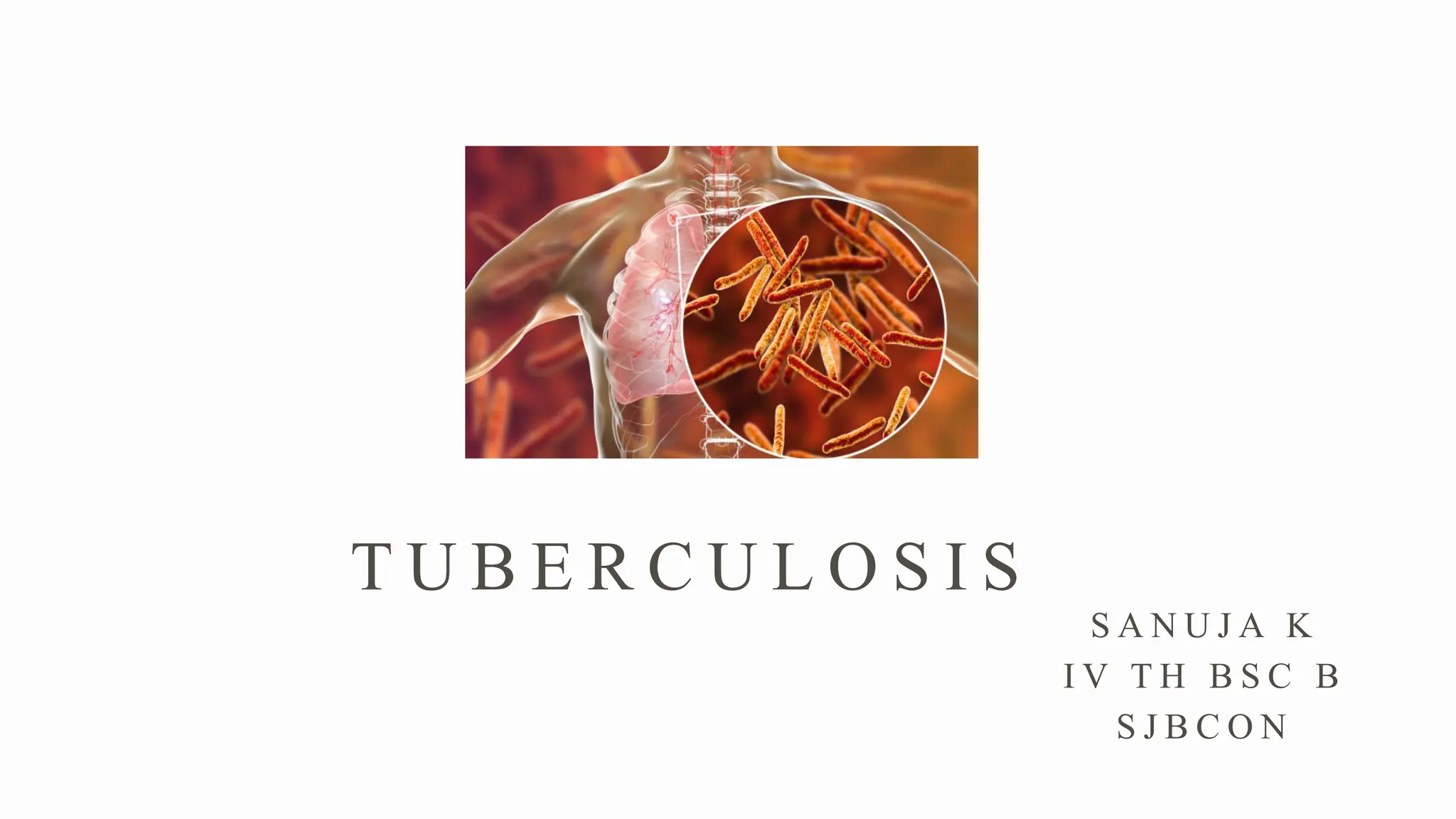
T U B E R C U L O S I S
S A N U J A K
I V T H B S C B
S J B C O N
INTRODUCTION
01
DEFINITION
02
MAGNITUDE OF THE PROBLEM
03
EPIDEMIOLOGICAL TRAID
04
TA B L E O F C O N T E N T S
MODE OF TRANSMISSION
05
INCUBATION PERIOD
06
CLINICAL FEATURES
07
PREVENTION AND CONTROL
08
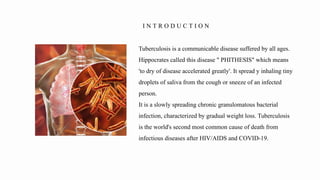
Tuberculosis is a communicable disease suffered by all ages.
Hippocrates called this disease " PHITHESIS" which means
'to dry of disease accelerated greatly'. It spread y inhaling tiny
droplets of saliva from the cough or sneeze of an infected
person.
It is a slowly spreading chronic granulomatous bacterial
infection, characterized by gradual weight loss. Tuberculosis
is the world's second most common cause of death from
infectious diseases after HIV/AIDS and COVID-19.
I N T R O D U C T I O N
D E F I N I T I O N
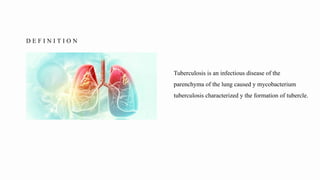
Tuberculosis is an infectious disease of the
parenchyma of the lung caused y mycobacterium
tuberculosis characterized y the formation of tubercle.
M A G N I T U D E O F T H E P R O B L E M
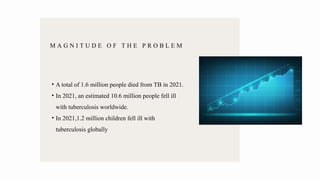
• A total of 1.6 million people died from TB in 2021.
• In 2021, an estimated 10.6 million people fell ill
with tuberculosis worldwide.
• In 2021,1.2 million children fell ill with
tuberculosis globally
E P I D E M I O L O G I C A L T R I A D
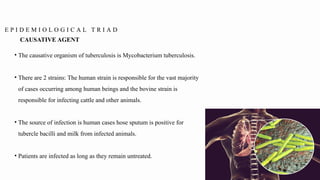
• The causative organism of tuberculosis is Mycobacterium tuberculosis.
• There are 2 strains: The human strain is responsible for the vast majority
of cases occurring among human beings and the bovine strain is
responsible for infecting cattle and other animals.
• The source of infection is human cases hose sputum is positive for
tubercle bacilli and milk from infected animals.
• Patients are infected as long as they remain untreated.
CAUSATIVE AGENT
C O N T . .
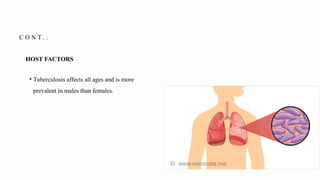
• Tuberculosis affects all ages and is more
prevalent in males than females.
HOST FACTORS
C O N T
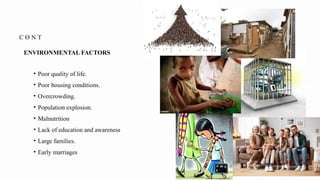
• Poor quality of life.
• Poor housing conditions.
• Overcrowding.
• Population explosion.
• Malnutrition
• Lack of education and awareness
• Large families.
• Early marriages
ENVIRONMENTAL FACTORS
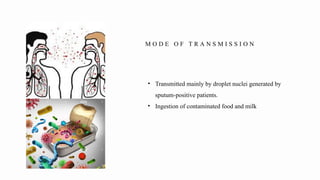
• Transmitted mainly by droplet nuclei generated by
sputum-positive patients.
• Ingestion of contaminated food and milk
M O D E O F T R A N S M I S S I O N
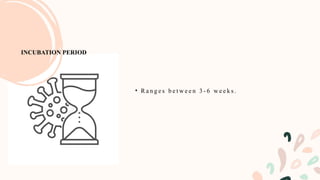
• R a n g e s b e t w e e n 3 - 6 w e e k s .
INCUBATION PERIOD
CLINICAL
FEATURES
F e v e r
We i g h t l o s s
P e r s i s t e n t c o u g h
CONT..
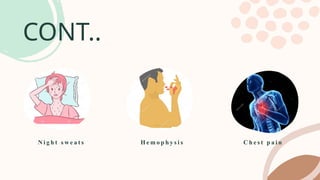
C h e s t p a i n
H e m o p h y s i s
N i g h t s w e a t s
CONT..
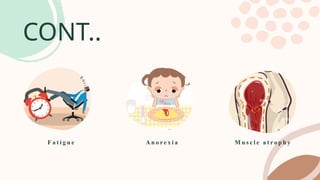
M u s c l e a t r o p h y
A n o r e x i a
F a t i g u e
LAB
INVESTIGATION
• M a n t o u x t e s t
• S p u t u m e x a m i n a t i o n
• S p u t u m c u l t u r e
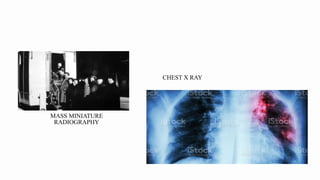
• M a s s m i n i a t u r e r a d i o g r a p h y
• C h e s t X - r a y
PREVENTION AND
CONTROL
• c a s e f i n d i n g
• B C G v a c c i n a t i o n
CASE
FINDING
• E a r l y d e t e c t i o n o f a l l
c a s e s .
• F i n d i n g t h e s u s p e c t s .
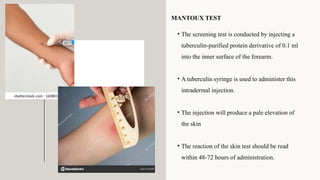
• The screening test is conducted by injecting a
tuberculin-purified protein derivative of 0.1 ml
into the inner surface of the forearm.
• A tuberculin syringe is used to administer this
intradermal injection.
• The injection will produce a pale elevation of
the skin
• The reaction of the skin test should be read
within 48-72 hours of administration.
MANTOUX TEST
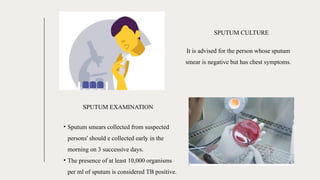
It is advised for the person whose sputum
smear is negative but has chest symptoms.
• Sputum smears collected from suspected
persons' should e collected early in the
morning on 3 successive days.
• The presence of at least 10,000 organisms
per ml of sputum is considered TB positive.
SPUTUM CULTURE
SPUTUM EXAMINATION
MASS MINIATURE
RADIOGRAPHY
CHEST X RAY
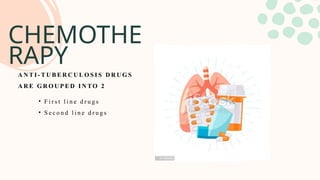
CHEMOTHE
RAPY
• F i r s t l i n e d r u g s
• S e c o n d l i n e d r u g s
A N T I - T U B E R C U L O S I S D R U G S
A R E G R O U P E D I N T O 2
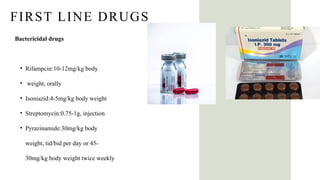
FIRST LINE DRUGS
Bactericidal drugs
• Rifampcin:10-12mg/kg body
• weight, orally
• Isoniazid:4-5mg/kg body weight
• Streptomycin:0.75-1g, injection
• Pyrazinamide:30mg/kg body
weight, tid/bid per day or 45-
30mg/kg body weight twice weekly
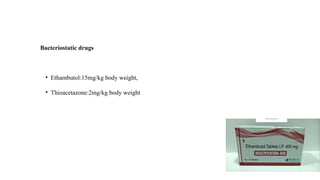
Bacteriostatic drugs
• Ethambutol:15mg/kg body weight,
• Thioacetazone:2mg/kg body weight
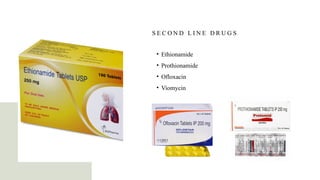
S E C O N D L I N E D R U G S
• Ethionamide
• Prothionamide
• Ofloxacin
• Viomycin
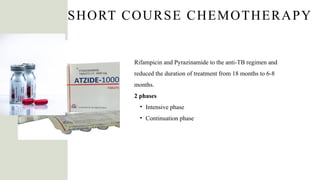
SHORT COURSE CHEMOTHERAPY
Rifampicin and Pyrazinamide to the anti-TB regimen and
reduced the duration of treatment from 18 months to 6-8
months.
2 phases
• Intensive phase
• Continuation phase
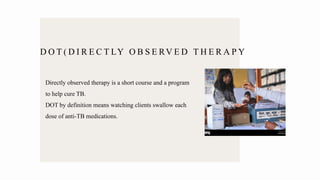
D O T ( D I R E C T LY O B S E RV E D T H E R A P Y
Directly observed therapy is a short course and a program
to help cure TB.
DOT by definition means watching clients swallow each
dose of anti-TB medications.
BCG stands for Bacilli of Calmette and Guerin.There are two
types of BCG vaccines.
• Liquid dried
• Freeze-dried.
BCG VACCINATION
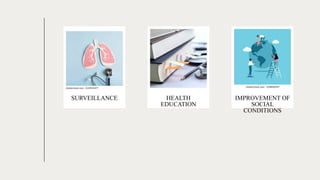
SURVEILLANCE HEALTH
EDUCATION
IMPROVEMENT OF
SOCIAL
CONDITIONS
THANK YOU

TUBERCULOSIS, IV THE YEAR BSC NURSING, CHN

  • 1.
    T U BE R C U L O S I S S A N U J A K I V T H B S C B S J B C O N
  • 2.
    INTRODUCTION 01 DEFINITION 02 MAGNITUDE OF THEPROBLEM 03 EPIDEMIOLOGICAL TRAID 04 TA B L E O F C O N T E N T S MODE OF TRANSMISSION 05 INCUBATION PERIOD 06 CLINICAL FEATURES 07 PREVENTION AND CONTROL 08
  • 3.
    Tuberculosis is acommunicable disease suffered by all ages. Hippocrates called this disease " PHITHESIS" which means 'to dry of disease accelerated greatly'. It spread y inhaling tiny droplets of saliva from the cough or sneeze of an infected person. It is a slowly spreading chronic granulomatous bacterial infection, characterized by gradual weight loss. Tuberculosis is the world's second most common cause of death from infectious diseases after HIV/AIDS and COVID-19. I N T R O D U C T I O N
  • 4.
    D E FI N I T I O N Tuberculosis is an infectious disease of the parenchyma of the lung caused y mycobacterium tuberculosis characterized y the formation of tubercle.
  • 5.
    M A GN I T U D E O F T H E P R O B L E M • A total of 1.6 million people died from TB in 2021. • In 2021, an estimated 10.6 million people fell ill with tuberculosis worldwide. • In 2021,1.2 million children fell ill with tuberculosis globally
  • 6.
    E P ID E M I O L O G I C A L T R I A D • The causative organism of tuberculosis is Mycobacterium tuberculosis. • There are 2 strains: The human strain is responsible for the vast majority of cases occurring among human beings and the bovine strain is responsible for infecting cattle and other animals. • The source of infection is human cases hose sputum is positive for tubercle bacilli and milk from infected animals. • Patients are infected as long as they remain untreated. CAUSATIVE AGENT
  • 7.
    C O NT . . • Tuberculosis affects all ages and is more prevalent in males than females. HOST FACTORS
  • 8.
    C O NT • Poor quality of life. • Poor housing conditions. • Overcrowding. • Population explosion. • Malnutrition • Lack of education and awareness • Large families. • Early marriages ENVIRONMENTAL FACTORS
  • 9.
    • Transmitted mainlyby droplet nuclei generated by sputum-positive patients. • Ingestion of contaminated food and milk M O D E O F T R A N S M I S S I O N
  • 10.
    • R an g e s b e t w e e n 3 - 6 w e e k s . INCUBATION PERIOD
  • 11.
    CLINICAL FEATURES F e ve r We i g h t l o s s P e r s i s t e n t c o u g h
  • 12.
    CONT.. C h es t p a i n H e m o p h y s i s N i g h t s w e a t s
  • 13.
    CONT.. M u sc l e a t r o p h y A n o r e x i a F a t i g u e
  • 14.
    LAB INVESTIGATION • M an t o u x t e s t • S p u t u m e x a m i n a t i o n • S p u t u m c u l t u r e • M a s s m i n i a t u r e r a d i o g r a p h y • C h e s t X - r a y
  • 15.
    PREVENTION AND CONTROL • ca s e f i n d i n g • B C G v a c c i n a t i o n
  • 16.
    CASE FINDING • E ar l y d e t e c t i o n o f a l l c a s e s . • F i n d i n g t h e s u s p e c t s .
  • 17.
    • The screeningtest is conducted by injecting a tuberculin-purified protein derivative of 0.1 ml into the inner surface of the forearm. • A tuberculin syringe is used to administer this intradermal injection. • The injection will produce a pale elevation of the skin • The reaction of the skin test should be read within 48-72 hours of administration. MANTOUX TEST
  • 18.
    It is advisedfor the person whose sputum smear is negative but has chest symptoms. • Sputum smears collected from suspected persons' should e collected early in the morning on 3 successive days. • The presence of at least 10,000 organisms per ml of sputum is considered TB positive. SPUTUM CULTURE SPUTUM EXAMINATION
  • 19.
  • 20.
    CHEMOTHE RAPY • F ir s t l i n e d r u g s • S e c o n d l i n e d r u g s A N T I - T U B E R C U L O S I S D R U G S A R E G R O U P E D I N T O 2
  • 21.
    FIRST LINE DRUGS Bactericidaldrugs • Rifampcin:10-12mg/kg body • weight, orally • Isoniazid:4-5mg/kg body weight • Streptomycin:0.75-1g, injection • Pyrazinamide:30mg/kg body weight, tid/bid per day or 45- 30mg/kg body weight twice weekly
  • 22.
    Bacteriostatic drugs • Ethambutol:15mg/kgbody weight, • Thioacetazone:2mg/kg body weight
  • 23.
    S E CO N D L I N E D R U G S • Ethionamide • Prothionamide • Ofloxacin • Viomycin
  • 24.
    SHORT COURSE CHEMOTHERAPY Rifampicinand Pyrazinamide to the anti-TB regimen and reduced the duration of treatment from 18 months to 6-8 months. 2 phases • Intensive phase • Continuation phase
  • 25.
    D O T( D I R E C T LY O B S E RV E D T H E R A P Y Directly observed therapy is a short course and a program to help cure TB. DOT by definition means watching clients swallow each dose of anti-TB medications.
  • 26.
    BCG stands forBacilli of Calmette and Guerin.There are two types of BCG vaccines. • Liquid dried • Freeze-dried. BCG VACCINATION
  • 27.
  • 29.