1
STATISTICAL NOTES AUGUST 2014
Welcome to this edition of Statistical Notes!
1. BACKGROUND
TB is caused by a bacterium called Mycobacterium tuberculosis (‘M.
tuberculosis’ or ‘M.Tb’). It is spread by one person inhaling the bacterium in
droplets coughed or sneezed out by someone with infectious tuberculosis. Not
all forms of tuberculosis are infectious. Those with TB in organs other than the
lungs are rarely infectious to others, and nor are people with just latent
tuberculosis (see below). Some people with respiratory tuberculosis are
infectious, particularly those with bacteria which can be seen on simple
microscope examination of the sputum, who are termed ‘smear positive’. TB
continues to be a major worldwide problem. According to the World Health
Organization (WHO) about one-third of the world’s population has latent TB,
which means they have been infected with TB bacteria. Only about 10 percent
1
Directorate: Epidemiology and Surveillance
Contact: Mosidi Stephina Tshelane
This Statistical Notes is compiled by the Epidemiology and Surveillance Directorate, Private Bag X828, Pretoria
0001. Telephone: 012 395 8151, Fax: 012 395 9249
1
of these people will develop TB disease in their lifetime. The other 90 percent
will never get sick from the TB bacteria or be able to spread TB to other
people. The WHO also has declared that TB is only second to HIV/AIDS as
the greatest killer worldwide out of all diseases caused by a single infectious
agent. In 2010, 8.8 million people fell ill with TB disease and 1.4 million people
died from TB.
2. TRANSMISSION
Active TB disease of the lungs is spread in bacteria-laden droplets through
the air. TB infection occurs when the bacteria, Mycobacterium tuberculosis,
enter a person’s body, usually through the lungs. Infection, however, is not the
same as active disease. An infected person can carry the bacteria in latent
form for years and most will never develop the disease. Latent TB cannot be
spread to other people. TB only becomes dangerous if the bacteria emerge
from latency and begin attacking the body. Active TB disease manifests
primarily in the lungs, but it can also attack other organs, a condition known
as extra pulmonary TB. People with weakened immunity the hallmark of HIV
are at far greater risk of developing active TB disease.
3. SIGNS AND SYMPTOMS
Tuberculosis, also known as TB for short, is a disease caused by
mycobacteria spread from person to person through the air. TB usually affects
a person's lungs (typically the primary site of inoculation), but it can affect any
organ of the body, such as the brain, kidneys, eyes, testes, and the spine. If
left untreated or treated improperly, TB can kill. It can be especially dangerous
for babies and young children who have weaker immune systems. This article
will help you to recognize signs and symptoms of tuberculosis, starting with
working out if you might be at risk. Typical symptoms of pulmonary TB include
chronic cough, weight loss, intermittent fever, night sweats and coughing
This Statistical Notes is compiled by the Epidemiology and Surveillance Directorate, Private Bag X828, Pretoria
0001. Telephone: 012 395 8151, Fax: 012 395 9249
2
blood. TB in parts other than the lungs has symptoms which depend on the
site, and may be accompanied by intermittent fever or weight loss. TB is a
possible diagnosis to be considered in anyone with intermittent fever, weight
loss and other unexplained symptoms. Latent tuberculosis without disease,
however, has no symptoms.
4. Distribution and characteristics or reported TB-all cases and
deaths, 2011 to 2014
The National TB-All suspected cases trend was at 2 720 338 in 2011 and
cases steadily declined by year to 2 461 037 in the year 2014, respectively
180 727 and 184 560 tested positive for tuberculosis.
Source: DHIS National Department of Health
On average above 15 000 cases in a month test positive for TB from those sent for
laboratory confirmation in South Africa.
This Statistical Notes is compiled by the Epidemiology and Surveillance Directorate, Private Bag X828, Pretoria
0001. Telephone: 012 395 8151, Fax: 012 395 9249
Jan Feb Mar Apr May Jun Jul Aug Sep Oct Nov Dec Grand
Total
TB suspect 5 years
and older sputum
sent
2011 195
738
222
830
269
311
202
824
219
982
230
975
216
275
258
113
265
469
250
494
231
405
156
922
2 720 338
2012 200
420
210
673
224
221
177
063
219
113
208
509
223
553
254
918
227
917
241
490
217
578
143
679
2 549 134
2013 196
662
203
483
210
749
202
309
218
726
199
599
239
726
236
811
233
956
240
839
200
431
137
743
2 521 034
2014 191
397
196
796
214
221
189
135
188
307
194
778
231
033
250
102
236
904
227
642
193
960
146
762
2 461 037
TB suspect 5 years
and older test positive
2011 16
198
14 869 15 651 13 056 14
314
13
618
14
232
16
378
16
467
18
444
15
594
11 906 180 727
2012 16
616
14 039 13 370 11 217 13
942
12
845
14
025
15
315
15
013
16
796
15
936
10 672 169 786
2013 16
173
13 657 12 844 14 149 13
801
12
947
16
253
15
318
15
379
16
982
15
910
11 591 175 004
2014 16
846
14 161 13 983 13 141 14
069
15
764
16
626
16
140
16
531
20
368
14
223
12 708 184 560
3
Figure 2: TB suspect 5 years and older sputum sent, 2011-2014
Source: Department of Health DHIS & National TB Control Programme
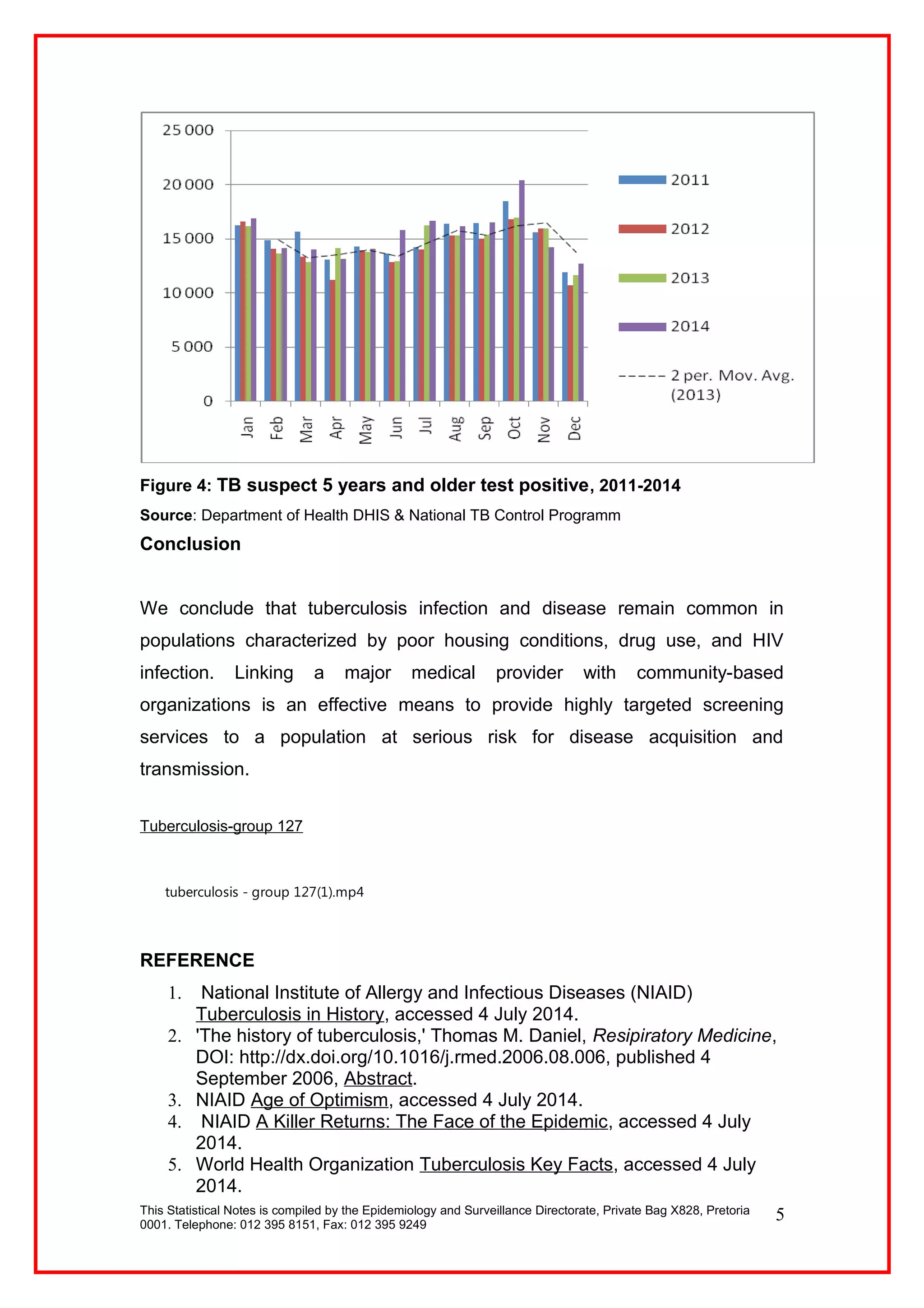
About 12 708 TB cases tested positive for December 2014 compared to 16 846
cases for January 2014. The decline was noted in the month of decemeber in all
years.
Figure 3: TB suspect 5 years and older test positive, 2011-2014
Source: Department of Health DHIS & National TB Control Programme
This Statistical Notes is compiled by the Epidemiology and Surveillance Directorate, Private Bag X828, Pretoria
0001. Telephone: 012 395 8151, Fax: 012 395 9249
4
Figure 4: TB suspect 5 years and older test positive, 2011-2014
Source: Department of Health DHIS & National TB Control Programm
Conclusion
We conclude that tuberculosis infection and disease remain common in
populations characterized by poor housing conditions, drug use, and HIV
infection. Linking a major medical provider with community-based
organizations is an effective means to provide highly targeted screening
services to a population at serious risk for disease acquisition and
transmission.
Tuberculosis-group 127
tuberculosis - group 127(1).mp4
REFERENCE
1. National Institute of Allergy and Infectious Diseases (NIAID)
Tuberculosis in History, accessed 4 July 2014.
2. 'The history of tuberculosis,' Thomas M. Daniel, Resipiratory Medicine,
DOI: http://dx.doi.org/10.1016/j.rmed.2006.08.006, published 4
September 2006, Abstract.
3. NIAID Age of Optimism, accessed 4 July 2014.
4. NIAID A Killer Returns: The Face of the Epidemic, accessed 4 July
2014.
5. World Health Organization Tuberculosis Key Facts, accessed 4 July
2014.
This Statistical Notes is compiled by the Epidemiology and Surveillance Directorate, Private Bag X828, Pretoria
0001. Telephone: 012 395 8151, Fax: 012 395 9249
5
6. Mayo Clinic Symptoms, accessed 4 July 2014.
This Statistical Notes is compiled by the Epidemiology and Surveillance Directorate, Private Bag X828, Pretoria
0001. Telephone: 012 395 8151, Fax: 012 395 9249
6
6. Mayo Clinic Symptoms, accessed 4 July 2014.
This Statistical Notes is compiled by the Epidemiology and Surveillance Directorate, Private Bag X828, Pretoria
0001. Telephone: 012 395 8151, Fax: 012 395 9249
6

TB Final

  • 1.
    1 STATISTICAL NOTES AUGUST2014 Welcome to this edition of Statistical Notes! 1. BACKGROUND TB is caused by a bacterium called Mycobacterium tuberculosis (‘M. tuberculosis’ or ‘M.Tb’). It is spread by one person inhaling the bacterium in droplets coughed or sneezed out by someone with infectious tuberculosis. Not all forms of tuberculosis are infectious. Those with TB in organs other than the lungs are rarely infectious to others, and nor are people with just latent tuberculosis (see below). Some people with respiratory tuberculosis are infectious, particularly those with bacteria which can be seen on simple microscope examination of the sputum, who are termed ‘smear positive’. TB continues to be a major worldwide problem. According to the World Health Organization (WHO) about one-third of the world’s population has latent TB, which means they have been infected with TB bacteria. Only about 10 percent 1 Directorate: Epidemiology and Surveillance Contact: Mosidi Stephina Tshelane This Statistical Notes is compiled by the Epidemiology and Surveillance Directorate, Private Bag X828, Pretoria 0001. Telephone: 012 395 8151, Fax: 012 395 9249 1
  • 2.
    of these peoplewill develop TB disease in their lifetime. The other 90 percent will never get sick from the TB bacteria or be able to spread TB to other people. The WHO also has declared that TB is only second to HIV/AIDS as the greatest killer worldwide out of all diseases caused by a single infectious agent. In 2010, 8.8 million people fell ill with TB disease and 1.4 million people died from TB. 2. TRANSMISSION Active TB disease of the lungs is spread in bacteria-laden droplets through the air. TB infection occurs when the bacteria, Mycobacterium tuberculosis, enter a person’s body, usually through the lungs. Infection, however, is not the same as active disease. An infected person can carry the bacteria in latent form for years and most will never develop the disease. Latent TB cannot be spread to other people. TB only becomes dangerous if the bacteria emerge from latency and begin attacking the body. Active TB disease manifests primarily in the lungs, but it can also attack other organs, a condition known as extra pulmonary TB. People with weakened immunity the hallmark of HIV are at far greater risk of developing active TB disease. 3. SIGNS AND SYMPTOMS Tuberculosis, also known as TB for short, is a disease caused by mycobacteria spread from person to person through the air. TB usually affects a person's lungs (typically the primary site of inoculation), but it can affect any organ of the body, such as the brain, kidneys, eyes, testes, and the spine. If left untreated or treated improperly, TB can kill. It can be especially dangerous for babies and young children who have weaker immune systems. This article will help you to recognize signs and symptoms of tuberculosis, starting with working out if you might be at risk. Typical symptoms of pulmonary TB include chronic cough, weight loss, intermittent fever, night sweats and coughing This Statistical Notes is compiled by the Epidemiology and Surveillance Directorate, Private Bag X828, Pretoria 0001. Telephone: 012 395 8151, Fax: 012 395 9249 2
  • 3.
    blood. TB inparts other than the lungs has symptoms which depend on the site, and may be accompanied by intermittent fever or weight loss. TB is a possible diagnosis to be considered in anyone with intermittent fever, weight loss and other unexplained symptoms. Latent tuberculosis without disease, however, has no symptoms. 4. Distribution and characteristics or reported TB-all cases and deaths, 2011 to 2014 The National TB-All suspected cases trend was at 2 720 338 in 2011 and cases steadily declined by year to 2 461 037 in the year 2014, respectively 180 727 and 184 560 tested positive for tuberculosis. Source: DHIS National Department of Health On average above 15 000 cases in a month test positive for TB from those sent for laboratory confirmation in South Africa. This Statistical Notes is compiled by the Epidemiology and Surveillance Directorate, Private Bag X828, Pretoria 0001. Telephone: 012 395 8151, Fax: 012 395 9249 Jan Feb Mar Apr May Jun Jul Aug Sep Oct Nov Dec Grand Total TB suspect 5 years and older sputum sent 2011 195 738 222 830 269 311 202 824 219 982 230 975 216 275 258 113 265 469 250 494 231 405 156 922 2 720 338 2012 200 420 210 673 224 221 177 063 219 113 208 509 223 553 254 918 227 917 241 490 217 578 143 679 2 549 134 2013 196 662 203 483 210 749 202 309 218 726 199 599 239 726 236 811 233 956 240 839 200 431 137 743 2 521 034 2014 191 397 196 796 214 221 189 135 188 307 194 778 231 033 250 102 236 904 227 642 193 960 146 762 2 461 037 TB suspect 5 years and older test positive 2011 16 198 14 869 15 651 13 056 14 314 13 618 14 232 16 378 16 467 18 444 15 594 11 906 180 727 2012 16 616 14 039 13 370 11 217 13 942 12 845 14 025 15 315 15 013 16 796 15 936 10 672 169 786 2013 16 173 13 657 12 844 14 149 13 801 12 947 16 253 15 318 15 379 16 982 15 910 11 591 175 004 2014 16 846 14 161 13 983 13 141 14 069 15 764 16 626 16 140 16 531 20 368 14 223 12 708 184 560 3
  • 4.
    Figure 2: TBsuspect 5 years and older sputum sent, 2011-2014 Source: Department of Health DHIS & National TB Control Programme About 12 708 TB cases tested positive for December 2014 compared to 16 846 cases for January 2014. The decline was noted in the month of decemeber in all years. Figure 3: TB suspect 5 years and older test positive, 2011-2014 Source: Department of Health DHIS & National TB Control Programme This Statistical Notes is compiled by the Epidemiology and Surveillance Directorate, Private Bag X828, Pretoria 0001. Telephone: 012 395 8151, Fax: 012 395 9249 4
  • 5.
    Figure 4: TBsuspect 5 years and older test positive, 2011-2014 Source: Department of Health DHIS & National TB Control Programm Conclusion We conclude that tuberculosis infection and disease remain common in populations characterized by poor housing conditions, drug use, and HIV infection. Linking a major medical provider with community-based organizations is an effective means to provide highly targeted screening services to a population at serious risk for disease acquisition and transmission. Tuberculosis-group 127 tuberculosis - group 127(1).mp4 REFERENCE 1. National Institute of Allergy and Infectious Diseases (NIAID) Tuberculosis in History, accessed 4 July 2014. 2. 'The history of tuberculosis,' Thomas M. Daniel, Resipiratory Medicine, DOI: http://dx.doi.org/10.1016/j.rmed.2006.08.006, published 4 September 2006, Abstract. 3. NIAID Age of Optimism, accessed 4 July 2014. 4. NIAID A Killer Returns: The Face of the Epidemic, accessed 4 July 2014. 5. World Health Organization Tuberculosis Key Facts, accessed 4 July 2014. This Statistical Notes is compiled by the Epidemiology and Surveillance Directorate, Private Bag X828, Pretoria 0001. Telephone: 012 395 8151, Fax: 012 395 9249 5
  • 6.
    6. Mayo ClinicSymptoms, accessed 4 July 2014. This Statistical Notes is compiled by the Epidemiology and Surveillance Directorate, Private Bag X828, Pretoria 0001. Telephone: 012 395 8151, Fax: 012 395 9249 6
  • 7.
    6. Mayo ClinicSymptoms, accessed 4 July 2014. This Statistical Notes is compiled by the Epidemiology and Surveillance Directorate, Private Bag X828, Pretoria 0001. Telephone: 012 395 8151, Fax: 012 395 9249 6