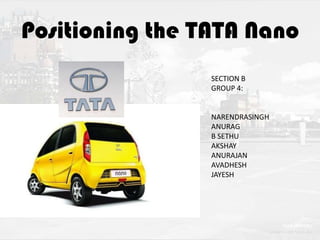
Positioning the TATA Nano
SECTION B
GROUP 4:

NARENDRASINGH
ANURAG
B SETHU
AKSHAY
ANURAJAN
AVADHESH
JAYESH
Case Overview
• In 2009, launch of Nano from TML
• Problem in front of Ratan Tata - How best to
position his new brand – ultra low cost cars
• Option One – Family transport
• Option Two – Usage situation
• Which option to choose ?
The TATA Group : Company History
• Founded by Jamsetji Tata in 1868 as trading
company
• First steel mill, power utility, luxury hotel and
international airline
• By 2011, 98 companies over 7 sectors.
• Company seen as Inspired trust & a strong
commitment to ethics
• By TATA Code of Conduct, TATA promised to
improve the quality of life and Nano is a prime
example.
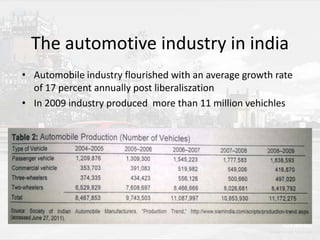
The automotive industry in india
• Automobile industry flourished with an average growth rate
of 17 percent annually post liberaliszation
• In 2009 industry produced more than 11 million vehichles
• Despite growth, per capita ownership of automobile is low
compared to developed countries

• Estimated 12 car owners per 1000 people, versus 765 per
1000 in US and 426 per 1000 in UK
• Two wheelers dominate Indian market due to fuel efficiency
, low purchase, and low maintenance cost
• About 76 % of all vehicle sales in India are of 2 wheelers and
remaining are passenger vehicle
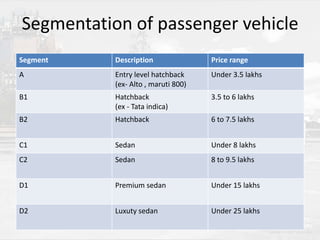
Segmentation of passenger vehicle
Segment

Description

Price range

A

Entry level hatchback
(ex- Alto , maruti 800)

Under 3.5 lakhs

B1

Hatchback
(ex - Tata indica)

3.5 to 6 lakhs

B2

Hatchback

6 to 7.5 lakhs

C1

Sedan

Under 8 lakhs

C2

Sedan

8 to 9.5 lakhs

D1

Premium sedan

Under 15 lakhs

D2

Luxuty sedan

Under 25 lakhs
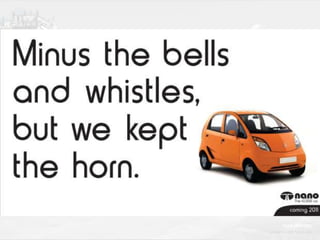
THE NANO
•

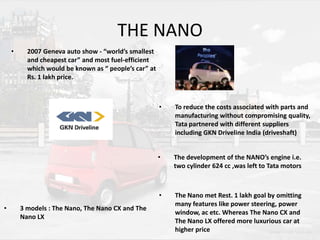
2007 Geneva auto show - “world’s smallest
and cheapest car” and most fuel-efficient
which would be known as “ people’s car” at
Rs. 1 lakh price.

•

•

3 models : The Nano, The Nano CX and The
Nano LX

The development of the NANO’s engine i.e.
two cylinder 624 cc ,was left to Tata motors

•
•

To reduce the costs associated with parts and
manufacturing without compromising quality,
Tata partnered with different suppliers
including GKN Driveline India (driveshaft)

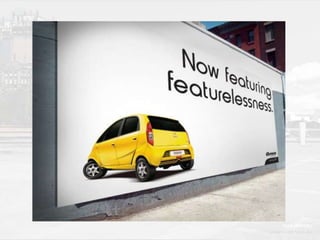
The Nano met Rest. 1 lakh goal by omitting
many features like power steering, power
window, ac etc. Whereas The Nano CX and
The Nano LX offered more luxurious car at
higher price
•

First year, TML planned to produce 3,50,000 Nanos at a
plant being built at Singur, WB.

•

Conflict at Singur

•

In September 2008, shift to Sanand, Gujarat – with delay
in production of 18 to 24 months.

•

By not postponing the much anticipated launch, TML
started to produce 50,000 Nanos temporarily at
Pantnagar plant, Uttarakhand.
Competition
• Maruti 800 : most affordable car in India until the
release of Nano
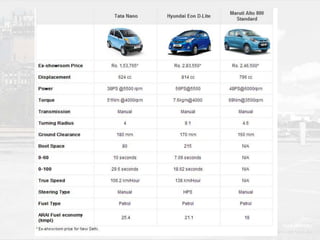
• Current major competitor : Maruti Alto
• Future competition : ULC cars from
Hyundai, Maruti, Habib Motors, Renault Nissan, Toyota
and Ford
• Two wheeler segment – low price, fuel efficiency, easy
maneuverability, low maintenance cost compared to
Nano
• Consumer behavior – more value for money
slightly more cost, but better engine, safety
features and more space – Wagon R, Santro Xing,
Chevrolet Beat, Alto etc
Distribution Channels
• A 17-day booking window, of which customers
would be selected via lottery
• Booking options :
Online booking
Tata Dealership
Offline booking at SBI branches and various
Tata stores
• Deposit payment must
• Dealerships
214 dealerships across 28 states
Dealer margins cut down from 4-10 % to 2-3%
1% discount if dealer paid cash upfront
• Toyed with the idea of using entrepreneurial
engineers as local retailers
• Idea scrapped due to potential warranty and
liability issues.
Positioning of Nano
2009
• In April 2009, out of the initial bookings of
2,03,000 Nanos, 1,00,000 were selected using
lottery system
• Half bookings were for Nano LX, 30% for Nano
CX and 20% for the basic Nano
• The new Sanand plant provided a capacity of
2,50,000 units per year
• Open Sales through Tata Dealerships began
from a single state in 2009
2010 onwards..
• Monthly sales grew peaking at 9,000 units per
month in July 2010
• In November 2010, when the car sales grew
22%, sales of Nano plummeted to a mere 509
units
• This was due to two causes:
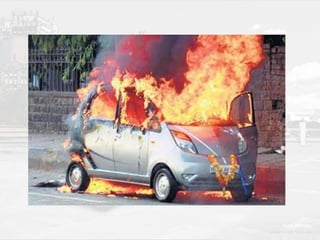
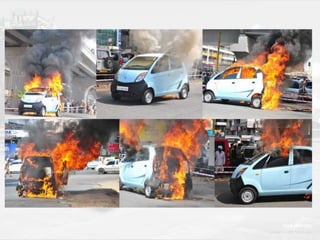
– Rising safety issues
– Rising raw material costs
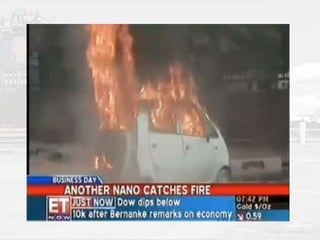
Fire fighting
• Tata motors conducted an investigation. TML
issued a statement that the fires were a result of
“foreign electrical equipment” and not due to any
safety issues in car
• TML took measures and improved the electrical
system of the car
• TML also increased the 18 months warranty to 4
years or 60,000 Kms
• By December, the sales rebounded to 5,784 units
Thank you

Positioning of TATA Nano

  • 1.
    Positioning the TATANano SECTION B GROUP 4: NARENDRASINGH ANURAG B SETHU AKSHAY ANURAJAN AVADHESH JAYESH
  • 2.
    Case Overview • In2009, launch of Nano from TML • Problem in front of Ratan Tata - How best to position his new brand – ultra low cost cars • Option One – Family transport • Option Two – Usage situation • Which option to choose ?
  • 3.
    The TATA Group: Company History • Founded by Jamsetji Tata in 1868 as trading company • First steel mill, power utility, luxury hotel and international airline • By 2011, 98 companies over 7 sectors. • Company seen as Inspired trust & a strong commitment to ethics • By TATA Code of Conduct, TATA promised to improve the quality of life and Nano is a prime example.
  • 4.
    The automotive industryin india • Automobile industry flourished with an average growth rate of 17 percent annually post liberaliszation • In 2009 industry produced more than 11 million vehichles
  • 5.
    • Despite growth,per capita ownership of automobile is low compared to developed countries • Estimated 12 car owners per 1000 people, versus 765 per 1000 in US and 426 per 1000 in UK • Two wheelers dominate Indian market due to fuel efficiency , low purchase, and low maintenance cost • About 76 % of all vehicle sales in India are of 2 wheelers and remaining are passenger vehicle
  • 6.
    Segmentation of passengervehicle Segment Description Price range A Entry level hatchback (ex- Alto , maruti 800) Under 3.5 lakhs B1 Hatchback (ex - Tata indica) 3.5 to 6 lakhs B2 Hatchback 6 to 7.5 lakhs C1 Sedan Under 8 lakhs C2 Sedan 8 to 9.5 lakhs D1 Premium sedan Under 15 lakhs D2 Luxuty sedan Under 25 lakhs
  • 7.
    THE NANO • 2007 Genevaauto show - “world’s smallest and cheapest car” and most fuel-efficient which would be known as “ people’s car” at Rs. 1 lakh price. • • 3 models : The Nano, The Nano CX and The Nano LX The development of the NANO’s engine i.e. two cylinder 624 cc ,was left to Tata motors • • To reduce the costs associated with parts and manufacturing without compromising quality, Tata partnered with different suppliers including GKN Driveline India (driveshaft) The Nano met Rest. 1 lakh goal by omitting many features like power steering, power window, ac etc. Whereas The Nano CX and The Nano LX offered more luxurious car at higher price
  • 8.
    • First year, TMLplanned to produce 3,50,000 Nanos at a plant being built at Singur, WB. • Conflict at Singur • In September 2008, shift to Sanand, Gujarat – with delay in production of 18 to 24 months. • By not postponing the much anticipated launch, TML started to produce 50,000 Nanos temporarily at Pantnagar plant, Uttarakhand.
  • 9.
    Competition • Maruti 800: most affordable car in India until the release of Nano • Current major competitor : Maruti Alto • Future competition : ULC cars from Hyundai, Maruti, Habib Motors, Renault Nissan, Toyota and Ford • Two wheeler segment – low price, fuel efficiency, easy maneuverability, low maintenance cost compared to Nano • Consumer behavior – more value for money slightly more cost, but better engine, safety features and more space – Wagon R, Santro Xing, Chevrolet Beat, Alto etc
  • 10.
    Distribution Channels • A17-day booking window, of which customers would be selected via lottery • Booking options : Online booking Tata Dealership Offline booking at SBI branches and various Tata stores • Deposit payment must
  • 11.
    • Dealerships 214 dealershipsacross 28 states Dealer margins cut down from 4-10 % to 2-3% 1% discount if dealer paid cash upfront • Toyed with the idea of using entrepreneurial engineers as local retailers • Idea scrapped due to potential warranty and liability issues.
  • 12.
  • 13.
    2009 • In April2009, out of the initial bookings of 2,03,000 Nanos, 1,00,000 were selected using lottery system • Half bookings were for Nano LX, 30% for Nano CX and 20% for the basic Nano • The new Sanand plant provided a capacity of 2,50,000 units per year • Open Sales through Tata Dealerships began from a single state in 2009
  • 14.
    2010 onwards.. • Monthlysales grew peaking at 9,000 units per month in July 2010 • In November 2010, when the car sales grew 22%, sales of Nano plummeted to a mere 509 units • This was due to two causes: – Rising safety issues – Rising raw material costs
  • 18.
    Fire fighting • Tatamotors conducted an investigation. TML issued a statement that the fires were a result of “foreign electrical equipment” and not due to any safety issues in car • TML took measures and improved the electrical system of the car • TML also increased the 18 months warranty to 4 years or 60,000 Kms • By December, the sales rebounded to 5,784 units
  • 28.