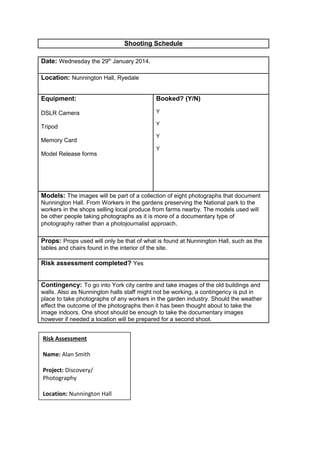
Shooting Schedule
Date: Wednesday the 29th January 2014.
Location: Nunnington Hall, Ryedale
Equipment:

Booked? (Y/N)

DSLR Camera

Y

Tripod

Y

Memory Card
Model Release forms

Y
Y

Models: The images will be part of a collection of eight photographs that document
Nunnington Hall. From Workers in the gardens preserving the National park to the
workers in the shops selling local produce from farms nearby. The models used will
be other people taking photographs as it is more of a documentary type of
photography rather than a photojournalist approach.

Props: Props used will only be that of what is found at Nunnington Hall, such as the
tables and chairs found in the interior of the site.

Risk assessment completed? Yes
Contingency: To go into York city centre and take images of the old buildings and
walls. Also as Nunnington halls staff might not be working, a contingency is put in
place to take photographs of any workers in the garden industry. Should the weather
effect the outcome of the photographs then it has been thought about to take the
image indoors. One shoot should be enough to take the documentary images
however if needed a location will be prepared for a second shoot.

Risk Assessment
Name: Alan Smith
Project: Discovery/
Photography
Location: Nunnington Hall
What Health and Safety legislation might you need to consider in this project?
Health and safety at work act 1974. I am to consider the general duties of the students when they the
Hazard
Person(s) / Equipment at
Risk Control Taken
care of the tutors. I will therefore look at students acting responsibly and being safe when around certain
Risk
sites or equipment. To also consider the tutors (People in charge of students behaviour) and the way
they should act. They should be trained to deal with certain aspects of the trip and to set an example on
how to behave in the premises of a National Park. They should also know whether the location of where
Tripping overstudents weather Could harm people and to take photographs without supervision.
Having the strap over my
the due to going is safe. Also instruct the students

conditions or because of
maybe others around.
head supporting the camera
natural environment at the
Camera Equipment) Regulations act 1992. Thissure to look
and making may be considered when
Health and Safety (Display Screenfalling may result in
editing the images takenthe the computer. Regular breaks to be taken to avoid eye problems.
on lens being scratched or
site.
around the surroundings.
even broken.
Control of Hazardous and health (COSHH) regulations (2002). Registration, evaluation,
authorisation and restriction to chemicals (REACH) both of these are used for risk assessment

Disturbing people’s privacy.

People in the photographs
taken may not want to be
pictured.

Making sure nobody is in the
way of the camera when
capturing an image. Also ask
people if they mind or not
being taken of.

Touching harmful equipment
(Gardening equipment)

The person who may get
hurt, the person responsible
may be at risk of being
punished and the equipment
may be damaged.

To not touch anything that
has been left by a worker,
also be aware of
surroundings at all times.

Darkroom exposure to
It may lead to respiratory,
Having breaks every 15
chemical Provision and Use of Work Equipment Regulations 1998 (PUWER) in dark areas.
agents.
allergic, and nervous system minutes when
diseases.

Someone falling over Tripod

This may lead to the person
tripping over to be harmed
and the tripod to potentially
break.

To always keep the tripod
close by and not where
someone can walk near it.

Pedestrians/ people

Me be crowded and can fall
on the floor damaging
equipment and others.
Finding yourself lost from
the others and may be
harmed.

To avoid going in areas
where there are a vast
amount of people.
To stay within the grounds at
all times and don’t go too far
a drift from the other
students.

Getting lost

Ergonomic risk of handling
heavy equipment.

Person at risk of strain or the To make sure regular breaks
camera and tripod may be in are taken to avoid neck pain
danger of falling on the floor. and back pain.
Planned places for photographs:
Image of a person taking a photograph. (No depth of field) (Quick shutter speed) (Model
release form)
Image of the full building (Wide shot) (Daylight White balance) (Rule of thirds)
Image of worker- Gardener (Portrait- if possible or candid to show him at work) (Model
release form)
Image of giant chess set (Close up, looking up- to make the pieces look bigger)
Image of inside (Tables & Chairs) (Rule of thirds)
Image of organic garden- (Long shot, leading lines)
Image of shop (workers) (Portrait, observational)
Image of canteen (Medium shot)
Image of Pic-nic spots (Depth of field used)
Close ups on buildings design (Texture) (Slow Shutter speed)
Image of exhibition (Use depth of field to capture many pieces in good detail)

Example of model Release form! Models are to sign this in order to take images.
This needs to be printed off and handed out to each model that participates in the
photographs. If the person is of a young age then the parent/guardian must consent to
images being taken.

Task 5!

  • 1.
    Shooting Schedule Date: Wednesdaythe 29th January 2014. Location: Nunnington Hall, Ryedale Equipment: Booked? (Y/N) DSLR Camera Y Tripod Y Memory Card Model Release forms Y Y Models: The images will be part of a collection of eight photographs that document Nunnington Hall. From Workers in the gardens preserving the National park to the workers in the shops selling local produce from farms nearby. The models used will be other people taking photographs as it is more of a documentary type of photography rather than a photojournalist approach. Props: Props used will only be that of what is found at Nunnington Hall, such as the tables and chairs found in the interior of the site. Risk assessment completed? Yes Contingency: To go into York city centre and take images of the old buildings and walls. Also as Nunnington halls staff might not be working, a contingency is put in place to take photographs of any workers in the garden industry. Should the weather effect the outcome of the photographs then it has been thought about to take the image indoors. One shoot should be enough to take the documentary images however if needed a location will be prepared for a second shoot. Risk Assessment Name: Alan Smith Project: Discovery/ Photography Location: Nunnington Hall
  • 2.
    What Health andSafety legislation might you need to consider in this project? Health and safety at work act 1974. I am to consider the general duties of the students when they the Hazard Person(s) / Equipment at Risk Control Taken care of the tutors. I will therefore look at students acting responsibly and being safe when around certain Risk sites or equipment. To also consider the tutors (People in charge of students behaviour) and the way they should act. They should be trained to deal with certain aspects of the trip and to set an example on how to behave in the premises of a National Park. They should also know whether the location of where Tripping overstudents weather Could harm people and to take photographs without supervision. Having the strap over my the due to going is safe. Also instruct the students conditions or because of maybe others around. head supporting the camera natural environment at the Camera Equipment) Regulations act 1992. Thissure to look and making may be considered when Health and Safety (Display Screenfalling may result in editing the images takenthe the computer. Regular breaks to be taken to avoid eye problems. on lens being scratched or site. around the surroundings. even broken. Control of Hazardous and health (COSHH) regulations (2002). Registration, evaluation, authorisation and restriction to chemicals (REACH) both of these are used for risk assessment Disturbing people’s privacy. People in the photographs taken may not want to be pictured. Making sure nobody is in the way of the camera when capturing an image. Also ask people if they mind or not being taken of. Touching harmful equipment (Gardening equipment) The person who may get hurt, the person responsible may be at risk of being punished and the equipment may be damaged. To not touch anything that has been left by a worker, also be aware of surroundings at all times. Darkroom exposure to It may lead to respiratory, Having breaks every 15 chemical Provision and Use of Work Equipment Regulations 1998 (PUWER) in dark areas. agents. allergic, and nervous system minutes when diseases. Someone falling over Tripod This may lead to the person tripping over to be harmed and the tripod to potentially break. To always keep the tripod close by and not where someone can walk near it. Pedestrians/ people Me be crowded and can fall on the floor damaging equipment and others. Finding yourself lost from the others and may be harmed. To avoid going in areas where there are a vast amount of people. To stay within the grounds at all times and don’t go too far a drift from the other students. Getting lost Ergonomic risk of handling heavy equipment. Person at risk of strain or the To make sure regular breaks camera and tripod may be in are taken to avoid neck pain danger of falling on the floor. and back pain.
  • 3.
    Planned places forphotographs:
  • 4.
    Image of aperson taking a photograph. (No depth of field) (Quick shutter speed) (Model release form) Image of the full building (Wide shot) (Daylight White balance) (Rule of thirds) Image of worker- Gardener (Portrait- if possible or candid to show him at work) (Model release form) Image of giant chess set (Close up, looking up- to make the pieces look bigger) Image of inside (Tables & Chairs) (Rule of thirds) Image of organic garden- (Long shot, leading lines) Image of shop (workers) (Portrait, observational) Image of canteen (Medium shot) Image of Pic-nic spots (Depth of field used) Close ups on buildings design (Texture) (Slow Shutter speed) Image of exhibition (Use depth of field to capture many pieces in good detail) Example of model Release form! Models are to sign this in order to take images. This needs to be printed off and handed out to each model that participates in the photographs. If the person is of a young age then the parent/guardian must consent to images being taken.