Making Effective and Helpful
  Comments on the Wiki
  Because we’re all about helping each other out!
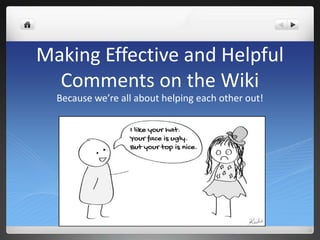
The Compliment Sandwich
Always try and include one
positive in your comment.

*For example, “I really like the
way you gave specific
passages from the book to
support your claim, but I’d like
to hear more explanation!”
Be specific
              Point your partner to exactly the spot
              that needs fixing.

              *Instead of “Reword this, it’s confusing”
              TRY: “Your first paragraph would be
              more clear if it was in a different order.
              You should talk about the book’s awards
              before its important themes.”
Detail isn’t only needed with the negative!
It’s helpful to know which parts of
your paragraphs are awesome,
not just which parts need fixing.

*Instead of “GREAT JOB!” try “I
love the way you described how
middle schoolers could be
affected by graphic language.
Great argument!
Examples
   Bad comment: It flows.

   Good comment: I like your use of transitions-they really helped
    me be able to follow along in your paragraph!

   Bad comment: Good.

   Good comment: Great job! I especially loved the quotes you
    chose from the text. They really showed how graphic the
    scenes in your book were. You may want to look back over your
    paragraph for spelling errors, though.
Reminders
   The reason we comment on each other’s work is to provide a
    new set of eyes with a new perspective, give helpful critiques
    and praise, and to have an opportunity to share and see more
    writing outside our own.


   Don’t short change your partner by not putting effort into your
    responses, and if you think your partner could be doing more to
    help you, let them know what you would like more feedback
    on!

Tas making effective comments

  • 1.
    Making Effective andHelpful Comments on the Wiki Because we’re all about helping each other out!
  • 2.
    The Compliment Sandwich Alwaystry and include one positive in your comment. *For example, “I really like the way you gave specific passages from the book to support your claim, but I’d like to hear more explanation!”
  • 3.
    Be specific Point your partner to exactly the spot that needs fixing. *Instead of “Reword this, it’s confusing” TRY: “Your first paragraph would be more clear if it was in a different order. You should talk about the book’s awards before its important themes.”
  • 4.
    Detail isn’t onlyneeded with the negative! It’s helpful to know which parts of your paragraphs are awesome, not just which parts need fixing. *Instead of “GREAT JOB!” try “I love the way you described how middle schoolers could be affected by graphic language. Great argument!
  • 5.
    Examples  Bad comment: It flows.  Good comment: I like your use of transitions-they really helped me be able to follow along in your paragraph!  Bad comment: Good.  Good comment: Great job! I especially loved the quotes you chose from the text. They really showed how graphic the scenes in your book were. You may want to look back over your paragraph for spelling errors, though.
  • 6.
    Reminders  The reason we comment on each other’s work is to provide a new set of eyes with a new perspective, give helpful critiques and praise, and to have an opportunity to share and see more writing outside our own.  Don’t short change your partner by not putting effort into your responses, and if you think your partner could be doing more to help you, let them know what you would like more feedback on!