Tiananmen Square Massacre A Fight for Democracy 1989 By: Landy Sun Dec. 4, 2007 - Music: the official "theme song" of the June 4 Movement
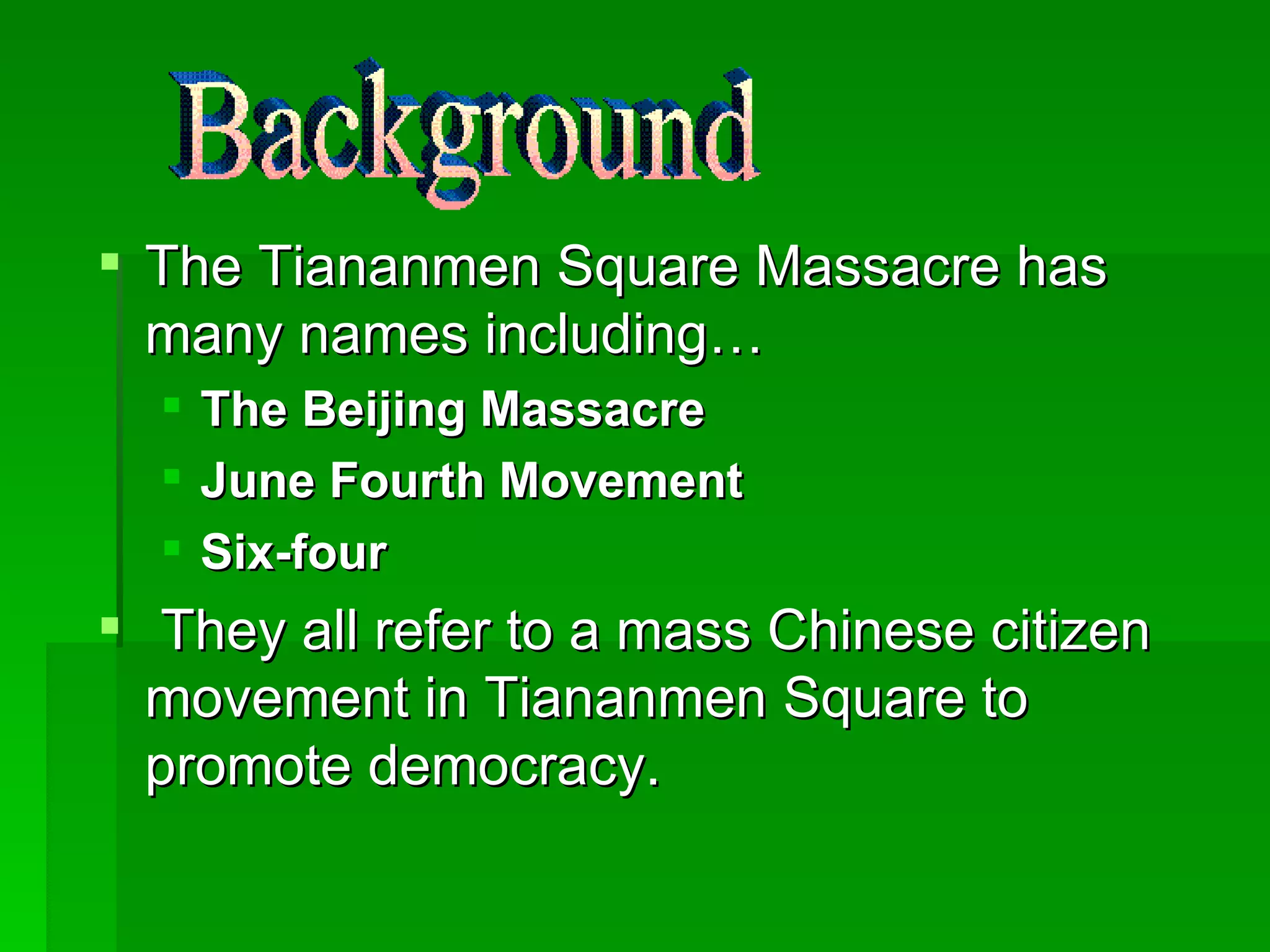
The Tiananmen Square Massacre has many names including… The Beijing Massacre   June Fourth Movement   Six-four They all refer to a mass Chinese citizen movement in Tiananmen Square to promote democracy. Background
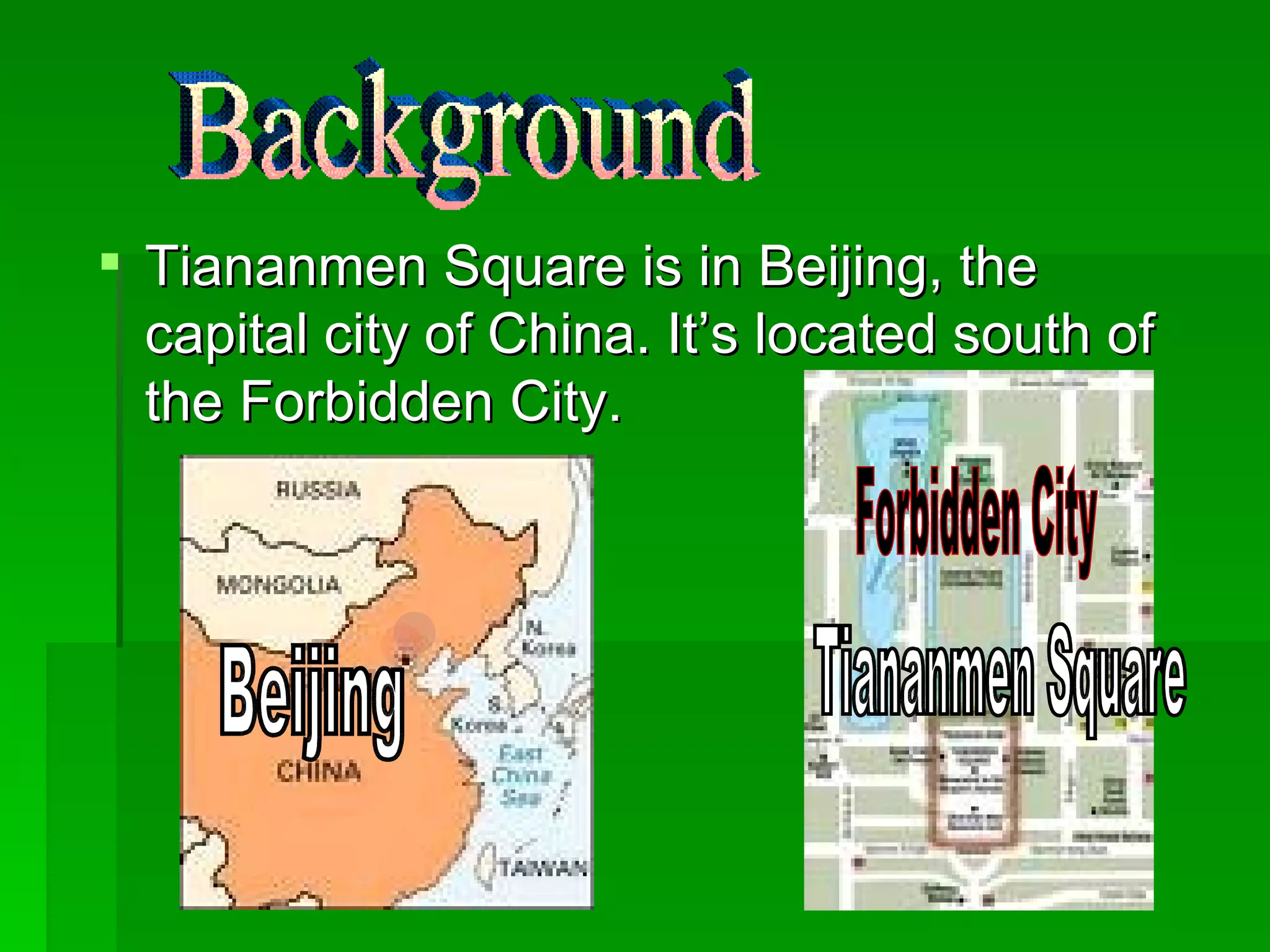
Tiananmen Square is in Beijing, the capital city of China. It’s located south of the Forbidden City. Background Tiananmen Square Forbidden City Beijing
China started as a  monarchy , then it became  communist  country. What next? Well, the people hoped for a  democracy . The current  communist  system had no freedom of speech, press, or voting. You also couldn’t open your own business. The government had no plans in becoming a democracy, so the people decided to do something. Orgins
Deng Xiaoping had the most power as the Chairman of the Central Military Commission. He made many industrial reforms, making China’s economy more capitalist. However, he didn’t make any political reforms. Orgins- Deng Xiaoping 1904-1997 Deng Xiaoping
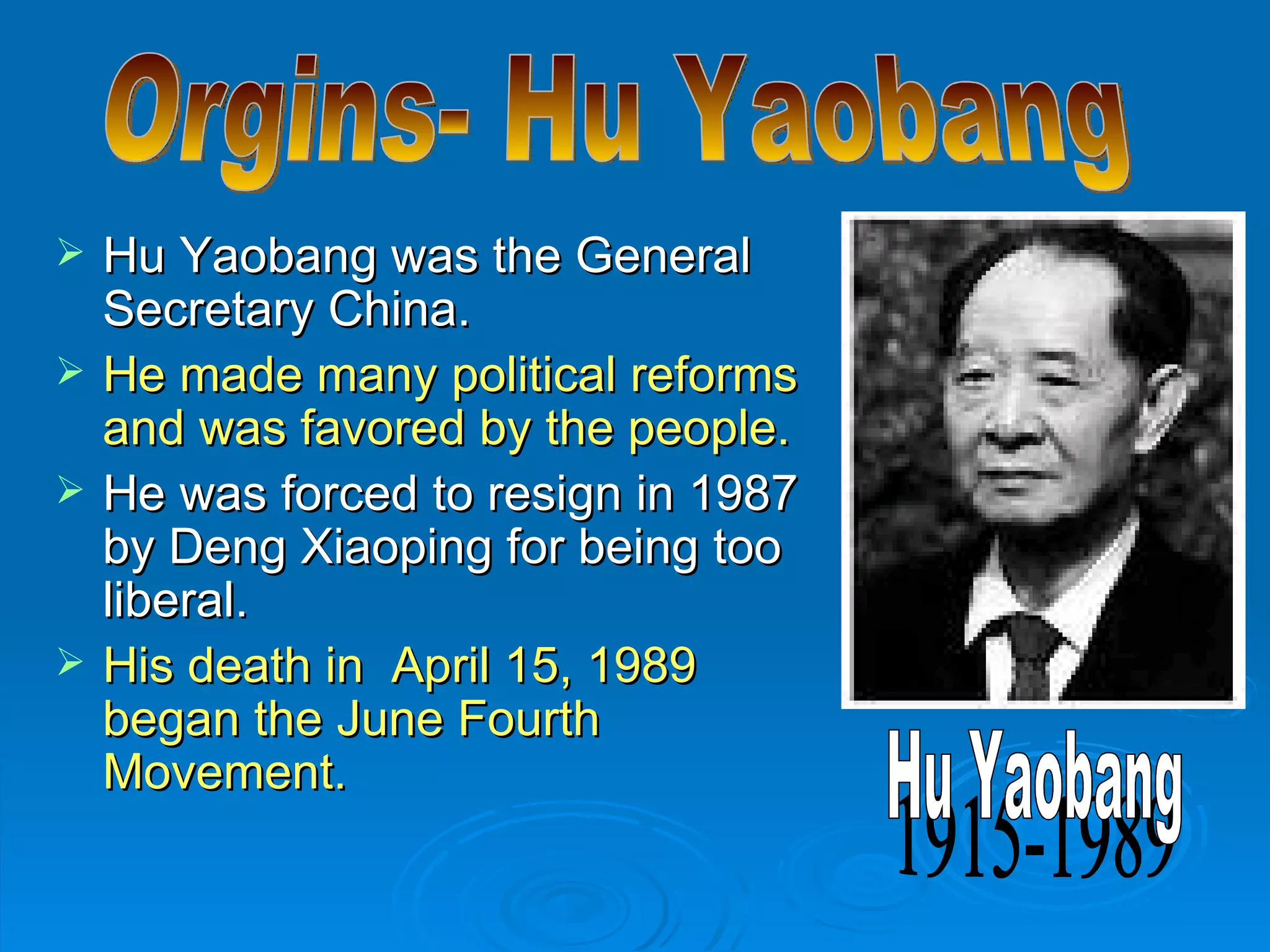
Hu Yaobang was the General Secretary China. He made many political reforms and was favored by the people. He was forced to resign in 1987 by Deng Xiaoping for being too liberal. His death in  April 15, 1989 began the June Fourth Movement. Orgins- Hu Yaobang 1915-1989 Hu Yaobang
Beginnings The start of a mass gathering was on April 18, 1989, where 10-thousand came to mourn the death of Hu Yaobang.  By April 22, there were over 100,000 in Tiananmen Square. At this time, it was mainly just to protest the bad views of Hu imposed by the government, but would grow to demand democracy. Hu Yaobang
On May 13, many students began stating their determination with hunger strikes. Over 1,000 people participated with considerable support from the public, numbering later on to a million. In all, the hunger strike lasted for a few weeks. Also, during the hunger strike, Gorbachev,   the Soviet Union’s leader, visited China. Hunger Strikes Scenes From the Hunger Strike
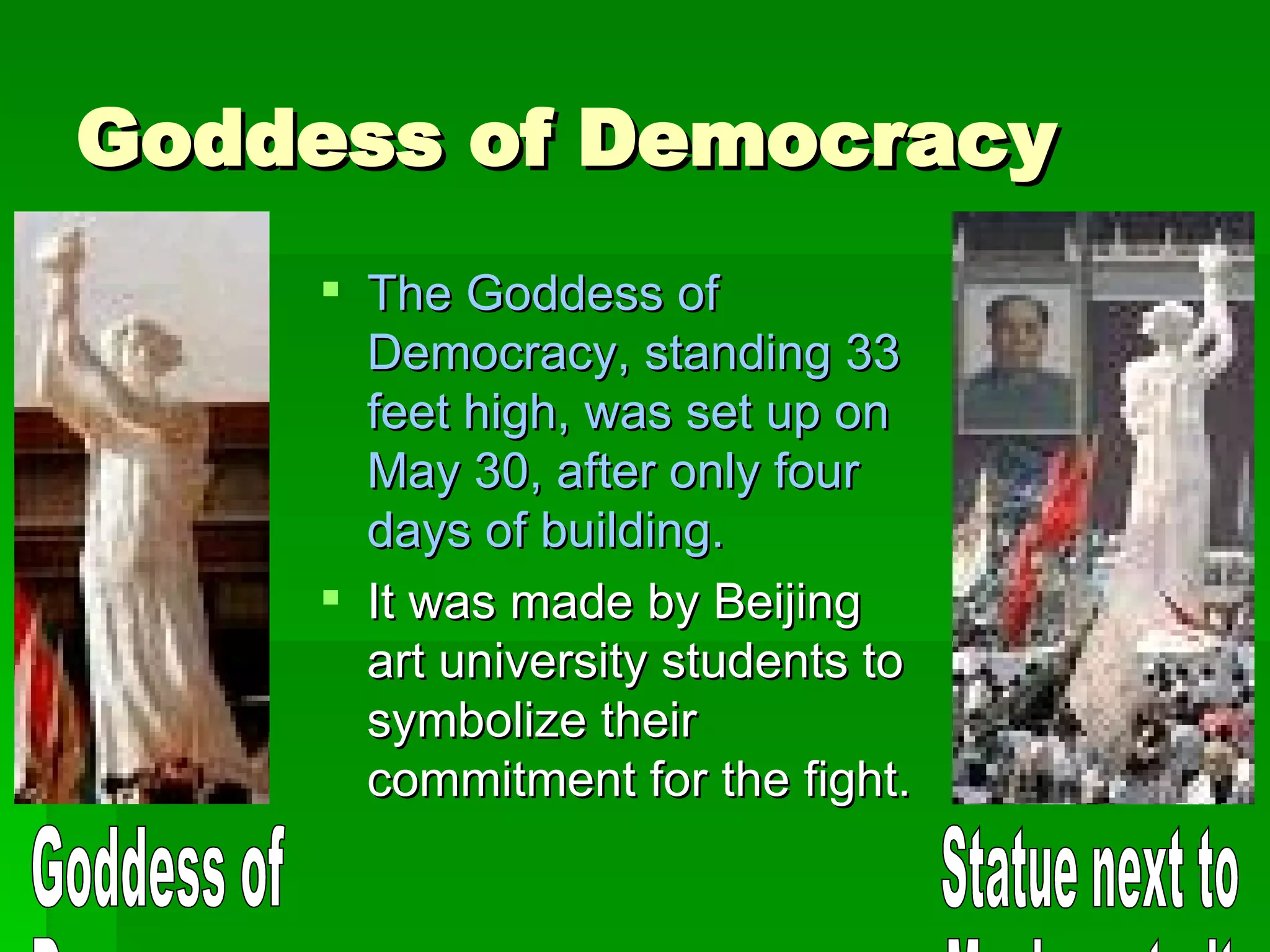
Goddess of Democracy The Goddess of Democracy, standing 33 feet high, was set up on May 30, after only four days of building. It was made by Beijing art university students to symbolize their commitment for the fight. Goddess of  Democracy Statue next to  Mao's portrait
The Massacre Begins Zhao Ziyang had become General Secretary in place of Hu Yaobang, and was the one thing preventing the government from using military force. Some time during the protests, however, he was dismissed from his position. With Zhao gone, the use of force was officially permitted on May 20, but the army was  blocked by the protestors.
The Massacre On June 3, the government had sent around 200,000 troops to surround Beijing. Civilians blockaded the streets with buses and barricades. The army managed to break through on June 4, using armed vehicles. Tanks ran over the tents and even the people. Soldiers shot into the crowds.
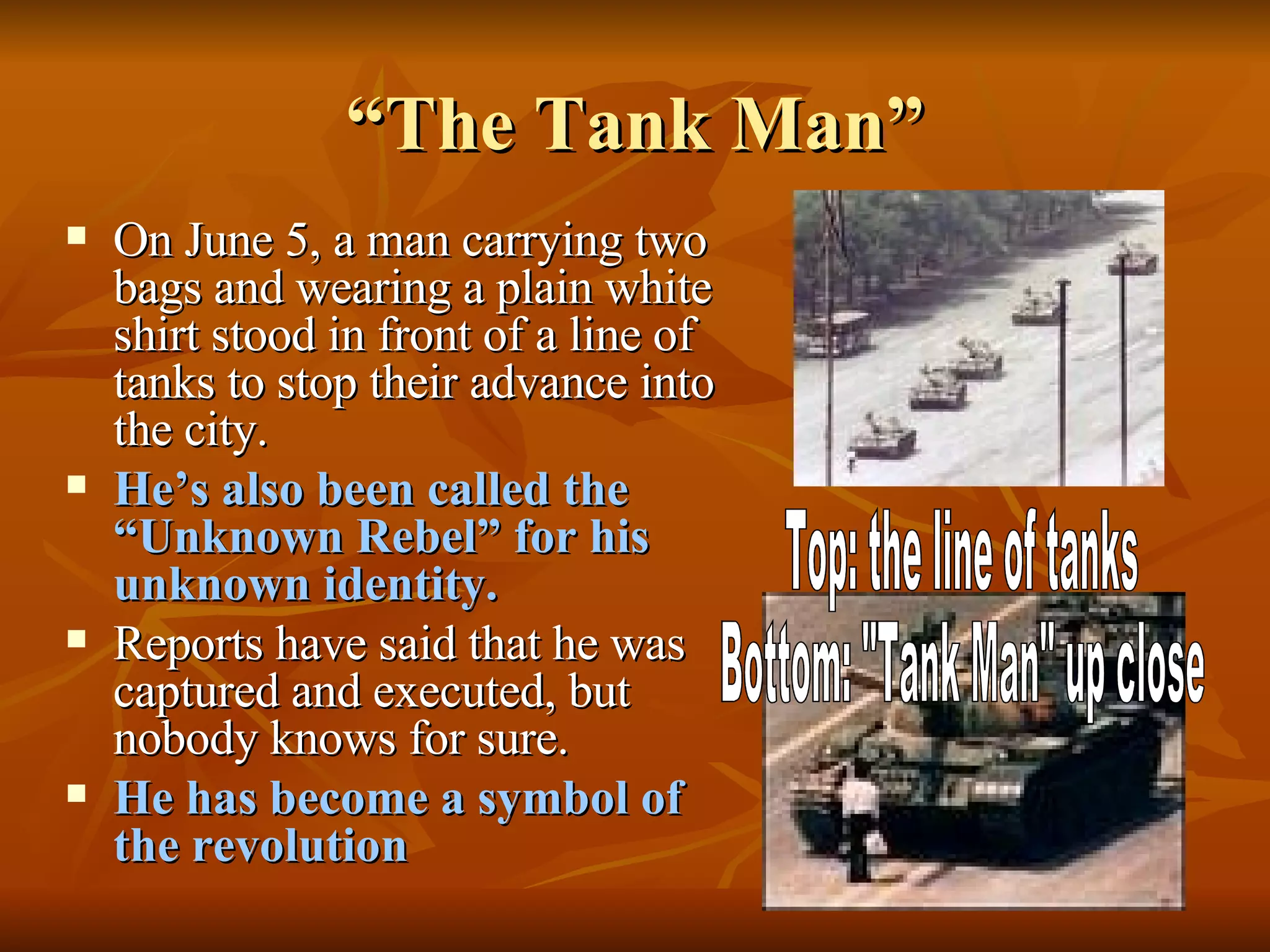
“The Tank Man” On June 5, a man carrying two bags and wearing a plain white shirt stood in front of a line of tanks to stop their advance into the city. He’s also been called the “Unknown Rebel” for his unknown identity. Reports have said that he was captured and executed, but nobody knows for sure. He has become a symbol of the revolution Top: the line of tanks Bottom: "Tank Man" up close
Aftermath- Media The government tried to hide the event from the media and the world by banning all independent media. This prevented detailed reports on the event. Still, the news reached the world and there were reportedly somewhere around 300 to 4,000 deaths, with thousands more injured and even more arrested.
Aftermath The protests did not have any effects on China’s government, but it did have an impact others. It symbolized that the Chinese people were willing to fight for democracy, although the Chinese government would do anything to prevent that. The movement led to the downfall of communism in Russia. That downfall helped lead to the end of the Cold War.
Aftermath Still, the government denies responsibility and states that no one died. It has erased all evidence possible within China, even internet sites. If anyone in China speaks about it, they risk being arrested and even executed.
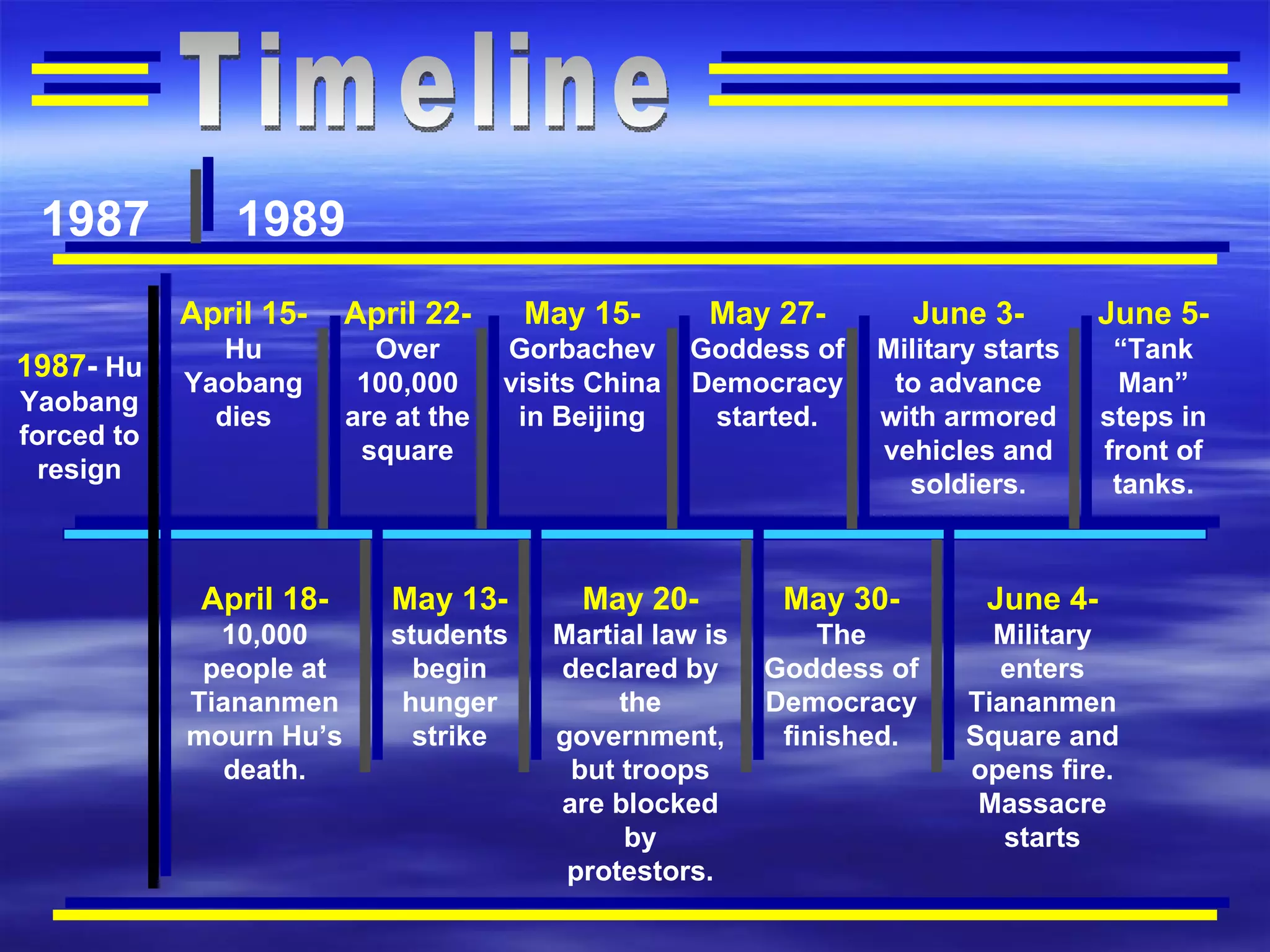
Timeline 1987 -  Hu Yaobang forced to resign April 15-  Hu Yaobang dies April 18-  10,000 people at Tiananmen mourn Hu’s death. 1987 1989 April 22-  Over 100,000 are at the square May 13-  students begin hunger strike May 15-  Gorbachev visits China in Beijing May 20-  Martial law is declared by the government, but troops are blocked by protestors. May 30-  The Goddess of Democracy finished. May 27-  Goddess of Democracy started. June 3-  Military starts to advance with armored vehicles and soldiers. June 4-  Military enters Tiananmen Square and opens fire. Massacre starts June 5-  “Tank Man” steps in front of tanks.
&quot;Tiananmen Square Protests of 1989.&quot;  Wikipedia . 8 Nov. 2007. Wikimedia Foundation, Inc. 8 Nov. 2007 http://en.wikipedia.org/wiki/Tiananmen_Square_protests_of_1989v Carter, Alden R.  China Past- China Future . New York: Franklin Watts, 1994. Tian, Duan. Personal interview. 18 Nov. 2007.  &quot;1989: Massacre in Tiananmen Square.&quot;  Bbc.Co.Uk . BBC News. 18 Nov. 2007 <http://news.bbc.co.uk/onthisday/hi/dates/stories/june/4/newsid_2496000/2496277.stm>.  &quot;Tiananmen, April-June 1989.&quot;  Christus Rex Et Redemptor Mundi . 4 June 1999. Christus Rex, Inc. 18 Nov. 2007 <http://www.christusrex.org/www1/sdc/tiananmen.html>.  Bibliography

T A Mpres-Landy

  • 1.
  • 2.
    Tiananmen Square MassacreA Fight for Democracy 1989 By: Landy Sun Dec. 4, 2007 - Music: the official &quot;theme song&quot; of the June 4 Movement
  • 3.
    The Tiananmen SquareMassacre has many names including… The Beijing Massacre June Fourth Movement Six-four They all refer to a mass Chinese citizen movement in Tiananmen Square to promote democracy. Background
  • 4.
    Tiananmen Square isin Beijing, the capital city of China. It’s located south of the Forbidden City. Background Tiananmen Square Forbidden City Beijing
  • 5.
    China started asa monarchy , then it became communist country. What next? Well, the people hoped for a democracy . The current communist system had no freedom of speech, press, or voting. You also couldn’t open your own business. The government had no plans in becoming a democracy, so the people decided to do something. Orgins
  • 6.
    Deng Xiaoping hadthe most power as the Chairman of the Central Military Commission. He made many industrial reforms, making China’s economy more capitalist. However, he didn’t make any political reforms. Orgins- Deng Xiaoping 1904-1997 Deng Xiaoping
  • 7.
    Hu Yaobang wasthe General Secretary China. He made many political reforms and was favored by the people. He was forced to resign in 1987 by Deng Xiaoping for being too liberal. His death in April 15, 1989 began the June Fourth Movement. Orgins- Hu Yaobang 1915-1989 Hu Yaobang
  • 8.
    Beginnings The startof a mass gathering was on April 18, 1989, where 10-thousand came to mourn the death of Hu Yaobang. By April 22, there were over 100,000 in Tiananmen Square. At this time, it was mainly just to protest the bad views of Hu imposed by the government, but would grow to demand democracy. Hu Yaobang
  • 9.
    On May 13,many students began stating their determination with hunger strikes. Over 1,000 people participated with considerable support from the public, numbering later on to a million. In all, the hunger strike lasted for a few weeks. Also, during the hunger strike, Gorbachev, the Soviet Union’s leader, visited China. Hunger Strikes Scenes From the Hunger Strike
  • 10.
    Goddess of DemocracyThe Goddess of Democracy, standing 33 feet high, was set up on May 30, after only four days of building. It was made by Beijing art university students to symbolize their commitment for the fight. Goddess of Democracy Statue next to Mao's portrait
  • 11.
    The Massacre BeginsZhao Ziyang had become General Secretary in place of Hu Yaobang, and was the one thing preventing the government from using military force. Some time during the protests, however, he was dismissed from his position. With Zhao gone, the use of force was officially permitted on May 20, but the army was blocked by the protestors.
  • 12.
    The Massacre OnJune 3, the government had sent around 200,000 troops to surround Beijing. Civilians blockaded the streets with buses and barricades. The army managed to break through on June 4, using armed vehicles. Tanks ran over the tents and even the people. Soldiers shot into the crowds.
  • 13.
    “The Tank Man”On June 5, a man carrying two bags and wearing a plain white shirt stood in front of a line of tanks to stop their advance into the city. He’s also been called the “Unknown Rebel” for his unknown identity. Reports have said that he was captured and executed, but nobody knows for sure. He has become a symbol of the revolution Top: the line of tanks Bottom: &quot;Tank Man&quot; up close
  • 14.
    Aftermath- Media Thegovernment tried to hide the event from the media and the world by banning all independent media. This prevented detailed reports on the event. Still, the news reached the world and there were reportedly somewhere around 300 to 4,000 deaths, with thousands more injured and even more arrested.
  • 15.
    Aftermath The protestsdid not have any effects on China’s government, but it did have an impact others. It symbolized that the Chinese people were willing to fight for democracy, although the Chinese government would do anything to prevent that. The movement led to the downfall of communism in Russia. That downfall helped lead to the end of the Cold War.
  • 16.
    Aftermath Still, thegovernment denies responsibility and states that no one died. It has erased all evidence possible within China, even internet sites. If anyone in China speaks about it, they risk being arrested and even executed.
  • 17.
    Timeline 1987 - Hu Yaobang forced to resign April 15- Hu Yaobang dies April 18- 10,000 people at Tiananmen mourn Hu’s death. 1987 1989 April 22- Over 100,000 are at the square May 13- students begin hunger strike May 15- Gorbachev visits China in Beijing May 20- Martial law is declared by the government, but troops are blocked by protestors. May 30- The Goddess of Democracy finished. May 27- Goddess of Democracy started. June 3- Military starts to advance with armored vehicles and soldiers. June 4- Military enters Tiananmen Square and opens fire. Massacre starts June 5- “Tank Man” steps in front of tanks.
  • 18.
    &quot;Tiananmen Square Protestsof 1989.&quot; Wikipedia . 8 Nov. 2007. Wikimedia Foundation, Inc. 8 Nov. 2007 http://en.wikipedia.org/wiki/Tiananmen_Square_protests_of_1989v Carter, Alden R. China Past- China Future . New York: Franklin Watts, 1994. Tian, Duan. Personal interview. 18 Nov. 2007. &quot;1989: Massacre in Tiananmen Square.&quot; Bbc.Co.Uk . BBC News. 18 Nov. 2007 <http://news.bbc.co.uk/onthisday/hi/dates/stories/june/4/newsid_2496000/2496277.stm>. &quot;Tiananmen, April-June 1989.&quot; Christus Rex Et Redemptor Mundi . 4 June 1999. Christus Rex, Inc. 18 Nov. 2007 <http://www.christusrex.org/www1/sdc/tiananmen.html>. Bibliography