System Risk Research on Elderly
Health
–Davos One Health Summit
Zhangang Han
School of Systems Science
Beijing Normal University
Nov. 18, 2013
Challenges China is facing
• Current China: Variety
• Entropy Maximum
• Dilemmas
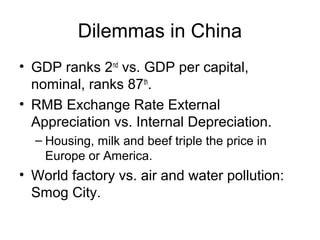
Dilemmas in China
• GDP ranks 2nd vs. GDP per capital,
nominal, ranks 87th.
• RMB Exchange Rate External
Appreciation vs. Internal Depreciation.
– Housing, milk and beef triple the price in
Europe or America.

• World factory vs. air and water pollution:
Smog City.
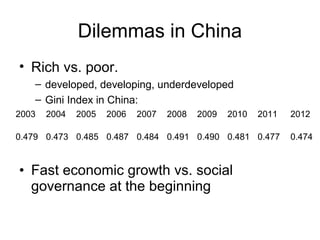
Dilemmas in China
• Rich vs. poor.
– developed, developing, underdeveloped
– Gini Index in China:
2003

2004

2005

2006

2007

2008

2009

2010

2011

2012

0.479 0.473 0.485 0.487 0.484 0.491 0.490 0.481 0.477

0.474

• Fast economic growth vs. social
governance at the beginning
Dilemmas in China
• Large population vs. aging society and
labor shortage
Integrated Decision Making
Support
• Systems that may have global impacts
•
•
•
•
•
•
•
•
•

Global warming, Climate change
Green growth
Financial systems
Energy, Water shortage
Food safety and food security
Nuclear security
Pollution
Economic development, Imports and exports
Aging society

• Interaction is important to understand these
systems
The Decision Support System We
Need
• Data usually cover a variety of fields
• Repetitive: we wish to do experiments to test the
policies
• Answer What-if questions
• May incorporate data-driven models: data
mining, text mining, image mining
• Should include “trigger”, thresholds, criteria
• Validation protocol
• Aims at real application
The Decision Support System We
Need
• Tools that could be used to understand the
systems
• Accumulate knowledge
• Group Decision Making Support System
• A compatible frame work that incorporate data
workers, modelers, decision makers from a
variety of backgrounds /interests
• Help make decision during emergency/crises
• Train the policy makers and students
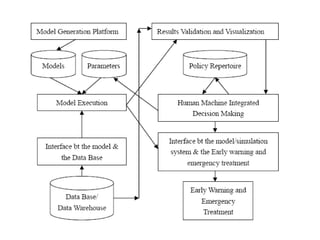
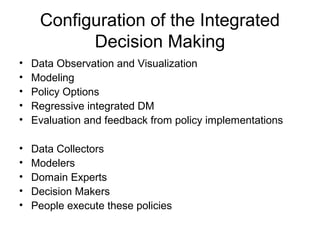
Configuration of the Integrated
Decision Making
•
•
•
•
•

Data Observation and Visualization
Modeling
Policy Options
Regressive integrated DM
Evaluation and feedback from policy implementations

•
•
•
•
•

Data Collectors
Modelers
Domain Experts
Decision Makers
People execute these policies
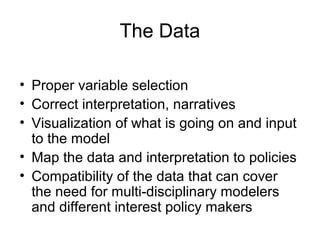
The Data
• Proper variable selection
• Correct interpretation, narratives
• Visualization of what is going on and input
to the model
• Map the data and interpretation to policies
• Compatibility of the data that can cover
the need for multi-disciplinary modelers
and different interest policy makers
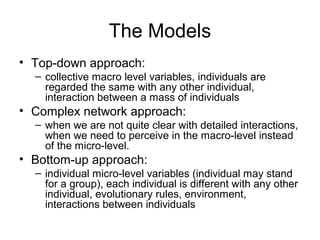
The Models
• Top-down approach:
– collective macro level variables, individuals are
regarded the same with any other individual,
interaction between a mass of individuals

• Complex network approach:
– when we are not quite clear with detailed interactions,
when we need to perceive in the macro-level instead
of the micro-level.

• Bottom-up approach:
– individual micro-level variables (individual may stand
for a group), each individual is different with any other
individual, evolutionary rules, environment,
interactions between individuals
The Parameters
• Extracted from observations
• Experience comes in: Experience is also
Science, domain expert
• What-if analysis to determine the
parameters
• Interactions between the modelers and
domain experts and policy makers
The Policy Alternatives
•
•
•
•

Previously used policies
Policies adopted in other countries/places
Policy effects provided
Policies suggestions triggered by the
results of the models

• Evaluate the effect and feedback
Challenges
• Multidisciplinary, long-time collaboration, develop a
research program, teams, organizations
• Comprise a variety of fields that talk in totally different
languages, different meanings for same words/
sentences
• Co-evolution of research objects, data
• Complex system: non-linear, multi-scale, positive
feedback, irreversible, phase transitions, micro
interactions that result in macro collective behavior,
emergence
• Global, don’t forget we start from the basis: bath-tub
dynamics
Enterprise Interests and
Contributions
Wu Liang Ye Corporation
• A Chinese famous state-owned
Chinese liquor company is
examined as a case study. They
have been practicing their
corporate social responsibility to
contribute to the food security in
the industry.
Wu Liang Ye Corporation
• Their implementations of circular
economy with the green (distillers'
grains), low-carbon, environmentally
friendly achievements win them honors
as well as profits that ranked number
one in Chinese liquor industry for the
consecutive 18 years. A win-win
solution seems to be found.
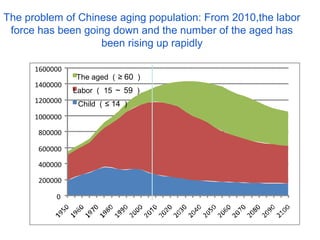
The problem of Chinese aging population: From 2010,the labor
force has been going down and the number of the aged has
been rising up rapidly
1600000
1400000
1200000
1000000
800000
600000
400000
200000
0

The aged (≥ 60 )
Labor ( 15 ~ 59 )
Child (≤ 14 )
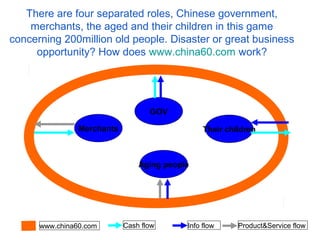
There are four separated roles, Chinese government,
merchants, the aged and their children in this game
concerning 200million old people. Disaster or great business
opportunity? How does www.china60.com work?

GOV
Merchants

Their children

Aging people

www.china60.com

Cash flow

Info flow

Product&Service flow
Thanks

School of Systems
Science, Beijing Normal
University

• The School of Systems Science ranks top of the Systems
Science research institutes in Chinese universities.
• The research program encompasses both theoryoriented and applications aspects of the field.
• Research interests of the department include
–
–
–
–

complex systems theory
socio-economic systems
computational neuro-science
evolutionary computation and agent-based systems.

System Risk Research on Elderly Health

  • 1.
    System Risk Researchon Elderly Health –Davos One Health Summit Zhangang Han School of Systems Science Beijing Normal University Nov. 18, 2013
  • 2.
    Challenges China isfacing • Current China: Variety • Entropy Maximum • Dilemmas
  • 3.
    Dilemmas in China •GDP ranks 2nd vs. GDP per capital, nominal, ranks 87th. • RMB Exchange Rate External Appreciation vs. Internal Depreciation. – Housing, milk and beef triple the price in Europe or America. • World factory vs. air and water pollution: Smog City.
  • 4.
    Dilemmas in China •Rich vs. poor. – developed, developing, underdeveloped – Gini Index in China: 2003 2004 2005 2006 2007 2008 2009 2010 2011 2012 0.479 0.473 0.485 0.487 0.484 0.491 0.490 0.481 0.477 0.474 • Fast economic growth vs. social governance at the beginning
  • 5.
    Dilemmas in China •Large population vs. aging society and labor shortage
  • 6.
    Integrated Decision Making Support •Systems that may have global impacts • • • • • • • • • Global warming, Climate change Green growth Financial systems Energy, Water shortage Food safety and food security Nuclear security Pollution Economic development, Imports and exports Aging society • Interaction is important to understand these systems
  • 7.
    The Decision SupportSystem We Need • Data usually cover a variety of fields • Repetitive: we wish to do experiments to test the policies • Answer What-if questions • May incorporate data-driven models: data mining, text mining, image mining • Should include “trigger”, thresholds, criteria • Validation protocol • Aims at real application
  • 8.
    The Decision SupportSystem We Need • Tools that could be used to understand the systems • Accumulate knowledge • Group Decision Making Support System • A compatible frame work that incorporate data workers, modelers, decision makers from a variety of backgrounds /interests • Help make decision during emergency/crises • Train the policy makers and students
  • 10.
    Configuration of theIntegrated Decision Making • • • • • Data Observation and Visualization Modeling Policy Options Regressive integrated DM Evaluation and feedback from policy implementations • • • • • Data Collectors Modelers Domain Experts Decision Makers People execute these policies
  • 11.
    The Data • Propervariable selection • Correct interpretation, narratives • Visualization of what is going on and input to the model • Map the data and interpretation to policies • Compatibility of the data that can cover the need for multi-disciplinary modelers and different interest policy makers
  • 12.
    The Models • Top-downapproach: – collective macro level variables, individuals are regarded the same with any other individual, interaction between a mass of individuals • Complex network approach: – when we are not quite clear with detailed interactions, when we need to perceive in the macro-level instead of the micro-level. • Bottom-up approach: – individual micro-level variables (individual may stand for a group), each individual is different with any other individual, evolutionary rules, environment, interactions between individuals
  • 13.
    The Parameters • Extractedfrom observations • Experience comes in: Experience is also Science, domain expert • What-if analysis to determine the parameters • Interactions between the modelers and domain experts and policy makers
  • 14.
    The Policy Alternatives • • • • Previouslyused policies Policies adopted in other countries/places Policy effects provided Policies suggestions triggered by the results of the models • Evaluate the effect and feedback
  • 15.
    Challenges • Multidisciplinary, long-timecollaboration, develop a research program, teams, organizations • Comprise a variety of fields that talk in totally different languages, different meanings for same words/ sentences • Co-evolution of research objects, data • Complex system: non-linear, multi-scale, positive feedback, irreversible, phase transitions, micro interactions that result in macro collective behavior, emergence • Global, don’t forget we start from the basis: bath-tub dynamics
  • 16.
    Enterprise Interests and Contributions WuLiang Ye Corporation • A Chinese famous state-owned Chinese liquor company is examined as a case study. They have been practicing their corporate social responsibility to contribute to the food security in the industry.
  • 17.
    Wu Liang YeCorporation • Their implementations of circular economy with the green (distillers' grains), low-carbon, environmentally friendly achievements win them honors as well as profits that ranked number one in Chinese liquor industry for the consecutive 18 years. A win-win solution seems to be found.
  • 18.
    The problem ofChinese aging population: From 2010,the labor force has been going down and the number of the aged has been rising up rapidly 1600000 1400000 1200000 1000000 800000 600000 400000 200000 0 The aged (≥ 60 ) Labor ( 15 ~ 59 ) Child (≤ 14 )
  • 19.
    There are fourseparated roles, Chinese government, merchants, the aged and their children in this game concerning 200million old people. Disaster or great business opportunity? How does www.china60.com work? GOV Merchants Their children Aging people www.china60.com Cash flow Info flow Product&Service flow
  • 20.
    Thanks School of Systems Science,Beijing Normal University • The School of Systems Science ranks top of the Systems Science research institutes in Chinese universities. • The research program encompasses both theoryoriented and applications aspects of the field. • Research interests of the department include – – – – complex systems theory socio-economic systems computational neuro-science evolutionary computation and agent-based systems.