CHAPTER 8: SYSTEM ENGINEERING:
           ANALYSIS AND DESIGN
CONTENTS


 System Concepts
 Examples of System
 Generalized model of System
 System control
 Types of System
 Hierarchical structure of System
 Handling System Complexity
 Classes of System
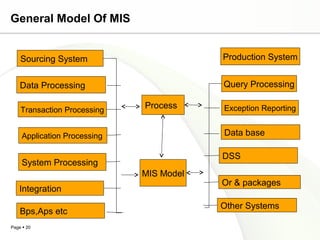
 General model of MIS


Page  2
System Concepts


 The word System is used in day to day in life with describing the subjects
  for example education system, business system etc
 System provides a meaningful framework for describing and
  undertanding the functions and features of subjects
 System is defined as a set of elements arranged in an orferly manner to
  accomplish an objective
 System is always deigned to fulfill a perticular task with special objectives
  for example Student information System will give complete detail of
  student.


Page  3
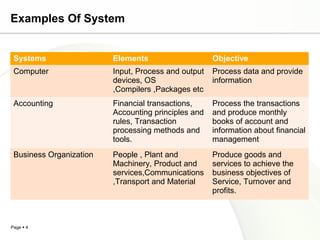
Examples Of System


 Systems                 Elements                    Objective
 Computer                Input, Process and output   Process data and provide
                         devices, OS                 information
                         ,Compilers ,Packages etc
 Accounting              Financial transactions,     Process the transactions
                         Accounting principles and   and produce monthly
                         rules, Transaction          books of account and
                         processing methods and      information about financial
                         tools.                      management
 Business Organization   People , Plant and          Produce goods and
                         Machinery, Product and      services to achieve the
                         services,Communications     business objectives of
                         ,Transport and Material     Service, Turnover and
                                                     profits.


Page  4
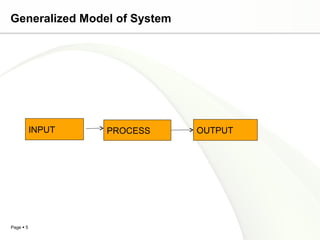
Generalized Model of System


           INPUT   PROCESS    OUTPUT


Page  5
System Control


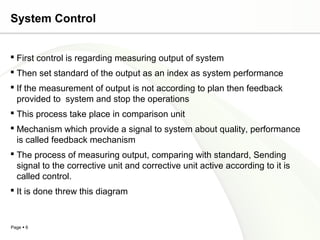
 First control is regarding measuring output of system
 Then set standard of the output as an index as system performance
 If the measurement of output is not according to plan then feedback
  provided to system and stop the operations
 This process take place in comparison unit
 Mechanism which provide a signal to system about quality, performance
  is called feedback mechanism
 The process of measuring output, comparing with standard, Sending
  signal to the corrective unit and corrective unit active according to it is
  called control.
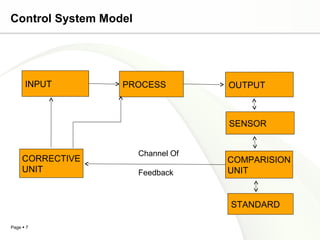
 It is done threw this diagram


Page  6
Control System Model


      INPUT       PROCESS           OUTPUT


                                    SENSOR


                       Channel Of
     CORRECTIVE                     COMPARISION
     UNIT              Feedback     UNIT


                                    STANDARD

Page  7
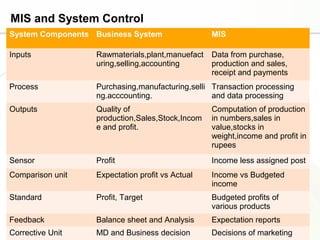
MIS and System Control
System Components Business System                MIS

Inputs            Rawmaterials,plant,manuefact   Data from purchase,
                  uring,selling,accounting       production and sales,
                                                 receipt and payments
Process           Purchasing,manufacturing,selli Transaction processing
                  ng.acccounting.                and data processing
Outputs           Quality of                     Computation of production
                  production,Sales,Stock,Incom   in numbers,sales in
                  e and profit.                  value,stocks in
                                                 weight,income and profit in
                                                 rupees
Sensor            Profit                         Income less assigned post
Comparison unit   Expectation profit vs Actual   Income vs Budgeted
                                                 income
Standard          Profit, Target                 Budgeted profits of
                                                 various products
Feedback          Balance sheet and Analysis     Expectation reports
Page  8
Corrective Unit   MD and Business decision       Decisions of marketing
Types of System


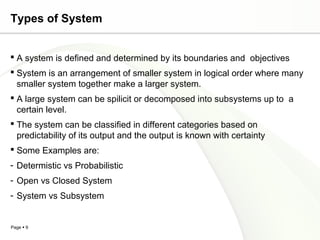
 A system is defined and determined by its boundaries and objectives
 System is an arrangement of smaller system in logical order where many
  smaller system together make a larger system.
 A large system can be spilicit or decomposed into subsystems up to a
  certain level.
 The system can be classified in different categories based on
  predictability of its output and the output is known with certainty
 Some Examples are:
- Determistic vs Probabilistic
- Open vs Closed System
- System vs Subsystem


Page  9
Types Of System


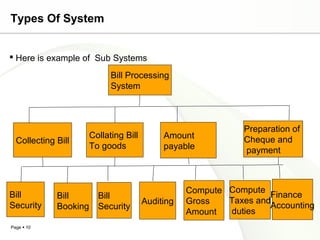
 Here is example of Sub Systems

                             Bill Processing
                             System


                                                               Preparation of
                       Collating Bill        Amount            Cheque and
  Collecting Bill
                       To goods              payable           payment


Bill                                               Compute Compute Finance
             Bill        Bill
                                        Auditing   Gross   Taxes and
Security     Booking     Security                                   Accounting
                                                   Amount  duties
Page  10
Handling System Compexity


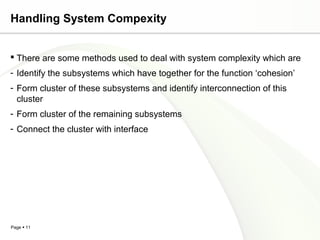
 There are some methods used to deal with system complexity which are
- Identify the subsystems which have together for the function ‘cohesion’
- Form cluster of these subsystems and identify interconnection of this
  cluster
- Form cluster of the remaining subsystems
- Connect the cluster with interface


Page  11
System Efficiency and Effectiveness


 The performance can measured 2 ways the efficiency and effectiveness
 The efficiency indicates manner in which inputs are used by the system
 The effectiveness is the measure of deciding whether a system provide a
  proper output or not.
 A system has to be effective and efficient for the highest utility of the
  system
 The effectiveness I measured goodness of output
 Efficiency is a measured a productivity of system


Page  12
Post Implementation Problems of system


 There are lots of problem occurs after system has implemented
  successfully so to navigate this problem following steps has to be taken


- A periodic review of system
- User meeting to assess the current utility of the system and the level of
  satisfaction
- Subjecting the system to an audit check threw the test data
- Running the system under audit trail
- Bringing out system modification


Page  13
Post Implementation Problems of system


 The key terms to handle the post implementation problems in system are:
- The core design must be comprehensive and flexible to undergo a quick
  change


- The associated sub systems must be built under flexible design
        The most successful way of handling these problems is to have a
  business analyst in org provide proper information with decision making
  authority to them.


Page  14
Classes of System


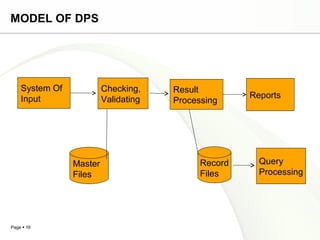
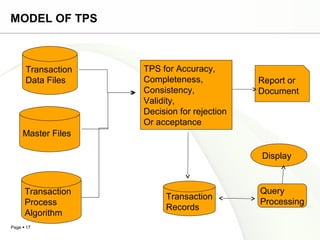
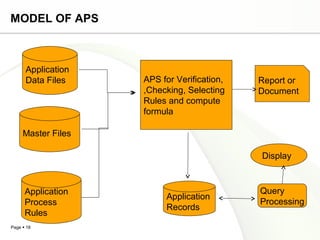
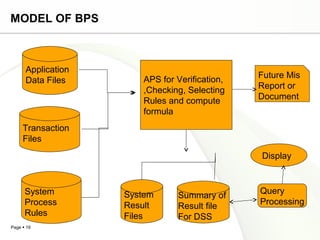
 MIS should Classifies systems in 5 ways
- Data processing System(DPS)
- Transaction Processing System(TPS)
- Application Processing System(APS)
- Business function processing System(BPS)
- Integrated Information Processing System(IPS)


Page  15
MODEL OF DPS


    System Of            Checking,    Result
    Input                Validating                  Reports
                                      Processing


                Master                      Record     Query
                Files                       Files      Processing


Page  16
MODEL OF TPS


      Transaction   TPS for Accuracy,
      Data Files    Completeness,            Report or
                    Consistency,             Document
                    Validity,
                    Decision for rejection
                    Or acceptance
     Master Files

                                             Display


      Transaction                            Query
                         Transaction
      Process                                Processing
                         Records
      Algorithm
Page  17
MODEL OF APS


      Application
      Data Files    APS for Verification,   Report or
                    ,Checking, Selecting    Document
                    Rules and compute
                    formula

     Master Files

                                            Display


      Application                           Query
                         Application
      Process                               Processing
                         Records
      Rules
Page  18
MODEL OF BPS


      Application
                       APS for Verification,   Future Mis
      Data Files
                       ,Checking, Selecting    Report or
                       Rules and compute       Document
                       formula
     Transaction
     Files
                                               Display


      System        System     Summary of      Query
      Process       Result     Result file     Processing
      Rules         Files      For DSS
Page  19
General Model Of MIS


    Sourcing System                       Production System


    Data Processing                       Query Processing

    Transaction Processing
                              Process     Exception Reporting


     Application Processing               Data base

                                          DSS
    System Processing
                              MIS Model
                                          Or & packages
   Integration
                                          Other Systems
    Bps,Aps etc
Page  20
General Model Of MIS


 The MIS is an arrangement of data processing and information systems in
  an orderly manner to support the management in achieving the business
  objectives
 Mis is designed to provide the information
 The performance of the mis design starts decaying in the post
  implementation period
 Mis provide complete mechanism to bring back the system original
  equilibrium
 Mis provide hierarchical structure for proper system implementation
 Mis provide complete overview of system and ability to access
 Mis is useful to measure performance of system and helpful to system
  control

Page  21

System

  • 1.
    CHAPTER 8: SYSTEMENGINEERING: ANALYSIS AND DESIGN
  • 2.
    CONTENTS  System Concepts Examples of System  Generalized model of System  System control  Types of System  Hierarchical structure of System  Handling System Complexity  Classes of System  General model of MIS Page  2
  • 3.
    System Concepts  Theword System is used in day to day in life with describing the subjects for example education system, business system etc  System provides a meaningful framework for describing and undertanding the functions and features of subjects  System is defined as a set of elements arranged in an orferly manner to accomplish an objective  System is always deigned to fulfill a perticular task with special objectives for example Student information System will give complete detail of student. Page  3
  • 4.
    Examples Of System Systems Elements Objective Computer Input, Process and output Process data and provide devices, OS information ,Compilers ,Packages etc Accounting Financial transactions, Process the transactions Accounting principles and and produce monthly rules, Transaction books of account and processing methods and information about financial tools. management Business Organization People , Plant and Produce goods and Machinery, Product and services to achieve the services,Communications business objectives of ,Transport and Material Service, Turnover and profits. Page  4
  • 5.
    Generalized Model ofSystem INPUT PROCESS OUTPUT Page  5
  • 6.
    System Control  Firstcontrol is regarding measuring output of system  Then set standard of the output as an index as system performance  If the measurement of output is not according to plan then feedback provided to system and stop the operations  This process take place in comparison unit  Mechanism which provide a signal to system about quality, performance is called feedback mechanism  The process of measuring output, comparing with standard, Sending signal to the corrective unit and corrective unit active according to it is called control.  It is done threw this diagram Page  6
  • 7.
    Control System Model INPUT PROCESS OUTPUT SENSOR Channel Of CORRECTIVE COMPARISION UNIT Feedback UNIT STANDARD Page  7
  • 8.
    MIS and SystemControl System Components Business System MIS Inputs Rawmaterials,plant,manuefact Data from purchase, uring,selling,accounting production and sales, receipt and payments Process Purchasing,manufacturing,selli Transaction processing ng.acccounting. and data processing Outputs Quality of Computation of production production,Sales,Stock,Incom in numbers,sales in e and profit. value,stocks in weight,income and profit in rupees Sensor Profit Income less assigned post Comparison unit Expectation profit vs Actual Income vs Budgeted income Standard Profit, Target Budgeted profits of various products Feedback Balance sheet and Analysis Expectation reports Page  8 Corrective Unit MD and Business decision Decisions of marketing
  • 9.
    Types of System A system is defined and determined by its boundaries and objectives  System is an arrangement of smaller system in logical order where many smaller system together make a larger system.  A large system can be spilicit or decomposed into subsystems up to a certain level.  The system can be classified in different categories based on predictability of its output and the output is known with certainty  Some Examples are: - Determistic vs Probabilistic - Open vs Closed System - System vs Subsystem Page  9
  • 10.
    Types Of System Here is example of Sub Systems Bill Processing System Preparation of Collating Bill Amount Cheque and Collecting Bill To goods payable payment Bill Compute Compute Finance Bill Bill Auditing Gross Taxes and Security Booking Security Accounting Amount duties Page  10
  • 11.
    Handling System Compexity There are some methods used to deal with system complexity which are - Identify the subsystems which have together for the function ‘cohesion’ - Form cluster of these subsystems and identify interconnection of this cluster - Form cluster of the remaining subsystems - Connect the cluster with interface Page  11
  • 12.
    System Efficiency andEffectiveness  The performance can measured 2 ways the efficiency and effectiveness  The efficiency indicates manner in which inputs are used by the system  The effectiveness is the measure of deciding whether a system provide a proper output or not.  A system has to be effective and efficient for the highest utility of the system  The effectiveness I measured goodness of output  Efficiency is a measured a productivity of system Page  12
  • 13.
    Post Implementation Problemsof system  There are lots of problem occurs after system has implemented successfully so to navigate this problem following steps has to be taken - A periodic review of system - User meeting to assess the current utility of the system and the level of satisfaction - Subjecting the system to an audit check threw the test data - Running the system under audit trail - Bringing out system modification Page  13
  • 14.
    Post Implementation Problemsof system  The key terms to handle the post implementation problems in system are: - The core design must be comprehensive and flexible to undergo a quick change - The associated sub systems must be built under flexible design The most successful way of handling these problems is to have a business analyst in org provide proper information with decision making authority to them. Page  14
  • 15.
    Classes of System MIS should Classifies systems in 5 ways - Data processing System(DPS) - Transaction Processing System(TPS) - Application Processing System(APS) - Business function processing System(BPS) - Integrated Information Processing System(IPS) Page  15
  • 16.
    MODEL OF DPS System Of Checking, Result Input Validating Reports Processing Master Record Query Files Files Processing Page  16
  • 17.
    MODEL OF TPS Transaction TPS for Accuracy, Data Files Completeness, Report or Consistency, Document Validity, Decision for rejection Or acceptance Master Files Display Transaction Query Transaction Process Processing Records Algorithm Page  17
  • 18.
    MODEL OF APS Application Data Files APS for Verification, Report or ,Checking, Selecting Document Rules and compute formula Master Files Display Application Query Application Process Processing Records Rules Page  18
  • 19.
    MODEL OF BPS Application APS for Verification, Future Mis Data Files ,Checking, Selecting Report or Rules and compute Document formula Transaction Files Display System System Summary of Query Process Result Result file Processing Rules Files For DSS Page  19
  • 20.
    General Model OfMIS Sourcing System Production System Data Processing Query Processing Transaction Processing Process Exception Reporting Application Processing Data base DSS System Processing MIS Model Or & packages Integration Other Systems Bps,Aps etc Page  20
  • 21.
    General Model OfMIS  The MIS is an arrangement of data processing and information systems in an orderly manner to support the management in achieving the business objectives  Mis is designed to provide the information  The performance of the mis design starts decaying in the post implementation period  Mis provide complete mechanism to bring back the system original equilibrium  Mis provide hierarchical structure for proper system implementation  Mis provide complete overview of system and ability to access  Mis is useful to measure performance of system and helpful to system control Page  21