Synthetic opioids in Arab
countries
Presented by Reiam Ameer
Supervised by dr. ammar ali hussein
Higher diploma in toxicology
Baghdad university college of pharmacy
What Are Opiates? (1)
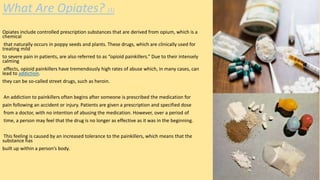
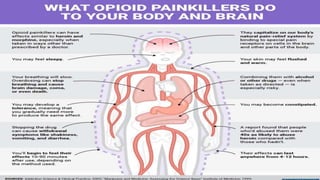
Opiates include controlled prescription substances that are derived from opium, which is a
chemical
that naturally occurs in poppy seeds and plants. These drugs, which are clinically used for
treating mild
to severe pain in patients, are also referred to as “opioid painkillers.” Due to their intensely
calming
effects, opioid painkillers have tremendously high rates of abuse which, in many cases, can
lead to addiction.
they can be so-called street drugs, such as heroin.
An addiction to painkillers often begins after someone is prescribed the medication for
pain following an accident or injury. Patients are given a prescription and specified dose
from a doctor, with no intention of abusing the medication. However, over a period of
time, a person may feel that the drug is no longer as effective as it was in the beginning.
This feeling is caused by an increased tolerance to the painkillers, which means that the
substance has
built up within a person’s body.
This feeling is caused by an increased tolerance to
the painkillers, which means that the substance
has built up within a person’s body
• A tolerance can also cause a person to take larger
doses than their recommended amount in order
to achieve the effects they want. Increasing the
medication dosage can lead to a physical
dependence, whereby they need to continue
taking the drug to feel normal. Eventually a
physical dependence can lead to cravings, which
are characterized by growing urges to continue
using the drug – despite negative consequences
that may occur.
• When a person’s drug-seeking behavior scales
completely out of control and begins to
compromise their physical and psychological
health, a full-blown addiction is present.
Addiction is far more serious than a strong desire
to use drugs – it is a neurological disease that
feels inescapable to the person suffering.
Opioids vs. Opiates
• Many people have questions surrounding the difference
between these two terms. As it turns out, both terms are
often interchanged because these substances largely
produce the same effects
• Opiates
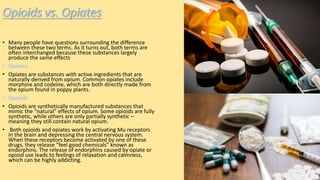
• Opiates are substances with active ingredients that are
naturally derived from opium. Common opiates include
morphine and codeine, which are both directly made from
the opium found in poppy plants.
• Opioids
• Opioids are synthetically manufactured substances that
mimic the “natural” effects of opium. Some opioids are fully
synthetic, while others are only partially synthetic –
meaning they still contain natural opium.
• Both opioids and opiates work by activating Mu receptors
in the brain and depressing the central nervous system.
When these receptors become activated by one of these
drugs, they release “feel good chemicals” known as
endorphins. The release of endorphins caused by opiate or
opioid use leads to feelings of relaxation and calmness,
which can be highly addicting.
Types of Opiates
• Opiates are prescribed for a wide range of medical
needs. There are two main classifications for this
type of drug: antagonists and agonists.
• Antagonists such as Naltrexone and Naloxone are
considered to be less addictive than agonists,
though the potential for abuse still exists. They are
often used to help with the detoxification process,
which often takes place as the first part of
addiction treatment.
• Agonists mimic the effects of naturally-occurring
endorphins in the body and produce an opiate
effect by interacting with specific receptor sites in
the brain. Agonists include drugs like morphine and
fentanyl, which are most commonly used in
medical settings and have the strongest effects.
Many substances in this category have a very high
potential for abuse and addiction. Other examples
of agonists include hydrocodone, oxycodone,
heroin, and buprenorphine.
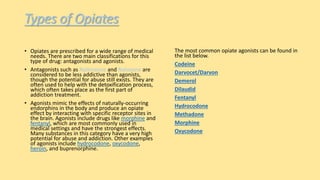
The most common opiate agonists can be found in
the list below.
Codeine
Darvocet/Darvon
Demerol
Dilaudid
Fentanyl
Hydrocodone
Methadone
Morphine
Oxycodone
• Frequently, synthetic opioids are used as cutting agents in
other drugs (especially heroin and cocaine) or pressed into
pill form and sold on the street as counterfeit painkillers.
Because synthetic opioids are so powerful, accidental
overdose is common.
• One of the most common synthetic opioids in the U.S. is
fentanyl. First discovered in 1974 by Paul Janssen, the
powerful drug (50 to 100 times more potent than morphine)
became one of the most widely used opioids in medicine by
2017. The drug is produced in high quantities by both
pharmaceutical companies for legal, surgical purposes and
illicit, street manufacturers for illegal distribution. Today, there
are a number of fentanyl analogues, or slight variations with
harsher effects on the body, being introduced with no prior or
current medical use.
Other synthetic opioids include:
• Tramadol
• methadone
• Carfentanil
• Acetyl fentanyl
• Butyryl fentanyl
• Furanyl fentanyl
• 3-Methylfentanyl
• U-47700Carfentanil
How Do Opiates Affect the Nervous System?
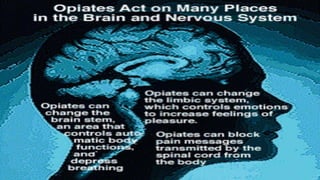
• When an individual takes opiates, the nervous system is quickly affected. The first time, or maybe even the first few times
using opioids, people often experience a tremendous euphoric rush, particularly with an opiate like heroin. Many people
describe it like nothing they’ve ever experienced before. This is all because of how opiates affect the nervous system.
• Synthetic opiates bind to opioid receptors on neurons that control dopamine release. This triggers an unnaturally high rush of
dopamine, equivalent to about 10 times the amount that occurs naturally. This trains the body to take opioids over and over
again. Over time, the body builds up a tolerance, which means that a person needs higher and higher doses of opioids to
produce the same euphoric and pain-relieving effects.
• Despite the desirable effects of these drugs, there are other less desirable side effects that indicate how opiates affect the
nervous system. For example, the activation of some of the same pathways can lead to feelings of nausea and confusion as
well as sedation.
• It’s also important to note that opiates are central nervous system depressants. They impact the areas of the CNS that control
necessary and vital functions, including breathing. When someone takes opiates it slows their respiration rate. If someone
takes too much or combines opiates with other substances, like alcohol, their respiration can slow so much they go into a
coma or stop breathing altogether. This is how opiates affect the nervous system in a way that also creates a high risk of
overdose.
• Also pertinent to how opiates affect the nervous system is the concept of addiction and dependence. Not all people who use
opioids will become addicted, but the more someone uses them, the more their brain becomes wired to want to continue
repeating that action.
• When younger people begin experimenting with opiates, they’re at a greater risk of becoming addicted. This is because the
reward pathways in their brain are still developing. If an adolescent alters the structure of their brain by taking opiates during
this key stage of development, it can impact them for the rest of their life.
• Opiates affect the nervous system in three key ways: they lower levels of consciousness, impact thought processes and
cognition and cause dependence over time. Opiates influence nearly every aspect of the nervous system, which can
potentially have detrimental effects on a person’s brain, body and life
Synthetic Opioids’ Effect on the Body
• Synthetic opioids’ effect on the body is similar to that of other opioids, from Percocet to Black Tar heroin. These drugs are opioid
receptor agonists and act primarily on the brain and spinal cord. Legally prescribed opioids are regulated by the FDA, with pre-
determined potencies and consistent effects on the body. However, illicit synthetic opioids are unregulated, and potency can vary
from lab to lab and drug dealer to drug dealer.
• Using synthetic opioids to seek stronger “highs” generally results in an escalation of symptoms with a potential for overdose. Whether
administered orally through pills, sublingually (under the tongue), through nasal inhalation, smoked, or injected intravenously, the effects are
much the same, although they may vary in intensity, time of onset, and method of administration. Symptoms of opioid abuse include:
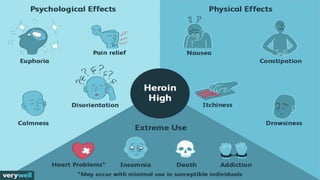
• Feelings of euphoria
• Pain relief
• Drowsiness
• Sedation
• Nausea
• As newer, more potent synthetic opioids are created, standard detection tests that can distinguish between opioids have yet to become
available to coroners, emergency medical personnel, or hospitals. Still, data does not yet demonstrate that synthetic opioids are any more or
less addictive than other opioids.
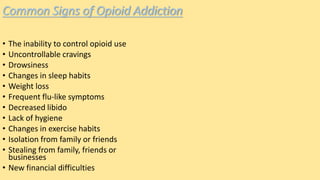
Common Signs of Opioid Addiction
• The inability to control opioid use
• Uncontrollable cravings
• Drowsiness
• Changes in sleep habits
• Weight loss
• Frequent flu-like symptoms
• Decreased libido
• Lack of hygiene
• Changes in exercise habits
• Isolation from family or friends
• Stealing from family, friends or
businesses
• New financial difficulties
Synthetic Opioid Overdose
• fatal opioid overdoses are caused by a lack of oxygen when a
person stops breathing. Because synthetic opioids are so similar to
“natural” opioids, the signs of dependency, addiction, and
overdose to both are very similar. Fentanyl is a longer-acting
opiate, like morphine, heroin, or oxycodone. The primary
difference between overdose from oxycodone and fentanyl or
carfentanil, is that the latter are exponentially stronger than the
former and have greater risk of complications. Moreover,
fentanyl’s ability to start affecting the body soon after ingestion
can lead to overdose even faster.
• Signs of overdose are more pronounced versions of symptoms the
drug already produces – slowed breathing may stop entirely,
reduced consciousness may become unconsciousness. Today,
opioid overdose is more likely to be fatal because of high potency.
However, it is possible to survive an opioid overdose if the victim is
provided medical attention quickly enough.
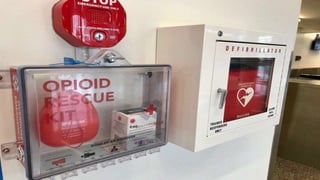
• To reverse an overdose, and allow an individual to begin breathing
normally again, higher doses of naloxone is required. Naloxone, an
opioid receptor antagonist, can block the effects of all opioids in a
person’s system, reviving them and preventing them from getting
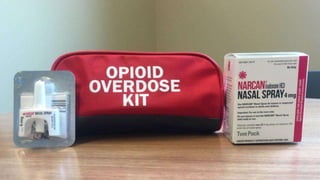
any higher. The most common form of naloxone, Narcan, comes in
a nasal spray in a 4 mg dose. Multiple doses may need to be
administered to fully revive an individual.
HOW DOES OVERDOSE OCCUR?
• A variety of effects can occur after a person takes opioids,
ranging from pleasure to nausea and vomiting, severe allergic
reactions anaphylaxis), and overdose, in which breathing and
heartbeat slow or even stop. Opioid overdose can be due to
many factors. For example, overdose can occur when a patient
deliberately misuses a prescription, uses an illicit opioid (such
as heroin),or uses an opioid contaminated with other even
more potent opioids (such as fentanyl). Overdose can also
occur when patient takes an opioid as directed but the
prescriber miscalculated the opioid dose, when an error was
made by he dispensing pharmacist, or when the patient
misunderstood the directions for use. It can also occur when
opioids are taken with other medications—for example,
prescribed medications such as benzodiazepines or other
psychotropic medications that are used in the treatment of
mental disorders—or with illicit drugs or alcohol that may have
adverse interactions with opioids. At particular risk are
individuals who use opioids and combine them with
benzodiazepines, other sedative hypnotic agents, or alcohol, all
of which cause respiratory depression.
• Tolerance develops when someone
uses an opioid drug regularly so that his
or her body becomes accustomed to
the drug and needs a larger or more
frequent dose to continue to
experience the same effect. Loss of
tolerance occurs when someone stops
taking an opioid after long-term use.
When someone loses tolerance and
then takes the opioid drug again, he or
she can experience serious adverse
effects, including overdose, even if the
amount taken had not caused problems
in the past.
FENTANYL-INVOLVED OVERDOSES.
Suspected opioid overdoses, including suspected fentanyl-
involved overdoses, should be treated according to standard
protocols. However, because of the higher potency of fentanyl
and fentanyl analogs compared to that of heroin, multiple doses
of naloxone may be required to reverse the opioid-induced
respiratory depression from a fentanyl-involved overdose. Many
anecdotes report more rapid respiratory depression with
fentanyl than with heroin, although other reports do not reflect
such rapid depression Because of these effects, quicker
oxygenation efforts and naloxone delivery may be warranted
with fentanyl-involved overdoses compared with heroin-only
overdoses. However, naloxone is an appropriate response for all
opioid overdoses, including fentanyl-involved overdoses.
Opioid Overdose Death: The Risk Factors
The first risk factor that contributes to drug overdose death is drug use. It’s that simple.
The second risk factor leading to drug overdose death is the chemical composition of the “product.” The
illegal drug trade markets heroin that is 90, 80, 70 percent pure. Which means the illegal drug trade markets
heroin that is 10, 20, or 30 percent something else. No intravenous drug user really knows what’s actually in the
heroin, and when that 10, 20, or 30 percent of something involves a powerful additive such as fentanyl, the
respiratory depressant effects of the product can increase dramatically. The initial “high” is a little (or a lot) more
exquisite, the inevitable “nodding” comes on more quickly, breathing becomes slower, shallower, and then the
breath stops altogether.
The third risk factor leading to drug overdose death is mixing narcotics with alcohol and other drugs such as
benzodiazepines (Valium, Xanax, Ativan are a few). Alcohol and benzos aren’t a narcotic, but they are central
nervous system depressant and they also contribute to a decrease in respiration. When one respiratory
depressant is combined with another respiratory depressant, breathing becomes dangerously slow, until, too
frequently, it stops altogether.
• The fifth risk factor that makes an opiate overdose more likely is using alone. When respiration
becomes dangerously slow, if the user is alone, no one can intervene; no one is watching as lips turn
blue, as the cigarette caught between fingers burns down to the bone. Relapse often involves shame
and secrecy, causing addicts to use alone at the very time their tolerance for the drug has diminished
during a period of abstinence, thus dramatically increasing the risk of overdose
• The sixth risk factor contributing to drug overdose is the overall health of the user. A compromised liver,
weight loss due to malnutrition, and respiratory illnesses leave users particularly vulnerable to tolerance
levels and opiates’ action upon the central nervous system
. the fourth risk factor leading to drug overdose death is time spent in drug addiction treatment,
detoxification, jail, or a voluntary or involuntary period of prolonged withdrawal from opioids. When a drug
user stops using, for any reason, within days drug tolerance drops. When an addict returns to drug use –
particularly heroin – the amount of product he or she could tolerate in the past has suddenly become a
lethal dose.
ESSENTIAL STEPS FOR RESPONDERS
EVALUATE FOR SIGNS OF OPIOID OVERDOSE
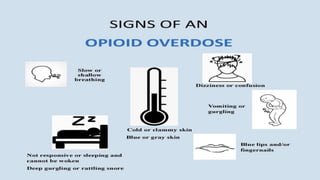
• Signs of OVERDOSE, which often results
in death if not treated, include:
 Unconsciousness or inability to awaken.
 Slow or shallow breathing or breathing
difficulty such as choking sounds or
agurgling / snoring noise from a person
who cannot be awakened.
 Fingernails or lips turning blue/purple.
If an opioid overdose is suspected,
stimulate the person.
 Call the person’s name.
 If this doesn’t work, vigorously grind
knuckles into the sternum (the
breastbone in middle of chest)or rub
knuckles on the person’s upper lip.
 If the person responds, assess
whether he or she can maintain
responsiveness and breathing.
 Continue to monitor the person,
including breathing and alertness, and
try to keep the person awake and
alert.
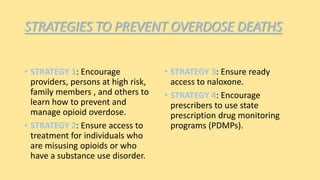
STRATEGIES TO PREVENT OVERDOSE DEATHS
• STRATEGY 1: Encourage
providers, persons at high risk,
family members , and others to
learn how to prevent and
manage opioid overdose.
• STRATEGY 2: Ensure access to
treatment for individuals who
are misusing opioids or who
have a substance use disorder.
• STRATEGY 3: Ensure ready
access to naloxone.
• STRATEGY 4: Encourage
prescribers to use state
prescription drug monitoring
programs (PDMPs).
ADMINISTER NALOXONE
What Is Naloxone?
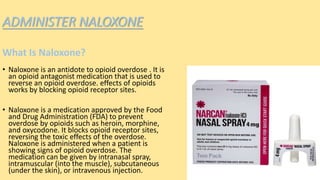
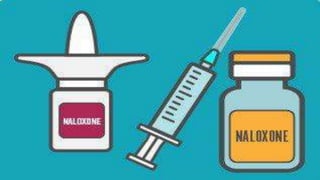
• Naloxone is an antidote to opioid overdose . It is
an opioid antagonist medication that is used to
reverse an opioid overdose. effects of opioids
works by blocking opioid receptor sites.
• Naloxone is a medication approved by the Food
and Drug Administration (FDA) to prevent
overdose by opioids such as heroin, morphine,
and oxycodone. It blocks opioid receptor sites,
reversing the toxic effects of the overdose.
Naloxone is administered when a patient is
showing signs of opioid overdose. The
medication can be given by intranasal spray,
intramuscular (into the muscle), subcutaneous
(under the skin), or intravenous injection.
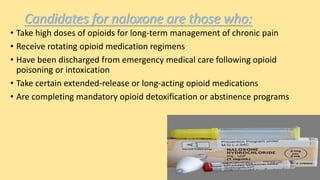
Candidates for naloxone are those who:
• Take high doses of opioids for long-term management of chronic pain
• Receive rotating opioid medication regimens
• Have been discharged from emergency medical care following opioid
poisoning or intoxication
• Take certain extended-release or long-acting opioid medications
• Are completing mandatory opioid detoxification or abstinence programs
DURATION OF EFFECT.
The duration of effect of naloxone depends on dose, route of
administration , and overdose symptoms and is shorter than the effects of
some opioids. The goal of naloxone therapy should be to restore adequate
spontaneous breathing, but not necessarily complete arousal. More than
one dose of naloxone may be needed to revive someone who is overdosing.
People who have taken longer acting or more potent opioids may require
additional intravenous bolus doses or an
infusion of naloxone . Comfort the person being treated, as withdrawal
triggered by naloxone can feel unpleasant. Some people may become
agitated or confused, which may improve by providing reassurance and
explaining what is happening.
SAFETY OF NALOXONE.
• The safety profile of naloxone is remarkably high, especially when used in
low doses and titrated to effect.10 When given to individuals who are not
opioid intoxicated or opioid dependent, naloxone produces no clinical
effects, even at high doses. Moreover, although rapid opioid withdrawal in
opioid-tolerant individuals may be unpleasant, it is not life threatening .
Naloxone can be used in life-threatening opioid overdose circumstances in
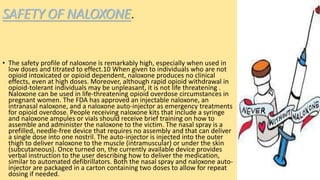
pregnant women. The FDA has approved an injectable naloxone, an
intranasal naloxone, and a naloxone auto-injector as emergency treatments
for opioid overdose. People receiving naloxone kits that include a syringe
and naloxone ampules or vials should receive brief training on how to
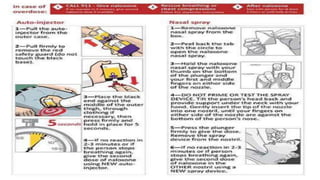
assemble and administer the naloxone to the victim. The nasal spray is a
prefilled, needle-free device that requires no assembly and that can deliver
a single dose into one nostril. The auto-injector is injected into the outer
thigh to deliver naloxone to the muscle (intramuscular) or under the skin
(subcutaneous). Once turned on, the currently available device provides
verbal instruction to the user describing how to deliver the medication,
similar to automated defibrillators. Both the nasal spray and naloxone auto-
injector are packaged in a carton containing two doses to allow for repeat
dosing if needed.
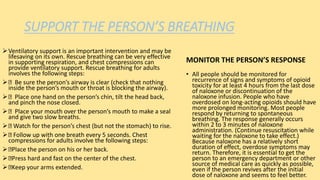
SUPPORT THE PERSON’S BREATHING
Ventilatory support is an important intervention and may be
lifesaving on its own. Rescue breathing can be very effective
in supporting respiration, and chest compressions can
provide ventilatory support. Rescue breathing for adults
involves the following steps:
 Be sure the person’s airway is clear (check that nothing
inside the person’s mouth or throat is blocking the airway).
 Place one hand on the person’s chin, tilt the head back,
and pinch the nose closed.
 Place your mouth over the person’s mouth to make a seal
and give two slow breaths.
 Watch for the person’s chest (but not the stomach) to rise.
 Follow up with one breath every 5 seconds. Chest
compressions for adults involve the following steps:
 Place the person on his or her back.
 Press hard and fast on the center of the chest.
 Keep your arms extended.
MONITOR THE PERSON’S RESPONSE
• All people should be monitored for
recurrence of signs and symptoms of opioid
toxicity for at least 4 hours from the last dose
of naloxone or discontinuation of the
naloxone infusion. People who have
overdosed on long-acting opioids should have
more prolonged monitoring. Most people
respond by returning to spontaneous
breathing. The response generally occurs
within 2 to 3 minutes of naloxone
administration. (Continue resuscitation while
waiting for the naloxone to take effect.)
Because naloxone has a relatively short
duration of effect, overdose symptoms may
return. Therefore, it is essential to get the
person to an emergency department or other
source of medical care as quickly as possible,
even if the person revives after the initial
dose of naloxone and seems to feel better.
SIGNS OF OPIOID WITHDRAWAL
• The signs and symptoms of opioid
withdrawal in an individual who is physically
dependent on opioids may include
• body aches, diarrhea, tachycardia, fever,
runny nose, sneezing, piloerection
(gooseflesh), sweating, yawning, nausea or
vomiting, nervousness, restlessness or
irritability, shivering or trembling, abdominal
cramps, weakness, tearing, insomnia, opioid
craving, dilated pupils, and increased blood
pressure.
• These symptoms are uncomfortable, but not life
threatening. After an overdose, a person
dependent on opioids should be medically
monitored for safety and offered assistance to
get into treatment for opioid use disorder. If a
person does not respond to naloxone, an
alternative explanation for the clinical
symptoms should be considered. The most likely
explanation is that the person is not overdosing
on an opioid but rather some other substance
or may be experiencing a non-overdose medical
emergency. In all cases, support of ventilation,
oxygenation, and blood pressure should be
sufficient to prevent the complications of opioid
overdose and should be given priority if the
response to naloxone is not prompt.
PREGNANT PATIENTS.
• Pregnant women can be safely given
naloxone in limited doses under the
supervision of a doctor..
NALOXONE STORAGE
• Store naloxone in a safe and quickly
accessible
• place at room temperature and
protected from
• light. Keep all medicine in a safe place
where
• children or pets cannot reach it.
DO’S AND DON’TS WHEN RESPONDING TO OPIOID
OVERDOSE
• DO attend to the person’s breathing and cardiovascular support needs by administering oxygen
or performing rescue breathing and/or chest compressions.
• DO administer naloxone and utilize a second dose, if no response to the first dose.
• DO put the person in the “recovery position” on the side, if you must leave the person
unattended for any reason.
• DO stay with the person and keep the person warm.
• DON’T slap or forcefully try to stimulate the person; it will only cause further injury. If you
cannot wake the person by shouting, rubbing your knuckles on the sternum (center of the
chest or rib cage), or light pinching, the person may be unconscious.
• DON’T put the person into a cold bath or shower. This increases the risk of falling, drowning, or
going into shock.
• DON’T inject the person with any substance (e.g., saltwater, milk, stimulants). The only safe and
appropriate treatment is naloxone.
• DON’T try to make the person vomit drugs that may have been swallowed. Choking or inhaling
vomit into the lungs can cause a fatal injury.
DETERMINING WHEN TO INITIATE OR
CONTINUE OPIOIDS FOR CHRONIC PAIN
• Nonpharmacologic therapy and nonopioid pharmacologic therapy are preferred for
chronic pain. Clinicians should consider opioid therapy only if expected benefits for
both pain and function are anticipated to outweigh risks to the patient. If opioids are
used, they should be combined with nonpharmacologic therapy and nonopioid
pharmacologic therapy, as appropriate.
• Before starting opioid therapy for chronic pain, clinicians should establish treatment
goals with all patients, including realistic goals for pain and function, and should
consider how therapy will be discontinued if benefits do not outweigh risks. Clinicians
should continue opioid therapy only if there is clinically meaningful improvement in
pain and function that outweighs risks to patient safety.If these goals are not met, then
the opioid therapy should be tapered and stopped andother approaches should be
considered.
• Before starting and periodically during opioid therapy, clinicians should discuss with
patients known risks and realistic benefits of opioid therapy as well as patient and
clinician responsibilities for managing therapy.
OPIOID SELECTION, DOSAGE, DURATION,
FOLLOW-UP, AND DISCONTINUATION
• When starting opioid therapy for chronic pain , clinicians should prescribe immediate-release
opioids instead of extended-release/long-acting opioids.
• When opioids are started , clinicians should prescribe the lowest effective dosage . Clinicians
should use caution when prescribing opioids at any dosage, should carefully reassess evidence
of individual benefits and risks when increasing dosage to=50 morphine milligram equivalents
(MME)/day, and should avoid increasing dosage to more than 90 MME/day or carefully justify a
decision to titrate dosage to more than 90 MME/day.
• Long-term opioid use often begins with treatment of acute pain. When opioids are used for
acute pain, clinicians should prescribe the lowest effective dose of immediate-release opioids
and should prescribe no greater quantity than needed for the expected duration of pain severe
enough to require opioids. Three or fewer days will often be sufficient; more than 7 days will
rarely be needed.
• Clinicians should evaluate benefits and harms with patients within 1 to 4 weeks of starting
opioid therapy for chronic pain or of dose escalation. Clinicians should evaluate benefits and
harms of continued therapy with patients every 3 months or more frequently. If benefits do
not outweigh harms of continued opioid therapy, clinicians should optimize other therapies
and work with patients to taper opioids to lower dosages or to taper and discontinue opioids.
• When prescribing opioids for chronic pain, clinicians should use urine drug
testing before starting opioid therapy and consider urine drug testing at least
annually to assess for use of prescribed medications as well as use of other
controlled prescription drugs and illicit drugs.
• Clinicians should avoid prescribing opioid pain medication and benzodiazepines
concurrently whenever possible Clinicians should offer or arrange evidence based
treatment (treatment with buprenorphine or methadone in combination with
behavioral therapies) for patients with OUD
Synthetic Opioids and the Opioid Epidemic
Arab Youth Survey 2019:
• The Arab Youth Survey, commissioned by the Dubai communications agency Asda'a Burson
Cohn & Wolfe, was released on Tuesday and this year included drug use data for the first time.
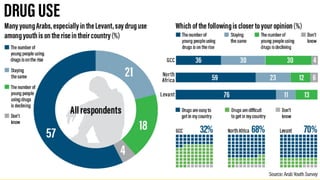
• It found that 76 per cent of young people in the Levant – which includes Iraq, Jordan, Lebanon
and the Palestinian Territories – think drug use among the youth is on the rise. That is far higher
than in rest of the region, with 59 per cent in North Africa saying that they are seeing an
increased amount of drug-taking and 36 per cent in the GCC.
• The majority of Levant’s young people, at 70 per cent, also said that drugs are easy to get hold
of in their country, with 68 per cent agreeing in North Africa and 32 per cent in the GCC.
Lebanon, in particular, has for years been a hotspot for drug use and production.
• “Drugs are very easy to buy in Lebanon,” said Sandy Mteirik, drug policy manager at Skoun, a
Lebanese addiction treatment centre.
• According to a 2017 report published by the country’s Ministry of Health, there were 3,669
arrests for drug use in 2016, three times higher than in 2011. The Lebanese are also consuming
drugs at an increasingly young age, with the number of arrests of people under 18 more than
tripling during the same period of time.
• A key contributor to this rise is thought to be Lebanon’s own hashish and
opium production in the Bekaa region, a fertile agricultural valley that lies on
the border with Syria.
• Taking advantage of the weak state, drug lords have openly produced and
traded cannabis since the end of the civil war in 1990, despite both being
illegal. Although politicians have talked about legalising cannabis for decades,
little has come of it and drug use or possession is punishable by up to three
years in prison and a fine.
• Estimates on the level of production vary wildly. A 2018 report by the United
Nations Office on Drugs and Crime said that 3,500 hectares of cannabis were
cultivated in the country in 2015, but the Ministry of Health put that figure as
high as 20,000 hectares in its 2017 drug report. There are no statistics
regarding opium production.
• The health ministry also claims that hashish is sold for a little over $1 a gram, explaining in part why it is the
most popular recreational drug. The most common drugs seized by the authorities are cannabis, and the non-
locally-produced cocaine, Captagon and ecstasy. The latter are smuggled through the airport or the porous
Syrian border.
• Captagon, sometimes referred to as “chemical courage”, made headlines when it became popular among
fighters in the Syrian civil war – it is considered to improve alertness and combat effectiveness
• Despite drug usage being common, it remains stigmatised by Lebanese society and the media. This week,
Lebanese daily Al Akhbar reported that a 70-year old pharmacist in Beirut was attacked by a drug addict wanting
tramadol, an opioid-based painkiller. A former heroin user told us that when heroin is unavailable users turn to
tramadol, which is known as farawla, or strawberry, in Lebanese Arabic because of the pill’s red colour.
• Heroin is cheap, however, costing between $10 and $30 a gram, making it popular among the working class, but
its usage is more heavily stigmatised than cocaine.
• “Some people start with coke and run out of money and turn to heroin. I don’t like it [heroin] – it is dirty”, said
Fadi – who did not want to give his full name – 34, a regular cocaine user from Beirut’s southern suburb of
Dahieh.
• The Arab Youth Survey found that in most cases, drug consumption begins with encouragement from friends,
and a number of recreational drug users who spoke to The National agreed.
• Fadi said that he started taking cocaine to stay awake while consuming large quantities of alcohol. “Now every
time I go to a club, I can’t enjoy it without coke,” he said.
• Over the past 10 years, he estimates that he has spent about $100,000 on the
drug. He has managed to avoid arrest so far, something that is by all accounts a
very unpleasant experience.
• A 2013 Human Rights Watch report revealed that those detained by security
forces are routinely tortured. Well-connected detainees may secure favourable
treatment through personal or familial connections, locally known as having a
"wasta", or a contact. The services of a lawyer, even for minor offences such as
carrying a marijuana joint can cost several thousand dollars.
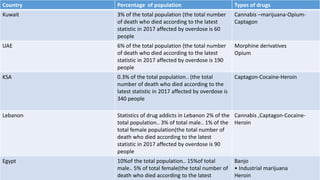
Types of drugsPercentage of populationCountry
Cannabis –marijuana-Opium-
Captagon
3% of the total population (the total number
of death who died according to the latest
statistic in 2017 affected by overdose is 60
people
Kuwait
Morphine derivatives
Opium
6% of the total population (the total number
of death who died according to the latest
statistic in 2017 affected by overdose is 190
people
UAE
Captagon-Cocaine-Heroin0.3% of the total population.. (the total
number of death who died according to the
latest statistic in 2017 affected by overdose is
340 people
KSA
Cannabis ,Captagon-Cocaine-
Heroin
Statistics of drug addicts in Lebanon 2% of the
total population.. 3% of total male.. 1% of the
total female population(the total number of
death who died according to the latest
statistic in 2017 affected by overdose is 90
people
Lebanon
Banjo
• Industrial marijuana
Heroin
10%of the total population.. 15%of total
male.. 5% of total female(the total number of
death who died according to the latest
Egypt
UAE's new online prescription platform to tackle drug abuse
• A new online platform for drug prescriptions is set to be rolled out across the UAE as part of efforts to
clamp down on substance abuse.
• From Monday, any patient requiring controlled opioids such as morphine will have their full details logged
on a single database accessible by medics across the country.
• The move aims to prevent individuals from obtaining multiple doses of highly addictive drugs by seeking
the same prescription from both government and private hospitals in the UAE.
• Experts hope the change will prevent drug abuse - for example - from patients who could approach more
than one doctor to obtain potentially dangerous repeat prescriptions.
• “The main objective is to ensure greater control over the prescription and dispersal of narcotic drugs and
controlled medicines,” said Dr Khaled Al Jaberi, of the Department of Health.
• “[This is] with a view to reducing the illegal use of controlled medicines among the community and to
promote the safety of their use to their intended beneficiaries only.
• “The new platform will also reduce inefficiencies caused by the loss of paper prescriptions in addition to
ensuring accurate tracking of prescriptions and dispersal of drugs and controlled medicines at state level.”
• The new system - called the Unified Electronic Platform - was led by the Ministry of Interior in co-
operation with the Ministry of Health and Abu Dhabi Department of Health.
• It aims to combine all of the country’s private and government sector outpatient healthcare facilities
into a single database.
• Patients will no longer be able to have repeat doses prescribed to them from multiple doctors across
multiple hospitals or emirates.
• Instead, information on their medication needs will be available to all healthcare facilities, allowing
doctors to prevent unwarranted prescriptions.
• The change of policy will also see an end to paper prescriptions for controlled substances which can be
lost or even stolen, sometimes resulting in drugs falling into the wrong hands.
• “If the patient goes to any other clinic or physician for the same medication, the system will clearly
show that he or she has an active prescription and has just received his medication,” said Dr Al Jaberi.
• “So there will not be an oversupply of medications. We are sure it will result in a lower number of
prescriptions.
• “We can also now monitor numbers of prescriptions, doctors who have prescribed them, where they
[patients] are getting their prescriptions from, type of medications and so on.
• “We can access all the information and prevent any abuse. This is one of the biggest and most
important initiatives to control [drug abuse].
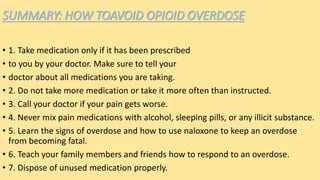
SUMMARY: HOW TOAVOID OPIOID OVERDOSE
• 1. Take medication only if it has been prescribed
• to you by your doctor. Make sure to tell your
• doctor about all medications you are taking.
• 2. Do not take more medication or take it more often than instructed.
• 3. Call your doctor if your pain gets worse.
• 4. Never mix pain medications with alcohol, sleeping pills, or any illicit substance.
• 5. Learn the signs of overdose and how to use naloxone to keep an overdose
from becoming fatal.
• 6. Teach your family members and friends how to respond to an overdose.
• 7. Dispose of unused medication properly.
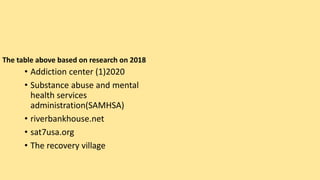
The table above based on research on 2018
• Addiction center (1)2020
• Substance abuse and mental
health services
administration(SAMHSA)
• riverbankhouse.net
• sat7usa.org
• The recovery village
Synthetic opioids in arab 2

Synthetic opioids in arab 2

  • 1.
    Synthetic opioids inArab countries Presented by Reiam Ameer Supervised by dr. ammar ali hussein Higher diploma in toxicology Baghdad university college of pharmacy
  • 2.
    What Are Opiates?(1) Opiates include controlled prescription substances that are derived from opium, which is a chemical that naturally occurs in poppy seeds and plants. These drugs, which are clinically used for treating mild to severe pain in patients, are also referred to as “opioid painkillers.” Due to their intensely calming effects, opioid painkillers have tremendously high rates of abuse which, in many cases, can lead to addiction. they can be so-called street drugs, such as heroin. An addiction to painkillers often begins after someone is prescribed the medication for pain following an accident or injury. Patients are given a prescription and specified dose from a doctor, with no intention of abusing the medication. However, over a period of time, a person may feel that the drug is no longer as effective as it was in the beginning. This feeling is caused by an increased tolerance to the painkillers, which means that the substance has built up within a person’s body.
  • 3.
    This feeling iscaused by an increased tolerance to the painkillers, which means that the substance has built up within a person’s body • A tolerance can also cause a person to take larger doses than their recommended amount in order to achieve the effects they want. Increasing the medication dosage can lead to a physical dependence, whereby they need to continue taking the drug to feel normal. Eventually a physical dependence can lead to cravings, which are characterized by growing urges to continue using the drug – despite negative consequences that may occur. • When a person’s drug-seeking behavior scales completely out of control and begins to compromise their physical and psychological health, a full-blown addiction is present. Addiction is far more serious than a strong desire to use drugs – it is a neurological disease that feels inescapable to the person suffering.
  • 4.
    Opioids vs. Opiates •Many people have questions surrounding the difference between these two terms. As it turns out, both terms are often interchanged because these substances largely produce the same effects • Opiates • Opiates are substances with active ingredients that are naturally derived from opium. Common opiates include morphine and codeine, which are both directly made from the opium found in poppy plants. • Opioids • Opioids are synthetically manufactured substances that mimic the “natural” effects of opium. Some opioids are fully synthetic, while others are only partially synthetic – meaning they still contain natural opium. • Both opioids and opiates work by activating Mu receptors in the brain and depressing the central nervous system. When these receptors become activated by one of these drugs, they release “feel good chemicals” known as endorphins. The release of endorphins caused by opiate or opioid use leads to feelings of relaxation and calmness, which can be highly addicting.
  • 5.
    Types of Opiates •Opiates are prescribed for a wide range of medical needs. There are two main classifications for this type of drug: antagonists and agonists. • Antagonists such as Naltrexone and Naloxone are considered to be less addictive than agonists, though the potential for abuse still exists. They are often used to help with the detoxification process, which often takes place as the first part of addiction treatment. • Agonists mimic the effects of naturally-occurring endorphins in the body and produce an opiate effect by interacting with specific receptor sites in the brain. Agonists include drugs like morphine and fentanyl, which are most commonly used in medical settings and have the strongest effects. Many substances in this category have a very high potential for abuse and addiction. Other examples of agonists include hydrocodone, oxycodone, heroin, and buprenorphine. The most common opiate agonists can be found in the list below. Codeine Darvocet/Darvon Demerol Dilaudid Fentanyl Hydrocodone Methadone Morphine Oxycodone
  • 6.
    • Frequently, syntheticopioids are used as cutting agents in other drugs (especially heroin and cocaine) or pressed into pill form and sold on the street as counterfeit painkillers. Because synthetic opioids are so powerful, accidental overdose is common. • One of the most common synthetic opioids in the U.S. is fentanyl. First discovered in 1974 by Paul Janssen, the powerful drug (50 to 100 times more potent than morphine) became one of the most widely used opioids in medicine by 2017. The drug is produced in high quantities by both pharmaceutical companies for legal, surgical purposes and illicit, street manufacturers for illegal distribution. Today, there are a number of fentanyl analogues, or slight variations with harsher effects on the body, being introduced with no prior or current medical use. Other synthetic opioids include: • Tramadol • methadone • Carfentanil • Acetyl fentanyl • Butyryl fentanyl • Furanyl fentanyl • 3-Methylfentanyl • U-47700Carfentanil
  • 9.
    How Do OpiatesAffect the Nervous System? • When an individual takes opiates, the nervous system is quickly affected. The first time, or maybe even the first few times using opioids, people often experience a tremendous euphoric rush, particularly with an opiate like heroin. Many people describe it like nothing they’ve ever experienced before. This is all because of how opiates affect the nervous system. • Synthetic opiates bind to opioid receptors on neurons that control dopamine release. This triggers an unnaturally high rush of dopamine, equivalent to about 10 times the amount that occurs naturally. This trains the body to take opioids over and over again. Over time, the body builds up a tolerance, which means that a person needs higher and higher doses of opioids to produce the same euphoric and pain-relieving effects. • Despite the desirable effects of these drugs, there are other less desirable side effects that indicate how opiates affect the nervous system. For example, the activation of some of the same pathways can lead to feelings of nausea and confusion as well as sedation. • It’s also important to note that opiates are central nervous system depressants. They impact the areas of the CNS that control necessary and vital functions, including breathing. When someone takes opiates it slows their respiration rate. If someone takes too much or combines opiates with other substances, like alcohol, their respiration can slow so much they go into a coma or stop breathing altogether. This is how opiates affect the nervous system in a way that also creates a high risk of overdose. • Also pertinent to how opiates affect the nervous system is the concept of addiction and dependence. Not all people who use opioids will become addicted, but the more someone uses them, the more their brain becomes wired to want to continue repeating that action. • When younger people begin experimenting with opiates, they’re at a greater risk of becoming addicted. This is because the reward pathways in their brain are still developing. If an adolescent alters the structure of their brain by taking opiates during this key stage of development, it can impact them for the rest of their life. • Opiates affect the nervous system in three key ways: they lower levels of consciousness, impact thought processes and cognition and cause dependence over time. Opiates influence nearly every aspect of the nervous system, which can potentially have detrimental effects on a person’s brain, body and life
  • 12.
    Synthetic Opioids’ Effecton the Body • Synthetic opioids’ effect on the body is similar to that of other opioids, from Percocet to Black Tar heroin. These drugs are opioid receptor agonists and act primarily on the brain and spinal cord. Legally prescribed opioids are regulated by the FDA, with pre- determined potencies and consistent effects on the body. However, illicit synthetic opioids are unregulated, and potency can vary from lab to lab and drug dealer to drug dealer. • Using synthetic opioids to seek stronger “highs” generally results in an escalation of symptoms with a potential for overdose. Whether administered orally through pills, sublingually (under the tongue), through nasal inhalation, smoked, or injected intravenously, the effects are much the same, although they may vary in intensity, time of onset, and method of administration. Symptoms of opioid abuse include: • Feelings of euphoria • Pain relief • Drowsiness • Sedation • Nausea • As newer, more potent synthetic opioids are created, standard detection tests that can distinguish between opioids have yet to become available to coroners, emergency medical personnel, or hospitals. Still, data does not yet demonstrate that synthetic opioids are any more or less addictive than other opioids.
  • 16.
    Common Signs ofOpioid Addiction • The inability to control opioid use • Uncontrollable cravings • Drowsiness • Changes in sleep habits • Weight loss • Frequent flu-like symptoms • Decreased libido • Lack of hygiene • Changes in exercise habits • Isolation from family or friends • Stealing from family, friends or businesses • New financial difficulties
  • 17.
    Synthetic Opioid Overdose •fatal opioid overdoses are caused by a lack of oxygen when a person stops breathing. Because synthetic opioids are so similar to “natural” opioids, the signs of dependency, addiction, and overdose to both are very similar. Fentanyl is a longer-acting opiate, like morphine, heroin, or oxycodone. The primary difference between overdose from oxycodone and fentanyl or carfentanil, is that the latter are exponentially stronger than the former and have greater risk of complications. Moreover, fentanyl’s ability to start affecting the body soon after ingestion can lead to overdose even faster. • Signs of overdose are more pronounced versions of symptoms the drug already produces – slowed breathing may stop entirely, reduced consciousness may become unconsciousness. Today, opioid overdose is more likely to be fatal because of high potency. However, it is possible to survive an opioid overdose if the victim is provided medical attention quickly enough. • To reverse an overdose, and allow an individual to begin breathing normally again, higher doses of naloxone is required. Naloxone, an opioid receptor antagonist, can block the effects of all opioids in a person’s system, reviving them and preventing them from getting any higher. The most common form of naloxone, Narcan, comes in a nasal spray in a 4 mg dose. Multiple doses may need to be administered to fully revive an individual.
  • 18.
    HOW DOES OVERDOSEOCCUR? • A variety of effects can occur after a person takes opioids, ranging from pleasure to nausea and vomiting, severe allergic reactions anaphylaxis), and overdose, in which breathing and heartbeat slow or even stop. Opioid overdose can be due to many factors. For example, overdose can occur when a patient deliberately misuses a prescription, uses an illicit opioid (such as heroin),or uses an opioid contaminated with other even more potent opioids (such as fentanyl). Overdose can also occur when patient takes an opioid as directed but the prescriber miscalculated the opioid dose, when an error was made by he dispensing pharmacist, or when the patient misunderstood the directions for use. It can also occur when opioids are taken with other medications—for example, prescribed medications such as benzodiazepines or other psychotropic medications that are used in the treatment of mental disorders—or with illicit drugs or alcohol that may have adverse interactions with opioids. At particular risk are individuals who use opioids and combine them with benzodiazepines, other sedative hypnotic agents, or alcohol, all of which cause respiratory depression. • Tolerance develops when someone uses an opioid drug regularly so that his or her body becomes accustomed to the drug and needs a larger or more frequent dose to continue to experience the same effect. Loss of tolerance occurs when someone stops taking an opioid after long-term use. When someone loses tolerance and then takes the opioid drug again, he or she can experience serious adverse effects, including overdose, even if the amount taken had not caused problems in the past.
  • 19.
    FENTANYL-INVOLVED OVERDOSES. Suspected opioidoverdoses, including suspected fentanyl- involved overdoses, should be treated according to standard protocols. However, because of the higher potency of fentanyl and fentanyl analogs compared to that of heroin, multiple doses of naloxone may be required to reverse the opioid-induced respiratory depression from a fentanyl-involved overdose. Many anecdotes report more rapid respiratory depression with fentanyl than with heroin, although other reports do not reflect such rapid depression Because of these effects, quicker oxygenation efforts and naloxone delivery may be warranted with fentanyl-involved overdoses compared with heroin-only overdoses. However, naloxone is an appropriate response for all opioid overdoses, including fentanyl-involved overdoses.
  • 20.
    Opioid Overdose Death:The Risk Factors The first risk factor that contributes to drug overdose death is drug use. It’s that simple. The second risk factor leading to drug overdose death is the chemical composition of the “product.” The illegal drug trade markets heroin that is 90, 80, 70 percent pure. Which means the illegal drug trade markets heroin that is 10, 20, or 30 percent something else. No intravenous drug user really knows what’s actually in the heroin, and when that 10, 20, or 30 percent of something involves a powerful additive such as fentanyl, the respiratory depressant effects of the product can increase dramatically. The initial “high” is a little (or a lot) more exquisite, the inevitable “nodding” comes on more quickly, breathing becomes slower, shallower, and then the breath stops altogether. The third risk factor leading to drug overdose death is mixing narcotics with alcohol and other drugs such as benzodiazepines (Valium, Xanax, Ativan are a few). Alcohol and benzos aren’t a narcotic, but they are central nervous system depressant and they also contribute to a decrease in respiration. When one respiratory depressant is combined with another respiratory depressant, breathing becomes dangerously slow, until, too frequently, it stops altogether.
  • 21.
    • The fifthrisk factor that makes an opiate overdose more likely is using alone. When respiration becomes dangerously slow, if the user is alone, no one can intervene; no one is watching as lips turn blue, as the cigarette caught between fingers burns down to the bone. Relapse often involves shame and secrecy, causing addicts to use alone at the very time their tolerance for the drug has diminished during a period of abstinence, thus dramatically increasing the risk of overdose • The sixth risk factor contributing to drug overdose is the overall health of the user. A compromised liver, weight loss due to malnutrition, and respiratory illnesses leave users particularly vulnerable to tolerance levels and opiates’ action upon the central nervous system . the fourth risk factor leading to drug overdose death is time spent in drug addiction treatment, detoxification, jail, or a voluntary or involuntary period of prolonged withdrawal from opioids. When a drug user stops using, for any reason, within days drug tolerance drops. When an addict returns to drug use – particularly heroin – the amount of product he or she could tolerate in the past has suddenly become a lethal dose.
  • 22.
    ESSENTIAL STEPS FORRESPONDERS EVALUATE FOR SIGNS OF OPIOID OVERDOSE • Signs of OVERDOSE, which often results in death if not treated, include:  Unconsciousness or inability to awaken.  Slow or shallow breathing or breathing difficulty such as choking sounds or agurgling / snoring noise from a person who cannot be awakened.  Fingernails or lips turning blue/purple. If an opioid overdose is suspected, stimulate the person.  Call the person’s name.  If this doesn’t work, vigorously grind knuckles into the sternum (the breastbone in middle of chest)or rub knuckles on the person’s upper lip.  If the person responds, assess whether he or she can maintain responsiveness and breathing.  Continue to monitor the person, including breathing and alertness, and try to keep the person awake and alert.
  • 24.
    STRATEGIES TO PREVENTOVERDOSE DEATHS • STRATEGY 1: Encourage providers, persons at high risk, family members , and others to learn how to prevent and manage opioid overdose. • STRATEGY 2: Ensure access to treatment for individuals who are misusing opioids or who have a substance use disorder. • STRATEGY 3: Ensure ready access to naloxone. • STRATEGY 4: Encourage prescribers to use state prescription drug monitoring programs (PDMPs).
  • 26.
    ADMINISTER NALOXONE What IsNaloxone? • Naloxone is an antidote to opioid overdose . It is an opioid antagonist medication that is used to reverse an opioid overdose. effects of opioids works by blocking opioid receptor sites. • Naloxone is a medication approved by the Food and Drug Administration (FDA) to prevent overdose by opioids such as heroin, morphine, and oxycodone. It blocks opioid receptor sites, reversing the toxic effects of the overdose. Naloxone is administered when a patient is showing signs of opioid overdose. The medication can be given by intranasal spray, intramuscular (into the muscle), subcutaneous (under the skin), or intravenous injection.
  • 28.
    Candidates for naloxoneare those who: • Take high doses of opioids for long-term management of chronic pain • Receive rotating opioid medication regimens • Have been discharged from emergency medical care following opioid poisoning or intoxication • Take certain extended-release or long-acting opioid medications • Are completing mandatory opioid detoxification or abstinence programs
  • 29.
    DURATION OF EFFECT. Theduration of effect of naloxone depends on dose, route of administration , and overdose symptoms and is shorter than the effects of some opioids. The goal of naloxone therapy should be to restore adequate spontaneous breathing, but not necessarily complete arousal. More than one dose of naloxone may be needed to revive someone who is overdosing. People who have taken longer acting or more potent opioids may require additional intravenous bolus doses or an infusion of naloxone . Comfort the person being treated, as withdrawal triggered by naloxone can feel unpleasant. Some people may become agitated or confused, which may improve by providing reassurance and explaining what is happening.
  • 30.
    SAFETY OF NALOXONE. •The safety profile of naloxone is remarkably high, especially when used in low doses and titrated to effect.10 When given to individuals who are not opioid intoxicated or opioid dependent, naloxone produces no clinical effects, even at high doses. Moreover, although rapid opioid withdrawal in opioid-tolerant individuals may be unpleasant, it is not life threatening . Naloxone can be used in life-threatening opioid overdose circumstances in pregnant women. The FDA has approved an injectable naloxone, an intranasal naloxone, and a naloxone auto-injector as emergency treatments for opioid overdose. People receiving naloxone kits that include a syringe and naloxone ampules or vials should receive brief training on how to assemble and administer the naloxone to the victim. The nasal spray is a prefilled, needle-free device that requires no assembly and that can deliver a single dose into one nostril. The auto-injector is injected into the outer thigh to deliver naloxone to the muscle (intramuscular) or under the skin (subcutaneous). Once turned on, the currently available device provides verbal instruction to the user describing how to deliver the medication, similar to automated defibrillators. Both the nasal spray and naloxone auto- injector are packaged in a carton containing two doses to allow for repeat dosing if needed.
  • 31.
    SUPPORT THE PERSON’SBREATHING Ventilatory support is an important intervention and may be lifesaving on its own. Rescue breathing can be very effective in supporting respiration, and chest compressions can provide ventilatory support. Rescue breathing for adults involves the following steps:  Be sure the person’s airway is clear (check that nothing inside the person’s mouth or throat is blocking the airway).  Place one hand on the person’s chin, tilt the head back, and pinch the nose closed.  Place your mouth over the person’s mouth to make a seal and give two slow breaths.  Watch for the person’s chest (but not the stomach) to rise.  Follow up with one breath every 5 seconds. Chest compressions for adults involve the following steps:  Place the person on his or her back.  Press hard and fast on the center of the chest.  Keep your arms extended. MONITOR THE PERSON’S RESPONSE • All people should be monitored for recurrence of signs and symptoms of opioid toxicity for at least 4 hours from the last dose of naloxone or discontinuation of the naloxone infusion. People who have overdosed on long-acting opioids should have more prolonged monitoring. Most people respond by returning to spontaneous breathing. The response generally occurs within 2 to 3 minutes of naloxone administration. (Continue resuscitation while waiting for the naloxone to take effect.) Because naloxone has a relatively short duration of effect, overdose symptoms may return. Therefore, it is essential to get the person to an emergency department or other source of medical care as quickly as possible, even if the person revives after the initial dose of naloxone and seems to feel better.
  • 33.
    SIGNS OF OPIOIDWITHDRAWAL • The signs and symptoms of opioid withdrawal in an individual who is physically dependent on opioids may include • body aches, diarrhea, tachycardia, fever, runny nose, sneezing, piloerection (gooseflesh), sweating, yawning, nausea or vomiting, nervousness, restlessness or irritability, shivering or trembling, abdominal cramps, weakness, tearing, insomnia, opioid craving, dilated pupils, and increased blood pressure. • These symptoms are uncomfortable, but not life threatening. After an overdose, a person dependent on opioids should be medically monitored for safety and offered assistance to get into treatment for opioid use disorder. If a person does not respond to naloxone, an alternative explanation for the clinical symptoms should be considered. The most likely explanation is that the person is not overdosing on an opioid but rather some other substance or may be experiencing a non-overdose medical emergency. In all cases, support of ventilation, oxygenation, and blood pressure should be sufficient to prevent the complications of opioid overdose and should be given priority if the response to naloxone is not prompt.
  • 34.
    PREGNANT PATIENTS. • Pregnantwomen can be safely given naloxone in limited doses under the supervision of a doctor.. NALOXONE STORAGE • Store naloxone in a safe and quickly accessible • place at room temperature and protected from • light. Keep all medicine in a safe place where • children or pets cannot reach it.
  • 35.
    DO’S AND DON’TSWHEN RESPONDING TO OPIOID OVERDOSE • DO attend to the person’s breathing and cardiovascular support needs by administering oxygen or performing rescue breathing and/or chest compressions. • DO administer naloxone and utilize a second dose, if no response to the first dose. • DO put the person in the “recovery position” on the side, if you must leave the person unattended for any reason. • DO stay with the person and keep the person warm. • DON’T slap or forcefully try to stimulate the person; it will only cause further injury. If you cannot wake the person by shouting, rubbing your knuckles on the sternum (center of the chest or rib cage), or light pinching, the person may be unconscious. • DON’T put the person into a cold bath or shower. This increases the risk of falling, drowning, or going into shock. • DON’T inject the person with any substance (e.g., saltwater, milk, stimulants). The only safe and appropriate treatment is naloxone. • DON’T try to make the person vomit drugs that may have been swallowed. Choking or inhaling vomit into the lungs can cause a fatal injury.
  • 36.
    DETERMINING WHEN TOINITIATE OR CONTINUE OPIOIDS FOR CHRONIC PAIN • Nonpharmacologic therapy and nonopioid pharmacologic therapy are preferred for chronic pain. Clinicians should consider opioid therapy only if expected benefits for both pain and function are anticipated to outweigh risks to the patient. If opioids are used, they should be combined with nonpharmacologic therapy and nonopioid pharmacologic therapy, as appropriate. • Before starting opioid therapy for chronic pain, clinicians should establish treatment goals with all patients, including realistic goals for pain and function, and should consider how therapy will be discontinued if benefits do not outweigh risks. Clinicians should continue opioid therapy only if there is clinically meaningful improvement in pain and function that outweighs risks to patient safety.If these goals are not met, then the opioid therapy should be tapered and stopped andother approaches should be considered. • Before starting and periodically during opioid therapy, clinicians should discuss with patients known risks and realistic benefits of opioid therapy as well as patient and clinician responsibilities for managing therapy.
  • 37.
    OPIOID SELECTION, DOSAGE,DURATION, FOLLOW-UP, AND DISCONTINUATION • When starting opioid therapy for chronic pain , clinicians should prescribe immediate-release opioids instead of extended-release/long-acting opioids. • When opioids are started , clinicians should prescribe the lowest effective dosage . Clinicians should use caution when prescribing opioids at any dosage, should carefully reassess evidence of individual benefits and risks when increasing dosage to=50 morphine milligram equivalents (MME)/day, and should avoid increasing dosage to more than 90 MME/day or carefully justify a decision to titrate dosage to more than 90 MME/day. • Long-term opioid use often begins with treatment of acute pain. When opioids are used for acute pain, clinicians should prescribe the lowest effective dose of immediate-release opioids and should prescribe no greater quantity than needed for the expected duration of pain severe enough to require opioids. Three or fewer days will often be sufficient; more than 7 days will rarely be needed. • Clinicians should evaluate benefits and harms with patients within 1 to 4 weeks of starting opioid therapy for chronic pain or of dose escalation. Clinicians should evaluate benefits and harms of continued therapy with patients every 3 months or more frequently. If benefits do not outweigh harms of continued opioid therapy, clinicians should optimize other therapies and work with patients to taper opioids to lower dosages or to taper and discontinue opioids.
  • 38.
    • When prescribingopioids for chronic pain, clinicians should use urine drug testing before starting opioid therapy and consider urine drug testing at least annually to assess for use of prescribed medications as well as use of other controlled prescription drugs and illicit drugs. • Clinicians should avoid prescribing opioid pain medication and benzodiazepines concurrently whenever possible Clinicians should offer or arrange evidence based treatment (treatment with buprenorphine or methadone in combination with behavioral therapies) for patients with OUD
  • 39.
    Synthetic Opioids andthe Opioid Epidemic
  • 40.
    Arab Youth Survey2019: • The Arab Youth Survey, commissioned by the Dubai communications agency Asda'a Burson Cohn & Wolfe, was released on Tuesday and this year included drug use data for the first time. • It found that 76 per cent of young people in the Levant – which includes Iraq, Jordan, Lebanon and the Palestinian Territories – think drug use among the youth is on the rise. That is far higher than in rest of the region, with 59 per cent in North Africa saying that they are seeing an increased amount of drug-taking and 36 per cent in the GCC. • The majority of Levant’s young people, at 70 per cent, also said that drugs are easy to get hold of in their country, with 68 per cent agreeing in North Africa and 32 per cent in the GCC. Lebanon, in particular, has for years been a hotspot for drug use and production. • “Drugs are very easy to buy in Lebanon,” said Sandy Mteirik, drug policy manager at Skoun, a Lebanese addiction treatment centre. • According to a 2017 report published by the country’s Ministry of Health, there were 3,669 arrests for drug use in 2016, three times higher than in 2011. The Lebanese are also consuming drugs at an increasingly young age, with the number of arrests of people under 18 more than tripling during the same period of time.
  • 41.
    • A keycontributor to this rise is thought to be Lebanon’s own hashish and opium production in the Bekaa region, a fertile agricultural valley that lies on the border with Syria. • Taking advantage of the weak state, drug lords have openly produced and traded cannabis since the end of the civil war in 1990, despite both being illegal. Although politicians have talked about legalising cannabis for decades, little has come of it and drug use or possession is punishable by up to three years in prison and a fine. • Estimates on the level of production vary wildly. A 2018 report by the United Nations Office on Drugs and Crime said that 3,500 hectares of cannabis were cultivated in the country in 2015, but the Ministry of Health put that figure as high as 20,000 hectares in its 2017 drug report. There are no statistics regarding opium production.
  • 42.
    • The healthministry also claims that hashish is sold for a little over $1 a gram, explaining in part why it is the most popular recreational drug. The most common drugs seized by the authorities are cannabis, and the non- locally-produced cocaine, Captagon and ecstasy. The latter are smuggled through the airport or the porous Syrian border. • Captagon, sometimes referred to as “chemical courage”, made headlines when it became popular among fighters in the Syrian civil war – it is considered to improve alertness and combat effectiveness • Despite drug usage being common, it remains stigmatised by Lebanese society and the media. This week, Lebanese daily Al Akhbar reported that a 70-year old pharmacist in Beirut was attacked by a drug addict wanting tramadol, an opioid-based painkiller. A former heroin user told us that when heroin is unavailable users turn to tramadol, which is known as farawla, or strawberry, in Lebanese Arabic because of the pill’s red colour. • Heroin is cheap, however, costing between $10 and $30 a gram, making it popular among the working class, but its usage is more heavily stigmatised than cocaine. • “Some people start with coke and run out of money and turn to heroin. I don’t like it [heroin] – it is dirty”, said Fadi – who did not want to give his full name – 34, a regular cocaine user from Beirut’s southern suburb of Dahieh. • The Arab Youth Survey found that in most cases, drug consumption begins with encouragement from friends, and a number of recreational drug users who spoke to The National agreed. • Fadi said that he started taking cocaine to stay awake while consuming large quantities of alcohol. “Now every time I go to a club, I can’t enjoy it without coke,” he said.
  • 44.
    • Over thepast 10 years, he estimates that he has spent about $100,000 on the drug. He has managed to avoid arrest so far, something that is by all accounts a very unpleasant experience. • A 2013 Human Rights Watch report revealed that those detained by security forces are routinely tortured. Well-connected detainees may secure favourable treatment through personal or familial connections, locally known as having a "wasta", or a contact. The services of a lawyer, even for minor offences such as carrying a marijuana joint can cost several thousand dollars.
  • 46.
    Types of drugsPercentageof populationCountry Cannabis –marijuana-Opium- Captagon 3% of the total population (the total number of death who died according to the latest statistic in 2017 affected by overdose is 60 people Kuwait Morphine derivatives Opium 6% of the total population (the total number of death who died according to the latest statistic in 2017 affected by overdose is 190 people UAE Captagon-Cocaine-Heroin0.3% of the total population.. (the total number of death who died according to the latest statistic in 2017 affected by overdose is 340 people KSA Cannabis ,Captagon-Cocaine- Heroin Statistics of drug addicts in Lebanon 2% of the total population.. 3% of total male.. 1% of the total female population(the total number of death who died according to the latest statistic in 2017 affected by overdose is 90 people Lebanon Banjo • Industrial marijuana Heroin 10%of the total population.. 15%of total male.. 5% of total female(the total number of death who died according to the latest Egypt
  • 47.
    UAE's new onlineprescription platform to tackle drug abuse • A new online platform for drug prescriptions is set to be rolled out across the UAE as part of efforts to clamp down on substance abuse. • From Monday, any patient requiring controlled opioids such as morphine will have their full details logged on a single database accessible by medics across the country. • The move aims to prevent individuals from obtaining multiple doses of highly addictive drugs by seeking the same prescription from both government and private hospitals in the UAE. • Experts hope the change will prevent drug abuse - for example - from patients who could approach more than one doctor to obtain potentially dangerous repeat prescriptions. • “The main objective is to ensure greater control over the prescription and dispersal of narcotic drugs and controlled medicines,” said Dr Khaled Al Jaberi, of the Department of Health. • “[This is] with a view to reducing the illegal use of controlled medicines among the community and to promote the safety of their use to their intended beneficiaries only. • “The new platform will also reduce inefficiencies caused by the loss of paper prescriptions in addition to ensuring accurate tracking of prescriptions and dispersal of drugs and controlled medicines at state level.”
  • 48.
    • The newsystem - called the Unified Electronic Platform - was led by the Ministry of Interior in co- operation with the Ministry of Health and Abu Dhabi Department of Health. • It aims to combine all of the country’s private and government sector outpatient healthcare facilities into a single database. • Patients will no longer be able to have repeat doses prescribed to them from multiple doctors across multiple hospitals or emirates. • Instead, information on their medication needs will be available to all healthcare facilities, allowing doctors to prevent unwarranted prescriptions. • The change of policy will also see an end to paper prescriptions for controlled substances which can be lost or even stolen, sometimes resulting in drugs falling into the wrong hands. • “If the patient goes to any other clinic or physician for the same medication, the system will clearly show that he or she has an active prescription and has just received his medication,” said Dr Al Jaberi. • “So there will not be an oversupply of medications. We are sure it will result in a lower number of prescriptions. • “We can also now monitor numbers of prescriptions, doctors who have prescribed them, where they [patients] are getting their prescriptions from, type of medications and so on. • “We can access all the information and prevent any abuse. This is one of the biggest and most important initiatives to control [drug abuse].
  • 49.
    SUMMARY: HOW TOAVOIDOPIOID OVERDOSE • 1. Take medication only if it has been prescribed • to you by your doctor. Make sure to tell your • doctor about all medications you are taking. • 2. Do not take more medication or take it more often than instructed. • 3. Call your doctor if your pain gets worse. • 4. Never mix pain medications with alcohol, sleeping pills, or any illicit substance. • 5. Learn the signs of overdose and how to use naloxone to keep an overdose from becoming fatal. • 6. Teach your family members and friends how to respond to an overdose. • 7. Dispose of unused medication properly.
  • 51.
    The table abovebased on research on 2018 • Addiction center (1)2020 • Substance abuse and mental health services administration(SAMHSA) • riverbankhouse.net • sat7usa.org • The recovery village