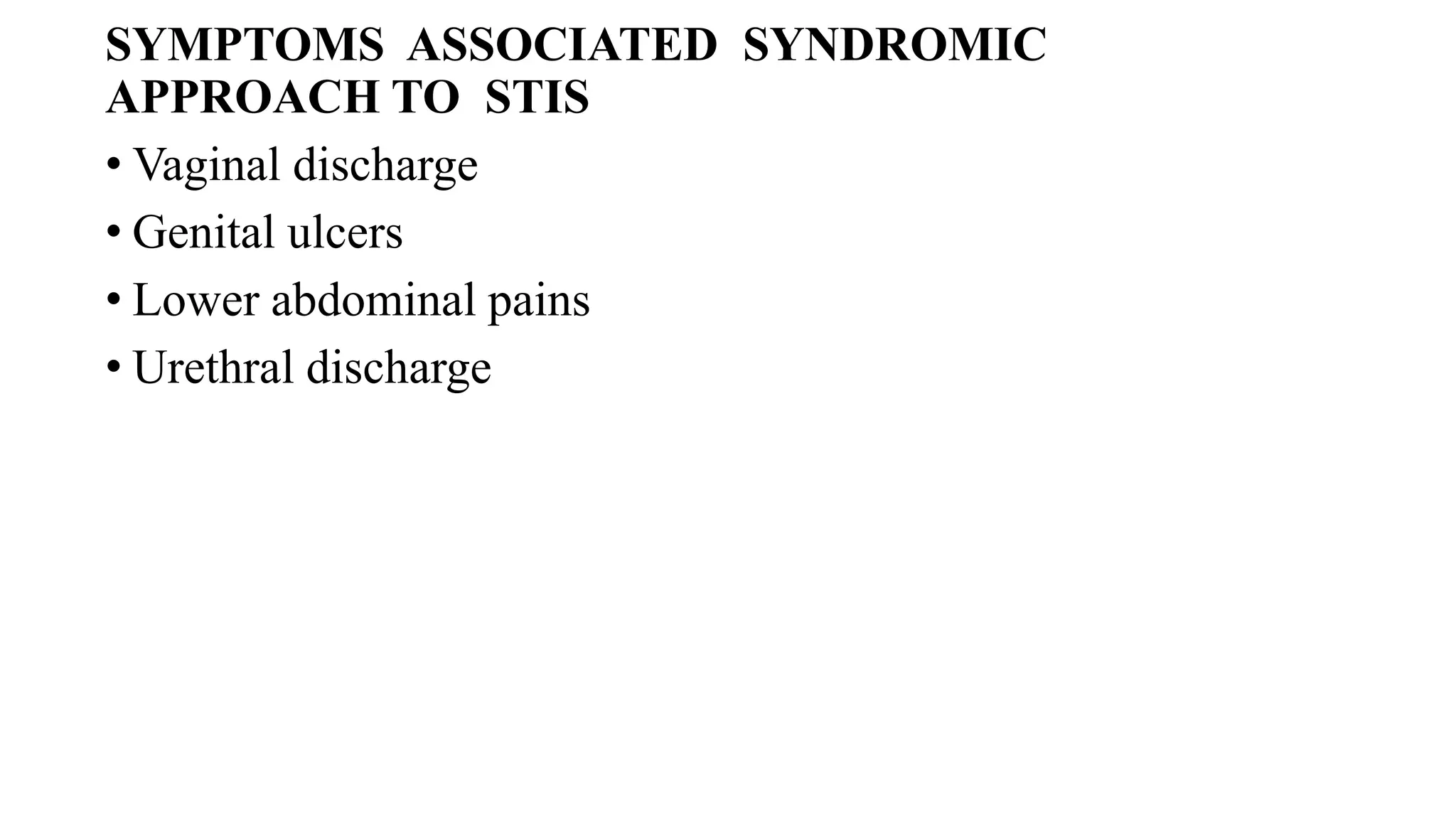
SYMPTOMS ASSOCIATED SYNDROMIC
APPROACH TO STIS
• Vaginal discharge
• Genital ulcers
• Lower abdominal pains
• Urethral discharge
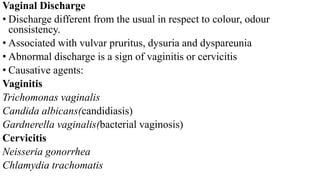
Vaginal Discharge
• Discharge different from the usual in respect to colour, odour
consistency.
• Associated with vulvar pruritus, dysuria and dyspareunia
• Abnormal discharge is a sign of vaginitis or cervicitis
• Causative agents:
Vaginitis
Trichomonas vaginalis
Candida albicans(candidiasis)
Gardnerella vaginalis(bacterial vaginosis)
Cervicitis
Neisseria gonorrhea
Chlamydia trachomatis
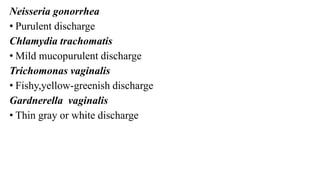
Neisseria gonorrhea
• Purulent discharge
Chlamydia trachomatis
• Mild mucopurulent discharge
Trichomonas vaginalis
• Fishy,yellow-greenish discharge
Gardnerella vaginalis
• Thin gray or white discharge
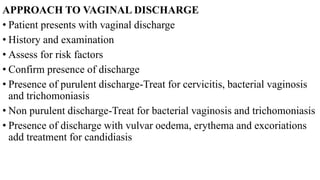
APPROACH TO VAGINAL DISCHARGE
• Patient presents with vaginal discharge
• History and examination
• Assess for risk factors
• Confirm presence of discharge
• Presence of purulent discharge-Treat for cervicitis, bacterial vaginosis
and trichomoniasis
• Non purulent discharge-Treat for bacterial vaginosis and trichomoniasis
• Presence of discharge with vulvar oedema, erythema and excoriations
add treatment for candidiasis
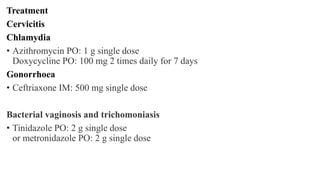
Treatment
Cervicitis
Chlamydia
• Azithromycin PO: 1 g single dose
Doxycycline PO: 100 mg 2 times daily for 7 days
Gonorrhoea
• Ceftriaxone IM: 500 mg single dose
Bacterial vaginosis and trichomoniasis
• Tinidazole PO: 2 g single dose
or metronidazole PO: 2 g single dose
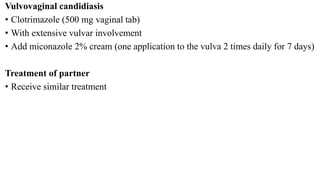
Vulvovaginal candidiasis
• Clotrimazole (500 mg vaginal tab)
• With extensive vulvar involvement
• Add miconazole 2% cream (one application to the vulva 2 times daily for 7 days)
Treatment of partner
• Receive similar treatment
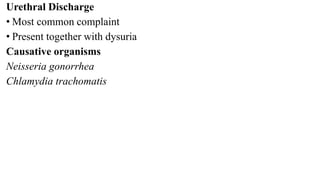
Urethral Discharge
• Most common complaint
• Present together with dysuria
Causative organisms
Neisseria gonorrhea
Chlamydia trachomatis
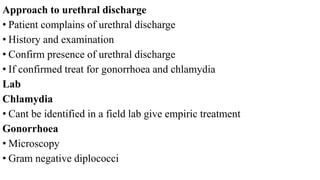
Approach to urethral discharge
• Patient complains of urethral discharge
• History and examination
• Confirm presence of urethral discharge
• If confirmed treat for gonorrhoea and chlamydia
Lab
Chlamydia
• Cant be identified in a field lab give empiric treatment
Gonorrhoea
• Microscopy
• Gram negative diplococci
Treatment
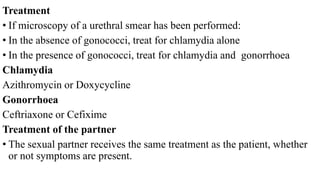
• If microscopy of a urethral smear has been performed:
• In the absence of gonococci, treat for chlamydia alone
• In the presence of gonococci, treat for chlamydia and gonorrhoea
Chlamydia
Azithromycin or Doxycycline
Gonorrhoea
Ceftriaxone or Cefixime
Treatment of the partner
• The sexual partner receives the same treatment as the patient, whether
or not symptoms are present.
Genital ulcers
• Single or multiple vesicular, ulcerative or erosive lesions of genital
tract.
• Causative organisms
Treponema pallidum(syphilis chancre)
Haemophilus ducreyi(chancroid)
Herpes simplex virus(genital herpes)
Chlamydia trachomatis(lymphogranuloma venerum)
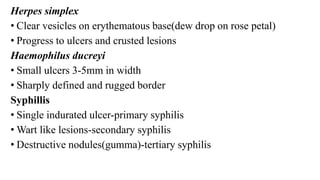
Herpes simplex
• Clear vesicles on erythematous base(dew drop on rose petal)
• Progress to ulcers and crusted lesions
Haemophilus ducreyi
• Small ulcers 3-5mm in width
• Sharply defined and rugged border
Syphillis
• Single indurated ulcer-primary syphilis
• Wart like lesions-secondary syphilis
• Destructive nodules(gumma)-tertiary syphilis
Approach to genital ulcers
• Patient presents with a genital ulcer
• History and examination
• Presence of small painful vesicles sometimes in clusters or small
ulcers with history of recurrent vesicles
• Treat for genital herpes
• Other ulcerations treat for syphilis and chancroid
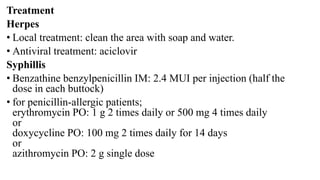
Treatment
Herpes
• Local treatment: clean the area with soap and water.
• Antiviral treatment: aciclovir
Syphillis
• Benzathine benzylpenicillin IM: 2.4 MUI per injection (half the
dose in each buttock)
• for penicillin-allergic patients;
erythromycin PO: 1 g 2 times daily or 500 mg 4 times daily
or
doxycycline PO: 100 mg 2 times daily for 14 days
or
azithromycin PO: 2 g single dose
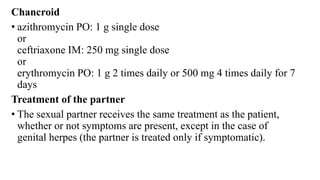
Chancroid
• azithromycin PO: 1 g single dose
or
ceftriaxone IM: 250 mg single dose
or
erythromycin PO: 1 g 2 times daily or 500 mg 4 times daily for 7
days
Treatment of the partner
• The sexual partner receives the same treatment as the patient,
whether or not symptoms are present, except in the case of
genital herpes (the partner is treated only if symptomatic).

SYNDROMIC APPROACH-2.pptxbannanannananajj

  • 1.
    SYMPTOMS ASSOCIATED SYNDROMIC APPROACHTO STIS • Vaginal discharge • Genital ulcers • Lower abdominal pains • Urethral discharge
  • 2.
    Vaginal Discharge • Dischargedifferent from the usual in respect to colour, odour consistency. • Associated with vulvar pruritus, dysuria and dyspareunia • Abnormal discharge is a sign of vaginitis or cervicitis • Causative agents: Vaginitis Trichomonas vaginalis Candida albicans(candidiasis) Gardnerella vaginalis(bacterial vaginosis) Cervicitis Neisseria gonorrhea Chlamydia trachomatis
  • 3.
    Neisseria gonorrhea • Purulentdischarge Chlamydia trachomatis • Mild mucopurulent discharge Trichomonas vaginalis • Fishy,yellow-greenish discharge Gardnerella vaginalis • Thin gray or white discharge
  • 4.
    APPROACH TO VAGINALDISCHARGE • Patient presents with vaginal discharge • History and examination • Assess for risk factors • Confirm presence of discharge • Presence of purulent discharge-Treat for cervicitis, bacterial vaginosis and trichomoniasis • Non purulent discharge-Treat for bacterial vaginosis and trichomoniasis • Presence of discharge with vulvar oedema, erythema and excoriations add treatment for candidiasis
  • 5.
    Treatment Cervicitis Chlamydia • Azithromycin PO:1 g single dose Doxycycline PO: 100 mg 2 times daily for 7 days Gonorrhoea • Ceftriaxone IM: 500 mg single dose Bacterial vaginosis and trichomoniasis • Tinidazole PO: 2 g single dose or metronidazole PO: 2 g single dose
  • 6.
    Vulvovaginal candidiasis • Clotrimazole(500 mg vaginal tab) • With extensive vulvar involvement • Add miconazole 2% cream (one application to the vulva 2 times daily for 7 days) Treatment of partner • Receive similar treatment
  • 7.
    Urethral Discharge • Mostcommon complaint • Present together with dysuria Causative organisms Neisseria gonorrhea Chlamydia trachomatis
  • 8.
    Approach to urethraldischarge • Patient complains of urethral discharge • History and examination • Confirm presence of urethral discharge • If confirmed treat for gonorrhoea and chlamydia Lab Chlamydia • Cant be identified in a field lab give empiric treatment Gonorrhoea • Microscopy • Gram negative diplococci
  • 9.
    Treatment • If microscopyof a urethral smear has been performed: • In the absence of gonococci, treat for chlamydia alone • In the presence of gonococci, treat for chlamydia and gonorrhoea Chlamydia Azithromycin or Doxycycline Gonorrhoea Ceftriaxone or Cefixime Treatment of the partner • The sexual partner receives the same treatment as the patient, whether or not symptoms are present.
  • 10.
    Genital ulcers • Singleor multiple vesicular, ulcerative or erosive lesions of genital tract. • Causative organisms Treponema pallidum(syphilis chancre) Haemophilus ducreyi(chancroid) Herpes simplex virus(genital herpes) Chlamydia trachomatis(lymphogranuloma venerum)
  • 11.
    Herpes simplex • Clearvesicles on erythematous base(dew drop on rose petal) • Progress to ulcers and crusted lesions Haemophilus ducreyi • Small ulcers 3-5mm in width • Sharply defined and rugged border Syphillis • Single indurated ulcer-primary syphilis • Wart like lesions-secondary syphilis • Destructive nodules(gumma)-tertiary syphilis
  • 12.
    Approach to genitalulcers • Patient presents with a genital ulcer • History and examination • Presence of small painful vesicles sometimes in clusters or small ulcers with history of recurrent vesicles • Treat for genital herpes • Other ulcerations treat for syphilis and chancroid
  • 13.
    Treatment Herpes • Local treatment:clean the area with soap and water. • Antiviral treatment: aciclovir Syphillis • Benzathine benzylpenicillin IM: 2.4 MUI per injection (half the dose in each buttock) • for penicillin-allergic patients; erythromycin PO: 1 g 2 times daily or 500 mg 4 times daily or doxycycline PO: 100 mg 2 times daily for 14 days or azithromycin PO: 2 g single dose
  • 14.
    Chancroid • azithromycin PO:1 g single dose or ceftriaxone IM: 250 mg single dose or erythromycin PO: 1 g 2 times daily or 500 mg 4 times daily for 7 days Treatment of the partner • The sexual partner receives the same treatment as the patient, whether or not symptoms are present, except in the case of genital herpes (the partner is treated only if symptomatic).