Frequency of commonsymptoms
in advanced illness
Patients with cancer with Symptom in last year of life
• Pain 84%
• Anorexia (Lack of appetite) 71%
• Nausea and/or Vomiting 51%
• Sleeplessness 51%
• Constipation 47%
• Breathlessness 47%
• Depression 38%
• Loss of bladder control 25%
• Confusion 33%
collated by Atkinson and Virdee,2001
4.
Step by Step
toapproach to managing
all Symptoms
• เขียนอาการทุกอาการทีละข้อ
• จัิลาิับความสาคัญ(ในใจผู้ป่วย)
• ิูทุกสาเหตุที่เป็นไปไิ้
• วิเคราะห์การวินิจฉัยจาก การซักประวัติ ตรวจร่างกาย ผลLab
• สร้างความเข้าใจ อธิบายข้อมูลจนผู้ป่วยและหรือญาติเข้าใจ
5.
Step by Step
toapproach to managing
all Symptoms
• ร่วมกันตัิสินใจเลือกการรักษาที่เหมาะสมกับผู้ป่วย
ทั้งmedical & non-medical
• ตั้งเป้าหมายที่เป็นไปไิ้จริง
• ประเมินผล
• Review , review , review
Nurses 'too busyto monitor
food'
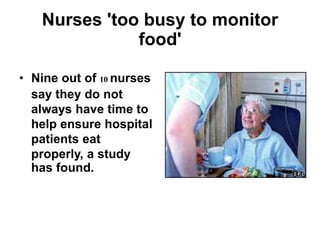
• Nine out of 10 nurses
say they do not
always have time to
help ensure hospital
patients eat
properly, a study
has found.
12.
MEASURES NEEDED
The AgeConcern campaign
calls for
• Views of patients, and their carers to be
considered
• Ward staff to become 'food aware'
• Older patients to be assessed for
malnutrition on admission, and regularly
during their stay
• Introduction of protected mealtimes
• Implementation of a 'red tray system'
Constipation
• What isconstipation?
• Signs and Symptoms of Constipation
• Common cause of Constipation
• Management of constipation
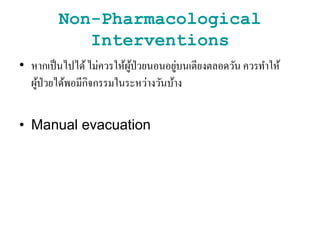
– Manual evacuation
– Laxatives
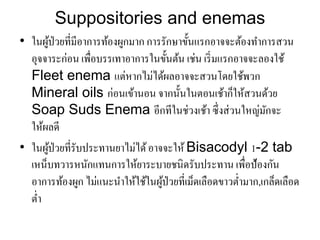
– Suppositories and enemas
40.
What is constipation
•หมายถึง อาการที่ผู้ป่วยมีการถ่ายอุจจาระแข็ง หรือเป็นลาเล็กลง หรือ
จานวนความถี่ในการถ่ายอุจจาระน้อยกว่า3 ครั้งต่อสัปิาห์ นอกจากนั้น
หากถามประวัติผู้ป่วยที่มีอาการท้องผูกเพิ่มเติม อาจจะไิ้ประวัติว่ามี
อาการอื่นๆร่วมิ้วยไิ้แก่ อาการเจ็บที่ทวารหนักเวลาถ่ายอุจจาระ มี
อาการเรอ ท้องอืิ และความรู้สึกเหมือนว่าถ่ายอุจจาระไม่สุิ
41.
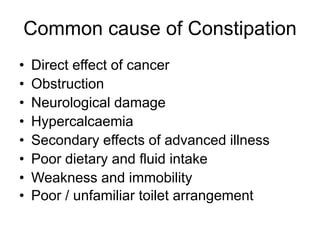
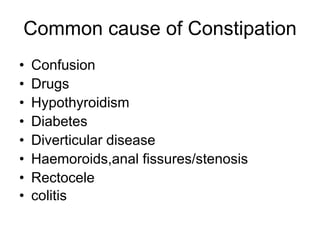
Common cause ofConstipation
• Direct effect of cancer
• Obstruction
• Neurological damage
• Hypercalcaemia
• Secondary effects of advanced illness
• Poor dietary and fluid intake
• Weakness and immobility
• Poor / unfamiliar toilet arrangement
Regular Bowel Chart
จอ พ พฤ ศ ส อ
date
Medicine
Other
Poop
Size
T = Tiny
S = Small
M = Medium
L = Large
XL = Extra
Large
Consistency
R = Runny
LF = Loosely
Formed
F = Formed
H = Hard
Stool Type
(See Stool
Picture)
Notes
• Anaemia
• Pneumothorax
•Chest infection
• Cardiac failure
• Renal failure
• Fear and anxiety
• Superior vena-cava obstruction
54.
Nursing Management
• Assesment
•Management
• Advice and support on methods of
management
• Medication
• Teach breathing,relaxation,distraction
55.
What does pursedlip breathing do?
• Pursed lip breathing
• Improves ventilation
• Releases trapped air in the lungs
• Keeps the airways open longer and decreases
the work of breathing
• Prolongs exhalation to slow the breathing rate
• Improves breathing patterns by moving old air
out of the lungs and allowing for new air to enter
the lungs
• Relieves shortness of breath
• Causes general relaxation
56.
When should Iuse this
technique?
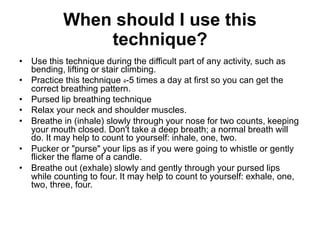
• Use this technique during the difficult part of any activity, such as
bending, lifting or stair climbing.
• Practice this technique 4-5 times a day at first so you can get the
correct breathing pattern.
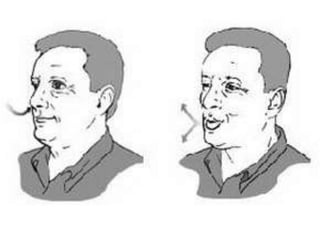
• Pursed lip breathing technique
• Relax your neck and shoulder muscles.
• Breathe in (inhale) slowly through your nose for two counts, keeping
your mouth closed. Don't take a deep breath; a normal breath will
do. It may help to count to yourself: inhale, one, two.
• Pucker or "purse" your lips as if you were going to whistle or gently
flicker the flame of a candle.
• Breathe out (exhale) slowly and gently through your pursed lips
while counting to four. It may help to count to yourself: exhale, one,
two, three, four.