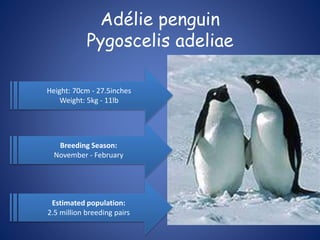

Adélie penguin
Pygoscelis adeliae
Estimated population:
2.5 million breeding pairs
Breeding Season:
November - February
Height: 70cm - 27.5inches
Weight: 5kg - 11lb
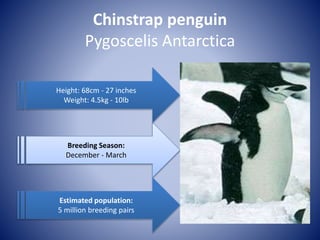
Chinstrap penguin
Pygoscelis Antarctica
Breeding Season:
December - March
Height: 68cm - 27 inches
Weight: 4.5kg - 10lb
Estimated population:
5 million breeding pairs
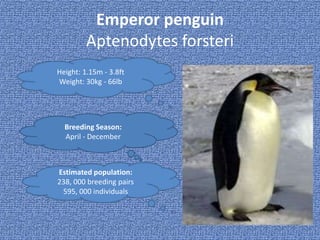
Emperor penguin
Aptenodytes forsteri
Height: 1.15m - 3.8ft
Weight: 30kg - 66lb
Breeding Season:
April - December
Estimated population:
238, 000 breeding pairs
595, 000 individuals
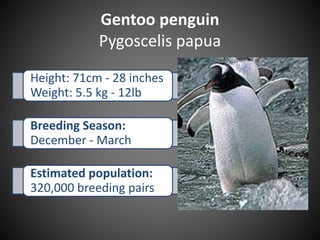
Gentoo penguin
Pygoscelis papua
Height: 71cm - 28 inches
Weight: 5.5 kg - 12lb
Breeding Season:
December - March
Estimated population:
320,000 breeding pairs
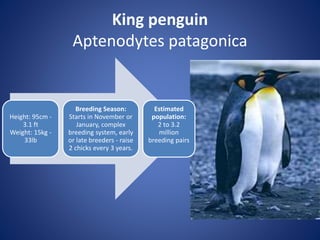
King penguin
Aptenodytes patagonica
Height: 95cm -
3.1 ft
Weight: 15kg -
33lb
Breeding Season:
Starts in November or
January, complex
breeding system, early
or late breeders - raise
2 chicks every 3 years.
Estimated
population:
2 to 3.2
million
breeding pairs
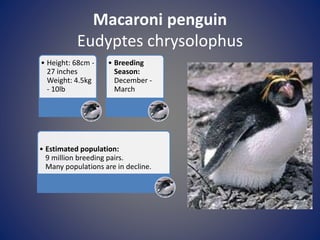
Macaroni penguin
Eudyptes chrysolophus
• Height: 68cm -
27 inches
Weight: 4.5kg
- 10lb
• Breeding
Season:
December -
March
• Estimated population:
9 million breeding pairs.
Many populations are in decline.
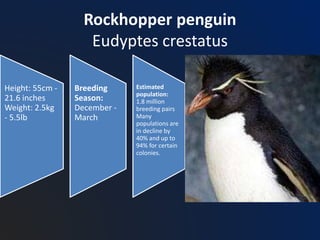
Rockhopper penguin
Eudyptes crestatus
Height: 55cm -
21.6 inches
Weight: 2.5kg
- 5.5lb
Breeding
Season:
December -
March
Estimated
population:
1.8 million
breeding pairs
Many
populations are
in decline by
40% and up to
94% for certain
colonies.
Adaptations to living in Antarctica
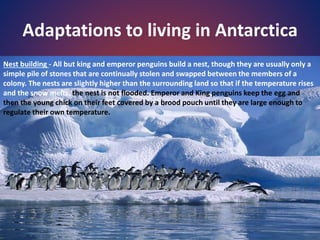
Nest building - All but king and emperor penguins build a nest, though they are usually only a
simple pile of stones that are continually stolen and swapped between the members of a
colony. The nests are slightly higher than the surrounding land so that if the temperature rises
and the snow melts, the nest is not flooded. Emperor and King penguins keep the egg and
then the young chick on their feet covered by a brood pouch until they are large enough to
regulate their own temperature.
Adaptations to living in Antarctica
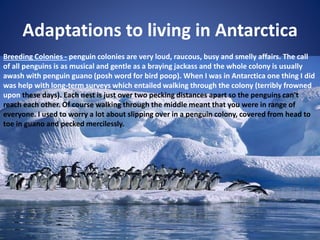
Breeding Colonies - penguin colonies are very loud, raucous, busy and smelly affairs. The call
of all penguins is as musical and gentle as a braying jackass and the whole colony is usually
awash with penguin guano (posh word for bird poop). When I was in Antarctica one thing I did
was help with long-term surveys which entailed walking through the colony (terribly frowned
upon these days). Each nest is just over two pecking distances apart so the penguins can't
reach each other. Of course walking through the middle meant that you were in range of
everyone. I used to worry a lot about slipping over in a penguin colony, covered from head to
toe in guano and pecked mercilessly.
Adaptations to living in Antarctica
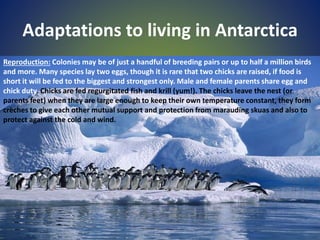
Reproduction: Colonies may be of just a handful of breeding pairs or up to half a million birds
and more. Many species lay two eggs, though it is rare that two chicks are raised, if food is
short it will be fed to the biggest and strongest only. Male and female parents share egg and
chick duty. Chicks are fed regurgitated fish and krill (yum!). The chicks leave the nest (or
parents feet) when they are large enough to keep their own temperature constant, they form
crèches to give each other mutual support and protection from marauding skuas and also to
protect against the cold and wind.
Adaptations to living in Antarctica
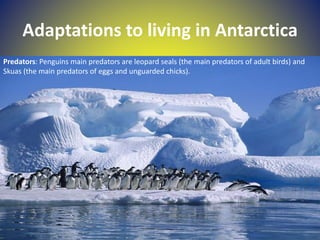
Predators: Penguins main predators are leopard seals (the main predators of adult birds) and
Skuas (the main predators of eggs and unguarded chicks).
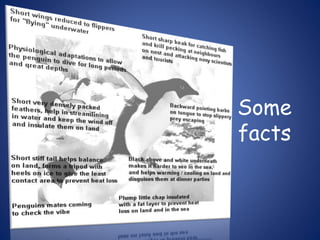
Some
facts
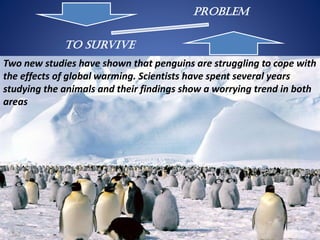
Two new studies have shown that penguins are struggling to cope with
the effects of global warming. Scientists have spent several years
studying the animals and their findings show a worrying trend in both
areas
Problem
To Survive
Problem
To Survive
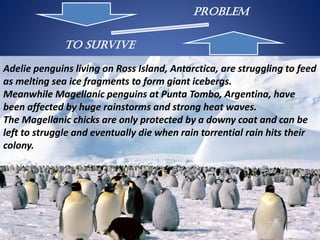
Adelie penguins living on Ross Island, Antarctica, are struggling to feed
as melting sea ice fragments to form giant icebergs.
Meanwhile Magellanic penguins at Punta Tombo, Argentina, have
been affected by huge rainstorms and strong heat waves.
The Magellanic chicks are only protected by a downy coat and can be
left to struggle and eventually die when rain torrential rain hits their
colony.
Problem
To Survive
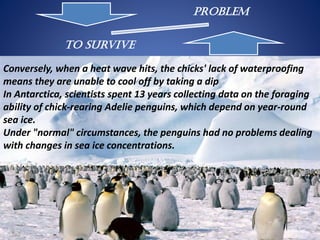
Conversely, when a heat wave hits, the chicks' lack of waterproofing
means they are unable to cool off by taking a dip
In Antarctica, scientists spent 13 years collecting data on the foraging
ability of chick-rearing Adelie penguins, which depend on year-round
sea ice.
Under "normal" circumstances, the penguins had no problems dealing
with changes in sea ice concentrations.
Problem
To Survive
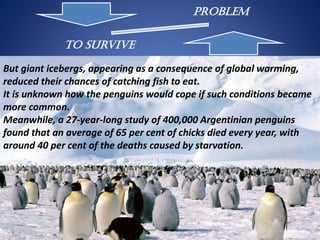
But giant icebergs, appearing as a consequence of global warming,
reduced their chances of catching fish to eat.
It is unknown how the penguins would cope if such conditions became
more common.
Meanwhile, a 27-year-long study of 400,000 Argentinian penguins
found that an average of 65 per cent of chicks died every year, with
around 40 per cent of the deaths caused by starvation.
Problem
To Survive
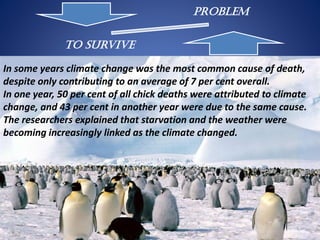
In some years climate change was the most common cause of death,
despite only contributing to an average of 7 per cent overall.
In one year, 50 per cent of all chick deaths were attributed to climate
change, and 43 per cent in another year were due to the same cause.
The researchers explained that starvation and the weather were
becoming increasingly linked as the climate changed.
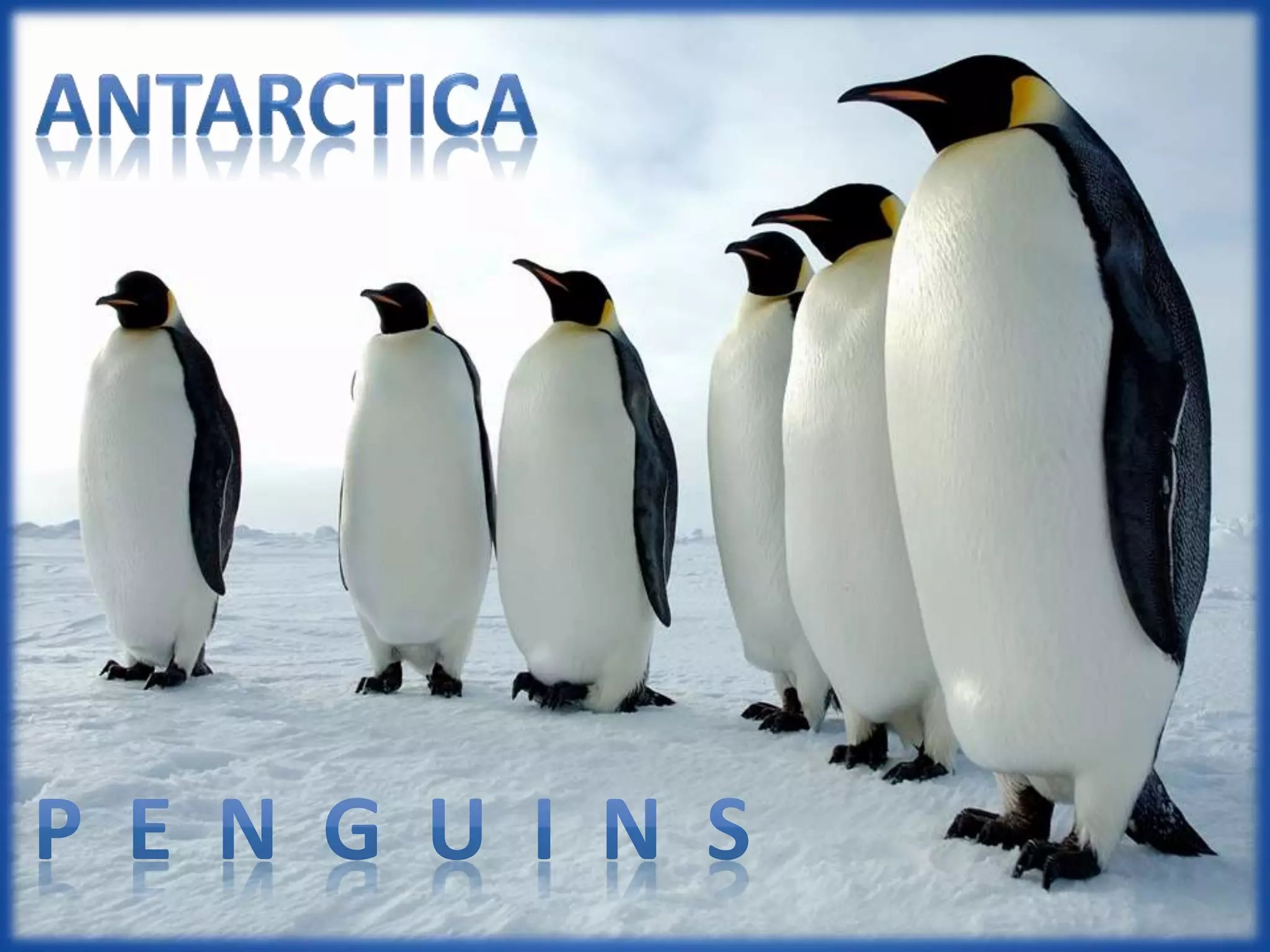
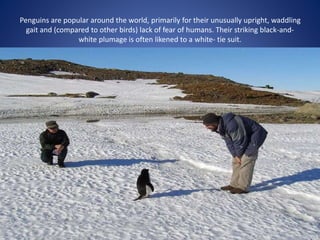
Penguins are popular around the world, primarily for their unusually upright, waddling
gait and (compared to other birds) lack of fear of humans. Their striking black-and-
white plumage is often likened to a white- tie suit.
Penguins in antarctica

Penguins in antarctica

  • 3.
    Adélie penguin Pygoscelis adeliae Estimatedpopulation: 2.5 million breeding pairs Breeding Season: November - February Height: 70cm - 27.5inches Weight: 5kg - 11lb
  • 4.
    Chinstrap penguin Pygoscelis Antarctica BreedingSeason: December - March Height: 68cm - 27 inches Weight: 4.5kg - 10lb Estimated population: 5 million breeding pairs
  • 5.
    Emperor penguin Aptenodytes forsteri Height:1.15m - 3.8ft Weight: 30kg - 66lb Breeding Season: April - December Estimated population: 238, 000 breeding pairs 595, 000 individuals
  • 6.
    Gentoo penguin Pygoscelis papua Height:71cm - 28 inches Weight: 5.5 kg - 12lb Breeding Season: December - March Estimated population: 320,000 breeding pairs
  • 7.
    King penguin Aptenodytes patagonica Height:95cm - 3.1 ft Weight: 15kg - 33lb Breeding Season: Starts in November or January, complex breeding system, early or late breeders - raise 2 chicks every 3 years. Estimated population: 2 to 3.2 million breeding pairs
  • 8.
    Macaroni penguin Eudyptes chrysolophus •Height: 68cm - 27 inches Weight: 4.5kg - 10lb • Breeding Season: December - March • Estimated population: 9 million breeding pairs. Many populations are in decline.
  • 9.
    Rockhopper penguin Eudyptes crestatus Height:55cm - 21.6 inches Weight: 2.5kg - 5.5lb Breeding Season: December - March Estimated population: 1.8 million breeding pairs Many populations are in decline by 40% and up to 94% for certain colonies.
  • 10.
    Adaptations to livingin Antarctica Nest building - All but king and emperor penguins build a nest, though they are usually only a simple pile of stones that are continually stolen and swapped between the members of a colony. The nests are slightly higher than the surrounding land so that if the temperature rises and the snow melts, the nest is not flooded. Emperor and King penguins keep the egg and then the young chick on their feet covered by a brood pouch until they are large enough to regulate their own temperature.
  • 11.
    Adaptations to livingin Antarctica Breeding Colonies - penguin colonies are very loud, raucous, busy and smelly affairs. The call of all penguins is as musical and gentle as a braying jackass and the whole colony is usually awash with penguin guano (posh word for bird poop). When I was in Antarctica one thing I did was help with long-term surveys which entailed walking through the colony (terribly frowned upon these days). Each nest is just over two pecking distances apart so the penguins can't reach each other. Of course walking through the middle meant that you were in range of everyone. I used to worry a lot about slipping over in a penguin colony, covered from head to toe in guano and pecked mercilessly.
  • 12.
    Adaptations to livingin Antarctica Reproduction: Colonies may be of just a handful of breeding pairs or up to half a million birds and more. Many species lay two eggs, though it is rare that two chicks are raised, if food is short it will be fed to the biggest and strongest only. Male and female parents share egg and chick duty. Chicks are fed regurgitated fish and krill (yum!). The chicks leave the nest (or parents feet) when they are large enough to keep their own temperature constant, they form crèches to give each other mutual support and protection from marauding skuas and also to protect against the cold and wind.
  • 13.
    Adaptations to livingin Antarctica Predators: Penguins main predators are leopard seals (the main predators of adult birds) and Skuas (the main predators of eggs and unguarded chicks).
  • 14.
  • 15.
    Two new studieshave shown that penguins are struggling to cope with the effects of global warming. Scientists have spent several years studying the animals and their findings show a worrying trend in both areas Problem To Survive
  • 16.
    Problem To Survive Adelie penguinsliving on Ross Island, Antarctica, are struggling to feed as melting sea ice fragments to form giant icebergs. Meanwhile Magellanic penguins at Punta Tombo, Argentina, have been affected by huge rainstorms and strong heat waves. The Magellanic chicks are only protected by a downy coat and can be left to struggle and eventually die when rain torrential rain hits their colony.
  • 17.
    Problem To Survive Conversely, whena heat wave hits, the chicks' lack of waterproofing means they are unable to cool off by taking a dip In Antarctica, scientists spent 13 years collecting data on the foraging ability of chick-rearing Adelie penguins, which depend on year-round sea ice. Under "normal" circumstances, the penguins had no problems dealing with changes in sea ice concentrations.
  • 18.
    Problem To Survive But gianticebergs, appearing as a consequence of global warming, reduced their chances of catching fish to eat. It is unknown how the penguins would cope if such conditions became more common. Meanwhile, a 27-year-long study of 400,000 Argentinian penguins found that an average of 65 per cent of chicks died every year, with around 40 per cent of the deaths caused by starvation.
  • 19.
    Problem To Survive In someyears climate change was the most common cause of death, despite only contributing to an average of 7 per cent overall. In one year, 50 per cent of all chick deaths were attributed to climate change, and 43 per cent in another year were due to the same cause. The researchers explained that starvation and the weather were becoming increasingly linked as the climate changed.
  • 20.
    Penguins are populararound the world, primarily for their unusually upright, waddling gait and (compared to other birds) lack of fear of humans. Their striking black-and- white plumage is often likened to a white- tie suit.