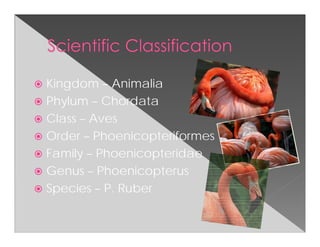
Kingdom – Animalia
Phylum – Chordata
Class – Aves
Order – Phoenicopteriformes
Family – Phoenicopteridae
Genus – Phoenicopterus
Species – P. Ruber
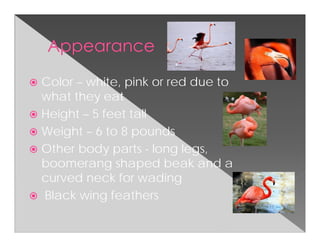
Color – white, pink or red due to
what they eat
Height – 5 feet tall
Weight – 6 to 8 pounds
Other body parts - long legs,
boomerang shaped beak and a
curved neck for wading
Black wing feathers
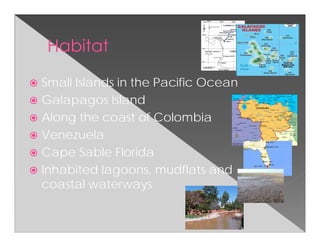
Small Islands in the Pacific Ocean
Galapagos Island
Along the coast of Colombia
Venezuela
Cape Sable Florida
Inhabited lagoons, mudflats and
coastal waterways
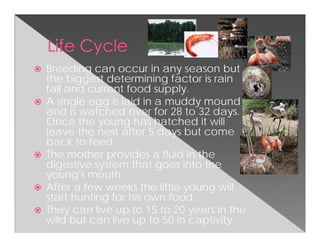
Breeding can occur in any season but
the biggest determining factor is rain
fall and current food supply.
A single egg is laid in a muddy mound
and is watched over for 28 to 32 days.
Once the young has hatched it will
leave the nest after 5 days but come
back to feed.
The mother provides a fluid in the
digestive system that goes into the
young's mouth.
After a few weeks the little young will
start hunting for his own food.
They can live up to 15 to 20 years in the
wild but can live up to 50 in captivity.
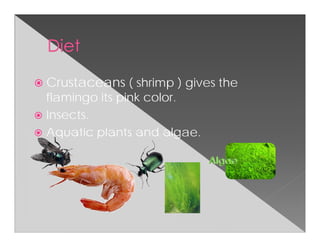
Crustaceans ( shrimp ) gives the
flamingo its pink color.
Insects.
Aquatic plants and algae.
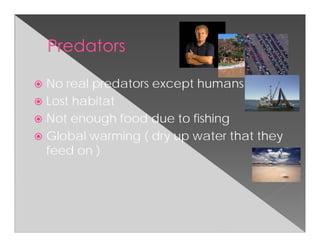
No real predators except humans
Lost habitat
Not enough food due to fishing
Global warming ( dry up water that they
feed on )
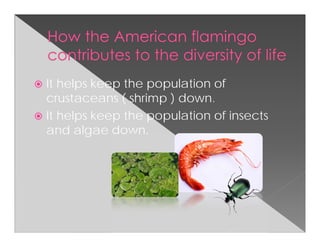
It helps keep the population of
crustaceans ( shrimp ) down.
It helps keep the population of insects
and algae down.
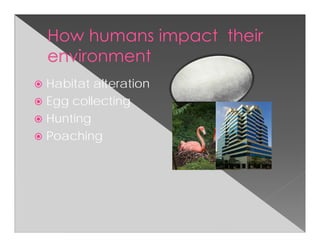
Habitat alteration
Egg collecting
Hunting
Poaching
Never litter.
Keep the water supply clean.
Support programs that support flamingos.
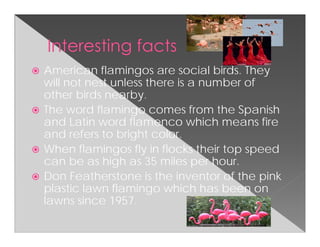
American flamingos are social birds. They
will not nest unless there is a number of
other birds nearby.
The word flamingo comes from the Spanish
and Latin word flamenco which means fire
and refers to bright color.
When flamingos fly in flocks their top speed
can be as high as 35 miles per hour.
Don Featherstone is the inventor of the pink
plastic lawn flamingo which has been on
lawns since 1957.
Animal Definitive Guide book
Birds of the World book
www.squidoo.com
www.wikipedia.com
www.google.com

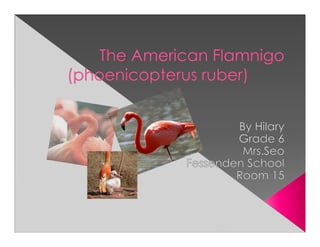
Hilary flamingo

  • 2.
    Kingdom – Animalia Phylum– Chordata Class – Aves Order – Phoenicopteriformes Family – Phoenicopteridae Genus – Phoenicopterus Species – P. Ruber
  • 3.
    Color – white,pink or red due to what they eat Height – 5 feet tall Weight – 6 to 8 pounds Other body parts - long legs, boomerang shaped beak and a curved neck for wading Black wing feathers
  • 4.
    Small Islands inthe Pacific Ocean Galapagos Island Along the coast of Colombia Venezuela Cape Sable Florida Inhabited lagoons, mudflats and coastal waterways
  • 5.
    Breeding can occurin any season but the biggest determining factor is rain fall and current food supply. A single egg is laid in a muddy mound and is watched over for 28 to 32 days. Once the young has hatched it will leave the nest after 5 days but come back to feed. The mother provides a fluid in the digestive system that goes into the young's mouth. After a few weeks the little young will start hunting for his own food. They can live up to 15 to 20 years in the wild but can live up to 50 in captivity.
  • 6.
    Crustaceans ( shrimp) gives the flamingo its pink color. Insects. Aquatic plants and algae.
  • 7.
    No real predatorsexcept humans Lost habitat Not enough food due to fishing Global warming ( dry up water that they feed on )
  • 8.
    It helps keepthe population of crustaceans ( shrimp ) down. It helps keep the population of insects and algae down.
  • 9.
  • 10.
    Never litter. Keep thewater supply clean. Support programs that support flamingos.
  • 11.
    American flamingos aresocial birds. They will not nest unless there is a number of other birds nearby. The word flamingo comes from the Spanish and Latin word flamenco which means fire and refers to bright color. When flamingos fly in flocks their top speed can be as high as 35 miles per hour. Don Featherstone is the inventor of the pink plastic lawn flamingo which has been on lawns since 1957.
  • 12.
    Animal Definitive Guidebook Birds of the World book www.squidoo.com www.wikipedia.com www.google.com