Working from the Ground UpSustainable AgricultureBrianna LaderbushThe Dietetic Internship Program at VanderbiltMay 3, 2010
RoadmapAgriculture and the Food SystemDefining SustainableExploring Sustainable AgricultureDietetics and Sustainability
ObjectivesWhat is sustainable agriculture?What are the 3 legs of the sustainability stool?Identify one way a dietetic professional can impact sustainable agriculture through practice.Identify one way you can make a personal difference in the sustainability of our food system.
Eat RightQuantityQualityResponsibilityHealth2
Agriculture and the Food System
A Systems PerspectiveEcosystem
Interactions between energy, environment and living organisms
Agro-ecosystem
An ecosystem managed to produce food and fiber
Food system
A system that produces, processes, distributes and consumes food3
Food SystemsNatural ResourcesFOOD SYSTEMSocietyTechnology3
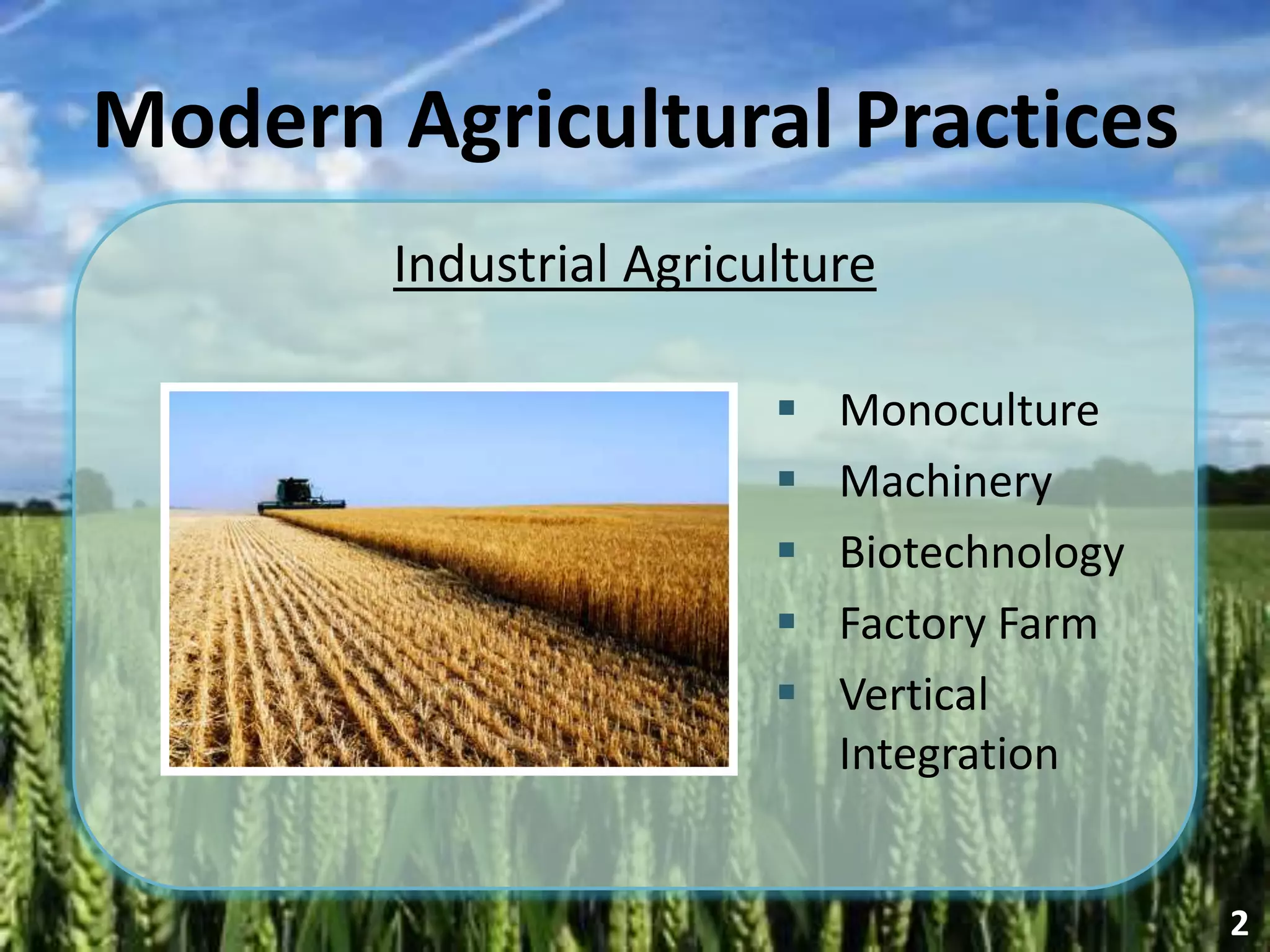
Modern Agricultural PracticesIndustrial AgricultureMonoculture
Machinery
Biotechnology
Factory Farm
Vertical Integration2
Driving Forces of AgricultureTechnology advancementsProduct developmentFood retailBenefitsIncreased production yields
Affordable food
Increased export markets
Strong agricultural industry
Convenience to the consumer6
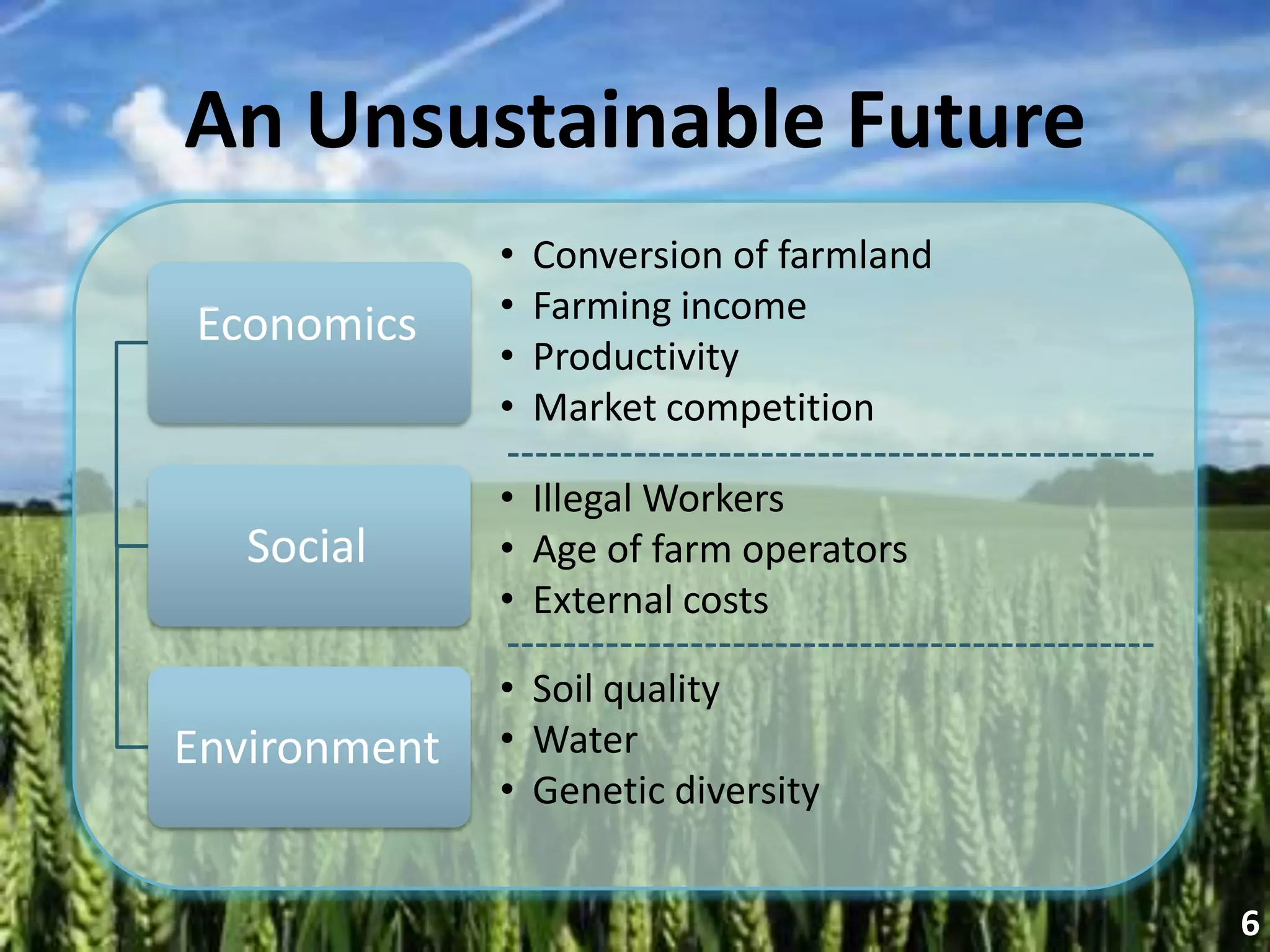
An Unsustainable FutureConversion of farmland
Farming income
Productivity
Market competitionEconomicsIllegal Workers
Age of farm operators

Sustainable Agriculture Presentation

Editor's Notes

  • #10 Faster, fatter, bigger cheaper
  • #11 The Earth’s ecosystems – 60% of the Earth’s ecosystem services have been degraded in the past 50 years• The supply of energy and material resources needed for industrial growth – Natural resource consumption is expected to rise to 170% of the Earth’s bio-capacity by 2040
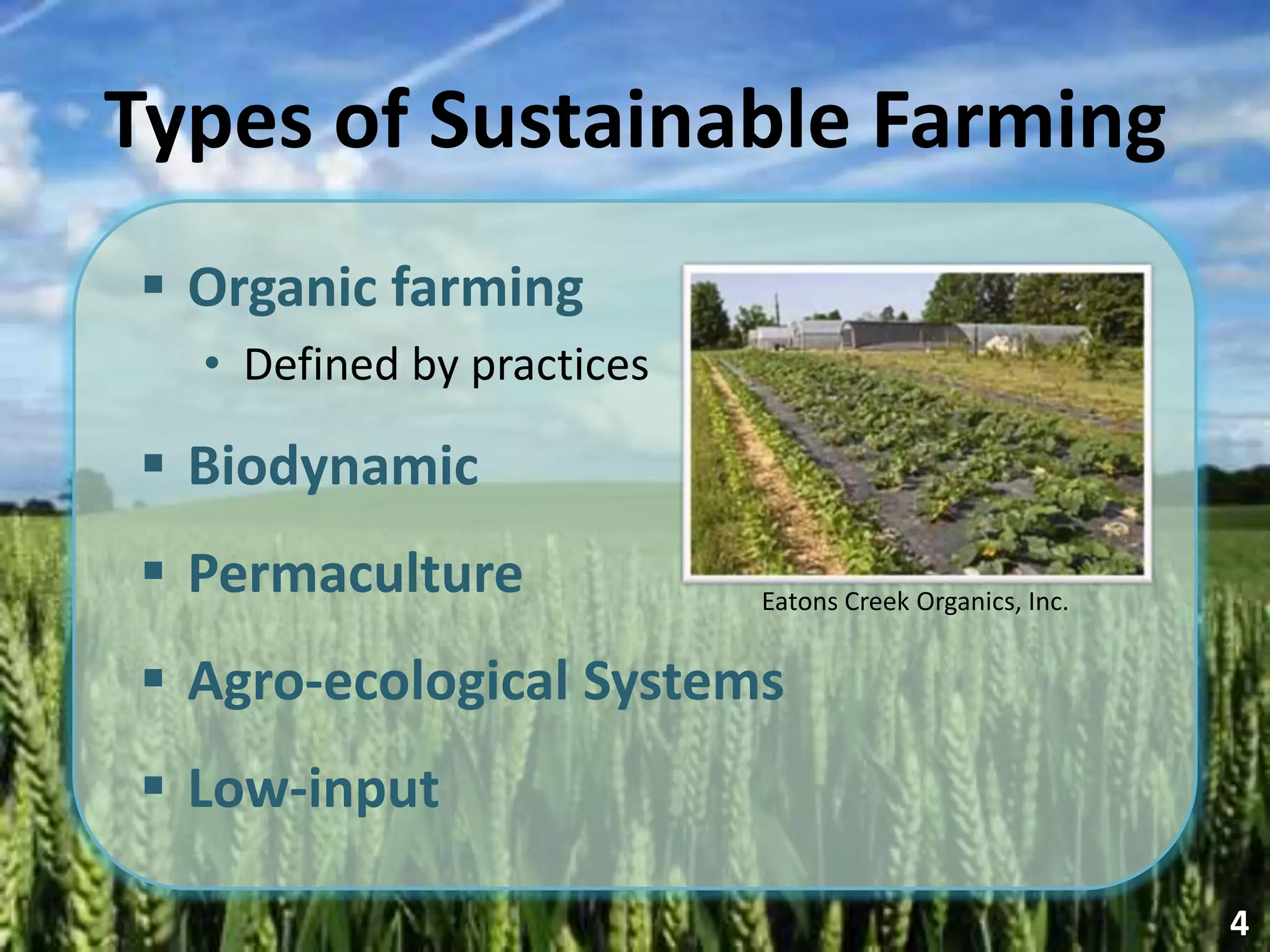
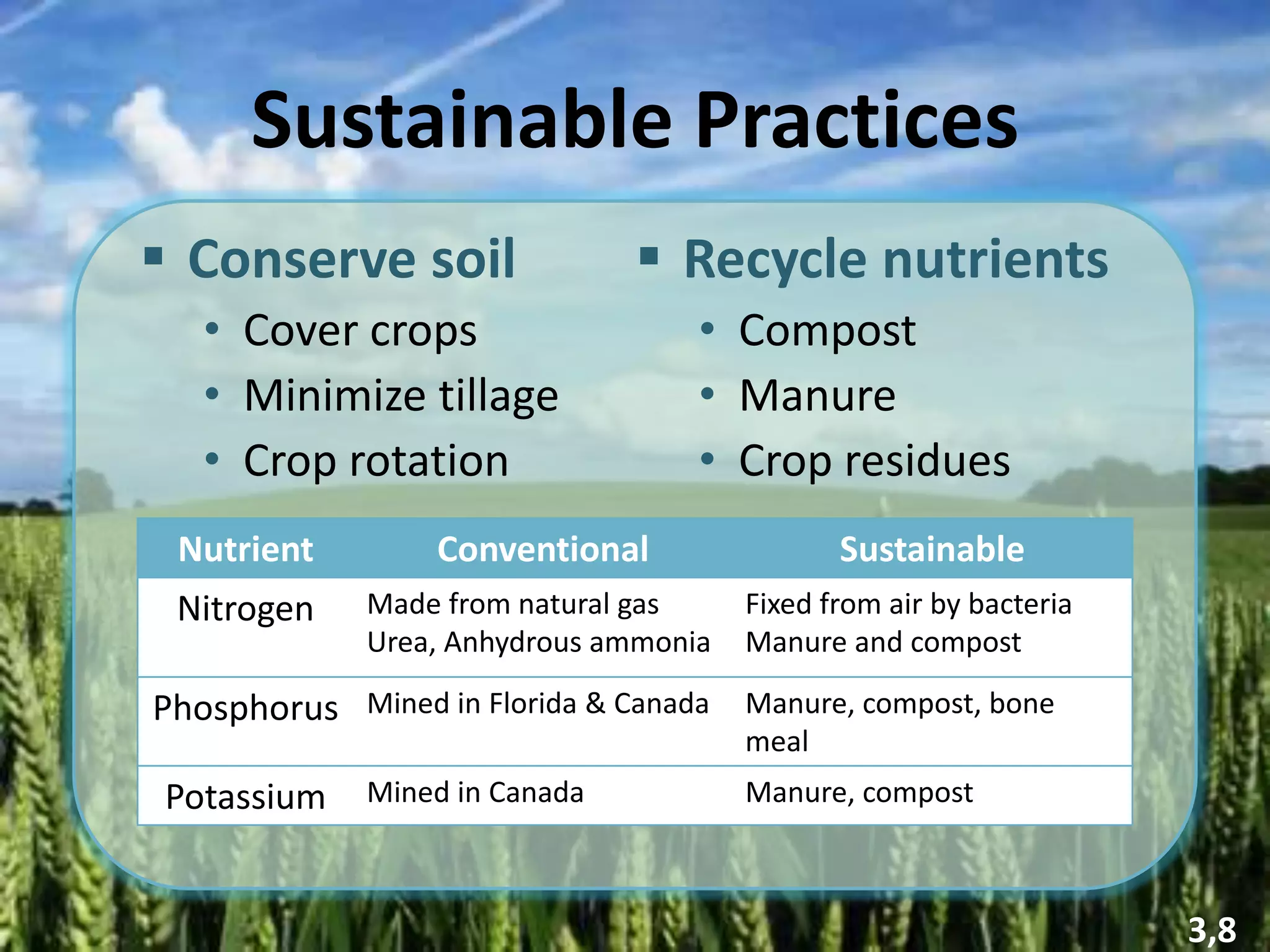
  • #19 In recent decades, sustainable farmers and researchers around the world have responded to the extractive industrial model with ecology-based approaches, variously called natural, organic, low-input, alternative, regenerative, holistic, Biodynamic, biointensive, and biological farming systems. All of them, representing thousands of farms, have contributed to our understanding of what sustainable systems are, and each of them shares a vision of "farming with nature," an agro-ecology that promotes biodiversity, recycles plant nutrients, protects soil from erosion, conserves and protects water, uses minimum tillage, and integrates crop and livestock enterprises on the farm.
  • #22 We need to connect sustainable production with sustainable consumption