Susquehanna County Envirothon

Station Training
Current Issue:
Sustainable Agriculture
Locally Grown
Key Topics
1. Understanding the three pillars of
sustainable agriculture and the indicators of
sustainable farming.
2. Understanding how ecosystems function and
the services they provide. Good soil health is
the foundation of a healthy ecosystem.
Key Topics Continued
3. How sustainable farming practices enhance
and protect soil health, water quality and
water quantity, biodiversity, manage insect
pests, disease, and weeds.
4. The importance of local and regional foods
systems to sustainable agriculture.
Key Topic:

1. Understanding the three
pillars of sustainable
agriculture and the indicators
of sustainable farming.
What is Sustainable Agriculture?
• Sustainable agriculture integrates three main
goals:
– environmental health – (ENVIRONMENT)
– economic profitability – (ECONOMIC)
– social and economic equity – (COMMUNITY)

• The word “sustainable” comes from the word
“sustain” which means to maintain, support,
or to endure.
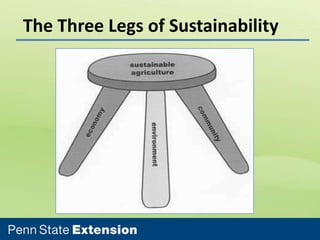
The Three Legs of Sustainability
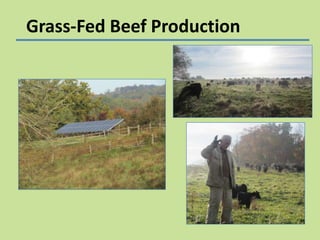
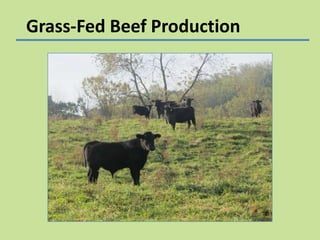
Grass-Fed Beef Production
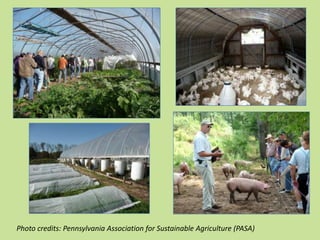
Photo credits: Pennsylvania Association for Sustainable Agriculture (PASA)
Key Topic:

2. Understanding how
ecosystems function and the
services they provide. Good
soil health is the foundation
of a healthy ecosystem.
Agro-ecosystems
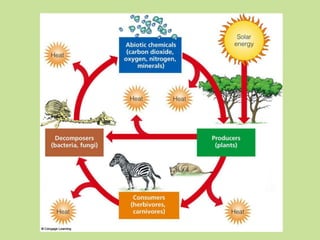
• An ecosystem is a community of living organisms (plants,
animals and microbes) in conjunction with the nonliving
components of their environment (things like air, water and
mineral soil), interacting as a system. These biotic and
abiotic components are linked together through nutrient
cycles and energy flows. As ecosystems are defined by the
network of interactions among organisms, and between
organisms and their environment.
• “Agro” refers to agricultural production. High Ag production
relies heavily on the quality of a soil ecosystem.
• The quality of a soil eco-system can directly effect crop
production and livestock production.

It begins with the soil!
Key Topic:

3. How sustainable farming
practices enhance and protect
soil health, water quality and
water quantity, biodiversity,
manage insect pests, disease,
and weeds.
Sustainability
• Sustainable agriculture is the act of farming using principles of ecology.
Ecology is defined as the study of relationships between organisms and
their environment. An ecosystem exemplifies the study of ecology.
• Sustainable Ag farming principles
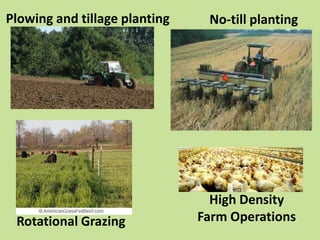
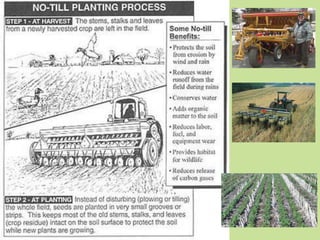
– No-till planting is a way of growing crops from year to year without
disturbing the soil through tillage.
– Rotational grazing: The length of time a paddock is grazed will
depend on the size of the herd and the size of the paddock. Resting
grazed lands allows the vegetation to renew energy reserves, rebuild
shoot systems, and deepen root systems, with the result being longterm maximum biomass production
• Intensive rotational grazing is a variety of systems where herds
and/or flocks are regularly and systematically moved to fresh
rested areas with the intent to maximize the quality and quantity
of forage growth
Sustainability
• Vs. Common (Less Sustainable) Farming practices
– Plowing and tillage planting- is the agricultural preparation of soil by
mechanical agitation of various types, such as digging, stirring, plowing
and overturning.
– Conventional/Continuous Grazing- is where herds and/or flocks graze
one large area of pasture, picking grasses that are most palatable and
not allowing plants to rejuvenate themselves for sustainable growth.
• Confined Feeding Operations (Factory Farming) - involves raising livestock
in confinement at high stocking density, where a farm operates as a
business. Confinement at high stocking density is one part of a systematic
effort to produce the highest output at the lowest cost by relying on
economies of scale, modern machinery, biotechnology, and global trade.
Confinement at high stocking density requires antibiotics and pesticides to
mitigate the spread of disease and pestilence exacerbated by these
crowded living conditions
Plowing and tillage planting

Rotational Grazing

No-till planting

High Density
Farm Operations
Sustainability
Why are these Ag practices more sustainable than others?

No-till:
– reduces the risk of erosion during rain storms
– reduces labor, fuel costs, irrigation and machinery wear and tear.
– increases yield because of higher water infiltration and storage
capacity.
– Overall no-till farming can be more profitable, conserve soil nutrients
increasing soil quality and sustaining seasonal and annual plant growth.
– Increases the amount of soil left intact and crop residue is left on the
field. Soil layers are conserved in their natural state.
– more beneficial insects, a higher microbial content, and a greater
amount of soil organic material.
– No-till increases the amount and variety of wildlife. This is the result of
improved cover, reduced foot traffic and the reduced chance of
destroying ground nesting birds and animals.
Cover Crops
•
•
•
•

Slow erosion
Improve soil
Smother weeds
Enhance nutrient and moisture availability
Sustainability
• Rotational/intensive Grazing (environmental and agricultural
benefits)
– Provides a permanent vegetative cover which reduces
erosion from wind and water because the soil is never left
exposed
– Reduces hoof and leg problems, which seem to be
accentuated by prolonged time spent on concrete floors
– physical strength of the cows has improved because the
cattle receive a lot more exercise
– production increase because of good grass production and
the improvement of the overall health of the animal
– Increase of grass and legume production
Overall nutrient laden grass produces healthy livestock, healthy
livestock leads to wealthy production rates
In Summary
• An ecosystem is a community of living organisms (farm
plants and animals) in conjunction with the nonliving
components of their environment (the mineral soil
component), interacting as a system.
• As ecosystems are defined by the network of interactions
among organisms, and between organisms and their
environment. (Cause and effects)
• Agro refers to agricultural production.
– Plants
• Crop plants such as corn and hay
• Pasture plants such as grasses, legumes

– Animals
• Livestock
– Production from that livestock

It begins with the soil!
Key Topic:

4. The importance of local and
regional foods systems to
sustainable agriculture.
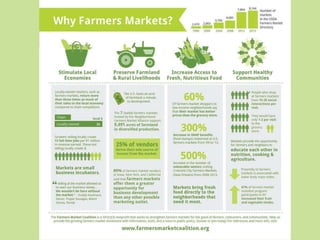
Why Locally Grown?
• People worldwide are rediscovering the
benefits of buying local food. It is fresher
than anything in the supermarket and that
means it is tastier and more nutritious. It is
also good for your local economy--buying
directly from family farmers helps them stay
in business. – source: www.localharvest.org
Local Foods Marketing Campaigns
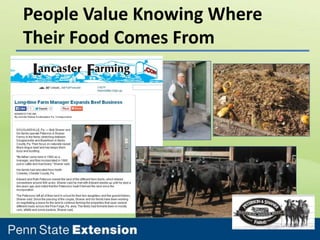
People Value Knowing Where
Their Food Comes From
PA Preferred
Made in PA. It makes a difference.

PA Preferred was created to ensure that
Pennsylvanians are supporting fellow
Pennsylvanians, our neighbors, friends,
family. By purchasing products made in
PA you are making a difference by
restoring pride in our homegrown
products and helping our economy.
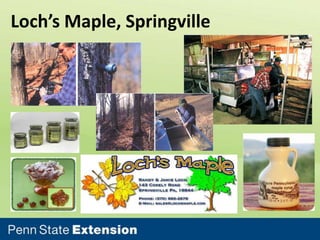
Loch’s Maple, Springville
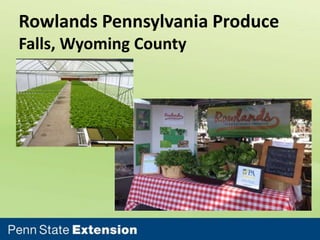
Rowlands Pennsylvania Produce
Falls, Wyoming County
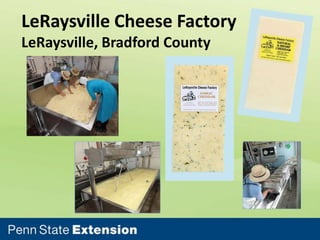
LeRaysville Cheese Factory
LeRaysville, Bradford County
Lang’s Chocolates, Williamsport
Organic Farming
• USDA defines organic agriculture as…
“A production system that is managed to
respond to site-specific conditions by
integrating cultural, biological, and
mechanical practices that foster cycling of
resources, promote ecological balance, and
conserve biodiversity.”
More specifically:
• Uses cover crops, green manures, animal
manures, crop rotations to fertilize the soil.
• Use of biological control, crop rotations to
manage weeds, insects and disease
• Emphasis on biodiversity of agricultural
system and surrounding area
• Use of rotational grazing and mixed forage
pastures for livestock operations and
alternative health care for animal well-being
Continued…
• Reduction of external and off farm inputs and
elimination of synthetic pesticides and
fertilizers and other material such as
hormones and antibiotics.
• A focus on renewable resources, soil and
water conservation, and management
practices that restore, maintain and enhance
ecological balance.
“Back to the Start”
Questions?

Sustainability in cattle production

  • 1.
    Susquehanna County Envirothon StationTraining Current Issue: Sustainable Agriculture Locally Grown
  • 2.
    Key Topics 1. Understandingthe three pillars of sustainable agriculture and the indicators of sustainable farming. 2. Understanding how ecosystems function and the services they provide. Good soil health is the foundation of a healthy ecosystem.
  • 3.
    Key Topics Continued 3.How sustainable farming practices enhance and protect soil health, water quality and water quantity, biodiversity, manage insect pests, disease, and weeds. 4. The importance of local and regional foods systems to sustainable agriculture.
  • 4.
    Key Topic: 1. Understandingthe three pillars of sustainable agriculture and the indicators of sustainable farming.
  • 5.
    What is SustainableAgriculture? • Sustainable agriculture integrates three main goals: – environmental health – (ENVIRONMENT) – economic profitability – (ECONOMIC) – social and economic equity – (COMMUNITY) • The word “sustainable” comes from the word “sustain” which means to maintain, support, or to endure.
  • 6.
    The Three Legsof Sustainability
  • 7.
  • 8.
  • 9.
    Photo credits: PennsylvaniaAssociation for Sustainable Agriculture (PASA)
  • 10.
    Key Topic: 2. Understandinghow ecosystems function and the services they provide. Good soil health is the foundation of a healthy ecosystem.
  • 11.
    Agro-ecosystems • An ecosystemis a community of living organisms (plants, animals and microbes) in conjunction with the nonliving components of their environment (things like air, water and mineral soil), interacting as a system. These biotic and abiotic components are linked together through nutrient cycles and energy flows. As ecosystems are defined by the network of interactions among organisms, and between organisms and their environment. • “Agro” refers to agricultural production. High Ag production relies heavily on the quality of a soil ecosystem. • The quality of a soil eco-system can directly effect crop production and livestock production. It begins with the soil!
  • 13.
    Key Topic: 3. Howsustainable farming practices enhance and protect soil health, water quality and water quantity, biodiversity, manage insect pests, disease, and weeds.
  • 14.
    Sustainability • Sustainable agricultureis the act of farming using principles of ecology. Ecology is defined as the study of relationships between organisms and their environment. An ecosystem exemplifies the study of ecology. • Sustainable Ag farming principles – No-till planting is a way of growing crops from year to year without disturbing the soil through tillage. – Rotational grazing: The length of time a paddock is grazed will depend on the size of the herd and the size of the paddock. Resting grazed lands allows the vegetation to renew energy reserves, rebuild shoot systems, and deepen root systems, with the result being longterm maximum biomass production • Intensive rotational grazing is a variety of systems where herds and/or flocks are regularly and systematically moved to fresh rested areas with the intent to maximize the quality and quantity of forage growth
  • 15.
    Sustainability • Vs. Common(Less Sustainable) Farming practices – Plowing and tillage planting- is the agricultural preparation of soil by mechanical agitation of various types, such as digging, stirring, plowing and overturning. – Conventional/Continuous Grazing- is where herds and/or flocks graze one large area of pasture, picking grasses that are most palatable and not allowing plants to rejuvenate themselves for sustainable growth. • Confined Feeding Operations (Factory Farming) - involves raising livestock in confinement at high stocking density, where a farm operates as a business. Confinement at high stocking density is one part of a systematic effort to produce the highest output at the lowest cost by relying on economies of scale, modern machinery, biotechnology, and global trade. Confinement at high stocking density requires antibiotics and pesticides to mitigate the spread of disease and pestilence exacerbated by these crowded living conditions
  • 16.
    Plowing and tillageplanting Rotational Grazing No-till planting High Density Farm Operations
  • 17.
    Sustainability Why are theseAg practices more sustainable than others? No-till: – reduces the risk of erosion during rain storms – reduces labor, fuel costs, irrigation and machinery wear and tear. – increases yield because of higher water infiltration and storage capacity. – Overall no-till farming can be more profitable, conserve soil nutrients increasing soil quality and sustaining seasonal and annual plant growth. – Increases the amount of soil left intact and crop residue is left on the field. Soil layers are conserved in their natural state. – more beneficial insects, a higher microbial content, and a greater amount of soil organic material. – No-till increases the amount and variety of wildlife. This is the result of improved cover, reduced foot traffic and the reduced chance of destroying ground nesting birds and animals.
  • 19.
    Cover Crops • • • • Slow erosion Improvesoil Smother weeds Enhance nutrient and moisture availability
  • 20.
    Sustainability • Rotational/intensive Grazing(environmental and agricultural benefits) – Provides a permanent vegetative cover which reduces erosion from wind and water because the soil is never left exposed – Reduces hoof and leg problems, which seem to be accentuated by prolonged time spent on concrete floors – physical strength of the cows has improved because the cattle receive a lot more exercise – production increase because of good grass production and the improvement of the overall health of the animal – Increase of grass and legume production Overall nutrient laden grass produces healthy livestock, healthy livestock leads to wealthy production rates
  • 21.
    In Summary • Anecosystem is a community of living organisms (farm plants and animals) in conjunction with the nonliving components of their environment (the mineral soil component), interacting as a system. • As ecosystems are defined by the network of interactions among organisms, and between organisms and their environment. (Cause and effects) • Agro refers to agricultural production. – Plants • Crop plants such as corn and hay • Pasture plants such as grasses, legumes – Animals • Livestock – Production from that livestock It begins with the soil!
  • 22.
    Key Topic: 4. Theimportance of local and regional foods systems to sustainable agriculture.
  • 23.
    Why Locally Grown? •People worldwide are rediscovering the benefits of buying local food. It is fresher than anything in the supermarket and that means it is tastier and more nutritious. It is also good for your local economy--buying directly from family farmers helps them stay in business. – source: www.localharvest.org
  • 24.
  • 26.
    People Value KnowingWhere Their Food Comes From
  • 27.
    PA Preferred Made inPA. It makes a difference. PA Preferred was created to ensure that Pennsylvanians are supporting fellow Pennsylvanians, our neighbors, friends, family. By purchasing products made in PA you are making a difference by restoring pride in our homegrown products and helping our economy.
  • 29.
  • 30.
  • 31.
  • 32.
  • 33.
    Organic Farming • USDAdefines organic agriculture as… “A production system that is managed to respond to site-specific conditions by integrating cultural, biological, and mechanical practices that foster cycling of resources, promote ecological balance, and conserve biodiversity.”
  • 34.
    More specifically: • Usescover crops, green manures, animal manures, crop rotations to fertilize the soil. • Use of biological control, crop rotations to manage weeds, insects and disease • Emphasis on biodiversity of agricultural system and surrounding area • Use of rotational grazing and mixed forage pastures for livestock operations and alternative health care for animal well-being
  • 35.
    Continued… • Reduction ofexternal and off farm inputs and elimination of synthetic pesticides and fertilizers and other material such as hormones and antibiotics. • A focus on renewable resources, soil and water conservation, and management practices that restore, maintain and enhance ecological balance.
  • 36.
    “Back to theStart” Questions?

Editor's Notes

  • #7 In order to be sustainable, three areas must be addressed by our agriculture, food, and natural resource systems. These three areas are economics, environment, and community. A sustainable agriculture must provide a fair and reasonably secure living for farm families. It should minimize harm to the natural environment. It should maintain basic natural resources such as healthy soil, clean water, and clean air. And it should support viable rural communities and fair treatment of all people involved in the food system, from farm workers to consumers.
  • #20 Benefits:The main purpose of a cover crop is to benefit the soil and/or other crops, but is not intended to be harvested for feed or sale. Some of the primary benefits from cover crops include:Soil quality improvements--Soil tilth is improved whenever a plant establishes roots and grows into compacted areas. Water infiltration is improved as well. When a field lays fallow for a period of time, the surface tends to seal and water will run off. Cover crops protect the soil surface and reduce sealing. Also, beneficial organisms in the soil, such as earthworms, thrive when fresh plant material is decomposing. Organic matter levels tend to improve with the addition of cover crops.Erosion control--Cover crops reduce wind and water erosion on all types of soils. By having the soil held in place by cover crops during the fall, winter, and early spring, loss of soil from erosion is greatly reduced.Fertility improvements--Legumes can add substantial amounts of available nitrogen to the soil. Non-legumes can be used to take up excess nitrogen from previous crops and recycle the nitrogen as well as available phosphorus and potassium to the following crop. This is very important after manure application, because cover crops can reduce leaching of nutrients.Suppress weeds--A dense stand of winter rye or other cover crop can suppress weeds by soil shading. Allelochemicals from cover crops suppress the growth of other plants.Insect control--Beneficial insects, such as lady beetles or ground beetles, may be encouraged by planting cover crops.When to PlantHow do farmers get started with cover crops? First, they must determine how their farming system can accommodate cover crops.Ideally, as soon as one type of crop is utilized (harvested, killed, or incorporated) the next is planted. In this way active plant growth occurs from March to November each year. Look for open periods in each field's rotation where a cover crop can be planted. The Rotation Timeline below illustrates opportunities for using cover crops in a corn, soybean and wheat rotation.
  • #28 PA Preferred is a public-private partnership between the Pennsylvania Department of Agriculture and many companies throughout the commonwealth. The program is working with thousands of companies and stores to support and promote Pennsylvania products. It is the official branding program of agricultural products grown or made in the Commonwealth. It was designed to help consumers clearly identify products produced in PA and make it easier for them to support our agricultural industry. From fresh fruits and vegetables to farmers’ markets, plant nurseries, fiber mills, restaurants, hardwood products, wineries, Christmas trees – PA Preferred represents the diversity of the Keystone state’s agriculture.