
CARBON FOOTPRINTS IN
TEXTILE
NISHANT CHHABRA
10TXCH30
WHAT IS CARBON FOOTPRINT
The total sets of greenhouse gas emissions caused by

an organization, event, product or person.
Wright, Kemp, and Williams, writing in the
journal Carbon Management, have suggested a
more practicable definition:
CONTD…
A measure of the total amount of carbon

dioxide (CO2) and methane (CH4) emissions of a
defined population, system or activity, considering
all relevant sources, sinks and storage within the
spatial and temporal boundary of the population,
system or activity of interest. Calculated as carbon
dioxide equivalent (CO2e) using the relevant 100year global warming potential (GWP100)
WHY IT IS NECESSARY
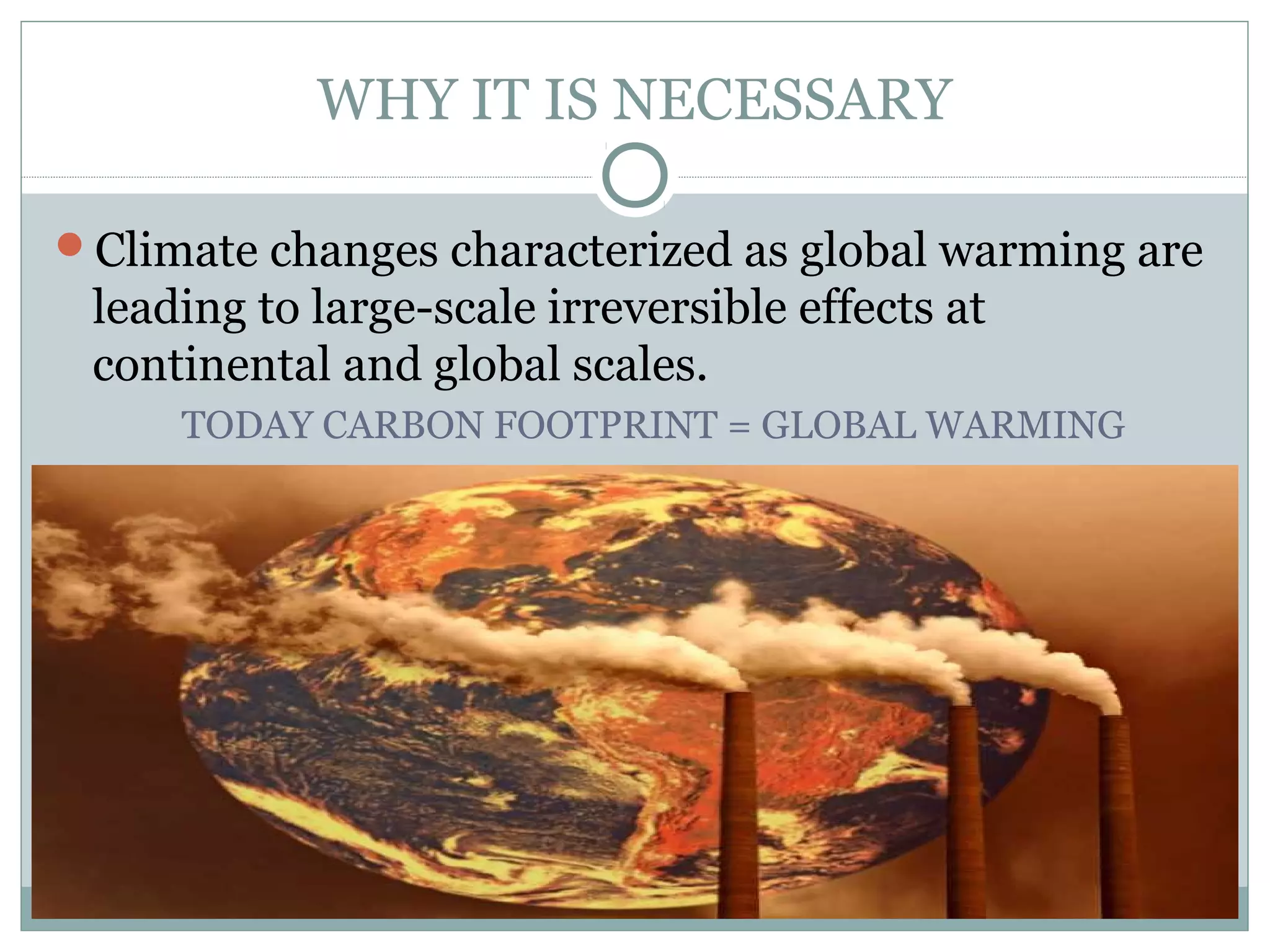
Climate changes characterized as global warming are

leading to large-scale irreversible effects at
continental and global scales.
TODAY CARBON FOOTPRINT = GLOBAL WARMING
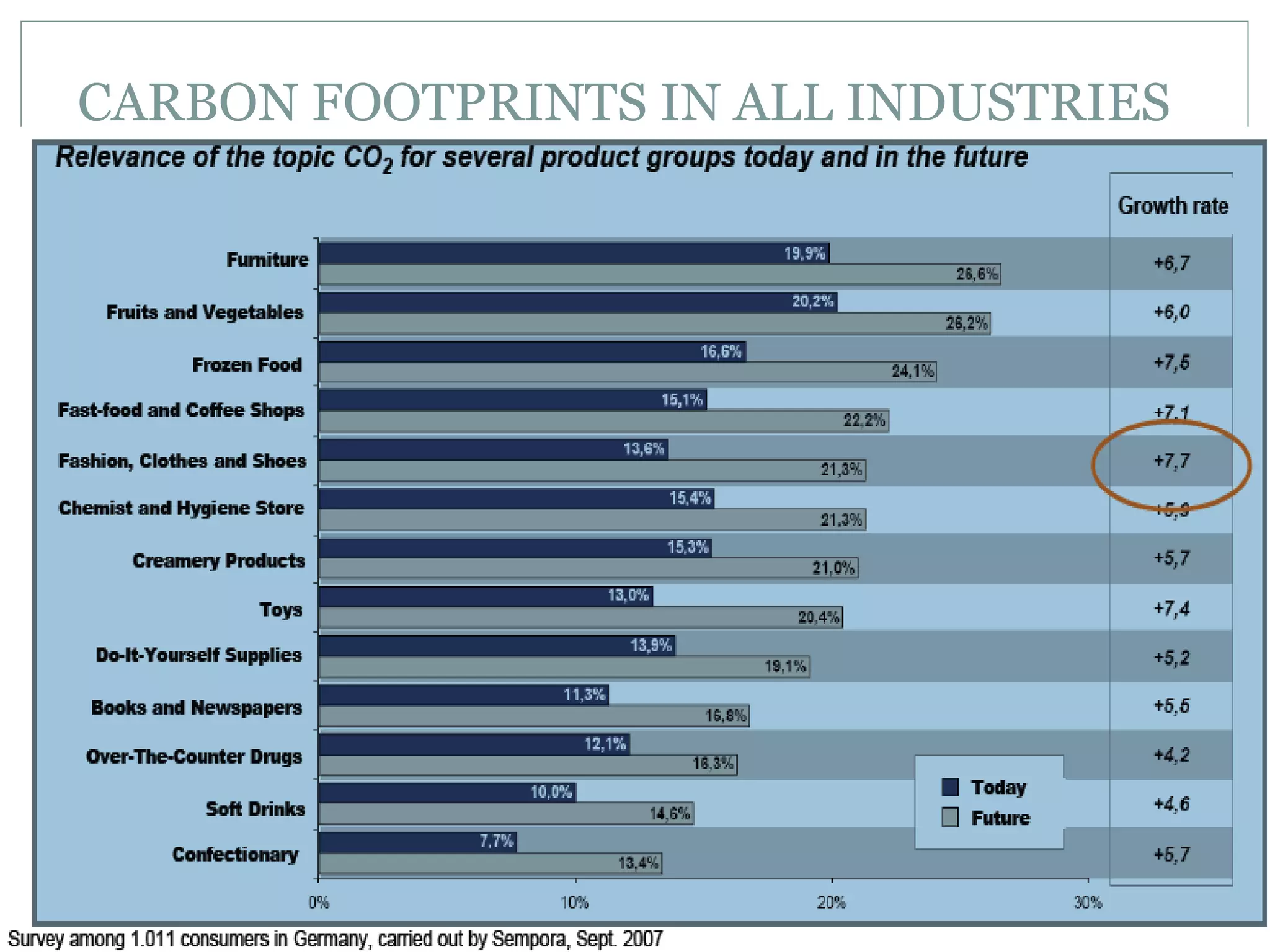
CARBON FOOTPRINTS IN ALL INDUSTRIES
LAYERS OF CARBON FOOTPRINTS
Primary footprint - monitors carbon emission

directly through energy consumption - burning fossil
fuels for electricity, heating and transportation, etc.

Secondary footprint- relates to indirect carbon

emissions (Life cycle of products and Sustainability).
HOW TO CALCULATE CARBON
FOOTPRINTS
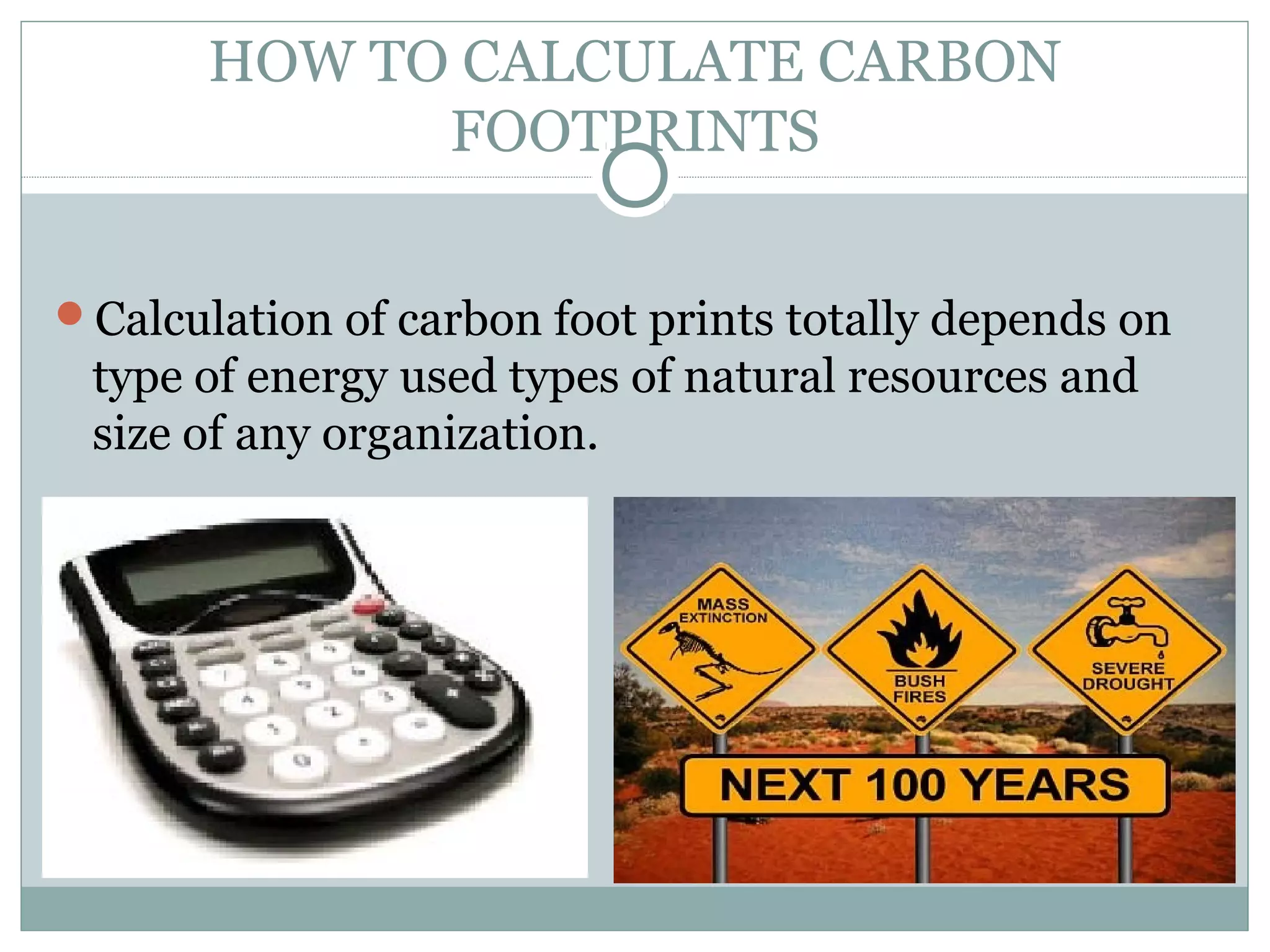
Calculation of carbon foot prints totally depends on

type of energy used types of natural resources and
size of any organization.
NEED OF CARBON FOOTPRINT AUDIT IN
TEXTILE INDUSTRY
The Textile Industry in India is expected to grow

from an estimated size of US$ 70 billion today to
US$ 220 billion by 2020, which would
proportionately increase impact on our Carbon
Footprint.
CONTD…
 In 2008, annual global textile production was estimated at

60 billion kg of fabric. The estimated energy and water
needed to produce such quantity of fabric is considered to
be:
1,074 bn kWh of electricity
132 mn MT of coal.
about 6-9 tn liters of water.
Thus, the thermal energy required per
metre of cloth is 4,500 - 5,500 Kcal and the electrical
energy required per metre of cloth is 0.45 - 0.55 kwh.
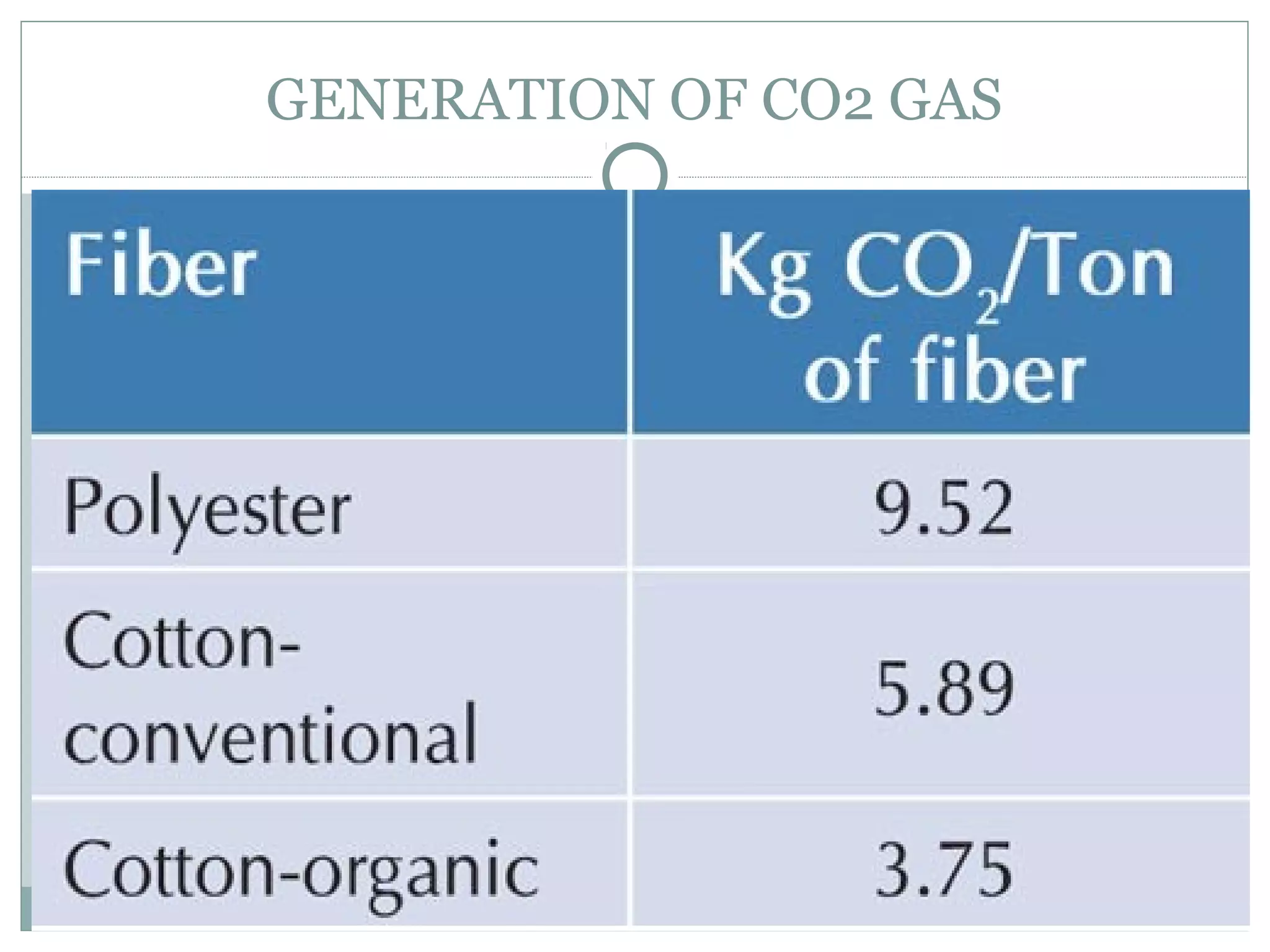
GENERATION OF CO2 GAS
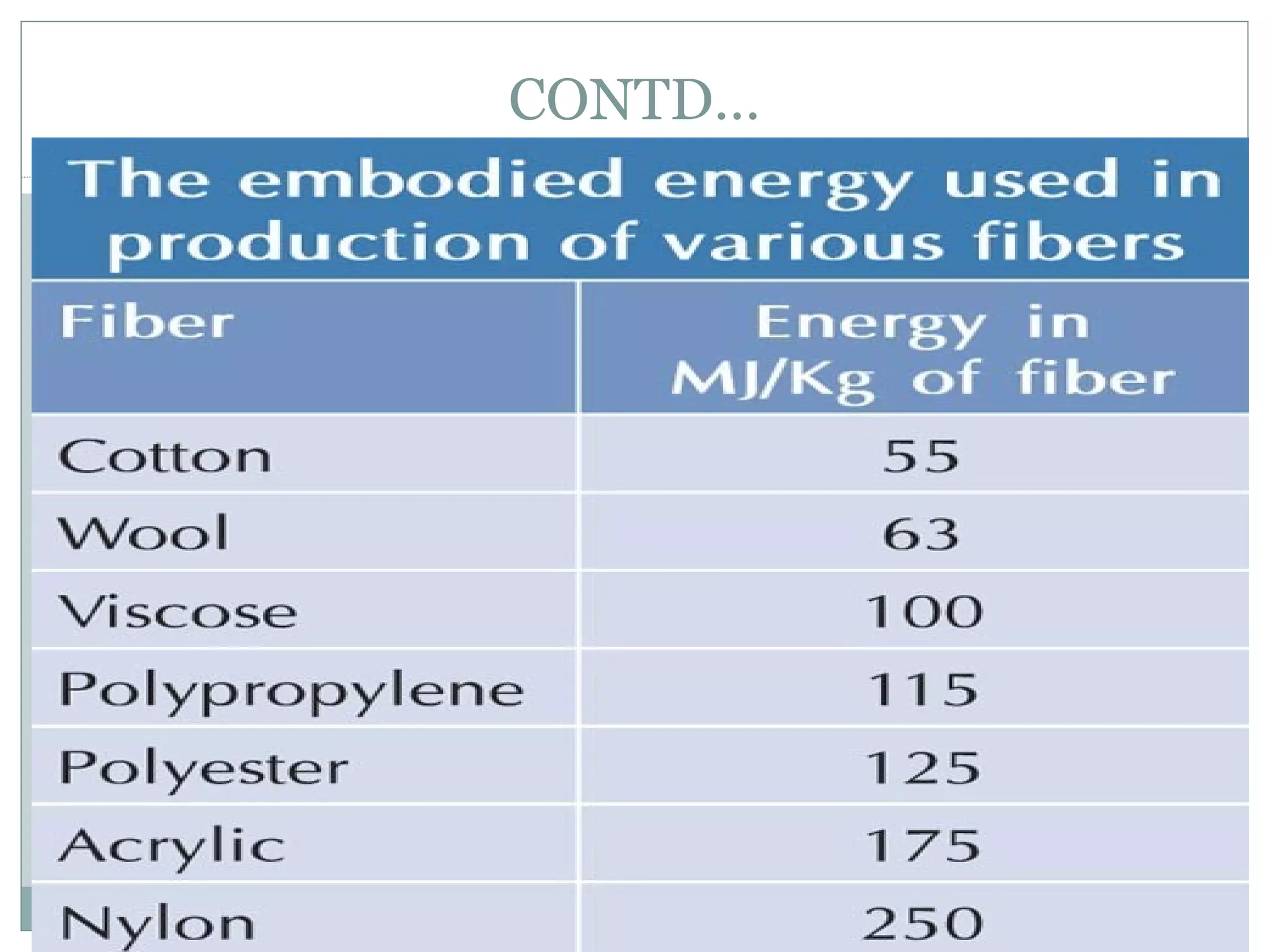
CONTD…
APPROACH TO REDUCE CARBON FOOTPRINT
IN PRODUCTION
Substituting Organic fibres for conventionally grown

fibres

Modern machines and equipments helps to reduce

carbon emission

Optimize process sequence
Usage of chemicals and dyes
Waste water treatment
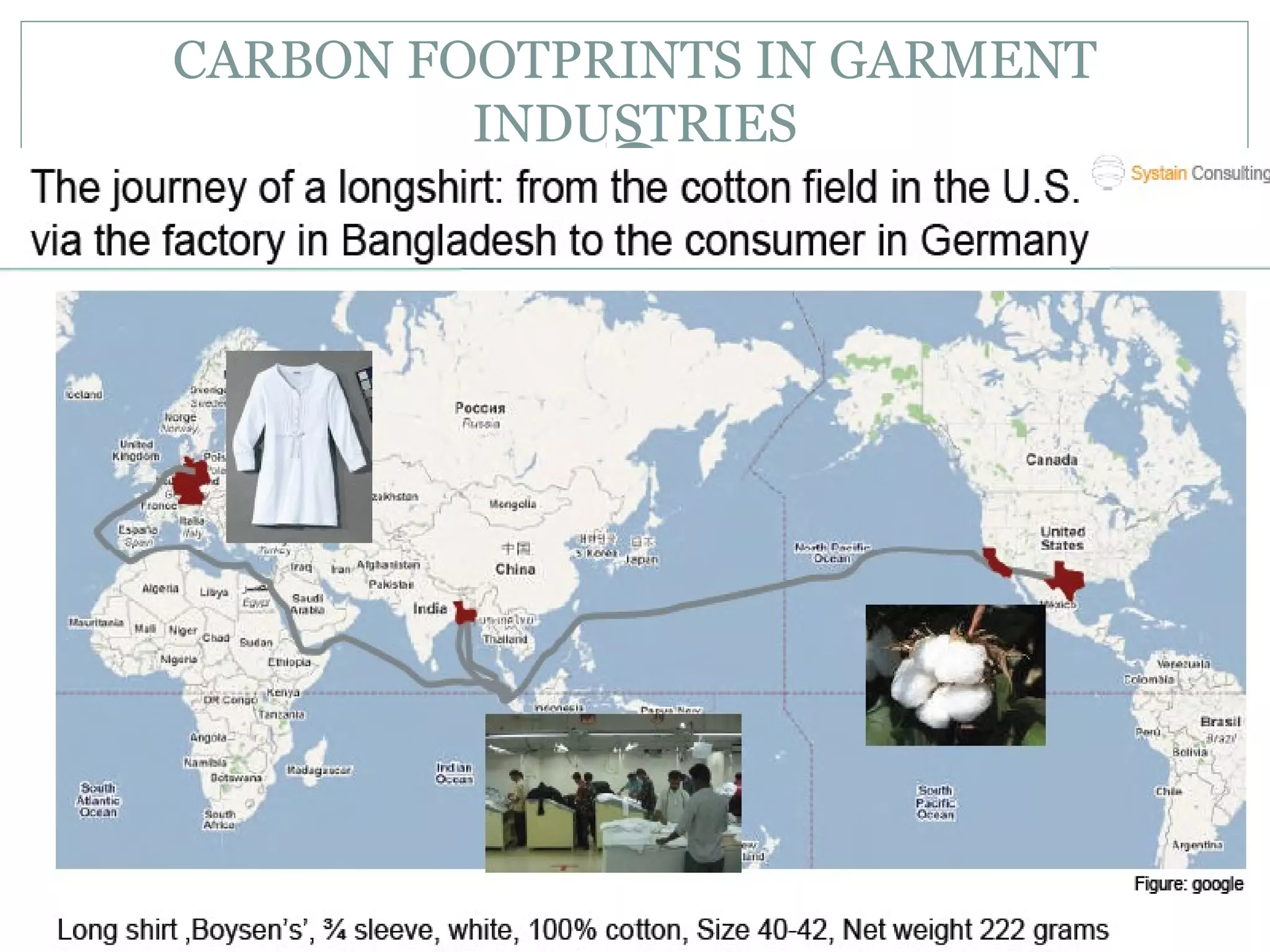
CARBON FOOTPRINTS IN GARMENT
INDUSTRIES
CONTD…
CONTD…
CONTD…
WAYS TO REDUCE CARBON FOOTPRINTS IN
GMU
 Use of metals such as chrome, cadmium, lead, nickel and other heavy

metal residues are considered unfriendly to the environment, since
these metals release residues that are harmful to the human skin.

 Recycling of small pieces of waste fabrics into shoddy items and/or

wipe clothes in the unit.

 Co-ordination between design and production department
 Biodegradable materials should be preferred against synthetic

materials.

 CAD and CAM systems can be used to gain optimum fabric utilization.
INDUSTRIAL APPROACH
Suggestions for general resource usage
Car pool system or keeping office vans for certain

routes can be set up for work.
Keeping tyres properly inflated increases the
efficiency of fuel. Turning off the vehicle’s engine at
red light saves 20% of the fuel.
Avoid large number of flights as air transportation
has a largest carbon footprint than any other means.
Prefer making conference calls.
Dimmer switches which reduce energy consumption
by up to 20% can be installed.
SUMMARY
In the present times when global warming is a major

issue worldwide, it is our responsibility reduce our
contribution to carbon footprints. Besides reducing
waste and consequent reductions in air and land
pollution, it will lead to number of individualized
benefits. It will allow textile industry to demonstrate
their commitment to reducing their negative impact
on the climate and the planet.
REFERENCE
 Rupp, Jurg, “Ecology and Economy in Textile Finishing”,

Textile World, Nov/Dec 2008
 Rose, Coral, “CO2 Comes Out of the Closet”,
GreenBiz.com, September 24, 2007
 U.S. Energy Information Administration, “International
Energy Annual 2006”, posted Dec 8, 2008
 “Why Natural Fibers”, FAO,
2009:http://www.naturalfibres2009.org/en/iynf/sustaina
ble.html
CONTD…
June, 2009, C K, Chow Textile Asia
www.eia.doe.gov/emeu/aer/txt/ptb1204.html
www.naturalfibres2009.org/en/iynf/sustainable.h

tml
Rupp Jurg: Ecology and Economy in Textile
Finishing, Textile World, Nov/Dec 2008.
www.domainb.com/environment/20090403_carbon_footprint.
html
THANK YOU

THANK YOU

Carbon footprints in textile

  • 1.
  • 2.
    WHAT IS CARBONFOOTPRINT The total sets of greenhouse gas emissions caused by an organization, event, product or person. Wright, Kemp, and Williams, writing in the journal Carbon Management, have suggested a more practicable definition:
  • 3.
    CONTD… A measure ofthe total amount of carbon dioxide (CO2) and methane (CH4) emissions of a defined population, system or activity, considering all relevant sources, sinks and storage within the spatial and temporal boundary of the population, system or activity of interest. Calculated as carbon dioxide equivalent (CO2e) using the relevant 100year global warming potential (GWP100)
  • 4.
    WHY IT ISNECESSARY Climate changes characterized as global warming are leading to large-scale irreversible effects at continental and global scales. TODAY CARBON FOOTPRINT = GLOBAL WARMING
  • 5.
    CARBON FOOTPRINTS INALL INDUSTRIES
  • 6.
    LAYERS OF CARBONFOOTPRINTS Primary footprint - monitors carbon emission directly through energy consumption - burning fossil fuels for electricity, heating and transportation, etc. Secondary footprint- relates to indirect carbon emissions (Life cycle of products and Sustainability).
  • 7.
    HOW TO CALCULATECARBON FOOTPRINTS Calculation of carbon foot prints totally depends on type of energy used types of natural resources and size of any organization.
  • 8.
    NEED OF CARBONFOOTPRINT AUDIT IN TEXTILE INDUSTRY The Textile Industry in India is expected to grow from an estimated size of US$ 70 billion today to US$ 220 billion by 2020, which would proportionately increase impact on our Carbon Footprint.
  • 9.
    CONTD…  In 2008,annual global textile production was estimated at 60 billion kg of fabric. The estimated energy and water needed to produce such quantity of fabric is considered to be: 1,074 bn kWh of electricity 132 mn MT of coal. about 6-9 tn liters of water. Thus, the thermal energy required per metre of cloth is 4,500 - 5,500 Kcal and the electrical energy required per metre of cloth is 0.45 - 0.55 kwh.
  • 10.
  • 11.
  • 12.
    APPROACH TO REDUCECARBON FOOTPRINT IN PRODUCTION Substituting Organic fibres for conventionally grown fibres Modern machines and equipments helps to reduce carbon emission Optimize process sequence Usage of chemicals and dyes Waste water treatment
  • 13.
    CARBON FOOTPRINTS INGARMENT INDUSTRIES
  • 14.
  • 15.
  • 16.
  • 20.
    WAYS TO REDUCECARBON FOOTPRINTS IN GMU  Use of metals such as chrome, cadmium, lead, nickel and other heavy metal residues are considered unfriendly to the environment, since these metals release residues that are harmful to the human skin.  Recycling of small pieces of waste fabrics into shoddy items and/or wipe clothes in the unit.  Co-ordination between design and production department  Biodegradable materials should be preferred against synthetic materials.  CAD and CAM systems can be used to gain optimum fabric utilization.
  • 21.
  • 22.
    Suggestions for generalresource usage Car pool system or keeping office vans for certain routes can be set up for work. Keeping tyres properly inflated increases the efficiency of fuel. Turning off the vehicle’s engine at red light saves 20% of the fuel. Avoid large number of flights as air transportation has a largest carbon footprint than any other means. Prefer making conference calls. Dimmer switches which reduce energy consumption by up to 20% can be installed.
  • 23.
    SUMMARY In the presenttimes when global warming is a major issue worldwide, it is our responsibility reduce our contribution to carbon footprints. Besides reducing waste and consequent reductions in air and land pollution, it will lead to number of individualized benefits. It will allow textile industry to demonstrate their commitment to reducing their negative impact on the climate and the planet.
  • 24.
    REFERENCE  Rupp, Jurg,“Ecology and Economy in Textile Finishing”, Textile World, Nov/Dec 2008  Rose, Coral, “CO2 Comes Out of the Closet”, GreenBiz.com, September 24, 2007  U.S. Energy Information Administration, “International Energy Annual 2006”, posted Dec 8, 2008  “Why Natural Fibers”, FAO, 2009:http://www.naturalfibres2009.org/en/iynf/sustaina ble.html
  • 25.
    CONTD… June, 2009, CK, Chow Textile Asia www.eia.doe.gov/emeu/aer/txt/ptb1204.html www.naturalfibres2009.org/en/iynf/sustainable.h tml Rupp Jurg: Ecology and Economy in Textile Finishing, Textile World, Nov/Dec 2008. www.domainb.com/environment/20090403_carbon_footprint. html
  • 26.