Writing Results Effectively 
Workshop
Please remember this… 
IE is a PROCESS – not a 
“form”!
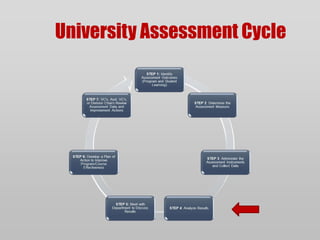
University Assessment Cycle
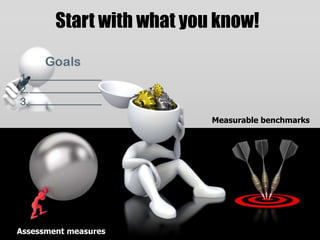
Start with what you know! 
Measurable benchmarks 
Assessment measures
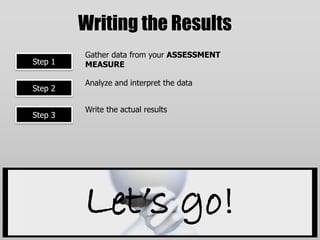
Writing the Results 
Gather data from your ASSESSMENT 
MEASURE 
Analyze and interpret the data 
Write the actual results 
Step 1 
Step 2 
Step 3 
Let’s go!
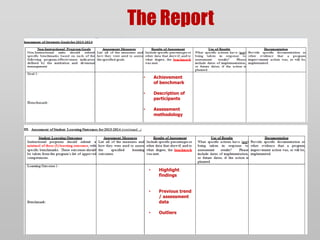
The Report 
• Achievement 
of benchmark 
• Description of 
participants 
• Assessment 
methodology 
• Highlight 
findings 
• Previous trend 
/ assessment 
data 
• Outliers
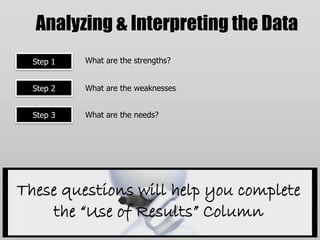
Analyzing & Interpreting the Data 
What are the strengths? 
What are the weaknesses 
What are the needs? 
Step 1 
Step 2 
Step 3 
These questions will help you complete 
the “Use of Results” Column
Rules of Thumb for Data Reporting 
Writing about Numbers 
(Quantitative Data) 
Surveys/Exams/Logs/Rubrics 
• Report both the number and the 
percentage (difference between 
10 and 200 people) 
• Always disclose limitations 
• Discuss how representative your 
results are (response rate) 
• For surveys, can collapse 
categories (use judgment) 
• When you have a lot of data or 
items, report highlights only 
Writing About Words 
(Qualitative Data) 
Comments from survey 
• Identify Themes 
• Summarize 
• Categorize
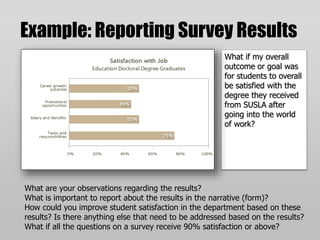
Example: Reporting Survey Results 
What if my overall 
outcome or goal was 
for students to overall 
be satisfied with the 
degree they received 
from SUSLA after 
going into the world 
of work? 
What are your observations regarding the results? 
What is important to report about the results in the narrative (form)? 
How could you improve student satisfaction in the department based on these 
results? Is there anything else that need to be addressed based on the results? 
What if all the questions on a survey receive 90% satisfaction or above?
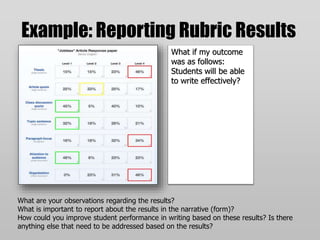
Example: Reporting Rubric Results 
What if my outcome 
was as follows: 
Students will be able 
to write effectively? 
What are your observations regarding the results? 
What is important to report about the results in the narrative (form)? 
How could you improve student performance in writing based on these results? Is there 
anything else that need to be addressed based on the results?
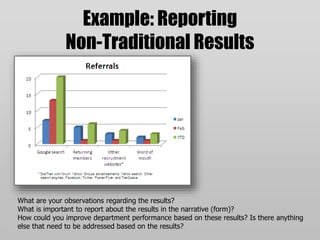
Example: Reporting 
Non-Traditional Results 
What are your observations regarding the results? 
What is important to report about the results in the narrative (form)? 
How could you improve department performance based on these results? Is there anything 
else that need to be addressed based on the results?
Common Mistakes 
1. Not collecting data. 
2. Reporting results that are not connected to the outcome or 
assessment measure. 
3. Not completely analyzing and addressing the results. 
4. Not reporting or collecting results on each demographic indicated in 
the outcome. 
5. Making decisions based on too little data. 
6. Not providing supporting documentation. 
7. Writing an action plan that is not aligned with the results.
Questions? Comments? 
We are happy to help you! 
assessment@susla.edu 
Devonye Brown 
X 9225 
dbrown@susla.edu 
Cleopatra Allen 
X 9220 
callen@susla.edu

SUSLA IE Process: Writing Assessment Results

  • 1.
  • 2.
    Please remember this… IE is a PROCESS – not a “form”!
  • 3.
  • 4.
    Start with whatyou know! Measurable benchmarks Assessment measures
  • 5.
    Writing the Results Gather data from your ASSESSMENT MEASURE Analyze and interpret the data Write the actual results Step 1 Step 2 Step 3 Let’s go!
  • 6.
    The Report •Achievement of benchmark • Description of participants • Assessment methodology • Highlight findings • Previous trend / assessment data • Outliers
  • 7.
    Analyzing & Interpretingthe Data What are the strengths? What are the weaknesses What are the needs? Step 1 Step 2 Step 3 These questions will help you complete the “Use of Results” Column
  • 8.
    Rules of Thumbfor Data Reporting Writing about Numbers (Quantitative Data) Surveys/Exams/Logs/Rubrics • Report both the number and the percentage (difference between 10 and 200 people) • Always disclose limitations • Discuss how representative your results are (response rate) • For surveys, can collapse categories (use judgment) • When you have a lot of data or items, report highlights only Writing About Words (Qualitative Data) Comments from survey • Identify Themes • Summarize • Categorize
  • 9.
    Example: Reporting SurveyResults What if my overall outcome or goal was for students to overall be satisfied with the degree they received from SUSLA after going into the world of work? What are your observations regarding the results? What is important to report about the results in the narrative (form)? How could you improve student satisfaction in the department based on these results? Is there anything else that need to be addressed based on the results? What if all the questions on a survey receive 90% satisfaction or above?
  • 10.
    Example: Reporting RubricResults What if my outcome was as follows: Students will be able to write effectively? What are your observations regarding the results? What is important to report about the results in the narrative (form)? How could you improve student performance in writing based on these results? Is there anything else that need to be addressed based on the results?
  • 11.
    Example: Reporting Non-TraditionalResults What are your observations regarding the results? What is important to report about the results in the narrative (form)? How could you improve department performance based on these results? Is there anything else that need to be addressed based on the results?
  • 12.
    Common Mistakes 1.Not collecting data. 2. Reporting results that are not connected to the outcome or assessment measure. 3. Not completely analyzing and addressing the results. 4. Not reporting or collecting results on each demographic indicated in the outcome. 5. Making decisions based on too little data. 6. Not providing supporting documentation. 7. Writing an action plan that is not aligned with the results.
  • 13.
    Questions? Comments? Weare happy to help you! assessment@susla.edu Devonye Brown X 9225 dbrown@susla.edu Cleopatra Allen X 9220 callen@susla.edu