


PRESENTED BY:- Rohit gautam
MANAGERIAL
ECONOMICS
LOGO
This is the logo of
“UNILEVER”
PRODUCT
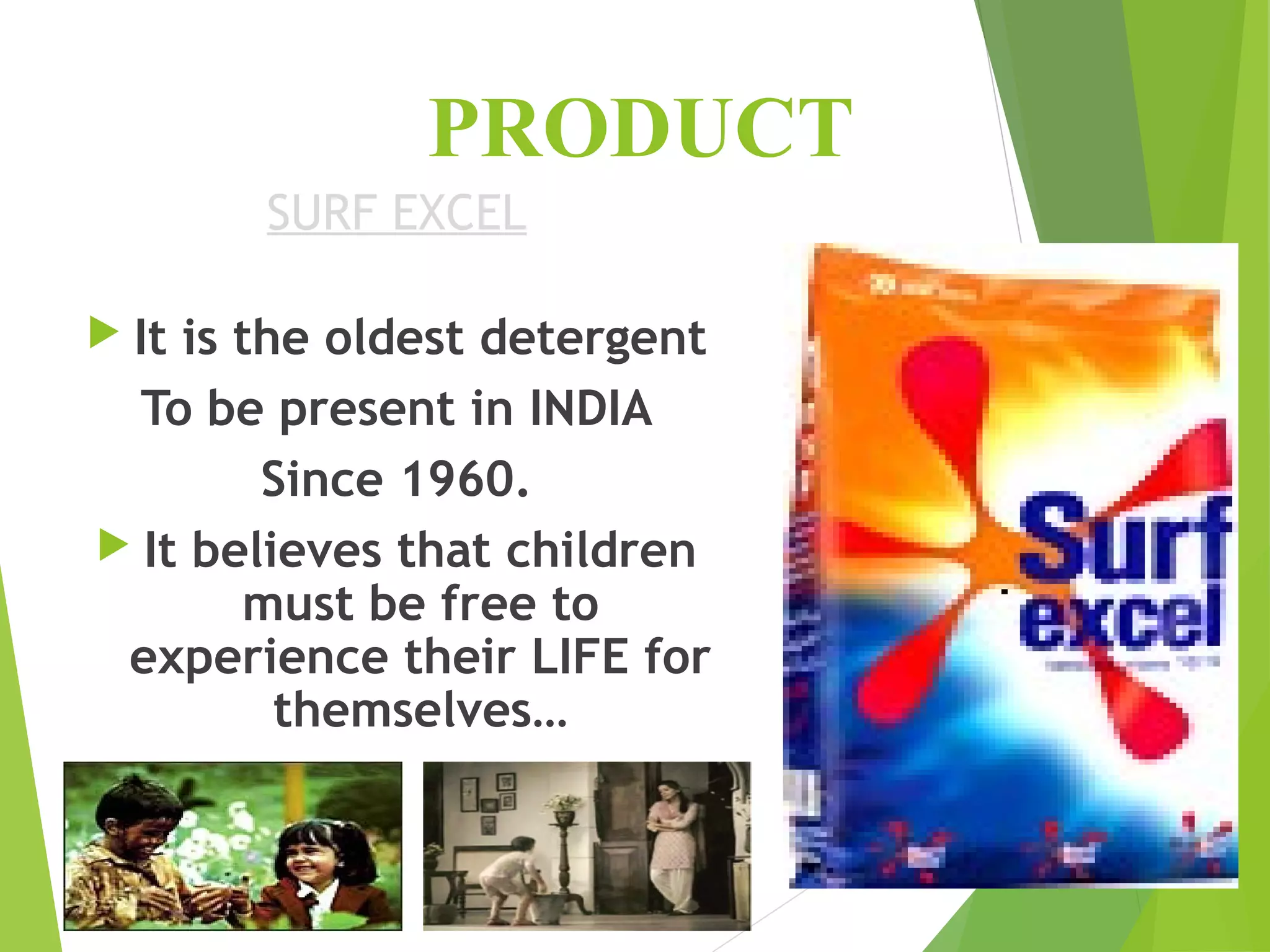
SURF EXCEL
 It is the oldest detergent
To be present in INDIA
Since 1960.
 It believes that children
must be free to
experience their LIFE for
themselves…
BRAND EVALUTION
HISTORY:-
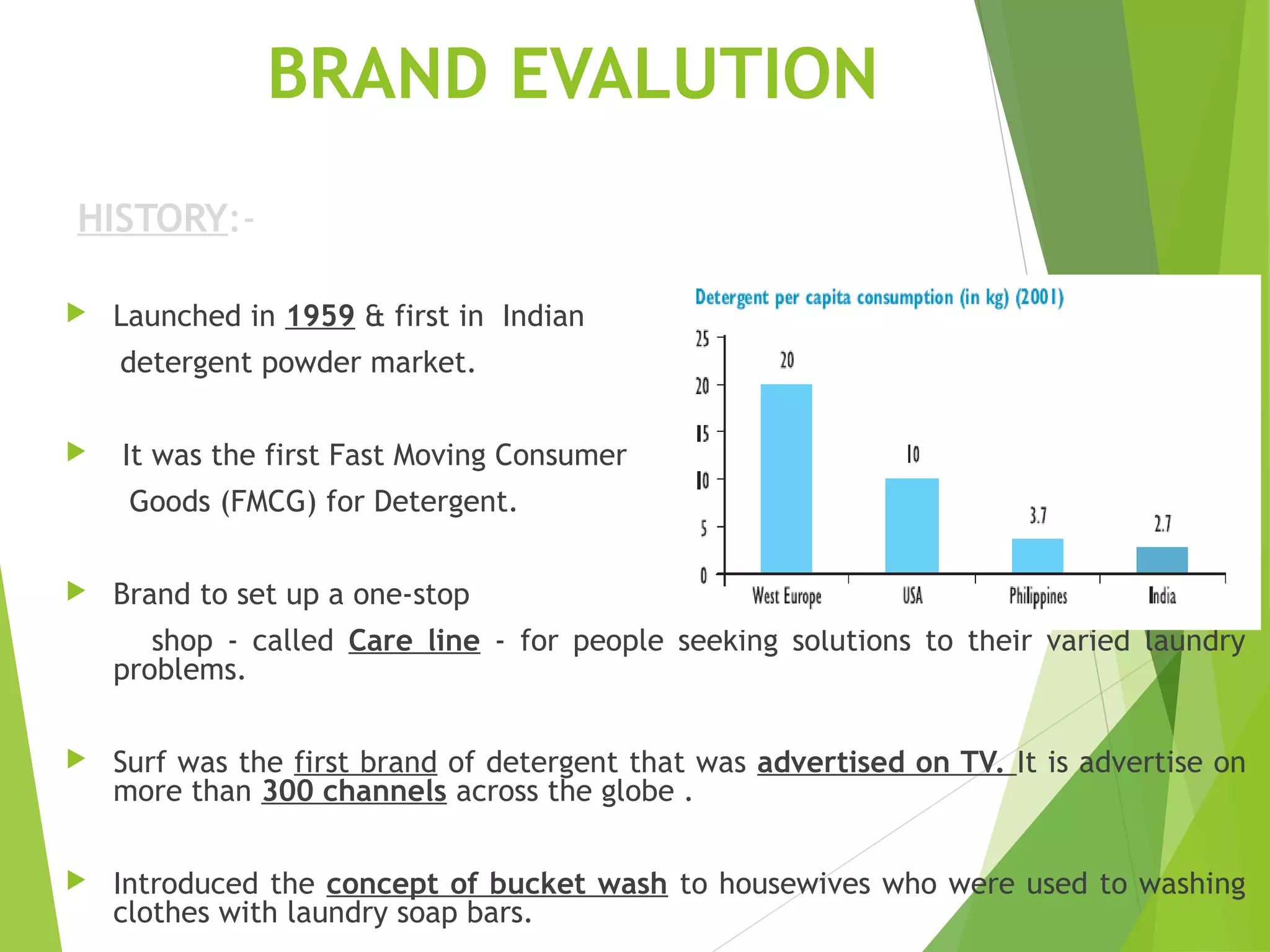
 Launched in 1959 & first in Indian
detergent powder market.
 It was the first Fast Moving Consumer
Goods (FMCG) for Detergent.
 Brand to set up a one-stop
shop - called Care line - for people seeking solutions to their varied laundry
problems.
 Surf was the first brand of detergent that was advertised on TV. It is advertise on
more than 300 channels across the globe .
 Introduced the concept of bucket wash to housewives who were used to washing
clothes with laundry soap bars.
PRODUCT
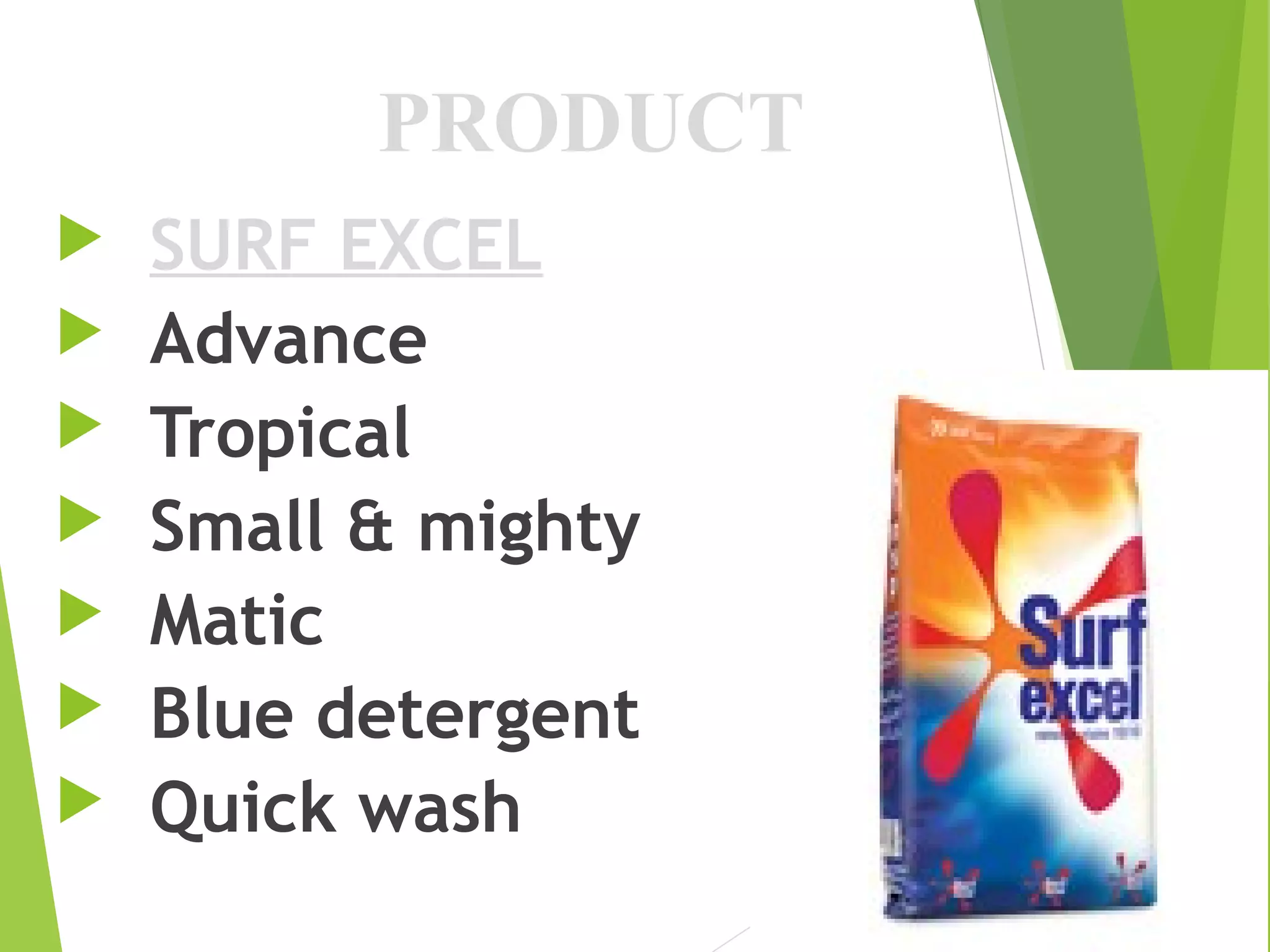
 SURF EXCEL
 Advance
 Tropical
 Small & mighty
 Matic
 Blue detergent
 Quick wash
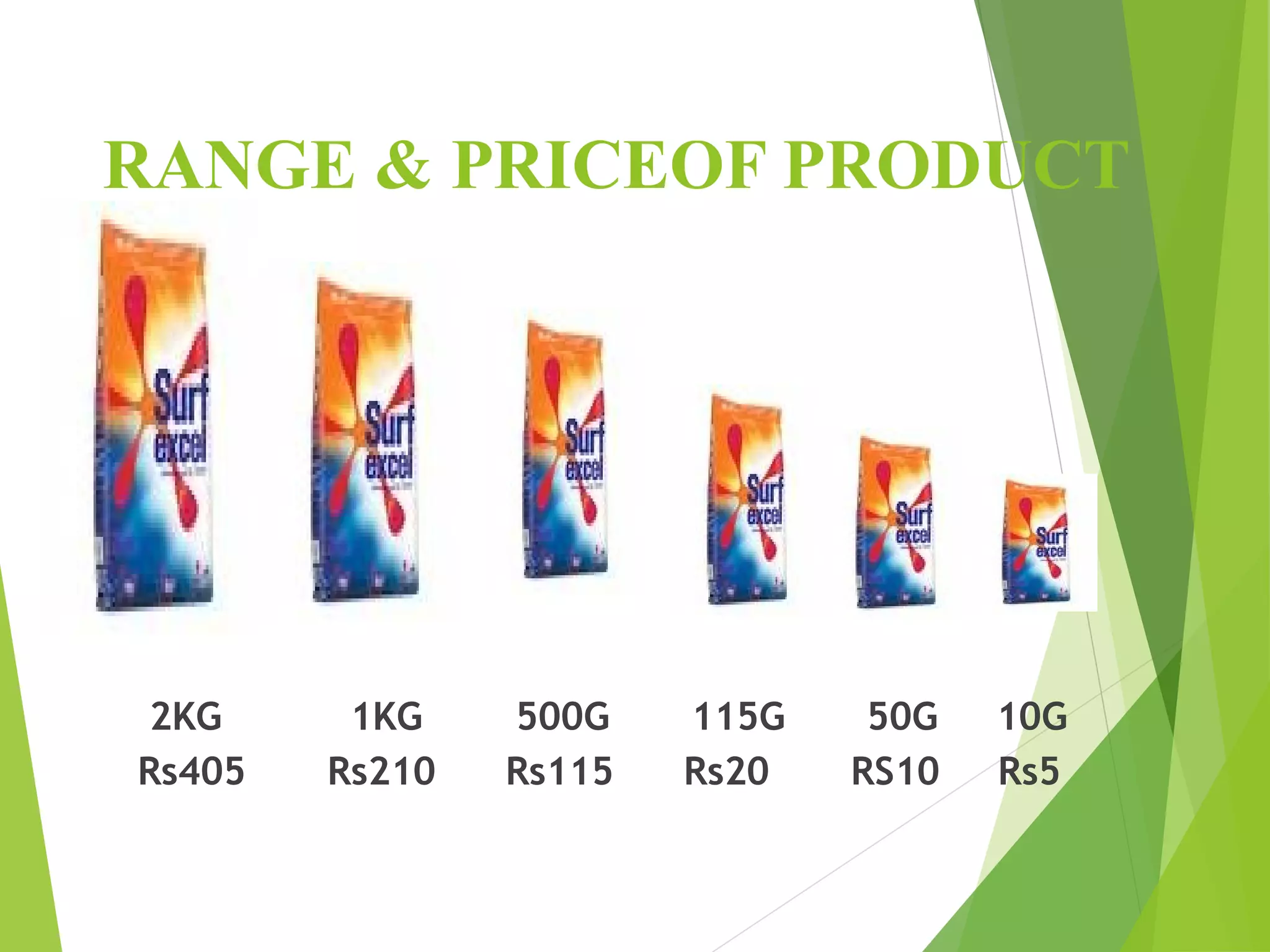
RANGE & PRICEOF PRODUCT
2KG 1KG 500G 115G 50G 10G
Rs405 Rs210 Rs115 Rs20 RS10 Rs5
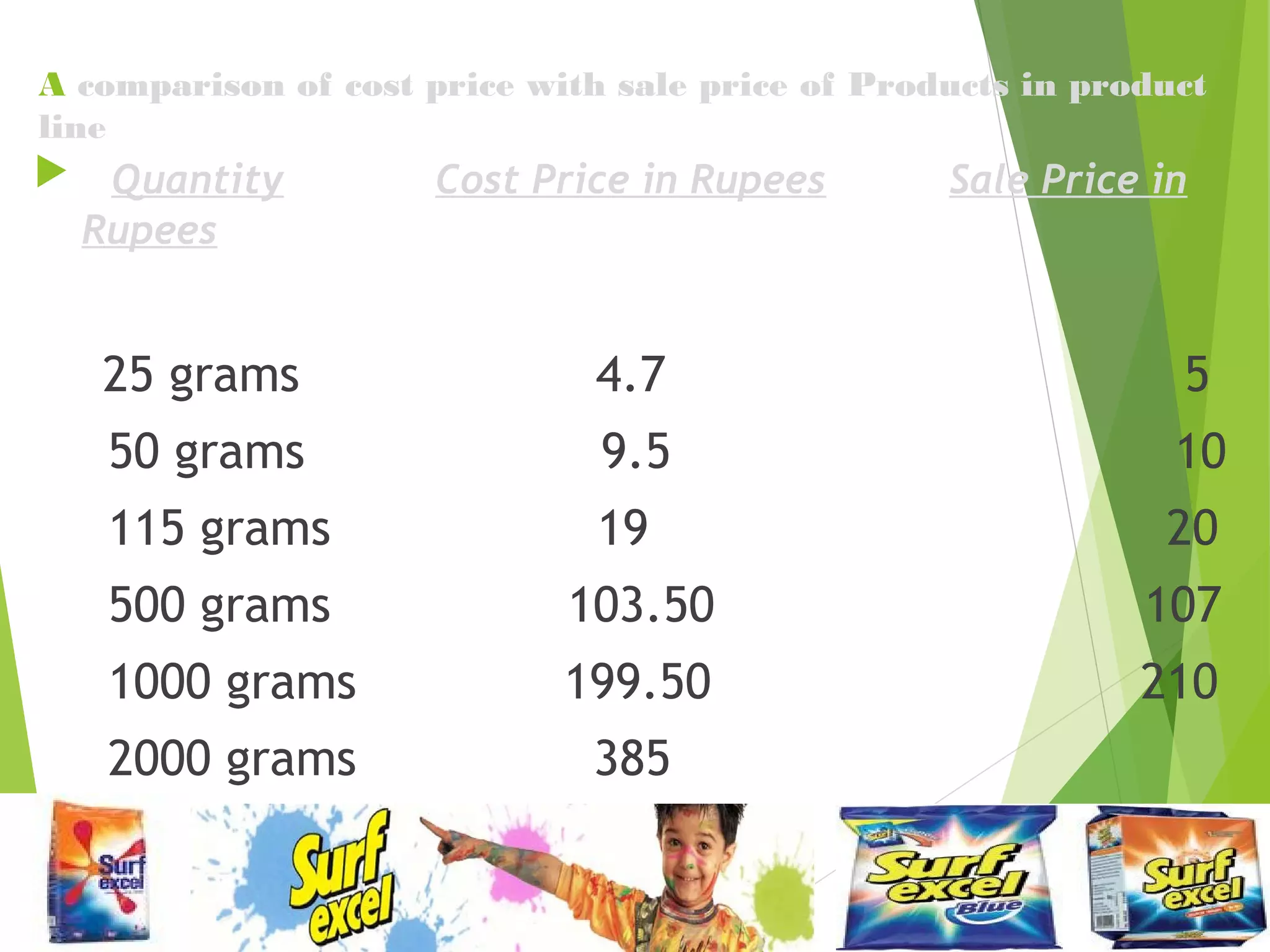
A comparison of cost price with sale price of Products in product
line
 Quantity Cost Price in Rupees Sale Price in
Rupees
25 grams 4.7 5
50 grams 9.5 10
115 grams 19 20
500 grams 103.50 107
1000 grams 199.50 210
2000 grams 385
406
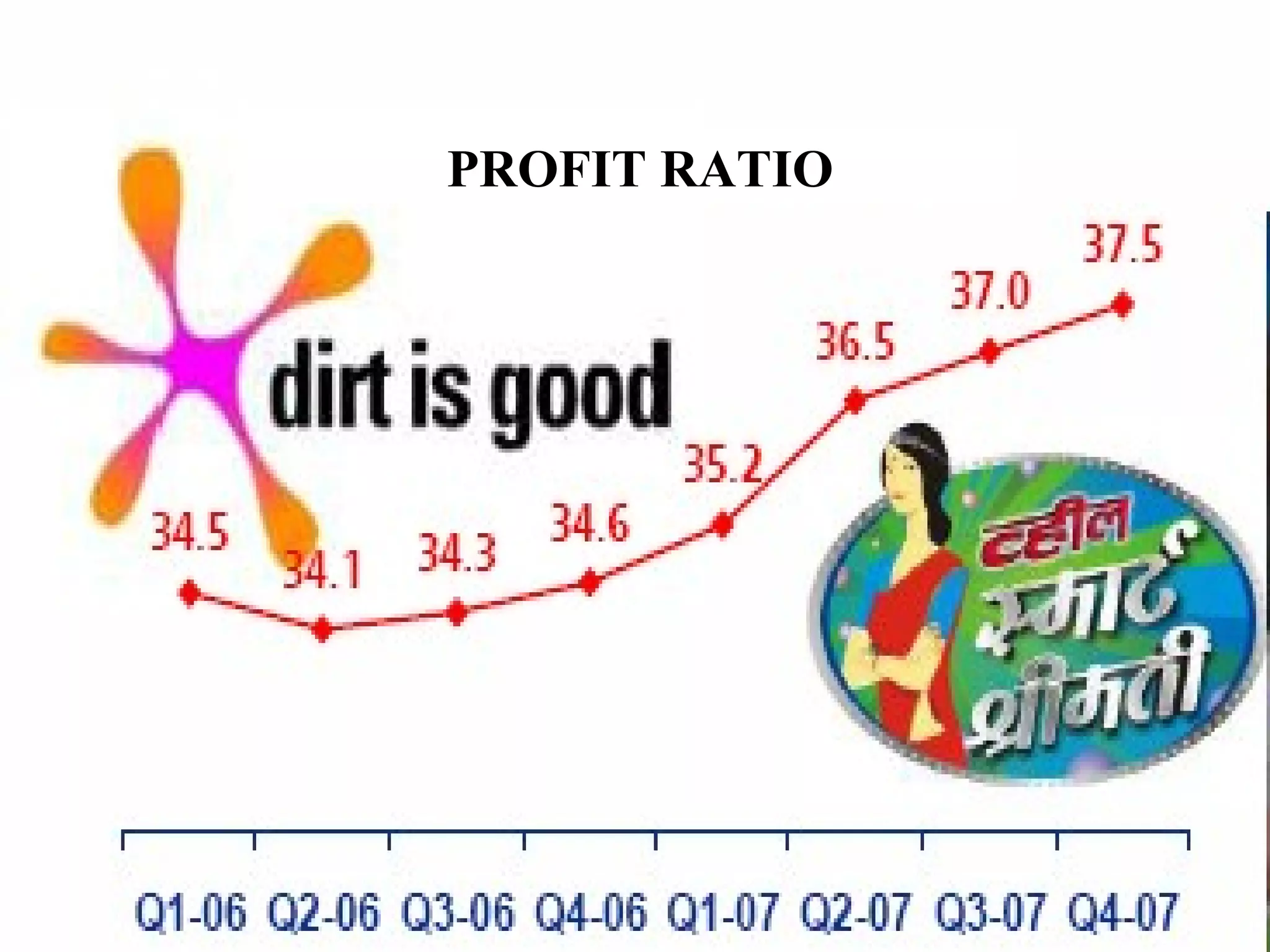
PROFIT RATIO
DEMAND ANALYSIS
Factors affecting demand:
 Price of the product,
 Price of substitutes and complements,
 Income of the household,
 Taste and preference of the household
 The amount annually spent on advertisement of the product.
Law of demand : Law of demand states that the amount demanded of a
commodity and its prices are inversely related, other remaining constant.
CAUSES OF CHANGES IN DEMAND
Increase in demand decrease in demand
 Consumers income rises Consumers income fall.
 Prices of substitute good rises Prices of substitute good fall
 Prices of complements fall Prices of complements rise
 Taste and preference change Taste and preference change
 in favor of the commodity In against of the commodity
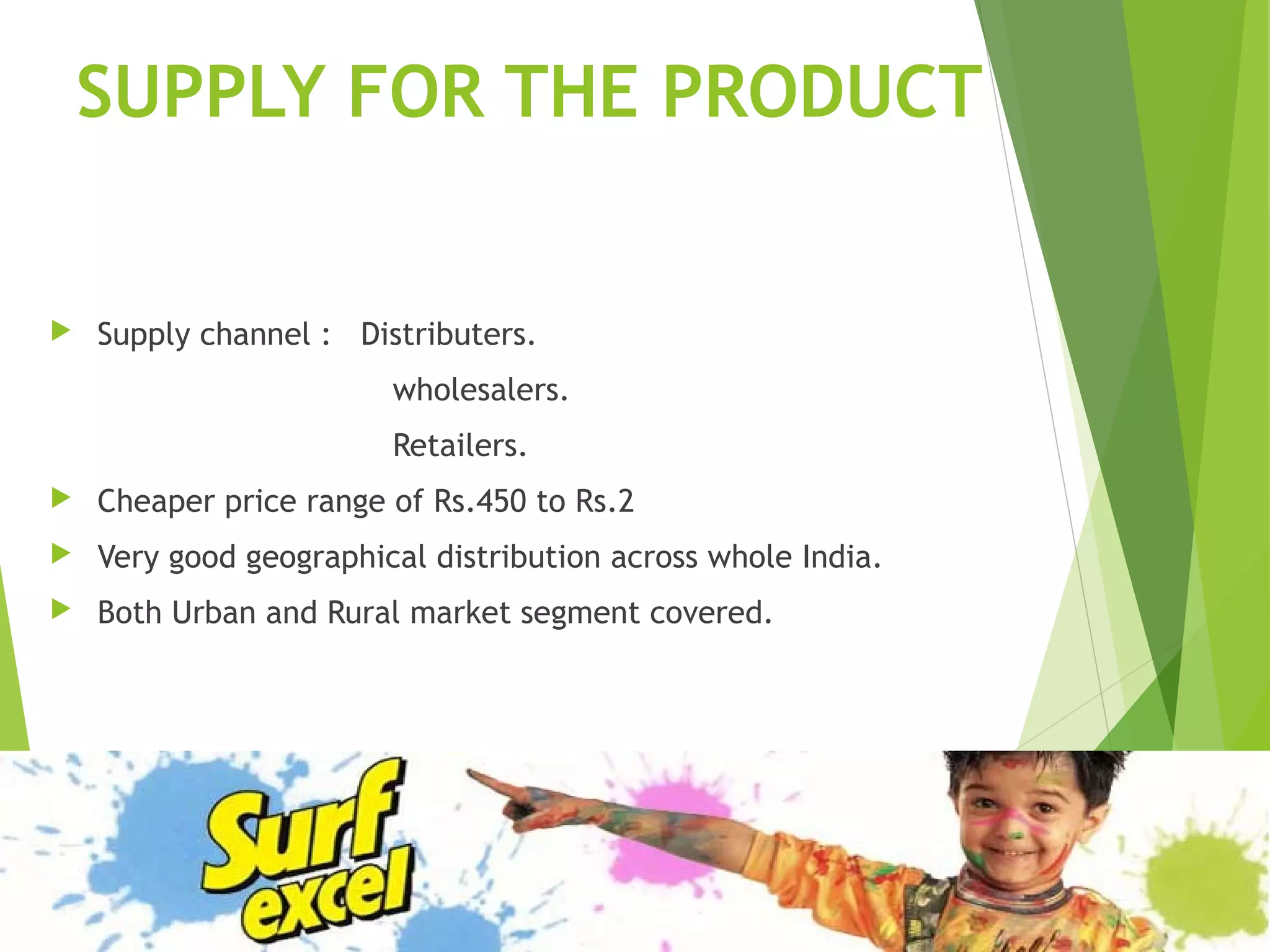
SUPPLY FOR THE PRODUCT
 Supply channel : Distributers.
wholesalers.
Retailers.
 Cheaper price range of Rs.450 to Rs.2
 Very good geographical distribution across whole India.
 Both Urban and Rural market segment covered.
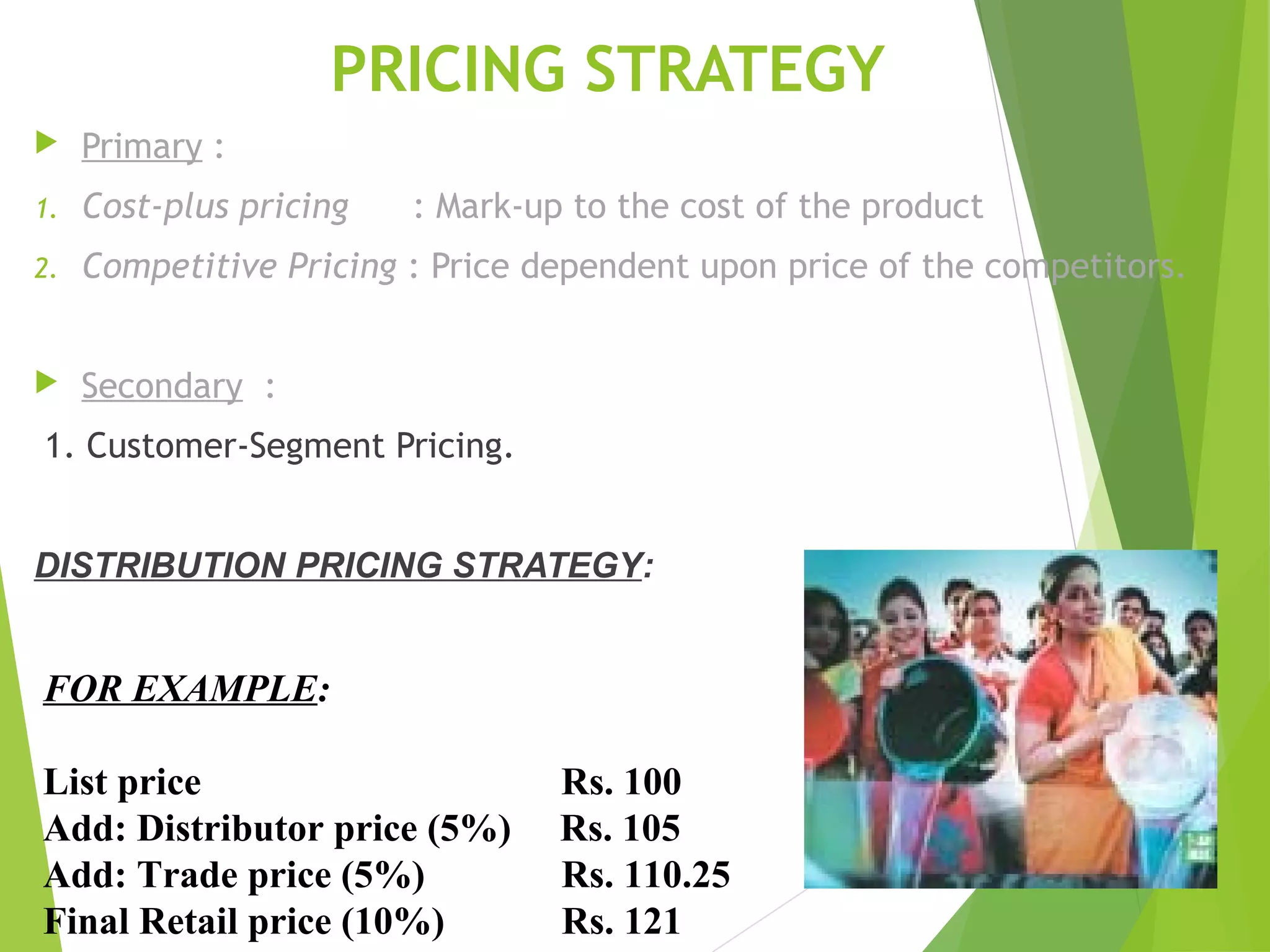
PRICING STRATEGY
 Primary :
1. Cost-plus pricing : Mark-up to the cost of the product
2. Competitive Pricing : Price dependent upon price of the competitors.
 Secondary :
1. Customer-Segment Pricing.
DISTRIBUTION PRICING STRATEGY:
FOR EXAMPLE:
List price Rs. 100
Add: Distributor price (5%) Rs. 105
Add: Trade price (5%) Rs. 110.25
Final Retail price (10%) Rs. 121
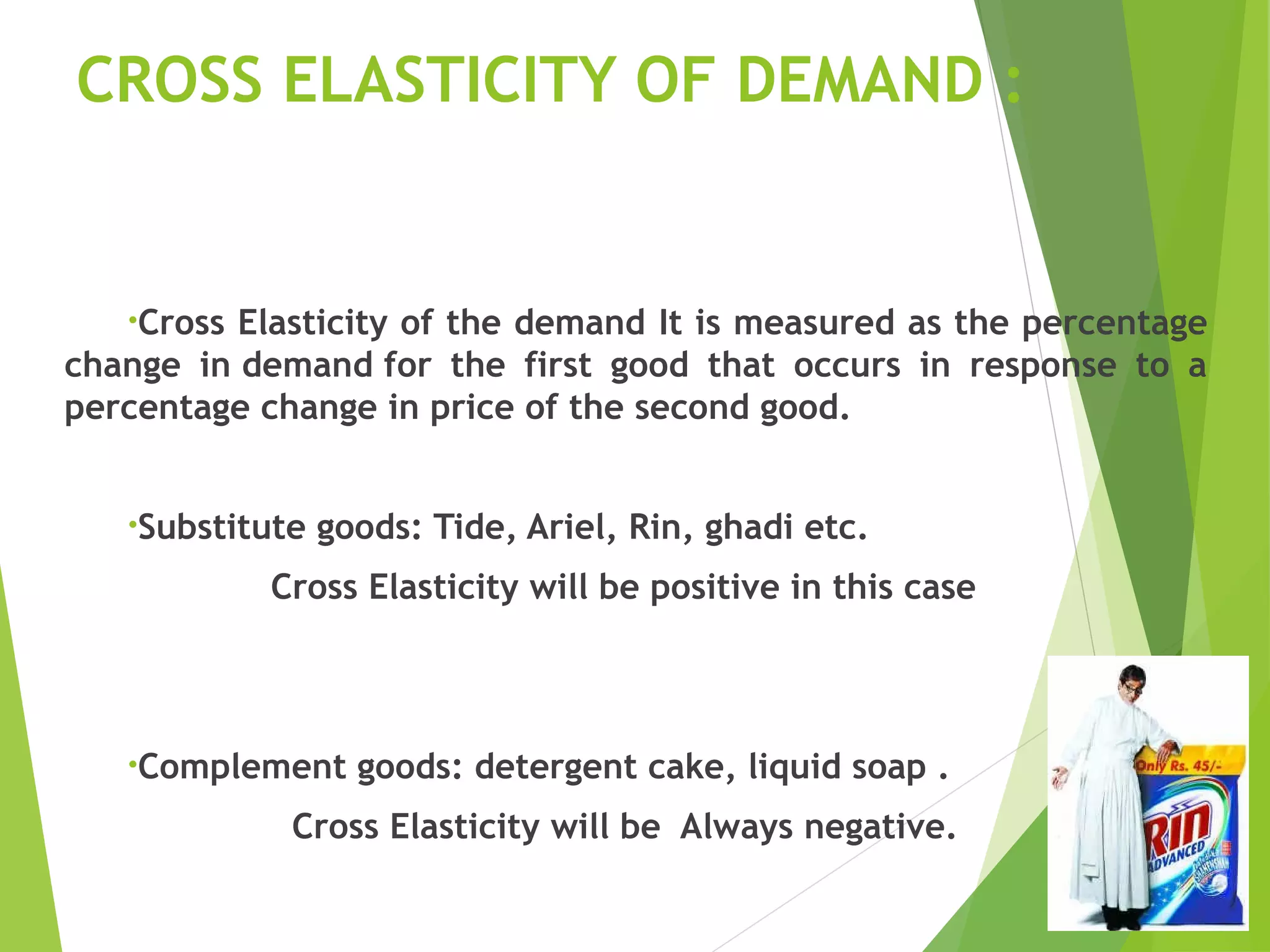
CROSS ELASTICITY OF DEMAND :
•Cross Elasticity of the demand It is measured as the percentage
change in demand for the first good that occurs in response to a
percentage change in price of the second good.
•Substitute goods: Tide, Ariel, Rin, ghadi etc.
Cross Elasticity will be positive in this case
•Complement goods: detergent cake, liquid soap .
Cross Elasticity will be Always negative.
DEMAND FORCAST
IN SHORT RUN:
 Increase the promotion and marketing of surf excel .
 Reduce the price of quick wash surf excel to wither the
competition from P&G
 ( TIDE )
 Investment of rupees 150 core in distribution network .(Specially
on Wednesday and Thursday )
 Work on R & D to find tune Cost reduction to make the pricing
more competitive.
IN LONG RUN
 Introduce existing products into a new market, build on a
strength.
 Identify key sustainability issue for detergent market in India , as
well as bench marking current sustainability.
 Increase the production to 10 -12 tones / hour.
 Maximize the share in 5000 Crore in detergent market.
 Wider geographic coverage than rivals.
 Recognition as a leader in technology and/or product innovation
MARKET STRUCTURE
 Type of market : OLIGOPOLY
 Oligopoly = An oligopoly is a market form in which a market or industry is
dominated by a small number of sellers (oligopolists)
 Because there are few sellers, each oligopoliest is likely to be aware of the actions
of the others. The decisions of one firm influence, and are influenced by, the
decisions of other firms.
 REASONS – FEW PLAYERS LIKE :
HUL ( blue,matic)
Nirma
P&G ( Tide,Aerial)
Henkel India (Mir, persil, porwall, vernel,purex)
Reckitt Benckiser ( Varnish)
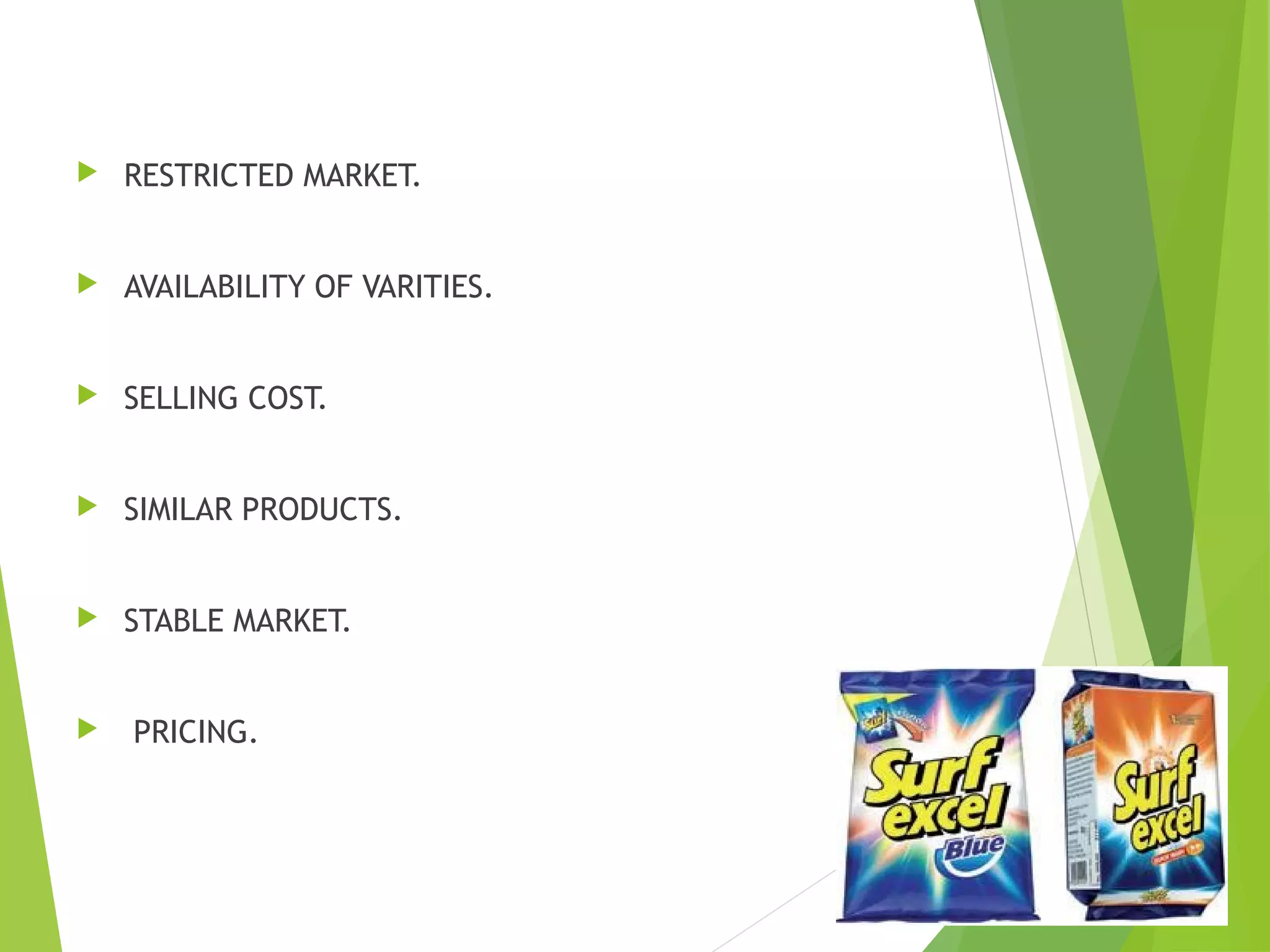
 RESTRICTED MARKET.
 AVAILABILITY OF VARITIES.
 SELLING COST.
 SIMILAR PRODUCTS.
 STABLE MARKET.
 PRICING.
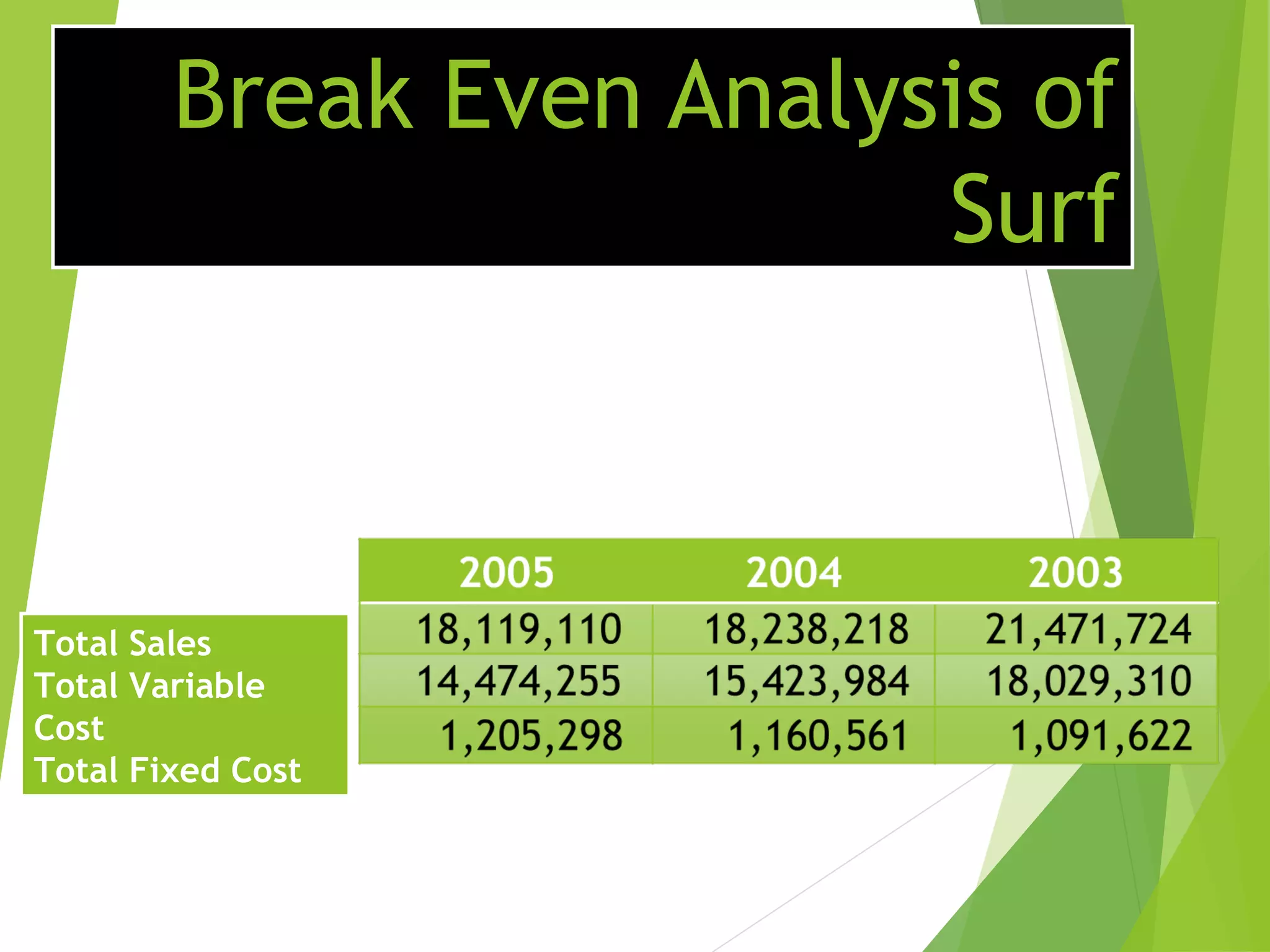
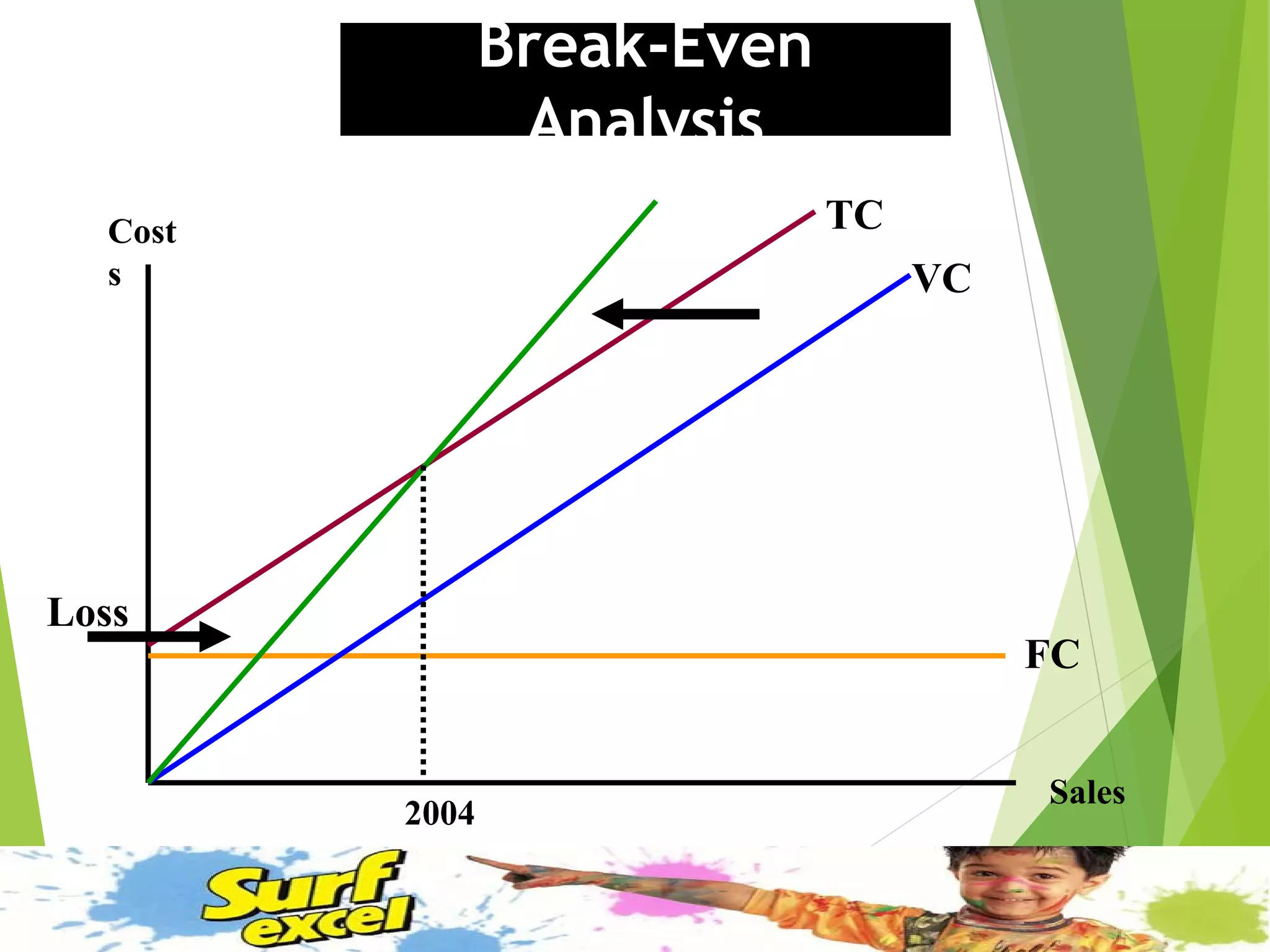
Break Even Analysis of
Surf
Total Sales
Total Variable
Cost
Total Fixed Cost
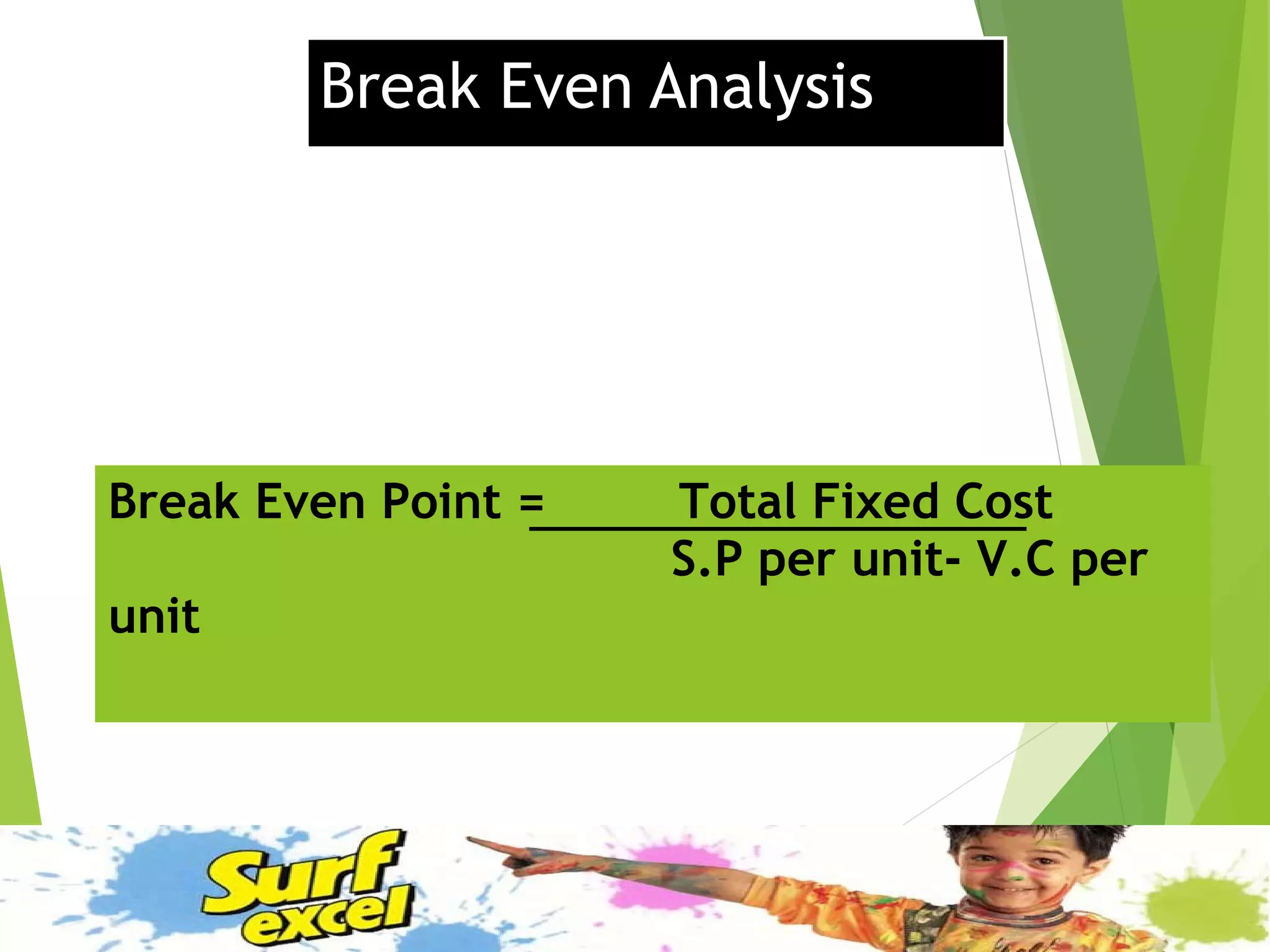
Break Even Analysis
Break Even Point = Total Fixed Cost
S.P per unit- V.C per
unit
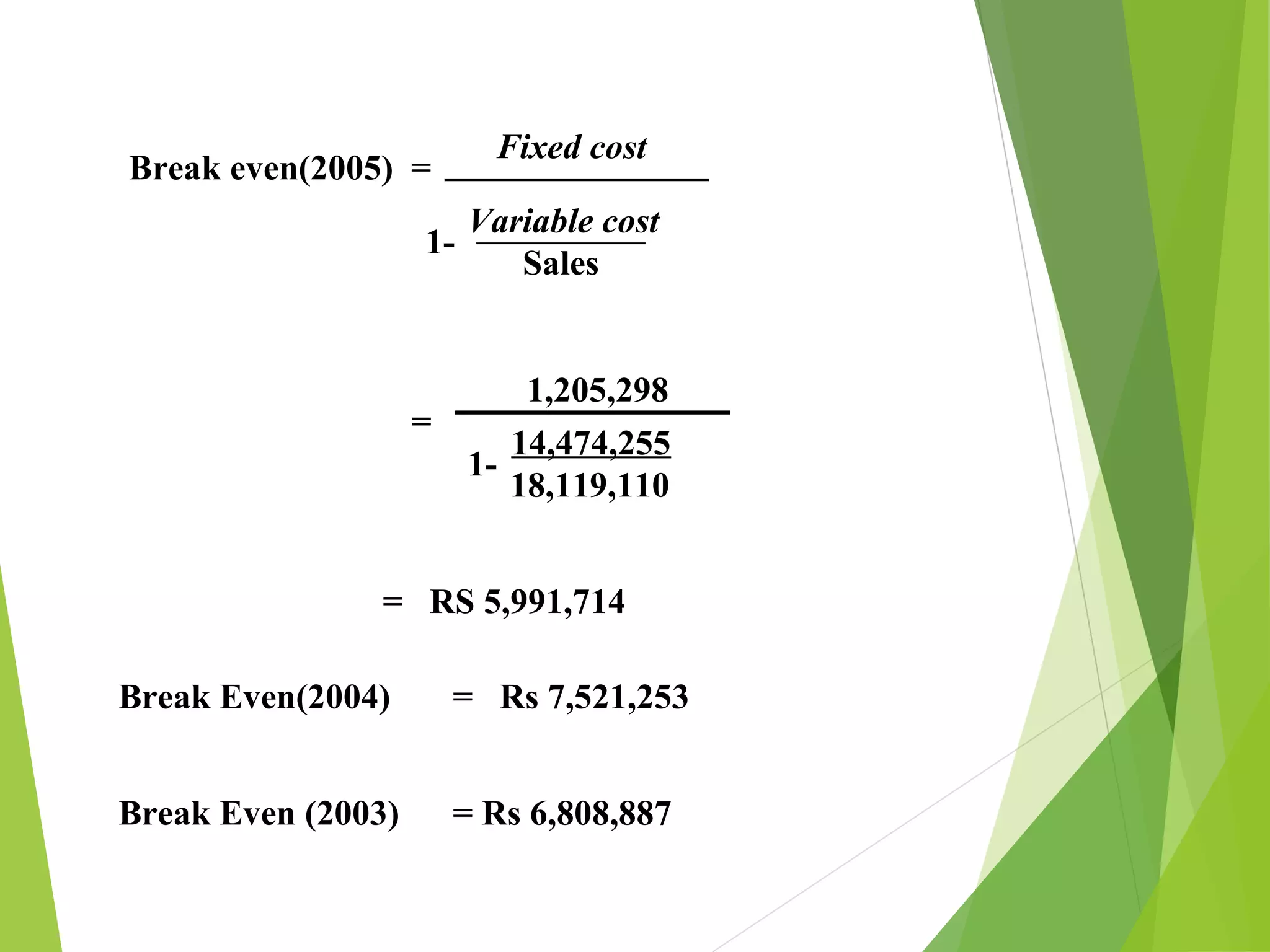
=
1,205,298
14,474,255
18,119,110
1-
Break even(2005) =
Fixed cost
Variable cost
Sales
1-
= RS 5,991,714
Break Even(2004) = Rs 7,521,253
Break Even (2003) = Rs 6,808,887
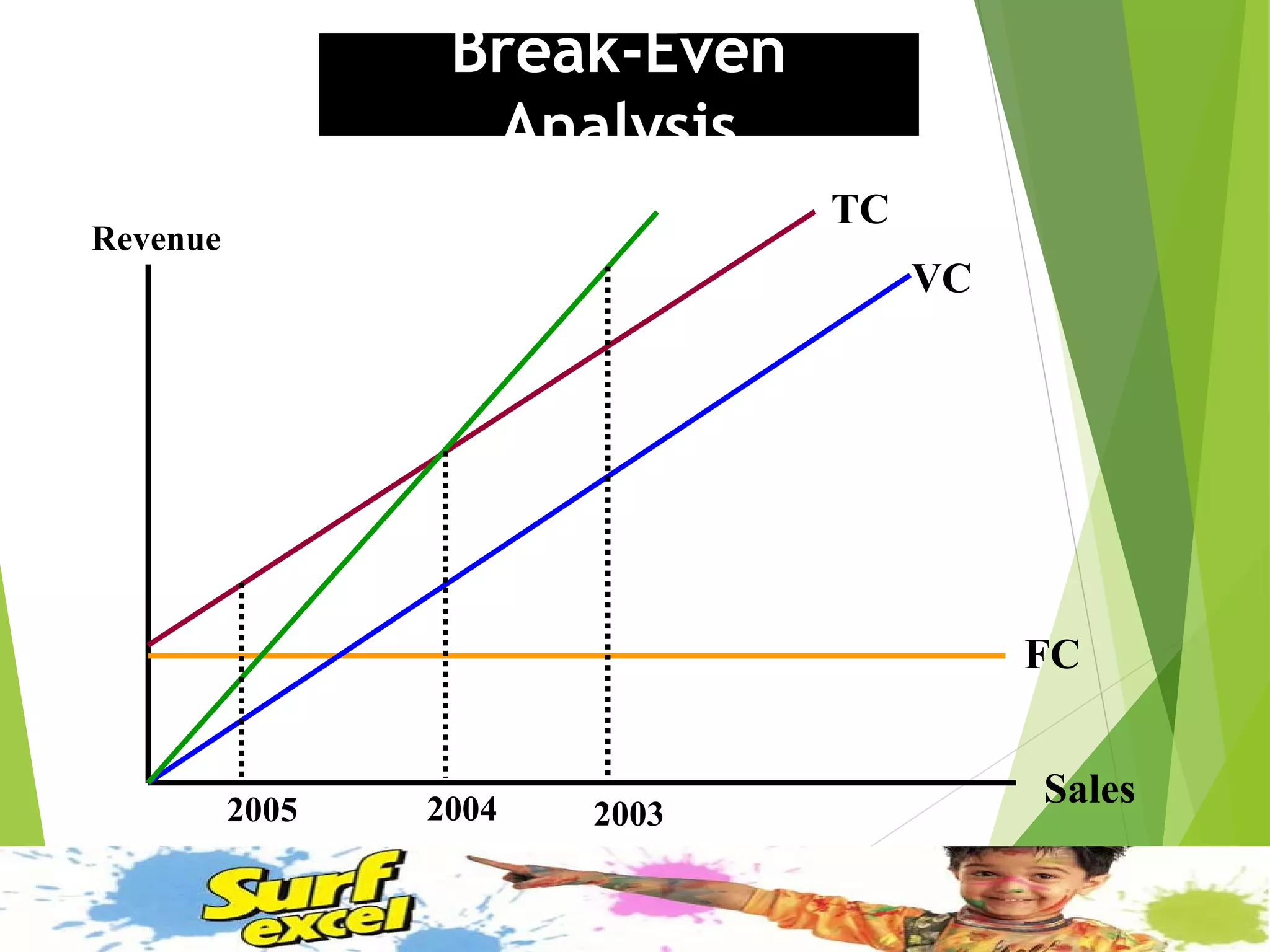
Break-Even
Analysis
FC
VC
TC
2004 20032005
Sales
Revenue
Break-Even
Analysis
Cost
s
Sales
FC
VC
TC
2004
Loss
Referance
 http://memberfiles.freewebs.com/
 http://www.zopnow.com/
 http://en.wikipedia.org/wiki/Surf_Excel
 http://www.surfexcel.in/
T H A N K
U

Surf excel

  • 1.
    PRESENTED BY:- Rohitgautam MANAGERIAL ECONOMICS
  • 2.
    LOGO This is thelogo of “UNILEVER”
  • 4.
    PRODUCT SURF EXCEL  Itis the oldest detergent To be present in INDIA Since 1960.  It believes that children must be free to experience their LIFE for themselves…
  • 5.
    BRAND EVALUTION HISTORY:-  Launchedin 1959 & first in Indian detergent powder market.  It was the first Fast Moving Consumer Goods (FMCG) for Detergent.  Brand to set up a one-stop shop - called Care line - for people seeking solutions to their varied laundry problems.  Surf was the first brand of detergent that was advertised on TV. It is advertise on more than 300 channels across the globe .  Introduced the concept of bucket wash to housewives who were used to washing clothes with laundry soap bars.
  • 6.
    PRODUCT  SURF EXCEL Advance  Tropical  Small & mighty  Matic  Blue detergent  Quick wash
  • 7.
    RANGE & PRICEOFPRODUCT 2KG 1KG 500G 115G 50G 10G Rs405 Rs210 Rs115 Rs20 RS10 Rs5
  • 8.
    A comparison ofcost price with sale price of Products in product line  Quantity Cost Price in Rupees Sale Price in Rupees 25 grams 4.7 5 50 grams 9.5 10 115 grams 19 20 500 grams 103.50 107 1000 grams 199.50 210 2000 grams 385 406
  • 9.
  • 10.
    DEMAND ANALYSIS Factors affectingdemand:  Price of the product,  Price of substitutes and complements,  Income of the household,  Taste and preference of the household  The amount annually spent on advertisement of the product. Law of demand : Law of demand states that the amount demanded of a commodity and its prices are inversely related, other remaining constant.
  • 11.
    CAUSES OF CHANGESIN DEMAND Increase in demand decrease in demand  Consumers income rises Consumers income fall.  Prices of substitute good rises Prices of substitute good fall  Prices of complements fall Prices of complements rise  Taste and preference change Taste and preference change  in favor of the commodity In against of the commodity
  • 12.
    SUPPLY FOR THEPRODUCT  Supply channel : Distributers. wholesalers. Retailers.  Cheaper price range of Rs.450 to Rs.2  Very good geographical distribution across whole India.  Both Urban and Rural market segment covered.
  • 13.
    PRICING STRATEGY  Primary: 1. Cost-plus pricing : Mark-up to the cost of the product 2. Competitive Pricing : Price dependent upon price of the competitors.  Secondary : 1. Customer-Segment Pricing. DISTRIBUTION PRICING STRATEGY: FOR EXAMPLE: List price Rs. 100 Add: Distributor price (5%) Rs. 105 Add: Trade price (5%) Rs. 110.25 Final Retail price (10%) Rs. 121
  • 14.
    CROSS ELASTICITY OFDEMAND : •Cross Elasticity of the demand It is measured as the percentage change in demand for the first good that occurs in response to a percentage change in price of the second good. •Substitute goods: Tide, Ariel, Rin, ghadi etc. Cross Elasticity will be positive in this case •Complement goods: detergent cake, liquid soap . Cross Elasticity will be Always negative.
  • 15.
    DEMAND FORCAST IN SHORTRUN:  Increase the promotion and marketing of surf excel .  Reduce the price of quick wash surf excel to wither the competition from P&G  ( TIDE )  Investment of rupees 150 core in distribution network .(Specially on Wednesday and Thursday )  Work on R & D to find tune Cost reduction to make the pricing more competitive.
  • 16.
    IN LONG RUN Introduce existing products into a new market, build on a strength.  Identify key sustainability issue for detergent market in India , as well as bench marking current sustainability.  Increase the production to 10 -12 tones / hour.  Maximize the share in 5000 Crore in detergent market.  Wider geographic coverage than rivals.  Recognition as a leader in technology and/or product innovation
  • 17.
    MARKET STRUCTURE  Typeof market : OLIGOPOLY  Oligopoly = An oligopoly is a market form in which a market or industry is dominated by a small number of sellers (oligopolists)  Because there are few sellers, each oligopoliest is likely to be aware of the actions of the others. The decisions of one firm influence, and are influenced by, the decisions of other firms.  REASONS – FEW PLAYERS LIKE : HUL ( blue,matic) Nirma P&G ( Tide,Aerial) Henkel India (Mir, persil, porwall, vernel,purex) Reckitt Benckiser ( Varnish)
  • 18.
     RESTRICTED MARKET. AVAILABILITY OF VARITIES.  SELLING COST.  SIMILAR PRODUCTS.  STABLE MARKET.  PRICING.
  • 19.
    Break Even Analysisof Surf Total Sales Total Variable Cost Total Fixed Cost
  • 20.
    Break Even Analysis BreakEven Point = Total Fixed Cost S.P per unit- V.C per unit
  • 21.
    = 1,205,298 14,474,255 18,119,110 1- Break even(2005) = Fixedcost Variable cost Sales 1- = RS 5,991,714 Break Even(2004) = Rs 7,521,253 Break Even (2003) = Rs 6,808,887
  • 22.
  • 23.
  • 24.
    Referance  http://memberfiles.freewebs.com/  http://www.zopnow.com/ http://en.wikipedia.org/wiki/Surf_Excel  http://www.surfexcel.in/
  • 25.
    T H AN K U