Supporting your child to raise their attainment Standard Grade English
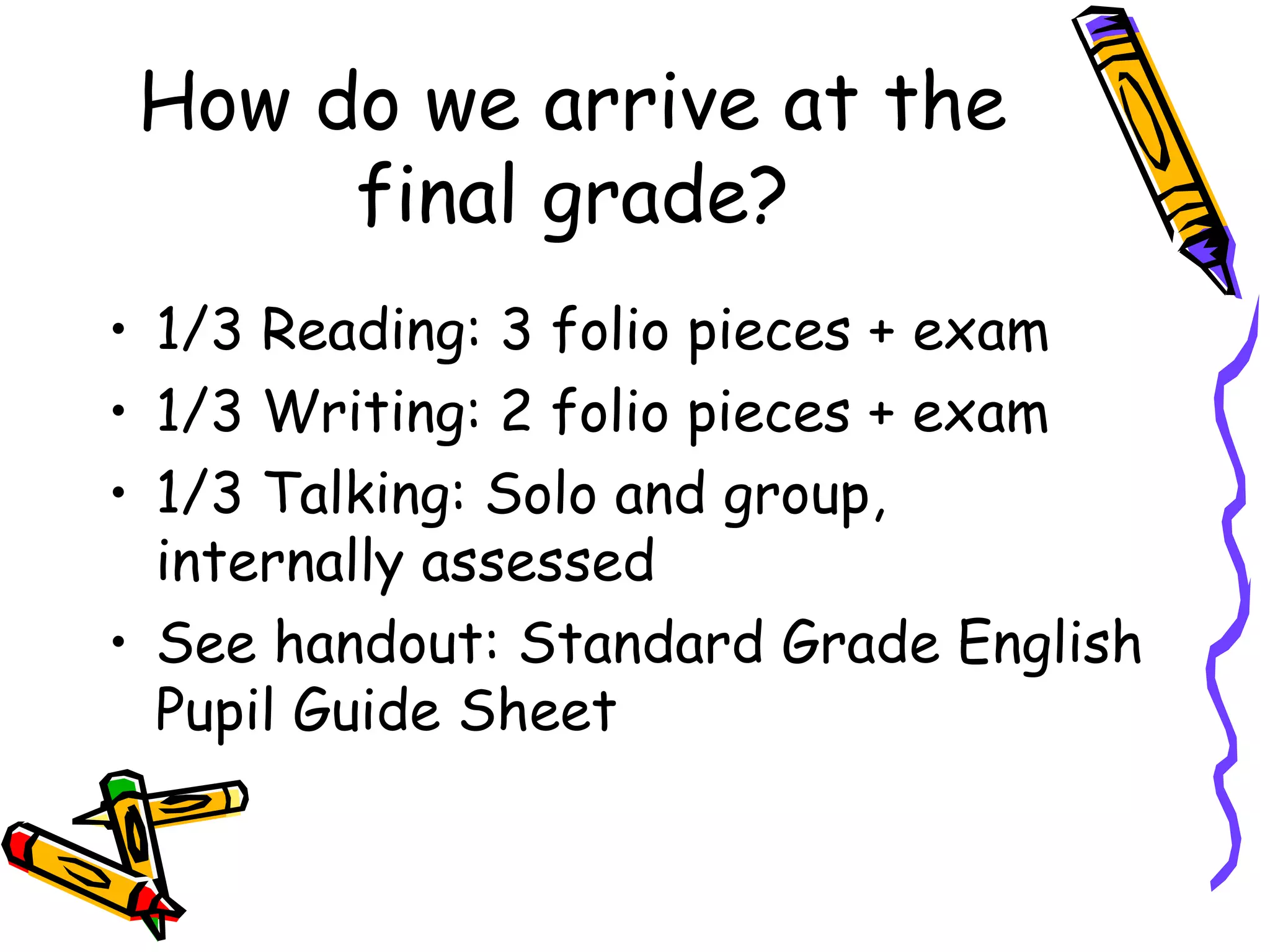
How do we arrive at the final grade? 1/3 Reading: 3 folio pieces + exam  1/3 Writing: 2 folio pieces + exam 1/3 Talking: Solo and group, internally assessed See handout: Standard Grade English Pupil Guide Sheet
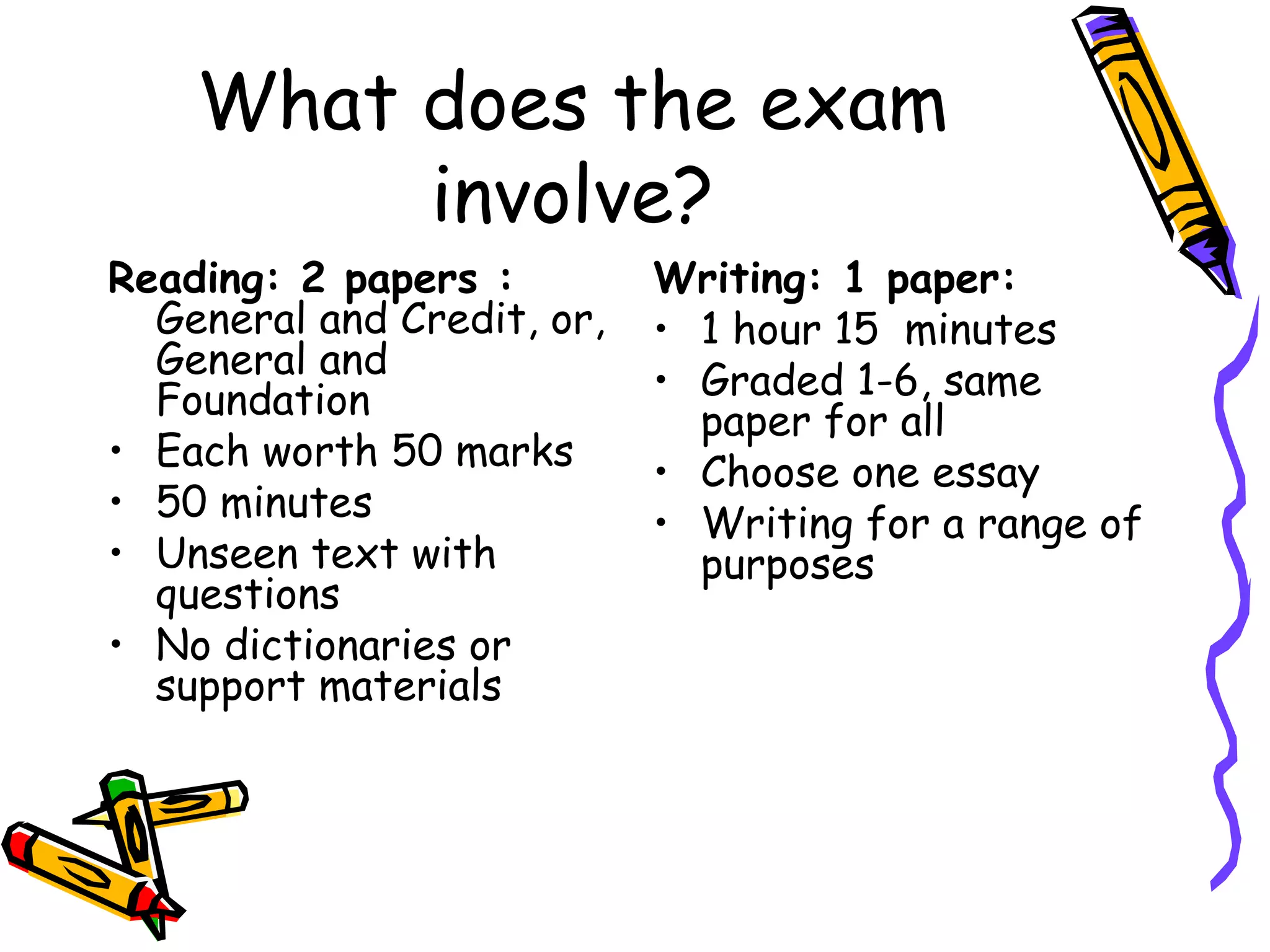
What does the exam involve? Reading: 2 papers :  General and Credit, or, General and Foundation Each worth 50 marks 50 minutes Unseen text with questions No dictionaries or support materials Writing: 1 paper: 1 hour 15  minutes Graded 1-6, same paper for all Choose one essay Writing for a range of purposes
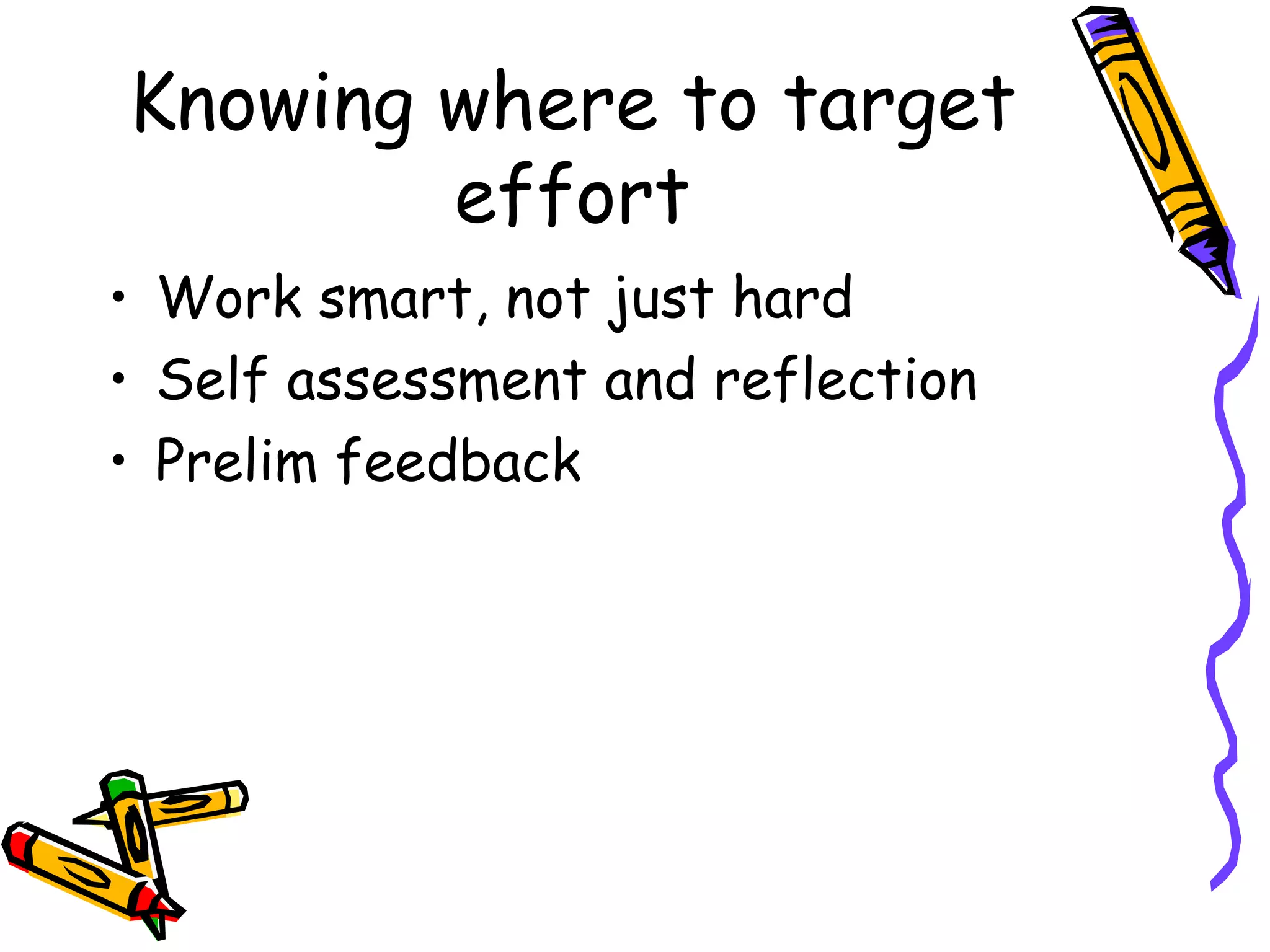
Knowing where to target effort Work smart, not just hard Self assessment and reflection Prelim feedback
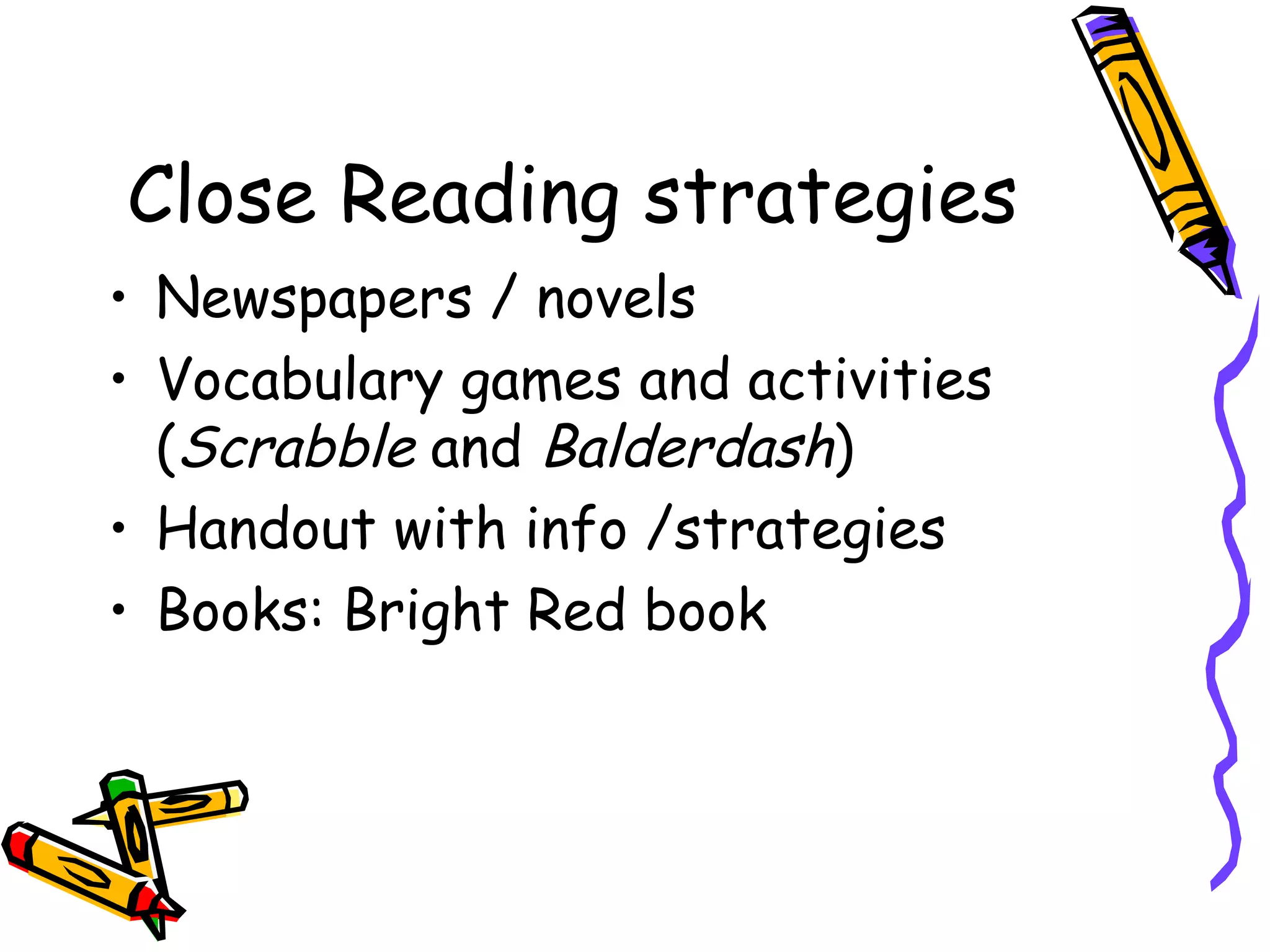
Close Reading strategies Newspapers / novels Vocabulary games and activities ( Scrabble  and  Balderdash ) Handout with info /strategies Books: Bright Red book
Writing paper Planning Practise Genre markers: handout Success Criteria sheets SPAG
Web resources http://www.ltscotland.org.uk/studyskills/index.asp http://www.bbc.co.uk/scotland/learning/bitesize/standard/english/ http://www.sqa.org.uk/sqa/38989.html http://www.rhsenglish.com/p/s3s4-standard-grade.html http://www.chompchomp.com www.timesspellingbee.co.uk http://www.kilmarnockacademy.co.uk/pupilenglish1of10.htm Twitter: NairnEnglish Nairn Academy website
Books and revision materials Language Skills booklets : £2.50 Bright Red book : see publisher’s display Past papers How to Pass Standard Grade English Yellow booklets
Reading lists http://www.thebookbag.co.uk http://www.lovereading4kids.co.uk/genre/14/14-plus-readers.html http://www5.scholastic.co.uk/zone/book_home.htm http://www.collegeboard.com/student/plan/boost-your-skills/23628.html
What parents can do… Help your son/daughter organize a study timetable and develop a study/revision routine.  Ensure that he/she has the opportunity to study and revise.  Ensure that he/she has a suitable study environment.  Ensure that he/she is exposed to the types and levels of language that will be encountered in the exam. In simple terms, they should have access to literature, “quality” newspapers, TV documentaries/the news and TV drama/ even Wildlife on One! Monitor and discuss the work they are covering – don't settle for “fine” but get them to explain things to you.  Provide encouragement.  Provide incentives and sanctions.  Help to motivate by identifying career/FE options and by establishing entry requirements for these as early as possible so they have an incentive, a target and a tangible reward.  Ask your children about their set homework and be aware of ongoing homework and deadlines
Some useful study /revision tips Always remember the positive reasons for doing homework/ revision (e.g. pride, satisfaction, achievement, self-development, confidence, knowledge, opportunity, job-choice, freedom...... and money). Develop a routine and develop the self-discipline to stick to that routine.  Don't do too much of one subject at the one time. Take a break - but make sure that you have done something to deserve it! Get the least pleasant tasks out of the way first - save the more interesting activities till last.  Do your homework and revision as early as possible (e.g. from 4pm till 5pm or 6pm till 7pm) so that you have some leisure time to look forward to. Complete homework activities at least a day before the deadline. Break revision down into manageable segments - it's better to do small amounts on a regular basis than try to learn it all at once.
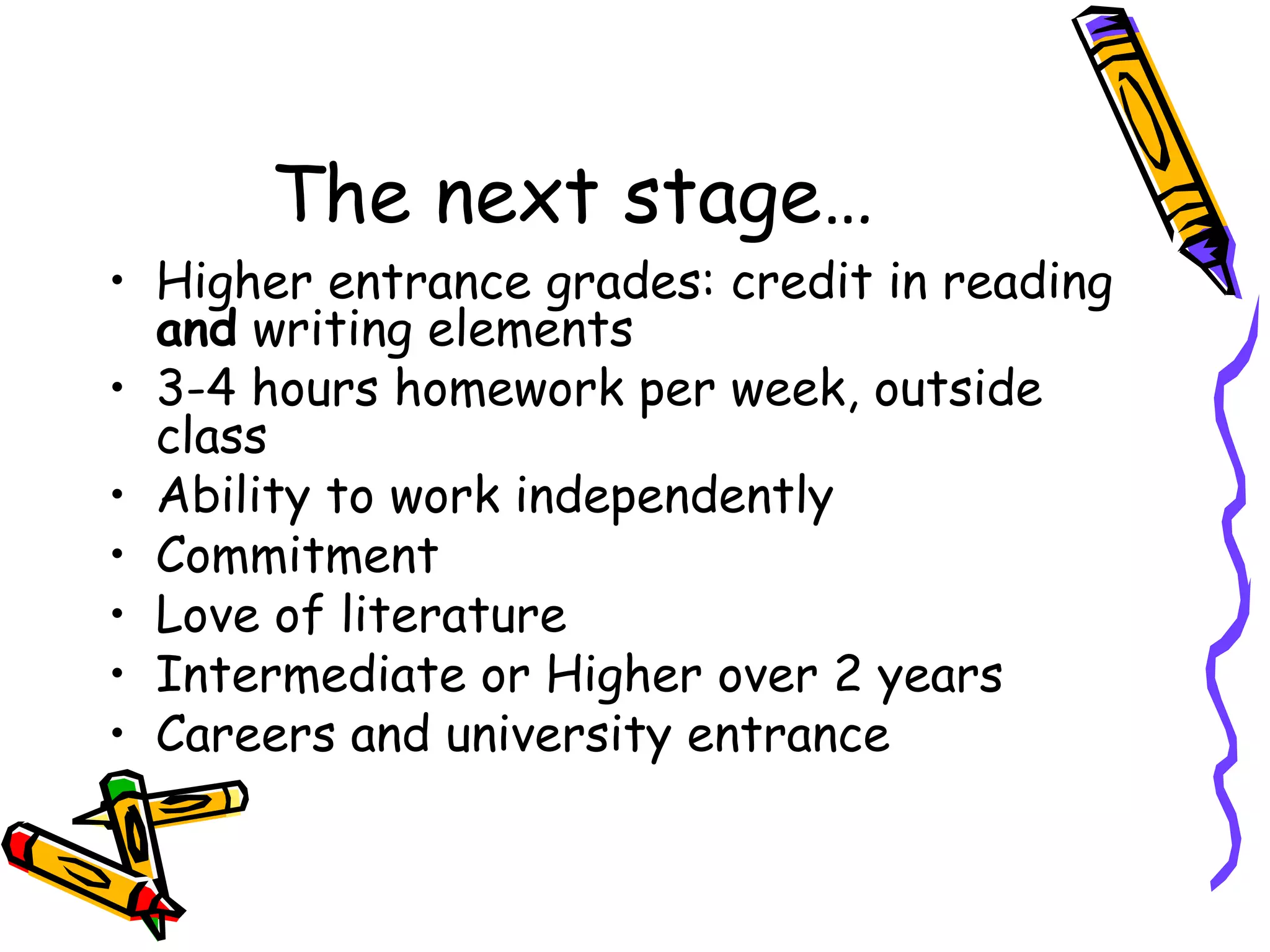
The next stage… Higher entrance grades: credit in reading  and  writing elements 3-4 hours homework per week, outside class Ability to work independently Commitment Love of literature Intermediate or Higher over 2 years Careers and university entrance
Any Questions?

Supporting your child to raise their attainment

  • 1.
    Supporting your childto raise their attainment Standard Grade English
  • 2.
    How do wearrive at the final grade? 1/3 Reading: 3 folio pieces + exam 1/3 Writing: 2 folio pieces + exam 1/3 Talking: Solo and group, internally assessed See handout: Standard Grade English Pupil Guide Sheet
  • 3.
    What does theexam involve? Reading: 2 papers : General and Credit, or, General and Foundation Each worth 50 marks 50 minutes Unseen text with questions No dictionaries or support materials Writing: 1 paper: 1 hour 15 minutes Graded 1-6, same paper for all Choose one essay Writing for a range of purposes
  • 4.
    Knowing where totarget effort Work smart, not just hard Self assessment and reflection Prelim feedback
  • 5.
    Close Reading strategiesNewspapers / novels Vocabulary games and activities ( Scrabble and Balderdash ) Handout with info /strategies Books: Bright Red book
  • 6.
    Writing paper PlanningPractise Genre markers: handout Success Criteria sheets SPAG
  • 7.
    Web resources http://www.ltscotland.org.uk/studyskills/index.asphttp://www.bbc.co.uk/scotland/learning/bitesize/standard/english/ http://www.sqa.org.uk/sqa/38989.html http://www.rhsenglish.com/p/s3s4-standard-grade.html http://www.chompchomp.com www.timesspellingbee.co.uk http://www.kilmarnockacademy.co.uk/pupilenglish1of10.htm Twitter: NairnEnglish Nairn Academy website
  • 8.
    Books and revisionmaterials Language Skills booklets : £2.50 Bright Red book : see publisher’s display Past papers How to Pass Standard Grade English Yellow booklets
  • 9.
    Reading lists http://www.thebookbag.co.ukhttp://www.lovereading4kids.co.uk/genre/14/14-plus-readers.html http://www5.scholastic.co.uk/zone/book_home.htm http://www.collegeboard.com/student/plan/boost-your-skills/23628.html
  • 10.
    What parents cando… Help your son/daughter organize a study timetable and develop a study/revision routine. Ensure that he/she has the opportunity to study and revise. Ensure that he/she has a suitable study environment. Ensure that he/she is exposed to the types and levels of language that will be encountered in the exam. In simple terms, they should have access to literature, “quality” newspapers, TV documentaries/the news and TV drama/ even Wildlife on One! Monitor and discuss the work they are covering – don't settle for “fine” but get them to explain things to you. Provide encouragement. Provide incentives and sanctions. Help to motivate by identifying career/FE options and by establishing entry requirements for these as early as possible so they have an incentive, a target and a tangible reward. Ask your children about their set homework and be aware of ongoing homework and deadlines
  • 11.
    Some useful study/revision tips Always remember the positive reasons for doing homework/ revision (e.g. pride, satisfaction, achievement, self-development, confidence, knowledge, opportunity, job-choice, freedom...... and money). Develop a routine and develop the self-discipline to stick to that routine. Don't do too much of one subject at the one time. Take a break - but make sure that you have done something to deserve it! Get the least pleasant tasks out of the way first - save the more interesting activities till last. Do your homework and revision as early as possible (e.g. from 4pm till 5pm or 6pm till 7pm) so that you have some leisure time to look forward to. Complete homework activities at least a day before the deadline. Break revision down into manageable segments - it's better to do small amounts on a regular basis than try to learn it all at once.
  • 12.
    The next stage…Higher entrance grades: credit in reading and writing elements 3-4 hours homework per week, outside class Ability to work independently Commitment Love of literature Intermediate or Higher over 2 years Careers and university entrance
  • 13.