Supporting SEND in Mainstream
Classrooms for Trainee Teachers
ResearchSEND Conference
2nd March, 2019
Terri Cawser
Partners on the pathway to a positive future for children and young people
www.accesstoeducation.birmingham.gov.uk
Aims
The aim of this session is to give you my 5
top tips for starting to teach children with
Special Educational Needs.
Remember…
Remember…
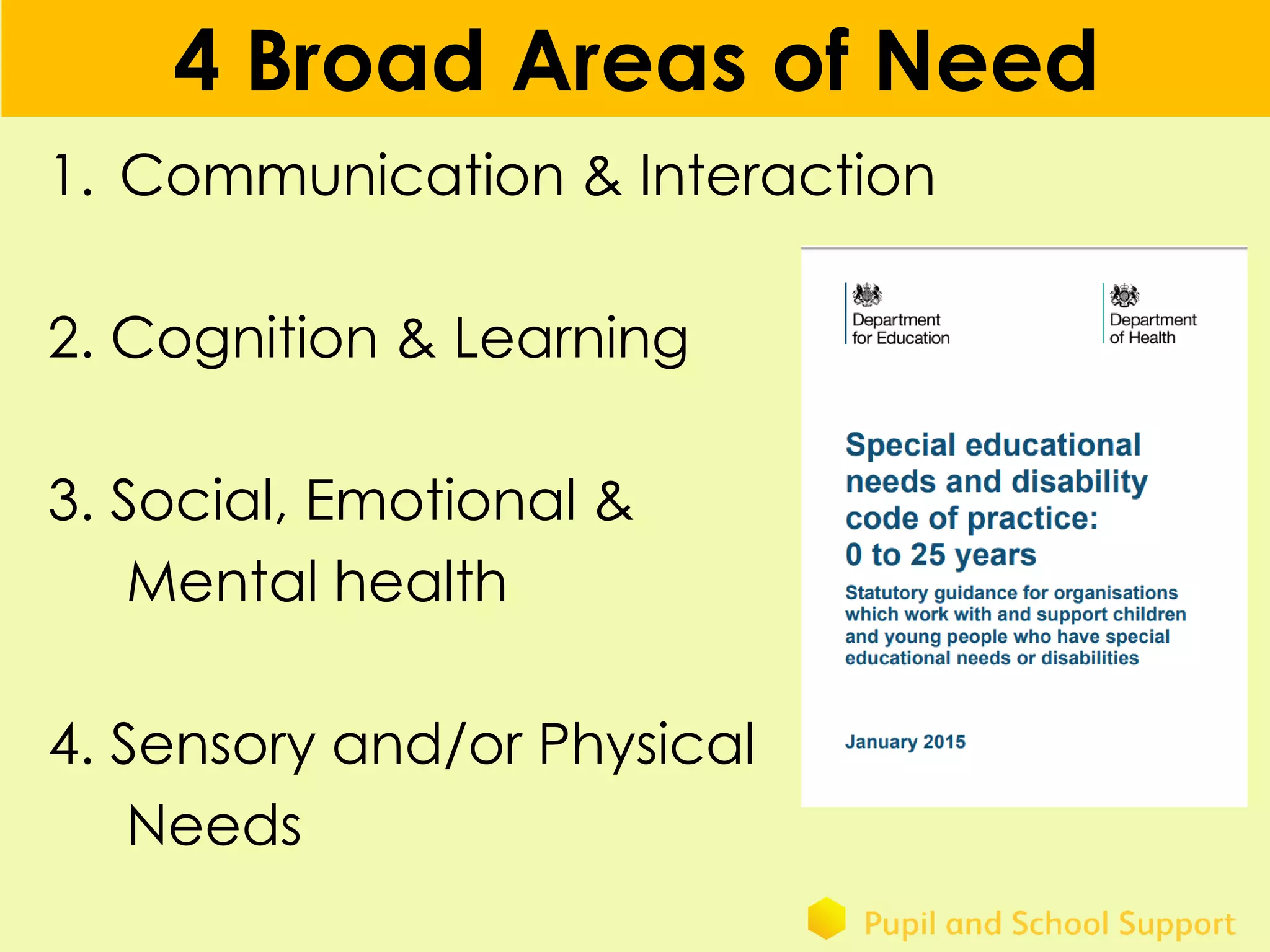
4 Broad Areas of Need
1. Communication & Interaction
2. Cognition & Learning
3. Social, Emotional &
Mental health
4. Sensory and/or Physical
Needs
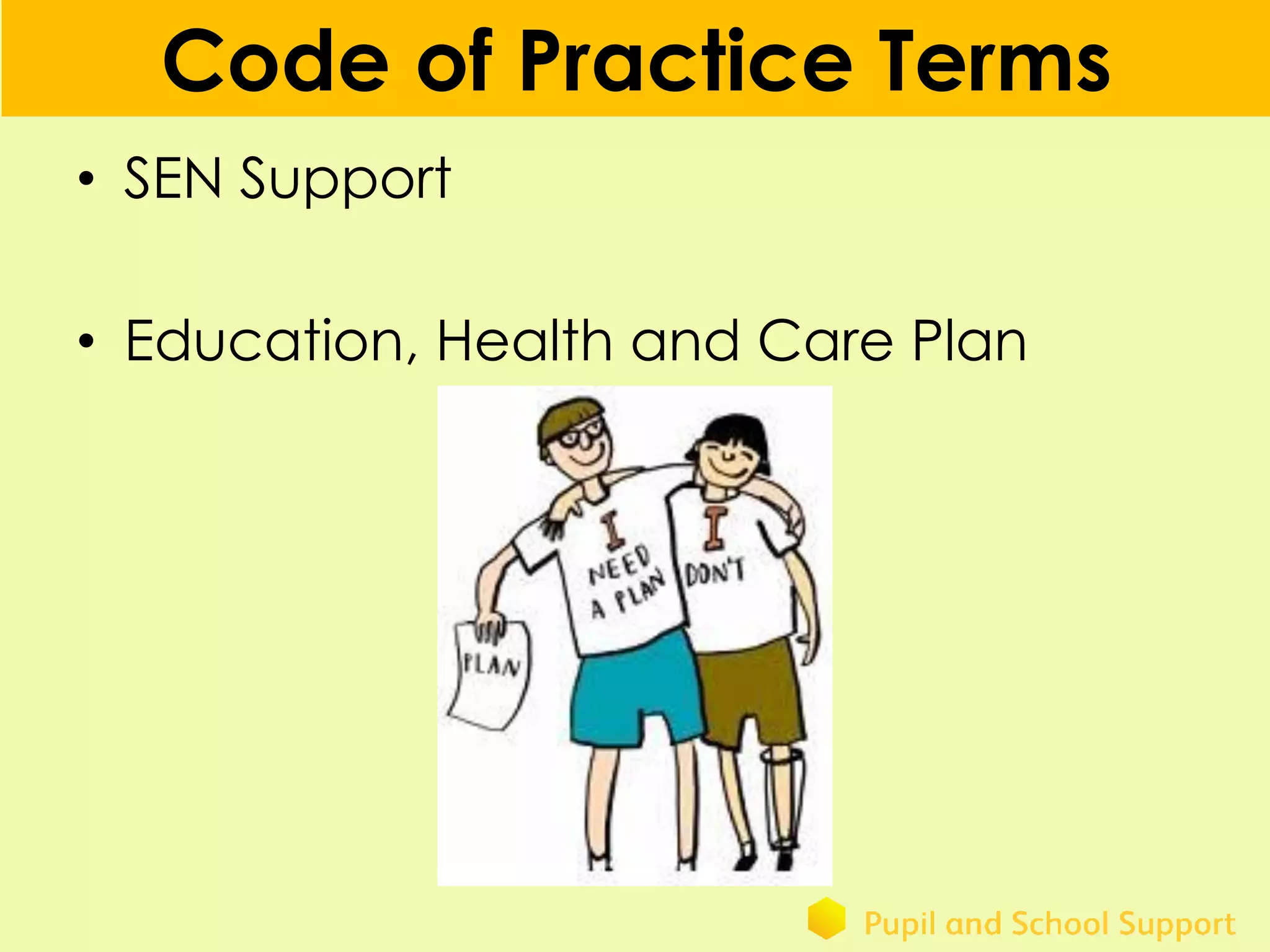
Code of Practice Terms
• SEN Support
• Education, Health and Care Plan
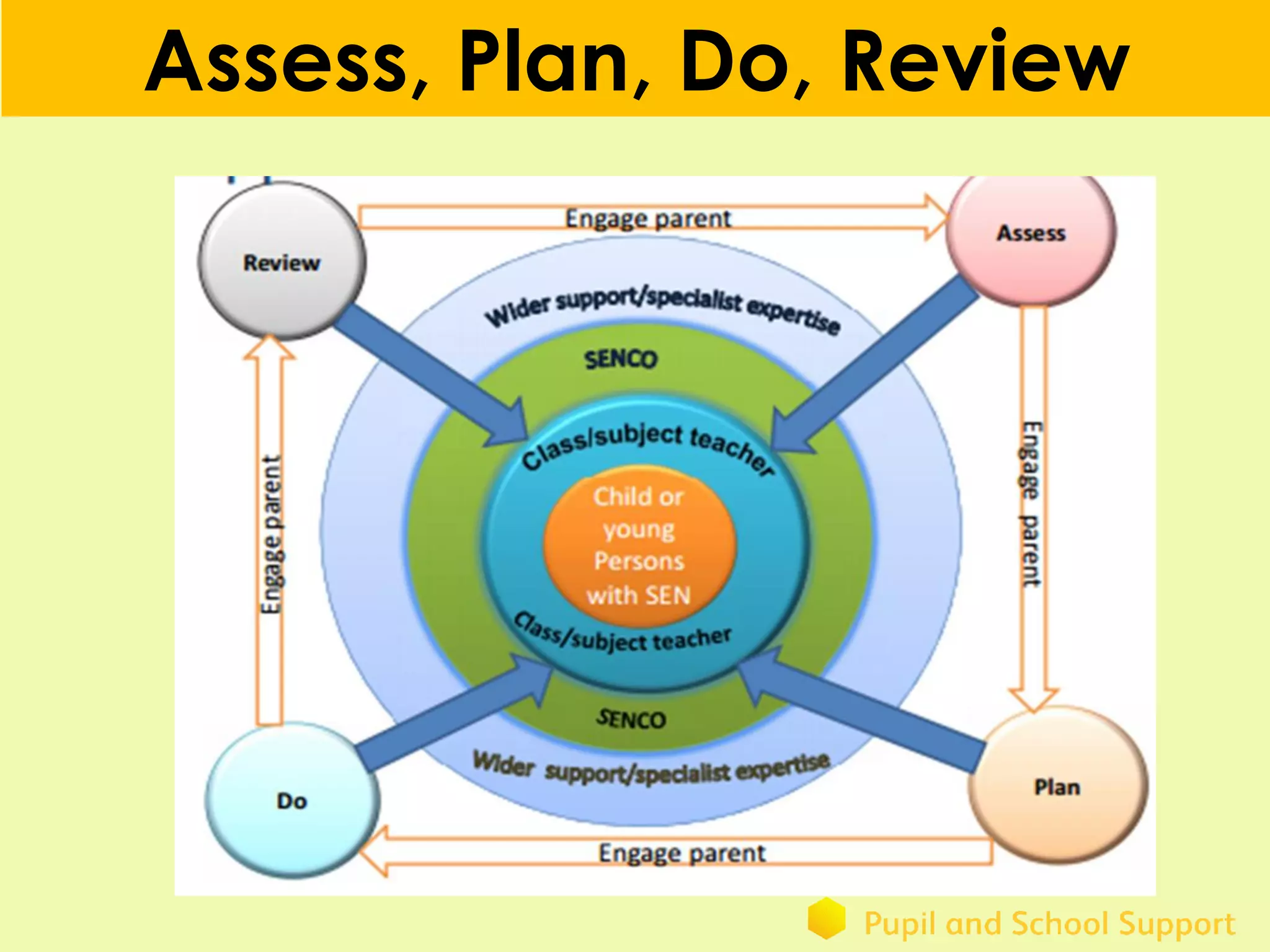
Assess, Plan, Do, Review
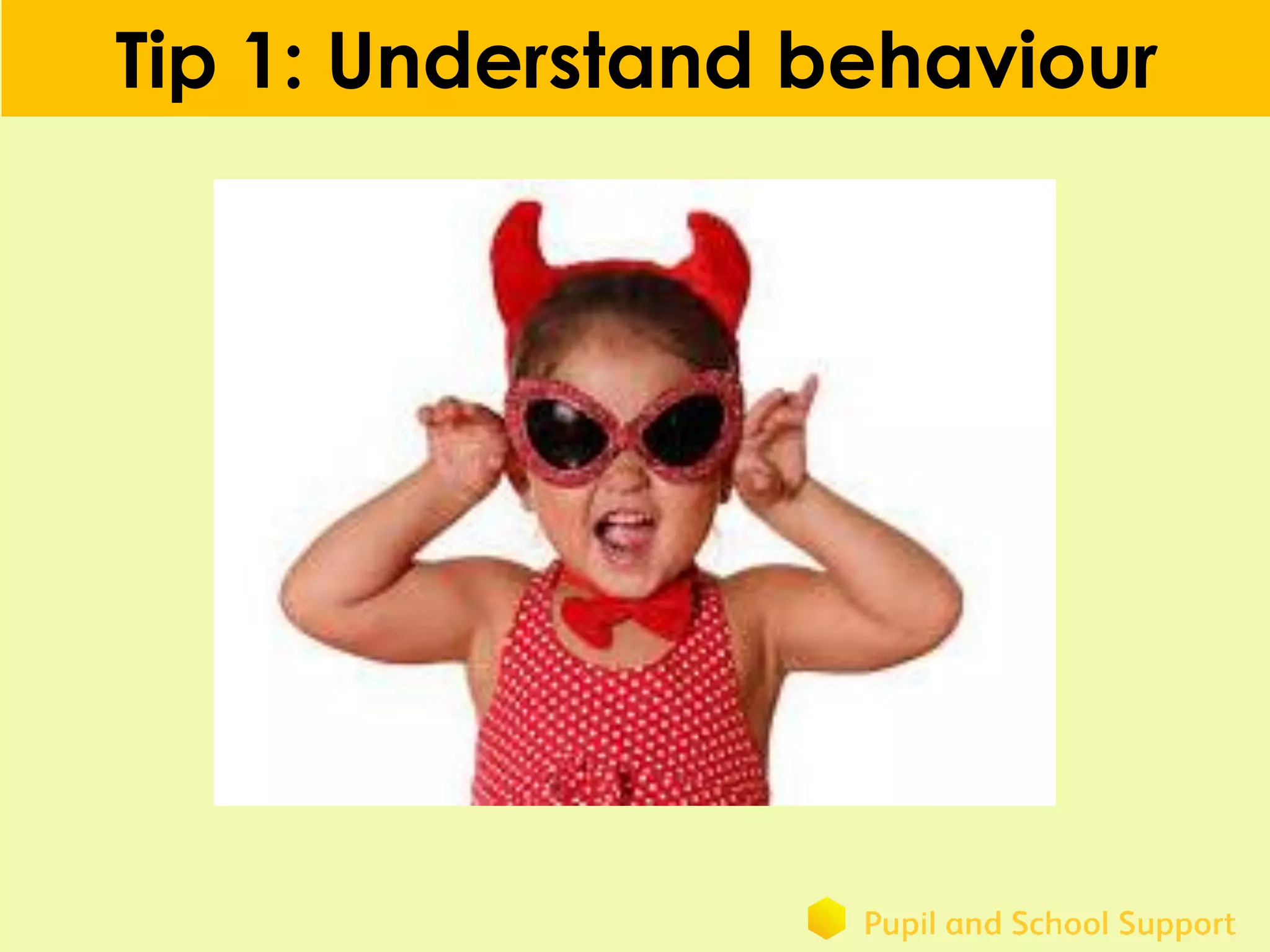
Tip 1: Understand behaviour
Daniel is 8 years old.
When the teacher goes to the playground to collect the class
after play he is stood next to the teacher on duty being told
off. When she asks what is wrong the teacher on duty tells her
that he has hit another child.
Daniel’s teacher becomes annoyed with him and says “This is
the third time this week Daniel – you are in trouble now!”
Daniel tells his teacher that he “doesn’t care!”.
The teacher becomes more annoyed and tells him that he
will have no more playtimes this week.
Daniel runs away.
Tip 1: Understand behaviour
Earlier that day…
Daniel is 8 years old.
He wakes up and his little brother, with whom he shares a bed,
has wet the bed – again! He’s going to have to change his bed
sheets – again! But not until he’s got his little brother’s breakfast.
He looks at the clock, it is 8:45 – he is going to be late for school -
again! No time for him to eat then. The lady in the office is
going to moan at him - again! His teacher is going to tut as he
walks into the room - again! He is going to miss what the
teacher tells the class to do in the lesson and so he’ll have to
guess and then get it wrong–again!
Tip 1: Understand behaviour
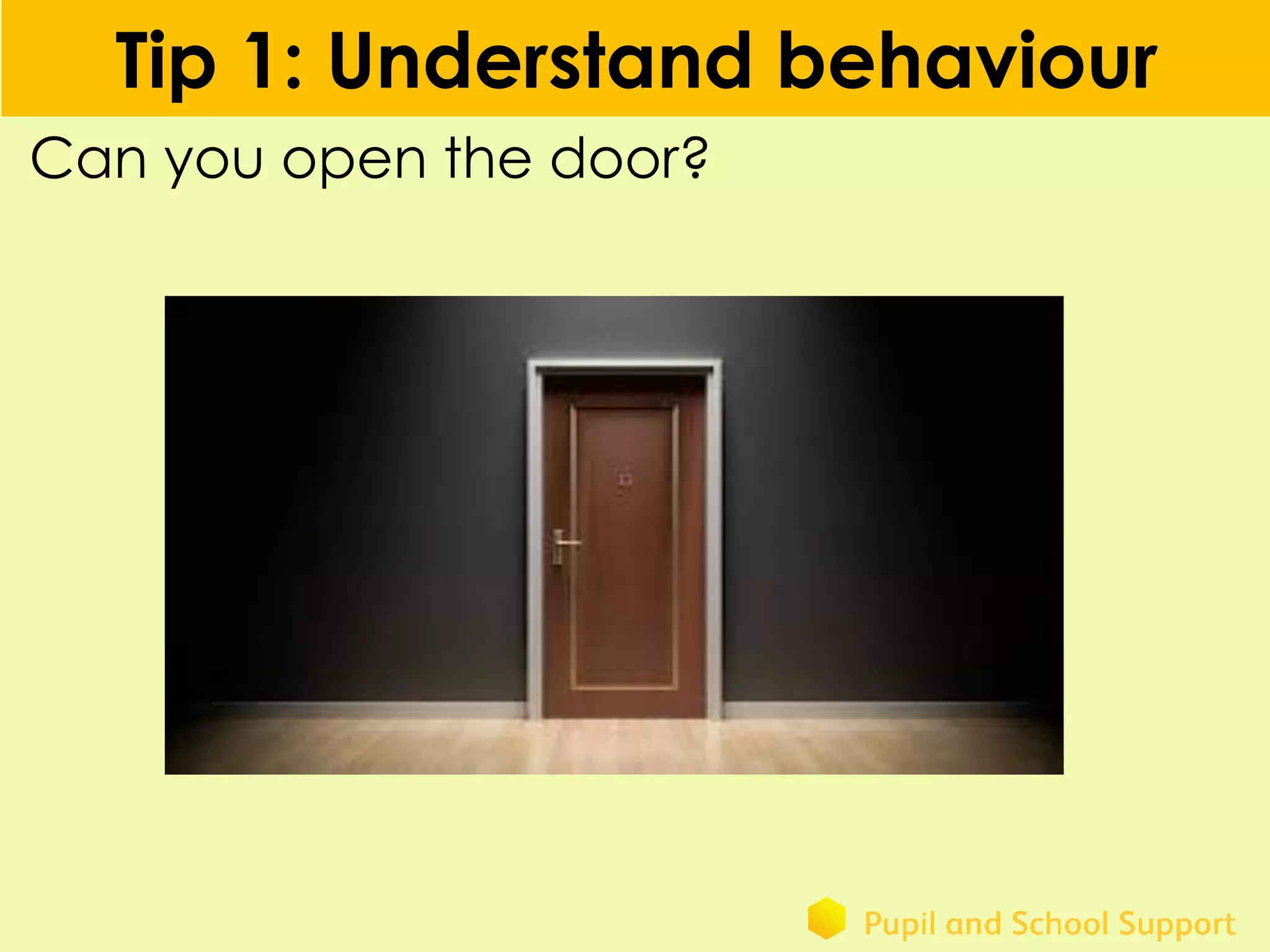
Can you open the door?
Tip 1: Understand behaviour
When you understand why a child is behaving in the
way they are dealing with it becomes much easier.
My golden rules would be:
• Consider the language you are using
• Take care with reward systems
• Pick your arguments
• Set the tone
• Do with not to
• Follow through
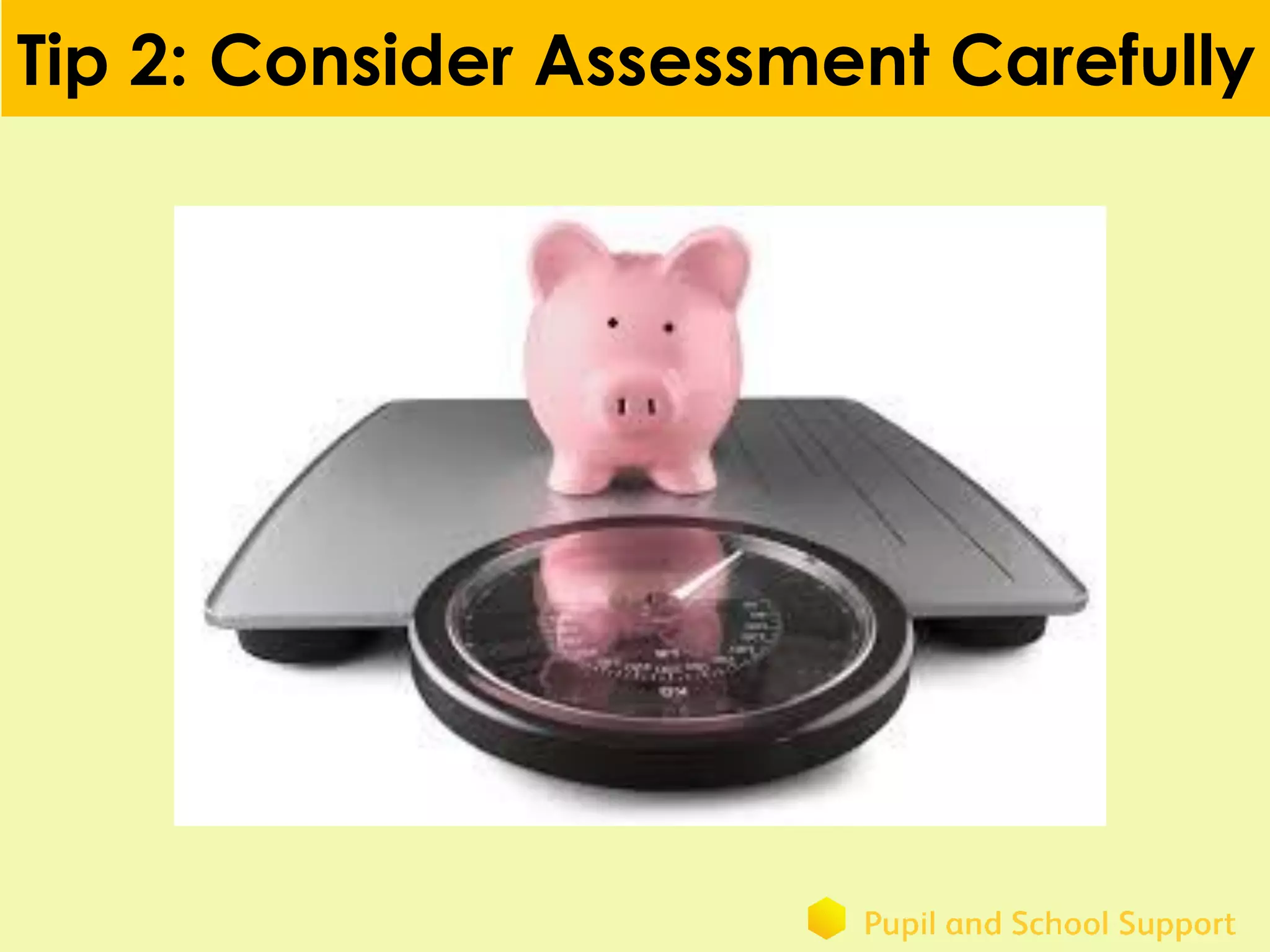
Tip 2: Consider Assessment Carefully
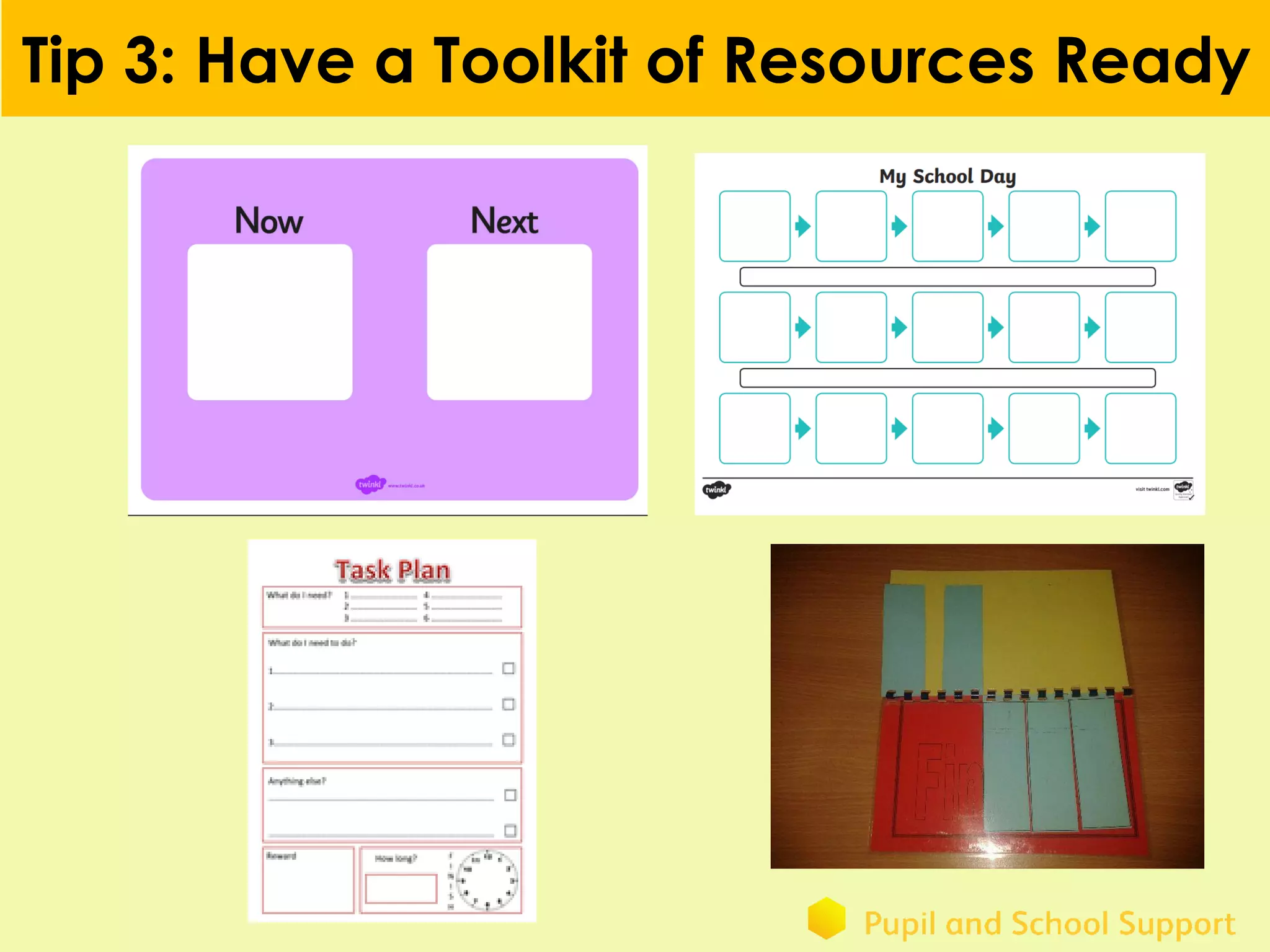
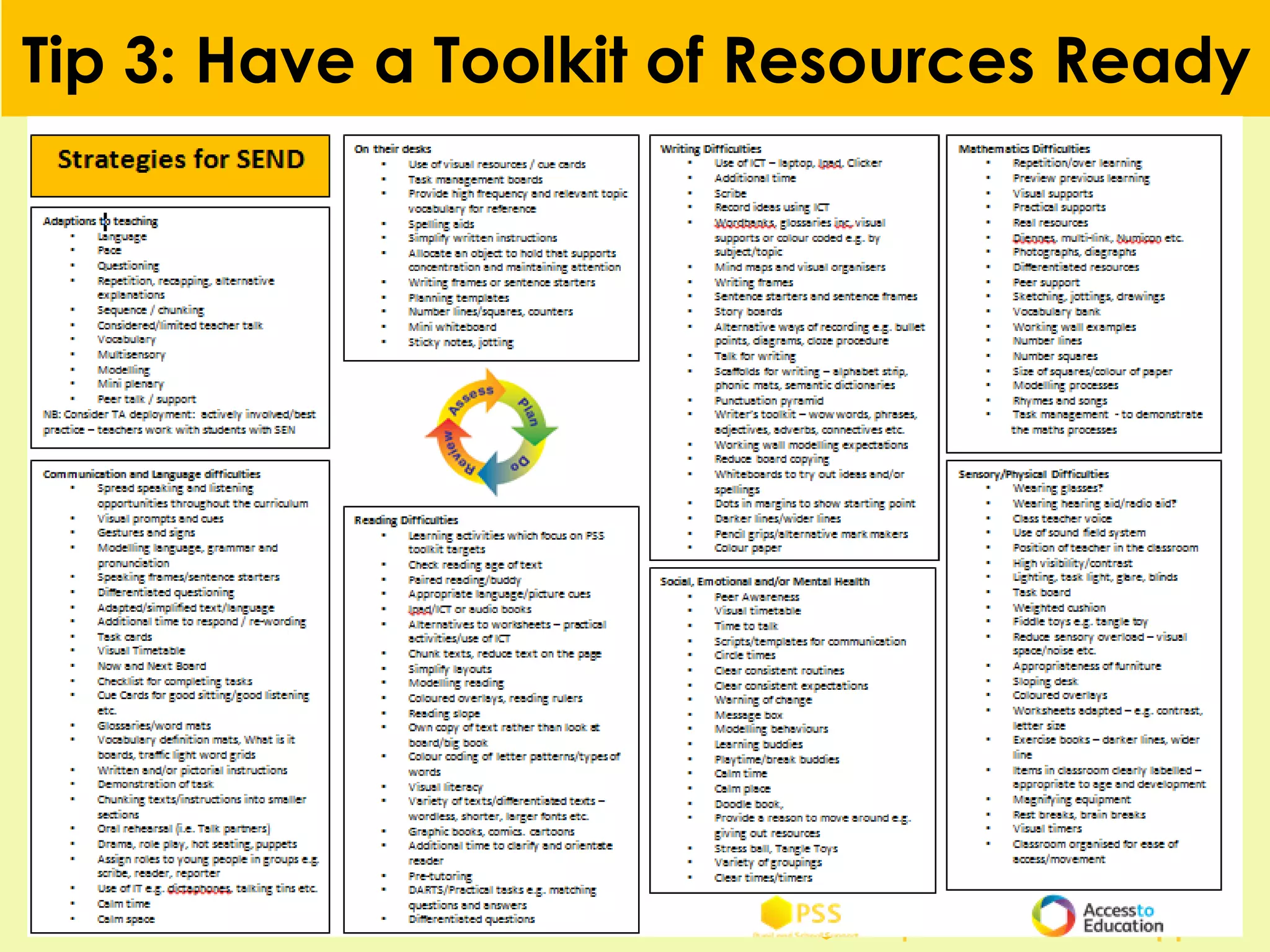
Tip 3: Have a Toolkit of Resources Ready
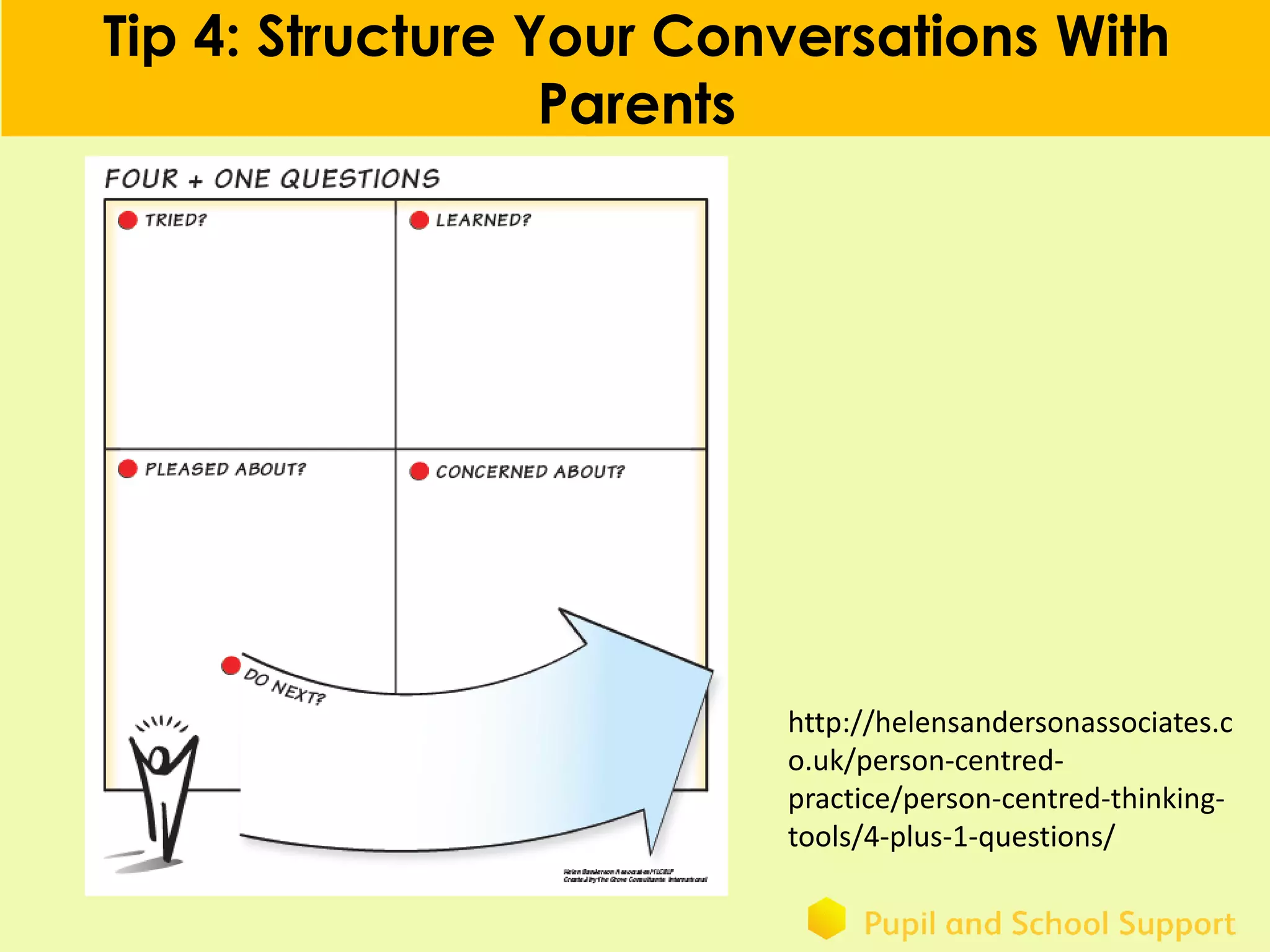
Tip 4: Structure Your Conversations With
Parents
http://helensandersonassociates.c
o.uk/person-centred-
practice/person-centred-thinking-
tools/4-plus-1-questions/
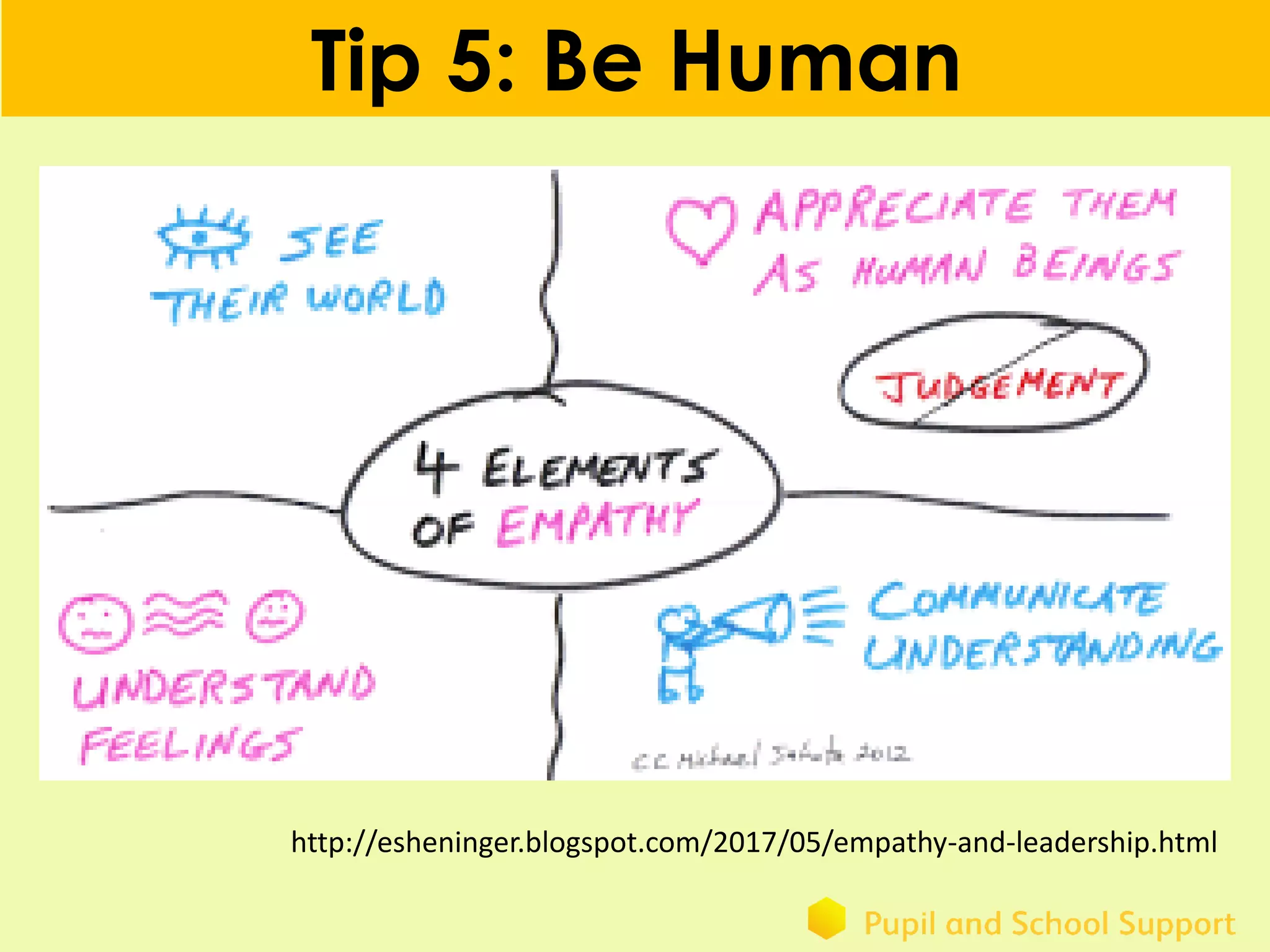
Tip 5: Be Human
http://esheninger.blogspot.com/2017/05/empathy-and-leadership.html
Terri Cawser
terri.cawser@birmingham.gov.uk
@A2Education
@tcawser
www.accesstoeducation.birmingham.gov.uk

Supporting SEND in Mainstream Classrooms for Trainee Teachers

  • 1.
    Supporting SEND inMainstream Classrooms for Trainee Teachers ResearchSEND Conference 2nd March, 2019 Terri Cawser Partners on the pathway to a positive future for children and young people www.accesstoeducation.birmingham.gov.uk
  • 2.
    Aims The aim ofthis session is to give you my 5 top tips for starting to teach children with Special Educational Needs.
  • 3.
  • 4.
  • 5.
    4 Broad Areasof Need 1. Communication & Interaction 2. Cognition & Learning 3. Social, Emotional & Mental health 4. Sensory and/or Physical Needs
  • 6.
    Code of PracticeTerms • SEN Support • Education, Health and Care Plan
  • 7.
  • 8.
  • 9.
    Tip 1: Understandbehaviour Daniel is 8 years old. When the teacher goes to the playground to collect the class after play he is stood next to the teacher on duty being told off. When she asks what is wrong the teacher on duty tells her that he has hit another child. Daniel’s teacher becomes annoyed with him and says “This is the third time this week Daniel – you are in trouble now!” Daniel tells his teacher that he “doesn’t care!”. The teacher becomes more annoyed and tells him that he will have no more playtimes this week. Daniel runs away.
  • 10.
    Tip 1: Understandbehaviour Earlier that day… Daniel is 8 years old. He wakes up and his little brother, with whom he shares a bed, has wet the bed – again! He’s going to have to change his bed sheets – again! But not until he’s got his little brother’s breakfast. He looks at the clock, it is 8:45 – he is going to be late for school - again! No time for him to eat then. The lady in the office is going to moan at him - again! His teacher is going to tut as he walks into the room - again! He is going to miss what the teacher tells the class to do in the lesson and so he’ll have to guess and then get it wrong–again!
  • 11.
    Tip 1: Understandbehaviour Can you open the door?
  • 12.
    Tip 1: Understandbehaviour When you understand why a child is behaving in the way they are dealing with it becomes much easier. My golden rules would be: • Consider the language you are using • Take care with reward systems • Pick your arguments • Set the tone • Do with not to • Follow through
  • 13.
    Tip 2: ConsiderAssessment Carefully
  • 14.
    Tip 2: ConsiderAssessment Carefully
  • 15.
    Tip 3: Havea Toolkit of Resources Ready
  • 16.
    Tip 3: Havea Toolkit of Resources Ready
  • 17.
    Tip 3: Havea Toolkit of Resources Ready
  • 18.
    Tip 3: Havea Toolkit of Resources Ready
  • 19.
    Tip 4: StructureYour Conversations With Parents http://helensandersonassociates.c o.uk/person-centred- practice/person-centred-thinking- tools/4-plus-1-questions/
  • 20.
    Tip 5: BeHuman http://esheninger.blogspot.com/2017/05/empathy-and-leadership.html
  • 21.