SUSTAINABLE ROAD INFRASTRUCTURE DEVELOPMENT IN
NIGERIA: ADDRESSING THE PROBLEM OF PERMANENT
DEFORMATION OF PAVEMENTS
Author: Engr. Dr. O. M. Ogundipe (MNSE)
Organization: Ekiti State University, Ado-Ekiti
Address: Civil Engineering Department, Faculty of
Engineering, Ekiti State University, P.M.B. 5363,
Ado-Ekiti, Ekiti State, Nigeria
momide2002@yahoo.com; olumide.ogundipe@eksu.edu.ng,
+234(0)8107825001
NSE Annual Conference: SUNSHINE 2015
1
Outline of Presentation
Introduction
Permanent Deformation
Definition
Mechanism
Causes of Permanent Deformation
 Addressing the Problem of Permanent
Def0rmation
Conclusion
2
Introduction
Good transport system is essential toward achieving Nigeria’s plan to be
among the top 20 economies in the world by the year 2020 (NPC, 2009)
The World Bank (2015) reported that the gross domestic product (GDP)
grew at an average rate of 6.03 % between 2005 and 2014, despite the
country’s low infrastructure stock, which is about 35 % of the GDP
(Egbeme, 2014).
The impressive economic growth rate has not transformed into better
standard of living for the people because the infrastructural facilities are in
poor state.
NIIMP highlighted that 68.3% of our roads are in state of disrepair.
Oyedokun (2015) reported that Nigeria is reputed to rank second, 191 out
of 192 countries in the world with unsafe roads, recording 162 deaths per
100,000 people from road traffic accidents.
This is not acceptable because our economy depends majorly on the road
transportation for the movement of freight and passengers within the
country, as other transportation modes are moribund.
3
Introduction
The sum of US$800 billion was earmarked for transport infrastructure out
of the US$3 trillion), US$266 billion out of this amount will be required to
rehabilitate, expand, and upgrade (excluding maintenance) the existing
roads.
In Nigeria, like other parts of the world, resources are limited. So, while
the US$266 billion is being deployed to revamp our road infrastructure,
sustainability must be our watchword
When investment is made into the construction of infrastructure, it is
essential that value for such investment is realized.
Despite this fact, the methods of building roads and materials used in the
construction of roads over the years are still being adopted today;
therefore, we should not expect new/better results.
This paper looks critically at the problem of permanent deformation and
the ways of addressing the problem.
The objective is to ensure that roads are constructed with materials and in
such a way that they can perform their functions up to the end of the
design life with minimal maintenance.
4
Permanent Deformation
Definition
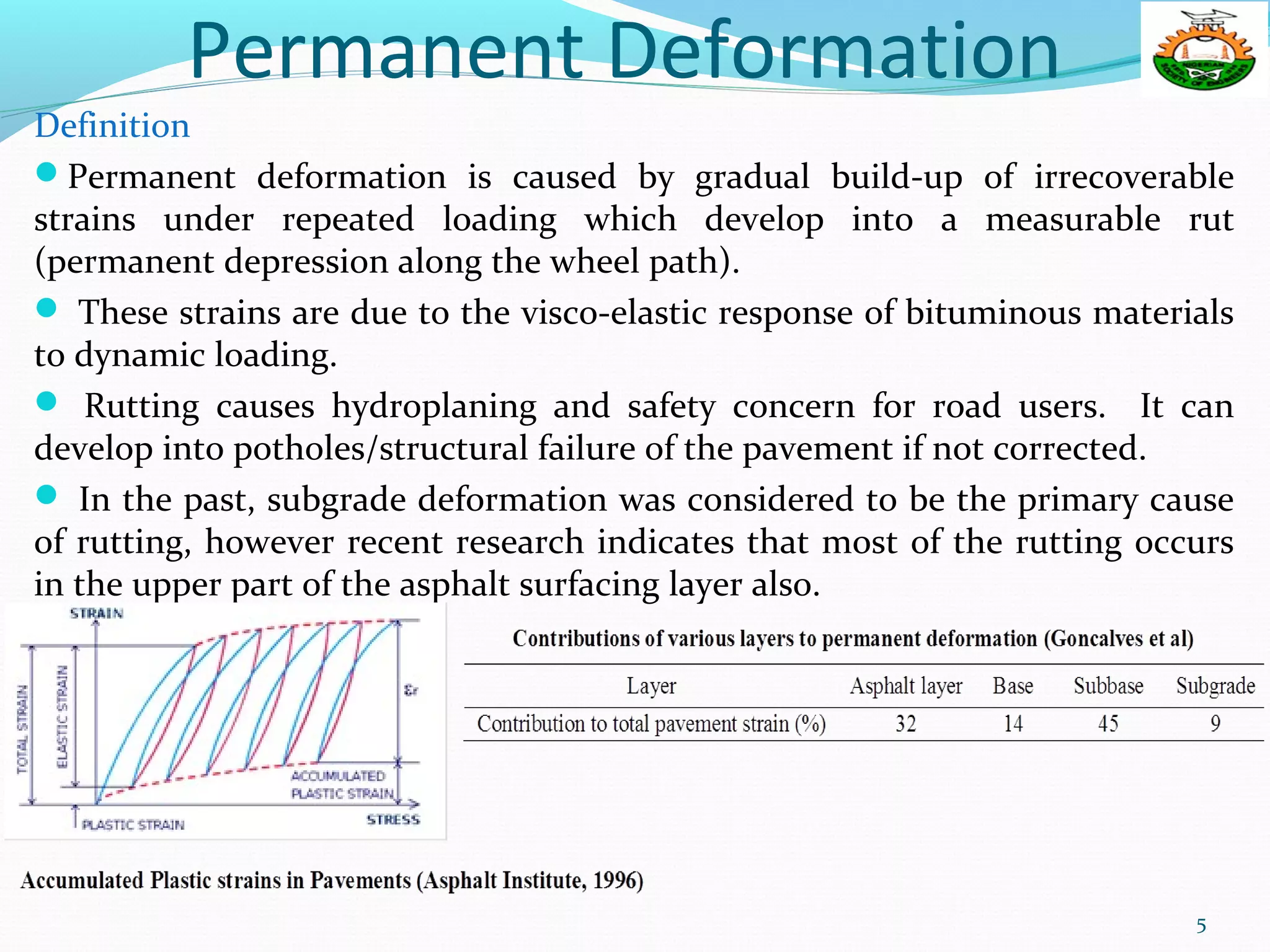
Permanent deformation is caused by gradual build-up of irrecoverable
strains under repeated loading which develop into a measurable rut
(permanent depression along the wheel path).
 These strains are due to the visco-elastic response of bituminous materials
to dynamic loading.
 Rutting causes hydroplaning and safety concern for road users. It can
develop into potholes/structural failure of the pavement if not corrected.
 In the past, subgrade deformation was considered to be the primary cause
of rutting, however recent research indicates that most of the rutting occurs
in the upper part of the asphalt surfacing layer also.
5
Permanent Deformation
6
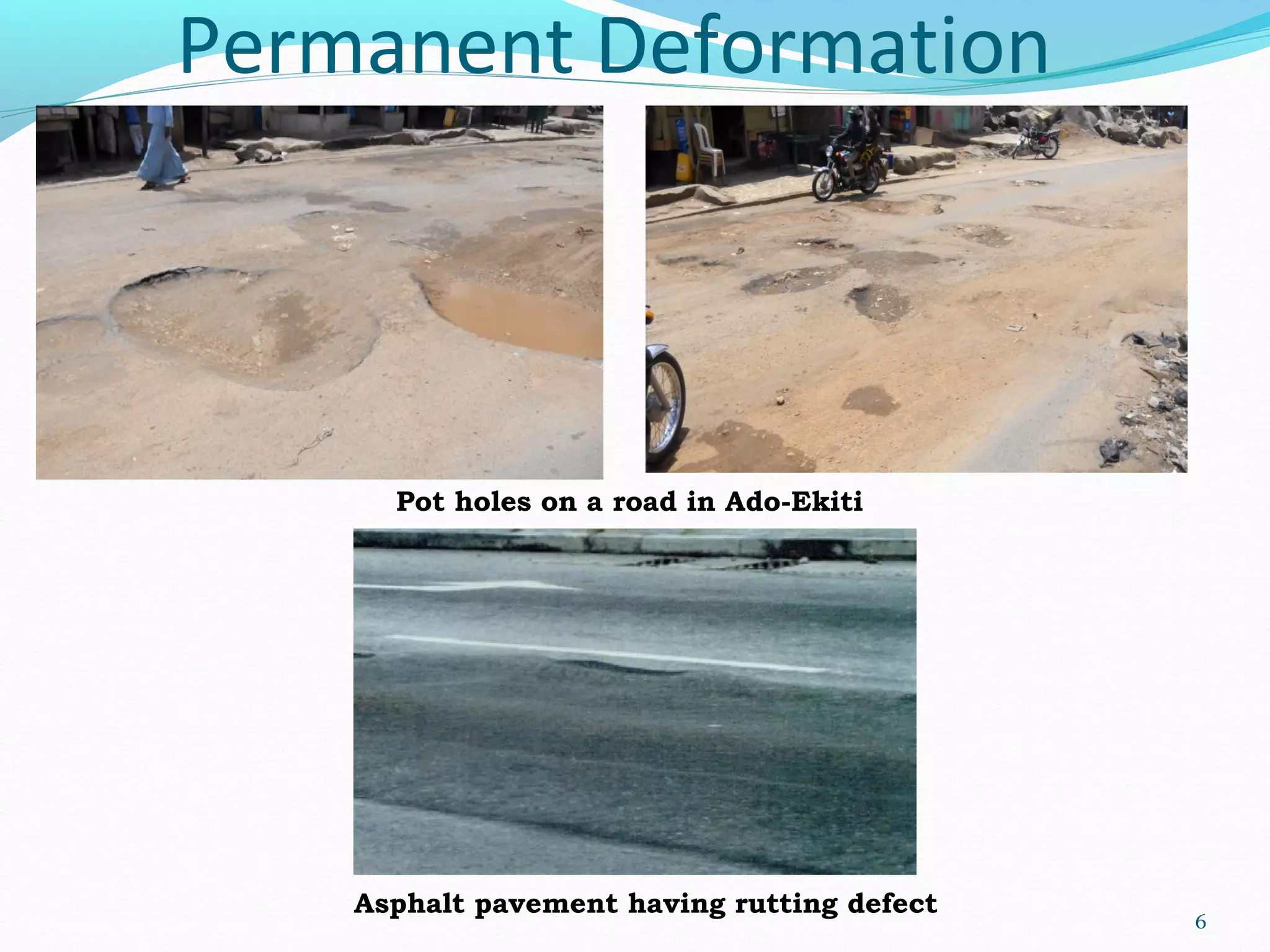
Pot holes on a road in Ado-Ekiti
Asphalt pavement having rutting defect
Permanent Deformation
Mechanism
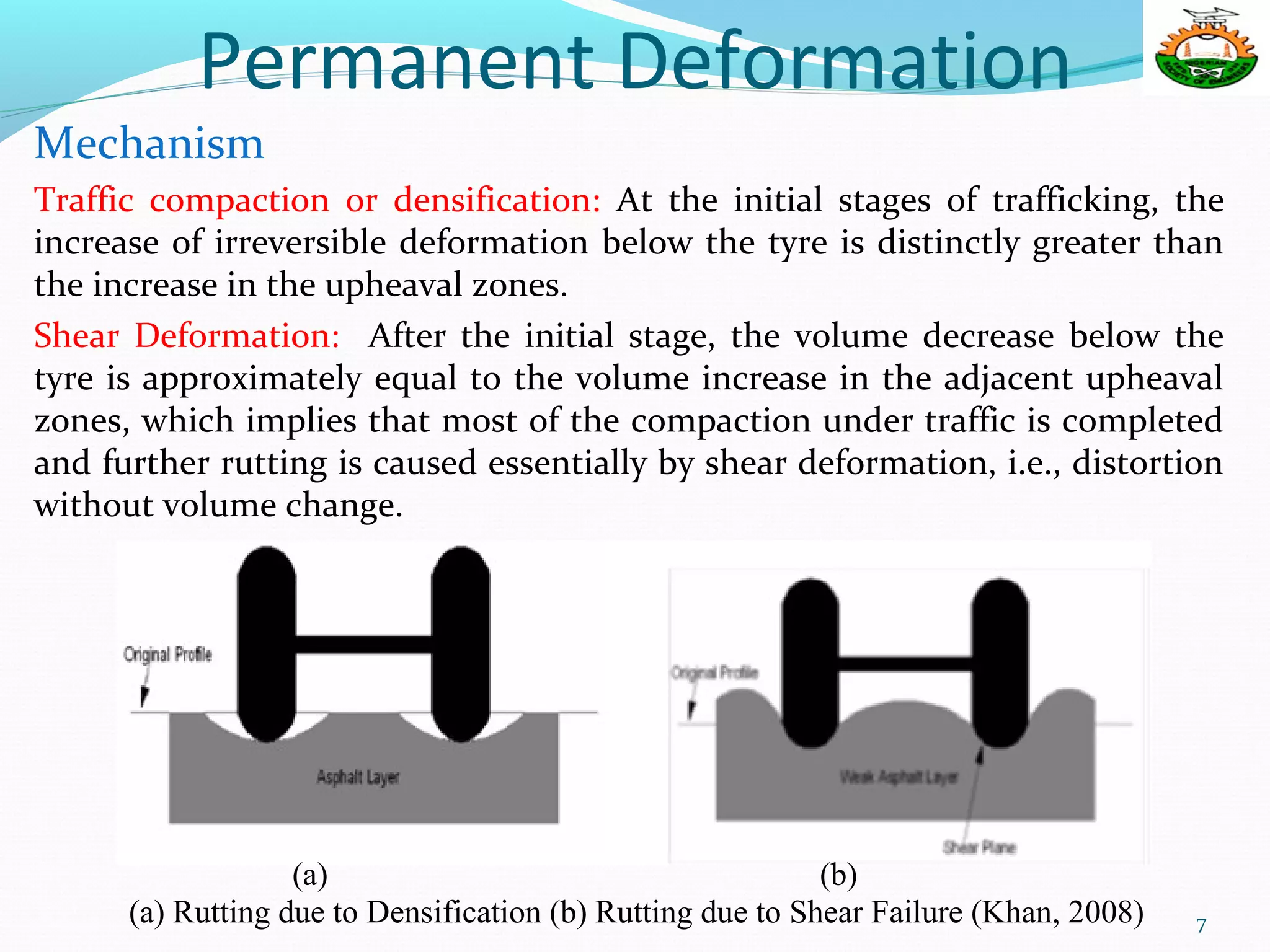
Traffic compaction or densification: At the initial stages of trafficking, the
increase of irreversible deformation below the tyre is distinctly greater than
the increase in the upheaval zones.
Shear Deformation: After the initial stage, the volume decrease below the
tyre is approximately equal to the volume increase in the adjacent upheaval
zones, which implies that most of the compaction under traffic is completed
and further rutting is caused essentially by shear deformation, i.e., distortion
without volume change.
7
(a) (b)
(a) Rutting due to Densification (b) Rutting due to Shear Failure (Khan, 2008)
Causes of Permanent Deformation
There are two major causes:
 Weak asphalt mixture (Focus of the Paper)
 Weak subgrade
Weak Asphalt
Some of the factors that affect permanent deformation characteristics of
asphalt mixture are as follows:
Aggregates gradation
Aggregate surface texture
Voids in the asphalt mixture
Type of binder and temperature
Weak subgrade
Permanent deformation/rutting develops when the subgrade does not
possess adequate bearing capacity to support the traffic load. In this
situation, the road pavement ruts when too much repeated load is
applied. This type of rutting is considered to be more of a structural
problem and is often referred to as structural rutting.
Other Factors: Contact stress distribution, Compaction and Pavement
structure 8
Addressing the Problem of Permanent Deformation
The use of harder bitumen
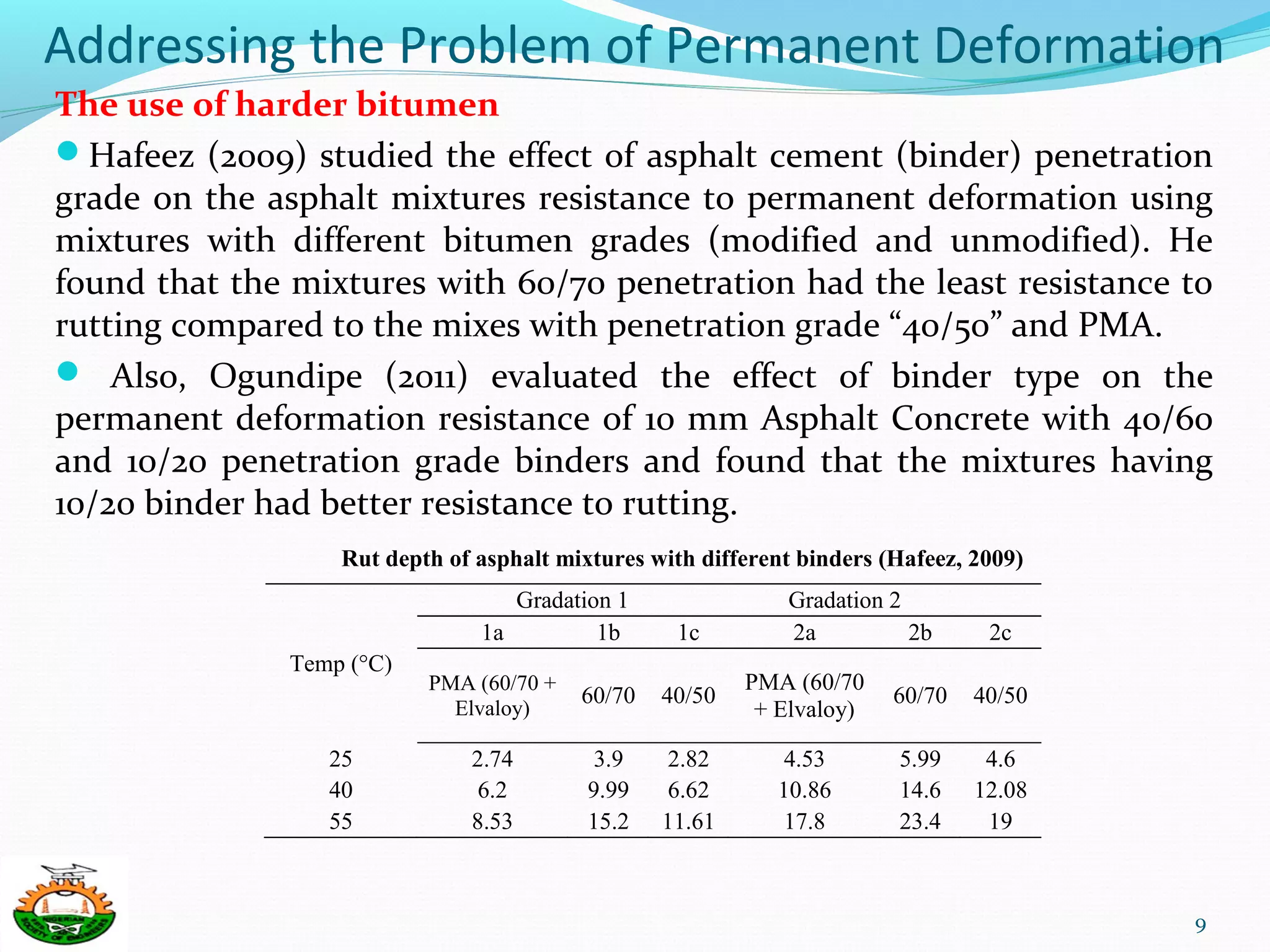
Hafeez (2009) studied the effect of asphalt cement (binder) penetration
grade on the asphalt mixtures resistance to permanent deformation using
mixtures with different bitumen grades (modified and unmodified). He
found that the mixtures with 60/70 penetration had the least resistance to
rutting compared to the mixes with penetration grade “40/50” and PMA.
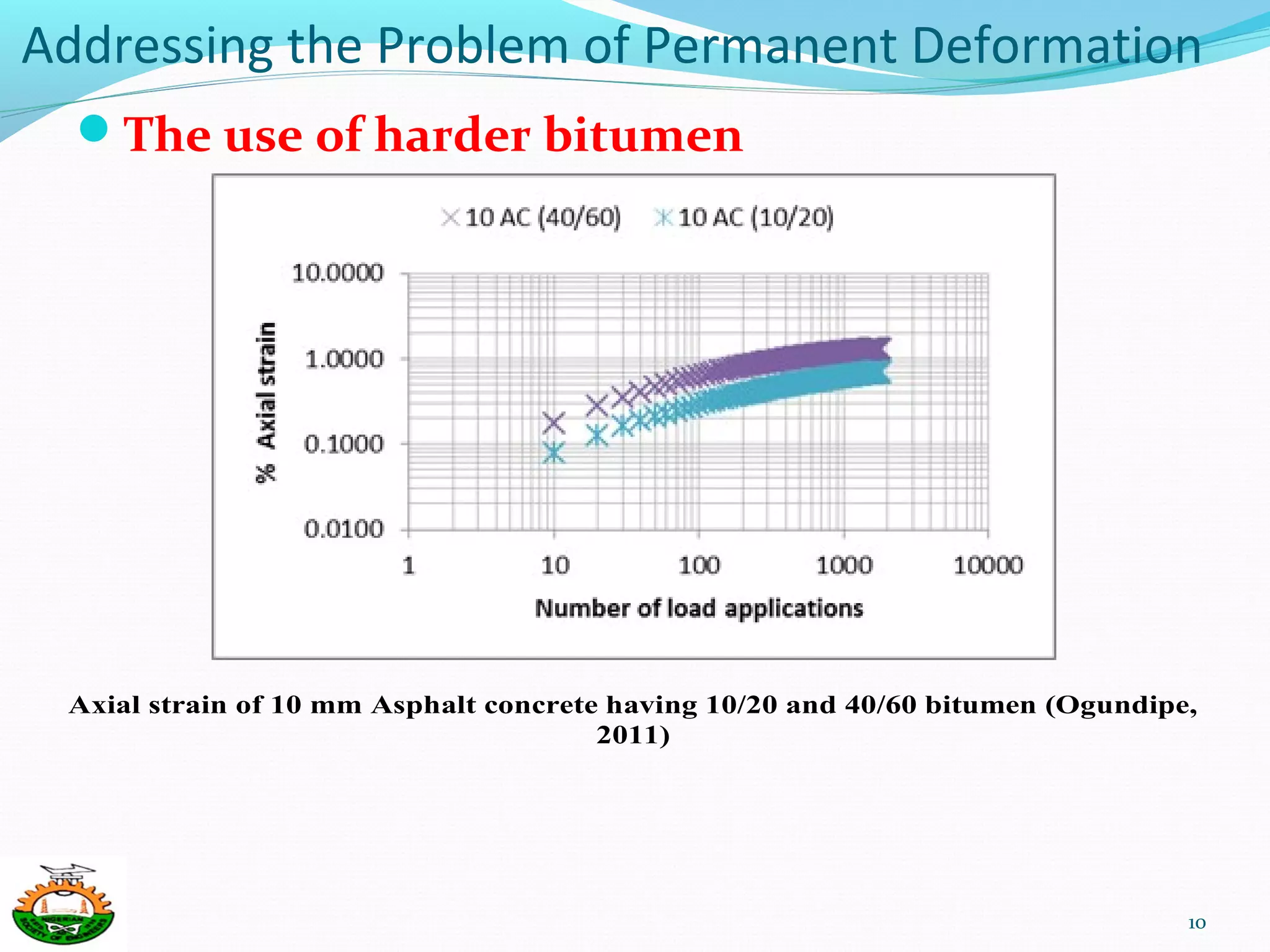
 Also, Ogundipe (2011) evaluated the effect of binder type on the
permanent deformation resistance of 10 mm Asphalt Concrete with 40/60
and 10/20 penetration grade binders and found that the mixtures having
10/20 binder had better resistance to rutting.
9
Rut depth of asphalt mixtures with different binders (Hafeez, 2009)
Temp (°C)
Gradation 1 Gradation 2
1a 1b 1c 2a 2b 2c
PMA (60/70 +
Elvaloy)
60/70 40/50
PMA (60/70
+ Elvaloy)
60/70 40/50
25 2.74 3.9 2.82 4.53 5.99 4.6
40 6.2 9.99 6.62 10.86 14.6 12.08
55 8.53 15.2 11.61 17.8 23.4 19
Addressing the Problem of Permanent Deformation
The use of harder bitumen
10
Axial strain of 10 mm Asphalt concrete having 10/20 and 40/60 bitumen (Ogundipe,
2011)
Addressing the Problem of Permanent Deformation
The use of superpave mix design
Superpave is an acronym for Superior Performing Asphalt Pavements.
The key features in the Superpave system are laboratory compaction and
testing for mechanical properties. Laboratory compaction is accomplished
by means of a Superpave Gyratory Compactor (SGC) and helps the mix
design engineer to gain insight into the compactability of asphalt mixture.
Also, the mix design includes asphalt mixture performance prediction
tests. The tests include rotational viscometer test (flow), dynamic shear
rheometer (permanent deformation and fatigue cracking), bending beam
rheometer and direct tension test (thermal cracking).
Khan (2008) considered Marshall and Superpave design mixtures at 25°C,
40°C and 55°C using a wheel tracking test. The results indicate that the rut
depths of Superpave mix were 31% less than Marshall at 25°C, 53% less than
Marshall at 40°C and 69% less than Marshall at 55°C. He reported that at
55o
C, Marshall mixes failed before completing the total number of passes
(10,000).
11
Addressing the Problem of Permanent Deformation
The use of superpave mix design
Swami et al. (2004), studied both the Superpave, Marshall Mix design
methods and Stone Mastic Asphalt and recommended that Marshall
Compactor is not able to identify the rutting susceptibility of asphaltic
concrete.
Roberts et al. (2002) reported that the high degree of shear vulnerability
of asphalt mixes was not well identified by Marshall compactor and
compaction procedure of Marshall mix method did not replicate the actual
compaction which occurs under moving traffic.
12
Summary of Wheel Tracking Test Results (Khan, 2008)
Temperature
(°C)
Rut Depth (mm)
Marshall Superpave
25 2.82 2.15
40 6.4 4.18
55 17.15 10.1
Addressing the Problem of Permanent Deformation
Use of polymer modified asphalt
Polymer improves the properties of the asphalt concrete making it
softer in cold weather and stiffer in hot weather.
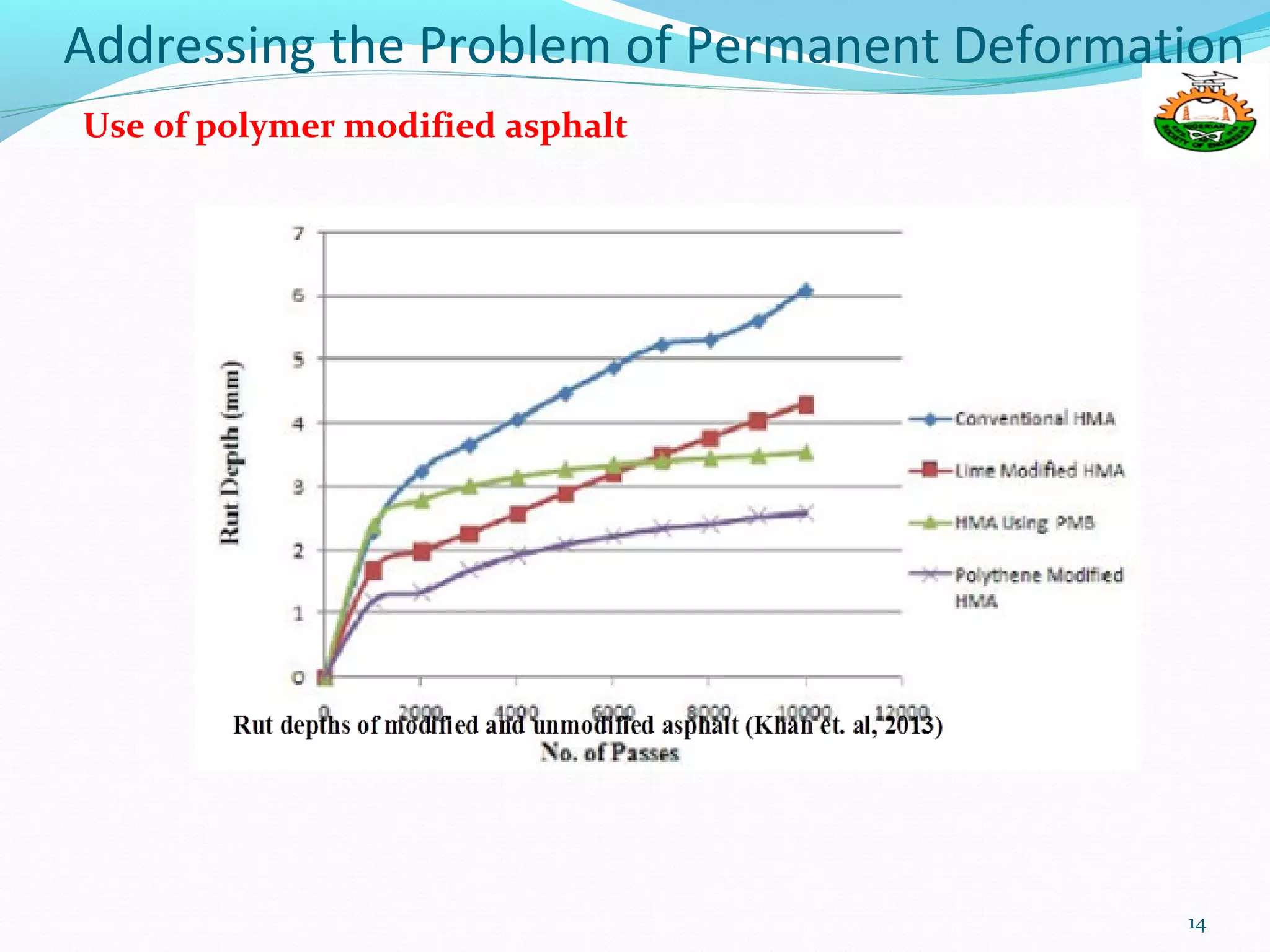
Khan et. al. (2013) evaluated the effectiveness of polyethylene
modified, lime modified and elvaloy (ethylene glycidyl acrylate (EGA)
terpolymer) asphalt mixtures using wheel tracking test. The asphalt
mixtures were subjected to 10,000 passes of a loaded wheel at the rate of
25.5 revolutions per minute (53 passes per minute) at 30o
C and 60o
C.
They found that polyethene modified asphalt mixture provided best
resistance to rutting followed by lime and elvaloy asphalt modified
mixture
Also, Hınıslıoglu and Agar (2004) observed that rutting resistance of
asphalt mixture was improved by adding different percentage of waste
high density polyethylene (HDPE) as bitumen modifier namely: 4, 6 and
8% by the weight of optimum bitumen content. Their results show that
the specimens fabricated with 4% waste HDPE at the 165°C have the best
resistant to permanent deformation.
13
Addressing the Problem of Permanent Deformation
14
Use of polymer modified asphalt
Addressing the Problem of Permanent Deformation
Use of lime-modified asphalt
Lime acts as active filler, anti-oxidant, and as an additive that reacts with
clay fines in asphalt.
These mechanisms create multiple benefits for pavements:
(1) Hydrated lime acts as mineral filler, stiffening the asphalt binder and
asphalt.
(2) It improves resistance to fracture growth at low temperatures.
(3) It favorably alters oxidation kinetics and interacts with products of
oxidation to reduce their deleterious effects.
(4) It alters the plastic properties of clay fines to improve moisture
stability and durability.
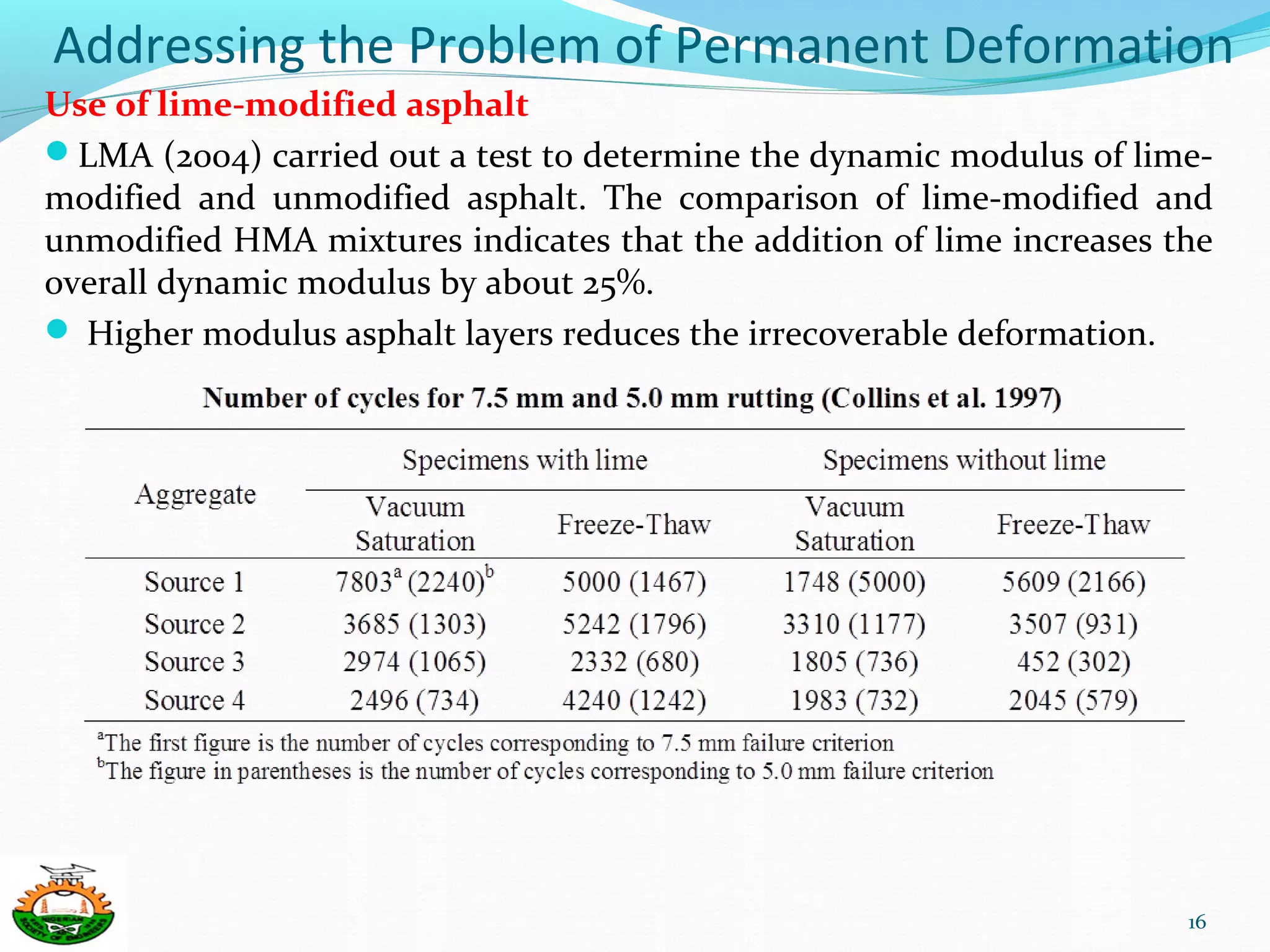
The results of laboratory wheel tracking tests conducted indicate that
hydrated lime increases resistance to rutting and permanent deformation
(Collins et al., 1997).
15
Addressing the Problem of Permanent Deformation
Use of lime-modified asphalt
LMA (2004) carried out a test to determine the dynamic modulus of lime-
modified and unmodified asphalt. The comparison of lime-modified and
unmodified HMA mixtures indicates that the addition of lime increases the
overall dynamic modulus by about 25%.
 Higher modulus asphalt layers reduces the irrecoverable deformation.
16
Addressing the Problem of Permanent Deformation
The Use of Grouted Asphalt
Grouted asphalt pavement can be classified as semi-flexible. It comprises
an open-graded asphalt mixture (usually single sized), sometimes referred
to as porous asphalt, containing 25 to 35 percent air voids, which forms the
skeleton into which a cementitious grout is poured (Oliveira, 2006).
It combines the flexibility and freedom from joints that characterize
asphalt and the high static bearing capacity and wear resistance of concrete.
A pavement constructed with grouted asphalt is impervious and protects
water from penetrating the underlying layers. Also, its high strength
effectively reduces the stress level in the base layer.
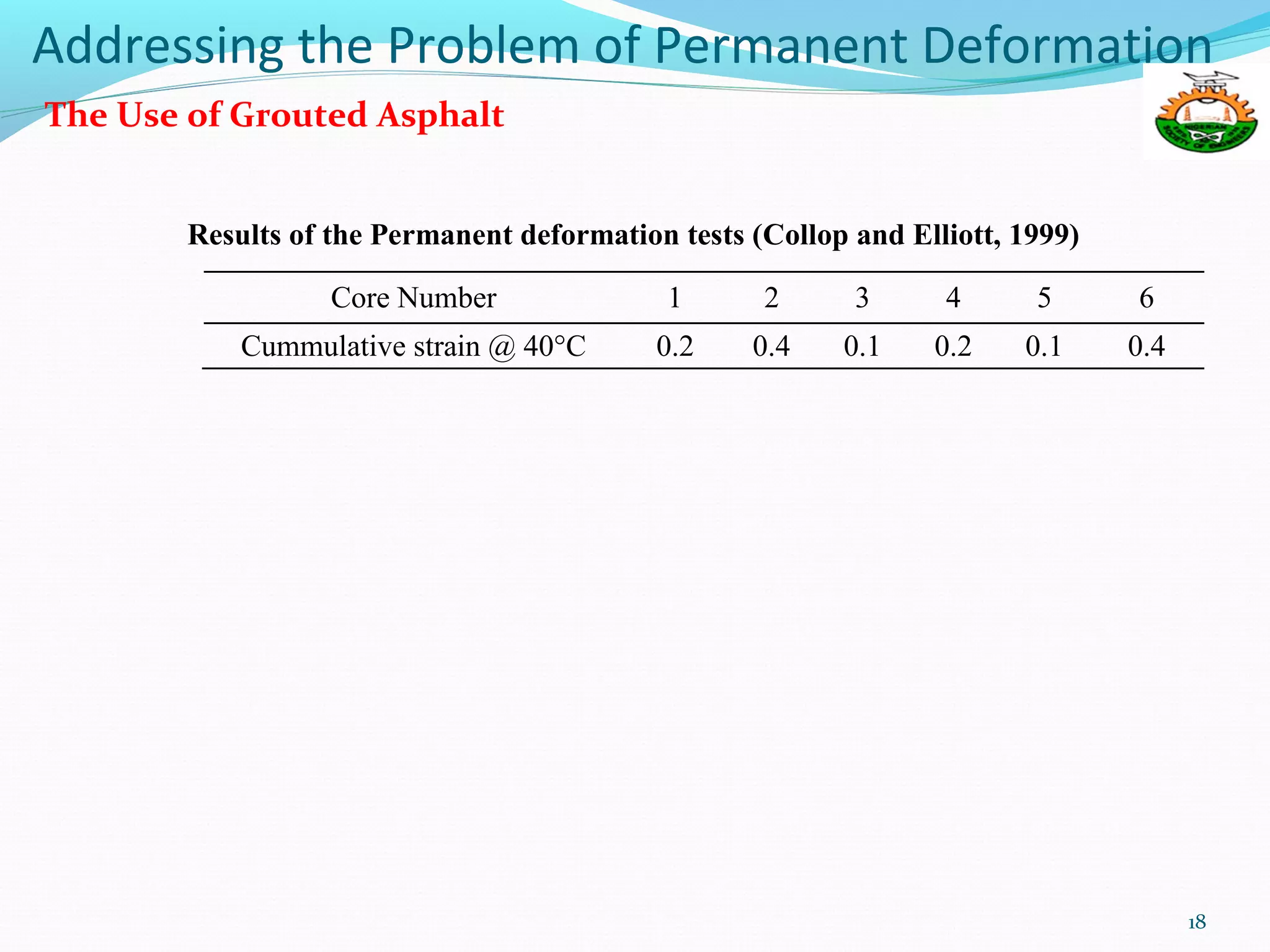
Collop and Elliott (1999) evaluated the resistance to permanent
deformation of a typical grouted asphalt (Densiphalt) using Repeated Load
Axial Test (RLAT) at 28 days and at 40 ºC applying 3600 load cycles with
stress of 100 kPa. They concluded from their results that the permanent
deformation resistance of the material was very good.
The results of the uniaxial compression tests of Van de Ven and Molenaar
(2004) also support that grouted macadam is not prone to permanent
deformation.
17
Addressing the Problem of Permanent Deformation
The Use of Grouted Asphalt
18
Results of the Permanent deformation tests (Collop and Elliott, 1999)
Core Number 1 2 3 4 5 6
Cummulative strain @ 40°C 0.2 0.4 0.1 0.2 0.1 0.4
Addressing the Problem of Permanent Deformation
The introduction of standardized tests
In Nigeria, the resistance of asphalt mixtures to permanent deformation is
normally examined using the Marshall test’s flow value.
While the flow value gives an indication of the permanent deformation
resistance at high temperature, it is inadequate.
It is important that other standardized tests are adopted.
 These tests include the Repeated load axial test (RLAT) reported in this
paper as one of the tests used by different authors to evaluate permanent
deformation resistance of asphalt concrete) and wheel tracking test.
The RLAT test is conducted on cylindrical specimens.
The wheel tracking test is usually carried out on slab prepared in the
laboratory and trafficked using the wheel traffic apparatus and the rut
measured.
19
Conclusions
It is very important that when investment is made into the construction
and maintenance of infrastructure, that value for such investment is
realized.
Permanent deformation is one of the causes of premature failure of
pavements. Therefore, this paper looks at the causes, with focus on weak
asphalt and the measures of addressing it.
The measures highlighted are within our reach in Nigeria.
The harder bitumen are available.
The adoption of better mix design and introduction of standardized tests
require a sound policy from government, ensuring that they are made part
of the specifications.
There are lots of waste materials like plastic bottles, polythene, glass, etc.
that can be used to modify asphalt binder/mixture.
The right partnership among the stakeholders is the first step that should
be taken toward ensuring sustainability of road infrastructure.
Our government must start rewarding excellence, i.e., awarding projects to
firms that can come up with new ideas (improved/new materials, better
design and construction methods, etc).
Also, the government must increase her budget on research. 20
21
22
Questions??Questions??

Suntainable Road Infrasructure Development In Nigeria': Addressing the problem Of Permanent Defirmation of Pavements andby Engr (Dr.) Ogundipe

  • 1.
    SUSTAINABLE ROAD INFRASTRUCTUREDEVELOPMENT IN NIGERIA: ADDRESSING THE PROBLEM OF PERMANENT DEFORMATION OF PAVEMENTS Author: Engr. Dr. O. M. Ogundipe (MNSE) Organization: Ekiti State University, Ado-Ekiti Address: Civil Engineering Department, Faculty of Engineering, Ekiti State University, P.M.B. 5363, Ado-Ekiti, Ekiti State, Nigeria momide2002@yahoo.com; olumide.ogundipe@eksu.edu.ng, +234(0)8107825001 NSE Annual Conference: SUNSHINE 2015 1
  • 2.
    Outline of Presentation Introduction PermanentDeformation Definition Mechanism Causes of Permanent Deformation  Addressing the Problem of Permanent Def0rmation Conclusion 2
  • 3.
    Introduction Good transport systemis essential toward achieving Nigeria’s plan to be among the top 20 economies in the world by the year 2020 (NPC, 2009) The World Bank (2015) reported that the gross domestic product (GDP) grew at an average rate of 6.03 % between 2005 and 2014, despite the country’s low infrastructure stock, which is about 35 % of the GDP (Egbeme, 2014). The impressive economic growth rate has not transformed into better standard of living for the people because the infrastructural facilities are in poor state. NIIMP highlighted that 68.3% of our roads are in state of disrepair. Oyedokun (2015) reported that Nigeria is reputed to rank second, 191 out of 192 countries in the world with unsafe roads, recording 162 deaths per 100,000 people from road traffic accidents. This is not acceptable because our economy depends majorly on the road transportation for the movement of freight and passengers within the country, as other transportation modes are moribund. 3
  • 4.
    Introduction The sum ofUS$800 billion was earmarked for transport infrastructure out of the US$3 trillion), US$266 billion out of this amount will be required to rehabilitate, expand, and upgrade (excluding maintenance) the existing roads. In Nigeria, like other parts of the world, resources are limited. So, while the US$266 billion is being deployed to revamp our road infrastructure, sustainability must be our watchword When investment is made into the construction of infrastructure, it is essential that value for such investment is realized. Despite this fact, the methods of building roads and materials used in the construction of roads over the years are still being adopted today; therefore, we should not expect new/better results. This paper looks critically at the problem of permanent deformation and the ways of addressing the problem. The objective is to ensure that roads are constructed with materials and in such a way that they can perform their functions up to the end of the design life with minimal maintenance. 4
  • 5.
    Permanent Deformation Definition Permanent deformationis caused by gradual build-up of irrecoverable strains under repeated loading which develop into a measurable rut (permanent depression along the wheel path).  These strains are due to the visco-elastic response of bituminous materials to dynamic loading.  Rutting causes hydroplaning and safety concern for road users. It can develop into potholes/structural failure of the pavement if not corrected.  In the past, subgrade deformation was considered to be the primary cause of rutting, however recent research indicates that most of the rutting occurs in the upper part of the asphalt surfacing layer also. 5
  • 6.
    Permanent Deformation 6 Pot holeson a road in Ado-Ekiti Asphalt pavement having rutting defect
  • 7.
    Permanent Deformation Mechanism Traffic compactionor densification: At the initial stages of trafficking, the increase of irreversible deformation below the tyre is distinctly greater than the increase in the upheaval zones. Shear Deformation: After the initial stage, the volume decrease below the tyre is approximately equal to the volume increase in the adjacent upheaval zones, which implies that most of the compaction under traffic is completed and further rutting is caused essentially by shear deformation, i.e., distortion without volume change. 7 (a) (b) (a) Rutting due to Densification (b) Rutting due to Shear Failure (Khan, 2008)
  • 8.
    Causes of PermanentDeformation There are two major causes:  Weak asphalt mixture (Focus of the Paper)  Weak subgrade Weak Asphalt Some of the factors that affect permanent deformation characteristics of asphalt mixture are as follows: Aggregates gradation Aggregate surface texture Voids in the asphalt mixture Type of binder and temperature Weak subgrade Permanent deformation/rutting develops when the subgrade does not possess adequate bearing capacity to support the traffic load. In this situation, the road pavement ruts when too much repeated load is applied. This type of rutting is considered to be more of a structural problem and is often referred to as structural rutting. Other Factors: Contact stress distribution, Compaction and Pavement structure 8
  • 9.
    Addressing the Problemof Permanent Deformation The use of harder bitumen Hafeez (2009) studied the effect of asphalt cement (binder) penetration grade on the asphalt mixtures resistance to permanent deformation using mixtures with different bitumen grades (modified and unmodified). He found that the mixtures with 60/70 penetration had the least resistance to rutting compared to the mixes with penetration grade “40/50” and PMA.  Also, Ogundipe (2011) evaluated the effect of binder type on the permanent deformation resistance of 10 mm Asphalt Concrete with 40/60 and 10/20 penetration grade binders and found that the mixtures having 10/20 binder had better resistance to rutting. 9 Rut depth of asphalt mixtures with different binders (Hafeez, 2009) Temp (°C) Gradation 1 Gradation 2 1a 1b 1c 2a 2b 2c PMA (60/70 + Elvaloy) 60/70 40/50 PMA (60/70 + Elvaloy) 60/70 40/50 25 2.74 3.9 2.82 4.53 5.99 4.6 40 6.2 9.99 6.62 10.86 14.6 12.08 55 8.53 15.2 11.61 17.8 23.4 19
  • 10.
    Addressing the Problemof Permanent Deformation The use of harder bitumen 10 Axial strain of 10 mm Asphalt concrete having 10/20 and 40/60 bitumen (Ogundipe, 2011)
  • 11.
    Addressing the Problemof Permanent Deformation The use of superpave mix design Superpave is an acronym for Superior Performing Asphalt Pavements. The key features in the Superpave system are laboratory compaction and testing for mechanical properties. Laboratory compaction is accomplished by means of a Superpave Gyratory Compactor (SGC) and helps the mix design engineer to gain insight into the compactability of asphalt mixture. Also, the mix design includes asphalt mixture performance prediction tests. The tests include rotational viscometer test (flow), dynamic shear rheometer (permanent deformation and fatigue cracking), bending beam rheometer and direct tension test (thermal cracking). Khan (2008) considered Marshall and Superpave design mixtures at 25°C, 40°C and 55°C using a wheel tracking test. The results indicate that the rut depths of Superpave mix were 31% less than Marshall at 25°C, 53% less than Marshall at 40°C and 69% less than Marshall at 55°C. He reported that at 55o C, Marshall mixes failed before completing the total number of passes (10,000). 11
  • 12.
    Addressing the Problemof Permanent Deformation The use of superpave mix design Swami et al. (2004), studied both the Superpave, Marshall Mix design methods and Stone Mastic Asphalt and recommended that Marshall Compactor is not able to identify the rutting susceptibility of asphaltic concrete. Roberts et al. (2002) reported that the high degree of shear vulnerability of asphalt mixes was not well identified by Marshall compactor and compaction procedure of Marshall mix method did not replicate the actual compaction which occurs under moving traffic. 12 Summary of Wheel Tracking Test Results (Khan, 2008) Temperature (°C) Rut Depth (mm) Marshall Superpave 25 2.82 2.15 40 6.4 4.18 55 17.15 10.1
  • 13.
    Addressing the Problemof Permanent Deformation Use of polymer modified asphalt Polymer improves the properties of the asphalt concrete making it softer in cold weather and stiffer in hot weather. Khan et. al. (2013) evaluated the effectiveness of polyethylene modified, lime modified and elvaloy (ethylene glycidyl acrylate (EGA) terpolymer) asphalt mixtures using wheel tracking test. The asphalt mixtures were subjected to 10,000 passes of a loaded wheel at the rate of 25.5 revolutions per minute (53 passes per minute) at 30o C and 60o C. They found that polyethene modified asphalt mixture provided best resistance to rutting followed by lime and elvaloy asphalt modified mixture Also, Hınıslıoglu and Agar (2004) observed that rutting resistance of asphalt mixture was improved by adding different percentage of waste high density polyethylene (HDPE) as bitumen modifier namely: 4, 6 and 8% by the weight of optimum bitumen content. Their results show that the specimens fabricated with 4% waste HDPE at the 165°C have the best resistant to permanent deformation. 13
  • 14.
    Addressing the Problemof Permanent Deformation 14 Use of polymer modified asphalt
  • 15.
    Addressing the Problemof Permanent Deformation Use of lime-modified asphalt Lime acts as active filler, anti-oxidant, and as an additive that reacts with clay fines in asphalt. These mechanisms create multiple benefits for pavements: (1) Hydrated lime acts as mineral filler, stiffening the asphalt binder and asphalt. (2) It improves resistance to fracture growth at low temperatures. (3) It favorably alters oxidation kinetics and interacts with products of oxidation to reduce their deleterious effects. (4) It alters the plastic properties of clay fines to improve moisture stability and durability. The results of laboratory wheel tracking tests conducted indicate that hydrated lime increases resistance to rutting and permanent deformation (Collins et al., 1997). 15
  • 16.
    Addressing the Problemof Permanent Deformation Use of lime-modified asphalt LMA (2004) carried out a test to determine the dynamic modulus of lime- modified and unmodified asphalt. The comparison of lime-modified and unmodified HMA mixtures indicates that the addition of lime increases the overall dynamic modulus by about 25%.  Higher modulus asphalt layers reduces the irrecoverable deformation. 16
  • 17.
    Addressing the Problemof Permanent Deformation The Use of Grouted Asphalt Grouted asphalt pavement can be classified as semi-flexible. It comprises an open-graded asphalt mixture (usually single sized), sometimes referred to as porous asphalt, containing 25 to 35 percent air voids, which forms the skeleton into which a cementitious grout is poured (Oliveira, 2006). It combines the flexibility and freedom from joints that characterize asphalt and the high static bearing capacity and wear resistance of concrete. A pavement constructed with grouted asphalt is impervious and protects water from penetrating the underlying layers. Also, its high strength effectively reduces the stress level in the base layer. Collop and Elliott (1999) evaluated the resistance to permanent deformation of a typical grouted asphalt (Densiphalt) using Repeated Load Axial Test (RLAT) at 28 days and at 40 ºC applying 3600 load cycles with stress of 100 kPa. They concluded from their results that the permanent deformation resistance of the material was very good. The results of the uniaxial compression tests of Van de Ven and Molenaar (2004) also support that grouted macadam is not prone to permanent deformation. 17
  • 18.
    Addressing the Problemof Permanent Deformation The Use of Grouted Asphalt 18 Results of the Permanent deformation tests (Collop and Elliott, 1999) Core Number 1 2 3 4 5 6 Cummulative strain @ 40°C 0.2 0.4 0.1 0.2 0.1 0.4
  • 19.
    Addressing the Problemof Permanent Deformation The introduction of standardized tests In Nigeria, the resistance of asphalt mixtures to permanent deformation is normally examined using the Marshall test’s flow value. While the flow value gives an indication of the permanent deformation resistance at high temperature, it is inadequate. It is important that other standardized tests are adopted.  These tests include the Repeated load axial test (RLAT) reported in this paper as one of the tests used by different authors to evaluate permanent deformation resistance of asphalt concrete) and wheel tracking test. The RLAT test is conducted on cylindrical specimens. The wheel tracking test is usually carried out on slab prepared in the laboratory and trafficked using the wheel traffic apparatus and the rut measured. 19
  • 20.
    Conclusions It is veryimportant that when investment is made into the construction and maintenance of infrastructure, that value for such investment is realized. Permanent deformation is one of the causes of premature failure of pavements. Therefore, this paper looks at the causes, with focus on weak asphalt and the measures of addressing it. The measures highlighted are within our reach in Nigeria. The harder bitumen are available. The adoption of better mix design and introduction of standardized tests require a sound policy from government, ensuring that they are made part of the specifications. There are lots of waste materials like plastic bottles, polythene, glass, etc. that can be used to modify asphalt binder/mixture. The right partnership among the stakeholders is the first step that should be taken toward ensuring sustainability of road infrastructure. Our government must start rewarding excellence, i.e., awarding projects to firms that can come up with new ideas (improved/new materials, better design and construction methods, etc). Also, the government must increase her budget on research. 20
  • 21.
  • 22.