Kонуспаева Камила
Айтжан Елжас
Хаджибаева Муножат
Өтеген Бибіжан
Турманова Асем
Оспанова Меруерт
What is assessment?
• The process of gathering
evidence
• Then use defined criteria to
judge performance based on the
evidence
• Arrive at conclusion on
performance
2
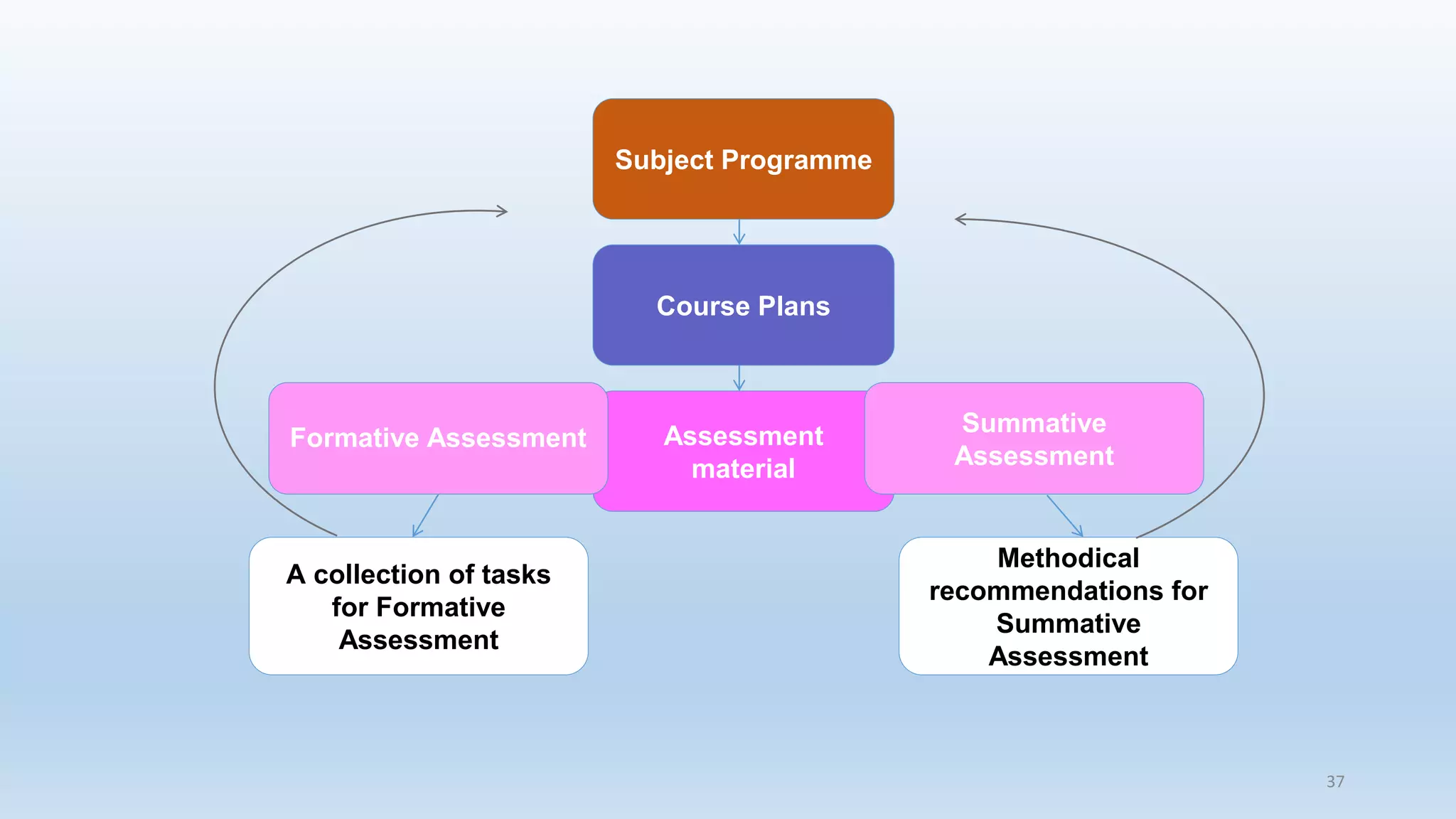
Subject Programme
Course Plans
Assessment
material
Formative Assessment
Summative
Assessment
A collection of tasks
for Formative
Assessment
Methodical
recommendations for
Summative
Assessment
37
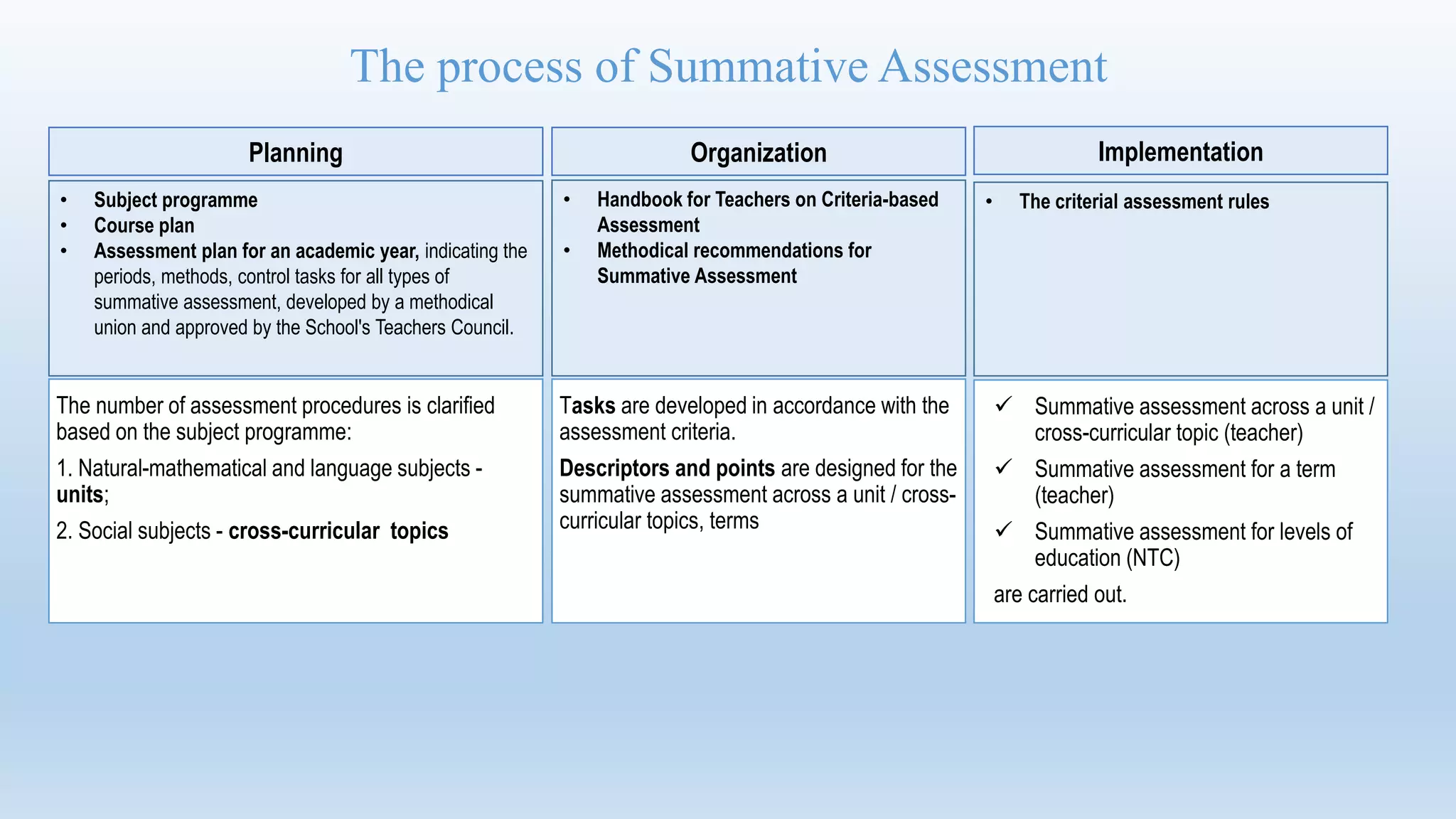
The process of Summative Assessment
The number of assessment procedures is clarified
based on the subject programme:
1. Natural-mathematical and language subjects -
units;
2. Social subjects - cross-curricular topics
Tasks are developed in accordance with the
assessment criteria.
Descriptors and points are designed for the
summative assessment across a unit / cross-
curricular topics, terms
 Summative assessment across a unit /
cross-curricular topic (teacher)
 Summative assessment for a term
(teacher)
 Summative assessment for levels of
education (NTC)
are carried out.
Planning Organization Implementation
• Subject programme
• Course plan
• Assessment plan for an academic year, indicating the
periods, methods, control tasks for all types of
summative assessment, developed by a methodical
union and approved by the School's Teachers Council.
• Handbook for Teachers on Criteria-based
Assessment
• Methodical recommendations for
Summative Assessment
• The criterial assessment rules
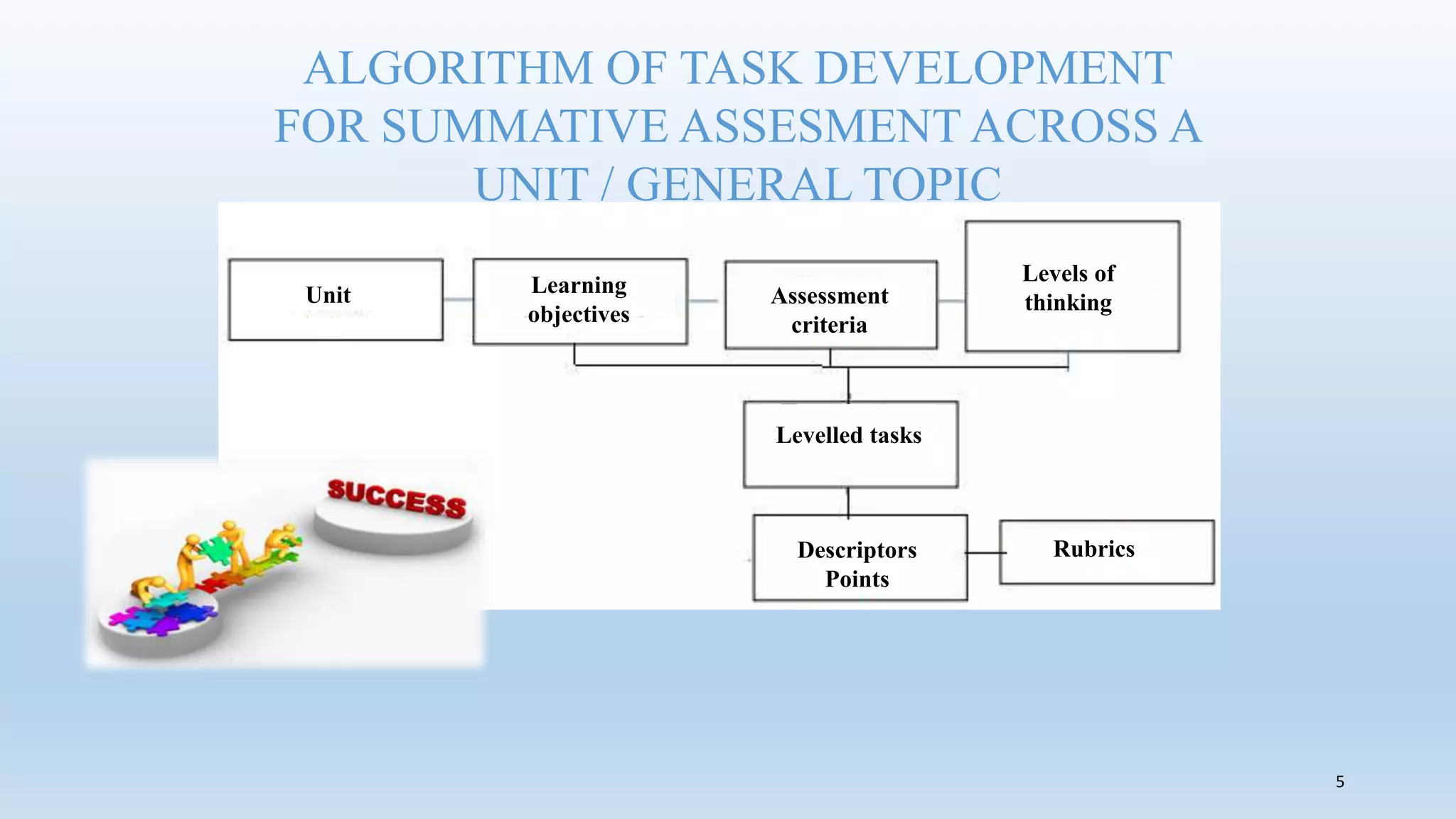
ALGORITHM OF TASK DEVELOPMENT
FOR SUMMATIVE ASSESMENT ACROSS A
UNIT / GENERAL TOPIC
5
Unit Learning
objectives
Assessment
criteria
Levels of
thinking
Levelled tasks
Descriptors
Points
Rubrics
6
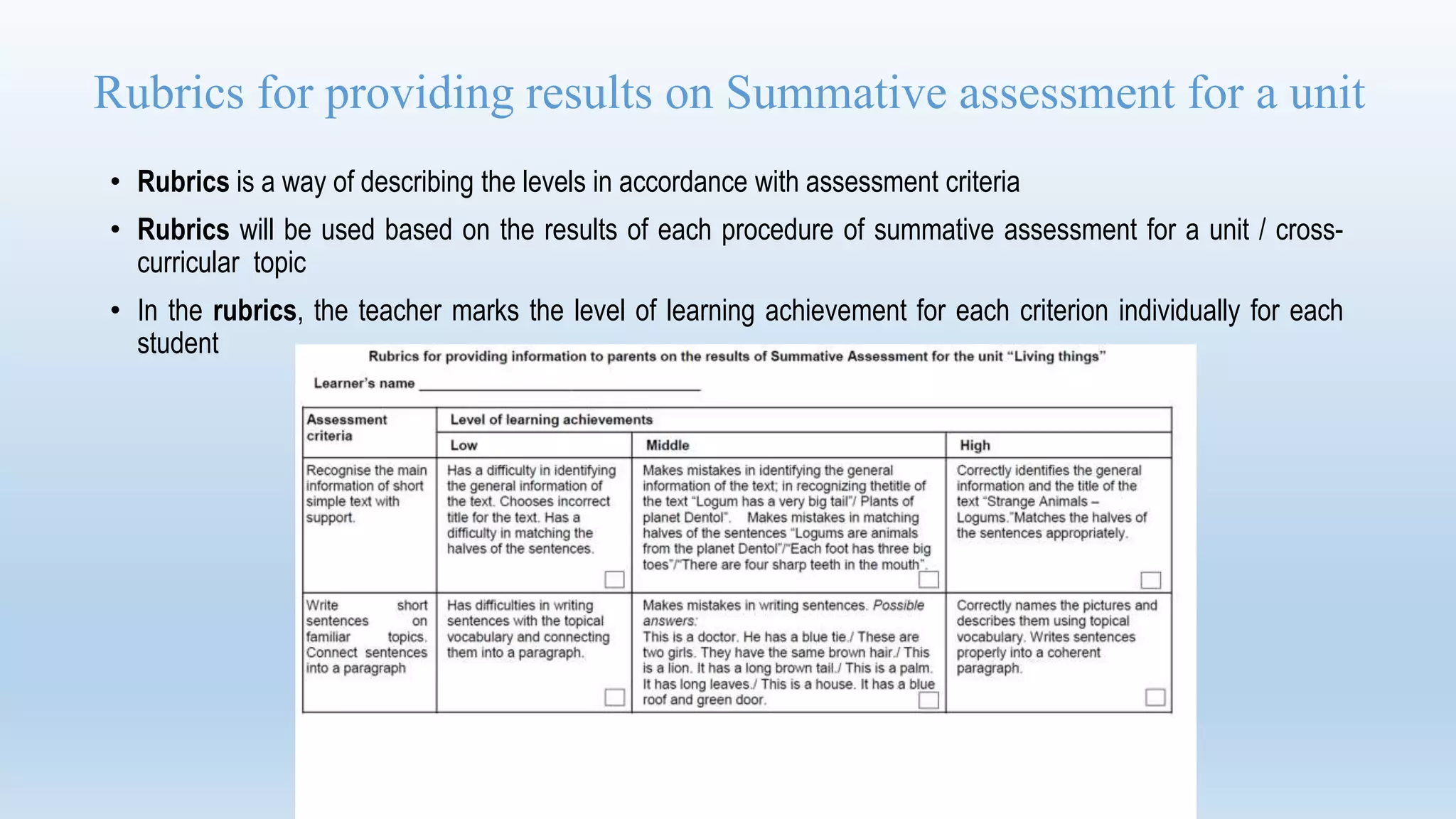
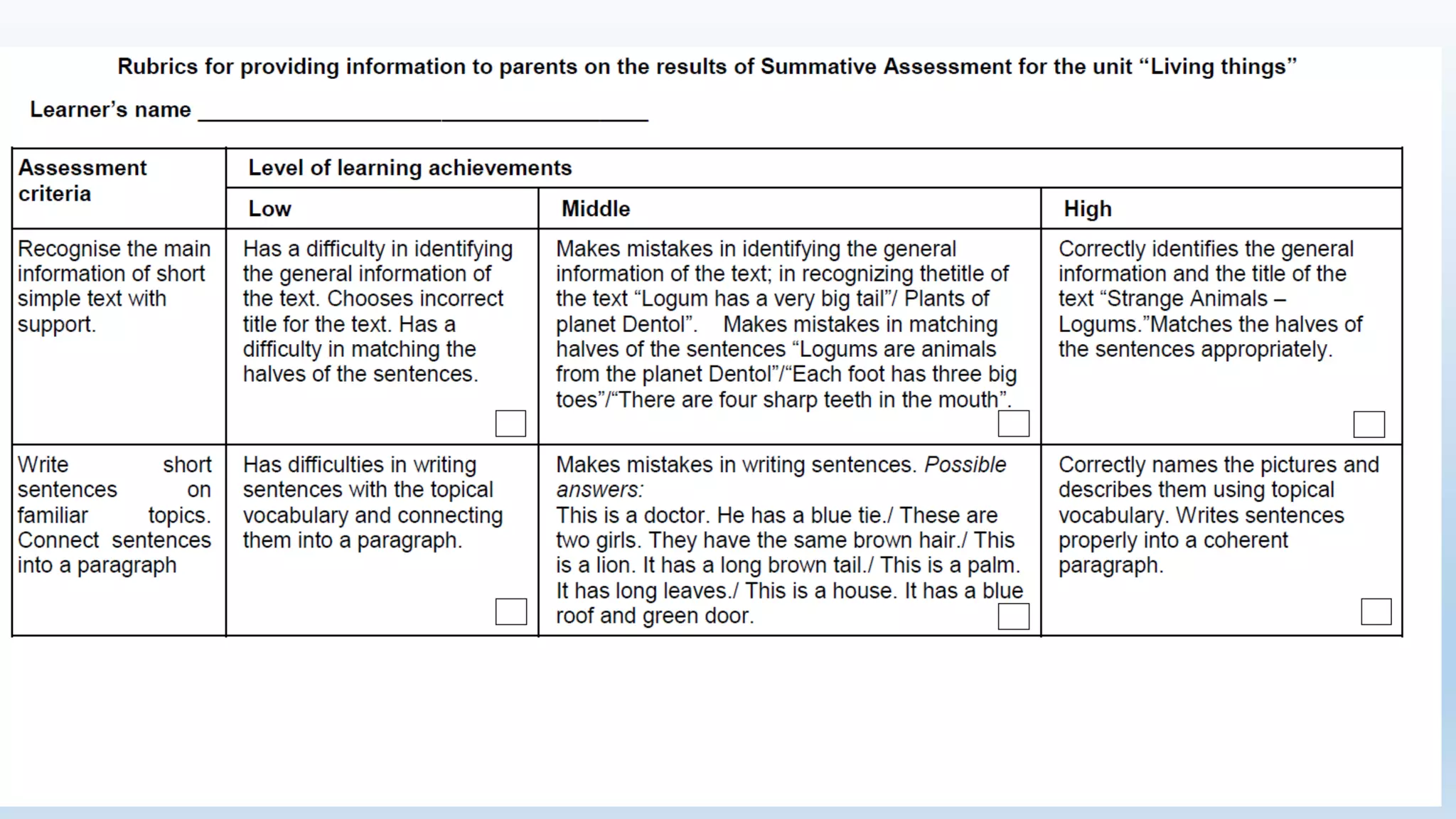
Rubrics for providing results on Summative assessment for a unit
• Rubrics is a way of describing the levels in accordance with assessment criteria
• Rubrics will be used based on the results of each procedure of summative assessment for a unit / cross-
curricular topic
• In the rubrics, the teacher marks the level of learning achievement for each criterion individually for each
student
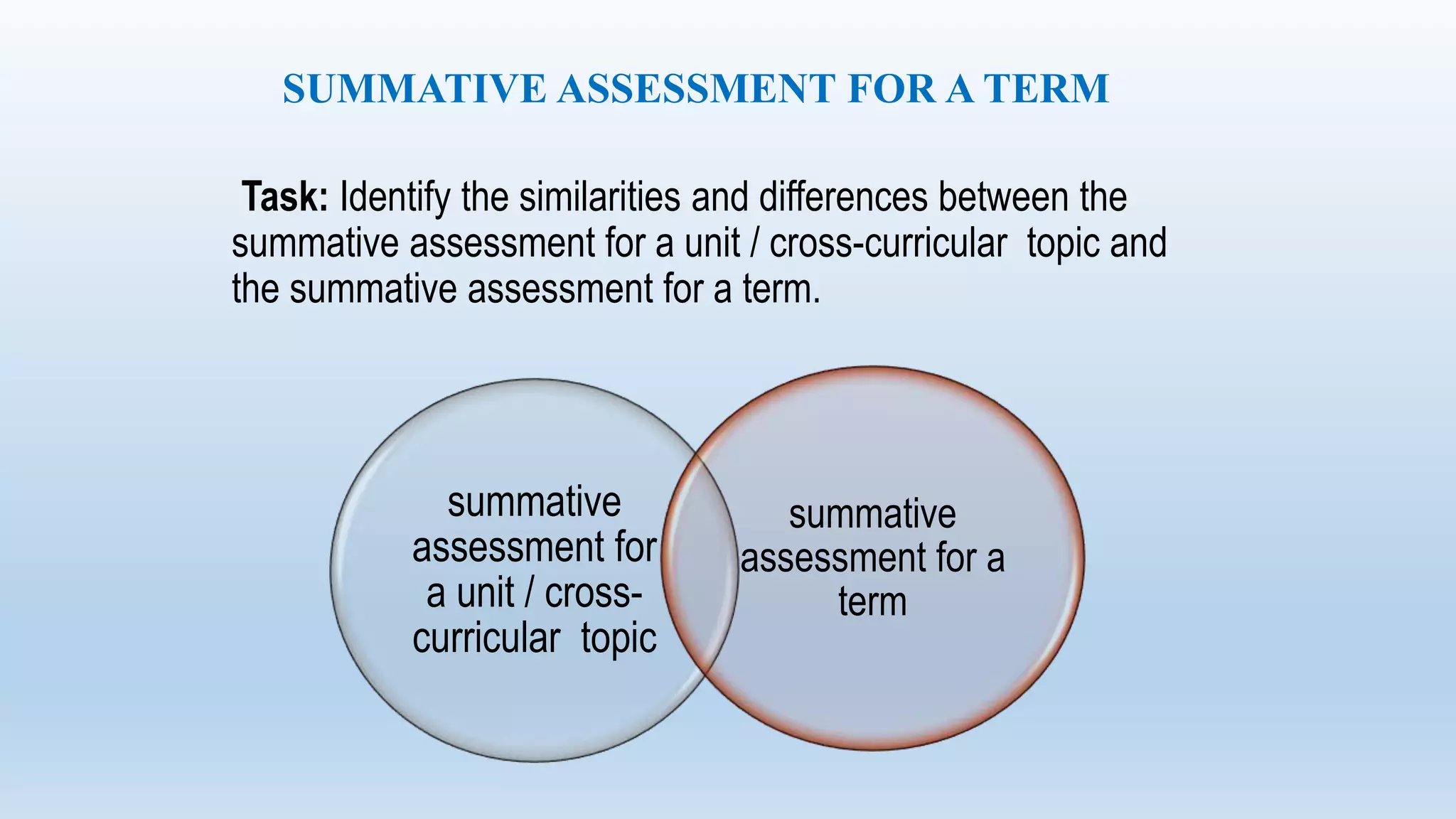
Task: Identify the similarities and differences between the
summative assessment for a unit / cross-curricular topic and
the summative assessment for a term.
summative
assessment for
a unit / cross-
curricular topic
summative
assessment for a
term
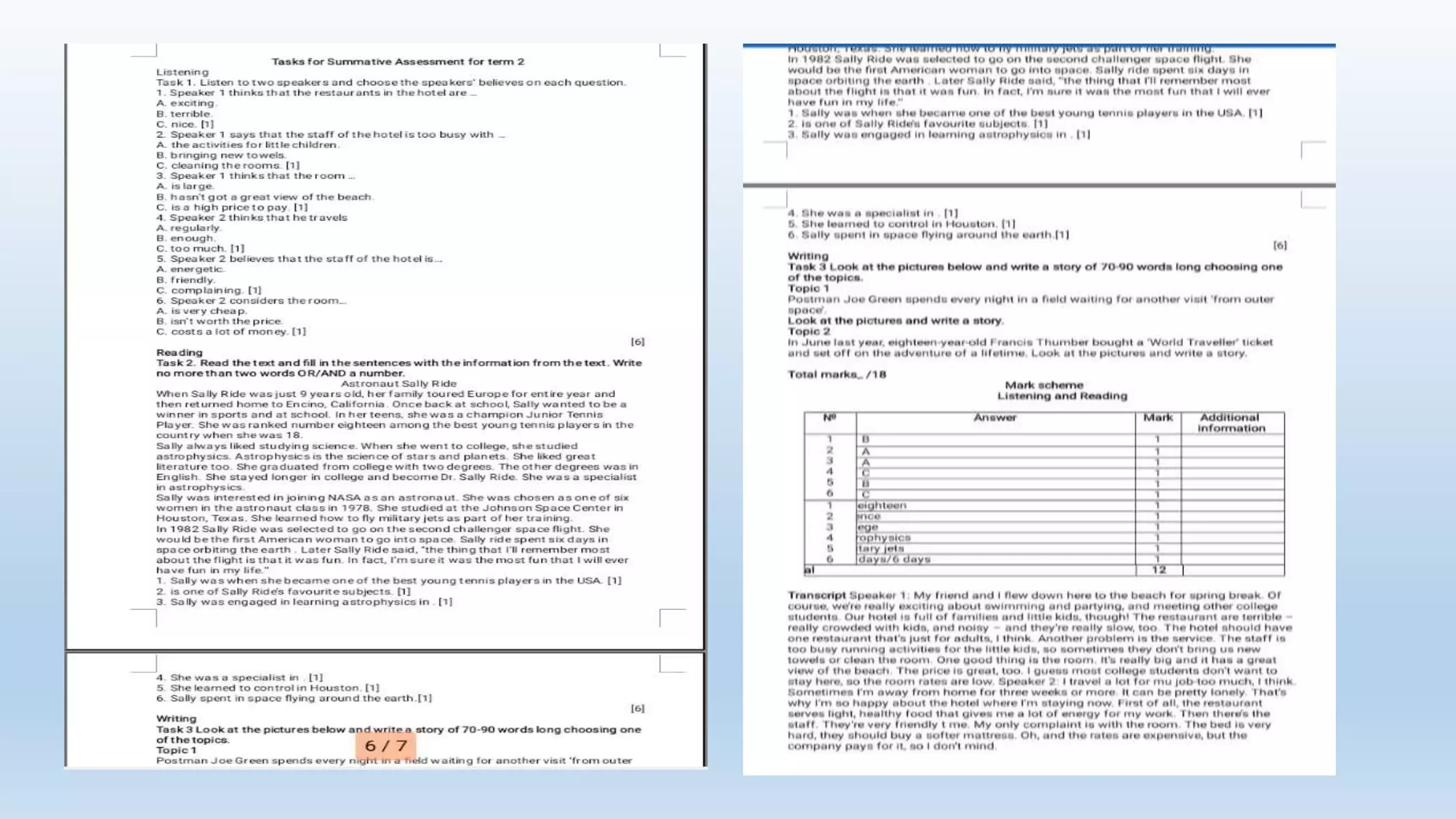
SUMMATIVE ASSESSMENT FOR A TERM
Conditions for successful moderation
Culture of
cooperation
Open and
transparent
communication
Constructive
feedback
Professional support
Moderation
Summative Assessment.pptx

Summative Assessment.pptx

  • 1.
    Kонуспаева Камила Айтжан Елжас ХаджибаеваМуножат Өтеген Бибіжан Турманова Асем Оспанова Меруерт
  • 2.
    What is assessment? •The process of gathering evidence • Then use defined criteria to judge performance based on the evidence • Arrive at conclusion on performance 2
  • 3.
    Subject Programme Course Plans Assessment material FormativeAssessment Summative Assessment A collection of tasks for Formative Assessment Methodical recommendations for Summative Assessment 37
  • 4.
    The process ofSummative Assessment The number of assessment procedures is clarified based on the subject programme: 1. Natural-mathematical and language subjects - units; 2. Social subjects - cross-curricular topics Tasks are developed in accordance with the assessment criteria. Descriptors and points are designed for the summative assessment across a unit / cross- curricular topics, terms  Summative assessment across a unit / cross-curricular topic (teacher)  Summative assessment for a term (teacher)  Summative assessment for levels of education (NTC) are carried out. Planning Organization Implementation • Subject programme • Course plan • Assessment plan for an academic year, indicating the periods, methods, control tasks for all types of summative assessment, developed by a methodical union and approved by the School's Teachers Council. • Handbook for Teachers on Criteria-based Assessment • Methodical recommendations for Summative Assessment • The criterial assessment rules
  • 5.
    ALGORITHM OF TASKDEVELOPMENT FOR SUMMATIVE ASSESMENT ACROSS A UNIT / GENERAL TOPIC 5 Unit Learning objectives Assessment criteria Levels of thinking Levelled tasks Descriptors Points Rubrics
  • 6.
  • 8.
    Rubrics for providingresults on Summative assessment for a unit • Rubrics is a way of describing the levels in accordance with assessment criteria • Rubrics will be used based on the results of each procedure of summative assessment for a unit / cross- curricular topic • In the rubrics, the teacher marks the level of learning achievement for each criterion individually for each student
  • 9.
    Task: Identify thesimilarities and differences between the summative assessment for a unit / cross-curricular topic and the summative assessment for a term. summative assessment for a unit / cross- curricular topic summative assessment for a term SUMMATIVE ASSESSMENT FOR A TERM
  • 10.
    Conditions for successfulmoderation Culture of cooperation Open and transparent communication Constructive feedback Professional support Moderation

Editor's Notes

  • #2 Notes to slide
  • #3 Bring up slider header Ask participnats to answer the question ‘what is assessment?’ individually Share their answers with a partner Bring up the three bullet points one by one and explain this is a process.
  • #4 Consequently, the content of both forms of assessment is based on the curriculum and syllabus - making them an integrated system
  • #5 Notes to slides
  • #6 Insert standard, curriculum, syllabus
  • #7 Notes to slides
  • #9 Notes to slide
  • #10 Notes to slide
  • #11 Notes to slide