Substance Abuse
Life Orientation
Grade 7
Substance
Abuse

• Definition
• Consequence of substance abuse
• Mental Health

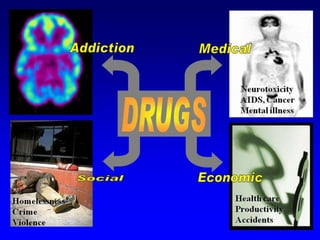
• What is addiction
• Why students fall victim to substance abuse

Common
Substance

• Alcohol
• Tobacco
• Cocaine
, also known as
drug abuse, refers to a
maladaptive pattern of use of a
substance that is not considered
dependent.


It is repetitive use of substances resulting in
recurrent and significant adverse
consequences, e.g.



* Failure to fulfill major role obligations at
work, school or home.






Substance abuse can simply be defined as a
pattern of harmful use of any substance for
mood-altering purposes.

It is uncontrolled and un-prescribed.
It leads to effects that are detrimental to the
individual's physical and mental health, or the
welfare of others.


It is a strong subjective drive to use the
substance. It is likely to be experienced by most
(if not all) individuals with substance
dependence.









Most concerning – overdose and death
Addiction
Accidents
Infectious illnesses/diseases
Loss of relationships or turmoil in relationships
Decrease in functioning with school, job,
responsibilities
Legal difficulties






People with substance use problems have higher
rates of mental health problems than the general
population
People with mental health problems have higher
rates of substance use problems than the general
population
Young people age 15-24 are more likely to report
mental health and/or substance use problems than
other age groups






Most youths do not consider alcohol, tobacco,
and sometimes marijuana as drugs.
56% of youths between the ages 10-17 years
have tried at least one drug.
The rise in HIV AIDS and other STD’s among
our youth has direct links to Drug Abuse.


Addiction is characterized by inability to
consistently abstain, impairment in
behavioural control, craving, diminished
recognition of significant problems with
one’s behaviours and interpersonal
relationships, and a dysfunctional emotional
response.

Excerpt from American Society of Addiction
Medicine (ASAM) definition
EVERYONE!
Risk factors that are commonly seen:
1.
Stress
2.
Family history
3.
Self-esteem
4.
Exposure
5.
Trauma
6.
Mental illness – concurrent disorders







Curiosity.
Inherited Tendencies.
Poor Self Image/Self Esteem.
Boredom & Idleness.







Desire to feel good/high.
Lack of Information.
Feeling of Invincibility.
Illiteracy.
Difficulty Coping with Depression & Stress.


TOBACCO.



ALCOHOL.



COCAINE.



INHALANTS.

ALCOHOL

TOBACCO
A LOOK
AT
ALCOHOL!


Smell of Alcohol on the person.



Impaired muscle/limbs coordination.



Impaired judgment.



Slurred, slow speech.



Swaggering walk.








SHORT TERM:



Faster & weaker heart
beat.
Confusion & lack of
concentration.
Mood changes
quickly to violence &
depression.







LONG TERM:
Permanent liver,
heart & brain
damage.
Liver cancer.
Death from overdose.
Death from road and
other accidents.
BEFORE 6 BEERS

AFTER 6 BEERS


Smoked in cigarettes, as cigars or in
pipes.



Chewed as tobacco.



Sniffed.








SHORT TERM:
Faster heart beat
High blood
pressure
Dizziness
Relieves tension
& tiredness










LONG TERM:
Lung & Heart
damage
Lung, mouth, &
throat cancer
Stomach ulcers
Reduces sense of
taste & smell






Cocaine is one of the most addictive of
commonly abused substances and one of the
most dangerous.
Cocaine, variously referred to as crack, snow,
cock, girl and lady,
It is a white powder that is inhaled, smoked or
injected.


SHORT TERM:



Faster heart beat.




Body temperature rises.



Can’t sit still or
sleep/Restlessness.





Short term high followed
by depression



LONG TERM:

Blood pressure rises.








Changes in
sleeping/eating habits.


Permanent lung
damage.
Holes & ulcers inside
of the nose.
Personality changes
& violent behaviour.
Fear of people &
things(paranoia).

Death from overdose.


Intoxication by high doses is associated with
delirium, seizures, cerebrovascular diseases
and myocardial infarction which may lead to
death.


But in the end, it all comes down to you. So if
you don’t want to look like him…
For a better environment,
A better society,
A happier life

And above all for

U.

Because in the end….it’s your life
and please please take care of it……..
And hope I made a difference which
counts…
In conclusion, substance abuse is
now one of the main focus of
developing countries to eradicate as
it contribute to crime rate, poverty,
corruption among others.
Gideon Ibukunoluwa (20-June-2013)
http://www.slideshare.net/OsuntokiIbukunoluwa/substance-abuse-24440511?qid=221e041f-fbfe4e7b-ba87-a26182b4326f&v=default&b=&from_search=1
Hala Sayyah (28-December-2013)
http://www.slideshare.net/halaesayyah/substance-abuse-29545160?qid=221e041f-fbfe-4e7b-ba87a26182b4326f&v=default&b=&from_search=3

Guestbbb7c414 (22-June-2009)
http://www.slideshare.net/guestbbb7c414/substance-abuse-1619291
Marissa lyle (04-May-2011)
http://www.slideshare.net/Marissalyle/substance-abuse-7833403?qid=221e041f-fbfe-4e7b-ba87a26182b4326f&v=default&b=&from_search=8
The Royal Mental Health (10-October 2013)
http://www.slideshare.net/theroyalott/leanne-paisley-october-2013?qid=221e041f-fbfe-4e7b-ba87a26182b4326f&v=qf1&b=&from_search=14

Substance Abuse: Grade 7

  • 1.
  • 2.
    Substance Abuse • Definition • Consequenceof substance abuse • Mental Health • What is addiction • Why students fall victim to substance abuse Common Substance • Alcohol • Tobacco • Cocaine
  • 4.
    , also knownas drug abuse, refers to a maladaptive pattern of use of a substance that is not considered dependent.
  • 5.
     It is repetitiveuse of substances resulting in recurrent and significant adverse consequences, e.g.  * Failure to fulfill major role obligations at work, school or home.
  • 6.
       Substance abuse cansimply be defined as a pattern of harmful use of any substance for mood-altering purposes. It is uncontrolled and un-prescribed. It leads to effects that are detrimental to the individual's physical and mental health, or the welfare of others.
  • 7.
     It is astrong subjective drive to use the substance. It is likely to be experienced by most (if not all) individuals with substance dependence.
  • 8.
           Most concerning –overdose and death Addiction Accidents Infectious illnesses/diseases Loss of relationships or turmoil in relationships Decrease in functioning with school, job, responsibilities Legal difficulties
  • 9.
       People with substanceuse problems have higher rates of mental health problems than the general population People with mental health problems have higher rates of substance use problems than the general population Young people age 15-24 are more likely to report mental health and/or substance use problems than other age groups
  • 10.
       Most youths donot consider alcohol, tobacco, and sometimes marijuana as drugs. 56% of youths between the ages 10-17 years have tried at least one drug. The rise in HIV AIDS and other STD’s among our youth has direct links to Drug Abuse.
  • 12.
     Addiction is characterizedby inability to consistently abstain, impairment in behavioural control, craving, diminished recognition of significant problems with one’s behaviours and interpersonal relationships, and a dysfunctional emotional response. Excerpt from American Society of Addiction Medicine (ASAM) definition
  • 13.
    EVERYONE! Risk factors thatare commonly seen: 1. Stress 2. Family history 3. Self-esteem 4. Exposure 5. Trauma 6. Mental illness – concurrent disorders
  • 15.
        Curiosity. Inherited Tendencies. Poor SelfImage/Self Esteem. Boredom & Idleness.
  • 16.
         Desire to feelgood/high. Lack of Information. Feeling of Invincibility. Illiteracy. Difficulty Coping with Depression & Stress.
  • 17.
  • 18.
  • 20.
     Smell of Alcoholon the person.  Impaired muscle/limbs coordination.  Impaired judgment.  Slurred, slow speech.  Swaggering walk.
  • 21.
        SHORT TERM:  Faster &weaker heart beat. Confusion & lack of concentration. Mood changes quickly to violence & depression.     LONG TERM: Permanent liver, heart & brain damage. Liver cancer. Death from overdose. Death from road and other accidents.
  • 22.
  • 24.
     Smoked in cigarettes,as cigars or in pipes.  Chewed as tobacco.  Sniffed.
  • 25.
         SHORT TERM: Faster heartbeat High blood pressure Dizziness Relieves tension & tiredness      LONG TERM: Lung & Heart damage Lung, mouth, & throat cancer Stomach ulcers Reduces sense of taste & smell
  • 28.
       Cocaine is oneof the most addictive of commonly abused substances and one of the most dangerous. Cocaine, variously referred to as crack, snow, cock, girl and lady, It is a white powder that is inhaled, smoked or injected.
  • 29.
     SHORT TERM:  Faster heartbeat.   Body temperature rises.  Can’t sit still or sleep/Restlessness.   Short term high followed by depression  LONG TERM: Blood pressure rises.     Changes in sleeping/eating habits.  Permanent lung damage. Holes & ulcers inside of the nose. Personality changes & violent behaviour. Fear of people & things(paranoia). Death from overdose.
  • 30.
     Intoxication by highdoses is associated with delirium, seizures, cerebrovascular diseases and myocardial infarction which may lead to death.
  • 32.
     But in theend, it all comes down to you. So if you don’t want to look like him…
  • 35.
    For a betterenvironment, A better society, A happier life And above all for U. Because in the end….it’s your life and please please take care of it…….. And hope I made a difference which counts…
  • 36.
    In conclusion, substanceabuse is now one of the main focus of developing countries to eradicate as it contribute to crime rate, poverty, corruption among others.
  • 39.
    Gideon Ibukunoluwa (20-June-2013) http://www.slideshare.net/OsuntokiIbukunoluwa/substance-abuse-24440511?qid=221e041f-fbfe4e7b-ba87-a26182b4326f&v=default&b=&from_search=1 HalaSayyah (28-December-2013) http://www.slideshare.net/halaesayyah/substance-abuse-29545160?qid=221e041f-fbfe-4e7b-ba87a26182b4326f&v=default&b=&from_search=3 Guestbbb7c414 (22-June-2009) http://www.slideshare.net/guestbbb7c414/substance-abuse-1619291 Marissa lyle (04-May-2011) http://www.slideshare.net/Marissalyle/substance-abuse-7833403?qid=221e041f-fbfe-4e7b-ba87a26182b4326f&v=default&b=&from_search=8 The Royal Mental Health (10-October 2013) http://www.slideshare.net/theroyalott/leanne-paisley-october-2013?qid=221e041f-fbfe-4e7b-ba87a26182b4326f&v=qf1&b=&from_search=14