Grade 7
Video
• Is a patterned use of a substance (drug) in which the 
user consumes the substance in amounts or with 
methods which are harmful to themselves or others. 
• Use means using one or many substances 
• Too much of everything is dangerous
Why do people use substances? 
 For enjoyment 
 Peer pressure 
 Personal history 
 Stressed 
 Family background
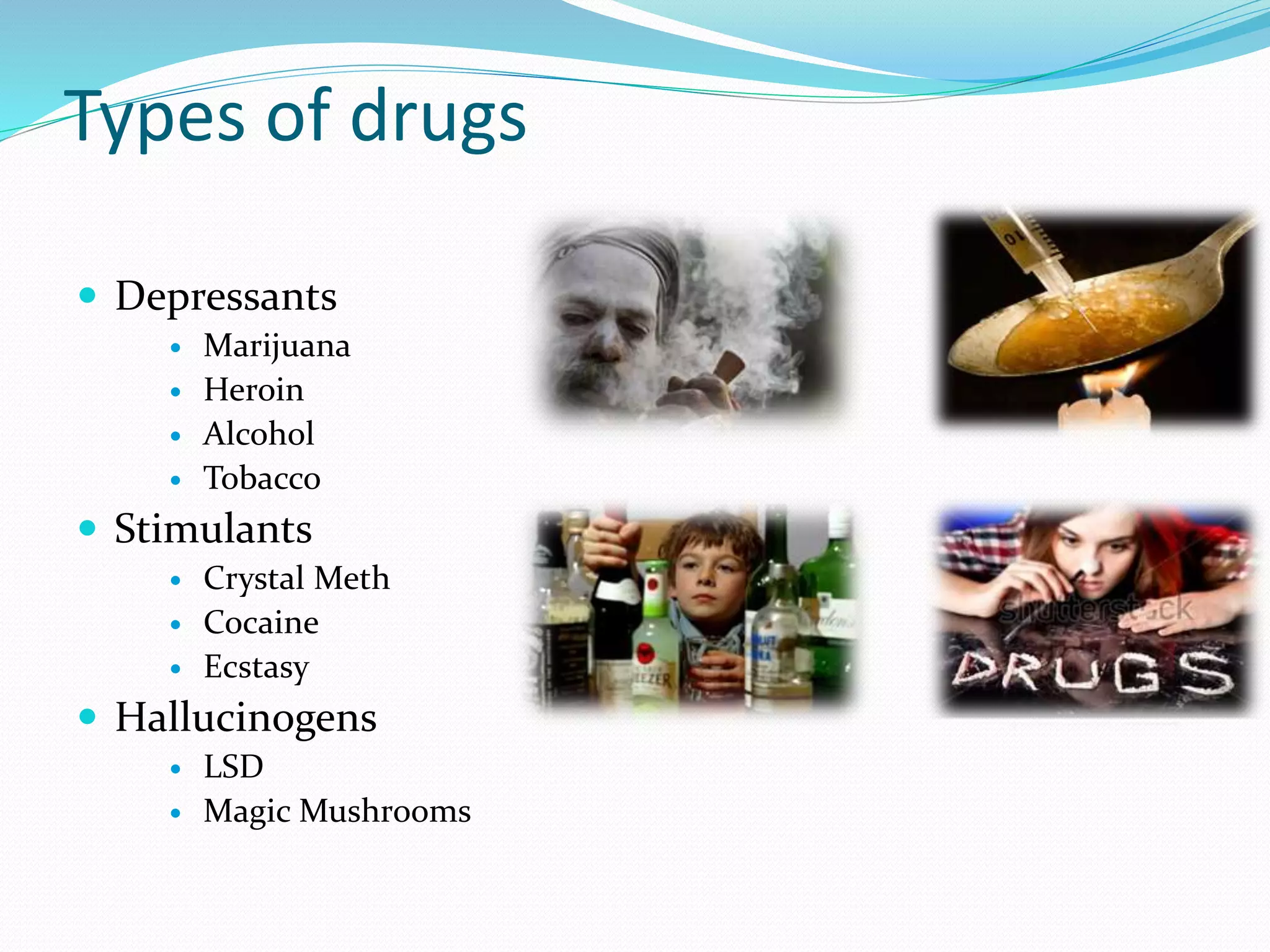
Types of drugs 
 Depressants 
 Marijuana 
 Heroin 
 Alcohol 
 Tobacco 
 Stimulants 
 Crystal Meth 
 Cocaine 
 Ecstasy 
 Hallucinogens 
 LSD 
 Magic Mushrooms
Marijuana (‘’cool drug’’) 
 Also know as cannabis, pot, weed 
 These plants have resin containing molecules known 
as cannabinoids 
 Cannabinoids bind to cannabinoid receptors in your 
brain and other parts of your body, in particular the 
nervous and immune systems 
 It tends to suppress hormones produced by stress 
reactions and stimulate an increase in dopamine in the 
brain which activates pleasure pathways
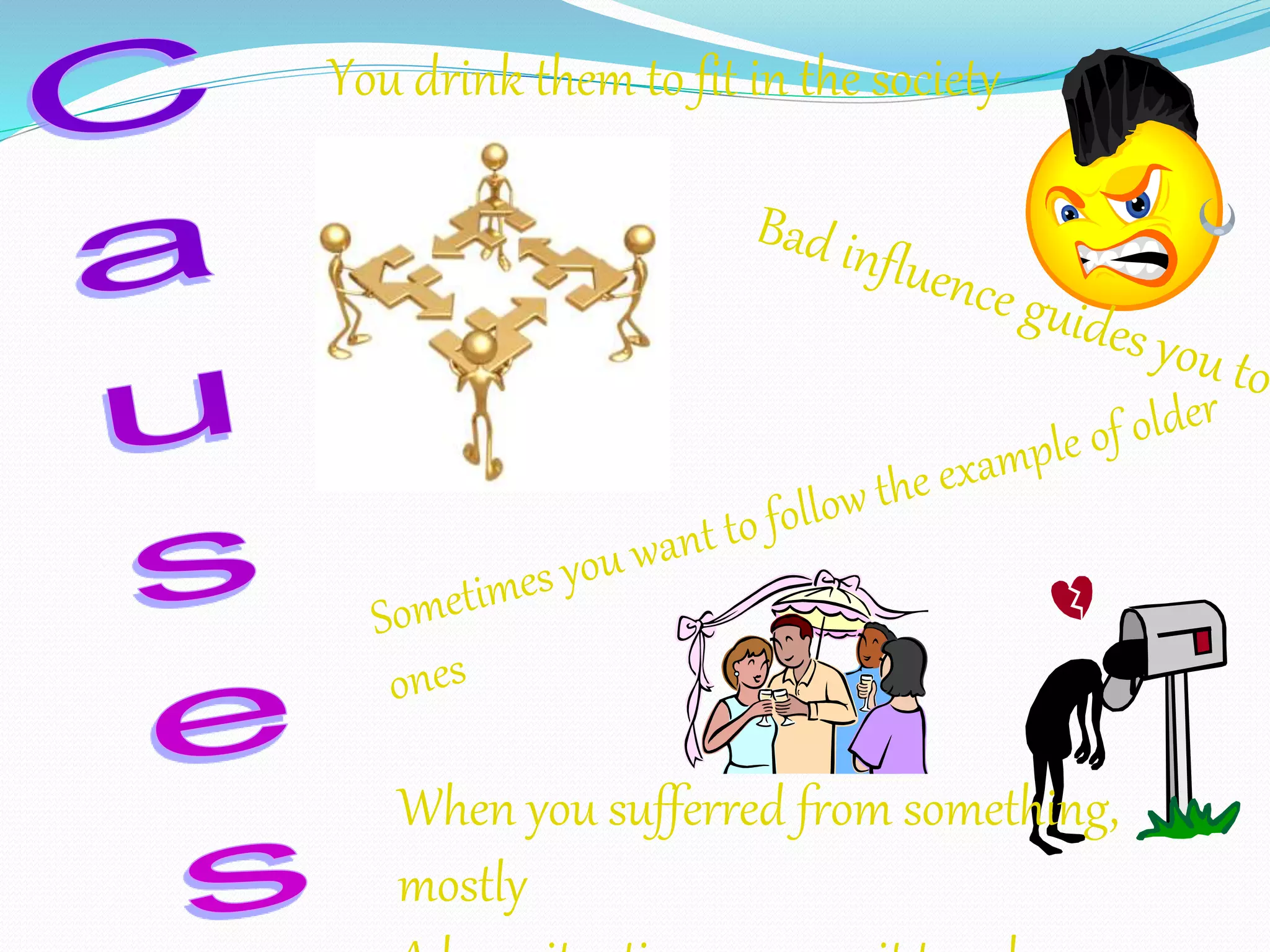
You drink them to fit in the society 
When you sufferred from something, 
mostly 
A love situation, you use it to calm your
Social and College Life 
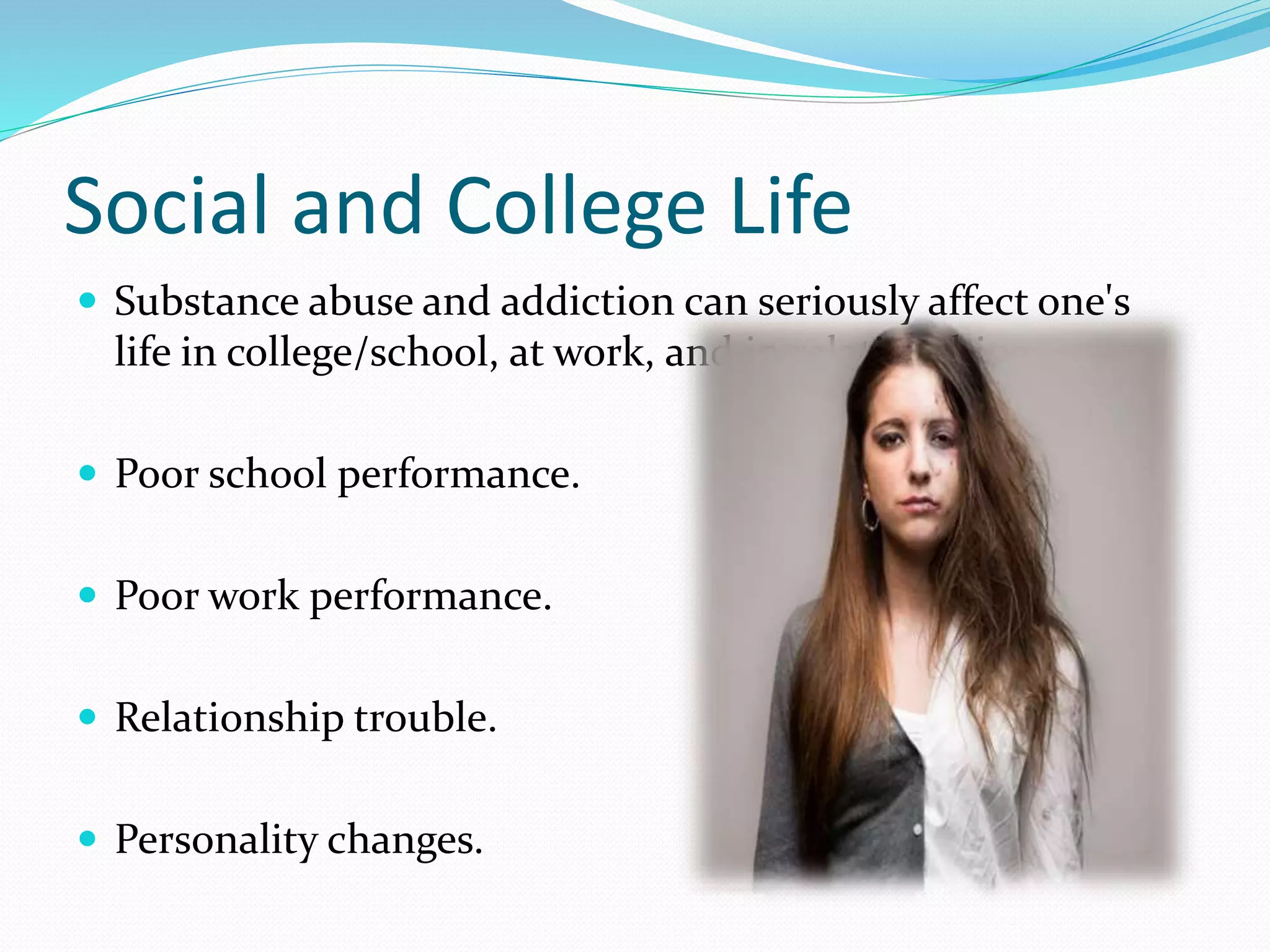
 Substance abuse and addiction can seriously affect one's 
life in college/school, at work, and in relationships. 
 Poor school performance. 
 Poor work performance. 
 Relationship trouble. 
 Personality changes.
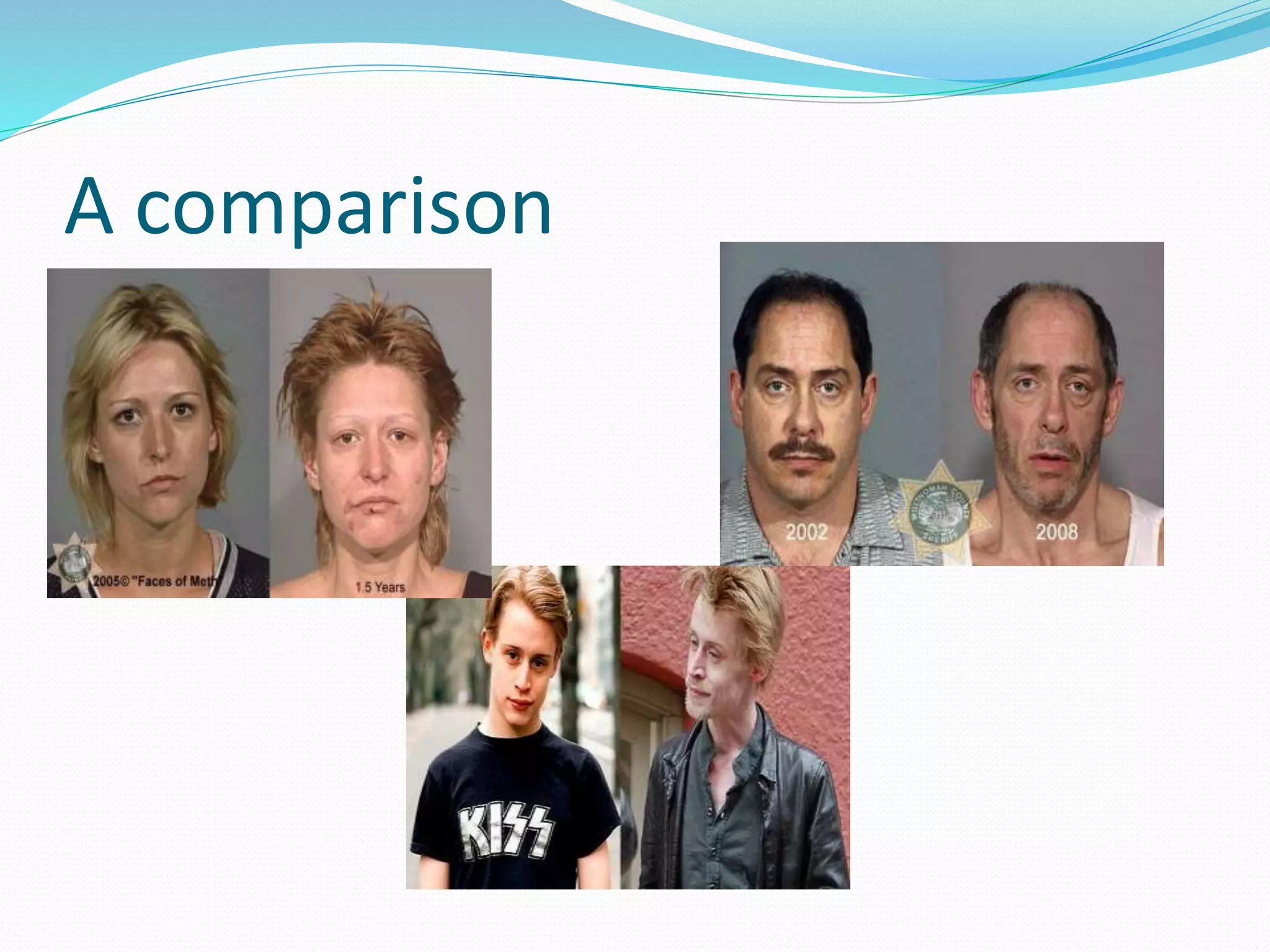
A comparison
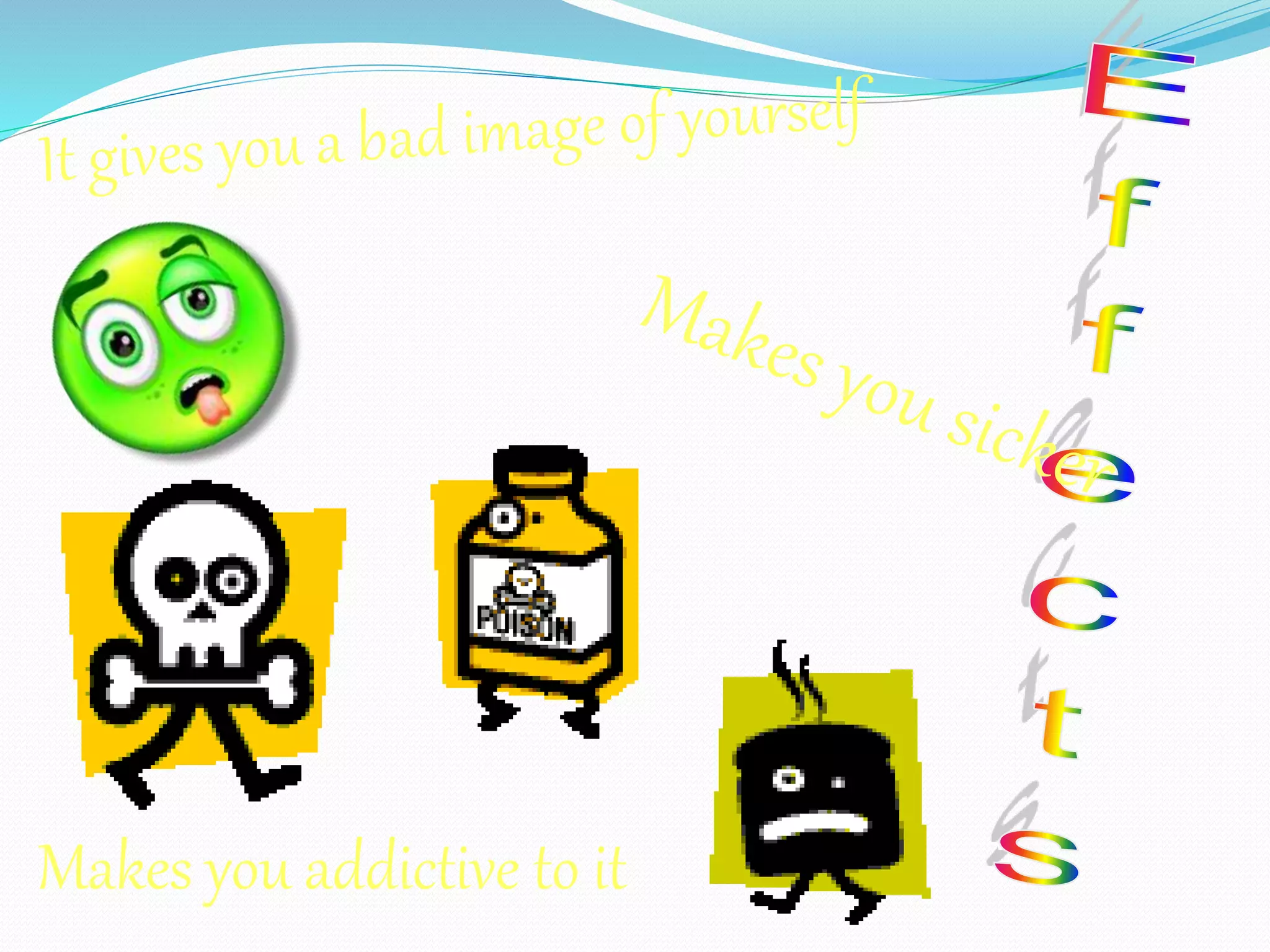
Makes you addictive to it
effects 
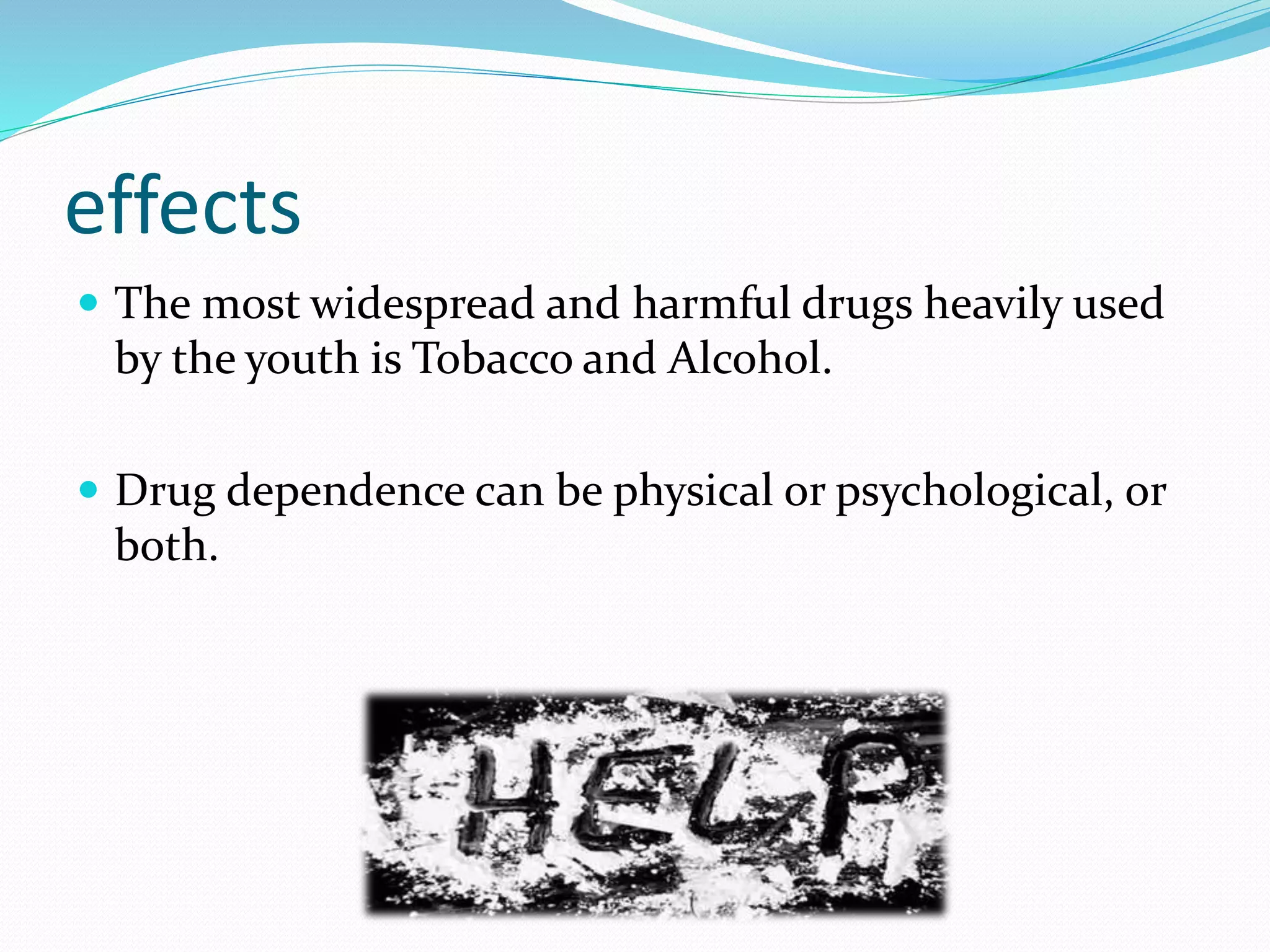
 The most widespread and harmful drugs heavily used 
by the youth is Tobacco and Alcohol. 
 Drug dependence can be physical or psychological, or 
both.
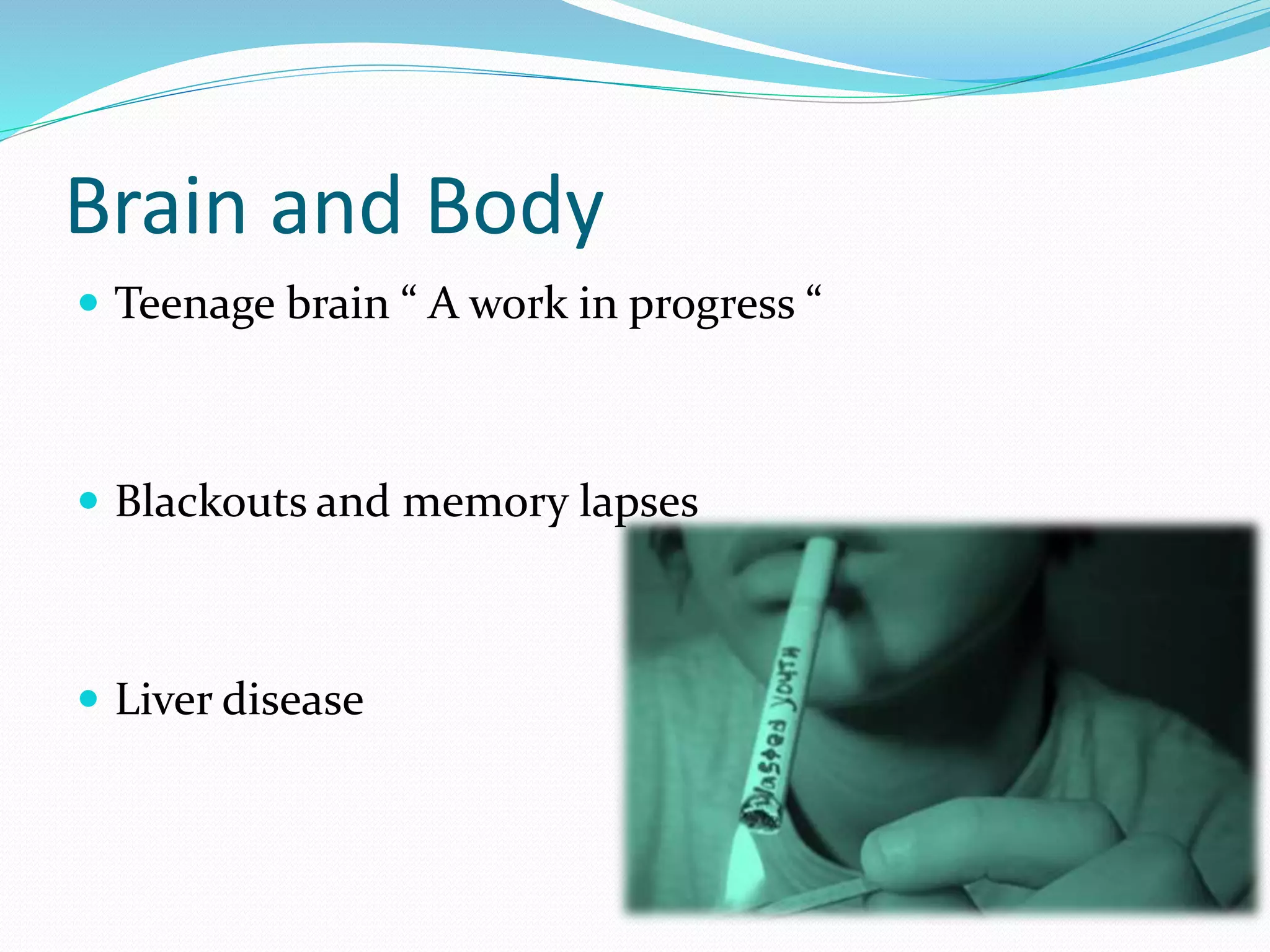
Brain and Body 
 Teenage brain “ A work in progress “ 
 Blackouts and memory lapses 
 Liver disease
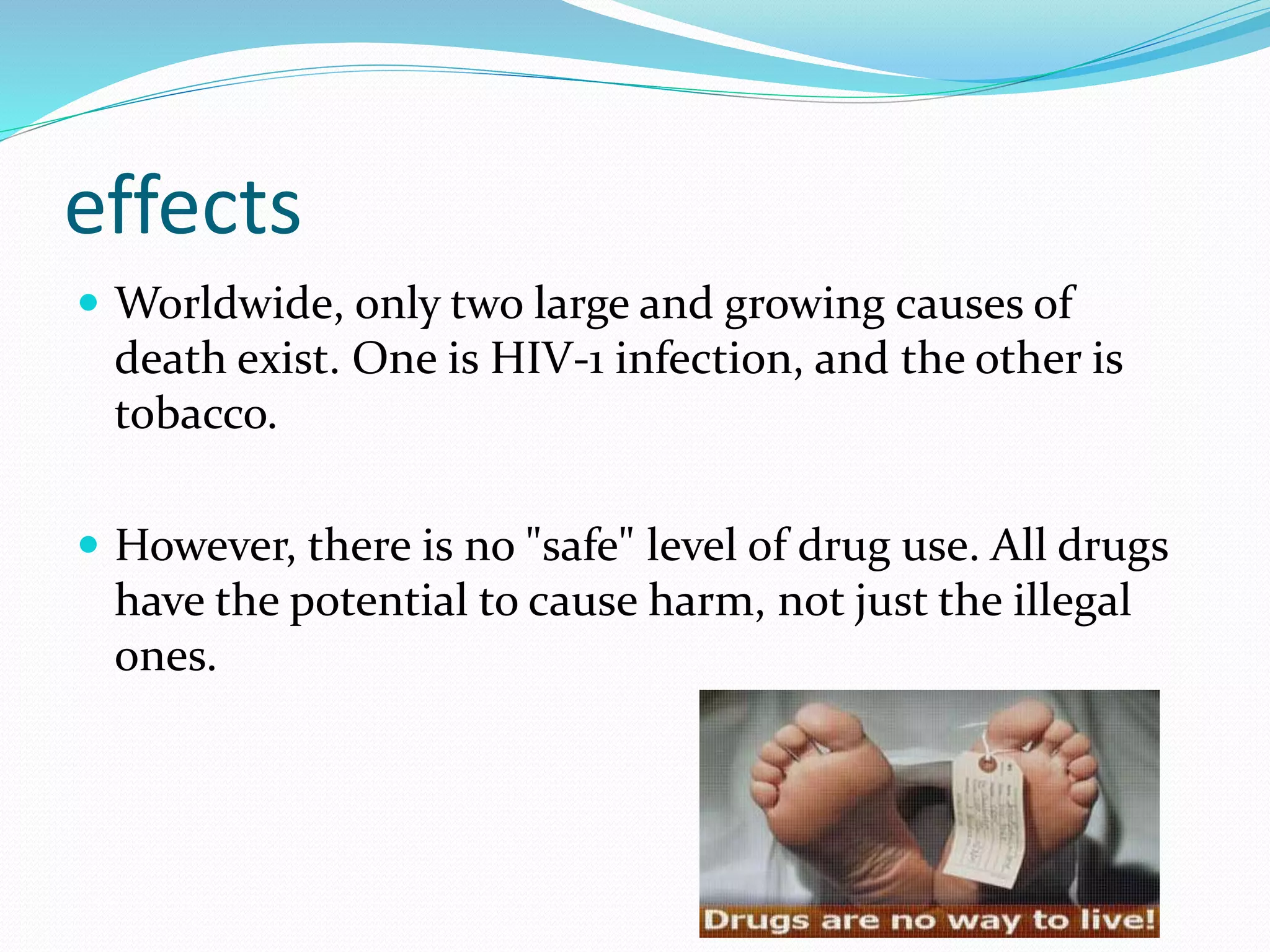
effects 
 Worldwide, only two large and growing causes of 
death exist. One is HIV-1 infection, and the other is 
tobacco. 
 However, there is no "safe" level of drug use. All drugs 
have the potential to cause harm, not just the illegal 
ones.
Intervention
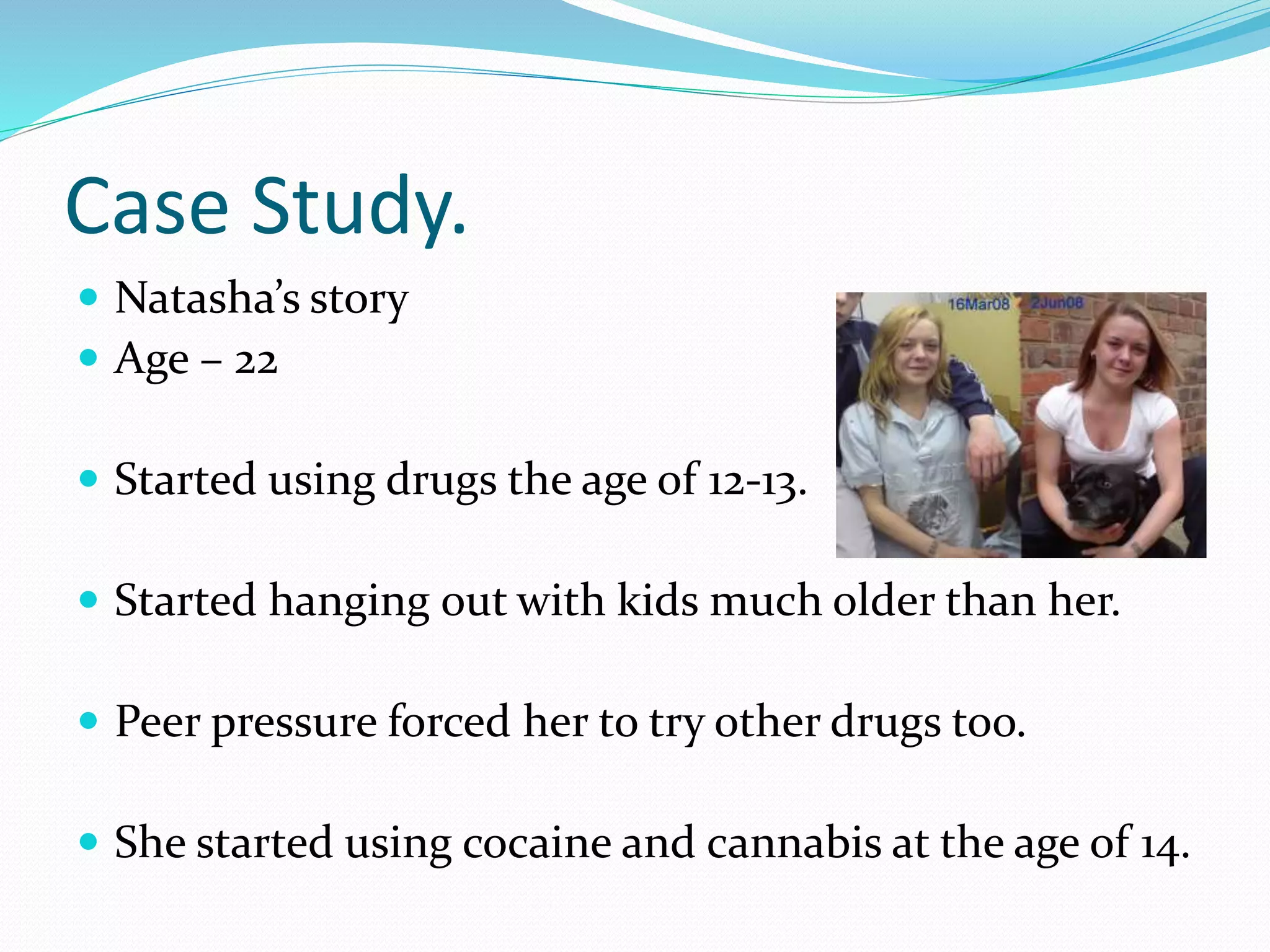
Case Study. 
 Natasha’s story 
 Age – 22 
 Started using drugs the age of 12-13. 
 Started hanging out with kids much older than her. 
 Peer pressure forced her to try other drugs too. 
 She started using cocaine and cannabis at the age of 14.
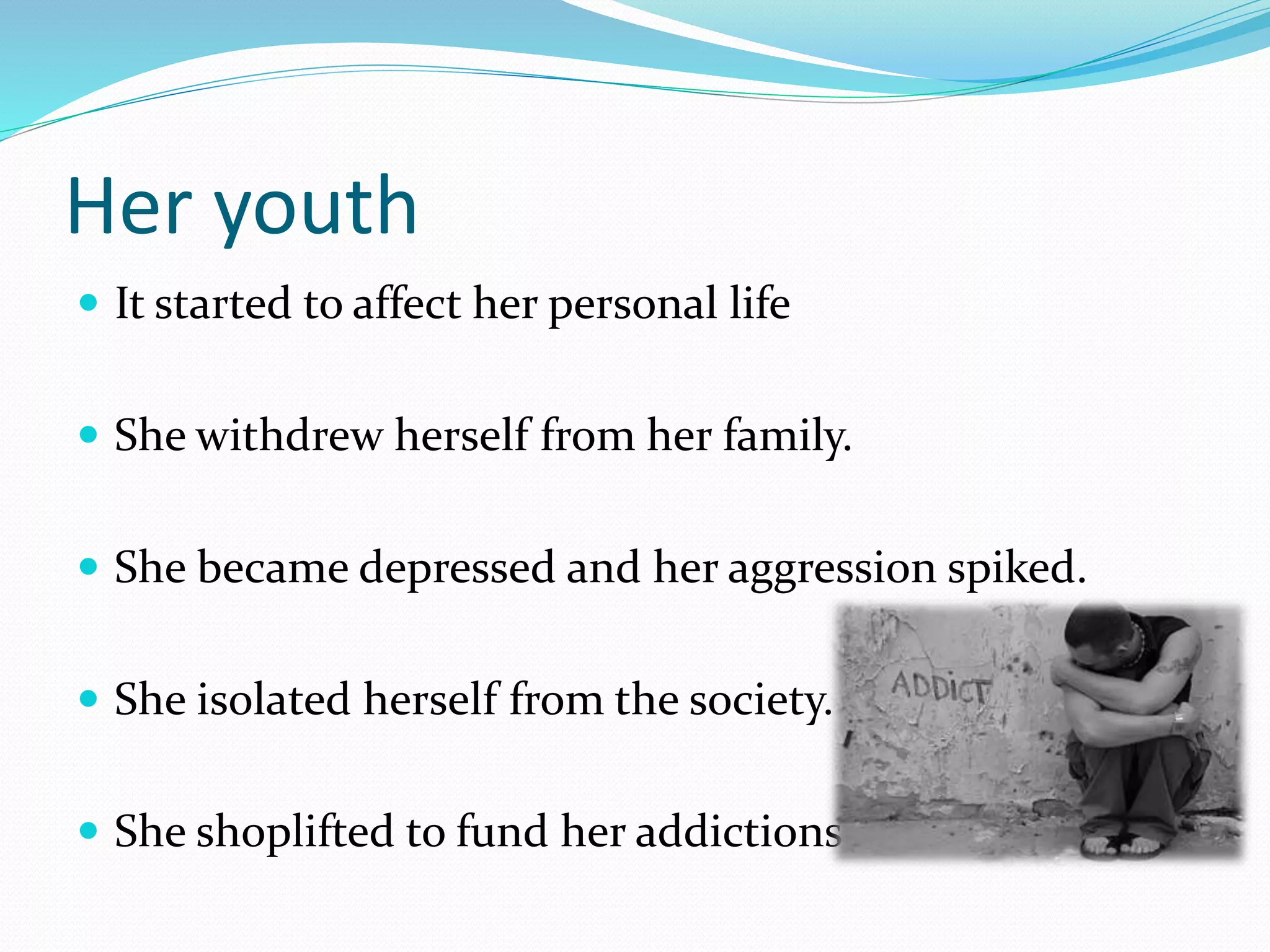
Her youth 
 It started to affect her personal life 
 She withdrew herself from her family. 
 She became depressed and her aggression spiked. 
 She isolated herself from the society. 
 She shoplifted to fund her addictions.
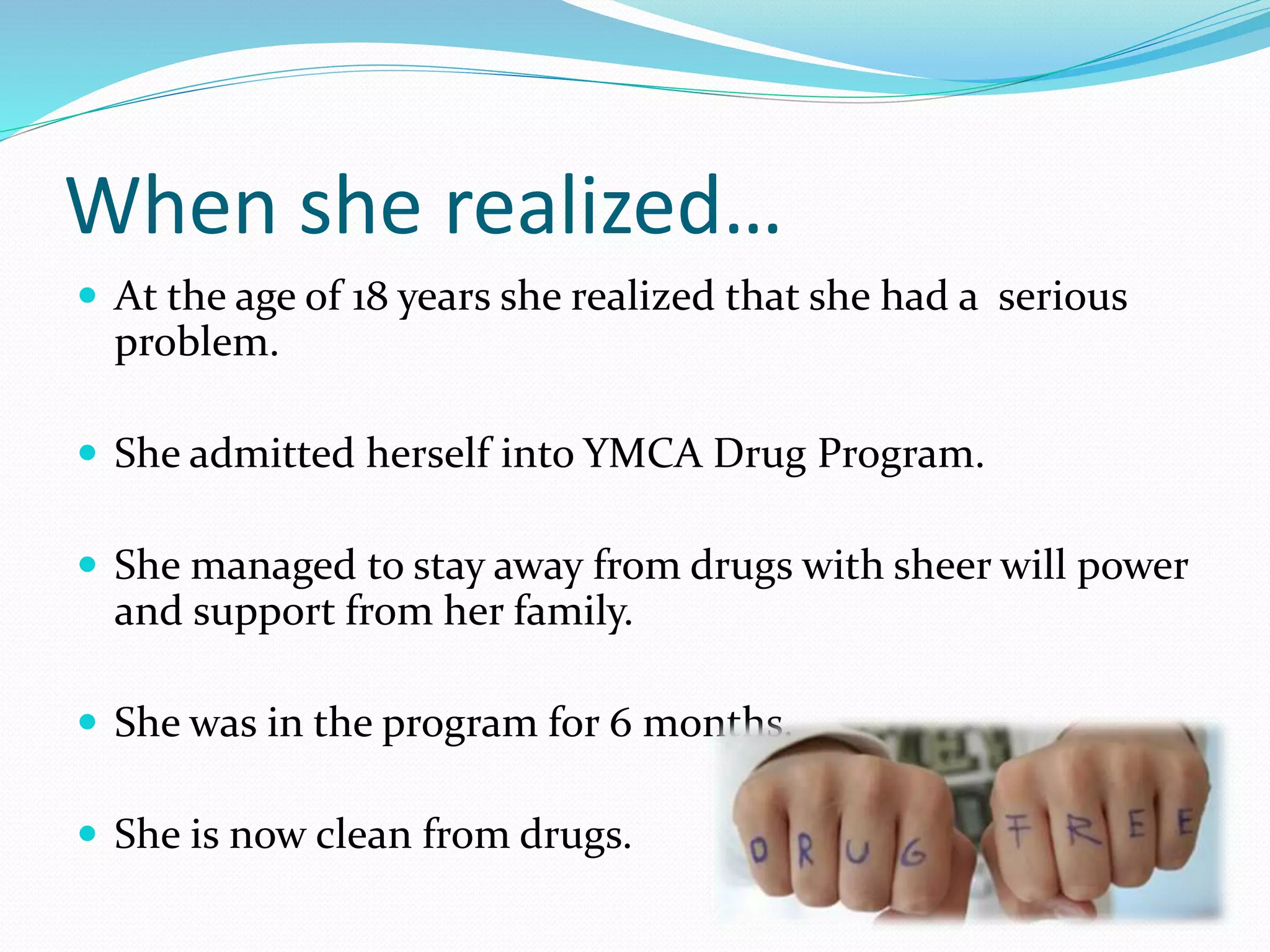
When she realized… 
 At the age of 18 years she realized that she had a serious 
problem. 
 She admitted herself into YMCA Drug Program. 
 She managed to stay away from drugs with sheer will power 
and support from her family. 
 She was in the program for 6 months. 
 She is now clean from drugs.
This is one of the very common problem at our age 
We have to avoid drinking and smoking because our health depends 
on our decision and probably our live too 
We don´t have to be convinced with bad people and ideas and if we 
know the are bad we shouldn´t have to be convinced
References complied from slides by 
Leanne Paisley 
Regional Opioid Intervention Service 
Addiction Counsellor 
Leanne.Paisley@theroyal.ca 
Sandiego teen therapist

substance abuse presentation grade 7-8

  • 1.
  • 2.
  • 3.
    • Is apatterned use of a substance (drug) in which the user consumes the substance in amounts or with methods which are harmful to themselves or others. • Use means using one or many substances • Too much of everything is dangerous
  • 4.
    Why do peopleuse substances?  For enjoyment  Peer pressure  Personal history  Stressed  Family background
  • 6.
    Types of drugs  Depressants  Marijuana  Heroin  Alcohol  Tobacco  Stimulants  Crystal Meth  Cocaine  Ecstasy  Hallucinogens  LSD  Magic Mushrooms
  • 7.
    Marijuana (‘’cool drug’’)  Also know as cannabis, pot, weed  These plants have resin containing molecules known as cannabinoids  Cannabinoids bind to cannabinoid receptors in your brain and other parts of your body, in particular the nervous and immune systems  It tends to suppress hormones produced by stress reactions and stimulate an increase in dopamine in the brain which activates pleasure pathways
  • 8.
    You drink themto fit in the society When you sufferred from something, mostly A love situation, you use it to calm your
  • 9.
    Social and CollegeLife  Substance abuse and addiction can seriously affect one's life in college/school, at work, and in relationships.  Poor school performance.  Poor work performance.  Relationship trouble.  Personality changes.
  • 10.
  • 11.
  • 12.
    effects  Themost widespread and harmful drugs heavily used by the youth is Tobacco and Alcohol.  Drug dependence can be physical or psychological, or both.
  • 13.
    Brain and Body  Teenage brain “ A work in progress “  Blackouts and memory lapses  Liver disease
  • 14.
    effects  Worldwide,only two large and growing causes of death exist. One is HIV-1 infection, and the other is tobacco.  However, there is no "safe" level of drug use. All drugs have the potential to cause harm, not just the illegal ones.
  • 15.
  • 16.
    Case Study. Natasha’s story  Age – 22  Started using drugs the age of 12-13.  Started hanging out with kids much older than her.  Peer pressure forced her to try other drugs too.  She started using cocaine and cannabis at the age of 14.
  • 17.
    Her youth It started to affect her personal life  She withdrew herself from her family.  She became depressed and her aggression spiked.  She isolated herself from the society.  She shoplifted to fund her addictions.
  • 18.
    When she realized…  At the age of 18 years she realized that she had a serious problem.  She admitted herself into YMCA Drug Program.  She managed to stay away from drugs with sheer will power and support from her family.  She was in the program for 6 months.  She is now clean from drugs.
  • 19.
    This is oneof the very common problem at our age We have to avoid drinking and smoking because our health depends on our decision and probably our live too We don´t have to be convinced with bad people and ideas and if we know the are bad we shouldn´t have to be convinced
  • 20.
    References complied fromslides by Leanne Paisley Regional Opioid Intervention Service Addiction Counsellor Leanne.Paisley@theroyal.ca Sandiego teen therapist