Subcultures
Group 2
Dhivyah
Sharvini
Constance
Jazlie






A subculture is a group of people within a culture
that differentiates themselves from the larger
culture to which they belong.
The term subculture has become deprecated
among some researchers, who prefer the term
co-culture, in order to avoid the connotations of
inferiority associated with the "sub-" prefix.
While exact definitions vary, the Oxford English
Dictionary defines the term as "a cultural group
within a larger culture, often having beliefs or
interests at variance with those of the larger
culture."

What is a Subculture?
Symbolism attached to clothing, music
and other visible affectations by members
of subcultures, and also the ways in which
these same symbols are interpreted by
members of the dominant culture.
 According to Dick Hebdige, members of a
subculture often signal their membership
through a distinctive and symbolic use of
style, which includes fashions,
mannerisms and slang.


Identifying sub-culture
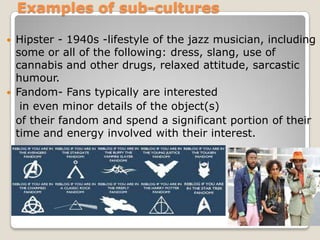
Examples of sub-cultures




Hipster - 1940s -lifestyle of the jazz musician, including
some or all of the following: dress, slang, use of
cannabis and other drugs, relaxed attitude, sarcastic
humour.
Fandom- Fans typically are interested
in even minor details of the object(s)
of their fandom and spend a significant portion of their
time and energy involved with their interest.
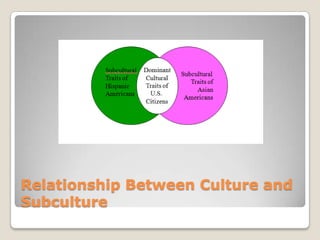
Relationship Between Culture and
Subculture
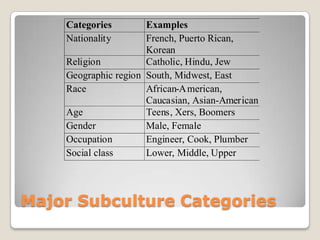
Categories
Nationality

Examples
French, Puerto Rican,
Korean
Religion
Catholic, Hindu, Jew
Geographic region South, Midwest, East
Race
African-A merican,
Caucasian, Asian-American
Age
Teens, Xers, Boomers
Gender
Male, Female
Occupation
Engineer, Cook, Plumber
Social class
Lower, Middle, Upper
O cc u p i o
at n

Major Subculture Categories


Major racial subcultures in U.S. are
Caucasian, African-American, and AsianAmericans

Race


34 million (2001)
◦ Moving from inner cities to suburbs
◦ Moving from Northern cities to the South



Strong middle class

African-American Subculture







Value-conscious
Prefer popular or leading brands
Unlikely to purchase private-label and
generic products
Brand loyal
Use fewer coupons than Caucasians
Read more advertising

Characteristics of AfricanAmerican Market
Broad appeal ads for products that
broadly appeal to all ethnic groups,
including African-Americans
 Specialized appeals for products
specifically developed for AfricanAmericans
 Preferred mediums are radio, AfricanAmerican magazines, African-American
cable stations


Marketing to African-Americans


10.9 million (2001)
◦ Represent more than 29 different countries
◦ Middle East to Taiwan

Tendency to live near entry ports;
overwhelmingly urban
 Median household income $40,600 (1995)


◦ Wealthiest subgroup: Asian Indian

Asian-American Subculture
Asian American Market









Very family oriented
Very industrious
Strive for excellence in education
Strive to achieve higher class
Typically employed in professional,
managerial, or technical occupations
Consumption decisions tend to be maleoriented
Likely to patronize Asian shops
Brand loyal






Use Asian American models
Use native languages
Niche marketing
Family-based messages
Base message appeals on desire to
achieve

Marketing to Asian Americans

Subcultures

  • 1.
  • 2.
       A subculture isa group of people within a culture that differentiates themselves from the larger culture to which they belong. The term subculture has become deprecated among some researchers, who prefer the term co-culture, in order to avoid the connotations of inferiority associated with the "sub-" prefix. While exact definitions vary, the Oxford English Dictionary defines the term as "a cultural group within a larger culture, often having beliefs or interests at variance with those of the larger culture." What is a Subculture?
  • 3.
    Symbolism attached toclothing, music and other visible affectations by members of subcultures, and also the ways in which these same symbols are interpreted by members of the dominant culture.  According to Dick Hebdige, members of a subculture often signal their membership through a distinctive and symbolic use of style, which includes fashions, mannerisms and slang.  Identifying sub-culture
  • 4.
    Examples of sub-cultures   Hipster- 1940s -lifestyle of the jazz musician, including some or all of the following: dress, slang, use of cannabis and other drugs, relaxed attitude, sarcastic humour. Fandom- Fans typically are interested in even minor details of the object(s) of their fandom and spend a significant portion of their time and energy involved with their interest.
  • 5.
  • 6.
    Categories Nationality Examples French, Puerto Rican, Korean Religion Catholic,Hindu, Jew Geographic region South, Midwest, East Race African-A merican, Caucasian, Asian-American Age Teens, Xers, Boomers Gender Male, Female Occupation Engineer, Cook, Plumber Social class Lower, Middle, Upper O cc u p i o at n Major Subculture Categories
  • 7.
     Major racial subculturesin U.S. are Caucasian, African-American, and AsianAmericans Race
  • 8.
     34 million (2001) ◦Moving from inner cities to suburbs ◦ Moving from Northern cities to the South  Strong middle class African-American Subculture
  • 9.
          Value-conscious Prefer popular orleading brands Unlikely to purchase private-label and generic products Brand loyal Use fewer coupons than Caucasians Read more advertising Characteristics of AfricanAmerican Market
  • 10.
    Broad appeal adsfor products that broadly appeal to all ethnic groups, including African-Americans  Specialized appeals for products specifically developed for AfricanAmericans  Preferred mediums are radio, AfricanAmerican magazines, African-American cable stations  Marketing to African-Americans
  • 11.
     10.9 million (2001) ◦Represent more than 29 different countries ◦ Middle East to Taiwan Tendency to live near entry ports; overwhelmingly urban  Median household income $40,600 (1995)  ◦ Wealthiest subgroup: Asian Indian Asian-American Subculture
  • 12.
    Asian American Market         Veryfamily oriented Very industrious Strive for excellence in education Strive to achieve higher class Typically employed in professional, managerial, or technical occupations Consumption decisions tend to be maleoriented Likely to patronize Asian shops Brand loyal
  • 13.
         Use Asian Americanmodels Use native languages Niche marketing Family-based messages Base message appeals on desire to achieve Marketing to Asian Americans