- to know the different subcultures of
america
- to compare the consumer behavior of
the
different subculture of hispanic, black
and asian subculture
- to know the difference of social class
vs income
Consumers over the age of 55 –often further subdivided
into narrower age ranges:
• Older – 55 to 64 years old.
• Elderly – 65 to 74
• Aged – 75 to 84
• Very Old – 85 and over
- they have more time to enjoy entertainment and
leisure activities.
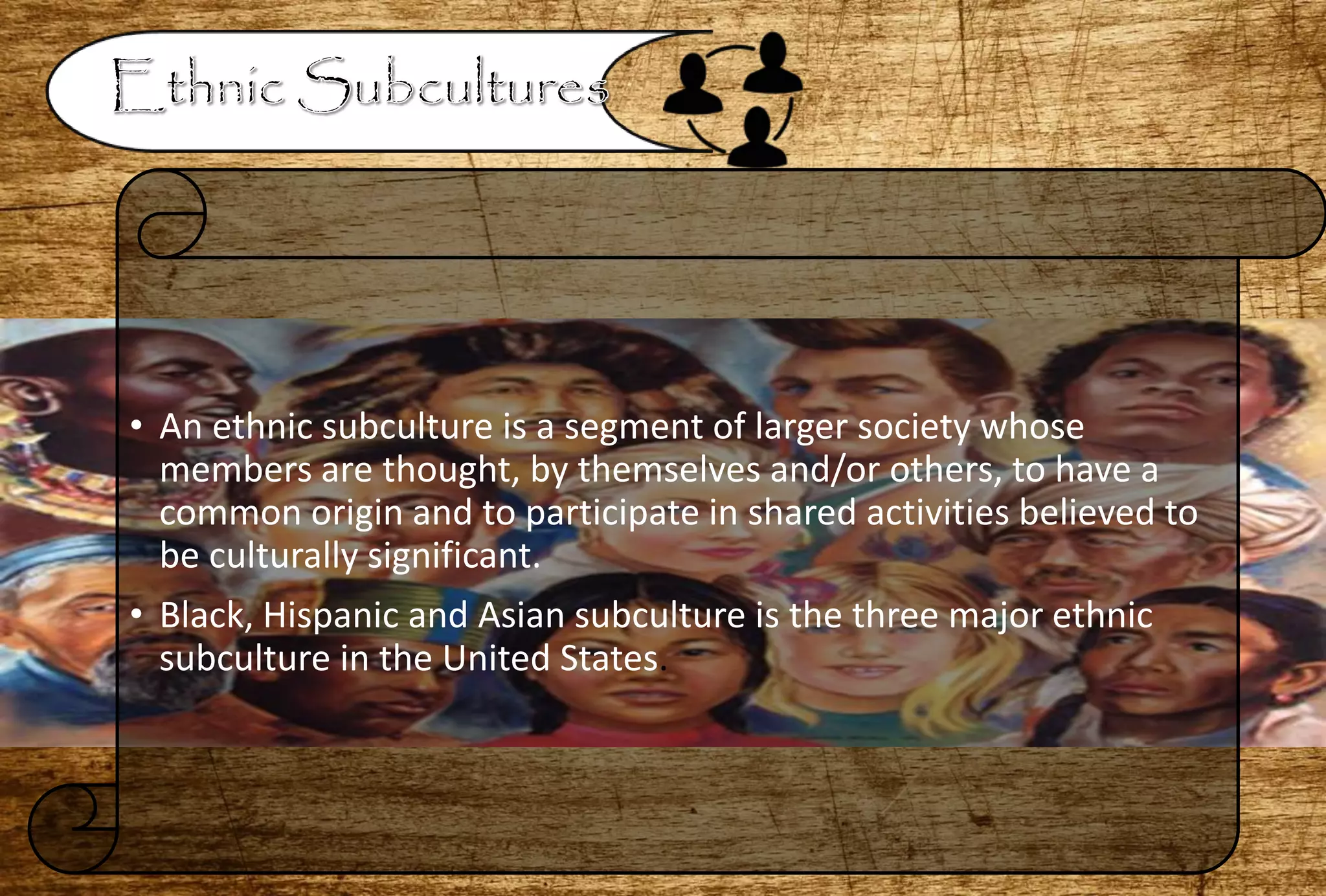
• An ethnic subculture is a segment of larger society whose
members are thought, by themselves and/or others, to have a
common origin and to participate in shared activities believed to
be culturally significant.
• Black, Hispanic and Asian subculture is the three major ethnic
subculture in the United States.
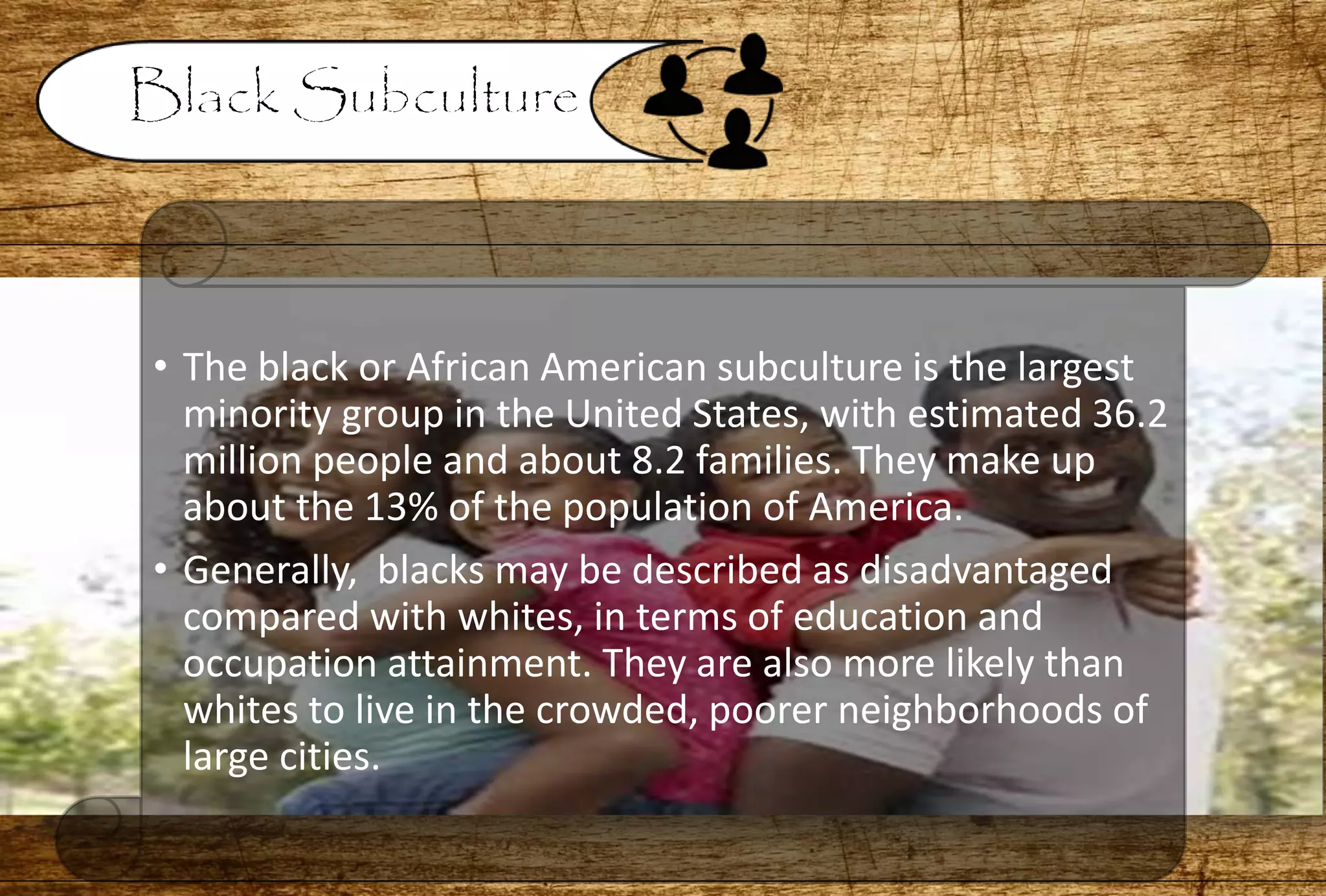
• The black or African American subculture is the largest
minority group in the United States, with estimated 36.2
million people and about 8.2 families. They make up
about the 13% of the population of America.
• Generally, blacks may be described as disadvantaged
compared with whites, in terms of education and
occupation attainment. They are also more likely than
whites to live in the crowded, poorer neighborhoods of
large cities.
• Hispanics are the American citizens that have Spanish
origin and share Spanish culture in terms of language, food
and other cultural aspects
• The marketers identified three broader segments in the
Hispanic subculture:
- Only Spanish speaking
- Bilingual, but favoring Spanish
-Bilingual, but favoring English
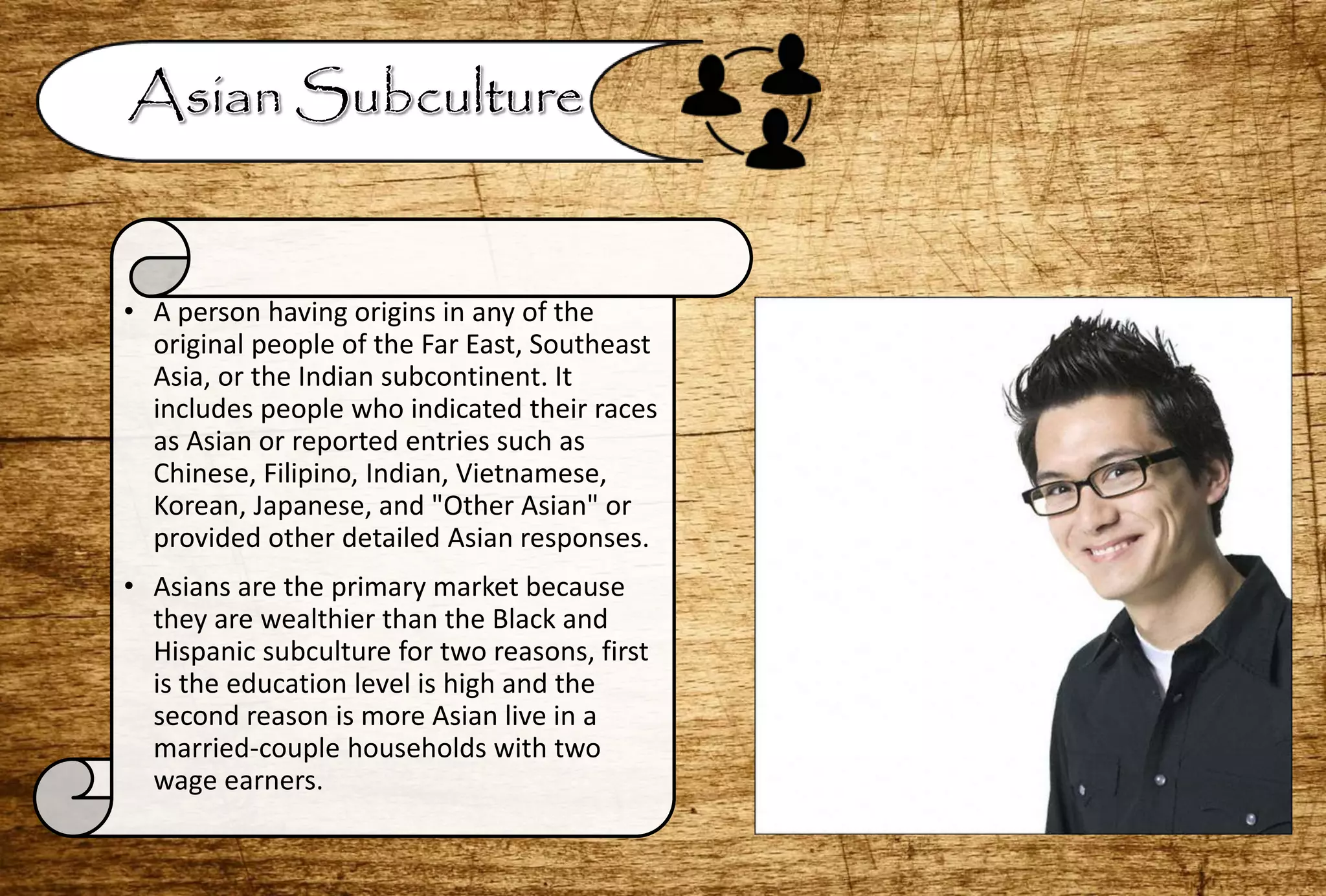
• A person having origins in any of the
original people of the Far East, Southeast
Asia, or the Indian subcontinent. It
includes people who indicated their races
as Asian or reported entries such as
Chinese, Filipino, Indian, Vietnamese,
Korean, Japanese, and "Other Asian" or
provided other detailed Asian responses.
• Asians are the primary market because
they are wealthier than the Black and
Hispanic subculture for two reasons, first
is the education level is high and the
second reason is more Asian live in a
married-couple households with two
wage earners.
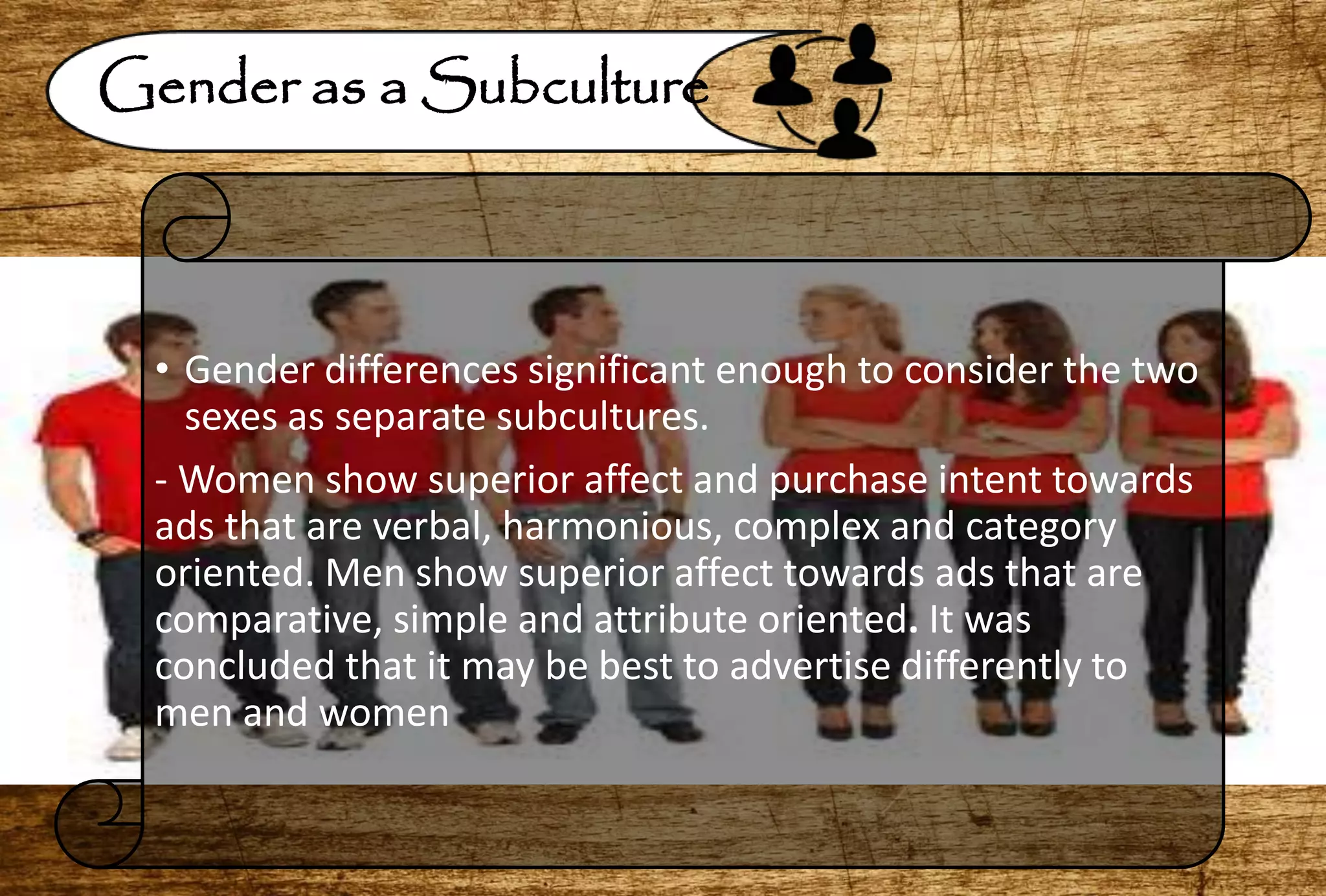
Gender as a Subculture
• Gender differences significant enough to consider the two
sexes as separate subcultures.
- Women show superior affect and purchase intent towards
ads that are verbal, harmonious, complex and category
oriented. Men show superior affect towards ads that are
comparative, simple and attribute oriented. It was
concluded that it may be best to advertise differently to
men and women
• People at different income levels tend to have quite
different values, behaviors, and lifestyles
• American households can be divided into three
income categories
-Downscale
-Upscale
-Middle income
• Acculturation refers how people in one culture or
subculture understand and adapt to the meanings of
another culture or subculture
• Consumer acculturation refers to how people acquire
the ability and cultural knowledge to be skilled
consumers in different cultures or subcultures
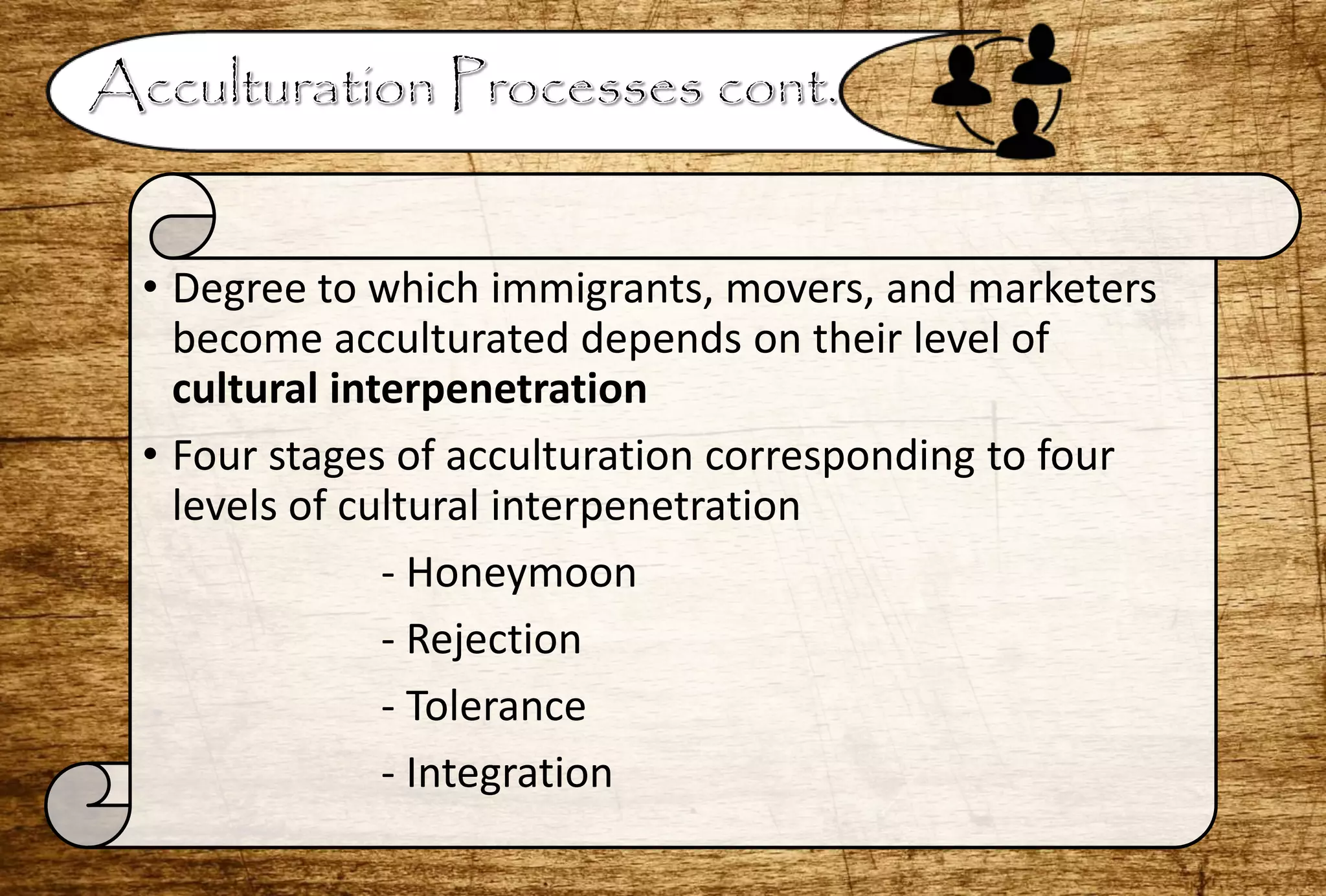
• Degree to which immigrants, movers, and marketers
become acculturated depends on their level of
cultural interpenetration
• Four stages of acculturation corresponding to four
levels of cultural interpenetration
- Honeymoon
- Rejection
- Tolerance
- Integration
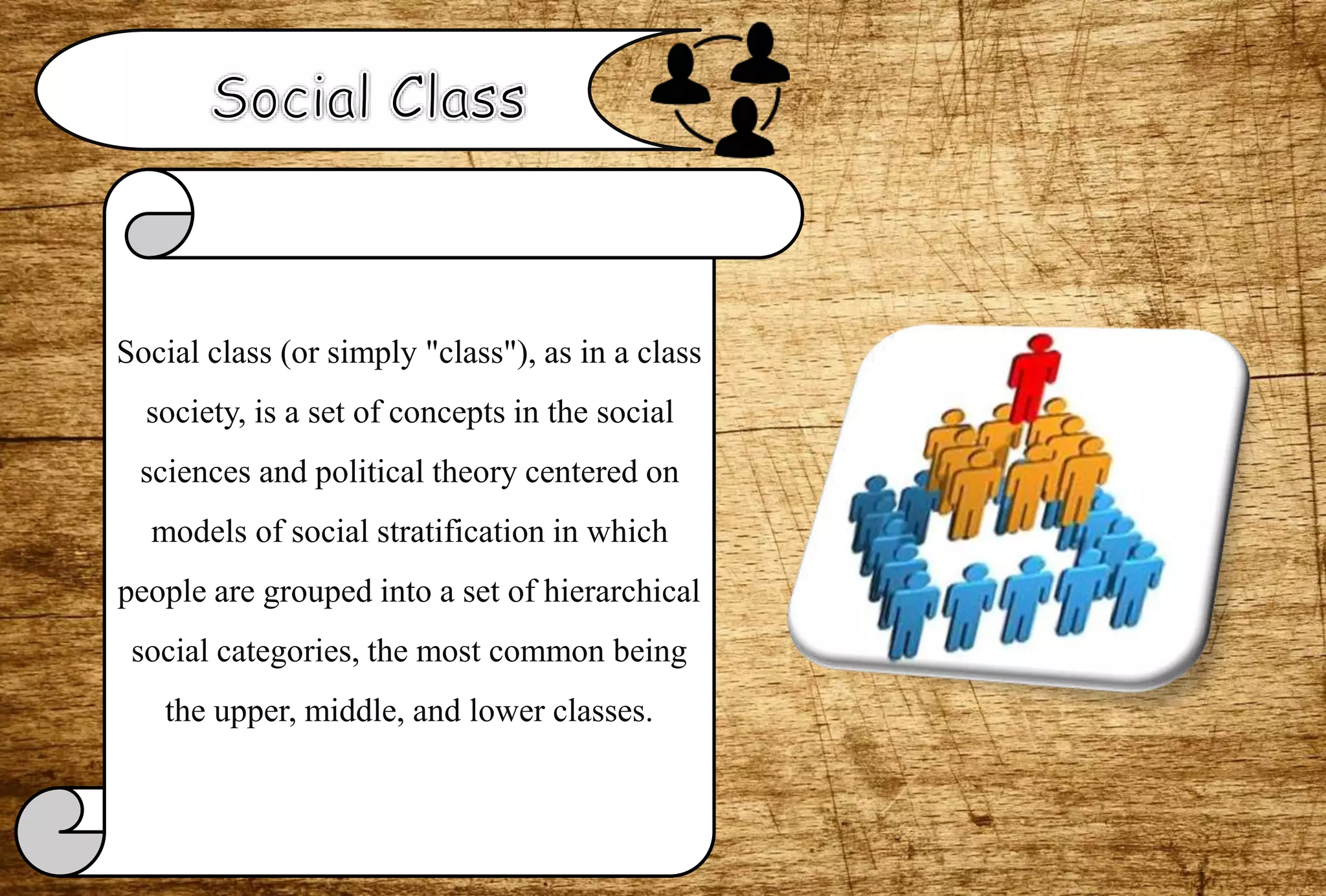
Social class (or simply "class"), as in a class
society, is a set of concepts in the social
sciences and political theory centered on
models of social stratification in which
people are grouped into a set of hierarchical
social categories, the most common being
the upper, middle, and lower classes.
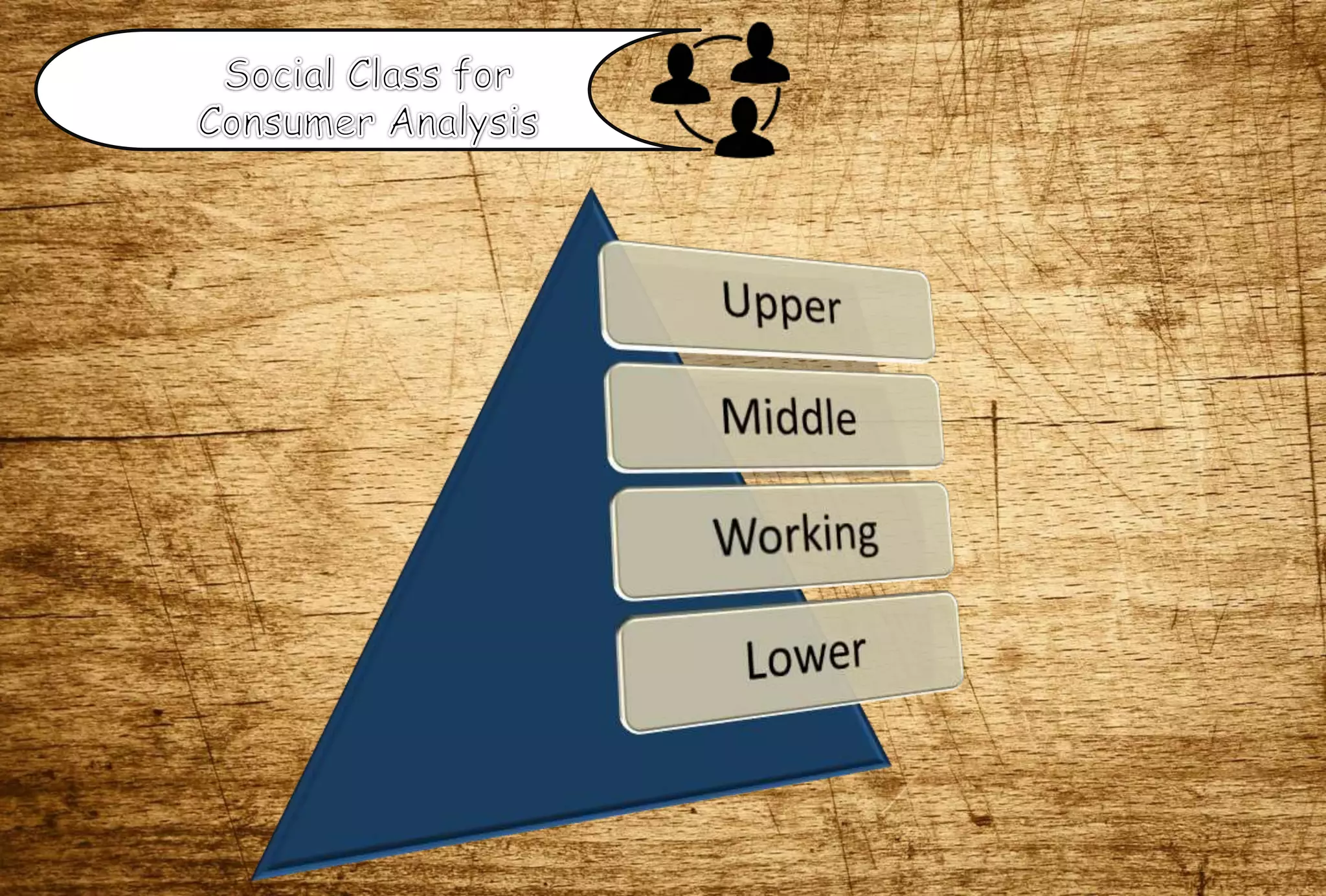
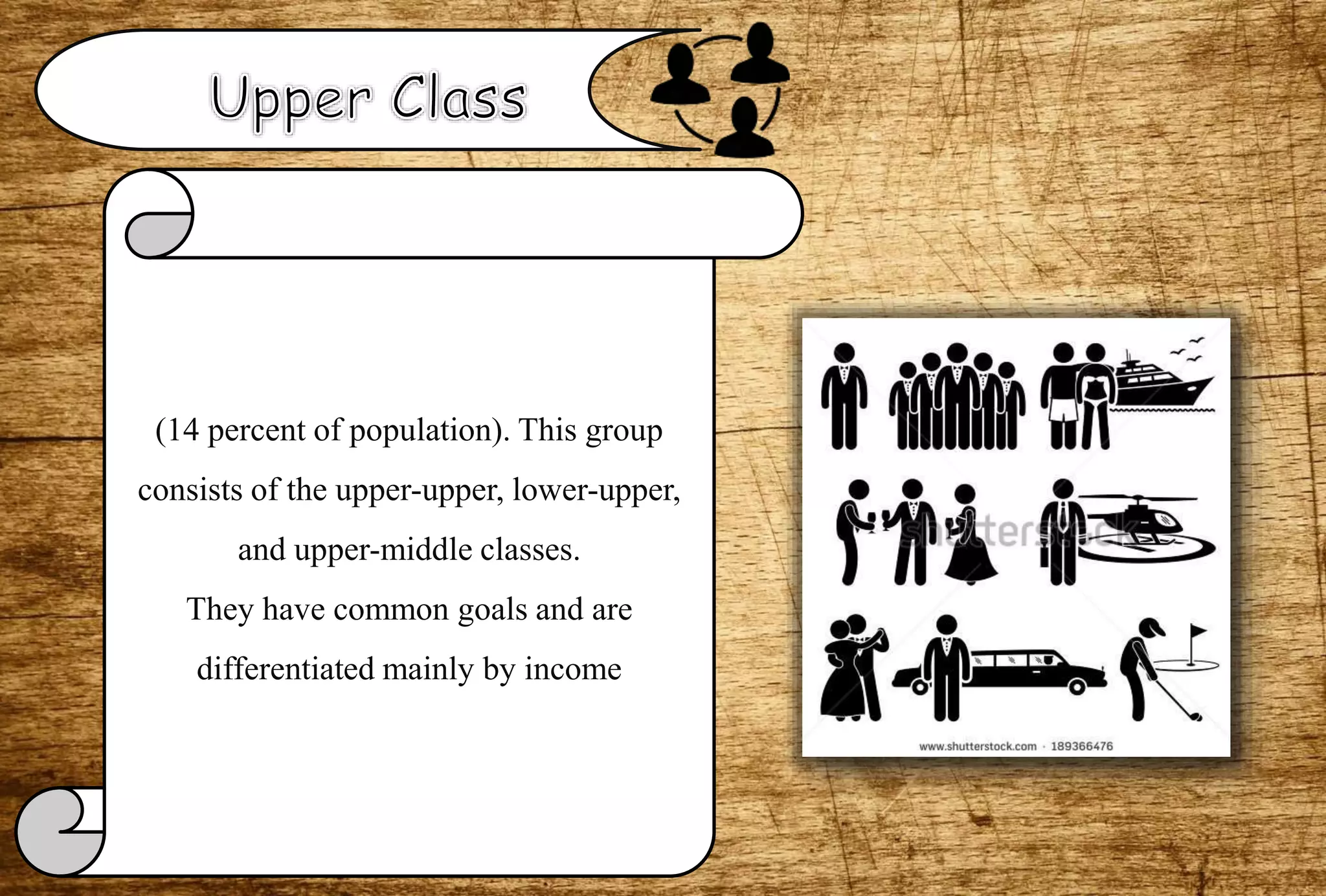
(14 percent of population). This group
consists of the upper-upper, lower-upper,
and upper-middle classes.
They have common goals and are
differentiated mainly by income
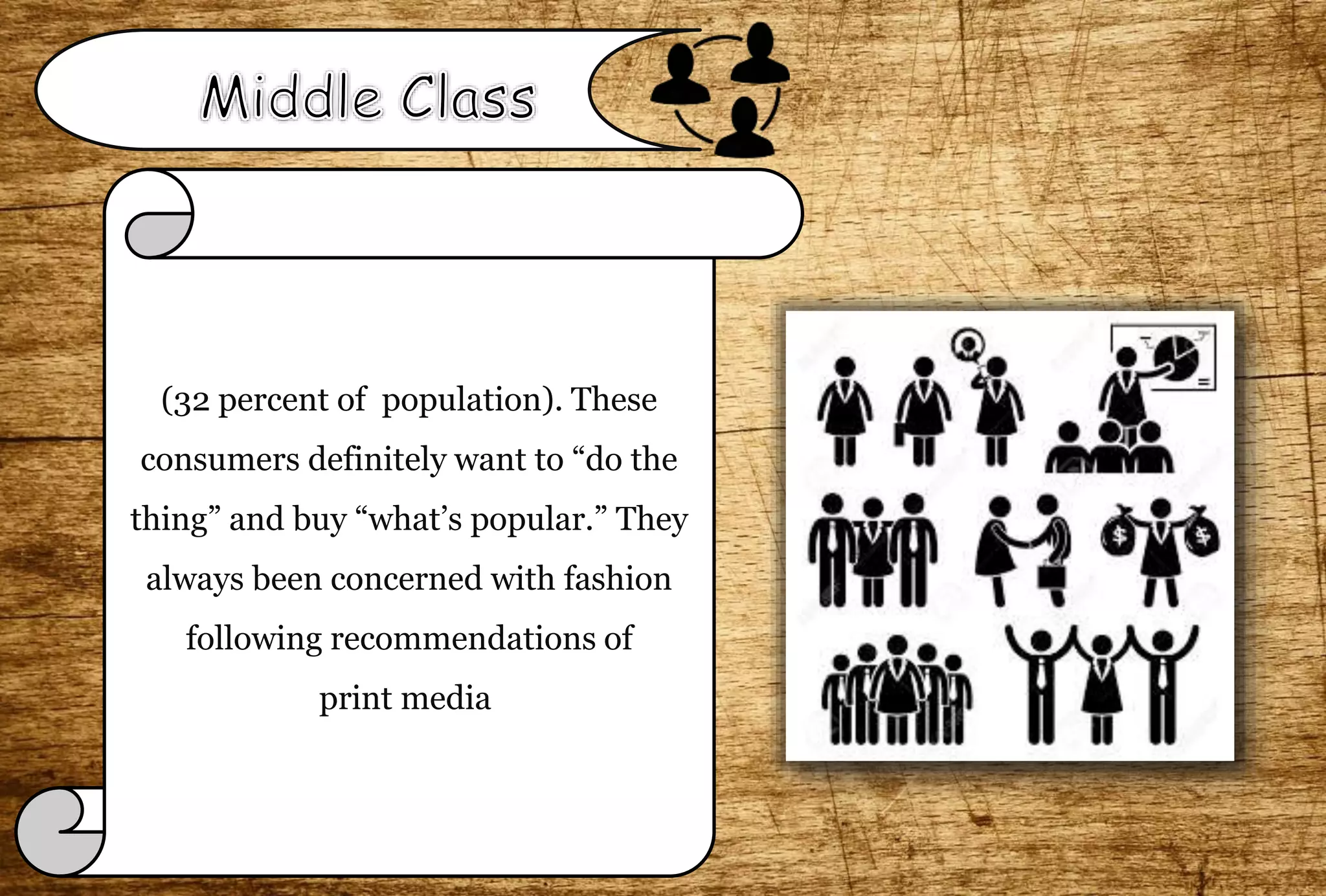
(32 percent of population). These
consumers definitely want to “do the
thing” and buy “what’s popular.” They
always been concerned with fashion
following recommendations of
print media.
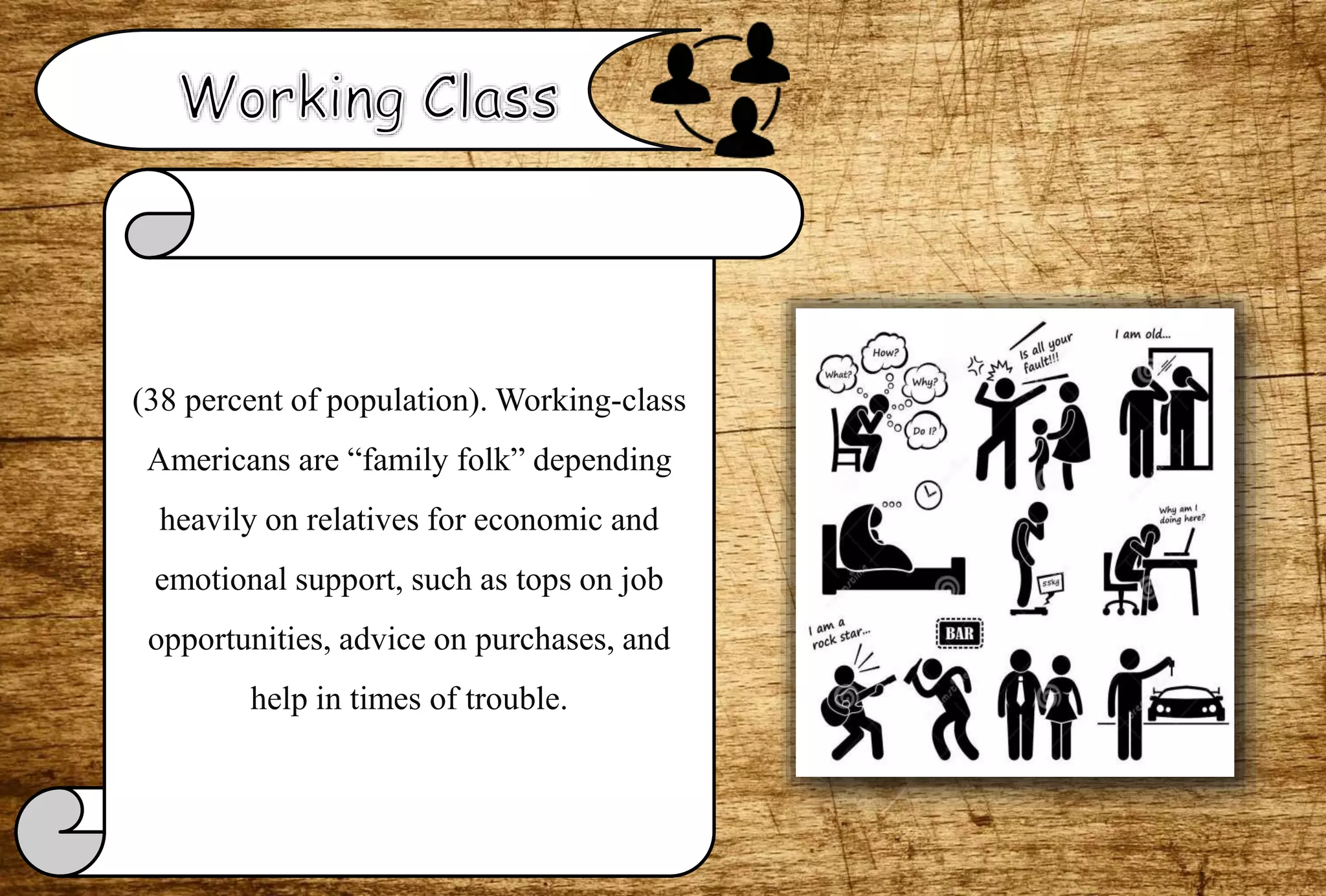
(38 percent of population). Working-class
Americans are “family folk” depending
heavily on relatives for economic and
emotional support, such as tops on job
opportunities, advice on purchases, and
help in times of trouble.
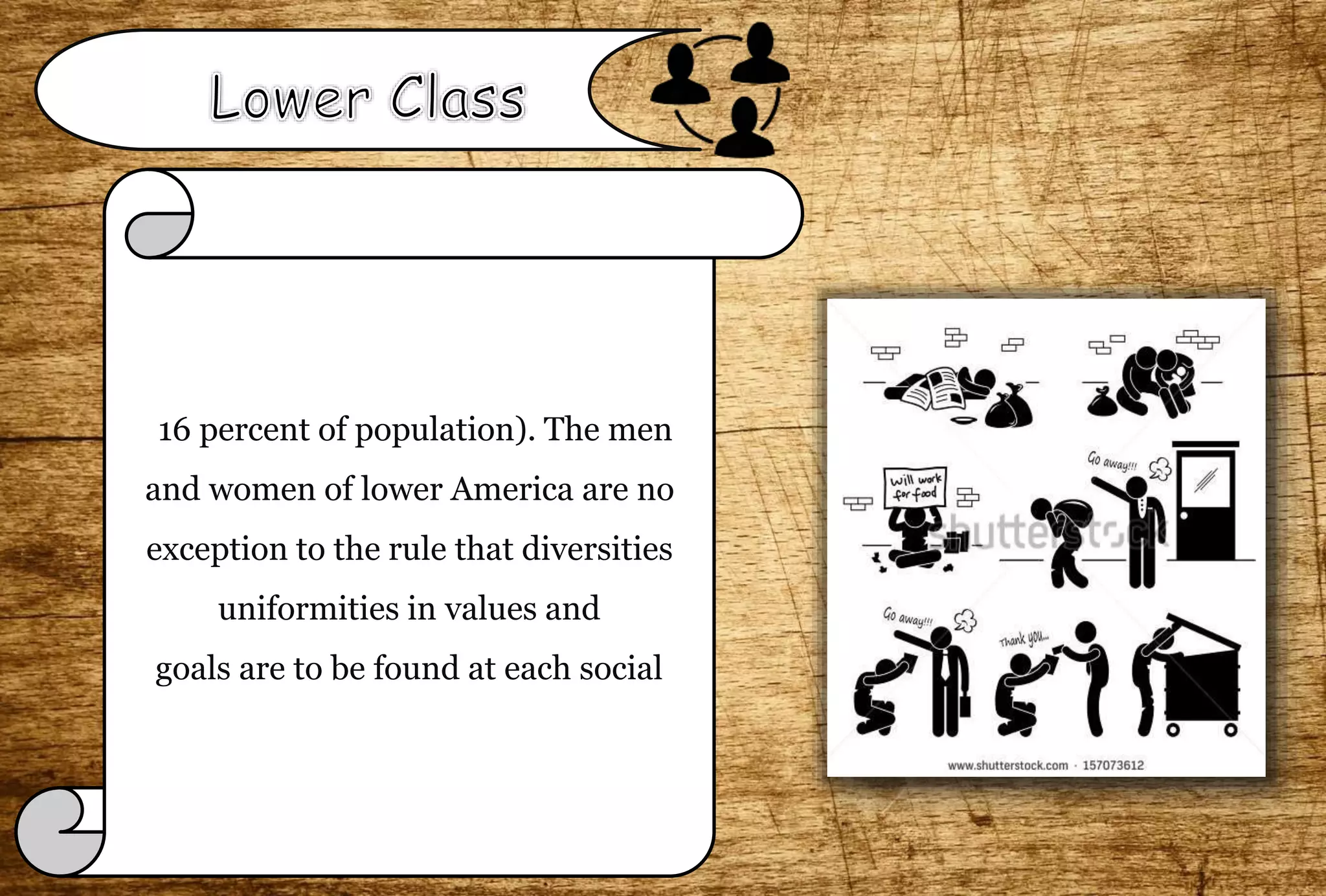
(16 percent of population). The men
and women of lower America are no
exception to the rule that diversities
uniformities in values and
goals are to be found at each social
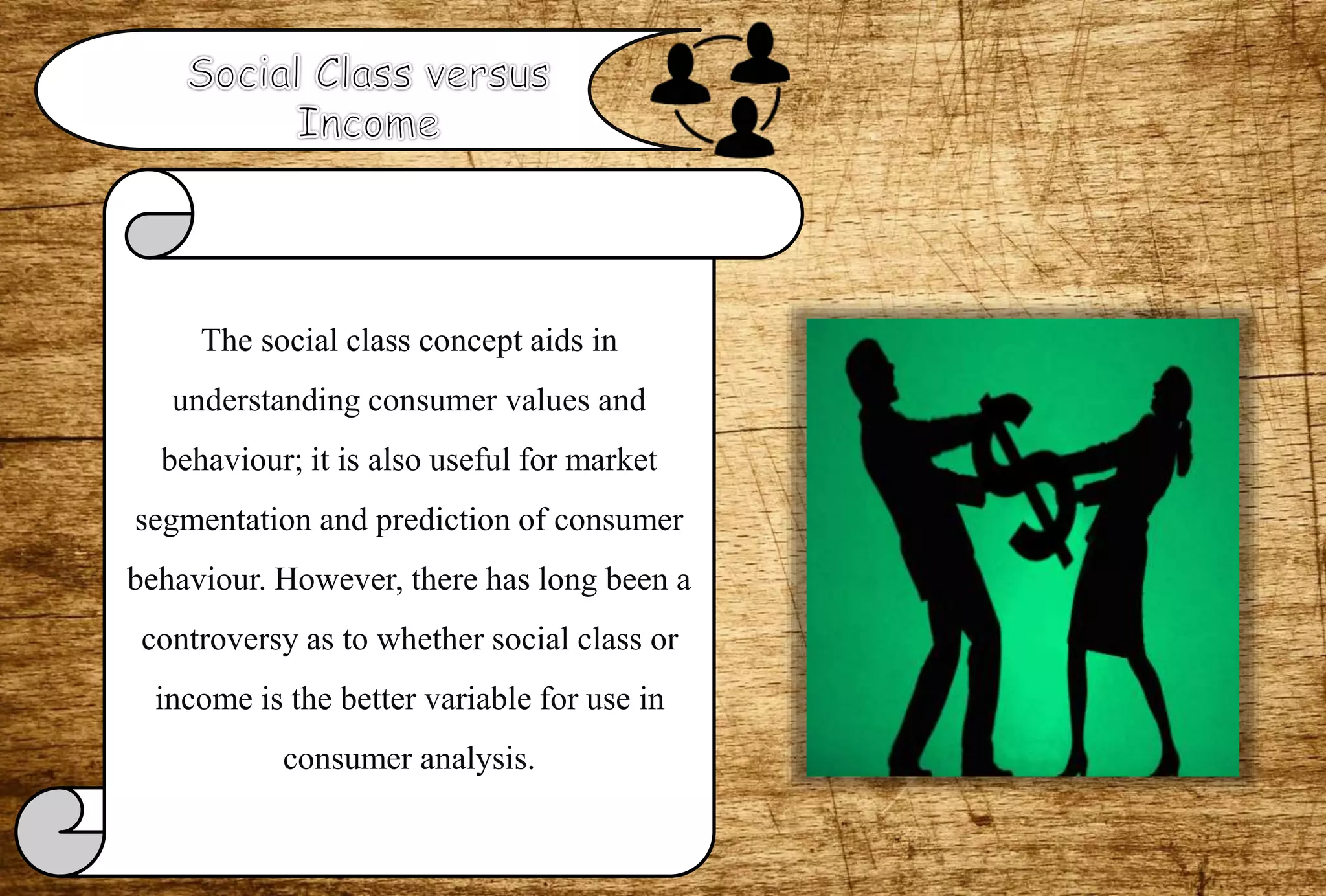
The social class concept aids in
understanding consumer values and
behaviour; it is also useful for market
segmentation and prediction of consumer
behaviour. However, there has long been a
controversy as to whether social class or
income is the better variable for use in
consumer analysis.
Recently consumer researchers have
recognized that each variable has its
advantage and disadvantages, and the
choice among using social class, income, or
a combination of the two depends on the
product and the situation. For example,
Charles Shaninger offers the following
tentative generalizations
1. Social class is more relevant than
income for areas of consumer behaviour
that do not involve high dollar
expenditures but do reflect underlying
differences in lifestyle, values, or
homemaker roles not captured by income.
Social class is superior for both method
and place of purchase of highly visible,
symbolic, and expensive objects such as
living room furniture.
2. Income is generally appropriate for
understanding purchases of major kitchen
and laundry appliances and products that
require substantial expenditures but are
not status symbols within the class.
3. The combination of social class and
income is generally superior for product
classes that highly visible, serve as symbols
of social class or status within the class,
and require either moderate or substantial
expenditure (such as clothing,
automobiles, and television sets).
This chapter discussed two marco social
influences on consumers behaviours cognitions,
and affective responses: subculture and social
class. These social factors influence how people
think, feel, and behave relative to their physical,
social, and marketing environments. We
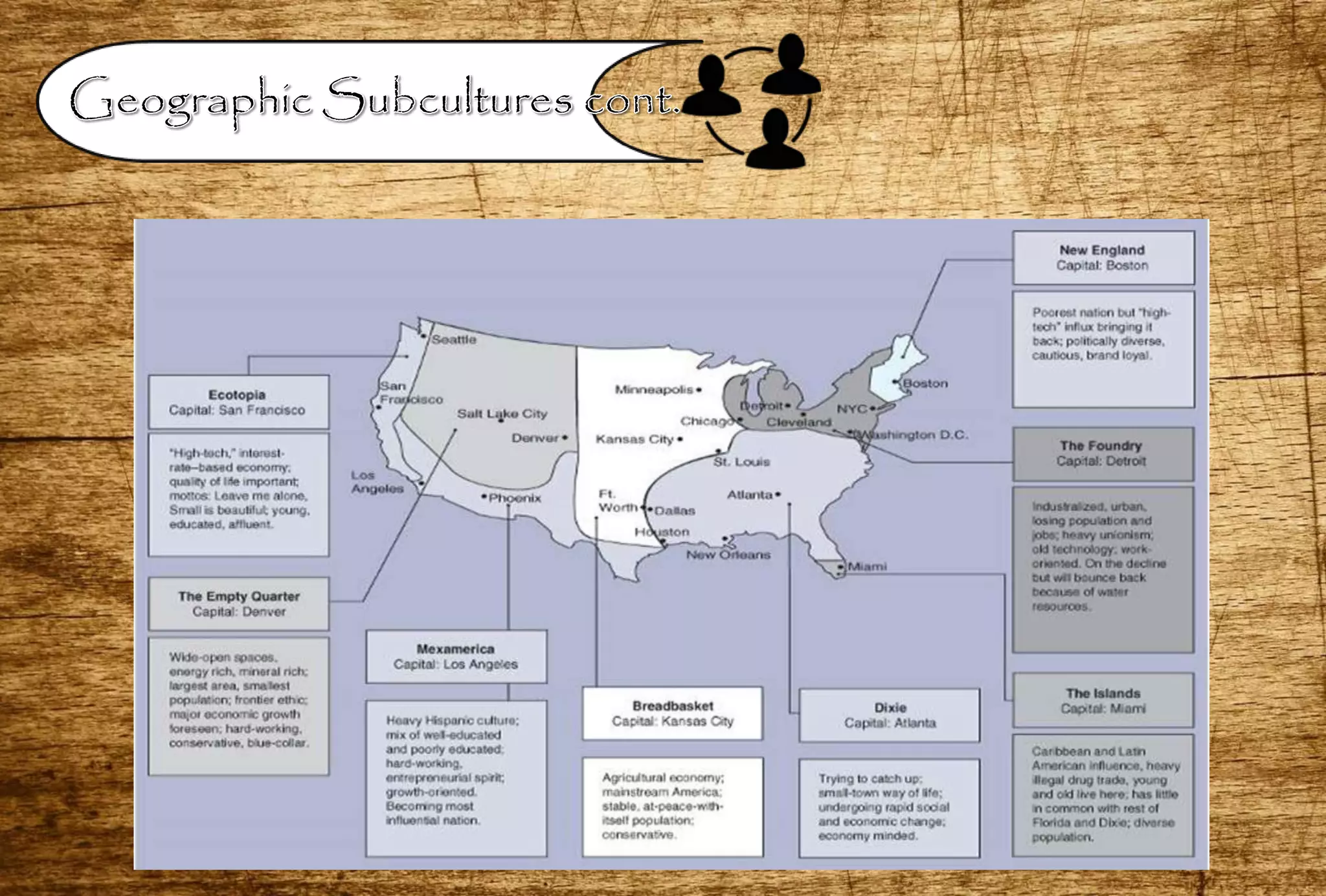
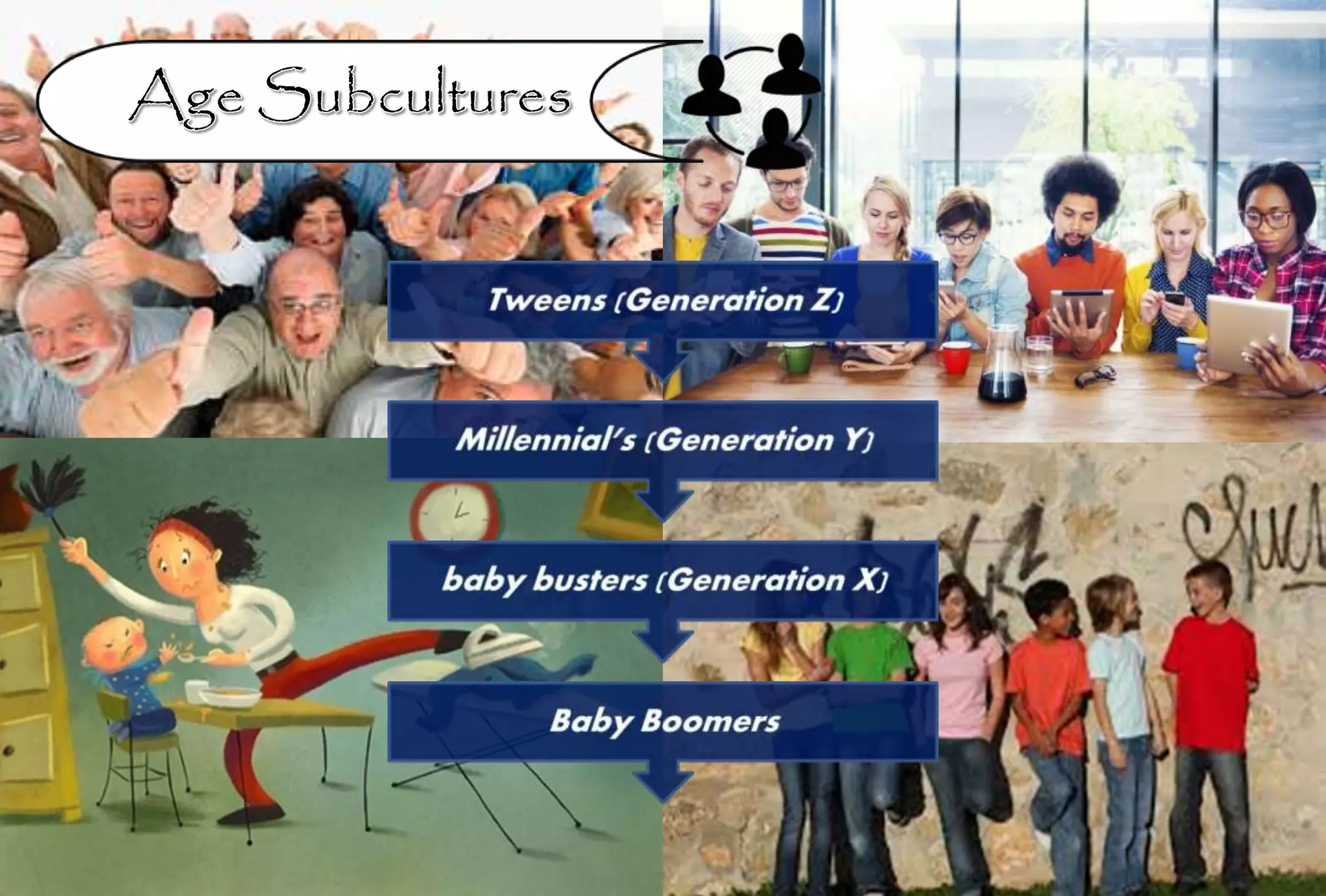
discussed subcultural influences in terms of
geographic area, age, ethic group, and other
factors. Social class influences were discussed in
terms of their role both in explaining consumers
behaviour and as a strategic tool.

Consumer Behavior Chapter 13: Subcultures and Social Class

  • 2.
    - to knowthe different subcultures of america - to compare the consumer behavior of the different subculture of hispanic, black and asian subculture - to know the difference of social class vs income
  • 11.
    Consumers over theage of 55 –often further subdivided into narrower age ranges: • Older – 55 to 64 years old. • Elderly – 65 to 74 • Aged – 75 to 84 • Very Old – 85 and over - they have more time to enjoy entertainment and leisure activities.
  • 12.
    • An ethnicsubculture is a segment of larger society whose members are thought, by themselves and/or others, to have a common origin and to participate in shared activities believed to be culturally significant. • Black, Hispanic and Asian subculture is the three major ethnic subculture in the United States.
  • 13.
    • The blackor African American subculture is the largest minority group in the United States, with estimated 36.2 million people and about 8.2 families. They make up about the 13% of the population of America. • Generally, blacks may be described as disadvantaged compared with whites, in terms of education and occupation attainment. They are also more likely than whites to live in the crowded, poorer neighborhoods of large cities.
  • 14.
    • Hispanics arethe American citizens that have Spanish origin and share Spanish culture in terms of language, food and other cultural aspects • The marketers identified three broader segments in the Hispanic subculture: - Only Spanish speaking - Bilingual, but favoring Spanish -Bilingual, but favoring English
  • 15.
    • A personhaving origins in any of the original people of the Far East, Southeast Asia, or the Indian subcontinent. It includes people who indicated their races as Asian or reported entries such as Chinese, Filipino, Indian, Vietnamese, Korean, Japanese, and "Other Asian" or provided other detailed Asian responses. • Asians are the primary market because they are wealthier than the Black and Hispanic subculture for two reasons, first is the education level is high and the second reason is more Asian live in a married-couple households with two wage earners.
  • 16.
    Gender as aSubculture • Gender differences significant enough to consider the two sexes as separate subcultures. - Women show superior affect and purchase intent towards ads that are verbal, harmonious, complex and category oriented. Men show superior affect towards ads that are comparative, simple and attribute oriented. It was concluded that it may be best to advertise differently to men and women
  • 17.
    • People atdifferent income levels tend to have quite different values, behaviors, and lifestyles • American households can be divided into three income categories -Downscale -Upscale -Middle income
  • 18.
    • Acculturation refershow people in one culture or subculture understand and adapt to the meanings of another culture or subculture • Consumer acculturation refers to how people acquire the ability and cultural knowledge to be skilled consumers in different cultures or subcultures
  • 19.
    • Degree towhich immigrants, movers, and marketers become acculturated depends on their level of cultural interpenetration • Four stages of acculturation corresponding to four levels of cultural interpenetration - Honeymoon - Rejection - Tolerance - Integration
  • 20.
    Social class (orsimply "class"), as in a class society, is a set of concepts in the social sciences and political theory centered on models of social stratification in which people are grouped into a set of hierarchical social categories, the most common being the upper, middle, and lower classes.
  • 22.
    (14 percent ofpopulation). This group consists of the upper-upper, lower-upper, and upper-middle classes. They have common goals and are differentiated mainly by income
  • 23.
    (32 percent ofpopulation). These consumers definitely want to “do the thing” and buy “what’s popular.” They always been concerned with fashion following recommendations of print media.
  • 24.
    (38 percent ofpopulation). Working-class Americans are “family folk” depending heavily on relatives for economic and emotional support, such as tops on job opportunities, advice on purchases, and help in times of trouble.
  • 25.
    (16 percent ofpopulation). The men and women of lower America are no exception to the rule that diversities uniformities in values and goals are to be found at each social
  • 26.
    The social classconcept aids in understanding consumer values and behaviour; it is also useful for market segmentation and prediction of consumer behaviour. However, there has long been a controversy as to whether social class or income is the better variable for use in consumer analysis.
  • 27.
    Recently consumer researchershave recognized that each variable has its advantage and disadvantages, and the choice among using social class, income, or a combination of the two depends on the product and the situation. For example, Charles Shaninger offers the following tentative generalizations 1. Social class is more relevant than income for areas of consumer behaviour that do not involve high dollar expenditures but do reflect underlying differences in lifestyle, values, or homemaker roles not captured by income. Social class is superior for both method and place of purchase of highly visible, symbolic, and expensive objects such as living room furniture. 2. Income is generally appropriate for understanding purchases of major kitchen and laundry appliances and products that require substantial expenditures but are not status symbols within the class. 3. The combination of social class and income is generally superior for product classes that highly visible, serve as symbols of social class or status within the class, and require either moderate or substantial expenditure (such as clothing, automobiles, and television sets).
  • 28.
    This chapter discussedtwo marco social influences on consumers behaviours cognitions, and affective responses: subculture and social class. These social factors influence how people think, feel, and behave relative to their physical, social, and marketing environments. We discussed subcultural influences in terms of geographic area, age, ethic group, and other factors. Social class influences were discussed in terms of their role both in explaining consumers behaviour and as a strategic tool.