







S t u d e n t S u c c e s s w i t h S t a r f i s h
Benjamin Stein
Hobsons Plc
London, UK | 24 February 2016
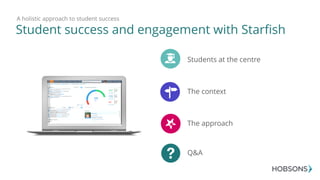
A holistic approach to student success
Student success and engagement with Starfish
Q&A
The approach
The context
Students at the centre
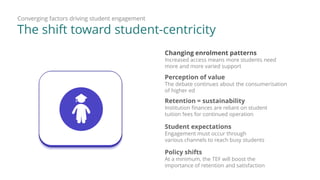
Converging factors driving student engagement
Retention = sustainability
Institution finances are reliant on student
tuition fees for continued operation
Policy shifts
At a minimum, the TEF will boost the
importance of retention and satisfaction
Changing enrolment patterns
Increased access means more students need
more and more varied support
Student expectations
Engagement must occur through
various channels to reach busy students
Perception of value
The debate continues about the consumerisation
of higher ed
The shift toward student-centricity
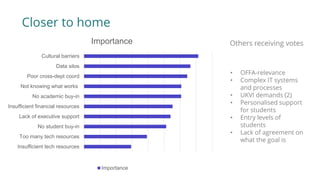
Closer to home
0 1 2 3 4 5 6 7 8
Insufficient tech resources
Too many tech resources
No student buy-in
Lack of executive support
Insufficient financial resources
No academic buy-in
Not knowing what works
Poor cross-dept coord
Data silos
Cultural barriers
Importance
Importance
Others receiving votes
• OFFA-relevance
• Complex IT systems
and processes
• UKVI demands (2)
• Personalised support
for students
• Entry levels of
students
• Lack of agreement on
what the goal is
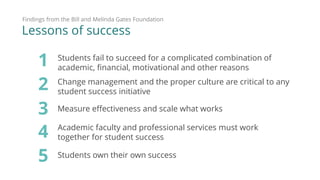
Findings from the Bill and Melinda Gates Foundation
5
1
2
3
4 Academic faculty and professional services must work
together for student success
Measure effectiveness and scale what works
Students own their own success
Change management and the proper culture are critical to any
student success initiative
Students fail to succeed for a complicated combination of
academic, financial, motivational and other reasons
Lessons of success
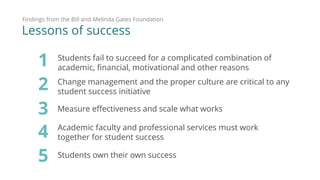
Findings from the Bill and Melinda Gates Foundation
5
1
2
3
Academic faculty and professional services must work
together for student success
Measure effectiveness and scale what works
Students own their own success
Change management and the proper culture are critical to any
student success initiative
Students fail to succeed for a complicated combination of
academic, financial, motivational and other reasons
Lessons of success
4
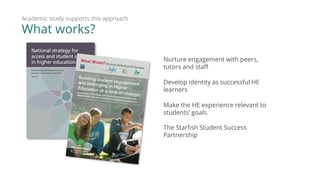
What works?
Make the HE experience relevant to
students’ goals.
Develop identity as successful HE
learners
Nurture engagement with peers,
tutors and staff
The Starfish Student Success
Partnership
Academic study supports this approach
Draw on the experience and skills
of 300+ partner institutions
A community of practice
Starfish in context
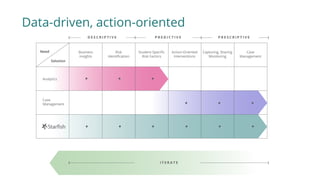
Data-driven, action-oriented
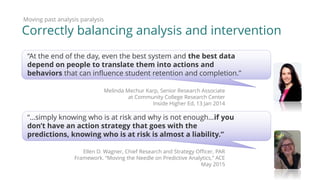
“At the end of the day, even the best system and the best data
depend on people to translate them into actions and
behaviors that can influence student retention and completion.”
“…simply knowing who is at risk and why is not enough...if you
don’t have an action strategy that goes with the
predictions, knowing who is at risk is almost a liability.”
Melinda Mechur Karp, Senior Research Associate
at Community College Research Center
Inside Higher Ed, 13 Jan 2014
Ellen D. Wagner, Chief Research and Strategy Officer, PAR
Framework. “Moving the Needle on Predictive Analytics,” ACE
May 2015
Correctly balancing analysis and intervention
Moving past analysis paralysis
The Starfish approach
A holistic picture of every student
Intelligent data integration
VLE Starfish OthersSRS
Put students at the centre
A digital hub connects dozens of success factors
Match intervention to risk
Quickly determine who needs help and take action
Show next steps and resources
Offer specific tasks that connect to other providers
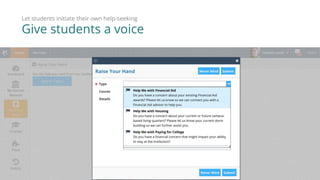
Give students a voice
Let students initiate their own help-seeking
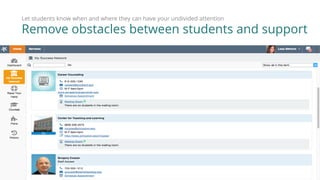
Remove obstacles between students and support
Let students know when and where they can have your undivided attention
Connect, record and share appropriately
Online appointments synched with your external calendar
Capture academic feedback without disruption
Harness critical academic relationships
Next steps
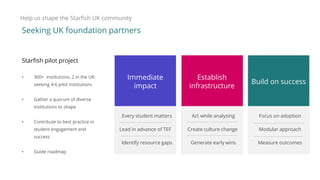
Help us shape the Starfish UK community
Seeking UK foundation partners
Every student matters
Lead in advance of TEF
Identify resource gaps
Immediate
impact
• 300+ institutions, 2 in the UK:
seeking 4-6 pilot institutions
• Gather a quorum of diverse
institutions to shape
• Contribute to best practice in
student engagement and
success
• Guide roadmap
Starfish pilot project
Establish
infrastructure
Build on success
Act while analysing
Create culture change
Generate early wins
Focus on adoption
Modular approach
Measure outcomes
Questions?
benjamin.stein@hobsons.com
0207 250 6619
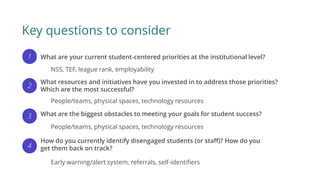
What are your current student-centered priorities at the institutional level?
What resources and initiatives have you invested in to address those priorities?
Which are the most successful?
What are the biggest obstacles to meeting your goals for student success?
How do you currently identify disengaged students (or staff)? How do you
get them back on track?
1
2
3
4
Key questions to consider
NSS, TEF, league rank, employability
People/teams, physical spaces, technology resources
Early warning/alert system, referrals, self-identifiers

Student Success with Starfish

  • 1.
    S t ud e n t S u c c e s s w i t h S t a r f i s h Benjamin Stein Hobsons Plc London, UK | 24 February 2016
  • 2.
    A holistic approachto student success Student success and engagement with Starfish Q&A The approach The context Students at the centre
  • 3.
    Converging factors drivingstudent engagement Retention = sustainability Institution finances are reliant on student tuition fees for continued operation Policy shifts At a minimum, the TEF will boost the importance of retention and satisfaction Changing enrolment patterns Increased access means more students need more and more varied support Student expectations Engagement must occur through various channels to reach busy students Perception of value The debate continues about the consumerisation of higher ed The shift toward student-centricity
  • 4.
    Closer to home 01 2 3 4 5 6 7 8 Insufficient tech resources Too many tech resources No student buy-in Lack of executive support Insufficient financial resources No academic buy-in Not knowing what works Poor cross-dept coord Data silos Cultural barriers Importance Importance Others receiving votes • OFFA-relevance • Complex IT systems and processes • UKVI demands (2) • Personalised support for students • Entry levels of students • Lack of agreement on what the goal is
  • 5.
    Findings from theBill and Melinda Gates Foundation 5 1 2 3 4 Academic faculty and professional services must work together for student success Measure effectiveness and scale what works Students own their own success Change management and the proper culture are critical to any student success initiative Students fail to succeed for a complicated combination of academic, financial, motivational and other reasons Lessons of success
  • 6.
    Findings from theBill and Melinda Gates Foundation 5 1 2 3 Academic faculty and professional services must work together for student success Measure effectiveness and scale what works Students own their own success Change management and the proper culture are critical to any student success initiative Students fail to succeed for a complicated combination of academic, financial, motivational and other reasons Lessons of success 4
  • 7.
    What works? Make theHE experience relevant to students’ goals. Develop identity as successful HE learners Nurture engagement with peers, tutors and staff The Starfish Student Success Partnership Academic study supports this approach
  • 8.
    Draw on theexperience and skills of 300+ partner institutions A community of practice
  • 9.
  • 10.
  • 11.
    “At the endof the day, even the best system and the best data depend on people to translate them into actions and behaviors that can influence student retention and completion.” “…simply knowing who is at risk and why is not enough...if you don’t have an action strategy that goes with the predictions, knowing who is at risk is almost a liability.” Melinda Mechur Karp, Senior Research Associate at Community College Research Center Inside Higher Ed, 13 Jan 2014 Ellen D. Wagner, Chief Research and Strategy Officer, PAR Framework. “Moving the Needle on Predictive Analytics,” ACE May 2015 Correctly balancing analysis and intervention Moving past analysis paralysis
  • 12.
  • 13.
    A holistic pictureof every student Intelligent data integration VLE Starfish OthersSRS
  • 14.
    Put students atthe centre A digital hub connects dozens of success factors
  • 15.
    Match intervention torisk Quickly determine who needs help and take action
  • 16.
    Show next stepsand resources Offer specific tasks that connect to other providers
  • 17.
    Give students avoice Let students initiate their own help-seeking
  • 18.
    Remove obstacles betweenstudents and support Let students know when and where they can have your undivided attention
  • 19.
    Connect, record andshare appropriately Online appointments synched with your external calendar
  • 20.
    Capture academic feedbackwithout disruption Harness critical academic relationships
  • 21.
  • 22.
    Help us shapethe Starfish UK community Seeking UK foundation partners Every student matters Lead in advance of TEF Identify resource gaps Immediate impact • 300+ institutions, 2 in the UK: seeking 4-6 pilot institutions • Gather a quorum of diverse institutions to shape • Contribute to best practice in student engagement and success • Guide roadmap Starfish pilot project Establish infrastructure Build on success Act while analysing Create culture change Generate early wins Focus on adoption Modular approach Measure outcomes
  • 23.
  • 24.
    What are yourcurrent student-centered priorities at the institutional level? What resources and initiatives have you invested in to address those priorities? Which are the most successful? What are the biggest obstacles to meeting your goals for student success? How do you currently identify disengaged students (or staff)? How do you get them back on track? 1 2 3 4 Key questions to consider NSS, TEF, league rank, employability People/teams, physical spaces, technology resources People/teams, physical spaces, technology resources Early warning/alert system, referrals, self-identifiers