‘Showing’ student - ownership in an inquiry-based classroom
Howick Intermediate School – BT Development Programme
Associate Principal: Neetha Mudhan


Research on adolescence (Alexander and George, 1981) confirm that the planning
and use of the physical facility (in this case, the classroom) must be flexible and take
into account the unique needs of the young adolescent. The physical environment of
the classroom, inclusive of its routines and practices, must complement the direction
taken in both, students and teacher, negotiating and collaborating on the curriculum.
Within the inquiry-based classroom, students and teachers engage in collaborative
planning, reaching decisions that respond to the concerns, aspirations, and interests
of both (Apple and Beane 2007).

To create a learning environment within a classroom that is conducive to developing
independent, critical, creative and caring thinkers (Pohl, 2000), classroom teachers
need to re-negotiate their complete control of the classroom and purposefully
provide opportunities for the independence and dynamic leadership of their students
to flourish and thrive.

Practical ideas for easy implementation
1. Adopt a democratic approach when deciding on class rules at the beginning of
the year. Students deciding together on regulations for conduct (Pate, Homestead
and McGinnis 1997) understand and appreciate the routines and limits. Beane and
Apple (2007) advocate that all who are directly involved in the school, including the
students, have the right to participate in the process of decision-making.

2. Set up an area of the classroom wall space for each group. The group is
    responsible for updating its space daily. The wall space can be used to:
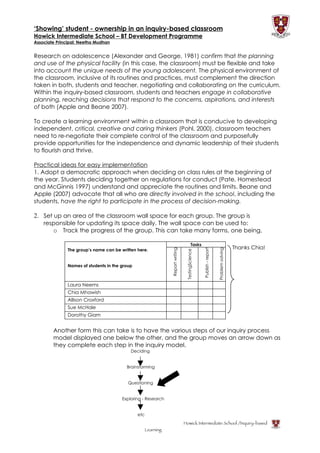
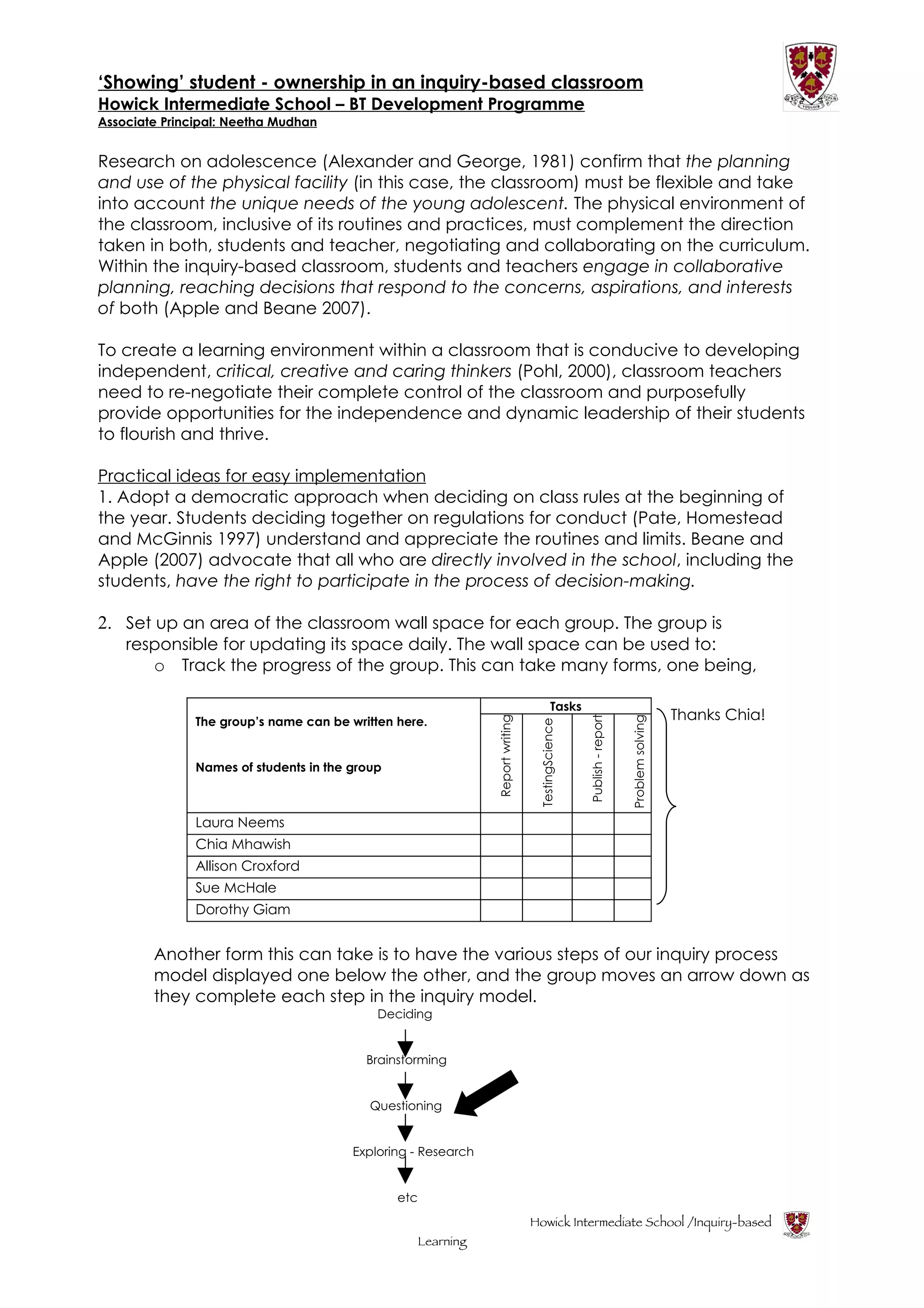
       o Track the progress of the group. This can take many forms, one being,

                                                                                            Tasks
               The group’s name can be written here.                                                                                     Thanks Chia!
                                                                                                    Publish - report
                                                                 Report writing


                                                                                                                       Problem solving
                                                                                   TestingScience


               Names of students in the group


               Laura Neems
               Chia Mhawish
               Allison Croxford
               Sue McHale
               Dorothy Giam


        Another form this can take is to have the various steps of our inquiry process
        model displayed one below the other, and the group moves an arrow down as
        they complete each step in the inquiry model.
                                            Deciding


                                          Brainstorming


                                           Questioning


                                        Exploring - Research


                                                etc
                                                                                  Howick Intermediate School /Inquiry-based
                                                      Learning
o Display of graphic organisers used in each group. Make A3 copies of
            students’ work for easier visibility.
       o Begin a mind map / web to show contact / progress with expertise in / out
            of the school.
       o    Photographs of the group at work, etc.

2. Have a list of duties that need to be done each day. An inquiry group can take
responsibility for these duties for an entire week. They would have to negotiate with
each other within the group and decide who is going to take on the different roles
when their week comes round. Hence, duties need to be class specific for student-
ownership reasons. Duties may include:
      o Lunch monitor / Office runner / Photocopy folder.
      o Windows (in classroom and toilet) to be opened in the morning and closed
           after school.
      o Ensure lights are off (in classroom and toilet) at the end of the day.
      o Ordering and collection of PE gear, etc.

Once the classroom teacher and the students have established what the duties are
for their classroom, publish them onto an A3 piece of paper and then laminate.
Writing on laminated paper allows each group to erase the names of the previous
group and, to use a vivid and assign duties to the students in that group. The teacher
should have limited input into this exercise. The group must be able to justify why
certain duties have been assigned to certain students which probably would yield
some interesting discussions between the teacher and the group.

2. Plenary
The plenary is an opportunity to summarise a lesson(s), allowing students to focus on what was
           important, what they have learned and the progress they have made.

   Each person in an inquiry group should have an opportunity, at some point during
   the week they are on duty, to feed back to the class something about the journey
   of his/her group with their inquiry focus. The classroom teacher should not
   emphasise length in this type of reporting back as some students in the group may
   find it anxious to stand in front of the whole class. To cater for this, this exercise can
   also be done in small groups. Again, deciding how, when, how often the plenary is
   done, can be negotiated between the students and the teacher.

   Suggestions for the plenary:
   Ideas from: http://www.schoolhistory.co.uk/teachers/plenaries.html
       •    Three in a row – To aid orderly dismissal at the end of the lesson, the students
            have to give a statement/keyword/reason or something else connected to
            their most recent inquiry work as they leave, with teacher standing at the
            door (instead of saying goodbye!)
       •    On the Spot – Every student in that inquiry group is put on the spot, at the
            end of a block, at some point during the week. The teacher needs to keep
            a record of who’s had a go. Any student from the inquiry group, put on the
            spot has to tell the class one new thing they've learned that day.
       •    The Strongest Link - Ask the student a question. They can answer or pass. If
            they pass, they can pass to a stronger link ... any other student in their
            inquiry group who knows the answer. The stronger link can only be asked
            once however! (Stops the smartest kids in the class answering all the
            questions!)

                                                                    Howick Intermediate School /Inquiry-based
                                                  Learning
•   Key Question - Refer students back to a key question for the lesson. In pairs,
          one student has to explain the answer to the question to the other student.
          The second person has to listen because any one of the 'listeners' could get
          picked to explain to the whole class what was just explained to him / her.
          The roles are rotated each lesson.


References
Alexander, A.M. (1981). The Exemplary Middle School. New York: Holt, Rinehart and
Winston.
Apple, M.W. and Beane, J. A. eds.(2007) Democratic schools – Lessons in powerful
education. Portsmouth: Heinemann
Pate, P. E., Homestead, E. R., McGinnis, K. L. (1997). Making integrated curriculum
work: Teachers, students, and the quest for coherent curriculum. New York: Teachers
College Press.
Pohl, M. (2000). Teaching Complex Thinking: Critical, Creative, Caring. Cheltenham,
Vic.: Hawker Brownlow.

http://www.schoolhistory.co.uk/teachers/plenaries.html


                                                     Howick Intermediate School /Inquiry-based
                                       Learning

Student Ownership

  • 1.
    ‘Showing’ student -ownership in an inquiry-based classroom Howick Intermediate School – BT Development Programme Associate Principal: Neetha Mudhan Research on adolescence (Alexander and George, 1981) confirm that the planning and use of the physical facility (in this case, the classroom) must be flexible and take into account the unique needs of the young adolescent. The physical environment of the classroom, inclusive of its routines and practices, must complement the direction taken in both, students and teacher, negotiating and collaborating on the curriculum. Within the inquiry-based classroom, students and teachers engage in collaborative planning, reaching decisions that respond to the concerns, aspirations, and interests of both (Apple and Beane 2007). To create a learning environment within a classroom that is conducive to developing independent, critical, creative and caring thinkers (Pohl, 2000), classroom teachers need to re-negotiate their complete control of the classroom and purposefully provide opportunities for the independence and dynamic leadership of their students to flourish and thrive. Practical ideas for easy implementation 1. Adopt a democratic approach when deciding on class rules at the beginning of the year. Students deciding together on regulations for conduct (Pate, Homestead and McGinnis 1997) understand and appreciate the routines and limits. Beane and Apple (2007) advocate that all who are directly involved in the school, including the students, have the right to participate in the process of decision-making. 2. Set up an area of the classroom wall space for each group. The group is responsible for updating its space daily. The wall space can be used to: o Track the progress of the group. This can take many forms, one being, Tasks The group’s name can be written here. Thanks Chia! Publish - report Report writing Problem solving TestingScience Names of students in the group Laura Neems Chia Mhawish Allison Croxford Sue McHale Dorothy Giam Another form this can take is to have the various steps of our inquiry process model displayed one below the other, and the group moves an arrow down as they complete each step in the inquiry model. Deciding Brainstorming Questioning Exploring - Research etc Howick Intermediate School /Inquiry-based Learning
  • 2.
    o Display ofgraphic organisers used in each group. Make A3 copies of students’ work for easier visibility. o Begin a mind map / web to show contact / progress with expertise in / out of the school. o Photographs of the group at work, etc. 2. Have a list of duties that need to be done each day. An inquiry group can take responsibility for these duties for an entire week. They would have to negotiate with each other within the group and decide who is going to take on the different roles when their week comes round. Hence, duties need to be class specific for student- ownership reasons. Duties may include: o Lunch monitor / Office runner / Photocopy folder. o Windows (in classroom and toilet) to be opened in the morning and closed after school. o Ensure lights are off (in classroom and toilet) at the end of the day. o Ordering and collection of PE gear, etc. Once the classroom teacher and the students have established what the duties are for their classroom, publish them onto an A3 piece of paper and then laminate. Writing on laminated paper allows each group to erase the names of the previous group and, to use a vivid and assign duties to the students in that group. The teacher should have limited input into this exercise. The group must be able to justify why certain duties have been assigned to certain students which probably would yield some interesting discussions between the teacher and the group. 2. Plenary The plenary is an opportunity to summarise a lesson(s), allowing students to focus on what was important, what they have learned and the progress they have made. Each person in an inquiry group should have an opportunity, at some point during the week they are on duty, to feed back to the class something about the journey of his/her group with their inquiry focus. The classroom teacher should not emphasise length in this type of reporting back as some students in the group may find it anxious to stand in front of the whole class. To cater for this, this exercise can also be done in small groups. Again, deciding how, when, how often the plenary is done, can be negotiated between the students and the teacher. Suggestions for the plenary: Ideas from: http://www.schoolhistory.co.uk/teachers/plenaries.html • Three in a row – To aid orderly dismissal at the end of the lesson, the students have to give a statement/keyword/reason or something else connected to their most recent inquiry work as they leave, with teacher standing at the door (instead of saying goodbye!) • On the Spot – Every student in that inquiry group is put on the spot, at the end of a block, at some point during the week. The teacher needs to keep a record of who’s had a go. Any student from the inquiry group, put on the spot has to tell the class one new thing they've learned that day. • The Strongest Link - Ask the student a question. They can answer or pass. If they pass, they can pass to a stronger link ... any other student in their inquiry group who knows the answer. The stronger link can only be asked once however! (Stops the smartest kids in the class answering all the questions!) Howick Intermediate School /Inquiry-based Learning
  • 3.
    Key Question - Refer students back to a key question for the lesson. In pairs, one student has to explain the answer to the question to the other student. The second person has to listen because any one of the 'listeners' could get picked to explain to the whole class what was just explained to him / her. The roles are rotated each lesson. References Alexander, A.M. (1981). The Exemplary Middle School. New York: Holt, Rinehart and Winston. Apple, M.W. and Beane, J. A. eds.(2007) Democratic schools – Lessons in powerful education. Portsmouth: Heinemann Pate, P. E., Homestead, E. R., McGinnis, K. L. (1997). Making integrated curriculum work: Teachers, students, and the quest for coherent curriculum. New York: Teachers College Press. Pohl, M. (2000). Teaching Complex Thinking: Critical, Creative, Caring. Cheltenham, Vic.: Hawker Brownlow. http://www.schoolhistory.co.uk/teachers/plenaries.html Howick Intermediate School /Inquiry-based Learning