CONCUSSION
                        INFORMATION FOR STUDENT-ATHLETES

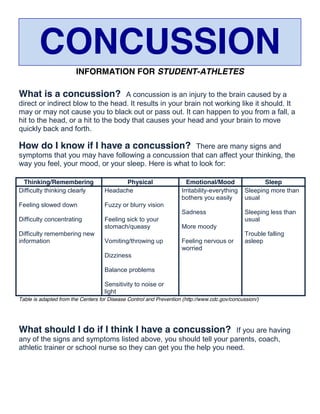
What is a concussion?               A concussion is an injury to the brain caused by a
direct or indirect blow to the head. It results in your brain not working like it should. It
may or may not cause you to black out or pass out. It can happen to you from a fall, a
hit to the head, or a hit to the body that causes your head and your brain to move
quickly back and forth.

How do I know if I have a concussion?                  There are many signs and
symptoms that you may have following a concussion that can affect your thinking, the
way you feel, your mood, or your sleep. Here is what to look for:

 Thinking/Remembering                     Physical                    Emotional/Mood                  Sleep
Difficulty thinking clearly         Headache                        Irritability-everything    Sleeping more than
                                                                    bothers you easily         usual
Feeling slowed down                 Fuzzy or blurry vision
                                                                    Sadness                    Sleeping less than
Difficulty concentrating            Feeling sick to your                                       usual
                                    stomach/queasy                  More moody
Difficulty remembering new                                                                     Trouble falling
information                         Vomiting/throwing up            Feeling nervous or         asleep
                                                                    worried
                                    Dizziness

                                    Balance problems

                                    Sensitivity to noise or
                                    light
Table is adapted from the Centers for Disease Control and Prevention (http://www.cdc.gov/concussion/)


What should I do if I think I have a concussion?                    If you are having
any of the signs and symptoms listed above, you should tell your parents, coach,
athletic trainer or school nurse so they can get you the help you need.
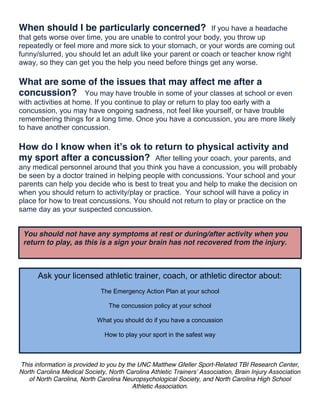
When should I be particularly concerned?                      If you have a headache
that gets worse over time, you are unable to control your body, you throw up
repeatedly or feel more and more sick to your stomach, or your words are coming out
funny/slurred, you should let an adult like your parent or coach or teacher know right
away, so they can get you the help you need before things get any worse.

What are some of the issues that may affect me after a
concussion? You may have trouble in some of your classes at school or even
with activities at home. If you continue to play or return to play too early with a
concussion, you may have ongoing sadness, not feel like yourself, or have trouble
remembering things for a long time. Once you have a concussion, you are more likely
to have another concussion.

How  do  I  know  when  it’s  ok  to  return  to  physical  activity  and  
my sport after a concussion? After telling your coach, your parents, and
any medical personnel around that you think you have a concussion, you will probably
be seen by a doctor trained in helping people with concussions. Your school and your
parents can help you decide who is best to treat you and help to make the decision on
when you should return to activity/play or practice. Your school will have a policy in
place for how to treat concussions. You should not return to play or practice on the
same day as your suspected concussion.


 You should not have any symptoms at rest or during/after activity when you
 return to play, as this is a sign your brain has not recovered from the injury.


       Ask your licensed athletic trainer, coach, or athletic director about:
                                 The Emergency Action Plan at your school

                                    The concussion policy at your school

                               What you should do if you have a concussion

                                  How to play your sport in the safest way


This information is provided to you by the UNC Matthew Gfeller Sport-Related TBI Research Center,
North  Carolina  Medical  Society,  North  Carolina  Athletic  Trainers’  Association,  Brain  Injury  Association  
   of North Carolina, North Carolina Neuropsychological Society, and North Carolina High School
                                            Athletic Association.
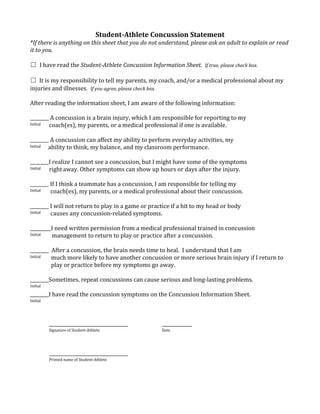
Student-Athlete Concussion Statement
*If there is anything on this sheet that you do not understand, please ask an adult to explain or read
it to you.

☐ I have read the Student-Athlete Concussion Information Sheet. If true, please check box.

☐ It is my responsibility to tell my parents, my coach, and/or a medical professional about my
injuries and illnesses. If you agree, please check box.

After reading the information sheet, I am aware of the following information:

________ A concussion is a brain injury, which I am responsible for reporting to my
Initial coach(es), my parents, or a medical professional if one is available.

________ A concussion can affect my ability to perform everyday activities, my
Initial ability to think, my balance, and my classroom performance.

________I realize I cannot see a concussion, but I might have some of the symptoms
Initial right away. Other symptoms can show up hours or days after the injury.

________ If I think a teammate has a concussion, I am responsible for telling my
Initial  coach(es), my parents, or a medical professional about their concussion.

________ I will not return to play in a game or practice if a hit to my head or body
Initial  causes any concussion-related symptoms.

_________I need written permission from a medical professional trained in concussion
Initial  management to return to play or practice after a concussion.

________ After a concussion, the brain needs time to heal. I understand that I am
Initial  much more likely to have another concussion or more serious brain injury if I return to
         play or practice before my symptoms go away.

________Sometimes, repeat concussions can cause serious and long-lasting problems.
Initial

________I have read the concussion symptoms on the Concussion Information Sheet.
Initial


          __________________________________         _____________
          Signature of Student-Athlete               Date


          __________________________________
          Printed name of Student-Athlete

Student Concussion Form

  • 1.
    CONCUSSION INFORMATION FOR STUDENT-ATHLETES What is a concussion? A concussion is an injury to the brain caused by a direct or indirect blow to the head. It results in your brain not working like it should. It may or may not cause you to black out or pass out. It can happen to you from a fall, a hit to the head, or a hit to the body that causes your head and your brain to move quickly back and forth. How do I know if I have a concussion? There are many signs and symptoms that you may have following a concussion that can affect your thinking, the way you feel, your mood, or your sleep. Here is what to look for: Thinking/Remembering Physical Emotional/Mood Sleep Difficulty thinking clearly Headache Irritability-everything Sleeping more than bothers you easily usual Feeling slowed down Fuzzy or blurry vision Sadness Sleeping less than Difficulty concentrating Feeling sick to your usual stomach/queasy More moody Difficulty remembering new Trouble falling information Vomiting/throwing up Feeling nervous or asleep worried Dizziness Balance problems Sensitivity to noise or light Table is adapted from the Centers for Disease Control and Prevention (http://www.cdc.gov/concussion/) What should I do if I think I have a concussion? If you are having any of the signs and symptoms listed above, you should tell your parents, coach, athletic trainer or school nurse so they can get you the help you need.
  • 2.
    When should Ibe particularly concerned? If you have a headache that gets worse over time, you are unable to control your body, you throw up repeatedly or feel more and more sick to your stomach, or your words are coming out funny/slurred, you should let an adult like your parent or coach or teacher know right away, so they can get you the help you need before things get any worse. What are some of the issues that may affect me after a concussion? You may have trouble in some of your classes at school or even with activities at home. If you continue to play or return to play too early with a concussion, you may have ongoing sadness, not feel like yourself, or have trouble remembering things for a long time. Once you have a concussion, you are more likely to have another concussion. How  do  I  know  when  it’s  ok  to  return  to  physical  activity  and   my sport after a concussion? After telling your coach, your parents, and any medical personnel around that you think you have a concussion, you will probably be seen by a doctor trained in helping people with concussions. Your school and your parents can help you decide who is best to treat you and help to make the decision on when you should return to activity/play or practice. Your school will have a policy in place for how to treat concussions. You should not return to play or practice on the same day as your suspected concussion. You should not have any symptoms at rest or during/after activity when you return to play, as this is a sign your brain has not recovered from the injury. Ask your licensed athletic trainer, coach, or athletic director about: The Emergency Action Plan at your school The concussion policy at your school What you should do if you have a concussion How to play your sport in the safest way This information is provided to you by the UNC Matthew Gfeller Sport-Related TBI Research Center, North  Carolina  Medical  Society,  North  Carolina  Athletic  Trainers’  Association,  Brain  Injury  Association   of North Carolina, North Carolina Neuropsychological Society, and North Carolina High School Athletic Association.
  • 3.
    Student-Athlete Concussion Statement *Ifthere is anything on this sheet that you do not understand, please ask an adult to explain or read it to you. ☐ I have read the Student-Athlete Concussion Information Sheet. If true, please check box. ☐ It is my responsibility to tell my parents, my coach, and/or a medical professional about my injuries and illnesses. If you agree, please check box. After reading the information sheet, I am aware of the following information: ________ A concussion is a brain injury, which I am responsible for reporting to my Initial coach(es), my parents, or a medical professional if one is available. ________ A concussion can affect my ability to perform everyday activities, my Initial ability to think, my balance, and my classroom performance. ________I realize I cannot see a concussion, but I might have some of the symptoms Initial right away. Other symptoms can show up hours or days after the injury. ________ If I think a teammate has a concussion, I am responsible for telling my Initial coach(es), my parents, or a medical professional about their concussion. ________ I will not return to play in a game or practice if a hit to my head or body Initial causes any concussion-related symptoms. _________I need written permission from a medical professional trained in concussion Initial management to return to play or practice after a concussion. ________ After a concussion, the brain needs time to heal. I understand that I am Initial much more likely to have another concussion or more serious brain injury if I return to play or practice before my symptoms go away. ________Sometimes, repeat concussions can cause serious and long-lasting problems. Initial ________I have read the concussion symptoms on the Concussion Information Sheet. Initial __________________________________ _____________ Signature of Student-Athlete Date __________________________________ Printed name of Student-Athlete