Chromosome (chroma - colour; some -
body)
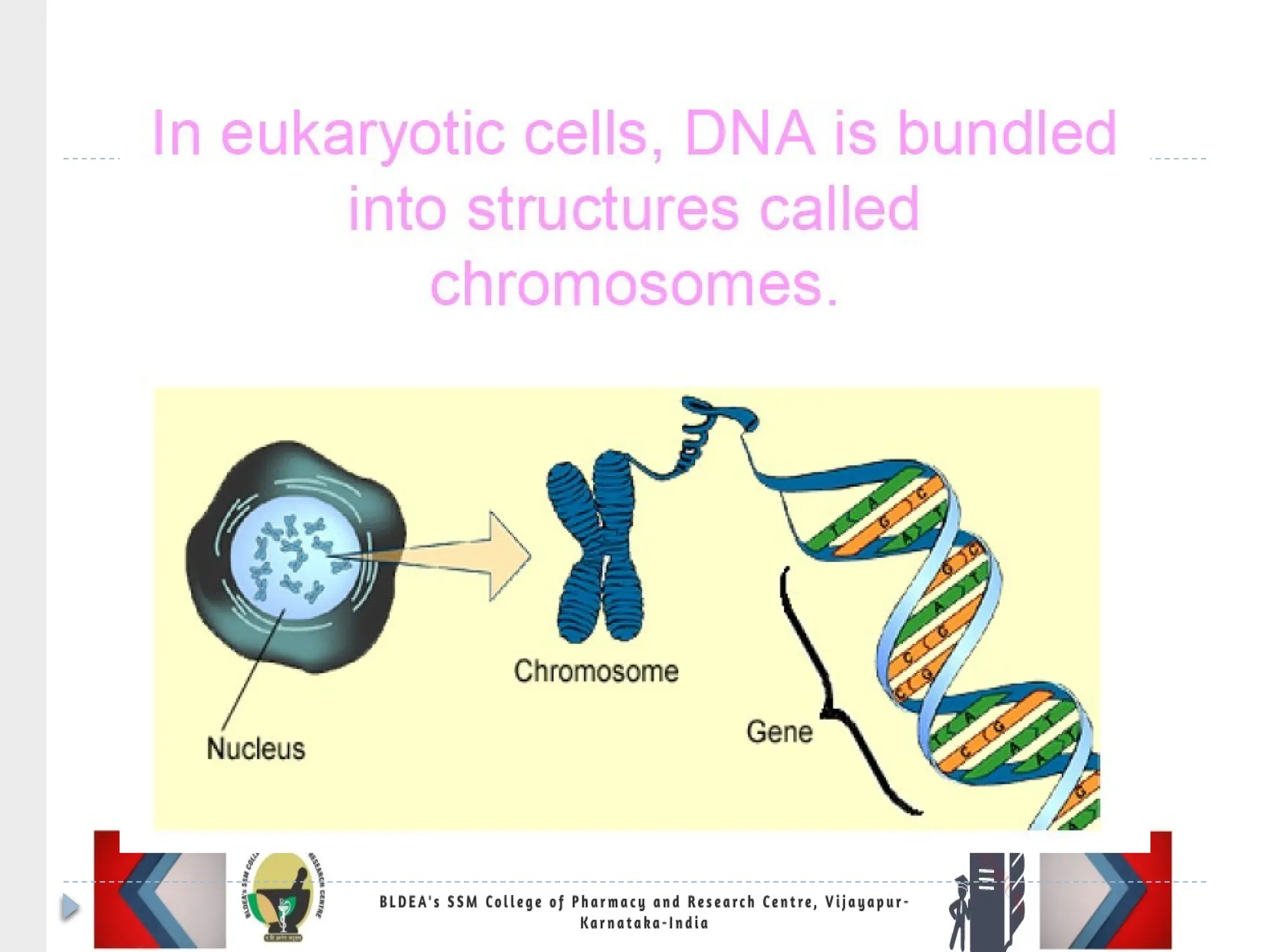
 A chromosome is a thread-like self-replicating genetic
structure containing organized DNA molecule package
found in the nucleus of the cell.
 Chromosomes are seen during metaphase stage of mitosis
when the cells are stained with suitable basic dye and viewed
under light microscope.
 E. Strasburger in 1875 discovered thread-like structures
which appeared during cell division.
 In all types of higher organisms (eukaryote), the well
organized nucleus contains definite number of
chromosomes of definite size, and shape.
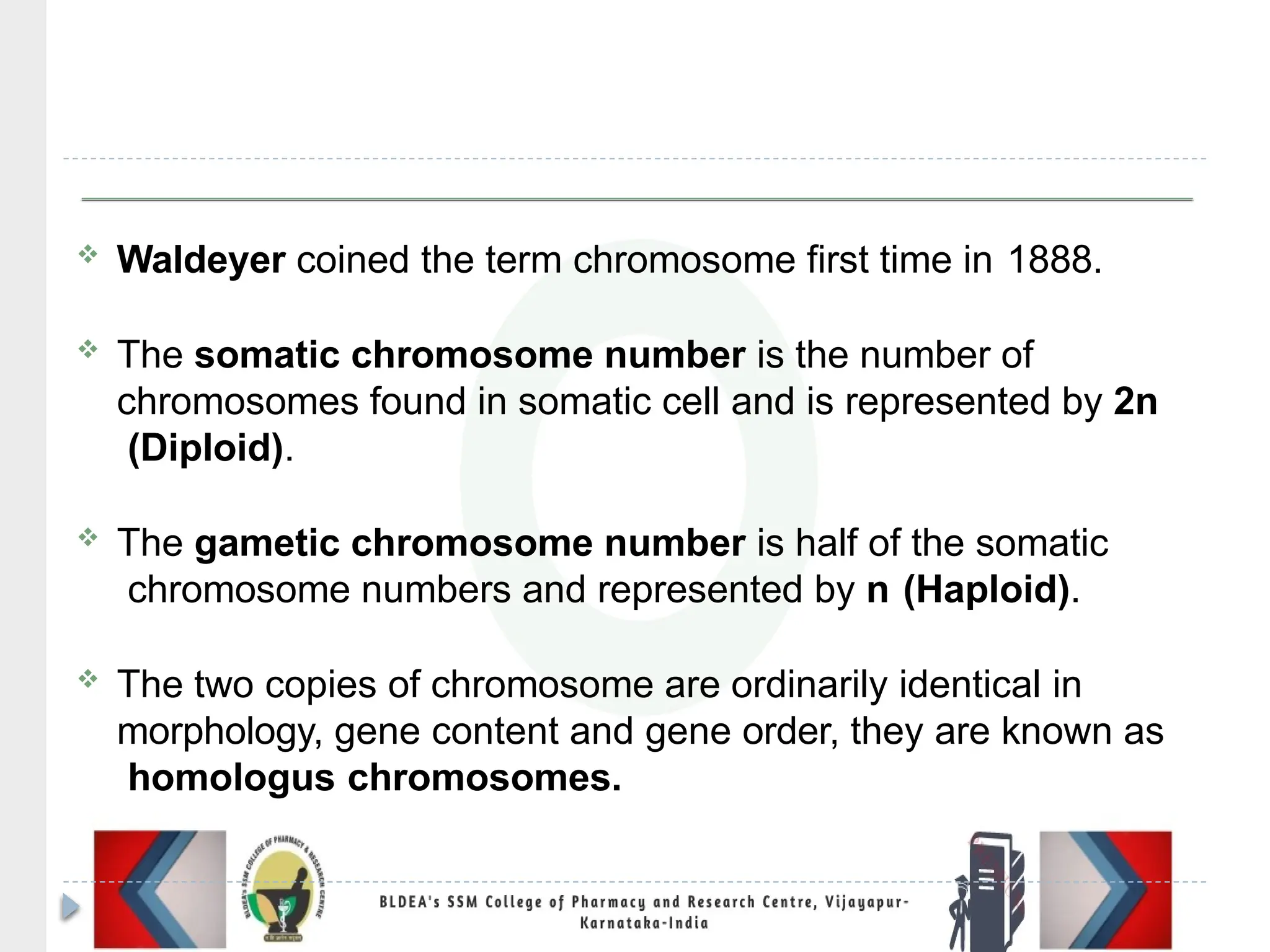
 Waldeyer coined the term chromosome first time in 1888.
 The somatic chromosome number is the number of
chromosomes found in somatic cell and is represented by 2n
(Diploid).
 The gametic chromosome number is half of the somatic
chromosome numbers and represented by n (Haploid).
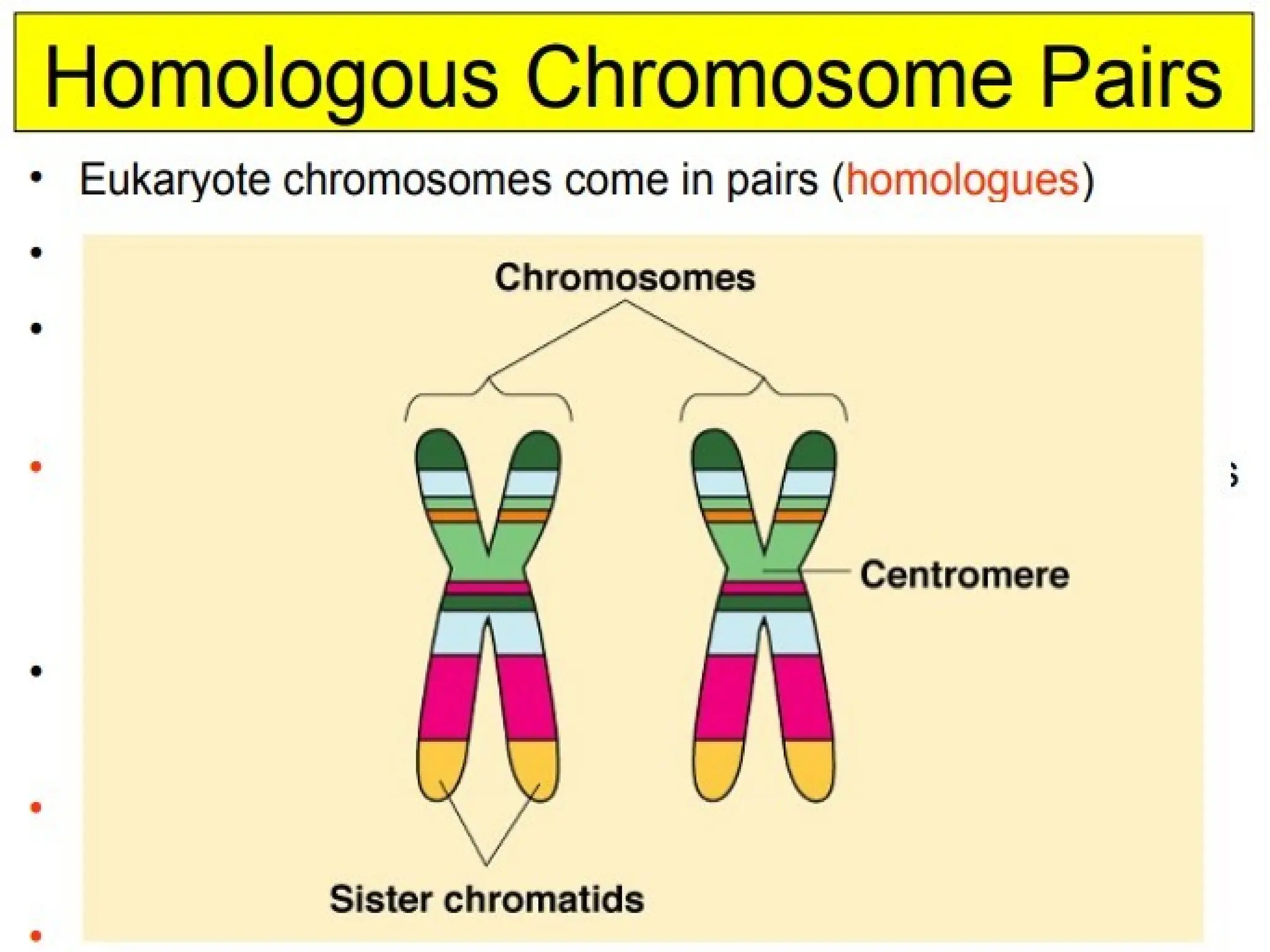
 The two copies of chromosome are ordinarily identical in
morphology, gene content and gene order, they are known as
homologus chromosomes.
Chromosomes are of two types
Autosomes: that control characters other than sex
characters or carry genes for somatic characters.
Sex chromosomes (Gonosomes) – Chromosomes involved in
sex determination.
Humans and most other mammals have two sex
chromosomes X & Y, also called heterosome.
Females have two X chromosomes in diploid cells; males
have an X and a Y chromosome.
Diploid and Haploid chromosome number
 Diploid cells (2N where N- chromosome number) have two
homologous copies of each chromosome.
 The body cells of animals are diploid.
 Haploid cells (N) have only one copy of each chromosome.
 In animals, ex: gametes (sperm and eggs).
 The number of chromosomes varies from species to
species.
 Normally all individual of a species have the same
chromosome number.
 The size of chromosome is normally measured at mitotic
metaphase and may be as short as 0.25 µm in fungi, or as
long as 30 µm in some plants.
 Each chromosome has two arms - p (the shorter of the
two) and q (the longer).
 Chromosome shape is usually observed at
anaphase,
when the position of primary constriction
(centromere) determines chromosome shape.
 This constriction or centromere can be terminal, sub-
Centromere (Primary constriction)
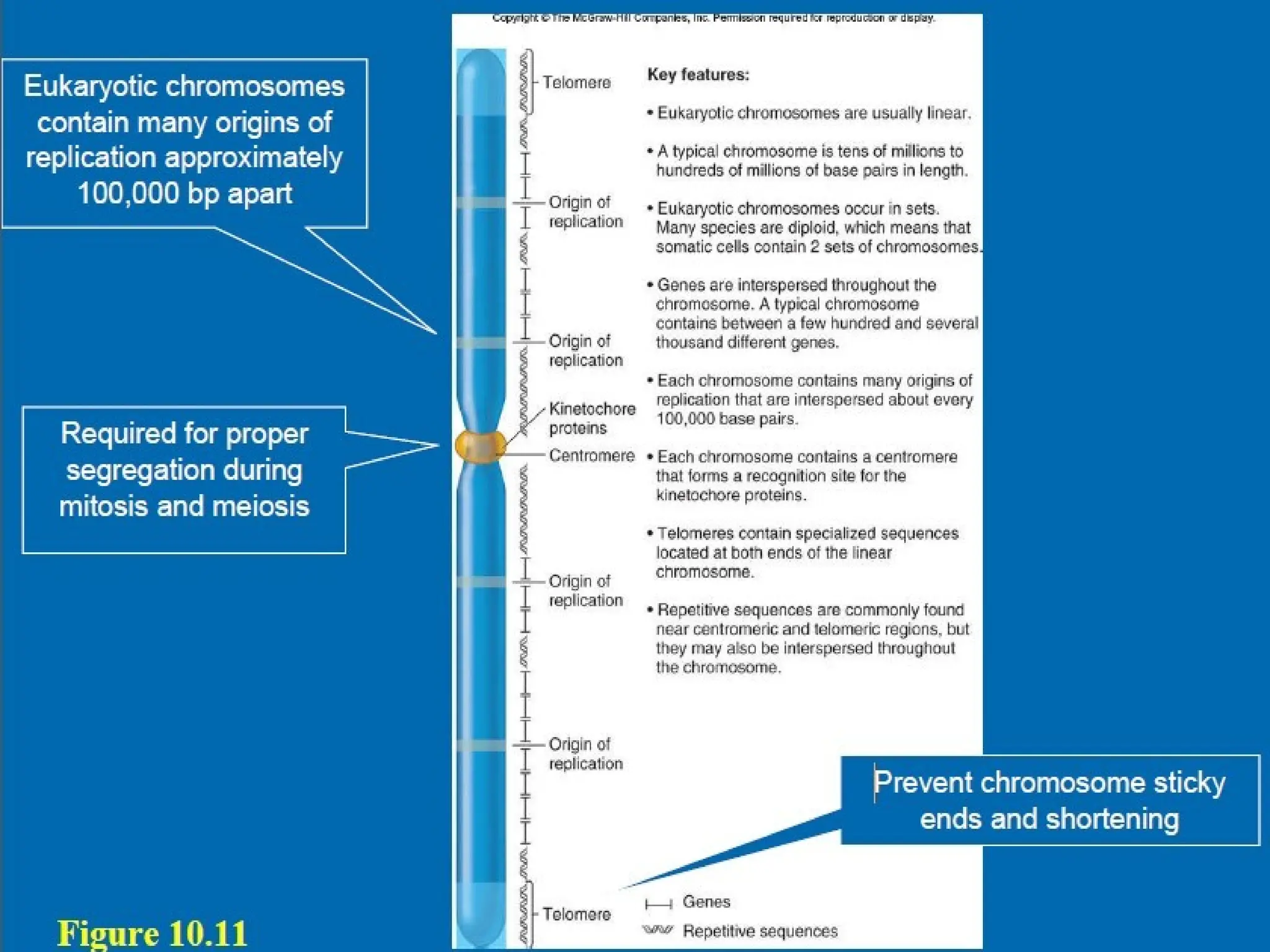
 Centromere is the landmark for identification of chromosome.
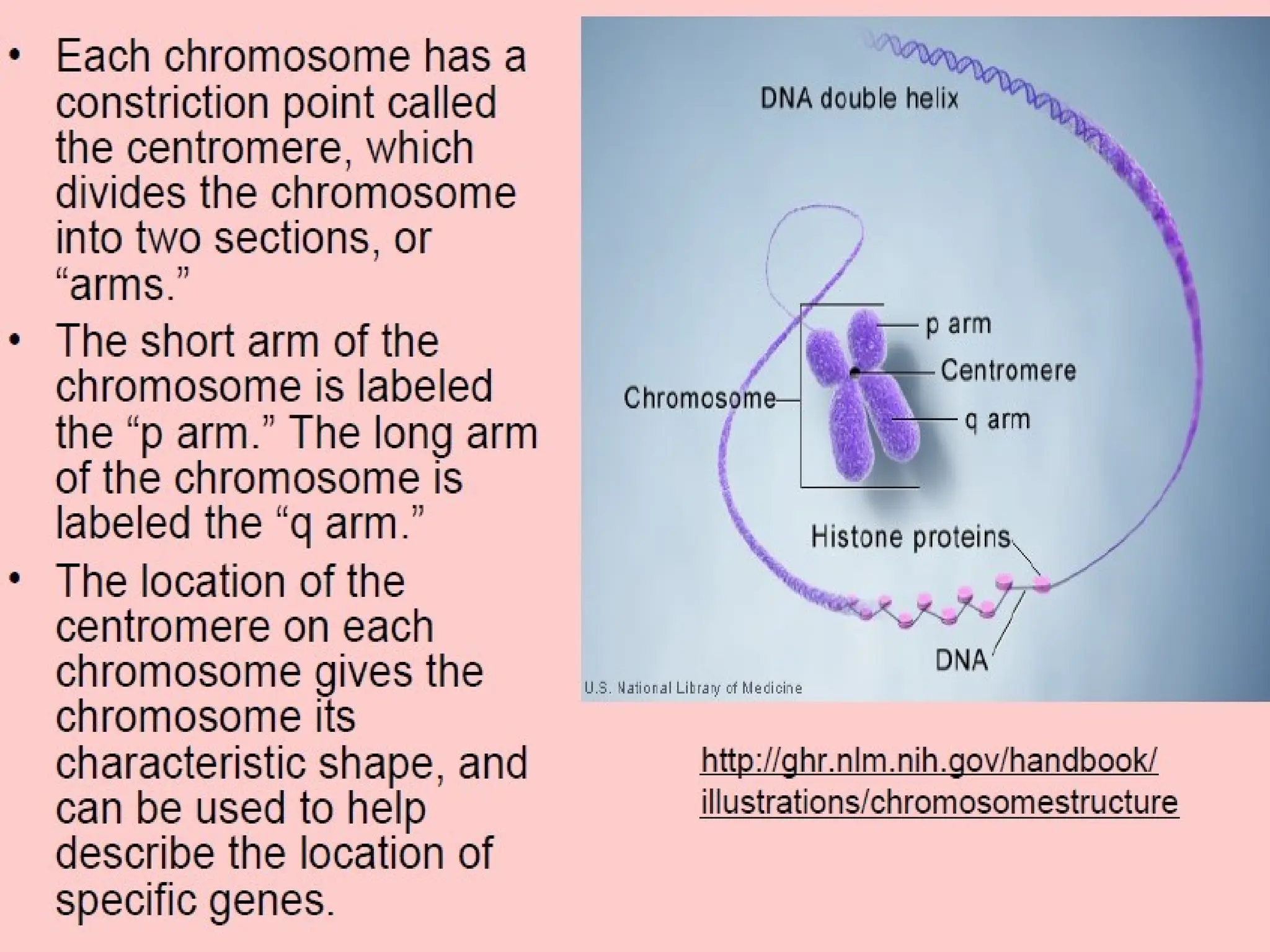
 Each chromosome has a constriction point called the centromere
(Synonym: Kinetochore), which divides the chromosome into two
sections or arms.
 The short arm of the chromosome is labeled the "p" arm.
The long arm of the chromosome is labeled the "q" arm.
Telomere
 The two ends of a chromosome are known as telomeres, they
play critical roles in chromosome replication and maintenance of
chromosomal length.
 The telomeres are highly stable and telomeres of different
chromosomes do not fuse.
 The telomeric region of chromosome is made up of
repeatative sequence of T and G bases
Size of the chromosome
 The size of the chromosome varies from stage to stage of cell
division.
 The chromosomes are the longest and thinnest during
interphase (resting stage) and hence not visible under light
microscope.
 Chromosomes are the smallest and thickest during mitotic
metaphase.
 Chromosome size is not proportional to the number of genes
present on the chromosome.
 The location of the centromere on each chromosome gives
the chromosome its characteristic shape.
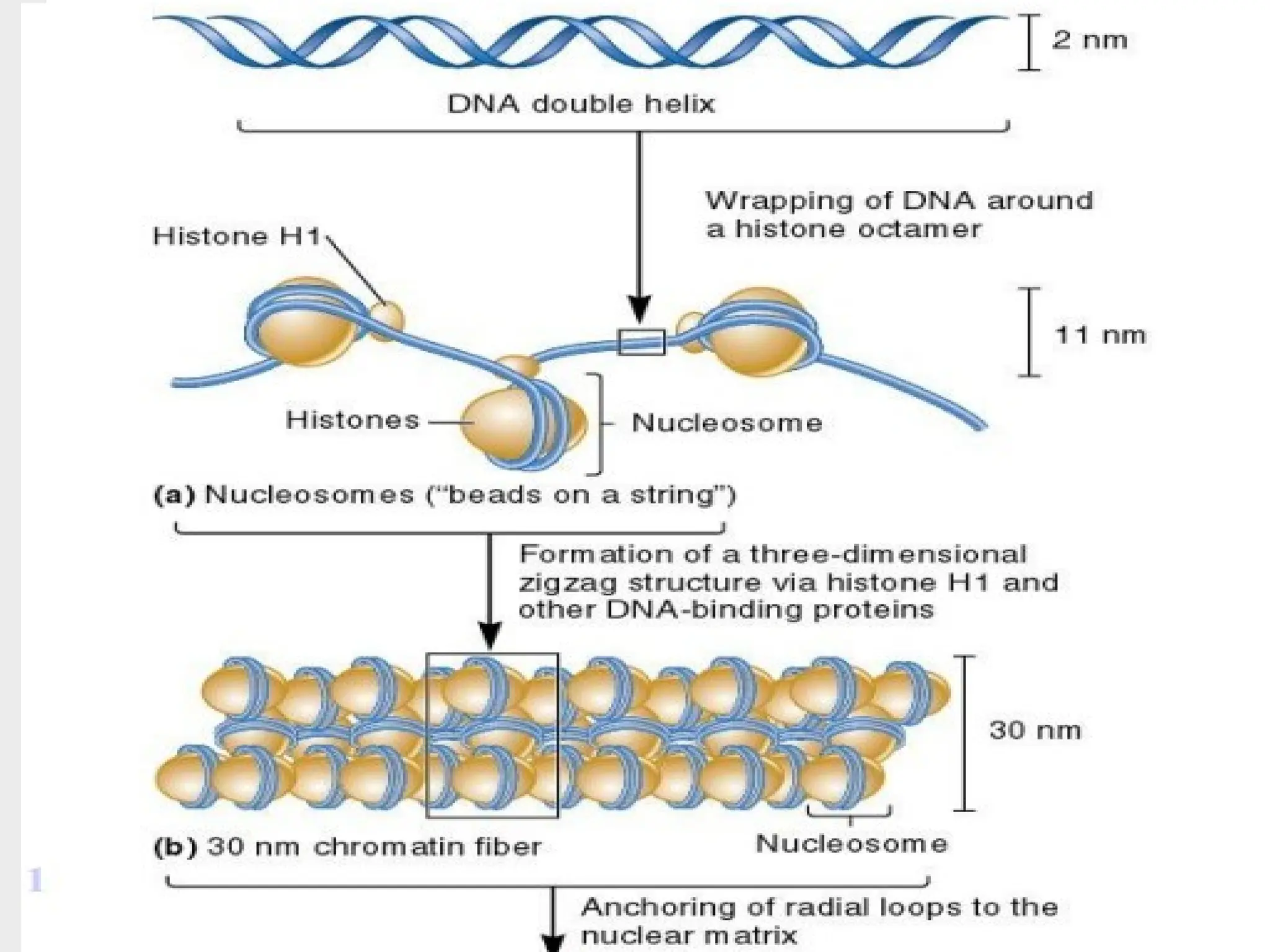
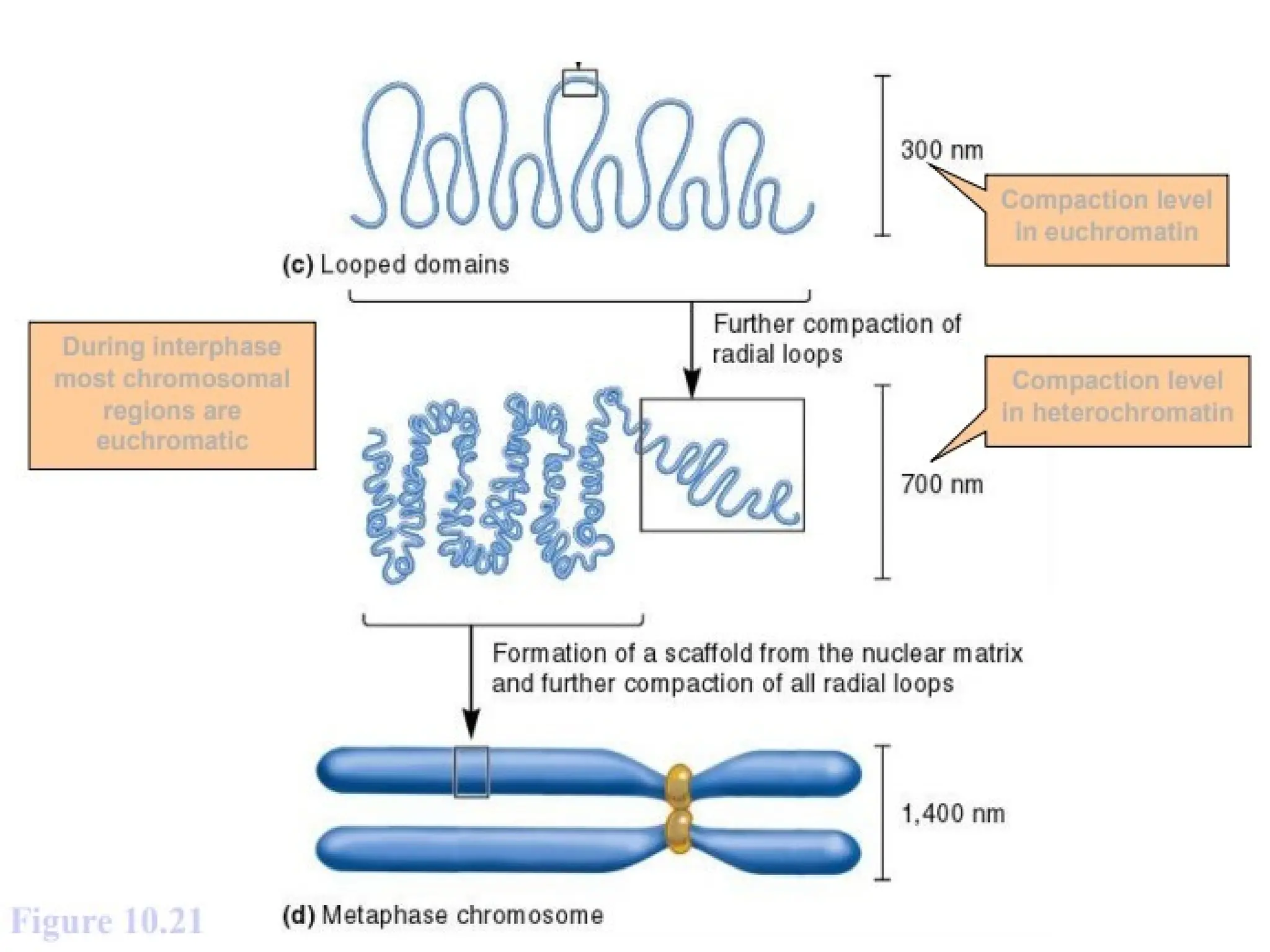
How large size sequential
DNA can fit in to small size
chromosome ?
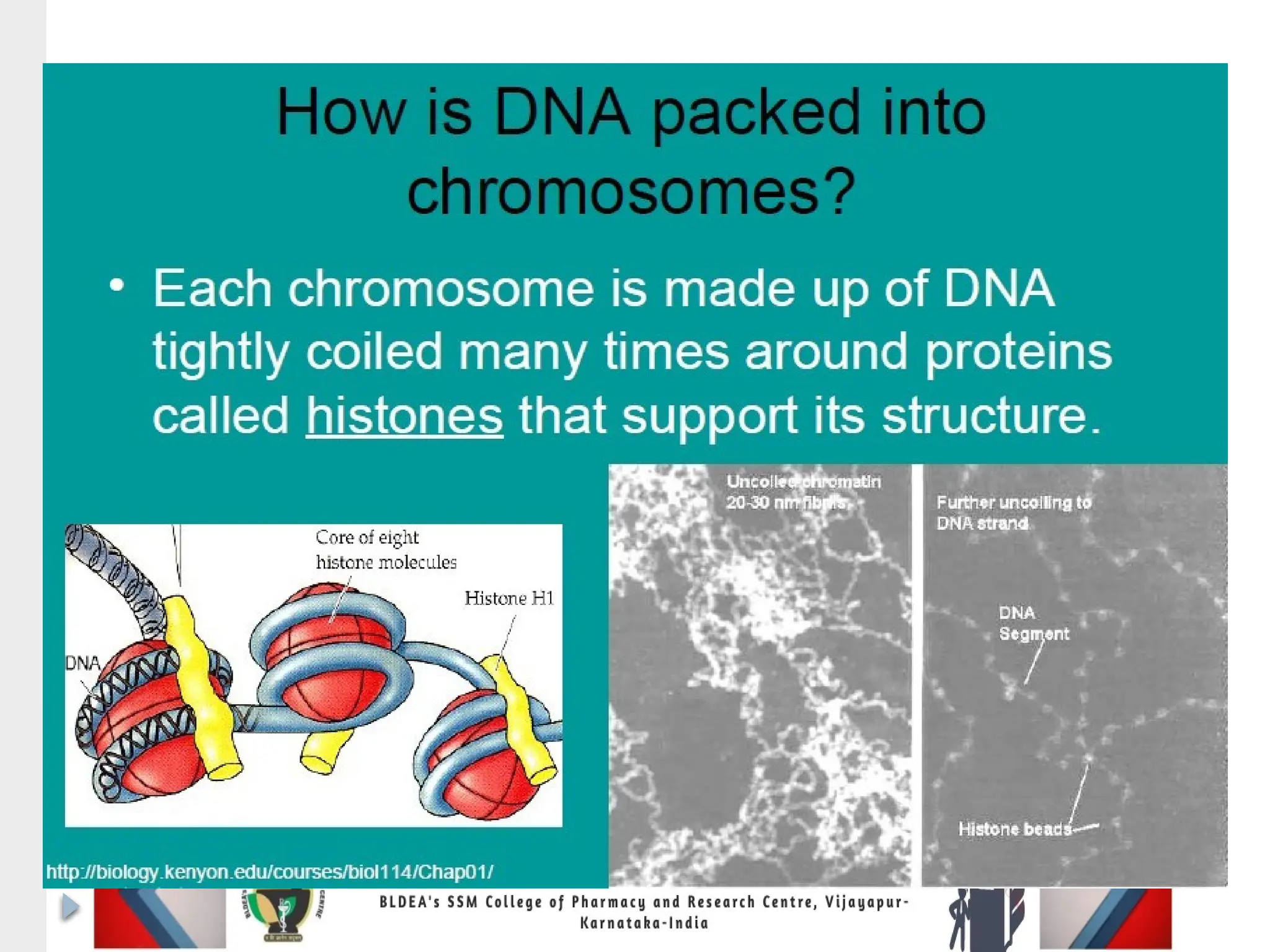
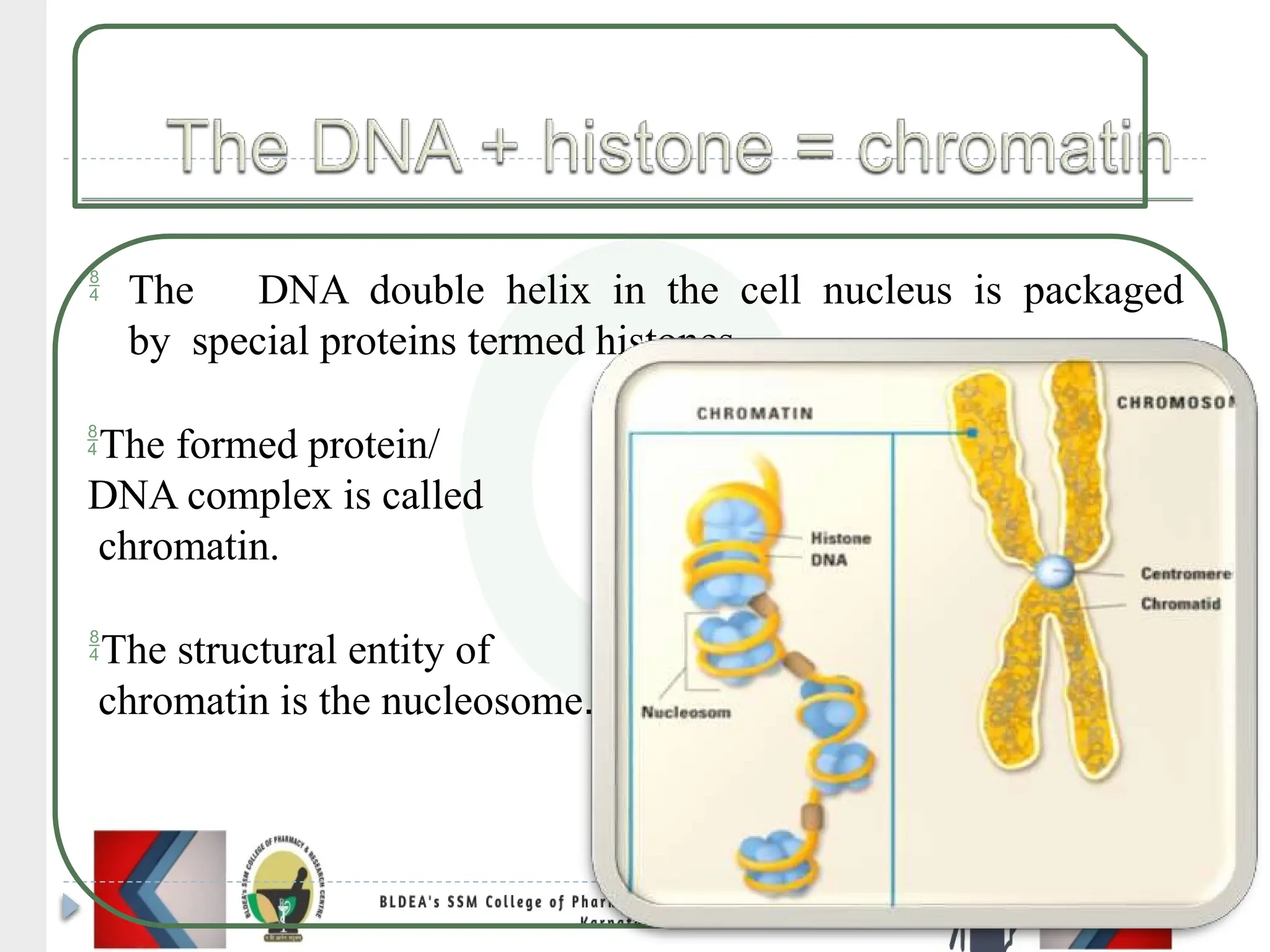
 The DNA double helix in the cell nucleus is packaged
by special proteins termed histones.
The formed protein/
DNA complex is called
chromatin.
The structural entity of
chromatin is the nucleosome.
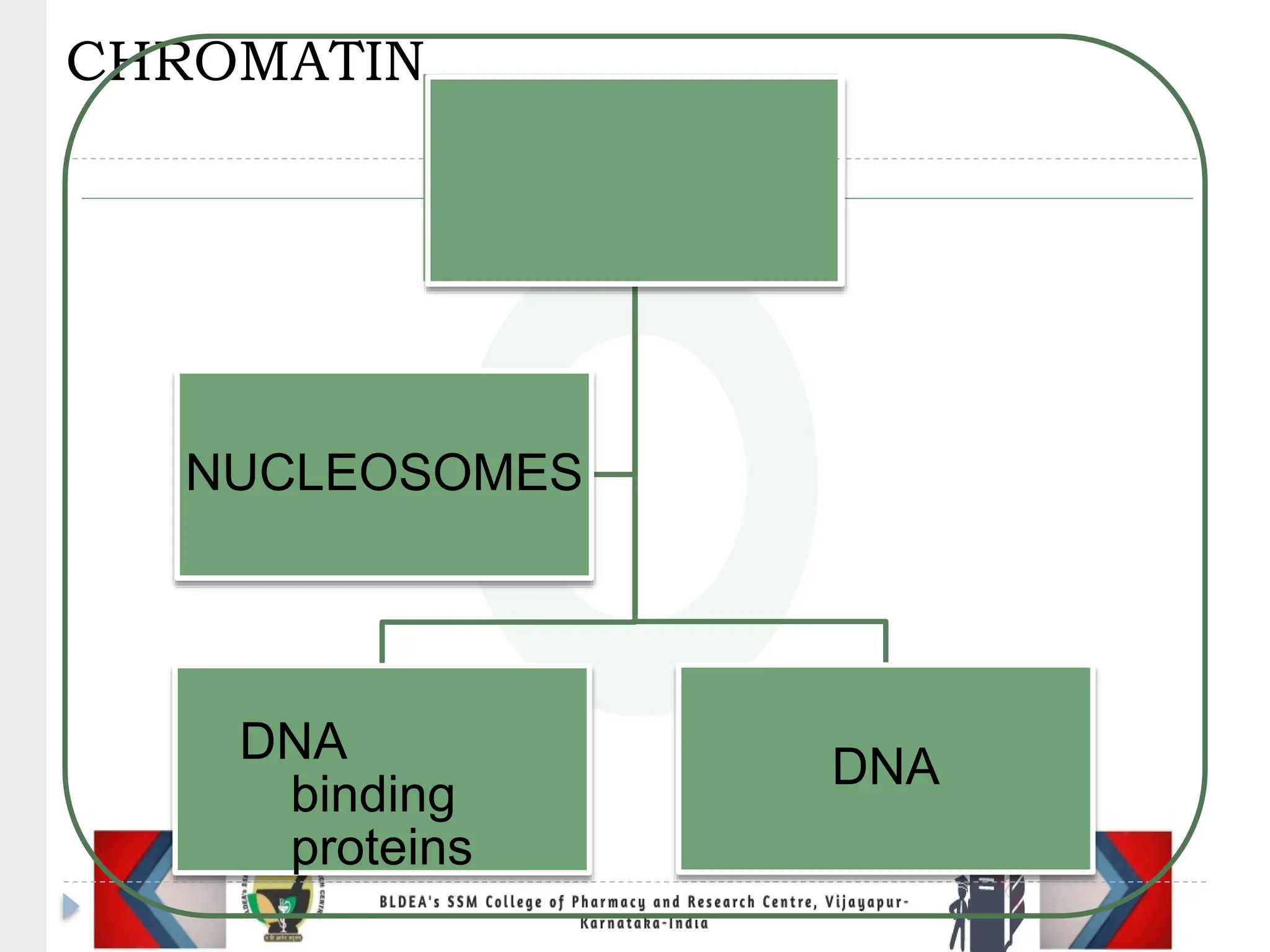
CHROMATIN
DNA
binding
proteins
DNA
NUCLEOSOMES
CHROMOSOME PACKAGING
2 Chromozome and structure (2).pptx both eukaryotic and prokaryotic

2 Chromozome and structure (2).pptx both eukaryotic and prokaryotic

  • 5.
    Chromosome (chroma -colour; some - body)  A chromosome is a thread-like self-replicating genetic structure containing organized DNA molecule package found in the nucleus of the cell.  Chromosomes are seen during metaphase stage of mitosis when the cells are stained with suitable basic dye and viewed under light microscope.  E. Strasburger in 1875 discovered thread-like structures which appeared during cell division.  In all types of higher organisms (eukaryote), the well organized nucleus contains definite number of chromosomes of definite size, and shape.
  • 8.
     Waldeyer coinedthe term chromosome first time in 1888.  The somatic chromosome number is the number of chromosomes found in somatic cell and is represented by 2n (Diploid).  The gametic chromosome number is half of the somatic chromosome numbers and represented by n (Haploid).  The two copies of chromosome are ordinarily identical in morphology, gene content and gene order, they are known as homologus chromosomes.
  • 9.
    Chromosomes are oftwo types Autosomes: that control characters other than sex characters or carry genes for somatic characters. Sex chromosomes (Gonosomes) – Chromosomes involved in sex determination. Humans and most other mammals have two sex chromosomes X & Y, also called heterosome. Females have two X chromosomes in diploid cells; males have an X and a Y chromosome.
  • 10.
    Diploid and Haploidchromosome number  Diploid cells (2N where N- chromosome number) have two homologous copies of each chromosome.  The body cells of animals are diploid.  Haploid cells (N) have only one copy of each chromosome.  In animals, ex: gametes (sperm and eggs).  The number of chromosomes varies from species to species.  Normally all individual of a species have the same chromosome number.
  • 11.
     The sizeof chromosome is normally measured at mitotic metaphase and may be as short as 0.25 µm in fungi, or as long as 30 µm in some plants.  Each chromosome has two arms - p (the shorter of the two) and q (the longer).  Chromosome shape is usually observed at anaphase, when the position of primary constriction (centromere) determines chromosome shape.  This constriction or centromere can be terminal, sub-
  • 14.
    Centromere (Primary constriction) Centromere is the landmark for identification of chromosome.  Each chromosome has a constriction point called the centromere (Synonym: Kinetochore), which divides the chromosome into two sections or arms.  The short arm of the chromosome is labeled the "p" arm. The long arm of the chromosome is labeled the "q" arm. Telomere  The two ends of a chromosome are known as telomeres, they play critical roles in chromosome replication and maintenance of chromosomal length.  The telomeres are highly stable and telomeres of different chromosomes do not fuse.  The telomeric region of chromosome is made up of repeatative sequence of T and G bases
  • 15.
    Size of thechromosome  The size of the chromosome varies from stage to stage of cell division.  The chromosomes are the longest and thinnest during interphase (resting stage) and hence not visible under light microscope.  Chromosomes are the smallest and thickest during mitotic metaphase.  Chromosome size is not proportional to the number of genes present on the chromosome.  The location of the centromere on each chromosome gives the chromosome its characteristic shape.
  • 16.
    How large sizesequential DNA can fit in to small size chromosome ?
  • 17.
     The DNAdouble helix in the cell nucleus is packaged by special proteins termed histones. The formed protein/ DNA complex is called chromatin. The structural entity of chromatin is the nucleosome.
  • 18.
  • 19.