STRUCTURE OF
AN ARTICLE
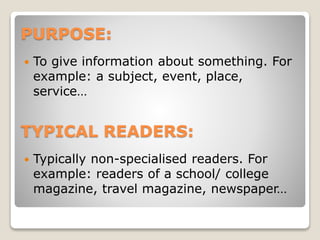
PURPOSE:


To give information about something. For
example: a subject, event, place,
service…

TYPICAL READERS:


Typically non-specialised readers. For
example: readers of a school/ college
magazine, travel magazine, newspaper…
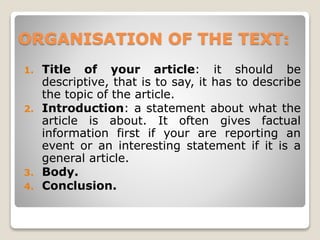
ORGANISATION OF THE TEXT:
1.

2.

3.
4.

Title of your article: it should be
descriptive, that is to say, it has to describe
the topic of the article.
Introduction: a statement about what the
article is about. It often gives factual
information first if your are reporting an
event or an interesting statement if it is a
general article.
Body.
Conclusion.
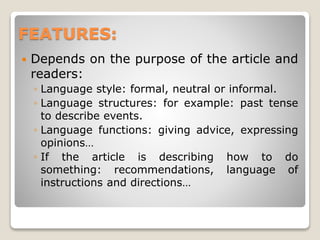
FEATURES:


Depends on the purpose of the article and
readers:
◦ Language style: formal, neutral or informal.
◦ Language structures: for example: past tense
to describe events.
◦ Language functions: giving advice, expressing
opinions…
◦ If the article is describing how to do
something: recommendations, language of
instructions and directions…

Structure of an article

  • 1.
  • 2.
    PURPOSE:  To give informationabout something. For example: a subject, event, place, service… TYPICAL READERS:  Typically non-specialised readers. For example: readers of a school/ college magazine, travel magazine, newspaper…
  • 3.
    ORGANISATION OF THETEXT: 1. 2. 3. 4. Title of your article: it should be descriptive, that is to say, it has to describe the topic of the article. Introduction: a statement about what the article is about. It often gives factual information first if your are reporting an event or an interesting statement if it is a general article. Body. Conclusion.
  • 4.
    FEATURES:  Depends on thepurpose of the article and readers: ◦ Language style: formal, neutral or informal. ◦ Language structures: for example: past tense to describe events. ◦ Language functions: giving advice, expressing opinions… ◦ If the article is describing how to do something: recommendations, language of instructions and directions…