ISE II (B2)
PRESENT PERFECT
CONTINUOUS
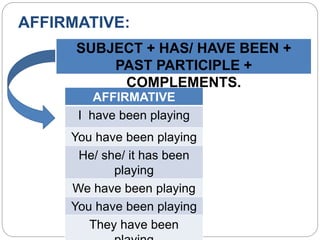
AFFIRMATIVE:
SUBJECT + HAS/ HAVE BEEN +
PAST PARTICIPLE +
COMPLEMENTS.
AFFIRMATIVE
I have been playing
You have been playing
He/ she/ it has been
playing
We have been playing
You have been playing
They have been
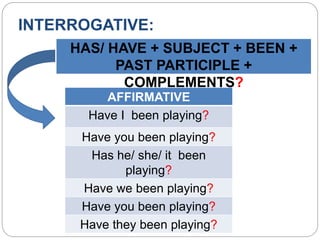
INTERROGATIVE:
HAS/ HAVE + SUBJECT + BEEN +
PAST PARTICIPLE +
COMPLEMENTS?
AFFIRMATIVE
Have I been playing?
Have you been playing?
Has he/ she/ it been
playing?
Have we been playing?
Have you been playing?
Have they been playing?
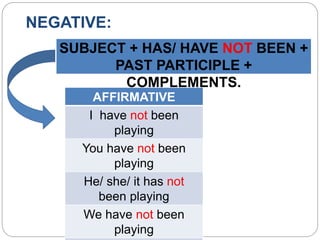
NEGATIVE:
SUBJECT + HAS/ HAVE NOT BEEN +
PAST PARTICIPLE +
COMPLEMENTS.
AFFIRMATIVE
I have not been
playing
You have not been
playing
He/ she/ it has not
been playing
We have not been
playing
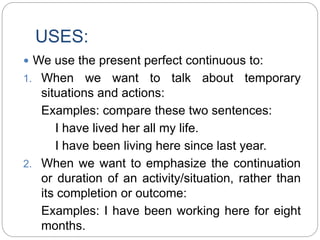
USES:
 We use the present perfect continuous to:
1. When we want to talk about temporary
situations and actions:
Examples: compare these two sentences:
I have lived her all my life.
I have been living here since last year.
2. When we want to emphasize the continuation
or duration of an activity/situation, rather than
its completion or outcome:
Examples: I have been working here for eight
months.

ISE II (B2): Present Perfect Continuous

  • 1.
    ISE II (B2) PRESENTPERFECT CONTINUOUS
  • 2.
    AFFIRMATIVE: SUBJECT + HAS/HAVE BEEN + PAST PARTICIPLE + COMPLEMENTS. AFFIRMATIVE I have been playing You have been playing He/ she/ it has been playing We have been playing You have been playing They have been
  • 3.
    INTERROGATIVE: HAS/ HAVE +SUBJECT + BEEN + PAST PARTICIPLE + COMPLEMENTS? AFFIRMATIVE Have I been playing? Have you been playing? Has he/ she/ it been playing? Have we been playing? Have you been playing? Have they been playing?
  • 4.
    NEGATIVE: SUBJECT + HAS/HAVE NOT BEEN + PAST PARTICIPLE + COMPLEMENTS. AFFIRMATIVE I have not been playing You have not been playing He/ she/ it has not been playing We have not been playing
  • 5.
    USES:  We usethe present perfect continuous to: 1. When we want to talk about temporary situations and actions: Examples: compare these two sentences: I have lived her all my life. I have been living here since last year. 2. When we want to emphasize the continuation or duration of an activity/situation, rather than its completion or outcome: Examples: I have been working here for eight months.