How to Write an
Article for Your
School Newspaper
HTTP://WWW.WIKIHOW.COM/WRITE-AN-ARTICLE-FOR-YOUR-SCHOOL-NEWSPAPER
To write an article
 A great story idea
 Research and interview your sources
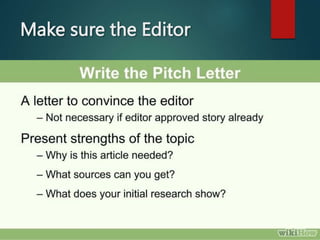
 Pitch the story
 Write the story in the proper newspaper
format
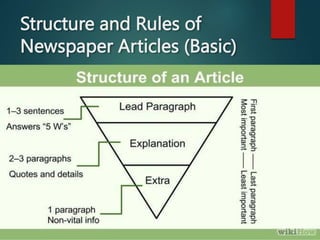
Structure and Rules of
Newspaper Articles (Basic)
Structure and Rules of
Newspaper Articles (Basic)
Basics of current events. They answer
the five key questions:
1. Who
2. What
3. Where
4. When
5. why
6. + How
Structure and Rules of
Newspaper Articles (Feature)
Feature articles are
1. Longer
2. More in depth
3. One subject from multiple angles
4. Written in a more creative
format
Structure of an article
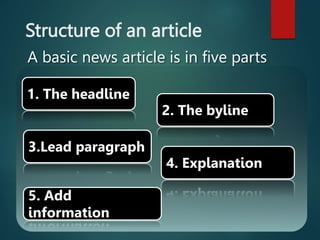
A basic news article is in five parts
1. The headline
2. The byline
3.Lead paragraph
4. Explanation
5. Add
information
The headline
 Also referred to as the “hed”, this is a
short, attention grabbing statement
about the event.
 It will appear at the top of your article.
The byline
 Tells the reader who wrote the article. If
you wrote the article, your name will
appear in the byline.
Lead paragraph
 This first paragraph contains the who,
what, when, where, and why in as few
words as possible. You must find all the
answers to these questions and place
them in the opening 1-3 sentences
of the article.
Explanation
 The second-third paragraphs should
include any other facts or details the
reader should know.
 This is where the writer answers any other
important questions the reader might
have after reading the headline and the
lead paragraph. This section can include
direct quotes from witnesses or
bystanders.
Additional information
 The last paragraph contains the least
important information.
 For example, information about a
similar event or occurrence.
What a “dek” and a “lede”
 The “dek” is a blurb
 Usually one to two sentences, tells the
reader what the story is going to be about.
 Appear under the “hed” or headline of the
article.
 For example, an article about fiber might
have the head: “you’re fiber-ed!” And the
dek might be: “ten reasons to eat more
fiber.”
Tone and point of view
The main purpose of the article is:
Inform your readers of all the facts
around a story or event.
Maintain a neutral tone throughout the
article
Cover all sides or perspectives on the
story.
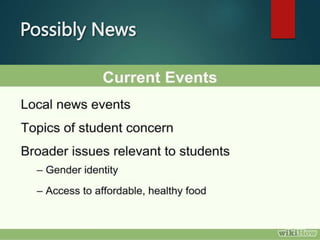
Possibly News
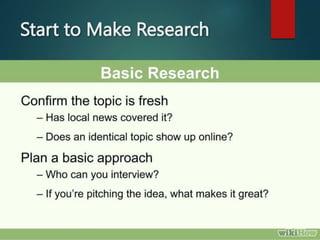
Start to Make Research
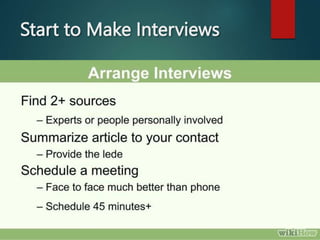
Start to Make Interviews
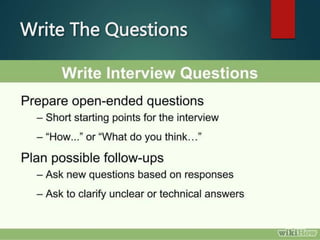
Write The Questions
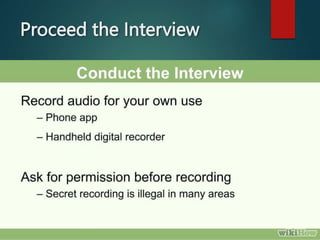
Proceed the Interview
Make sure the Editor
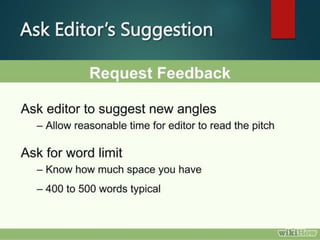
Ask Editor’s Suggestion
Thanks

How_to_Write_School_News.pptx school pub

  • 1.
    How to Writean Article for Your School Newspaper HTTP://WWW.WIKIHOW.COM/WRITE-AN-ARTICLE-FOR-YOUR-SCHOOL-NEWSPAPER
  • 2.
    To write anarticle  A great story idea  Research and interview your sources  Pitch the story  Write the story in the proper newspaper format
  • 3.
    Structure and Rulesof Newspaper Articles (Basic)
  • 4.
    Structure and Rulesof Newspaper Articles (Basic) Basics of current events. They answer the five key questions: 1. Who 2. What 3. Where 4. When 5. why 6. + How
  • 5.
    Structure and Rulesof Newspaper Articles (Feature) Feature articles are 1. Longer 2. More in depth 3. One subject from multiple angles 4. Written in a more creative format
  • 6.
    Structure of anarticle A basic news article is in five parts 1. The headline 2. The byline 3.Lead paragraph 4. Explanation 5. Add information
  • 7.
    The headline  Alsoreferred to as the “hed”, this is a short, attention grabbing statement about the event.  It will appear at the top of your article.
  • 8.
    The byline  Tellsthe reader who wrote the article. If you wrote the article, your name will appear in the byline.
  • 9.
    Lead paragraph  Thisfirst paragraph contains the who, what, when, where, and why in as few words as possible. You must find all the answers to these questions and place them in the opening 1-3 sentences of the article.
  • 10.
    Explanation  The second-thirdparagraphs should include any other facts or details the reader should know.  This is where the writer answers any other important questions the reader might have after reading the headline and the lead paragraph. This section can include direct quotes from witnesses or bystanders.
  • 11.
    Additional information  Thelast paragraph contains the least important information.  For example, information about a similar event or occurrence.
  • 12.
    What a “dek”and a “lede”  The “dek” is a blurb  Usually one to two sentences, tells the reader what the story is going to be about.  Appear under the “hed” or headline of the article.  For example, an article about fiber might have the head: “you’re fiber-ed!” And the dek might be: “ten reasons to eat more fiber.”
  • 13.
  • 14.
    Tone and pointof view The main purpose of the article is: Inform your readers of all the facts around a story or event. Maintain a neutral tone throughout the article Cover all sides or perspectives on the story.
  • 15.
  • 16.
    Start to MakeResearch
  • 17.
    Start to MakeInterviews
  • 18.
  • 19.
  • 20.
  • 21.
  • 22.