PARENTAL STRESS & ANXIETY
What is stress
An imbalance between your current coping abilities and the expectations or demands that are placed on
you. including demands that you place on yourself — both real and perceived.
Stress arises from positive as well as negative events.
Fear
Stress
Anxiety
Triggers of Stress
Child(ren) related
Having toddler(s)/
infant(s)
Kids with special needs
Kids with medical /
behavioural issues
Other stresses
Financial problems
Social isolation
No / inadequate support system
discrimination
How it affects self
For conscientious parents, worry and guilt may be a major cause of
stress.
reassure yourself that this isn't a reflection on your worthiness or
competence.
 If you're feeling overwhelmed, that doesn't mean you're an inferior
parent. You've just got too much on your plate.
It is important to remember, feelings of inadequacy, defensiveness, guilt
- these feelings make parenting stress worse
How it affects care giving
Chronic exposure to parental stress can change the way a baby
develops
Emotions exhibited due to stress infect the environment around
us.
 Make fewer attempts to show affection to your child
Make you less sensitive to your child
Overreact to your children (blowing a fuse, getting upset so
easily)
How it affects care giving
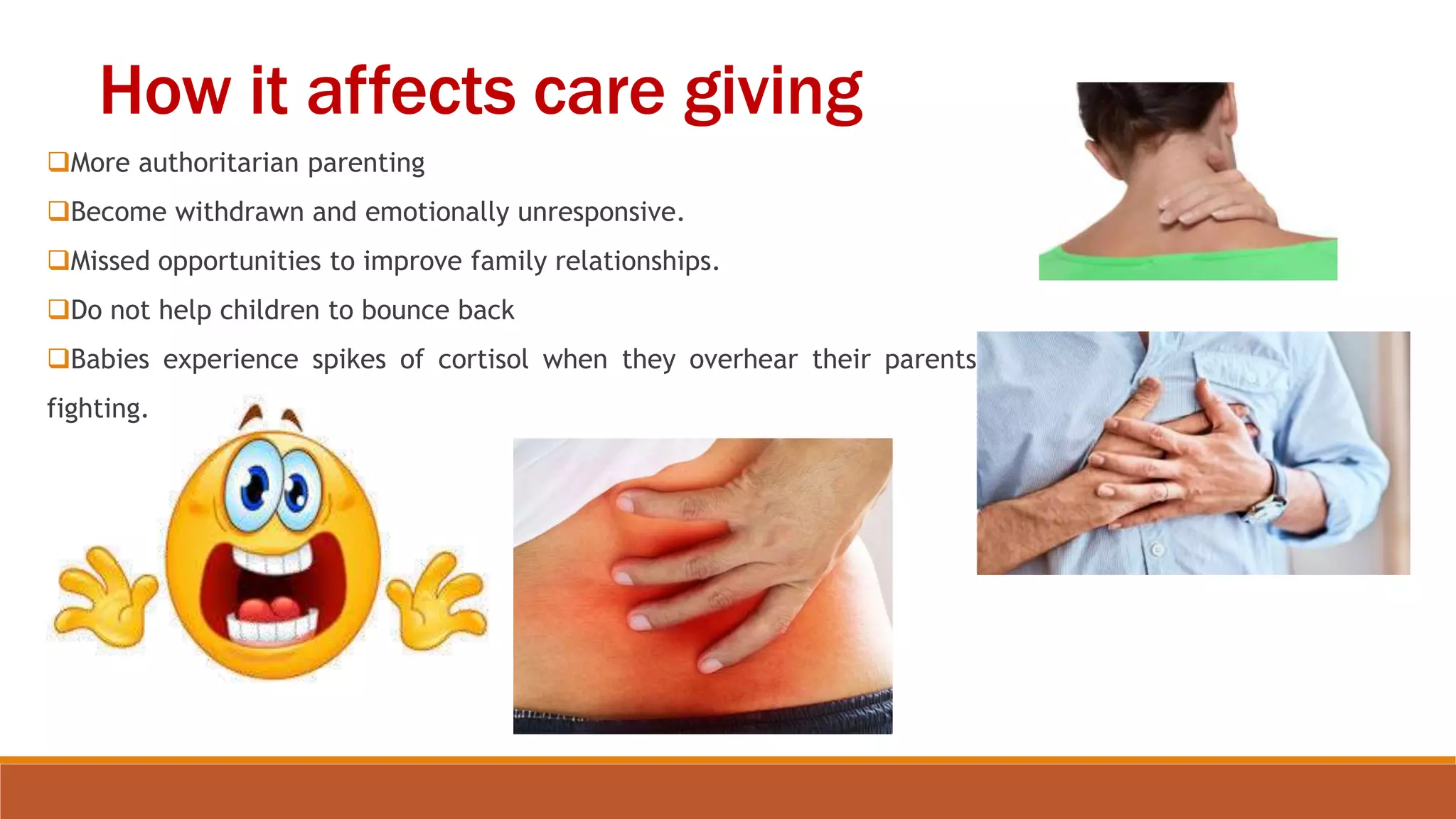
More authoritarian parenting
Become withdrawn and emotionally unresponsive.
Missed opportunities to improve family relationships.
Do not help children to bounce back
Babies experience spikes of cortisol when they overhear their parents
fighting.
Symptoms of stress
Mental Stress
• Forgetfulness
• Cynicism
• Negativism
• Self-criticism
Emotional Stress
• Irritability,
• Low Tolerance,
• Decreased
Empathy,
• Anxiety,
• Depression
Physical Stress
• Fatigue,
• Tightness Of
Neck Or Back,
• Stomach Aches,
• Headaches
Behavioural Stress
• Interpersonal
Conflict,
• Proneness To
Accidents, Sleep
Disturbance ,
• Eating More Or
Less,
• Decreased
Involvement With
Others,
• Isolation
Stress and pathology
Coping strategies
Self-awareness
Set the Goal-
Recognise
fix it
Delay the action
Practice Mindfulness
Learn to relax
Exercise Modulation
Empathetic
Adjust your life style

Stress and Anxiety in Parents.pptx

  • 1.
  • 2.
    What is stress Animbalance between your current coping abilities and the expectations or demands that are placed on you. including demands that you place on yourself — both real and perceived. Stress arises from positive as well as negative events. Fear Stress Anxiety
  • 3.
    Triggers of Stress Child(ren)related Having toddler(s)/ infant(s) Kids with special needs Kids with medical / behavioural issues Other stresses Financial problems Social isolation No / inadequate support system discrimination
  • 4.
    How it affectsself For conscientious parents, worry and guilt may be a major cause of stress. reassure yourself that this isn't a reflection on your worthiness or competence.  If you're feeling overwhelmed, that doesn't mean you're an inferior parent. You've just got too much on your plate. It is important to remember, feelings of inadequacy, defensiveness, guilt - these feelings make parenting stress worse
  • 5.
    How it affectscare giving Chronic exposure to parental stress can change the way a baby develops Emotions exhibited due to stress infect the environment around us.  Make fewer attempts to show affection to your child Make you less sensitive to your child Overreact to your children (blowing a fuse, getting upset so easily)
  • 6.
    How it affectscare giving More authoritarian parenting Become withdrawn and emotionally unresponsive. Missed opportunities to improve family relationships. Do not help children to bounce back Babies experience spikes of cortisol when they overhear their parents fighting.
  • 7.
    Symptoms of stress MentalStress • Forgetfulness • Cynicism • Negativism • Self-criticism Emotional Stress • Irritability, • Low Tolerance, • Decreased Empathy, • Anxiety, • Depression Physical Stress • Fatigue, • Tightness Of Neck Or Back, • Stomach Aches, • Headaches Behavioural Stress • Interpersonal Conflict, • Proneness To Accidents, Sleep Disturbance , • Eating More Or Less, • Decreased Involvement With Others, • Isolation
  • 8.
  • 10.
    Coping strategies Self-awareness Set theGoal- Recognise fix it Delay the action Practice Mindfulness Learn to relax Exercise Modulation Empathetic Adjust your life style