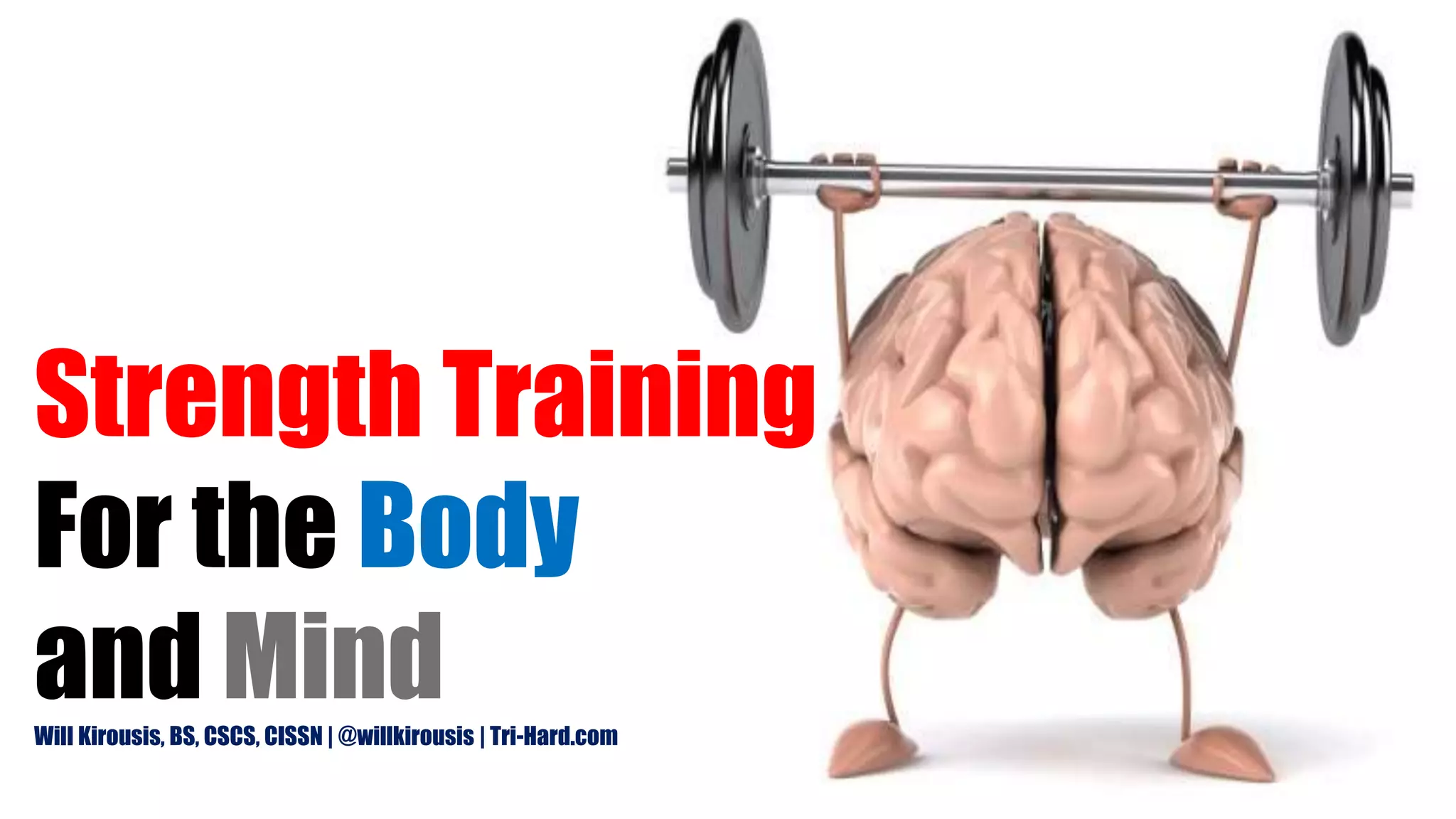
Strength Training
For the Body
and MindWill Kirousis, BS, CSCS, CISSN | @willkirousis | Tri-Hard.com
Rare is Absolute.
Everything is a Shade of Gray.
Ideal is Momentary.
The correct Answer:
“It Depends”
“Plans are useless, but planning is indispensable.”
– Dwight D. Eisenhower
Today’s Questions
What are 3 key’s to mental
strength?
Why add strength training?
How do we add strength training?
How do we execute strength
training?
Resilience: Bend, but don’t break
Reframing
Positivity
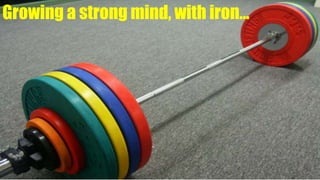
Growing a strong mind, with iron…
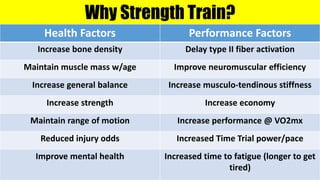
Why Strength Train?
Health Factors Performance Factors
Increase bone density Delay type II fiber activation
Maintain muscle mass w/age Improve neuromuscular efficiency
Increase general balance Increase musculo-tendinous stiffness
Increase strength Increase economy
Maintain range of motion Increase performance @ VO2mx
Reduced injury odds Increased Time Trial power/pace
Improve mental health Increased time to fatigue (longer to get
tired)
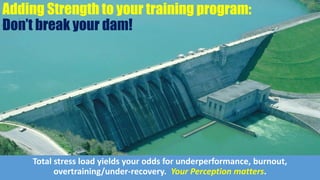
Adding Strength to your training program:
Don’t break your dam!
Total stress load yields your odds for underperformance, burnout,
overtraining/under-recovery. Your Perception matters.
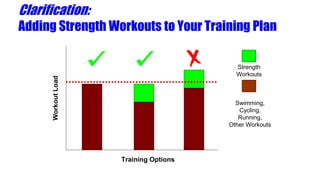
Clarification:
Adding Strength Workouts to Your Training Plan
Training Options
WorkoutLoad
Strength
Workouts
Swimming,
Cycling,
Running,
Other Workouts
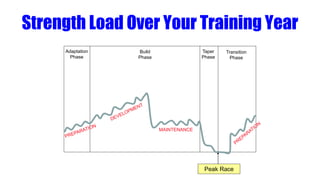
Strength Load Over Your Training Year
Adaptation
Phase
Taper
Phase
Transition
Phase
Build
Phase
Peak Race
MAINTENANCE
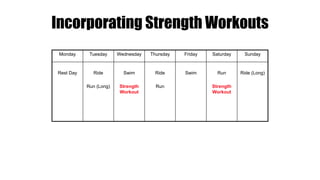
Incorporating Strength Workouts
Monday Tuesday Wednesday Thursday Friday Saturday Sunday
Rest Day Ride
Run (Long)
Swim
Strength
Workout
Ride
Run
Swim Run
Strength
Workout
Ride (Long)
Which Came First? Strength or Sport Specific?
Be Progressive
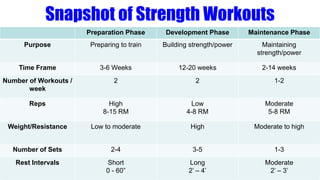
Snapshot of Strength Workouts
Preparation Phase Development Phase Maintenance Phase
Purpose Preparing to train Building strength/power Maintaining
strength/power
Time Frame 3-6 Weeks 12-20 weeks 2-14 weeks
Number of Workouts /
week
2 2 1-2
Reps High
8-15 RM
Low
4-8 RM
Moderate
5-8 RM
Weight/Resistance Low to moderate High Moderate to high
Number of Sets 2-4 3-5 1-3
Rest Intervals Short
0 - 60”
Long
2’ – 4’
Moderate
2’ – 3’
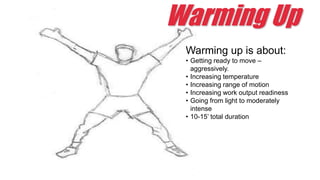
Warming Up
Warming up is about:
• Getting ready to move –
aggressively.
• Increasing temperature
• Increasing range of motion
• Increasing work output readiness
• Going from light to moderately
intense
• 10-15’ total duration
Workouts
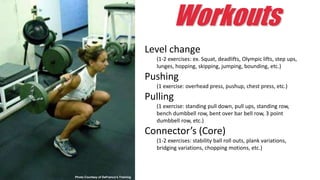
Photo Courtesy of DeFranco’s Training
Level change
(1-2 exercises: ex. Squat, deadlifts, Olympic lifts, step ups,
lunges, hopping, skipping, jumping, bounding, etc.)
Pushing
(1 exercise: overhead press, pushup, chest press, etc.)
Pulling
(1 exercise: standing pull down, pull ups, standing row,
bench dumbbell row, bent over bar bell row, 3 point
dumbbell row, etc.)
Connector’s (Core)
(1-2 exercises: stability ball roll outs, plank variations,
bridging variations, chopping motions, etc.)
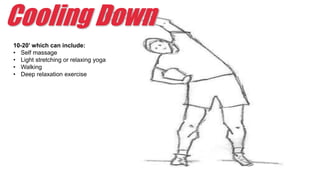
Cooling Down
10-20’ which can include:
• Self massage
• Light stretching or relaxing yoga
• Walking
• Deep relaxation exercise
Wrapping Up: Strength Keys
Simple. Do the basics great.
Heavy and or explosive.
Focus on the movements outcome.
Wrapping Up: Mental Keys
Build resilience by seeking challenges and growing from failures.
“Reframe” inner talk.
Seek the positive!
Questions?
Will Kirousis
@willkirousis
will@tri-hard.com
978.466.5151
www.tri-hard.com

Strength for body and mind - Tri-Mania 2016

  • 1.
    Strength Training For theBody and MindWill Kirousis, BS, CSCS, CISSN | @willkirousis | Tri-Hard.com
  • 2.
    Rare is Absolute. Everythingis a Shade of Gray. Ideal is Momentary. The correct Answer: “It Depends”
  • 3.
    “Plans are useless,but planning is indispensable.” – Dwight D. Eisenhower
  • 4.
    Today’s Questions What are3 key’s to mental strength? Why add strength training? How do we add strength training? How do we execute strength training?
  • 5.
    Resilience: Bend, butdon’t break
  • 6.
  • 7.
  • 8.
    Growing a strongmind, with iron…
  • 9.
    Why Strength Train? HealthFactors Performance Factors Increase bone density Delay type II fiber activation Maintain muscle mass w/age Improve neuromuscular efficiency Increase general balance Increase musculo-tendinous stiffness Increase strength Increase economy Maintain range of motion Increase performance @ VO2mx Reduced injury odds Increased Time Trial power/pace Improve mental health Increased time to fatigue (longer to get tired)
  • 10.
    Adding Strength toyour training program: Don’t break your dam! Total stress load yields your odds for underperformance, burnout, overtraining/under-recovery. Your Perception matters.
  • 11.
    Clarification: Adding Strength Workoutsto Your Training Plan Training Options WorkoutLoad Strength Workouts Swimming, Cycling, Running, Other Workouts
  • 12.
    Strength Load OverYour Training Year Adaptation Phase Taper Phase Transition Phase Build Phase Peak Race MAINTENANCE
  • 13.
    Incorporating Strength Workouts MondayTuesday Wednesday Thursday Friday Saturday Sunday Rest Day Ride Run (Long) Swim Strength Workout Ride Run Swim Run Strength Workout Ride (Long)
  • 14.
    Which Came First?Strength or Sport Specific?
  • 15.
  • 16.
    Snapshot of StrengthWorkouts Preparation Phase Development Phase Maintenance Phase Purpose Preparing to train Building strength/power Maintaining strength/power Time Frame 3-6 Weeks 12-20 weeks 2-14 weeks Number of Workouts / week 2 2 1-2 Reps High 8-15 RM Low 4-8 RM Moderate 5-8 RM Weight/Resistance Low to moderate High Moderate to high Number of Sets 2-4 3-5 1-3 Rest Intervals Short 0 - 60” Long 2’ – 4’ Moderate 2’ – 3’
  • 17.
    Warming Up Warming upis about: • Getting ready to move – aggressively. • Increasing temperature • Increasing range of motion • Increasing work output readiness • Going from light to moderately intense • 10-15’ total duration
  • 18.
    Workouts Photo Courtesy ofDeFranco’s Training Level change (1-2 exercises: ex. Squat, deadlifts, Olympic lifts, step ups, lunges, hopping, skipping, jumping, bounding, etc.) Pushing (1 exercise: overhead press, pushup, chest press, etc.) Pulling (1 exercise: standing pull down, pull ups, standing row, bench dumbbell row, bent over bar bell row, 3 point dumbbell row, etc.) Connector’s (Core) (1-2 exercises: stability ball roll outs, plank variations, bridging variations, chopping motions, etc.)
  • 19.
    Cooling Down 10-20’ whichcan include: • Self massage • Light stretching or relaxing yoga • Walking • Deep relaxation exercise
  • 20.
    Wrapping Up: StrengthKeys Simple. Do the basics great. Heavy and or explosive. Focus on the movements outcome.
  • 21.
    Wrapping Up: MentalKeys Build resilience by seeking challenges and growing from failures. “Reframe” inner talk. Seek the positive!
  • 22.