STREAM FLOW MONITORING FOR WATERSHED STUDIES
FOLLOWING ‘RE-VEGETATION’ FOR REDUCING THE
SEDIMENT LOADING ON THE SHORELINES OF
MICRONESIAN ISLAND OF ROTA, CNMI
Mohammad H. Golabi, Soil Scientist
Sydonia Manibusan, Research Associate
College of Natural and Applied Sciences
University of Guam
Presented at the 71st Annual SWCS
Louisville, KN
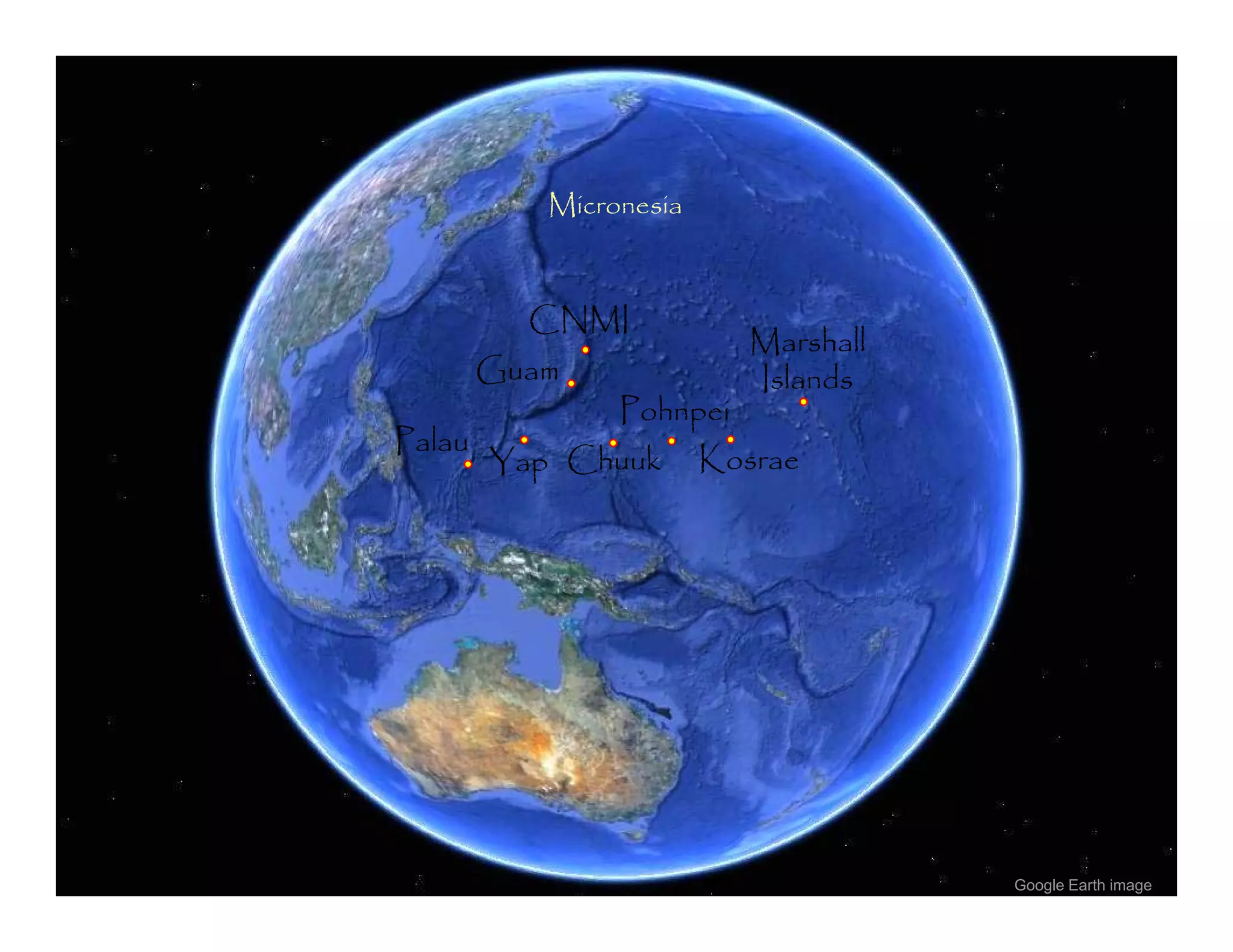
Where is Rota (CNMI)?
CNMI
Marshall
IslandsGuam
Yap
Palau
Chuuk
Pohnpei
Kosrae
Google Earth image
Micronesia
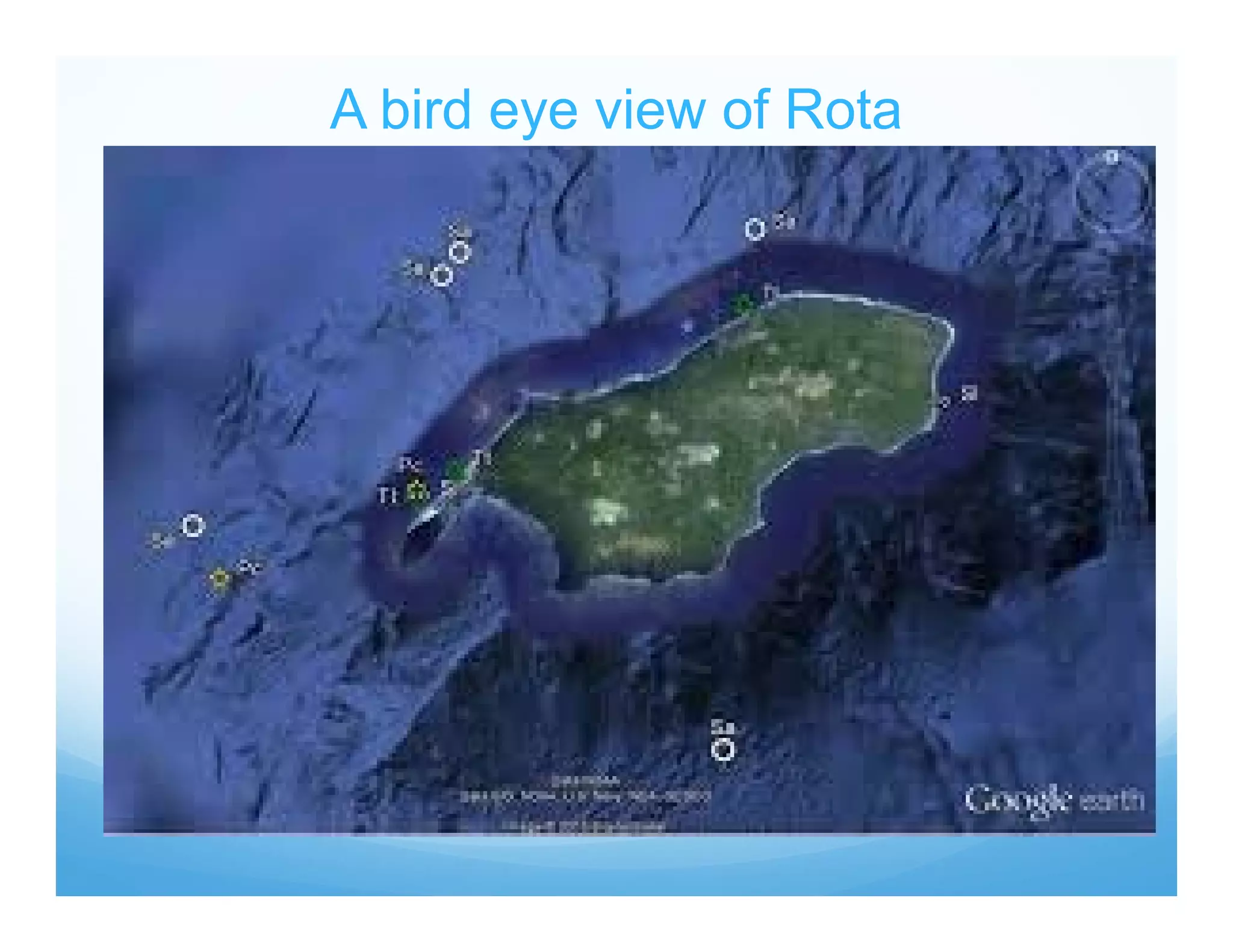
A bird eye view of Rota
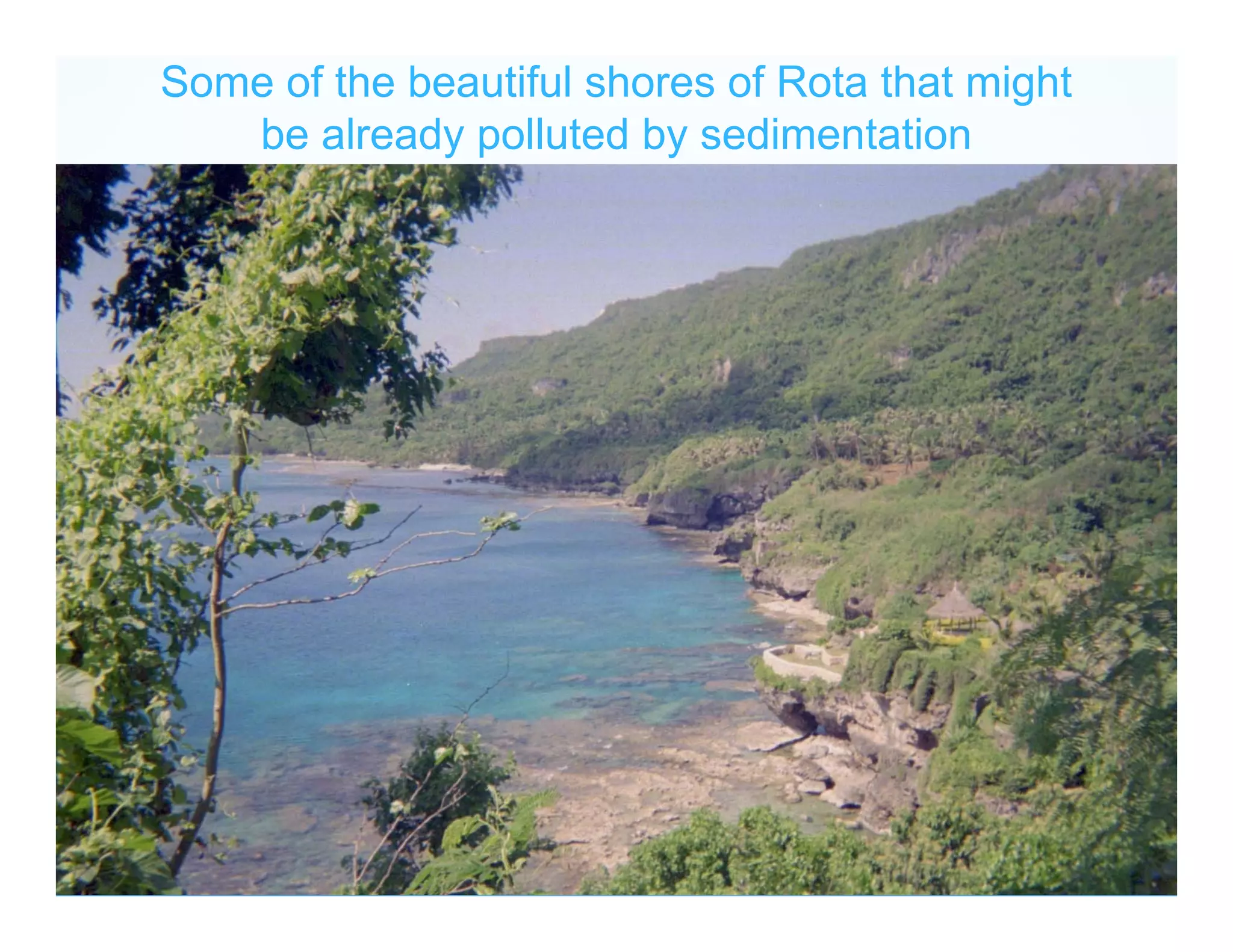
Some of the beautiful shores of Rota that might
be already polluted by sedimentation
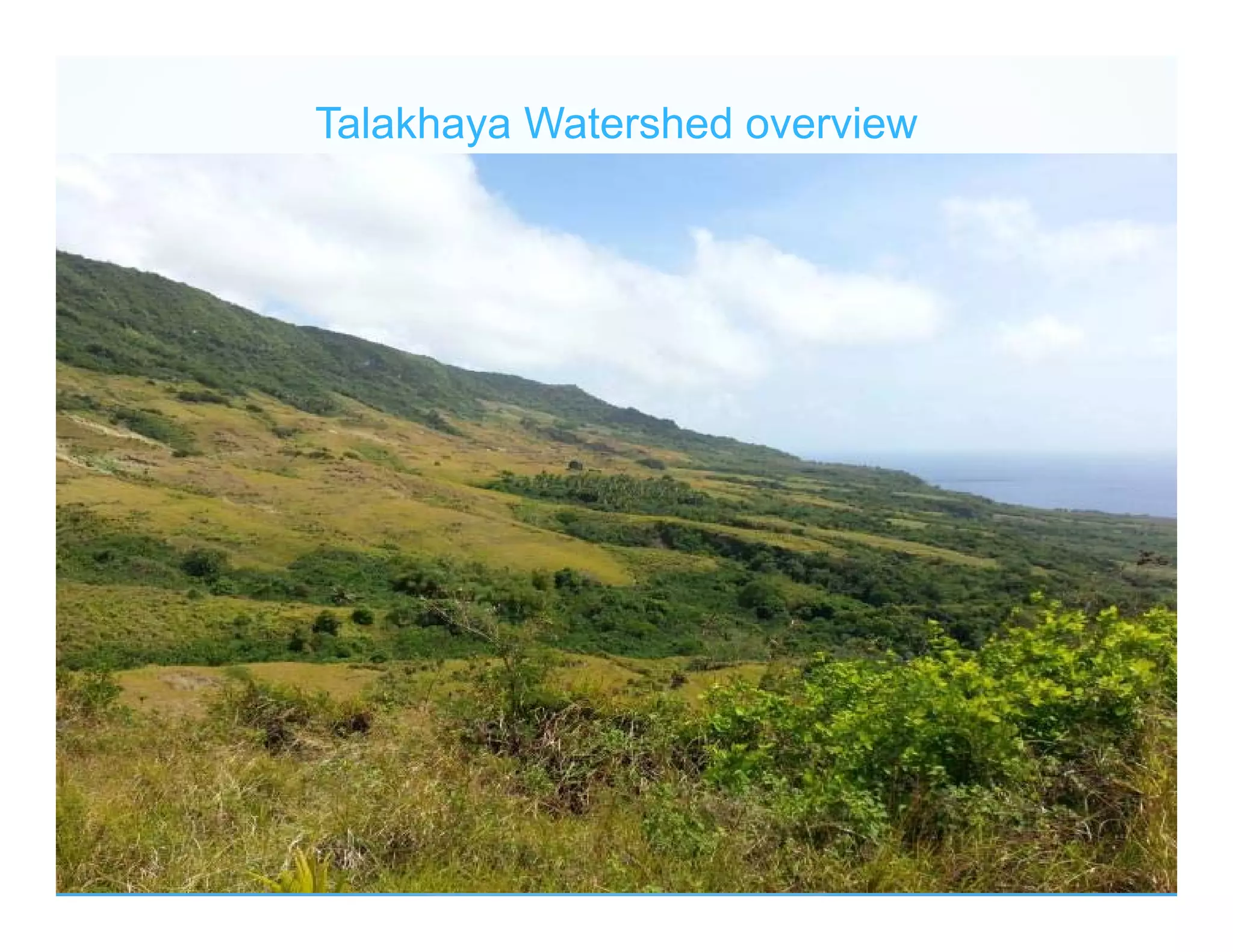
Talakhaya Watershed overview
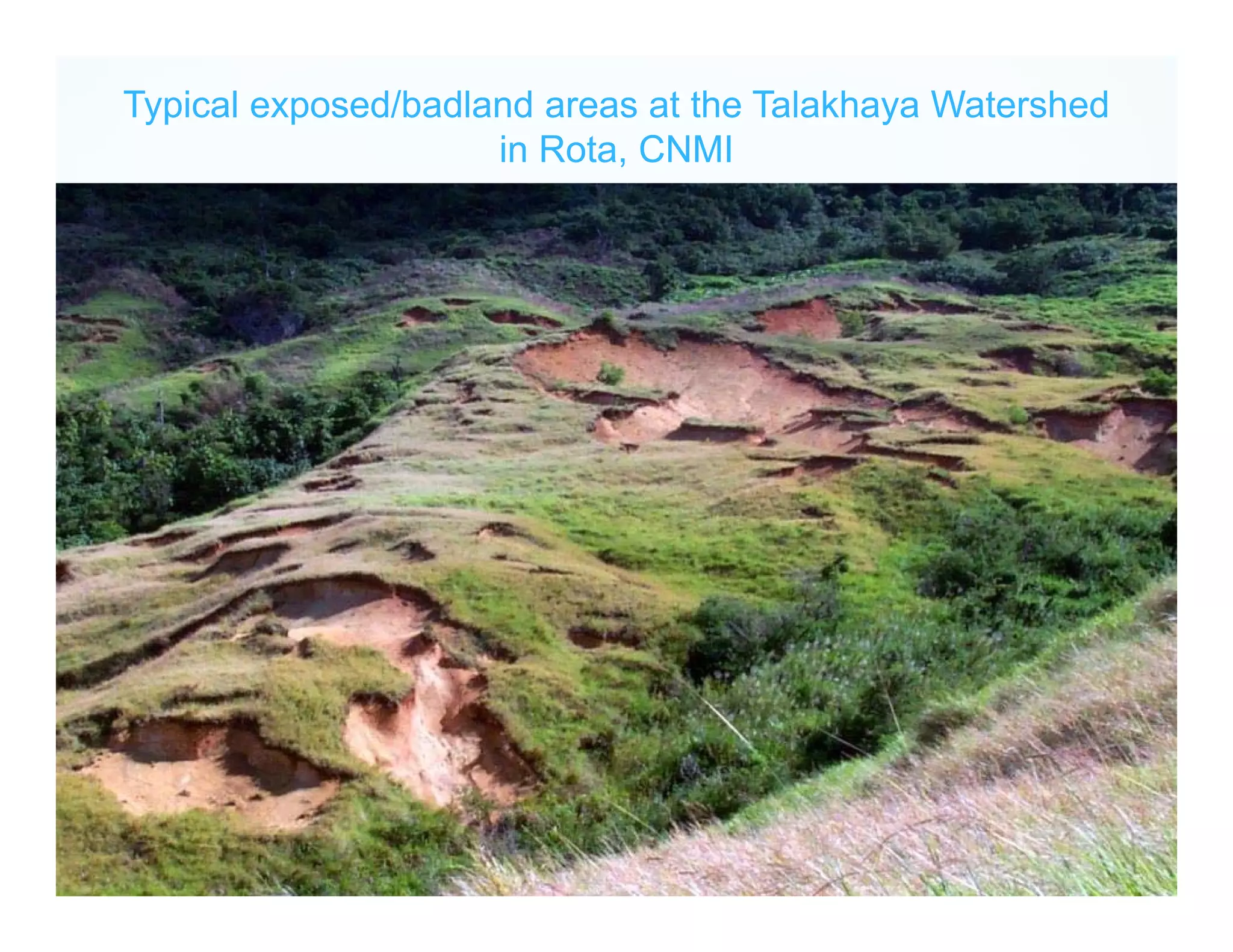
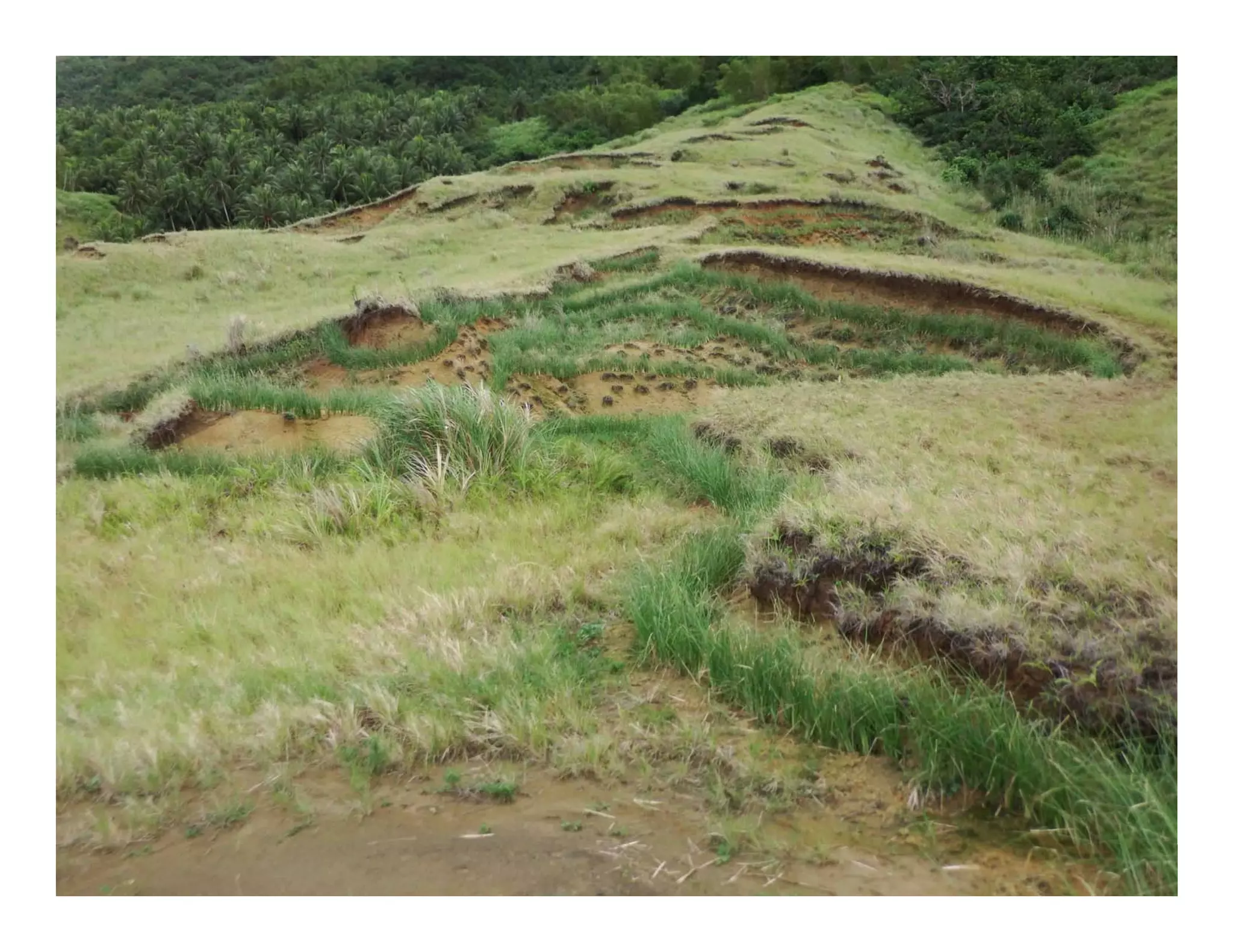
Typical exposed/badland areas at the Talakhaya Watershed
in Rota, CNMI
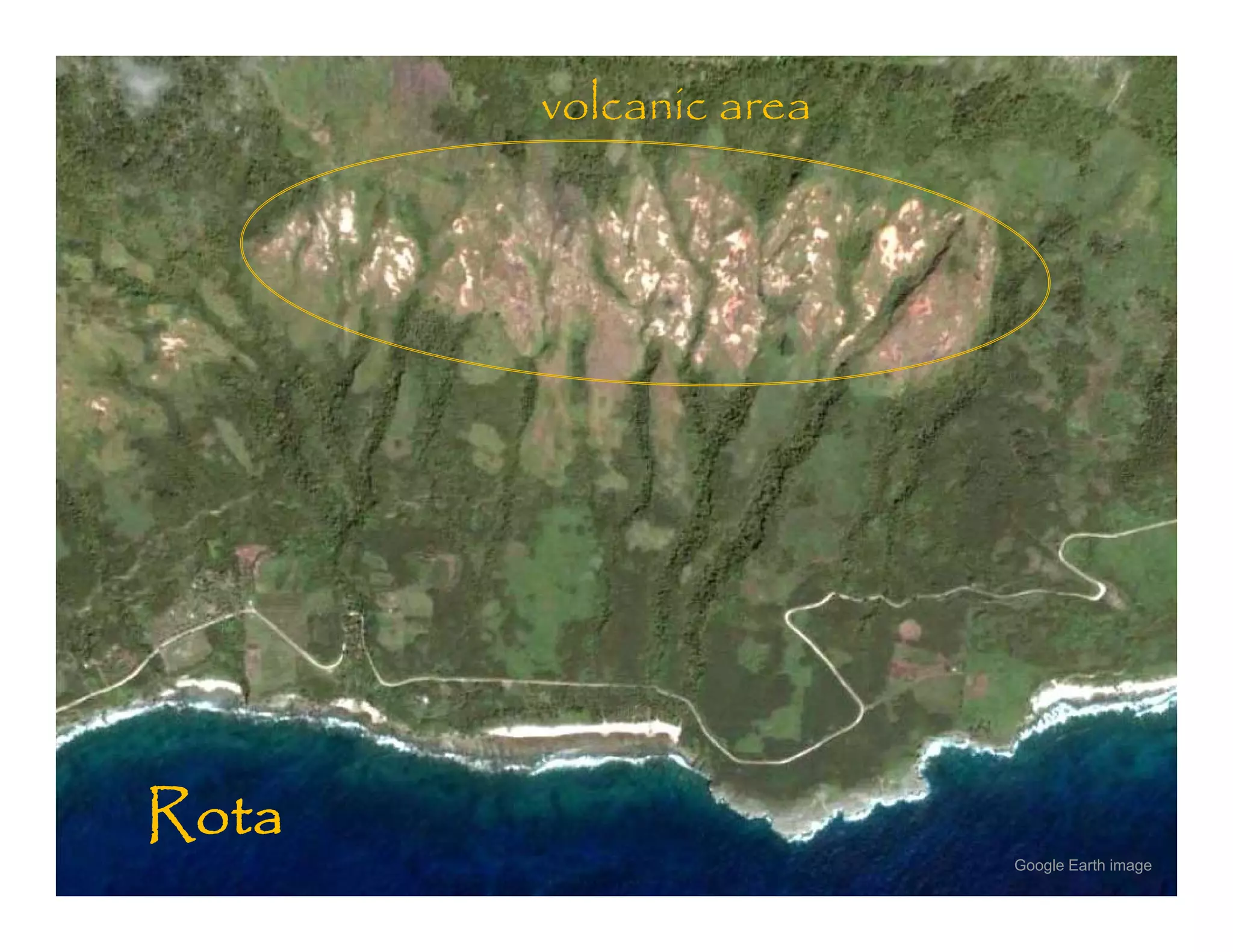
Rota
volcanic area
Google Earth image
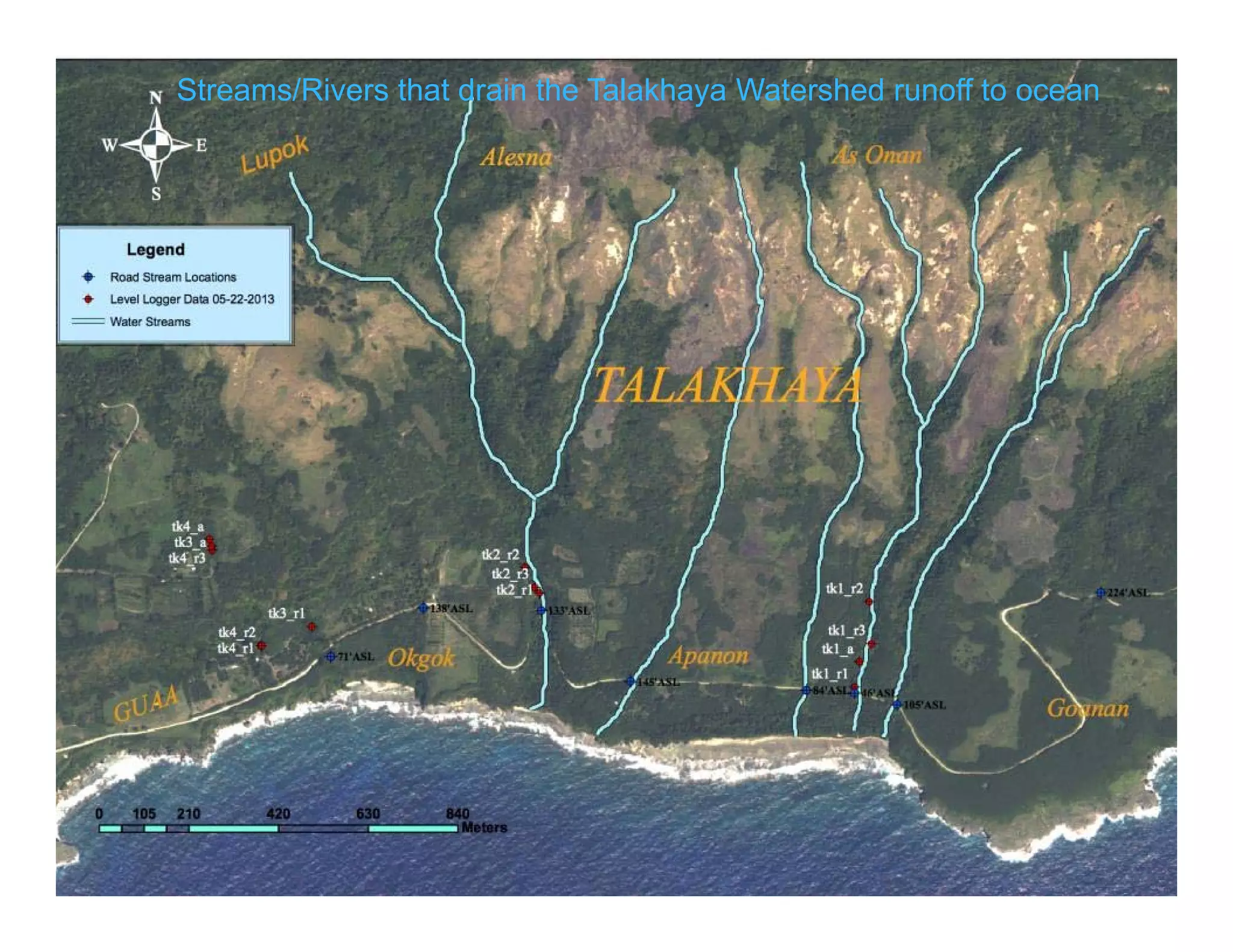
Streams/Rivers that drain the Talakhaya Watershed runoff to ocean
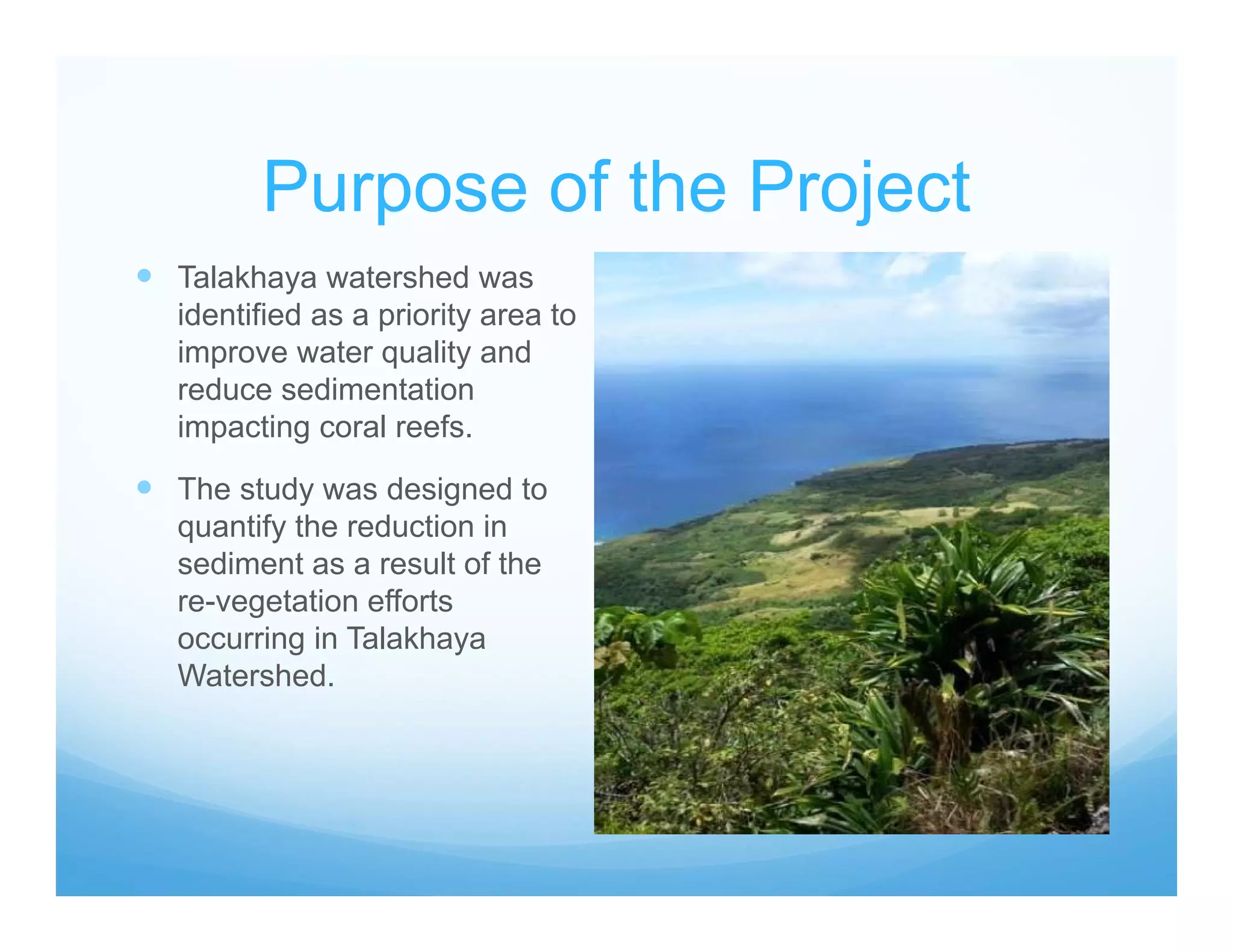
Purpose of the Project
 Talakhaya watershed was
identified as a priority area to
improve water quality and
reduce sedimentation
impacting coral reefs.
 The study was designed to
quantify the reduction in
sediment as a result of the
re-vegetation efforts
occurring in Talakhaya
Watershed.
Some of the management
practices:
(i.e. Vetiver grass establishment)
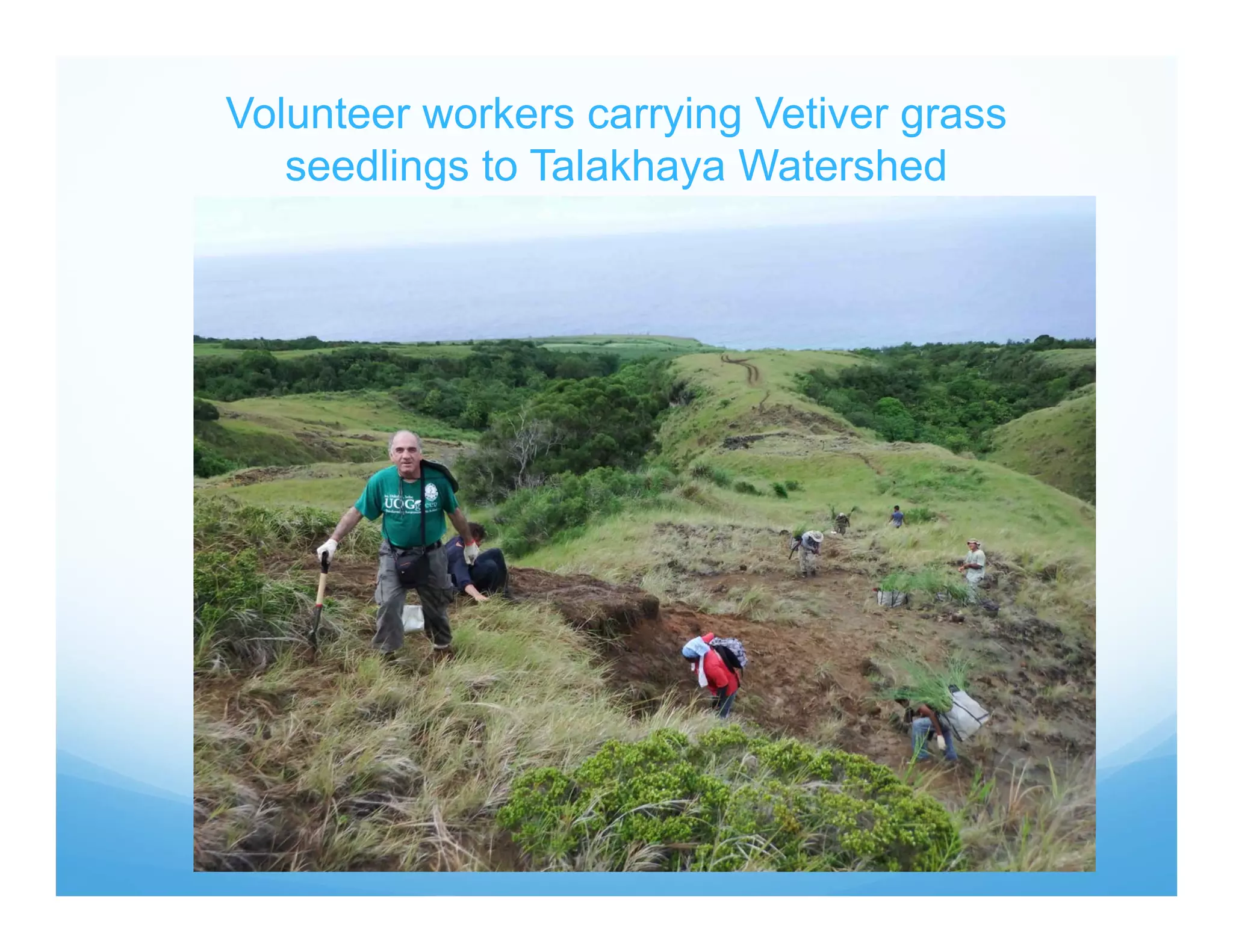
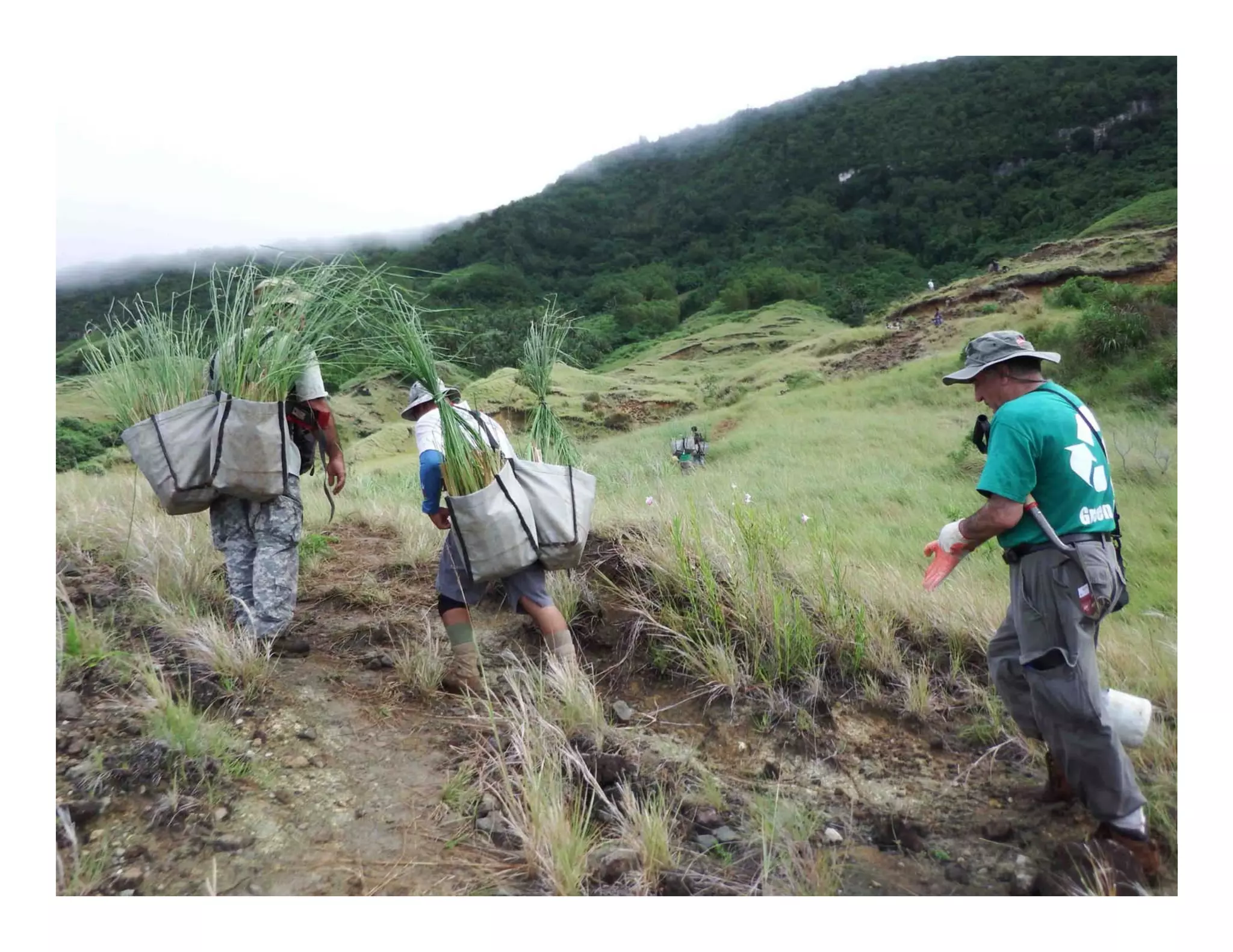
Volunteer workers carrying Vetiver grass
seedlings to Talakhaya Watershed
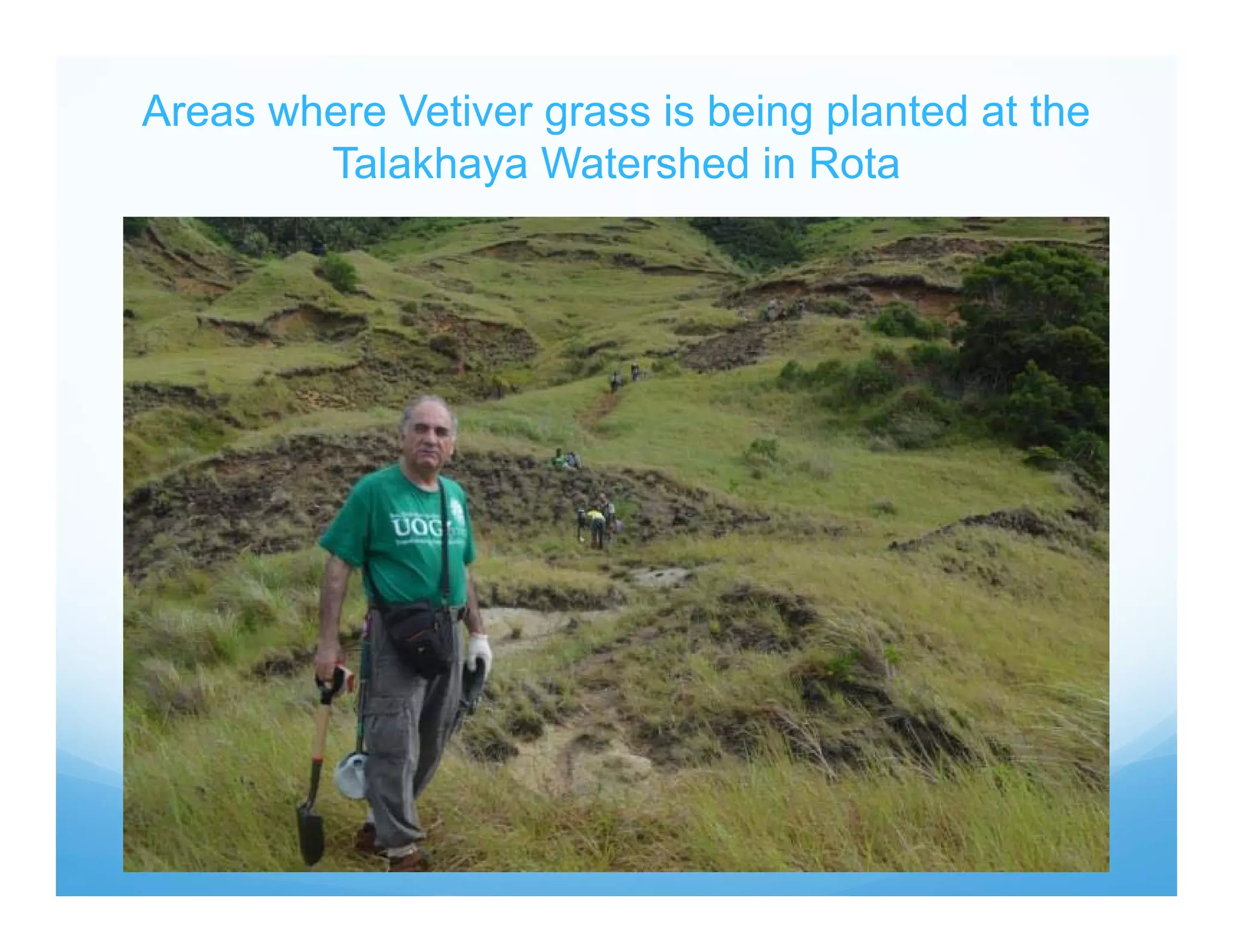
Areas where Vetiver grass is being planted at the
Talakhaya Watershed in Rota
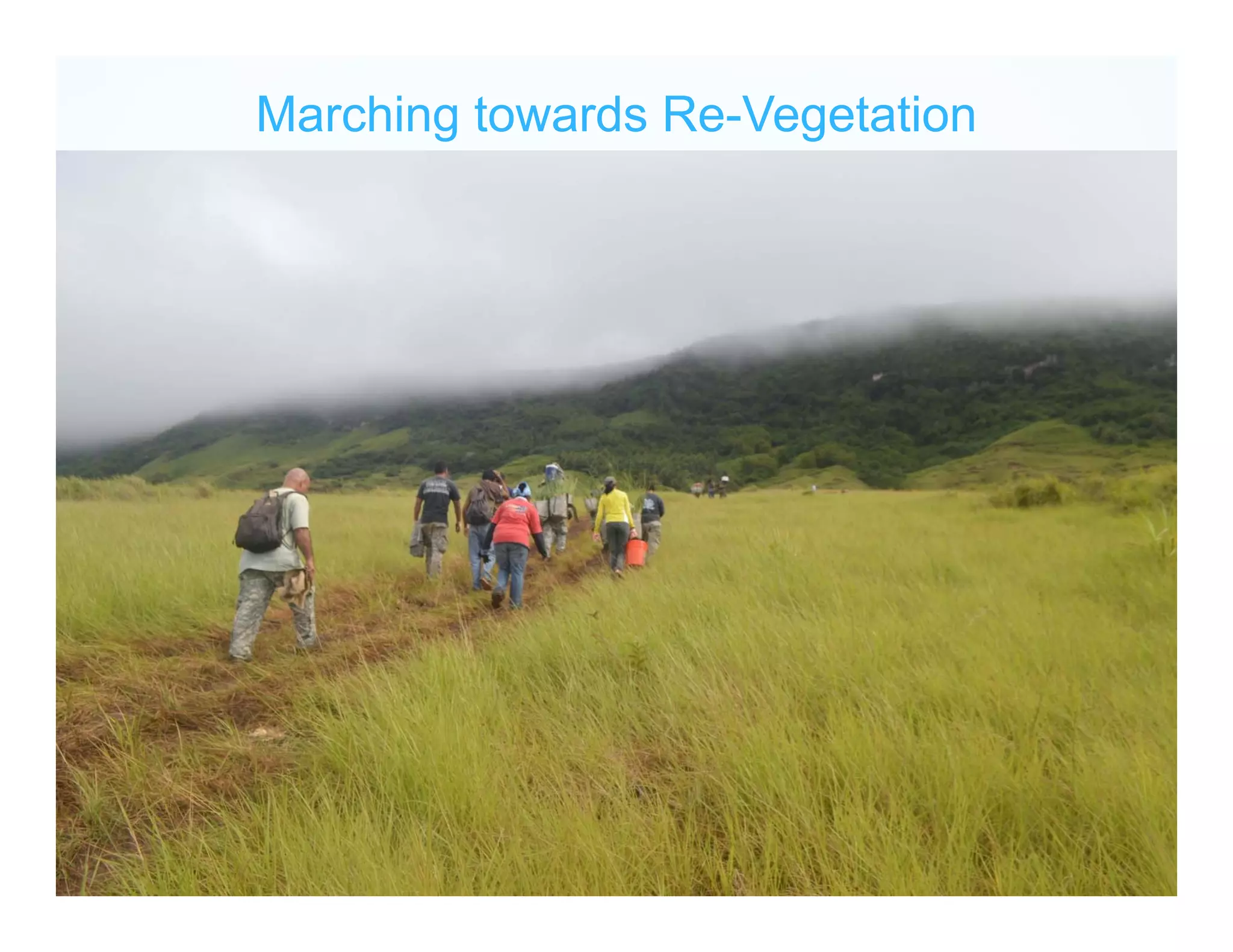
Marching towards Re-Vegetation
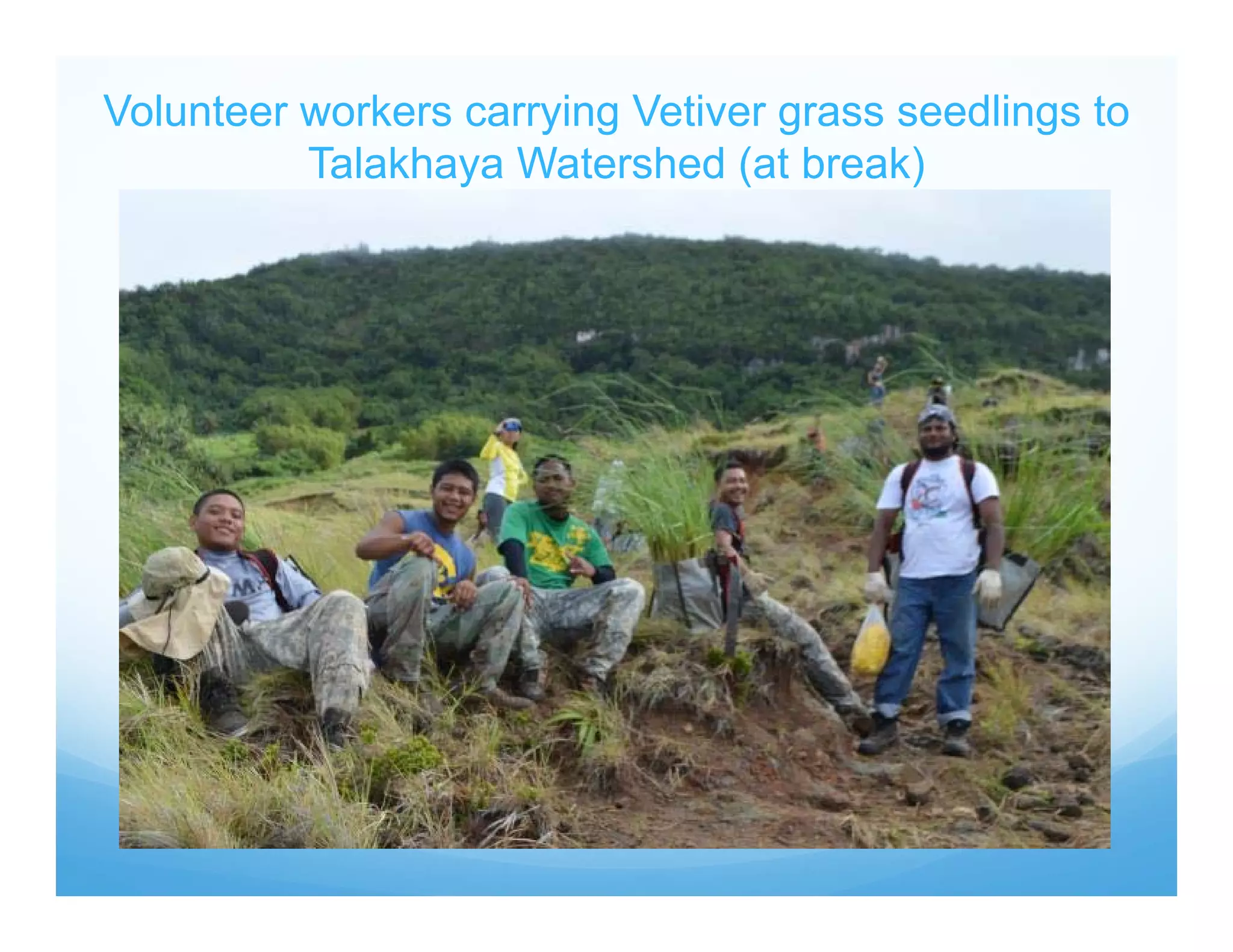
Volunteer workers carrying Vetiver grass seedlings to
Talakhaya Watershed (at break)
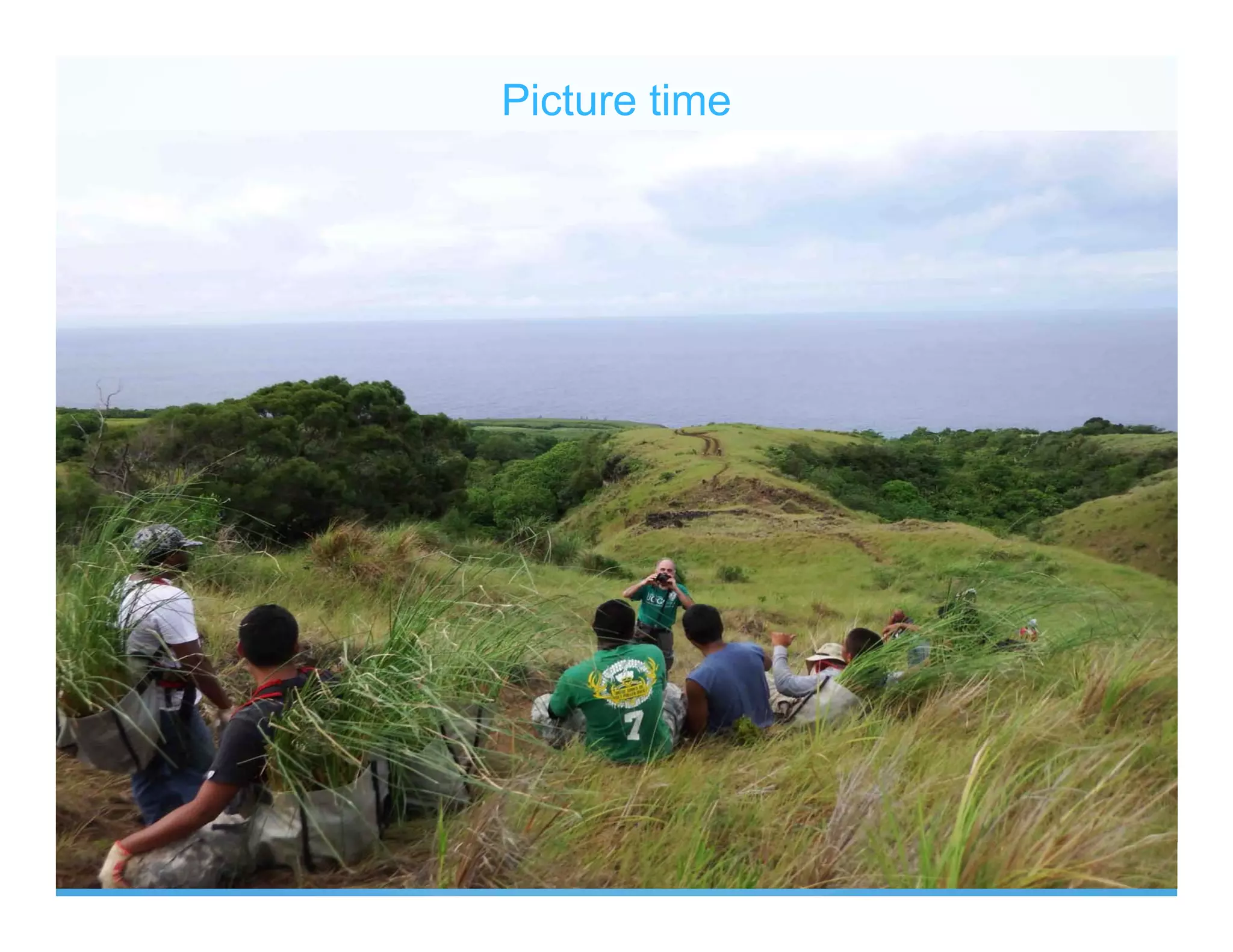
Picture time
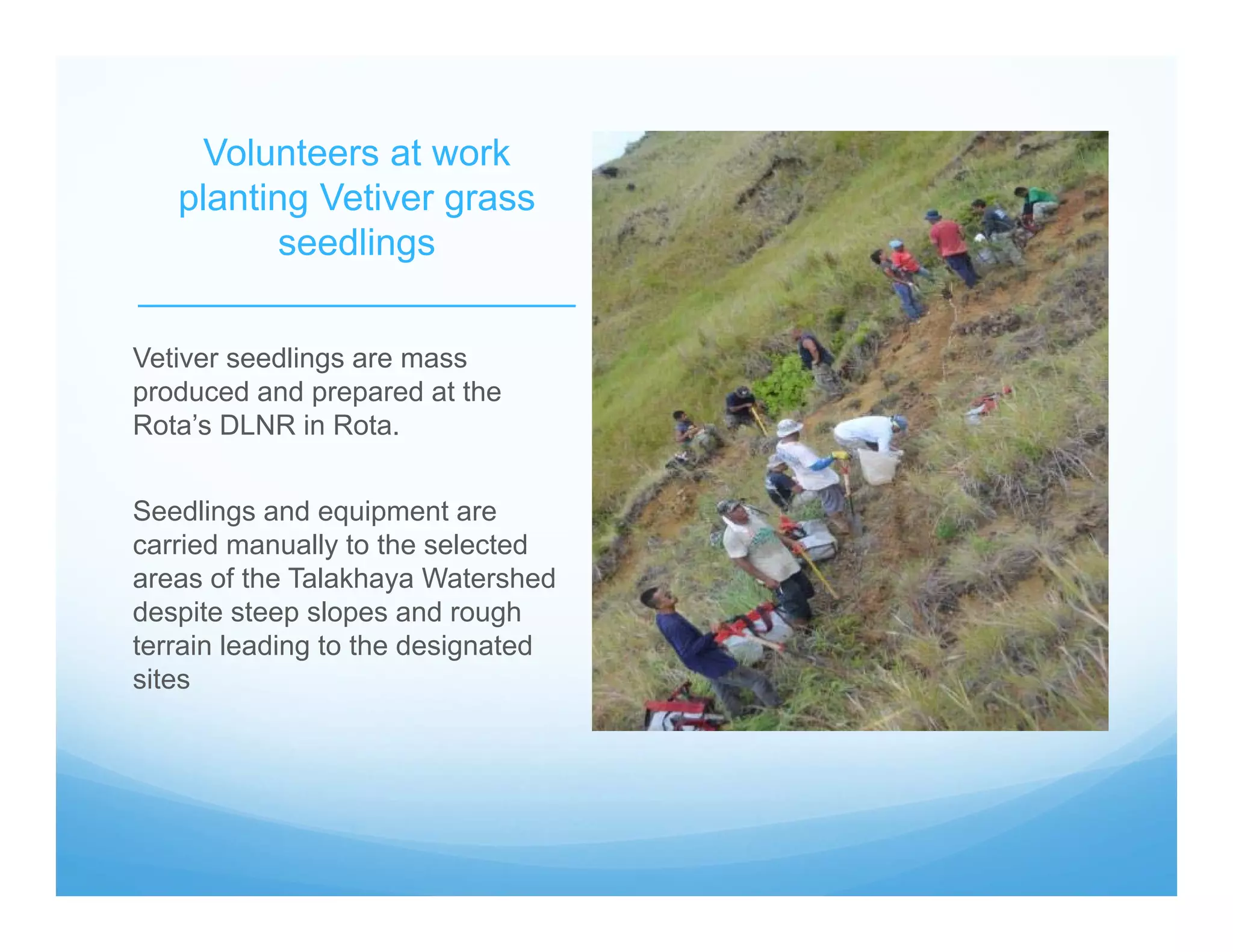
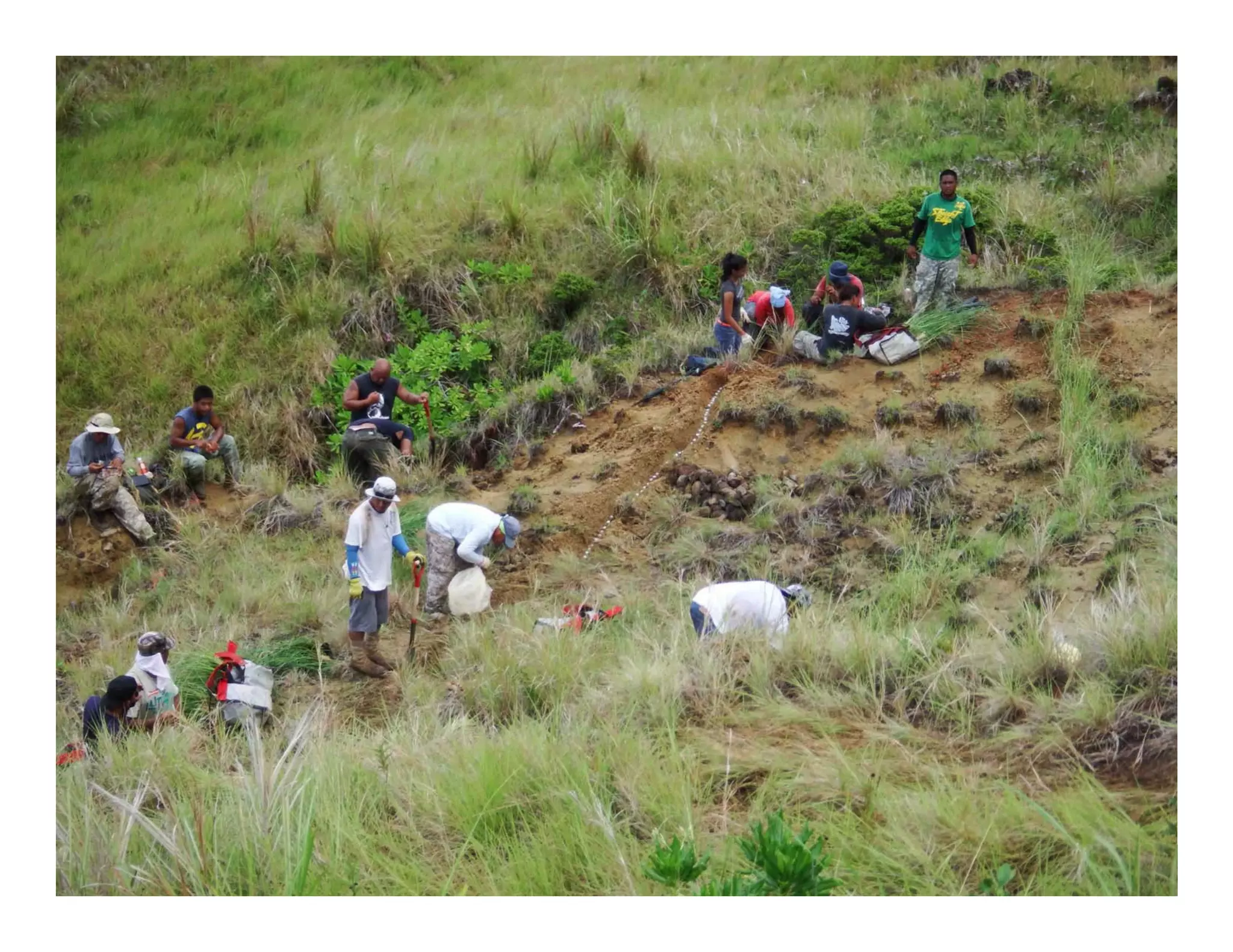
Volunteers at work
planting Vetiver grass
seedlings
_____________________
Vetiver seedlings are mass
produced and prepared at the
Rota’s DLNR in Rota.
Seedlings and equipment are
carried manually to the selected
areas of the Talakhaya Watershed
despite steep slopes and rough
terrain leading to the designated
sites
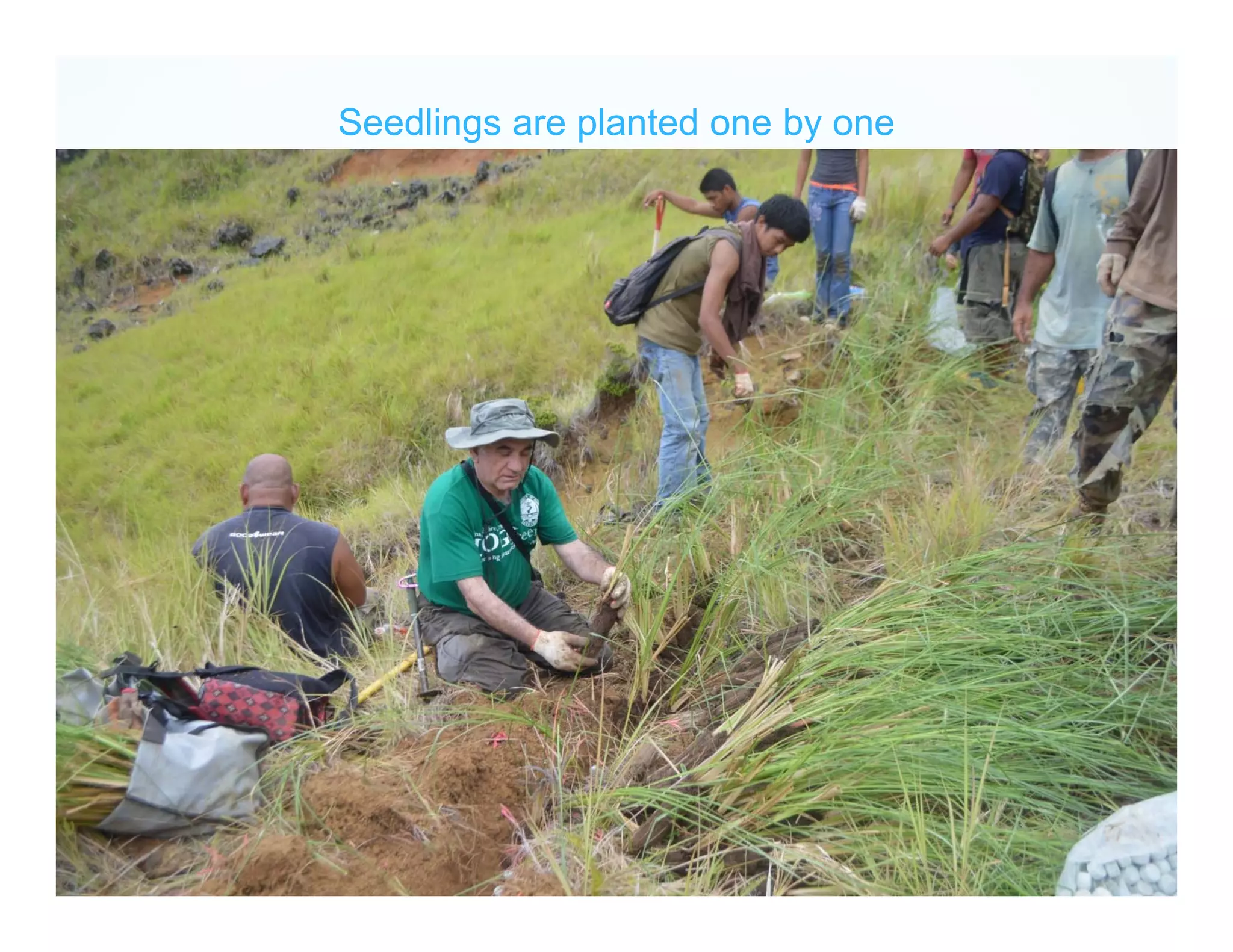
Seedlings are planted one by one
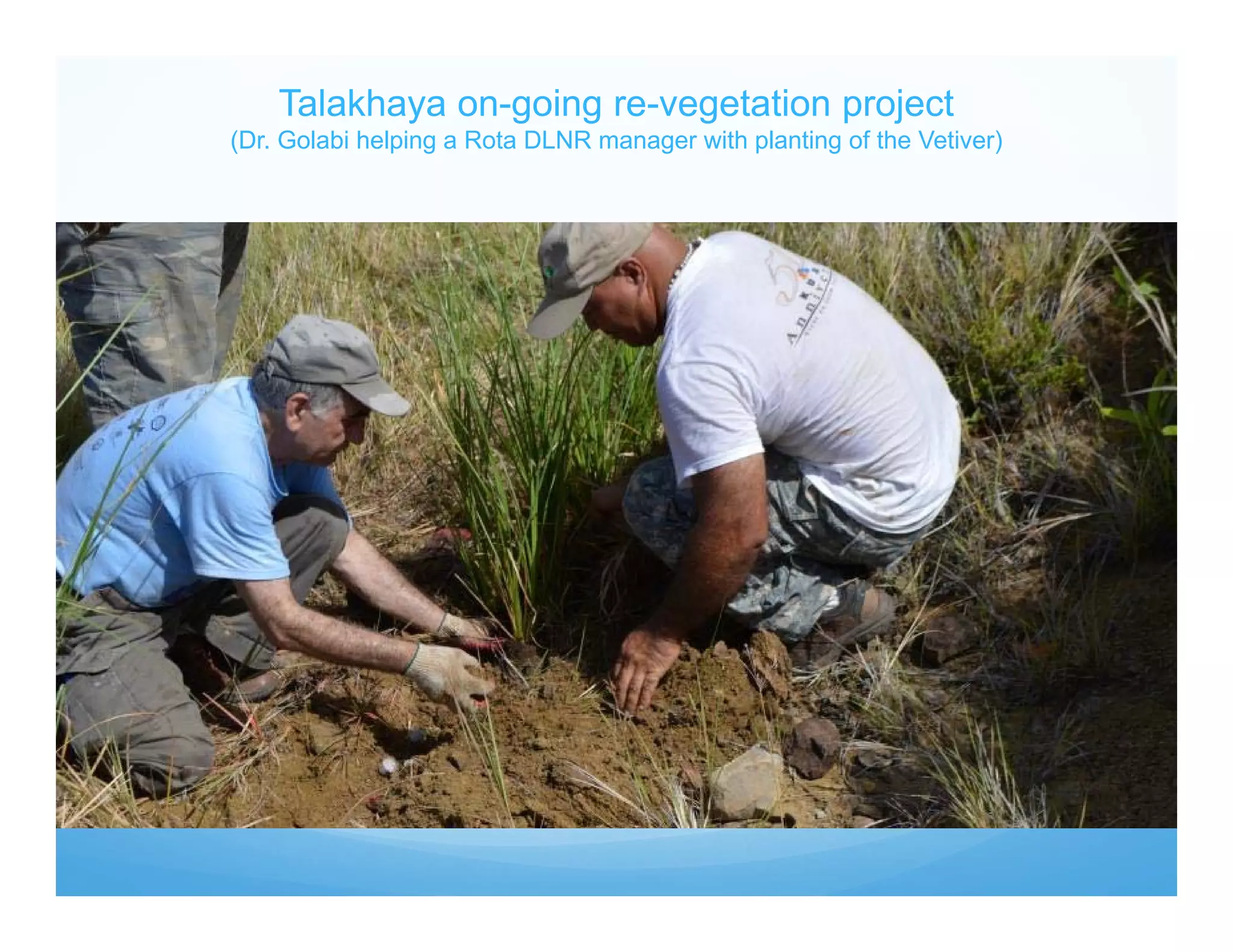
Talakhaya on-going re-vegetation project
(Dr. Golabi helping a Rota DLNR manager with planting of the Vetiver)
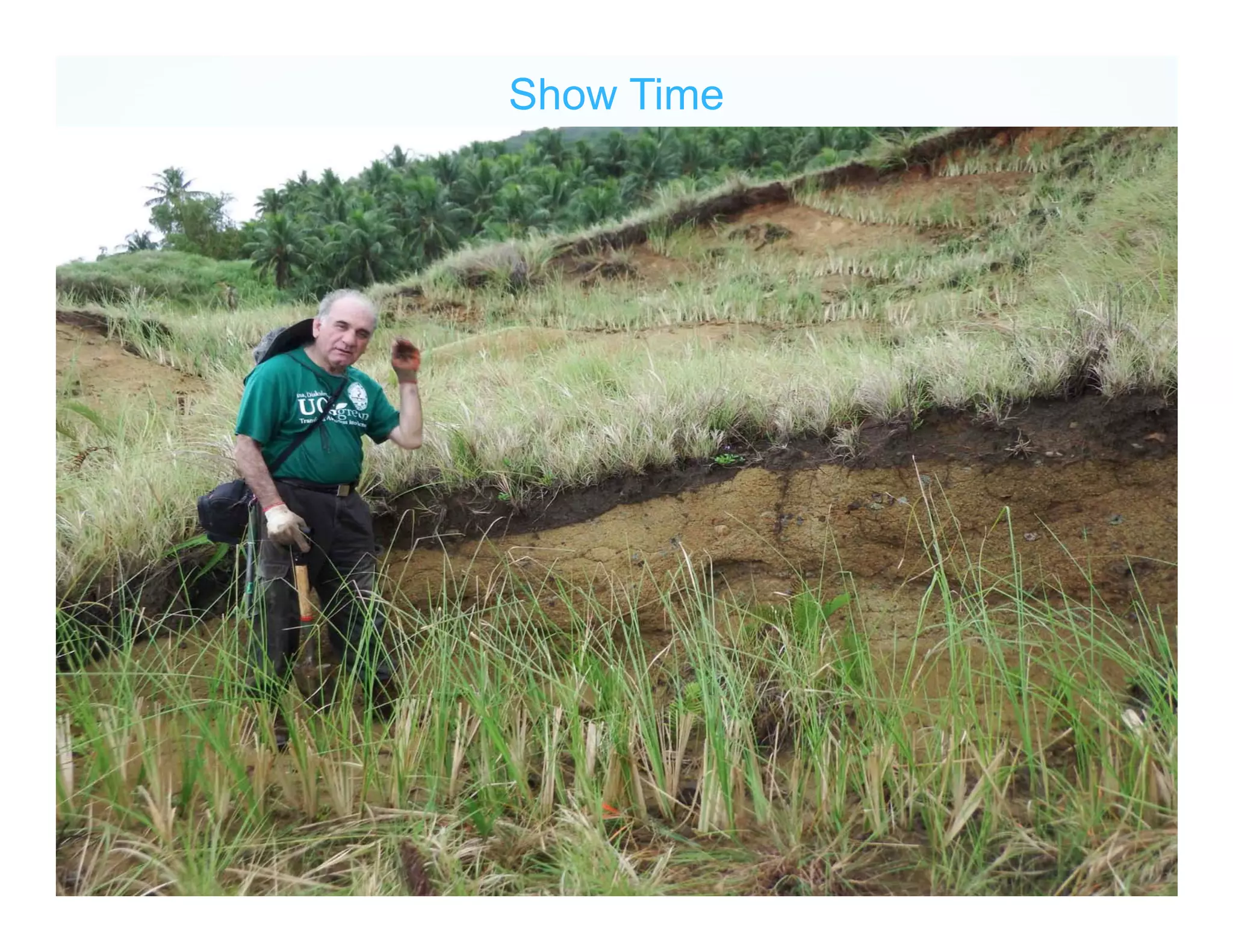
Show Time
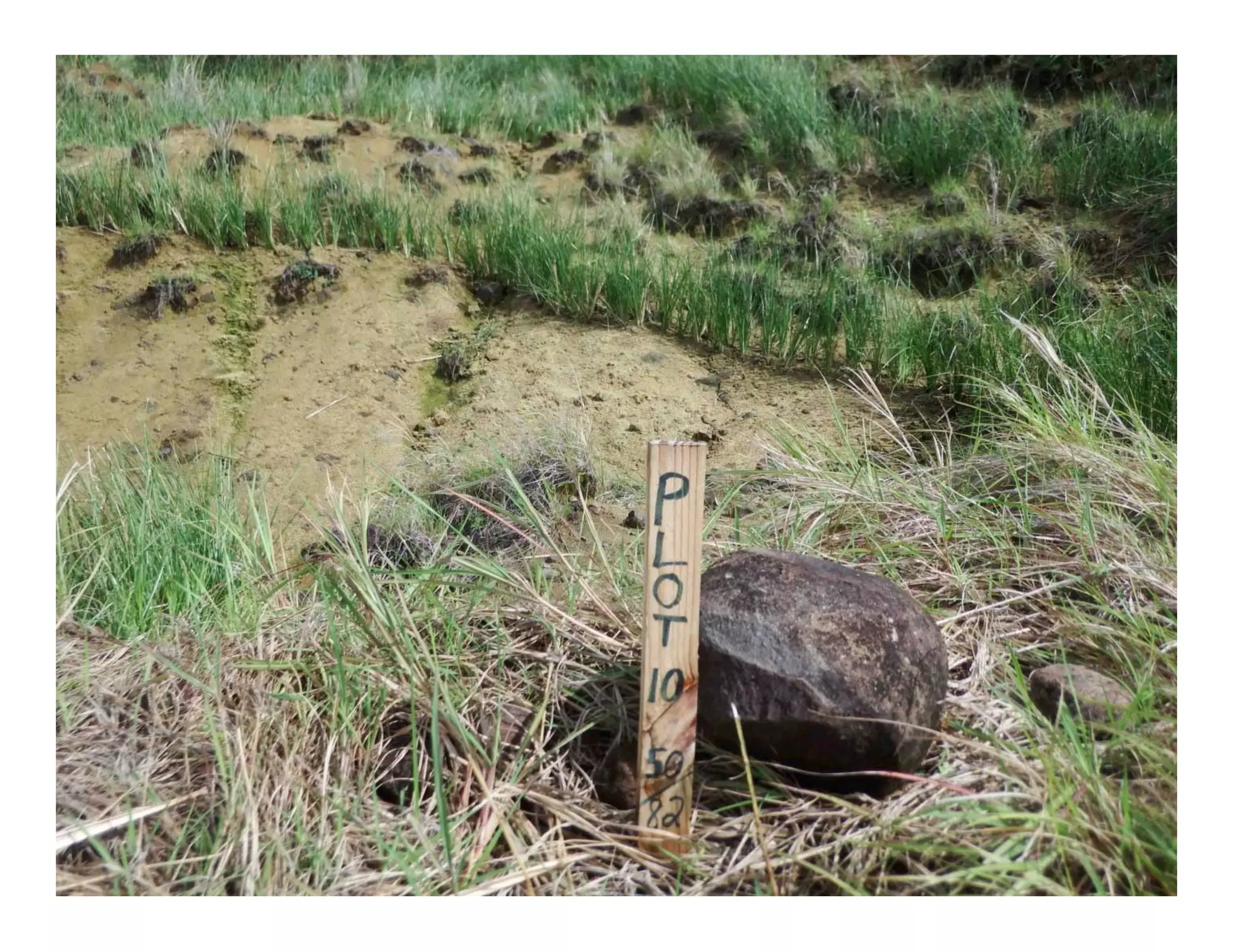
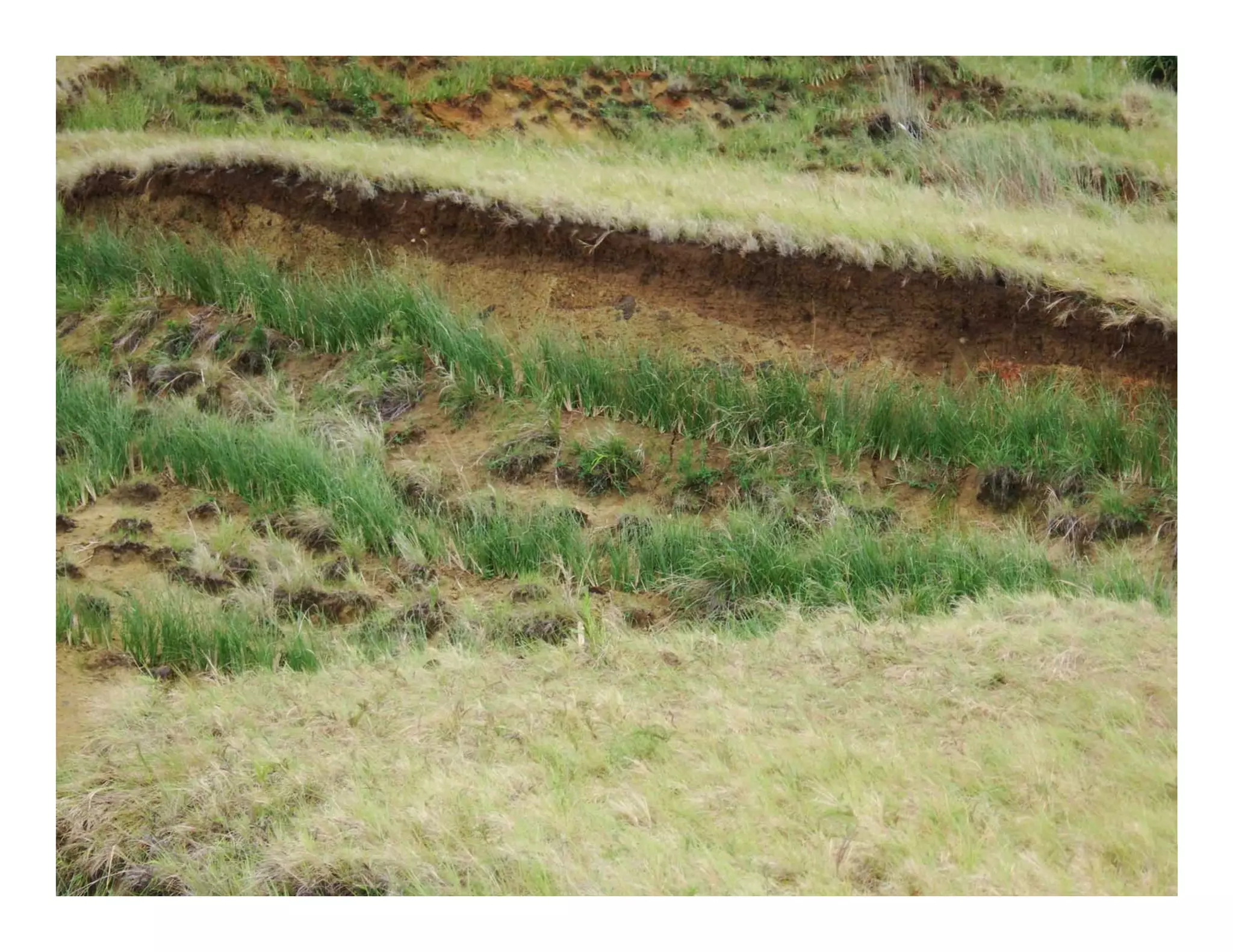
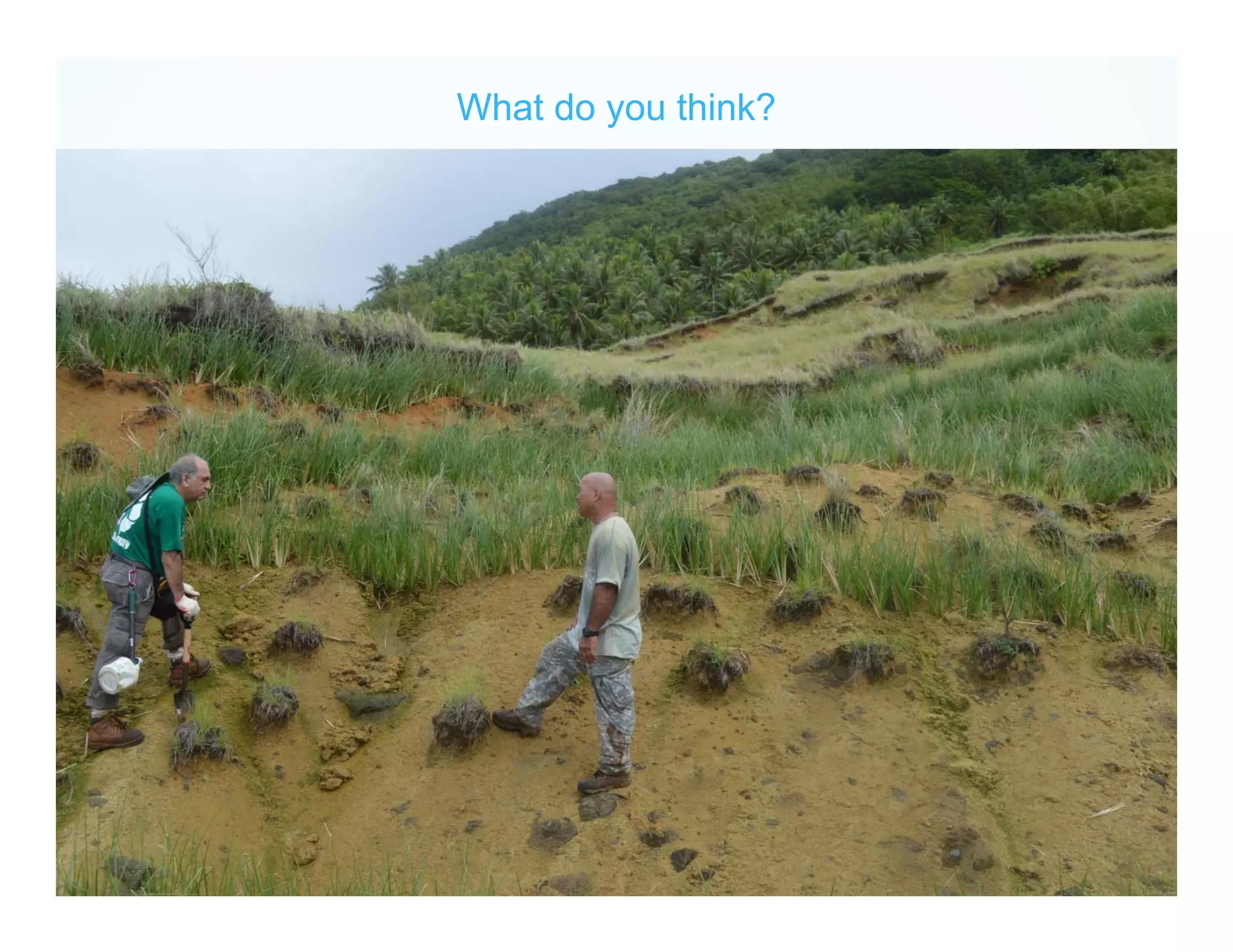
Some of the results from the
re-vegetation efforts so far:
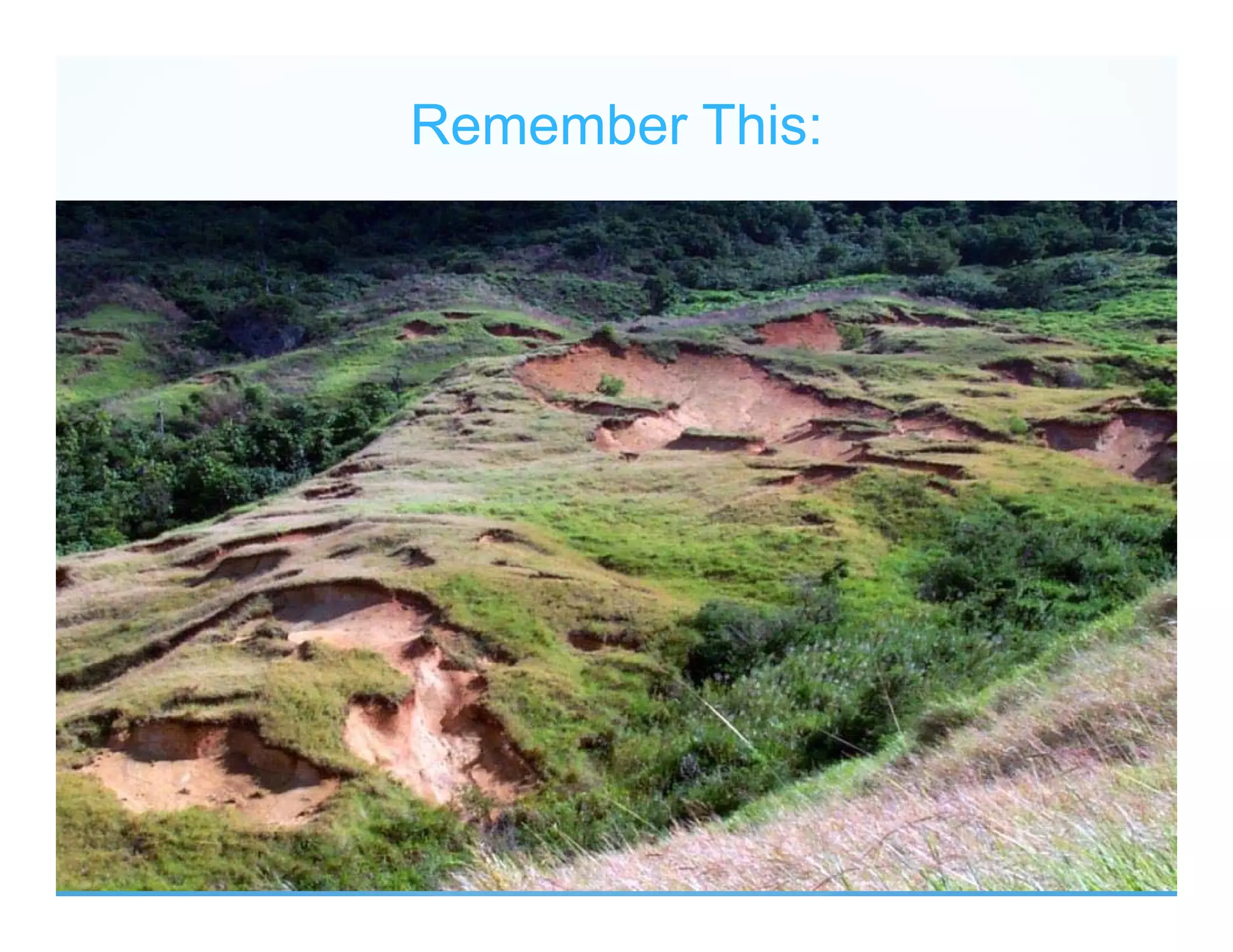
Remember This:
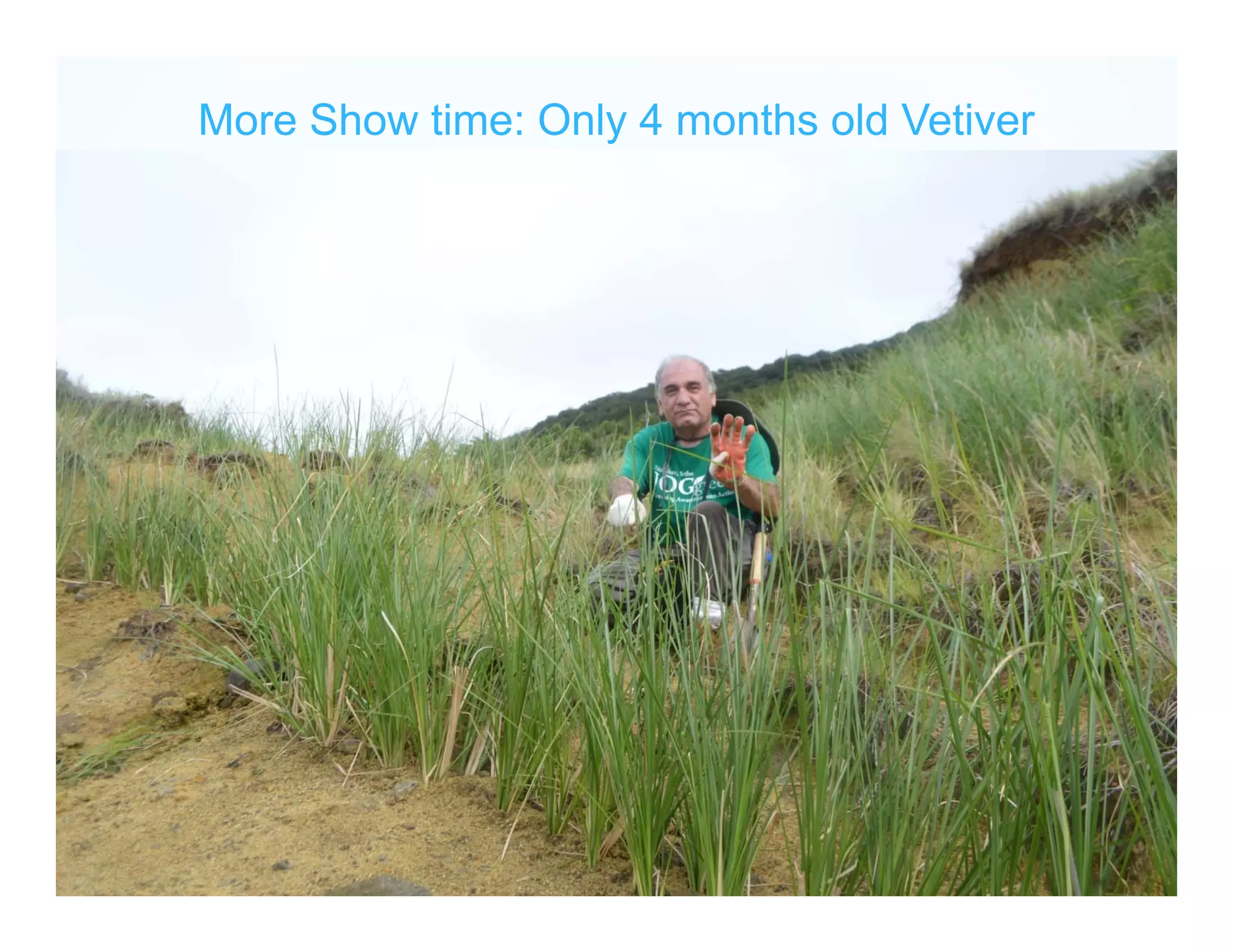
More Show time: Only 4 months old Vetiver
What do you think?
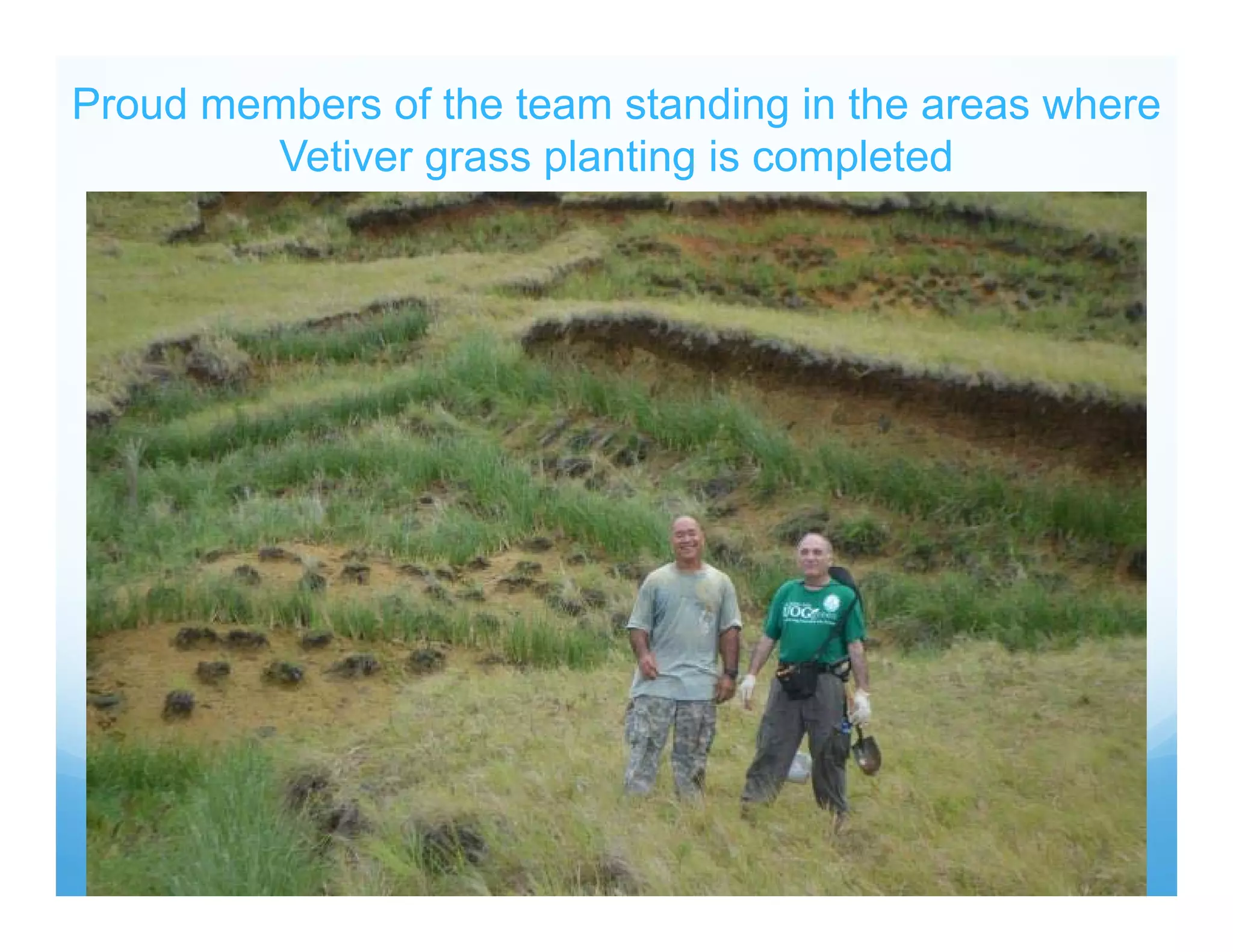
Proud members of the team standing in the areas where
Vetiver grass planting is completed
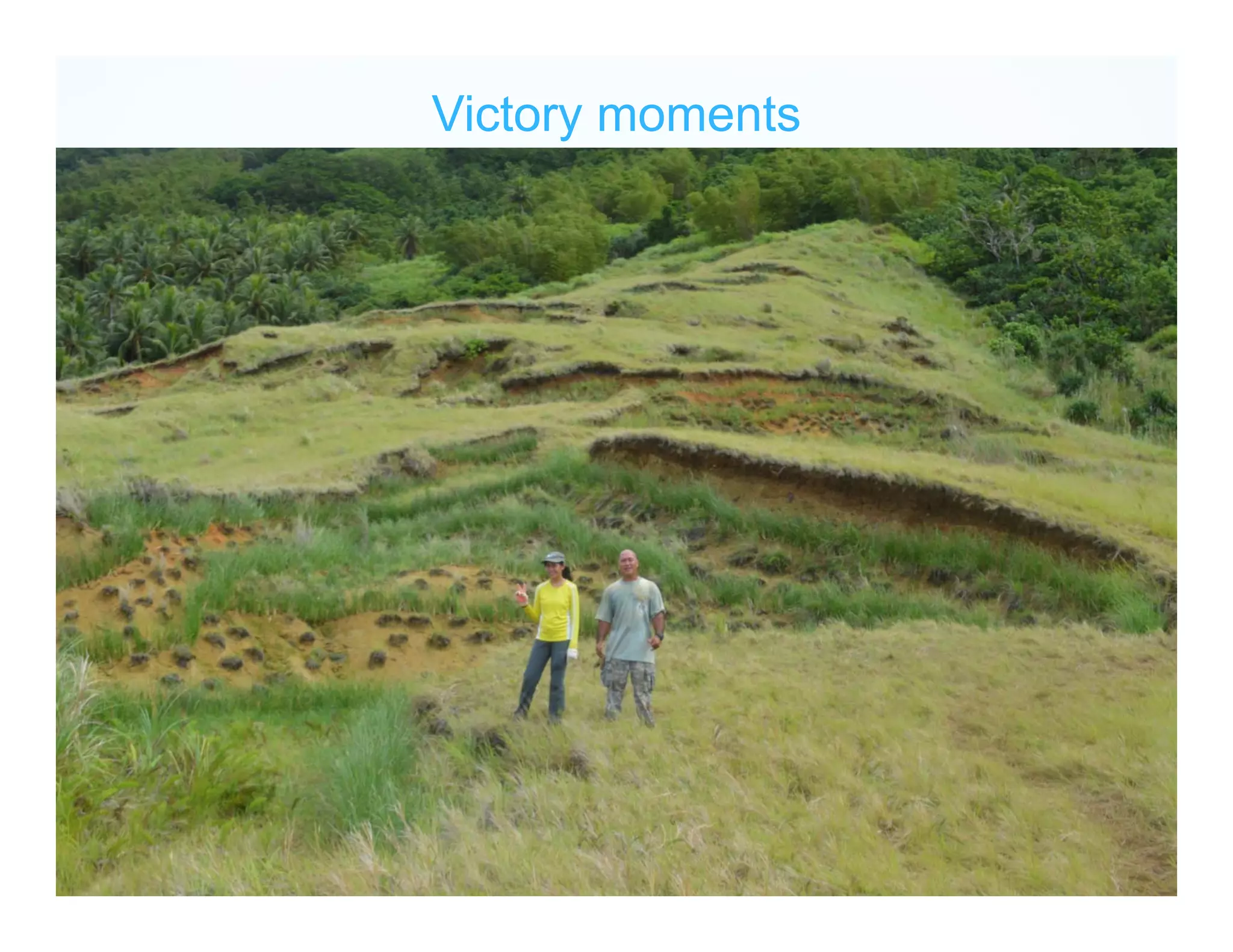
Victory moments
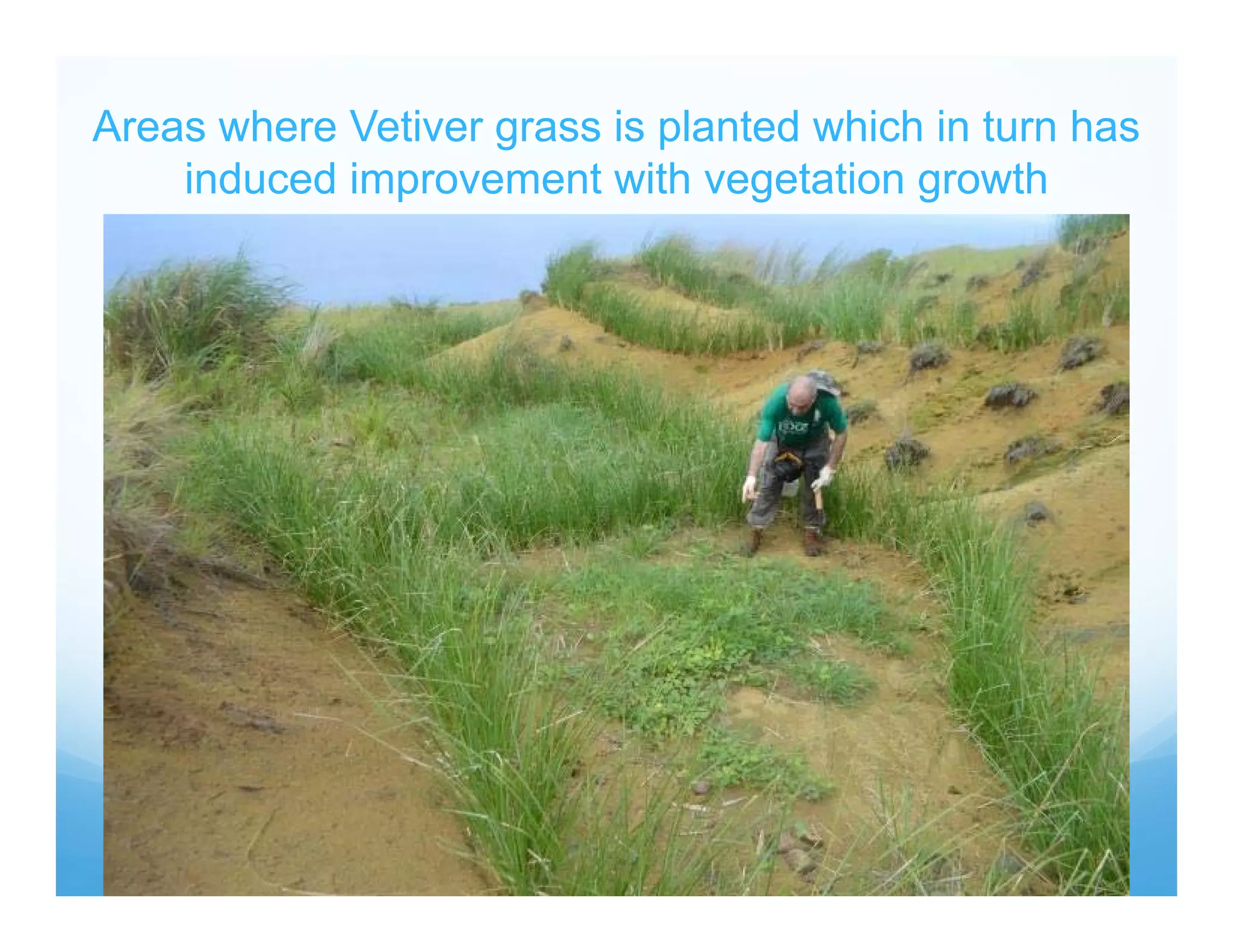
Areas where Vetiver grass is planted which in turn has
induced improvement with vegetation growth
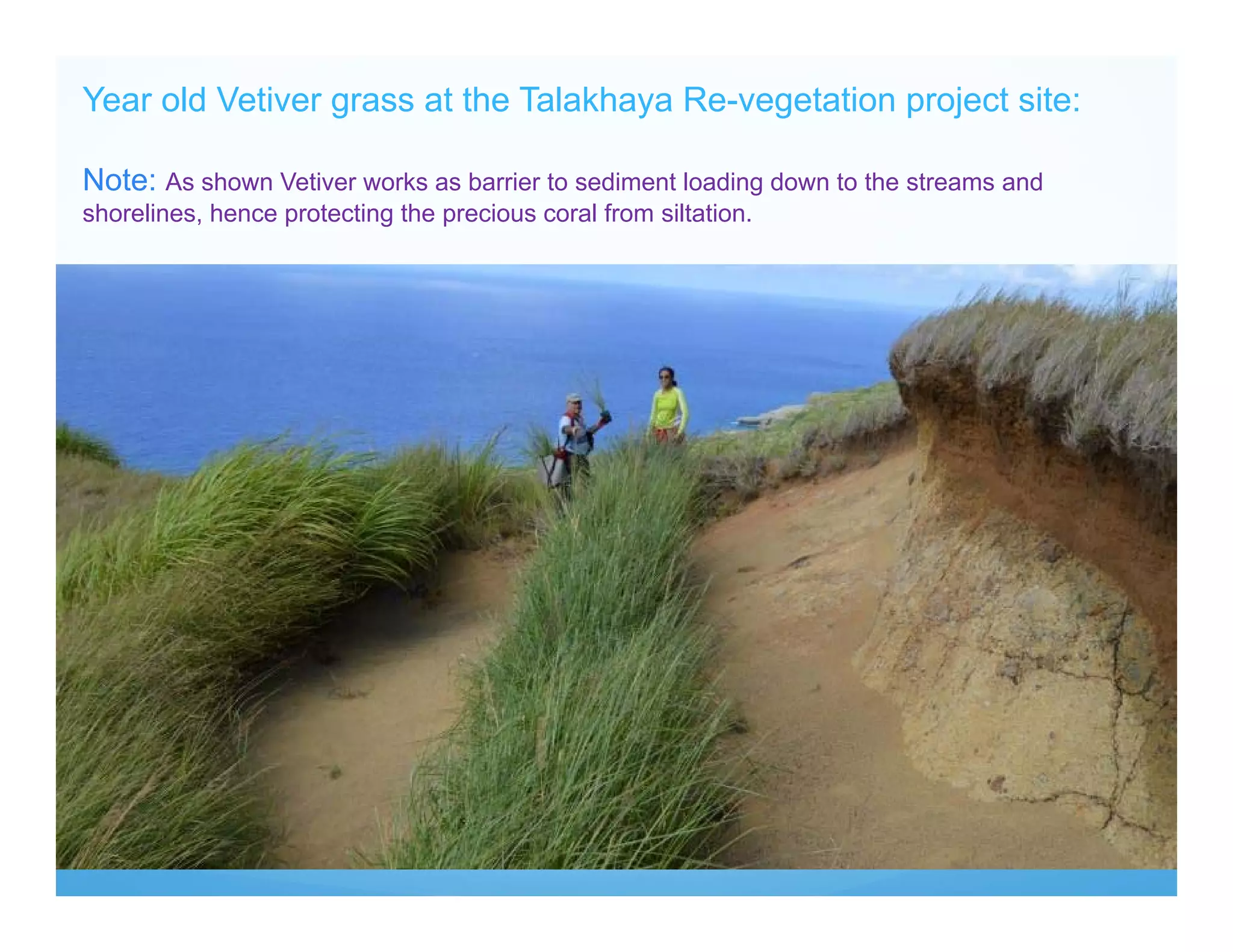
Year old Vetiver grass at the Talakhaya Re-vegetation project site:
Note: As shown Vetiver works as barrier to sediment loading down to the streams and
shorelines, hence protecting the precious coral from siltation.
Project Goals
Year 1
 Site assessment of the
watershed
 Obtain permissions and
collaborate with community
members and local agencies
 Purchase equipment needed
 Install equipment
 Begin sampling/monitoring
Year 2
 Continue Planting/Monitoring
 Analyze Data
 Submission of Final Report
 Presentation of Findings to
the community and resource
agencies
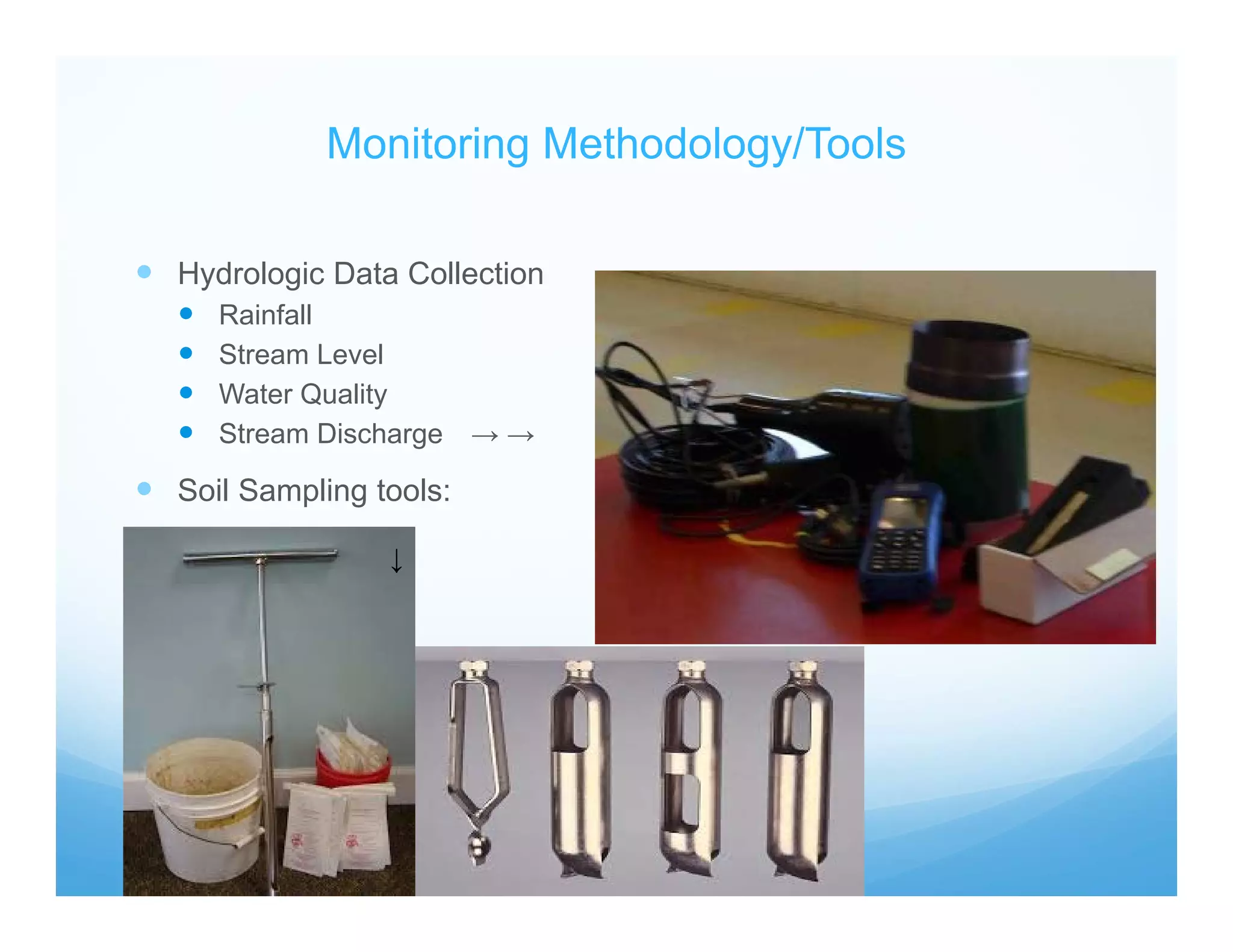
Monitoring Methodology/Tools
 Hydrologic Data Collection
 Rainfall
 Stream Level
 Water Quality
 Stream Discharge → →
 Soil Sampling tools:
↓
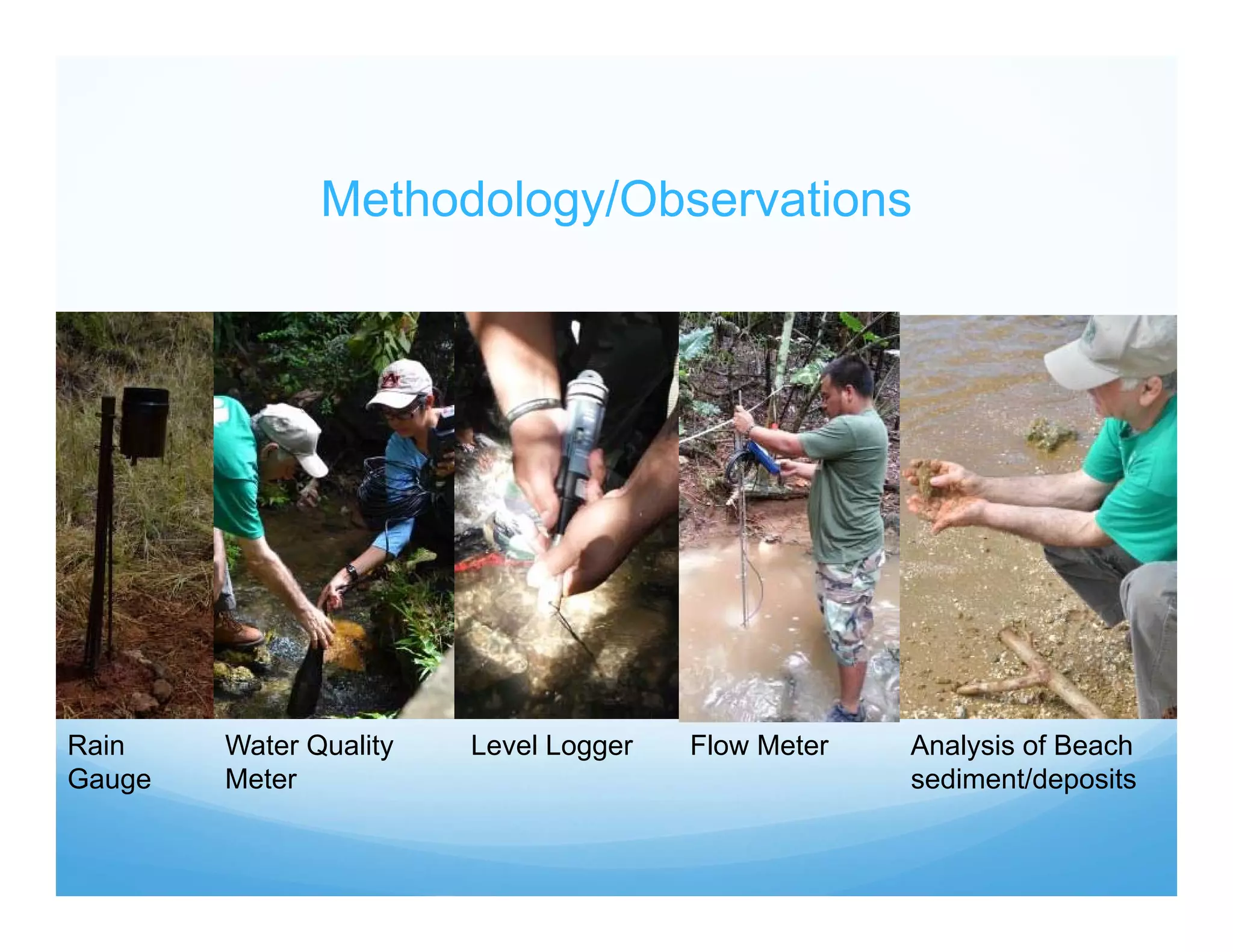
Methodology/Observations
Rain
Gauge
Water Quality
Meter
Level Logger Flow Meter Analysis of Beach
sediment/deposits
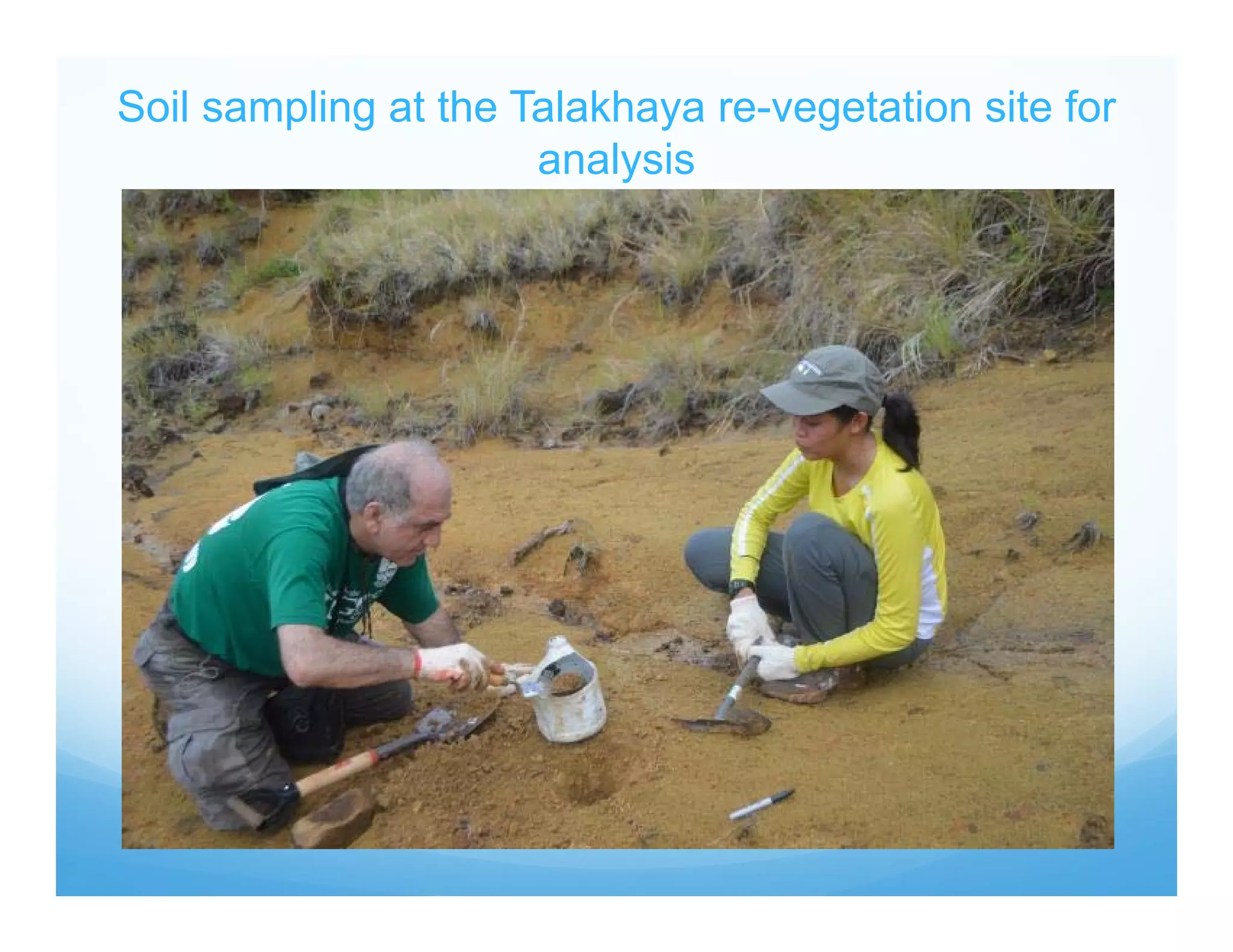
Soil sampling at the Talakhaya re-vegetation site for
analysis
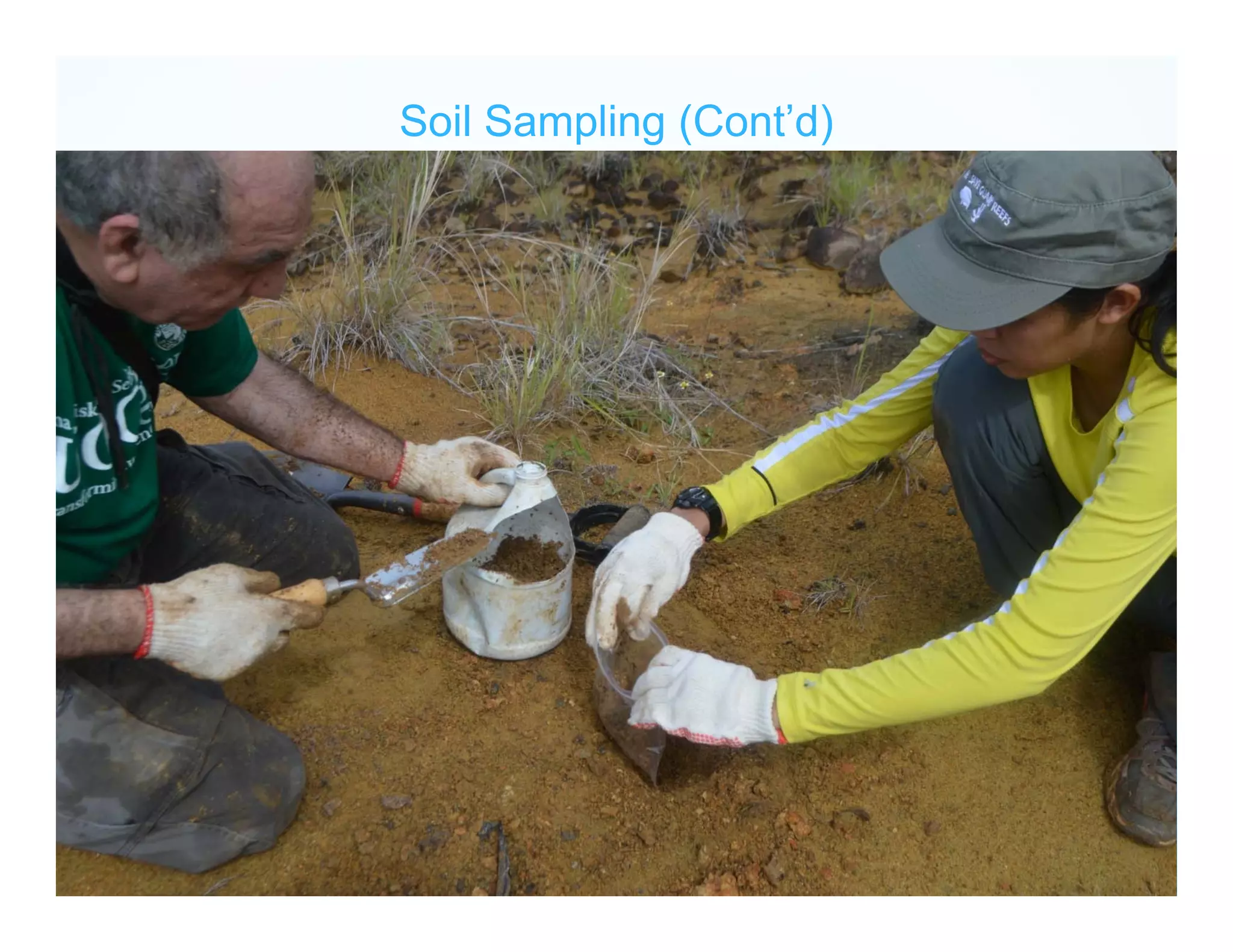
Soil Sampling (Cont’d)
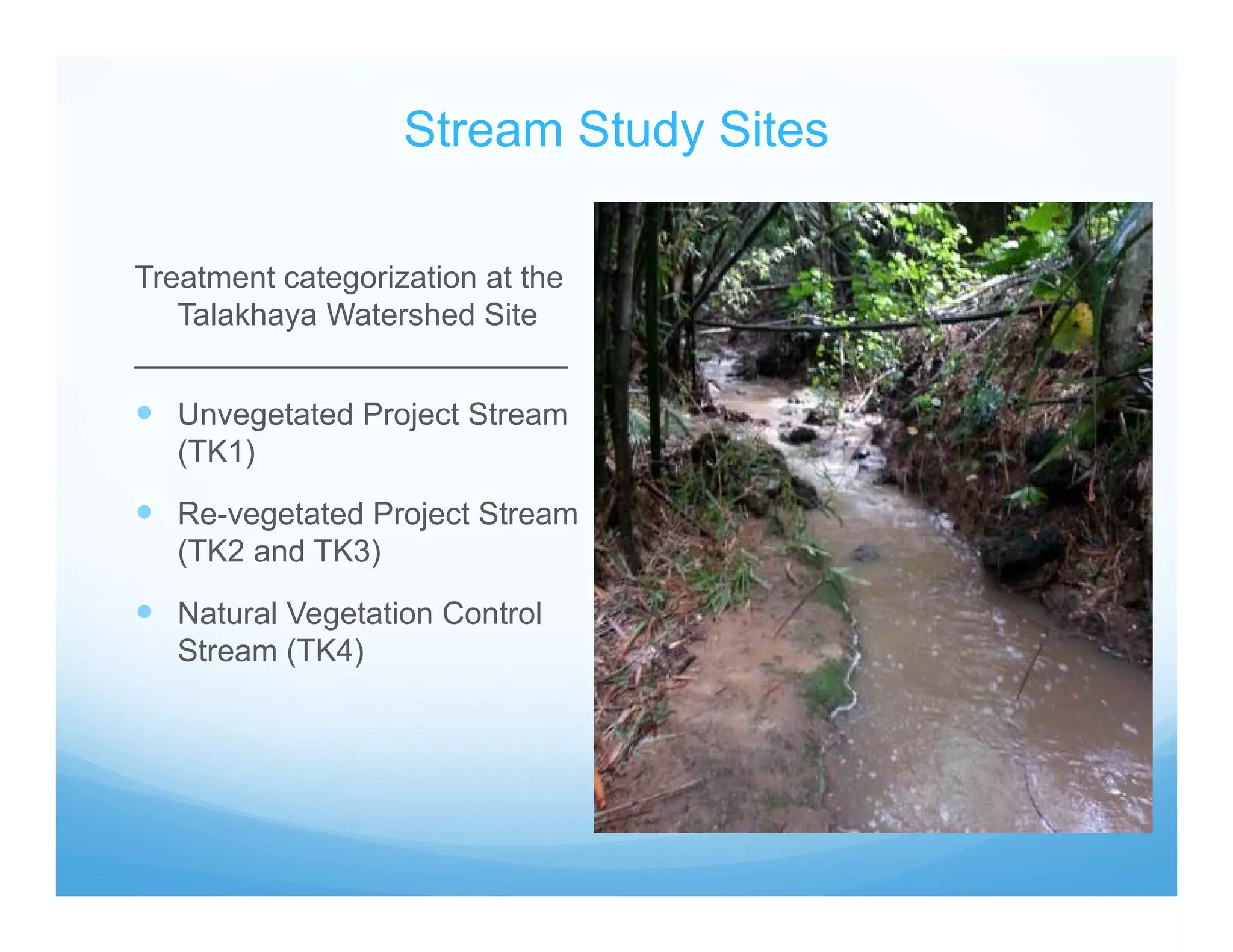
Stream Study Sites
Treatment categorization at the
Talakhaya Watershed Site
_________________________
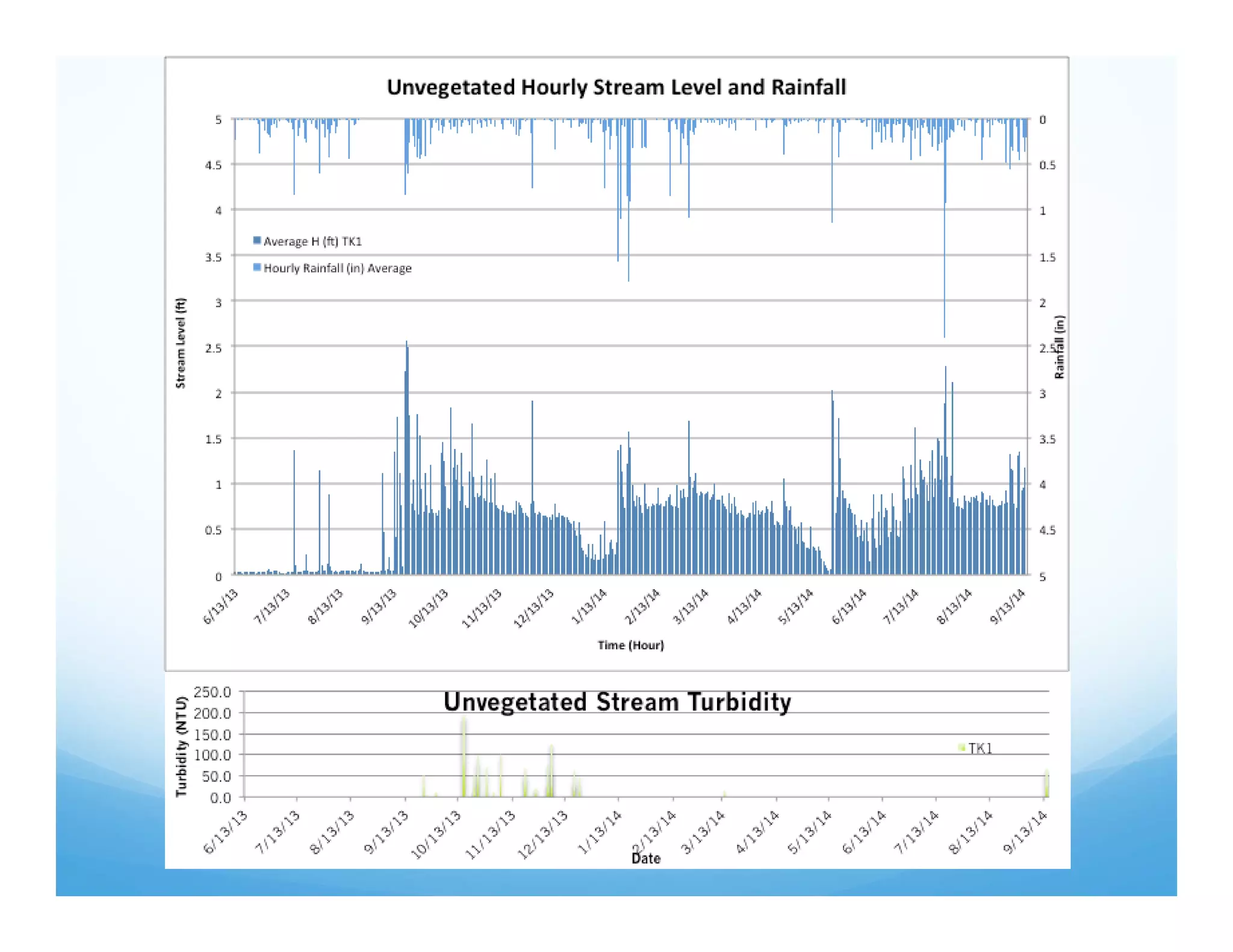
 Unvegetated Project Stream
(TK1)
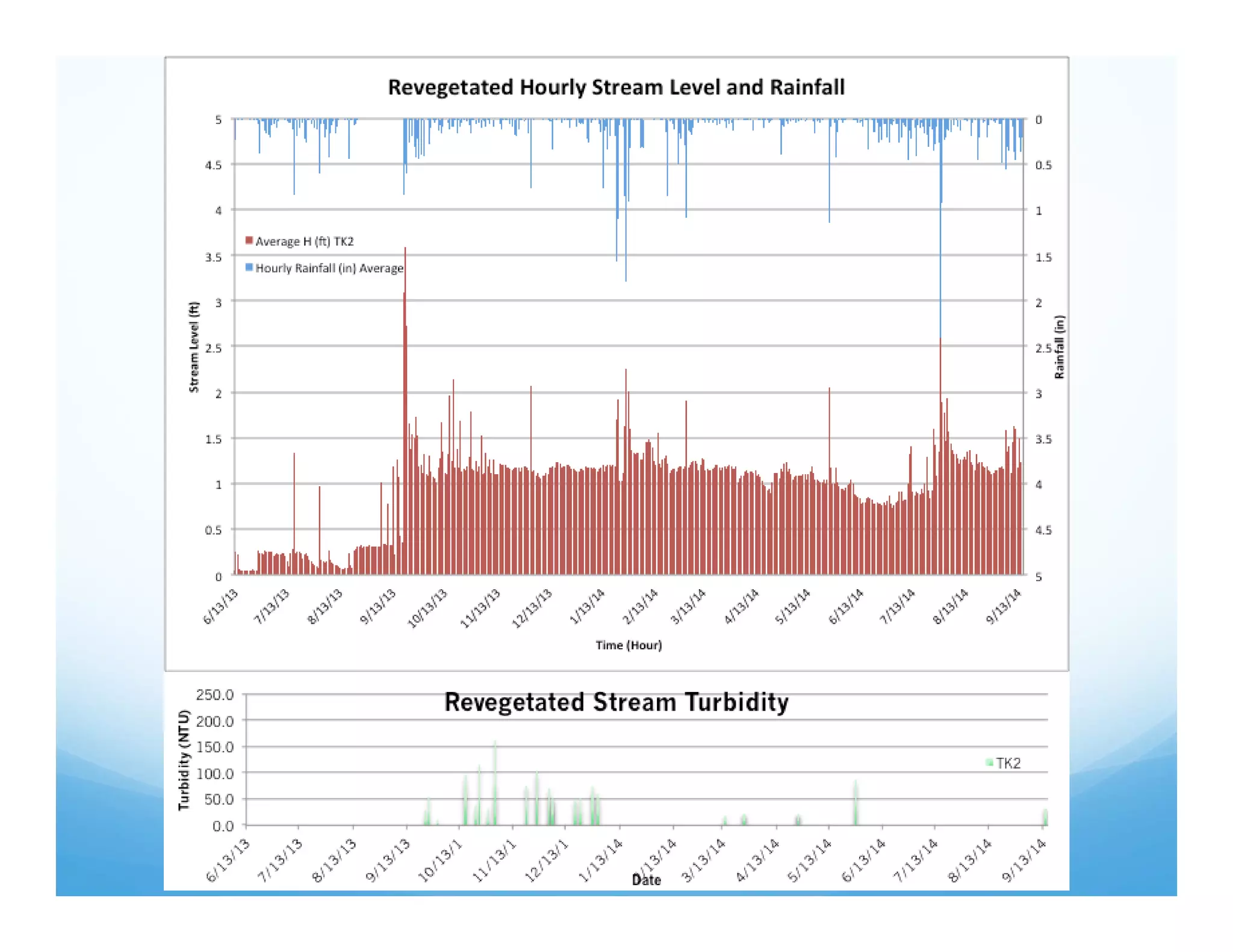
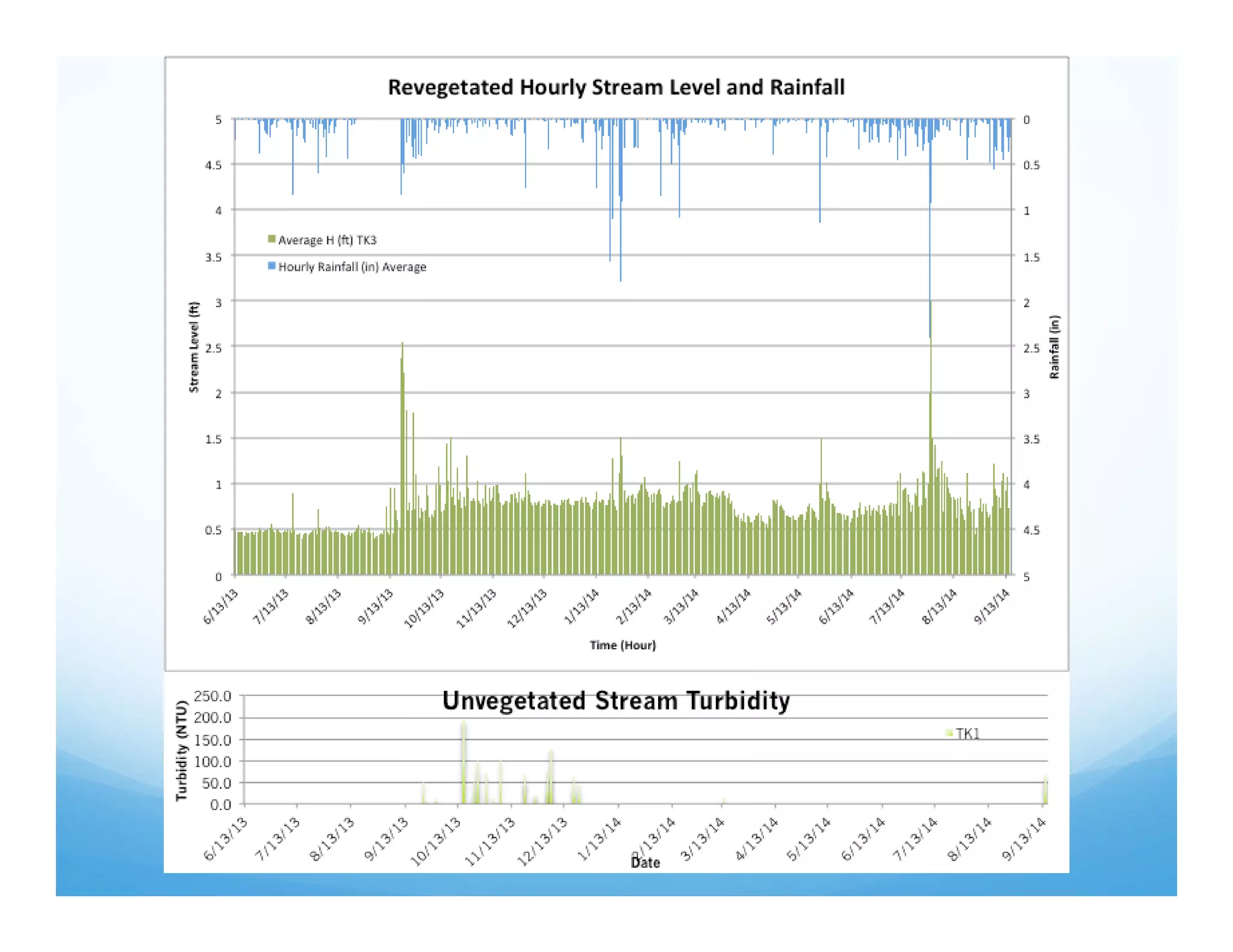
 Re-vegetated Project Stream
(TK2 and TK3)
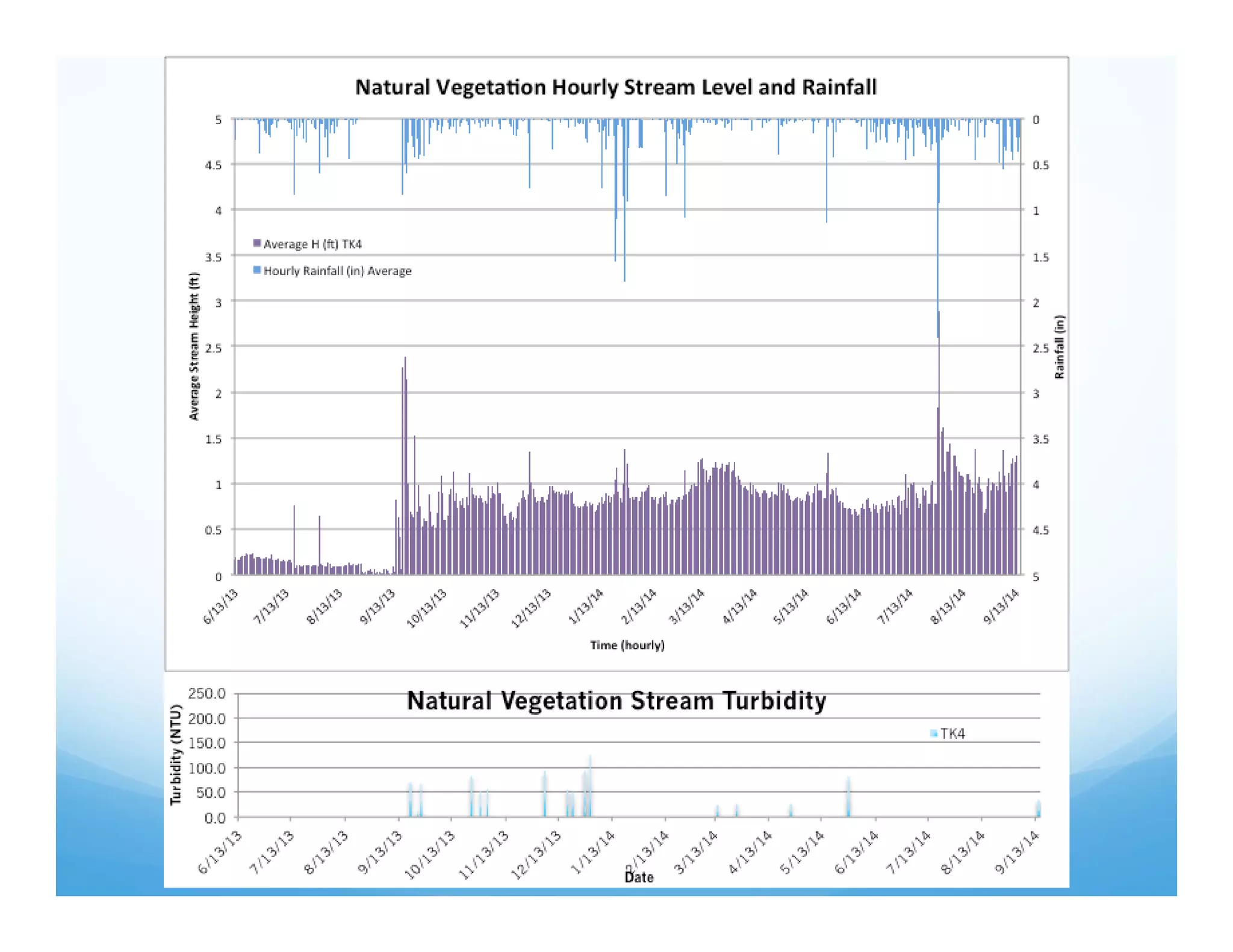
 Natural Vegetation Control
Stream (TK4)
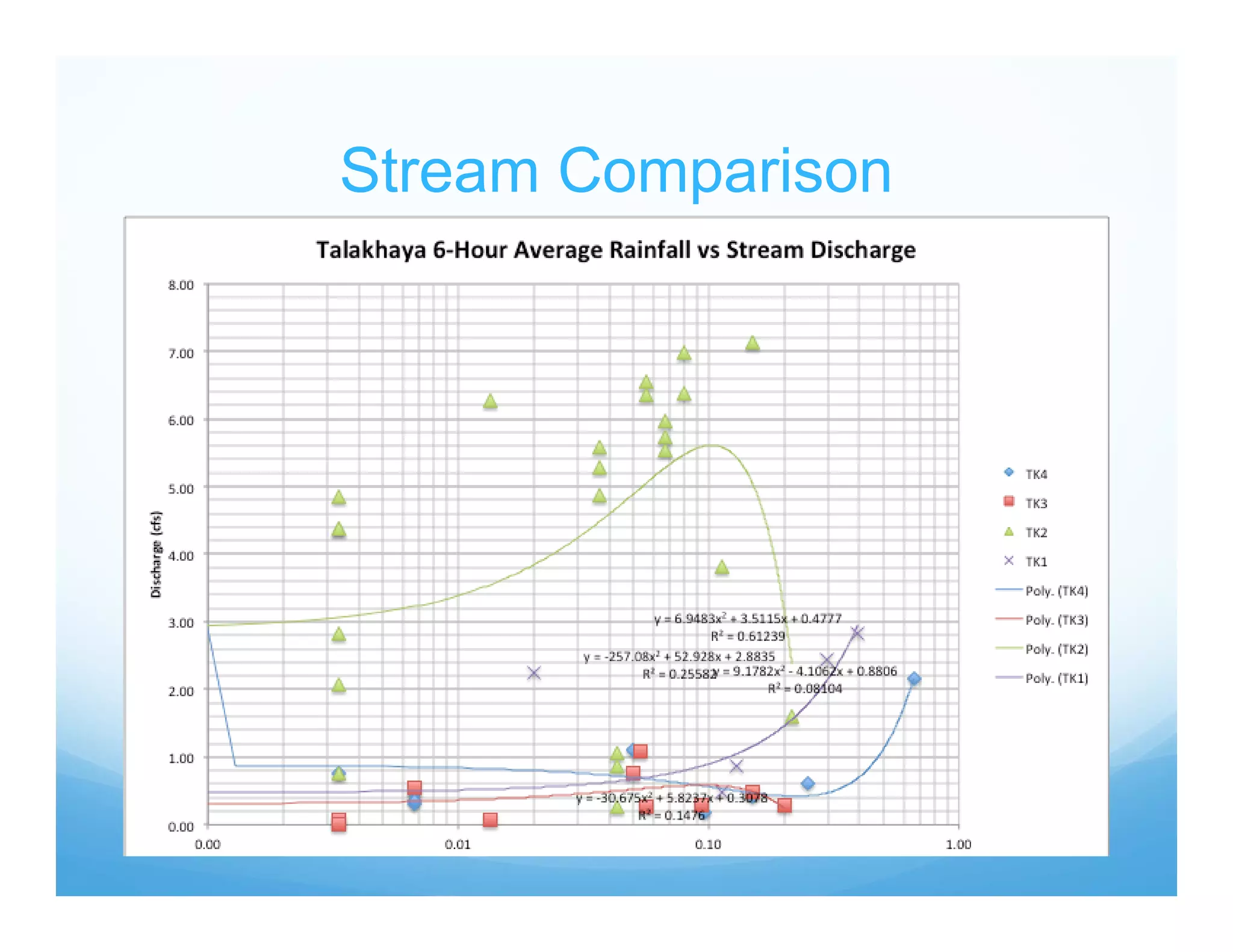
Stream Monitoring Results:
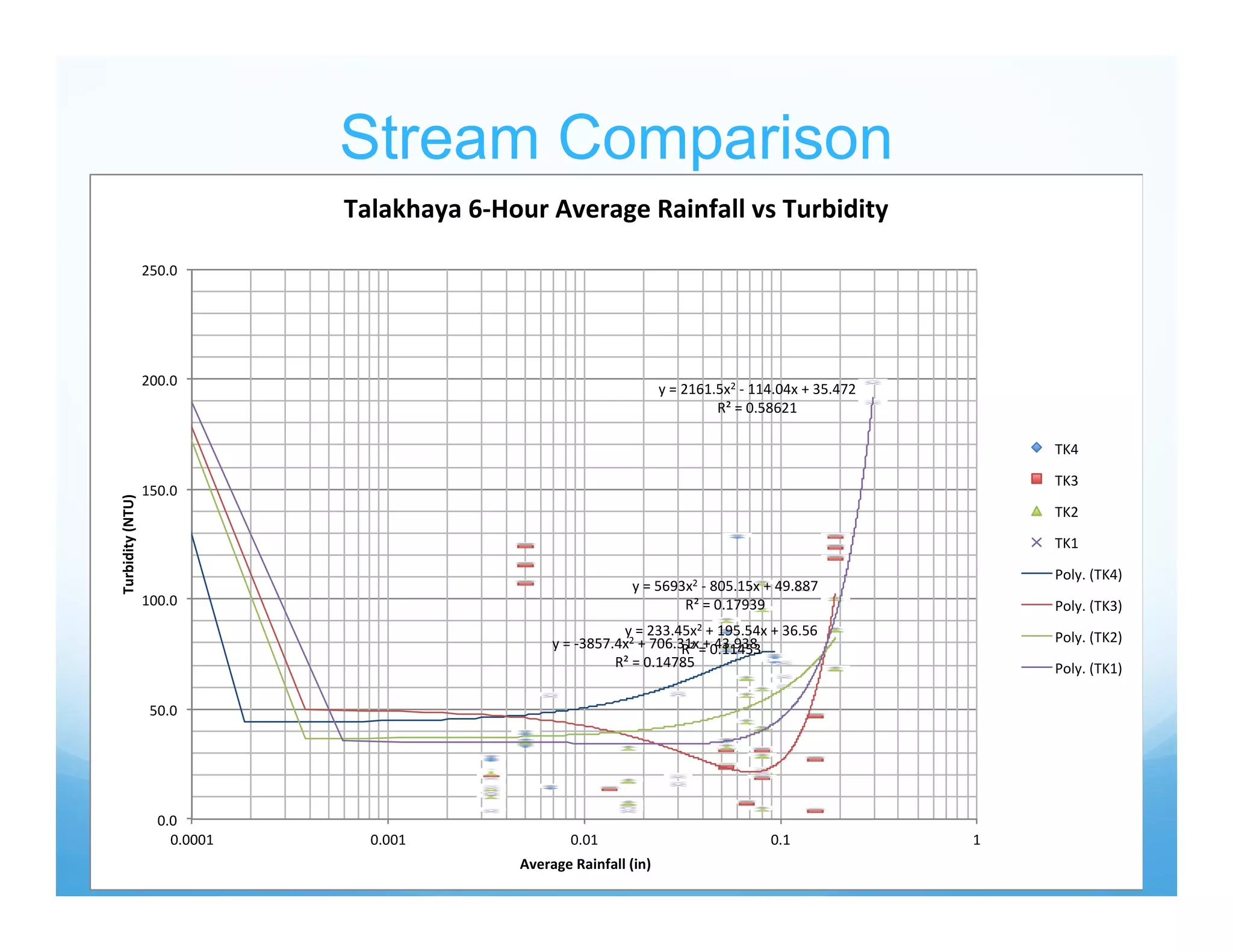
Stream Comparison
y = ‐3857.4x2 + 706.31x + 43.938
R² = 0.14785
y = 5693x2 ‐ 805.15x + 49.887
R² = 0.17939
y = 233.45x2 + 195.54x + 36.56
R² = 0.11453
y = 2161.5x2 ‐ 114.04x + 35.472
R² = 0.58621
0.0
50.0
100.0
150.0
200.0
250.0
0.0001 0.001 0.01 0.1 1
Turbidity(NTU)
Average Rainfall (in)
Talakhaya 6‐Hour Average Rainfall vs Turbidity
TK4
TK3
TK2
TK1
Poly. (TK4)
Poly. (TK3)
Poly. (TK2)
Poly. (TK1)
Stream Comparison
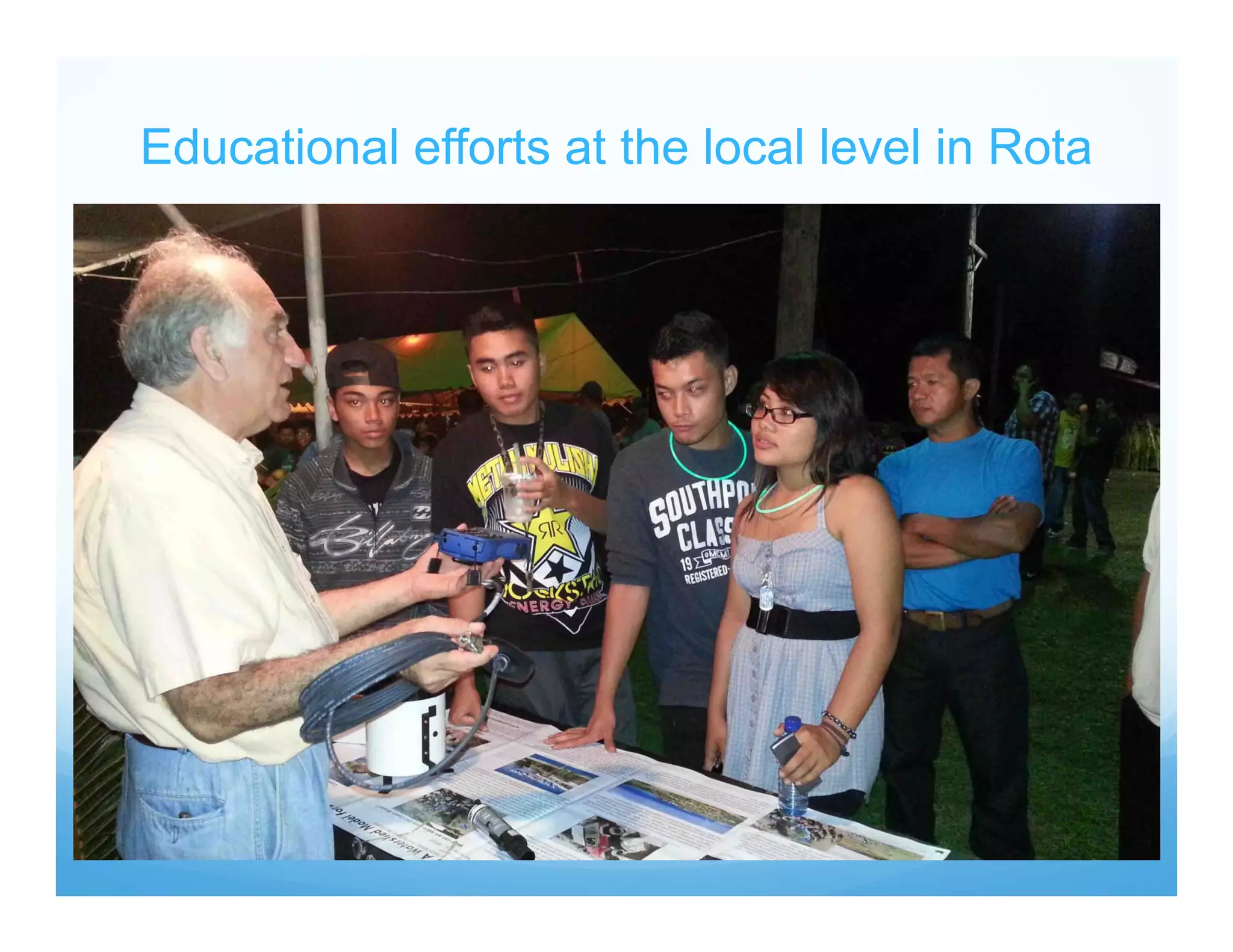
Educational efforts at the local level in Rota
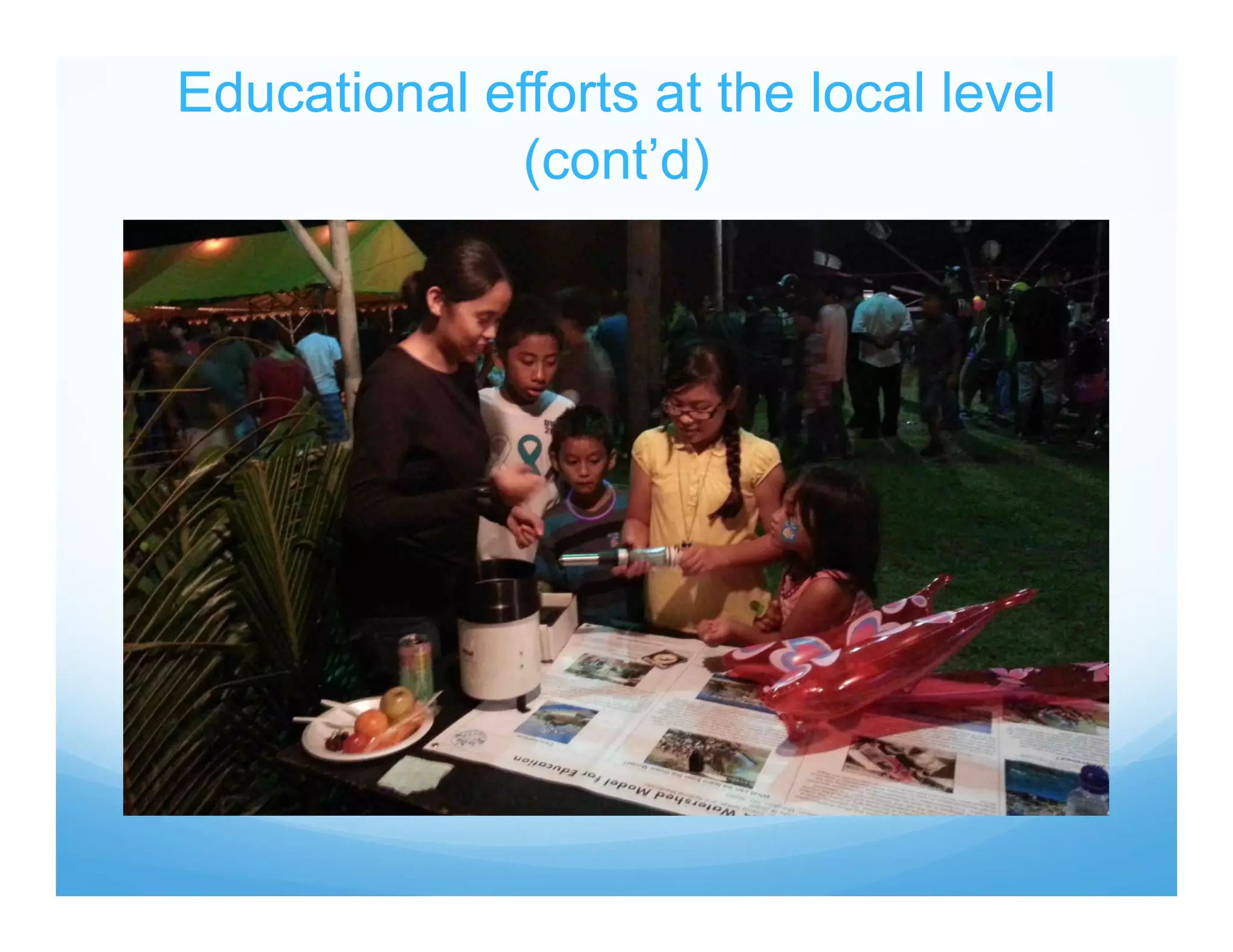
Educational efforts at the local level
(cont’d)
Recommendations:
It appears that re-vegetation to include Vetiver grass has
had a positive impact on reducing sedimentation,
however:
 New growth must have time to establish itself
 More data is required
 Need for increased community awareness
More about Vetiver and its effect on
Sedimentation Mitigation
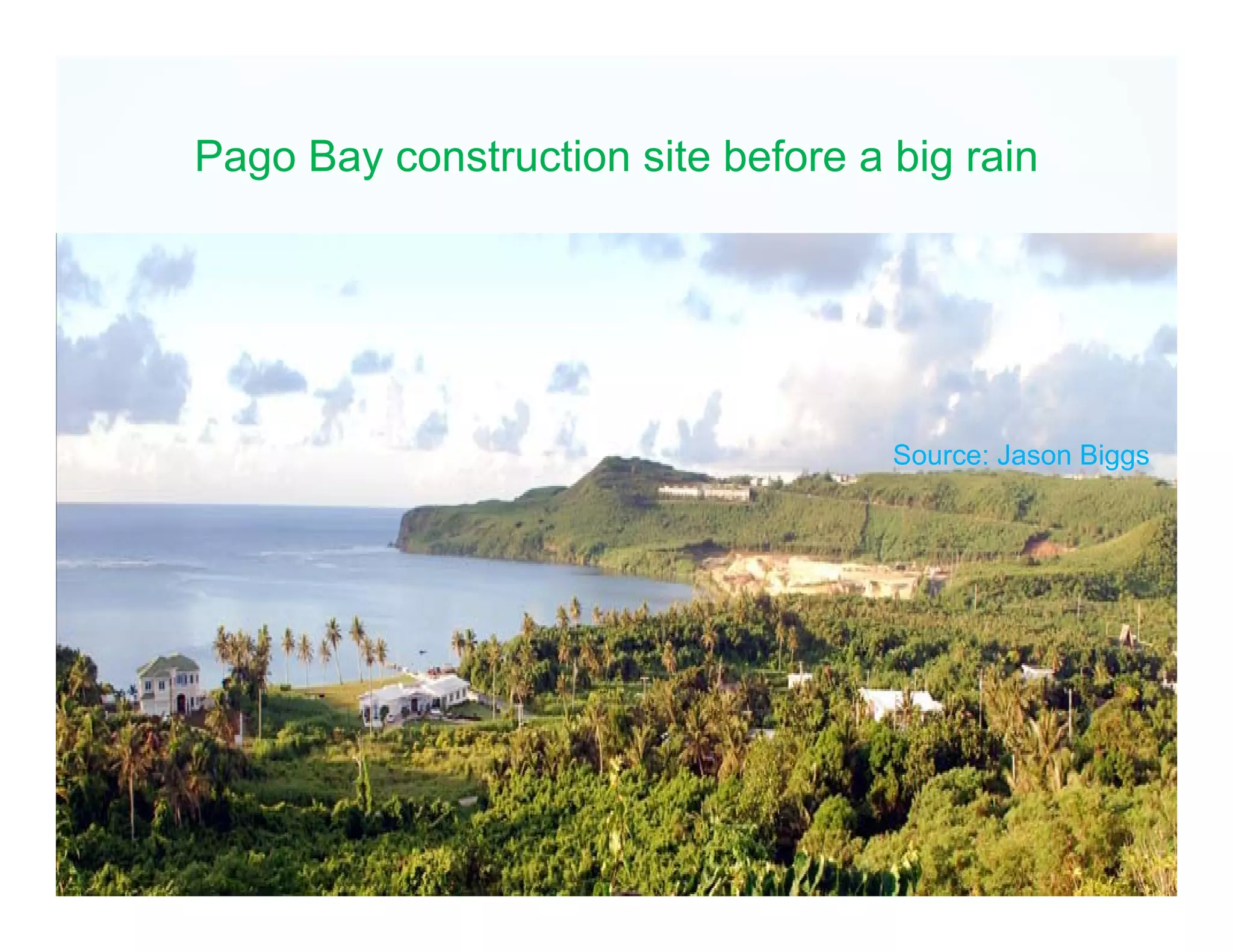
Pago Bay construction site before a big rain
Source: Jason Biggs
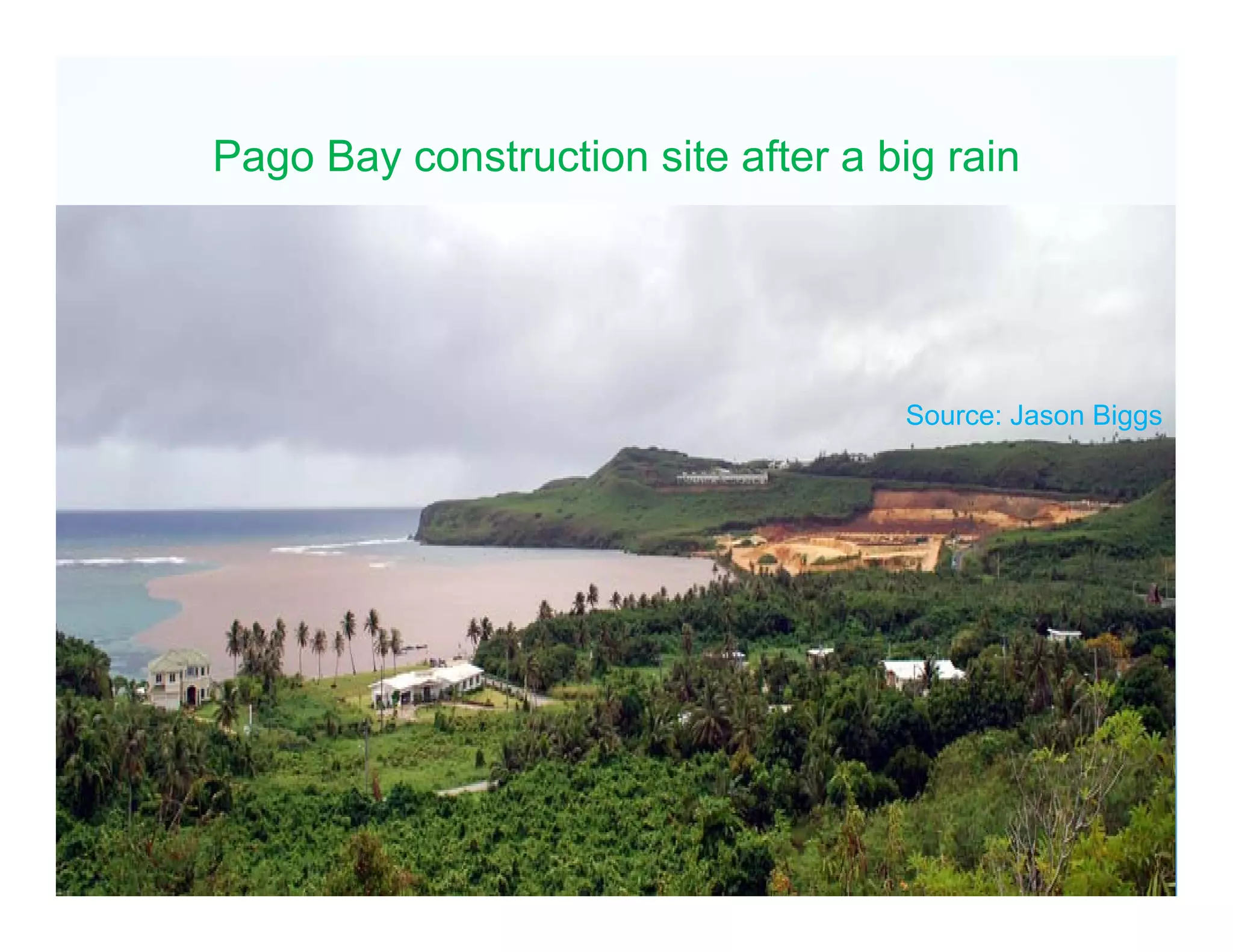
Pago Bay construction site after a big rain
Source: Jason Biggs
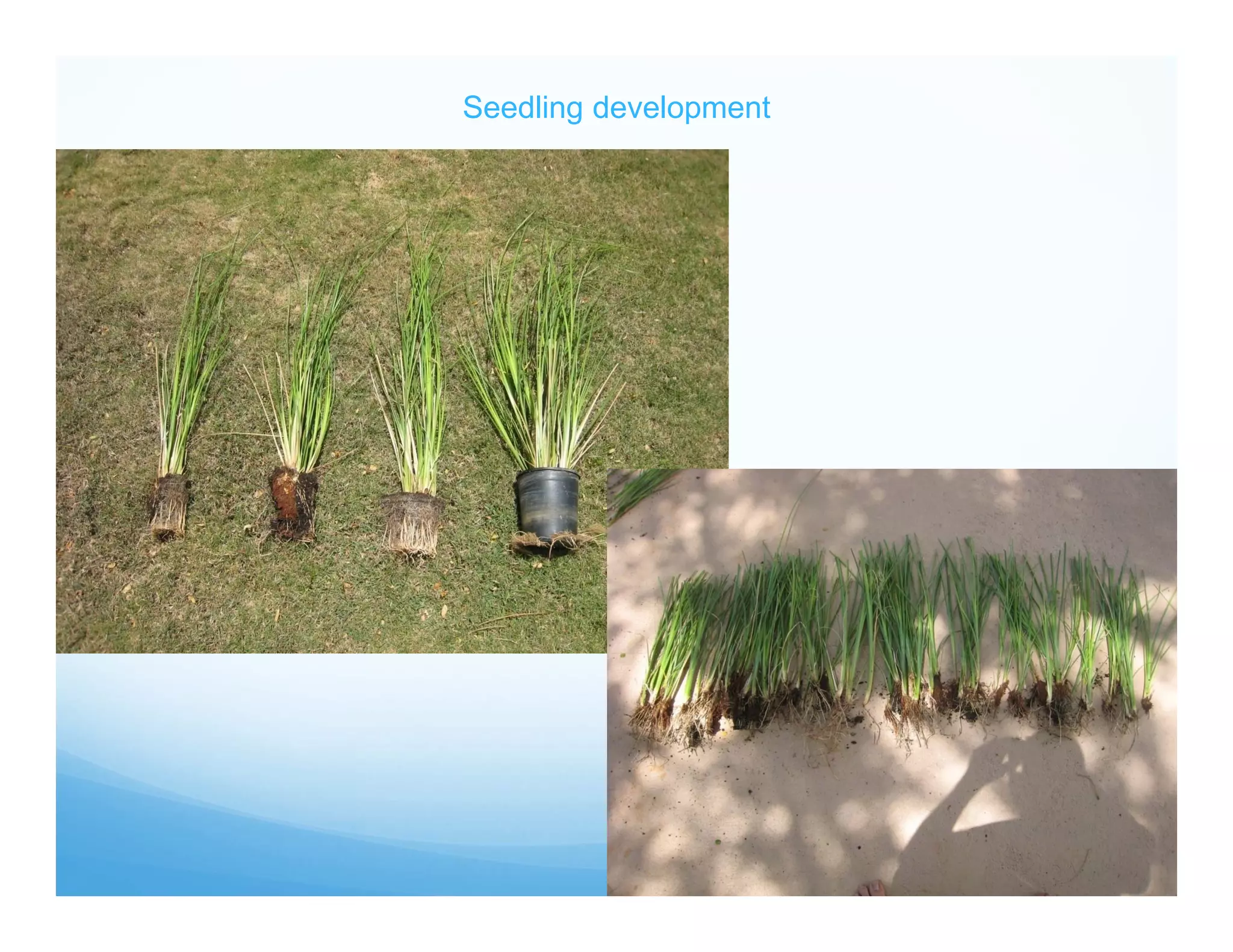
Seedling development
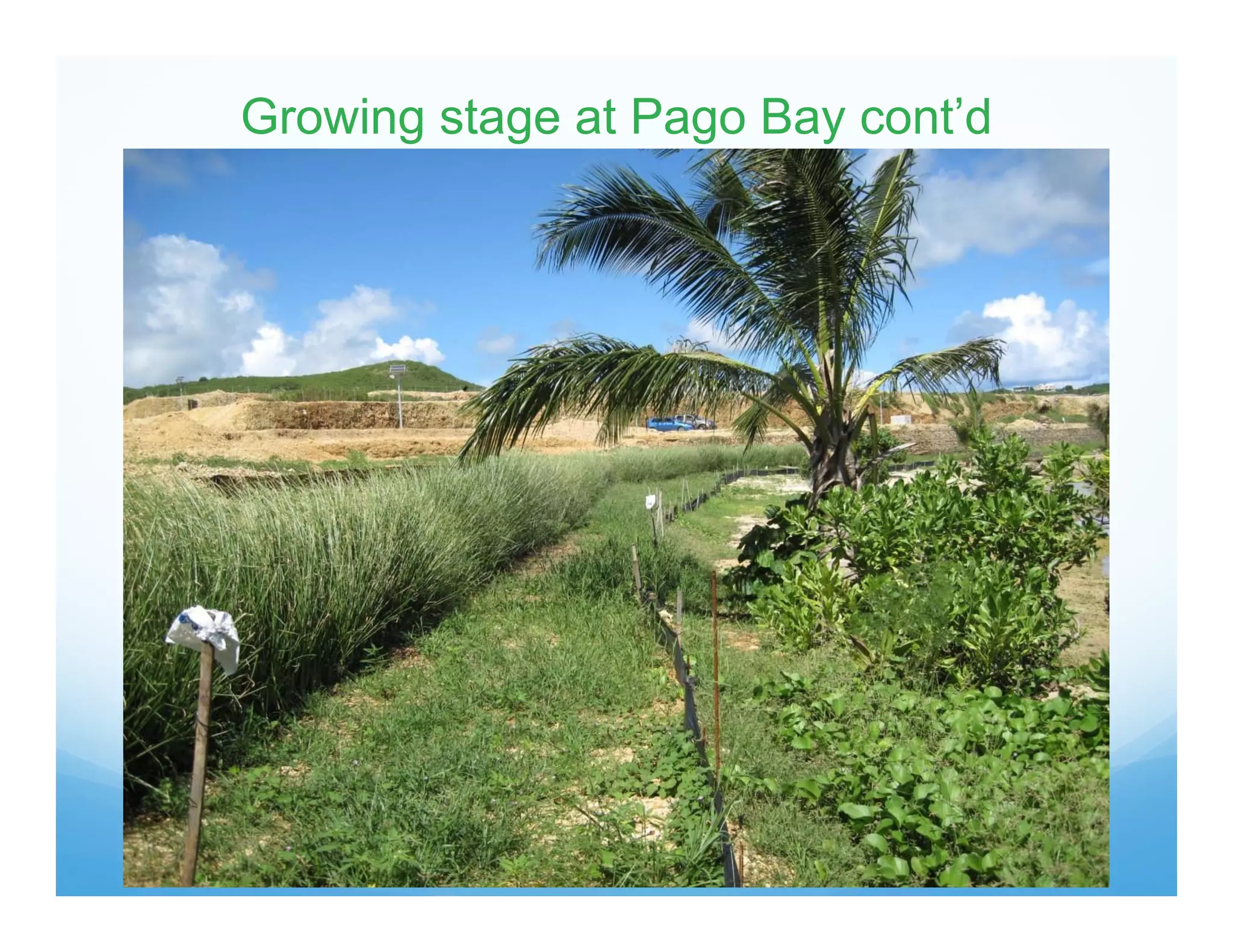
Growing stage at Pago Bay cont’d
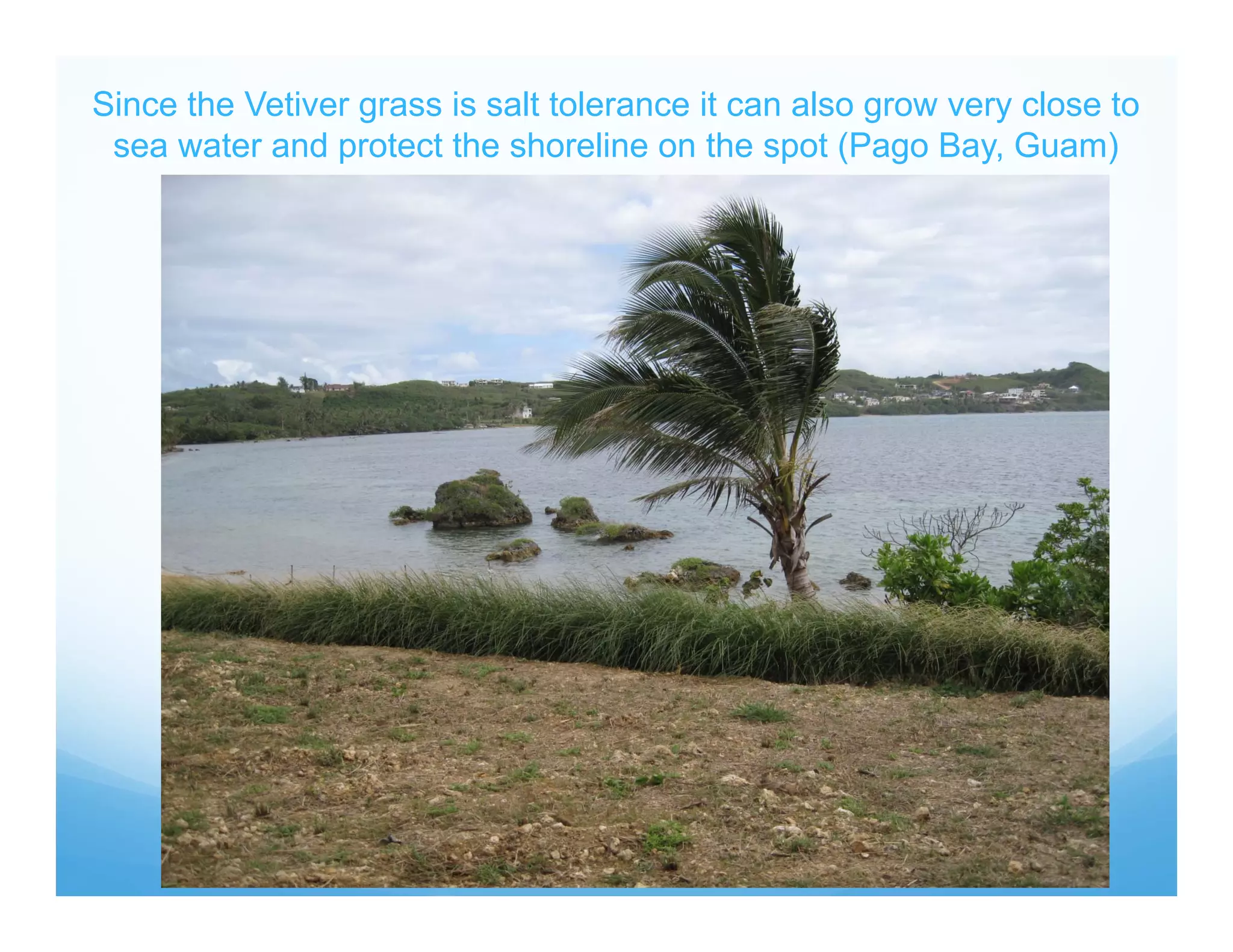
Since the Vetiver grass is salt tolerance it can also grow very close to
sea water and protect the shoreline on the spot (Pago Bay, Guam)
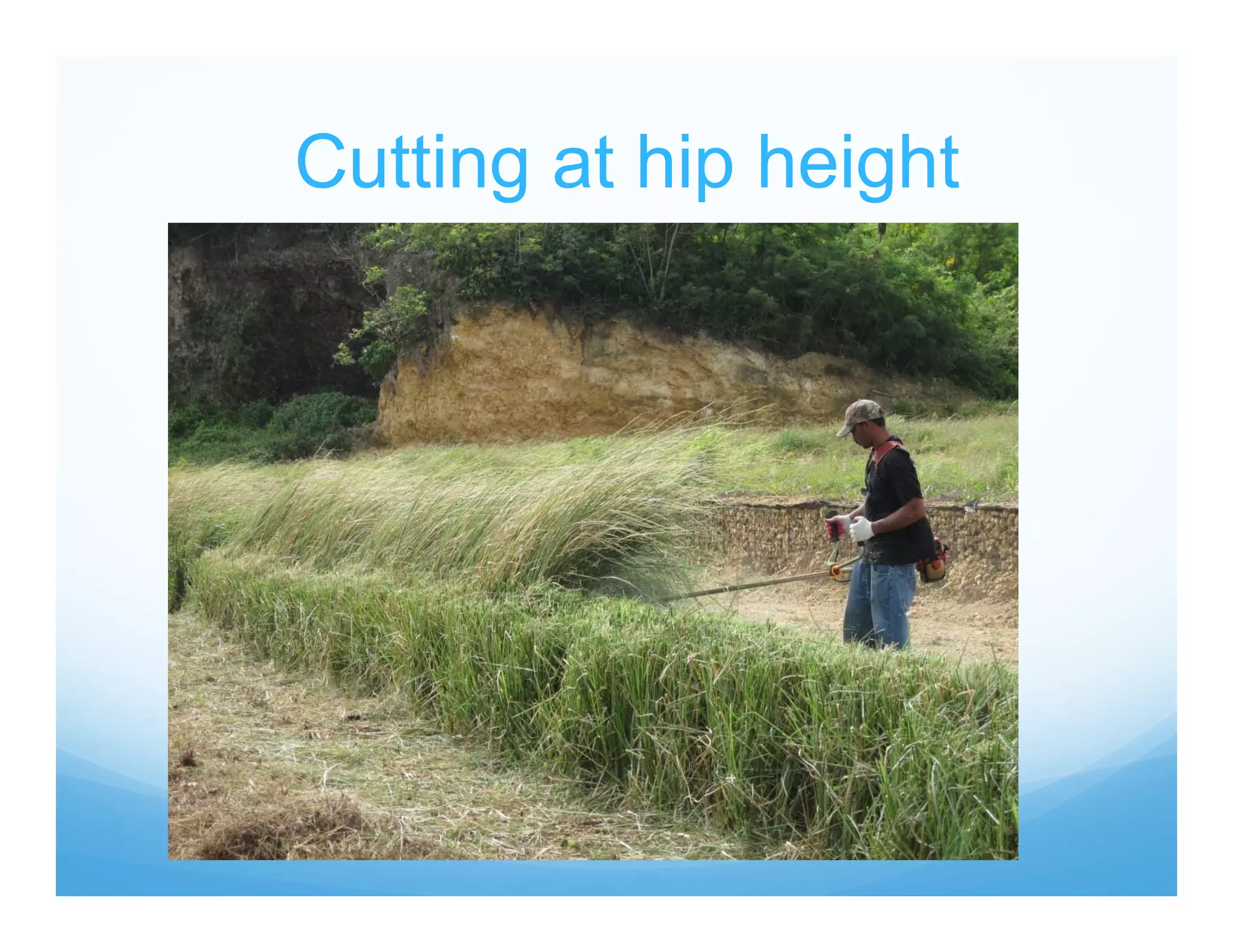
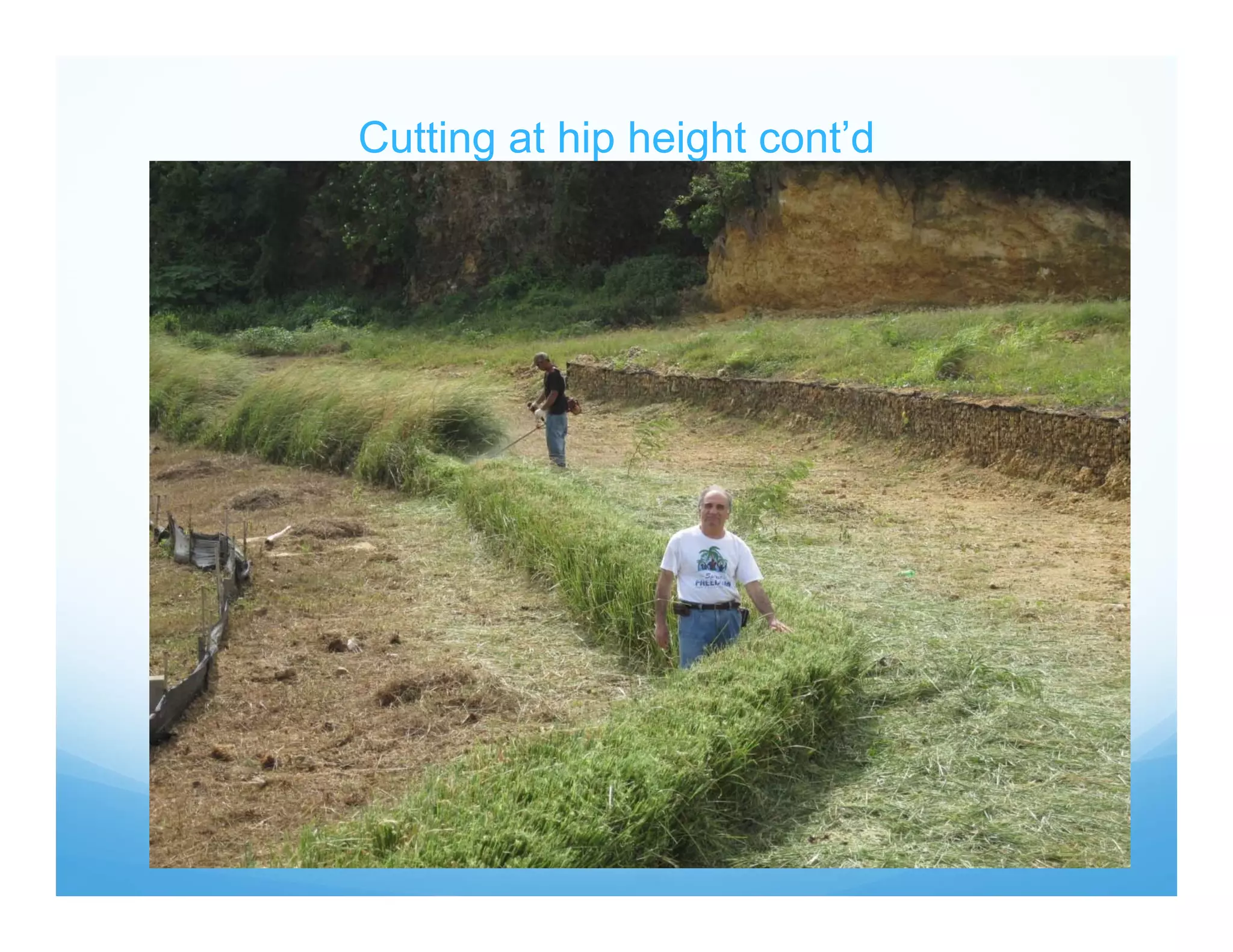
Cutting at hip height
Cutting at hip height cont’d
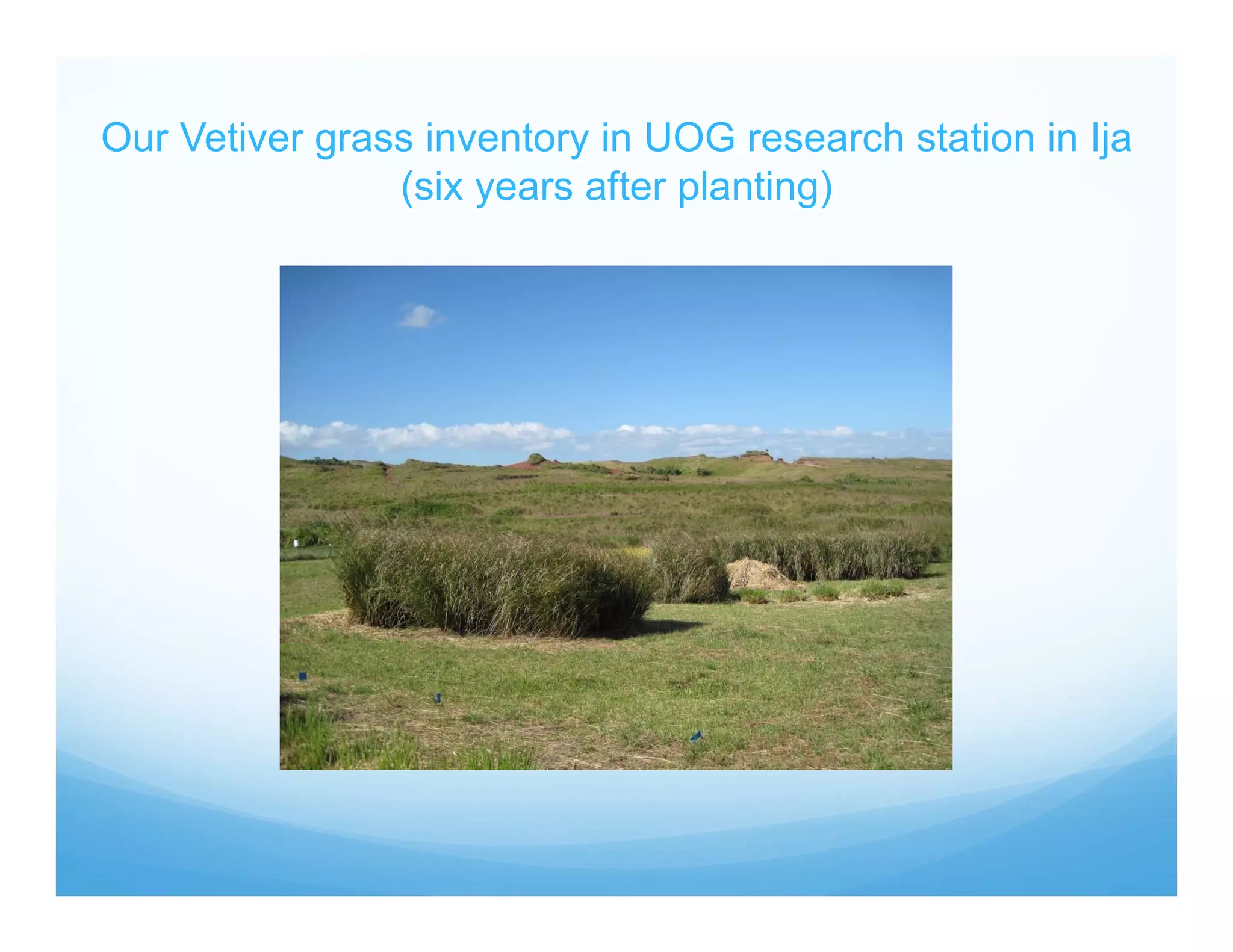
Our Vetiver grass inventory in UOG research station in Ija
(six years after planting)
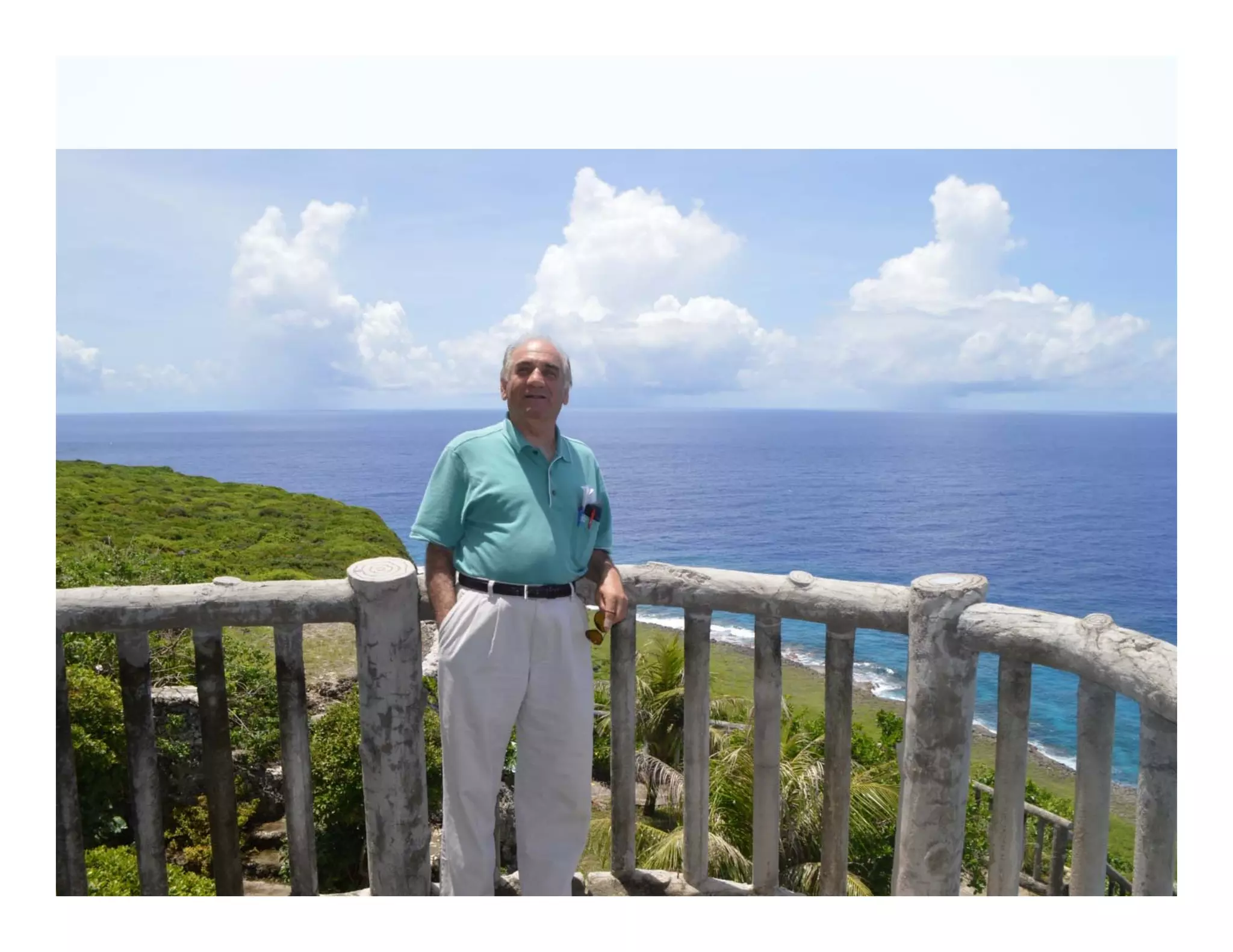
We also have fun after we finish
our daily work in Rota, etc.
Flying Residents of Rota
Rota’s ….bird
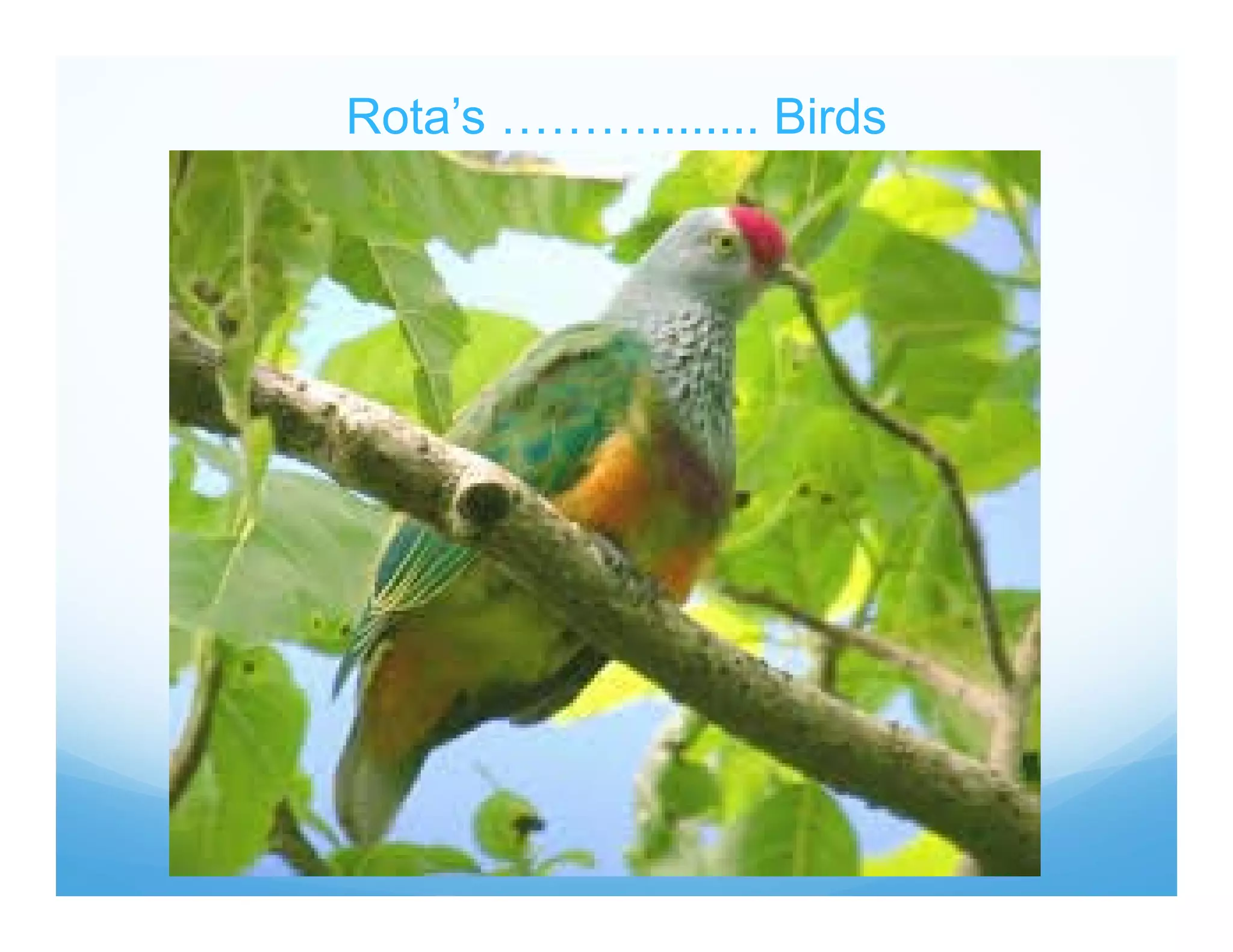
Rota’s ………........ Birds
Acknowledgement
 This project was funded by NOAA's Coral Reef
Conservation Program through National Fish and
Wildlife Foundation.
 Dr. Dana Okano from NOAA office in Saipan, CNMI
 Staff from the DLNR, Forestry Division in Rota.
 Xerxes Camacho, Research Assistant, Rota
 Clancy Iyekar, Soil Labs, UOG
 Our calabash cousins: all WERI and Marine Lab folks
and of course the POETers.
Thank You!
Questions?

Stream flow monitoring golabi