Strategies to Increase Customer
Retention.
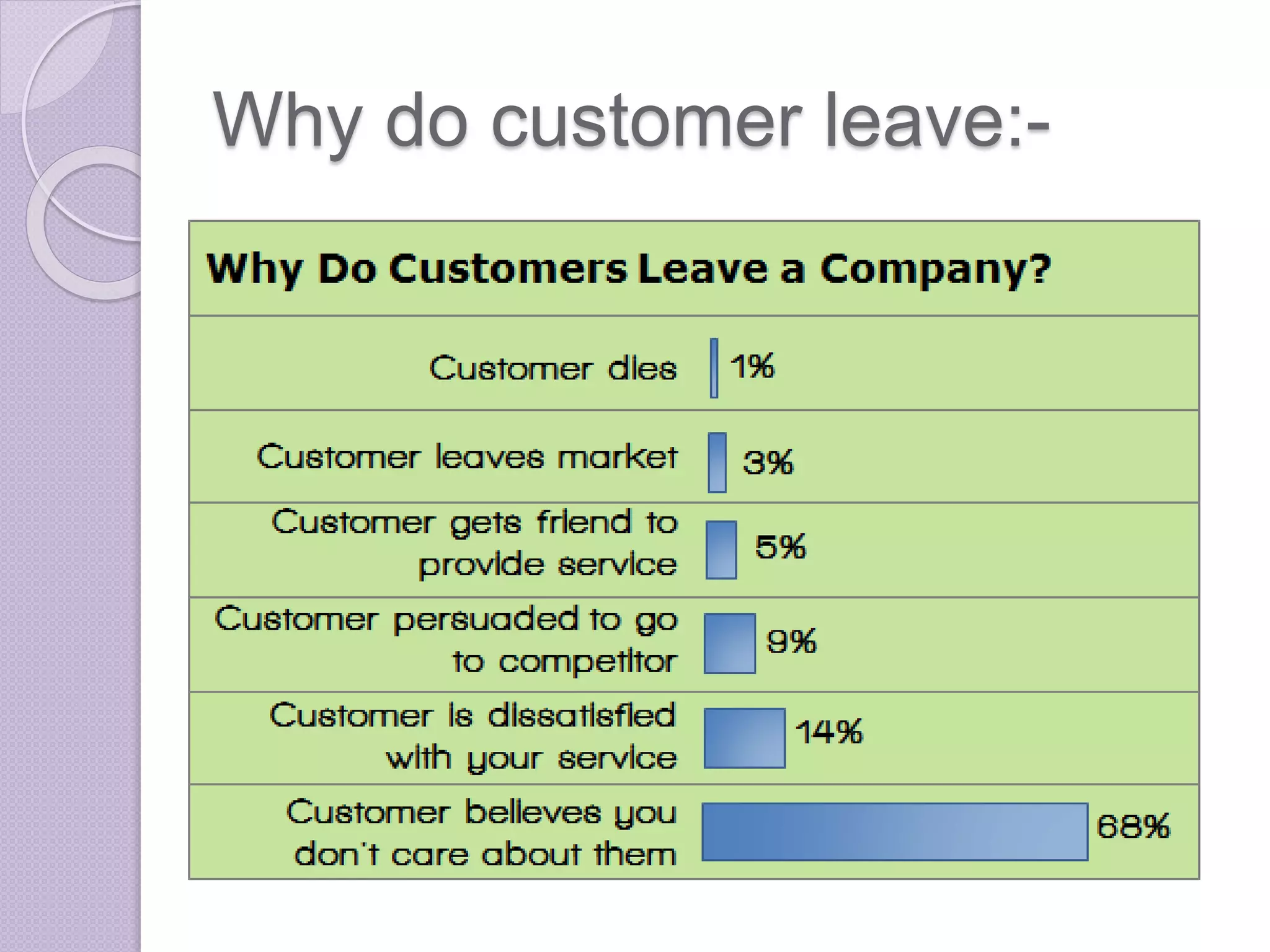
Why do customer leave:-
What is Customer Retention?
 Customer retention is the activity that a selling
organization undertakes in order to reduce
customer defections.
 Successful customer retention starts with the
first contact an organization has with a customer
and continues throughout the entire lifetime of a
relationship.
How is Customer Retention
achieved?
 Knowing customer behavior.
 Customer expectation for future use.
 Keeping customer active with tools.
 A strong CRM system.
Keeping Customer active with
tools.
Why is Customer Retention
necessary.
 It costs ten times more to generate a new
customer than to maintain an existing one.
 If you have a small number of customers, losing
a few could cripple your company. Even if you
have a large number of customers, a small
increase in your customer retention rate should
dramatically increase your profits.
 The Loyalty Effect, says that a 5% improvement
in customer retention rates will yield between a
25 to 100% increase in profits across a wide
range of industries.
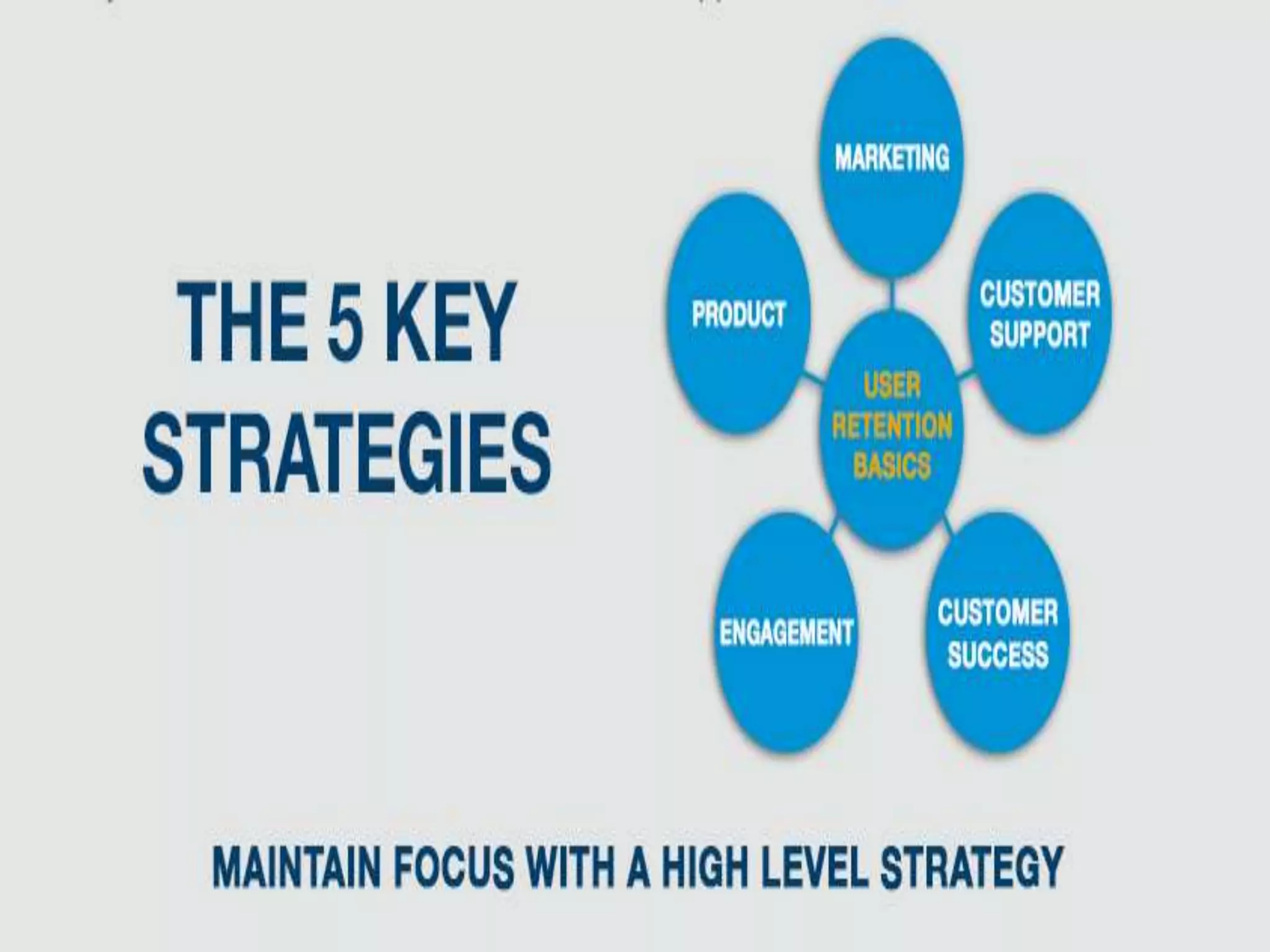
Customer Retention strategy.
 Delivering service that’s consistent with
your value proposition and brand
 Cross-selling, up-selling and asking for
referrals from existing customers
 Developing programs to increase
customer loyalty and decrease turnover
 Knowing the lifetime value for different
segments and using that data to improve
your marketing
 Prioritizing retention as a major focus in
your annual marketing plan
Keeping Customer Active
 Bridging online and offline services.
 Returns
 Gift cards
 Recommendations.
 Writer alert.
CRM model:-
Customer relationship
Management.
 CRM is a business strategy that commits an
organization to be customer centric and intent to
deliver profitable value by understanding and
anticipating customer needs.
 CRM consists of sets of enabling technologies
that centralize customer data and provides an
infrastructure that facilitate the profitable delivery
of value.
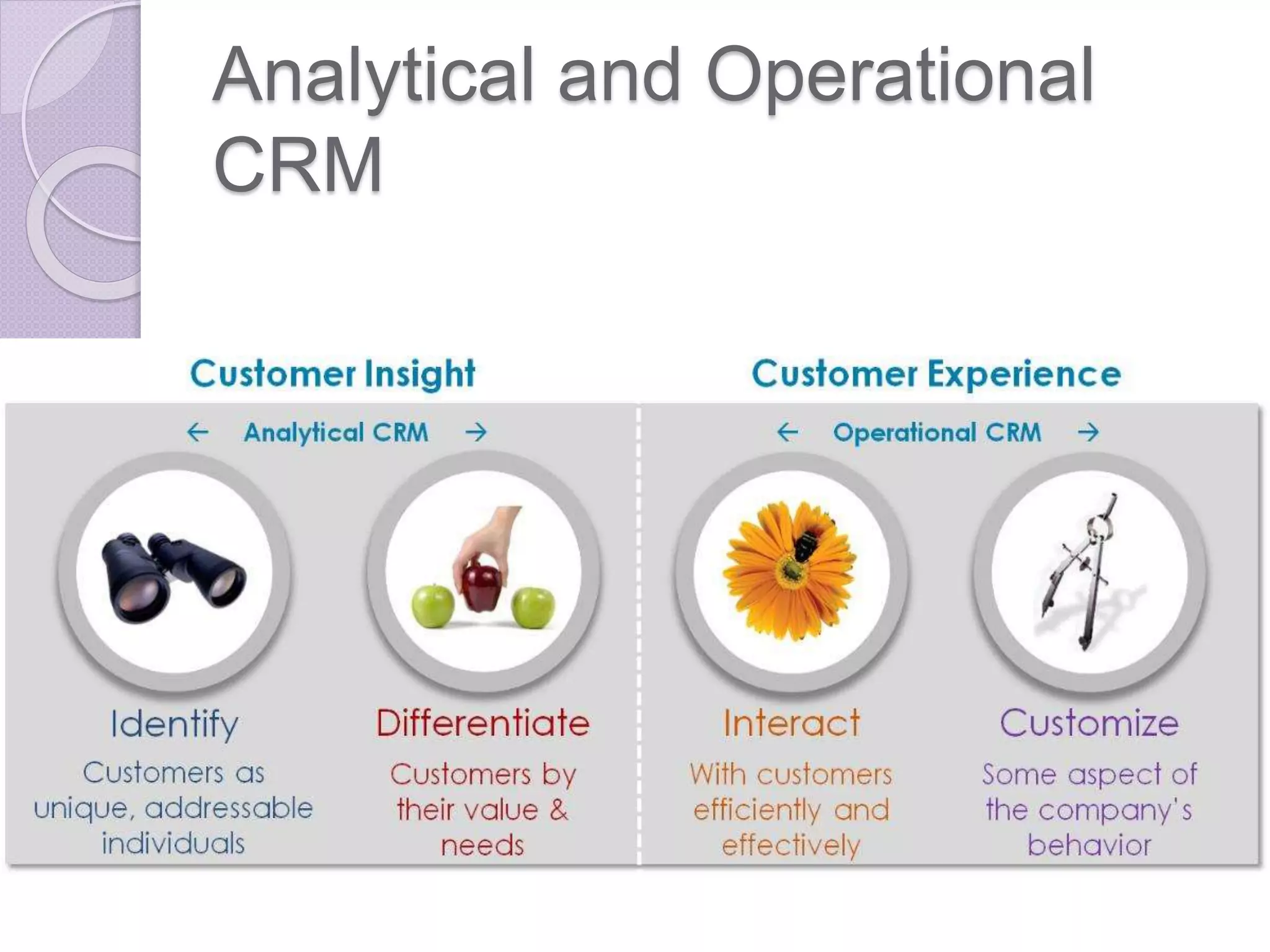
Analytical and Operational
CRM
Areas to look forward :-
Brand reputation
Perceived value
Customer experience
Quality Assurance
Loyalty program
Funnel model:-
Strategies to increase customer retention

Strategies to increase customer retention

  • 1.
    Strategies to IncreaseCustomer Retention.
  • 2.
  • 3.
    What is CustomerRetention?  Customer retention is the activity that a selling organization undertakes in order to reduce customer defections.  Successful customer retention starts with the first contact an organization has with a customer and continues throughout the entire lifetime of a relationship.
  • 4.
    How is CustomerRetention achieved?  Knowing customer behavior.  Customer expectation for future use.  Keeping customer active with tools.  A strong CRM system.
  • 5.
  • 6.
    Why is CustomerRetention necessary.  It costs ten times more to generate a new customer than to maintain an existing one.  If you have a small number of customers, losing a few could cripple your company. Even if you have a large number of customers, a small increase in your customer retention rate should dramatically increase your profits.  The Loyalty Effect, says that a 5% improvement in customer retention rates will yield between a 25 to 100% increase in profits across a wide range of industries.
  • 9.
    Customer Retention strategy. Delivering service that’s consistent with your value proposition and brand  Cross-selling, up-selling and asking for referrals from existing customers  Developing programs to increase customer loyalty and decrease turnover  Knowing the lifetime value for different segments and using that data to improve your marketing  Prioritizing retention as a major focus in your annual marketing plan
  • 10.
    Keeping Customer Active Bridging online and offline services.  Returns  Gift cards  Recommendations.  Writer alert.
  • 11.
  • 12.
    Customer relationship Management.  CRMis a business strategy that commits an organization to be customer centric and intent to deliver profitable value by understanding and anticipating customer needs.  CRM consists of sets of enabling technologies that centralize customer data and provides an infrastructure that facilitate the profitable delivery of value.
  • 13.
  • 14.
    Areas to lookforward :- Brand reputation Perceived value Customer experience Quality Assurance Loyalty program
  • 15.