Strategic Management
Strategic Management Defined
The set of managerial decisions and actions that
determines the long-run performance of a corporation. It
includes:
environmental scanning (internal & external)
strategy formulation
strategy implementation
evaluation and control
It focuses on integrating management, marketing,
finance/accounting, production/operations, research and
development, and computer information systems to
achieve organizational success.
Benefits of Strategic Management
Clearer sense of strategic vision
Sharper focus on what is strategically
important
Improved understanding of rapidly
changing environment
Three Key Strategic Questions
Where is the organization now?
If no changes are made, where will the
organization be in one, two, five or ten
years? Are the answers acceptable?
If the answers are not acceptable, what
specific actions should management
undertake? What are the risks and payoffs
involved?
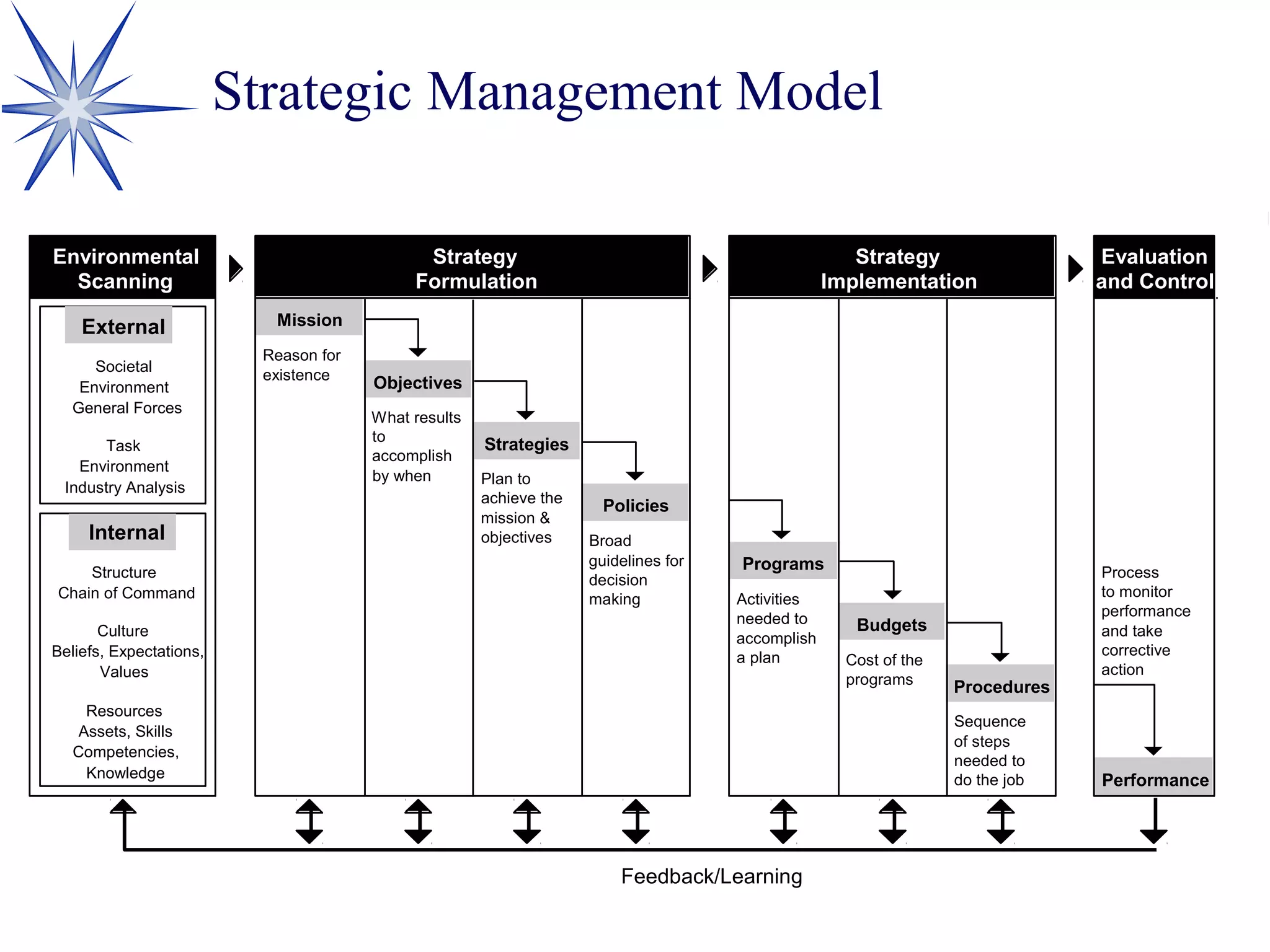
Strategic Management Model
Strategy
Formulation
Strategy
Implementation
Evaluation
and Control
Mission
Objectives
Strategies
Policies
Feedback/Learning
Environmental
Scanning
Societal
Environment
General Forces
Task
Environment
Industry Analysis
Structure
Chain of Command
Resources
Assets, Skills
Competencies,
Knowledge
Culture
Beliefs, Expectations,
Values
Reason for
existence
What results
to
accomplish
by when Plan to
achieve the
mission &
objectives Broad
guidelines for
decision
making
Programs
Activities
needed to
accomplish
a plan
Budgets
Cost of the
programs
Procedures
Sequence
of steps
needed to
do the job
Process
to monitor
performance
and take
corrective
action
Performance
External
Internal
Strategy Formulation
The process of developing long-range plans to deal
effectively with environmental opportunities and threats in
light of corporate strengths and weaknesses.
Composed of:
Mission
Objectives
Strategies
Policies
Mission
The purpose or reason for the corporation’s
existence. It tells who the company is, what they
do as well as what they’d like to become.
Objectives
The end results of planned activity. They state
WHAT is to be accomplished by WHEN. They
should be quantified, if possible.
Should be specific, measurable and obtainable.
Strategies
A strategy is a comprehensive master plan stating HOW the
corporation will achieve its mission and objectives. There are three
types:
Corporate - a corporation’s overall direction and the management of
its businesses.
Business - emphasizes improving the competitive position of a
corporation’s products or services in a specific industry or market
segment.
Functional - concerned with developing a distinctive competence to
provide a company or business unit with a competitive advantage.
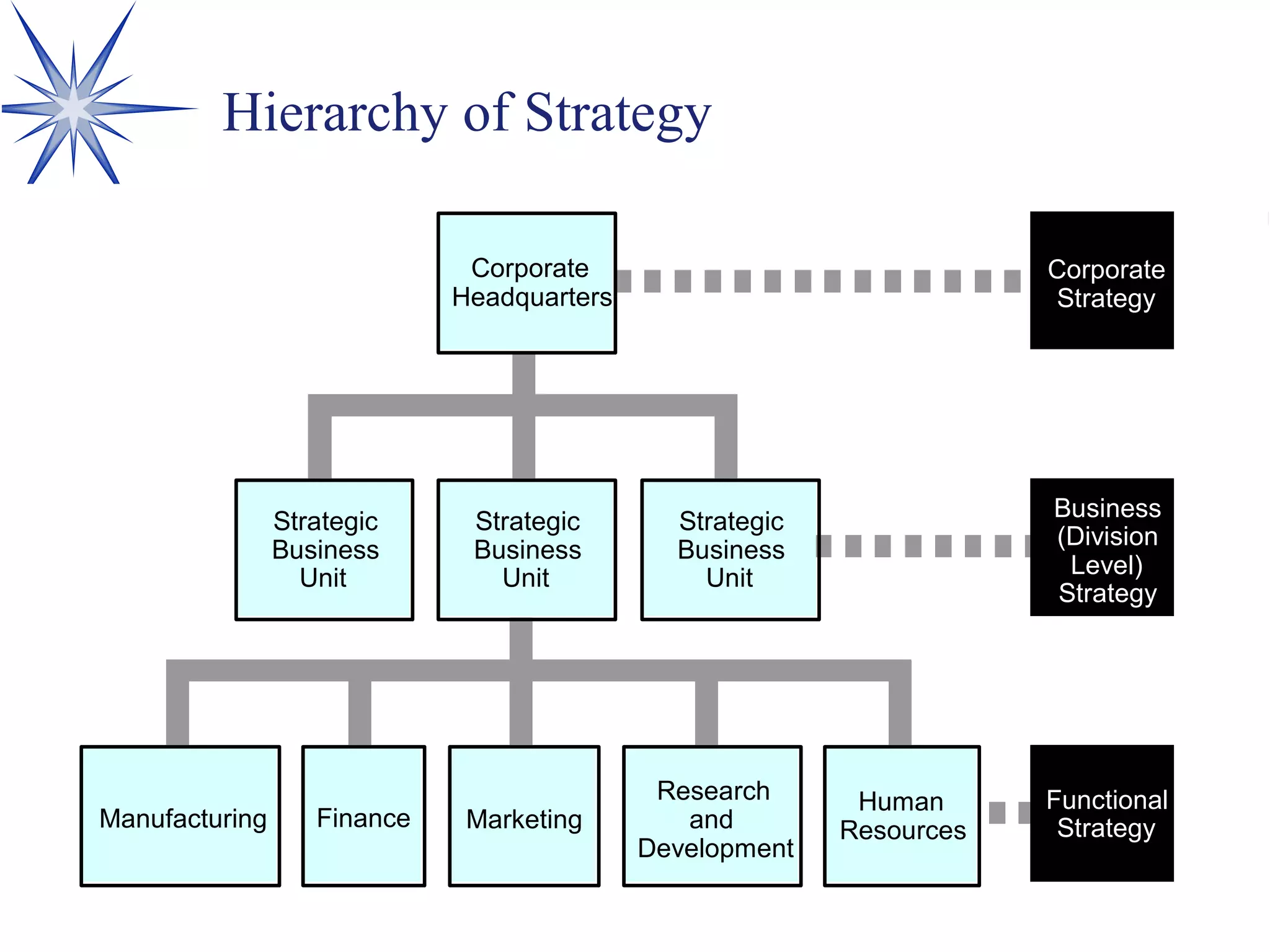
Hierarchy of Strategy
Functional
Strategy
Business
(Division
Level)
Strategy
Corporate
Strategy
Manufacturing Finance Marketing
Research
and
Development
Human
Resources
Strategic
Business
Unit
Strategic
Business
Unit
Strategic
Business
Unit
Corporate
Headquarters
Policies
Broad guidelines for making decisions.
E.g. - 3M’s policy requiring researchers to spend
15% of their time working on something other
than their primary project.
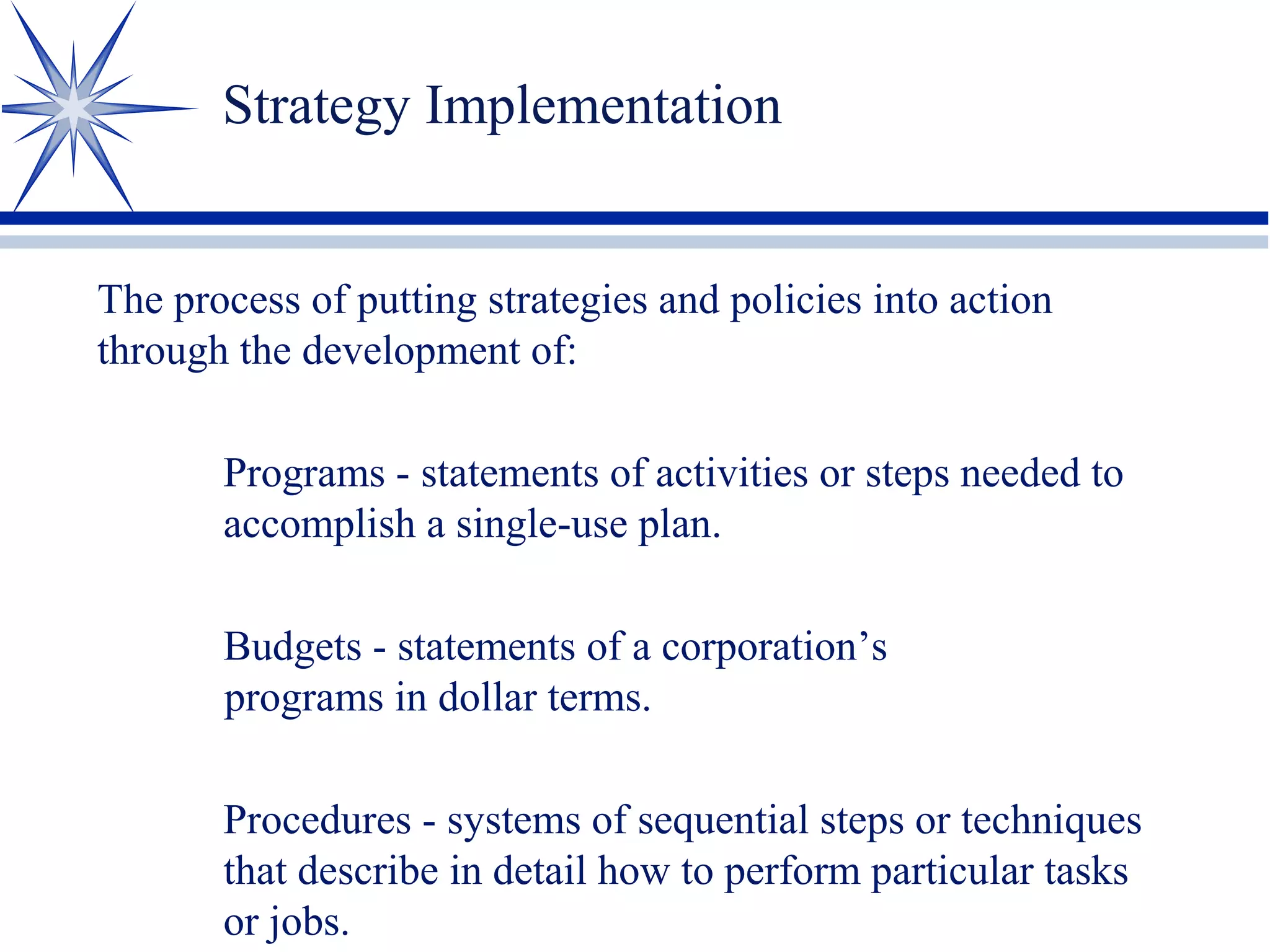
Strategy Implementation
The process of putting strategies and policies into action
through the development of:
Programs - statements of activities or steps needed to
accomplish a single-use plan.
Budgets - statements of a corporation’s
programs in dollar terms.
Procedures - systems of sequential steps or techniques
that describe in detail how to perform particular tasks
or jobs.
Evaluation and Control
The process of monitoring corporate
activities and performance results so that
actual performance can be compared with
desired performance.
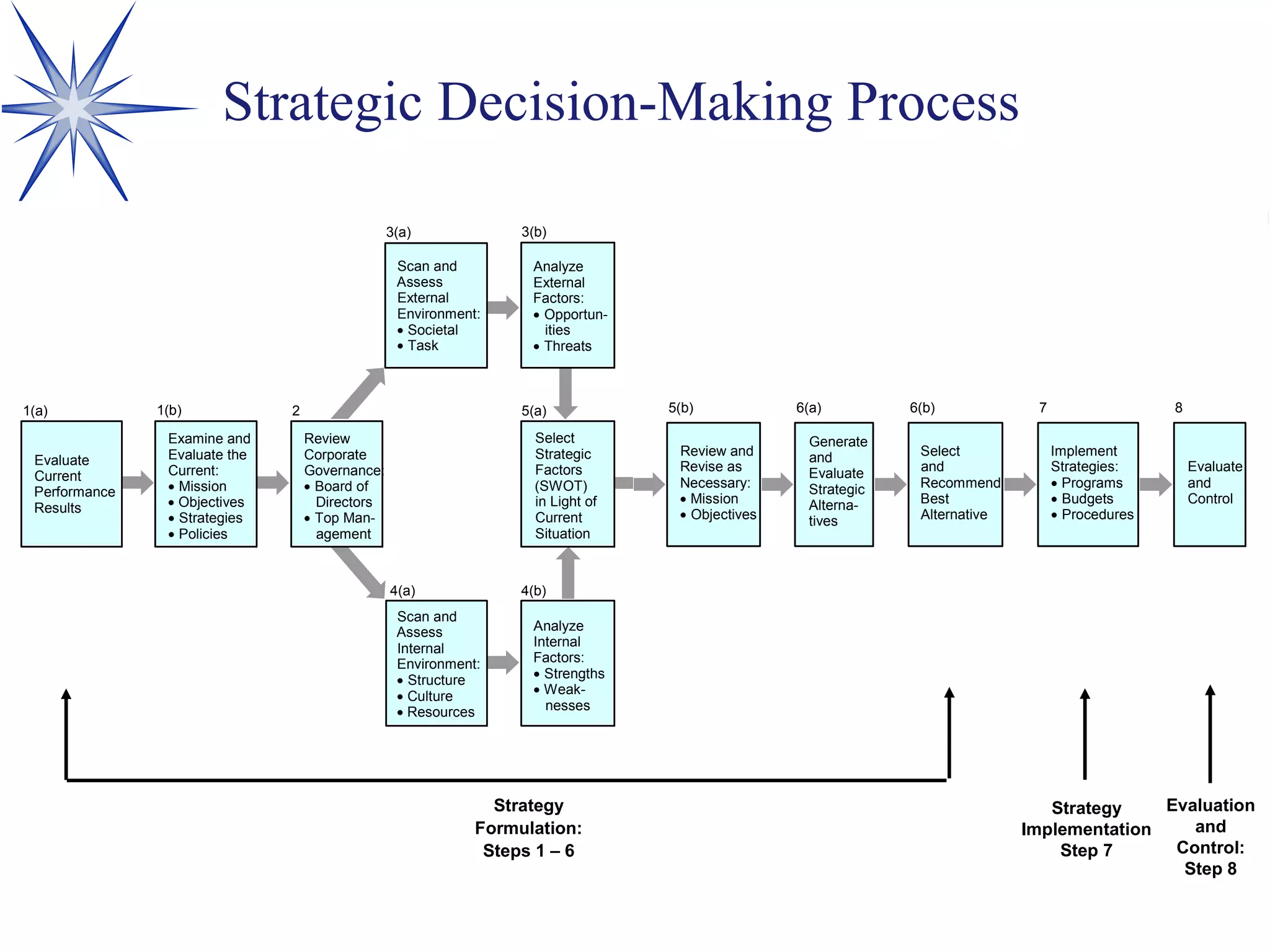
Strategic Decision-Making Process
Review and
Revise as
Necessary:
• Mission
• Objectives
Generate
and
Evaluate
Strategic
Alterna-
tives
Select
and
Recommend
Best
Alternative
Implement
Strategies:
• Programs
• Budgets
• Procedures
Evaluate
and
Control
Strategy
Implementation
Step 7
5(b) 6(a) 6(b) 7 8
Analyze
External
Factors:
• Opportun-
ities
• Threats
Scan and
Assess
Internal
Environment:
• Structure
• Culture
• Resources
Analyze
Internal
Factors:
• Strengths
• Weak-
nesses
Select
Strategic
Factors
(SWOT)
in Light of
Current
Situation
Scan and
Assess
External
Environment:
• Societal
• Task
Evaluate
Current
Performance
Results
Examine and
Evaluate the
Current:
• Mission
• Objectives
• Strategies
• Policies
Review
Corporate
Governance:
• Board of
Directors
• Top Man-
agement
Strategy
Formulation:
Steps 1 – 6
3(a)
1(a) 1(b) 2 5(a)
4(a)
3(b)
4(b)
Evaluation
and
Control:
Step 8

Strategic Management

  • 1.
  • 2.
    Strategic Management Defined Theset of managerial decisions and actions that determines the long-run performance of a corporation. It includes: environmental scanning (internal & external) strategy formulation strategy implementation evaluation and control It focuses on integrating management, marketing, finance/accounting, production/operations, research and development, and computer information systems to achieve organizational success.
  • 3.
    Benefits of StrategicManagement Clearer sense of strategic vision Sharper focus on what is strategically important Improved understanding of rapidly changing environment
  • 4.
    Three Key StrategicQuestions Where is the organization now? If no changes are made, where will the organization be in one, two, five or ten years? Are the answers acceptable? If the answers are not acceptable, what specific actions should management undertake? What are the risks and payoffs involved?
  • 5.
    Strategic Management Model Strategy Formulation Strategy Implementation Evaluation andControl Mission Objectives Strategies Policies Feedback/Learning Environmental Scanning Societal Environment General Forces Task Environment Industry Analysis Structure Chain of Command Resources Assets, Skills Competencies, Knowledge Culture Beliefs, Expectations, Values Reason for existence What results to accomplish by when Plan to achieve the mission & objectives Broad guidelines for decision making Programs Activities needed to accomplish a plan Budgets Cost of the programs Procedures Sequence of steps needed to do the job Process to monitor performance and take corrective action Performance External Internal
  • 6.
    Strategy Formulation The processof developing long-range plans to deal effectively with environmental opportunities and threats in light of corporate strengths and weaknesses. Composed of: Mission Objectives Strategies Policies
  • 7.
    Mission The purpose orreason for the corporation’s existence. It tells who the company is, what they do as well as what they’d like to become.
  • 8.
    Objectives The end resultsof planned activity. They state WHAT is to be accomplished by WHEN. They should be quantified, if possible. Should be specific, measurable and obtainable.
  • 9.
    Strategies A strategy isa comprehensive master plan stating HOW the corporation will achieve its mission and objectives. There are three types: Corporate - a corporation’s overall direction and the management of its businesses. Business - emphasizes improving the competitive position of a corporation’s products or services in a specific industry or market segment. Functional - concerned with developing a distinctive competence to provide a company or business unit with a competitive advantage.
  • 10.
    Hierarchy of Strategy Functional Strategy Business (Division Level) Strategy Corporate Strategy ManufacturingFinance Marketing Research and Development Human Resources Strategic Business Unit Strategic Business Unit Strategic Business Unit Corporate Headquarters
  • 11.
    Policies Broad guidelines formaking decisions. E.g. - 3M’s policy requiring researchers to spend 15% of their time working on something other than their primary project.
  • 12.
    Strategy Implementation The processof putting strategies and policies into action through the development of: Programs - statements of activities or steps needed to accomplish a single-use plan. Budgets - statements of a corporation’s programs in dollar terms. Procedures - systems of sequential steps or techniques that describe in detail how to perform particular tasks or jobs.
  • 13.
    Evaluation and Control Theprocess of monitoring corporate activities and performance results so that actual performance can be compared with desired performance.
  • 14.
    Strategic Decision-Making Process Reviewand Revise as Necessary: • Mission • Objectives Generate and Evaluate Strategic Alterna- tives Select and Recommend Best Alternative Implement Strategies: • Programs • Budgets • Procedures Evaluate and Control Strategy Implementation Step 7 5(b) 6(a) 6(b) 7 8 Analyze External Factors: • Opportun- ities • Threats Scan and Assess Internal Environment: • Structure • Culture • Resources Analyze Internal Factors: • Strengths • Weak- nesses Select Strategic Factors (SWOT) in Light of Current Situation Scan and Assess External Environment: • Societal • Task Evaluate Current Performance Results Examine and Evaluate the Current: • Mission • Objectives • Strategies • Policies Review Corporate Governance: • Board of Directors • Top Man- agement Strategy Formulation: Steps 1 – 6 3(a) 1(a) 1(b) 2 5(a) 4(a) 3(b) 4(b) Evaluation and Control: Step 8