Strategic Marketing Planning
Presented by Worravit Chantaraviroj
Marketing Manager
Date 22-08-2014
Outline
1. What is Marketing?
2. Marketing Analysis
3. Marketing Planning
4. Marketing Mix Planning
5. Marketing Controlling
The Differences
• Marketing vs Sales
• Marketing vs Branding
• Marketing vs Marketing Communications
• Marketing vs Sales Promotion
1. What is Marketing ?
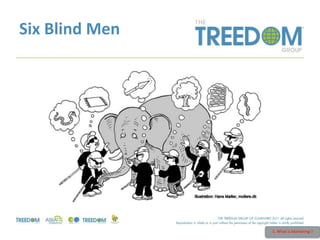
Six Blind Men
1. What is Marketing ?
Marketing Mgt.
Marketing Management is the art and science
“Creative & Formulated” of Choosing TM
Getting, Keeping, Growing Customer
Through Creating, Communicating, Delivering
“Superior Customer Value”
1. What is Marketing ?
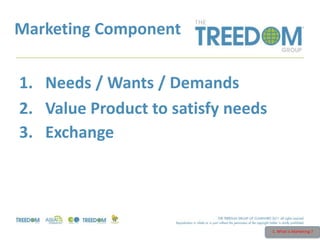
Marketing Component
1. Needs / Wants / Demands
2. Value Product to satisfy needs
3. Exchange
1. What is Marketing ?
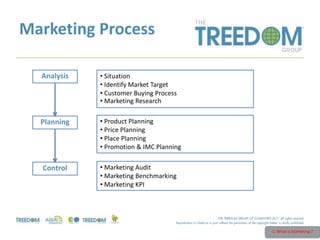
Marketing Process
Analysis • Situation
• Identify Market Target
• Customer Buying Process
• Marketing Research
Planning • Product Planning
• Price Planning
• Place Planning
• Promotion & IMC Planning
Control • Marketing Audit
• Marketing Benchmarking
• Marketing KPI
1. What is Marketing ?
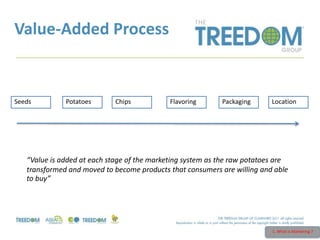
Value-Added Process
1. What is Marketing ?
Seeds Potatoes Chips Flavoring Packaging Location
“Value is added at each stage of the marketing system as the raw potatoes are
transformed and moved to become products that consumers are willing and able
to buy”
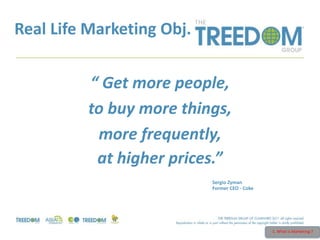
Real Life Marketing Obj.
“ Get more people,
to buy more things,
more frequently,
at higher prices.”
1. What is Marketing ?
Sergio Zyman
Former CEO - Coke
Benefits of MKT plan
1. Guide to work effectively
2. Define job role and responsibilities
3. Allocate resources effectively
1. What is Marketing ?
Marketing Analysis
1. Situation
2. Identify Target Market
3. Consumer Buying Process
4. Marketing Research
2. Marketing Analysis
Situation
2. Marketing Analysis
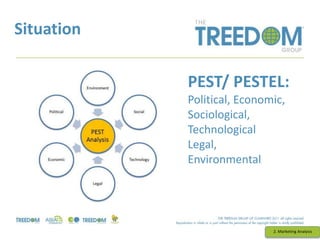
PEST/ PESTEL:
Political, Economic,
Sociological,
Technological
Legal,
Environmental
Situation - Change
• Every 18 months – double CPU power – for ½ the
price (Moore’s Law)
• Every 12 months – double fiber network capability
for ½ the price
• Every 9 months – double wireless capacity for ½ the
price
2. Marketing Analysis
Business Scope
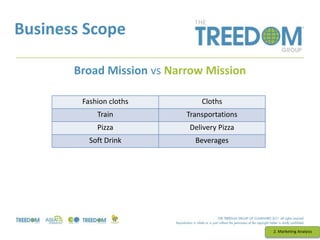
Broad Mission vs Narrow Mission
2. Marketing Analysis
Fashion cloths Cloths
Train Transportations
Pizza Delivery Pizza
Soft Drink Beverages
Market Segmentation
2. Marketing Analysis
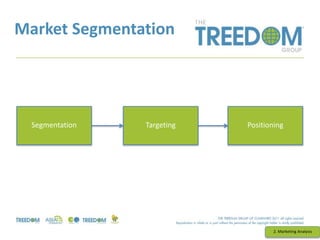
Segmentation Targeting Positioning
Market Research
2. Marketing Analysis
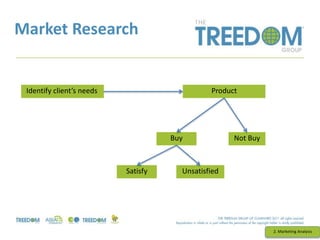
Identify client’s needs Product
Buy Not Buy
Satisfy Unsatisfied
Research Method
2. Marketing Analysis
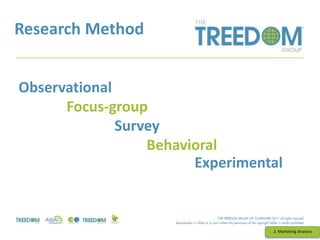
Observational
Focus-group
Survey
Behavioral
Experimental
Consumer Insight
2. Marketing Analysis
An insight is a
penetrating
understanding
which provides
hooks or clues that
lead to brand
building
opportunities
Strategy
2. Marketing Planning
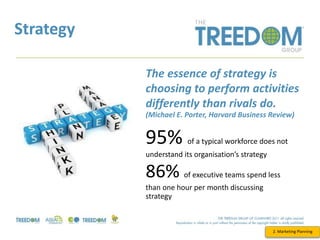
The essence of strategy is
choosing to perform activities
differently than rivals do.
(Michael E. Porter, Harvard Business Review)
95% of a typical workforce does not
understand its organisation’s strategy
86% of executive teams spend less
than one hour per month discussing
strategy
Strategy
3. Marketing Planning
Strategy without tactics
is the slowest road to victory
Tactics without strategy
is the noise before defeat
SUN TZU
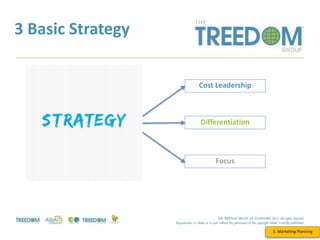
3 Basic Strategy
3. Marketing Planning
Cost Leadership
Differentiation
Focus
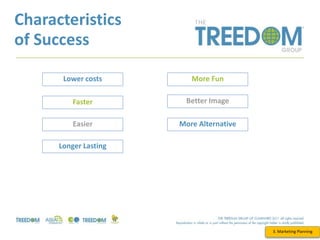
Characteristics
of Success
3. Marketing Planning
Lower costs
Faster
Easier
Longer Lasting
More Fun
Better Image
More Alternative
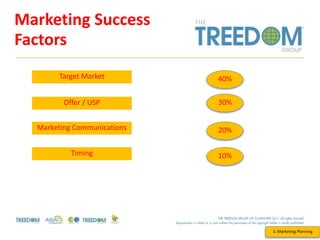
Marketing Success
Factors
3. Marketing Planning
Target Market
Offer / USP
Marketing Communications
Timing
40%
30%
20%
10%
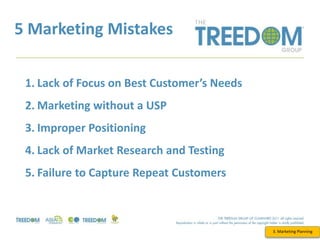
5 Marketing Mistakes
3. Marketing Planning
1. Lack of Focus on Best Customer’s Needs
2. Marketing without a USP
3. Improper Positioning
4. Lack of Market Research and Testing
5. Failure to Capture Repeat Customers
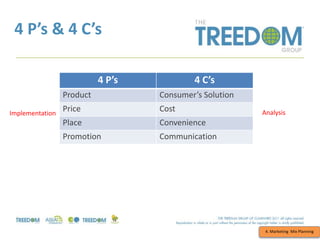
4 P’s & 4 C’s
4. Marketing Mix Planning
4 P’s 4 C’s
Product Consumer’s Solution
Price Cost
Place Convenience
Promotion Communication
Implementation Analysis
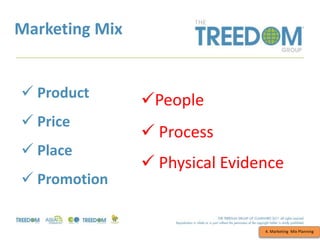
Marketing Mix
4. Marketing Mix Planning
 Product
 Price
 Place
 Promotion
People
 Process
 Physical Evidence
Product Concept
4. Marketing Mix Planning
What is Product / Features ?
 What is Advantage ?
 What is Benefit ?
 Why should I try ?
Product Mix
4. Marketing Mix Planning
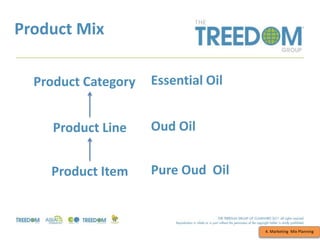
Product Category
Product Line
Product Item
Essential Oil
Oud Oil
Pure Oud Oil
Brand
4. Marketing Mix Planning
A brand is a name, term, sign, symbol or
design, or a combination of them, intended
to identify the goods or services of one
seller or group of sellers and to differentiate
them from those of competitors.
Awareness + Impression
Power of Brand
4. Marketing Mix Planning
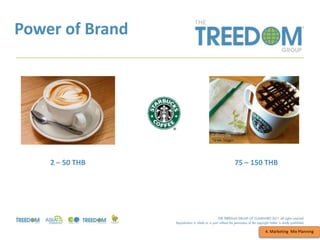
2 – 50 THB 75 – 150 THB
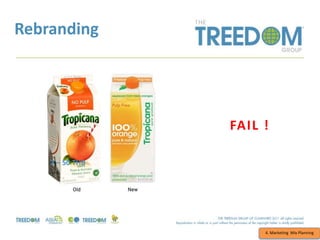
Rebranding
2 – 50 THB
FAIL !
4. Marketing Mix Planning
New Product
4. Marketing Mix Planning
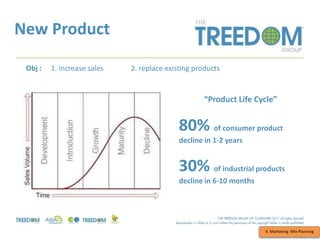
Obj : 1. increase sales 2. replace existing products
“Product Life Cycle”
80% of consumer product
decline in 1-2 years
30% of industrial products
decline in 6-10 months
New Product
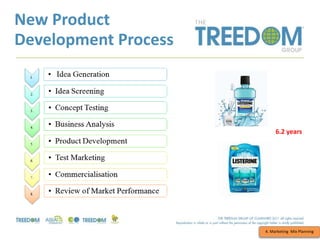
Development Process
4. Marketing Mix Planning
6.2 years
NPD Failures
4. Marketing Mix Planning
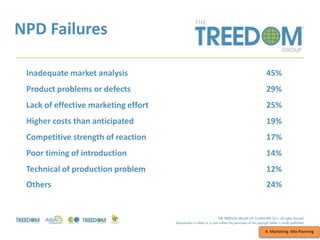
Inadequate market analysis 45%
Product problems or defects 29%
Lack of effective marketing effort 25%
Higher costs than anticipated 19%
Competitive strength of reaction 17%
Poor timing of introduction 14%
Technical of production problem 12%
Others 24%
Pricing
4. Marketing Mix Planning
Based on cost
Based on market demand
Based on market competition
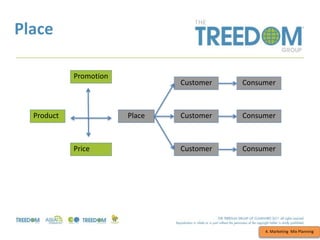
Place
4. Marketing Mix Planning
Product
Promotion
Price
Place
Customer Consumer
Customer Consumer
Customer Consumer
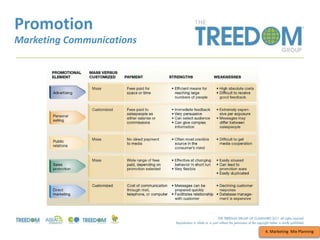
Promotion
Marketing Communications
4. Marketing Mix Planning
Marketing Controlling
5. Marketing Controlling
Marketing Audit
Marketing Benchmarking
Marketing KPI

Strategic Marketing Planning

  • 1.
    Strategic Marketing Planning Presentedby Worravit Chantaraviroj Marketing Manager Date 22-08-2014
  • 2.
    Outline 1. What isMarketing? 2. Marketing Analysis 3. Marketing Planning 4. Marketing Mix Planning 5. Marketing Controlling
  • 3.
    The Differences • Marketingvs Sales • Marketing vs Branding • Marketing vs Marketing Communications • Marketing vs Sales Promotion 1. What is Marketing ?
  • 4.
    Six Blind Men 1.What is Marketing ?
  • 5.
    Marketing Mgt. Marketing Managementis the art and science “Creative & Formulated” of Choosing TM Getting, Keeping, Growing Customer Through Creating, Communicating, Delivering “Superior Customer Value” 1. What is Marketing ?
  • 6.
    Marketing Component 1. Needs/ Wants / Demands 2. Value Product to satisfy needs 3. Exchange 1. What is Marketing ?
  • 7.
    Marketing Process Analysis •Situation • Identify Market Target • Customer Buying Process • Marketing Research Planning • Product Planning • Price Planning • Place Planning • Promotion & IMC Planning Control • Marketing Audit • Marketing Benchmarking • Marketing KPI 1. What is Marketing ?
  • 8.
    Value-Added Process 1. Whatis Marketing ? Seeds Potatoes Chips Flavoring Packaging Location “Value is added at each stage of the marketing system as the raw potatoes are transformed and moved to become products that consumers are willing and able to buy”
  • 9.
    Real Life MarketingObj. “ Get more people, to buy more things, more frequently, at higher prices.” 1. What is Marketing ? Sergio Zyman Former CEO - Coke
  • 10.
    Benefits of MKTplan 1. Guide to work effectively 2. Define job role and responsibilities 3. Allocate resources effectively 1. What is Marketing ?
  • 11.
    Marketing Analysis 1. Situation 2.Identify Target Market 3. Consumer Buying Process 4. Marketing Research 2. Marketing Analysis
  • 12.
    Situation 2. Marketing Analysis PEST/PESTEL: Political, Economic, Sociological, Technological Legal, Environmental
  • 13.
    Situation - Change •Every 18 months – double CPU power – for ½ the price (Moore’s Law) • Every 12 months – double fiber network capability for ½ the price • Every 9 months – double wireless capacity for ½ the price 2. Marketing Analysis
  • 14.
    Business Scope Broad Missionvs Narrow Mission 2. Marketing Analysis Fashion cloths Cloths Train Transportations Pizza Delivery Pizza Soft Drink Beverages
  • 15.
    Market Segmentation 2. MarketingAnalysis Segmentation Targeting Positioning
  • 16.
    Market Research 2. MarketingAnalysis Identify client’s needs Product Buy Not Buy Satisfy Unsatisfied
  • 17.
    Research Method 2. MarketingAnalysis Observational Focus-group Survey Behavioral Experimental
  • 18.
    Consumer Insight 2. MarketingAnalysis An insight is a penetrating understanding which provides hooks or clues that lead to brand building opportunities
  • 19.
    Strategy 2. Marketing Planning Theessence of strategy is choosing to perform activities differently than rivals do. (Michael E. Porter, Harvard Business Review) 95% of a typical workforce does not understand its organisation’s strategy 86% of executive teams spend less than one hour per month discussing strategy
  • 20.
    Strategy 3. Marketing Planning Strategywithout tactics is the slowest road to victory Tactics without strategy is the noise before defeat SUN TZU
  • 21.
    3 Basic Strategy 3.Marketing Planning Cost Leadership Differentiation Focus
  • 22.
    Characteristics of Success 3. MarketingPlanning Lower costs Faster Easier Longer Lasting More Fun Better Image More Alternative
  • 23.
    Marketing Success Factors 3. MarketingPlanning Target Market Offer / USP Marketing Communications Timing 40% 30% 20% 10%
  • 24.
    5 Marketing Mistakes 3.Marketing Planning 1. Lack of Focus on Best Customer’s Needs 2. Marketing without a USP 3. Improper Positioning 4. Lack of Market Research and Testing 5. Failure to Capture Repeat Customers
  • 25.
    4 P’s &4 C’s 4. Marketing Mix Planning 4 P’s 4 C’s Product Consumer’s Solution Price Cost Place Convenience Promotion Communication Implementation Analysis
  • 26.
    Marketing Mix 4. MarketingMix Planning  Product  Price  Place  Promotion People  Process  Physical Evidence
  • 27.
    Product Concept 4. MarketingMix Planning What is Product / Features ?  What is Advantage ?  What is Benefit ?  Why should I try ?
  • 28.
    Product Mix 4. MarketingMix Planning Product Category Product Line Product Item Essential Oil Oud Oil Pure Oud Oil
  • 29.
    Brand 4. Marketing MixPlanning A brand is a name, term, sign, symbol or design, or a combination of them, intended to identify the goods or services of one seller or group of sellers and to differentiate them from those of competitors. Awareness + Impression
  • 30.
    Power of Brand 4.Marketing Mix Planning 2 – 50 THB 75 – 150 THB
  • 31.
    Rebranding 2 – 50THB FAIL ! 4. Marketing Mix Planning
  • 32.
    New Product 4. MarketingMix Planning Obj : 1. increase sales 2. replace existing products “Product Life Cycle” 80% of consumer product decline in 1-2 years 30% of industrial products decline in 6-10 months
  • 33.
    New Product Development Process 4.Marketing Mix Planning 6.2 years
  • 34.
    NPD Failures 4. MarketingMix Planning Inadequate market analysis 45% Product problems or defects 29% Lack of effective marketing effort 25% Higher costs than anticipated 19% Competitive strength of reaction 17% Poor timing of introduction 14% Technical of production problem 12% Others 24%
  • 35.
    Pricing 4. Marketing MixPlanning Based on cost Based on market demand Based on market competition
  • 36.
    Place 4. Marketing MixPlanning Product Promotion Price Place Customer Consumer Customer Consumer Customer Consumer
  • 37.
  • 38.
    Marketing Controlling 5. MarketingControlling Marketing Audit Marketing Benchmarking Marketing KPI