


*
    “Running an Agile Fortune 500 Company”
    Aditya Yadav, aditya.yadav@gmail.com
    in.linkedin.com/in/adityayadav76
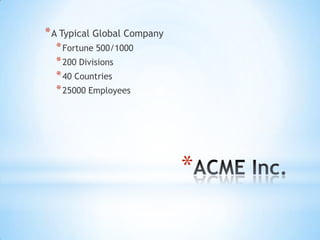
* A Typical Global Company
  * Fortune 500/1000
  * 200 Divisions
  * 40 Countries
  * 25000 Employees


                             *
*
    @ Acme Inc.
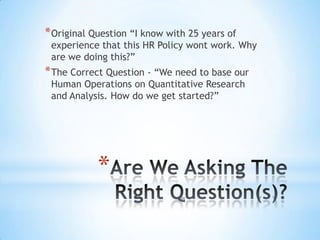
* Original Question “I know with 25 years of
 experience that this HR Policy wont work. Why
 are we doing this?”
* The Correct Question - “We need to base our
 Human Operations on Quantitative Research
 and Analysis. How do we get started?”


            *
*
    And The Philosophy Behind The Answer
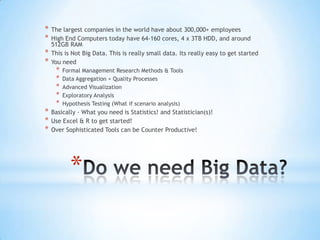
*   The largest companies in the world have about 300,000+ employees
*   High End Computers today have 64-160 cores, 4 x 3TB HDD, and around
    512GB RAM
*   This is Not Big Data. This is really small data. Its really easy to get started
*   You need
     *   Formal Management Research Methods & Tools
     *   Data Aggregation + Quality Processes
     *   Advanced Visualization
     *   Exploratory Analysis
     *   Hypothesis Testing (What if scenario analysis)
*   Basically - What you need is Statistics! and Statistician(s)!
*   Use Excel & R to get started!
*   Over Sophisticated Tools can be Counter Productive!


           *
*   Insights into
                                                    *   Talent, Behavior, Values and Culture
                                                    *   Needs, Wants and Demands
                                                    *   Processes & Change
                                                    *   Value & Costs
                                                    *   Individual & Business Performance
                                                    *   ROI, Benefit, Impact and Effectiveness
                                                    *   Predictions & Forecasts
                                                    *   Investments
                                                    *   Benchmarking
                                                    *   Human Resource Planning, Risk Management and
                                                        Strategy

*                                                   *
                                                    *
                                                        Complexity & Environment
                                                        (Micro) Policy Making
                                                    *   Learning, Training & Education
    •   Metric’s and Scorecard’s are static         *   Salary, Compensation & Competitiveness
        Photo’s in time that don’t aid              *   (Problem) Smoke Detection & Post Mortem
        Decision Making and Strategy                *   Headcount FAT Assessment
    •   Make decisions based on Facts               *   Poor Management
                                                    *   Productivity & Efficiency
    •   No guessing. No Intuition.                  *   Quality of Work Life
    •   Be able to offer Rational
        Explanations
*
* Is a Corporate Mindset
* Is a Business, Economic and Industry Reality
* Is the biggest source of Competitive Advantage
* Analytics
   *   Source,
   *   Attract,
   *   Select,
   *   Train,
   *   Develop,
   *   Retain,
   *   Promote, and
   *   Move employees through the organization
* Need Industry Intelligence and Competitive Analysis


             *
* Problem Statement: Identify, Train and Promote
  Future Leaders
* Two Pronged Focus
  * Individual
     * Invisible/Influential Leaders – Identification
  * Organization
     * Attributes of Leaders in your company
     * Success rate’s of various Leaders/Attributes
     * Leadership Development Program
     * Drivers of Change Program
     * Mobility, Placement and Growth


                   *
Aditya!!!


     *

Strategic human operations - Aditya Yadav

  • 1.
    * “Running an Agile Fortune 500 Company” Aditya Yadav, aditya.yadav@gmail.com in.linkedin.com/in/adityayadav76
  • 2.
    * A TypicalGlobal Company * Fortune 500/1000 * 200 Divisions * 40 Countries * 25000 Employees *
  • 3.
    * @ Acme Inc.
  • 4.
    * Original Question“I know with 25 years of experience that this HR Policy wont work. Why are we doing this?” * The Correct Question - “We need to base our Human Operations on Quantitative Research and Analysis. How do we get started?” *
  • 5.
    * And The Philosophy Behind The Answer
  • 6.
    * The largest companies in the world have about 300,000+ employees * High End Computers today have 64-160 cores, 4 x 3TB HDD, and around 512GB RAM * This is Not Big Data. This is really small data. Its really easy to get started * You need * Formal Management Research Methods & Tools * Data Aggregation + Quality Processes * Advanced Visualization * Exploratory Analysis * Hypothesis Testing (What if scenario analysis) * Basically - What you need is Statistics! and Statistician(s)! * Use Excel & R to get started! * Over Sophisticated Tools can be Counter Productive! *
  • 7.
    * Insights into * Talent, Behavior, Values and Culture * Needs, Wants and Demands * Processes & Change * Value & Costs * Individual & Business Performance * ROI, Benefit, Impact and Effectiveness * Predictions & Forecasts * Investments * Benchmarking * Human Resource Planning, Risk Management and Strategy * * * Complexity & Environment (Micro) Policy Making * Learning, Training & Education • Metric’s and Scorecard’s are static * Salary, Compensation & Competitiveness Photo’s in time that don’t aid * (Problem) Smoke Detection & Post Mortem Decision Making and Strategy * Headcount FAT Assessment • Make decisions based on Facts * Poor Management * Productivity & Efficiency • No guessing. No Intuition. * Quality of Work Life • Be able to offer Rational Explanations
  • 8.
  • 9.
    * Is aCorporate Mindset * Is a Business, Economic and Industry Reality * Is the biggest source of Competitive Advantage * Analytics * Source, * Attract, * Select, * Train, * Develop, * Retain, * Promote, and * Move employees through the organization * Need Industry Intelligence and Competitive Analysis *
  • 10.
    * Problem Statement:Identify, Train and Promote Future Leaders * Two Pronged Focus * Individual * Invisible/Influential Leaders – Identification * Organization * Attributes of Leaders in your company * Success rate’s of various Leaders/Attributes * Leadership Development Program * Drivers of Change Program * Mobility, Placement and Growth *
  • 11.