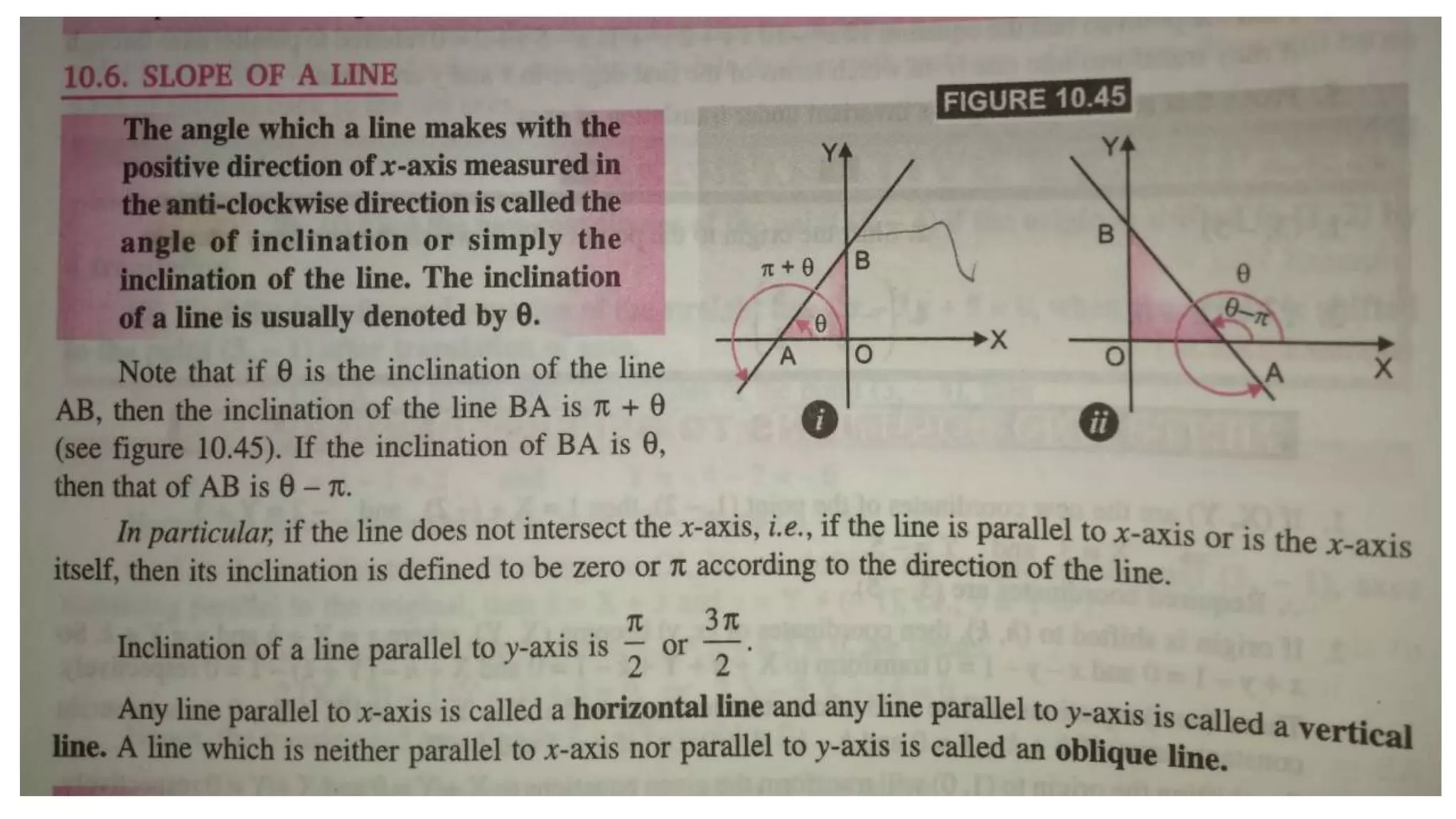
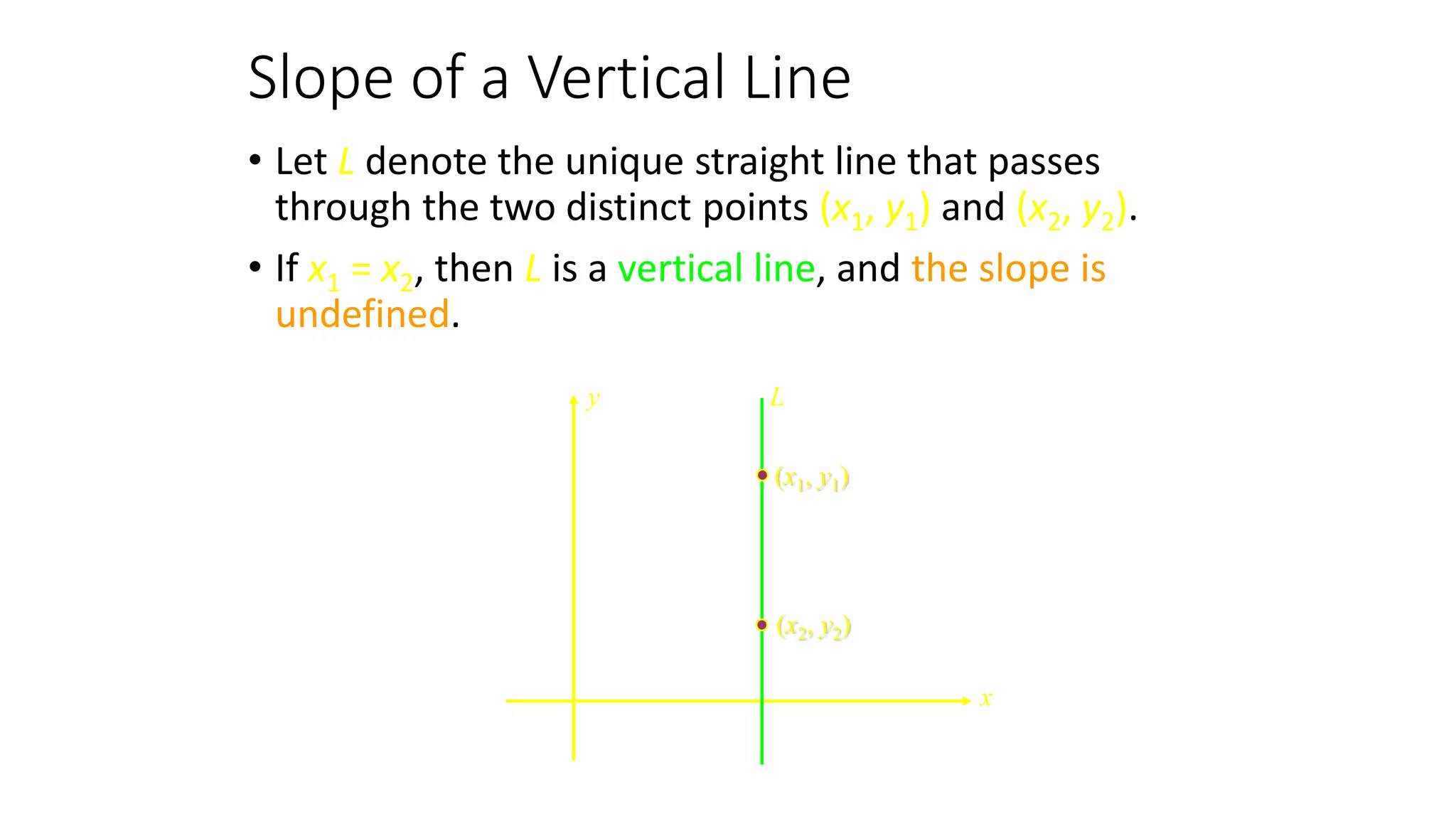
Slope of a Vertical Line
• Let L denote the unique straight line that passes
through the two distinct points (x1, y1) and (x2, y2).
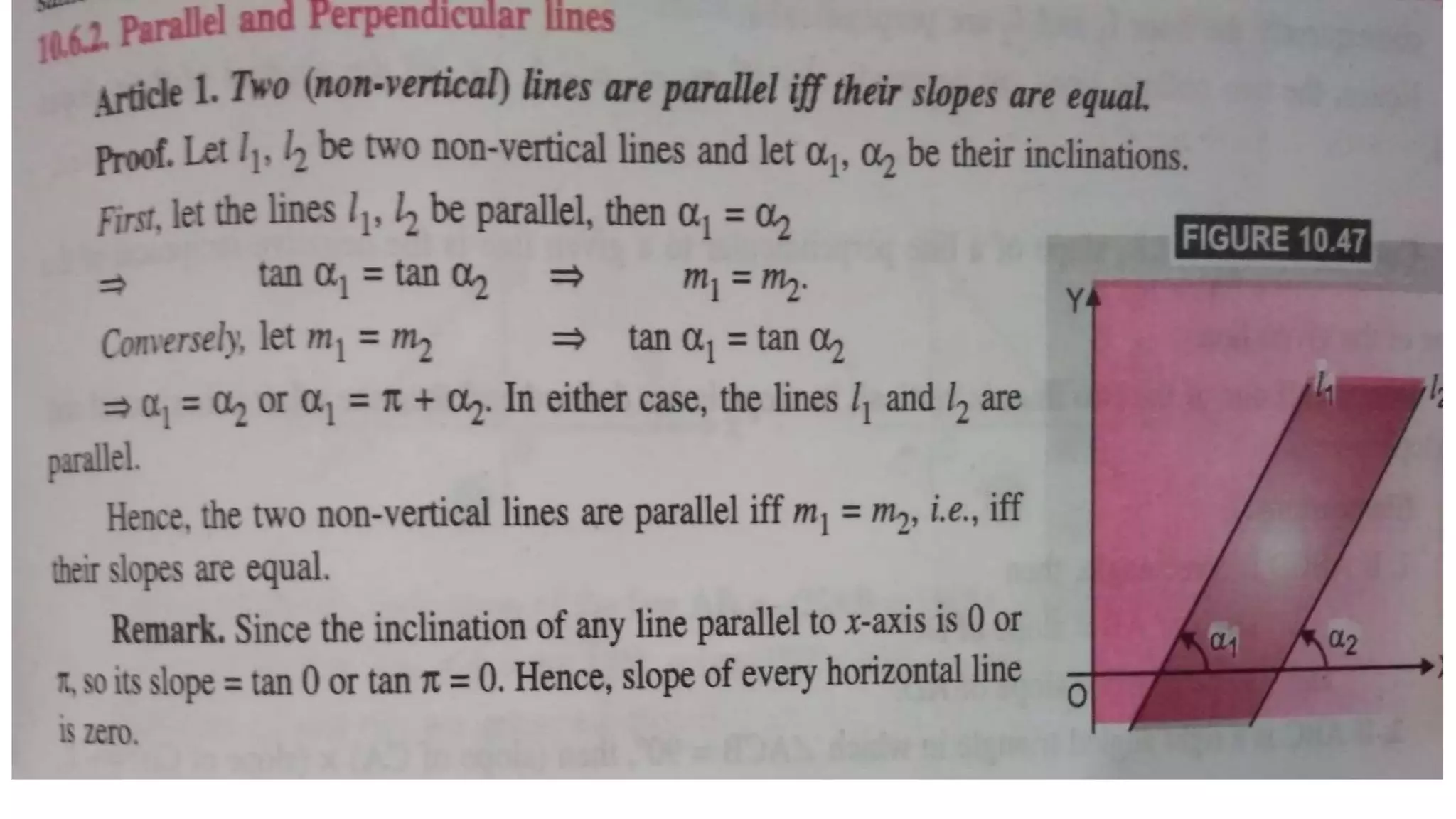
• If x1 = x2, then L is a vertical line, and the slope is
undefined.
(x1, y1)
(x2, y2)
y
x
L
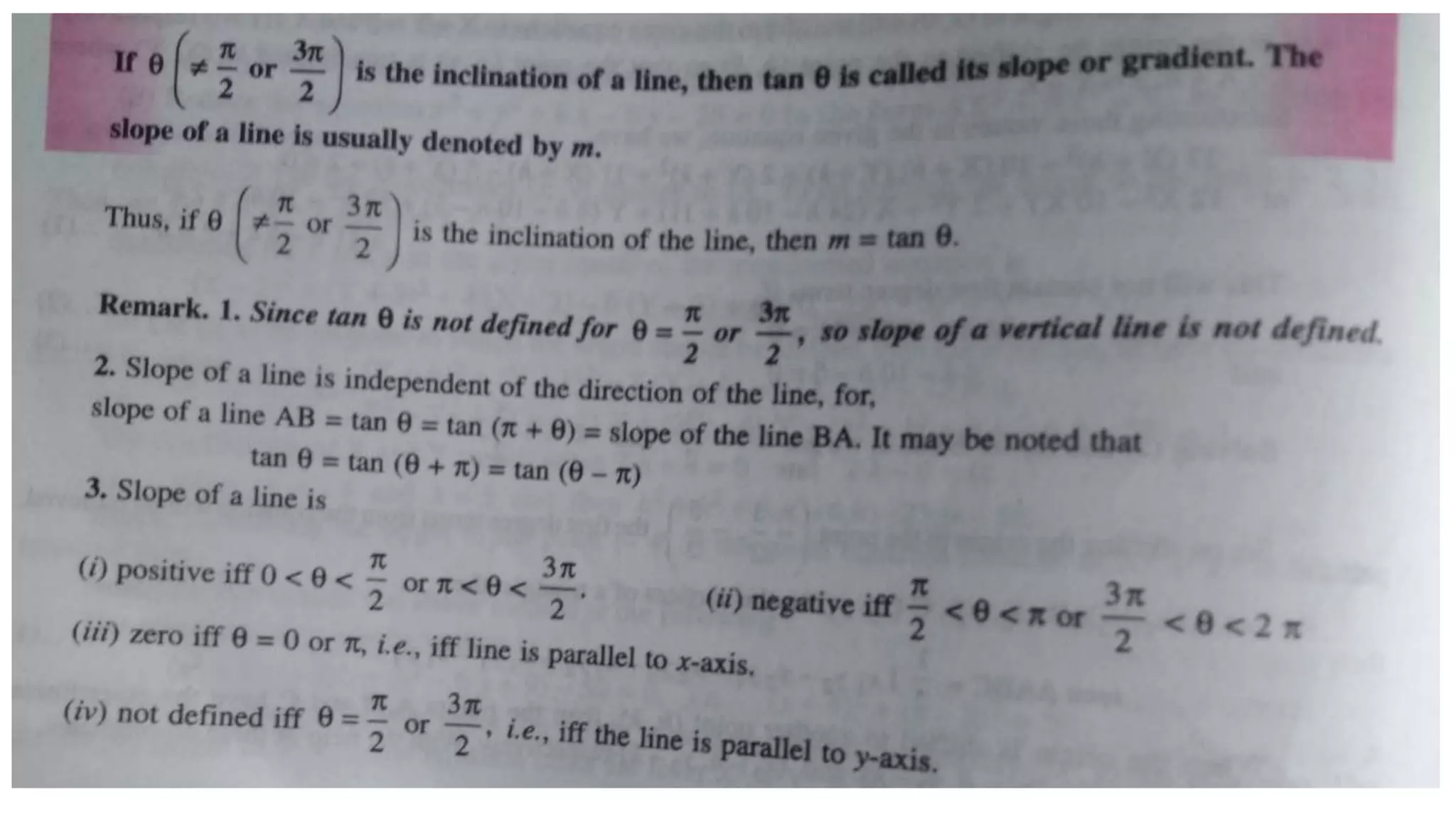
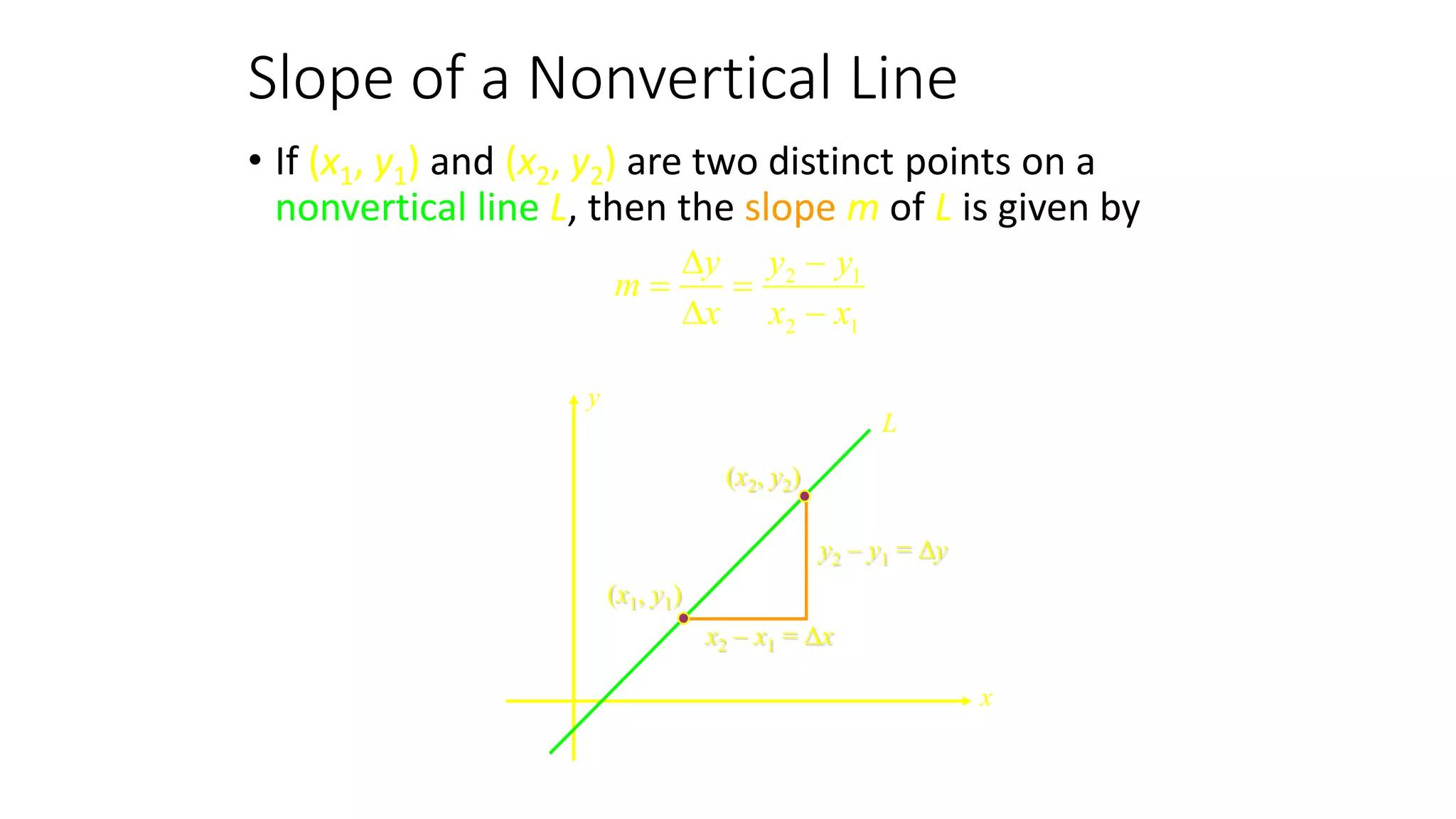
Slope of a Nonvertical Line
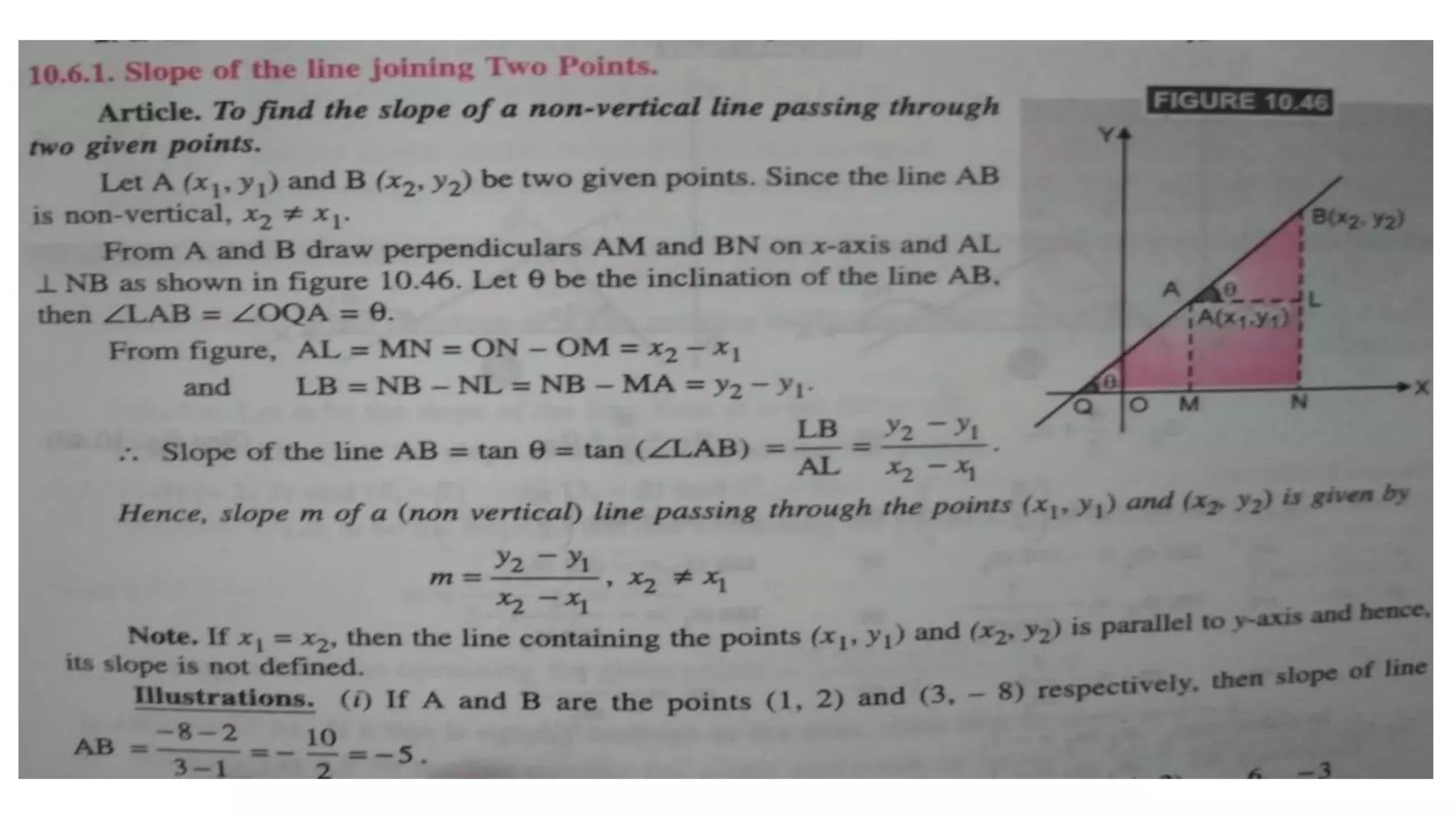
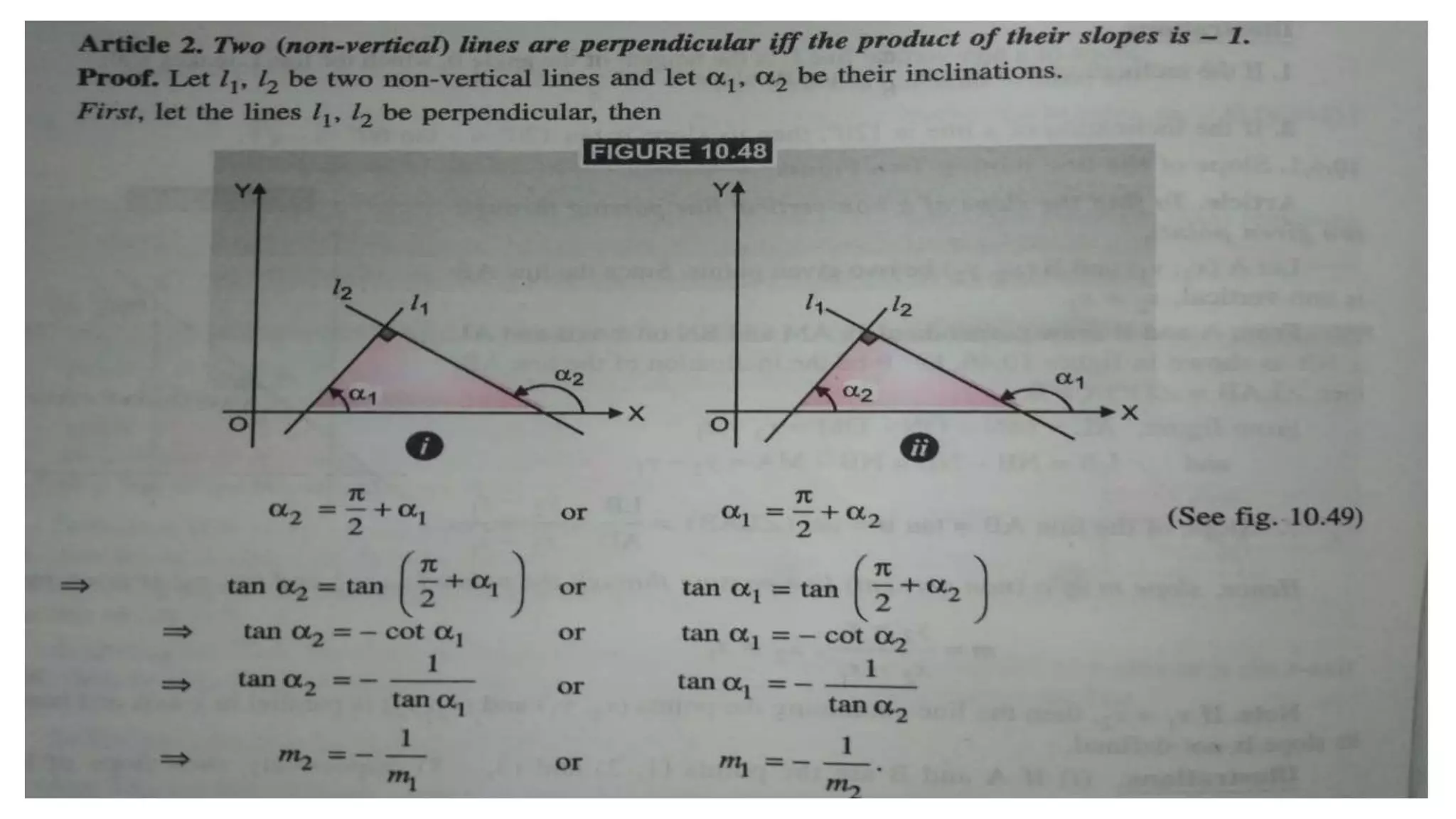
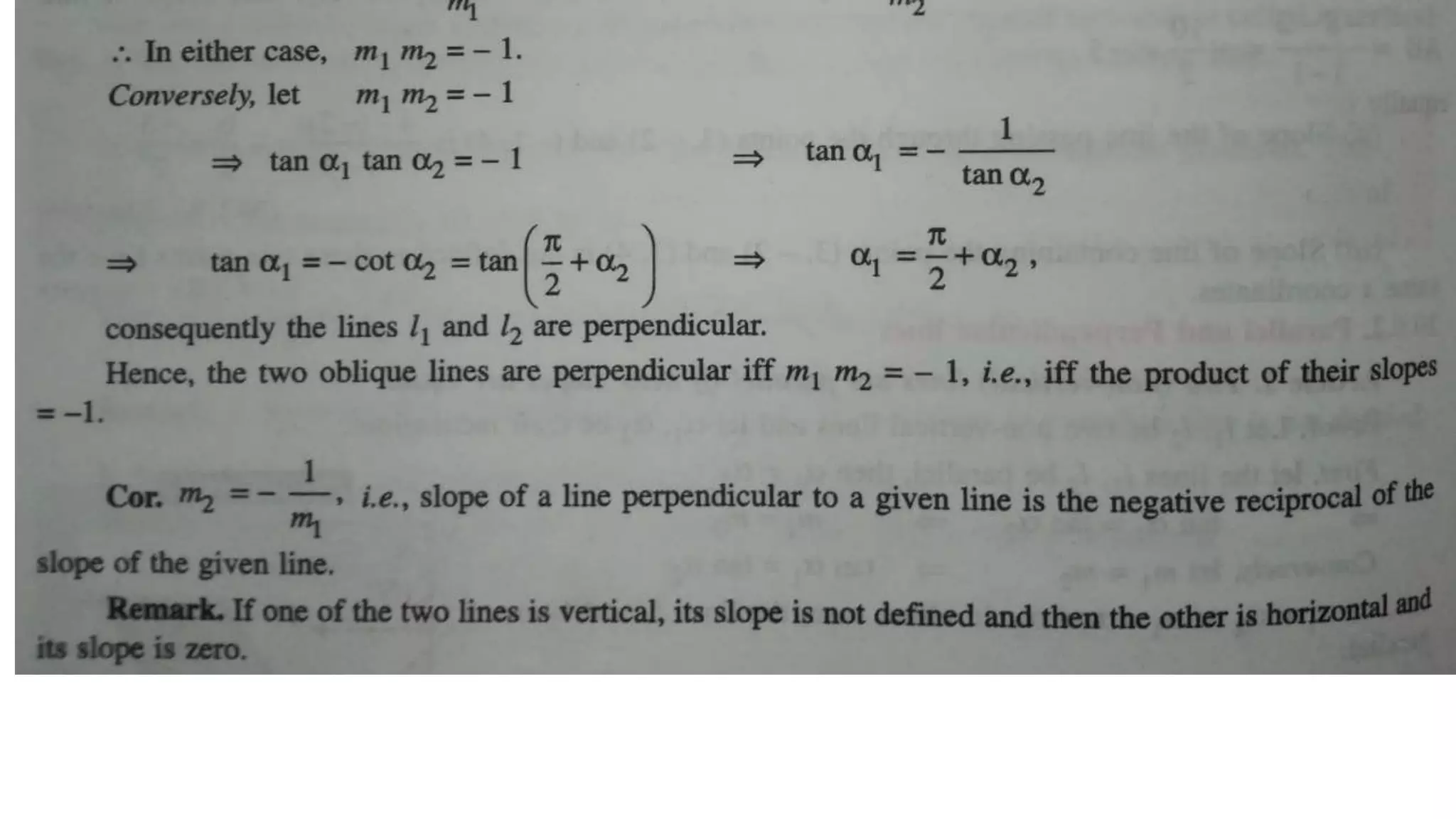
• If (x1, y1) and (x2, y2) are two distinct points on a
nonvertical line L, then the slope m of L is given by
(x1, y1)
(x2, y2)
y
x
2 1
2 1
y y y
m
x x x
 
 
 
L
y2 – y1 = y
x2 – x1 = x
Slope of a Nonvertical Line
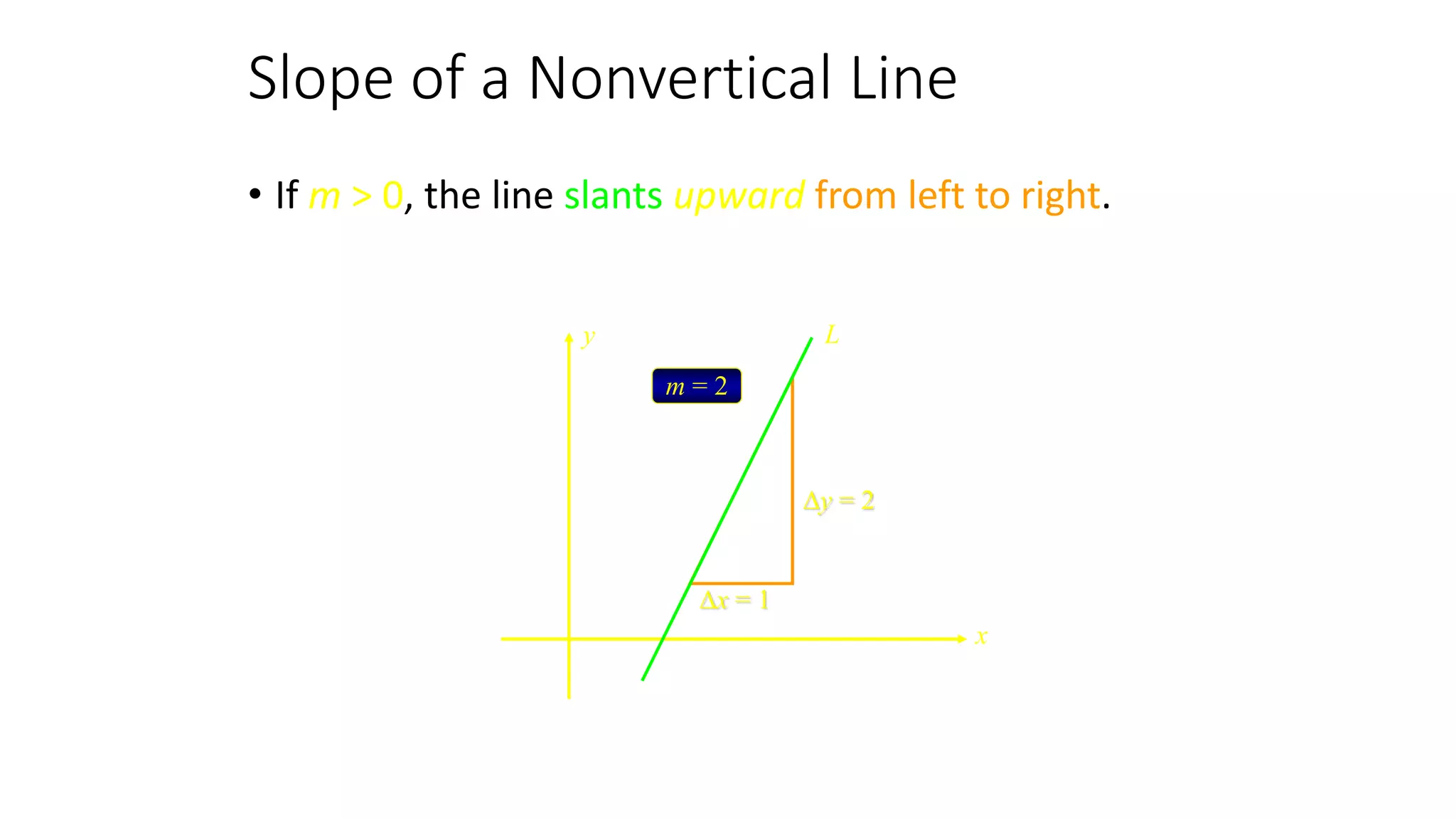
• If m > 0, the line slants upward from left to right.
y
x
L
y = 2
x = 1
m = 2
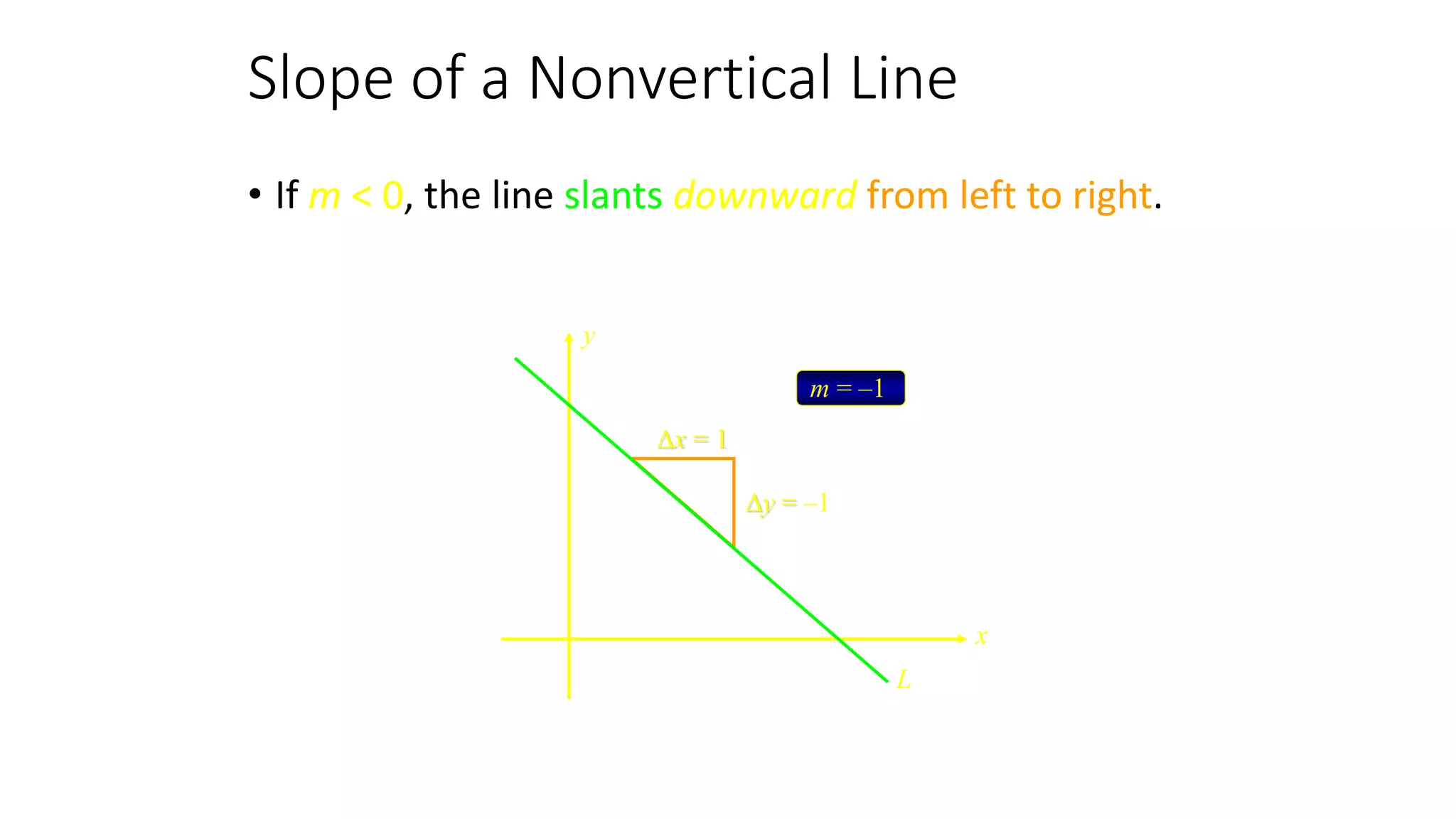
m = –1
Slope of a Nonvertical Line
• If m < 0, the line slants downward from left to right.
y
x
L
y = –1
x = 1
Examples
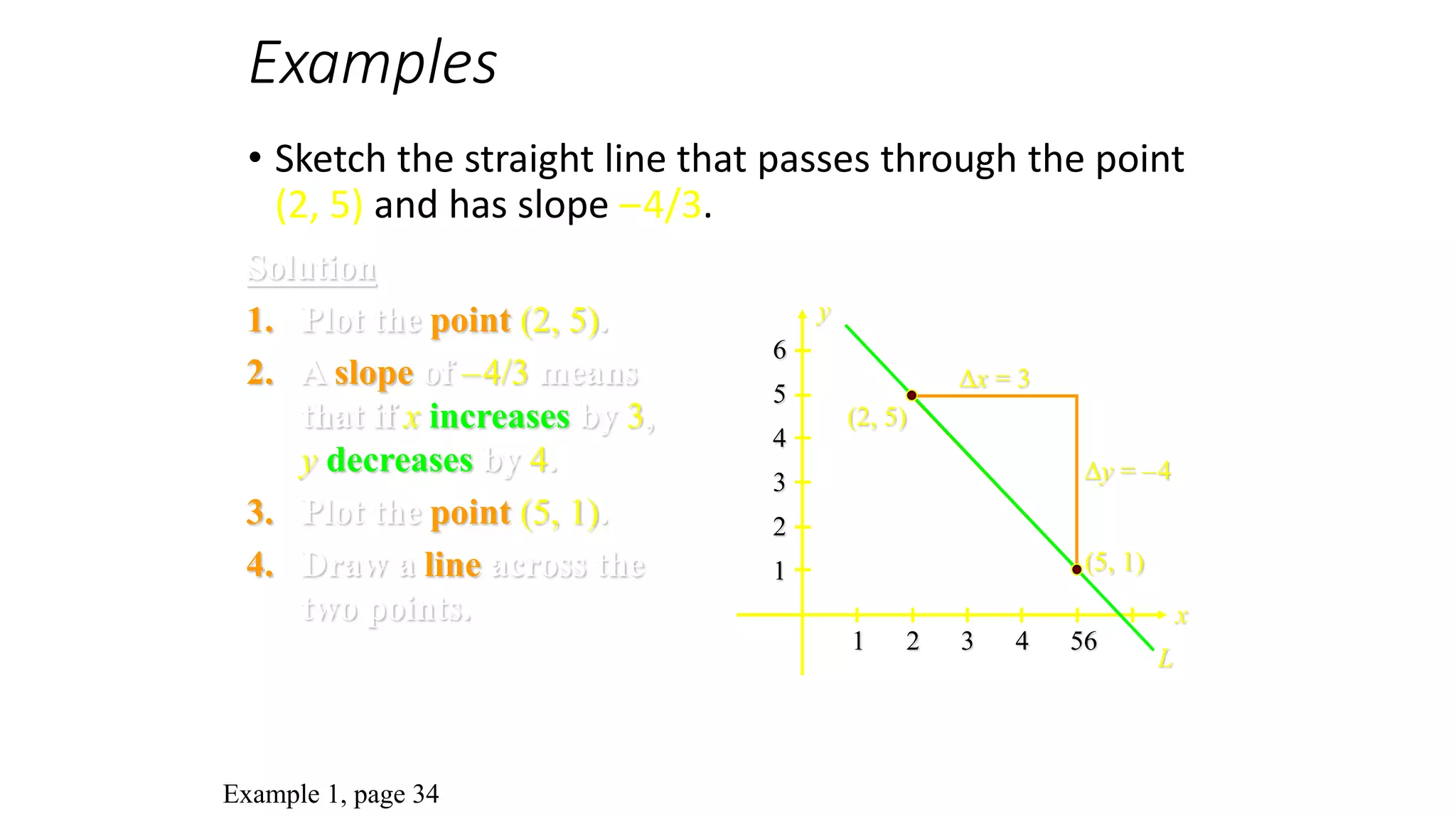
• Sketch the straight line that passes through the point
(2, 5) and has slope –4/3.
Solution
1. Plot the point (2, 5).
2. A slope of –4/3 means
that if x increases by 3,
y decreases by 4.
3. Plot the point (5, 1).
4. Draw a line across the
two points.
1 2 3 4 56
(2, 5)
y
x
L
y = –4
x = 3
6
5
4
3
2
1 (5, 1)
Example 1, page 34
Stragiht lines (2020 21)

Stragiht lines (2020 21)

  • 9.
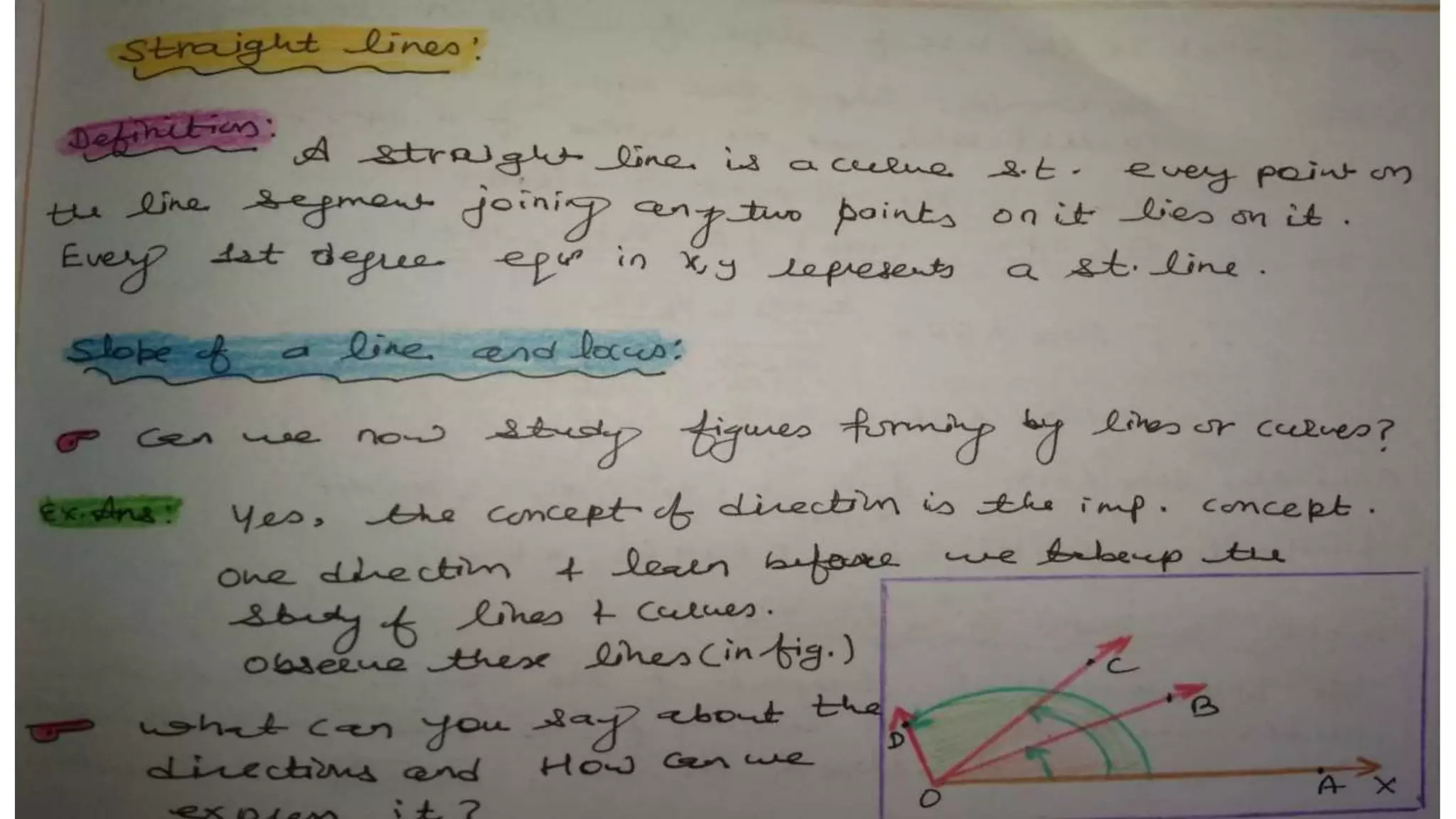
    Slope of aVertical Line • Let L denote the unique straight line that passes through the two distinct points (x1, y1) and (x2, y2). • If x1 = x2, then L is a vertical line, and the slope is undefined. (x1, y1) (x2, y2) y x L
  • 10.
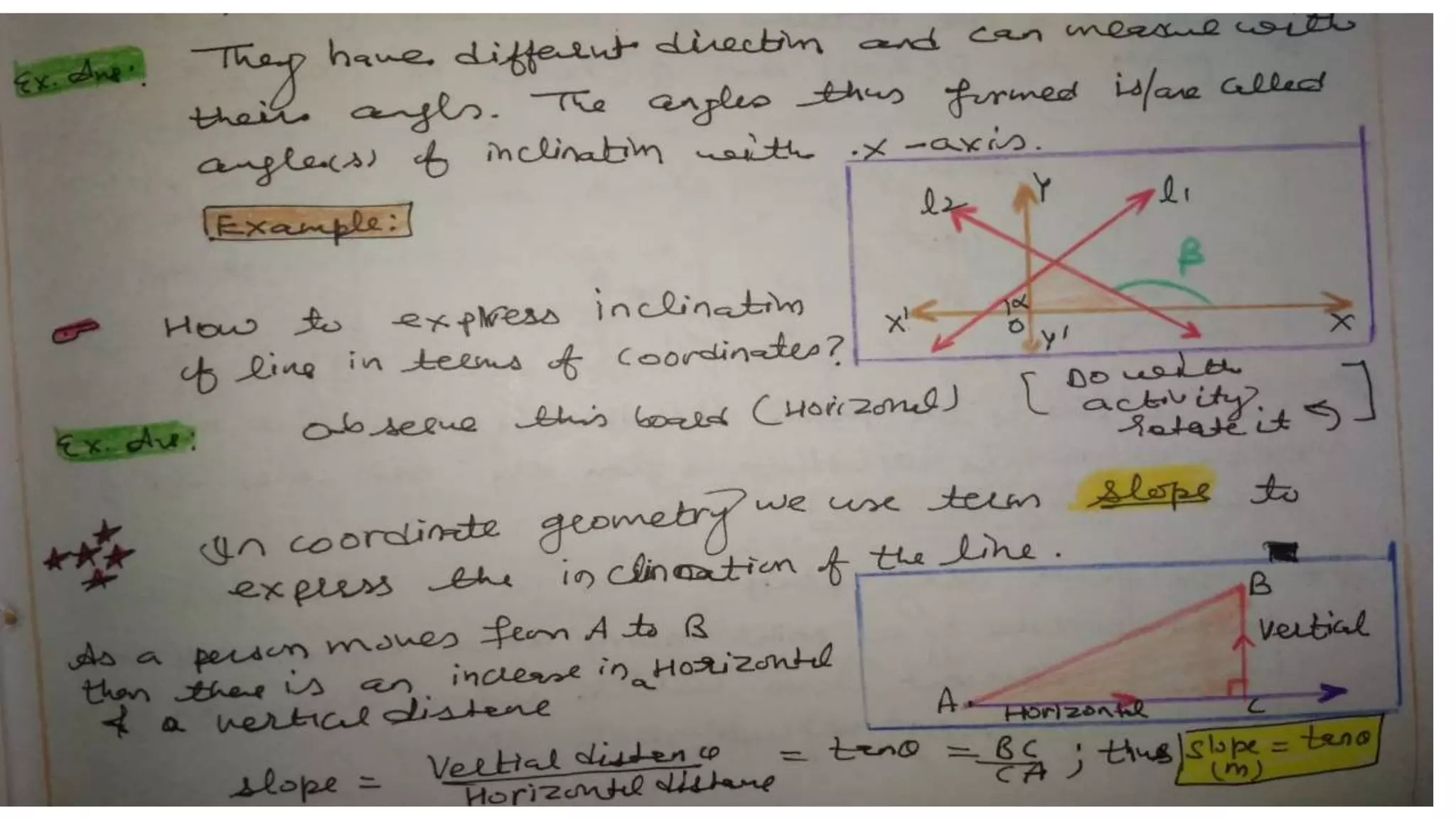
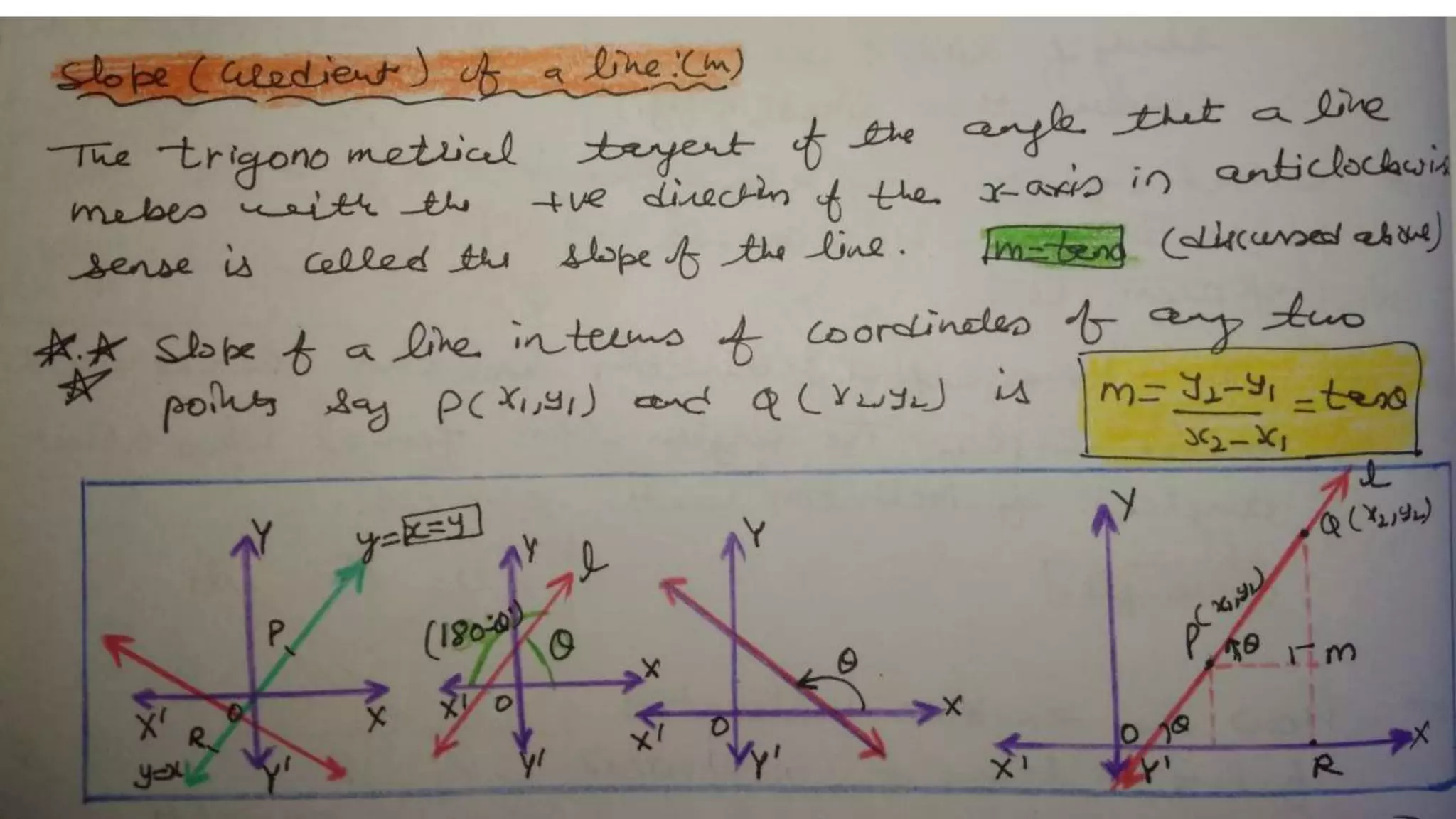
    Slope of aNonvertical Line • If (x1, y1) and (x2, y2) are two distinct points on a nonvertical line L, then the slope m of L is given by (x1, y1) (x2, y2) y x 2 1 2 1 y y y m x x x       L y2 – y1 = y x2 – x1 = x
  • 11.
    Slope of aNonvertical Line • If m > 0, the line slants upward from left to right. y x L y = 2 x = 1 m = 2
  • 12.
    m = –1 Slopeof a Nonvertical Line • If m < 0, the line slants downward from left to right. y x L y = –1 x = 1
  • 13.
    Examples • Sketch thestraight line that passes through the point (2, 5) and has slope –4/3. Solution 1. Plot the point (2, 5). 2. A slope of –4/3 means that if x increases by 3, y decreases by 4. 3. Plot the point (5, 1). 4. Draw a line across the two points. 1 2 3 4 56 (2, 5) y x L y = –4 x = 3 6 5 4 3 2 1 (5, 1) Example 1, page 34